Reading view

Former Medellín Mayor Daniel Quintero Appointed Colombia’s Health Superintendent Amid Political and Legal Scrutiny


National Health Superintendence oversees patients’ rights and regulates EPS insurers, a key pillar of the system that President Petro has sought to eliminate in his reform efforts

Former Medellín mayor and former presidential pre-candidate Daniel Quintero has been appointed as Colombia’s new National Superintendent of Health, a decision that has sparked controversy across political and social sectors due to ongoing judicial and disciplinary investigations against him.

The National Health Superintendence is responsible for safeguarding the rights of users within the health system, overseeing Health Promoting Entities (also called EPS) and Health Service Providers (IPS), and monitoring the use of public finances allocated to the sector, areas that President Gustavo Petro has sought to reform during his administration.

The appointment comes amid a complex situation in Colombia’s health system. During his administration, President Petro presented two structural reform proposals aimed at reshaping the system, including major changes to the role of EPS. Both initiatives were rejected by Congress.

Following these legislative setbacks, the government has pursued reforms through administrative measures and decrees, including the intervention of several of the country’s largest EPS, which together serve more than 23 million affiliates (More information: Colombian President Gustavo Petro Seeks To Restructure Colombian Health Care Despite Congressional Rejection by Finance Colombia).

During his swearing-in, Quintero said his administration would strengthen oversight of the system. “It is time to put an end to abuses by the EPS,” he said.

Criticism over qualifications and legal cases

The appointment has drawn criticism from organizations and political figures who question both his background as an electronic engineer and his legal situation. Transparency for Colombia said the designation “is inappropriate because it places a political figure widely questioned for using public office to favor private interests in charge of addressing the health crisis, instead of appointing individuals with the training, knowledge, and experience required to resolve it.”

The organization also called on the Attorney General’s Office to expedite ongoing investigations. “We respectfully call on the Attorney General’s Office (FGN) to ensure that cases involving Daniel Quintero move forward swiftly, respecting due process guarantees while delivering results in light of the seriousness of the allegations,” it said.

Quintero, who served as mayor of Medellín from 2020 to 2023, faces more than 40 criminal and disciplinary complaints related to alleged corruption during his administration. Among them is the “Aguas Vivas” case, involving the sale of a forest reserve land plot exceeding 140,000 square meters. In that case, prosecutors have already filed charges for alleged embezzlement, undue interest in public contracts, and misconduct in office, although no conviction has been issued.

Criticism has also emerged from within the government. Carlos Carrillo, head of Colombia’s National Unit for Disaster Risk Management, said that “Quintero is currently on trial for crimes against public administration. He has the right to defend himself, but the Pacto Histórico has no reason to bear the political cost of his legal troubles; we owe him nothing and he brings us nothing.”

Quintero will be the fifth health superintendent appointed during Petro’s administration. His tenure is expected to be temporary, as a new president will take office on August 7, 2026, and will have the authority to appoint a new head of the agency.
  •  

Rising Violence in Colombia: Highway Explosion Leaves 21 Dead, Dozens Injured

Petro’s “Total Peace” strategy is under pressure ahead of presidential elections as violence by armed groups escalates

An explosive attack on the Pan-American Highway near the municipality of Cajibío, in Colombia’s Cauca department, left at least 21 people dead and 56 injured, Defense Minister Pedro Sánchez Suárez confirmed.

The attack occurred Saturday, April 25, on one of the main roads in the country’s southwest, an area historically affected by the presence of illegal armed groups.

The minister attributed the attack to alias “Marlon,” described as one of the most wanted leaders in the region, “for whom we are offering a reward of up to $1.4 million USD,” he said.

According to local media reports cited by El Tiempo, “the attack was initially intended to target army troops. However, a change in military plans reportedly led to the explosive being detonated while civilians were passing through the area.”

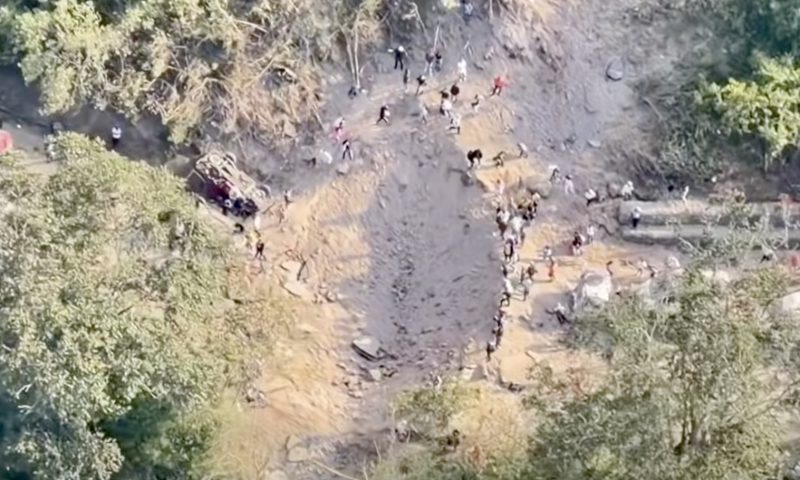
The impact of the attack was significant. Spain’s El País reported “that the explosion created a large crater, left the road covered in debris, and forced rescue operations that lasted several hours due to difficult access conditions.”

Aerial view of the crater caused by the explosion on the Pan-American Highway. Photo courtesy of Colombia’s Ministry of Defense.

Aerial view of the crater caused by the explosion on the Pan-American Highway. Photo courtesy of Colombia’s Ministry of Defense.

Cauca Governor Octavio Guzmán described the incident as one of the most serious attacks in the region in decades. “What happened on April 25 constitutes the most brutal and ruthless attack against civilians in decades,” he said.

The attack comes amid a resurgence of violence in southwestern Colombia, where illegal armed groups linked to drug trafficking, illegal mining and other illicit economies operate. Authorities continue operations in the area as investigations proceed to clarify the circumstances of the attack and determine responsibility.

According to reports by BBC Mundo, alias “Marlon” is a dissident FARC leader identified as Iván Jacobo Idrobo Arredondo, “the alleged head of the Jaime Martínez structure, part of the Estado Mayor Central (EMC),” one of the country’s most powerful illegal armed groups.

Operations and arrests

As part of response operations, the National Police reported the capture of José Alex Bitoco, alias “David” or “Mi Pez,” identified as the leader of the Dagoberto Ramos structure, another illegal armed faction, who is believed to have acted under orders from alias “Marlon”.

National Police Director Gen. William Rincón Zambrano said the detainee “will have to answer for the wave of terrorist activity” and linked him directly to the attack, stating that “he is responsible for what happened on April 25 in the El Túnel sector on the Pan-American Highway.”

The Defense Ministry reiterated that alias “Marlon” remains a priority target. “He is a high-value target, and we are searching for him with all the capabilities of the state. We have deployed a dedicated intelligence task force to locate him,” Sánchez said, confirming a reward of up to $1.4 million USD for information leading to his capture.

Context: criticism of “Paz Total” policy (Total Peace)

The attack comes amid growing security deterioration in Colombia, intensifying criticism of President Gustavo Petro’sTotal Peace” policy. The Ideas for Peace Foundation (FIP) has warned of a possible failure of the strategy, noting that “less than four months before the end of the government, the lack of progress in peace negotiations and the deterioration of security have become one of the main points of criticism of the Petro administration.”

According to the think tank, during the current administration “the number of disputed territories between illegal actors has nearly doubled, and the number of members in these structures has increased by 85%: they now total more than 27,000 members, including armed individuals and support networks.”

This figure not only represents a significant increase but also places the country at levels similar to, and even higher than, those seen before the peace process with the FARC began. Between 2011 and 2012, the estimate stood at around 26,800 members, compared with 14,600 at the end of Iván Duque’s administration in 2022.

The recent increase has also been rapid. According to the FIP, armed groups grew by 23.5% over the past year (from December 2024 to December 2025), reflecting a swift reconfiguration of these structures. At the same time, violence has intensified. Analysts such as Professor Karol Solís Menco note that over the weekend of April 25–26 alone, “26 terrorist attacks of varying magnitude” were recorded across the country.

Political analysis outlets point to a structural dynamic. According to La Silla Vacía, “Cauca is not experiencing an isolated event, but rather a phase of intensifying territorialized violence, marked by fragmentation among armed actors and a type of violence capable of producing national-level impacts.”

In this context, FARC dissident groups have once again taken center stage in the conflict. “Once again, attention is turning to FARC dissidents. Every attack, every gas cylinder bomb, every assault in Valle and Cauca ends with the same name on the table: the Jaime Martínez structure, one of the strongest groups of Iván Mordisco’s Estado Mayor Central,” El País reported.

Violence indicators also reflect sustained deterioration. “In the first four months of 2026, Colombia has already recorded 48 massacres, with 229 victims, most of them civilians, according to Indepaz. It is the highest figure in the past decade. With these numbers, which represent only a partial picture of the country’s violence, this election year is shaping up to be the most violent since the 2016 peace agreement with the now-defunct FARC guerrilla group,” the same outlet reported.

Cauca, where the attack took place, is considered one of the most sensitive regions. “Cauca is particularly complex because it combines multiple layers of conflict: the historic presence of Indigenous, peasant and Afro-descendant communities; illicit economies; Pacific corridors; disputes over drug trafficking routes; control of the Pan-American Highway; and the presence of FARC dissidents, particularly structures linked to Iván Mordisco,” El País said.

Experts agree that part of the difficulty lies in the design and implementation of the government’s strategy. “Early implementation was a valuable innovation in intent, but it failed to ensure minimum conditions of verification and institutional coherence,” said analyst Germán Valencia of the Peace and Reconciliation Foundation (Pares).

Taken together, these factors have led various sectors to conclude that the “Total Peace” policy faces serious structural limitations amid a scenario of armed fragmentation and territorial expansion by illegal groups.

  •  

Colombia Lifts Suspension of Former Intelligence Chief and Army General in Probe Over Alleged Links to FARC Dissidents

Despite the suspension being lifted, Wilmar Mejía has resigned from the intelligence agency and is set to lead the Financial Information and Analysis Unit (UIAF)

Colombia’s Inspector General’s Office (Procuraduría General de la Nación) has decided not to extend the three-month provisional suspension imposed on former Chief of the National Intelligence Agency (DNI), Wilmar Mejía, and Army General Juan Miguel Huertas, as part of a disciplinary investigation into alleged links with dissident factions of the former FARC guerrilla group.

Both officials had been temporarily removed from their positions after being mentioned in chats and documents found on devices belonging to alias “Calarcá,” one of the leaders of these illegal armed groups.

According to a document released by the Inspector General’s Office and published by the digital media La Silla Vacía, the “alleged conduct under investigation corresponds to events that occurred in 2024, when those involved were not yet public officials.” In that regard, the oversight body said it “will continue gathering evidence to determine whether such conduct extended into the period in which they held public office.”

“It is therefore necessary to continue the evidentiary process to establish whether the questioned conduct, in addition to being corroborated, extended into periods when those under investigation held public office,” the Inspector said in a statement.

Under Colombia’s legal framework, the Inspector General’s Office investigates public officials and individuals who manage public resources. If it is established that the alleged acts occurred prior to their appointment, the case would fall exclusively under the jurisdiction of the Attorney General’s Office (Fiscalía General de la Nación), which handles criminal investigations involving private citizens.

Ongoing investigation and background

The initial suspension was ordered on November 27, 2025, by the Inspector General’s Disciplinary Investigation Chamber and confirmed on December 23 of the same year, for a period of three months.

Later, at the end of March 2026, the National Intelligence Agency requested, by public communication, that the oversight body “clarify the scope of the measure,” which led to the recent decision not to extend the suspension, while the disciplinary investigation remains ongoing.

In parallel, the Attorney General’s Office continues investigations into the so-called “Calarcá case.” Attorney General Luz Adriana Camargo said there is “confirmed serious information from computers and cellphones about links between the group and a general and a DNI official,” according to statements reported by Caracol Noticias.

So far, no charges or convictions have been issued in connection with these cases.

Changes at the National Intelligence Agency

Amid the investigation, Wilmar Mejía confirmed his departure from the National Intelligence Agency on April 1, 2026, in an interview with Canal 1. “When the Inspector General’s Office lifted my suspension, I went to sign my reinstatement document and within 15 minutes I submitted my resignation. I am no longer the director of intelligence,” he said.

Following his resignation, President Gustavo Petro appointed him as director of the Financial Information and Analysis Unit (UIAF), the agency responsible for combating money laundering and terrorism financing in Colombia. The decision has drawn criticism, as Mejía remains linked to ongoing investigations by both the Inspector General’s Office and the Attorney General’s Office.

More information about the Colombia´s Intelligence Agency? Read “Colombia Intelligence Chief’s Resignation Exposes Instability and Possible Illegal Group Infiltration” by Finance Colombia.

  •  

Ugly Americans? Colombia Expels Americans, Others Deemed Undesirable For Behavior & Vice Accusations

Enhanced enforcement seeks to promote family-friendly tourism & unwelcome sex & vice-oriented tourism.

Migración Colombia, Colombia’s immigration agency, has executed the expulsion of two US citizens from Medellín following separate investigations into activities deemed a risk to public security and peaceful coexistence. The administrative measures targeted Steve Newland, a digital content creator known as “Chill Capo,” and Samuel McVey, a former teacher from New York. Both individuals were transported to the Aeropuerto Internacional José María Córdova in Rionegro and placed on a flight to Miami, Florida.

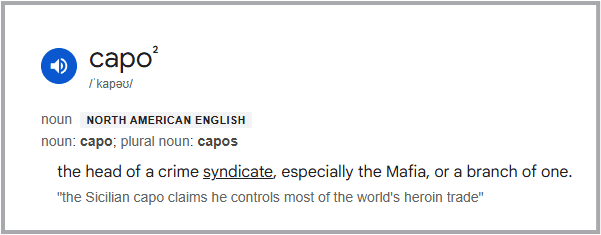
Definition of "Capo" according to Google.

Definition of “Capo” according to Google.

The actions come amid a broader strategy by the Colombian government to address concerns regarding sex tourism and the presence of foreign nationals with outstanding legal issues in their home countries. According to Paola Salazar, the Regional Director of Migración Colombia, the agency has adopted a stricter posture to ensure that Colombia is not utilized as a refuge for individuals linked to fraudulent or illicit activities.

The Case of Steve “Chill Capo”Newland

Steve Newland, a 42-year-old US citizen born in Willingboro, New Jersey, had been residing in Medellín since 2022. Operating under the digital brand “Chill Capo,” Newland promoted luxury lifestyle experiences and nightlife events. However, an investigation by Migración Colombia determined that Newland used his digital platforms to promote encounters with alleged purposes of sexual exploitation.

“Lo están esperando y lo capturan, (they are waiting for them and they will capture them)” stated Federico Gutiérrez, the Mayor of Medellín, referring to the coordination with US authorities regarding the return of the individuals.

The agency reported that Newland’s content included advice on how to evade immigration controls at the airport, such as using false medical certificates or simulating injuries to bypass rigorous inspections. His publications also mentioned accommodations linked to historical criminal figures, specifically the penthouses de Pablo Escobar, and provided instructions on how to avoid being targeted with escopolamina during social outings. Following the investigation, authorities confirmed Newland was in an irregular migration status. He has been banned from reentering Colombia for a minimum of five years.

Newland has publicly denied the allegations via his social media channels. He asserted that his primary objective was to educate visitors on safety and help them avoid dangerous situations. Newland claimed that his events were legal, safe, and conducted in collaboration with established Colombian businesses in the Parque Lleras district. He further contended that his visa had been renewed multiple times since 2022, suggesting that any illegal activity would have prevented such renewals. Newland challenged authorities to present specific evidence or identify victims related to the claims of exploitation.

🔴 #Noticia | Influenciador estadounidense que promovía turismo con fines de explotación sexual en Medellín, fue deportado por Migración Colombia.
El extranjero no podrá ingresar al país en los próximos cinco años, luego de este tiempo tendrá que solicitar una visa. pic.twitter.com/9QhZKJ7C8X

— Migración Colombia (@MigracionCol) April 11, 2026

Samuel McVey: School Incidents and US Warrants

Samuel McVey crazy man

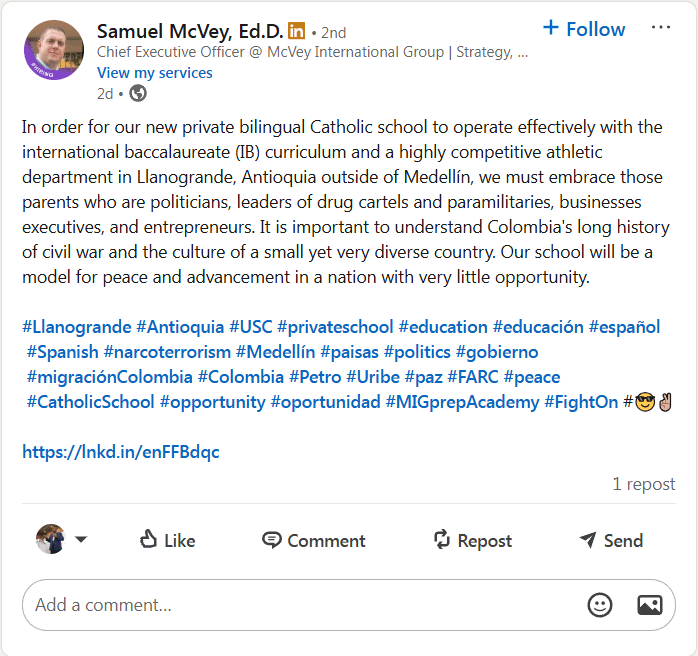
On LinkedIn, McVey claims to have a new private school in Llanogrande, Antioquia, that embraces “leaders of drug cartels and paramilitaries” among others.

In a separate incident, 46-year-old Samuel McVey, who was fired as a primary school teacher but styles himself as “Chief Executive Officer @ McVey International Group” on LinkedIn, was expelled following a series of disturbances at educational institutions in the Valle de Aburrá (Metro Medellín) and the city’s eastern Antioquia bedroom community of Rionegro. On April 8, 2026, McVey reportedly entered at least three schools in the wealthy Las Palmas sector of Medellín, where he allegedly initiated confrontations and made threats against staff and students. He subsequently traveled to Rionegro, where he attempted to gain entry to the Colegio Monteluna in Llanogrande by posing as an English language instructor.

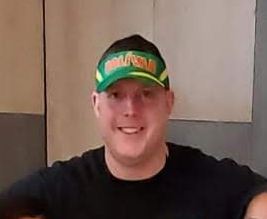
When denied access, McVey reportedly directed threats toward students, prompting school officials to contact the Policía Nacional. He was apprehended by units from the Estación Llanogrande near a local strip mall. Manuel Villa Mejía, the Secretary of Security and Coexistence of Medellín, described McVey as a risk to the community and confirmed that the individual was in a state of high agitation upon his detention.Samuel McVey (photo from LinkedIn)

Investigation into McVey’s background revealed that he is a fugitive from New Rochelle, New York. In the United States, McVey faces charges of aggravated harassment in the second degree, a misdemeanor. The charges stem from an investigation by the New Rochelle Police Department involving threats made against Dr. Corey W. Reynolds, the Superintendent of the City School District of New Rochelle. McVey, a former Spanish teacher at Isaac E. Young Middle School, was terminated in early 2026. New Rochelle authorities had issued two bench warrants for his arrest after he failed to appear for court proceedings on March 26 and April 1, 2026.

Despite the outstanding warrants, the New Rochelle Police Department noted that they do not typically extradite individuals for misdemeanor offenses. Consequently, Colombian authorities processed his departure as an immediate expulsion based on his conduct within Colombia. McVey has been prohibited from entering Colombia for ten years.

Regional Enforcement Trends and Peak Travel Season Operations

The expulsions of Newland and McVey come after a larger enforcement effort during the 2026 Semana Santa (Easter Week) season. Migración Colombia reported that enhanced controls at airports and land borders resulted in the detection of numerous foreign nationals with irregular status or criminal backgrounds.

Specific cases identified by the agency during this period include:

  • In Leticia, Amazonas, a Peruvian citizen was detained at a hotel; the individual was the subject of an Interpol Red Notice for alleged crimes against public health.
  • In Ibagué, a Venezuelan citizen wanted by Peruvian authorities under an Interpol Red Notice for aggravated theft was arrested in a joint operation with the Policía Nacional.
  • In Facatativá, another Venezuelan national was apprehended for an Interpol Red Notice involving charges of human trafficking for sexual exploitation and membership in criminal organizations.
  • In Bogotá, two Dominican citizens were expelled after attempting to fraudulently obtain Colombian passports to travel to Europe.
  • At the Aeropuerto Internacional José María Córdova, a man and a woman from the Dominican Republic were intercepted while attempting to travel to Peru and Argentina using fraudulent Colombian documentation.

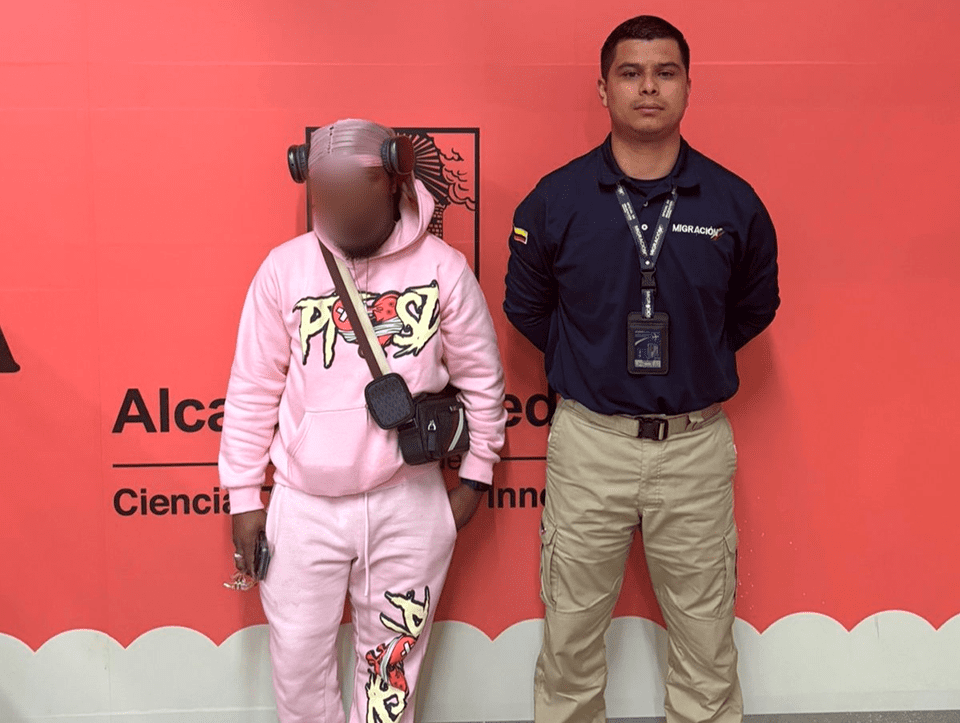
    Inadmitted (photo courtesy Migración Colombia)

    Inadmitted (photo courtesy Migración Colombia)

Statistical Overview of Inadmissibility in 2026

In the first quarter of 2026, Migración Colombia has denied entry to over 600 foreign nationals. The primary reasons for inadmissibility include state sovereignty and security risks (153 cases), lack of required visas (133 cases), and insufficient documentation (104 cases). Additionally, 89 individuals were rejected for providing false information during immigration interviews, while 34 had documented criminal records.

The agency also noted a specific focus on preventing the Explotación Sexual Comercial de Niños, Niñas y Adolescentes (ESCNNA). Through cooperation with international intelligence agencies and the Angel Watch platform, 471 individuals have been denied entry since 2016 for reasons associated with sexual offenses. At the Rionegro terminal alone, 31 inadmissibility cases have been recorded so far in 2026 related to potential sex tourism risks.

The Director General of Migración Colombia, Gloria Esperanza Arriero, emphasized that while the country remains open to international travel and investment, visitors are required to comply with the Constitución Política de Colombia and national laws. Under Decreto 2136 de 2021, the immigration authority maintains the power to deny entry or order the immediate return of any foreign citizen who poses a risk to national security or public order.

The main nationalities of those denied entry in early 2026 include citizens from the United States (76), the Dominican Republic (64), Ecuador (55), and Venezuela (52).

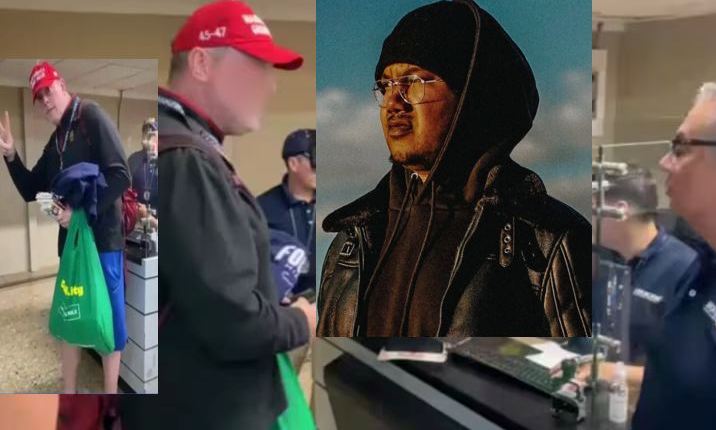
Montage of deportees Samuel McVey and Steven “Chill Capo” Newland

Video footage courtesy Migración Colombia

  •  

Indicted Ex-Foreign Minister Calls Colombian President Gustavo Petro “Mafia Boss”

Former Foreign Minister Álvaro Leyva releases another scathing attack on his former boss as he fights charges.

On April 10, former Colombian Foreign Minister Álvaro Leyva Durán released a formal statement responding to his indictment by the Fiscalía General de la Nación. Leyva faces charges related to his 2023 decision to declare a passport procurement tender void, a process that involved the private security printing firm Thomas Greg & Sons. The former official characterized the legal proceedings as a politically motivated maneuver orchestrated from the Casa de Nariño.

The indictment for prevarication centers on Leyva’s intervention in the bidding process, which the Fiscalía interprets as a deliberate breach of administrative law. In his defense, Leyva maintained that his actions were necessary to address irregularities and ensure the application of the Constitución Política de Colombia. He argued that the prosecuting body’s thesis would criminalize the conduct of any public servant who identifies unconstitutional terms in a government contract.

“If that argument is accepted, then any official who declares a bidding process void because they find the terms and conditions unconstitutional or illegal should go to jail.” — Álvaro Leyva Durán, former Minister of Foreign Affairs.

Leyva also directed accusations toward his successor at the Cancillería, Luis Gilberto Murillo. According to the statement, Murillo suspended a subsequent legal bidding process to justify a state of emergency, which Leyva claims led to an unnecessary markup of approximately $30 billion COP. Furthermore, Leyva alleged that software contracts exceeding $10 billion COP were improperly managed and that the funds remain unaccounted for under the current administration.

The former minister’s statement included severe personal and political criticisms of President Gustavo Petro. Leyva alleged a lack of moral conduct by the head of state during international state visits and questioned the president’s sobriety in public settings. The letter further asserted that US authorities are currently investigating potential links between the executive branch and narcotics trafficking organizations.

Regarding the domestic political landscape, Leyva warned of perceived risks to the Colombian electoral process. He alleged that the administration has engaged in the illegal interception of political candidates and intends to undermine the integrity of future vote counts. Leyva concluded by affirming his intention to defend his record and his legal decisions before the Corte Suprema de Justicia.

COMUNICADO pic.twitter.com/7YYhoHJD4B

— Álvaro Leyva Durán (@AlvaroLeyva) April 10, 2026

Finance Colombia translation of Leyva’s recent open letter dated April 10th

Some time ago, I denounced in a public communiqué that Gustavo Petro had woven against me an atrocious persecution, as retaliation for my denunciations of his closeness to the world of drugs—denunciations that have led to the United States having him cornered today. There I warned that, from within the government, intrigues were being made to throw me in prison and that attempts would be made against my life.

Now, months later, the Attorney General’s Office accuses me of malfeasance (prevaricato) because I declared void a passport tender that, according to that same institution, was based on a “catch-all specifications document” (pliego sastre). For the accusing entity, I should not have fulfilled the obligation of applying the Constitution that I myself helped draft and, by seeking equality, I acted with malicious intent. The world turned upside down.

Understand the gravity: if that thesis is accepted, any official who declares a tender void because they find unconstitutional or illegal specifications must go to prison. So, faced with such a thing, the trial is welcome. I will give the battle in the Supreme Court with all my strength. Because I trust its magistrates, because my life has been a permanent struggle for Colombia, and because justice, reason, and the law are with me.

The acquittal will be the logical consequence of the process in which I will prove, with official documents and among other things, the following: that I left in motion a new, clean, and legal tender, which Minister Luis Gilberto Murillo suspended. That he thus justified another manifest urgency, completely unnecessary, and added an overcharge of nearly 30 billion pesos to it. And that he contracted software for more than 10 billion additional pesos, which was pocketed. All by hand-picking. All murky. All without control. Thus, by brute force, the door was opened to the passport debacle of today. I warned Petro of what was coming down on the country. But he kept silent.

Today I feel the pride of having helped unmask the boss of the mafia that has plunged Colombia into its darkest hours. I took office as his Foreign Minister with the hope of change. But then I came to know his life of vice and decadence. I was slow to understand his vileness and, surely, also slow to denounce it. But from my father Jorge Leyva Urdaneta, exiled for opposing the dictatorship, I inherited courage and respect for institutions; from Álvaro Gómez Hurtado, I learned the necessity of a just order; and from Misael Pastrana Borrero, I learned to think about social peace. So, faithful to myself and to the spirit of my mentors, I denounced in various letters the moral, political, and personal degeneration that I came to know in Gustavo Petro. And time has proven me right.

The President is an infamous being: international human trafficking is a scourge of the poor girls of Colombia, and he, in the middle of a state visit, ends up as a customer of a brothel in Lisbon; he claims to be a champion of peace, but full of hatred he violently divides society with his stale, classist, and racist rhetoric; he claims to fight drug trafficking, but he goes out into the public square drugged, drunk on alcohol and sectarianism, to mistreat and insult those who contradict him, while in the United States his ties to narcos are being investigated. And so, from scandal to scandal, the horrible night does not cease: the homeland trampled by its own President is today the object of all the mockery abroad.

Petro knows that the upcoming electoral process resembles the one recently lived in Chile. And, to avoid the same result, he illegally intercepts candidates, seeks to destroy them, and is already trying to cast a mantle of doubt over the vote count. But Colombia deserves a new dawn. And the radical left, which—turned into the President’s hooligan squad—forgives him everything, seems condemned to the desert. We shall see whether, in the future, they also forgive him for being responsible for their possible defeat. For my part, I remain ready for all battles: always embracing justice against oppression, and with the law as my spear, shield, and banner.


  •  

Ecopetrol Announces Temporary Leave for President Ricardo Roa Amid Investigations by Colombia’s Attorney General’s Office

Ecopetrol’s board has approved a temporary leave for Ricardo Roa, keeping him out of office until Colombia’s presidential elections wrap up at the end of June 2026

Ecopetrol’s board of directors has approved an unpaid leave of absence for its president, Ricardo Roa Barragán, amid ongoing judicial investigations and growing pressure from unions, minority shareholders and political sectors.

In an official statement, the company said Roa “requested to use his accrued vacation days from April 7 to May 27, 2026,” and that the board also approved an unpaid leave requested by himself, “beginning on May 28 and lasting 30 calendar days.” This means he will be away from his duties for a continuous period extending through the end of June, after Colombia’s presidential elections scheduled for May 31 and June 21, if a runoff is required.

The decision comes in a context marked by two investigations led by the Attorney General’s Office. The first relates to an alleged case of influence peddling involving the purchase of an apartment in northern Bogotá, for which Roa has already been formally charged, although he has pleaded not guilty. The second concerns a possible breach of campaign finance limits during President Gustavo Petro’s 2022 presidential campaign, which Roa managed.

Both cases remain under review by judicial authorities, who will assess the evidence and issue a ruling (Colombia’s Top Prosecutor Charges Ecopetrol President in Alleged Influence-Peddling Case).

Roa’s temporary departure also follows pressure from some of the company’s main labor unions (Strike Threat Looms as Colombia Oil and Gas Union Calls for Ecopetrol President’s Removal), as well as minority shareholders (Ecopetrol Shareholders Loudly Heckle CEO Ricardo Roa at Annual Meeting as Leadership Dispute & Corruption Scandal Roils The Petroleum Company), and opposition political groups.

If this timeline holds, his potential return will coincide with the post-election period, ahead of the transition process with the new government set to take office on August 7, which is expected to appoint a new board and select a new president for the state-controlled oil and gas company.

Acting president appointed

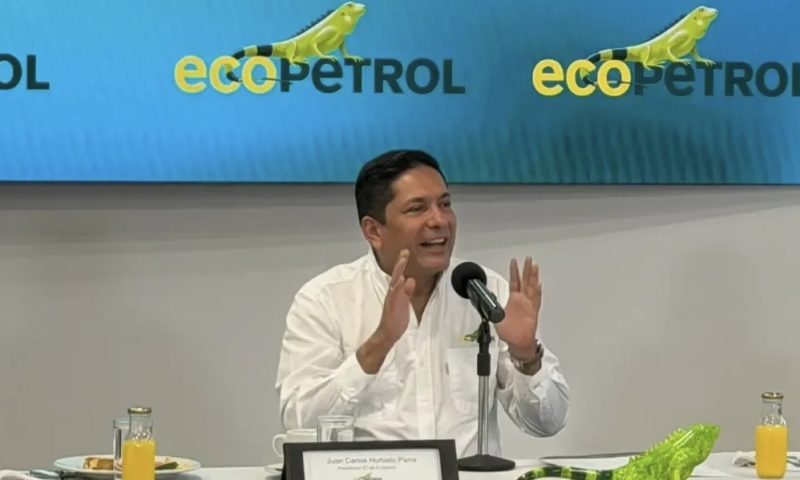
Photo 2: Juan Carlos Hurtado Parra, Acting President of Ecopetrol. Photo courtesy of Ecopetrol.

Juan Carlos Hurtado Parra, Acting President of Ecopetrol. Photo by of Ecopetrol.

During Roa’s absence, the board appointed Juan Carlos Hurtado Parra as acting president of Ecopetrol. According to the statement, Hurtado currently serves as executive vice president of hydrocarbons and has been the first alternate to the presidency since November 16, 2025.

He has “more than 28 years of experience in the energy sector, including roles as vice president of exploration, development, and production at Ecopetrol and has held executive positions focused on resource management and coordination. He is an electrical engineer, holds a specialization in Project Evaluation and Development, and has a Master of Business Administration (MBA) in International Oil and Gas.”

  •  

Colombia Intelligence Chief’s Resignation Exposes Instability and Possible Illegal Group Infiltration

Since the start of President Gustavo Petro’s administration, the intelligence agency has had four directors, highlighting instability within one of the institutions responsible for state security.

The resignation of Wilmar Mejía as chief of Colombia’s National Intelligence Agency has highlighted instability within the country’s main intelligence agency under the government of President Gustavo Petro, which has seen four leadership changes over the past three years.

Mejía confirmed his departure on April 1 in an interview with Canal 1. “When the Inspector General’s Office lifted my suspension, I went to sign my reinstatement document and within 15 minutes I submitted my resignation. I am no longer the director of intelligence,” he said.

The official had been suspended since December 23, 2025, by the Inspector General’s Office as part of a disciplinary investigation “for alleged links to and the provision of information to members of dissident factions of the former Revolutionary Armed Forces of Colombia (FARC).” The Inspector Office said at the time that the measure aimed to prevent possible interference with the process.

Investigation into alleged links to guerrilla dissidents

The case is related to the seizure of digital files belonging to Alexander Díaz Mendoza, known as “Calarcá Córdoba,” a leader of one of the dissident structures grouped under the Estado Mayor de Bloques y Frente (EMBF). Authorities say the documents point to possible contacts with the former intelligence chief.

Mejía has denied any involvement and has argued that the accusations are part of alleged “setups aimed at silencing reports of internal corruption.”

According to the Inspector Office, the investigation “includes possible acts such as the disclosure of military force communication frequency codes and support in the creation of security companies that could facilitate the legalization of weapons in the event of a breakdown in peace talks with the government.”

So far, neither the Inspector General’s Office nor the Attorney General’s Office has concluded its investigations, and no determination of responsibility has been made.

The case has raised concerns about state security and the institutional stability of the agency, considered a key body for the country’s strategic intelligence.

Local media outlets such as El Colombiano have reported that the situation has affected trust among international intelligence partners, suggesting that agencies such as the CIA (United States), MI6 (United Kingdom), and Mossad (Israel) have restricted the sharing of strategic information with Colombia.

Four directors in just over three years

Since Petro took office, the agency has had four directors, all of them close to the president through their past involvement in the M-19 guerrilla group, which signed a peace agreement in 1990.

The instability dates back to the beginning of Petro’s administration. Since August 2022, when Manuel Alberto Casanova Guzmán was appointed, the agency has undergone repeated leadership changes.

Casanova, who faced criticism over his lack of intelligence experience and background as a philosopher, was removed following allegations of involvement in a false extortion case linked to then-Foreign Minister Álvaro Leyva, as reported by Infobae.

He was succeeded by Carlos Ramón González, who later left the post amid investigations into his alleged role in the corruption scandal involving Unidad Nacional de Gestión de Riesgo y Desastres (UNGRD). He is currently in Nicaragua under political asylum, while Colombia has requested his extradition and Interpol has issued a red notice.

Finally, just before Mejía, the agency was led by Jorge Lemus, who served for nearly a year before resigning. He was subsequently appointed by Petro as director of the Unidad de Información y Análisis Financiero (UIAF), amid growing allegations of possible infiltration within the country’s security institutions.

  •  

American Airlines Flight Attendant Found Dead Following Disappearance in Medellín, Colombia

The search for Eric Fernando Gutiérrez Molina, a 32-year-old US flight attendant reported missing since March 22, concluded Friday following the discovery of a body in rural Antioquia, about two and a half hours south of Medellín. Medellín Mayor Federico Gutiérrez confirmed that the remains were located between the municipalities of Jericó and Puente Iglesias, stating there is a very high probability they belong to the American Airlines (NASDAQ: AAL) employee.

Gutiérrez Molina, a Salvadoran-American national who lived in Texas, arrived in Medellín on a commercial flight via José María Córdova International Airport. He was last seen alive on Sunday, March 22, after visiting commercial establishments in the El Poblado neighborhood. Investigations by the Secretaría de Seguridad y Convivencia suggest the victim was targeted by criminals using scopolamine, a sedative that can be used to incapacitate victims for robbery. According to witness statements, Gutiérrez Molina and another flight attendant were approached at a nightclub by individuals who lured them to another venue in Itaguí, a southwestern suburb of Medellín. While the companion flight attendant was able to make it back to her hotel, ill and disoriented, Gutiérrez Molina remained missing for five days.

“We have very clear leads on those responsible,” stated Mayor Federico Gutiérrez. “I have requested that justice be served and that the perpetrators be sought for extradition to the United States if necessary.”

The body was spotted by residents of Puente Iglesias floating in the Río Piedra ravine. The Instituto Nacional de Medicina Legal y Ciencias Forenses is currently conducting formal identification and an autopsy in Medellín. Mayor Gutiérrez reported that he has personally informed the victim’s father, the US Ambassador to Colombia, and the Consul General at the US Embassy in Bogotá regarding the development. The mayor stated that investigators have identified alleged perpetrators and expressed his intent to seek their extradition to the US.

‼Tengo que dar una triste noticia.
Desde el pasado Domingo, estamos en la búsqueda de Eric Gutiérrez un ciudadano Estadounidense que se encuentra desaparecido.
Lamentablemente acaba de ser encontrado un cuerpo sin vida, entre el municipio de Jericó y Puente Iglesias.
Existe…

— Fico Gutiérrez (@FicoGutierrez) March 27, 2026

This problem is not new. Criminals have been using scopolamine to prey on both Colombians and foreigners for years. Just last week, the Alcaldía de Medellín (Medellín Mayor’s Office) announced the capture of two women, aged 19 and 34, accused of drugging and robbing foreigners in Parque Lleras. The Policía Nacional and the Fiscalía General de la Nación  (Colombia Attorney General’s Office) conducted raids in the Caicedo and Villa Hermosa neighborhoods to dismantle the operation. The suspects reportedly offered escort services as a facade to move victims to tourist accommodations, where they administered benzodiazepines such as clonazepam to facilitate the theft of high-value belongings and cash.

Manuel Villa Mejía, Secretary of Security and Convivencia, stated that the captured women had extensive judicial records for aggravated robbery. During the operations, authorities seized mobile devices, identification documents belonging to other women, and a firearm. Villa Mejía emphasized that the city is utilizing intelligence and focused operations to close pathways for those who instrumentalize tourism for criminal purposes. These actions are part of a broader strategy to weaken the financial operations of networks that continue to target international visitors in El Poblado.

Finance Colombia has also reported on the capture of the Queen of Scopolamine, who led a network dedicated to drugging and robbing tourists in Parque Lleras. Despite prior law enforcement successes against structures like Las Barbies and The Ghetto, predatory crime remains a concern for the international investment community and business travelers.

Also read: Don’t Be A Victim! Six Rules For Safety When Visiting Colombia

photo of Mr. Gutierrez from social media

  •  

Strike Threat Looms as Colombia Oil and Gas Union Calls for Ecopetrol President’s Removal

The petroleum workers called for Ricardo Roa’s head following formal influence-peddling charges filed by Colombia’s Attorney General’s Office.

One of Colombia’s principal petroleum worker’s unions, the Unión Sindical Obrera (USO), has formally requested that Ecopetrol’s board of directors remove Ricardo Roa Barragán as president of the state-controlled oil company, amid ongoing investigations against him by the Attorney General’s Office. The union warned that it will call a nationwide strike if the request is not addressed.

The request was made in a letter dated March 24, sent after a meeting between union representatives and the company’s board. In the document, the USO stated that, “understanding the feelings of the Colombian people as reflected by the thousands of Ecopetrol workers, we immediately request that, within the framework of due diligence, the board of directors adopt the necessary measures to remove Dr. Ricardo Roa Barragán from his position as president of Ecopetrol.”

The union added that, if the request is not met, “this union will call for nationwide mobilization in defense of the most important asset of the Colombian people.”

On the same day, March 24, Ecopetrol’s board issued a public response, reported by outlets such as Caracol Radio, stating that it had reviewed requests from employees, the union and some minority shareholders.

In its statement, the board said it is “aware of its responsibilities within the framework of due diligence” and has been assessing the risks to the company stemming from reports related to Roa. However, it confirmed that Roa will remain in his position while the evaluation process continues.

The union’s request follows charges filed by the Attorney General’s Office on March 11 against Roa for alleged influence peddling. According to prosecutors, Roa is accused of favoring a third party in the allocation of a project in exchange for a reduction in the price of an apartment he purchased in 2023.

More details on the case can be found in the article “Colombia’s Top Prosecutor Charges Ecopetrol President in Alleged Influence-Peddling Case,” published by Finance Colombia.

At this stage, although the information has been publicly reported, judicial decisions remain under the authority of the Attorney General’s Office, which is leading the proceedings.

Roa’s legal situation is also linked to another investigation involving alleged irregularities in the financing of the Pacto Histórico presidential campaign in 2022, which he managed and which resulted in Gustavo Petro’s election as president.

In February, the Attorney General’s Office said investigators found indications that the campaign may have exceeded legal spending limits. A similar case had already been reviewed by Colombia’s elections authority, the National Electoral Council, which fined those responsible more than $5 billion Colombian pesos (over $1.4 million USD).

Photo by Ecopetrol.

  •  

Colombia’s Prosecutors Go After FARC Dissidents “Segunda Marquetalia” For Presidential Candidate Miguel Uribe Turbay Murder

So far, three people have been convicted in the killing of former presidential candidate Miguel Uribe Turbay, while arrest warrants target seven members of FARC dissident factions.

Colombia’s Attorney General’s Office is advancing its investigation into the assassination of Senator and presidential pre-candidate Miguel Uribe Turbay. On one hand, it sentenced alias “El Viejo” to more than 22 years in prison for acting as an intermediary between those who ordered the crime and the criminal network that carried out the attack; on the other, it issued arrest warrants for seven individuals belonging to a dissident faction of the FARC accused of ordering the killing.

The assassination of the Centro Democrático party senator and presidential candidate took place on June 7, 2025, in Bogotá while he was participating in campaign-related activities. The attack was carried out by a 14-year-old who fired multiple shots and was immediately captured after an exchange of gunfire with National Police officers and Uribe Turbay’s security team.

General attorney, Luz Adriana Camargo Garzón said the crime was not “an isolated act, but the result of a structured criminal operation that involved both an urban criminal network operating as outsourcing and an organized armed group” known as the “The Segunda Marquetalia.”

Miguel Uribe Londoño, a presidential candidate and the victim’s father, said in a tweet directed at President Gustavo Petro:President @petrogustavo You harassed Miguel with your verbal abuse, making him a target for assassination. Your government failed to protect him. Your government has been tolerant of drug trafficking, and the criminals who benefited from your total peace used the Second Marquetalia to assassinate Miguel. But the masterminds behind this must continue to be sought within the Colombian government. We cannot continue to accept this violence. This is why Miguel’s legacy needs to be upheld in the Presidency, and I will carry it until the last day of my life.”

Presidente @petrogustavo.

Usted hostigó a Miguel con su violencia verbal poniéndolo como carne de cañón para que lo asesinaran.

Su gobierno no le dio protección.

Su gobierno ha sido tolerante con el narcotráfico y los criminales beneficiados con su paz total utilizaron a la… pic.twitter.com/mPPvVYZgJv

— Miguel Uribe (@migueluribel) March 22, 2026

Judicial developments and convictions

According to the Attorney General’s report, three individuals have already been convicted through plea agreements:

  1. Simeón Pérez Marroquín, alias “El Viejo,” identified as the link between those who ordered the crime and the criminal network, was sentenced on March 20 to 22 years and four months in prison.
  2. Carlos Mora González, who conducted surveillance at the attack site and transported other suspects, was sentenced to 21 years in prison.
  3. Katherine Andrea Martínez, who took part in planning meetings and retrieved the weapon used (a Glock pistol), was sentenced to 21 years and two months in prison.

The 14-year-old who carried out the attack was sentenced under Colombia’s Juvenile Criminal Responsibility System.

Criminal network and FARC dissident involvement

After nine months of investigation, prosecutors established the involvement of the dissident FARC faction known as The Segunda Marquetalia as the group that ordered the crime and issued arrest warrants against several of its alleged leaders and members.

According to the statement, those targeted include Kendry Téllez Álvarez, identified as a possible mastermind; Iván Luciano Marín Arango, alias “Iván Márquez”; Géner García Molina, alias “Jhon 40”; Alberto Cruz Lobo, alias “Enrique Marulanda”; Jhon Jairo Bedoya Arias, alias “Rusbel”; Diógenes Medina Hernández, alias “Gonzalo”, and José Aldinever Sierra Sabogal, alias “Zarco Aldinever”.

They face charges of aggravated homicide, conspiracy to commit a crime, and the manufacture, trafficking, possession or carrying of firearms, accessories, parts or ammunition.

Additionally, according to El Colombiano, authorities are offering a reward of up to $5 billion Colombian pesos (around $1,4 million USD) for information leading to the capture of alias “Iván Márquez”, and $4 billion Colombian pesos ($1,2 million USD) for alias “Jhon 40” and “Zarco Aldinever”, identified as key leaders of the group.

“Wanted dead or alive”

According to El Colombiano, “the inclusion of ‘Zarco Aldinever’ on the most-wanted list has raised questions, as he had reportedly been killed in August 2025 in alleged clashes with the National Liberation Army (ELN) guerrilla group”

“He is alive; that is, we have no evidence that he is dead. For us, “Zarco Aldinever” is alive. There is no corroborated evidence regarding the rumor that he was killed by the ELN. It remains a rumor, which is why the arrest warrant was issued,” the attorney general said.

Meanwhile, the whereabouts of Iván Luciano Marín Arango, alias “Iván Márquez”, one of the former negotiators of the 2016 peace agreement who later returned to armed activity, remain unknown. He has been reported dead on several occasions, most recently in July 2023, when it was speculated he had died from gunshot wounds in Venezuela.

However, the government has not confirmed those reports. “Despite intelligence efforts by the security forces, there is no reliable information to determine his whereabouts or status,” Defense Minister, Major General (ret.) Pedro Arnulfo Sánchez said.

Photo above. Colombia’s Attorney General Luz Adriana Camargo during a presentation on progress in the Miguel Uribe Turbay case. Photo courtesy of the Attorney General’s Office.

Photo in social media. Miguel Uribe Turbay. Photo courtesy of the Senate of the Republic of Colombia.

  •  

Editorial: Gustavo Petro’s “Total Peace” Has Led to Total Chaos in Colombia

Colombia’s President Gustavo Petro ran for president on a campaign promising Paz Total—Total Peace. He promised to give the FARC dissidents, the vicious ELN guerillas, and mafias like the Clan del Golfo a good talking to, and with that, they will just lay down their weapons and become model citizens. Petro promised that through dialogue with bloodthirsty kidnappers and extortionists, they would be willing to stop being bloodthirsty kidnappers and extortionists; as if they are just misunderstood little muffins who only need a hug.

Nubia Carolina Córdoba, governor of Chocó, Colombia (photo from her Twitter account)

Nubia Carolina Córdoba, governor of Chocó, Colombia (photo from her Twitter account)

According to figures compiled by the Universidad Externado and reported by The City Paper Bogotá, Colombia has recorded 40,663 homicides during the first three years of the Petro presidency. Over 400 human rights defenders have been slaughtered between 2022 and 2025 according to the United Nations Office of the High Commissioner on Human Rights. Human Rights Watch reports that the ELN and FARC dissidents have expanded their territories by up to 55%. They are taking back over Colombia.

Under Gustavo Petro’s watch, Colombia has returned to the Institute for Economics and Peace’s Global Terrorism Index top ten list of countries impacted by terrorism, along with Total Peace destinations like Democratic Republic of Congo, Somalia, and Syria. Just this past week, a Clan del Golfo poster was put up within walking distance from the Aeropuerto Internacional José María Córdova just outside of Medellín. This Total Peace nonsense is a failure.

Right now, in the neglected Pacific department of Chocó, the ELN has kidnapped whole communities. Petro ran a campaign promising that he was going to embrace these historically neglected communities—places like Chocó, Nariño, La Guajira, and Norte de Santander—but insecurity is increasing. Chocó’s governor, Nubia Carolina Córdoba, says 6,047 people are trapped inside of their homes because the ELN has announced an illegal armed curfew in the municipality of Bajo Baudó. Most of these people are already poor, and now they have been kidnapped en masse by this guerilla group that operates with impunity because Gustavo Petro coddles them with “dialogue.”

According to Governor Córdoba, they attacked the police station in the village of Santa Rita using grenades attached to drones. It has gotten so bad that Colombia has restricted the entry of drones into the country. These people are calling out for help, but the president insists on talking as the ELN grows and continues to menace the police forces, the Colombian military, and, most importantly, the innocent public.

There is currently public disorder where belligerents have completely blocked the roads in the north of Antioquia, in the region called Bajo Cauca, and also in the neighboring department of Córdoba. The city of Caucasia is under curfew. Antioquia’s Governor, Andrés Rendón, has urgently called on the national government to stop the talk and take action. Groups are attacking ambulances and burning people’s motorcycles as they try to get by the roadblocks, regardless of the emergency.

Governor Rendón stated: “There can be no dialogue amidst blockades and human rights violations. It’s been seven days now with the Bajo Cauca region paralyzed and the country held hostage by chaos.” He called on the Fiscalía General de la Nación to bring those responsible to justice and challenged the Minister of Defense, Pedro Sánchez, to order the immediate reopening of the roads. “We’re not talking about small-scale miners here; behind this are criminal structures, as everyone knows, that finance themselves through illegal mining and move billions of pesos,” Rendón added, demanding full authority against the criminals who use communities as a shield.

El gobernador de Antioquia, @AndresJRendonC, se pronunció sobre la situación de orden público en el Bajo Cauca, en medio de los bloqueos que ya completan varios días y afectan la movilidad y la seguridad en la región. @GobAntioquia pic.twitter.com/4SPQgTa68r

— MiOriente (@MiOriente) March 22, 2026

The current situation with these organized criminal groups—whether regular mafias like the Clan del Golfo or murderous Marxist guerillas like the ELN and the FARC dissidents—is reminiscent of a classroom where a substitute teacher has lost all control. Petro promised Total Peace, but the result has been Total Chaos. Investors do not want to deal with this mess. While the Petro government claims they want tourism to be a major economic driver, road blocks make many areas look like scenes out of Mad Max: Road Warrior. Whole zones of the Pacific coast are unsafe even for residents, met with pure impotence from the regime.

Ten years ago, it was safe to drive from Medellín to the beachside town of Coveñas in Sucre, but that is no longer the case. While it remains safe to visit Colombia for business or tourism in major hubs like Bogotá, Medellín, Santa Marta, or the San Andrés islands, the long-term outlook is concerning. My hope is that Colombians choose a future leader serious about law and order as a prerequisite for human rights. It is not only the government that we need to protect human rights from; those who kill, steal, kidnap, and forcibly recruit children are violating those rights as well.

Colombian anti-explosives experts inspect propaganda by the Clan del Golfo mafia group just minutes away from Medellin's international airport in March, 2026 (image from Facebook).

Colombian anti-explosives experts inspect propaganda by the Clan del Golfo mafia group just minutes away from Medellin’s international airport in March, 2026 (image from Facebook).


  •  

Leaked Internal Documents Point to Possible $42 Million USD Corrupt Deal Inside Ecopetrol

Ricardo Roa was appointed CEO of Ecopetrol after serving as Colombian President Gustavo Petro’s campaign manager. The Presidential campaign is also under investigation for campaign finance violations.

The controversy surrounding the filing of charges against Ricardo Roa Barragán, president of Colombia´s oil and energy company, Ecopetrol, has taken a new turn following the leak of an internal report suggesting that more than $42 million USD may have been transferred to a private company based in the British Virgin Islands.

According to disclosed information, “the media outlet 6AM W obtained documents showing the link between the USD 42 million payment made by Ecopetrol and a company connected to Serafino Iácono,” as stated by the outlet itself.

It is important to recall that on March 11, Colombia’s Attorney General’s Office (Fiscalía General de la Nación – FGN) formally charged Ricardo Roa Barragán with the alleged crime of influence peddling by a public official. According to the accusation, the executive allegedly intervened to favor a third party (Serafino Iácono) in the assignment of a gasification project in exchange for personal benefits. The FGN stated that Roa “ordered that a specific person be assigned to a gasification project in exchange for a reduction in the price of an apartment” located in northern Bogotá. During the hearing, the executive did not accept the charges.

Regarding the leaked documents, 6AM W reports that the published material “is a memorandum produced following a communication between the lawyers of Miller & Chevallier, hired by Ecopetrol, and Charles Cain, head of the Anti-Corruption Unit for Foreign Operators at the US Securities Exchange Commission (SEC).” This suggests that the document is an internal Ecopetrol report produced in 2024.

Additionally, the report includes references to an “audit commissioned by Ecopetrol to Control Risks, which identifies Iácono as a possible beneficiary of the alleged irregular payment of $42 million USD made through a purchase option” of power generation plants linked to the company Genser, associated with the businessman.

The leaked documents can be accessed through the Caracol Radio website via “Las contradicciones de Ecopetrol y Serafino Iácono en el caso del apartamento de Roa y Termomorichal.”

For his part, Serafino Iácono issued a statement, published by La República via the social network X, in which he affirms that since April 7, 2017, he has had no relationship with the company and that the transaction in question took place in 2023, after his departure.

At this stage, although the information has been reported by the media, judicial decisions remain under the authority of Colombia’s Attorney General’s Office, which is leading the proceedings against Ricardo Roa. Iacono said that he would be filing suit against Control Risks, and hired well-known Colombian lawyer Jaime Lombana Villalba to begin the process.

For further context, readers are encouraged to consult the article “Colombia’s Top Prosecutor Charges Ecopetrol President in Alleged Influence-peddling Case,” published by Finance Colombia.

Beyond the communications previously issued and reported by Finance Colombia in the aforementioned article, no new official statements have been released by Ecopetrol’s board of directors since March 12, prior to the information leak. Finance Colombia has reached out to Iacono for comment and will report any additional information.

  •  

US DEA Launches Probe of Colombian President Gustavo Petro For Alleged Cartel Ties

The investigation into Colombia’s President comes on the heels of Petro’s visit to Washington & meeting with Trump.

The Drug Enforcement Administration (DEA) has designated Colombian President Gustavo Petro as a priority target as federal prosecutors in New York investigate potential connections to narcotics trafficking organizations. Records indicate that the US Department of Justice is reviewing multiple inquiries dating back to 2022, primarily supported by information from confidential informants.

The investigations involve allegations regarding interactions with the Sinaloa cartel and the possible use of the Paz Total policy to benefit specific traffickers who reportedly contributed to the 2022 presidential campaign. Documents also mention the potential use of law enforcement assets to facilitate the transport of cocaine and fentanyl through maritime terminals. The priority target designation is applied to individuals whom the DEA identifies as having a significant influence on international narcotics distribution.

President Petro has denied any involvement with criminal organizations or the acceptance of illicit funds for his political activities. In a statement released on social media, he suggested that legal proceedings in the US would eventually disprove allegations originating from political opponents. The Embassy of Colombia in Washington stated that the reports are based on unverified and anonymous sources.

“The reported insinuations have no legal or factual basis,” stated the Embassy of Colombia in Washington.

The inquiry has expanded in recent months, with prosecutors in the Eastern and Southern Districts of New York questioning detained individuals about allegations that representatives of the administration solicited bribes in exchange for preventing extradition to the US. It has not been confirmed whether formal charges will be filed against the president, and the White House has stated it has played no role in the independent judicial process.

Portions of the DEA records cite a 2024 interview regarding allegations that former aides and officials from Ecopetrol (NYSE: EC) (BVC: ECOPETROL) were used to launder funds. Ricardo Roa, the president of Ecopetrol, has denied these claims. Simultaneously, the US Department of the Treasury previously sanctioned Petro in late 2025, citing concerns over cocaine production levels, though specific evidence was not made public at that time.

While Petro denies connections to criminal groups, it is important to note that he was a member of the homicidal M-19 guerilla group in Colombia from his teenage years until the group laid down its arms in 1987. Petro served prison time for illegal arms possession due to his activities with the M-19.

Domestic investigations in Colombia are also ongoing regarding the president’s relatives. His son, Nicolas Petro, faced charges in 2023 related to the alleged receipt of funds from a convicted trafficker. Furthermore, the president’s brother, Juan Fernando Petro, has been linked to investigations involving unauthorized negotiations with inmates at the La Picota prison regarding the Paz total framework and extradition protections.

Witnesses currently in US custody who may be relevant to the ongoing probes include former members of the Venezuelan Cartel de Los Soles and various Colombian nationals recently extradited, such as individuals associated with the La Inmaculada organization and the Clan del Golfo (Gulf Clan). Some reports suggest that sums near $500 million COP were discussed in exchange for gestores de paz (“Peace Manager”) status, though these allegations remain under judicial review.

Headline photo: Colombian President Gustavo Petro (photo César Carrión, Presidencia de Colombia)

  •  

Colombia’s Top Prosecutor Charges Ecopetrol President in Alleged Influence-Peddling Case

The charge adds to a separate investigation over alleged violations of campaign finance limits during President Gustavo Petro’s 2022 presidential campaign

Colombia’s Attorney General’s Office (Fiscalía General de la Nación – FGN) charged the president of the country’s state-controlled oil and energy company Ecopetrol (NYSE: EC’, BVC: ECOPETROL), Ricardo Roa Barragán, with the alleged crime of influence peddling by a public official. The charge was formally presented on March 11 during a public hearing.

According to the prosecutors press release, Roa “ordered that a specific person be assigned to a gasification project in exchange for a reduction in the price of an apartment” located in northern Bogotá. The Attorney General’s Office said the alleged intervention was related to the executive’s interest in acquiring the property below market value.

During the hearing, a prosecutor from the Specialized Anti-Corruption Directorate formally presented the charge. However, Roa did not accept the accusation.

The newspaper El Colombiano explained that “the filing of charges is a formal act within the criminal process through which the person under investigation is officially notified of their link to a judicial case and the facts attributed to them. However, this step does not imply a conviction or a final decision and maintains the presumption of innocence that protects the executive.”

After the judicial decision became public, Ecopetrol’s Board of Directors said Roa will remain in his position as president of the company. In a public statement, the company’s highest governing body said it respects “Ricardo Roa’s presumption of innocence and his right to due process.” It also said it will continue acting according to the company’s established protocols for evaluating this type of situation.

Roa pled innocent to the influence trafficking charges.

Context: political, legal, and corporate challenges

Ecopetrol is currently facing several political and economic challenges. These include judicial and disciplinary proceedings involving its president, as well as questions about the company’s institutional and financial stability.

For example, the company’s 2025 annual report sparked public debate after reporting the highest reserve replacement ratio in the last four years (121%). According to the document, “300 million barrels of oil equivalent (BOE) were added, guaranteeing an average reserve life of 7.8 years.”

The report also said, “net proven reserves reached 1.944 billion barrels of oil equivalent.” However, private firms such as the independent investment bank BTG Pactual questioned those figures due to a change in the methodology used to calculate them.

Another point of debate has been the presidency of the Board of Directors, currently headed by Ángela María Robledo Gómez, a psychologist and former member of Colombia’s House of Representatives for Bogotá. Robledo was a member of the Partido Alianza Verde between 2010 and 2018 and later ran as vice presidential candidate alongside Gustavo Petro in the 2018 elections.

Roa’s legal situation is also linked to another investigation related to alleged irregularities in the financing of the Pacto Histórico presidential campaign in 2022, which he managed and which resulted in Petro becoming president.

In February, the Attorney General’s Office said investigators had found evidence suggesting that the campaign exceeded the legal spending limits. A similar case had already been examined by Colombia’s elections regulator Consejo Nacional Electoral, which fined those responsible more than $5 billion Colombian pesos (over $1.4 million USD).

For his part, Colombian President Gustavo Petro has publicly defended Roa. During a public event broadcast by media outlets such as Blue Radio, the president said the accusations are politically motivated. “We did not exceed spending limits; I have reviewed that accounting up and down,” he said. He also argued that the opening of criminal proceedings could be interpreted as an attempt to politically target his government.

Headline photo: Colombian President Gustavo petro (left) with former campaign manager and current Ecopetrol CEO Ricardo Roa (photo courtesy Ecopetrol).

  •  

Defrocked Colombian Supreme Court Justice Sentenced to Over 10 Years Prison in Corruption Case

The sentence is the latest in the “Cartel of the Toga” judicial corruption scandal that has rocked the Colombian justice system over the past several years.

José Leonidas Bustos Martínez, a former Justice of the Sala Penal of the Corte Suprema de Justicia, was sentenced to 10 years and three months in prison for his role in the so-called “Cartel de la Toga,” a corruption network made up of judicial officials who received payments in exchange for influencing court decisions in favor of political leaders.

The Sala Especial de Primera Instancia issued ruling SEP 013 on February 20, 2026, finding Bustos Martínez guilty of criminal conspiracy. In addition to the prison sentence, the Court barred him from holding public office for the same period and imposed a fine of approximately $36,200 USD.

José Leonidas Bustos Martinez was a leader of the “Cartel of the Toga” that sold justice to the highest bribe.

The former justice, who twice served as President of the Supreme Court, was acquitted of a separate charge of abuse of public office related to influence peddling.

The ruling states that no alternative sentencing measures, such as suspended sentence or house arrest, will be granted, meaning Bustos Martínez must serve his sentence in a Colombian correctional facility to be designated by the Instituto Nacional Penitenciario y Carcelario (INPEC).

The Court also ordered the issuance of an arrest warrant and requested an Interpol Red Notice, as Bustos Martínez has resided in Canada since 2019.

According to the Comisión de la Verdad de Colombia (Truth Commission), the so-called “Cartel de la Toga” was a corruption scheme operating since 2010 through which “Colombia’s justice system was infiltrated through the purchase of judicial rulings.” The Commission stated that “officials involved diverted investigations, delayed proceedings, misused privileged information, altered evidence and discredited witnesses in order to favor those who paid for judicial decisions that appeared lawful.”

Investigations lead by the Commission determined that the scheme sought to illegally interfere in cases against high-level political leaders in exchange for substantial sums of money, including obstructing arrest warrants and preventing pretrial detention measures.

Bustos Martinez’s conviction adds to more than 50 arrests and extraditions related to the case since 2017, including sentences against former judicial officials, former members of Congress, former mayors and former governors from various regions of Colombia.

Headline photo:In 2008 then President Álvaro Uribe swore in José Leonidas Bustos Martínez as magistrate of the Criminal Cassation (Appeals) Chamber of the Supreme Court of Justice, during a ceremony held Tuesday, April 1st, in the Gobelinos Hall of the presidential palace (photo: Presidential Archives of Colombia)

  •  
❌