Reading view

iPhone 17 Pro Named Fastest-Charging Smartphone

Apple's iPhone 17 Pro has been named the fastest-charging phone overall in a new CNET lab test covering 33 smartphones, with Samsung's Galaxy S26 Ultra taking the top spot for wired charging speed.

To determine the rankings, CNET's lab team ran each phone through a 30-minute wired charging test starting at 10% battery or less, using the phone's included cable and a wall charger rated at or above the device's maximum supported speed. Phones that support wireless charging went through a matching 30-minute wireless test using a Qi (7.5W), Qi2 (15W), or Qi2.2 (25W) charger matched to the phone's peak supported speed. CNET then averaged the wired and wireless results into an overall charging score.

The ‌iPhone 17 Pro‌'s win in the overall category is partly a function of its relatively compact 4,252mAh battery, which is smaller than the 5,000mAh or larger capacities common among competing flagships. With less capacity to fill, the 17 Pro charges faster in absolute terms, and it supports both 40-watt wired charging and 25-watt Qi2.2 wireless charging. CNET notes that battery size is just one factor in overall battery life, alongside processor and software efficiency, and in its battery life testing, the ‌iPhone 17 Pro‌ Max came out on top for endurance.

For wired charging, Samsung's Galaxy S26 Ultra took the top spot, adding 76% charge in 30 minutes via its 60-watt wired charging speed, the fastest of any Samsung flagship to date. The ‌iPhone 17 Pro‌ came in second at 74%, tied with Motorola's Moto G Stylus (2025). The OnePlus 15 followed with 72%, while the iPhone 17, ‌iPhone 17 Pro‌ Max, and Samsung Galaxy S25 FE each reached 69%.

Apple's ‌iPhone 17 Pro‌ also claimed the fastest wireless charging result, gaining 55% in 30 minutes. The ‌iPhone 17 Pro‌ Max added 53%, followed by the ‌iPhone 17‌ at 49%, the iPhone Air at 47%, and the Galaxy S26 Ultra at 39%. CNET again attributes the 17 Pro's edge over the 17 Pro Max largely to its smaller battery, since both devices share the same A19 Pro chip and software.

Across all brands tested, Apple had the most consistent fast-charging performance by a considerable margin, averaging 54.6% across the four ‌iPhone 17‌ models and the ‌iPhone Air‌. Samsung's nine-phone average came in at 38.5%, with the Galaxy S26 Ultra as its strongest performer and the Galaxy Z Fold 7 as its weakest at 29%.

Silicon-carbon batteries, which use a silicon-based anode rather than graphite to enable higher capacities and faster charge rates, appeared among several of the top performers. The OnePlus 15, for example, recharged 72% of its 7,300mAh silicon-carbon battery in 30 minutes using a proprietary 80-watt charger. Silicon-carbon phones in the U.S. remain limited to OnePlus, RedMagic, and Poco. Apple, Samsung, and Google have not yet adopted the technology.
Related Roundup: iPhone 17 Pro
Tag: CNET
Related Forum: iPhone

This article, "iPhone 17 Pro Named Fastest-Charging Smartphone" first appeared on MacRumors.com

Discuss this article in our forums
  •  

The MacRumors Show: Gemini Announcements and Apple Watch Series 12 Rumors

On this week's episode of The MacRumors Show, we discuss Google's latest wave of announcements for Android and Gemini, the newly announced Fitbit Air, and Apple Watch Series 12 rumors.


The centerpiece of Google's announcements this week was Gemini Intelligence, Google's new umbrella platform for AI across phones, watches, cars, and laptops. Its headline capability is cross-app automation: users can photograph an event flyer and ask Gemini to find tickets on Expedia, or pull up a grocery list and have it build a cart in a shopping app. A companion feature called Create My Widget lets users describe a home screen widget in natural language and have Gemini generate it, drawing from Gmail and Calendar to build a personalized dashboard.

Google also unveiled the Googlebook, a new laptop category designed from the ground up around Gemini with partners including Acer, Asus, Dell, HP, and Lenovo arriving this fall. Gemini in Chrome for Android gained an agentic browsing layer rolling out end of June, and Android Auto received AI-generated contextual replies and DoorDash voice ordering. A Meta partnership brings Ultra HDR, native stabilization, and night mode to Instagram on Android flagship devices.

In January, Apple and Google announced a partnership under which Gemini would power the next generation of Apple Foundation Models, including a more personalized Siri expected this year. Apple's equivalent cross-app ‌Siri‌ actions were announced at WWDC 2024 but have not yet shipped; Gemini Intelligence is rolling out this summer using the same underlying technology.

Google also unveiled the Fitbit Air this week, a screenless fitness tracker priced at $99 that ships on May 26. The device weighs just 12 grams with the band and tracks heart rate, AFib, HRV, SpO2, and sleep stages in a small pill-shaped design with no display, no buttons, and no notifications. Battery life lasts for seven days, with a five-minute fast charge delivering a full day of use. A Stephen Curry Special Edition is priced at $129, with core tracking free and Google Health Premium adding an AI Coach for $9.99 per month after a three-month trial.

The launch accompanies a broader rebrand. The Fitbit app becomes Google Health on May 19, with Google Fit folded in, Apple Health data supported on iOS, and APIs for Garmin, Whoop, and Oura. Bloomberg's Mark Gurman reported earlier this year that Apple has scaled back a comparable Health+ coaching service, with the feature now unlikely to launch. The Apple Watch SE starts at $249 and requires daily charging, and the Fitbit Air's $99 price with no mandatory subscription addresses a segment Apple does not cover.

We also discuss the Apple Watch Series 12, which is shaping up to be an incremental upgrade. Bloomberg's Mark Gurman said in March that he does not expect any major design changes, and a significant redesign is now not expected until 2028.

The leaker known as "Instant Digital" said this week that Touch ID, which appeared in leaked Apple code last year, has been deprioritized in favor of battery life improvements. DigiTimes previously reported on an eight-sensor array on the back of at least one 2026 model, though blood pressure monitoring is said to be further out. A new chip is expected, with leaked code indicating a meaningful upgrade from the S10 used across the last three series. watchOS 27 will be previewed at WWDC on June 8.

The MacRumors Show has its own YouTube channel, so make sure you're subscribed to keep up with new episodes and clips.


You can also listen to ‌The MacRumors Show‌ on Apple Podcasts, Spotify, Overcast, or other podcast apps. You can also copy our RSS feed directly into your player.


If you haven't already listened to the previous episode of The MacRumors Show, catch up to hear our discussion about how the global memory shortage is forcing Apple's hand across multiple key products, killing configurations, delaying launches, and prompting spec decisions that would have seemed unlikely a year ago.

Subscribe to ‌The MacRumors Show‌ for new episodes every week, where we discuss some of the topical news breaking here on MacRumors, often joined by interesting guests such as Kayci Lacob, Kevin Nether, John Gruber, Mark Gurman, Jon Prosser, Luke Miani, Matthew Cassinelli, Brian Tong, Quinn Nelson, Jared Nelson, Eli Hodapp, Mike Bell, Sara Dietschy, iJustine, Jon Rettinger, Andru Edwards, Arnold Kim, Ben Sullins, Marcus Kane, Christopher Lawley, Frank McShan, David Lewis, Tyler Stalman, Sam Kohl, Federico Viticci, Thomas Frank, Jonathan Morrison, Ross Young, Ian Zelbo, and Rene Ritchie.

‌The MacRumors Show‌ is on X @MacRumorsShow, so be sure to give us a follow to keep up with the podcast. You can also email us at podcast@macrumors.com or head over to The MacRumors Show forum thread. Remember to rate and review the podcast, and let us know what subjects and guests you would like to see in the future.
Related Roundup: Apple Watch 11
Buyer's Guide: Apple Watch (Caution)

This article, "The MacRumors Show: Gemini Announcements and Apple Watch Series 12 Rumors" first appeared on MacRumors.com

Discuss this article in our forums

  •  

Spotify to Adopt Apple's Technology for Video Podcasts

Spotify today announced plans to adopt Apple's HTTP Live Streaming (HLS) technology for video podcasts, a move that will allow creators to distribute video shows across both platforms without changing their existing setup.


Apple introduced an enhanced HLS-based video podcast experience for the iPhone, iPad, Apple Vision Pro, and the web at the end of March. The upgrade significantly improves how video shows are delivered and consumed within Apple Podcasts, but Mac and Apple TV support is not yet available.

Spotify says its Spotify for Creators and Megaphone platforms will support Apple's HLS video technology later this year, describing the move as "a major step toward truly platform-agnostic video distribution." The company says it is "actively working on this integration in coordination with Apple" and will share timeline details in the near future.

This will enable Spotify-hosted creators to distribute their video podcast content across platforms, reaching audiences on both Spotify and Apple Podcasts without changing their existing setup.


Monetization will carry over alongside distribution. Spotify says it plans to support "monetization for video content on ‌Apple Podcasts‌ so creators don't have to choose between audience reach and revenue," with further details on how that will work across platforms to follow.

The company noted that video shows must be uploaded directly to Spotify rather than distributed via RSS, which the company says is necessary to enable engagement-based monetization, real-time analytics, and other Spotify-first features. RSS distribution to other platforms, including ‌Apple Podcasts‌, remains unchanged.

Separately, Spotify also announced that several podcast hosting providers are now live with video support through the Spotify Distribution API. Libsyn, Podigee, Audioboom, Audiomeans, and Podspace have all completed integration, allowing creators on those platforms to distribute video content directly to Spotify and monetize eligible content through the Spotify Partner Program. Additional partner integrations are said to be in progress.
This article, "Spotify to Adopt Apple's Technology for Video Podcasts" first appeared on MacRumors.com

Discuss this article in our forums

  •  

Apple Defends Google Against EU Proposal to Give AI Rivals Access to Services

Apple has stepped in to warn that EU proposals to force Google to open Android to competing AI services pose serious risks to user privacy, security, and safety.


Apple's latest submission to the EU comes (via Reuters) in response to the European Commission's call for feedback on draft measures designed to help Google comply with the Digital Markets Act (DMA). The proposals would allow competing AI services to interact with Android apps to perform actions such as sending emails, ordering food, or sharing photos. Google has already pushed back on the plans, arguing they would undermine key privacy and security safeguards for European users.

Apple, which is itself now subject to EU measures requiring it to open up its own ecosystem, said it has a strong interest in the case given its own operating systems for iPhone, iPad, and Mac. In its submission, Apple said the draft measures "raise urgent and serious concerns," warning that if confirmed, "they would create profound risks for user privacy, security, and safety as well as device integrity and performance."

Apple also took aim at the rapidly evolving state of AI as a particular source of concern, arguing that risks are "especially acute in the context of rapidly evolving AI systems whose capabilities, behaviours, and threat vectors remain unpredictable." The company questioned the EU's technical expertise in drawing up the proposals, stating that the Commission is "substituting judgments made by Google's engineers for its own judgment based on less than three months of work," and suggesting the only discernible goal of the draft measures is "open and unfettered access."

Apple has a long history of clashing with EU regulators over the DMA. The company challenged the regulation in court in October 2025, and urged regulators to scrap it entirely the month before, arguing it had created security vulnerabilities and worsened the user experience. The EU said it had no intention of repealing the law in response.

The feedback period for the proposals ran from April 27 to May 13, 2026. The European Commission has said it will carefully assess all submissions and may adjust the proposed measures as a result, though its final decision must be adopted within six months of the opening of the specification proceedings, giving a deadline of July 27, 2026. The EU separately concluded in May 2026 that the DMA has had a positive impact overall, setting aside Apple's lobbying for the regulation to be revised.
This article, "Apple Defends Google Against EU Proposal to Give AI Rivals Access to Services" first appeared on MacRumors.com

Discuss this article in our forums

  •  

Few Smartphone Owners Care About Foldables or AI, Survey Suggests

A new survey suggests most U.S. smartphone owners are not motivated to upgrade by foldable phone designs or AI features, a potential challenge for Apple as it prepares to launch both the rumored "iPhone Ultra" and an expanded suite of Apple Intelligence features this fall.


The survey, commissioned by CNET and conducted by YouGov across 2,407 U.S. smartphone owners between April 29 and May 1, found that only 13% of respondents would consider upgrading for a phone concept such as a foldable or flip phone, while just 12% cited AI integrations as an upgrade motivator.

Among iPhone owners specifically, interest in foldable designs was slightly higher at 14%. Apple is widely expected to launch its first foldable iPhone alongside the iPhone 18 Pro this fall, with a starting price of around $2,000.

While a 13% interest statistic in foldable designs has been characterized as evidence of limited appeal, it may actually represent a larger addressable market than anticipated for a product most consumers have never used and whose likely price was not disclosed to respondents. Interest could shrink considerably once a $2,000-plus price tag enters the picture, and supply chain reports suggest smooth availability may not occur until 2027.

Consumer sentiment around AI integrations dropped sharply from 2024 to 2025 before edging slightly higher in 2026, though the figure remains low at 12%. Previous surveys found that the majority of iPhone users felt existing ‌Apple Intelligence‌ features added little to no value to their experience.

Price remains the overwhelming driver of upgrade decisions, cited by 55% of respondents, followed by longer battery life at 52%, and more storage at 38%. Those top three motivators are unchanged from 2025, when price led at 62%, battery life at 54%, and storage at 39%.

Camera features (27%) and display size (22%) ranked well ahead of either foldables or AI as upgrade motivators. Smartphone owners are also not particularly swayed by a phone being thinner or available in new colors, findings that are relevant given Apple's recent emphasis on the ultra-thin iPhone Air and expanded color options across its lineup.
Related Roundup: iPhone Fold

This article, "Few Smartphone Owners Care About Foldables or AI, Survey Suggests" first appeared on MacRumors.com

Discuss this article in our forums
  •  

The MacRumors Show: Is Apple Downgrading iPhone 18 Due to Memory Shortage?

On this week's episode of The MacRumors Show, we talk through how the global memory shortage is forcing Apple's hand across multiple key products, killing configurations, delaying launches, and prompting spec decisions that would have seemed unlikely a year ago.


The pressure originates outside Apple's control. JPMorgan analysis cited by the Financial Times found that memory could account for as much as 45% of an iPhone's component costs by 2027, up from around 10% today. Companies like Nvidia are reportedly outbidding consumer electronics makers for limited DRAM supply from Samsung, SK Hynix, and Micron, while cloud firms are locking in capacity with multi-billion-dollar upfront commitments. Apple, which buys memory for roughly 250 million iPhones per year, has shifted from a position where it could dictate terms to one where it must compete for supply, and component prices are being driven up as a result.

The consequences are already visible in the Mac lineup. Apple last week removed the Mac mini's 256GB storage option, pushing its starting price from $599 to $799. Days later, it eliminated Mac mini models with 32GB and 64GB of RAM and stripped the M3 Ultra Mac Studio to a single 96GB configuration, with delivery estimates for remaining Studio models at 9 to 10 weeks. The ‌Mac Studio‌ had already lost its 512GB memory option in March, and multiple configurations became entirely unavailable in April. On Apple's April 30 earnings call, CEO Tim Cook acknowledged that both machines would be "hard to get for months to come" and said Apple expects "significantly higher memory costs" in the current quarter.

The MacBook Neo was sold out through April and Cook described demand on the earnings call as "off the charts." The ‌MacBook Neo‌ uses binned A18 Pro chips, adopting manufacturing rejects from the iPhone 16 lineup with one GPU core disabled, repurposed rather than discarded to keep costs low enough to hit the $599 price point.

Apple's initial production target is believed to be about five to six million units, but demand has since pushed the company to instruct suppliers to prepare for at least 10 million. TSMC's N3E production lines, where the A18 Pro was made, are now running at maximum capacity, with AI-related orders consuming much of the available output. A fresh manufacturing run for the A18 Pro would yield fully functional chips rather than defective ones, raising the per-unit cost before any expedited manufacturing premium is applied.

Apple is now said to be weighing up its options for the ‌MacBook Neo‌. The company is purportedly considering cutting the 256GB entry-level model, which would push the effective starting price up by $100 without changing any existing configuration's price, the same mechanism used with the ‌Mac mini‌. Separately, Apple may be considering new color options to soften any price increase.

Upcoming products are apparently being reshaped too. Weibo leaker "Fixed Focus Digital" has claimed in a series of posts that the standard iPhone 18 is being downgraded as a cost-cutting measure, with both display and chip specifications affected. Most recently, the leaker said certain parts are interchangeable between the ‌iPhone 18‌ and the lower-cost iPhone 18e. For context, iPhone 17 and iPhone 17e differ meaningfully: the standard model has a larger ProMotion display, Dynamic Island, Ultra Wide camera, five-core GPU, and significantly better battery life, but it looks like there could be fewer differences with the next generation.

A follow-up post framed the new split launch strategy, under which the ‌iPhone 18‌ ships in spring 2027 rather than alongside the Pro models in the fall, as a deliberate commercial mechanism to smooth out demand. By extending the ‌iPhone 17‌'s flagship run, Apple is also said to be creating conditions under which a lower-specced successor will be more palatable. The split launch itself has been widely reported since last year, with Ming-Chi Kuo and Nikkei among those to have corroborated it.

The launch of the rumored all-new high-end MacBook Pro or "MacBook Ultra" with an OLED display and touchscreen has also apparently slipped. Bloomberg's Mark Gurman has said early 2027 is now looking more likely than late 2026 due to Apple's constrained memory supply.

The MacRumors Show has its own YouTube channel, so make sure you're subscribed to keep up with new episodes and clips.


You can also listen to ‌The MacRumors Show‌ on Apple Podcasts, Spotify, Overcast, or other podcast apps. You can also copy our RSS feed directly into your player.


If you haven't already listened to the previous episode of The MacRumors Show, catch up to hear our answers to your listener questions about the future of Apple's product lineup, the software and services shaping the ecosystem, and our own personal histories with the company and its devices.

Subscribe to ‌The MacRumors Show‌ for new episodes every week, where we discuss some of the topical news breaking here on MacRumors, often joined by interesting guests such as Kayci Lacob, Kevin Nether, John Gruber, Mark Gurman, Jon Prosser, Luke Miani, Matthew Cassinelli, Brian Tong, Quinn Nelson, Jared Nelson, Eli Hodapp, Mike Bell, Sara Dietschy, iJustine, Jon Rettinger, Andru Edwards, Arnold Kim, Ben Sullins, Marcus Kane, Christopher Lawley, Frank McShan, David Lewis, Tyler Stalman, Sam Kohl, Federico Viticci, Thomas Frank, Jonathan Morrison, Ross Young, Ian Zelbo, and Rene Ritchie.

‌The MacRumors Show‌ is on X @MacRumorsShow, so be sure to give us a follow to keep up with the podcast. You can also email us at podcast@macrumors.com or head over to The MacRumors Show forum thread. Remember to rate and review the podcast, and let us know what subjects and guests you would like to see in the future.
Related Roundup: iPhone 18
Related Forum: iPhone

This article, "The MacRumors Show: Is Apple Downgrading iPhone 18 Due to Memory Shortage?" first appeared on MacRumors.com

Discuss this article in our forums

  •  

The MacRumors Show: Your Tech Questions Answered

On this week's episode of The MacRumors Show, we answer your listener questions about the future of Apple's product lineup, the software and services shaping the ecosystem, and our own personal histories with the company and its devices.


Some questions center on the iPhone Air and its future direction, including whether Apple might adopt silicon-carbon battery technology for a second-generation model, or prioritize adding a second camera lens instead. There is also interest in how ‌iPhone Air‌ might evolve with features like a vibrating surface speaker.

The foldable iPhone generates a lot of discussion, with questions touching on whether listeners would choose it over an ‌iPhone Air‌, whether it could replace both an iPhone and iPad mini, and whether its arrival signals the end of the dedicated compact tablet.

Broader hardware questions include when the 11th-generation iPad will be updated, when Apple plans to complete the OLED with ProMotion rollout across its entire laptop lineup, whether the MacBook Neo risks cannibalizing ‌iPad‌ sales, and what the future holds for Apple Vision Pro given its underwhelming reception.

On the software side, questions cover what visionOS might look like several years down the line, Photomator's future and whether Apple intends to develop it into a proper Lightroom alternative, and whether Apple is falling behind competitors like Alexa on basic smart home automation, pointing out that HomePod still relies on Shortcuts for many routines that Alexa handles natively.

The general tech questions are the most varied, asking which Apple device would cause the biggest bottleneck if swapped for an entry-level version, whether we would attempt an Apple Watch-only week without an iPhone, and what device combinations we actually rely on day to day. There is also curiosity about Nothing as a brand and whether it is worth taking seriously, as well as concerns about the escalating cost of MacBook Pro models and where the ceiling might be.

A number of questions are more personal, asking about our first Apple products, what originally drew us to the ecosystem, our favorite and oldest devices, and whether family members using non-Apple products causes any friction. ‌The MacRumors Show‌ has its own YouTube channel, so make sure you're subscribed to keep up with new episodes and clips.


You can also listen to ‌The MacRumors Show‌ on Apple Podcasts, Spotify, Overcast, or other podcast apps. You can also copy our RSS feed directly into your player.


If you haven't already listened to the previous episode of The MacRumors Show, catch up to hear our discussion about Apple's bombshell announcement that Tim Cook will step down as CEO on September 1, 2026, with hardware engineering chief John Ternus set to succeed him.

Subscribe to ‌The MacRumors Show‌ for new episodes every week, where we discuss some of the topical news breaking here on MacRumors, often joined by interesting guests such as Kayci Lacob, Kevin Nether, John Gruber, Mark Gurman, Jon Prosser, Luke Miani, Matthew Cassinelli, Brian Tong, Quinn Nelson, Jared Nelson, Eli Hodapp, Mike Bell, Sara Dietschy, iJustine, Jon Rettinger, Andru Edwards, Arnold Kim, Ben Sullins, Marcus Kane, Christopher Lawley, Frank McShan, David Lewis, Tyler Stalman, Sam Kohl, Federico Viticci, Thomas Frank, Jonathan Morrison, Ross Young, Ian Zelbo, and Rene Ritchie.

‌The MacRumors Show‌ is on X @MacRumorsShow, so be sure to give us a follow to keep up with the podcast. You can also email us at podcast@macrumors.com or head over to The MacRumors Show forum thread. Remember to rate and review the podcast, and let us know what subjects and guests you would like to see in the future.
This article, "The MacRumors Show: Your Tech Questions Answered" first appeared on MacRumors.com

Discuss this article in our forums

  •  

iPhone Air's Poor Sales Spook Rivals Into Ditching Ultra-Thin Phone Plans

A Weibo leaker today suggested that Apple's iPhone Air 2 may be the only next-generation ultra-thin flagship smartphone from a major brand, after the original model's poor sales performance appears to have led competing manufacturers to abandon plans for their own follow-up products.


The leaker known as "Digital Chat Station" today posted on Weibo, claiming that the ‌iPhone Air‌ barely surpassed 700,000 unit activations even after multiple rounds of price reductions. The post also noted that an unspecified domestic Chinese ultra-thin device managed only 50,000 activations, and that the rival's planned follow-up now looks "highly precarious" and is in all likelihood going to be scrapped. The leaker concluded that the ‌iPhone Air‌ 2 may end up as the sole ultra-thin flagship of the next generation.

The ‌iPhone Air‌ has struggled commercially since its September 2025 launch. A KeyBanc Capital Markets survey found "virtually no demand" for the device, supply chain analyst Ming-Chi Kuo reported that suppliers had been asked to cut capacity by more than 80% between launch and early 2026, and the ‌iPhone Air‌ is now widely believed to be entirely out of production.

The device's poor reception has reverberated across the industry. Xiaomi reportedly planned a "true Air model" to rival Apple's offering, while Vivo targeted thinness within its mid-range S series. Both companies are said to have halted related projects. Samsung similarly cancelled the Galaxy S26 Edge after the Galaxy S25 Edge sold poorly.

Despite all of this, a separate leaker claimed last month that Apple will push ahead with at least two generations of the device regardless of sales performance. Reports are now aligned around a spring 2027 launch, with the delay attributed both to poor sales of the original and to Apple's new split launch strategy, which moves the standard iPhone 18, iPhone 18e, and ‌iPhone Air‌ 2 to a spring window while reserving fall 2026 for the iPhone 18 Pro, ‌iPhone 18 Pro‌ Max, and foldable iPhone. Reports from Nikkei Asia, Bloomberg's Mark Gurman, and The Information all point to an early 2027 release.

Apple is said to be significantly revising the ‌iPhone Air‌ 2 to address the main criticisms of the original. The Information reported that Apple is considering adding a second rear camera, likely an Ultra Wide lens to complement the existing 48-megapixel Fusion camera, along with lower pricing. Other rumored changes include reduced weight, vapor chamber cooling, and increased battery capacity. Apple is believed to have requested an ultra-thin Face ID module from suppliers to free up internal space for the additional camera. According to The Elec, Apple also plans to bring a thinner, brighter Samsung OLED technology called CoE (Color Filter on Encapsulation) to the ‌iPhone Air‌ 2, after debuting it first on the foldable iPhone.
Related Roundup: iPhone Air
Buyer's Guide: iPhone Air (Buy Now)

This article, "iPhone Air's Poor Sales Spook Rivals Into Ditching Ultra-Thin Phone Plans" first appeared on MacRumors.com

Discuss this article in our forums
  •  

Spotify Launches Fitness Hub With 1,400+ Peloton Workouts

Spotify today launched a new Fitness hub, bringing over 1,400 on-demand Peloton workout classes to Premium subscribers alongside a range of free content from independent wellness creators.


The Peloton classes span strength, cardio, yoga, pilates, barre, meditation, stretching, and outdoor run and walk, and require no specialist equipment. Peloton's bike workouts are not included. The catalog is available in the U.S., UK, Australia, Germany, Austria, Canada, Mexico, Sweden, and Spain, with Spotify saying it will expand to more countries over time.

Both free and Premium subscribers can access curated playlists and content from a range of established wellness creators, including Yoga With Kassandra, Caitlin K'eli Yoga, Sweaty Studio, Chloe Ting, Pilates Body by Raven, Abi Mills Wellness, and Sophiereidfit. The Peloton partnership content, featuring instructors such as Rebecca Kennedy, Ally Love, and Rad Lopez, is available to Premium subscribers only, ad-free.

The Fitness hub includes an onboarding questionnaire that asks users what type of movement they want, how hard they want to push, and their experience level, then generates a personalized starter pack. Classes are primarily in English, with select options in Spanish and German. Offline downloads are supported, and users can switch between watching a class on TV and listening on a phone or smart speaker in audio-only mode.

Nearly 70% of Premium subscribers apparently work out monthly, and there are more than 150 million fitness playlists active on the platform. Fitness and workout content also ranks among the top use cases for the company's recently launched AI-powered Prompted Playlist feature.

The Fitness hub is accessible by searching "fitness" in the Spotify app's Search tab, or via the "Browse all" menu.
This article, "Spotify Launches Fitness Hub With 1,400+ Peloton Workouts" first appeared on MacRumors.com

Discuss this article in our forums
  •  

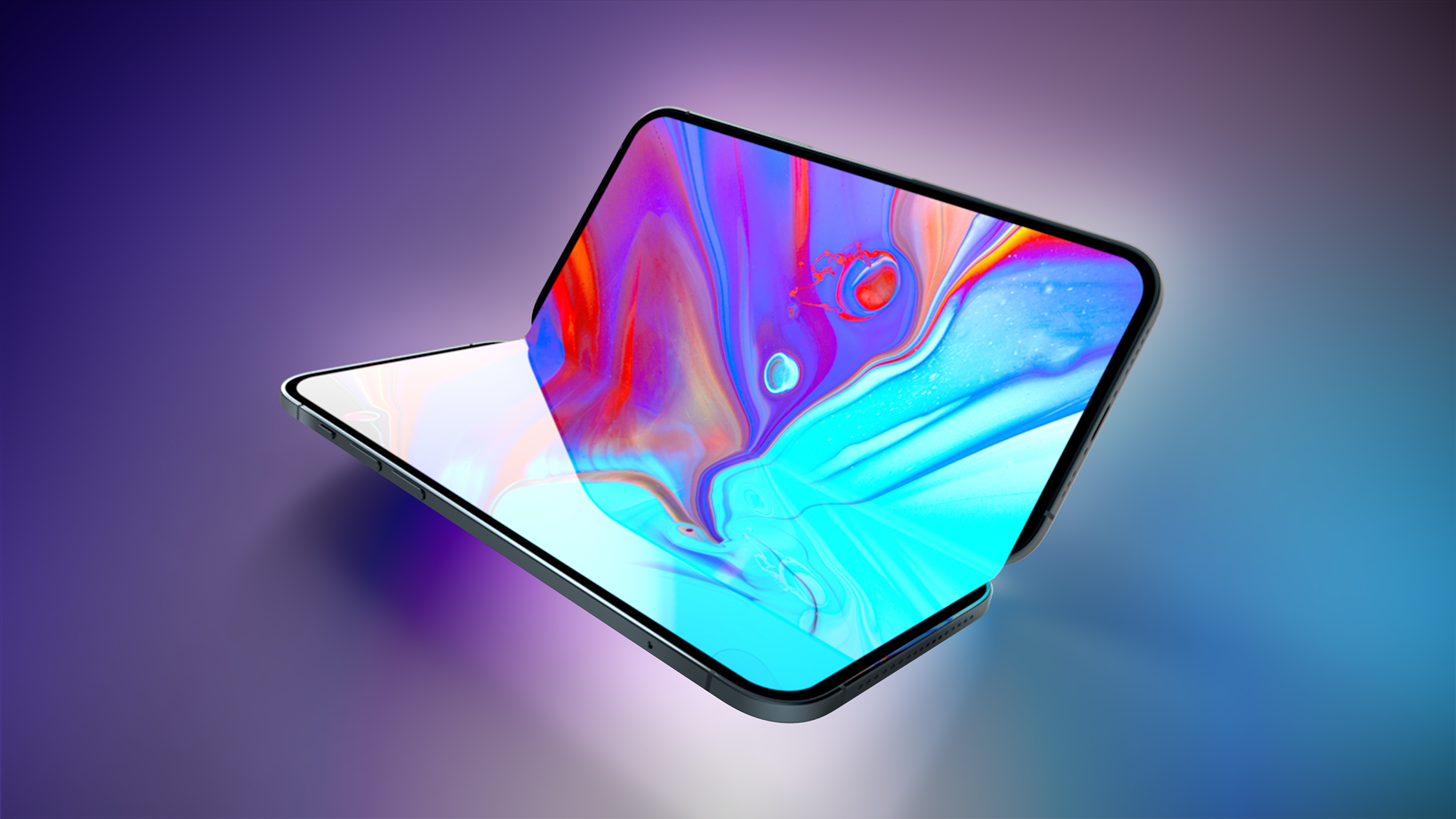
Apple Planning to Launch Two New 'Ultra' Products in the Next Year

Apple has decided to market two of its new products over the next year as "Ultra" devices, Macworld reports.


Citing sources familiar with the matter, the report claims that Apple's first foldable iPhone will be called the "iPhone Ultra." The device will become the highest end option in the lineup.

The ‌iPhone Ultra‌ will not be considered part of the iPhone 18 iPhone lineup, despite arriving alongside the iPhone 18 Pro and ‌iPhone 18 Pro‌ Max. This would be just like how the iPhone Air is not considered to be part of the iPhone 17 series. Although Apple is hoping to ship the ‌iPhone Ultra‌ alongside the ‌iPhone 18 Pro‌, it may launch a few weeks later and with scarcer availability.

Moreover, Apple is apparently planning to release a "MacBook Ultra" later this year or in early 2027. It will feature an OLED panel and a touchscreen, sitting above the MacBook Pro in the lineup at a "significantly" higher price point. While the device was originally intended to launch later this year, it is now likely pushed back by several months due to memory supply chain shortages.

Apple already offers M-series Ultra chips, the Apple Watch Ultra, and CarPlay Ultra. "Ultra" branding for the foldable iPhone and OLED MacBook was previously rumored by Bloomberg, which added that "AirPods Ultra" could also be on the way.
Related Roundups: iPhone Fold, MacBook Pro
Buyer's Guide: MacBook Pro (Buy Now)
Related Forum: MacBook Pro

This article, "Apple Planning to Launch Two New 'Ultra' Products in the Next Year" first appeared on MacRumors.com

Discuss this article in our forums
  •  

OpenAI Reportedly Working on an AI Smartphone to Rival iPhone

OpenAI is working on a smartphone in what appears to be a significant reversal from previous reports that the company had no plans to enter the phone market, according to supply chain analyst Ming-Chi Kuo.


Kuo shared the findings from his latest supply chain checks in a post on X, saying MediaTek and Qualcomm are the chosen chip partners and Luxshare Precision Industry is the exclusive manufacturing partner, with mass production scheduled for 2028. Exact chip specifications and additional suppliers are expected to be finalized by late 2026 or the first quarter of 2027.

Kuo argues that the smartphone remains uniquely positioned for AI agent use because it is the only device that captures a user's full real-time state, including location, activity, communication, and context, which he describes as the most important input for real-time AI agent inference. He claims that AI agents will fundamentally change how people interact with a phone, shifting the focus from launching individual apps to completing tasks through a more continuous, context-aware interface.

He argues that fully controlling both the operating system and the hardware is the only way for the company to deliver a comprehensive AI agent service, and that a subscription-bundled business model could enable OpenAI to build a developer ecosystem around those agents.

Kuo suggests that Luxshare, which has long sought to reduce its dependence on Apple supply chain work, could benefit substantially from an early position in what he frames as the next generation of smartphone hardware.

The development represents a notable reversal in OpenAI's publicly stated hardware strategy. Previous reports have consistently described the company's hardware ambitions as centered on non-phone form factors developed in collaboration with Jony Ive, the former Apple design chief whose startup io Products was acquired by OpenAI for $6.5 billion. Those plans include a smart speaker, which is likely the first product to launch, along with smart glasses, a smart lamp, and potentially earbuds. OpenAI Chief Global Affairs Officer Chris Lehane has said the first hardware announcement is expected in the second half of 2026, with launch around early 2027.

OpenAI CEO Sam Altman posted on X the same day Kuo published his analysis, writing that it "feels like a good time to seriously rethink how operating systems and user interfaces are designed." Such a device would obviously put OpenAI in direct competition with Apple's iPhone.
This article, "OpenAI Reportedly Working on an AI Smartphone to Rival iPhone" first appeared on MacRumors.com

Discuss this article in our forums

  •  

XChat App Now Available

X today launched XChat, a standalone messaging app for the iPhone and iPad, available now on the App Store.


XChat allows users to chat with anyone on X in a private, focused space separate from the main X app. At launch, the app supports direct messaging and group chats, audio and video calls, and file sharing. X claims all messages are end-to-end encrypted and PIN protected, with no ads or tracking.

Other features include disappearing messages, the ability to edit and delete messages for everyone in a chat, and a mechanism to block or alert users when a screenshot is attempted. The app is free to download and requires iOS 26.0 or later.

Chat with anyone on X.
Completely private.
Now on your home screen.

Download for iOS: https://t.co/wBBfjJyJmu pic.twitter.com/u0QeGs1Z3D

— XChat (@chat) April 24, 2026


The app has been in testing with a small group of beta users since last year. X says more updates are still planned, with X lead designer Benji Taylor teasing that XChat is "just the beginning of what we're building for messaging."

Unlike the main X app, XChat adopts iOS 26 design conventions, including the ‌iOS 26‌ keyboard. The app offers several customization options, including light and dark modes, message permissions, left-swipe interaction settings, and a selection of app icon options. There is also a prominent button within XChat for jumping back to the main X app.

XChat can now be downloaded from the App Store in the United States. A release date for an Android version of the app has not yet been announced.
Tag: Twitter

This article, "XChat App Now Available" first appeared on MacRumors.com

Discuss this article in our forums

  •  

iPhone 18 Could Come With 12GB of RAM

Apple's standard iPhone 18 could feature 12GB of memory for the first time, according to analyst Dan Nystedt.


In a new post on X, Nystedt said that the standard ‌iPhone 18‌ will match the 12GB of RAM Apple gave the iPhone 17 Pro and ‌iPhone 17 Pro‌ Max last September. It would mark the first time the entry-level iPhone model has shipped with that much memory.

This rumor making the rounds again, add 12GB of RAM. https://t.co/vP14mEn5le

— Dan Nystedt (@dnystedt) April 24, 2026


Nystedt also flagged an earlier rumor claiming that Apple has secured TSMC's first 2nm chip production run for the A20 chip set to power the ‌iPhone 18‌ lineup. According to that report, TSMC's 2nm process delivers 15% better computing performance than 3nm, with no loss in power efficiency. The iPhone 17 series uses TSMC's N3P ‌3nm‌ node.

The jump to 12GB of RAM on the base model is likely tied to Apple Intelligence. Apple is expected to introduce expanded AI features with iOS 27, which the company is set to announce at WWDC on June 8. On-device AI workloads are memory-intensive, and keeping the entry-level iPhone capable of running ‌Apple Intelligence‌ in full would give Apple reason to push the standard model's memory up to par with last year's Pro tier.

The ‌iPhone 18‌ is not expected to launch alongside the iPhone 18 Pro this fall. Apple is reportedly planning to delay the standard model until early 2027, alongside the iPhone 18e and a second-generation iPhone Air, while the Pro models and the long-anticipated foldable iPhone will ship in the usual fall time frame.
Related Roundup: iPhone 18
Related Forum: iPhone

This article, "iPhone 18 Could Come With 12GB of RAM" first appeared on MacRumors.com

Discuss this article in our forums

  •  

Apple Shares Behind-the-Scenes Look at MacBook Neo Intro Video

Apple today released a YouTube Short revealing a rare behind-the-scenes look at the making of its playful MacBook Neo introduction video.


The short clip gives what Apple describes as "a peek at some handmade magic," revealing the physical models and camera techniques used during production. Apple shows how real-world props were combined with visual effects to produce the final sequences. Apple does not usually share production insights for a major product launch videos.

See the original "Hello, MacBook Neo" video below:


The MacBook Neo launched in March at $599, and its introductory video was widely noted for its whimsey and charm. The ‌MacBook Neo‌ itself has proven to be very strong seller since its launch; Apple reportedly broke a Mac launch week record in the weeks following its debut, and the device has since sold out of inventory until the middle of next month.
Related Roundup: MacBook Neo
Buyer's Guide: MacBook Neo (Buy Now)
Related Forum: MacBook Neo

This article, "Apple Shares Behind-the-Scenes Look at MacBook Neo Intro Video" first appeared on MacRumors.com

Discuss this article in our forums

  •  

Foldable 'iPhone Ultra' Could Be Missing These 5 Key Features Despite $2,000 Price Tag

Apple's first foldable iPhone, dubbed the "iPhone Ultra," could be missing at least five key features present on the iPhone 18 Pro models despite its $2,000 price point.


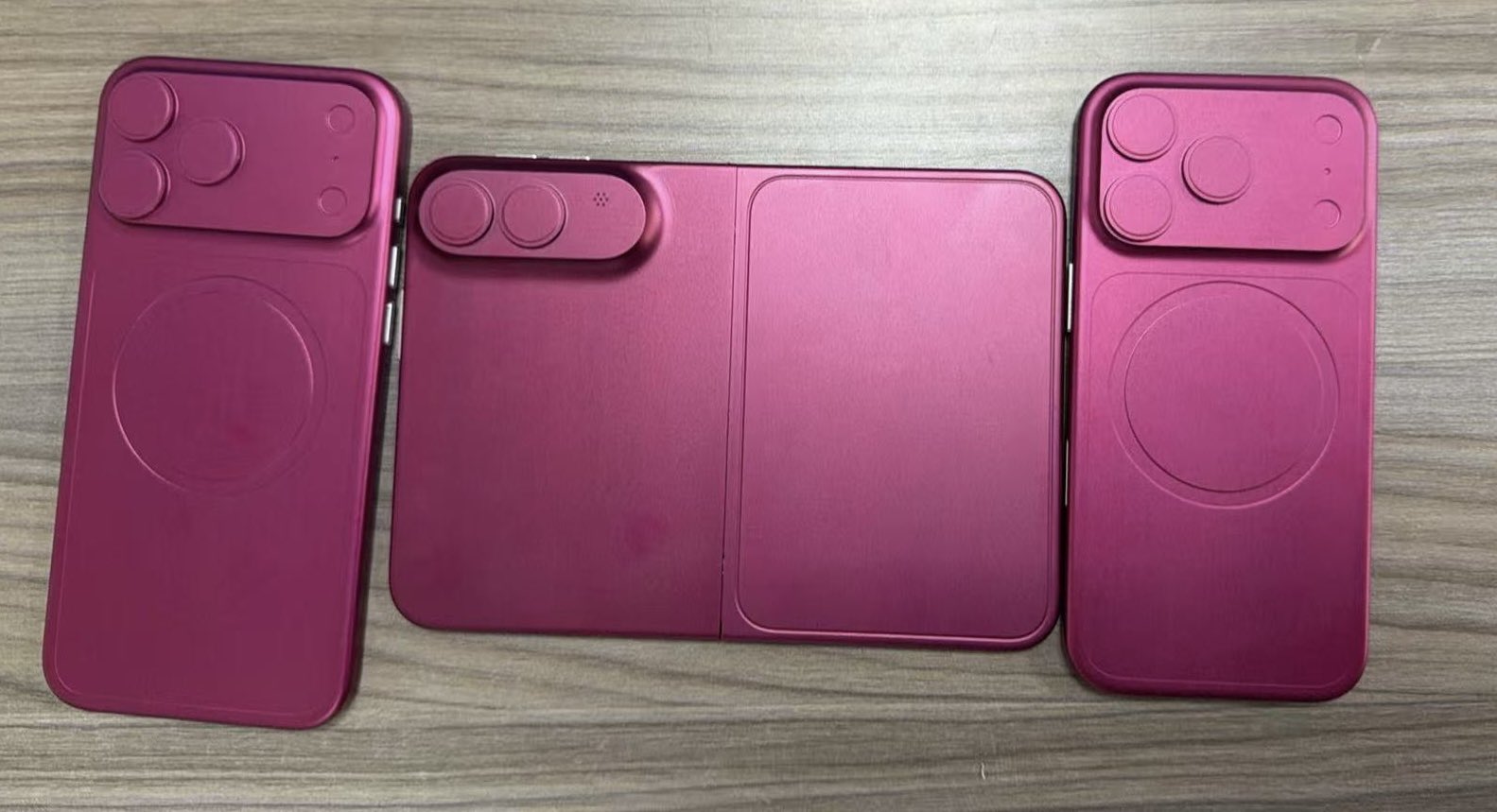
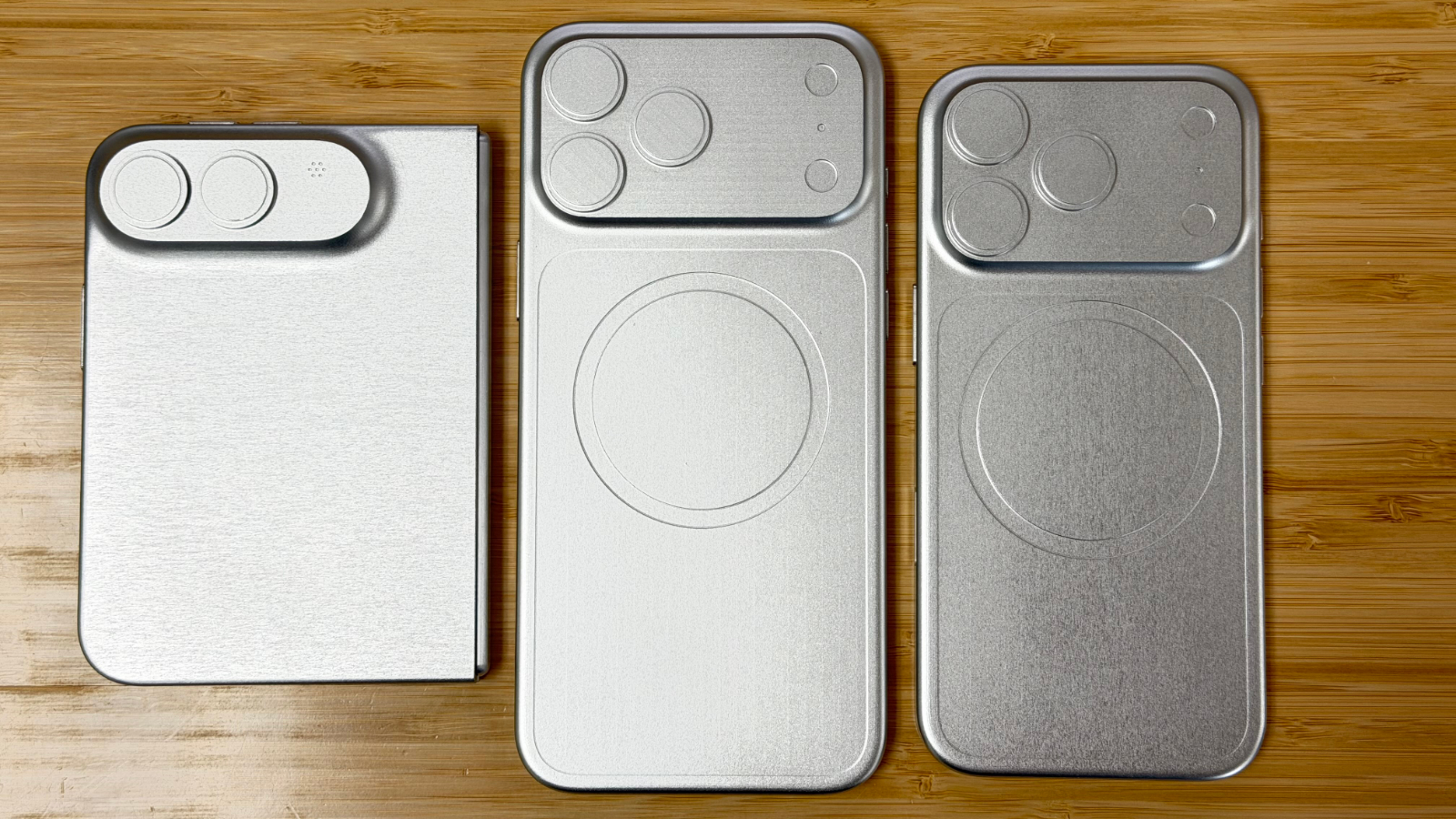
Recent images of dummy models shared by Sonny Dickson and Vadim Yuryev seem to reveal two previously undiscussed missing features of the ‌iPhone Ultra‌: MagSafe and the Action Button.

iPhone dummy units are intended to take the place of real devices for testing purposes, particularly for accessory manufacturers, who seek to mass produce items such as cases prior to the announcement of new devices, which necessitates a high level of accuracy and manufacturing precision.

Both sets of dummy models show that the volume buttons will be located on the top edge of the device, aligned to the right, similar to the iPad mini. This aspect was first rumored by Weibo leaker "Instant Digital," who said that the motherboard is apparently located on the right side of the device. As to not run cables across the screen to the left side for the volume buttons (where they are located on all other iPhone models), Apple is said to have decided to run them directly upwards, which maximizes internal space.

Image via Vadim Yuryev.


While a power button and volume buttons in their new location are clearly visible on the dummy models, the Action button is curiously missing. This suggests that the ‌iPhone Ultra‌ will be the first iPhone model with no Action button or silent switch. Apple introduced the Action button on the iPhone 15 Pro as a replacement for the silent switch, and it has since come to every available iPhone model.

The images of the foldable iPhone dummy models shared so far have been shown alongside mock ‌iPhone 18 Pro‌ and ‌iPhone 18 Pro‌ Max units. These dupes for the high-end models, like most dummies, clearly show precise indentations for the internal array of ‌MagSafe‌ magnets to help manufacturers obtain correct alignment with their accessories.

Image via Vadim Yuryev.


Crucially, these indentations are absent on the foldable iPhone dummies, suggesting that the device may not have ‌MagSafe‌. This aspect remains speculative, but at 4.5mm, the ‌iPhone Ultra‌ is expected to be Apple's thinnest iPhone to date by a considerable margin, so it is not implausible that it could be too thin for ‌MagSafe‌.

The ‌iPhone Ultra‌ is believed to be too thin to accommodate Apple's TrueDepth camera array, which is required for Face ID authentication and now located in the Dynamic Island. As a result, Apple is expected to revert to Touch ID on the device. The last iPhone to feature ‌Touch ID‌ was 2022's iPhone SE 3, where it was part of the device's budget offering. The last flagship iPhone with ‌Touch ID‌ was 2016's iPhone 7, so the return of ‌Touch ID‌ as the sole method of authentication on what will be the highest-end iPhone will be unprecedented.

Image via Sonny Dickson.


As visible on the dummy models, which corroborate a multitude rumors, the ‌iPhone Ultra‌ is expected to sport only two rear cameras. These are expected to be wide and ultra wide cameras, just like the iPhone 17. Unlike the Pro iPhones, there will be no third camera with telephoto capabilities.

Previous rumors indicate that the ‌iPhone Ultra‌ will also not have a SIM card slot, again just like the iPhone Air, being compatible with eSIM only. As a result, the ‌iPhone Ultra‌ could be missing the following features:


  • ‌Face ID‌/TrueDepth camera array

  • Telephoto camera/third rear camera

  • ‌MagSafe‌

  • Action Button

  • Physical SIM card slot


The ‌iPhone Air‌ lacks Ultra Wide and Telephoto rear cameras, a SIM card slot, and stereo speakers. With a super-thin design, a titanium frame, and a glass back, the ‌iPhone Ultra‌ is expected to be very similar to the ‌iPhone Air‌ in terms of design, and it is possible that similar feature concessions will be present on the device when it launches later this year. There are no indications that the ‌iPhone Ultra‌ will be missing stereo speakers, but it is not out of the question given the other design compromises Apple has chosen to make with the device.

The rumored starting price for the ‌iPhone Ultra‌ varies somewhat, but reports agree that it will not be below $1,999. The iPhone 17 Pro starts at $1,099 and has all of the above missing features, so the ‌iPhone Ultra‌'s compromises could be controversial given its markedly higher price point. The device is expected to launch alongside the ‌iPhone 18 Pro‌ and ‌iPhone 18 Pro‌ Max in the fall.
Related Roundup: iPhone Fold

This article, "Foldable 'iPhone Ultra' Could Be Missing These 5 Key Features Despite $2,000 Price Tag" first appeared on MacRumors.com

Discuss this article in our forums

  •  

The MacRumors Show: Tim Cook to Step Down as Apple CEO

On this week's special episode of The MacRumors Show, we discuss Apple's bombshell announcement that Tim Cook will step down as CEO on September 1, 2026, with hardware engineering chief John Ternus set to succeed him.


Cook will transition to executive chairman, where he will "assist with certain aspects of the company, including engaging with policymakers around the world." The transition was approved by the board and is the result of a "thoughtful, long-term succession planning process." Current board chair Arthur Levinson will become the lead independent director. Cook has served as Apple's CEO since 2011.

Ternus, who has spent nearly his entire career at Apple, will join the board ahead of assuming the CEO role. He is a product person in the mold of Steve Jobs rather than a supply chain operator like Cook, and according to Bloomberg's Mark Gurman, he is expected to take a more centralized approach to decision-making. "If you go to Tim with 'A' or 'B,' he won't pick," one person who has worked closely with both executives told Gurman. "Ternus will make decisions." Ternus will take over in time to oversee the launch of the iPhone 18 Pro models and Apple's first foldable iPhone, both expected in September.

Alongside the leadership transition, Apple said that Johny Srouji, currently SVP of Hardware Technologies, will take on an expanded role as Chief Hardware Officer, leading Hardware Engineering and reporting to Ternus. Srouji's remit will cover everything from product design to system engineering to reliability and durability testing. Cook described Srouji as having "played a singular role in driving Apple's silicon strategy" and said his influence has been felt "not just inside the company, but across the industry."

In a statement, Cook said leading Apple has been the "greatest privilege" of his life and described Ternus as "a visionary whose contributions to Apple over 25 years are already too numerous to count." Ternus said he is "filled with optimism" about what Apple can achieve in the years to come, adding that he promises to "lead with the values and vision that have come to define this special place for half a century."

The MacRumors Show has its own YouTube channel, so make sure you're subscribed to keep up with new episodes and clips.


You can also listen to ‌The MacRumors Show‌ on Apple Podcasts, Spotify, Overcast, or other podcast apps. You can also copy our RSS feed directly into your player.


If you haven't already listened to the previous episode of The MacRumors Show, catch up to hear our discussion about Apple's upcoming overhaul of the iPad mini and iPad Air, looking at the future of the product lineup as a whole.

Subscribe to ‌The MacRumors Show‌ for new episodes every week, where we discuss some of the topical news breaking here on MacRumors, often joined by interesting guests such as Kayci Lacob, Kevin Nether, John Gruber, Mark Gurman, Jon Prosser, Luke Miani, Matthew Cassinelli, Brian Tong, Quinn Nelson, Jared Nelson, Eli Hodapp, Mike Bell, Sara Dietschy, iJustine, Jon Rettinger, Andru Edwards, Arnold Kim, Ben Sullins, Marcus Kane, Christopher Lawley, Frank McShan, David Lewis, Tyler Stalman, Sam Kohl, Federico Viticci, Thomas Frank, Jonathan Morrison, Ross Young, Ian Zelbo, and Rene Ritchie.

‌The MacRumors Show‌ is on X @MacRumorsShow, so be sure to give us a follow to keep up with the podcast. You can also email us at podcast@macrumors.com or head over to The MacRumors Show forum thread. Remember to rate and review the podcast, and let us know what subjects and guests you would like to see in the future.
This article, "The MacRumors Show: Tim Cook to Step Down as Apple CEO" first appeared on MacRumors.com

Discuss this article in our forums

  •  

Leaker: Apple Downgrading iPhone 18 to Cut Costs

Apple is downgrading the planned specifications of the standard iPhone 18 to cut costs, a leaker claims.


In a new post on Weibo, the user known as "Fixed Focus Digital" said that the ‌iPhone 18‌ features "certain manufacturing downgrades" that bring it more into line with the low-cost iPhone 18e model. The decision is said to be "a cost-cutting measure."

Apple has apparently chosen to implement new cost-control strategies for the device, including specific downgrades to manufacturing processes, chips, memory, and more. The move will "effectively bring it in line with the '18e' model."

With the iPhone 17e and iPhone 17, the biggest differences are the Dynamic Island, display size, ProMotion, brightness, the front facing camera, the Ultra Wide camera, and battery life. It is not clear which key differentiators will remain between the two devices in their next iterations.


The leaker apparently "confirmed" and verified the information using multiple sources. They noted that the information originates from the same source who correctly confirmed that the ‌iPhone 17e‌ would continue to feature a "notch," contrary to false reports that the device would have a ‌Dynamic Island‌.

The standard ‌iPhone 18‌ is expected to launch months after the iPhone 18 Pro models as part of an all-new split launch strategy. Apple's usual fall iPhone announcement is expected to include the ‌iPhone 18 Pro‌, ‌iPhone 18 Pro‌ Max, and the so-called foldable "iPhone Ultra." The iPhone 18e, ‌iPhone 18‌, and iPhone Air 2 will likely follow in the spring of 2027.


Related Roundup: iPhone 18
Related Forum: iPhone

This article, "Leaker: Apple Downgrading iPhone 18 to Cut Costs" first appeared on MacRumors.com

Discuss this article in our forums

  •  

Apple Apparently Sees Camera Control as Key Foldable iPhone Feature

Apple's first foldable iPhone will be eSIM only and feature a Camera Control despite its ultra-thin design, according to a known leaker.


In a series of new posts, the leaker known as "Instant Digital" said that Apple has made deliberate engineering compromises to ensure that the first foldable iPhone features a Camera Control button, despite it being at least 1.1mm thinner than the iPhone Air when unfolded.

According to the leaker, Apple's rationale is largely ergonomic: With competing foldable phones, Apple believes that making adjustments and taking photos can be "cumbersome" owing to their large size. The Camera Control is said to be the company's preferred solution, enabling users to maintain a steady grip on the device while making any required adjustments, or do so one-handed if they wish.

This ensures that even when the screen is fully unfolded, users can still perform these operations effortlessly using just one hand.

Although the reception for this button on standard flat-screen iPhones has been somewhat polarized, Apple believes that within the unique context of a foldable device's ergonomics, its practical value will be significantly enhanced. Consequently, the Apple team made a firm decision to prioritize this feature—even at the cost of sacrificing precious internal component stacking space—to ensure the "Camera Control" button is included on their very first generation of foldable iPhones.


In addition, Apple's U.S. imaging team apparently recently took a trip to Shenzhen, China, to test the cameras of foldable smartphones from rival brands such as Huawei, with particular attention to telephoto zoom capabilities. The first foldable iPhone is not expected to offer a telephoto camera, with only wide and ultra wide cameras on the rear like the iPhone 17. Most high-end rival foldable smartphones, such as the Samsung Galaxy Z Fold 7, feature three rear cameras, including a telephoto.

Instant Digital added that they have seen no signs in the supply chain of tooling or stocking for SIM card tray modules for the foldable iPhone, concluding the device will be eSIM-only across all regions, just like the ‌iPhone Air‌. The leaker also puts first-year production at a conservative 10 million units, with pricing expected to fall between 15,000 and 20,000 RMB (roughly $2,060–$2,750).

The leaker added that the mainland China variants of the iPhone 18 Pro models are set to adopt a "Single SIM + eSIM" configuration, dropping the dual-physical-SIM setup currently used in the region. The Hong Kong version is said to follow the same approach while retaining a physical SIM card slot.

The foldable iPhone is widely expected to launch alongside the ‌iPhone 18 Pro‌ and ‌iPhone 18 Pro‌ Max in fall 2026. It is expected to feature a 7.8-inch inner display, a 5.5-inch outer display, Touch ID, the A20 chip, the C2 modem, and more.
Related Roundups: iPhone 18 Pro, iPhone Fold

This article, "Apple Apparently Sees Camera Control as Key Foldable iPhone Feature" first appeared on MacRumors.com

Discuss this article in our forums

  •  

Apple to Host Free Events in London Ahead of April 26 Marathon

Apple today announced a series of events tied to this year's TCS London Marathon, with the company serving as an official partner of the race.


The TCS London Marathon is one of the world's most popular marathons and takes place on Sunday, April 26, drawing athletes of all abilities from around the world. A record-breaking one million people applied to enter the ballot for the 2026 event.

Apple will host two free events at its Brompton Road store in the days before the race. On Thursday, April 23, a panel including fitness trainer Joe Wicks, ultramarathon runner Hellah Sidibe, and athletes Dora Atim, Becky Briggs, and Sherica Holmon will offer training tips before a 5K shakeout run in Hyde Park, hosted by Apple Fitness+ trainer Cory Wharton-Malcolm. Spots are limited and registration is now open.

On Saturday, April 25, former marathon world-record holder Paula Radcliffe and two-time Olympian Chris Thompson will record a live episode of their podcast, Paula's Run Club, also at Brompton Road, joined by Wharton-Malcolm. The episode closes out their "Road to London Marathon" series. Registration is available for that event as well.

On race day, Apple Music will station artists and DJs at a key point on the course. An official Ultimate Marathon Playlist spanning seven hours is available now on ‌Apple Music‌, with additional mixes from race-day DJs to follow after the event.

Ahead of marathon week, Apple will host a PE with Apple: Hour of Play event for students from six schools in the London borough of Wandsworth, with Wicks and Fitness+ trainers leading physical activities for children ages 10 to 14, in partnership with nonprofit Enable. Apple also pointed out that it supports several other Greater London organizations, including Battersea Arts Centre, Southbank Centre, Youth Battersea, and Wandsworth BEST.
This article, "Apple to Host Free Events in London Ahead of April 26 Marathon" first appeared on MacRumors.com

Discuss this article in our forums

  •  

Smart Adhesive Is Key to Crease-Free Foldable iPhone Display

Advances in optically clear adhesive (OCA) will be a key factor in achieving a near-invisible crease in Apple's first foldable iPhone expected later this year, according to TrendForce.


The supply chain intelligence firm outlined the key technologies in a new report on foldable display innovation, explaining that creases form when layers within the display panel fall out of alignment, concentrating stress at the fold and causing micro-cracks or permanent deformation over time.

Ultra-thin glass (UTG) also plays a role in the optimal design. Apple's patents have described a design where the glass is thinner at the fold for flexibility and thicker elsewhere for durability, which is an approach consistent with reports last year that Apple was testing uneven-thickness panels, and more recently that it may use a dual-layer glass structure to spread stress across multiple layers.

The single most important factor, TrendForce says, is OCA. Modern formulations go well beyond simple bonding, staying pliable during gradual bending to reduce fatigue while temporarily stiffening under sudden impact to provide structural support. Over time, the adhesive's ability to flow into microscopic irregularities also reduces light scattering and keeps the crease less visible.

Hinge and structural engineering still matter too. Samsung Display uses laser drilling in the metal support plate behind the display to balance rigidity and flexibility, a technique analyst Ming-Chi Kuo reported last July that Apple's foldable would also use via supplier Fine M-Tec. Samsung briefly showcased a crease-free panel at CES 2026, though it later clarified this was an R&D concept rather than a production-ready design.

Apple has reportedly pursued eliminating the crease "regardless of cost", and leaker "Fixed Focus Digital" reported in February that production orders had been placed with a crease depth under 0.15mm and a crease angle under 2.5 degrees. TrendForce estimates Apple could capture close to 20% of the foldable smartphone market this year, which it says would compress Samsung and Huawei to roughly 30% each.

The foldable iPhone is expected to be unveiled alongside the iPhone 18 Pro models in September. Foxconn began trial production last week, and Samsung Display is reportedly on track to begin mass production of OLED panels for the device in May.
Related Roundup: iPhone Fold

This article, "Smart Adhesive Is Key to Crease-Free Foldable iPhone Display" first appeared on MacRumors.com

Discuss this article in our forums

  •  
❌