Reading view

Colombia’s Presidential Race Marked by Polarization, Divided Right and Absence of Debates

As Colombia nears its presidential vote, two candidates have endorsed Iván Cepeda and eight others remain below 3.5% in polls

With less than two weeks remaining before Colombia’s presidential election, whose first round is scheduled for May 31, three candidates are concentrating most voter support and competing for access to the presidential palace, Casa de Nariño: ruling coalition senator Iván Cepeda, candidate of the left-wing Pacto Histórico party; senator Paloma Valencia, representing the right-wing Centro Democrático party; and lawyer and businessman Abelardo de la Espriella, a figure of Colombia’s far right.

Although 13 candidates will appear on the ballot, two contenders: Clara López and Luis Gilberto Murillo, withdrew their campaigns to support Cepeda, while the remaining candidates have failed to surpass 3.5% voter support in pre-elections polls, a figure close to the statistical margin of error.

If polling trends hold, no candidate is expected to secure the 50% plus one vote needed to win outright in the first round, making a runoff election on June 21, 2026, highly likely.

Cepeda has remained relatively stable in polls, with voter support ranging between 35% and 43%, effectively securing his place in a second round if trends continue.

The key question: Who will face Cepeda in a runoff?

The main electoral uncertainty centers on who will finish second and challenge the ruling coalition in a likely runoff.

Under Colombia’s electoral system, only the two candidates receiving the highest vote totals advance to the second round. The fragmentation of the political right has complicated efforts to consolidate support behind either Valencia or De la Espriella.

Polls suggest a competitive scenario. Valencia has registered between 14% and 21% voter support, while De la Espriella fluctuates between 16% and 24%, depending on the poll and methodology used.

The lack of unity between the two camps stems from both ideological differences and their political structures. Valencia is a member of the political party founded by former President Álvaro Uribe, while De la Espriella entered the race through an independent signature campaign, marking the first time Colombia’s far right has emerged as a viable contender for the presidency.

A campaign shaped by the absence of public debates

The presidential campaign has been marked by an unusual lack of debates among the leading candidates.

Cepeda has refused to participate in events organized by media outlets, arguing that proposed formats do not offer guarantees of neutrality or what he describes as “fair rules” established by news organizations.

As a result, part of the political confrontation has shifted to Congress, where both Cepeda and Valencia currently serve in the Senate.

Critics, however, have challenged Cepeda’s decision. Former Bogotá Mayor and presidential candidate Claudia López argued that his absence from debates reflects that “Cepeda does not want to take responsibility for the failures of Total Peace (Paz Total),” the negotiation policy with armed groups promoted by President Gustavo Petro, in which Cepeda played a key role as a lawmaker.

Instead of regular debates, the campaign has been dominated by disputes over media formats, digital presence, social media strategies and public controversies aimed at amplifying candidates’ visibility.

De la Espriella embraces confrontation

One of the candidates who has most effectively capitalized on the digital environment is Abelardo de la Espriella, whose political strategy has been compared to right-wing populist leadership styles such as those of Argentine President Javier Milei and US President Donald Trump.

In recent weeks, De la Espriella has faced several media controversies, including an incident involving journalist Laura Rodríguez of Piso 8 FM, for which he later apologized after accusations of inappropriate sexual conduct. He also clashed live on air with television presenter María Lucía Fernández of Caracol Noticias, whom he called “ignorant.”

Questions also emerged following reports by digital outlet La Silla Vacía regarding donations linked to the US Republican Party.

Despite the controversies, the strategy appears to be strengthening his electoral standing. An Atlas Intel poll for Semana magazine, published May 15, showed De la Espriella surpassing Valencia by a two-to-one margin for the first time, with 32.9% support compared with 16.7%.

However, the polling firm is currently under investigation by Colombia’s National Electoral Council (CNE) amid concerns over whether its methodology complies with national standards. If irregularities are confirmed, the firm could face suspension of its operations in Colombia.

Valencia seeks to broaden support toward the political center

Meanwhile, Valencia has sought to expand her electoral base by shifting strategically toward the political center.

As part of that effort, on May 17 she officially introduced her proposal “Mámá No Está Sola (Mom Is Not Alone),” aimed at female heads of household and focused on access to credit, employment and housing property. The proposal also includes a promise to deliver 1 million homes prioritized for women community leaders.

Valencia’s candidacy also marks a historic first for Colombia’s political right: it is the first time a major conservative party has nominated a woman for president.

Her vice presidential running mate, former Bogotá councilman Juan Daniel Oviedo, has openly identified as a member of the LGBTQ+ community, a move that represents a significant shift for the Centro Democrático traditionally conservative electorate.

Colombia appears headed for a runoff

With a highly fragmented field and no signs of consolidation among right-wing candidates, Colombia appears increasingly likely to hold a presidential runoff on June 21, 2026.

Barring a major shift in polling trends, the contest seems set to come down to Iván Cepeda and whichever opposition candidate manages to emerge from an increasingly competitive battle within Colombia’s political right.
  •  

Rising Violence in Colombia: Highway Explosion Leaves 21 Dead, Dozens Injured

Petro’s “Total Peace” strategy is under pressure ahead of presidential elections as violence by armed groups escalates

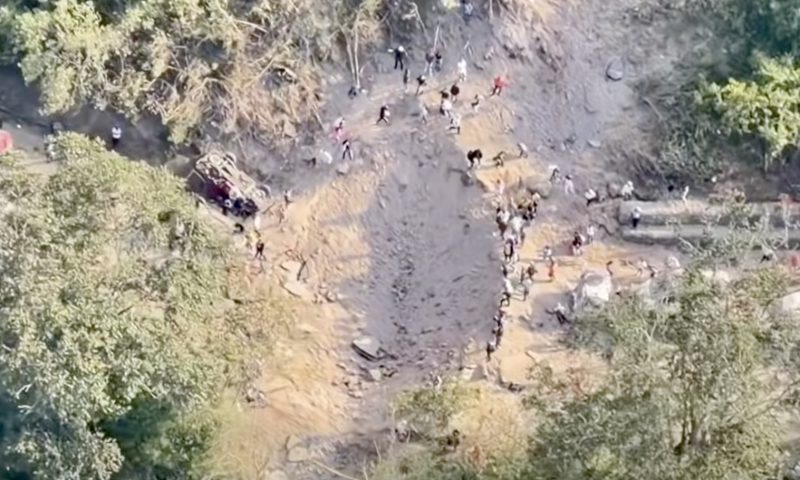
An explosive attack on the Pan-American Highway near the municipality of Cajibío, in Colombia’s Cauca department, left at least 21 people dead and 56 injured, Defense Minister Pedro Sánchez Suárez confirmed.

The attack occurred Saturday, April 25, on one of the main roads in the country’s southwest, an area historically affected by the presence of illegal armed groups.

The minister attributed the attack to alias “Marlon,” described as one of the most wanted leaders in the region, “for whom we are offering a reward of up to $1.4 million USD,” he said.

According to local media reports cited by El Tiempo, “the attack was initially intended to target army troops. However, a change in military plans reportedly led to the explosive being detonated while civilians were passing through the area.”

The impact of the attack was significant. Spain’s El País reported “that the explosion created a large crater, left the road covered in debris, and forced rescue operations that lasted several hours due to difficult access conditions.”

Aerial view of the crater caused by the explosion on the Pan-American Highway. Photo courtesy of Colombia’s Ministry of Defense.

Aerial view of the crater caused by the explosion on the Pan-American Highway. Photo courtesy of Colombia’s Ministry of Defense.

Cauca Governor Octavio Guzmán described the incident as one of the most serious attacks in the region in decades. “What happened on April 25 constitutes the most brutal and ruthless attack against civilians in decades,” he said.

The attack comes amid a resurgence of violence in southwestern Colombia, where illegal armed groups linked to drug trafficking, illegal mining and other illicit economies operate. Authorities continue operations in the area as investigations proceed to clarify the circumstances of the attack and determine responsibility.

According to reports by BBC Mundo, alias “Marlon” is a dissident FARC leader identified as Iván Jacobo Idrobo Arredondo, “the alleged head of the Jaime Martínez structure, part of the Estado Mayor Central (EMC),” one of the country’s most powerful illegal armed groups.

Operations and arrests

As part of response operations, the National Police reported the capture of José Alex Bitoco, alias “David” or “Mi Pez,” identified as the leader of the Dagoberto Ramos structure, another illegal armed faction, who is believed to have acted under orders from alias “Marlon”.

National Police Director Gen. William Rincón Zambrano said the detainee “will have to answer for the wave of terrorist activity” and linked him directly to the attack, stating that “he is responsible for what happened on April 25 in the El Túnel sector on the Pan-American Highway.”

The Defense Ministry reiterated that alias “Marlon” remains a priority target. “He is a high-value target, and we are searching for him with all the capabilities of the state. We have deployed a dedicated intelligence task force to locate him,” Sánchez said, confirming a reward of up to $1.4 million USD for information leading to his capture.

Context: criticism of “Paz Total” policy (Total Peace)

The attack comes amid growing security deterioration in Colombia, intensifying criticism of President Gustavo Petro’sTotal Peace” policy. The Ideas for Peace Foundation (FIP) has warned of a possible failure of the strategy, noting that “less than four months before the end of the government, the lack of progress in peace negotiations and the deterioration of security have become one of the main points of criticism of the Petro administration.”

According to the think tank, during the current administration “the number of disputed territories between illegal actors has nearly doubled, and the number of members in these structures has increased by 85%: they now total more than 27,000 members, including armed individuals and support networks.”

This figure not only represents a significant increase but also places the country at levels similar to, and even higher than, those seen before the peace process with the FARC began. Between 2011 and 2012, the estimate stood at around 26,800 members, compared with 14,600 at the end of Iván Duque’s administration in 2022.

The recent increase has also been rapid. According to the FIP, armed groups grew by 23.5% over the past year (from December 2024 to December 2025), reflecting a swift reconfiguration of these structures. At the same time, violence has intensified. Analysts such as Professor Karol Solís Menco note that over the weekend of April 25–26 alone, “26 terrorist attacks of varying magnitude” were recorded across the country.

Political analysis outlets point to a structural dynamic. According to La Silla Vacía, “Cauca is not experiencing an isolated event, but rather a phase of intensifying territorialized violence, marked by fragmentation among armed actors and a type of violence capable of producing national-level impacts.”

In this context, FARC dissident groups have once again taken center stage in the conflict. “Once again, attention is turning to FARC dissidents. Every attack, every gas cylinder bomb, every assault in Valle and Cauca ends with the same name on the table: the Jaime Martínez structure, one of the strongest groups of Iván Mordisco’s Estado Mayor Central,” El País reported.

Violence indicators also reflect sustained deterioration. “In the first four months of 2026, Colombia has already recorded 48 massacres, with 229 victims, most of them civilians, according to Indepaz. It is the highest figure in the past decade. With these numbers, which represent only a partial picture of the country’s violence, this election year is shaping up to be the most violent since the 2016 peace agreement with the now-defunct FARC guerrilla group,” the same outlet reported.

Cauca, where the attack took place, is considered one of the most sensitive regions. “Cauca is particularly complex because it combines multiple layers of conflict: the historic presence of Indigenous, peasant and Afro-descendant communities; illicit economies; Pacific corridors; disputes over drug trafficking routes; control of the Pan-American Highway; and the presence of FARC dissidents, particularly structures linked to Iván Mordisco,” El País said.

Experts agree that part of the difficulty lies in the design and implementation of the government’s strategy. “Early implementation was a valuable innovation in intent, but it failed to ensure minimum conditions of verification and institutional coherence,” said analyst Germán Valencia of the Peace and Reconciliation Foundation (Pares).

Taken together, these factors have led various sectors to conclude that the “Total Peace” policy faces serious structural limitations amid a scenario of armed fragmentation and territorial expansion by illegal groups.

  •  

Bogotá mayor furious at gang leader’s role as ‘peace negotiator’

La Mesa gang rounded up in Bogotá this week. Members are accused of murders and drug trafficking. Photo: Secretary of Security
La Mesa gang rounded up in Bogotá last week. Members are accused of murders and drug trafficking. Photo: Secretary of Security

The dismantling of a major crime gang which operated in Bogotá caused controversy last week after it emerged its leader was declared a peace negotiator under President Petro’s controversial Paz Total, or Total Peace, plan.

National police rounded up 23 members of the La Mesa gang in simultaneous operations in Tolima, Cesar and Bogotá. According to police reports, the gang was involved in serious crimes across the capital since 2012, including drug trafficking and murders.

News of the arrests was tainted by the fact that under the Paz Total process – the Petro government’s wide-ranging negotiations with armed groups – gang leader Gustavo Adolfo Pérez Peña, alias El Montañero, had his arrest warrant suspended under his role as gestor de paz, or ‘peace facilitator’.

The kingpin’s release sparked a furious response from Bogotá mayor Carlos Galán, who accused Petro of undermining the city’s efforts to curb crime.

Hoy en Bogotá anunciamos que, gracias a la Dijín, a la Fiscalía y a la @PoliciaBogota, fueron capturados 23 miembros de la banda “El Mesa”, entre ellos 8 sicarios. Mientras tanto, el Gobierno Nacional nombra al cabecilla de esa banda como gestor de paz y le levantó la orden de… pic.twitter.com/qiSmSoHgh7

— Carlos F. Galán (@CarlosFGalan) April 6, 2026

“While in Bogotá,…the prosecutor’s office and the police, with the support of the Bogotá mayor’s office, are working to capture and dismantle a criminal gang dedicated to serious crimes, the national government appoints the leader of that gang as a peace facilitator and lifts the arrest warrant for him,” he railed.

The gang was also suspected of being behind last year’s gruesome killings where pieces of the bodies of victims were wrapped in plastic bags and dumped on the city’s highways.

A free pass for career criminals like Pérez Peña makes fighting crime “incredibly difficult,” added Galán.

Dodging a warrant

Alias El Montañero during his capture in 2019.

Details of La Mesa’s criminal activities released by the prosecutor’s office this week showed the gang originated in Bello, Antioquia, but spread to Bogotá in 2012.

Court documents reported in local news outlet El Colombiano paint Pérez Peña as a hardened criminal; he has been imprisoned four times, including for armed robbery, homicide and illegal possession of firearms, but was freed before serving his full sentences.

His rap sheet includes attacks on armored trucks, notably a cash heist in Bogotá in 2003 where a policeman was shot dead.

Pérez Peña’s most recent jailing was in 2019 when he was sentenced to eight years for conspiracy to commit a crime and illegal possession of firearms. It was during this stint that he was freed as a peace facilitator.

And even while the La Mesa gang has been rounded up this week with members facing multiple charges and long prison sentences, its leader and founder continues at liberty.

Get out of jail free?

Inclusion of criminal gangs in the Paz Total process has proved one of the thorniest aspects of Petro’s flagship policies and a political hot potato in the run-up to next month’s presidential elections.

Since its inception in 2022, the government’s peace negotiators have tried to include some of Colombia’s most embedded crime dynasties under the acronym Estructuras Armadas Organizadas del Crimen de Alto Impacto (EAOCAI).

This Paz Urbana, or urban peace, initiative is based on the reality that in Colombia today lines are blurred between organized armed groups and engrained criminal structures.  Much of its effort has focused on Antioquia’s Valle de Aburrá, around Medellín, where many crime gangs took root after the fragmentation of the 1980s cocaine cartels.

The president’s office recently declared the process a partial success, claiming that the nominated peace spokespersons – many feared capos with violent histories – were now in a dialogue process which could “prevent further violence and prevent the resurgence of these structures”.

Many critics have predicted that – similar to the Paz Total process with large guerrilla groups – criminal gangs will leverage the negotiations to their own interests to gain time and territory or a get-out-of-jail-free card.

This week Medellín’s mayor Fico Gutíerez welcomed a resolution by the attorney general’s office to overturn many of the 23 nominations of local crime bosses as peace facilitators.

“The resolution removes 16 criminals currently serving sentences for serious crimes from the program. Seven remain eligible for the benefit,” he posted on X.

He also echoed Galán’s complaint that hardened criminals were being included in the peace process. “It is unacceptable that the Petro government has asked the prosecutor’s office to lift the current arrest warrant for homicide.”

Peace as a right

Defenders of Petro’s agenda hit back reminding that Paz Urbana was part of a constitutional process protected by Colombian law.

“Peace is a right, not a political strategy,” said Isabel Zuleta, a senator and key player in the Paz Total process.

The senator, who represents the government at the negotiating table with representatives of criminal gangs, accused the media and politicians of misreporting the negotiations.

“For nearly three years, a serious path toward de-escalating urban violence in Medellín and the Aburrá Valley has been painstakingly forged. Today, that work is being exploited by right-wing sectors that prefer to sabotage urban peace rather than acknowledge progress that is not electorally advantageous to them,” she said.

Zuleta also pointed out suspension of arrest warrants for gang leaders seeking peace did not free them of responsibilities for crimes they committed, nor would it stop judicial investigations.   

Meanwhile, a mix-up between Petro’s government and Attorney General’s Office emerged over Antioquia’s urban peace process: 16 of the 23 capos named as peace negotiators were already in prison, so suspending their “arrest warrants” was nonsensical as they were already detained in the high-security Itagüí Prison.

“We truly never imagined that a request would be made to suspend arrest warrants for people already serving sentences,” chief prosecutor Luz Adriana Camargo told Caracol Radio.

Senator Isabel Zuleta with crime bosses in Itagüí Prison. Photo: Paz Urbana

Prison party

For this judicial – rather than political – reason, Camargo revoked the suspension orders for the 16 capos already doing time.

“We are talking about dialogues inside a prison with convicted individuals,” she said.

The Attorney General’s office also corrected widespread fake news – amplified by right-wing presidential candidates Paloma Valencia and Abelardo de la Espriella – that the 16 jailed crime chiefs would be freed as part of the Paz Urbana negotiations.

In fact, there were no plans to release the IItagüí peace facilitators, clarified Camargo’s office.

But in a further twist this week the government froze the peace talks in the Itagüí Prison after revelations that the jailed capos mounted an unauthorized vallenato concert by popular singer Nelson Velásquez, reportedly costing 500 million pesos (US$140,000).

Parranda con Nelson Velásquez en cárcel de Itagüí no fue autorizada: Inpec investiga 7 funcionarios #LoMásBlu #MañanasBlu pic.twitter.com/FTU3exTVuF

— BluRadio Colombia (@BluRadioCo) April 9, 2026

For many commentators, the partying in the prison brought back painful memories of drug baron Pablo Escobar’s luxury lifestyle while supposedly imprisoned by the state in the 1990s.

Meanwhile the chief prosecutor Camargo came under fire for her decision to suspend warrants for seven other gang leaders currently on the run – including that of Pérez Peña of La Mesa.

This week the exact whereabouts of Pérez Peña was unknown, as was his willingness to engage in any peace process. According to a report by TV station Teleantioquia, the La Mesa gang leader was based in Madrid, Spain, while “moving around Europe as a sophisticated tourist”.

For El Montañero, coming home to Colombia, even under the guise of a peace facilitator, could be less of a holiday.

The post Bogotá mayor furious at gang leader’s role as ‘peace negotiator’ appeared first on The Bogotá Post.

  •  

Editorial: Gustavo Petro’s “Total Peace” Has Led to Total Chaos in Colombia

Colombia’s President Gustavo Petro ran for president on a campaign promising Paz Total—Total Peace. He promised to give the FARC dissidents, the vicious ELN guerillas, and mafias like the Clan del Golfo a good talking to, and with that, they will just lay down their weapons and become model citizens. Petro promised that through dialogue with bloodthirsty kidnappers and extortionists, they would be willing to stop being bloodthirsty kidnappers and extortionists; as if they are just misunderstood little muffins who only need a hug.

Nubia Carolina Córdoba, governor of Chocó, Colombia (photo from her Twitter account)

Nubia Carolina Córdoba, governor of Chocó, Colombia (photo from her Twitter account)

According to figures compiled by the Universidad Externado and reported by The City Paper Bogotá, Colombia has recorded 40,663 homicides during the first three years of the Petro presidency. Over 400 human rights defenders have been slaughtered between 2022 and 2025 according to the United Nations Office of the High Commissioner on Human Rights. Human Rights Watch reports that the ELN and FARC dissidents have expanded their territories by up to 55%. They are taking back over Colombia.

Under Gustavo Petro’s watch, Colombia has returned to the Institute for Economics and Peace’s Global Terrorism Index top ten list of countries impacted by terrorism, along with Total Peace destinations like Democratic Republic of Congo, Somalia, and Syria. Just this past week, a Clan del Golfo poster was put up within walking distance from the Aeropuerto Internacional José María Córdova just outside of Medellín. This Total Peace nonsense is a failure.

Right now, in the neglected Pacific department of Chocó, the ELN has kidnapped whole communities. Petro ran a campaign promising that he was going to embrace these historically neglected communities—places like Chocó, Nariño, La Guajira, and Norte de Santander—but insecurity is increasing. Chocó’s governor, Nubia Carolina Córdoba, says 6,047 people are trapped inside of their homes because the ELN has announced an illegal armed curfew in the municipality of Bajo Baudó. Most of these people are already poor, and now they have been kidnapped en masse by this guerilla group that operates with impunity because Gustavo Petro coddles them with “dialogue.”

According to Governor Córdoba, they attacked the police station in the village of Santa Rita using grenades attached to drones. It has gotten so bad that Colombia has restricted the entry of drones into the country. These people are calling out for help, but the president insists on talking as the ELN grows and continues to menace the police forces, the Colombian military, and, most importantly, the innocent public.

There is currently public disorder where belligerents have completely blocked the roads in the north of Antioquia, in the region called Bajo Cauca, and also in the neighboring department of Córdoba. The city of Caucasia is under curfew. Antioquia’s Governor, Andrés Rendón, has urgently called on the national government to stop the talk and take action. Groups are attacking ambulances and burning people’s motorcycles as they try to get by the roadblocks, regardless of the emergency.

Governor Rendón stated: “There can be no dialogue amidst blockades and human rights violations. It’s been seven days now with the Bajo Cauca region paralyzed and the country held hostage by chaos.” He called on the Fiscalía General de la Nación to bring those responsible to justice and challenged the Minister of Defense, Pedro Sánchez, to order the immediate reopening of the roads. “We’re not talking about small-scale miners here; behind this are criminal structures, as everyone knows, that finance themselves through illegal mining and move billions of pesos,” Rendón added, demanding full authority against the criminals who use communities as a shield.

El gobernador de Antioquia, @AndresJRendonC, se pronunció sobre la situación de orden público en el Bajo Cauca, en medio de los bloqueos que ya completan varios días y afectan la movilidad y la seguridad en la región. @GobAntioquia pic.twitter.com/4SPQgTa68r

— MiOriente (@MiOriente) March 22, 2026

The current situation with these organized criminal groups—whether regular mafias like the Clan del Golfo or murderous Marxist guerillas like the ELN and the FARC dissidents—is reminiscent of a classroom where a substitute teacher has lost all control. Petro promised Total Peace, but the result has been Total Chaos. Investors do not want to deal with this mess. While the Petro government claims they want tourism to be a major economic driver, road blocks make many areas look like scenes out of Mad Max: Road Warrior. Whole zones of the Pacific coast are unsafe even for residents, met with pure impotence from the regime.

Ten years ago, it was safe to drive from Medellín to the beachside town of Coveñas in Sucre, but that is no longer the case. While it remains safe to visit Colombia for business or tourism in major hubs like Bogotá, Medellín, Santa Marta, or the San Andrés islands, the long-term outlook is concerning. My hope is that Colombians choose a future leader serious about law and order as a prerequisite for human rights. It is not only the government that we need to protect human rights from; those who kill, steal, kidnap, and forcibly recruit children are violating those rights as well.

Colombian anti-explosives experts inspect propaganda by the Clan del Golfo mafia group just minutes away from Medellin's international airport in March, 2026 (image from Facebook).

Colombian anti-explosives experts inspect propaganda by the Clan del Golfo mafia group just minutes away from Medellin’s international airport in March, 2026 (image from Facebook).


  •  

US DEA Launches Probe of Colombian President Gustavo Petro For Alleged Cartel Ties

The investigation into Colombia’s President comes on the heels of Petro’s visit to Washington & meeting with Trump.

The Drug Enforcement Administration (DEA) has designated Colombian President Gustavo Petro as a priority target as federal prosecutors in New York investigate potential connections to narcotics trafficking organizations. Records indicate that the US Department of Justice is reviewing multiple inquiries dating back to 2022, primarily supported by information from confidential informants.

The investigations involve allegations regarding interactions with the Sinaloa cartel and the possible use of the Paz Total policy to benefit specific traffickers who reportedly contributed to the 2022 presidential campaign. Documents also mention the potential use of law enforcement assets to facilitate the transport of cocaine and fentanyl through maritime terminals. The priority target designation is applied to individuals whom the DEA identifies as having a significant influence on international narcotics distribution.

President Petro has denied any involvement with criminal organizations or the acceptance of illicit funds for his political activities. In a statement released on social media, he suggested that legal proceedings in the US would eventually disprove allegations originating from political opponents. The Embassy of Colombia in Washington stated that the reports are based on unverified and anonymous sources.

“The reported insinuations have no legal or factual basis,” stated the Embassy of Colombia in Washington.

The inquiry has expanded in recent months, with prosecutors in the Eastern and Southern Districts of New York questioning detained individuals about allegations that representatives of the administration solicited bribes in exchange for preventing extradition to the US. It has not been confirmed whether formal charges will be filed against the president, and the White House has stated it has played no role in the independent judicial process.

Portions of the DEA records cite a 2024 interview regarding allegations that former aides and officials from Ecopetrol (NYSE: EC) (BVC: ECOPETROL) were used to launder funds. Ricardo Roa, the president of Ecopetrol, has denied these claims. Simultaneously, the US Department of the Treasury previously sanctioned Petro in late 2025, citing concerns over cocaine production levels, though specific evidence was not made public at that time.

While Petro denies connections to criminal groups, it is important to note that he was a member of the homicidal M-19 guerilla group in Colombia from his teenage years until the group laid down its arms in 1987. Petro served prison time for illegal arms possession due to his activities with the M-19.

Domestic investigations in Colombia are also ongoing regarding the president’s relatives. His son, Nicolas Petro, faced charges in 2023 related to the alleged receipt of funds from a convicted trafficker. Furthermore, the president’s brother, Juan Fernando Petro, has been linked to investigations involving unauthorized negotiations with inmates at the La Picota prison regarding the Paz total framework and extradition protections.

Witnesses currently in US custody who may be relevant to the ongoing probes include former members of the Venezuelan Cartel de Los Soles and various Colombian nationals recently extradited, such as individuals associated with the La Inmaculada organization and the Clan del Golfo (Gulf Clan). Some reports suggest that sums near $500 million COP were discussed in exchange for gestores de paz (“Peace Manager”) status, though these allegations remain under judicial review.

Headline photo: Colombian President Gustavo Petro (photo César Carrión, Presidencia de Colombia)

  •  

Peace plan has caused more conflict, says thinktank.

Stark figures show expansion of fighting groups under ‘Paz Total’.

Comandos de La Frontera in Putumayo, one of many armed groups in talks with the Colombian government: Photo credit: Bram Ebus.

Colombia’s illegal armed groups have grown by 84 per cent during the three years of the Petro government’s Paz Total plan, thinktank Fundacion Ideas para la Paz (FIP) announced last week.

The alarming data showed the country’s main guerrilla factions and organised crime gangs totalled 27,000 active members at the end of 2025, adding 5,000 new recruits in just 12 months.

And humanitarian crises associated with the expansion of illicit economies, such as combats, displacements or confinement of communities, attacks on social leaders and extortion were also on the rise.

According to Gerson Arias, co-author of FIP’s El Deterioro de la Seguridad Marca el Inicio de 2026 (Deteriorating Security Marks the Start of 2026), the endless peace talks played out under President Petro’s expansive Paz Total policy had only incentivised armed groups to grow in terms of fighters, weapons and territory.

Paz Total was based on a state ceasefire – but without any conditions put on the groups, such as ceasing recruitment, including child recruitment, or ending expansion,” he told The Bogotá Post.

“As such, the policy gave a gigantic strategic advantage to the armed groups to strengthen their fighting forces.”

Big surge

The biggest surge was in the organised crime group Clan de Golfo, up by 30 per cent to 9,840 active agents, reported FIP (see chart below).

Next in terms of size was the ELN, the guerrilla group dominating the eastern borderlands of Colombia, with 6,810 members, an increase of 9 per cent.

Dissident FARC groups also grew, some by almost a quarter, such as CNEB (Coordinadora Nacional Ejercito Bolivariano) which despite drawn-out peace talks with the Petro government – and numerous plans for a disarmament – ended the year 25 per cent bigger than started, now numbering 2,089.

And these were probably underestimates, said Arias. The FIP figures were based on military and intelligence data collected annually since 2002,and generally considered to be lower than the actual numbers.

“We tend to undermeasure illegal activity. It’s impossible to say with precision, but we would say the real data could be 20% or 30% higher,” he concluded.

All of Colombia’s major armed groups have grown in the last year. Credit: FIP.

Unlucky 13

These numbers included both armed fighters – often uniformed and carrying heavy weaponry – and support members tasked with infiltrating civilian communities to “ensure compliance”, often carrying pistols. Armed groups were increasingly deploying explosives by drones.

According to the FIP report, none of the negotiation processes had managed to curb their recruitment capacity.

Territorial expansion had also triggered disputes over illegal gold mining, coca, and trafficking routes. The FIP report identified 13 zones where two or more groups were facing off, more than twice the number of disputed territories that Petro inherited from the Duque government in 2022.

Top in terms of combat last year were Catatumbo in Norte de Santander, and areas of Guaviare, Cauca, Nariño, Valle and Arauca (see map).

But even departments considered peaceful in recent years, such as Tolima and Huila, were being drawn back into the fray, said Arias.

This rise in conflict brought a host of humanitarian impacts. Armed groups strictly controlled their zones, at times displacing or confining populations, but also imposing daily controls such as travel permissions and ID cards.

Last year, according to UN figures quoted by FIP, one million mostly rural Colombians were affected by armed group controls, tripling the number recorded in 2024.

Colombia's 13 hot zones at the end of 2025 (marked in purple) - double than in 2025. Credit: FIP
Colombia’s 13 hot zones at the end of 2025 (marked in purple). Credit: FIP.

Civilians in the crosshairs

And according to Arias, the government had itself increased the risks to civilians by involving them as third parties in the peace talks while failing in any robust plan to pacify the zone.

“Petro reached partial agreements with the groups – even while they were still armed, still controlling, extorting, confining and pressuring civilian communities. There was no cost to the armed groups,” said the researcher.

Part of the problem was that Paz Total had initially failed to link to any coherent military strategy that could had protected civilian communities. This had put civic leaders “in the crosshairs of armed groups” as one side accused them of siding with the other.  

The statement is backed by a graph showing a year-on increase since 2022 in attacks both between armed groups, and against civilians and state forces. Last year there were 150 attacks on civilian targets.

In fact, by Arias’s estimate Colombia had gone back to 2011 in terms of the numbers of non-state armed actors – 27,000 – potentially in conflict.

That compared to a recent low of 12,800 combatants in 2018, two years after former president Santos signed the 2016 peace deal with the FARC guerrillas.

From bad to worse

In fact, to explain the current situation, Arias pointed to failures in the both the current administration and the previous right-wing government under Ivan Duque.

Taking over in 2018, Duque rolled back many of the agreements made with the FARC sending many ex-combatants back to the bush along with a wave of new combatants.

But then left-leaning Gustavo Petro, taking over in 2022, surprised even his own military advisers by declaring a unilateral ceasefire. This was the opening salvo of the Paz Total policy which announced negotiations with armed groups and criminal gangs on multiple fronts – in some cases even without informing them.

Petro’s plan was conceived “with good intentions”, said Arias, but had put misplaced trust in armed groups busy enriching themselves by illegal activities and with little incentive to demobilize.

By comparison, during the 2013-16 process with the FARC, the military forces under Santos had continued operations against the guerrilla up until the final signing: “This pressure incentivised the FARC to take serious decisions in terms of the peace process,” he said.

Graph showing year-on increase in conflict events in Colombia. Credit: FIP

Too little, too late

The failings of Paz Total were apparent on the ground in the first few months of inception in 2022, with community organisations raising the alarm over the increased fighting between groups.

It took until late 2024 for the state military to step up offensive actions in areas such as Cauca, with battles against the dissident FARC factions of Ivan Mordisco. Then, in early 2025, the Catatumbo region of Norte de Santander caught fire with fierce combat between the ELN and FARC 33, leading to the largest humanitarian crisis in Colombia’s recent history.

But it took until August last year for President Petro himself to acknowledge that the policy had “not achieved peace”.

During 2025 military actions increased by 30 per cent, but with reduced state forces – many experienced soldiers and commanders had left – facing stronger armed groups, said Arias.

“The offensive came slowly and without an analysis of what was required to combat the strengthened armed groups.”

“Years of intelligence capacity was lost, along with military presence and air deployment. This explains why – despite the offensives – there are few concrete improvements for many communities.”

For soldiers on the ground, the job got harder under Paz Total with a strengthened enemy and less military intelligence to rely on. According to President Petro’s own presentation to the Trump Whitehouse early this month, 360 state forces have been killed “in the fight against drug trafficking” in the last three years, with 1,680 wounded.

But even away from the front line, Paz Total was not up to the monumental task of negotiating peace with multiple armed groups given that most governments had failed to pacify even one.

Illegal gold mining barge in Guainia. In many parts of Colombia, control of illicit economies have proved more tempting for the armed groups than the peace process. Photo: S. Hide.

At whatever cost

Paz Total never evaluated the institutional capacity required. It’s good to say: ‘we have to negotiate with everyone’. But that requires a method,” said Arias.

The government often pushed talks ahead even without any legal framework that would allow, constitutionally, the state to make peace with certain criminal gangs, or groups of recycled combatants that had previously demobilised. This created a credibility gap which continued to undermine the peace initiative.

“Even today, no group has taken a serious position on disarming or demobilisation or reducing violence,” said Arias.

FIP also questioned the government’s own seriousness in finalizing any negotiations, terming Paz Total an “electoral peace”; endless rounds of talks through the upcoming election period.  

It’s a strategy Arias condemned: “This government seems intent on continuing the process at whatever costs and put the burden of resolution on the next government. This is politically irresponsible.”

Lack of concrete results could also taint future processes, he said.

“The poor results have thrown doubt on the idea that political solutions to conflict is the best route, which is very worrying, and eventually exposes communities to more risk.”

His main message – and the key finding of the FIP report – was that ending conflict in Colombia required more than goodwill, he told The Bogotá Post.

“It’s incoherent to talk of ‘peace or security’. We need to talk of ‘peace and security’. Without that, we’ve gone backwards.”

The post Peace plan has caused more conflict, says thinktank. appeared first on The Bogotá Post.

  •  
❌