Reading view

First Cases for Apple's Foldable iPhone Surface Online

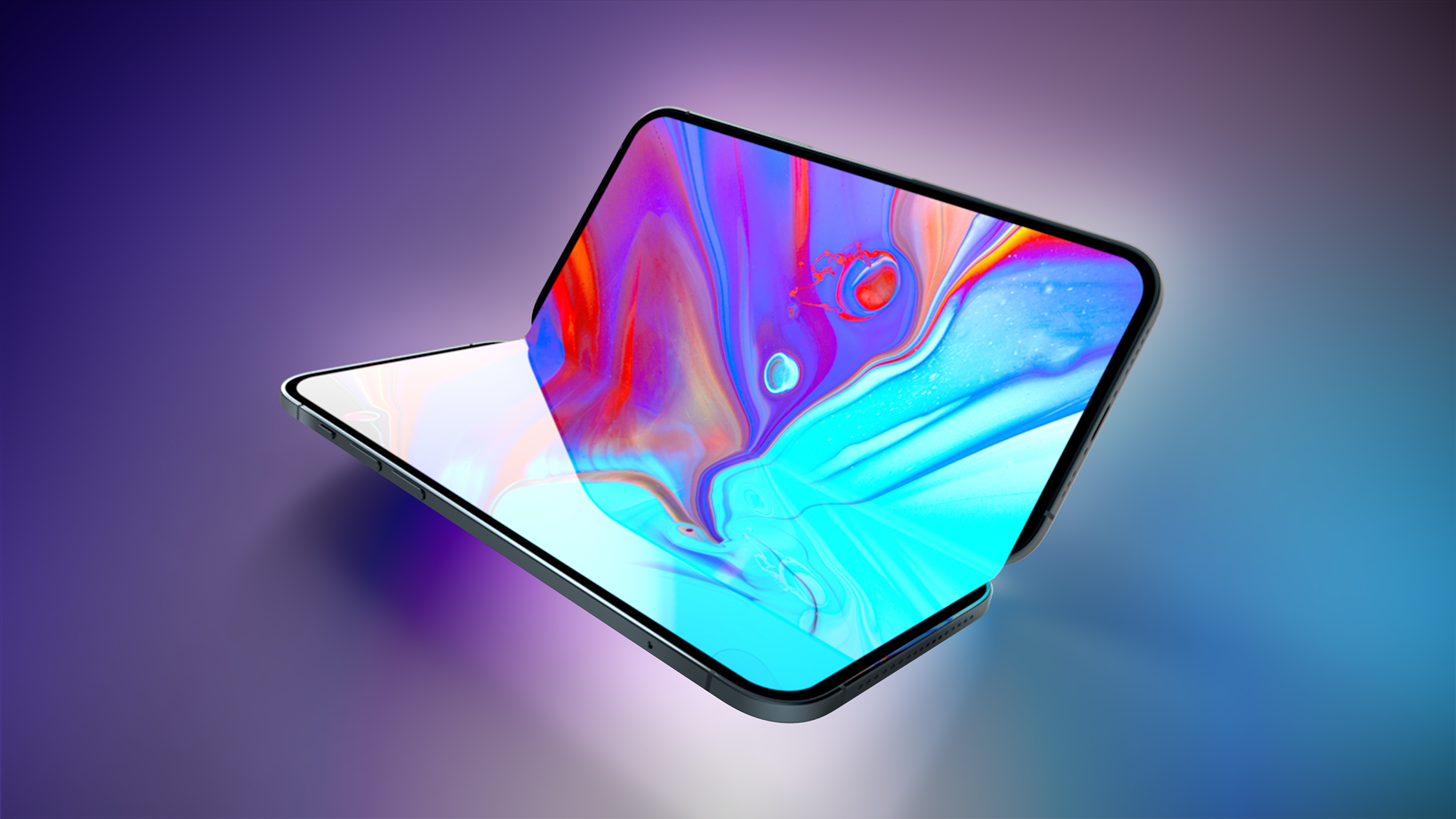
Accessory maker iFunSmart has begun listing the first protective cases for Apple's upcoming foldable iPhone, corroborating rumors about the device's design.
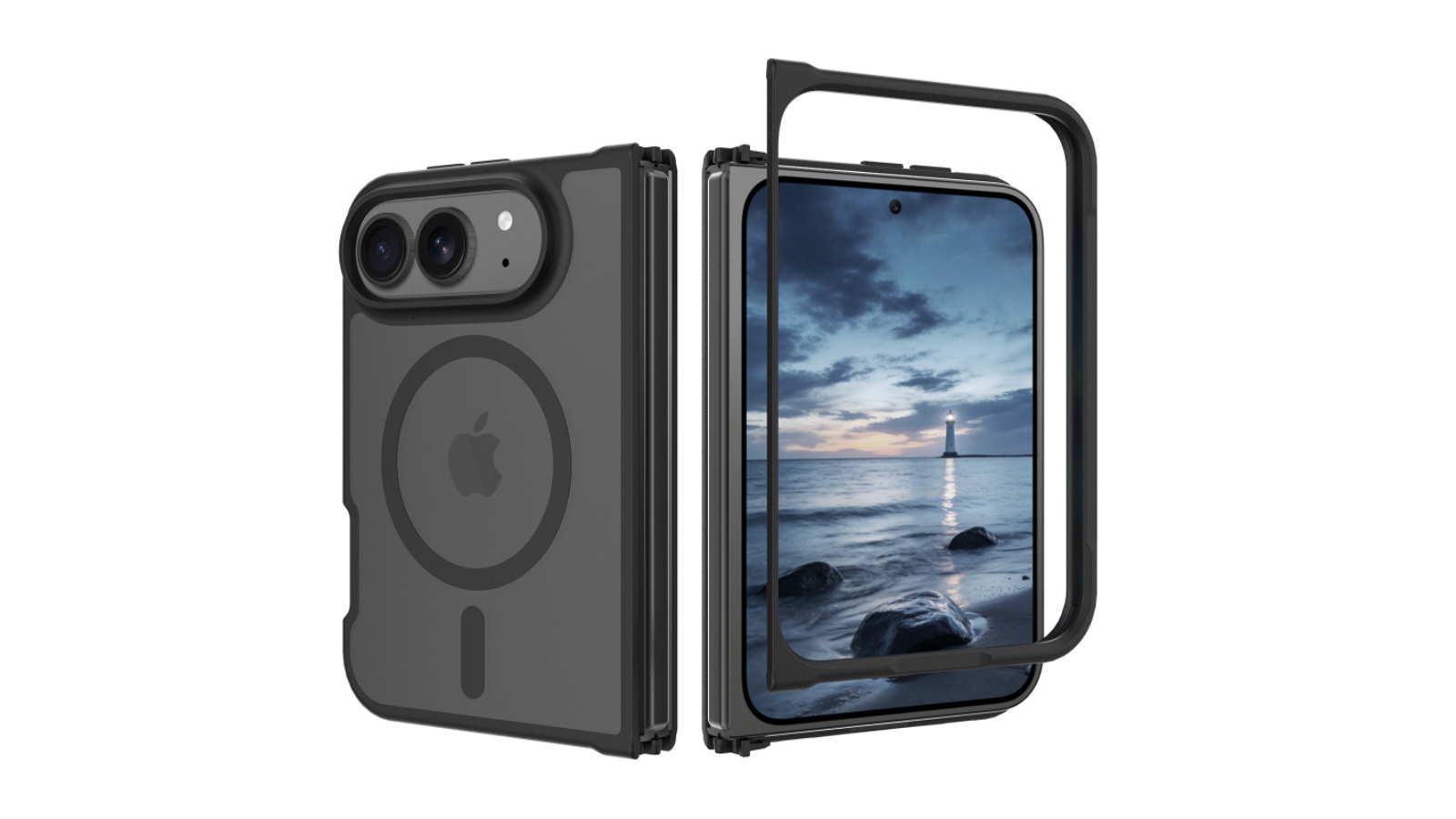

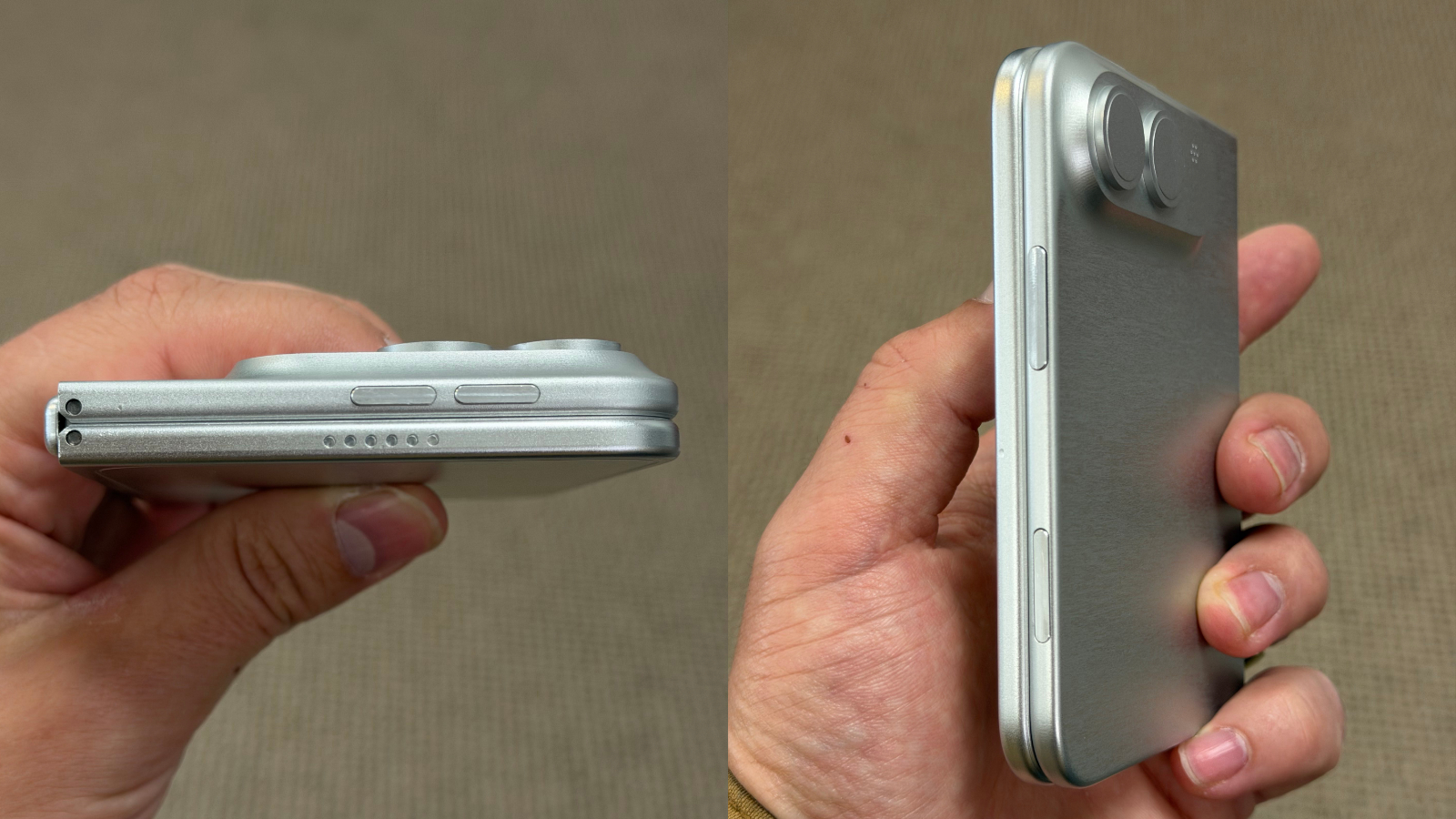
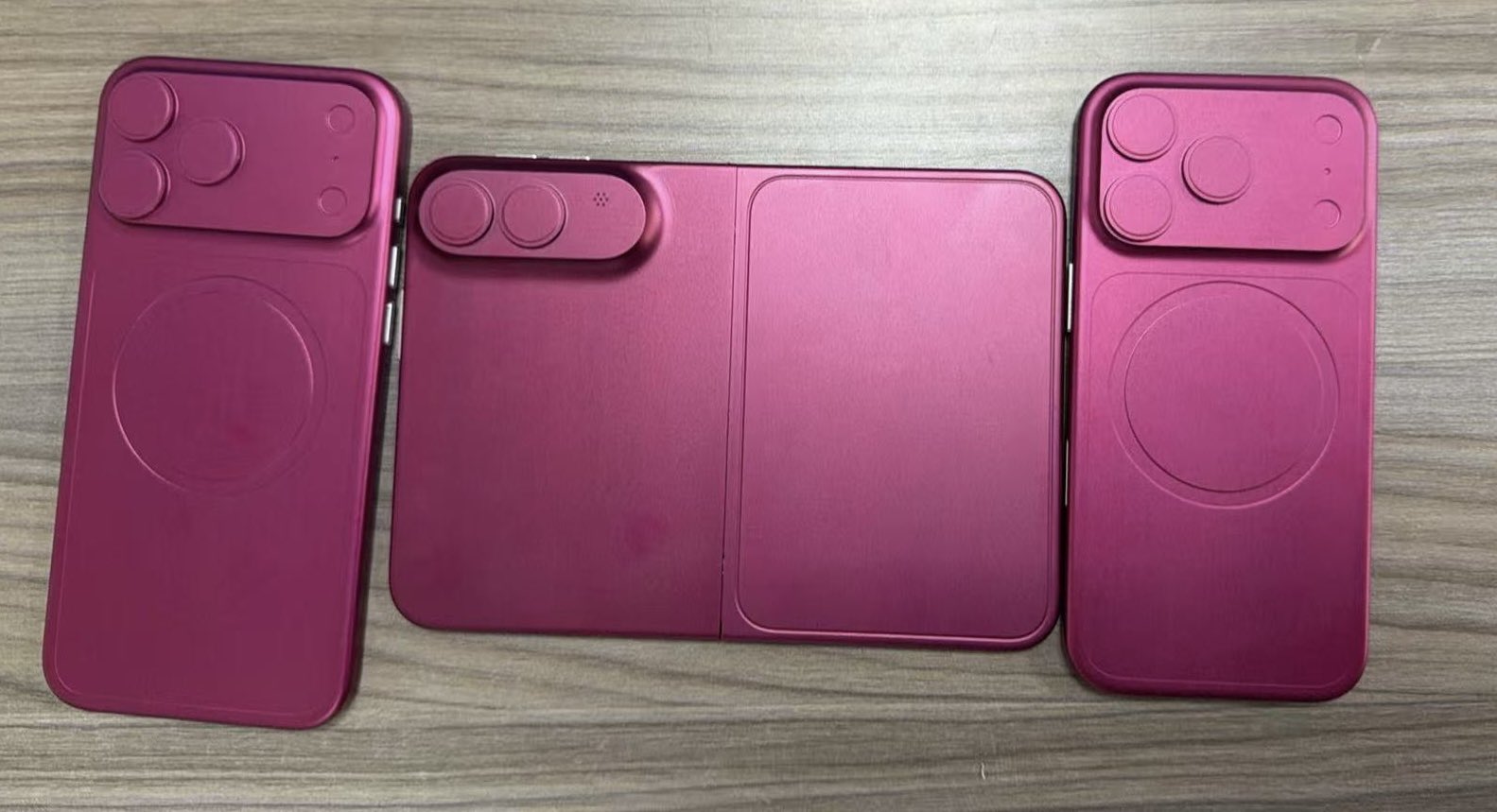
Case makers routinely begin mass producing accessories ahead of a new iPhone announcement, working from dummy units or leaked CAD files to size their molds. Their designs are speculative, but they have historically proven accurate to the millimeter, since accessory makers cannot afford to be left without product on launch day. Leaker Sonny Dickson shared images of foldable iPhone dummy units in April, providing the kind of reference template that typically circulates among case manufacturers.

The listings, spotted by French Apple site iPhoneSoft, show an unobtrusive rear camera plateau housing two lenses, a slim profile, and a circular cutout for MagSafe-style magnets. iFunSmart describes the cases as offering military-grade drop protection, integrated N52 magnets, a translucent matte finish, and 1.5mm raised camera lips alongside a 1mm raised screen bezel.

The design broadly corroborates the design outlined in rumors and seen on dummy units, suggesting the foldable's exterior is increasingly clear. Only two camera lens cutouts are present, in line with reports that Apple plans to skip the telephoto camera. A cutout for a Camera Control button is also visible, but there is no Action button. The listing depicts a multi-part case with separate snap-on sections rather than a single-piece shell owing to its folding design.
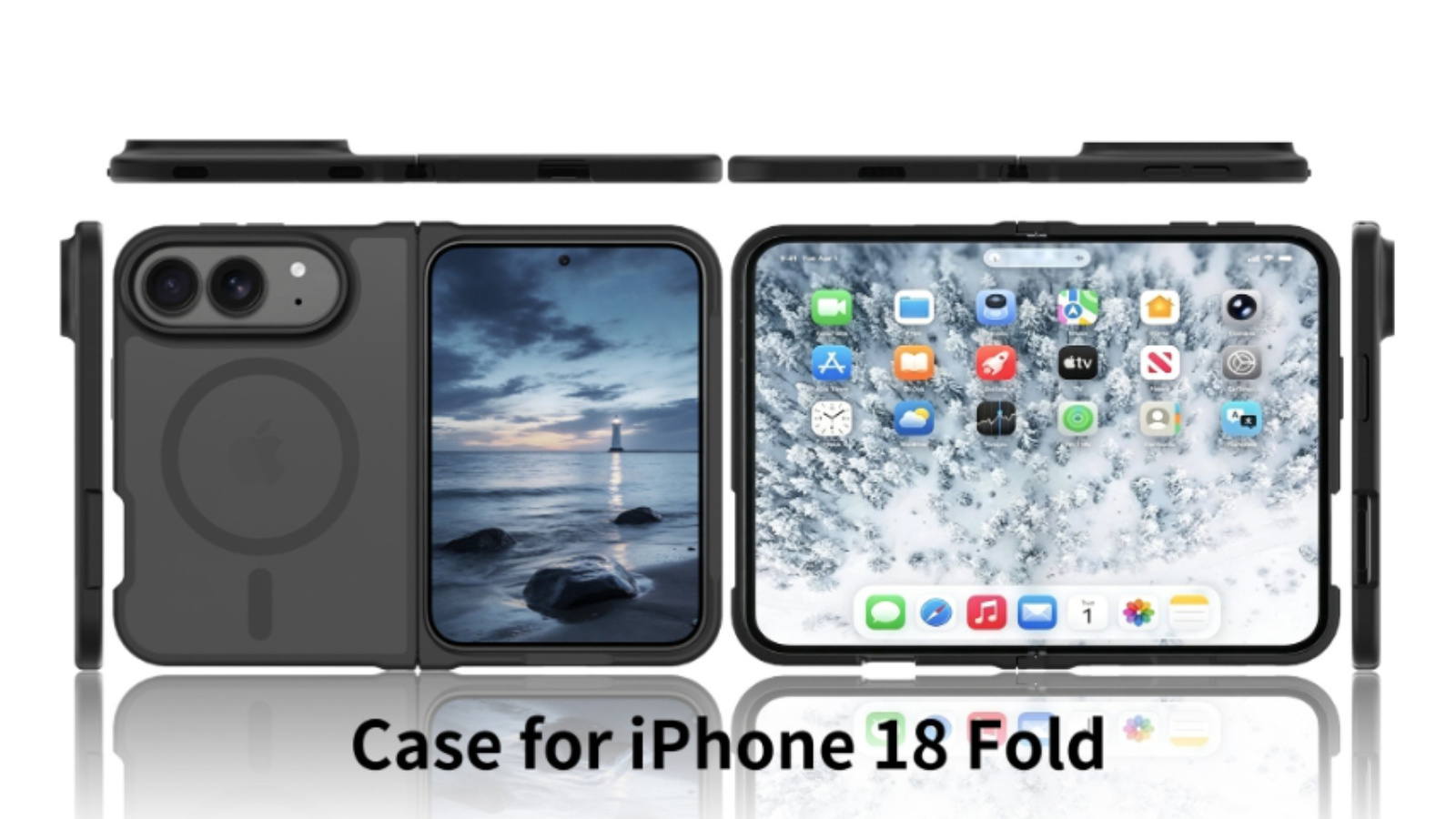

The presence of magnets in the case does not necessarily mean Apple has built MagSafe into the foldable iPhone itself, and there has previously been speculation that the device could lack the feature. The N52 magnets could simply be embedded into the case to attach to external ‌MagSafe‌ accessories such as wireless chargers and car mounts, without aligning with a corresponding magnet array inside the device.

iFunSmart's listings are likely to be among the first of many. Accessory makers typically flood the market with cases in the months ahead of a new iPhone launch, and further variants from competing brands should appear in the run-up to the device's announcement.

Apple is widely expected to launch the device alongside the iPhone 18 Pro and ‌iPhone 18 Pro‌ Max in fall 2026. Leaks point to a 5.5-inch external display, a 7.8-inch inner display, a folded thickness of around 9.5mm and a thickness of about to 4.5mm when open, the A20 Pro chip with 12GB of memory, dual 48-megapixel rear cameras, and Touch ID in the side button rather than Face ID. The device is expected to start at around $2,000.
Related Roundup: iPhone Fold

This article, "First Cases for Apple's Foldable iPhone Surface Online" first appeared on MacRumors.com

Discuss this article in our forums
  •  

Apple's iPhone 18 Modem Switch Comes With a Quiet Privacy Benefit

Rumors suggest Apple plans to expand Apple-designed modems to the entire iPhone 18 lineup, ending support for Qualcomm modems. The transition will bring speed and efficiency improvements, along with a little-known privacy benefit.


In iOS 26.3, Apple added a Limit Precise Location setting that cuts down on the amount of location data that's available to mobile networks, improving user privacy.

Mobile networks determine your location using information from cellular towers that a device connects to, but with Limit Precise Location enabled, some of the data typically provided to mobile networks is restricted. Instead of seeing location down to a street address, carriers may be limited to the neighborhood where a device is located.

The problem is that this feature is currently only available on devices with an Apple-designed C1 or C1X modem, which includes the iPhone Air, iPhone 16e, iPhone 17e, and M5 iPad Pro. Devices with Qualcomm modems like the iPhone 17 Pro models do not have the Limit Precise Location setting.

With the iPhone 18 Pro models and the iPhone Fold expected to use Apple modem technology, this is likely a privacy option that is set to expand to the full iPhone lineup.

Reducing location precision does not impact signal quality or user experience, nor does it affect the precision of location data provided to emergency responders during an emergency call. It is only meant to limit the location data given to cellular carriers, and it is distinct from location data shared with apps through Location Services.

While Apple's next set of iPhones will all likely have the new privacy feature, carriers do have to implement support. So far there are a limited number of carriers that have added the feature, but if it expands to the entire iPhone lineup and there is customer demand, it could see more widespread adoption.

In the United States, only Boost Mobile supports limiting precise location data, but EE, BT, and Sky all support it in the UK, while carriers in Austria, Germany, Denmark, Ireland, and Thailand have also adopted support and all of these carriers have the setting turned on by default. Users on a physical SIM or eSIM from any carrier in the EU or UK can also manually turn the setting on. A full list of supported carriers and regions is available on Apple's website.

The C2 modem that Apple is rumored to be working on is more capable than the C1 or C1X, and it will offer similar performance to Qualcomm's newest modems. It is expected to support mmWave 5G, which is not a feature of the C1 or C1X.
Related Roundups: iPhone 18, iPhone 18 Pro, iPhone Fold
Related Forum: iPhone

This article, "Apple's iPhone 18 Modem Switch Comes With a Quiet Privacy Benefit" first appeared on MacRumors.com

Discuss this article in our forums

  •  

Few Smartphone Owners Care About Foldables or AI, Survey Suggests

A new survey suggests most U.S. smartphone owners are not motivated to upgrade by foldable phone designs or AI features, a potential challenge for Apple as it prepares to launch both the rumored "iPhone Ultra" and an expanded suite of Apple Intelligence features this fall.


The survey, commissioned by CNET and conducted by YouGov across 2,407 U.S. smartphone owners between April 29 and May 1, found that only 13% of respondents would consider upgrading for a phone concept such as a foldable or flip phone, while just 12% cited AI integrations as an upgrade motivator.

Among iPhone owners specifically, interest in foldable designs was slightly higher at 14%. Apple is widely expected to launch its first foldable iPhone alongside the iPhone 18 Pro this fall, with a starting price of around $2,000.

While a 13% interest statistic in foldable designs has been characterized as evidence of limited appeal, it may actually represent a larger addressable market than anticipated for a product most consumers have never used and whose likely price was not disclosed to respondents. Interest could shrink considerably once a $2,000-plus price tag enters the picture, and supply chain reports suggest smooth availability may not occur until 2027.

Consumer sentiment around AI integrations dropped sharply from 2024 to 2025 before edging slightly higher in 2026, though the figure remains low at 12%. Previous surveys found that the majority of iPhone users felt existing ‌Apple Intelligence‌ features added little to no value to their experience.

Price remains the overwhelming driver of upgrade decisions, cited by 55% of respondents, followed by longer battery life at 52%, and more storage at 38%. Those top three motivators are unchanged from 2025, when price led at 62%, battery life at 54%, and storage at 39%.

Camera features (27%) and display size (22%) ranked well ahead of either foldables or AI as upgrade motivators. Smartphone owners are also not particularly swayed by a phone being thinner or available in new colors, findings that are relevant given Apple's recent emphasis on the ultra-thin iPhone Air and expanded color options across its lineup.
Related Roundup: iPhone Fold

This article, "Few Smartphone Owners Care About Foldables or AI, Survey Suggests" first appeared on MacRumors.com

Discuss this article in our forums
  •  

Apple Planning to Launch Two New 'Ultra' Products in the Next Year

Apple has decided to market two of its new products over the next year as "Ultra" devices, Macworld reports.


Citing sources familiar with the matter, the report claims that Apple's first foldable iPhone will be called the "iPhone Ultra." The device will become the highest end option in the lineup.

The ‌iPhone Ultra‌ will not be considered part of the iPhone 18 iPhone lineup, despite arriving alongside the iPhone 18 Pro and ‌iPhone 18 Pro‌ Max. This would be just like how the iPhone Air is not considered to be part of the iPhone 17 series. Although Apple is hoping to ship the ‌iPhone Ultra‌ alongside the ‌iPhone 18 Pro‌, it may launch a few weeks later and with scarcer availability.

Moreover, Apple is apparently planning to release a "MacBook Ultra" later this year or in early 2027. It will feature an OLED panel and a touchscreen, sitting above the MacBook Pro in the lineup at a "significantly" higher price point. While the device was originally intended to launch later this year, it is now likely pushed back by several months due to memory supply chain shortages.

Apple already offers M-series Ultra chips, the Apple Watch Ultra, and CarPlay Ultra. "Ultra" branding for the foldable iPhone and OLED MacBook was previously rumored by Bloomberg, which added that "AirPods Ultra" could also be on the way.
Related Roundups: iPhone Fold, MacBook Pro
Buyer's Guide: MacBook Pro (Buy Now)
Related Forum: MacBook Pro

This article, "Apple Planning to Launch Two New 'Ultra' Products in the Next Year" first appeared on MacRumors.com

Discuss this article in our forums
  •  

Foldable 'iPhone Ultra' Could Be Missing These 5 Key Features Despite $2,000 Price Tag

Apple's first foldable iPhone, dubbed the "iPhone Ultra," could be missing at least five key features present on the iPhone 18 Pro models despite its $2,000 price point.


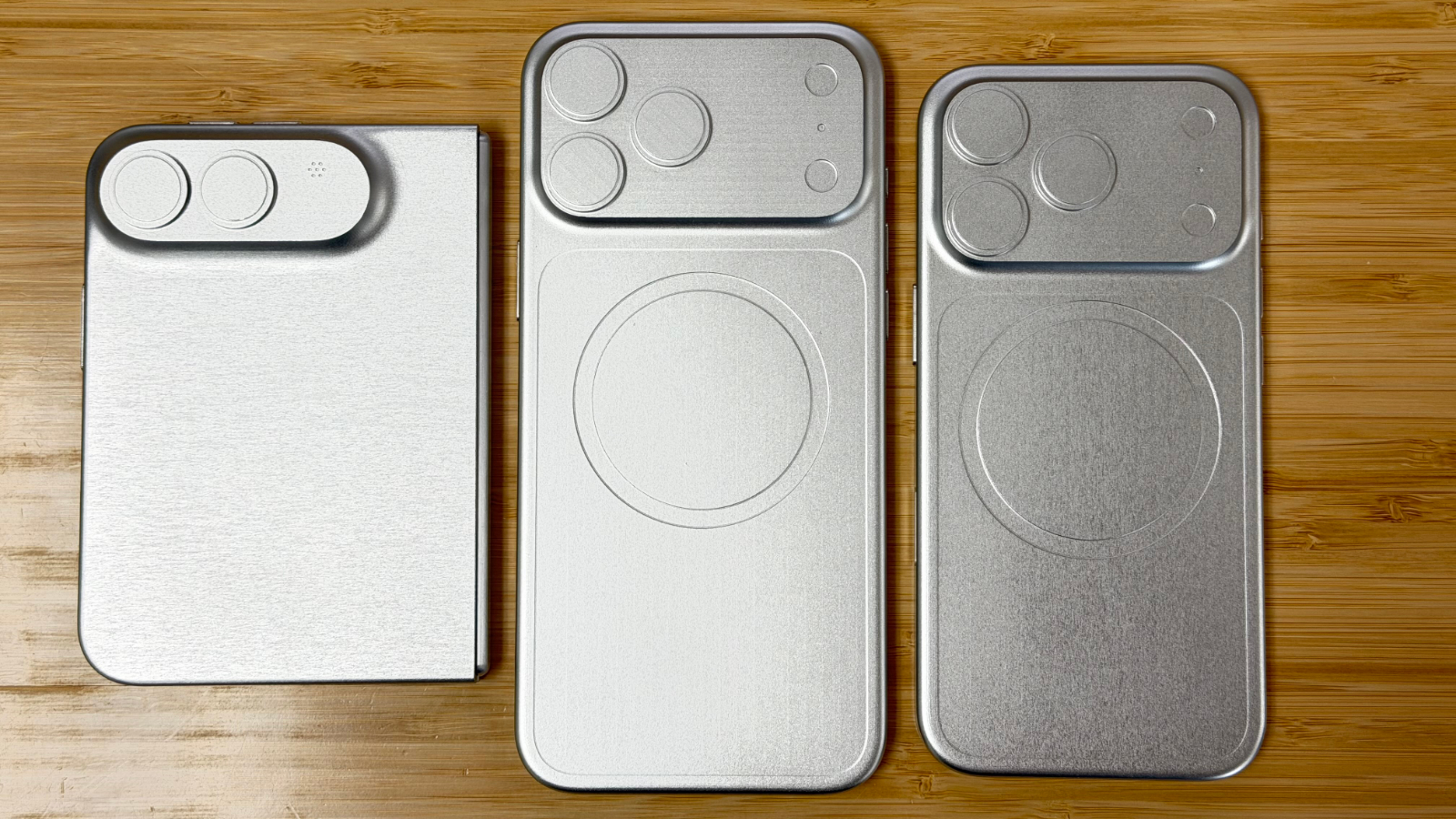
Recent images of dummy models shared by Sonny Dickson and Vadim Yuryev seem to reveal two previously undiscussed missing features of the ‌iPhone Ultra‌: MagSafe and the Action Button.

iPhone dummy units are intended to take the place of real devices for testing purposes, particularly for accessory manufacturers, who seek to mass produce items such as cases prior to the announcement of new devices, which necessitates a high level of accuracy and manufacturing precision.

Both sets of dummy models show that the volume buttons will be located on the top edge of the device, aligned to the right, similar to the iPad mini. This aspect was first rumored by Weibo leaker "Instant Digital," who said that the motherboard is apparently located on the right side of the device. As to not run cables across the screen to the left side for the volume buttons (where they are located on all other iPhone models), Apple is said to have decided to run them directly upwards, which maximizes internal space.

Image via Vadim Yuryev.


While a power button and volume buttons in their new location are clearly visible on the dummy models, the Action button is curiously missing. This suggests that the ‌iPhone Ultra‌ will be the first iPhone model with no Action button or silent switch. Apple introduced the Action button on the iPhone 15 Pro as a replacement for the silent switch, and it has since come to every available iPhone model.

The images of the foldable iPhone dummy models shared so far have been shown alongside mock ‌iPhone 18 Pro‌ and ‌iPhone 18 Pro‌ Max units. These dupes for the high-end models, like most dummies, clearly show precise indentations for the internal array of ‌MagSafe‌ magnets to help manufacturers obtain correct alignment with their accessories.

Image via Vadim Yuryev.


Crucially, these indentations are absent on the foldable iPhone dummies, suggesting that the device may not have ‌MagSafe‌. This aspect remains speculative, but at 4.5mm, the ‌iPhone Ultra‌ is expected to be Apple's thinnest iPhone to date by a considerable margin, so it is not implausible that it could be too thin for ‌MagSafe‌.

The ‌iPhone Ultra‌ is believed to be too thin to accommodate Apple's TrueDepth camera array, which is required for Face ID authentication and now located in the Dynamic Island. As a result, Apple is expected to revert to Touch ID on the device. The last iPhone to feature ‌Touch ID‌ was 2022's iPhone SE 3, where it was part of the device's budget offering. The last flagship iPhone with ‌Touch ID‌ was 2016's iPhone 7, so the return of ‌Touch ID‌ as the sole method of authentication on what will be the highest-end iPhone will be unprecedented.

Image via Sonny Dickson.


As visible on the dummy models, which corroborate a multitude rumors, the ‌iPhone Ultra‌ is expected to sport only two rear cameras. These are expected to be wide and ultra wide cameras, just like the iPhone 17. Unlike the Pro iPhones, there will be no third camera with telephoto capabilities.

Previous rumors indicate that the ‌iPhone Ultra‌ will also not have a SIM card slot, again just like the iPhone Air, being compatible with eSIM only. As a result, the ‌iPhone Ultra‌ could be missing the following features:


  • ‌Face ID‌/TrueDepth camera array

  • Telephoto camera/third rear camera

  • ‌MagSafe‌

  • Action Button

  • Physical SIM card slot


The ‌iPhone Air‌ lacks Ultra Wide and Telephoto rear cameras, a SIM card slot, and stereo speakers. With a super-thin design, a titanium frame, and a glass back, the ‌iPhone Ultra‌ is expected to be very similar to the ‌iPhone Air‌ in terms of design, and it is possible that similar feature concessions will be present on the device when it launches later this year. There are no indications that the ‌iPhone Ultra‌ will be missing stereo speakers, but it is not out of the question given the other design compromises Apple has chosen to make with the device.

The rumored starting price for the ‌iPhone Ultra‌ varies somewhat, but reports agree that it will not be below $1,999. The iPhone 17 Pro starts at $1,099 and has all of the above missing features, so the ‌iPhone Ultra‌'s compromises could be controversial given its markedly higher price point. The device is expected to launch alongside the ‌iPhone 18 Pro‌ and ‌iPhone 18 Pro‌ Max in the fall.
Related Roundup: iPhone Fold

This article, "Foldable 'iPhone Ultra' Could Be Missing These 5 Key Features Despite $2,000 Price Tag" first appeared on MacRumors.com

Discuss this article in our forums
  •  

Apple Apparently Sees Camera Control as Key Foldable iPhone Feature

Apple's first foldable iPhone will be eSIM only and feature a Camera Control despite its ultra-thin design, according to a known leaker.


In a series of new posts, the leaker known as "Instant Digital" said that Apple has made deliberate engineering compromises to ensure that the first foldable iPhone features a Camera Control button, despite it being at least 1.1mm thinner than the iPhone Air when unfolded.

According to the leaker, Apple's rationale is largely ergonomic: With competing foldable phones, Apple believes that making adjustments and taking photos can be "cumbersome" owing to their large size. The Camera Control is said to be the company's preferred solution, enabling users to maintain a steady grip on the device while making any required adjustments, or do so one-handed if they wish.

This ensures that even when the screen is fully unfolded, users can still perform these operations effortlessly using just one hand.

Although the reception for this button on standard flat-screen iPhones has been somewhat polarized, Apple believes that within the unique context of a foldable device's ergonomics, its practical value will be significantly enhanced. Consequently, the Apple team made a firm decision to prioritize this feature—even at the cost of sacrificing precious internal component stacking space—to ensure the "Camera Control" button is included on their very first generation of foldable iPhones.


In addition, Apple's U.S. imaging team apparently recently took a trip to Shenzhen, China, to test the cameras of foldable smartphones from rival brands such as Huawei, with particular attention to telephoto zoom capabilities. The first foldable iPhone is not expected to offer a telephoto camera, with only wide and ultra wide cameras on the rear like the iPhone 17. Most high-end rival foldable smartphones, such as the Samsung Galaxy Z Fold 7, feature three rear cameras, including a telephoto.

Instant Digital added that they have seen no signs in the supply chain of tooling or stocking for SIM card tray modules for the foldable iPhone, concluding the device will be eSIM-only across all regions, just like the ‌iPhone Air‌. The leaker also puts first-year production at a conservative 10 million units, with pricing expected to fall between 15,000 and 20,000 RMB (roughly $2,060–$2,750).

The leaker added that the mainland China variants of the iPhone 18 Pro models are set to adopt a "Single SIM + eSIM" configuration, dropping the dual-physical-SIM setup currently used in the region. The Hong Kong version is said to follow the same approach while retaining a physical SIM card slot.

The foldable iPhone is widely expected to launch alongside the ‌iPhone 18 Pro‌ and ‌iPhone 18 Pro‌ Max in fall 2026. It is expected to feature a 7.8-inch inner display, a 5.5-inch outer display, Touch ID, the A20 chip, the C2 modem, and more.
Related Roundups: iPhone 18 Pro, iPhone Fold

This article, "Apple Apparently Sees Camera Control as Key Foldable iPhone Feature" first appeared on MacRumors.com

Discuss this article in our forums

  •  

iPhone Fold Production Pushed Back, But Fall 2026 Launch Still on Track

Production on the iPhone Fold is behind schedule, but the device is still slated to launch in fall 2026, reports DigiTimes. The site says that production has been pushed back by "roughly one to two months," but Apple has not communicated any launch delays to suppliers. Apple is still planning for a 2026 launch, which suggests a tighter production schedule.


Apple planned to begin ‌iPhone Fold‌ mass production in June 2026, but mass production has now slipped to early August. Some rumors have suggested that Apple is having more manufacturing problems than expected with the Engineering Validation Test phase that the ‌iPhone Fold‌ is in right now, but other rumors suggest that won't lead to delays.

Last week, Japanese site Nikkei said that the engineering delays could cause Apple to delay the launch of the ‌iPhone Fold‌ until 2027, but Bloomberg's Mark Gurman said the ‌iPhone Fold‌ remains on track to launch "around the same time" or "soon after" the iPhone 18 Pro models in September 2026.

DigiTimes' report reconciles the two separate launch timing rumors, indicating that there is indeed a delay in the test phase, but Apple may be able to make up ground during the mass production phase. Prior to mass production, the ‌iPhone Fold‌ will still need to go through Design Validation Testing and Production Validation Testing.

A delay in the mass production timeline could cause serious supply chain shortages, and ‌iPhone Fold‌ availability is likely to be constrained. When we hear rumors about launch issues this early in an iPhone cycle, it typically leads to severe launch shortages and a device that sells out in minutes during pre-orders.

The ‌iPhone Fold‌ is expected to cost between $2,000 and $2,500. It will be Apple's first foldable device, with a 5.5-inch display when closed and a 7.8-inch display when open. More about the device can be found in our iPhone Fold roundup.
Related Roundup: iPhone Fold

This article, "iPhone Fold Production Pushed Back, But Fall 2026 Launch Still on Track" first appeared on MacRumors.com

Discuss this article in our forums

  •  

Smart Adhesive Is Key to Crease-Free Foldable iPhone Display

Advances in optically clear adhesive (OCA) will be a key factor in achieving a near-invisible crease in Apple's first foldable iPhone expected later this year, according to TrendForce.


The supply chain intelligence firm outlined the key technologies in a new report on foldable display innovation, explaining that creases form when layers within the display panel fall out of alignment, concentrating stress at the fold and causing micro-cracks or permanent deformation over time.

Ultra-thin glass (UTG) also plays a role in the optimal design. Apple's patents have described a design where the glass is thinner at the fold for flexibility and thicker elsewhere for durability, which is an approach consistent with reports last year that Apple was testing uneven-thickness panels, and more recently that it may use a dual-layer glass structure to spread stress across multiple layers.

The single most important factor, TrendForce says, is OCA. Modern formulations go well beyond simple bonding, staying pliable during gradual bending to reduce fatigue while temporarily stiffening under sudden impact to provide structural support. Over time, the adhesive's ability to flow into microscopic irregularities also reduces light scattering and keeps the crease less visible.

Hinge and structural engineering still matter too. Samsung Display uses laser drilling in the metal support plate behind the display to balance rigidity and flexibility, a technique analyst Ming-Chi Kuo reported last July that Apple's foldable would also use via supplier Fine M-Tec. Samsung briefly showcased a crease-free panel at CES 2026, though it later clarified this was an R&D concept rather than a production-ready design.

Apple has reportedly pursued eliminating the crease "regardless of cost", and leaker "Fixed Focus Digital" reported in February that production orders had been placed with a crease depth under 0.15mm and a crease angle under 2.5 degrees. TrendForce estimates Apple could capture close to 20% of the foldable smartphone market this year, which it says would compress Samsung and Huawei to roughly 30% each.

The foldable iPhone is expected to be unveiled alongside the iPhone 18 Pro models in September. Foxconn began trial production last week, and Samsung Display is reportedly on track to begin mass production of OLED panels for the device in May.
Related Roundup: iPhone Fold

This article, "Smart Adhesive Is Key to Crease-Free Foldable iPhone Display" first appeared on MacRumors.com

Discuss this article in our forums

  •  

New Huawei Foldable Looks a Lot Like Apple's Rumored iPhone Fold

Apple's upcoming foldable iPhone is expected to feature a book-style form factor that's relatively uncommon in the foldables market, but Huawei's new Pura X Max appears to share a similar wide aspect ratio.


Set to be released in China next week, Huawei's new device actually builds upon a design used by the original, smaller Pura X, which was marketed last year as an extra-wide flip phone. Little is known about the Pura X Max beyond its triple lens rear camera, while Huawei's imagery shows the device being used in both portrait and landscape.

Prior to the Pura X Max's unveiling, Apple's rumored device was said to most resemble Oppo's Find N5. Samsung is also believed to be adopting a similar wide aspect ratio form factor for one of its upcoming foldables.

We've heard plenty of rumors about the foldable iPhone‌'s design, but the first alleged dummy models appeared last week. The device will have a 5.5-inch display when closed, making it Apple's smallest current-generation iPhone. When open, it will be around 7.8 inches, which is around half an inch smaller than the iPad mini.

Apple is expected to debut its first foldable alongside the iPhone 18 Pro models in September, with a launch likely to shortly follow the Pro devices' release. Most rumors have suggested that the ‌foldable iPhone will start at around $2,000 and be available in traditional space gray/black and silver/white finishes.


One rumor claims that Apple will call it the "iPhone Ultra," rather than "iPhone Fold," which is the shorthand the media has largely been using.
Related Roundup: iPhone Fold

This article, "New Huawei Foldable Looks a Lot Like Apple's Rumored iPhone Fold" first appeared on MacRumors.com

Discuss this article in our forums

  •  

iPhone Fold Enters Trial Production Phase Ahead of 2026 Launch

Apple partner Foxconn has started trial production on the iPhone Fold, according to Chinese leaker Instant Digital. Trial production comes before mass production, which Apple plans to start in July as long as no issues come up during the earlier testing stage.


So far, Apple remains on track to launch the ‌iPhone Fold‌ in 2026, though the latest rumors suggest that it's not going to come out in September. Instead, it could launch sometime after the iPhone 18 Pro, debuting as late as December. Apple is likely to announce the iPhone 18 Pro models and the ‌iPhone Fold‌ at the same time at its September iPhone event, but the following launch sounds like it will be split.

The ‌iPhone Fold‌ will be Apple's first foldable, and it's expected to feature a ~5.5-inch screen size when closed and a larger ~7.8-inch size when open. Apple plans to use a wider 4:3 aspect ratio, so it will be similar in shape to an iPad, with a wider, shorter size than many competing foldable smartphones on the market.

Apple plans to make the ‌iPhone Fold‌ as thin as 4.5mm when it's open, and that thin design requires compromises. There won't be a triple-lens camera setup so no Telephoto lens, and Apple also can't use Face ID because the TrueDepth sensor doesn't fit. Rumors suggest the ‌iPhone Fold‌ will have an iPad-style Touch ID side button instead. Apple is supposedly focused on minimizing the crease, and has achieved a design with a nearly invisible fold down the middle when the device is open.

For more on what to expect from Apple's first foldable iPhone, we have a dedicated iPhone Fold roundup.
Related Roundup: iPhone Fold

This article, "iPhone Fold Enters Trial Production Phase Ahead of 2026 Launch" first appeared on MacRumors.com

Discuss this article in our forums

  •  

Apple Preparing 'Most Significant Overhaul in the iPhone's History'

Bloomberg's Mark Gurman has high expectations for Apple's first foldable iPhone.


In his Power On newsletter today, he said the foldable iPhone will be "the most significant overhaul in the iPhone's history."

"iPhone 4, iPhone 6 and iPhone X were clearly a big deal, but this is a whole new design," he said.

Like Samsung's Galaxy Z Fold 7, the foldable iPhone will reportedly open up like a book, providing users with a large inner screen for watching videos, playing games, and multitasking. iOS 27 is expected to be optimized for the foldable iPhone, allowing for apps to be open side-by-side and for other iPad-like multitasking functionality.

A few months ago, a report said the foldable iPhone will be equipped with a 7.7-inch inner display, and a 5.3-inch outer display. It was initially rumored that the device would have a virtually "crease-free" inner display, but it was later reported that Apple is using technology that "reduces the crease without eliminating it entirely."

Apple supply chain analyst Ming-Chi Kuo expects the foldable iPhone to have two rear cameras, one front camera, and a Touch ID power button instead of Face ID.

Apple will likely unveil the foldable iPhone in September this year, alongside the iPhone 18 Pro and iPhone 18 Pro Max. However, according to analyst Tim Long and Gurman, the foldable iPhone might ship later than the Pro models.

In the U.S., it has been estimated that the foldable iPhone may start at or above $1,999.

Related Roundup: iPhone Fold

This article, "Apple Preparing 'Most Significant Overhaul in the iPhone's History'" first appeared on MacRumors.com

Discuss this article in our forums

  •  

iPhone Fold Likely to Ship Later Than iPhone 18 Pro

The new foldable iPhone won't ship to customers in the same September timeframe as the iPhone 18 Pro and ‌iPhone 18 Pro‌ Max, Bloomberg's Mark Gurman said today in a Q&A session.


Apple will likely ship the iPhone Fold to customers after the ‌iPhone 18 Pro‌ and Pro Max come out in September, but Gurman did not provide a specific availability timeline.

Earlier this month, Barclays analyst Tim Long suggested that the foldable iPhone won't ship until December, suggesting a roughly three-month delay between the ‌iPhone Fold‌ and the ‌iPhone 18 Pro‌ models. Apple has done a split launch before, shipping one model later than another. When the iPhone X launched in 2017, it shipped out in November, while the iPhone 8 and 8 Plus introduced alongside it came out in September as usual.

It is entirely possible Apple will ship the ‌iPhone 18 Pro‌ and ‌iPhone 18 Pro‌ Max in September and then follow it with the ‌iPhone Fold‌ sometime between September and the end of the year. Back in December, Apple analyst Ming-Chi Kuo said that the ‌iPhone Fold‌ would be in short supply, suggesting manufacturing difficulties. Kuo expects supply constraints into 2027, and supply problems or manufacturing issues could explain why Apple would delay the ‌iPhone Fold‌'s shipment date.

Even if Apple does plan to ship the ‌iPhone Fold‌ after September, we can still expect to see it introduced during the annual iPhone event that will feature the ‌iPhone 18 Pro‌ models. Apple will likely announce all three phones at once, and then bring them to customers when they're ready.
Related Roundups: iPhone 18 Pro, iPhone Fold

This article, "iPhone Fold Likely to Ship Later Than iPhone 18 Pro" first appeared on MacRumors.com

Discuss this article in our forums

  •  
❌