
Reading view

Ugly Americans? Colombia Expels Americans, Others Deemed Undesirable For Behavior & Vice Accusations

Enhanced enforcement seeks to promote family-friendly tourism & unwelcome sex & vice-oriented tourism.

Migración Colombia, Colombia’s immigration agency, has executed the expulsion of two US citizens from Medellín following separate investigations into activities deemed a risk to public security and peaceful coexistence. The administrative measures targeted Steve Newland, a digital content creator known as “Chill Capo,” and Samuel McVey, a former teacher from New York. Both individuals were transported to the Aeropuerto Internacional José María Córdova in Rionegro and placed on a flight to Miami, Florida.
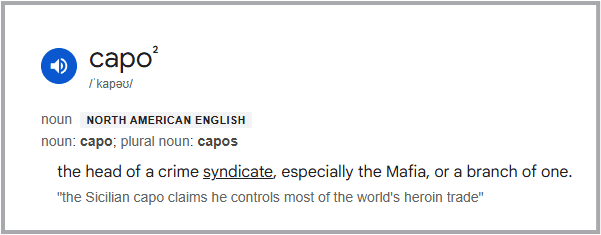
Definition of "Capo" according to Google.

Definition of “Capo” according to Google.

The actions come amid a broader strategy by the Colombian government to address concerns regarding sex tourism and the presence of foreign nationals with outstanding legal issues in their home countries. According to Paola Salazar, the Regional Director of Migración Colombia, the agency has adopted a stricter posture to ensure that Colombia is not utilized as a refuge for individuals linked to fraudulent or illicit activities.

The Case of Steve “Chill Capo”Newland

Steve Newland, a 42-year-old US citizen born in Willingboro, New Jersey, had been residing in Medellín since 2022. Operating under the digital brand “Chill Capo,” Newland promoted luxury lifestyle experiences and nightlife events. However, an investigation by Migración Colombia determined that Newland used his digital platforms to promote encounters with alleged purposes of sexual exploitation.

“Lo están esperando y lo capturan, (they are waiting for them and they will capture them)” stated Federico Gutiérrez, the Mayor of Medellín, referring to the coordination with US authorities regarding the return of the individuals.

The agency reported that Newland’s content included advice on how to evade immigration controls at the airport, such as using false medical certificates or simulating injuries to bypass rigorous inspections. His publications also mentioned accommodations linked to historical criminal figures, specifically the penthouses de Pablo Escobar, and provided instructions on how to avoid being targeted with escopolamina during social outings. Following the investigation, authorities confirmed Newland was in an irregular migration status. He has been banned from reentering Colombia for a minimum of five years.

Newland has publicly denied the allegations via his social media channels. He asserted that his primary objective was to educate visitors on safety and help them avoid dangerous situations. Newland claimed that his events were legal, safe, and conducted in collaboration with established Colombian businesses in the Parque Lleras district. He further contended that his visa had been renewed multiple times since 2022, suggesting that any illegal activity would have prevented such renewals. Newland challenged authorities to present specific evidence or identify victims related to the claims of exploitation.

🔴 #Noticia | Influenciador estadounidense que promovía turismo con fines de explotación sexual en Medellín, fue deportado por Migración Colombia.
El extranjero no podrá ingresar al país en los próximos cinco años, luego de este tiempo tendrá que solicitar una visa. pic.twitter.com/9QhZKJ7C8X

— Migración Colombia (@MigracionCol) April 11, 2026

Samuel McVey: School Incidents and US Warrants
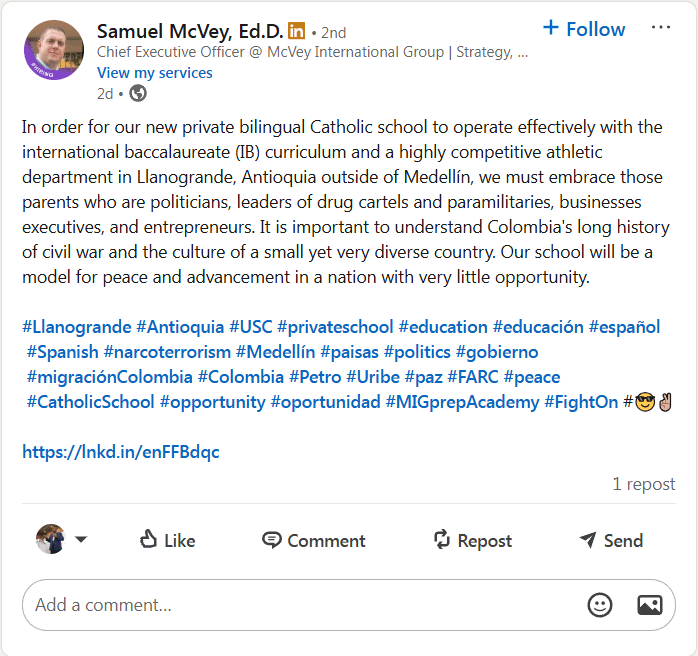
Samuel McVey crazy man

On LinkedIn, McVey claims to have a new private school in Llanogrande, Antioquia, that embraces “leaders of drug cartels and paramilitaries” among others.

In a separate incident, 46-year-old Samuel McVey, who was fired as a primary school teacher but styles himself as “Chief Executive Officer @ McVey International Group” on LinkedIn, was expelled following a series of disturbances at educational institutions in the Valle de Aburrá (Metro Medellín) and the city’s eastern Antioquia bedroom community of Rionegro. On April 8, 2026, McVey reportedly entered at least three schools in the wealthy Las Palmas sector of Medellín, where he allegedly initiated confrontations and made threats against staff and students. He subsequently traveled to Rionegro, where he attempted to gain entry to the Colegio Monteluna in Llanogrande by posing as an English language instructor.

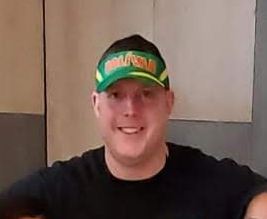
When denied access, McVey reportedly directed threats toward students, prompting school officials to contact the Policía Nacional. He was apprehended by units from the Estación Llanogrande near a local strip mall. Manuel Villa Mejía, the Secretary of Security and Coexistence of Medellín, described McVey as a risk to the community and confirmed that the individual was in a state of high agitation upon his detention.Samuel McVey (photo from LinkedIn)
Investigation into McVey’s background revealed that he is a fugitive from New Rochelle, New York. In the United States, McVey faces charges of aggravated harassment in the second degree, a misdemeanor. The charges stem from an investigation by the New Rochelle Police Department involving threats made against Dr. Corey W. Reynolds, the Superintendent of the City School District of New Rochelle. McVey, a former Spanish teacher at Isaac E. Young Middle School, was terminated in early 2026. New Rochelle authorities had issued two bench warrants for his arrest after he failed to appear for court proceedings on March 26 and April 1, 2026.

Despite the outstanding warrants, the New Rochelle Police Department noted that they do not typically extradite individuals for misdemeanor offenses. Consequently, Colombian authorities processed his departure as an immediate expulsion based on his conduct within Colombia. McVey has been prohibited from entering Colombia for ten years.

Regional Enforcement Trends and Peak Travel Season Operations

The expulsions of Newland and McVey come after a larger enforcement effort during the 2026 Semana Santa (Easter Week) season. Migración Colombia reported that enhanced controls at airports and land borders resulted in the detection of numerous foreign nationals with irregular status or criminal backgrounds.

Specific cases identified by the agency during this period include:

  • In Leticia, Amazonas, a Peruvian citizen was detained at a hotel; the individual was the subject of an Interpol Red Notice for alleged crimes against public health.
  • In Ibagué, a Venezuelan citizen wanted by Peruvian authorities under an Interpol Red Notice for aggravated theft was arrested in a joint operation with the Policía Nacional.
  • In Facatativá, another Venezuelan national was apprehended for an Interpol Red Notice involving charges of human trafficking for sexual exploitation and membership in criminal organizations.
  • In Bogotá, two Dominican citizens were expelled after attempting to fraudulently obtain Colombian passports to travel to Europe.
  • At the Aeropuerto Internacional José María Córdova, a man and a woman from the Dominican Republic were intercepted while attempting to travel to Peru and Argentina using fraudulent Colombian documentation.
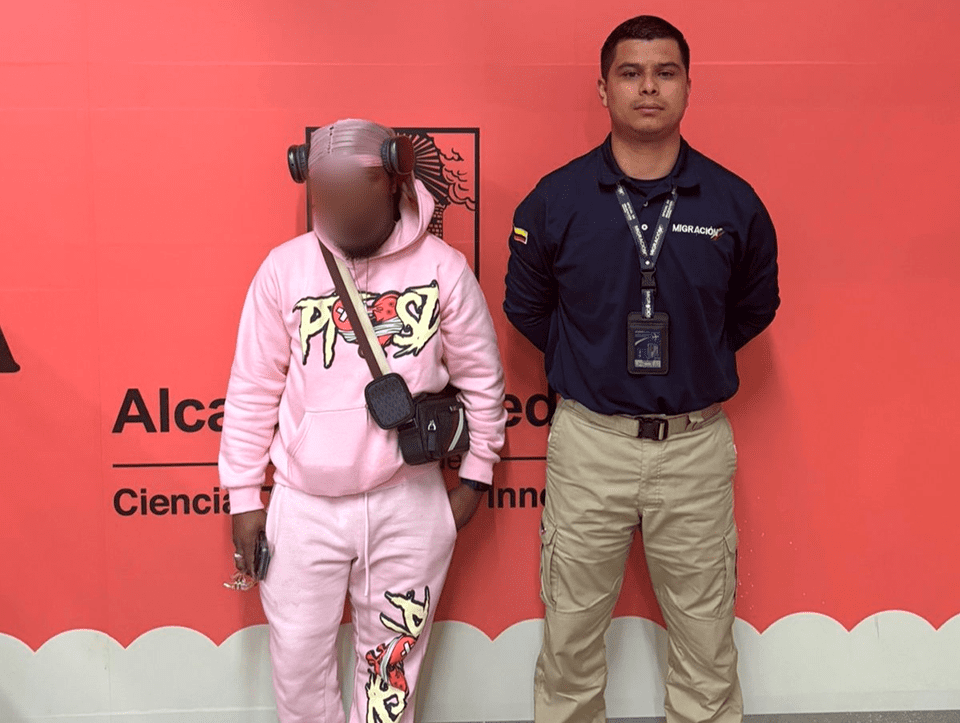
    Inadmitted (photo courtesy Migración Colombia)

    Inadmitted (photo courtesy Migración Colombia)

Statistical Overview of Inadmissibility in 2026

In the first quarter of 2026, Migración Colombia has denied entry to over 600 foreign nationals. The primary reasons for inadmissibility include state sovereignty and security risks (153 cases), lack of required visas (133 cases), and insufficient documentation (104 cases). Additionally, 89 individuals were rejected for providing false information during immigration interviews, while 34 had documented criminal records.

The agency also noted a specific focus on preventing the Explotación Sexual Comercial de Niños, Niñas y Adolescentes (ESCNNA). Through cooperation with international intelligence agencies and the Angel Watch platform, 471 individuals have been denied entry since 2016 for reasons associated with sexual offenses. At the Rionegro terminal alone, 31 inadmissibility cases have been recorded so far in 2026 related to potential sex tourism risks.

The Director General of Migración Colombia, Gloria Esperanza Arriero, emphasized that while the country remains open to international travel and investment, visitors are required to comply with the Constitución Política de Colombia and national laws. Under Decreto 2136 de 2021, the immigration authority maintains the power to deny entry or order the immediate return of any foreign citizen who poses a risk to national security or public order.

The main nationalities of those denied entry in early 2026 include citizens from the United States (76), the Dominican Republic (64), Ecuador (55), and Venezuela (52).
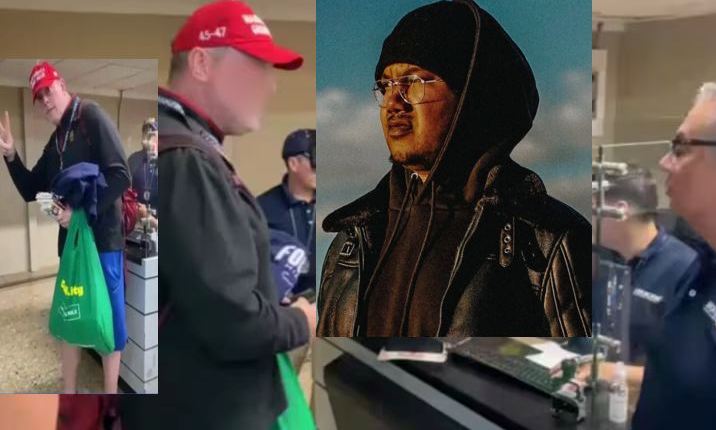
Montage of deportees Samuel McVey and Steven “Chill Capo” Newland

Video footage courtesy Migración Colombia
  •  

Indicted Ex-Foreign Minister Calls Colombian President Gustavo Petro “Mafia Boss”

Former Foreign Minister Álvaro Leyva releases another scathing attack on his former boss as he fights charges.

On April 10, former Colombian Foreign Minister Álvaro Leyva Durán released a formal statement responding to his indictment by the Fiscalía General de la Nación. Leyva faces charges related to his 2023 decision to declare a passport procurement tender void, a process that involved the private security printing firm Thomas Greg & Sons. The former official characterized the legal proceedings as a politically motivated maneuver orchestrated from the Casa de Nariño.

The indictment for prevarication centers on Leyva’s intervention in the bidding process, which the Fiscalía interprets as a deliberate breach of administrative law. In his defense, Leyva maintained that his actions were necessary to address irregularities and ensure the application of the Constitución Política de Colombia. He argued that the prosecuting body’s thesis would criminalize the conduct of any public servant who identifies unconstitutional terms in a government contract.

“If that argument is accepted, then any official who declares a bidding process void because they find the terms and conditions unconstitutional or illegal should go to jail.” — Álvaro Leyva Durán, former Minister of Foreign Affairs.

Leyva also directed accusations toward his successor at the Cancillería, Luis Gilberto Murillo. According to the statement, Murillo suspended a subsequent legal bidding process to justify a state of emergency, which Leyva claims led to an unnecessary markup of approximately $30 billion COP. Furthermore, Leyva alleged that software contracts exceeding $10 billion COP were improperly managed and that the funds remain unaccounted for under the current administration.

The former minister’s statement included severe personal and political criticisms of President Gustavo Petro. Leyva alleged a lack of moral conduct by the head of state during international state visits and questioned the president’s sobriety in public settings. The letter further asserted that US authorities are currently investigating potential links between the executive branch and narcotics trafficking organizations.

Regarding the domestic political landscape, Leyva warned of perceived risks to the Colombian electoral process. He alleged that the administration has engaged in the illegal interception of political candidates and intends to undermine the integrity of future vote counts. Leyva concluded by affirming his intention to defend his record and his legal decisions before the Corte Suprema de Justicia.

COMUNICADO pic.twitter.com/7YYhoHJD4B

— Álvaro Leyva Durán (@AlvaroLeyva) April 10, 2026

Finance Colombia translation of Leyva’s recent open letter dated April 10th

Some time ago, I denounced in a public communiqué that Gustavo Petro had woven against me an atrocious persecution, as retaliation for my denunciations of his closeness to the world of drugs—denunciations that have led to the United States having him cornered today. There I warned that, from within the government, intrigues were being made to throw me in prison and that attempts would be made against my life.

Now, months later, the Attorney General’s Office accuses me of malfeasance (prevaricato) because I declared void a passport tender that, according to that same institution, was based on a “catch-all specifications document” (pliego sastre). For the accusing entity, I should not have fulfilled the obligation of applying the Constitution that I myself helped draft and, by seeking equality, I acted with malicious intent. The world turned upside down.

Understand the gravity: if that thesis is accepted, any official who declares a tender void because they find unconstitutional or illegal specifications must go to prison. So, faced with such a thing, the trial is welcome. I will give the battle in the Supreme Court with all my strength. Because I trust its magistrates, because my life has been a permanent struggle for Colombia, and because justice, reason, and the law are with me.

The acquittal will be the logical consequence of the process in which I will prove, with official documents and among other things, the following: that I left in motion a new, clean, and legal tender, which Minister Luis Gilberto Murillo suspended. That he thus justified another manifest urgency, completely unnecessary, and added an overcharge of nearly 30 billion pesos to it. And that he contracted software for more than 10 billion additional pesos, which was pocketed. All by hand-picking. All murky. All without control. Thus, by brute force, the door was opened to the passport debacle of today. I warned Petro of what was coming down on the country. But he kept silent.

Today I feel the pride of having helped unmask the boss of the mafia that has plunged Colombia into its darkest hours. I took office as his Foreign Minister with the hope of change. But then I came to know his life of vice and decadence. I was slow to understand his vileness and, surely, also slow to denounce it. But from my father Jorge Leyva Urdaneta, exiled for opposing the dictatorship, I inherited courage and respect for institutions; from Álvaro Gómez Hurtado, I learned the necessity of a just order; and from Misael Pastrana Borrero, I learned to think about social peace. So, faithful to myself and to the spirit of my mentors, I denounced in various letters the moral, political, and personal degeneration that I came to know in Gustavo Petro. And time has proven me right.

The President is an infamous being: international human trafficking is a scourge of the poor girls of Colombia, and he, in the middle of a state visit, ends up as a customer of a brothel in Lisbon; he claims to be a champion of peace, but full of hatred he violently divides society with his stale, classist, and racist rhetoric; he claims to fight drug trafficking, but he goes out into the public square drugged, drunk on alcohol and sectarianism, to mistreat and insult those who contradict him, while in the United States his ties to narcos are being investigated. And so, from scandal to scandal, the horrible night does not cease: the homeland trampled by its own President is today the object of all the mockery abroad.

Petro knows that the upcoming electoral process resembles the one recently lived in Chile. And, to avoid the same result, he illegally intercepts candidates, seeks to destroy them, and is already trying to cast a mantle of doubt over the vote count. But Colombia deserves a new dawn. And the radical left, which—turned into the President’s hooligan squad—forgives him everything, seems condemned to the desert. We shall see whether, in the future, they also forgive him for being responsible for their possible defeat. For my part, I remain ready for all battles: always embracing justice against oppression, and with the law as my spear, shield, and banner.


  •  

Ecopetrol Announces Temporary Leave for President Ricardo Roa Amid Investigations by Colombia’s Attorney General’s Office

Ecopetrol’s board has approved a temporary leave for Ricardo Roa, keeping him out of office until Colombia’s presidential elections wrap up at the end of June 2026

Ecopetrol’s board of directors has approved an unpaid leave of absence for its president, Ricardo Roa Barragán, amid ongoing judicial investigations and growing pressure from unions, minority shareholders and political sectors.

In an official statement, the company said Roa “requested to use his accrued vacation days from April 7 to May 27, 2026,” and that the board also approved an unpaid leave requested by himself, “beginning on May 28 and lasting 30 calendar days.” This means he will be away from his duties for a continuous period extending through the end of June, after Colombia’s presidential elections scheduled for May 31 and June 21, if a runoff is required.

The decision comes in a context marked by two investigations led by the Attorney General’s Office. The first relates to an alleged case of influence peddling involving the purchase of an apartment in northern Bogotá, for which Roa has already been formally charged, although he has pleaded not guilty. The second concerns a possible breach of campaign finance limits during President Gustavo Petro’s 2022 presidential campaign, which Roa managed.

Both cases remain under review by judicial authorities, who will assess the evidence and issue a ruling (Colombia’s Top Prosecutor Charges Ecopetrol President in Alleged Influence-Peddling Case).

Roa’s temporary departure also follows pressure from some of the company’s main labor unions (Strike Threat Looms as Colombia Oil and Gas Union Calls for Ecopetrol President’s Removal), as well as minority shareholders (Ecopetrol Shareholders Loudly Heckle CEO Ricardo Roa at Annual Meeting as Leadership Dispute & Corruption Scandal Roils The Petroleum Company), and opposition political groups.

If this timeline holds, his potential return will coincide with the post-election period, ahead of the transition process with the new government set to take office on August 7, which is expected to appoint a new board and select a new president for the state-controlled oil and gas company.

Acting president appointed

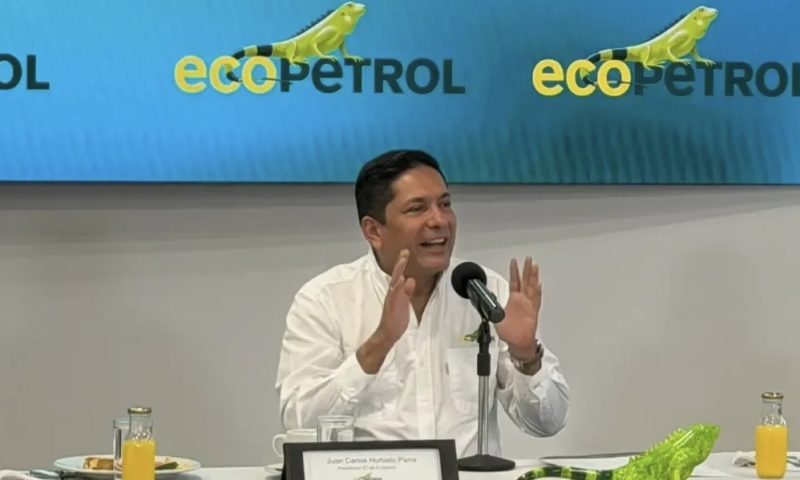
Photo 2: Juan Carlos Hurtado Parra, Acting President of Ecopetrol. Photo courtesy of Ecopetrol.

Juan Carlos Hurtado Parra, Acting President of Ecopetrol. Photo by of Ecopetrol.

During Roa’s absence, the board appointed Juan Carlos Hurtado Parra as acting president of Ecopetrol. According to the statement, Hurtado currently serves as executive vice president of hydrocarbons and has been the first alternate to the presidency since November 16, 2025.

He has “more than 28 years of experience in the energy sector, including roles as vice president of exploration, development, and production at Ecopetrol and has held executive positions focused on resource management and coordination. He is an electrical engineer, holds a specialization in Project Evaluation and Development, and has a Master of Business Administration (MBA) in International Oil and Gas.”

  •  
❌