
Reading view

Colombia elections: candidates set for debate after Cepeda backtracks
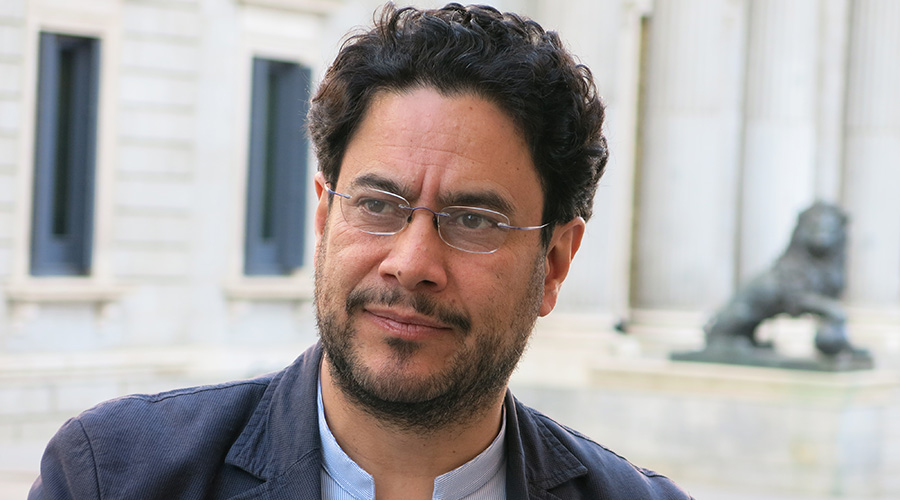
Bogotá, Colombia – Leftist presidential candidate Iván Cepeda challenged his opponents to a debate on Saturday after turning down previous proposals to face-off with his rivals.

“I challenge the far right, its two candidates – Senator Paloma Valencia and lawyer Abelardo de la Espriella – to a debate,” Cepeda told a crowd at a rally in Fusagasugá, a city near Bogotá. 

His opponents responded by accepting the proposal, while also highlighting that they had been calling for a debate for months.

The possibility of a live face-off between candidates has been a recurring theme ahead of first-round presidential elections on May 31.

Shortly after beginning his candidacy last year, Cepeda dismissed the idea of participating in a debate: “I’m not going to take part in debates—let me make this clear from the outset—to exchange insults with other candidates, or to threaten one another, or to denigrate one another.”

Iván Cepeda addressed a crowd of supporters on Saturday in Fusagasugá.

Cepeda’s rivals have repeatedly criticized him for refusing to spar with them on the public stage, something they highlighted following the leftist candidate’s U-turn on Saturday.

“Allow me to correct you: you’re not issuing a challenge; you’re accepting the challenge you were invited to take up months ago,” said criminal defense attorney de la Espriella.

Valencia, the candidate for the Centro Democrático (Democratic Center) party, also seized the opportunity to pounce on Cepeda: “A few weeks ago, it was I who challenged Iván Cepeda several times to a face-to-face debate, yet you chose to hide away in the Senate with a controlled microphone.”

She suggested that Cepeda’s U-turn owes to a worsening performance in recent polls: “Now that the polls are tightening, you’re coming out of Fusagasugá with this challenge.”

Analysts agreed with Valencia’s suggestion, saying that Cepeda’s debate proposal is an attempt to inject life into a stagnating campaign. 

“Cepeda has offered to debate because of his campaign’s inherent lack of momentum and general weakness. He is not captivating any new voters or finding a tangible way of changing the narrative in his favor,” Sergio Guzmán, Director at Colombia Risk Analysis, a political risk consultancy, told Latin America Reports

Internal party polls reportedly show sluggish growth in Cepeda’s polling numbers since he became the official candidate for the Pacto Histórico (Historic Pact) in October. 

Meanwhile, Valencia has been soaring in the polls following her victory in presidential primaries in March; Cepeda and de la Espriella did not partake.

But the debate is not without risk for Cepeda, according to Guzmán: “Cepeda runs the risk of having to go on the defensive of Petro and his administration.”

Others believe that Cepeda’s oratory style does not lend itself to the televised debate format.

“He has a much more academic tendency, which is not so typical in politics, let alone in modern politics,” noted Miguel Jaramillo Luján, a Colombian political strategist. In contrast, he noted that de la Espriella and Valencia have a more media-savvy communication style.

Nevertheless, the analyst told Latin America Reports that Cepeda’s debate style could give him the chance to woo crucial centrist voters: “I believe he can inspire confidence and credibility among his target audience and even among the centre, particularly when it comes to dispelling certain myths and lies that have been spread by the centre and the right.”

With the leading candidates agreeing to debate, the battle over the specifics – including moderators, questions, and location – begins. 

The post Colombia elections: candidates set for debate after Cepeda backtracks appeared first on The Bogotá Post.

  •  

Lufthansa and Qatar Airways Narrowly Avert Air Collision Over Bogotá

A Qatar Airways cargo jet and a Lufthansa passenger plane came within an estimated 200 meters of each other on final approach to Bogotá on Sunday evening, in a near miss that could have resulted in a major airline catastrophe.

The incident unfolded near El Dorado International Airport as both aircraft were being guided toward runway 32L during a late-evening arrival window. According to preliminary information, Qatar Airways cargo flight QTR 8174, operated by a Boeing 777 from São Paulo, was descending to approximately 9,600 feet when it converged with Lufthansa flight DLH 542.

The Lufthansa flight from Frankfurt Airport, operated by a Boeing 787 -900 ‘Dreamliner’ carrying some 270 passengers, had departed at 3:08 p.m. local time and was scheduled to land in Bogotá at 11:51 p.m. local time. As it approached the Colombian capital, the aircraft turning at roughly 9,700 feet, placing it on a dangerously converging path with the Qatar Airways freighter.

The two wide-body aircraft, each spanning more than 60 metres in length, were both landing from the East, and were above the residential neighbourhood of Modelia, according to late-night eyewitness reports.

Under standard air traffic control procedures, aircraft must maintain a minimum vertical separation of 1,000 feet, 0r 300 metres. The apparent compression of that buffer to an estimated 600 feet suggests a significant breakdown in sequencing or communication during the critical end-phase of a flight.

Disaster was averted when the Lufthansa aircraft abruptly climbed to over 12,000 feet, executing what appears to have been an emergency “Go-Around” avoidance manoeuvre. Such actions are typically triggered by onboard collision avoidance systems, which issue automated instructions to pilots when another aircraft is detected at dangerously close range. The manoeuvre forced the passenger flight to abort its initial landing approach before safely completing a second descent into Bogotá. No injuries were reported.

However, the near miss has renewed scrutiny over air traffic control operations in the Colombian capital, following another serious safety incident just two months earlier.

On February 20, a LATAM Airlines flight operated by an Airbus A320 carrying 157 passengers was forced to abort take-off after a military helicopter appeared unexpectedly near the runway at El Dorado International Airport.

According to Colombia’s civil aviation authority, Aerocivil, the aircraft—bound for San Andrés—had been cleared for departure after routine taxi procedures. At 17:04 local time, the plane was authorized for pushback from position C5, and by 17:13 it had been instructed to taxi toward runway 14R.

At 17:36, after receiving clearance for take-off, the crew initiated the departure roll. Moments later, pilots detected a rotary-wing aircraft flying on a parallel trajectory and approaching the runway environment. The unexpected presence of the helicopter forced the crew to execute an aborted take-off, a high-risk manoeuvre at speed, in order to avoid a potential collision.

Aerocivil attributed the incident to interference in the communication frequency of the airport’s north control tower, raising concerns about coordination between different air traffic control sectors. The episode, involving a commercial jet accelerating for departure and an unauthorized or mis-coordinated helicopter movement, has been classified as a serious operational safety event.

Together, the two incidents have cast a spotlight on the operational pressures facing El Dorado International Airport (SKBO), which handles hundreds of daily movements and serves as one of the busiest aviation hubs in Latin America. Bogotá’s high-altitude location—more than 2,600 metres above sea level—combined with surrounding mountainous terrain, requires tightly managed flight paths and precise coordination between controllers and pilots.

Sunday’s late evening incident involving two long-range aircraft is expected to undergo a detailed investigation, including analysis of radar data, cockpit voice recordings and air traffic communications.

On Monday, Colombia’s Aerocivil, affirmed that the event did not constitute a critical safety risk. In an official statement, the authority said runway 32 Right had been temporarily unavailable due to a third aircraft blocking the strip, prompting controllers to redirect incoming traffic—including the Qatar Airways and Lufthansa flights—to runway 32 Left.

Aerocivil said the change in instructions led to a reduction in speed that decreased horizontal separation between the two aircraft during the approach phase. However, it stressed that “controlled and safe vertical separation was maintained at all times.”

According to Aerocivil , the Lufthansa crew’s decision to abort the landing was carried out “independently” and in line with standard global aviation protocols. “This is a normal and standardised procedure in aviation, designed precisely to guarantee safety when visual or distance parameters so require,” the statement said.

The technical analysis, Aerocivil added, confirms that the situation was “an operational event managed under control” and “at no time represented a critical situation or a real risk to air safety for passengers or crew.”

The authority also urged the public and political actors not to “exaggerate or politicise” what it described as a strictly technical matter, warning that reliance on unofficial sources could generate unfounded alarm and affect confidence in Colombia’s aviation sector.

  •  

Aris Mining Completes Underground Connection at Marmato Gold Mine

Infrastructure Progress Advances Marmato 2026 Gold Production Goals

Aris Mining (TSX: ARIS; NYSE: ARIS) confirmed the completion of an underground infrastructure connection at its Marmato gold mine in Colombia. The development involved connecting a new surface decline to the existing underground mining workings.

This cross-cut connection serves as a technical step for the ongoing expansion project, which includes the construction of a 5,000 tons-per-day carbon-in-pulp (CIP) plant. The company stated that the infrastructure is currently on schedule to support the initiation of gold production in the fourth quarter of 2026.

Neil Woodyer, Chair and CEO of Aris Mining, stated: “The on-schedule connection of the new surface decline to the existing underground development is a major milestone for Marmato and an important step in delivering our expansion plans.”

The Marmato expansion is part of a broader strategy intended to increase the company’s annual gold production. Aris Mining aims to achieve a combined output of approximately 500,000 ounces per year from its Segovia and Marmato operations. The Segovia mine previously expanded its operational capacity following the installation of a second mill in June 2025.

The company maintains a long-term production objective of approximately 1 million ounces of gold annually. This target incorporates potential production from the Toroparu gold project in Guyana, where a prefeasibility study is currently underway. Aris Mining expects a construction decision regarding the Toroparu project in early 2027.

Regarding its portfolio in Colombia, the company is finalizing environmental studies for the Soto Norte gold project. Aris Mining plans to submit these documents for the licensing process during the second quarter of 2026.

Photo (© Loren Moss) illustrative only (Not marmato mine)

  •  
❌