Apple has announced that longtime Apple CEO Tim Cook will be stepping down from his role on September 1, 2026, concluding a 15 year tenure that has coincided with Apple become one of the largest and most influential companies in the world. Tim Cook will transition to the role of executive chairman of the Apple ... Read More
The third developer beta versions of iOS 26.5, iPadOS 26.5, and MacOS Tahoe 26.5, are now available to those engaging in the beta testing programs for Apple system software. The new beta build is initially available to developers but typically soon followed by public beta access. The new beta versions of system software continue to ... Read More
Bogotá, Colombia – Leftist presidential candidate Iván Cepeda challenged his opponents to a debate on Saturday after turning down previous proposals to face-off with his rivals.
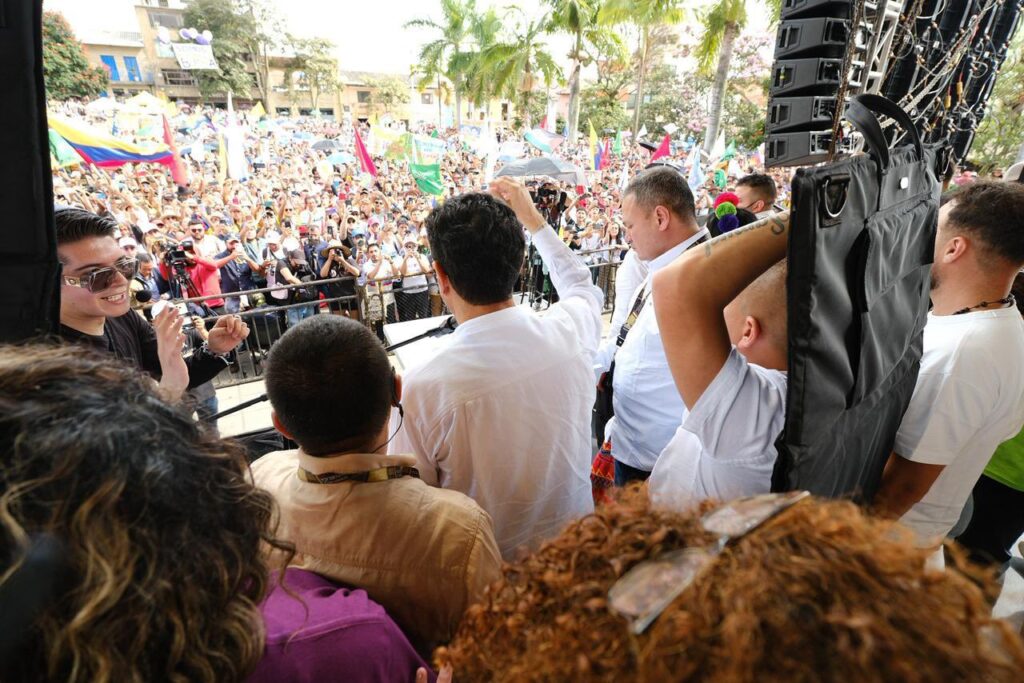
“I challenge the far right, its two candidates – Senator Paloma Valencia and lawyer Abelardo de la Espriella – to a debate,” Cepeda told a crowd at a rally in Fusagasugá, a city near Bogotá.
His opponents responded by accepting the proposal, while also highlighting that they had been calling for a debate for months.
The possibility of a live face-off between candidates has been a recurring theme ahead of first-round presidential elections on May 31.
Shortly after beginning his candidacy last year, Cepeda dismissed the idea of participating in a debate: “I’m not going to take part in debates—let me make this clear from the outset—to exchange insults with other candidates, or to threaten one another, or to denigrate one another.”
Iván Cepeda addressed a crowd of supporters on Saturday in Fusagasugá.
Cepeda’s rivals have repeatedly criticized him for refusing to spar with them on the public stage, something they highlighted following the leftist candidate’s U-turn on Saturday.
“Allow me to correct you: you’re not issuing a challenge; you’re accepting the challenge you were invited to take up months ago,” said criminal defense attorney de la Espriella.
Valencia, the candidate for the Centro Democrático (Democratic Center) party, also seized the opportunity to pounce on Cepeda: “A few weeks ago, it was I who challenged Iván Cepeda several times to a face-to-face debate, yet you chose to hide away in the Senate with a controlled microphone.”
She suggested that Cepeda’s U-turn owes toaworsening performance in recent polls: “Now that the polls are tightening, you’re coming out of Fusagasugá with this challenge.”
Analysts agreed with Valencia’s suggestion, saying that Cepeda’s debate proposal is an attempt to inject life into a stagnating campaign.
“Cepeda has offered to debate because of his campaign’s inherent lack of momentum and general weakness. He is not captivating any new voters or finding a tangible way of changing the narrative in his favor,” Sergio Guzmán, Director at Colombia Risk Analysis, a political risk consultancy, told Latin America Reports.
Internal party polls reportedly show sluggish growth in Cepeda’s polling numbers since he became the official candidate for the Pacto Histórico (Historic Pact) in October.
Meanwhile, Valencia has been soaring in the polls following her victory in presidential primaries in March; Cepeda and de la Espriella did not partake.
But the debate is not without risk for Cepeda, according to Guzmán: “Cepeda runs the risk of having to go on the defensive of Petro and his administration.”
Others believe that Cepeda’s oratory style does not lend itself to the televised debate format.
“He has a much more academic tendency, which is not so typical in politics, let alone in modern politics,” noted Miguel Jaramillo Luján, a Colombian political strategist. In contrast, he noted that de la Espriella and Valencia have a more media-savvy communication style.
Nevertheless, the analyst told Latin America Reports that Cepeda’s debate style could give him the chance to woo crucial centrist voters: “I believe he can inspire confidence and credibility among his target audience and even among the centre, particularly when it comes to dispelling certain myths and lies that have been spread by the centre and the right.”
With the leading candidates agreeing to debate, the battle over the specifics – including moderators, questions, and location – begins.
Presidential spat intensifies after Ecuadorian leader revisits old rumors that Petro met with drug gang during state visit.
Relations between Noboa, left, and Petro, right, have hit rock bottom after a visit to Manta.
President Petro says he will sue Daniel Noboa over an interview in which the Ecuadorian president accused his Colombian counterpart of associating with feared drug baron Adolfo Macías Villamar, alias ‘Fito’, during a state visit to Ecuador.
“I have decided to file a criminal complaint against President Noboa for his slander,” wrote Petro on his X account, following statements made by Ecuador’s leader to Semana News.
In Sunday’s interview Noboa made references to Petro’s visit to Ecuador in May, 2025, as part of a state visit to attend the right-wing president’s own inauguration.
After the event Petro took a three-day visit to the coastal city of Manta to rest and write his book, the Colombian president later explained.
But this hiatus from the public eye – Petro is rarely out of the spotlight – and his choice of destination sparked rumors that the Colombian president was holding secret meetings with underworld figures. Manta is both a tourist destination with Pacific beaches and the ground zero for violent armed gangs that control Ecuador’s drug trafficking.
Rumors started with unfounded comments by Ecuadorian politicians that Petro was “holed up” in a luxury house on the coast, adding tantalizing details that officials “could not confirm or deny” that Fito or persons related to the gang leader were present.
“What we know is that Gustavo Petro was in Manta inside a house for his entire stay. We can’t confirm whether Fito was there. It’s been said that certain political figures were with him,” Ecuador’s Interior Minister John Reimberg stated to news media at the time.
“He arrived at a luxury house and stayed there for two days. He never left, not even to eat. He was locked inside. I can’t say who he met with.”
Manta on his mind
Noboa reinforced the slurs this week, stating without evidence that the house rented in Manta was “directly or indirectly linked to drug trafficking”.
The Colombian president “never has any real explanations for his actions”, pressed Noboa, suggesting the book writing was a cover for more suspicious motives. But he failed to provide any motive as to why Petro would want to meet with Fito or his associates from Los Choneros gang, Ecuador’s most violent armed group.
Fito has been likened to Mexico’s El Chapo, with a history of repeated prison breaks. The career criminal was re-arrested again in Manta in June last year – a month after Petro’s visit – hiding in a bunker, and has since been extradited to the U.S.
For his part, Petro hit back claiming the Ecuadorian president had been himself been well aware of his plans to holiday in Manta, a visit accompanied by the Ecuadorian army and a Colombian security detail. These and other witnesses could vouch for his book writing, he said.
“I don’t know if going anywhere in Ecuador raises suspicions of shady dealings. Manta is a beautiful place worth visiting.”
Petro stayed in a “wooden cabin with a sea view”, he said, and not the luxury condominium conjured up by Noboa.
Petro linked Noboa’s verbal attacks on the recent trade war between Colombia and Ecuador and Petro’s request that Noboa released former Ecuadorian vice president Jorge Glas currently jailed for corruption.
Both disputes have put relations between the two countries at rock bottom.
Behind those disagreements lie long-standing accusations by Ecuador that Colombia has exported violence and criminality over the shared border during Petro’s tenure, a claim supported by a recent report by Amazon Underworld.
Illegal drugs passing through Ecuador came mostly from Colombia, said the report, and Colombian armed groups like the Comandos de La Frontera had established a permanent presence on the Ecuadorian side of the border.
An abandoned Ecuadorian military post close to the Putumayo River. Cross-border incursions by Colombian armed groups have increased insecurity in a country once considered safe.
Political prisoner
The high tariffs imposed by Ecuador, which seem out of U.S. President Trump’s playbook, seem designed to punish Colombia for its internal security policies and Petro’s left-wing government at political poles from the Noboa administration.
The spat over Jorge Glas stems from the former vice-president’s jailing after being found guilty of corruption in public office.
Glas was VP to left-wing leader and former president Rafael Correa, and accused of corruption in contracting cases. In 2017 he was jailed for six years. After his release was again accused of fresh crimes related to corruption.
Faced with these new accusations, in 2024 the politician took refuge in the Mexican Embassy in Quito but was quickly captured by Ecuadorian state forces who violated international protocols by invading the protected site, creating a diplomatic crisis with Mexico.
For his part, Petro conferred Colombian citizenship on Glas, declared him a ‘political prisoner’, and demanded his extradition to Colombia. Meanwhile Petro has been highlighting the former VPs stark prison conditions on social media.
“Just as I demanded the freedom of political prisoners in Venezuela and Nicaragua, I believe that Jorge Glas should be released,” he wrote, angering Noboa who recalled his ambassador from Bogotá earlier this month.
The rift between the two leaders also widened after announcements of joint military operations between the U.S. and Ecuador, with tension mounting after an air bombardment of the border left an unexploded bomb on Colombian territory.
In Sunday’s message Petro alluded to coordinated plots by political opponents in Ecuador, Colombia and “the extreme right in Florida” to drag up dirt from his Mantra trip.
Events this week should clarify if Petro has grounds to sue his Ecuadorian counterpart in a court of law, or if the battle continues on social media.
A Qatar Airways cargo jet and a Lufthansa passenger plane came within an estimated 200 meters of each other on final approach to Bogotá on Sunday evening, in a near miss that could have resulted in a major airline catastrophe.
The incident unfolded near El Dorado International Airport as both aircraft were being guided toward runway 32L during a late-evening arrival window. According to preliminary information, Qatar Airways cargo flight QTR 8174, operated by a Boeing 777 from São Paulo, was descending to approximately 9,600 feet when it converged with Lufthansa flight DLH 542.
The Lufthansa flight from Frankfurt Airport, operated by a Boeing 787 -900 ‘Dreamliner’ carrying some 270 passengers, had departed at 3:08 p.m. local time and was scheduled to land in Bogotá at 11:51 p.m. local time. As it approached the Colombian capital, the aircraft turning at roughly 9,700 feet, placing it on a dangerously converging path with the Qatar Airways freighter.
The two wide-body aircraft, each spanning more than 60 metres in length, were both landing from the East, and were above the residential neighbourhood of Modelia, according to late-night eyewitness reports.
Under standard air traffic control procedures, aircraft must maintain a minimum vertical separation of 1,000 feet, 0r 300 metres. The apparent compression of that buffer to an estimated 600 feet suggests a significant breakdown in sequencing or communication during the critical end-phase of a flight.
Disaster was averted when the Lufthansa aircraft abruptly climbed to over 12,000 feet, executing what appears to have been an emergency “Go-Around” avoidance manoeuvre. Such actions are typically triggered by onboard collision avoidance systems, which issue automated instructions to pilots when another aircraft is detected at dangerously close range. The manoeuvre forced the passenger flight to abort its initial landing approach before safely completing a second descent into Bogotá. No injuries were reported.
However, the near miss has renewed scrutiny over air traffic control operations in the Colombian capital, following another serious safety incident just two months earlier.
On February 20, a LATAM Airlines flight operated by an Airbus A320 carrying 157 passengers was forced to abort take-off after a military helicopter appeared unexpectedly near the runway at El Dorado International Airport.
According to Colombia’s civil aviation authority, Aerocivil, the aircraft—bound for San Andrés—had been cleared for departure after routine taxi procedures. At 17:04 local time, the plane was authorized for pushback from position C5, and by 17:13 it had been instructed to taxi toward runway 14R.
At 17:36, after receiving clearance for take-off, the crew initiated the departure roll. Moments later, pilots detected a rotary-wing aircraft flying on a parallel trajectory and approaching the runway environment. The unexpected presence of the helicopter forced the crew to execute an aborted take-off, a high-risk manoeuvre at speed, in order to avoid a potential collision.
Aerocivil attributed the incident to interference in the communication frequency of the airport’s north control tower, raising concerns about coordination between different air traffic control sectors. The episode, involving a commercial jet accelerating for departure and an unauthorized or mis-coordinated helicopter movement, has been classified as a serious operational safety event.
Together, the two incidents have cast a spotlight on the operational pressures facing El Dorado International Airport (SKBO), which handles hundreds of daily movements and serves as one of the busiest aviation hubs in Latin America. Bogotá’s high-altitude location—more than 2,600 metres above sea level—combined with surrounding mountainous terrain, requires tightly managed flight paths and precise coordination between controllers and pilots.
Sunday’s late evening incident involving two long-range aircraft is expected to undergo a detailed investigation, including analysis of radar data, cockpit voice recordings and air traffic communications.
On Monday, Colombia’s Aerocivil, affirmed that the event did not constitute a critical safety risk. In an official statement, the authority said runway 32 Right had been temporarily unavailable due to a third aircraft blocking the strip, prompting controllers to redirect incoming traffic—including the Qatar Airways and Lufthansa flights—to runway 32 Left.
Aerocivil said the change in instructions led to a reduction in speed that decreased horizontal separation between the two aircraft during the approach phase. However, it stressed that “controlled and safe vertical separation was maintained at all times.”
According to Aerocivil , the Lufthansa crew’s decision to abort the landing was carried out “independently” and in line with standard global aviation protocols. “This is a normal and standardised procedure in aviation, designed precisely to guarantee safety when visual or distance parameters so require,” the statement said.
The technical analysis, Aerocivil added, confirms that the situation was “an operational event managed under control” and “at no time represented a critical situation or a real risk to air safety for passengers or crew.”
The authority also urged the public and political actors not to “exaggerate or politicise” what it described as a strictly technical matter, warning that reliance on unofficial sources could generate unfounded alarm and affect confidence in Colombia’s aviation sector.
The ELN, Colombia’s oldest rebel group, has been trying to source weapons from Syria. Photo: Youtube screenshot.
A plan to swap Colombian cocaine for guns was exposed last week when a Lebanese-Syrian smuggler Antoine Kassis – a cousin of deposed Syrian dictator Bashir al-Assad – faced trial for his attempt to send Russian-made armaments to ELN guerrillas.
The failed plot, which played out in a U.S. federal courtroom last week but seemed more suited to a Hollywood movie, risked putting military-grade weapons sourced from Syrian arsenals in the hands of the Colombian rebels.
In exchange, the ELN planned to send 500 kilos of cocaine disguised in a cargo container of Colombian fruit, according to U.S. Justice Department documents.
A federal jury convicted Antoine Kassis on charges of narco-terrorism conspiracy and conspiracy to provide material support to a designated foreign terrorist organization after a five day hearing. He now faces at least 20 years in a U.S. prison.
Kassis, 59, who had links to proscribed organizations such as Hamas and Hezbollah, offered the ELN drones, grenades, assault rifles, missiles, mortars and heavy machine guns in exchange for the cocaine smuggled to a Syrian port.
He eventually hoped to sell the Colombian-supplied narcotics throughout the Middle East.
Captured in Kenya
The deal was initially brokered in 2024 before the fall of al-Assad but unraveled after a sting operation mounted by the U.S. Drug Enforcement Administration (DEA) in 2025.
As court documents revealed, Kassis traveled to Africa in February last year after reassuring the Colombian guerrillas that the cocaine swap was still on – even after the unexpected fall of his cousin’s brutal dictatorship in Syria at the end of 2024.
Kassis claimed he could bribe Syrian port staff US$10,000 per kilo of cocaine to import the illicit drug through Latakia, a well-known route for drugs in and out of the eastern Mediterranean.
Despite the fall of al-Assad, he could still access “all the toys”, he told the Colombians, referring to the military-grade weapons.
Unknown to Kassis, DEA investigators had already infiltrated the Colombian end of the deal and sent an undercover agent posing as an ELN weapons expert to the crucial meeting in Nairobi, Kenya.
Kassis was arrested with the help of Kenyan police and extradited weeks later to the U.S.
Meanwhile the suspected ELN counterparts, named by news website Infobae as Alirio Rafael Quintero and Wisam Kherfan Okde, were arrested in Colombia. They are currently detained in Bogotá’s La Picota prison pending extradition requests from the U.S.
Missed missiles
Evidence from the Kassis investigation pointed to a vast money-laundering operation based in Colombia that shifted million-dollar drug profits in cryptocurrencies across four continents. According to court documents, the plot roped in Palestine’s Hamas, Lebanon’s Hezbollah and Mexico’s Sinaloa drug cartel.
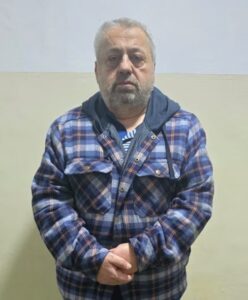
Syrian-Lebanese smuggler Antoine Kassis. Photo: Kenya Police.
The Kassis case also showed that the ELN was attempting to upgrade its weapons arsenal even as the armed group was engaged in on-off peace negotiations with Colombia’s Petro government. Talks are currently on hold.
The Marxist rebel group, properly known as the Ejército de Liberación Nacional, has been fighting the Colombian state since 1964 and is currently said to have 3,600 armed combatants, many based in neighboring Venezuela where it controls drug routes and illegal mining camps.
The latest round of peace talks, under Petro’s controversial Paz Total initiative, has seen the ELN expand in both territory and numbers within Colombia, with an estimated growth of 9 per cent in the last two years. Attempts to obtain Russian-made weapons via Syria are likely linked to that expansion.
Of note was the missiles included in the thwarted Syrian cargo. Though exact details were not given in the court documents, these could refer the portable shoulder-fired anti-aircraft weapons, highly coveted by Colombia’s armed groups for their ability to down helicopters and small attack aircraft used by state forces against insurgent groups.
In recent months Colombian armed forces have returned to aerial bombing of suspected guerrilla camps, a controversial practice that risks killing or injuring civilians and children. Bombing campaigns against dissident FARC groups in Guaviare late last year left at least 15 minors dead, according to news reports from the time.
And on February 4 this year, an air attack ordered by President Petro on an ELN camp in the Catutumbo region left seven ELN fighters dead, with no reports of child victims.
The ELN have in the past experimented with home-made anti-aircraft missiles, such as found in a hidden cache in Cauca in 2018, and some of their combatants are thought to have been trained in the use of Russian-made Igla-S missiles, of which 5,000 are used by state forces in Venezuela.
Hezbollah’s Latin American hubs
The Kassis case highlighted links between Colombian armed groups and the Middle East that include designated terror groups such as Lebanon-based Hezbollah.
According to expert testimony at a U.S. senate caucus on narcotics in October last year, groups like Hezbollah received funds via drug trafficking and money laundering in Latin America, with hubs in Brazil, Paraguay, Venezuela and Colombia.
“Hezbollah capitalized on a combination of weak local governance, corruption, and the presence of sympathetic diaspora communities to create cells and recruit financial facilitators,” former treasury official Marshall Billingslea told the caucus in October last year.
Billingslea suggested that Hezbollah could source up to a third of its income from Latin America, and until recently had close links through its Iranian backers Venezuela, now in flux with the forced removal of former president Nicolás Maduro to the U.S. in January this year.
Hard pivot to Colombia
But while its Venezuelan ties were more often reported, the Lebanese Shi’ite group had also made inroads into Colombian crime circles with a long history of deals, such as cocaine shipments sent by the Oficina de Envigado cartel, and drugs-for-weapons swaps with the former FARC guerrillas, he said.
In 2016, U.S. prosecutors brought charges against a Hezbollah laundering ring based in Medellín, according to reports in the Miami Herald at the time. Funds were connected to jailed Mexican kingpin Joaquín “El Chapo” Guzmán.
Billingslea explained that groups like Hezbollah also saw Colombia as a refuge for foreign operatives who obtained fake passports and ID cards. Recent turmoil in the Middle East could stimulate armed groups there to increase their interests in countries like Colombia, he said.
“Now, with their Lebanese infrastructure in shambles, and with robust financing from Iran again in doubt, I believe Hezbollah will make a hard pivot to Latin America and to the drug trade in particular.”
ARTBO Weekend returns to Bogotá this week with a milestone worth noting – and a programme that suggests the event is no longer content with staying within its traditional comfort zones.
Celebrating its tenth edition from April 16 to 19, the city-wide initiative organized by the Bogotá Chamber of Commerce (CCB) arrives bigger, more dispersed and arguably more ambitious than ever. With over 160 free activities, 86 participating spaces and 280 artists from 27 countries, the numbers alone tell a story of steady expansion. But the real shift this year is geographic.
For the first time, ARTBO Weekend – Fin de Semana – pushes decisively into new territory. The addition of Kennedy, Nogal and Chicó as official circuits marks a deliberate move away from the event’s familiar enclaves. It is, in many ways, a statement about where Bogotá’s art scene is headed – or where it wants to go.
Kennedy stands out. Historically on the fringes of the city’s cultural programming, the district’s inclusion is more than symbolic. The reopening of the Chamber of Commerce’s exhibition space in the area signals a longer-term investment in decentralising Bogotá’s art ecosystem. It also raises a question that has hovered over ARTBO Weekend in recent years: who, exactly, is the event for?
For organisers, the answer has consistently been “everyone.” And, on paper, that commitment holds. Entry remains free across all venues, and the programme spans everything from gallery exhibitions and museum shows to performances, workshops, talks and editorial launches. The addition of complimentary transport routes – the Bus ARTBO – helps bridge the distances between circuits, turning what could be a logistical challenge into something closer to an urban stroll.
Still, navigating ARTBO Weekend requires a degree of planning. Bogotá is not compact, and its art circuits are spread across distinct neighbourhoods, each with its own pace and character. San Felipe, long considered the epicentre of the contemporary gallery scene, remains a reliable starting point, particularly for first-time visitors. Chapinero offers a more eclectic mix, where independent spaces sit alongside institutional venues, while the Centro Histórico provides a slower, more contemplative route through museums and heritage sites.
This year, however, the draw may well lie in the unfamiliar. Kennedy’s circuit promises a different rhythm – less polished, perhaps, but more reflective of the city’s broader social fabric. Chicó and Nogal, by contrast, introduce a more polished, design-forward dimension to the programme, expanding the conversation beyond traditional gallery spaces.
What distinguishes ARTBO Weekend from its larger counterpart, ARTBO, is precisely this sense of movement. There are no booths, no central venue, no singular point of focus. Instead, the city itself becomes the exhibition space, and the act of moving between circuits becomes part of the experience.
That experience is not purely visual. The “Conversaciones” series, curated by Raphael Fonseca of the Denver Art Museum, brings together artists, curators and academics for a series of panel discussions that aim to unpack the themes shaping contemporary art today. With free entry and simultaneous translation, the talks offer a point of entry for audiences looking to engage more deeply with the works on display.
Equally, the Encuentro Editorial continues to carve out a niche within the programme. Focused on independent publishing and the book as an artistic medium, it provides a quieter counterpoint to the busier exhibition circuits. For many, it is here – among the artist books and experimental print projects – that the creative pulse is most tangible.
After a decade, ARTBO Weekend has settled into a rhythm that feels both established and open-ended. It has succeeded in building audiences, supporting local galleries and positioning Bogotá within a wider Latin American art conversation. At the same time, it continues to grapple with the challenges of scale, access and representation that come with growth.
For visitors, the best approach may be to resist the urge to see everything. Pick two or three circuits per day. Use the Bus ARTBO, but don’t be afraid to walk, and take an umbrella for the inclement April weather. Allow time for the unexpected – a performance that spills into the street, a conversation that runs longer than planned, a small space that wasn’t on the map.
Because if ARTBO Weekend has proven anything over the past ten years, it is that Bogotá’s art scene is not confined to a single district, or a single idea of what art should be. It is scattered, evolving and, at its best, deeply connected to the city.

 Login
Login