
Reading view

The ‘Era of the Tiger’ Begins: De La Espriella Responds to Trump’s Endorsement

In a lengthy post on Truth Social, U.S. President Donald Trump threw his support behind Colombian presidential candidate Abelardo “El Tigre” de la Espriella, describing him as a “Smart, Strong, and Tough Leader” and offering what he called his “Complete and Total Endorsement” ahead of Colombia’s June 21 presidential runoff.

Trump praised De la Espriella’s first-round victory and portrayed him as a future champion of economic growth, law and order, and closer ties with the United States.

“The results of this Election are very important to the future of Colombia and its relationship to the United States,” Trump wrote.

The endorsement was notable not only for its enthusiasm but also for its language. Trump attacked De la Espriella’s opponent, left-wing senator Iván Cepeda, as a “Radical Left Marxist” and suggested the runoff could shape the future direction of one of Washington’s closest allies in Latin America.

Then came the response.

Addressing Trump directly, De la Espriella published a lengthy open letter that read less like a campaign statement and more like a declaration of intent.

“With my head held high and a heart full of patriotic gratitude, I receive your words and your steadfast support,” he wrote.

“Thank you, Mr. President.”

The candidate praised Trump as “a leader of true strength and conviction” who had refused to surrender to ideological trends or enemies of freedom.

More importantly, he suggested that Colombia was now following a path similar to that taken by Trump’s political movement in the United States.

“You have paved the way for the people to defeat the entrenched powers that have long held sway,” De la Espriella wrote. “In Colombia, we have now begun to follow that same path.”

It was one of the clearest attempts yet by the conservative candidate to place his campaign within a broader political realignment taking shape across the Americas.

The letter repeatedly returned to the idea of a common destiny shared by Colombia and the United States.

“The United States and Colombia are sister nations, bound by the blood of heroes and by our shared destiny to defend Western civilization across the Americas,” he wrote.

“Together, we are unbreakable.”

For De la Espriella, the relationship extends beyond diplomacy. It is rooted in what he described as shared values, mutual respect and a common struggle against forces that threaten both nations.

The candidate outlined a vision of closer cooperation on security, trade and economic development while emphasizing that both countries face similar challenges from organized crime and drug trafficking.

“Our security policies are fully aligned,” he wrote.

“Narcoterrorism is the cancer destroying our societies, and we will confront it relentlessly, with iron resolve and without apology.”

The statement echoed themes that have defined much of De la Espriella’s campaign: security, economic growth, private enterprise and a promise to reverse what he views as the failures of the Petro administration.

“We stand together in the sacred defense of private property, free enterprise, productive growth, and the well-being of our citizens as the highest purpose of government,” he wrote.

The candidate also pledged resistance to what he called the advance of communism in the hemisphere and announced support for an “Alliance of the Shield of the Americas,” a regional initiative intended to strengthen cooperation among governments committed to security, democracy and economic freedom.

The exchange unfolded as another senior figure in the Trump administration weighed in on Colombia’s election. U.S. Secretary of State Marco Rubio said Washington would closely monitor the electoral process. “We will be very firm in guaranteeing free and fair elections in Colombia and will do everything within our power to achieve that,” he said.

The comments were interpreted by many as a sign of growing U.S. interest in the outcome of the June 21 runoff.

President Gustavo Petro responded without mentioning Trump directly.

“When one country intervenes in the decisions of another country, freedom dies,” he wrote on social media, before posting videos of anti-riot police on the streets of Santiago, Chile, accompanied by the text: “They chose (President) Kazt and once again the violent war against youth in Chile.”  Petro’s incoherence is palpable.

Yet it was the final image accompanying De la Espriella’s letter that perhaps captures the moment more effectively than any political statement.

Created using artificial intelligence, the illustration shows a bald eagle next to a fearless tiger. Behind them, the flags of the United States and Colombia under a turbulent sky.

The symbolism requires little explanation.

The eagle represents the United States. The tiger represents the firebrand “outsider”.

And together they illustrate the central message of De la Espriella’s response: that if voters elect him on June 21, relations between Bogotá and Washington will enter a new chapter.

“In this coming Era of the Tiger – which begins on June 21 – we look forward to the full normalization of relations between Colombia and the United States, built on mutual respect, sovereignty, and mutual benefit.”

Whether Colombians embrace that vision remains to be seen.

But for one extraordinary day in the campaign, the conversation was no longer only about Colombia’s future. It was about two flags, an eagle, a tiger and a political alliance that both supporters and critics believe could reshape relations across the hemisphere.
  •  

Trump Endorses De La Espriella, Calls Cepeda a “Radical Left-Wing Marxist”

U.S. President Donald Trump has thrown his unconditional support behind Colombian hard-right presidential candidate Abelardo “El Tigre” de la Espriella, offering what he described as his “complete and total endorsement” ahead of the country’s June 21 runoff election.

The endorsement, published Tuesday evening on Trump’s Truth Social platform, immediately injected an international dimension into Colombia’s presidential race and marked a rare intervention by a sitting U.S. president in support of a candidate during an active electoral campaign.

The U.S. president went on to congratulate the Barranquilla-based lawyer on his first-round victory and expressed confidence that he would become Colombia’s next president. Trump also used the post to attack De la Espriella’s rival, left-wing senator Iván Cepeda, describing him as a “radical left-wing Marxist.”

Drawing parallels between MAGA (Make America Great Again), and “The Tiger’s” Defensores de la Patria (Defenders of the Homeland) movement, the two-term Republican leader stated the following:

“Abelardo de la Espriella, fights tirelessly for, and loves, his Great Country and People, just like I do for the United States of America.”

He then went on to claim: “As President, Abelardo would be tremendously successful in leading Colombia to Grow the Economy, Create Jobs, Promote Trade, Stop Illegal Immigration, Crack Down on Crime and Drugs, and Restore LAW AND ORDER! (…) “EL TIGRE” ABELARDO DE LA ESPRIELLA WILL NOT THE WONDERFUL PEOPLE OF COLOMBIA DOWN!”

The comments came less than three weeks before Colombians return to the polls to choose a successor to President Gustavo Petro, who is constitutionally barred from seeking reelection.

The runoff has emerged as one of the most polarized presidential contests in recent Colombian history, pitting firebrand De la Espriella, a political “outsider” who has campaigned on restoring security and strengthening ties with Washington, against Cepeda, a veteran senator and one of Petro’s closest political allies.

De la Espriella welcomed Trump’s endorsement, describing it as a sign of confidence in his vision for Colombia and its future relationship with the United States.

“President Trump has my deepest gratitude,” De la Espriella said in a statement following the endorsement.

The candidate has spent much of the campaign positioning himself as a staunch defender of free-market policies and a critic of Petro’s administration, which has faced mounting public dissatisfaction over security, corruption and economic management.

Trump’s endorsement follows months in which De la Espriella cultivated ties with conservative political figures in Washington. As his campaign gained momentum, he received backing from prominent Republican lawmakers including Florida Representative Maria Elvira Salazar and Ohio Senator Bernie Moreno, both influential allies of the U.S. president.

The support from Republican circles comes as Colombia remains one of Washington’s closest partners in Latin America. The two countries maintain extensive cooperation on trade, security, counternarcotics operations and migration issues.

Although U.S. administrations have traditionally avoided direct involvement in Colombian electoral politics, Trump’s endorsement places the White House squarely into the political conversation during the final stretch of the campaign.

Political analysts say the endorsement could resonate among some conservative voters while reinforcing De la Espriella’s efforts to present himself as the candidate most capable of rebuilding a close relationship with Washington.

President Gustavo Petro responded on social media without mentioning Trump by name, framing the issue as one of national sovereignty and warning against foreign influence in Colombia’s democratic process.

“When one country intervenes in the decisions of another country, freedom dies,” Petro wrote.

“I invite all Colombians to vote in complete freedom and not become slaves or a colony of anyone.”

The president also invoked Colombia’s independence heroes, writing that “an entire generation of young men and women of New Granada fought alongside Bolívar and Nariño to give us freedom and sovereignty.”

“If the heart of the world loses its freedom and sovereignty, the hope of the world and of Colombia is extinguished,” Petro added.

The exchange between U.S President Donald Trump and his Colombian counterpart adds a new layer of tension to an election campaign already marked by heightened political polarization and security concerns. The assassination of presidential candidate Miguel Uribe Turbay in June last year shocked the nation and has revived memories of Colombia’s violent political past.

More than 41 million Colombians are eligible to vote in the June 21 election, including approximately 1.4 million citizens living abroad. Recent polling suggests a highly competitive race, although De la Espriella has gained momentum since emerging as the leading candidate in the first round.

The Colombian runoff is now attracting attention far beyond the country’s borders. Whether the U.S. president’s words manages to convince undecided voters in the center of the political spectrum, remains to be seem, but it has already ensured that the race between De la Espriella and Cepeda raises a high-stakes political gambit in Washington and Bogotá.

  •  

Colombian movie fans angry at US remake of Un Poeta

Much-loved Colombian movie set to get Hollywood makeover

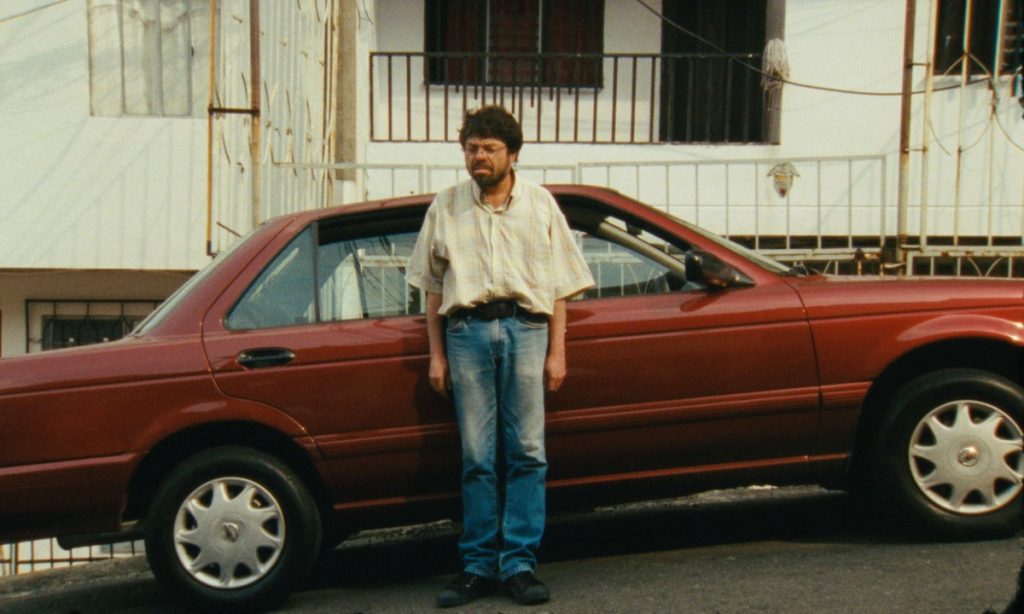
Ubeimar Rios plays Oscar, a failed poet, in the  Colombian film Un Poeta. Photo: Ocúltimo y Medio de Contención Producciones
Ubeimar Rios plays Oscar, a failed poet, in the Colombian film Un Poeta. Photo: Ocúltimo y Medio de Contención Producciones

A Hollywood version of award-winning Colombian film Un Poeta, rumored to star actor Bill Murray, has angered Latin American fans of the movie worried the remake could be lost in translation.

The 2025 Cannes favorite – it won a jury prize in the coveted un certain regard category – features a down-at-heel poet and was filmed in Medellín with a mix of professional and first-time actors.

News of a U.S. copy has sparked strong reactions from Colombian audiences convinced the darkly satirical Spanish-language version is strong enough to pull in audiences worldwide on its own merits.

“This film is a brilliant Latin-American movie made less than one year ago,” said Mexican critic Jesús Iglesias on his Peli de La Semana (‘Film of the Week’) website.

Filmmakers should allow more time for the original to circulate before creating another version, including with subtitles for foreign viewers, he added.

Historically film companies had waited two or three decades before remaking a movie. The fast-track English-language copy of Un Poeta showed “a lack of respect for Latin American artists,” argued Iglesias.

While there was no official confirmation this week that Ghostbusters star Bill Murray would take the leading role, The Hollywood Reporter announced that the English-language version would be scripted by Nathan Silver and produced by Ben Saïd, a French Tunisian well known for his avant-garde movies.

Nathan Silver will follow 'Between the Temples' with a remake of Simón Mesa Soto’s 'A Poet,' set to begin production this fall: https://t.co/TApNuY9mRv pic.twitter.com/z1UTsYyCB8

— The Film Stage 📽 (@TheFilmStage) May 11, 2026

Tale of redemption

The Colombian original of Un Poeta, directed by Simón Mesa Soto, wowed critics in May 2025 and later scored a whopping 92 per cent on Rotten Tomato’s audience poll.

The two-hour movie follows the tribulations of middle-aged Oscar, a failed poet wandering the streets of Medellín in a drunken stupor and ruing the lack of literature in his home society. His life turns around after meeting a young student he mentors in a poetry competition.

This tale of redemption, starring first-time actor Ubeimar Rios as the failed poet, was “a hilarious fable about trying to lead a creative life and failing miserably at making ends meet,” according to a review in Variety magazine.

Much of the movie’s charm was its setting in Medellín and nod to the characteristics of paisa culture, Colombian critic and film industry expert Jazid Contreras told The Bogotá Post.

“Some cultural aspects will be hard to translate,” he said. “The risk is Hollywood produces an oversimplified watered-down version which often happens when movies are adapted to other cultures.”

But the U.S. film industry’s haste to remake the movie could also be seen positively, said Contreras.   

“In some ways it’s a vote of confidence that here in Colombia we can make films with stories that are universal and which can move audiences in any part of the world.”

World’s top telenovela

Historically, few Colombian TV and movie productions had been adapted for foreign consumption, said Contreras. The standout exception being the 1999 series Yo Soy Betty, La Fea which in 2006 transferred to the U.S. as Ugly Betty.

Ugly Betty was a prime example of a successful switch to an English-language version, said Contreras.

The original Colombian series was recast in New York as a show that touched on themes of exclusion, classism, racism and migration, with Betty coming from a poor Mexican family.

Ugly Betty also boosted the career of America Ferrera who became the first Latina actress to win a lead actress Emmy Award, along with a Golden Globe.

But the social themes tapped by the original show travelled a lot further than New York: the Colombian production would go on to hold the world record from most remakes according to the Guiness Book of Records.

Adaptions have now been produced in 28 countries, including Algeria, Greece, Vietnam, China and Mexico.

Moonlighting

Part of Betty’s success as a universal figure was that local versions fitted her story to the cultural context, said Contreras.

That was also the hope of creator of Un Poeta, Simón Mesa Soto, for his tragicomic hero’s move to Hollywood.

Pushing back at criticism of the English-language remake, the Colombian filmmaker told The Hollywood Reporter that producer Ben Saïd had been captivated by the original character of Oscar, but could take the U.S. version in new directions.

“He felt a strong connection to the main character, so much so that he wanted to use him as inspiration for his next film. Not to make an identical adaptation of the original, but to incorporate elements that would align with his own artistic vision,” said Mesa Soto.

A remake would not diminish the quality of the original film, he said.

And in a reflection perhaps on his movie’s main character, Mesa Soto noted that artists frequently faced financial struggles in Colombia: the director had himself moonlighted as a university teacher while making the movie, his only way to get by.

The Hollywood deal would be a welcome financial boost, he said.

“Of course, there are people who can afford to reject an offer like this and make films with their own money because they have it. But that’s not my case,” he concluded.

The post Colombian movie fans angry at US remake of Un Poeta appeared first on The Bogotá Post.

  •  

Trump Nominates Nate Morris as U.S. Ambassador to Colombia

U.S. President Donald Trump has nominated Kentucky businessman and political ally Nathaniel “Nate” Morris to serve as the next U.S. ambassador to Colombia, placing a prominent supporter of the Republican president at the helm of one of Washington’s most important diplomatic posts in Latin America.

The nomination was formally submitted to lawmakers on Monday, one day after right-wing presidential candidate Abelardo “El Tigre” de la Espriella emerged as the frontrunner in Colombia’s first-round election, setting up a runoff that could reshape relations between Bogotá and Washington.

Morris, 45, is the founder of Rubicon Technologies, an environmental technology and waste-management company, and has become one of Trump’s most visible political allies in Kentucky. His nomination comes as Colombia enters a period of political transition and uncertainty over the future direction of bilateral cooperation on security, counternarcotics efforts, trade and migration.

The White House announced Morris’s nomination as part of a broader package of diplomatic appointments across Latin America. If confirmed by the Senate, he would become Washington’s top representative in Colombia at a pivotal moment for relations between the longtime allies.

Trump had previously urged Morris to abandon a potential bid for the U.S. Senate in Kentucky in order to join his administration.

“Nate is a fantastic businessman and a strong MAGA warrior,” Trump wrote on social media. “I have asked Nate to step aside from the Senate race to take a role in my Administration as Ambassador. Nate is Oxford-educated, tough as steel, loves our great nation, and will represent the United States very well.”

Although Morris has limited public diplomatic experience, his appointment reflects the Trump administration’s preference for politically connected allies and business leaders in several ambassadorial posts.

A native of Kentucky, Morris studied at George Washington University before pursuing further studies at the University of Oxford. He founded Rubicon Technologies, a company focused on waste management and environmental services, and later established Morris Industries, a private investment holding company based in Lexington with interests in sustainability, technology, industrial operations and financial services.

The nomination comes amid expectations that Colombia’s foreign policy could shift following Sunday’s election result. De la Espriella’s strong showing has fueled speculation that a future administration could seek closer alignment with Washington after years of tensions between the governments of President Donald Trump and Colombian President Gustavo Petro.

Before taking up the post in Bogotá, Morris must undergo Senate hearings and secure confirmation by a majority vote, a process that could take several weeks or months.

  •  

Petro Challenges Election Results as Colombia’s “Tiger” Clinches First-Round Victory

The hard-right presidential candidate Abelardo “El Tigre” de la Espriella emerged as the frontrunner in Colombia’s presidential election on Sunday, setting up a June 21 runoff against left-wing senator Iván Cepeda after a closely contested first round that was quickly overshadowed by President Gustavo Petro’s allegations of electoral irregularities.

According to the final bulletin (No.67) released by the National Registry Office, De la Espriella secured 43.74% of the vote, finishing ahead of Cepeda, who obtained 40.91%. Conservative senator Paloma Valencia followed with 6.92%, while centrist candidate Sergio Fajardo received 4.26%.

The outcome sets the stage for a high-stakes second round that could determine whether Colombia continues along the political path established by Petro’s administration or pivots sharply toward a more conservative agenda centered on security, economic growth and closer relations with the United States.

Within hours of the results being announced, Petro cast doubt on the preliminary count, stating on social media that he would not recognize the pre-count figures and would only accept the results produced through the official electoral scrutiny process conducted by judicial commissions.

The president argued that the election-day count “has no binding force” and raised concerns about alleged modifications to electoral software and inconsistencies in the voter registry. Petro further suggested that some 800,000 voter identification records may have been improperly added to the electoral census before the vote.

Petro’s allegations quickly became the dominant political controversy of election night. While the president suggested that software modifications and irregularities in the voter registry may have affected the process, he presented no public evidence to substantiate the claims. Electoral authorities, judicial officials and international observers subsequently defended the integrity of the vote, creating a sharp contrast between the president’s warnings and the assessments of institutions directly responsible for overseeing the election.

National Registrar Hernán Penagos responded forcefully to the allegations, rejecting claims that the software used in the electoral process handled voter identification records. Penagos emphasized that the electoral census had been closed since April 30, that all voting records were publicly available for review and that party witnesses had monitored voting and counting procedures throughout the country.

Attorney General Gregorio Eljach also challenged Petro’s assertions, publicly demanding evidence to support accusations that risked undermining confidence in the electoral process.

The controversy intensified briefly when Cepeda questioned apparent discrepancies in electoral databases and echoed concerns regarding the voter registry. However, the left-wing candidate later moderated his position after internal reviews by his campaign.

“We have found no evidence of facts that merit a statement regarding eventual irregularities,” Cepeda said, effectively distancing himself from Petro’s original claims.

The president’s fake narrative appeared to lose momentum after Cepeda’s own campaign acknowledged that it had uncovered no evidence of fraud or irregularities sufficient to challenge the outcome. The concession strengthened the position of election officials, who maintained throughout the day that Colombia’s voting system functioned normally and transparently.

Former Justice Minister Wilson Ruiz Orejuela was among those who condemned Petro’s statements, accusing the president of attempting to cast doubt on a legitimate electoral process. “Petro did not recognize last night’s results,” Ruiz said. “But he has been a complicit driver of the rigged elections that took place in Venezuela.”

International observers, meanwhile, offered a markedly different assessment of the electoral process. Scott Campbell, Colombia representative for the United Nations Human Rights Office, congratulated Colombians for what he described as a peaceful election day and praised the country’s institutions for overseeing the vote. “Today we have not documented significant violations or infringements of human rights,” Campbell said following the election.

Support for the integrity of the process also came from the United States.

Republican Senator Bernie Moreno, who participated as an international observer, described Colombia’s voting system as one of the most effective he had encountered.

“The beauty of democracy was fully displayed as the people of Colombia exercised their power to chart their future in their own hands and with their own voices,” Moreno wrote on social media.

Speaking later to Colombian media, Moreno said he had informed Secretary of State Marco Rubio and President Donald Trump that “the elections in Colombia were completely free and well done.”

Moreno went further, suggesting aspects of Colombia’s voting system compared favorably with those used in the United States. “They do it better here in Colombia than in the United States,” he said. U.S President Donald Trump directly endorsed De La Espriella ahead of Sunday’s vote, stating: “He has all my support.”

The controversy surrounding Petro’s claims also drew attention from Venezuela’s democratic opposition. President-elect Edmundo González praised Colombia’s institutions and warned of the fragility of democratic systems. “I look at Colombia with hope and with memory,” González wrote. “I know the value of what our Colombian brothers possess because we lost it. The right to choose, and the institutions that make it possible, are not easily recovered. Yours are still standing. Protect them.”

While election authorities sought to contain the controversy, De la Espriella’s victory triggered an immediate wave of support from conservative political leaders across Latin America and beyond.

Argentine President Javier Milei was among the first foreign leaders to congratulate the Barranquilla criminal defense lawyer. “This result reflects the desire for freedom and progress of the Colombian people, and an explicit willingness to say enough to the failed socialist model that has caused so much damage to our region and to Colombia in particular over the last four years,” Milei wrote on X.

The Argentine leader added that if the result is repeated in the runoff, “Colombia will once again join the community of free nations” before concluding with his trademark slogan: “Long live liberty, damn it.”

Ecuadorian President Daniel Noboa also congratulated De la Espriella and suggested Colombians were demanding political change after four years of left-wing government. “Being a bad loser is contagious,” Noboa wrote in an apparent reference to former president Rafael Correa, and his criticism of the 2025 election results, adding that Colombia needs “real change.”

Venezuelan opposition leader María Corina Machado likewise celebrated the outcome, saying the result would strengthen democratic institutions and regional security. “The Venezuelan people need a strong and united Colombia,” Machado said, arguing that democratic nations must work together against organized crime and authoritarianism.

In Washington, Republican Congresswoman María Elvira Salazar welcomed De la Espriella’s performance and interpreted the result as a repudiation of Petro’s administration. “The results send a powerful message,” Salazar wrote. “Millions of Colombians reject Gustavo Petro’s direction and want to recover security, prosperity and freedom.”

The Conservative Party formally endorsed De la Espriella following the first-round results, describing him as the candidate who best “represents Colombians demanding a firm direction” for the country.

The runoff campaign now enters a critical three-week stretch as De la Espriella and Cepeda compete for support from voters whose preferred candidates were eliminated in the first round.

For firebrand De la Espriella, victory on June 21 would represent a dramatic ideological shift following four years of Petro’s left-wing presidency and could usher in closer ties with Washington and key allied governments, among them, Israel.

For Cepeda, the challenge will be persuading voters to embrace continuity with Petro’s political project despite deep public dissatisfaction over security, economic mismanagement, corruption scandals and an increasingly polarized political climate.


  •  
❌