Normal view

Received — 27 May 2026 Finance Colombia

Colombia’s House Committee Opens Investigation into Petro Over Alleged Political Interference Ahead of Presidential Election

27 May 2026 at 12:50

The ongoing investigations have now been joined by a new complaint filed by presidential candidate Claudia López

Colombia’s House Investigation and Accusation Committee has opened an ex officio investigation into President Gustavo Petro over alleged improper political participation ahead of the country’s presidential election on May 31, 2026, amid growing scrutiny over the president’s neutrality during the campaign.

The decision became public Tuesday, May 26, through an official document in which the committee said the investigation stems from “recent statements and social media posts” by the head of state “related to alleged participation in politics in connection with the upcoming presidential elections.”

“This Legal Investigation and Accusation Committee is legally obligated, under the powers granted by Law 600 of 2000 (Article 27) and Law 5 of 1992, to initiate an ex officio criminal investigation for the crime of Political Intervention (Article 422 of the Criminal Code),” the document states.

The order was signed by Gloria Arizabaleta, chair of the Investigation and Accusation Committee and a House representative from the ruling Pacto Histórico party.

Although Colombia’s president is considered the natural leader of his political movement, in this case, Pacto Histórico, whose presidential candidate is Iván Cepeda, Colombian law imposes restrictions on public officials regarding electoral participation.

In Colombia, public officials are subject to the principle of political neutrality, preventing them from intervening in electoral controversies or using their positions to influence citizens’ votes in favor of a particular party or candidate, although they retain their individual right to vote.

Article 422 of Colombia’s Criminal Code (Law 599 of 2000) establishes penalties for improper political intervention, including prison sentences and disqualification from holding public office. Such conduct may also result in disciplinary sanctions under Colombia’s General Disciplinary Code.

Claudia López files separate complaint

Presidential candidate Claudia López also filed a formal complaint before the same committee, alleging lack of electoral guarantees and abuse of power by the president.

“We filed before the House Investigation Committee a 58-page complaint with evidence of President Gustavo Petro’s improper participation in politics and the lack of electoral guarantees. His attacks against my campaign, abuse of power and blatant political interference cannot be accepted,” López said in a social media post.

Inspector General requests report on complaints

Meanwhile, Colombia’s Inspector General’s Office requested a detailed report from the committee regarding existing complaints against Petro related to alleged improper political participation.

The request was signed by Inspector General Gregorio Eljach, who asked for a “detailed report listing complaints against the President of the Republic” to be delivered within three days.

However, the scope of the Inspector General’s Office remains limited because, under Colombia’s institutional system, it holds disciplinary authority over lawmakers and local officials, while constitutional authority to investigate the president rests with the House of Representatives.

“The Executive Branch is overwhelmingly powerful compared with the others, and the president, as head of the state’s public administration, has extraordinary powers and tremendous influence over society,” Eljach told El Tiempo newspaper, referring to the president’s social media activity and its possible impact on voters.

According to El País newspaper in Cali, the Investigation and Accusation Committee currently has around 12 complaints against Petro related to alleged political intervention.

The investigation opens in the final stretch of a presidential campaign in which Petro has sought to maintain political influence through support for ruling coalition candidate Iván Cepeda, who currently leads voter intention polls ahead of the first round.

“Andrew Tate Wannabe” Casey Brown Kicked Out of Colombia Over Sex Tourism Allegations

26 May 2026 at 13:13

Colombia’s 2026 vice-tourism inadmissions outpace all of 2025

Migración Colombia denied entry to an American known on social media as Casey Red Beard at Aeropuerto Internacional El Dorado in Bogotá on Saturday, May 23, returning him on an immediate flight to Miami after officials confirmed prior alerts linking him to the alleged promotion of sex tourism and private gatherings in Medellín. The traveler has been barred from entering Colombia for 10 years.

The decision drew on existing anotaciones registered by the agency’s Regional Antioquia-Chocó office, derived from public denouncements made in earlier years. According to Migración Colombia, the man had used social media to promote private gatherings in apartments in Medellín aimed at foreign visitors, marketed under the name Programa de Inmersión en Medellín. The agency described packages priced in US dollars that included private dinners, exclusive parties, excursions, and food and transport for women attending the events.

A message attributed by Migración Colombia to the organizers of the parties read: “Mis clientes son millonarios y me pagan muy bien para lanzar fiestas donde solo haya chicas educadas (…) ellos no quieren conocer las chicas que están en el Lleras a las 2 a.m.” (“My clients are millionaires and they pay me very well to throw parties where there are only educated girls (…) they don’t want to meet the girls who are at Lleras at 2 a.m.”)

“In several posts, he brags that his “white advantage” helps him attract Latin American women and urges men to get their passports.” – Jessica Van Meir in The Baffler #77, January 2025

Statements from Bogotá and Medellín

The Director General of Migración Colombia, Gloria Esperanza Arriero, said the agency “no solo tiene rigor en el control migratorio, sino también capacidad en las verificaciones y en la toma de decisiones para combatir la trata de personas y la explotación sexual de niños, niñas y adolescentes con todos los elementos posibles” (“not only enforces migration controls rigorously, but also has the verification and decision-making capacity to combat human trafficking and the sexual exploitation of children and adolescents with every available element”). Arriero added that the agency would continue strengthening control mechanisms to prevent the entry of persons it determines pose risks to communities.

The Mayor of Medellín, Federico Gutiérrez, addressed the case on his X account: “Otro más. Go Home‼ Un estadounidense conocido en redes sociales como Casey Red Beard llegó a Bogotá en un vuelo desde Miami y fue devuelto a su país por Migración Colombia, luego de confirmarse que estaba en la lista Alertas Medellín, por promoción explícita de turismo con fines de explotación sexual, organizando fiestas en apartamentos de la ciudad.” (“Another one. Go Home‼ An American known on social media as Casey Red Beard arrived in Bogotá on a flight from Miami and was returned to his country by Migración Colombia, after it was confirmed he was on the Alertas Medellín list for the explicit promotion of tourism for the purposes of sexual exploitation, organizing parties in apartments in the city.”)

“Let it be clear: there is no place here for foreigners who come to promote disorder and skirt the law.”— Federico Gutiérrez, Mayor of Medellín

The Alertas Medellín list cited by Gutiérrez is a municipal mechanism maintained by the Alcaldía de Medellín that flags foreign nationals associated with criminal activity, security risks, or conduct authorities consider incompatible with public coexistence. The list is shared with Migración Colombia for use at points of entry.

Identifying the Subject

Authorities publicly identified the man only by his social-media handle, Casey Red Beard, and the affiliated X account @RedBeardRants1. The individual operating under the handle is Casey Brown, an American previously identified by name in a January 2025 essay in The Baffler by journalist Jessica Van Meir, who described him as “a self-proclaimed red-pilled dating coach” who advertised “gringo parties” in Medellín “for American tourists to meet Colombian women.” Van Meir cited a 2023 report in the Colombian feminist outlet Manifiesta alleging that Red Beard and an accomplice had engaged in sex trafficking. A LinkedIn profile consistent with the same identification also presents him under the name Casey Brown. Migración Colombia has not commented on legal-name identification.

Self-Styled ‘Red-Pilled’ Dating Coach

The public profile cultivated by the subject sits squarely within the so-called “red pill” or “manosphere” online community — a network of self-styled male-dating influencers whose best-known international figure is the British-American social-media personality Andrew Tate, currently under indictment in Romania on charges including human trafficking and rape. On his YouTube channel, which operates under the handle @redbeardrants, and in his publicly indexed marketing materials, Red Beard describes his stated mission as one to “destroy loneliness in men” and promotes a method built around mass online-dating outreach, paid virtual assistants, and copy-paste messaging “funnels.” His published guidance to clients includes an explicit recommendation to “leave the west (USA, Canada, UK, etc.). Go to a more favorable dating market like Eastern Europe, South America, Asia, etc. where the women are more feminine, beautiful, cooperative, and easier to obtain.” His listed past collaborations include Myron Gaines and the Fresh and Fit Podcast, a manosphere-adjacent program in the same broader subculture.

Investigators reviewing his social-media output cited the same framing in their internal alerts. Beyond the “chicas educadas” message attributed to the organizers by Migración Colombia, the agency noted that Red Beard’s published content has historically marketed Medellín itself as the destination commodity, with the city’s Parque Lleras nightlife district and surrounding El Poblado sector positioned as the operational base for his promoted experiences.

Mayor’s Office Has Made Vice and Sex Tourism a Signature Enforcement Priority

Federico Gutiérrez has positioned the protection of women and children from sexual exploitation as a defining priority of his second, non-consecutive mayoral term, treating the suppression of vice tourism as both a public-safety obligation and a city-brand imperative. The May 23 Casey Red Beard inadmission fits a sustained two-year enforcement push that began in his first weeks back in office in early 2024. Within weeks of taking office, the administration imposed a curfew restricting unaccompanied minors from designated zones — including La 33, La Candelaria, and the Corredor de la 70 — to combat commercial sexual exploitation of children. In April 2024 the mayor used emergency powers to outlaw prostitution in the El Poblado sector, including the Parque Lleras zone, and authorities sealed a guesthouse called Gotham marketed through Airbnb on grounds related to alleged organized criminal activity, with extinción de dominio (asset forfeiture) proceedings sought against the property.

The enforcement push has been backed by explicit US support. In April 2024 the US Ambassador to Colombia, Francisco Palmieri, met with Gutiérrez in Bogotá and pledged the “total cooperation of the US government and its resources” to support Colombian law enforcement against sexual exploitation and human trafficking, including the extradition of US citizens to Colombia where applicable. A bilateral operational pattern was already visible in March 2024, when two US citizens were arrested for the sexual exploitation of minors in Colombia following coordinated raids. Subsequent arrests in August 2024 involved direct coordination with the US Department of Homeland Security’s Homeland Security Investigations (HSI) on a transnational case involving a Mexican operator and routes through El Poblado, Belén, Cancún, and Mérida.

Municipal prevention has run alongside enforcement and has been framed around the protection of minors and women in conditions of economic vulnerability. The Secretary of Security and Coexistence of Medellín, Manuel Villa Mejía, has overseen periodic mega-operativos involving more than 300 agents drawn from the Policía Nacional, the army, Migración Colombia, and municipal agencies, targeting establishments and accommodations linked to alleged exploitation. In October 2025 the Alcaldía launched training for owners and administrators of tourist accommodations in coordination with Fundación Renacer, a Colombian non-governmental organization specializing in the prevention of commercial sexual exploitation of children. City-government figures from October 2024 reported a 160% increase in arrests for sexual violence against minors and 22,000 calls to the city’s 123 emergency line for child and adolescent protection requests during that year, even as overall foreign tourist arrivals rose 26% — a data pairing the Alcaldía has used to argue that brand recovery and enforcement are complementary rather than competing objectives.

The broader foreigner-safety beat in Medellín has continued to draw international attention. In March 2026, the death of an American Airlines (NASDAQ: AAL) flight attendant in Antioquia following her disappearance focused renewed attention on escopolamina-related crime targeting foreigners and locals in the city.

Otro más. Go Home‼

Un estadounidense conocido en redes sociales como Casey Red Beard llegó a Bogotá en un vuelo desde Miami y fue devuelto a su país por Migración Colombia, luego de confirmarse que estaba en la lista Alertas Medellín, por promoción explícita de turismo con… https://t.co/EWBfr9qwdK

— Fico Gutiérrez (@FicoGutierrez) May 23, 2026

Enforcement Numbers for 2026

In what has elapsed of 2026, Migración Colombia has inadmitted approximately 90 foreign nationals nationwide for risks associated with sexual exploitation and conduct linked to trata de personas (human trafficking), a figure already approaching the 110 cases recorded for all of 2025. In Medellín alone, more than 60 inadmission procedures have been carried out so far this year, compared to 80 for all of 2025. The agency’s Regional Antioquia-Chocó office accounts for 63 of the 2026 cases.

Broader expulsion and deportation activity is running at a pace comparable to the previous year. Through May 23, the agency reported 310 expulsions or deportations of foreign citizens in 2026, comprising 157 deportations and 153 expulsions, compared to 1,652 cases recorded during all of 2025. Deportations were concentrated in the agency’s Nariño, Oriente, Atlántico, Eje Cafetero, Antioquia, and Andina regional offices, while expulsions were most frequent in Oriente, Andina, Antioquia, Nariño, and at the El Dorado station.

According to Arriero, expulsion and deportation decisions are taken in accordance with the Constitución Política de Colombia and applicable law, with due-process considerations, and respond to immigration violations, threats to public order or national security, judicial orders, and requirements from international organizations including the International Criminal Police Organization (INTERPOL). Migración Colombia retains discretionary authority under Decreto 2136 de 2021 to deny entry to or order the return of foreign citizens it determines pose risks to national security or public order.

Pattern of Recent Cases

The Casey Red Beard inadmission follows several high-profile expulsions earlier in 2026. In April, Migración Colombia expelled Steve Newland, a US citizen and social media operator known as “Chill Capo,” accused of promoting party experiences with alleged ties to sexual exploitation and of publishing content advising visitors on how to evade migration controls. The same month, the agency expelled Samuel McVey, a former teacher from New Rochelle, New York, following incidents at schools in the eastern Antioquia municipality of Rionegro and in the Las Palmas sector of Medellín. Migración Colombia also detected and again removed Russian citizen George Laevsky after he attempted to re-enter the country following an April expulsion linked to repeated disturbances at an apartment in the El Poblado sector.

Colombian authorities have framed the escalating enforcement as targeting precisely the use of social media and digital platforms to market tourism packages that allegedly conceal sexual exploitation, with women in conditions of economic vulnerability described as the principal victims. The agency has previously stated that prevention of Explotación Sexual Comercial de Niños, Niñas y Adolescentes (ESCNNA) is a particular priority, citing cooperation with international intelligence agencies and the Angel Watch program, which has resulted in more than 470 entry denials since 2016 for reasons associated with sexual offenses.

Colombia’s Three Presidential Front-Runners Draw Divergent Maps for Foreign Capital, Security, and Rule of Law

25 May 2026 at 22:03

Colombians face three sharply different futures in May 31 vote

Colombia votes on May 31 with its presidential race concentrated around three candidates whose platforms diverge on nearly every dimension of economic and security policy relevant to foreign investors. For corporate executives, institutional investors, and multinational operations with Colombian exposure, the choice between senator Iván Cepeda, senator Paloma Valencia, and defense attorney Abelardo de la Espriella carries direct, measurable implications for the regulatory environment, foreign direct investment (FDI) conditions, energy sector licensing, and geopolitical alignment through at least 2030.

No candidate is projected to clear the 50%-plus-one threshold required to win outright on May 31, making a runoff election on June 21 the expected outcome. The question that will determine the direction of that runoff — and by extension the next administration — is which of the two opposition candidates finishes second.

Click above to play the video!

A Race Reshaped by Late Polling

The final-week polling picture shifted substantially, and the trajectory matters as much as the snapshot. The CONDOR weighted aggregate — which incorporates surveys from six polling firms and applies greater weight to more recent data — placed the race as of May 23 at: Cepeda 36.3%, De la Espriella 29.1%, Valencia 16.7%.

Invamer, one of Colombia’s most established polling firms, surveyed 3,800 respondents across 152 municipalities between May 13 and May 20, registering Cepeda at 44.6%, De la Espriella at 31.6%, and Valencia at 14.0%. The Centro Nacional de Consultoría (CNC) published a survey conducted May 22 and 23 showing Cepeda at 33.4%, De la Espriella at 30.9%, and Valencia at 12.6%.

Comparing those figures to the Fundación Génesis Crea survey from May 4 through May 11 — which placed Cepeda at 35.1%, Valencia at 25.4%, and De la Espriella at 21.6% — indicates a multi-poll trend of De la Espriella gaining approximately nine to ten percentage points in three weeks while Valencia shed a comparable share. AS/COA’s poll tracker confirms the directional consistency across firms.

Atlas Intel, which published figures more favorable to De la Espriella, is currently under investigation by Colombia’s Consejo Nacional Electoral (CNE) for potential methodology violations and could face suspension of its operations. Those figures are treated with caution in this analysis.

Runoff modeling diverges between firms. Fundación Génesis Crea showed Valencia defeating Cepeda 49.1% to 44.7% in a second-round matchup — meaning she was the stronger opposition candidate in that scenario. The Guarumo/Ecoanalítica survey found Cepeda losing all hypothetical runoff scenarios, including against De la Espriella. Two minor candidates — former senator Clara López and former Chocó governor Luis Gilberto Murillo — withdrew and endorsed Cepeda before the first round, a consolidation that appears to have had limited effect on his polling numbers.

Finance Colombia reported in May that the campaign has been marked by an unusual absence of traditional televised debates. Cepeda declined to participate in events organized by major media outlets, stating that proposed formats lacked neutrality. Former Bogotá Mayor Claudia López, herself a candidate, said publicly that Cepeda’s refusal was motivated by an unwillingness to defend his record as the architect of President Gustavo Petro‘s Paz Total security negotiation strategy.

Security Policy: The Three Approaches to Armed Groups

Public security is the top voter concern heading into the election. InSight Crime documented that the Ejército de Liberación Nacional (ELN) launched a major offensive against FARC dissident factions in Norte de Santander in early 2025, resulting in mass civilian casualties in the Catatumbo region. In Chocó and Antioquia, the ELN and the Autodefensas Gaitanistas de Colombia (AGC), commonly known as the Clan del Golfo, are competing for control of illegal gold mining corridors and drug trafficking routes. In Cauca, FARC dissident factions have established territorial control in areas where state presence has collapsed.

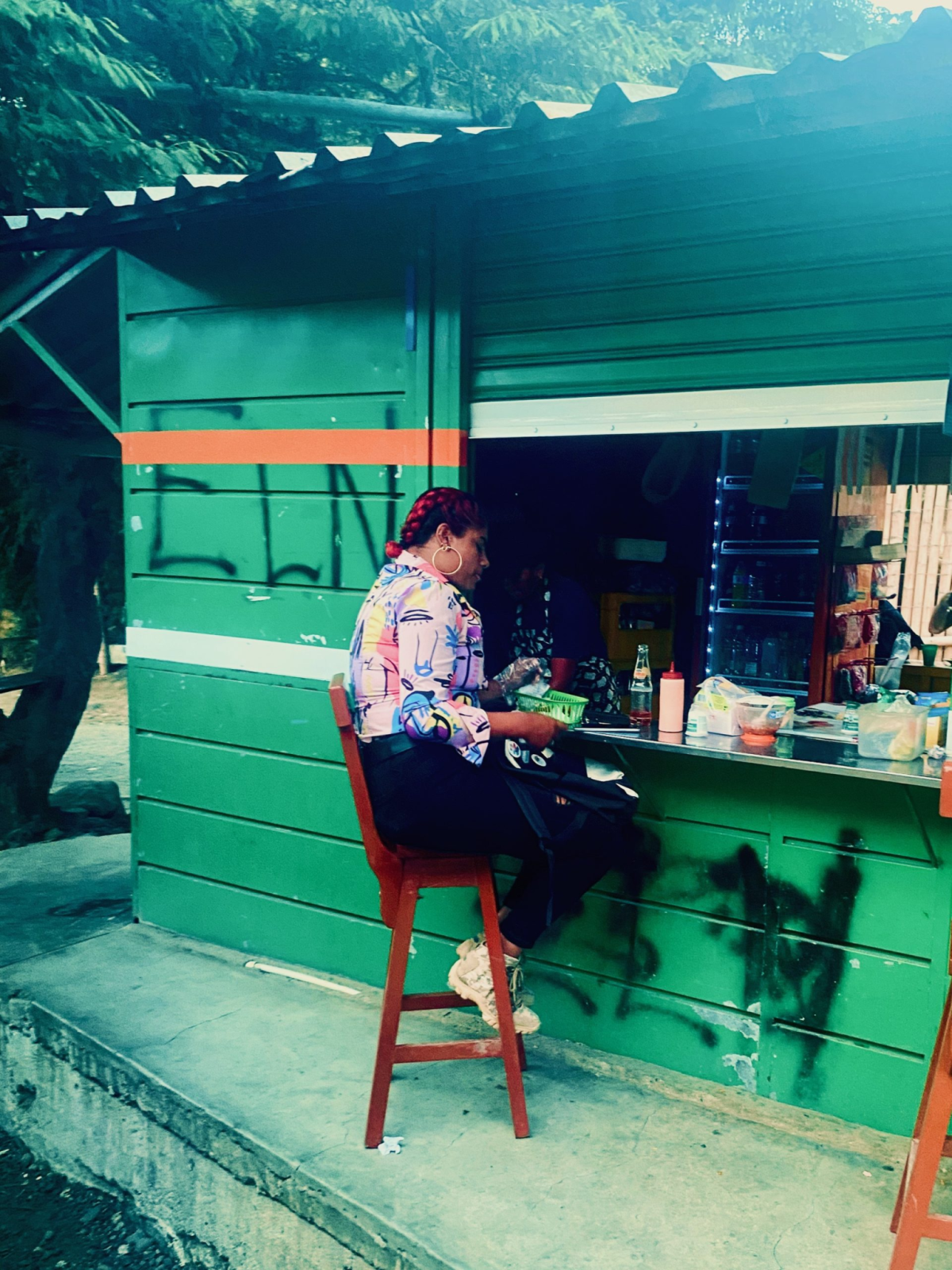
Grafiti of the ELN and ex-FARC Mafia near Corinto, Cauca (Credit: Henry Shuldiner)Cepeda’s approach to security is defined by his role as the principal legislative architect of Paz Total. As chair of the Senate‘s peace commission, he designed the framework that extended negotiating status to the ELN, FARC dissident groups, and the Clan del Golfo. His stated rationale is that targeting the financial leadership of drug networks rather than foot soldiers produces more durable results — a position that has academic backing in narcotics policy literature. In practice, Paz Total produced ceasefires that were repeatedly violated, and security indicators in conflict-affected departments deteriorated during the Petro administration. A Cepeda presidency is expected to continue the negotiated settlement model, with the military operating under political constraints.

Valencia’s security platform is based on reinstating Seguridad Democrática, the doctrine associated with former president Álvaro Uribe’s administrations from 2002 to 2010. The core elements are expanded military presence in rural conflict zones, dismantling of rural criminal networks, and resumption of extradition agreements with the United States — which Petro suspended, effectively shielding cartel leadership from US federal prosecution. The Uribe-era approach resulted in measurable reductions in homicide rates, forced displacement, and ELN and FARC territorial control, though human rights organizations documented serious abuses by security forces during that period.

De la Espriella has stated explicitly that his government would have no peace process. He advocates for a model similar to El Salvador’s under President Nayib Bukele: mass incarceration, construction of high-security prison facilities, classification of guerrilla and cartel organizations as foreign terrorist organizations, and broad military offensives. He has not detailed how such operations would be financed or how the mass detention model would interact with Colombia’s Constitutional Court, which has repeatedly constrained executive security powers.

For the armed groups operating in Norte de Santander and Cauca, the historical record indicates that Colombia’s criminal organizations respond more acutely to sustained, institutionally grounded military pressure and functioning extradition pipelines than to political rhetoric. By that measure, Valencia’s platform — which rebuilds the institutional security apparatus incrementally — represents a more structurally credible threat to the ELN and the Estado Mayor Central (EMC) FARC dissidents. For the Clan del Golfo leadership, extradition to the United States has historically been the principal deterrent, and Valencia’s program explicitly restores it.

Business Climate and Employment Conditions

The Petro administration enacted a series of minimum wage increases totaling more than 60% over four years — including a 16% increase for 2023, the largest single-year hike in Colombian history, and a 23.78% increase for 2026 — restructured labor regulations to expand premium pay requirements for night, weekend, and holiday shifts, and raised corporate tax rates to fund social spending programs. The Asociación Nacional de Empresarios de Colombia (ANDI) characterized the regulatory environment as adverse to private investment. Finance Colombia tracked a material decline in FDI in the extractive sector over the same period.

Cepeda supported those labor and fiscal reforms throughout their legislative passage. His platform extends the Petro model: increased state social spending, continued land redistribution programs, and maintenance of the current wage and labor cost structure. For companies with established Colombian operations, the regulatory environment is manageable; for companies evaluating market entry or operational expansion, the cost structure adds friction.

Valencia’s economic program emphasizes corporate stability and private sector investment as the primary mechanisms of job creation. Her vice-presidential running mate, Juan Daniel Oviedo — former director of DANE, Colombia’s national statistics agency — represents a technocratic orientation focused on reducing structural market distortions, streamlining public procurement, and scaling back state administrative overhead. Oviedo’s appointment is a direct signal to the business community that economic management would be data-driven rather than ideologically directed. Oviedo also publicly identifies as a member of the LGBTQ+ community, a departure from the traditional social conservatism of Centro Democrático.

De la Espriella’s economic orientation is pro-business with protectionist elements. His vice-presidential candidate, José Manuel Restrepo — who served as Colombia’s Finance Minister and Commerce Minister — provides institutional credibility on fiscal and trade policy. Restrepo’s presence on the ticket signals commitment to fiscal discipline and regulatory reduction in the extractive and commercial sectors. De la Espriella’s personal style, however, introduces operational uncertainty; his campaign has generated multiple high-profile controversies, including a public altercation with Caracol Noticias journalist María Lucía Fernández during a live broadcast and a formal apology following misconduct allegations by journalist Laura Rodríguez of Piso 8 FM.

Foreign Investment, Oil, and Mining

Ecopetrol holds a 31.5% stake in the Gunflint oil field in the Gulf of Mexico.

Ecopetrol holds a 31.5% stake in the Gunflint oil field in the Gulf of Mexico.

The extractive sector is the most consequential economic policy dimension for international capital. Ecopetrol (NYSE: EC; BVC: ECOPETROL) — Colombia’s state-controlled energy company and the largest corporation in the country — has operated under exploration restrictions during the Petro administration, which has opposed new fossil fuel contracts on climate grounds.

Cepeda’s position extends the Petro framework: mandatory transition away from fossil fuels, heavy restrictions or outright prohibitions on new oil and gas exploration contracts, and stringent environmental licensing requirements for open-pit mining operations. Foreign investment would be directed by policy toward green hydrogen, ecotourism, and smallholder agriculture. For the multinational oil majors with Colombian operations and for institutional investors in the mining sector, a Cepeda presidency represents a continuation of the current constraints and, in some contract scenarios, an accelerated wind-down of Colombian portfolios.

In a related development, Finance Colombia reported in May that Ecopetrol’s president, Ricardo Roa, has been formally charged in connection with alleged campaign spending violations during Petro’s 2022 presidential campaign. The case will be inherited by whoever takes office in August.

Valencia’s position is that hydrocarbon revenues are essential to Colombia’s macroeconomic stability and that the country cannot exit the sector before alternative revenue structures exist. Her platform actively encourages FDI in petroleum exploration, is open to regulated fracking, and commits to clearing the environmental licensing backlog that has stalled multiple large-scale gold and copper mining projects. For energy and mining companies currently blocked by administrative delays, this represents the most direct path to project advancement.

De la Espriella’s position goes further: essentially deregulating the environmental licensing process for major extraction projects on the grounds that Colombia’s economic sovereignty takes precedence over environmental restrictions he characterizes as externally imposed. The practical constraint is whether a De la Espriella administration would have the institutional coherence and congressional support to deliver regulatory rollback, given that his movement has no established political party structure and entered the race through an independent signature campaign.

Foreign Policy: Washington Alignment vs. Multipolar Strategy

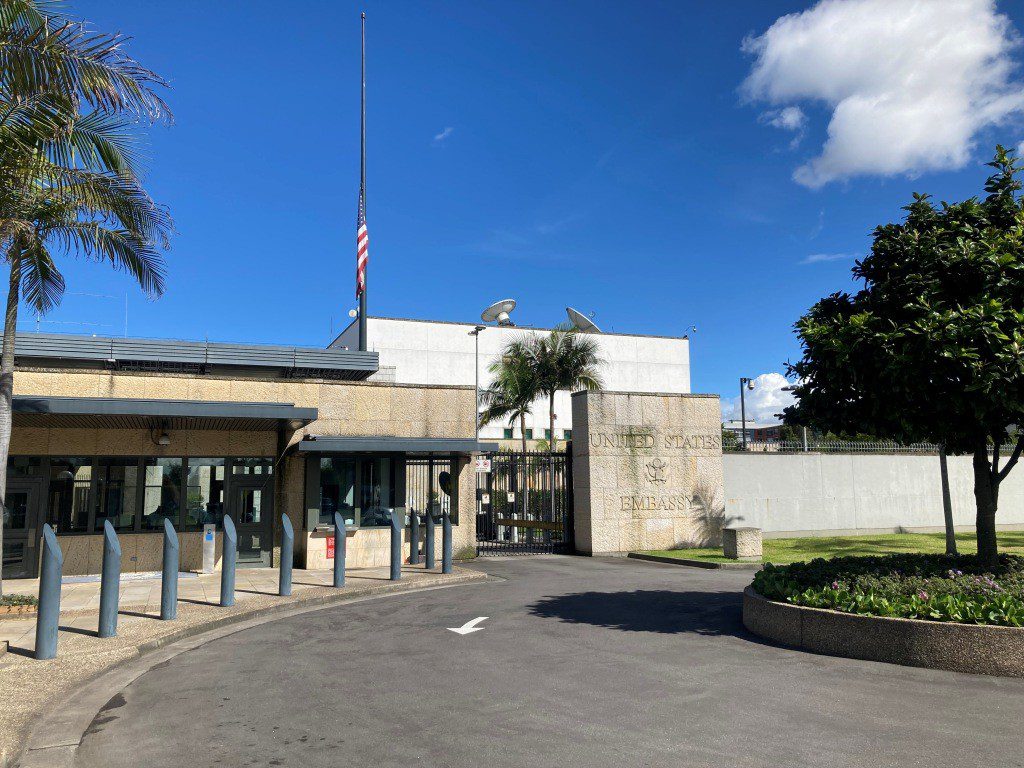
The US Embassy in Bogotá is said to be the 3rd largest US mission in the world (photo: Loren Moss)

The US Embassy in Bogotá is said to be the 3rd largest US mission in the world (photo: Loren Moss)

Colombia’s relationship with the United States deteriorated materially under Petro, who aligned Colombia with Venezuela’s Nicolás Maduro, pursued closer ties with China and Russia, and suspended extradition agreements. US counternarcotics cooperation was strained throughout the period.

Cepeda is committed to what he describes as a multipolar foreign policy — maintaining functional diplomatic channels with Washington and Brussels while deepening strategic and commercial relationships with China and Russia. His alignment with regional left-of-center governments in Mexico, Brazil, and Bolivia would position Colombia as part of a Latin American bloc that has grown increasingly skeptical of US regional leadership. For US companies operating in Colombia, this trajectory does not mean immediate operational disruption, but it reduces Colombia’s utility as a reliable counterpart on security cooperation, counter-narcotics intelligence sharing, and trade dispute resolution.

Valencia positions a return to the Western alignment as a core objective. She would prioritize restoring the US-Colombia relationship, reinforcing the bilateral Free Trade Agreement, and reestablishing intelligence-sharing mechanisms that were reduced under Petro. Her framing positions Colombia as a democratic anchor in a region experiencing authoritarian pressures.

De la Espriella takes the most explicit pro-US position in the race. La Silla Vacía reported that De la Espriella or entities linked to his campaign donated more than $90,000 USD to the US Republican Party, a fact that raises questions about the nature and expectations of those relationships. He has publicly aligned himself with the populist right in the United States, takes a hostile posture toward China, Russia, and Venezuela, and has characterized his security approach as consistent with a transactional alliance with Washington focused on counter-narcotics enforcement and cartel designation as foreign terrorist organizations.

“Ese pisco robó a 200 mil colombianos.” — Claudia López, former Mayor of Bogotá, referring to presidential candidate Abelardo de la Espriella’s legal representation of DMG pyramid scheme founder David Murcia Guzmán, during a presidential campaign event.

Corruption and Judicial Independence

All three candidates have stated commitments to fighting corruption, though their approaches and focal points differ in ways that are material to the institutional environment for business operations.

Cepeda’s legislative record includes serious, documented work investigating paramilitary infiltration of Colombia’s political institutions — the period known as parapolítica — and pursuing accountability for those cases. His blind spot, his critics argue, is corruption within the current administration. When Ecopetrol’s Ricardo Roa was formally charged in connection with Petro’s 2022 campaign, the response from the Pacto Histórico coalition was subdued. Cepeda has been Álvaro Uribe’s primary judicial antagonist in the Senate; a Cepeda administration would offer no institutional protection to Uribe and would be expected to support the full progress of judicial proceedings against him. For left-wing politicians facing legal exposure, including former Medellín mayor Daniel Quintero, a Cepeda administration would be expected to be more receptive to amnesty frameworks.

Valencia’s approach to anti-corruption is structural rather than prosecutorial: strengthening the independence of the Contraloría General de la República and the Fiscalía General de la Nación, implementing digital transparency in public procurement, and reducing informal executive influence over judicial processes. She would be expected to apply political and rhetorical pressure on behalf of Uribe — her political mentor and a close ally — though her legislative track record indicates a degree of institutional independence from Centro Democrático party orthodoxy.

De la Espriella’s anti-corruption rhetoric centers on severe criminal penalties for corrupt officials. The credibility of that position is complicated by his professional history, which is examined in detail below.

De la Espriella’s Legal Career: The Documented Record

De la Espriella’s campaign has faced sustained scrutiny over his client history as one of Colombia’s highest-profile criminal defense attorneys. The record is documented in reporting by El Colombiano, El Espectador, and the investigative outlet Corrupción al Día.

Abelardo de la Espriella (screen capture from Twitter video)

Abelardo de la Espriella (screen capture from Twitter video)

His documented client roster includes Salvatore Mancuso, the former supreme commander of the Autodefensas Unidas de Colombia (AUC) paramilitary network; multiple legislators convicted in the parapolítica scandal, which established systematic infiltration of Colombia’s congress by paramilitary organizations; David Murcia Guzmán, the operator of the DMG pyramid scheme that defrauded an estimated 200,000 Colombian investors; the Nule Primos, convicted of large-scale public contract fraud; and Álex Saab, the Colombian businessman extradited to the United States on charges of acting as the primary money launderer for the Maduro government in Venezuela. According to Corrupción al Día, De la Espriella’s legal fees from Saab reportedly reached $12 million USD and included private aircraft travel.

De la Espriella’s response to this line of criticism rests on due process principles: that every accused person is entitled to vigorous legal defense regardless of the charges, and that his ability to navigate Colombia’s criminal code at its most complex levels demonstrates the expertise required to enforce the law from the executive branch. The argument has legal validity as a principle. The specific issue for foreign compliance officers and US government counterparts is the Saab representation: the same Nicolás Maduro whose regime De la Espriella’s campaign now characterizes as an ideological enemy received legal services from De la Espriella’s firm when the representation was commercially available.

The Fiscalía investigated De la Espriella in connection with alleged paramilitary links in 2009 and again in 2012; both investigations were dismissed for insufficient evidence, and he carries no convictions or active investigations on those matters.

Cepeda’s Family History and Ideological Background

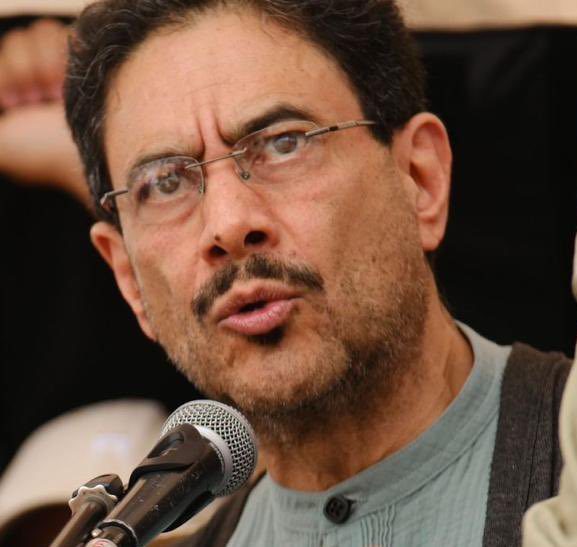
Iván Cepeda (from Twitter)

Iván Cepeda (from Twitter)

Critics of Iván Cepeda, including Enrique Gómez of the Salvación Nacional party, have argued that his family background constitutes evidence of structural alignment with guerrilla movements. The record on this point merits examination.

Cepeda is the son of Manuel Cepeda Vargas, who served as Secretary-General of the Colombian Communist Party and as a senator for the Unión Patriótica (UP), a left-wing political movement that was systematically exterminated by a combination of state actors and paramilitary organizations during the 1980s and 1990s. Manuel Cepeda Vargas was assassinated on August 9, 1994. The Inter-American Court of Human Rights subsequently found the Colombian state responsible for his murder. The FARC-EP named its Frente Urbano Manuel Cepeda Vargas — an urban front operating within the Bloque Occidental — in the elder Cepeda’s honor.

The Fundación Paz y Reconciliación (PARES) has documented that Iván Cepeda’s relationship with his father’s political positions was more complex than the family lineage alone suggests. After studying in Bulgaria in 1981, Cepeda broke from his father’s Soviet-oriented communist framework and aligned with democratic leftists including Bernardo Jaramillo Ossa, who publicly rejected the FARC’s armed strategy. Cepeda has repeatedly stated his repudiation of the FARC’s use of his father’s name. No documented evidence connects him to operational coordination with current armed groups.

What the family history does establish is the ideological framework through which Cepeda processes security policy: a belief, grounded in personal and political experience, that the Colombian state’s institutional violence has been as destructive as guerrilla violence, and that negotiated settlements are structurally preferable to military solutions. That framework generates Paz Total. It also generates a posture toward ELN and FARC dissident negotiators that prioritizes process continuity over verified compliance — a disposition that armed groups have demonstrably exploited to maintain territorial and operational positions while negotiation frameworks provided legal cover.

Paloma Valencia (image Twitter)

Paloma Valencia (image Twitter)

Valencia and the Uribe Question

The comparison to former president Iván Duque (2018–2022) comes up regularly in discussions of Valencia’s political independence. Duque, who had limited independent political standing before Uribe selected him, was perceived throughout his term as governing within constraints set by his patron — a dynamic that Colombian political cartoonists characterized as ventriloquism.

Valencia’s profile differs materially. She is the granddaughter of former Colombian president Guillermo León Valencia, carries her own political lineage, and has served in the Senate for over a decade, building positions on agrarian reform, judicial modernization, and indigenous land rights that have placed her at variance with standard Centro Democrático positions on those issues. She won the Gran Consulta por Colombia primary on March 8 with more than 45% of the vote — over 3.2 million Colombians — establishing a democratic mandate distinct from any party endorsement.

She would be expected to use institutional and rhetorical channels to support Uribe in the ongoing judicial proceedings against him, and to apply pressure on the trajectory of those cases. Whether that constitutes political interference with judicial independence or normal advocacy within democratic norms is a question on which observers disagree. What the legislative record does not support is the characterization of Valencia as incapable of independent governance.

Press Freedom and the Media Environment

Press freedom carries an indirect but measurable correlation with rule-of-law quality, which in turn affects operational risk for companies that rely on regulatory predictability and transparent legal processes.

Cepeda has maintained a posture toward critical media that mirrors President Petro’s practice of characterizing adversarial outlets as acting in the interests of economic elites. Under Petro, this produced a systematic exclusion of critical media from official information flows and persistent rhetorical delegitimization of independent journalism, though the press remained legally free to operate. A Cepeda administration would be expected to continue this pattern.

Valencia’s background in Colombia’s traditional political and intellectual establishment, combined with a decade in a party that has faced sustained critical coverage from Colombia’s major outlets, points toward a conventional institutional relationship with the press — adversarial at times, but within professional norms.

De la Espriella’s conduct during the campaign provides direct evidence of his approach. He publicly called Caracol Noticias journalist María Lucía Fernández “ignorant” in a live interview. He issued a formal apology after journalist Laura Rodríguez of Piso 8 FM made allegations of inappropriate conduct. His campaign strategy has drawn comparisons to the approach of Argentine president Javier Milei and US president Donald Trump in its use of direct digital channels to circumvent traditional media while publicly attacking outlets that publish critical coverage. The press would remain legally protected under a De la Espriella administration, but the operational environment for investigative journalism would be hostile.

The Ideological Spectrum: Market Liberalism to State Direction

The question of which candidate is most aligned with free-market principles requires a distinction that the international business press frequently elides: the difference between economic deregulation and political authoritarianism. These can, and in this election do, exist independently.

De la Espriella’s platform is often described in international coverage as the most pro-market. His deregulation proposals for the extractive sector and his corporate tax rhetoric support that reading in the economic domain. His security platform, however, involves a substantial expansion of state coercive power: mass detention operations, a mega-prison construction program, and the suspension of standard due process protections to facilitate rapid incarceration of criminal suspects. The Cato Institute‘s framework of economic freedom as inseparable from civil liberties would categorize a state powerful enough to detain people without standard procedural protections as a state that represents an institutional risk to property rights and contract enforcement as well.

Valencia’s platform, anchored by Oviedo’s technocratic program of structural market reform — reduced administrative barriers, streamlined procurement, smaller state overhead, maintained civil liberties — represents the closest approximation to coherent market liberalism available in this field. It does not carry the rhetorical force of De la Espriella’s deregulation proposals, but it has more institutional grounding.

Cepeda’s platform is the furthest from market liberalism by any standard measure: state-directed investment allocation, wealth redistribution through tax and transfer mechanisms, state expansion in healthcare and pension administration, and agrarian land redistribution. His program is continuous with the Petro administration’s economic framework.

Minor Candidates: The Rest of the Ballot

Claudia López, senator of Colombia. (Credit: Patty Suescún)

Claudia López, senator of Colombia. (Credit: Patty Suescún)

Several other candidates remain on the ballot and are drawing small but potentially consequential vote shares in a first round where the margin between second and third place could be narrow.

Claudia López, former mayor of Bogotá running under the Con Claudia Imparables coalition, positions herself as a progressive centrist with a documented anti-corruption record. Her polling has not broken 3.5% in major surveys, and her high polarization ratings from her mayoral term limit her growth ceiling. Her attacks on De la Espriella during the campaign — she publicly called him a “defender of the mafia” in reference to his client history — have been among the most pointed in the race, and factually grounded on the public record.

Sergio Fajardo, making his third consecutive presidential run under Dignidad y Compromiso, continues to represent a technocratic, education-focused centrism grounded in his work transforming Medellín in the early 2000s. He has not broken 3.5% in any major poll in this cycle.

Roy Barreras, running under La Fuerza de la Paz following his Frente por la Vida primary victory, is one of the most experienced political operatives in Colombia, having been part of multiple coalition governments across ideological lines over two decades. He polls below the threshold for meaningful first-round impact.

Miguel Uribe Londoño, running under Partido Demócrata, represents a younger-generation conservative platform emphasizing fiscal discipline and private sector growth, broadly consistent with Valencia’s program. He also polls below 3.5%.

Carlos Caicedo, running on a regionalist platform emphasizing decentralization away from Bogotá, draws support primarily from the Costa Caribe. His structural argument about Colombia’s administrative over-centralization is substantively grounded, though his national profile is insufficient to affect the first-round outcome.

Investment Implications

For international capital with Colombian exposure, the three-way race produces three materially different operational scenarios.

A Cepeda victory — which remains the single most likely first-round outcome based on available polling — would signal continuity of the Petro-era regulatory framework: sustained capital outflow pressure, high corporate tax rates, no new fossil fuel exploration contracts for Ecopetrol (NYSE: EC; BVC: ECOPETROL) or private operators, continued labor cost escalation, and a foreign policy trajectory away from Washington. Colombian equity valuations would be expected to remain under pressure. The mining licensing backlog would continue to accumulate. A Cepeda administration would not replicate Venezuela’s economic trajectory — Colombia’s independent central bank, Banco de la República, its functioning constitutional court, and its institutional depth provide meaningful buffers — but the investment headwinds would be structural rather than cyclical.

A Valencia victory would represent the sharpest regulatory reversal available in this field. Ecopetrol exploration contracts would be expected to advance. The mining licensing backlog would be addressed. US bilateral relations would be restored, reactivating security intelligence cooperation and trade facilitation mechanisms. The Colombian peso would be expected to strengthen as country risk premium declined. The path to that outcome now requires her to either close the gap significantly on De la Espriella in the first round or rely on runoff polling that showed her as the stronger second-round candidate — data that predates the most recent polling shift.

A De la Espriella victory introduces the widest distribution of possible outcomes. The upside scenario involves Restrepo managing fiscal and trade policy competently, genuine regulatory rollback in the extractive sector, aggressive extradition resumption, and security operations that reduce the physical risk premium in conflict-affected departments including Cauca, Norte de Santander, and Chocó. The downside scenario involves recurring crises generated by De la Espriella’s personal conduct, conflicts of interest arising from his former client relationships, and authoritarian security measures that attract international human rights attention and complicate bilateral relationships. Restrepo’s presence on the ticket reduces the probability of the downside scenario but does not eliminate it.

The current polling trend indicates that right-wing voters are consolidating around De la Espriella at Valencia’s expense. Whether that consolidation produces a runoff between De la Espriella and Cepeda — and whether the runoff produces a left or right-wing government — remains uncertain. What the polling data does not support is the scenario, widely assumed until recently, of a Cepeda-Valencia runoff in which Valencia was positioned as the structurally stronger opposition candidate.

Subscribe to Finance Colombia to remain updated on key developments and impartial analysis.


Holland & Knight Taps Energy Lawyer José Vicente Zapata to Lead Bogotá Office

25 May 2026 at 20:46

Energy and M&A specialist takes helm of 70-lawyer Bogotá practice

Holland & Knight has named José Vicente Zapata executive partner of its Bogotá office, the firm announced on May 4, 2026. Zapata will oversee day-to-day management of the office while continuing to lead his energy practice, which focuses on corporate, contractual, and commercial matters, with an emphasis on spin-offs and mergers and acquisitions. He succeeds Enrique Gómez Pinzón, who has served as executive partner since the office opened in 2012 and will now take the title of executive partner emeritus while continuing his corporate, M&A, finance, and international arbitration practice.

Zapata has been with Holland & Knight for nearly 12 years and co-chairs the firm’s Venezuela Focus Team, a group of partners who advise clients with interests in that country. His regulatory work covers environmental, energy, and natural resources matters, as well as corporate compliance, including the design of ethics programs and compliance with Colombia’s Sistema de Autocontrol y Gestión del Riesgo Integral de Lavado de Activos y Financiación del Terrorismo (SAGRILAFT) anti-money-laundering and counter-terrorism financing regime. He also handles liability cases involving contractual and non-contractual damages.

“I look forward to continuing to strengthen our team’s offerings in advising Colombian companies and guiding international clients to navigate entry into the Colombian market.” — José Vicente Zapata, Executive Partner, Holland & Knight Bogotá

Zapata earned his LL.M. in Sustainable Development and International Business Law from McGill University in Montreal and his J.D. from the Pontificia Universidad Javeriana in Bogotá. He has been ranked in Energy & Natural Resources: Environment by Chambers Global and Chambers Latin America since 2014, was named to The Legal 500 Latin America Hall of Fame in Environment in 2025 and 2026, and is regularly listed in The Best Lawyers in Colombia.

“I look forward to continuing to strengthen our team’s offerings in advising Colombian companies and guiding international clients to navigate entry into the Colombian market,” Zapata said in a written statement.

Bob Grammig, Holland & Knight’s chair and chief executive officer, said Zapata’s appointment was intended to focus the office on growth in Colombia and across Latin America. Gómez Pinzón said he would continue to support the office in his emeritus role.

The Bogotá office now houses nearly 70 lawyers. Its practice covers cross-border deals and international trade; mergers, acquisitions, and joint ventures; oil, gas, and mining projects; environmental assessments, liability, and compliance; taxation; labor law; intellectual property, trademark, and patent registration; antitrust and consumer law; capital markets, venture capital, and private equity; international licensing and franchising; project finance and foreign investment; corporate reorganizations and financial restructurings; litigation and international arbitration; and private wealth services.

Holland & Knight’s Latin America Practice Group includes more than 200 attorneys working on cross-border M&A, joint ventures, private equity and financing transactions, and disputes involving Latin America. The firm overall counts approximately 2,200 lawyers and other professionals across 35 offices. Founded in 1889, it provides representation in litigation, corporate and finance, real estate, healthcare, and government matters.

The leadership transition comes as international firms continue to deepen their footprint in Bogotá to serve foreign investors entering Colombian energy, infrastructure, and natural resources markets, and to advise Colombian corporates pursuing transactions abroad.

Frontera Energy Pivots to Pure-Play Colombian Infrastructure as Shareholders Approve $750 Million USD Parex Sale

25 May 2026 at 20:37

Infrastructure pivot frees up $1.3 billion USD for shareholders

Frontera Energy Corporation (TSX: FEC) (OTCQX: FECCF) reported first-quarter 2026 net income from continuing operations of $13.1 million USD and adjusted EBITDA of $28.5 million USD, as the Calgary-based company moves to close the sale of its Colombian exploration and production portfolio to Parex Resources Inc. (TSX: PXT) and reposition itself as a standalone Colombian infrastructure company anchored by its pipeline and port assets.

Total revenues from continuing operations were $26.8 million USD in the first quarter, compared with $26.9 million USD in the fourth quarter of 2025 and $25.1 million USD in the first quarter of 2025. Net loss for the period, including discontinued operations, was $15.4 million USD, reflecting a $28.5 million USD net loss from the Colombian E&P assets now classified as held for sale.

“In total, this strategy will have unlocked approximately $1.3 billion of capital for investors.” — Gabriel de Alba, Chairman of the Board, Frontera Energy Corporation

The Parex transaction

On April 30, 2026, Frontera shareholders approved a plan of arrangement under which Parex Resources, through a wholly-owned subsidiary, will acquire all of Frontera’s Colombian upstream business — including its oil and gas exploration and production assets, a reverse-osmosis water-treatment facility, and a palm-oil plantation. The transaction carries an enterprise value of $750 million USD. The cash purchase price consists of $500 million USD payable at closing, subject to customary adjustments, plus an additional $25 million USD contingent payment tied to specified development milestones to be achieved within 12 months of closing.

At the same shareholder meeting, investors approved a reduction of Frontera’s capital account of up to $647 million CAD (approximately $470 million USD) to fund a return of capital to shareholders from the net proceeds of the transaction. The Supreme Court of British Columbia issued its final order approving the arrangement on May 4, 2026. Closing remains subject to the satisfaction of remaining conditions and is expected in May 2026.

Chairman Gabriel de Alba said the company would retain roughly $50 million USD of cash to support growth opportunities at the remaining infrastructure business, including an LNG regasification project being developed in partnership with Ecopetrol (NYSE: EC) (BVC: ECOPETROL). “In total, this strategy will have unlocked approximately $1.3 billion of capital for investors,” de Alba said.

ODL pipeline drives cash flow

Frontera holds a 35 percent equity interest in the Oleoducto de los Llanos (ODL) crude oil pipeline, which connects the Rubiales, Quifa, Caño Sur, Llanos-34, and other production blocks to the Monterrey and Cusiana stations in the department of Casanare. ODL’s share of income contributed $14.2 million USD to Frontera in the first quarter, compared with $15.1 million USD a year earlier, with the year-over-year decline reflecting higher depreciation, amortization, and operating costs.

ODL transported 233,875 barrels per day in the first quarter of 2026 at an average tariff of $4.70 USD per barrel, compared with 236,387 barrels per day at $4.73 USD per barrel in the first quarter of 2025. The pipeline declared $185 million USD in total dividends, of which $64.7 million USD is net to Frontera. The company expects to receive those distributions during 2026 in installments of approximately 40 percent in the second quarter, 35 percent in the third quarter, and 25 percent in the fourth quarter.

Long-term debt at Frontera totaled $167.8 million USD at the end of the first quarter and is expected to decline to approximately $131 million USD by year-end 2026, primarily through scheduled amortizations and cash-sweep mechanisms tied to ODL cash flows. From May 2025 through December 2026, long-term debt is expected to fall by more than $100 million USD.

Puerto Bahía expands cargo mix

Puerto Bahía, the multipurpose maritime terminal located in Cartagena adjacent to the Bocachica access channel and near the Reficar refinery, generated $12.7 million USD in revenue in the first quarter of 2026, compared with $10.0 million USD in the same period a year earlier. The 150-hectare facility comprises a hydrocarbons terminal with nominal capacity of 2,672,000 barrels and a general cargo terminal. Frontera holds a 99.97 percent equity interest in the port.

General cargo growth offset weaker liquids volumes. The general cargo terminal handled 38,067 roll-on/roll-off (RORO) units in the first quarter, more than double the 18,223 units handled a year earlier, alongside 3,851 twenty-foot equivalent units (TEUs) of containerized cargo, up from 1,256 TEUs in the first quarter of 2025. Break-bulk volumes declined to 25,216 tons/m³ from 41,198 tons/m³. RORO dwell times shortened from 40 days to 31 days year over year.

The liquids terminal handled 36,937 barrels per day in the first quarter of 2026, down from 51,579 barrels per day a year earlier. Ecopetrol volumes accounted for 26,273 barrels per day, Frontera-related volumes for 7,389 barrels per day, and other third-party volumes for 3,275 barrels per day. The company attributed the decline mainly to lower third-party throughput and the absence of certain trading flows.

Operating costs at the port rose to $7.6 million USD in the first quarter from $5.0 million USD a year earlier, driven by increased infrastructure maintenance in the liquids terminal and higher cargo volumes in the general cargo facility.

LPG and LNG projects advance

Puerto Bahía’s liquefied petroleum gas (LPG) project began initial operations in March 2026, providing capacity to handle up to 10,000 tons per month. The terminal is targeted to become fully operational during the first quarter of 2028. Capital expenditures during the first quarter totaled $1.0 million USD, including $0.4 million USD for major tank maintenance and $0.3 million USD for the LPG project.

The company is also advancing an LNG regasification project at Puerto Bahía in partnership with Ecopetrol, intended to support Colombia’s domestic gas supply as domestic production declines. Frontera is also pursuing expansion of containerized cargo operations.

Discontinued operations

Following the execution of the arrangement agreement, the Colombian E&P assets are now classified as discontinued operations under IFRS 5. Colombian production averaged 36,700 barrels of oil equivalent per day in the first quarter of 2026, comprising 25,394 barrels per day of heavy crude, 8,653 barrels per day of light and medium crude combined, 5,706 thousand cubic feet per day of conventional natural gas, and 1,652 barrels of oil equivalent per day of natural gas liquids. That compares with 39,010 barrels of oil equivalent per day a year earlier.

The operating netback from the discontinued Colombian operations was $41.79 USD per barrel of oil equivalent in the first quarter of 2026, compared with $34.22 USD per barrel of oil equivalent in the first quarter of 2025, supported by a higher Brent reference price of $78.38 USD per barrel against $74.98 USD per barrel a year earlier.

Frontera retains exploration and development interests in Guyana through subsidiaries that include CGX Energy Inc. (TSXV: OYL), which is not part of the Parex transaction. The company’s go-forward portfolio will be anchored by the ODL pipeline stake and Puerto Bahía, with the infrastructure business generating approximately $77 million USD of distributable cash flow in 2025, according to the management information circular dated March 30, 2026.

Above photo courtesy Frontera Energy Corporation.

Colombia’s Financial Superintendency Pushes Shadow Pricing Framework to Reshape How Banks Evaluate Projects

25 May 2026 at 20:31

Proposal would reset how banks weigh social and climate costs

The Superintendencia Financiera de Colombia (SFC) has presented a proposal to create a national system of socio-environmental prices that supervised financial institutions would apply when evaluating and analyzing private and public development projects in Colombia. The regulator argues that the country’s financial system faces the challenge of financing projects that generate long-term social returns, not only private profitability.

The proposal was unveiled in Bogotá on May 14, 2026, during the forum Precios socioambientales: una herramienta para la inversión sostenible en Colombia, hosted at the regulator’s headquarters. Participants included Superintendent of Finance César Ferrari; Daniel Schydlowsky, professor at the Hebrew University of Jerusalem; Raúl Castro, professor at the Universidad de los Andes; Andrés Vera, technical vice president of Asobancaria; Ricardo Lara Manzano, director of infrastructure and energy for the Andean region at IDB Invest; and Andrés Trejos, economic studies coordinator at the SFC.

Ferrari noted that the methodology, also known as “shadow pricing,” gained prominence during the second half of the twentieth century before falling out of favor, and is now resurfacing globally as social and environmental dynamics increasingly affect business and the financial system. “The concept of ‘shadow prices’ is regaining importance because we are seeing the effects of climate change on the economy and on competition in business across all sectors,” Ferrari said.

“The concept of ‘shadow prices’ is regaining importance because we are seeing the effects of climate change on the economy and on competition in business across all sectors.” — César Ferrari, Colombian Superintendent of Finance

Schydlowsky explained that shadow prices measure the value of goods and services when market failures distort interest rates, exchange rates, or fiscal balances. The approach is designed to correct for the gap between observed market prices and the true economic and social cost of resources.

What the SFC is proposing

Trejos argued that social project evaluation provides a technical basis for discussing the relevance of investment initiatives in the context of public policy and the financial system, and helps select projects that raise social welfare with economic efficiency and environmental sustainability. “It is possible to prioritize projects beyond private profitability, incorporating general social welfare and, in particular, environmental sustainability,” he said.

The SFC’s proposal to build a socio-environmental pricing system for Colombia includes estimates of the social valuation of six productive factors and fundamental variables: labor, public revenue, investment, foreign exchange, carbon, and the social discount rate.

Under the proposed framework, projects would receive more favorable evaluation if they are labor-intensive — especially when they absorb idle or underemployed workers — if they generate or save foreign exchange through expanded exports or efficient import substitution, if they strengthen public revenue and the state’s capacity to provide public goods and regulation, or if they reduce carbon footprint or deliver net benefits in climate mitigation and adaptation.

The proposal does not yet carry the force of regulation. The SFC presented the framework as a methodology for supervised entities — including banks, insurers, and pension fund managers — to incorporate into their internal project evaluation processes alongside conventional financial analysis.

Headline photo: The installation of more than 886 solar systems benefiting 4,000 users. Photo credit: One Inversión Social.

Colombia Posts 6.7% Growth in March Visitor Arrivals and Signs Mexican Airport Promotion Deal

25 May 2026 at 20:17

Q1 visitor count tops 1.58 million as Mexico push targets World Cup

Non-resident visitor arrivals to Colombia grew 6.7% in March 2026 compared to the same month of the previous year, and the country received 1,584,378 non-resident visitors during the first quarter, according to figures from Migración Colombia processed by the Ministerio de Comercio, Industria y Turismo.

In March alone, 541,720 non-resident visitors entered the country. Of that total, 419,150 were foreign non-resident visitors, representing 5.3% year-over-year growth, while the cruise segment recorded 58,186 passengers, a 41.2% increase over the same month in 2025.

For executives and investors evaluating Colombia’s tourism, hospitality, and aviation sectors, the data indicate continued recovery in international arrivals and a measurable expansion of cruise traffic, two segments that directly affect hotel occupancy, retail spending in coastal cities such as Cartagena and Santa Marta, and the pipeline of inbound foreign exchange.

“Colombian tourism is going through a significant period of international expansion. Colombia is recording sustained growth in visitor arrivals while strengthening its connectivity and expanding its presence in strategic markets,” said Diana Marcela Morales Rojas, Minister of Commerce, Industry and Tourism.

Air connectivity figures

According to the Aeronáutica Civil de Colombia (Aerocivil), 4,483,077 passengers were transported on scheduled flights in February 2026, a 9.4% increase compared to the same month of the prior year. International arrivals grew 11.9% while domestic traffic increased 7.3%.

Between January and February 2026, scheduled flights moved 9,906,749 passengers, an 8.2% increase over the same period in 2025. The figures reflect ongoing expansion in commercial aviation capacity into Colombian airports, including the principal international gateways in Bogotá, Medellín, Cartagena, and Cali.

Mexico airport campaign tied to World Cup

Following Colombia’s participation as guest of honor at the Tianguis Turístico de México, the Ministerio de Comercio, Industria y Turismo signed an agreement with more than 20 Mexican airports to display the country’s “Descubre la Diversidad de Colombia, El País de la Belleza” campaign during the FIFA World Cup season.

The campaign will run in terminals operated by the Mexican federal government, including airports in Mexico City, Toluca, Tulum, and Cancún. The Mexican market represents one of the larger sources of regional intra-Latin American travel and is expected to see elevated transit volumes during the World Cup, which Mexico will co-host with the United States and Canada in summer 2026.

“Colombia is positioning itself as an increasingly visible and competitive destination in international markets. These alliances allow us to expand the country’s presence in strategic global venues, increase visitor arrivals, and continue positioning tourism as an engine of economic development for the regions,” Morales Rojas said.

The ministry indicated that Colombia’s presence at the Tianguis Turístico also produced bilateral conversations on expanding air connectivity and promotional cooperation with Mexican tourism operators, though specific route announcements or carrier commitments tied to the agreement were not disclosed.

Above photo: Mexico pavilion at the 2015 ANATO Vitrina Turistica trade show in Bogotá (photo: Loren Moss)

Federal Jury Convicts Tennessee Man of Sex Trafficking and Exploiting Medellín Minor; Court Imposes 30-Year Sentence

25 May 2026 at 20:00

Tenth US conviction under joint US-Colombia child exploitation offensive

A federal jury in the Southern District of Florida convicted Ramon Arellano Sandoval, 65, of Antioch, Tennessee, on charges of attempted sex trafficking of a minor and attempted production of child sexual abuse material involving a 14-year-old victim residing in Medellín, Colombia. A US federal district judge subsequently sentenced Arellano Sandoval to 30 years in federal prison, according to Alcaldía de Medellín Mayor Federico “Fico” Gutiérrez, who confirmed the sentence on May 21, 2026.

The case, prosecuted by the US Attorney’s Office for the Southern District of Florida under case number 24-cr-20519, represents the tenth conviction obtained under a joint US-Colombia enforcement initiative targeting foreign nationals who travel to Medellín to sexually exploit minors. Three other US citizens previously sentenced in connection with the program include Stefan Correa and Manuel Poceiro, who each received life sentences, and Mohamed Anaswed, who received 21 years in federal prison.

According to court records and evidence presented at the February 24 trial, Arellano Sandoval exchanged thousands of text and video messages with the victim, who was 14 years old at the time, and who lived in a rural area near Medellín. Prosecutors presented evidence that the defendant knew the victim’s age, repeatedly solicited sexually explicit videos from her, directed her to produce illicit material in exchange for electronic payments, and traveled to Colombia to engage in commercial sex with her.

“The evidence showed that this defendant pressured a child to create sexually explicit videos and even traveled overseas to abuse her. That conduct is predatory, criminal, and intolerable.” — Jason A. Reding Quiñones, US Attorney, Southern District of Florida

The jury found Arellano Sandoval guilty of attempted sex trafficking of a minor, which carries a maximum sentence of life in federal prison, and attempted production of visual depictions of the sexual exploitation of a minor, which carries a maximum sentence of 30 years.

“The jury’s verdict delivered justice for a 14-year-old victim who was targeted and exploited by a 65-year-old man who knew exactly what he was doing,” said US Attorney Jason A. Reding Quiñones for the Southern District of Florida. “The evidence showed that this defendant pressured a child to create sexually explicit videos and even traveled overseas to abuse her.”

The investigation was conducted by Homeland Security Investigations (HSI) Miami under Special Agent in Charge José R. Figueroa, with operational support from HSI Colombia. Assistant US Attorneys Tim Farina and Camille Smith handled the prosecution. On the Colombian side, the arrest and evidence collection involved the Alcaldía de Medellín, the Policía Nacional through its Dirección de Protección y Servicios Especiales (DIPRO), the Fiscalía General de la Nación, and Migración Colombia.

“La justicia no tiene fronteras cuando se trata de proteger a nuestros niños, niñas y adolescentes,” Gutiérrez wrote on his X account, referring to cross-border judicial cooperation in cases involving the exploitation of minors. The mayor indicated the administration would continue pursuing similar prosecutions, stating that any foreign national traveling to Medellín to exploit minors would be pursued until obtaining a conviction, including in their country of origin.

‼La justicia no tiene fronteras cuando se trata de proteger a nuestros niños, niñas y adolescentes.🚨Otro condenado más.

Ramón Arellano Sandoval, de 65 años de Estados Unidos, fue sentenciado a 30 años en prisión federal de ese país, por los delitos de intento de explotación… pic.twitter.com/mepkNuOURX

— Fico Gutiérrez (@FicoGutierrez) May 21, 2026

The Arellano Sandoval case follows a similar prosecution earlier in 2026 against Michael Jaime Inofuentes, also a US citizen, who was sentenced by the US District Court for the Eastern District of Virginia to 18 years in federal prison. Court evidence in that case established that Inofuentes sexually abused a 15-year-old in Medellín and paid for encounters in hotels, resulting in a pregnancy in early 2024. The investigation, triggered by a complaint from the victim’s mother to Colombian authorities, led to Inofuentes’s arrest in Miami. Prosecutors introduced WhatsApp conversations, financial transfers, and the defendant’s own admissions, which included statements that he had fathered other children in Colombia under similar circumstances. Related court documents and additional case information are available through the US District Court for the Southern District of Florida at www.flsd.uscourts.gov and through the PACER system at pacer.flsd.uscourts.gov under case number 24-cr-20519.

Headline image: Wilkie D. Ferguson Jr. United States Courthouse

Petro Advances Temporary Concentration Zones for “Clan del Golfo” as Final Push for Total Peace Policy

25 May 2026 at 17:36

More than 400 combatants would be concentrated in the new zones as negotiations continue in Doha, Qatar

President Gustavo Petro is moving forward with the creation of temporary concentration zones, known as Zonas de Ubicación Temporal (ZUT), for members of the Estado Mayor Conjunto del Ejército Gaitanista de Colombia (EGC), also known as the Clan del Golfo, the country’s largest drug trafficking armed group, in a renewed effort to advance his Total Peace (Paz Total) policy just days before Colombia’s presidential elections on May 31, 2026.

According to an official statement from Colombia’s presidency, the ZUTs would initially allow the concentration of more than 400 combatants while parallel negotiations continue over a possible peace agreement with the Colombian government, although no preliminary agreements have yet been reached.

The temporary concentration zones would function as designated areas where combatants suspend armed activities while participating in talks with the government and preparing for a potential reintegration into civilian life.

According to the government, the zones would remain in effect until December 31, 2026, meaning their future would ultimately depend on Colombia’s next president, who will take office on August 7, as well as on the broader future of the Total Peace policy.

Colombia’s most powerful criminal organization

The Clan del Golfo is considered by specialized organizations, including the Fundación Ideas para la Paz (FIP), to be Colombia’s most powerful criminal structure.

According to the organization, the group has nearly 10,000 armed members and operates in multiple strategic regions linked to drug trafficking, illegal mining and territorial control.

The US government has designated the group a transnational terrorist organization, while President Donald Trump previously warned of possible US military actions in Colombian territory over security and narcotics concerns, comments that sparked diplomatic tensions with Petro’s administration.

Institutional clash over arrest warrants and extradition requests

The ZUT proposal comes amid tensions between Colombia’s executive branch and the Attorney General’s Office over the legal conditions required to move the process forward.

The Office of the High Commissioner for Peace requested the suspension of arrest warrants against 29 Clan del Golfo members, including 13 individuals subject to extradition requests, among them Jobanis de Jesús Ávila Villadiego, alias “Chiquito Malo,” the group’s top leader.

Attorney General Luz Adriana Camargo rejected the request, citing legal limitations regarding individuals sought by foreign authorities.

Following the refusal, Petro publicly defended the process in a message on X. “I have been clear that, in the early stages of the process, individuals facing extradition do not participate,” the president wrote, denying any intention to suspend extradition orders unless there is “an advanced peace process, as established by law.”

Amid the controversy, the Clan del Golfo itself issued a statement accepting that individuals facing extradition requests would not initially participate in the temporary concentration zones.

“As an unequivocal demonstration of political will and coherence, the Joint High Command of the Gaitanista Army of Colombia accepts, in good faith, that access to the Temporary Concentration Zones will be limited to combatants who are not subject to extradition requests by any foreign government,” the group said.

The group added that the decision seeks to “remove any shadow of doubt” over the process and prevent extradition disputes from obstructing negotiations.

The presidency later highlighted that the EGC accepted the government’s conditions for concentrating fighters in Tierralta, Córdoba, and in the municipalities of Belén de Bajirá and Unguía, Chocó. According to the government, combatants and commanders are expected to begin entering the zones on June 25.

Criticism over timing

The initiative has sparked criticism because of its timing, arriving just days before presidential elections and during a government transition period.

Ombudswoman Iris Marín warned that the process creates uncertainty over how armed groups might interpret the political transition.

“The move toward those zones creates expectations among armed groups in the middle of an electoral context and government transition. It is impossible for disarmament to happen before August 7, 2026, so how do armed groups interpret that in an electoral context?” Marín said in a video shared on social media.

Marín clarified, however, that Colombia’s Constitution grants the president authority to pursue peace negotiations, meaning concerns center not on the legality of the initiative itself but on its political timing.

Negotiations between the Colombian government and the Clan del Golfo have been underway since 2025 in Doha, Qatar, which has quietly hosted talks between both parties. According to official sources, the ZUTs are intended as confidence-building measures and humanitarian relief for communities affected by the group’s violence.

*

Photo: Colombian government representative Álvaro Jiménez shakes hands with Clan del Golfo spokesperson Luis Armando Pérez in the presence of Qatar’s Minister of State for Foreign Affairs, Mohammed bin Abdulaziz bin Saleh Al-Khulaifi, in Doha on September 18, 2025, at the start of peace talks. Photo shared by Colombia’s Office of the High Commissioner for Peace.

Political Tensions Between Petro and Bolivia’s President Trigger Diplomatic Expulsions

22 May 2026 at 22:18

Colombia and Bolivia intensified a diplomatic crisis this week after mutually expelling representatives from their respective embassies, amid growing political tensions between Colombian President Gustavo Petro and Bolivian President Rodrigo Paz Pereira.

The tensions began May 20, 2026, when Bolivia’s Foreign Ministry announced the expulsion of Colombia’s ambassador to La Paz, Elizabeth García Carrillo, after describing remarks made by Petro regarding Bolivia’s political crisis as interference in the country’s internal affairs.

“The decision responds to the need to preserve the principles of sovereignty, noninterference in internal affairs and mutual respect among states, fundamental pillars of international coexistence and diplomatic relations between sovereign nations,” Bolivia’s Foreign Ministry said in an official statement.

One day later, Colombia’s Foreign Ministry, headed by Rosa Yolanda Villavicencio, responded by expelling Bolivia’s chargé d’affaires in Bogotá, Ariel Percy Molina Pimentel, under the principle of diplomatic reciprocity.

“The Ministry of Foreign Affairs of the Republic of Colombia, considering the recent decision adopted by the Government of the Plurinational State of Bolivia regarding the permanence of Colombia’s ambassador (…) was compelled, on the basis of reciprocity, to declare the termination of the functions of Mr. Ariel Percy Molina Pimentel,” Colombia’s Foreign Ministry said, citing Article 9 of the 1961 Vienna Convention on Diplomatic Relations.

The Colombian government clarified that the measure does not imply a formal break in diplomatic relations between the two countries, adding that “Colombia remains willing to support, always at the request of the Bolivian government, initiatives in favor of peace, political dialogue, institutional channels, citizen participation and the observance of human rights and fundamental freedoms.”

Origin of the dispute

Bolivia’s decision followed a message posted by Petro on X on May 18, in which he said that “Bolivia is experiencing a popular uprising,” referring to the political and social crisis affecting the Andean country.

For the past three weeks, Bolivia has faced protests and road blockades led by supporters of former President Evo Morales, who oppose the current administration and are demanding the resignation of President Rodrigo Paz Pereira.

The protests have also unfolded as Morales faces judicial proceedings over alleged crimes related to human trafficking and child sexual abuse, while also refusing to appear before judicial authorities.

The Bolivian government interpreted Petro’s remarks as a violation of the principle of nonintervention in domestic affairs.

Bogotá, however, rejected that interpretation and said its officials had not sought to interfere in Bolivia’s internal politics.

Colombia “categorically rejects any interpretation attributing to its authorities an interest or intention to interfere in Bolivia’s internal affairs,” the Colombian Foreign Ministry said, while reiterating its commitment to sovereign equality, nonintervention, self-determination of peoples, peaceful settlement of disputes and respect for territorial integrity.

A politically sensitive moment for both governments

The diplomatic tensions come as Rodrigo Paz Pereira, who took office in November, faces social unrest, road blockades and domestic criticism over his administration.

Meanwhile, Petro is approaching the end of his term in Colombia amid a highly polarized electoral climate. The Colombian president is seeking to preserve the continuity of his political project through the election of a successor in presidential elections whose first round will take place May 31, with the next president set to take office on August 7, 2026.

Although neither government has announced additional measures, the exchange of expulsions marks the highest level of diplomatic tension between Colombia and Bolivia in recent years.

❌