
Normal view

Colombia on Guard as ‘Super’ El Niño Threatens Record Heat, Drought and Food Security

A potentially historic El Niño climate event is emerging as one of the defining stories for Colombia through the remainder of 2026, with authorities warning that extreme heat, drought, water shortages and energy pressures could push vulnerable regions toward crisis conditions.

Climate agencies, environmental authorities and agricultural groups are increasingly sounding alarms over what some scientists describe as a possible “super” El Niño – an exceptionally intense warming of Pacific Ocean waters capable of disrupting global weather systems and triggering severe consequences across Latin America.

In Colombia, the warnings are becoming stark.

Authorities fear a prolonged period of extreme temperatures, dwindling reservoirs, forest fires, crop failures and surging food prices that could stretch into early 2027 when typically the “summer season” starts. Officials have already begun urging Colombians to conserve water and electricity as forecasts indicate the phenomenon may intensify during the second half of the year.

The environmental authority of Cundinamarca, known as the CAR, warned that the probability of El Niño has reached 82%, threatening domestic water supplies, industrial production and hydroelectric generation across central Colombia.

“The measures of prevention and adaptation must be taken immediately,” CAR director Alfred Ignacio Ballesteros said, warning that the event could coincide with the Andean region’s traditional dry season in January and February, placing additional pressure on already strained water systems.

For Bogotá, however, authorities insist the capital is better prepared than during the water crisis of 2023 and 2024. The city’s Aqueduct and Sewer Company said no water rationing measures are currently expected despite the arrival of El Niño. Diego Montero, manager of the utility’s master water system, said reservoir levels remain stable, with the Chingaza system — including the Chuza and San Rafael reservoirs — holding nearly 20 million cubic meters above the established guidance curve. Officials also said the Tibitoc treatment plant is undergoing capacity upgrades aimed at increasing production and reducing pressure on the Chingaza system, which supplies most of Bogotá’s drinking water.

Fears beyond Inconvenience

Meteorologists predict temperatures in Colombia’s Caribbean region could surpass 40 degrees Celsius, while prolonged drought conditions may devastate agriculture and livestock production. Industry groups have warned that prices for staple foods including milk, rice, vegetables and beef could rise sharply toward the end of the year, adding renewed pressure to inflation at a moment when many households are already struggling with high living costs. A ‘super’ El Niño could push inflation above 7 percent, warns the National Association of Financial Institutions – ANIF.

Officials are also concerned about the vulnerability of Colombia’s energy grid, which depends heavily on hydroelectric power. Reduced rainfall and lower reservoir levels could increase the risk of electricity rationing or blackouts similar to those experienced during past El Niño events.

The country’s fragile páramo ecosystems and wetlands — critical natural water regulators located in the Andes — may also face heightened threats from forest fires and prolonged heatwaves. Environmentalists warn that drought could destroy sensitive habitats and endanger wildlife already under pressure from deforestation and climate change.

The emerging crisis is part of a broader global climate pattern that scientists say is being intensified by human-driven warming.

El Niño occurs every few years when ocean waters in the eastern and central Pacific become abnormally warm, altering rainfall patterns, shifting jet streams and increasing global temperatures. However, so-called “super” El Niño events are far rarer and more dangerous, with sea surface temperatures rising more than 2 degrees Celsius above historical averages.

Some climate researchers now fear the world could be heading toward one of the strongest El Niño events in modern history.

Paul Roundy, a professor of atmospheric sciences at the University of Albany, recently warned there was “real potential” for the strongest El Niño event in 140 years. Forecasts from the European Centre for Medium-Range Weather Forecasts suggest Pacific Ocean temperatures could rise three degrees Celsius above average.

Such projections have revived comparisons to the catastrophic El Niño of 1877-1878, which contributed to massive crop failures and famine across parts of India, China, Brazil and Africa. Historians estimate more than 50 million people died globally during that climate disaster.

While modern infrastructure and global trade networks make a repeat of 19th-century famine unlikely, experts say today’s interconnected crises — inflation, inequality, geopolitical conflict and fragile food systems — create new vulnerabilities.

“Hunger is fundamentally political and economic,” warns Benjamin Selwyn from the University of Sussex. “Wars disrupt trade routes, inequality restricts access to food and profit-driven agricultural systems prioritize industrial production over resilience. Climate shocks such as El Niño amplify those existing weaknesses,” writes Selwyn in The Conversation.

Studies by the UN Food and Agriculture Organization and the World Meteorological Organization have already shown that rising temperatures are reducing crop yields and making agricultural labor increasingly dangerous in tropical regions. Heat stress also lowers livestock productivity and survival rates.

In Colombia, the government of leftist President Gustavo Petro has begun discussing contingency measures, though critics argue the country remains dangerously unprepared.

Carlos Carrillo, director of Colombia’s National Unit for Disaster Risk Management (UNGRD), has called for urgent efforts to conserve water and energy while identifying regions at high risk of forest fires. There is also growing concern that years of underinvestment in water storage, energy diversification and climate adaptation could leave Colombia exposed to prolonged disruptions.

If the global forecasts prove accurate, Colombians could soon face months of punishing heat, food inflation and growing anxiety over the resilience of the country’s infrastructure in an age of accelerating climate extremes.

El Niño Warming Patterns Signal Operational Risks for Colombian Power and Agriculture

10 April 2026 at 10:49

Escalating drought risk is potential bad news for rural communities, power consumers.

The National Oceanic and Atmospheric Administration (NOAA) and the Climate Prediction Center (CPC) have confirmed that ENSO-neutral conditions are currently present in the equatorial Pacific Ocean. However, technical indicators suggest a rapid transition, with a 61% probability of El Niño emerging between May and July 2026. For international investors and executives operating in Colombia, this shift indicates a looming period of increased operational costs, specifically within the energy and agricultural sectors.

The El Niño Southern Oscillation (ENSO) is a recurring climate pattern involving changes in the temperature of waters in the central and eastern tropical Pacific Ocean. During El Niño, trade winds weaken, allowing warm water to move toward the west coast of South America. Conversely, La Niña is characterized by stronger trade winds and cooler ocean temperatures. These fluctuations disrupt global atmospheric circulation, altering rainfall and temperature patterns across the planet.

In Colombia, the effects of these phenomena are distinct and significant. El Niño typically results in a sharp decrease in precipitation and a rise in average temperatures. Because Colombia relies on hydroelectricity for more than 60% of its total power generation, extended dry periods lead to lower reservoir levels. This forces the grid to rely on more expensive thermal generation fueled by natural gas and coal, which historically drives up spot market electricity prices for industrial and residential consumers.

“There is a 25% probability that the index reaches or exceeds +2.0°C during the Northern Hemisphere winter,” according to the National Oceanic and Atmospheric Administration.

The current technical diagnostic from NOAA shows that while the sea surface temperature index in the Niño-3.4 region was recently -0.2°C, the easternmost indices have already moved into positive territory. Furthermore, the equatorial subsurface temperature index has increased for five consecutive months. This accumulation of ocean heat is a primary driver behind the high probability of El Niño persistence through the end of 2026. Some models, including those from the European Centre for Medium-Range Weather Forecasts (ECMWF), suggest a 25% chance of a “strong” or “very strong” event, where temperatures exceed the 2.0°C anomaly threshold.

The Ministerio de Minas y Energía and the Comisión de Regulación de Energía y Gas (CREG) are monitoring these developments closely. A strong El Niño would place additional stress on a natural gas system already facing structural supply constraints. Reduced hydroelectric output coupled with a potential deficit in gas supply could lead to significant energy price volatility. In past events, such as the 2015-2016 cycle, these conditions resulted in substantial financial pressure on the national utility system and necessitated emergency conservation measures.

Agricultural productivity is equally at risk. The Instituto de Hidrología, Meteorología y Estudios Ambientales (IDEAM) has identified the Caribbean and Andean regions—including departments such as La Guajira, Magdalena, and Antioquia—as highly vulnerable. During El Niño, these areas face increased risks of forest fires, water scarcity, and crop failure. For agribusinesses and exporters, this translates to disrupted planting cycles and higher production costs for staples like corn, potatoes, and vegetables, which can fuel domestic food inflation.

Conversely, when La Niña is in effect, Colombia faces the opposite extreme. The cooling of the Pacific leads to excessive rainfall, which can cause devastating landslides and flooding in mountainous terrain. While La Niña can replenish reservoirs, it often damages infrastructure and logistics networks, complicating the transport of goods to port. The current transition out of a La Niña phase provides a brief window of ENSO-neutral stability, which the CPC estimates has an 80% chance of lasting through June 2026.

For the international business community, the significance of these weather cycles extends to macro-economic stability. Persistent dry weather can impact GDP growth by raising the cost of basic services and reducing agricultural output. Strategic planning for 2026 and 2027 must account for these climatic variables. Meteorologists at Colorado State University note that El Niño also tends to reduce hurricane activity in the Atlantic, which may provide some relief for coastal logistics, but the primary threat remains the inland hydrological deficit.

As the Ministerio de Ambiente y Desarrollo Sostenible activates preventive mechanisms, companies are encouraged to review their energy procurement strategies and water management protocols. The next comprehensive diagnostic update from NOAA is scheduled for May 14, 2026, which will provide further clarity on the intensity of the projected warming trend. Understanding the mechanics of the ENSO cycle is no longer a matter of environmental interest but a necessity for risk mitigation in the Colombian market.

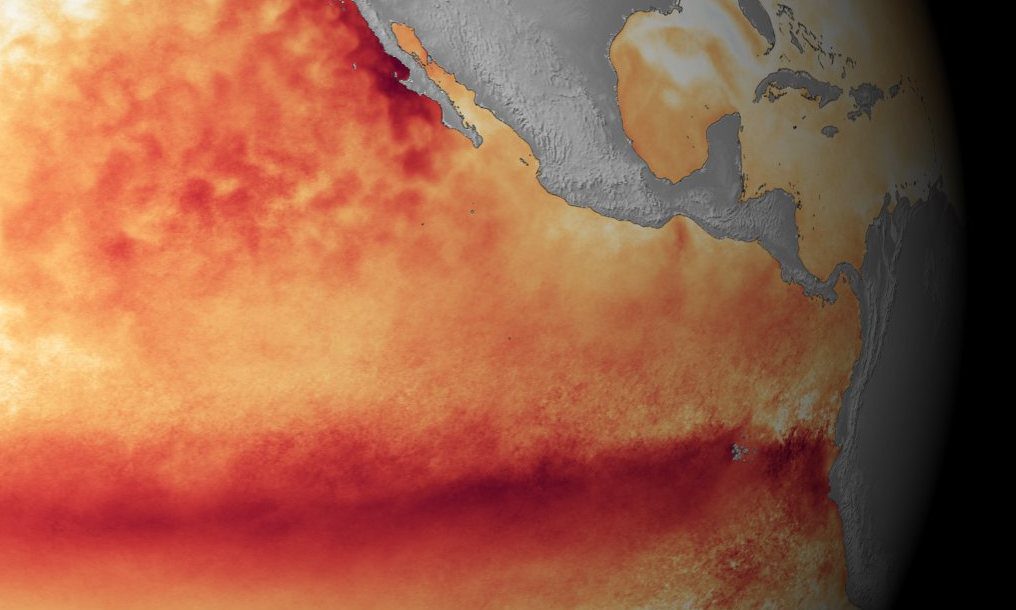
Satellite sea surface temperature departure in the Pacific Ocean for the month of October 2015, where darker orange-red colors are above normal temperatures and are indicative of El Niño. (Image credit: NOAA)

Satellite sea surface temperature departure in the Pacific Ocean for the month of October 2015, where darker orange-red colors are above normal temperatures and are indicative of El Niño. (Image credit: NOAA)

Headline photo: the Pacific Ocean from Guachalito Beach, Chocó, Colombia (photo © Loren Moss)

Border Crossing Between Colombia & Ecuador Reopens After 19 Day Blockade

28 March 2026 at 19:42

While Colombia & Ecuador are at peace, the neighboring presidents have a sour relationship going back to when Colombian President Gustavo Petro initially refused to recognize Daniel Noboa’s election.

Traders and transport operators have suspended a 19-day blockade at the Rumichaca International Bridge, the primary land crossing between Colombia and Ecuador. The protest, catalyzed by a 50% tax imposed by the Ecuadorian government on Colombian goods, was lifted to accommodate travel and commerce during the Semana Santa holiday period. Despite the suspension of the strike, the regional business community reports that significant economic damage and diplomatic tensions persist.

Ecuador's President Daniel Noboa (photo: Carlos Silva/Presidencia de la República)

Ecuador’s President Daniel Noboa (photo: Carlos Silva/Presidencia de la República)

The closure of the border crossing created a substantial disruption in binational economic activity. Estimates from the Cámara de Comercio de Ipiales in Nariño, Colombia indicate that losses reached approximately $5 million USD per day due to freight remaining stationary in the border zone. The Comité Gremial de Trabajadores de la Frontera de Ipiales stated that while the reopening is a responsible gesture for the high-traffic holiday season, current tariff policies continue to threaten hundreds of direct and indirect jobs linked to foreign trade.

The Governor of Nariño, Luis Alfonso Escobar, criticized the trade barriers implemented by the administration of Ecuadorian President Daniel Noboa. Governor Escobar argued that such measures inadvertently encourage illicit activities in the region. He emphasized that instead of facilitating formal commerce, high tariffs drive trade toward illegality, undermining regional security efforts. To mitigate the conflict, the Comunidad Andina de Naciones (CAN) has initiated high-level dialogues. Diplomatic delegations led by Colombian Deputy Minister of Foreign Affairs Juana Castro and her Ecuadorian counterpart, Alejandro Dávalos, held a virtual working group to address pending issues in trade, transport, energy, and hydrocarbons.

“Decisions adopted without considering the reality of our communities have put at risk the livelihood of merchants, transporters, foreign trade workers, and thousands of people who live from binational exchange,” stated the Comité Gremial de Trabajadores de la Frontera de Ipiales.

Diplomatic friction has extended into the energy sector. President Noboa claimed that in 2017, Ecuador assisted Colombia during a potential blackout by charging 1.6 cents USD per kWh, whereas in 2024, Colombia charged an average of 28 cents USD per kWh during Ecuador’s hydroelectric crisis. In response, the Colombian Minister of Mines and Energy, Edwin Palma, clarified that prices during the 2023-2024 El Niño phenomenon reflected the actual costs of production and distribution, particularly when fossil fuel-powered thermoelectric plants using fuel oil and diesel were activated.

The ongoing trade dispute has impacted more than 5,500 companies over the past two months. Diana Marcela Morales, the Colombian Minister of Commerce, Industry, and Tourism, confirmed scheduled meetings with Ecuadorian officials to de-escalate the conflict and establish fair, transparent rules. Concurrently, the Ministerio de Comercio, Industria y Turismo has moved to protect domestic industries by implementing new tariffs on steel and ceramics from countries without existing free trade agreements. These measures aim to counter market distortions and protect a sector that employs more than 50,000 people while promoting circular economy practices and reducing CO2 emissions.

Above photo: Border between Ecuador & Colombia looking towards Ipiales, Colombia (Photo: Cancillería de Colombia)

❌