
Reading view

Trump floats U.S. military action against Colombia after Maduro capture

U.S. President Donald Trump escalated rhetoric toward Colombia on Sunday, suggesting that a U.S. military operation against the country — which he said could be dubbed “Operation Colombia” — was a possibility following Washington’s capture of Venezuelan dictator Nicolás Maduro.

Speaking to reporters aboard Air Force One, Trump described Colombian President Gustavo Petro as “a sick man” and accused him of overseeing cocaine production destined for the United States.

“Colombia is run by a sick man who likes making cocaine and selling it to the United States,” Trump said. “And he’s not going to be doing it very long. Let me tell you.”

When asked directly whether he meant a U.S. military operation against Colombia, Trump replied: “Sounds good to me.”

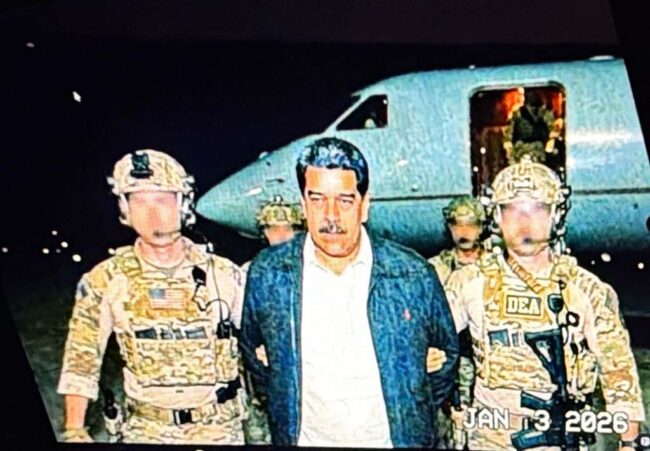
Trump’s remarks came a day after the United States announced it had captured Maduro in a military operation in Caracas, an unprecedented move that has sent shockwaves across Latin America and raised fears of further U.S. interventions in the region.

Trump said the United States could also consider military action against Mexico if it failed to curb the flow of illicit drugs into the country. He added that Venezuelan migrants in the United States were among the factors considered in the raid against Maduro.

Trump also warned that Cuba, a close ally of Venezuela, was “a failing nation” and said its political future was “something we’ll end up talking about.”

Maduro is currently being held in a New York detention center and is expected to appear in court on Monday on drug trafficking charges. Trump said his administration would seek to work with remaining members of the Venezuelan government to crack down on drug trafficking and overhaul the country’s oil sector, rather than push immediately for elections.

Despite Maduro’s capture, Venezuela’s Vice President and oil minister, Delcy Rodríguez, has assumed interim leadership with the backing of the country’s top court. Rodríguez has insisted that Maduro remains Venezuela’s legitimate president and has denied Trump’s claim that she is willing to cooperate with Washington.

In an interview published by The Atlantic on Sunday, Trump warned that Rodríguez could “pay a bigger price than Maduro” if she failed to cooperate with the United States. Venezuela’s communications ministry did not immediately respond to a request for comment.

Petro denounces U.S. threats

Trump’s comments prompted an immediate and forceful response from Petro, who accused the U.S. president of slander and warned that Latin America risked being treated as “servants and slaves” unless it united.

“Stop slandering me,” Petro said, calling on regional leaders to close ranks in the face of what he described as renewed U.S. imperial aggression.

In a series of lengthy posts on X, Petro said the United States had crossed a historic line by bombing Caracas during the operation to capture Maduro.

“The United States is the first country in the world to bomb a South American capital in all of human history,” Petro wrote. “Neither Netanyahu, nor Hitler, nor Franco, nor Salazar did it. That is a terrible medal, one that South Americans will not forget for generations.”

Petro said revenge was not the answer but warned that the damage would be long-lasting.

“Friends do not bomb each other,” he said, likening the attack on Caracas to the Nazi bombing of Guernica during the Spanish Civil War.

Instead, Petro urged deeper regional integration, arguing that Latin America must look beyond alignment with global powers.

“We do not look only to the north, but in all directions,” he said. “Latin America must unite or it will be treated as a servant and not as the vital center of the world.”

In a separate post, Petro issued a stark message to Colombia’s armed forces, ordering commanders to immediately remove any officer who showed loyalty to the United States over Colombia.

“Every Colombian soldier has an order from now on,” Petro wrote. “Any commander of the public forces who prefers the U.S. flag over the Colombian flag must immediately leave the institution.”

Petro said the armed forces were under orders not to fire on civilians but to defend Colombia’s sovereignty against any foreign invasion.

“I am not illegitimate. I am not a narco,” Petro wrote, rejecting Trump’s accusations. “I trust my people and the history of Colombia.”

Colombia’s first leftist president and a former member of the M-19 guerrilla movement also raised the spectre of a return to armed struggle, saying that while he had sworn under the 1989 peace pact never to take up weapons again, he would do so if Colombia’s sovereignty were threatened.

“I am not a military man, but I know war and clandestinity,” Petro wrote. “I swore never to touch a weapon again, but for the homeland I would take up arms once more, even though I do not want to.”

Rising fears of wider intervention

Trump’s warnings to Colombia were not his first. In the immediate aftermath of Maduro’s capture, he said Petro needed to “watch his ass” and suggested that Cuba’s political collapse was imminent.

The comments have heightened anxiety across the region, where governments are closely watching Washington’s next moves following the Caracas operation.

In Venezuela, a state of emergency has been in force since Saturday. A decree published on Monday ordered police to “immediately begin the national search and capture of everyone involved in the promotion or support for the armed attack by the United States,” according to the text.

Caracas remained largely quiet on Sunday, though residents reported a tense atmosphere as uncertainty mounted over the country’s political future and the possibility of further U.S. action.

For Colombia – a key U.S. ally that shares a 2,000-kilometre border with Venezuela, a country the Trump administration has said it will “run” in the aftermath of Saturday’s seizure of Maduro – the remarks mark the most explicit threat of U.S. military action in more than two centuries of diplomatic relations, and an ominous deterioration in already strained ties between Washington and Bogotá.
  •  

Trump praises “brilliant” military operation against Venezuela’s Nicolás Maduro

U.S. President Donald Trump has hailed as “brilliant” the U.S. military operation that resulted in the capture of Venezuelan dictator Nicolás Maduro, as explosions were reported in Caracas early Saturday. Governments across the Americas and Europe are reacting to the arrest of the Maduro and his wife Cilia Flores.

In a brief telephone interview with The New York Times hours after the strikes, Trump praised the planning and execution of the operation. “A lot of good planning and a lot of great, great troops and people,” Trump said. “It was a brilliant operation, actually.”

Trump said U.S. forces carried out a large-scale strike against military targets in Venezuela and captured Maduro and his wife, Cilia Flores, who were flown out of the country. He has not disclosed where they are being held. The U.S. administration claims there were no American casualties in the operation but declined to comment on Venezuelan casualties.

Venezuelan authorities have yet to confirm Maduro’s capture. Vice President Delcy Rodríguez said on state television that the whereabouts of Maduro and Flores were unknown and demanded “proof of life” from Washington.

Interior Minister and the regime’s henchman Diosdado Cabello urged calm, telling Venezuelans not to “make things easier for the invading enemy,” and alleged without evidence that civilian buildings had been hit.

In a separate statement broadcast on state television VTV, Venezuela’s Attorney General Tarek William Saab formally requested proof of life for Maduro and Flores. Saab condemned the U.S. action as a shift “from rhetoric to direct violence” and described the strikes as a premeditated act of terrorism. He said the operation left an unspecified number of people injured and killed, without providing figures or evidence.

Explosions were reported across Caracas in the early hours of Saturday, with power outages affecting several districts, according to witnesses and local media. Venezuelan state outlets reported strikes on major military and government sites, including Fuerte Tiuna, the country’s largest military base, and the La Carlota air base in heart of the capital.

According to sources inside Venezuela, pro-opposition supporters aligned with Venezuela’s legitimate president-elect Edmundo González and Nobel Peace Prize laureate María Corina Machado have begun mobilizing to secure government buildings and institutions and are preparing steps toward a political transition. Sources claim to be preparing the groundwork for what they describe as a interim administration, though no formal announcement has been made.

The U.S. embassy in Bogotá issued a security alert urging American citizens in Venezuela to shelter in place, citing “reports of explosions in and around” Caracas. The United States suspended operations at its embassy in Caracas in 2019.

Bogotá Mayor Carlos Fernando Galán called for calm and announced increased security measures near the U.S. and Venezuelan diplomatic missions in the Colombian capital.  “It is clear that a new stage is opening today for Venezuela, which should be oriented toward the return of democracy. That process must be peaceful and with full respect for the civilian population and international law. At this moment, the protection of Venezuelan citizens, both within their country and abroad, is a priority. Bogotá is home to hundreds of thousands of Venezuelan citizens, and our responsibility is to ensure their safety, their rights, and coexistence in the city,” he said.

Maduro was indicted in the United States in 2020 on corruption and drug trafficking charges, which he has repeatedly denied. The U.S. State Department has offered a $50 million reward for information leading to his arrest or conviction.

U.S. Attorney General Pamela Bondi said Maduro and Flores had been indicted in the Southern District of New York on charges including narco-terrorism conspiracy and cocaine importation conspiracy, adding that both would face U.S. justice.

Republicans react to Venezuela strikes

U.S House Representative María Elvira Salazar, a Florida Republican and outspoken critic of the Maduro government, said the strikes represented “the fall of a criminal structure masquerading as a government.” She said Maduro’s removal opened the door for “a real democratic transition led by Venezuelans who have resisted tyranny for years.”

Republican Senator Carlos Gimenez affirmed that “President Trump has changed the course of history in our hemisphere. Our country and the world are safer for it. Today’s decisive action is this hemisphere’s equivalent to the Fall of the Berlin Wall.”

Senator Rick Scott announced “A new day for Venezuela and Latin America. The United States and our hemisphere are safer because of President Trump’s leadership!”

U.S. Deputy Secretary of State Christopher Landau said in a social media post that Maduro had been removed from power and would be put on trial or punished, without providing further details.

Reactions from Latin America

Former Colombian President Álvaro Uribe Vélez defended the U.S. action as legitimate self-defense, arguing that Venezuela had for years harbored armed groups and facilitated drug trafficking. Uribe said that when a country becomes “a sanctuary for narco-terrorism,” it inevitably triggers consequences. He accused Venezuela’s leadership of destroying democratic institutions and fueling an exodus of millions across the region, urging Venezuelans to pursue freedom and institutional reconstruction.

Former Colombian President Iván Duque also welcomed the development, calling Maduro’s capture “the beginning of the end of the narco-dictatorship in Venezuela.” Duque said the moment opened a path toward democratic reconstruction with international support, while emphasizing the need to protect regional security.

Colombia’s current President Gustavo Petro took a sharply different view, rejecting what he called aggression against Venezuela’s sovereignty. Petro said Colombia had deployed security forces to its border and activated contingency plans in case of a mass influx of refugees, while seeking to convene the United Nations Security Council. “Internal conflicts between peoples are resolved by those same peoples in peace,” Petro said.

Argentina’s President Javier Milei struck a celebratory tone, posting on “X”: “Long live freedom, carajo!”

Ecuador’s President Daniel Noboa voiced support for Venezuela and the opposition. “To María Corina Machado, Edmundo González and the Venezuelan people, it is time to recover your country,” Noboa wrote, adding that what he called “narco-Chavista criminal structures” would continue to fall across the continent.

Colombian presidential candidate Paloma Valencia of the Centro Democrático party was among the first to react to the breaking news, stating: “Free Venezuela. The illegitimate dictator who usurped power, and subjugated Venezuela and the Venezuelans, has fallen. Democrats yearned for an opportunity for the return of democracy and freedom.”

Medellin Mayor Federico Gutiérrez also celebrated the arrest of the regime leader, saying: “Dictator Nicolás Maduro has been captured. Every tyrant’s time comes. Venezuela Free.”

Spain’s Prime Minister Pedro Sánchez has urged restraint and respect for international law, while Cuba’s President Miguel Díaz-Canel condemned the  “criminal attack” by the United States.

As of Saturday morning, no senior Venezuelan military official, including Defense Minister Vladimir Padrino, had appeared publicly, and it remained unclear who controlled key state institutions or how Venezuela’s armed forces would respond as the crisis continued to unfold.

Screen capture from television shows DEA agents escorting Venezuela’s Nicolás Maduro.
  •  

Avianca Group International Limited Reports $411 Million USD EBITDAR in Q3 2025

Avianca Group International Limited (AGIL) yesterday reported its consolidated financial results for the third quarter of 2025. The company achieved $411 million USD in Earnings Before Interest, Taxes, Depreciation, Amortization, and Rent (EBITDAR), resulting in a 27.2% margin for the period.

The third-quarter EBITDAR represents a 15.5% year-over-year increase from the $356 million USD reported in Q3 2024. Total operating revenues reached $1,509 million USD, marking a 12.8% increase compared to the $1,338 million USD recorded in the same period of the prior year. Total operating costs increased by 13.3% year-over-year, settling at $1,290 million USD. Net income for the quarter was $101 million USD, an improvement from $72 million USD in Q3 2024.

Operational and Capacity Metrics

Capacity, measured in Available Seat Kilometers (ASKs), reached 18,284 million, denoting a 6.8% increase compared to Q3 2024. This growth was attributed primarily to a 6.2% year-over-year increase in Stage Length. Passenger departures increased 1.0% year-over-year. The company transported 9.7 million passengers, consistent with the volume in the comparable period of 2024. The network encompassed 169 routes serving 83 destinations across 28 countries. Subsequent to the quarter’s close, Avianca introduced three new international routes, which included Belém (Brazil) and Monterrey (Mexico).

Cost performance for the quarter indicated a reduction in overall per-unit costs. Total Passenger CASK (Cost per Available Seat Kilometer) was 5.7 cents, a 1.9% decrease relative to Q3 2024. This decline was largely driven by Passenger Fuel CASK, which decreased 9.9% to 1.7 cents, resulting from lower fuel prices and increased fuel efficiency. Passenger CASK excluding fuel increased 2.1% year-over-year to 3.9 cents.

Balance Sheet and Credit Rating Actions

As of September 30, 2025, Avianca reported liquidity totaling $1,361 million USD, which represented 24.2% of last-twelve-month revenue. This total includes a cash balance of $1,161 million USD and $200 million USD available through an undrawn Revolving Credit Facility. The Net Debt to last-twelve-month EBITDAR ratio improved sequentially to 2.8x from 2.9x reported on June 30, 2025.

Rating agencies Moody’s and Fitch  upgraded Avianca’s credit ratings to B1 and B+ respectively. Both rating actions were assigned a stable outlook.

Business Unit Performance and Network Development

The cargo division, Avianca Cargo, recorded $157 million USD in revenue during Q3 2025, representing a 14.1% year-over-year increase. The operating freighter fleet currently consists of nine Airbus A330s, following the integration of two additional P2F aircraft during the quarter.

The loyalty program, LifeMiles, reported a 72% year-over-year increase in Q3 2025 Third-Party Cash EBITDA, reaching $77 million USD.

In network strategy, AGIL expanded its Business Class service to 54 additional routes from key operational centers including Bogotá (Colombia), Medellín (Colombia), San Salvador (El Salvador), Quito, and Guayaquil (Ecuador). The company’s passenger operating fleet totaled 161 aircraft as of September 2025, including 134 Airbus A320 family aircraft, 15 Boeing 787s, and 12 Airbus A330s.

Avianca is a member of Star Alliance  and is part of the Abra Group. The Abra Group also controls Gol Linhas Aéreas Inteligentes S.A.   and holds a strategic investment in Wamos Air .

Above photo: Avianca A330F cargo jet (photo courtesy Avianca)

  •  

El Chato Tops List of Latin America’s 50 Best Restaurants 2025 as Colombian Gastronomy Gains Regional Prominence

The Latin American culinary sector convened in Antigua, Guatemala, for the 13th edition of Latin America’s 50 Best Restaurants 2025, an event sponsored by S.Pellegrino & Acqua Panna (SIX: NESN, OTC: NSRGY). The ceremony, held at Santo Domingo del Cerro, highlighted establishments from 21 cities across the region, with Bogotá’s El Chato securing the No. 1 position.

Led by Chef Álvaro Clavijo, El Chato ascended from the No. 3 spot in 2024 to be named “The Best Restaurant in Latin America” and “The Best Restaurant in Colombia.” The contemporary bistro is noted for its engagement with local producers and its interpretation of Colombian ingredients. Clavijo founded the restaurant with the objective of positioning Colombian gastronomy globally by utilizing regional products.

“We are truly delighted to celebrate El Chato as The Best Restaurant in Latin America 2025,” stated Craig Hawtin-Butcher, Managing Director for 50 Best. “This achievement reflects the energy, talent and authenticity that make Latin American gastronomy unique in the world.”

Colombia’s Culinary Footprint

Beyond the top spot, Colombian restaurants maintained a significant presence on the list. Celele in Cartagena, known for its research into Caribbean biodiversity, ranked No. 5. In Bogotá, Chef Leonor Espinosa’s Leo placed at No. 23.

Several new entries and recognitions for Colombia were announced. Afluente, located in Bogotá, debuted on the list at No. 34. Humo Negro, also in the capital, appeared at No. 41. Manuel, a restaurant in Barranquilla, was ranked No. 46.

Specific accolades were awarded to Colombian venues. Oda, a Bogotá-based restaurant situated within the G Lounge, received the Sustainable Restaurant Award. The establishment focuses on ingredients sourced from urban gardens and local producers.

Regional Rankings and Awards

Buenos Aires led the city rankings with eight restaurants in the top 50, followed by Lima with seven and Santiago with five. Kjolle (No. 2) in Lima was named “The Best Restaurant in Peru,” while Don Julio (No. 3) in Buenos Aires took the title of “The Best Restaurant in Argentina.”

Other notable awards included:

  • Highest New Entry: Casa Las Cujas (No. 14) in Santiago.

  • Highest Climber: Cosme (No. 9) in Lima, sponsored by Lee Kum Kee.

  • Icon Award: Rodolfo Guzmán of Boragó (No. 6) in Santiago.

  • Best Pastry Chef: Bianca Mirabili of Evvai (No. 20), sponsored by República del Cacao.

  • Chefs’ Choice Award: Alejandro Chamorro of Nuema (No. 10), sponsored by Estrella Damm (BME: DAMM).

  • Best Sommelier: Maximiliano Pérez, sponsored by Vik.

  • Best Female Chef: Tássia Magalhães.

The voting process is audited by professional services consultancy Deloitte, utilizing a panel of 300 regional experts including journalists, food critics, and chefs to determine the rankings.

Tourism and Partnerships

The event was hosted in partnership with the Guatemalan Institute of Tourism (INGUAT), which aims to position Guatemala as a competitive destination. Other partners included American Express (NYSE: AXP), Buchanan’s (LSE: DGE, NYSE: DEO), and Ron Zacapa (LSE: DGE, NYSE: DEO).

Above photo: El Chato in Bogotá takes the No.1 spot in Latin America’s 50 Best Restaurants 2025, sponsored by S.Pellegrino & Acqua Panna (PRNewsfoto/50 Best)

  •  

Bogotá Switches On a Season of Lights, Art, and Night Cycling

Every December, Bogotá transforms. Streets glow with constellations of LED lights, plazas turn into theatrical stages, and entire neighborhoods feel suspended somewhere between festive nostalgia and big-city spectacle. But this year’s celebration, dubbed Navidad es Cultura, is bigger, brighter, and more imaginative than ever before. Running from December 5 to 23, it invites locals and travelers alike to explore a holiday season built around creativity, community, and a forward-looking vision of the capital.

“This year, Christmas in Bogotá asks us to imagine and build the future we deserve,” says Mayor Carlos Fernando Galán, who unveiled a lineup of 670 activities and more than 4,300 artists. The result is a citywide cultural takeover – part art festival, part family tradition, and always a playground for the young and young-at-heart.

Following the Christmas Trail

For many visitors, the gateway into Bogotá’s holiday spirit begins with La Ruta de la Navidad, a curated trail of illuminated landmarks running through three major sectors: the historic downtown corridor, the sprawling Parque El Tunal in the south, and the bustling districts of the city’s north. This isn’t a gentle dusting of fairy lights. The 2025 installation includes 114 LED Christmas trees, more than 54 kilometers of miniature lights, and 1,655 decorative elements that dazzle both day and night. All of it is powered with a dramatically reduced energy load thanks to the city’s commitment to efficient, sustainable LED technology.

The season’s tallest marvel rises in Parque El Tunal, where Bogotá has erected its highest Christmas tree to date – a shimmering 56-meter-high tower of light with a 20-meter base. Surrounding it, the park becomes a walk-through holiday storybook. More than 1.3 kilometers of illuminated trails lead visitors through a world of giant glowing reindeer, oversized ornaments, a whimsical Santa’s garden, a luminous gift zone, and a charming Postal Navideña designed for festive snapshots.

At night, the park’s central plaza turns into a stage for a 360-degree laser and music show, performed every half hour from December 5 to 28. And this year, two colossal LED matrices – stretching more than 300 meters and totaling 200,000 programmable bulbs – transform the façades of the Palacio Liévano downtown and the Parque El Tunal cultural center, splashing them with color and geometric patterns that ripple like digital brushstrokes.

The Imagined City

The heartbeat of Navidad es Cultura pulses strongest at two iconic venues: Plaza de Bolívar and La Santamaría.

In Plaza de Bolívar, “Una Ciudad Imaginada” steals the show. This high-tech production blends projection mapping, live performance, soundscapes, and more than 50 artists to create a vivid dreamscape. Running December 13–14 and 17–23, the 35-minute performances—three each evening—draw thousands to the capital’s political and cultural heart. Here, Bogotá’s imagined future is cast across historic stone façades, offering a sensory journey through light, architecture, and shared aspiration.

Just a short walk away, Plaza Cultural La Santamaría will host “Más Allá de las Nubes,” a tender 35-minute theatrical piece performed by 80 artists. It tells the poetic story of a young girl and her cat traveling through Bogotá’s neighborhoods – an enchanting family-friendly work that blends dance, acrobatics, immersive staging, and soaring visual elements. With capacity for 10,000 spectators per show, it is one of the season’s most endearing offerings for visitors with children in tow.

Bogotá Belongs to the Night

No Bogotá Christmas is complete without the city’s most beloved holiday tradition: the Ciclovía Nocturna, an annual nighttime cycling celebration when Bogotá hands its streets back to the public.

The edition 48 takes place on Thursday, December 11, from 6 p.m. to midnight, drawing an estimated 2.5 million participants onto 95 kilometers of car-free avenues. Whether you’re pedaling a bike, cruising on a skateboard, or strolling with a cup of hot chocolate, the Ciclovía reveals Bogotá’s electrifying nighttime personality: impromptu music groups, couples on tandem bikes, toddlers being towed in light-strung trailers, and streams of cyclists coasting down Avenida Boyacá or Carrera Séptima under illuminated tunnels of color.

“The Ciclovía is a symbol of Bogotá – of encounter, health, and coexistence,” says IDRD director Daniel García Cañón. This year’s celebration also marks 50 years of Bogotá’s pioneering Ciclovía, now replicated by cities around the world. Fittingly, Bogotá will also host the 15th International Congress of Recreational Ciclovías of the Americas on December 11 and 12, welcoming global leaders for conversations on urban recreation, mobility, and community health.

More than a display of lights, Bogotá’s Christmas season feels like a cultural manifesto—an invitation to imagine a brighter city through shared art, open spaces, and collective celebration. From the sensory wonder of Plaza de Bolívar to the poetic warmth of La Santamaría and the joyful nighttime takeover during Ciclovía Nocturna, Navidad es Cultura positions Bogotá as one of Latin America’s most compelling December destinations.

As Mayor Galán puts it, “I invite everyone to enjoy this year’s Christmas programming and celebrate the end of the year in peace.” This season, Bogotá shines brighter—not only with a constellation of LEDs, but with imagination beyond the clouds.

  •  

Colombia records 40,663 murders under Petro, surpassing Santos and Duque

Colombia has recorded 40,663 homicides during the first three years of President Gustavo Petro’s government, surpassing the totals reported under the administrations of Iván Duque and Juan Manuel Santos, according to a report published Tuesday by the Centro de Paz y Seguridad of Universidad Externado. The report documents killings between August 2022 and August 2025, a period that encompasses Petro’s “Total Peace” agenda with illegal armed groups. According to the data, Colombia registered a 7.59% increase in homicides compared with the same timeframe under Duque, who reported 37,795 cases, while Santos’ second term saw 36,646.

“During the first three years of Gustavo Petro’s administration, violence did not decrease under the banner of ‘Paz Total’. On the contrary, homicides continued to rise,” the study states. Petro’s annual average now stands at 13,554 murders per year, compared with 12,598 under Duque and 12,215 under Santos. Nationally, investigators estimate one person is killed every 39 minutes, a faster rate than during the two previous governments.

The findings, compiled by researchers Andrés González Díaz, Diego Rodríguez Pinzón and Carolina Saldaña, present a wide set of indicators showing the acceleration of lethal violence. Monthly murders during Petro’s term average 1,130 cases — compared with 1,050 under Duque — while daily homicides rose from 34.5 to 37 per day.

The authors also document a territorial reconfiguration of violence. Their analysis identifies rapidly shifting hotspots driven by disputes among armed groups, expanding drug economies and the weakening of state authority in several regions.

The study found the Caribbean region registered the steepest increases, displacing historically violent departments in the southwest. Six departments account for the largest share of the national rise when compared with Duque’s tenure, including Bolívar with 870 homicides, Magdalena: (811), Atlántico: (803) and Santander (530).

Researchers said these spikes coincide with the emergence of new criminal alliances, intensified disputes over drug-trafficking corridors and the collapse of informal ceasefires amid the government’s stalled negotiations with armed groups.

In Catatumbo, one of Colombia’s most unstable border regions, killings rose sharply due to clashes between the National Liberation Army (ELN) and FARC dissidents. “The increase in violence in Norte de Santander — 141 additional homicides — reflects escalating confrontations, particularly in Tibú, Ocaña, El Tarra and Cúcuta,” the report said. Rising attacks on social leaders and former FARC peace signatories further contributed to what analysts describe as an “acute humanitarian risk.”

Bogotá becomes a “critical node”

Despite being the country’s most heavily policed territory, Bogotá recorded one of the most significant increases in homicide volume. Murders rose from 3,198 to 3,427, an increase of 229 cases (7.16%), making the capital the single largest contributor to the regional rise in central Colombia.

The department of Cundinamarca added 139 cases, rising from 1,111 to 1,250 homicides (+12.51%), while Boyacá registered the steepest proportional jump in the region — +17%, from 247 to 289 cases — despite being one of the country’s historically safest departments.

The report concludes that identifying and intervening in these “critical territorial nodes” is essential to reversing the national upward trend. It also adds that the shifting geography of violence reflects a broader proliferation of armed groups and illicit economies fueled by kidnapping, drug trafficking and illegal mining, during Petro’s final months in office.

  •  

Álvaro Clavijo Wins 2025 Best Restaurant in Latin America with El Chato

Before he became Latin America’s most celebrated chef, Álvaro Clavijo spent years doing what few aspiring cooks romantically imagine: scrubbing plates in the basements of Parisian kitchens. He had left Bogotá after a brief, unsatisfying year studying architecture at Los Andes University. In Paris he dabbled in photography, learned impeccable French, and quickly discovered that the underbelly of a culinary capital is more grit than glamour.

But something in the rhythm of kitchens – heat, repetition, precision – anchored him. Despite his mother’s skepticism that he could make a living cooking (“She couldn’t even fry an egg,” he jokes), he enrolled at Barcelona’s prestigious Hofmann School, known for turning students into chefs ready for the academy’s own Michelin-starred restaurant.

Three years in Barcelona, five in France, and still, Colombia tugged at him. Yet just as he considered returning home, another city intervened – New York, home to the temples of modern gastronomy. He landed at Thomas Keller’s Per Se, where the immaculate choreography of haute cuisine shaped him indelibly. “My cooking is French, my ingredients are Colombian, and my organization is American,” he says today, seated in the dining room of El Chato, the Bogotá restaurant that has now been named Latin America’s Best Restaurant 2025 by Latin America’s 50 Best Restaurants.

Clavijo returned to Bogotá in 2013 to open the first incarnation of El Chato in Quinta Camacho. The menu – slow-cooked meats, obsessive technique, and elegant, deeply flavored dishes – won over small but devoted crowds. Still, it was removed from the city’s emerging gastrosphere. When a more neighborhood-friendly house became available in Chapinero Alto, he moved the restaurant, unaware that the next decade would transform it into one of the continent’s most influential kitchens.

Today, El Chato is a study in unpretentious sophistication. The 80-seat dining room blends the familiar with the eccentric: a 1970s rotary telephone, faded high-school portraits, and stacks of old medical encyclopedias donated by friends. Bare brick walls glow under soft lighting. The décor is tongue-in-cheek, but the menu – one page, clean, unfussy –  reveals Clavijo’s philosophy: dining should thrill, not intimidate.

A meal begins with the restaurant’s signature “mule,” part Moscow classic, part tribute to the Colombian countryside’s icon. Infused with herbs and tropical fruits, the drink sets the tone for a night driven by local ingredients elevated through global technique. Upstairs, the kitchen team moves like monks—quiet, deliberate, wholly focused.

Clavijo’s signature dishes have become objects of devotion. A roast lamb, equal parts Boyacá and Provence, is tender, perfumed, and blanketed with a buttery cream sauce. The crab in avocado purée, studded with mango, foraged greens, and blackened-rice chips, is the kind of dish entire essays could be written about. Beef tartare arrives garnished with rose vinaigrette, mini croutons, and kale mayonnaise. Even the lunch menu—Cuban pulled pork sandwiches, bright shrimp buns—shows a level of refinement that belies its casual delivery.

Temperature, he insists, is everything. He pushes heat to its limits, and his meat cuts are never simply slapped onto a grill; they are cured in-house for weeks, allowing “alchemy,” as he calls it, to work. Rarely leaving the kitchen, he has built a culinary identity rooted in mastery of technique and reverence for Colombian produce, from the high Andes wetlands to the Amazon lowlands.

What distinguishes El Chato – and how it ascended from No. 3 in 2024 to No. 1 in 2025 – is its role as an ambassador for Colombian biodiversity. Working closely with small growers and horticulturists in the Sabana de Bogotá, people whose crops rarely reach high-end kitchens, Clavijo’s dishes are not recreations of Colombian cuisine but reinterpretations – rooted in memory, informed by travel, and executed with discipline.

On a typical night, the dining room hums with locals and international travelers alike. Bogotá’s restaurant scene is fiercely competitive; many places don’t survive their first year. El Chato did more than survive. It set a new standard, one that the world has now recognized by awarding it the top spot in Latin America’s 50 Best Restaurants.

For Clavijo, the accolade is gratifying but not defining. The work continues. The flavors deepen. The relationships with farmers strengthen. And every night, in that Chapinero house where mountain meets sea and garden meets homestead, his team quietly reshapes what Colombian cuisine can be.

The 2025 Latin America’s 50 Best list highlighted restaurants from 21 cities, including seven first-time entrants, underscoring the region’s growing culinary diversity. Kjolle in Lima ranked No. 2 and was named Best Restaurant in Peru, while Don Julio in Buenos Aires placed third, securing Best Restaurant in Argentina. Boragó in Santiago took the No. 6 spot, with its chef, Rodolfo Guzmán, receiving the Icon Award for his influence on Chilean cuisine. Quintonil in Mexico City (No. 7) and Tuju in São Paulo (No. 8) were recognized as the best restaurants in Mexico and Brazil respectively.

Cartagena-based Celelé also has an impressive rank among Latin America’s 50 Best, coming in at No.5.

Casa Las Cujas in Santiago, which debuted at No. 14, won the Highest New Entry Award, while Cosme in Lima earned the Highest Climber Award after rising 19 places to No. 9. Nuema in Quito, ranked No. 10 and named Best Restaurant in Ecuador, saw chef Alejandro Chamorro win the peer-voted Estrella Damm Chefs’ Choice Award.

Bianca Mirabili of Evvai in São Paulo (No. 20) was named Latin America’s Best Pastry Chef, and Argentina’s Maximiliano Pérez received the Best Sommelier Award for his wine-driven interpretations of local terroir. Ttássia Magalhães was awarded Latin America’s Best Female Chef for her leadership of an all-women kitchen team in São Paulo.

The awards also recognized national leaders: Maito in Panama City (No. 18), Sublime in Guatemala City (No. 19), Cordero in Caracas (No. 29), and Sikwa in San José (No. 43) were named the best restaurants in their respective countries. Seven new entries joined the 2025 ranking, including Afluente in Bogotá (No. 34), El Mercado in Buenos Aires (No. 27), Arami in La Paz (No. 48), and Demo Magnolia, Yum Cha and Karai by Mitsuharu in Santiago.

Oda in Bogotá received the Sustainable Restaurant Award for its focus on hyper-local sourcing. Additional previously announced prizes included Chef Tita of the Dominican Republic winning the Champions of Change Award, Kjolle receiving the Art of Hospitality Award, and Guatemala’s Ana being named the American Express One To Watch.

In 2017, after El Chato had recently opened its doors to the public, The City Paper profiled the venue and sat down to talk with the young, dynamic chef. The restaurant’s location on Calle 65 No.3B-76 remains the same, and reservations are required.


El Chato: A Bogotá restaurant on par with the very best

  •  

Bogotá’s Teatro Mayor Presents 2026 Season, Germany Guest Nation

The Teatro Mayor Julio Mario Santo Domingo has unveiled its 2026 programme, outlining 116 productions and 178 performances across opera, dance, theatre, music, circus and family shows. The announcement reinforces the theatre’s role as one of Bogotá’s leading cultural institutions, bringing national and international artists to audiences across the capital.

A highlight of the year will be the focus on Germany as Guest Country of Honor, with six events in music and dance that reflect that nation’s contemporary artistic landscape. The most anticipated is the arrival of the Berlin Philharmonic, which will perform in Colombia for the first time in its 186-year history. Led by Kirill Petrenko, the orchestra will offer two October concerts – its first appearance in South America in more than 25 years.

The 2026 lyric season builds on collaborations forged with cultural institutions in Colombia, Spain and Latin America, among them Madrid’s Teatro de la Zarzuela, Fundación Juan March, the Orquesta Sinfónica Nacional de Colombia, Coro Nacional de Colombia and the Orquesta Filarmónica de Bogotá.

The season includes new stagings of Wagner’s The Flying Dutchman (El holandés errante), directed musically by Stefan Lano and scenically by Marcelo Lombardero, and Puccini’s La bohème, conducted by Andrés Orozco Estrada with stage direction by Pedro Salazar. The zarzuelas La tabernera del puerto and El Vizconde will also be presented.

Audiences can expect landmark choral works: Beethoven’s Ninth Symphony, Bach’s St. Matthew Passion, Mahler’s Resurrection Symphony, and Furioso, a musical exploration of the mythical figure Orlando performed by countertenor Xavier Sabata and French ensemble Le Concert de l’Hostel Dieu.

The programming in dance, theatre and circus highlights companies working at the forefront of contemporary creation. The Budapest-based dance troupe Recirquel returns with Paradisum, while international dance companies – including Germany’s tanzmainz, Australia’s Sydney Dance Company, the Ballet Español de la Comunidad de Madrid, the Ballet Folclórico de la Universidad de Guadalajara and Chile’s Ballet Municipal de Santiago – offer a unique slate of choreographic perspectives. The latter will perform Swan Lake.

The theatre lineup brings Spanish award-winning works such as El Monstre by Josep María Miró and En mitad de tanto fuego by Alberto Conejero. Colombian companies including La Quinta del Lobo, Grupo Móvil Flotante and La Casa de Atrás will present co-productions with the theatre. 2026 will also see the premiere of Destinitos fatales, Sandro Romero Rey’s tribute to writer Andrés Caicedo ahead of the 50th anniversary of his death in 2027.

Teatro Mayor will again take part in the programming of the Festival Internacional de Artes Vivas – FIAV Bogotá during Holy Week, strengthening its links with the city’s broader cultural calendar.

In its commitment to showcasing Colombia’s artistic diversity, Teatro Mayor will host the launch events of several major national festivals, including the Festival de la Leyenda Vallenata, the Festival de Música del Pacífico Petronio Álvarez and the Festival de Música Andina “Mono Núñez.” International series such as the Festival de Fado, featuring Camané and Sara Correia, and Tango al Mayor, which will include concerts, masterclasses and a grand milonga, will complement the season.

Public-focused programmes – Teatro Digital and Cien Mil Niños al Mayor – will remain active throughout the year, expanding free access for students and encouraging arts accessibility across the nation’s capital.

Teatro Mayor operates as a public-private partnership and with its 2026 programme, reaffirms its role as a key cultural platform for Bogotá – one that connects local audiences with a broad spectrum of artistic expressions from Colombia and around the world.

  •  
❌