Reading view

Colombians take to streets as landmark minimum wage hike faces legal challenges 
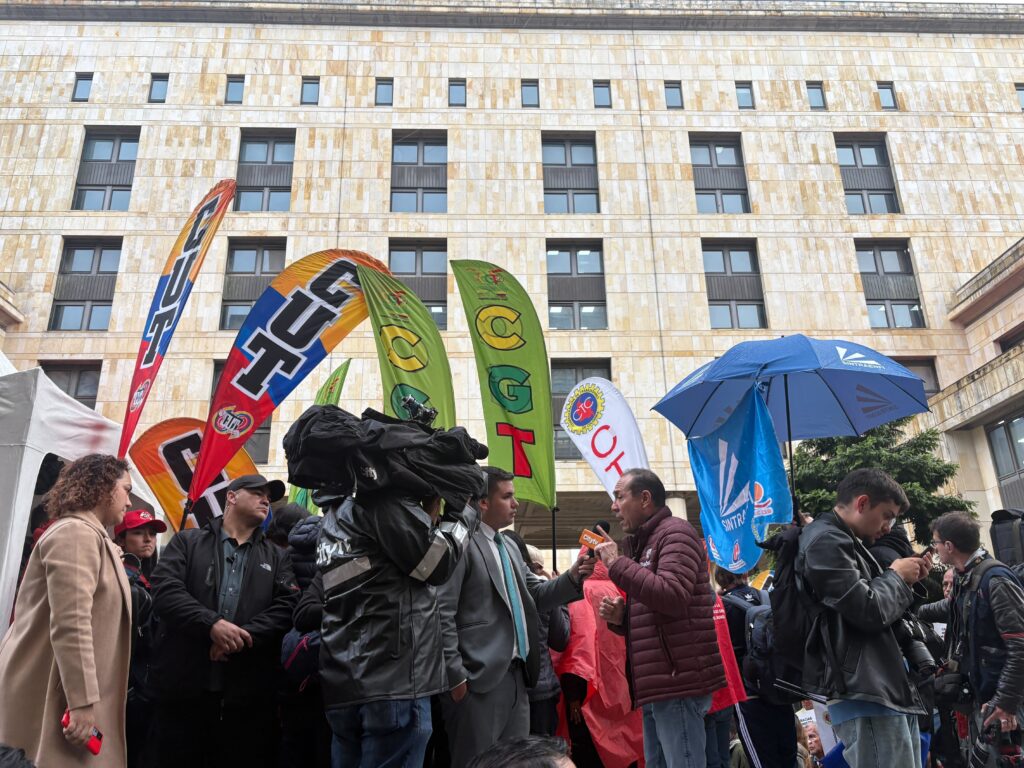
Minister of Labor Antonio Sanguino being interviewed at the January 28 march in support of the minimum wage hike. Image credit: Cristina Dorado Suaza

Bogotá, Colombia — In the past week, Colombians have taken to the streets on two occasions to defend the government’s minimum wage increase as it faces legal attacks by business sectors. 

On January 28 and February 3, Colombians marched in major cities in support of the landmark 23% wage increase established at the end of last year.

But the future of Decree 1469, which established what the government has called a “living wage”, remains uncertain.

“This is a major step forward by the government of Gustavo Petro. It is not just an increase; it is the dignification of workers’ wages in Colombia. That is why, as union members and as teachers, we support this mission, which directly impacts people’s everyday lives,” Oscar Patiño, an attendee of the January 28 march, told The Bogotá Post

For Patiño, a teacher and union leader, the protest represented a demand that the Council of State act as a guarantor of workers’ rights through its role in defining public policy.

He was part of a wave of sit-in protests in cities across the country called by labor unions, with the backing of the government, to defend the minimum wage hike. The 23% raise brings the monthly base salary to COP$1,750,905 (USD$477) and the transportation allowance to COP $249,095 (USD$68). 

In Bogotá, the demonstration was joined by Labor Minister Antonio Sanguino and lawmakers from the pro-government bloc, including Senator Wilson Arias.

“This increase no longer leaves workers’ wages below key economic indicators. It is for the improvement of their quality of life,” said another attendee, who did not want to be named.

As well as raising the base salary, December’s decree incorporated the concept of a “living wage” as an additional criterion for setting the increase. This concept is not new: it is enshrined in Article 53 of Colombia’s Political Constitution and in International Labour Organization (ILO) Convention No. 131 of 1970.

“In that ruling, the Constitutional Court reminds the government that when setting wages, remuneration must be minimum, I quote, ‘living, and adjustable,’” said Mery Laura Perdomo, a lawyer specializing in labor, social security, and constitutional law. 

The “living wage” responds to the real cost of living, unlike the minimum wage, which barely covers basic needs. “This helps generate conditions for a dignified life in a Social State governed by the rule of law … The major shift is from a minimum wage to a living wage,” said Labor Minister Antonio Sanguino.

The government passed the decree raising wages unilaterally after failing to reach consensus with government representatives, business associations and labor unions. It determined the base salary raise based on economic criteria such as inflation (CPI), GDP, the contribution of wages to national income, inflation targets, and productivity.

But the decree generated dissatisfaction among business associations and parts of the public, prompting them to pursue legal action. 

Perdomo notes that there are two types of challenges to the wage increase: tutela actions—arguing violations of fundamental rights, specifically due process or harm to certain companies—and a lawsuit seeking the annulment of the decree.

“I believe there are no sufficient legal grounds for a potential declaration of unconstitutionality,” Perdomo said, noting that the decree grounds its constitutionality in ILO conventions, the constitution, and technical and economic studies and criteria. “There are constitutional, legal, jurisprudential, and technical-economic grounds to say that this minimum wage decree could not be declared unconstitutional.”

So far, tutela actions have not succeeded, according to Perdomo. As for the annulment lawsuit—filed by the National Federation of Merchants (Fenalco)—it is currently under review and awaiting evaluation by the assigned judge, according to the Colombian economic magazine Portafolio. The claim argues that constitutional and legal criteria were disregarded.

Portafolio also reports that the risks of the legal debate lie in the possibility that, while a final decision is pending, the Council of State could not only annul the decree but also order a provisional suspension of the wage increase.

But Perdomo warned this would be an unpopular move ahead of next month’s legislative elections: “Politically, this is risky in an electoral context, since a large portion of the population—especially low-income earners—is satisfied with the minimum wage increase. Overturning it could sour the political climate on the eve of elections and have a real impact on voting intentions.”

Meanwhile, Petro’s ruling Pacto Historico coalition, which has formed into a party ahead of the elections, has made a point of championing the minimum wage increase. 

On Tuesday, it called for rallies across the country to support the living wage, justice, and labor dignity. 

“The living wage is not a favor; it is a right. A dignified life begins with fair work, and this mobilization reminds us that labor dignity is the foundation of social justice,” declared Health Minister Guillermo Alfonso Jaramillo from Bogotá’s Plaza de Bolívar.

The post Colombians take to streets as landmark minimum wage hike faces legal challenges  appeared first on The Bogotá Post.
  •  

Día Sin Carro 2026: What is it and what to do?

Cars are off the road for día sin carro 2026 in Bogotá. We explain why the city does this and how to get about today.

Expect to see few cars and motos on the roads of la nevera today. Once or twice a year, Bogotá bans personal car and motorbike use for the vast majority of the city for most of the day – known as Día sin Carro y Moto. The first is scheduled for the first Thursday in February (the fifth) and there’s sometimes a second in autumn, around September.

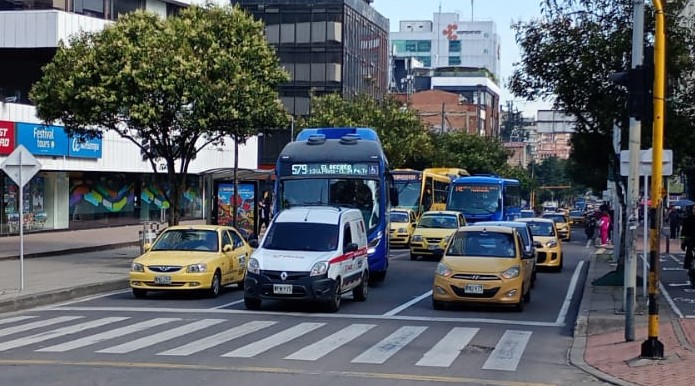
Traffic parked in Carrera 13 in Bogotá. it is día sin carro 2026 in Bogotá, so there are no private cars, just taxis, a van and some buses.
Día sin Carro 2026 in Bogotá. Photo courtesy of Oliver Pritchard

It’s a lot more extreme than the normal Sunday and holiday ciclovía schemes, as almost all regular cars and motorbikes are banned from all roads. Obvious exceptions exist for taxis, buses, emergency vehicles, and certain key workers such as doctors.

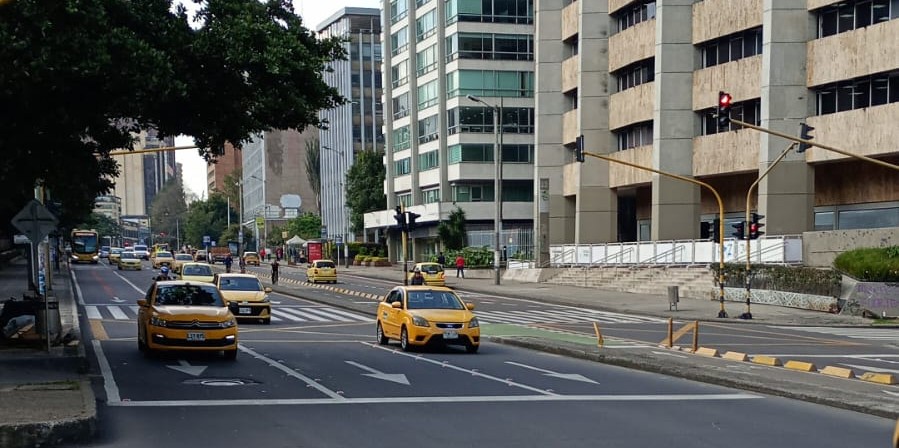
However, expect to see streets much emptier than normal and predominately yellow with taxis and buses. Remember that there are also the white servicio especial taxis and a surprising number of exempted people travelling around, especially in central and downtown Bogotá.

The policy has been quite controversial, to say the least. Every year it leads to much wailing and gnashing of teeth from a whole host of sectors. Of course, people who usually use their cars to commute are furious, but it’s worth remembering that they are by no means the majority of the city’s commuters

Post-pandemic, that’s changed a lot. With the rise of remote working and home offices, it’s become much more viable for big swathes of the city to just tell people not to come in. Many schools are shut, universities are giving virtual classes and employees citywide are logging in.

A lot of people won’t even attempt to travel today, despite the fact that most Bogotanos don’t even use cars as primary transport. This reflects the growing acceptance of remote and hybrid working in Colombia, and points to a possible future with fewer commuters.

Portal Norte in Bogotá clear of traffic in 2023. Photo courtesy of Brendan Corrigan

After all, Bogotá is a much nicer city if you don’t have to move around too much in it. Cities should be designed for people, not cars and motorbikes. Much of the city is still very much accessible by foot and bike, even if there are significant holes in the bus network.

So what’s the point of all of this? Well, the reason is above – Bogotá is so much more liveable without traffic jams, fumes, noise, delays and chaos. Bogotá might not be as bad as some Asian cities in terms of air pollution, but it’s certainly not a shining ecological star.

Día sin carro reduces this significantly, according to the city’s environmental department. Commute times are laughably inefficient, which leads to a lot of wasted time, lowering productivity and quality of life. And just have a listen to the quieter streets with fewer badly-tuned motorbikes.

So, what can you do on Día sin Carro 2026 in Bogotá?

If you’re out and about during Día sin Carro 2026 in Bogotá, you have several transport options.

Buses

Most people will be hopping on some type of bus, as indeed most commuters do every day. Whether it’s TransMilenio rapid bus transit, SITP buses in their rainbow of assorted colours or regular colectivos, they’re the transport lifeblood of la nevera

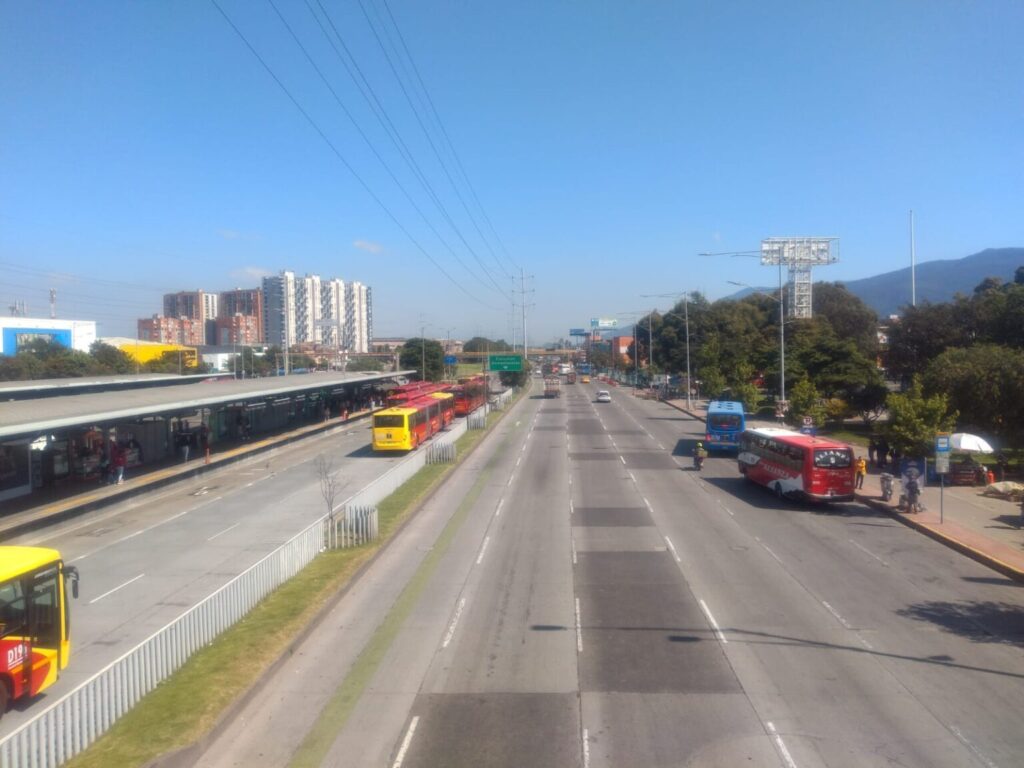
There might be a bit more crowding than usual, but off-peak it’s unlikely to be too bad. Also, there are more buses in circulation today, and they don’t have anywhere near as much traffic to navigate. You might think that in the case of the TransMi that’s not an issue, but remember that cars often get stuck crossing TransMi lanes.

Bikes 

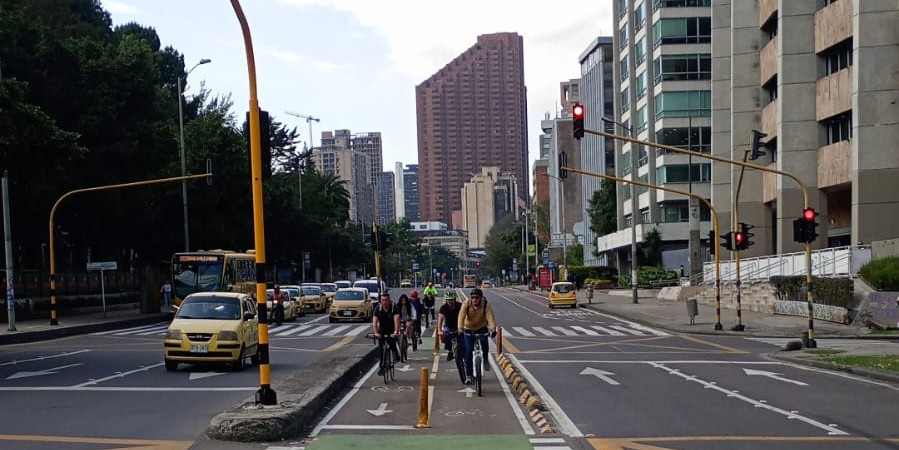
Bicycles on the septima in Bogotá. It is día sin carro 2026, so there is limited traffic and more bicycles
Almost a peloton on Séptima this morning

Remember, you can always get on your bike in Bogotá. We’ve criticised the self-aggrandising capital mundial de bici posturing from the alcaldía before, but it’s still an excellent city (and country) to ride in. The bike lanes will be busier than normal, but there are plenty of them and they’re far less stressful than normal traffic.

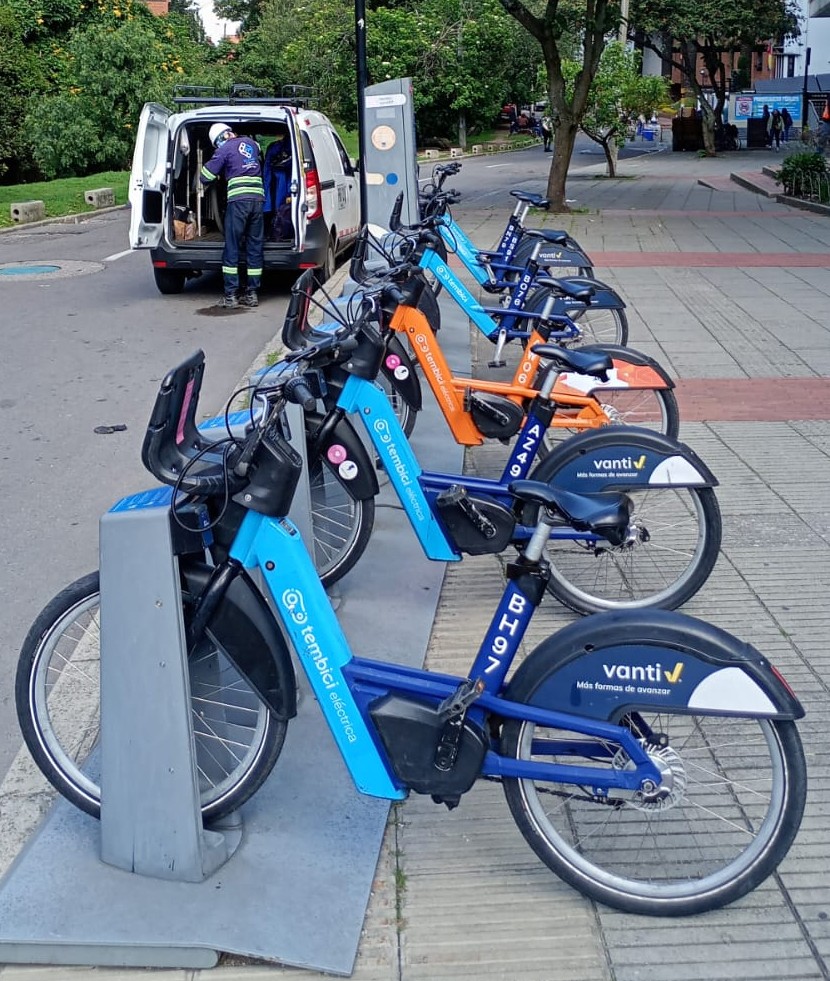
No bike? No problem! Bogotá has a bikeshare scheme with a Brazilian company called Tembici. The system has had a few wobbles, but comes into its own on days like this. You will need to download the app to be able to use the scheme and it is relatively pricey for short term work.

A tembici stand in Bogotá
This is what tembici stands look like.

Taxis

You may have trouble moving about with some rideshare apps, but the regular yellow taxis are most definitely buzzing about the city today. Apps such as easytaxi, tappsi, taxis libres et al should work as normal, just with high demand. Expect to wait a little while longer for a connection.

Hopefully, they’ll be on their best behaviour today and not taking advantage of the situation. Despite copping a lot of flak, rolo taxis aren’t nearly as bad as they’re often made out to be and have a big incentive to play nicely right now.

Taxis on the Septima in Bogotá, Colombia
Taxis dominate on a day like diá sin carro 2026

Walk! 

It’s a nice warm Bogotá day with fewer fumes in the air, which have been few and far between in recent weeks. Perfect conditions for a stroll in the sunshine. Most of the city is very flat and walkable, and you’re never far from a decent café to keep yourself safe from sunburn and rehydrate. Our top tip for a day like today is a limonada de coco!

The post Día Sin Carro 2026: What is it and what to do? appeared first on The Bogotá Post.
  •  
❌