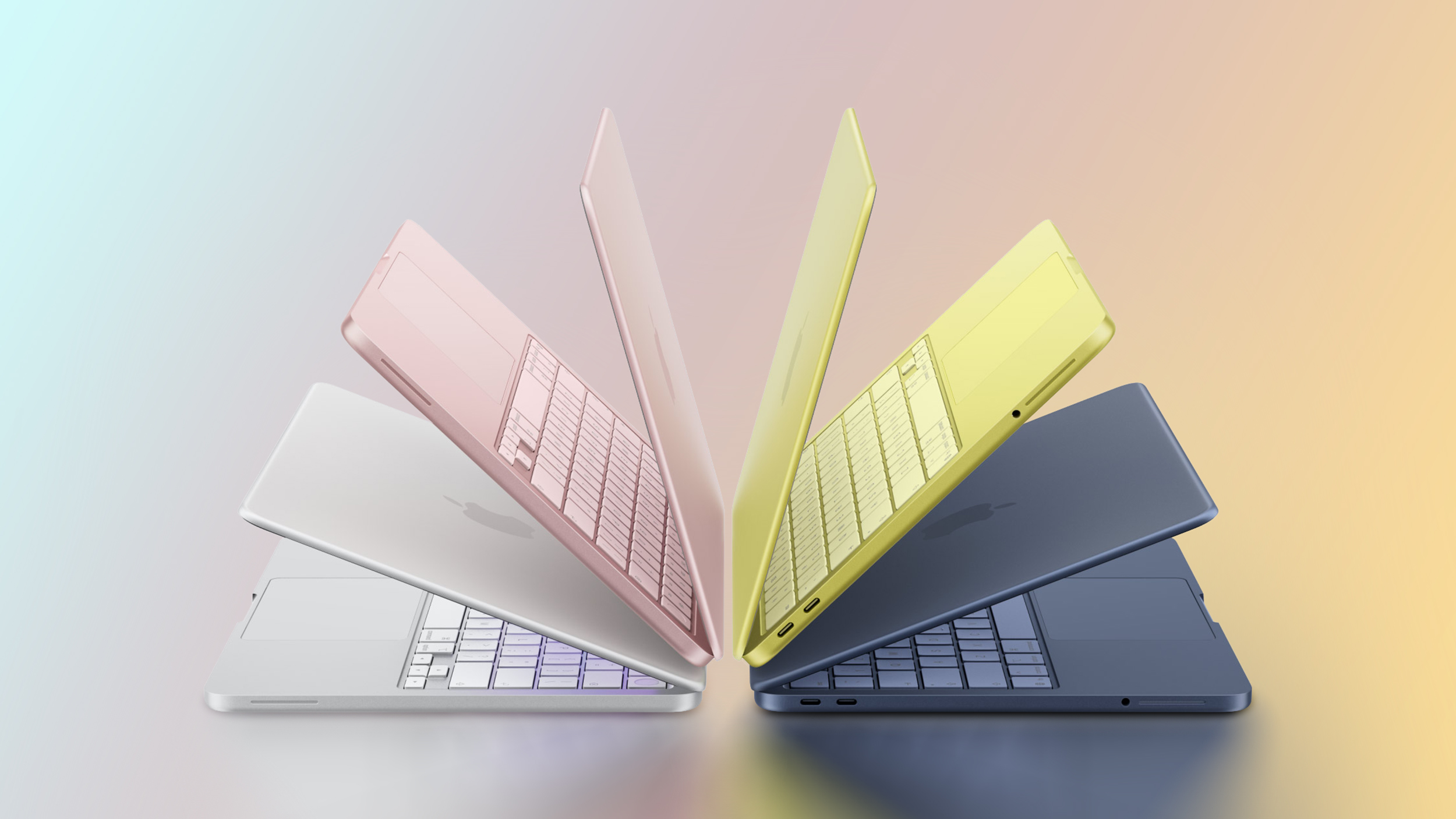
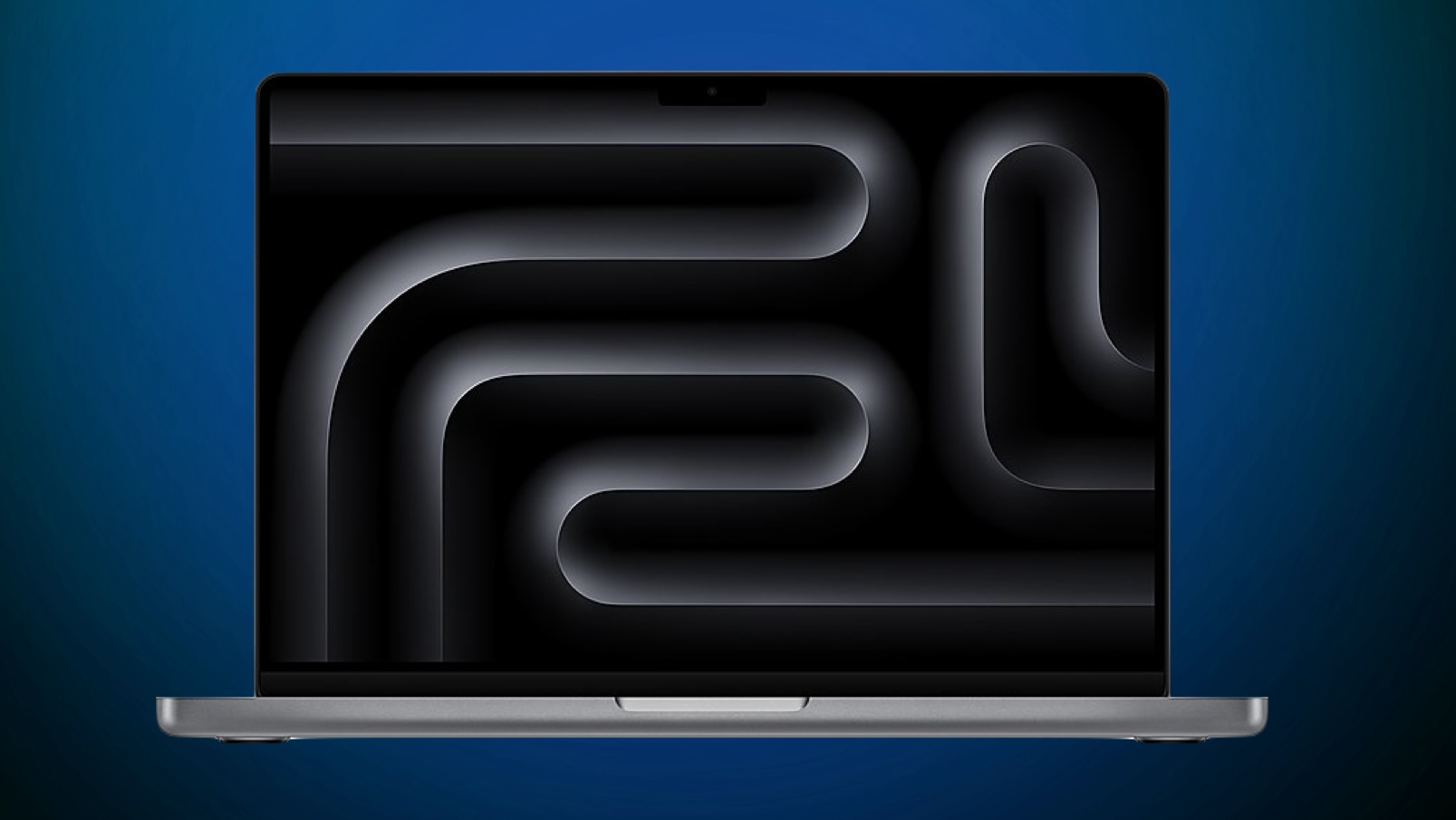
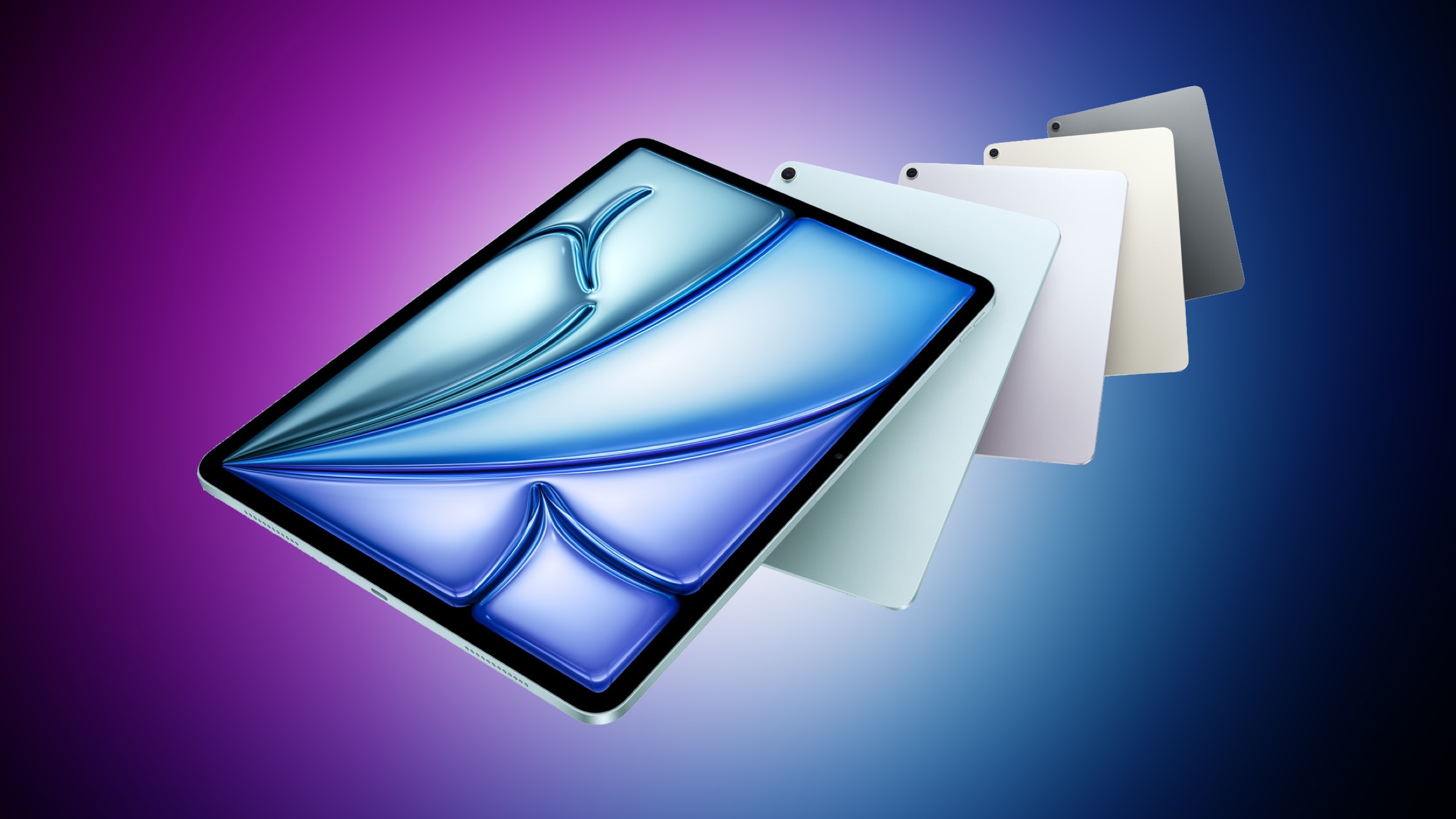
None of the new MacBook Neo, MacBook Air, or MacBook Pro models unveiled this week come with a charger in the UK and EU countries, such as Germany, France, Italy, and Spain. This change began with the base 14-inch MacBook Pro last year.
If you need a power adapter, you must purchase one separately during checkout or later.
In all other countries, Apple includes a charger in the box with these Macs, at no additional cost. In the U.S., for example, the MacBook Neo ships with Apple's 20W USB-C Power Adapter (sold separately for $19), while the 16-inch MacBook Pro comes with Apple's 140W USB-C Power Adapter (sold separately for $99).
Apple includes a USB-C or MagSafe 3 charging cable with all of the new MacBooks sold worldwide.
The MacBook Neo is now Apple's entry-level MacBook, undercutting the MacBook Air by $500. To deliver such a dramatically lower price, the MacBook Neo has a significant number of tradeoffs. Here's everything that's different between the two devices.
Apple's introduction of the MacBook Neo expands the company's laptop lineup with a far more affordable entry point, sitting well below the MacBook Air in both price and capability. While the two machines share a similar size and lightweight design, they are aimed at very different types of users. The MacBook Neo focuses on delivering the essentials of the Mac experience at the lowest possible cost, while the MacBook Air offers significantly more performance, features, and flexibility.
Design
The MacBook Neo and the 13-inch MacBook Air have similar dimensions. The MacBook Air remains thinner, but the MacBook Neo has a slightly smaller overall footprint owing to its smaller display. Both machines weigh 2.7 pounds (1.23 kg).
MacBook Neo
MacBook Air
Height
0.50 inch (1.27 cm)
0.44 inch (1.13 cm)
Width
11.71 inches (29.75 cm)
11.97 inches (30.41 cm)
Depth
8.12 inches (20.64 cm)
8.46 inches (21.5 cm)
There are still some notable design differences. The MacBook Neo does not have a backlit keyboard or a haptic trackpad, and only has Touch ID when configured with 512GB of storage for an extra $100. They are also available in different selections of color options, with the MacBook Neo's color extending to the Magic Keyboard in a lighter shade.
MacBook Neo
MacBook Air
Available in Silver, Blush, Indigo, and Citrus
Available in Silver, Sky Blue, Midnight, and Starlight
Touch ID on 512GB models only
Touch ID
Magic Keyboard or Magic Keyboard with Touch ID
Backlit Magic Keyboard with Touch ID
Color-matched Magic Keyboard
Black Magic Keyboard
Mechanical Multi-Touch trackpad
Haptic Force Touch trackpad with pressure-sensing capabilities
Display "notch"
Display
The MacBook Air's display is slightly larger and supports True Tone and P3 wide color. Both are Liquid Retina displays with 500 nits of brightness.
MacBook Neo
MacBook Air
13-inch Liquid Retina display
13.6-inch Liquid Retina display
(15-inch model also available)
2408 by 1506 pixel resolution
2560 by 1664 pixel resolution
sRGB
Wide color (P3)
True Tone technology
Thicker display borders
Slimmer display borders
Performance
The MacBook Neo is Apple's first Mac to contain an iPhone chip. The A18 Pro is still a capable chip, but the M5 is around 20% faster for single-core tasks and 80% faster for multi-core tasks. The M5 chip also has more than double the GPU throughput of the A18 Pro and features Neural Accelerators.
MacBook Neo
MacBook Air
Apple A18 Pro chip
Apple M5 chip
Made with TSMC's second-generation 3nm process (N3E)
Made with TSMC's third-generation 3nm process (N3P)
6-core CPU
10-core CPU
5-core GPU
8-core GPU
Neural Accelerators
8GB unified memory
16GB, 24GB, or 32GB unified memory
60GB/s memory bandwidth
153GB/s memory bandwidth
Battery and Charging
The MacBook Air has up to two hours of extra battery life over the MacBook Neo, along with support for charging via MagSafe 3 and fast charging.
MacBook Neo
MacBook Air
Integrated 36.5-watt-hour lithium-ion battery
Integrated 53.8-watt-hour lithium-polymer battery
16-hour battery life
18-hour battery life
MagSafe 3 charging
Fast-charge capable with 70W USB-C Power Adapter or higher
Comes with 20W USB-C Power Adapter
Comes with 40W Dynamic Power Adapter with 60W Max
Cameras, Speakers, and Microphones
The MacBook Air has a superior array of camera and audio hardware, resulting in a slightly better experience with video calls, listening to music, and recording audio.
Spatial Audio with dynamic head tracking when using supported AirPods
Dual-mic array with directional beamforming
Three-mic array with directional beamforming
Connectivity
The MacBook Neo's connectivity is more limited than that of the MacBook Air. While both have two USB-C ports, the MacBook Air's are considerably more capable in terms of data transfer and external display support.
MacBook Neo
MacBook Air
Wi-Fi 6E connectivity
Wi-Fi 7 connectivity
One USB 3 (10 Gb/s) port and one USB 2 port (480 Mb/s)
Two Thunderbolt 4 ports (40 Gb/s)
Support for one 4K external display at 60Hz
Support for two 6K external displays up 60Hz or 4K at 144Hz
3.5mm headphone jack
3.5mm headphone jack with support for high-impedance headphones
Magnetic MagSafe 3 charging port
Other Differences
The most significant difference between the MacBook Neo and the MacBook Air is price: The MacBook Air costs $500 more. It is also much more configurable, with higher amounts of memory and storage available.
MacBook Neo
MacBook Air
Ambient light sensor
256GB or 512GB storage
512GB, 1TB, 2TB, or 4TB storage
Starts at $599
Starts at $1,099
Which to Choose?
Choosing between the MacBook Neo and the MacBook Air primarily comes down to how demanding your needs are and how much you want to spend. The MacBook Neo is clearly positioned as Apple's most accessible notebook, delivering the core Mac experience at the lowest possible price. For users who primarily need a reliable computer for basic everyday tasks, the Neo provides enough performance. Its lower cost also makes it an appealing option for households purchasing multiple computers, such as for kids or family use.
For first-time Mac owners, the MacBook Neo is also likely to be the most sensible starting point. It offers the same software experience as Apple's more expensive laptops, allowing new users to explore the platform without a large financial commitment. In many cases, buyers moving from inexpensive Windows laptops or Chromebooks will find the Neo significantly faster and better built than devices in the same price range.
The MacBook Air, by contrast, is aimed at users who expect higher performance, greater longevity, and a more feature-rich, premium experience. Its more powerful M5 chip, memory options, larger display, and significantly more capable connectivity make it far better suited to multitasking, professional workloads, and creative applications. Users who regularly work with large files, run demanding software, connect multiple external displays, or want a machine that will remain comfortable to use for many years will benefit from choosing the Air.
In practical terms, the MacBook Neo is best viewed as a budget entry point into the Mac lineup, while the MacBook Air remains Apple's mainstream ultraportable for most people. Buyers who simply want a dependable Mac for everyday computing can save money with the Neo, but those who want stronger performance, better hardware features, and a laptop that will scale to more demanding tasks over time should consider spending the extra money on the MacBook Air.
In the north of Bogotá, a new restaurant offers an experience that exists nowhere else in Latin America.
Sombras, or ‘shadows’, is a high-end eatery run entirely by blind people, offering a unique experience that aims to raise awareness about sight loss and the challenges faced by those living with this condition.
For 90 minutes, diners are provided a sensory experience through a six-course menu while sitting in complete darkness
This project, part of the Seratta Group, costs approximately 325,000 COP (around US$88) and seats around 20 people at a time.
According to the DANE (National Administrative Department of Statistics), in 2025, the labor gap for people with disabilities was critical: roughly 80% of the population was unemployed. Of the 20% who are employed, many relied on informal work as a way of living.
Accordingly, Sombra’s primary goal is to increase job opportunities for people with visual impairment, even offering a ‘BLINDKEDIN’ on their website to promote inclusion in workspaces and bridge the gap between companies and workers.
Into the unknown
Entering the restaurant, guests are asked to place their belongings in lockers as one of the hosts voice announces, “The main ingredient is trust.” Cellphones, smartwatches, or any other distracting items are forbidden from being used in Sombras. Bags are stored as well, so as not to create obstacles as the staff move around the room unassisted.
Right ahead is the path to darkness; the atmosphere is filled with fear, expectation, curiosity, and excitement. Not knowing what lies inside, guests must simply walk into the unknown.
Taking small steps, hands over the shoulders of a man simply identified as ‘Agent X,’ diners are shown to their seat. Finally, they are left alone at a table that can only be perceived through touch.
A mix of music, played by a blind DJ, is the perfect accompaniment to the dishes and cocktails placed down one by one.
Each course is served while a voice guides the guests through the dark: “Take this, move your hand to the left.”
Scenarios described over speakers guide guests through different worlds, prompting them to reflect on how they perceive the dark. Some courses are designed to evoke childhood memories; as diners eat, the flavors, aromas, and narrations conjure up images of their grandmother’s warm soup or the salty smell of seaside holidays.
Without the visual cue of the food, flavors meld in novel ways, and everything tastes more intense.
Between courses, a sense of emptiness can settle in. While the mind tries to imagine colors, dimensions, and even the appearance of fellow diners, the silence and darkness produce a feeling of loneliness and a sense of nothingness. Time passes, but without a watch, it is impossible to measure.
One cycles through intense feelings and emotions as the brain fights to understand what is happening around it. Placed in the shoes of those who live in darkness every day, guests soon realize they can effortlessly perform the ritual of eating without opening their eyes.
Beyond sight
Following the experience, the hosts revealed themselves.
John Jairo García and Jonathan Benavides (who is responsible for personalizing the ‘Agent X’ character) are in charge of guiding guests through the journey; both men are blind and were trained to lead visitors through an immersive experience of self-reflection, self-knowledge, and incredible food.
“I am here because God gave me the opportunity. Before this, I used to work on the streets… I sang on buses, and I was also an informal street vendor,” García told The Bogotá Post after the experience. Benavides added that before joining the team, he worked as an informal door-to-door salesman.
“We try not only to serve food but to move hearts and emotions. The social perspective in our country toward people with disabilities. In this case, visual impairment is very biased,” confirmed Jonathan during the interview.
At the end, the staff arrives with a message, they invite you to be thankful for seeing colors, for seeing the world that surrounds you. As some tears begin to fall, the last reflection is a call to empathy: “Change your way of thinking and your whole life will change”.
In fact, the blind dining experience at Sombras forces more than self-reflection; it triggers a biological change in the visitor. According to research hosted by the National Library of Medicine, the adult brain has a “rapid plasticity” that triggers almost immediately when vision is blocked. In the 90 minutes spent at Sombras, diners begin to perceive the world through their other senses, assigning “visual power” to taste and touch.
Through this experience, guests can truly empathize – if only for a brief moment – with what it means to lose vision.
“We try to make the people who visit our restaurant understand that we, even with a disability, can also be useful to society,” concluded Jonathan.
Latin America (LATAM) is currently at a pivotal point for Venture Capital (VC). The region had a hallmark year in investment in 2021, but as they say—what goes up, must come down.
The region isn’t alone in its investment slowdown, however. Overall, global venture funding is down significantly, according to Crunchbase—mostly as a result of numbers being compared to record highs. And naturally, when records are set, a slowdown is not only predictable but is sometimes even projected.
This past spring, the Latin American Business Associations (LABA) VC conference made this very prediction for LATAM’s regional market. Leaders forecasted this partly because LATAM still lacks a lot of the entrepreneurial infrastructure that startups need, such as more seed investors and better infrastructure.
But not all hope is lost.
In an interview with Bloomberg Linea, Carlos Ramos De la Vega, the VC director for LAVCA, an association for private capital in Latin America, said there is still a positive outlook for LATAM. According to the association’s data, 2022 is already the region’s second-strongest year for LATAM’s VC—meaning that the movements made by founders and investors on the ground floor will be critical for where the business sector lands at the end of 2022.
For Colombia, this slowdown could actually be an excellent opportunity to achieve certain benchmarks that need to improve in order to be more competitive in the LATAM VC landscape.
Fostering the growth of its technological infrastructure, building strategies that help pique the interest of both local and international investors, and developing a supportive network for entrepreneurs on the ground floor will help Colombia evolve into a more mature player in the LATAM business ecosystem.
Stage 1: Fostering Colombia’s Technological Boom
As of 2022, Colombia is one of the top economic contenders in LATAM alongside Mexico and Brazil, and the country’s economic year in 2021 blew away forecasts—growing at the fastest pace seen in more than a century. This has a lot to do with the country quickly getting on board with digital implementation, allowing modern industry to hit its stride. With much of Colombia’s economic rebound between 2021-2022 due to the technology industry, the country is experiencing a technological renaissance.
Out of the roughly 50 million Colombians, nearly 34 million started using the Internet following the onset of the pandemic, of which about 22 million then became regular online shopping users. According to the Colombian Chamber of Electronic Commerce (CCCE), in 2021, eCommerce remained at levels of more than double what was registered in 2019—even when physical stores had reopened their doors.
“The e-commerce sector went from being considered as a complementary sales channel to becoming the engine for economic reactivation,” said María Fernanda Quiñones, executive president of the Colombian Chamber of Electronic Commerce (CCCE).
Executive President of the Colombian Chamber of Electronic Commerce, María Fernanda Quiñones.
This interest in the digital interface is good for innovation and local startups looking to lead the technological transformation. Yet, only 2% of Colombian companies carry out cross-border operations through electronic channels—making for some seriously untapped potential in the country’s online market. The CCCE is one governmental entity currently taking steps to implement infrastructure that will help get the ball rolling for companies wishing to digitize operations.
“We recently launched eXporta.online, a free digital platform which is sponsored by Google. The platform seeks to prepare people, medium to small enterprises, and entrepreneurs for cross-border electronic commerce,” continued Quiñones.
The platform analyzes close to 1,517 data points collected from different sources such as the World Bank, UNCTAD, and International Trade Center, among others. The data then creates an automated process that provides recommendations for the three best destination market options for companies who are looking to start utilizing eCommerce. The engine chooses these destinations based on the ideal confluence of demand, market stability, eCommerce, language, and access to that company’s product.
“Through cross-border e-commerce, businesses have the opportunity to diversify their market and not depend solely on the local economy,” said Quiñones. “In addition, strategic alliances can be created abroad that allow businesses to gain experience and become more competitive, expand opportunities, and increase their sales capacity.”
Digitizing commerce will be vital for ensuring that Colombia can remain competitive within the larger regional and international business markets. Now technologically primed and ready, the country can provide new opportunities to startups hailing from the country.
Stage 2: Transitioning Colombian VC From Seed to Series A
Within the last decade, VCs from all over have been looking to Colombia for investments. Thanks to startups showing significant growth in both size and number, the VC sphere in the country has seen a noteworthy upward trend.
This is backed by 2021’s numbers, as Colombia increased its overall value of funding to $1.24 billion—making for a 144% increase compared to 2020. Rappi is one example from the country that has helped to prove Colombian startups have the capacity to increase their valuations tenfold and build multi-billion USD companies.
But this unicorn was the first of its kind, and there are many other startups in the ecosystem wondering how they can also see this kind of success.
“Startups have to show their path to profitability,” says Diego Noriega, Managing Partner at Newtopia, a venture capital firm that has made 60% of its most recent investments in Colombia. “It doesn’t always have to be immediate, but investors are preferring startups that have done their homework in making their company robust and know how to scale themselves.”
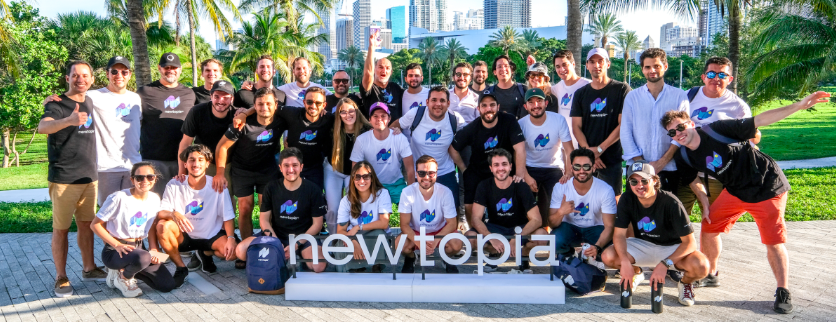
A Cohort of Newtopia Startups Image Credit: theorg.com
According to the most recent Global Entrepreneurship Monitor (GEM), carried out by the World Economic Forum (WEF), Colombia actually presents the best conditions for entrepreneurship out of all the countries in LATAM. Investors’ confidence in the country has also grown at a global level, with Colombia now ranking at 25 as an investment destination worldwide.
Global investors often inspire the growth of capital into emerging markets. With international investor notoriety, a ripple effect in funding occurs, leading to investment from multiple local sources and leveling up the market. This gives growing startups access to the knowledge and resources it takes to scale globally. It also means that founders and their teams must step up to the new level of play.
“At the beginning of a startup’s lifecycle, trust (from investors) is built around the problem that the company is solving, as well as their internal team. But, for Series A the game changes dramatically,” says Noriega. “Startups are not going to reach Series A unless they can show metrics that they can do so. There is no magic trick to fast-track this. Companies must achieve revenues and growth rates that show traction to get the interest from VCs who invest at this level.”
The next critical step for Colombia’s emerging businesses is to show investors that they have what it takes to climb the investment ladder from the seed stages to Series A—helping to propel the country to new entrepreneurial heights.
Stage 3: Creating a Supportive Startup Ecosystem
With digital transformation well on its way, and increasing interest from local and foreign investors, Colombia’s last step in maintaining competitiveness in LATAM commerce will be to build a supportive network for startups and enterprises alike. This is especially important in the current funding drought, and even more critical for developing startups that are just coming into their own.
According to Embroker, about 70% of startups fail during years two to five. This phase of hardship is termed “The valley of death”, and typically occurs after the company launches a product but has not yet seen any revenue. For Colombian companies navigating these growing pains, experiential insight can go a long way.
“The CCCE understands the importance of the country’s medium to small enterprises. This is why we seek to create a large community of companies, brands, and people with immense relationship potential that everyone can benefit from,” said Quiñones. “Training is still needed to develop new skills for entrepreneurs in their digital appropriation process. Understanding the importance of business models in digital commerce will make it easier to complete and foster sustainable digital transformation over time.”
The CCCE offers asynchronous courses that guide business owners and entrepreneurs in the construction of their internationalization plans. By improving the business sector’s digital literacy, and working on the articulation of state policies, they hope to promote the adoption of technology to both mature and emerging companies.
Startups also need to understand how the global marketplace works in Colombia, and this is where more seasoned players can come in to help support young startups. The insight of those who have come before them will help emerging companies understand the complexities of the business market within Colombia.
Newtopia, a hands-on VC firm based in Argentina, is helping to connect startups from either side of the growth spectrum in the Colombian community. One of the most active venture capital firms in LATAM, Newtopia, recently arrived in Colombia to join the country’s entrepreneurs as they find the right product-market fit. Newtopia offers a hands-on mentorship model that guides startups through the more vulnerable initial stages—helping them to grow sustainably.
Five of Newtopia VC’s six co-founders, from left to right: Diego Noriega, Sacha Spitz, Jorge Aguado, Juan Pablo Lafosse, and Mariano Mayer. Image Credit: Newtopia VC
“Early-stage growth is vital. Without this, it’s impossible to achieve later stages. Latin America is a higher-risk market because sometimes there is no traction and in some cases, no product or revenue—a risk not many VCs are willing to take. At Newtopia we aim to help build startup-to-startup relationships to create healthier local, and thereby regional, ecosystems.”
Each semester, the VC accepts 10-15 startups for a 10-week program, filled with content and advice to help teams take their startups to the next level. The aim of the program is to share knowledge, channel smart money, and enhance experiences for early-stage startups. This week, the VC hosted a demo day in the capital city of Bogota, bringing startups together to exchange knowledge on navigating Colombia’s startup ecosystem.
This limited partner (LP) day was an opportunity for Colombian startups to pitch to Newtopia´s team, plus LPs, and investors hailing from top VCs in the US. Up-and-coming Colombian startups such as Beu, Ubanku, Lizit, Creditop, Orkid, and Alfred were all a part of the session.
A Future for Colombia’s Entrepreneurial Community
For Colombia to continue its consistent climb as one of the region’s most viable markets for startups, young companies must show VCs that they can achieve bigger outcomes—which will allow the ecosystem as a whole to graduate to the next level.
“We must work together, as a society, to articulate the factors that will lead us to a digital as well as an inclusive economy,” said Quiñones. “This will help to promote the country as a business leader in the region.”
The future of Colombia’s startup community is bright, but ensuring that each one of these stages is achieved along the way will help the country commence a new wave of impacting startups for both the LATAM and global markets.
Disclaimer: This article mentions a client of an Espacio portfolio company.
Gerüchte im Netz besagen, Israels Ministerpräsident Netanjahu halte sich in Berlin auf. Doch das stimmt nicht, wie eine #Faktenfuchs-Recherche zeigt. Anlass für die falschen Behauptungen ist ein Flug seiner Regierungsmaschine.[mehr]
Apple today introduced a new iPad Air, with key upgrades including Apple's M4 chip for faster performance, an increased 12GB of RAM, Apple's N1 wireless networking chip with Wi-Fi 7 support, and Apple's custom C1X modem in cellular models.
The new iPad Air has the same overall design as the previous-generation model, which is equipped with the M3 chip, 8GB of RAM, and Wi-Fi 6E support.
With the M4 chip, the iPad Air now has up to 30% faster multi-core CPU performance compared to the model with the M3 chip, according to Apple. In the iPad Air, the M4 chip has an 8-core CPU, a 9-core GPU, and a 16-core Neural Engine. Memory bandwidth increased from 100GB/s to 120GB/s, according to Apple's tech specs.
Apple's custom N1 chip has come to the iPad Air, enabling Wi-Fi 7, Bluetooth 6, and Thread. Apple says the N1 chip delivers improved wireless performance when the device is connected to 5GHz Wi-Fi networks, and it improves the overall performance and reliability of features like AirDrop and Personal Hotspot. Apple introduced the N1 chip last year, across the iPhone 17, iPhone 17 Pro, iPhone 17 Pro Max, iPhone Air, and iPad Pro.
Cellular models are now equipped with Apple's custom C1X modem for 5G and LTE. Apple says this chip unlocks up to 50% faster cellular performance, while using up to 30% less power compared to the previous iPad Air with a Qualcomm modem.
You can pre-order the new iPad Air on Apple.com and in the Apple Store app starting Wednesday, March 4, with availability set to begin Wednesday, March 11. In the U.S., pricing continues to start at $599 for the 11-inch model, and at $799 for the 13-inch model. Color options remain Blue, Purple, Starlight, and Space Gray.
Storage capacity options remain 128GB, 256GB, 512GB, and 1TB.
iPad Air continues to feature an LCD screen with up to 500 nits of brightness, a 12-megapixel front camera with Center Stage support, a 12-megapixel rear camera, Apple Intelligence support, a Touch ID power button, a USB-C port stereo speakers, two microphones, Magic Keyboard and Apple Pencil Pro support, and more.
Apple will update the MacBook Air with an OLED display for its 2028 model, according to Bloomberg's Mark Gurman.
Writing in his latest "Power On" newsletter, Gurman says that he expects the MacBook Air's transition from LCD to OLED to occur with the product's 2028 update, as part of a larger migration to OLED across the company's flagship iPad and MacBook models that includes the iPad mini, MacBook Pro, iPad Air, and MacBook Air – and likely in that order.
Apple already uses OLED displays in the iPad Pro. There are apparently no plans to add OLED to the low-cost iPad. The MacBook Pro will be updated with an OLED display when it is next redesigned, perhaps as soon as later this year, and it will include touch screen functionality, according to Gurman and Apple analyst Ming-Chi Kuo.
Apple is expected to update the MacBook Air with M5 chips imminently, but that model will continue to feature an LCD display. If Apple follows an annual upgrade cycle, the first OLED MacBook Air will likely feature M7 chips. Gurman previously reported that Apple has already started early work on an OLED MacBook Air.
When the MacBook Air moves from LCD to OLED display technology, it will gain several advantages – brighter screens, deeper blacks with higher contrast, improved power efficiency that can extend battery life, and other enhancements.
Apple will add a vapor chamber cooling system to the iPad Pro as soon as next year, according to Bloomberg's Mark Gurman.
Writing in his latest Power On newsletter, Gurman says an iPhone 17 Pro-style vapor chamber is something Apple has been working to bring to the ultra-thin iPad Pro, and it could debut in the next model, which is expected to arrive in spring of 2027.
Apple overhauled the thermal design of the iPhone 17 Pro models to include a vapor chamber cooling system, where a small amount of deionized water moves heat away from the A19 Pro chip and distributes it throughout the iPhone's aluminum unibody frame. Apple says the design allows for 40 percent better sustained performance for demanding tasks.
The next generation iPad Pro model will likely feature Apple's M6 chip made with TSMC's 2-nanometer process. The liquid cooling system would help mitigate throttling, especially as the iPad Pro becomes more capable at handling intense workflows.
Apple is working on a new MacBook Pro that could launch next week ahead of the "Special Experience" planned for March 4, so we thought we'd highlight all of the rumors about the device so far.
Design
There are no rumors of design changes, and we are expecting the upcoming M5 MacBook Pro models to look just like the M4 versions. Apple will continue to offer 14-inch and 16-inch size options, both of which should come in M5 Pro and M5 Max varieties.
M5 Max and M5 Pro Chip
We already got the base model 14-inch MacBook Pro with the new M5 chip in October, so what we're expecting are upgraded 14-inch and 16-inch models with M5 Pro and M5 Max chips.
The M5 family is built on a more advanced N3P 3-nanometer process from TSMC, and it offers speed and efficiency improvements. The M5 chip is up to 20 percent faster in multi-core CPU performance than the M4 chip, and we could see similar improvements for the M5 Pro and M5 Max chip options. GPU performance is up to 30 percent faster.
With the M5, Apple added a Neural Accelerator to each GPU core, improving the speeds of GPU-based AI workloads. The chip also supports third-generation ray-tracing, second-generation dynamic caching, and enhanced shader cores.
The 16-core Neural Engine is more energy efficient than before, and unified memory bandwidth has improved significantly. These are all features that we're likely to see with the M5 Pro and M5 Max chips as well.
Other Possible Updates
We haven't heard rumors about any other features coming to the MacBook Pro line. Apple did update SSD speeds for the M5 MacBook Pro models, so we could see the same upgrade to the M5 Pro and M5 Max machines.
Why You Shouldn't Buy an M5 Pro/Max MacBook Pro
If you're not in serious need of a new MacBook Pro right away, early 2026 is a bad time to upgrade. The next-generation MacBook Pro after the early 2026 models is expected to feature an OLED display and touchscreen capabilities, both of which will mark a major upgrade in display quality. It's expected to include a Dynamic Island instead of a notch, and macOS will be optimized for touch interactions.
Most people shelling out extra money for a MacBook Pro with a higher-end M5 Pro or M5 Max chip need the extra performance or display quality, so it is worth waiting for the huge update that's coming.
The transition to OLED will also likely bring a design update along with M6 Pro and M6 Max chip technology, which is another reason to wait.
Of course, the new features could be limited to higher-end MacBook Pro models or could be significantly more expensive. If you're on a budget, need a Mac now, or don't care about OLED, the M5 Pro and Max models could still be worth considering.
Launch Date
The new MacBook Pro models could be announced via press release next week ahead of Apple's Special Experience.
In October 2025, Apple notified the European Commission that it would be acquiring invrs.io LLC's sole employee, and certain assets from the company. Following a four-month waiting period, the European Commission published this information this week.
That sole employee appears to be Martin Schubert, according to his LinkedIn profile. Schubert founded invrs.io in 2023 to advance AI-guided design, initially focusing on optical and photonics technologies for AR/VR, data centers, and more.
"Invrs develops open-source frameworks for photonics research, providing standardized simulation challenges and a public leaderboard for benchmarking and comparing design results," reads a notice on the European Commission's website.
Schubert's systems could be useful for future Apple Vision Pro development, but it is unclear exactly what he was hired to work on at this point. He previously worked at Alphabet's X, on AI-powered photonic design, and at Meta.
Last month, Apple announced that it acquired Q.ai, an Israeli startup working on AI technology for audio. That was reportedly Apple's second-biggest acquisition ever, with the deal valued at nearly $2 billion. Apple's largest acquisition was the headphone brand Beats, which it bought for $3 billion in 2014. Apple Music launched a year later, and it was built on the foundation of the former Beats Music streaming service.
Polizisten gehen bundesweit gegen mutmaßliche politische Kriminalität im Netz vor. Unter Führung des Bundeskriminalamts laufen rund 140 Ermittlungsverfahren, es geht vor allem um Postings in sozialen Medien.[mehr]
Apple is planning to hold an "Experience" on March 4 for select members of the media, and in the days before the event, we're expecting several product refreshes. The iPad Air is one of the new devices that could get an update, so we thought we'd highlight what's coming.
Design and Display
There are no design changes rumored for the iPad Air, so we can expect the same 11-inch and 13-inch size options.
The iPad Air is thicker and heavier than the iPad Pro, and it uses a standard LED display instead of OLED technology. The iPad Air will eventually be upgraded to OLED, but for now, the higher-end display technology will remain limited to the iPad Pro. The iPad Air also doesn't support ProMotion, and there's no sign that Apple is planning to add it.
The iPad Air will continue to feature USB-C, a Touch ID top button, and the same front and rear cameras.
It's possible there will be a new color option, but it's not guaranteed with a minor refresh. No new accessories are rumored, and it will continue to work with the Magic Keyboard and the Apple Pencil Pro.
M4 Chip
Apple has been updating the iPad Air with an M-series chip that's a generation behind the chip in the iPad Pro. Since the iPad Pro was updated in October 2025 with the M5, the iPad Air is set to get the M4 chip.
The M3 in the current iPad Air and the M4 chip are both built on a 3-nanometer process, but the M4 has an updated process that brings speed and efficiency improvements.
There are up to 10 CPU cores instead of 8, the Neural Engine is faster, and there's more memory bandwidth. The GPU is also more power efficient for potential battery gains. The M4 CPU is up to 30 percent faster than the M3 CPU, while the GPU is up to 21 percent faster.
The iPad Air already supports Apple Intelligence, and the next-generation model will continue to do so. Apple increased the RAM in iPad Pro models with higher storage tiers, but there's no word on whether that same change will come to the iPad Air. Current models feature 8GB RAM, the minimum for Apple Intelligence.
Charging
The iPad Pro gained faster charging with the M5 update, and that's something that could trickle down to the iPad Air.
N1 Networking Chip
The iPad Air is likely to adopt the N1 networking chip that Apple first introduced in the iPhone 17 models.
The N1 chip is an Apple-designed Wi-Fi and Bluetooth chip that offers connectivity and efficiency improvements compared to the third-party chips that Apple has used in previous devices. The N1 supports the latest Wi-Fi 7 and Bluetooth 6 technology.
The current iPad Air offers Wi-Fi 6E support, so the next-generation model could see faster Wi-Fi speeds on compatible networks with Wi-Fi 7.
Apple Modem
Apple used the C1X in the M5 iPad Pro, and the cellular versions of the iPad Air will get that same modem chip. The C1X is an upgraded variant of the C1, Apple's first in-house modem chip.
It offers performance on par with Qualcomm chips, though 5G connectivity is limited to sub-6GHz with no support for mmWave 5G. That's not an issue on the iPad, because the current version of the iPad Air doesn't support mmWave.
Apple's modem chips are much more power efficient than Qualcomm modem chips, and are able to better integrate with other iPad components.
Pricing
There are no rumors of a price increase, so the 11-inch model is expected to continue to start at $599, while the 13-inch model will start at $799.
Launch Date
The iPad Air could come out as soon as next week, ahead of Apple's March 4 Special Experience.
The Dynamic Island will replace the notch, leaving more available screen space for content. As with the iPhone's Dynamic Island, the Mac Dynamic Island will be interactive and it will contextually expand based on the app or Mac feature in use.
Apple is updating macOS to make it more touch friendly. Users will be able to tap or click on-screen elements, and controls will change based on input method. If a user taps on a menu bar item, for example, it will display a larger set of controls optimized for touch. Touch-based options will be integrated throughout macOS, and it will support iPad features like pinch gestures for zooming in or out and fast scrolling.
The new MacBook Pro will be the first Mac that supports touch gestures on the display, despite Apple's insistence over the years that it would not bring touch-based technology to the Mac. Apple did experiment with an OLED Touch Bar in prior MacBook Pro models, but ultimately removed it after it proved to be unpopular. Apple apparently is not going to advertise the MacBook Pro as a touch-first device like the iPad, and will let customers use touch and mouse gestures interchangeably for all functions.
Along with a touchscreen and OLED display technology, the MacBook Pro could have an updated design with a slimmed-down chassis, but it will look a lot like the current MacBook Pro. Apple is not removing the keyboard or the trackpad, and sizes aren't expected to change. Apple is planning for OLED versions of both the 14-inch and 16-inch MacBook Pro models.
Apple plans to update the MacBook Pro with M5 Pro and M5 Max chips this spring, but the OLED MacBook Pro models will adopt the M6 Pro and M6 Max chips, built on Apple's new 2-nanometer process. The OLED MacBook Pro models are expected to launch toward the end of 2026, so Apple is planning for two MacBook Pro refreshes in 2026.

 Login
Login