En Colombia, la rápida proliferación de drones armados cada vez más sofisticados entre los grupos insurgentes se ha convertido en un inmenso reto para el gobierno.
Security officials say easy access by guerrilla groups to commercial drones, cheaply modified into deadly weapons, has put the nation’s army on its heels.
Tayrona National Park. Image credit: National Natural Parks of Colombia.
The Colombian national parks agency announced the temporary closure of the Tayrona National Park on Tuesday, February 17, citing threats against park staff by armed groups.
Tayrona, located on the country’s northern Caribbean coast, is one of the country’s most visited national parks, attracting as many as 750,000 visitors from around the world each year.
Its closure comes amid a war between two criminal organizations fighting to control territory and strategic drug trafficking routes in the region.
“The National Government announced the temporary closure of Tayrona National Natural Park as a preventive measure to protect the lives and safety of visitors, communities, and officials, and to ensure their security,” read a government statement on Tuesday.
The dispute began with an operation on February 11 to dismantle “unauthorized constructions in the protected area” in the park. The director of the national parks agency explained that these included houses, bathrooms, and hiking trails built without state permission.
The demolition prompted threats online against park personnel, according to the government. The situation escalated on Monday, February 16, when locals blocked park employees from entering Tayrona. They also reportedly took over government functions, charging tourists for access and allowing people to enter without formal registration.
“This created a situation that prevents a minimum level of security from being ensured within the protected area,” said authorities.
While the government did not specify who it believes to be behind the actions, the closure comes amid a mounting turf war in the area between two criminal organizations: the Conquering Self-Defense Forces of the Sierra Nevada (ACSN) and the Gaitanist Army of Colombia (EGC), or Clan del Golfo, designated a terrorist organization by the United States last December.
“This latest escalation in Tayrona is yet another chapter in this very unfortunate territorial contest that’s been underway now for several years,” said Elizabeth Dickinson, deputy director for Latin America at the International Crisis Group.
For decades, the ACSN – under different names – has controlled the Sierra Nevada, Tayrona and the city of Santa Marta through a web of powerful family clans. But in recent years, the EGC has been pushing east along the coast from its stronghold in the Gulf of Urabá, trying to displace the ACSN.
The EGC’s long-term goal is to reach the border with Venezuela and surround the key coca-producing region of Catatumbo, says Dickinson.
“[The Sierra Nevada] is sort of a route on the route to their goal. And… the effect on the civilian population from both sides has been pretty devastating,” said the analyst, who noted a rise in forced confinement, recruitment, and targeted killings.
While tourists tend to be insulated from criminal violence in the area, with armed groups preferring to profit from drugs and prostitution, Tayrona’s closure may signal a shift.
But local tourism operators tell a different story; they say the closure has nothing to do with the security situation. Instead, members of the community say the problem is that the government, which collects revenue from ticket sales, is not re-investing it in the park.
“The communities are tired, and the Indigenous people are tired because they don’t receive the money either; it’s taken to Bogotá,” said Luis Eduardo Muñoz, a local leader.
He explained that members of the community took action to renovate vital tourism infrastructure in the park because the national government failed to invest in it. When the state demolished it, they protested.
“Why do they have to resort to extreme measures and try to close the park if it is necessary for people’s livelihoods?” said Muñoz, who called for dialogue between the government and local leaders.
Although the cause of the closure remains disputed, security analysts nevertheless say it underscores increasing insecurity in the Sierra Nevada region around Tayrona.
It also marks another setback for President Gustavo Petro’s peace process, with the government actively engaged in negotiations with both the ACSN and the EGC.
Petro said the ACSN had signed a deal after Tayrona’s closure to guarantee civilian safety and suspend attacks on state security forces.
But the prospect of a peace deal remains uncertain as the group faces a mounting threat from the EGC.
“I think the fundamental question remains the tactical situation on the ground because, of course, they can’t negotiate if they’re under immediate threat from another force,” said Dickinson.
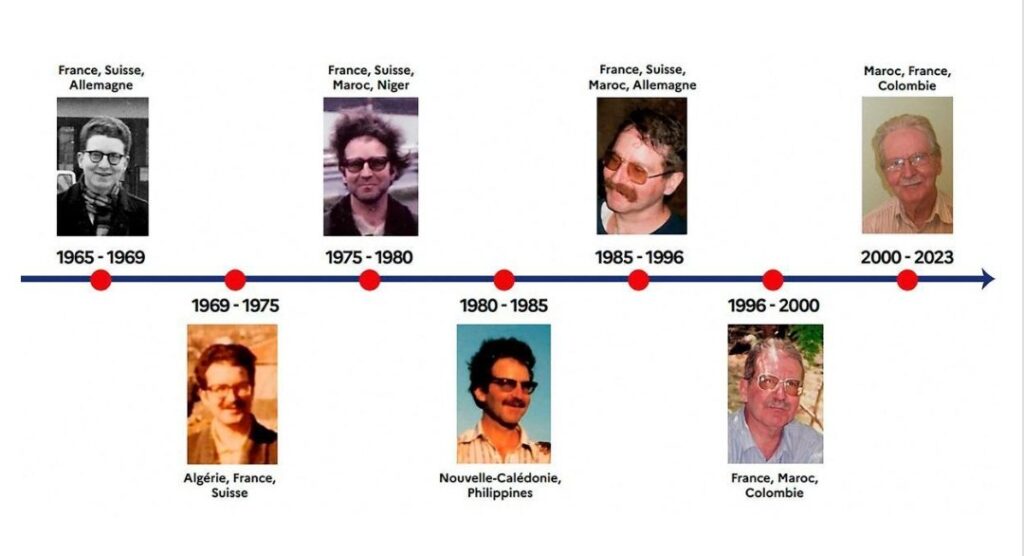
Timeline of Jacques Leveugle’s location. Credit: Grenoble Prosecutor’s Office.
Bogotá, Colombia – On February 10, the Grenoble Prosecutor’s Office launched a worldwide call for victims or witnesses of Jacques Leveugle, a teacher arrested in 2024 in France and accused of sexually assaulting at least 89 minors around the world since 1967.
During a press conference, French prosecutor Étienne Manteaux said that the sexual predator was reported in 2023 by one of his nephews, who discovered a USB drive containing written memoirs, pictures, and other documents related to the abuse of teenagers.
The French Embassy in Colombia called for witnesses to come forward to identify potential abuse victims in the country, as Leveugle worked as a teacher in Bogotá on two occasions between 1996 and 2023.
The suspect was living in Morocco when the investigation began, but had spent his life moving between Switzerland, Germany, Portugal, Algeria, Nigeria, the Philippines, New Caledonia, Colombia, and France. In all of these countries, he allegedly targeted minors while working in educational or social roles.
Authorities revealed that in his “autobiography,” the alleged abuser gave horrendous details about 89 teenagers, between 13 and 17 years old, being manipulated and abused from 1967 to 2022.
“We need Jacques Leveugle’s name to be known because the objective is to reach the victims and encourage them to come forward,” Manteaux confirmed.
He said that 40 of the 89 victims had been identified and that authorities were working to find the rest.
“Sometimes names are not even mentioned; we are facing a wall in certain situations… This call for witnesses is to allow victims we haven’t been able to identify to come forward,” the prosecutor explained. “Perhaps not all victims are recorded in these documents.”
Manteaux also said that the man, who has been under arrest since 2024 and never officially graduated as an educator, also confessed in his writings to killing two women: his mother and one of his aunts.
The uphill battle to find victims in Colombia
Investigations revealed that Jacques Leveugle spent several years living in and visiting Colombia between 1996 and 2000, and again from 2000 to 2023.
In an interview with Caracol Radio, the prosecutor confirmed that the sexual predator worked as a French teacher in a shelter for children and teenagers in the capital city, Bogotá.
“It’s hard to reach victims outside France; that’s why we have made a special invitation to Colombian victims. We need them and their experiences to understand what this man really did,” he said during the call, adding that they decided to take a “traditional” approach due to the difficulty of reaching witnesses.
Authorities are also trying to determine if Leveugle had collaborators and what his “modus operandi” was to ensure that none of the teenagers ever complained or reported the abuse to the police.
Latin America Reports contacted the Grenoble Prosecutor’s Office, and they confirmed that the investigation remains active and ongoing in Colombia. They also committed to briefing the media on any significant breakthroughs as they continue to work toward identifying more victims internationally.
The French Embassy in Bogotá has shared the channels established to find Colombian victims:
2026 has started off unusually wet, with downpours in Bogotá and floods elsewhere in Colombia. What’s going on and how can you help?
While this is meant to be the dry season for most of Colombia, it’s instead been raining heavily. Vast swathes of the Caribbean region have flooded, and in Bogotá, it’s led to collapses in the traffic systems. That’s led to an emergency declaration by the president and frantic relief efforts (links at article end).
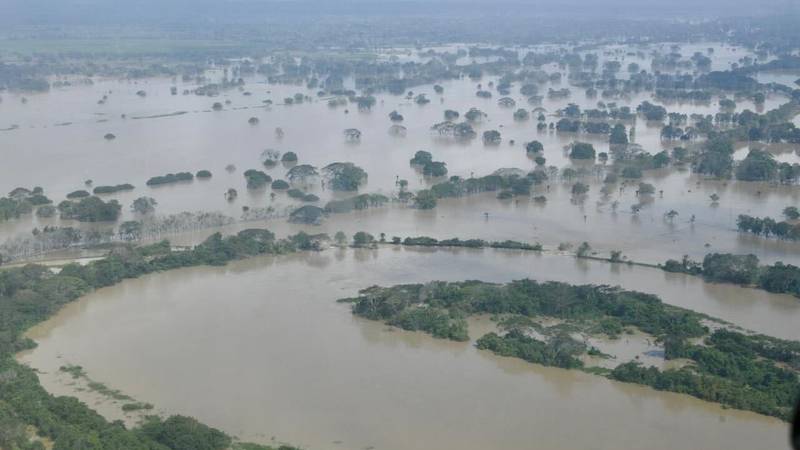
Heavy floods have left much of Córdoba underwater. Photo courtesy of UNGRD
Colombian president Gustavo Petro has declared a state of emergency yet again to address the situation in the northern department of Córdoba and elsewhere. While the emergency measures were declared for Córdoba, this was later extended to 22 departments, underlining the severity of the situation.
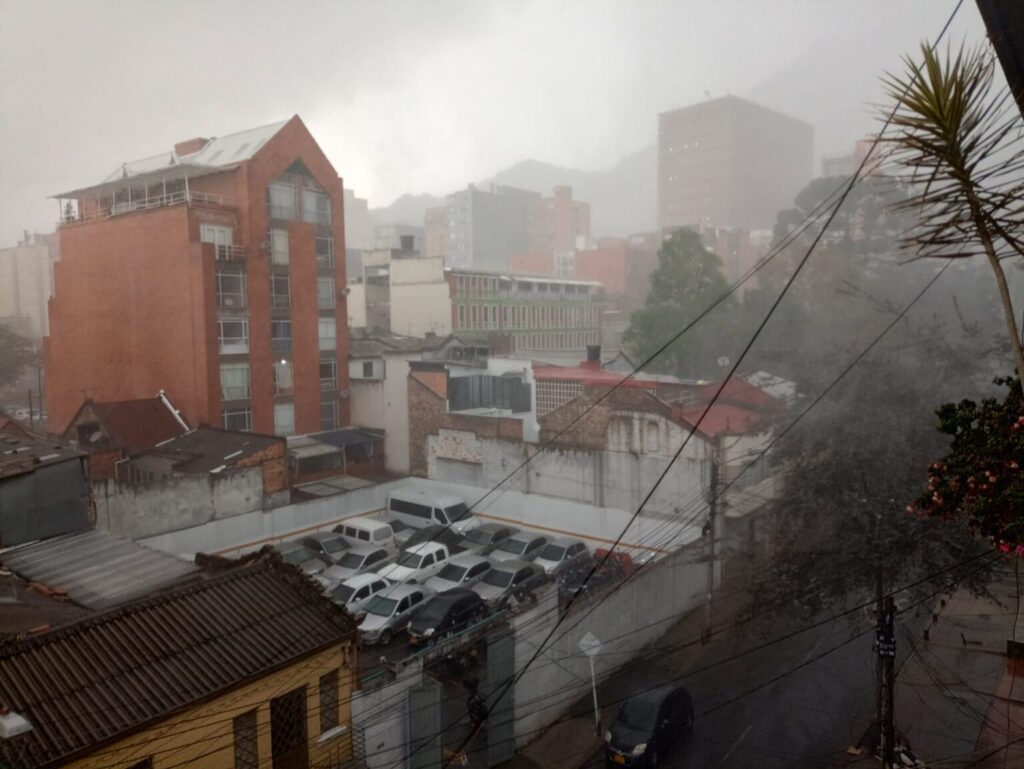
Within the capital, flash floods have swamped roads and forced traffic to grind to a halt as well as collapsing roofs and flooding buildings. Luckily, Bogotá has so far escaped the levels of damage seen elsewhere in the nation.
Barrios such as Nicolás de Federman have been hit by hailstorms heavy enough to resemble a blizzard, leaving them carpeted in white as though snowed in while the autopista norte has been forced to close as it resembles a swamp.
One silver lining to the rainclouds is that the reservoirs will be nice and full, alleviating fears that Bogotá will be forced to return to water rationing, as happened in 2024. That will be little comfort to many who have lost everything in the floods.
Why is it raining so much?
Heavy rain has persisted through year start
Colombia’s weather monitors, IDEAM, have explained that there are four main factors: the Madden and Julian wave; high Amazonian humidity; a lack of winds to move that humidity and la Niña-esque conditions.
All put together, these four factors combine to make a perfect storm and unseasonably high January rainfall levels. That’s continued into February and with March and April around the corner there is little relief in sight.
That’s led to half the country being put on alert for potential floods and high precipitation, which leads to all sorts of other trouble such as landslides. Colombia’s disaster relief agency UNGRD is underprepared currently, having endured corruption scandals recently.
This is meant to be the dry season, too. Bogotá in particular is meant to receive heavy rain October-December and April, not January and February. In fact, these months are normally characterised by blazing sunshine, clear skies and hot temperatures.
Adding to the confusion is the fact that we’re supposed to be heading into an El Niño cycle, meaning dry weather and lower rainfall than expected. Instead, we’ve had the precise opposite so far. While Colombia is the world’s rainiest country, it’s not meant to fall in January and February, at least not in the north.
Floods in the Caribbean
The rains have been annoying and disruptive in Bogotá, but other parts of the country have faced genuine devastation. First among those is the department of Córdoba, which has suffered widespread floods. However, over half the country has been affected.
The capital of Córdoba, Montería, is the worst hit major city in the country, with thousands of people evacuated in the city and surrounds. Over a quarter of a million people have been directly affected by the rains nationally.
Sadly, politics have come into play here too, with Petro clashing with regional governor Erasmo Zuleta over the management of the department. The pair have had a lot of differences over the years. He also said he was initially unable to land in Córdoba due to the risk of an attack.
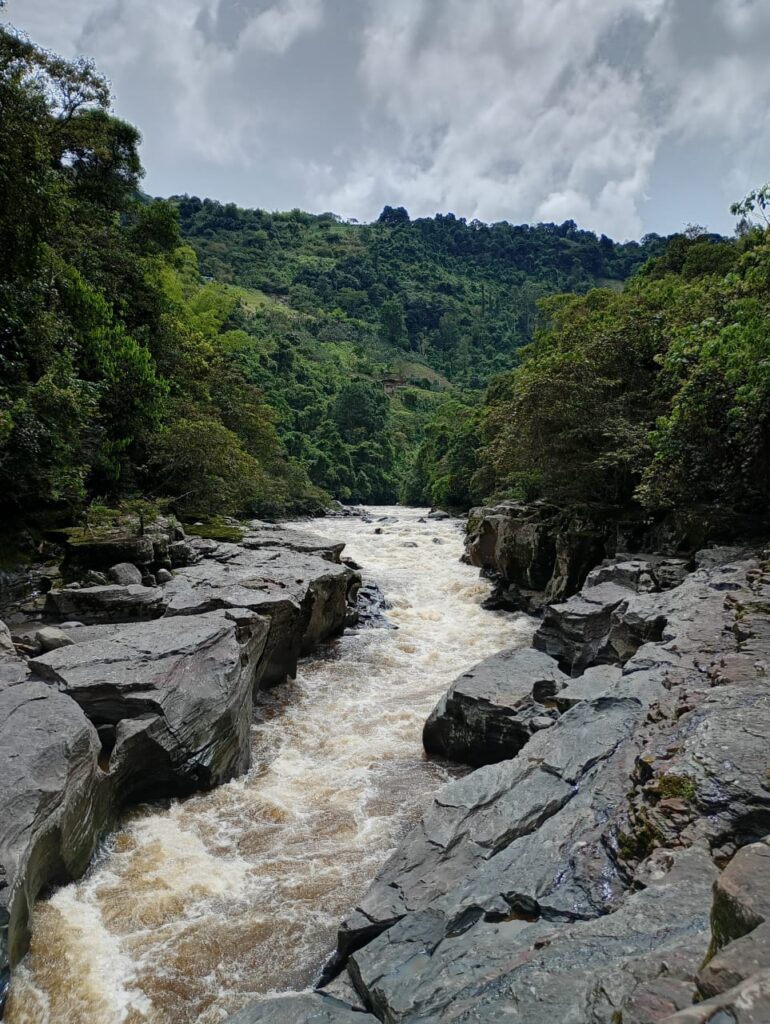
Rivers across Colombia are full and at risk of flooding
More reasonable are Petro’s claims that the situation has been exacerbated by water management systems such as reservoirs. These have diverted normal water flows and critically diminished the region’s ability to handle pressure from unusual weather patterns. Zuleta’s response is that the national government oversees the Urrá hydro plant.
The worst affected regions are on the Caribbean coast, with Uraba Antioqueño, La Guajira and Sucre joining Córdoba, but the Amazon and Pacific regions have also seen unusually high rainfall for the start of the year.
There has been flooding in Medellín, as well as the risk of landslides in hillside comunas, while coastal cities such as Cartagena have had heavy downpours and storms, affecting much-needed tourism income in high season as beaches close.
Even when the rains stop, the long term effects will take years to overcome. Already, bad actors are starting to take advantage of the situation, with desperate houseowners paying through the nose for boaters to rescue their belongings before thieves arrive.
Fields that are now underwater will take an age to fully drain and even longer to recover from the damage currently being wrought upon them. Thousands upon thousands of hectares of farmland will be unusable for the near future.
With what looks like a fraught year ahead for Colombia, this is an unwanted extra pressure to deal with and exposes the fragility of infrastructure in the face of increased climate change pressure. Whoever wins the next election, investment will be needed to avoid similar problems going forward.
The Cruz Roja Colombiana are taking donations of clothes and building materials at their Salitre centre (Av.68 #68b-31), and you can donate money directly on this link. The local government in Bogotá is also organising donation drives on this link.

 Login
Login