Reading view

Bogotá mayor furious at gang leader’s role as ‘peace negotiator’

La Mesa gang rounded up in Bogotá this week. Members are accused of murders and drug trafficking. Photo: Secretary of Security
La Mesa gang rounded up in Bogotá last week. Members are accused of murders and drug trafficking. Photo: Secretary of Security

The dismantling of a major crime gang which operated in Bogotá caused controversy last week after it emerged its leader was declared a peace negotiator under President Petro’s controversial Paz Total, or Total Peace, plan.

National police rounded up 23 members of the La Mesa gang in simultaneous operations in Tolima, Cesar and Bogotá. According to police reports, the gang was involved in serious crimes across the capital since 2012, including drug trafficking and murders.

News of the arrests was tainted by the fact that under the Paz Total process – the Petro government’s wide-ranging negotiations with armed groups – gang leader Gustavo Adolfo Pérez Peña, alias El Montañero, had his arrest warrant suspended under his role as gestor de paz, or ‘peace facilitator’.

The kingpin’s release sparked a furious response from Bogotá mayor Carlos Galán, who accused Petro of undermining the city’s efforts to curb crime.

Hoy en Bogotá anunciamos que, gracias a la Dijín, a la Fiscalía y a la @PoliciaBogota, fueron capturados 23 miembros de la banda “El Mesa”, entre ellos 8 sicarios. Mientras tanto, el Gobierno Nacional nombra al cabecilla de esa banda como gestor de paz y le levantó la orden de… pic.twitter.com/qiSmSoHgh7

— Carlos F. Galán (@CarlosFGalan) April 6, 2026

“While in Bogotá,…the prosecutor’s office and the police, with the support of the Bogotá mayor’s office, are working to capture and dismantle a criminal gang dedicated to serious crimes, the national government appoints the leader of that gang as a peace facilitator and lifts the arrest warrant for him,” he railed.

The gang was also suspected of being behind last year’s gruesome killings where pieces of the bodies of victims were wrapped in plastic bags and dumped on the city’s highways.

A free pass for career criminals like Pérez Peña makes fighting crime “incredibly difficult,” added Galán.

Dodging a warrant
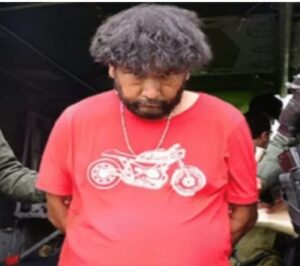
Alias El Montañero during his capture in 2019.

Details of La Mesa’s criminal activities released by the prosecutor’s office this week showed the gang originated in Bello, Antioquia, but spread to Bogotá in 2012.

Court documents reported in local news outlet El Colombiano paint Pérez Peña as a hardened criminal; he has been imprisoned four times, including for armed robbery, homicide and illegal possession of firearms, but was freed before serving his full sentences.

His rap sheet includes attacks on armored trucks, notably a cash heist in Bogotá in 2003 where a policeman was shot dead.

Pérez Peña’s most recent jailing was in 2019 when he was sentenced to eight years for conspiracy to commit a crime and illegal possession of firearms. It was during this stint that he was freed as a peace facilitator.

And even while the La Mesa gang has been rounded up this week with members facing multiple charges and long prison sentences, its leader and founder continues at liberty.

Get out of jail free?

Inclusion of criminal gangs in the Paz Total process has proved one of the thorniest aspects of Petro’s flagship policies and a political hot potato in the run-up to next month’s presidential elections.

Since its inception in 2022, the government’s peace negotiators have tried to include some of Colombia’s most embedded crime dynasties under the acronym Estructuras Armadas Organizadas del Crimen de Alto Impacto (EAOCAI).

This Paz Urbana, or urban peace, initiative is based on the reality that in Colombia today lines are blurred between organized armed groups and engrained criminal structures.  Much of its effort has focused on Antioquia’s Valle de Aburrá, around Medellín, where many crime gangs took root after the fragmentation of the 1980s cocaine cartels.

The president’s office recently declared the process a partial success, claiming that the nominated peace spokespersons – many feared capos with violent histories – were now in a dialogue process which could “prevent further violence and prevent the resurgence of these structures”.

Many critics have predicted that – similar to the Paz Total process with large guerrilla groups – criminal gangs will leverage the negotiations to their own interests to gain time and territory or a get-out-of-jail-free card.

This week Medellín’s mayor Fico Gutíerez welcomed a resolution by the attorney general’s office to overturn many of the 23 nominations of local crime bosses as peace facilitators.

“The resolution removes 16 criminals currently serving sentences for serious crimes from the program. Seven remain eligible for the benefit,” he posted on X.

He also echoed Galán’s complaint that hardened criminals were being included in the peace process. “It is unacceptable that the Petro government has asked the prosecutor’s office to lift the current arrest warrant for homicide.”

Peace as a right

Defenders of Petro’s agenda hit back reminding that Paz Urbana was part of a constitutional process protected by Colombian law.

“Peace is a right, not a political strategy,” said Isabel Zuleta, a senator and key player in the Paz Total process.

The senator, who represents the government at the negotiating table with representatives of criminal gangs, accused the media and politicians of misreporting the negotiations.

“For nearly three years, a serious path toward de-escalating urban violence in Medellín and the Aburrá Valley has been painstakingly forged. Today, that work is being exploited by right-wing sectors that prefer to sabotage urban peace rather than acknowledge progress that is not electorally advantageous to them,” she said.

Zuleta also pointed out suspension of arrest warrants for gang leaders seeking peace did not free them of responsibilities for crimes they committed, nor would it stop judicial investigations.   

Meanwhile, a mix-up between Petro’s government and Attorney General’s Office emerged over Antioquia’s urban peace process: 16 of the 23 capos named as peace negotiators were already in prison, so suspending their “arrest warrants” was nonsensical as they were already detained in the high-security Itagüí Prison.

“We truly never imagined that a request would be made to suspend arrest warrants for people already serving sentences,” chief prosecutor Luz Adriana Camargo told Caracol Radio.

Senator Isabel Zuleta with crime bosses in Itagüí Prison. Photo: Paz Urbana

Prison party

For this judicial – rather than political – reason, Camargo revoked the suspension orders for the 16 capos already doing time.

“We are talking about dialogues inside a prison with convicted individuals,” she said.

The Attorney General’s office also corrected widespread fake news – amplified by right-wing presidential candidates Paloma Valencia and Abelardo de la Espriella – that the 16 jailed crime chiefs would be freed as part of the Paz Urbana negotiations.

In fact, there were no plans to release the IItagüí peace facilitators, clarified Camargo’s office.

But in a further twist this week the government froze the peace talks in the Itagüí Prison after revelations that the jailed capos mounted an unauthorized vallenato concert by popular singer Nelson Velásquez, reportedly costing 500 million pesos (US$140,000).

Parranda con Nelson Velásquez en cárcel de Itagüí no fue autorizada: Inpec investiga 7 funcionarios #LoMásBlu #MañanasBlu pic.twitter.com/FTU3exTVuF

— BluRadio Colombia (@BluRadioCo) April 9, 2026

For many commentators, the partying in the prison brought back painful memories of drug baron Pablo Escobar’s luxury lifestyle while supposedly imprisoned by the state in the 1990s.

Meanwhile the chief prosecutor Camargo came under fire for her decision to suspend warrants for seven other gang leaders currently on the run – including that of Pérez Peña of La Mesa.

This week the exact whereabouts of Pérez Peña was unknown, as was his willingness to engage in any peace process. According to a report by TV station Teleantioquia, the La Mesa gang leader was based in Madrid, Spain, while “moving around Europe as a sophisticated tourist”.

For El Montañero, coming home to Colombia, even under the guise of a peace facilitator, could be less of a holiday.

The post Bogotá mayor furious at gang leader’s role as ‘peace negotiator’ appeared first on The Bogotá Post.

  •  

Report: iPad Air to Gain OLED Display Early Next Year

Apple will bring OLED displays to its iPad Air models next year, according to a new report from Korea's ET News.


Citing industry sources, the outlet says Samsung Display will begin mass production of OLED panels around the end of 2026 or January next year, with a view to supplying panels for Apple's next iPad Air, expected to be released in early 2027. Apple last updated the iPad Air in March 2026 with an M4 chip.

Apple's iPad Pro models already have OLED displays, but the iPad Air models still use more affordable LCD displays that Apple calls Liquid Retina. The Liquid Retina displays do not support 120Hz ProMotion display technology, and are limited to 60Hz refresh rates.

OLED panels individually control each pixel, resulting in more precise color reproduction and deeper blacks compared to LCD. They also provide superior contrast, faster response times, better viewing angles, and greater design flexibility.

That said, unlike Apple's ‌iPad Pro‌ models, which feature two-stack low-temperature polycrystalline oxide (LTPO) OLED panels‌, the iPad Air‌ is expected to use single-stack low-temperature polycrystalline silicon (LTPS) panels, meaning that they may be dimmer and continue to lack ProMotion.

Apple's plan to transition the ‌‌iPad mini‌‌ from an LCD to an OLED display is already widely rumored, with reports suggesting the iPad mini 8 will adopt OLED later this year, albeit using the same cheaper single-stack LTPS panel.

Once the iPad mini and iPad Air receive the display upgrade, the entry-level iPad will be the only model in Apple's tablet lineup without an OLED panel.
Related Roundup: iPad Air
Tags: ETNews, OLED
Buyer's Guide: iPad Air (Buy Now)
Related Forum: iPad

This article, "Report: iPad Air to Gain OLED Display Early Next Year" first appeared on MacRumors.com

Discuss this article in our forums

  •  

Colombia to cull wild hippos as population threatens Magdalena River ecosystems

Colombia will cull dozens of invasive hippopotamuses descended from animals illegally imported by Pablo Escobar, as authorities warn the rapidly growing population is endangering ecosystems and local communities.

Environment Minister Irene Vélez Torres said the government has authorized the euthanasia of up to 80 animals as part of a broader strategy to control the herd, which now numbers around 200 across the Magdalena River basin.

“We must act to reduce the hippopotamus population,” Vélez said, describing the cull as a “technical recommendation” following years of failed attempts to contain the species through sterilization and relocation.

The hippos — descendants of four animals brought to Colombia in the 1980s for Escobar’s private zoo at Hacienda Nápoles — have flourished in the country’s tropical lowlands, where a lack of natural predators and abundant water sources have enabled unchecked reproduction.

Scientists warn that without intervention, the population could surge to between 500 and 1,000 animals within the next decade, placing increasing strain on fragile river ecosystems.

The large herbivores consume vast quantities of vegetation and deposit significant organic waste into waterways, altering water chemistry and threatening native species, including manatees and turtles. Officials also cite rising risks to rural communities, with reports of hippos damaging farmland and attacking livestock and people.

The government’s plan, backed by a 2022 technical report from the Humboldt Institute and the National University, includes euthanasia, confinement and possible relocation. The program carries a budget of 7.2 billion pesos and is set to begin in the second half of 2026, targeting key hotspots near Puerto Triunfo and along the Magdalena River.

Previous efforts to manage the population — including sterilization campaigns in 2022 and 2023 and talks with countries such as India and Mexico to relocate animals — yielded limited results. Authorities say international transfers are unlikely, citing logistical challenges and genetic concerns linked to inbreeding.

Animal welfare advocates have condemned the cull. Senator Andrea Padilla, an outspoken animal rights campaigner, described the plan as “cruel” and accused the government of opting for the “easy way out.”

“Killings and massacres will never be acceptable,” Padilla wrote on social media, arguing the animals are victims of decades of state neglect.

But officials insist the risks posed by the species — considered among the world’s most dangerous large mammals — leave little alternative. In Africa, hippos are responsible for hundreds of human deaths each year, and Colombian authorities report increasing “hippo-human interactions,” including road accidents and attacks along riverbanks.

Escobar, who built his sprawling Napoles estate was killed in 1993, but the legacy of his private zoo has endured in unexpected ways. After his death, some animals were relocated, while others — including the hippos — escaped into the swamps.

Decades later, what began as a curiosity has become one of Colombia’s most unusual environmental dilemmas, forcing authorities to weigh animal welfare against the protection of native ecosystems.

  •  

Colombia’s #MeToo movement advances with questions for presidential candidates

International Women’s Day 2024 in Bogotá. Image credit: Juan Vargas via Wikimedia Commons

The more than 100 female Colombian journalists who signed the ‘No to the pact of silence’ – a petition calling for answers about former president Andrés Pastrana’s appearance in the Jeffrey Epstein files –have posed 10 questions to candidates in the upcoming presidential elections.

The questions, shared on X last Sunday, intend to make the candidates take a clear position before the public on key women’s issues, including the mentions of Pastrana in the Epstein files. 

So far, only two candidates – Roy Barreras and Sondra Macollins – have responded publicly to the questions, which come amid what some have described as Colombia’s #MeToo movement.

“We asked 10 questions to those seeking the presidency,” wrote Ana Cristina Restrepo, one of the women leading the ‘No to the pact of silence’, in an X post on April 12.

The questions addressed the preservation of abortion rights, equal representation in positions of high power, protocols to address violence against women, and the commitment to the continuation, protection, and strengthening of related public policies in support of women’s rights. 

Among the 102 women behind the questions are public figures like: María Elvira Samper, a writer, journalist and philosopher; Patricia Nieto, professor at the University of Antioquia and journalist; and Maria Teresa Ronderos, Director of the Ibero-American Center for Journalistic Investigation (CLIP).

The list also includes Jineth Bedoya Lima, a pioneer of #NoEsHoraDeCallar (it is not the time to be quiet) a campaign that denounces sexual violence and urges survivors to speak out against gender-based violence. Bedoya is herself a survivor of kidnapping, torture and sexual violence by paramilitaries in 2000, with her case going to the Inter-American Commission on Human Rights.

The first candidate to respond to the questions was center-left presidential hopeful Roy Barreras of the La Fuerza Party. “101 women signatories of #NoAlPactoDeSilencio, representing thousands of others, have put these 10 questions to the presidential candidates. Here, in this thread, are my answers,” he wrote on X on April 13.

Sondra Macollins, an independent candidate for the Digital Party, also answered in an X post on April 14.“I want to respond to what has been raised by #NoAlPactoDeSilencio because the truth is not negotiable,” she said.

“The time of the ‘untouchables’ and complicit silence is over. If there are names linked to Andrés Pastrana and Epstein, the country demands clear answers,” added Macollins.

The questions are seen as part of a new women’s rights movement which started in Colombia following the appearance of former president Andrés Pastrana in the Epstein files.

The materials included a photo of Pastrana and Ghislaine Maxwell wearing Colombian Air Force uniforms, alleged compromising emails, and testimonies where Maxwell described the two as friends and claimed to have flown a Black Hawk in Colombia. There were also reports that Pastrana flew on a private jet with Epstein and disgraced agent Jean-Luc Brunel, accused of recruiting minors for the late financier.

Later, #MeTooColombia was brought into focus following allegations by female journalists of sexual harassment in media outlets such as RTVC and Caracol.

According to the official ballot issued by Colombia’s National Civil Registry, there are 14 presidential candidates for the first round, which will take place on May 31. Four of them are women.

The post Colombia’s #MeToo movement advances with questions for presidential candidates appeared first on The Bogotá Post.
  •  

Colombia to cull its wild hippo population

Euthanasia planned for the numerous offspring of “cocaine hippos” originally smuggled in by Pablo Escobar. Not everyone is happy.

A hippo in Hacienda Napolés, the ranch where Pablo Escobar first introduced them. Photo: S. Hide
A hippo in Hacienda Nápoles, the ranch where Pablo Escobar first introduced them. Photo: S. Hide.

After years of debate over the fate of Colombia’s wild hippos – during which the feral beasts have multiplied in lush tropical rivers – the ministry of the environment has announced a plan to kill at least 80 of the African imports.

The non-native species was smuggled into Colombia by drug baron Pablo Escobar in 1980 as part of his collection of exotic animals – including rhinos and lions – which he kept at his ranch, Hacienda Napoles.

The infamous drug trafficker died in a rooftop battle in Medellín in1993, but a few hippos escaped his lowland ranch to find what biologists would later describe as “perfect conditions” in the nearby Magdalena River.

In the decades since around 200 offspring have spread over 100 kilometers (60 miles) of river and swamps bordering departments of Antioquia, Bolívar, Santander and Sucre.

But after years of procrastination over what to do with the wayward Hippopotamus amphibius – with various schemes to sterilize them or ship them to zoos and sanctuaries around the world – Colombia’s environment minister Irene Vélez said this week a cull was the only option.

“We’re talking of a process of euthanasia, which is the technical recommendation,” she told Blu Radio.

The plan was initially to reduce the population by 80 breeding individuals, then cull around 30 beasts per year which would systematically reduce the population.

The hippo range in Colombia, covering 100 kilometers of the Magdalena River Valley.

Hippo boom

The controversial decision is based on a 170-page technical report by the Humboldt Institute and Universidad Nacional in 2022.

The report concluded that the hippos were damaging the tropical ecosystem of the Magdalena river valley by spreading disease and overloading their watery habitat with nitrates: the amphibious herbivores grazed the riverbanks to each munch 50 kilos of grass a day – but then pooped the waste out into rivers and lakes.

Without an urgent cull the population “could increase to 500 hippopotamuses affecting our ecosystem by 2030,” Vélez told a press conference this week. This boom would further put at risk native populations of turtles and manatees.

See also: Hippos need culling, says report

Then there what the report referred to as “hippo – human interactions”, such as a car hitting a two-ton creatures on the main Bogotá – Medellín highway – which runs close to their main hangout near Puerto Triunfo – and even cases of locals trying to keep young ones as pets.

The report also pointed out that hippos were aggressive and territorial and officially the deadliest large mammal – they kill on average 500 people in Africa every year – and attacked boats and canoes on the river aswell as people, cattle and horses around the River Magdalena.

In other videos posted online people are seen chasing them down the highstreet in the town of Doradal.

Hippo takeover

To justify the cull, Vélez said reduction methods such as sterilization were too difficult – anaesthetizing wild hippos is no easy task – and none of the seven nations initially interesting in receiving live hippos for zoos and wildlife parks had followed through.

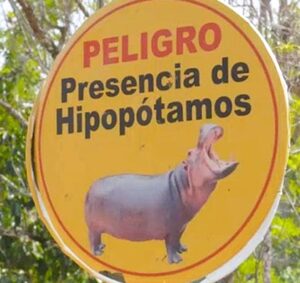
Watch out for hippos. Sign in Puerto Triunfo.

The cull would start in the second half of the 2026 around hippo hotspots close to Hacienda Nápoles in Puerto Triunfo and Isla del Silencio, a river island near to Puerto Boyacá, she said.

This island is home to a large group one of which attacked and severely injured a farmer collecting water from the riverbank in 2020, according to a news report.  Colombia’s wet lowlands had perfect conditions for hippos, biologist Katerine Corrales told a Caracol news crew visiting the island this week.  

“Africa has droughts and adverse weather patterns. Here we have a constant climate with abundant water and resources which generates a faster reproduction rate,” she said.

In the same report local villagers complained that the hippos had “taken over the island” and restricted commercial fishing.

Poor Pepe

Not everyone welcomed news of the cull. Hippo protection group Comisión Protectora de la Vida de los Hipopótamos – founded in the town of Puerto Triunfo close to Hacienda Nápoles and which benefits from hippo tourism –  rejected the “terrible decision of the national government to authorize a hippo hunt”.

“In our municipality, we are committed to the protection and conservation of these incredible living beings. Hippos are an important part of our identity, and we must live in harmony with them,” said the group on its Facebook page this week.

It called a meeting in Bogotá to seek “non-violent” alternatives to the cull, such as a return to the plan of transferring live hippos to other countries.

Previous attempts to shoot hippos have ended in public relations disasters, such as the killing of Pepe in 2009. The large male hippo was slated for transfer to a zoo in Costa Rica after rampaging around Puerto Berrio.

But he was shot after a bungled attempt to capture him, and photos of an army platoon posing with his remains caused public revulsion, and a court ban on hunting hippos.

Pepe also highlighted the affection local communities had for “Pablo’s hippos”. For some folk the state persecution of the mammals was synonymous with the hunt for Pablo Escobar, still a popular figure among communities that benefitted from his largesse in the 1980s.

In fact, in the drug baron’s heyday the original hippos were kept at his Hacienda Nápoles in a public zoo and safari park where local families could tour for free. Today the hacienda and zoo is still there but managed by the state as part of a huge amusement park.


A captive hippo in Colombia. Escapees have multiplied in the wild. Photo: S Hide.

A grave in Colombia

This week, Minister Vélez was adamant that culling must form part of any population control.

It was global restrictions on wildlife trafficking – the CITES agreements – that had condemned the hippos in Colombia by preventing them being easily shipped abroad, she explained.

“It’s not enough for a zoo to raise its hand; the country must authorize their entry. Unfortunately, no country has given the green light. This administrative silence indicates that there is no interest in receiving them”.

It seems that putting Pablo’s hippos in overseas zoos is proving as difficult as extraditing the cartel kingpin himself. Like their progenitor, the big beasts face a violent end in Colombia rather than a cage in a foreign land.

The post Colombia to cull its wild hippo population appeared first on The Bogotá Post.

  •  

2nd Beta of macOS Tahoe 26.5 & iOS 26.5 Available for Testing

Apple has released the second beta versions iOS 26.5, MacOS Tahoe 26.5, and iPadOS 26.5, to those who are participating in the beta testing programs of Apple system software. The latest betas continue to work on RCS messaging support for encrypted text messages (this is a separate feature from iMessage, which is already encrypted), and ... Read More
  •  

Colombian authorities highlight anti-drug efforts amid US pressure

Colombian police test illegal drugs. Credit: Colombian National Police

The Colombian National Police published a report this week summarizing the results of its counter-narcotics operations during the first quarter of 2026.

Authorities highlighted the results of their new anti-drug dubbed ‘Esmeralda Plus‘, which has led to the seizure of 124 tons of cocaine and 99 tons of cannabis.

The report comes as President Gustavo Petro faces pressure from the White House to prove his commitment to countering the illicit drug trade, which has been a source of dispute between the two administrations.

“We are delivering significant strikes against drug trafficking. Today we fulfill our duty to Colombia and the world with dignity,” said Brigadier General William Castaño Ramos, Director of the Anti-Narcotics Division, following the report’s publication.

In addition to the 124 tons of cocaine and 99 tons of cannabis confiscated, the police also seized over 450,000 gallons of liquid chemicals and 396,000 kilograms of solid ingredients used in drug production.

They also announced the destruction of 981 narcotics laboratories and the recovery of 99 ampoules of fentanyl.

The confiscation figures mark a significant increase in seizures compared to the first 100 days of 2025, which saw 104 tons of cocaine and 63 tons of cannabis confiscated. 

These figures serve as a response to the heavy tensions that preceded the White House meeting, when U.S. President Donald Trump personally attacked Petro, signaling him as a “man who likes to make cocaine” and claiming that Colombia was “very sick” under his leadership.

The report comes amid mounting pressure by Washington for the Petro administration to tackle drug production. 

Trump has accused Colombia of failing to cooperate in the fight against the narcotics trade and carried out a series of unilateral aerial strikes against suspected ‘narco-vessels’ off the coast of Colombia since September, actions condemned by the Petro as a violation of national sovereignty.

Furthermore, Colombia’s President is currently facing two preliminary criminal investigations in Brooklyn and Manhattan regarding his 2022 electoral campaign. U.S. prosecutors are examining alleged illicit donations from drug trafficking networks and meetings with traffickers intended to block extraditions.

“The United States has found a mechanism to pressure the government and extract the maximum amount of concessions regarding the fight against drugs,” Sandra Borda, Professor of Political Science at the University of the Andes, told The Bogotá Post

While the Colombian government appears to have stepped up its counter-narcotics operations amid U.S. pressure, some say this may not be enough to appease the White House.

“For Washington, these technical results are necessary, but they aren’t enough to fully restore trust,” Nelson Poveda, a political analyst and international affairs expert with experience in Colombia’s Ministry of Foreign Affairs, told The Bogotá Post. “Still, these reports act as a bridge for ‘technical diplomacy,’ allowing cooperation to continue even when the political relationship is tense.”

In the report, authorities stress that ‘Esmeralda Plus’ attacks narcotics trafficking as a holistic system rather than just seizing drugs.

“We are directly destabilizing the finances, logistics, and operational capacity of these criminal structures,” pointed out General William Rincón, Chief of the National Police Service.

But Colombia has been excluded from key regional counter-narcotics efforts, notably the “Shield of the Americas”, a new anti-drug alliance promoted by Donald Trump.

The White House has historically favored eradication – the destruction of drug crops – as a counter-narcotics strategy. 

But Petro has consistently defended his “Total Peace” policy, arguing that the war on drugs must move away from just persecuting farmers and shift toward dismantling the financial backbone of cartels and taking down criminal leaders.

However, authorities reported 40 arrests for extradition purposes and more than 17,000 arrests related to drug trafficking so far this year. Additionally, the manual eradication of around 2,000 hectares of illicit crops shows that the Colombian administration is maintaining a mixed offensive that combines social policy with high-impact law enforcement.

With the 2026 electoral cycle approaching in Colombia, Petro’s administration is under immense pressure to show that this humanitarian approach is not a sign of weakness before he leaves office.

The post Colombian authorities highlight anti-drug efforts amid US pressure appeared first on The Bogotá Post.

  •  

MacOS Tahoe 26.4.1 Update Released with Bug Fixes

Apple has released MacOS Tahoe 26.4.1 as a software update for Mac users running the Tahoe operating system. The update includes unspecified bug fixes, making it recommended for all Tahoe users to install. The MacOS Tahoe 26.4.1 update is particularly important for users of the new M5 MacBook Air and M5 MacBook Pro series to ... Read More
  •  

iOS 26.4.1 Update for iPhone & iPad Released with Bug Fixes

Apple has released iOS 26.4.1 for iPhone, along with ipadOS 26.4.1 for iPad, both to address unspecified bug fixes. Because no specific bug fixes are mentioned in the release notes or with the download, it’s unclear as of now what exactly has been addressed, but obviously Apple felt it important enough to issue a software ... Read More
  •  

‘Invisible narco’ who enabled Tren de Aragua’s entry into Bogotá captured in police operation

Colombian authorities have captured the alleged crime boss “Mison,” also known as the “invisible narco”, who played a key role in facilitating the arrival of the Venezuelan criminal group Tren de Aragua in the capital Bogotá

The suspect, also known as “El Viejo,” was detained in Ecuador and handed over to Colombian authorities at the Rumichaca international border crossing under an Interpol notice, in a joint operation with Ecuadorian officials.

In Colombia, he is wanted on charges including aggravated conspiracy, homicide, drug trafficking and illegal weapons possession. A judge has ordered his pre-trial detention.

Authorities say Mison was the leader of “Los Maracuchos,” a criminal network with a strong presence in three Bogotá districts – Kennedy, Santa Fe and Los Mártires. For more than a decade, he allegedly operated under the guise of a nightlife entrepreneur, owning bars, nightclubs and informal rental properties known as “pagadiarios.”

Mayor Carlos Fernando Galán described the arrest as one of the most significant blows to organized crime in the city in recent years, calling the suspect “almost a myth” within criminal circles.

“He appeared to be a businessman in Bogotá’s nightlife economy, but in reality he was a central figure in a complex criminal structure,” Galán said.

According to investigators, the establishments he controlled served as hubs for drug distribution and were linked to serious crimes, including killings and torture. Among the venues identified by authorities are sites known as “Los Potrillos” and “Hotel Negro.”

Police also allege that Mison played a decisive role in enabling the expansion of Tren de Aragua into Bogotá around 2018, exploiting vulnerable migrant populations to recruit and train individuals for criminal activities. The group, which originated in Venezuela, has expanded across Latin America and is increasingly associated with organized crime in Colombia’s urban centers.

Bogotá Police Chief General Giovanni Cristancho said the arrest followed a two-year investigation involving cross-border cooperation. “He maintained a double life as a businessman while coordinating criminal operations,” noted Cristancho. “He was a pioneer in using ‘pagadiarios’ as operational centers to consolidate territorial control.”

Authorities said Mison fled to Ecuador in 2024 following intensified police pressure in Bogotá, where he continued operating under the cover of a merchant until his location was confirmed.

Prosecutors estimate that he accumulated assets worth more than 20 billion pesos (approximately $5 million), including rural properties, vehicles and real estate held through third parties. Officials say he generated monthly criminal revenues of up to 2 billion pesos through drug trafficking, extortion and other illicit activities.

Bogotá Security Secretary César Restrepo said the suspect’s influence extended beyond narcotics, linking him to extortion networks and contract killings.

“This is not a distant trafficker. He directly fueled violence in Bogotá and is responsible for significant harm to victims across the city,” Restrepo said.

Authorities believe the arrest will disrupt criminal structures tied to drug trafficking and urban violence, although they caution that such networks often adapt quickly.

If convicted, Mison could face a prison sentence of up to 32 years.

The operation is the latest in a series of high-profile security actions in Bogotá, as authorities seek to regain control over criminal networks and restore public safety in key areas of the capital.

Mayor Galán said the result demonstrates that sustained investigations and coordinated efforts can weaken organized crime groups.

  •  

Petro severs ties with Central Bank after Colombia rate rise

President Gustavo Petro has triggered a rare institutional confrontation with the Central Bank  after he ordered to “break relations” following an modest interest rate increase, raising concerns over economic policy independence just two months before the May 31 presidential election.

The board of Banco de la República voted on March 31 to raise its benchmark rate by 100 basis points to 11.25 per cent, defying government pressure for looser policy. Finance minister Germán Ávila denounced the move as “disproportionate” and withdrew from the board, accusing policymakers of privileging financial sector interests over economic growth.

The decision marks an unprecedented rupture in Colombia’s macroeconomic governance framework. By stepping away from the board, Ávila has effectively deprived it of the quorum required to meet under existing statutes, raising the prospect of a policy deadlock just as inflation remains above target.

At stake is more than a disagreement over rates. The confrontation exposes deeper tensions between a government focused on growth and redistribution and a technocratic central bank committed to price stability. It also risks undermining one of Colombia’s most respected institutions at a time of heightened global uncertainty.

Governor Leonardo Villar defended the rate hike, insisting the bank’s constitutional mandate to control inflation could not be subordinated to political considerations. He said the board remained focused on steering inflation back to its 3 per cent target, noting that price pressures — currently running at 5.29 per cent annually — remain elevated despite signs of moderation.

“The decisions are based on technical criteria,” Villar said, rejecting accusations of bias towards the financial sector. He also warned that the government’s withdrawal runs counter to institutional norms.

Markets are now watching whether the government intends to sustain its boycott. Under Colombian law, the presence of a Finance Minister is required for board meetings, meaning continued absence could paralyse rate-setting decisions in the coming months. Three key meetings — in April, June and July — are scheduled before the end of Petro’s term, with the latter two falling after a decisive first-round of the presidential elections.

Business leaders have reacted with alarm. Camilo Sánchez, head of utilities association Andesco, described the breakdown in coordination as “dire”, warning that permanent dialogue between fiscal and monetary authorities is essential for economic stability.

Analysts say the government may be using institutional leverage to halt further rate increases, given that a majority of board members had signalled a tightening bias to anchor inflation expectations. A prolonged standoff could, however, carry significant costs.

Colombia has long been viewed by investors as a regional outlier for its strong central bank independence. Any perception that political pressure is eroding that autonomy could weigh on the peso, increase borrowing costs and deter foreign investment.

The dispute comes against a complex macroeconomic backdrop. Inflation has been fuelled in part by a sharp increase in the minimum wage and higher public spending, while external risks — including rising energy prices linked to the war in the Middle East and closure of the Strait of Hormuz by Iran.

For Petro, the rate hike reinforces a long-standing critique that tight monetary policy is stifling growth and employment. Writing on social media, the president accused the central bank of pursuing a “suicidal” policy that harms the wider economy.

Yet economists warn that weakening institutional credibility could ultimately prove more damaging than high interest rates. “The risk is not just policy error,” one Bogotá-based analyst said. “It is the erosion of the rules of the game.”

The coming weeks will test whether the standoff is a negotiating tactic or the start of a more fundamental shift in Colombia’s economic governance. Either way, the episode has already injected a new layer of uncertainty into one of Latin America’s most closely watched economies.

  •  

History Channel Premieres Documentary Highlighting Medellin Social Intervention Program

Media partnership showcases urban social investment strategies in Colombia.

The History Channel is scheduled to premiere a new documentary titled Parceros on April 29, 2026. The 43-minute production, developed in collaboration with the Alcaldía de Medellín, examines the social challenges facing youth in the city’s communes and the state-led initiatives designed to mitigate the influence of criminal structures.

The documentary focuses on the Parceros program, an initiative managed by the Secretaría de Seguridad y Convivencia of Medellín. The program provides psychosocial support, academic training, and employment pathways for children, adolescents, and young adults at risk of recruitment by organized crime. According to municipal data, approximately 350 criminal groups operate within Medellín, involving an estimated 6,000 to 12,000 individuals. The program has served over 9,000 participants between 2024 and 2025, with a target of reaching 15,000 individuals by the end of the current four-year term.

“When the public sector works hand in hand with social organizations and media with global reach, the impact is multiplied.” — Federico Gutiérrez, Mayor of Medellín.

Federico Gutiérrez, the Mayor of Medellín, stated that the partnership with international media outlets aims to increase the visibility of the city’s social transformation. He noted that the collaboration between the public sector and global organizations facilitates a broader impact for regional infrastructure and social programs. The documentary features Argentine actor and producer Michel Brown, who serves as the primary narrator and interacts with participants to document their transition from informal or illegal activities toward stable employment and entrepreneurship.

The production follows the individual trajectories of three participants: Marcela, Alejandro, and Juan Sebastian. These accounts detail the transition from situations involving homelessness, illegal activities, and exploitation toward roles in municipal security management, private business ownership, and the local tourism sector. Paulina Patiño, director of the Parceros program, indicated that the initiative focuses on building human capital and providing alternatives to the economic incentives offered by local criminal organizations.

Produced by A+E Networks (NYSE: DIS) in association with Loso Producciones and co-produced by Lulo Films, the project reflects a trend of utilizing high-production-value media to document ESG-related social investments in Latin America. Cesar Sabroso, Senior VP of Marketing at A+E Networks Latin America, emphasized the company’s objective to distribute these narratives across the region to highlight successful intervention models.

Medellín continues to be a focal point for international observers due to its ongoing social transformation and its status as a hub for the global creative economy. The documentary intends to provide a technical look at how targeted social spending and public-private partnerships can alter the demographic trajectory of urban centers in Colombia and the broader US interest area.

Headline photo of Medellín’s Comuna 13 (photo © Loren Moss)

  •  

Petro faces fresh political crisis after leaked audios link officials to alleged smuggler

Fresh audio revelations broadcast by Noticias Caracol have triggered a political storm in Colombia, implicating senior government-linked figures in alleged secret contacts with one of the country’s most notorious smugglers, Diego Marín Buitrago.

The recordings, aired late on April 5, appear to document meetings between intermediaries connected to President Gustavo Petro and the legal representative of Marín, widely known by the alias “Papá Pitufo.” The revelations come with just over four months remaining in Petro’s presidential term, intensifying scrutiny over his administration.

According to the report, the audios – lasting more than 90 minutes – capture conversations from early 2025 involving at least four individuals allegedly acting as emissaries of the government. Among them is Jorge Lemus, the former head of the National Intelligence Directorate (DNI), as well as other figures with links to the administration.

In the recordings, Lemus is heard holding closed-door meetings with Marín’s lawyer, Luis Felipe Ramírez, in which possible judicial benefits and guarantees are discussed in exchange for cooperation. Such proposals, if confirmed, would fall outside the remit of intelligence officials and raise questions about potential overreach and irregular negotiations.

The audios also suggest that these contacts occurred before any formal intervention by judicial authorities, with intermediaries allegedly presenting themselves as acting on behalf of the executive branch. Additional names mentioned include Catalan political figures Xavier Vendrell and Ramón Devesa, as well as former financial intelligence adviser Isaac Beltrán.

The revelations have revived a long-running controversy over alleged links between Marín and Petro’s 2022 presidential campaign. Previous reports indicated that the smuggler may have contributed 500 million pesos (approximately $130,000) to the campaign—funds Petro has said were returned upon discovery of their origin. However, opposition figures argue that no conclusive proof of that վերադարձ has ever been presented.

Opposition leaders, including senator and presidential hopeful Paloma Valencia, seized on the latest disclosures to demand an independent investigation. “This is an extremely serious institutional matter,” Valencia said in a video response, questioning the absence of evidence regarding the alleged վերադարձ of the funds and warning of a pattern of clandestine contacts.

Critics argue that the recordings point to “under-the-table” dealings with criminal actors, potentially undermining the government’s legitimacy at a critical political juncture.

President Petro responded by acknowledging that intelligence contacts with Marín’s circle had taken place but insisted they were authorized and aimed solely at securing the smuggler’s cooperation with Colombian justice.

“The purpose was to bring Marín to Colombia,” Petro said, framing the outreach as part of a broader strategy to dismantle criminal networks. However, the president went further, alleging that some intelligence agents may have exploited the situation by attempting to solicit money during the interactions.

According to Petro, these alleged irregularities led to dismissals within state agencies, suggesting internal misconduct rather than a coordinated government effort to negotiate with the smuggler.

The president also criticized the Fiscalía General de la Nación, accusing prosecutors of limiting the scope of investigations and pursuing what he described as a politically motivated campaign against his administration.

Marín, long considered one of Colombia’s most significant contraband operators, has been linked for decades to networks involved in smuggling and bribery. His arrest in Europe in 2024 triggered an ongoing extradition process, though legal challenges in countries including Spain and Portugal have complicated proceedings.

Prosecutors in Colombia have charged him with criminal conspiracy and bribery, alleging he led a sophisticated structure that penetrated state institutions.

The latest revelations add to mounting political pressure on Petro, whose administration has already faced a series of scandals and internal fractures. With the presidential term nearing its end, the emergence of recorded evidence – rather than testimony or second-hand accounts—marks a potentially decisive moment in a controversy that has shadowed his government for years.

Whether the audios lead to formal investigations or judicial consequences remains unclear. But politically, the damage appears immediate, reopening questions about the boundaries between state actors and criminal networks—and the extent to which those lines may have been blurred behind closed doors.

  •  

iOS 18.7.7 Update Released for iPhone & iPad Holdouts Not Running iOS 26+

Apple has issued an important software for iOS 18 users who are holding out and avoiding iOS 26 for whatever reason. Specifically, iOS 18.7.7 for all iPhone models running iOS 18 (not running iOS 26 or newer), along with iPadOS 18.7.7 for all iPad users with iOS 18 (also not running iPadOS 26 or newer), ... Read More
  •  

Long-term foreign residents reminded to transfer ‘R’ visas in 2026

Have you done your traspaso? If not, read on….

Residency 'R' visas issued before 21 October 2022 need to be transferred to 5-year electronic format by October 31, 2026, Failure to comply could risk losing residency status.
Residency ‘R’ visas issued before 21 October 2022 need to be transferred to 5-year electronic format by October 31, 2026, Failure to comply could risk losing residency status.

Colombia’s cancilleria (foreign affairs ministry) was reminding foreign residents this week of the 2026 deadline to transfer their old resident visas to the new 5-year electronic visa scheme.

“Anyone with these visas, granted under previous regulations, must complete the mandatory process before October 31, 2026, before the Visa Authority,” announced the government, referring to resident ‘R’ visas issued before October, 2022, when new visa regulations came into effect.

Failure to transfer your visa by October 31 could lead to sanctions or even losing your residency status.

And even though the October deadline seems far away, the Cancilleria are expecting a flood of last-minute applications. Our advice is: don’t leave it to the last minute. Government websites are clunky at the best of times and you will need at least one appointment with Migración, which will be harder to get as the deadline approaches.

To avoid last-minute panic, here’s a quick Q and A to get ahead of the game…

I have a permanent ‘R’ residents visa in my passport. Surely that’s OK?

No. Under new laws passed in 2022 (law 5477 to be precise), all R visas for long-term residents are now subject to a transfer every five years, which also coincides with the lifespan of the Cedula Extranjeria (Colombian-issued ID card). So even if the visa stamp in your passport says indefinida, you still need to do the transfer.

The traspaso applies to:

  • All Resident (R) visas issued before October 21, 2022.
  • Any new R e-visas after five years (the expiry date is written on the visa).
  • If you change passports for any reason (expired, lost or stolen).

If you have a passport about to expire it makes sense to renew the passport before the visa transfer.

So, do I have to start the whole visa application process again?

No. The traspaso is relatively simple and can be done mostly online, directly with the Cancilleria website. Although touted as a ‘transfer’, in most cases you will be issued with a new visa number in an electronic format that will be sent to you by email. You can then print your own e-visa and carry it with your passport and store it in your phone.

Other steps require visiting your nearest Migración office.

What are the steps?

  1. Obtain your Migration Movement Certificate from the nearest Migration Office.
  2. Apply online for visa traspaso. Wait for the e-visa to be issued.
  3. Register your new e-visa and apply for a new Cedula Extranjeria ID card online.
  4. Make an appointment with Migration Office for your biometric data.
  5. Collect your new Cedula Extranjeria ID card.

How much does it cost?

Around US$ 213 in total at current exchange rates. This breaks down to: US$25 for the Migration Movement Certificate, US$54 for the visa study, US$54 for the visa issuance, US$80 for a new replacement ID card (Cedula de Extranjeria).

What’s the Migration Movement Certificate?

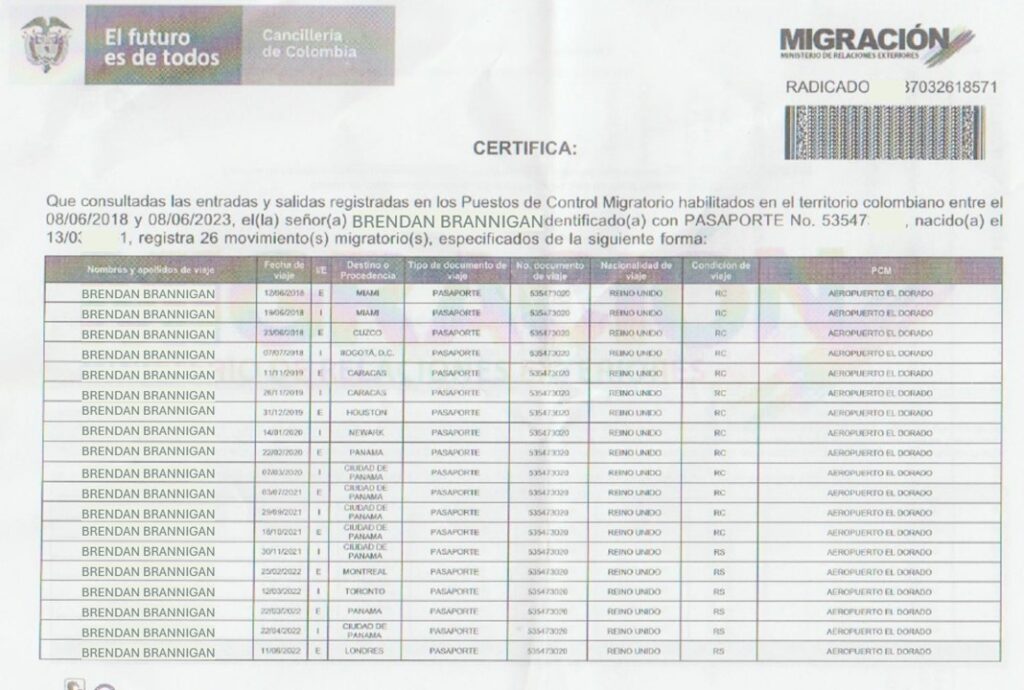
Before applying for the traspaso, you need to obtain Certificado de Movimientos Migratorios, which is a printed certificate issued by Migración showing your entrances and exits from Colombia. The purpose of the certificate is to show your presence in Colombia. If you have been absent from the country for more than two years your residency status is automatically cancelled. You can apply and pay for the certificate online at the Migración website Formulario Único de Trámites page.

Be careful to select the centro facilitador (Migration office) that is closest to you because you must collect the printed certificate in person from the office. Also select the 10-year option for the certificate’s timeframe.

Use the Formulario Único de Trámites page to order your Movements certificate.

Does that mean hours of queuing?

Not usually. One you have applied online, Migración will send you an email within three days notifying that your certificate is ready. You can go to the office and skip the lines by showing the email to the door staff. The counter staff will then print off the certificate. There is usually no need to make an appointment.

Can I get the certificate from overseas?

At present, Migración is only giving the option to collect the certificate in person in Colombia. This is one way to ensure that the visa holder is resident in Colombia. The option to collect in an overseas – i.e. at Colombian consulates – could change in the future.  

xample of the Certificado de Movimientos Migratorios.
Example of the printed Certificado de Movimientos Migratorios.

OK, so what about the visa transfer?

Now you need to the visa website at  www.cancilleria.gov.co, and navigate to the visa page called the SITAC. Note there are English and Spanish pages (the Spanish version sometimes works better).

Fill in your details to enter the system, then select ‘Visa traspaso’ from the dropdown menus. You will also be asked to click on the timeframe when your original ‘R’ visa was issued. You will then be told what documents to present; these can be uploaded in PDF.

The visa application page on the Cancelleria website.  Choose 'traspaso' from the options.
The visa application page on the Cancelleria website. Choose ‘traspaso’ from the options.

What documents are required?

This varies depending on your type of Resident visa and when it was issued, but generally:

  • Scan of your original R visa.
  • Scan of your passport main page.
  • Scan of your current Cedula Extranjeria.
  • Scan of your most recent migration entry stamp to Colombia.
  • Scan of your Migratory Movements Certificate issued by Migración.
  • Letter requesting the transfer, explaining the reason for the request (i.e. ‘para cumplir con Ley 5477 de 2022’).
  • Passport-style digital photo meeting the specifications.

Holders of permanent resident visas do not need to provide any more information. Other types of R visas might require evidence that the conditions under which the visa was granted still applies.

How do I pay?

The fees are divided into a US$54 ‘study’ fee, which is paid on submission of the documents. When the visa transfer is approved you pay an additional ‘visa issuance fee’ of US$54. Payment is also online by Colombian PSE bank transfer scheme, or you can use Visa or Mastercard credit cards. 

Is that the traspaso done?

No. Once your e-visa is sent to you be email, you need to register your visa and apply for a new Cedula Extranjeria ID card within 15 days of receiving the new e-visa. The initial application and payment is done online, using the Formulario Único de Trámites page. Tick the Cedula Extranjeria box and select your nearest Migración office from the drop-down menu.

You’ll need to provide more information, scans, and an US$80 payment.

Back to the FUT page, but this time for the Cedula.
Back to the FUT page, but this time for the Cedula and visa registration.

Surely that’s the end of it?

Nope. Now you need to make an appointment with the same Migración office to provide biometric data for your new CE. To make an appointment, first register with the website here.  Slots for the following week are allocated often at 5pm on Sunday, so try at this time.

If there are no slots available, take a screenshot of the appointment page as you can later use this as evidence to prove you were trying to comply with the 15-day plan (Migración sometimes sanction visa holders for not registering on time).

If you do not get an appointment within 15 days don’t worry; with your screenshots of the full agendas, Migracion are unlikely to complain. Everyone knows the system is overloaded.

What about my Cedula de Extranjeria?

Another delay: some people wait months for the plastic card, though lately the wait has been getting shorter. You can use your old CE or your passport in the meantime.

Should I hire a commercial visa company to do the paperwork?

The Cancilleria recommends applicants to apply directly for the traspaso directly via the website. However, commercial visa companies can assist with the paperwork but will charge a fee up to several hundred dollars. Try the process yourself before seeking professional help.

Just don’t leave it too late…

The post Long-term foreign residents reminded to transfer ‘R’ visas in 2026 appeared first on The Bogotá Post.

  •  

Medellin reassures tourists after US flight attendant death

Medellin Innovation Transformation
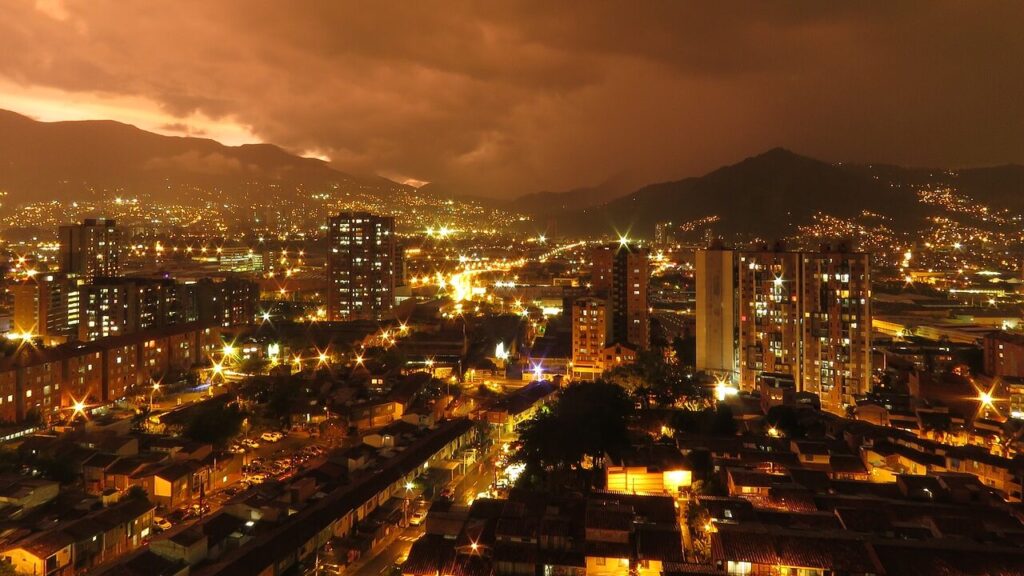
Medellín at night. Image credit: Pixabay.

On March 22, American Airlines flight attendant Eric Gutierrez went missing after a night out in Medellín.

Less than a week later, authorities found his body in a river three hours away from the city. They concluded he had not died of natural causes. 

The U.S-Salvadoran citizen’s murder is the latest in a string of tourist deaths in the Colombian city famous for its nightlife. 

But, in conversation with The Bogotá Post, Medellín’s Secretary of Security, Manuel Villa Mejía, offered reassurances that the city remains a safe destination for tourists and shared tips to stay safe.

Is Medellin a safe destination?

Gutiérrez, 32, appears to have been a victim of scopolamine robbery, in which thieves use the toxic drug to daze and incapacitate their targets. For years, this method has been well documented in Colombia, which is believed to have the highest number of cases in the world.

Medellín has a reputation as a party city and, accordingly, is often associated with stories about scams, druggings, and robberies.

But Villa Mejía insisted that the city does not tolerate criminal activities: “Our message is clear: there is no place for crime in Medellín.”

He highlighted the city’s recent security strategy to tackle crime, including increasing police presence in nightlife hotspots, dismantling gangs, and enhancing video surveillance.

The Secretary of Security noted how safety in Medellín – once the world’s murder capital – has dramatically improved in recent decades. 

“Today is an example of how security can be improved through strategy, consistent effort, and institutional coordination,” said Villa Mejía.

He noted that the city’s homicide rate has fallen for two consecutive years, now standing at 10 per 100,000 inhabitants.

Villa Mejía compared this rate to U.S. cities like Atlanta (51), Washington D.C. (51), and Chicago (73). 

“Although there is still a long way to go—since the only acceptable figure is zero—these advances reinforce our commitment to continue working every day to protect the lives, safety, and peace of mind of those who live in and visit the city,” said the Secretary of Security. 

Tips to stay safe

While Villa Mejía defended Medellín’s record on crime, he also said that tourists must take precautions to avoid ending up victims of robbery or worse.

“We invite all travelers to enjoy the city at their leisure, but also to exercise caution and act responsibly,” said Villa Mejía.

He recommended that travellers use trusted transportation, avoid displaying large amounts of money or expensive jewellery in public, and stay in safe areas where police are present. 

Villa Mejía also stressed the dangers of meeting strangers, especially online. He added that travellers who meet a stranger in person should avoid accepting drinks from them and not follow them to an unknown location. 

“The main recommendation is to stay in control of your surroundings,” concluded the Secretary of Security.

The post Medellin reassures tourists after US flight attendant death appeared first on The Bogotá Post.

  •  

Colombia on brink of outlawing female genital mutilation in landmark vote

Colombia is on the verge of banning female genital mutilation (FGM), as lawmakers advance legislation that would outlaw a practice still reported in parts of the country, making it the only nation in Latin America where cases have been documented.

In a unanimous decision, the First Commission of the Senate approved the bill in its third debate, leaving just one final vote in the full chamber before it can become law — a significant step in addressing a practice widely condemned as a violation of human rights.

The initiative, known as Bill 440 of 2025 (accumulated with 239 of 2024), seeks not only to prohibit FGM but to eradicate the conditions that allow it to persist, particularly in indigenous communities.

“This is about settling a historic debt with Indigenous women and girls,” Representative Jennifer Pedraza said after the vote. “Eradicating this violent and limiting practice is essential to guaranteeing their health and dignity.”

Globally, more than 230 million girls and women alive today have undergone FGM, according to the World Health Organization. The practice, defined as the partial or total removal of external female genitalia for non-medical reasons, is most often carried out on minors and can lead to severe bleeding, infections, complications in childbirth and long-term psychological trauma.

While FGM is most prevalent in parts of Africa, the Middle East and Asia, Colombia’s case has drawn particular concern due to its singular status in the Americas. Lawmakers noted that the practice disproportionately affects very young girls, often under the age of one, with cases concentrated in the departments of La Guajira, Chocó and Risaralda.

Official data show a gradual decline in reported cases: 91 in 2023, 54 in 2024 and 39 so far in 2025. Authorities caution, however, that underreporting, is pervasive.

The bill marks a strategic shift away from punitive approaches toward prevention, education and intercultural dialogue. Senator Clara López, who led the initiative in the Senate, argued that criminalization alone has failed to eliminate the practice elsewhere.

“In countries where FGM has been banned for decades, prevalence remains high,” López said during the debate, pointing to cases such as Mali and Egypt, where rates have remained above 80% despite legal prohibitions.

The legislation was developed through consultations with Indigenous leaders, including representatives of the Emberá community, where cases have been recorded. Juliana Dominico, a spokesperson for the Emberá, backed the bill while stressing that FGM is not an essential cultural or spiritual practice.

Supporters argue that framing FGM solely as a criminal issue risks driving it underground and alienating communities. Instead, the proposed law emphasizes public health strategies, education campaigns and culturally sensitive engagement to encourage abandonment of the practice.

International bodies have long called for a coordinated response. In 2008, the World Health Assembly adopted Resolution WHA61.16, urging governments to act across sectors including health, education, justice and social services.

Beyond its immediate health risks, FGM is widely recognized as a violation of fundamental rights, including bodily integrity and freedom from cruel or degrading treatment. In some cases, the procedure can be fatal.

The economic burden is also significant. The WHO estimates that treating complications related to FGM costs health systems around $1.4 billion annually, a figure expected to rise without stronger efforts to end the practice.

If approved in its final debate, Colombia’s ban would mark a turning point for the hemisphere, aligning the country with global efforts to eliminate FGM while testing a prevention-focused model that lawmakers hope will succeed where criminalization alone has fallen short.

  •  

Celebrate Apple’s 50th Anniversary with a Nifty Scribble  Apple Logo Wallpaper

Apple CEO Tim Cook is celebrating the 50th anniversary of Apple Inc being born, which was officially founded on April 1, 1976, with a nice note and dedicated page on the Apple.com site: “50 Years of Thinking Different”. The anniversary post discusses Apple’s humble origins in a garage, to the first Apple computer, the Mac, ... Read More
  •  

1st Beta of macOS Tahoe 26.5 & iOS 26.5 Released for Testing

Apple has issued the first beta versions of iOS 26.5, MacOS Tahoe 26.5, and iPadOS 26.5, for users who are participating in the developer beta programs for Apple system software. The new versions of beta system software don’t include any major new features thus far, except for laying the groundwork for including advertisements in Apple ... Read More
  •  

Influencer “Stink Bomb” on Avianca Flight Triggers Safety Alert Over Atlantic

The stunt began, as so many do in the age of viral fame, driven by the need to provoke a reaction.

At 35,000 feet above the Atlantic, inside the sealed cabin of an Avianca B-787 ‘Dreamliner’ en route from Bogotá to Madrid, passengers aboard flight AV46 were unwitting participants in a reckless influencer incident involving a “stink bomb”. At the center of it: Yeferson Cossio, a content creator whose appetite for shock value appears to have outpaced even the most basic understanding of context.

The incident occurred on March 11, 2026, during the long-haul crossing between Colombia and Spain – a route that typically lasts close to 10 hours and operates far from diversion airports for much of its duration. According to Avianca, Cossio activated “an odor-generating chemical device” mid-flight, releasing a strong, foul smell inside the cabin. Several passengers reportedly complained of discomfort, while others grew concerned about the nature of the substance.

What may have been conceived as a prank for social media rapidly escalated into a situation requiring intervention from the cabin crew, who followed established safety protocols for unknown substances in flight. In aviation, any unexplained odor – particularly one described as chemical – can trigger alarm, given the potential risks ranging from toxic exposure to onboard system malfunctions.

There is a particular kind of arrogance required to mistake a transatlantic flight for a social media stage.

Aircraft cabins are not neutral spaces. They are tightly controlled environments governed by strict international safety regulations, with air continuously recirculated through pressurization systems. Introducing any foreign substance – no matter how trivial its intent – can compromise not only passenger comfort but also operational safety.

Avianca’s response was swift and unequivocal. In an official statement, the airline confirmed it had terminated Cossio’s contract of carriage upon arrival and canceled his return ticket, citing “disruptive behavior” that affected “security, order, discipline, and sanitation” on board. The company also announced it would pursue legal action.

The airline went further, emphasizing the context: the aircraft was flying over the Atlantic Ocean at the time of the incident, limiting options for emergency diversion. Under such conditions, even a perceived threat can escalate quickly, placing additional pressure on crew and passengers alike.

Cossio, who commands more than 12 million followers on Instagram and upwards of 19 million on TikTok, has since denied the allegations. He claims the incident has been misrepresented and insists he will release video footage to clarify what happened, dismissing the reports as “gossip” and false accusations.

But denial does little to erase the broader implications.

The influencer has built his online persona around shock-driven content – often involving elaborate setups designed to provoke strong reactions. In previous videos, similar “odor-based” gags have been used on friends and acquaintances. Transplanting that formula into a commercial aircraft, however, represents a significant escalation.

In the algorithmic economy of social media, outrage is currency. Platforms reward engagement – clicks, shares, comments – often amplifying the most extreme content. For influencers, this creates constant pressure to push boundaries further, to transform everyday situations into spectacles.

But what happens when that spectacle unfolds in a high-risk, regulated environment?

The incident has reignited debate in Colombia over the limits of digital content and the responsibilities of public figures. Avianca used the moment to call on lawmakers to advance a Proyecto de Ley 153 de 2025, aimed at strengthening sanctions against conflictive passengers and enhancing protections for airline crews.

The aviation industry, both in Colombia and globally, has reported a rise in unruly passenger behavior in recent years. From altercations to non-compliance with safety instructions, the incident comes amid a wider shift in airline policy toward stricter enforcement of passenger conduct. Carriers are increasingly drawing hard lines around behavior once dismissed as merely inconsiderate. United Airlines, for instance, recently updated its contract of carriage to require passengers to use headphones when listening to personal devices, explicitly reserving the right to remove those who refuse and even ban repeat offenders.

The message is clear: in the confined, high-stakes environment of a commercial aircraft, disruption – no matter how trivial it may seem on the ground – is no longer tolerated. And for the passengers aboard AV46, the experience was not content. It was a disruption – uninvited, unsettling, and entirely avoidable.

  •  
❌