 Login
Login
60 Countries to Meet on Phasing Out Fossil Fuels but Are Excluding the U.S.
The Trump administration was not invited to the gathering in Santa Marta, Colombia. A White House spokeswoman called the green transition “destructive.”

With just over a month to go before Colombia’s May 31 presidential election, a new Invamer poll suggests the race has narrowed to three viable contenders, as left-wing senator Iván Cepeda strengthens his lead and two right-wing rivals battle for a place in the runoff.
The survey, conducted for Noticias Caracol and Blu Radio, shows Cepeda commanding 44.3% of voting intention, a significant jump from 37.1% in February. The Pacto Histórico candidate has not only consolidated support among core voters but expanded his appeal across all regions, with particularly strong gains among younger voters aged 20 to 30.
Trailing behind, but still within striking distance of a second-round berth, are Abelardo de la Espriella with 21.5% and Paloma Valencia with 19.8%. While De la Espriella has posted modest gains since February, Valencia has emerged as the fastest-rising candidate, nearly doubling her support from 10% in the previous poll.
The data underscores a central dynamic shaping the race: a fragmented right competing for a single runoff slot, even as the left coalesces behind a dominant frontrunner. According to the data, as long as the right remains divided, any division among the pro-Uribe camps will continue to benefit Cepeda. Unless there is a clear consolidation after May 31, the numbers suggest the second round will be a contest over who faces the hard-leftist and not whether he gets to the final run-off.
The collapse of Colombia’s political center has been equally striking. Former Bogotá mayor Claudia López has seen her support plunge from 11.7% to 3.6%, while former Medellín mayor Sergio Fajardo has dropped from 6.6% to just 2.5%. Both candidates have lost more than half of their previous backing and now poll well below the 4% threshold required for state reimbursement of campaign expenses.
López’s decline appears particularly acute in urban constituencies, where she previously drew strong support, including among progressive and LGBTQ voters, pointing to a broader erosion of her core base. Fajardo, meanwhile, continues to struggle to regain traction, reflecting persistent voter dissatisfaction with centrist alternatives.
Analysts are also seeing how centrist voters are shifting toward Valencia, whose ticket includes former DANE statistics chief Juan Daniel Oviedo as the vice-presidential option. Oviedo appears to be decisive in broadening Valencia’s appeal beyond the Centro Democrático base.
Despite Cepeda’s commanding first-round lead, runoff scenarios suggest a more competitive contest – particularly if Valencia secures the second spot. In a hypothetical second round between Cepeda and De la Espriella, the left-wing candidate would win with 54.6% against 42.6%. However, against Valencia, the margin narrows significantly to 51.2% versus 46.6%.
That tightening gap reflects Valencia’s growing ability to attract support beyond her base, including voters from the political center and segments of the undecided electorate. According to the poll, she outperforms De la Espriella in capturing second-choice preferences, positioning her as the more competitive challenger in a potential runoff.
When respondents were asked who they would support if their first-choice candidate failed to advance, Cepeda led with 26.7%, followed closely by Valencia at 25.7%, with De la Espriella trailing at 19.8%. López and Fajardo lagged further behind, reinforcing their diminished relevance in the race.
Cepeda’s dominance, however, is not without warning signs. While he continues to lead comfortably, his projected runoff margins have narrowed compared to earlier surveys, particularly against Valencia. The erosion suggests that while his base remains solid, opposition voters may be coalescing more effectively than before.
For now, the trajectory is clear. Cepeda has gained ground nationally despite a worsening security situation and poll conducted before the terrorist bomb on Saturday, April 25 by FARC dissidents along the Pan-American highway in which 20 persons were killed.
With less than a month until Colombians head to the polls, the race appears increasingly defined not by a crowded field, but by a three-way struggle – one frontrunner and two challengers vying for the chance to stop him.
Colombians are expressing outrage and grief after a bombing attributed to dissident factions of the former FARC killed 20 people and left injured 46, marking the country’s deadliest attack in over a decade.
The blast on Saturday afternoon tore through a stretch of the Pan-American Highway near Cajibío, in the southwestern department of Cauca, leaving mangled vehicles, a massive crater, and scenes of devastation that authorities described as among the most brutal assaults on civilians in recent memory.
Departmental governor Octavio Guzmán said the explosion, which injured at least 36 people, including children, was the “most ruthless attack against the civilian population in decades,” adding that several vehicles were overturned by the force of the blast.
Military officials said attackers blocked traffic with a bus and another vehicle before detonating explosives as cars and buses were stranded along the highway, a vital artery linking Colombia’s southwest with the cities of Popayán and Cali.
The attack, attributed to a FARC dissident faction led by Iván Mordisco, came amid a surge of violence across southwestern Colombia, with authorities reporting at least 26 attacks over a two-day period in Cauca and neighbouring Valle del Cauca. Incidents included explosions, arson attacks on vehicles, and assaults on security forces in cities such as Cali, Palmira, and Jamundí.
But as the country mourns, President Gustavo Petro faced mounting criticism after posting images of himself celebrating his birthday, prompting accusations of insensitivity and a lack of leadership during a national crisis.
Late on Saturday evening, Petro shared a photograph on social media showing himself alongside three friends, all wearing Hawaiian-style flower garland necklaces, accompanied by a message marking his birthday on April 19. “Surrounded by love and bonds of affection,” Petro wrote. “We are an army of Quixotes doing the impossible and achieving the impossible.”
The post, which appeared hours after reports of the deadly attack emerged, sparked immediate backlash from political leaders and the public, many of whom questioned the president’s priorities at a moment of national mourning.
Senator Juan Manuel Galán criticized the timing of the message, writing on social media: “19 people murdered in Cajibío, Cauca, the country bleeding, the Pan-American highway turned into tragedy… but the priorities of Gustavo Petro were clear: the country in mourning and he showing us how he celebrated his birthday.”
Presidential hopeful Paloma Valencia travelled to Palmira to meet with victims’ families and express solidarity. “We are with the people who are afraid, who are mourning their loved ones, who need to feel safe again. Petro should be here,” she said.
The criticism underscores deep tensions surrounding Petro’s security strategy, particularly his “Total Peace” policy aimed at negotiating with illegal armed groups. Critics argue the approach has failed to contain violence in regions such as Cauca, where armed groups linked to narcotics trafficking and illegal mining continue to operate with increasing intensity.
Saturday’s bombing, one of the most lethal attacks since the 2016 peace accord with the FARC, has renewed fears about Colombia’s security trajectory and the resilience of dissident factions that refused to demobilise.
Images from the scene showed debris scattered across the highway, shattered vehicles, and a large crater where the explosion occurred. Authorities confirmed that 15 women and five men were among the dead, while several of the injured remained in critical condition.
For residents of the region, the attack has deepened a sense of vulnerability and abandonment.
“Cauca cannot continue to face this barbarity alone,” Governor Guzmán said, calling for greater national support and a stronger security response.
As Colombia approaches a general election on May 31, the attack also reveals the extent to which the state remains unable to protect civilians, let alone presidential candidates opposed to the failed security policies of the country’s first leftist administration. “Petro: You are simply a disgrace. Show some empathy. Show some respect,” noted Paloma Valencia from Palmira.
Colombian President Gustavo Petro will meet Venezuela’s interim leader Delcy Rodríguez in Caracas on Friday to address security challenges along the shared border, marking their first official encounter since Nicolás Maduro was captured by U.S special forces on January 3, 2026.
The meeting, to be held at the Miraflores presidential palace, is expected to center on coordination between the two countries to tackle armed groups, drug trafficking and other cross-border threats that have long destabilized frontier regions.
Colombia’s presidency said the talks aim to “strengthen bilateral cooperation, territorial control and coordination on security matters,” following the cancellation of a previous meeting scheduled for March 13 at the border due to security concerns cited by Caracas.
Friday’s talks come after Rodríguez assumed power earlier this year following the capture of former Venezuelan dictator Nicolás Maduro during Operation Absolute Resolve.
Petro is expected to travel to Caracas after holding meetings earlier in Bogotá. The leaders will first hold a private discussion to outline joint actions addressing border instability, followed by a broader metting between their respective delegations aimed at formalizing institutional commitments.
Officials from both countries are also expected to sign the final act of the III Commission on Neighborhood and Integration, with foreign ministers participating, before delivering statements to the media.
The Colombia–Venezuela border stretches more than 2,200 kilometers (1,367 miles) from the Caribbean coast to the Amazon basin and has long been a hotspot for illegal activity, including the presence of the National Liberation Army (ELN) guerrilla, as well as drug trafficking and smuggling networks.
Petro said earlier this week that the talks would place particular emphasis on the Catatumbo region, one of the most volatile areas along the frontier, where violence linked to armed groups and illicit economies has intensified.
“If we go, Catatumbo is a key issue to discuss with President Delcy,” Petro said during a cabinet meeting on April 21, adding that his delegation would include military and police officials to coordinate security strategies.
He said the goal is to develop a joint security plan, improve coordination between the two countries’ armed forces and police, and deepen intelligence-sharing, warning that a lack of cooperation could lead to operations that harm civilian populations.
The meeting also comes against the backdrop of a rebound in bilateral trade between the two countries following years of strained relations.
Trade flows have increased significantly in recent years, rising from around US$200 million three years ago to more than $1 billion, representing an increase of roughly 600%, according to official figures.
Colombia recorded a trade surplus of US$1 billion with Venezuela in 2025, underscoring the economic incentives for both governments to maintain stable ties despite ongoing political uncertainties.
Petro first announced the trip last week during an interview in Spain, referencing the earlier failed meeting and signaling his willingness to travel to Caracas to advance talks.
The visit marks a key test of Colombia’s role in engaging with Venezuela’s transitional leadership, as both countries seek to stabilize their shared border while cautiously rebuilding diplomatic and economic relations in the post-Maduro era.
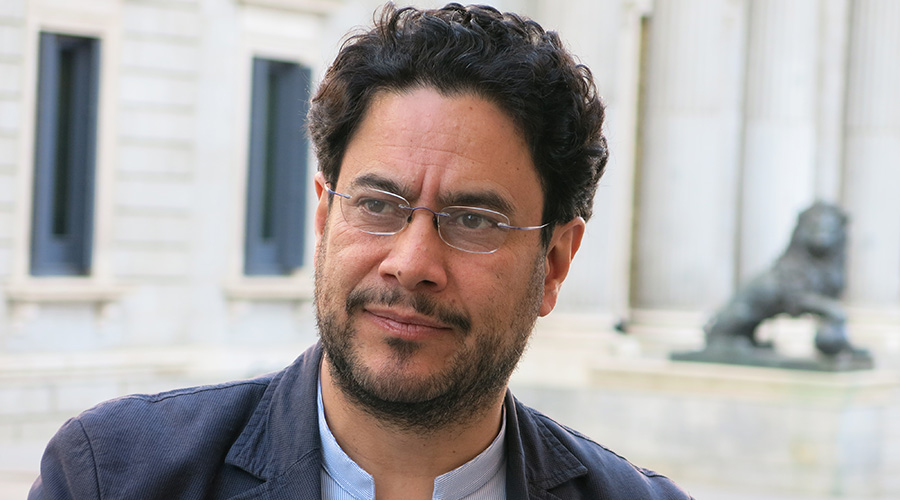
Bogotá, Colombia – Leftist presidential candidate Iván Cepeda challenged his opponents to a debate on Saturday after turning down previous proposals to face-off with his rivals.
“I challenge the far right, its two candidates – Senator Paloma Valencia and lawyer Abelardo de la Espriella – to a debate,” Cepeda told a crowd at a rally in Fusagasugá, a city near Bogotá.
His opponents responded by accepting the proposal, while also highlighting that they had been calling for a debate for months.
The possibility of a live face-off between candidates has been a recurring theme ahead of first-round presidential elections on May 31.
Shortly after beginning his candidacy last year, Cepeda dismissed the idea of participating in a debate: “I’m not going to take part in debates—let me make this clear from the outset—to exchange insults with other candidates, or to threaten one another, or to denigrate one another.”

Cepeda’s rivals have repeatedly criticized him for refusing to spar with them on the public stage, something they highlighted following the leftist candidate’s U-turn on Saturday.
“Allow me to correct you: you’re not issuing a challenge; you’re accepting the challenge you were invited to take up months ago,” said criminal defense attorney de la Espriella.
Valencia, the candidate for the Centro Democrático (Democratic Center) party, also seized the opportunity to pounce on Cepeda: “A few weeks ago, it was I who challenged Iván Cepeda several times to a face-to-face debate, yet you chose to hide away in the Senate with a controlled microphone.”
She suggested that Cepeda’s U-turn owes to a worsening performance in recent polls: “Now that the polls are tightening, you’re coming out of Fusagasugá with this challenge.”
Analysts agreed with Valencia’s suggestion, saying that Cepeda’s debate proposal is an attempt to inject life into a stagnating campaign.
“Cepeda has offered to debate because of his campaign’s inherent lack of momentum and general weakness. He is not captivating any new voters or finding a tangible way of changing the narrative in his favor,” Sergio Guzmán, Director at Colombia Risk Analysis, a political risk consultancy, told Latin America Reports.
Internal party polls reportedly show sluggish growth in Cepeda’s polling numbers since he became the official candidate for the Pacto Histórico (Historic Pact) in October.
Meanwhile, Valencia has been soaring in the polls following her victory in presidential primaries in March; Cepeda and de la Espriella did not partake.
But the debate is not without risk for Cepeda, according to Guzmán: “Cepeda runs the risk of having to go on the defensive of Petro and his administration.”
Others believe that Cepeda’s oratory style does not lend itself to the televised debate format.
“He has a much more academic tendency, which is not so typical in politics, let alone in modern politics,” noted Miguel Jaramillo Luján, a Colombian political strategist. In contrast, he noted that de la Espriella and Valencia have a more media-savvy communication style.
Nevertheless, the analyst told Latin America Reports that Cepeda’s debate style could give him the chance to woo crucial centrist voters: “I believe he can inspire confidence and credibility among his target audience and even among the centre, particularly when it comes to dispelling certain myths and lies that have been spread by the centre and the right.”
With the leading candidates agreeing to debate, the battle over the specifics – including moderators, questions, and location – begins.
The post Colombia elections: candidates set for debate after Cepeda backtracks appeared first on The Bogotá Post.
A Qatar Airways cargo jet and a Lufthansa passenger plane came within an estimated 200 meters of each other on final approach to Bogotá on Sunday evening, in a near miss that could have resulted in a major airline catastrophe.
The incident unfolded near El Dorado International Airport as both aircraft were being guided toward runway 32L during a late-evening arrival window. According to preliminary information, Qatar Airways cargo flight QTR 8174, operated by a Boeing 777 from São Paulo, was descending to approximately 9,600 feet when it converged with Lufthansa flight DLH 542.
The Lufthansa flight from Frankfurt Airport, operated by a Boeing 787 -900 ‘Dreamliner’ carrying some 270 passengers, had departed at 3:08 p.m. local time and was scheduled to land in Bogotá at 11:51 p.m. local time. As it approached the Colombian capital, the aircraft turning at roughly 9,700 feet, placing it on a dangerously converging path with the Qatar Airways freighter.
The two wide-body aircraft, each spanning more than 60 metres in length, were both landing from the East, and were above the residential neighbourhood of Modelia, according to late-night eyewitness reports.
Under standard air traffic control procedures, aircraft must maintain a minimum vertical separation of 1,000 feet, 0r 300 metres. The apparent compression of that buffer to an estimated 600 feet suggests a significant breakdown in sequencing or communication during the critical end-phase of a flight.
Disaster was averted when the Lufthansa aircraft abruptly climbed to over 12,000 feet, executing what appears to have been an emergency “Go-Around” avoidance manoeuvre. Such actions are typically triggered by onboard collision avoidance systems, which issue automated instructions to pilots when another aircraft is detected at dangerously close range. The manoeuvre forced the passenger flight to abort its initial landing approach before safely completing a second descent into Bogotá. No injuries were reported.
However, the near miss has renewed scrutiny over air traffic control operations in the Colombian capital, following another serious safety incident just two months earlier.
On February 20, a LATAM Airlines flight operated by an Airbus A320 carrying 157 passengers was forced to abort take-off after a military helicopter appeared unexpectedly near the runway at El Dorado International Airport.
According to Colombia’s civil aviation authority, Aerocivil, the aircraft—bound for San Andrés—had been cleared for departure after routine taxi procedures. At 17:04 local time, the plane was authorized for pushback from position C5, and by 17:13 it had been instructed to taxi toward runway 14R.
At 17:36, after receiving clearance for take-off, the crew initiated the departure roll. Moments later, pilots detected a rotary-wing aircraft flying on a parallel trajectory and approaching the runway environment. The unexpected presence of the helicopter forced the crew to execute an aborted take-off, a high-risk manoeuvre at speed, in order to avoid a potential collision.
Aerocivil attributed the incident to interference in the communication frequency of the airport’s north control tower, raising concerns about coordination between different air traffic control sectors. The episode, involving a commercial jet accelerating for departure and an unauthorized or mis-coordinated helicopter movement, has been classified as a serious operational safety event.
Together, the two incidents have cast a spotlight on the operational pressures facing El Dorado International Airport (SKBO), which handles hundreds of daily movements and serves as one of the busiest aviation hubs in Latin America. Bogotá’s high-altitude location—more than 2,600 metres above sea level—combined with surrounding mountainous terrain, requires tightly managed flight paths and precise coordination between controllers and pilots.
Sunday’s late evening incident involving two long-range aircraft is expected to undergo a detailed investigation, including analysis of radar data, cockpit voice recordings and air traffic communications.
On Monday, Colombia’s Aerocivil, affirmed that the event did not constitute a critical safety risk. In an official statement, the authority said runway 32 Right had been temporarily unavailable due to a third aircraft blocking the strip, prompting controllers to redirect incoming traffic—including the Qatar Airways and Lufthansa flights—to runway 32 Left.
Aerocivil said the change in instructions led to a reduction in speed that decreased horizontal separation between the two aircraft during the approach phase. However, it stressed that “controlled and safe vertical separation was maintained at all times.”
According to Aerocivil , the Lufthansa crew’s decision to abort the landing was carried out “independently” and in line with standard global aviation protocols. “This is a normal and standardised procedure in aviation, designed precisely to guarantee safety when visual or distance parameters so require,” the statement said.
The technical analysis, Aerocivil added, confirms that the situation was “an operational event managed under control” and “at no time represented a critical situation or a real risk to air safety for passengers or crew.”
The authority also urged the public and political actors not to “exaggerate or politicise” what it described as a strictly technical matter, warning that reliance on unofficial sources could generate unfounded alarm and affect confidence in Colombia’s aviation sector.
Aris Mining (TSX: ARIS; NYSE: ARIS) confirmed the completion of an underground infrastructure connection at its Marmato gold mine in Colombia. The development involved connecting a new surface decline to the existing underground mining workings.
This cross-cut connection serves as a technical step for the ongoing expansion project, which includes the construction of a 5,000 tons-per-day carbon-in-pulp (CIP) plant. The company stated that the infrastructure is currently on schedule to support the initiation of gold production in the fourth quarter of 2026.
Neil Woodyer, Chair and CEO of Aris Mining, stated: “The on-schedule connection of the new surface decline to the existing underground development is a major milestone for Marmato and an important step in delivering our expansion plans.”
The Marmato expansion is part of a broader strategy intended to increase the company’s annual gold production. Aris Mining aims to achieve a combined output of approximately 500,000 ounces per year from its Segovia and Marmato operations. The Segovia mine previously expanded its operational capacity following the installation of a second mill in June 2025.
The company maintains a long-term production objective of approximately 1 million ounces of gold annually. This target incorporates potential production from the Toroparu gold project in Guyana, where a prefeasibility study is currently underway. Aris Mining expects a construction decision regarding the Toroparu project in early 2027.
Regarding its portfolio in Colombia, the company is finalizing environmental studies for the Soto Norte gold project. Aris Mining plans to submit these documents for the licensing process during the second quarter of 2026.
Photo (© Loren Moss) illustrative only (Not marmato mine)

On Wednesday, the Universidad de la Sabana and the National Federation of Departments (FND) hosted the Governors’ Summit, a rare event that convened almost all of the frontrunners in Colombia’s presidential race.
Paloma Valencia, Abelardo de la Espriella, Sergio Fajardo, Roy Barreras, and Claudia López fielded questions from regional authorities about how they planned to tackle problems in Colombia’s provinces.
While Iván Cepeda, the leftist favorite, was scheduled to attend, his team pulled out at the last minute, fuelling the candidate’s reputation for being media-shy.
Early on Wednesday morning, governors and their aides began filtering into the heavily policed event in Chía, a municipality north of Bogotá.
The FND selected questions from governors which were then posed to candidates by the two moderators: El Tiempo Director Andrés Mompotes and his counterpart at radio station La FM, Juan Lozano.
The main themes of the day were tackling insecurity and armed groups, investing in regional development, and mechanisms to improve provincial representation.
For some governors, the event was an opportunity to redress an acute crisis; Erasmo Zuleta, who heads the local government in Córdoba, used the forum to highlight the ongoing effects of disastrous floods which began earlier this year.
“The emergency didn’t pass, nor did the tragedy. The floodwaters receded, leaving behind widespread damage; they took lives, homes, crops, and material possessions,” Zuleta told The Bogotá Post.
“Now more than ever, we need greater solidarity to recover from the damage,” continued the Governor, in a bid for help from the national government.
Another recurring theme was prison reform, following a recent scandal over a concert that took place in the Itagüí prison in Antioquia.
Abelardo de la Espriella, the firebrand criminal defense attorney and right-wing frontrunner, used the opportunity to push his tough-on-crime proposal.
“In Colombia, there are no prisons—there are universities of crime,” said de la Espriella, who took aim at the National Penitentiary and Prison Institute (INPEC), which he described as “a den of thieves.”

The candidate added that Colombia should look to El Salvador to develop its incarceration model, praising dictator Nayib Bukele’s draconian mass imprisonment efforts that have dramatically reduced crime and drawn condemnation from rights’ groups.
Security, more broadly, was also high on the agenda, as Colombia grapples with a surge in violence related to illegal armed groups.
“Today we are living in the grip of insecurity. They want to drag us back into the abyss we thought we had left behind,” railed Paloma Valencia, the candidate for the right-wing Centro Democrático (Democratic Center) party.
Fears of insecurity affecting democratic processes have overshadowed the elections, with the United Nations issuing a warning earlier this year that armed groups could disrupt the vote.
The Valle del Cauca department has been one of the most heavily affected by the armed conflict, with its capital, Cali, rocked by a wave of bomb attacks by rebel groups in the past year.
But its Governor, Dilian Francisca Toro, offered reassurances in conversation with The Bogotá Post: “We ensure that in every municipality and across all regions, law enforcement is present so that we can have free, democratic elections where there is no restriction whatsoever on the ability to vote.”
Toro also cited the elections on March 8 as an example of the success of security planning: “In Valle del Cauca we really had very peaceful elections, and now, God willing, we will have them again.”
Amid the mounting threat by armed groups, candidates De la Espriella and Valencia vow an iron fist, using military force to crush rebel forces. They model themselves after former right-wing President Álvaro Uribe (2002-2010), who teamed up with the U.S. to launch a total war on the Revolutionary Armed Forces of Colombia (FARC).
But leftist Iván Cepeda highlights the human rights abuses perpetrated by the government during that period, in which thousands of innocent civilians lost their lives. He proposes to continue the current administration’s Paz Total – or Total Peace – policy of negotiating with armed groups.
But Cepeda missed the opportunity to make his case to the public, fuelling criticism by his opponents.
De la Espriella has repeatedly called on Cepeda to agree to a debate, but the leftist candidate has yet to accept.
With less than two months before the May 31st election, there are increasingly few opportunities for the candidates to make their case before the public.
The post Colombia presidential candidates appear in Governors’ Summit appeared first on The Bogotá Post.
Colombia will cull dozens of invasive hippopotamuses descended from animals illegally imported by Pablo Escobar, as authorities warn the rapidly growing population is endangering ecosystems and local communities.
Environment Minister Irene Vélez Torres said the government has authorized the euthanasia of up to 80 animals as part of a broader strategy to control the herd, which now numbers around 200 across the Magdalena River basin.
“We must act to reduce the hippopotamus population,” Vélez said, describing the cull as a “technical recommendation” following years of failed attempts to contain the species through sterilization and relocation.
The hippos — descendants of four animals brought to Colombia in the 1980s for Escobar’s private zoo at Hacienda Nápoles — have flourished in the country’s tropical lowlands, where a lack of natural predators and abundant water sources have enabled unchecked reproduction.
Scientists warn that without intervention, the population could surge to between 500 and 1,000 animals within the next decade, placing increasing strain on fragile river ecosystems.
The large herbivores consume vast quantities of vegetation and deposit significant organic waste into waterways, altering water chemistry and threatening native species, including manatees and turtles. Officials also cite rising risks to rural communities, with reports of hippos damaging farmland and attacking livestock and people.
The government’s plan, backed by a 2022 technical report from the Humboldt Institute and the National University, includes euthanasia, confinement and possible relocation. The program carries a budget of 7.2 billion pesos and is set to begin in the second half of 2026, targeting key hotspots near Puerto Triunfo and along the Magdalena River.
Previous efforts to manage the population — including sterilization campaigns in 2022 and 2023 and talks with countries such as India and Mexico to relocate animals — yielded limited results. Authorities say international transfers are unlikely, citing logistical challenges and genetic concerns linked to inbreeding.
Animal welfare advocates have condemned the cull. Senator Andrea Padilla, an outspoken animal rights campaigner, described the plan as “cruel” and accused the government of opting for the “easy way out.”
“Killings and massacres will never be acceptable,” Padilla wrote on social media, arguing the animals are victims of decades of state neglect.
But officials insist the risks posed by the species — considered among the world’s most dangerous large mammals — leave little alternative. In Africa, hippos are responsible for hundreds of human deaths each year, and Colombian authorities report increasing “hippo-human interactions,” including road accidents and attacks along riverbanks.
Escobar, who built his sprawling Napoles estate was killed in 1993, but the legacy of his private zoo has endured in unexpected ways. After his death, some animals were relocated, while others — including the hippos — escaped into the swamps.
Decades later, what began as a curiosity has become one of Colombia’s most unusual environmental dilemmas, forcing authorities to weigh animal welfare against the protection of native ecosystems.
The mining industry in Colombia is undergoing a structural transformation as companies prioritize operational efficiency to navigate a challenging economic environment. Recent industry data shows the mining Producto Interno Bruto (GDP) contracted by approximately 8%, while foreign direct investment has experienced a notable downturn. This trend has prompted firms to seek innovative financial strategies to maintain sustainability and competitiveness.
A primary strategy gaining traction is the rotation of underutilized industrial assets. By leveraging industrial auctions, companies are liquidating idle machinery—such as excavators, drilling rigs, and heavy-duty power equipment—to recover capital without the necessity of maintaining internal commercial structures. Superbid, a multinational industrial auction platform, has emerged as a key facilitator for these transactions within the region.
“Asset rotation is becoming a strategic decision to free up capital and improve operations.” — Maria Paula Villa Velez, Superbid
This operational shift toward asset-light business models will be a central topic at MINEXPO Colombia 2026, which is scheduled to take place on April 15 and 16 at Plaza Mayor Medellín. The event serves as a platform for mining producers, suppliers, and investors to discuss strategies for financial optimization and industrial reindustrialization.
The secondary market for industrial equipment has expanded significantly as mining companies divest assets no longer essential to their core operations. This machinery is being repurposed in the infrastructure, construction, and energy sectors, thereby extending the lifecycle of the assets and contributing to circular economy objectives. Market participants have observed increased competition for this equipment, with buyers consistently acquiring assets at market-determined values.
Looking toward the remainder of 2026, industry analysts expect the integration of these efficient asset management models to accelerate, particularly in regions such as Antioquia, where the nexus of mining and infrastructure projects remains a critical economic driver.
“Today the mining sector is understanding that efficiency is not only in producing, but in better managing its resources,” stated Maria Paula Villa Velez, sub-manager at Superbid Medellin. “Asset rotation is becoming a strategic decision to free up capital and improve operations.”
The Asociación Colombiana de BPO (BPrO) has scheduled the 2026 CX Summit to take place in Cartagena, Colombia. The event, marking the 25th anniversary of the gremio, will gather more than 1,300 business executives and international specialists to analyze the evolution of the customer experience industry. The summit occurs as Colombia solidifies its position as a regional hub for knowledge-based services, a sector that currently represents approximately 3.5% of the national gross domestic product.
Scheduled for May 6 and 7, 2026, at the Hotel Hilton Cartagena, the conference will operate under the theme The Age of Intelligent CX. Discussions will focus on the integration of artificial intelligence, data analytics, and human empathy within digital economies. According to Ana Karina Quessep, executive president of BPrO, the integration of technology and human talent has become a critical factor for corporate and national competitiveness in demanding global markets.
“The organizations that manage to integrate intelligence, technology, and human talent are those making the difference in increasingly demanding markets.” — Ana Karina Quessep, Executive President of BPrO.
The speaker lineup includes Brad Cleveland, a strategist in customer experience; Tricia Wang, an ethnographer focusing on the intersection of data and human behavior; and Lisa X. Walden, an author specializing in workplace culture. Other confirmed participants include Efrén Martínez and Nicolás Uribe, who will address organizational well-being and digital transformation in Latin America.
On May 5, prior to the main summit, BPrO will host the GBS Experience. This session is designed to examine Colombia’s role as a strategic platform for Global Business Services and shared service centers. In collaboration with Chazey Partners, ProColombia, and Invest in Bogota, BPrO is developing a comprehensive study of the 2026 industry figures. This research aims to serve as the official reference for the Centros de Servicios Compartidos (CSC) and GBS sectors in the country, providing updated data on their economic impact and operational reach.
The event will include networking sessions and a commercial exhibition featuring representatives from the technology, financial, telecommunications, and retail sectors. Registration and the full agenda are available through the official event website. BPrO currently represents over 100 member companies specializing in customer relationship management and the broader service value chain in the US and Latin America.
