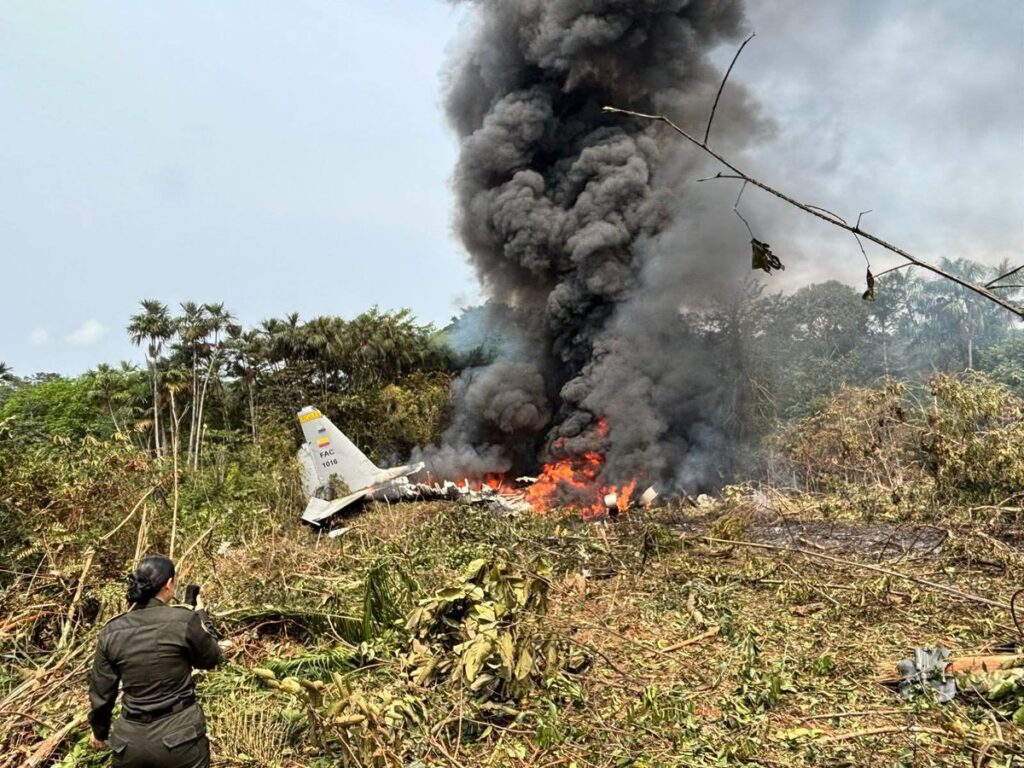
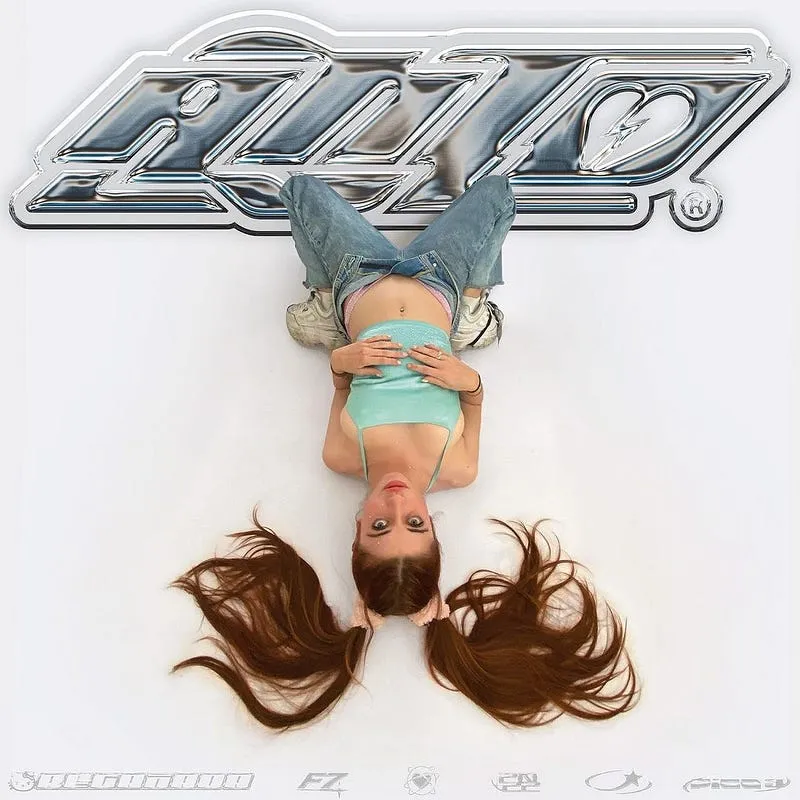
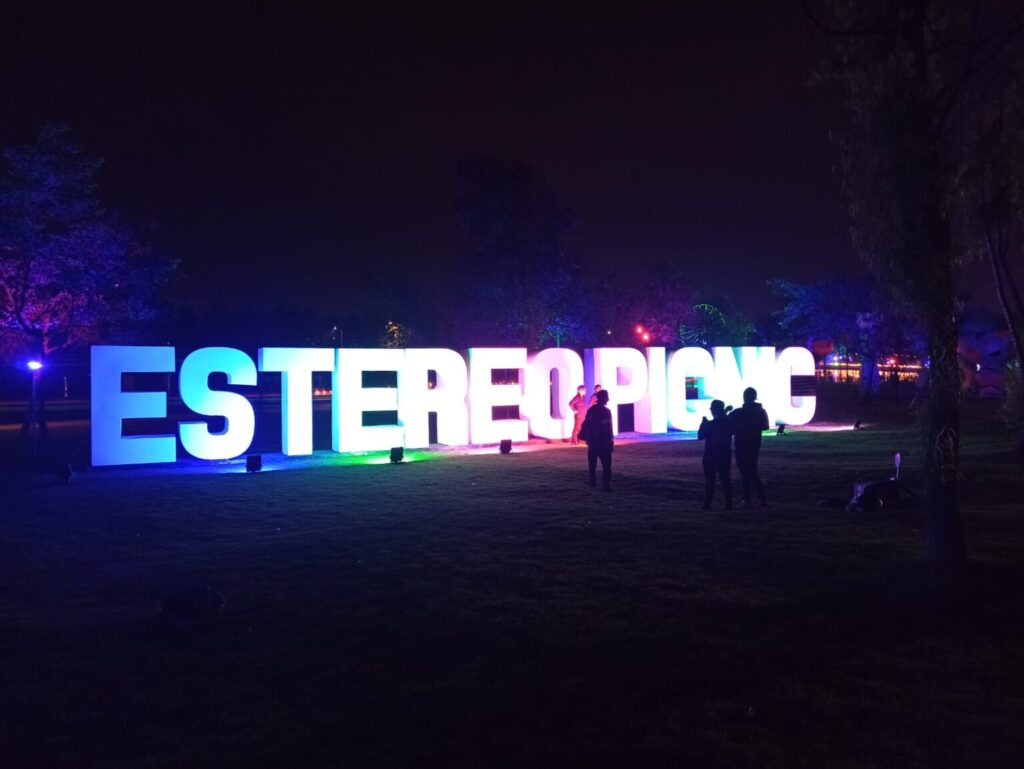
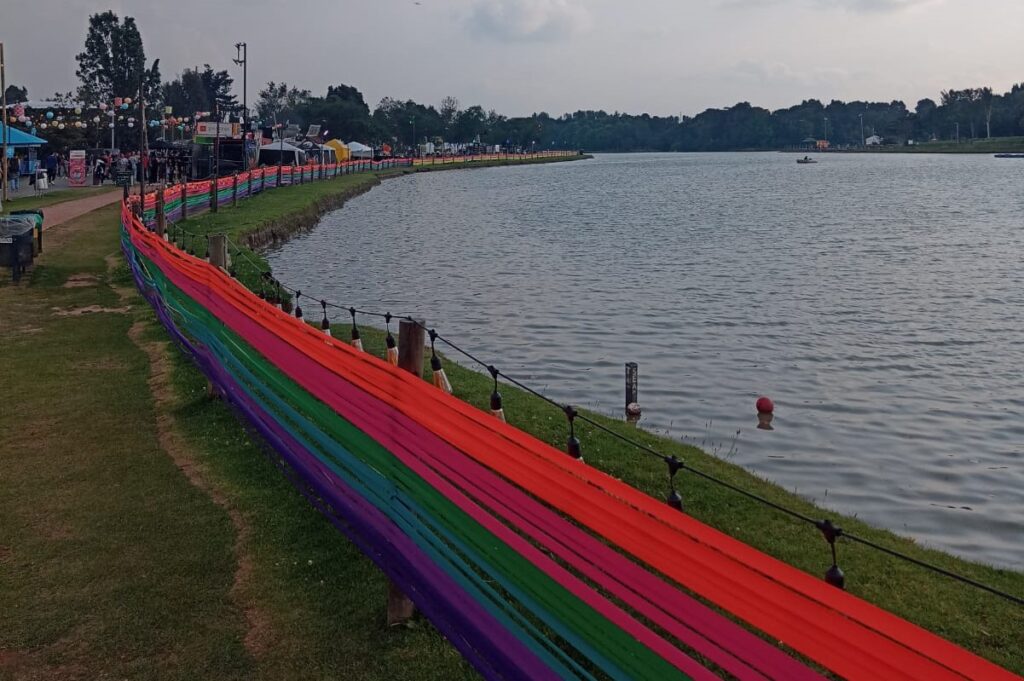
Since 1970, when Italian collectibles company Panini launched its first official World Cup sticker collection in Mexico, the brand has focused on churning out collectible sticker albums for each subsequent World Cup. In Colombia, the tradition has deep roots.
“I believe that [in Colombia], there is a very deep-rooted culture of collecting. People collect toy cars, dolls, and jerseys; therefore, the Panini football album is no exception,” sports journalist Diego Chiriví told The Bogotá Post.
Although the global fever began in the ‘70s, it was during the 1980s and, especially, during the 1990 World Cup, that the ritual became a national phenomenon in the country.
“We are one of the top five countries in the world for sticker sales. For us, Panini is a tradition—a legacy we share from generation to generation with every World Cup,” Luis Felipe Gallego, Commercial Vice President at Continente (Panini’s official distributor in Colombia), told The Bogotá Post.
Initially, completing the album was an activity reserved for specialized football fans. However, over the decades, this hobby has expanded its reach, becoming a massive social phenomenon that now captures the country’s attention.
This shift solidified in 2014, when the collection moved from being a niche hobby to a popular tradition.
“In 2014, the Colombian National Team united the entire country. The team represented hope, reaching the quarter-finals for the first time in history. When they returned, over a million people welcomed them in Bogotá. It was the most unforgettable team of this generation, and since then, the ‘fever’ for the Panini album has only grown,” said Chiriví.
Indeed, this passion has moved from private collections to the streets, becoming a social ritual where ‘cambiatones‘, or sticker swaps, take center stage.
These massive gatherings in parks and shopping malls have turned the hobby into a collective mission, where people of all ages trade ‘monas‘ (stickers) to complete their albums.
“It’s a family tradition—grandparents, uncles, parents, everyone is involved,” explained Elie Milhem, Panini’s CEO in Colombia. “People love seeing which players will make it to the World Cup, and that passion has made us one of the top ten countries for Panini sales in the world.”
The “repetidas” (duplicates) are what make the hobby exciting. Even though every sticker is printed in the same quantity, the random packs make some feel impossible to find. This struggle is what pushes people to meet and trade, turning the album into a competitive race to see who can finish first.
This year, the challenge is bigger than ever. For the first time in World Cup history, 48 teams will participate, meaning the album now features 112 pages and 980 stickers. This massive scale makes completing the collection an even more difficult mission for fans.
The stickers also come in four different versions: gold, silver, bronze, and the common ones. The gold, silver, and bronze versions are considered real treasures because they are much harder to find. Getting one of these in a pack feels like winning a prize, and they are often the most valuable pieces to trade during the ‘cambiatones.’
“I would say the Lionel Messi sticker, in any of its years, but especially the 2018 Russia version, was incredibly tough to find,” Chiriví shared. “In 2022, it was much easier, but because of what happened four years prior, the 2018 Messi sticker became almost impossible.”
Surely, Colombians will be on the hunt this year as their national team kicks off soccer’s biggest tournament facing Uzbekistan on June 17.
Increasing numbers of travelers being denied entry after interrogations at the border.
Immigration officers have powers to interrogate, detain and deny entry to travelers. Photo: Migración Colombia.
Five foreign tourists flying into Colombia were turned back at Medellín airport Tuesday last week after other passengers reported them for “conversing on the plane about their plans for sexual encounters”.
Although not clear who exactly denounced the travelers, or what other evidence was produced, immigration officers barred them entry after declaring their reasons to visit Colombia as “illegitimate”.
The case is part of a growing crackdown by immigration authorities against sex tourism in Colombia, which has been on the rise in recent years.
The five U.S. citizens were interviewed by immigration officials after arriving at José Maria Cordova airport on a United Airlines flight from Houston.
According to posts by Migración Colombia, the men were overheard during the inbound flight discussing hiring sex workers to “fulfil their fantasies”.
The cases highlighted a trend of increasing sex tourism but also stronger measures to prevent it, said immigration officials this week.
“We are focusing immigration control on detecting these types of offenders, fighting sexual exploitation, and protecting children not only in Antioquia but throughout the country,” said Gloria Arriero, director of Migración Colombia.
Data showed that 60 tourists were denied entry at airports in the first four months of 2026, compared to 110 in all of 2025.
Watching angels
The problem existed in tourist destinations like Cartagena and Bogotá, but was most evident in Medellín, the capital of Antioquia and Colombia’s second city, said Arriero, with 48 of the cases registered at the José María Córdova Airport. Of the persons barred this year 51 were U.S. citizens.
In the last week alone 15 foreign nationals, mostly U.S. nationals, were denied entry including the five passengers overheard on the plane. Many of the suspects were arriving on flights from Houston, Miami and New York, added Arriero.
The latest expulsions followed a campaign by Medellín’s mayor Fico Gutiérrez to stamp out a rise in human trafficking and sexual exploitation, particularly of children, linked to organized crime and visitors to the city.
Prostitution is legal in Colombia although immigration officers have autonomous powers to deny entry to travelers if they suspect them of sex tourism. Checks have gathered pace in recent years under the “Angel Watch” system that allows Colombian immigration to identify foreign travelers with criminal records or reports of sexual offences against minors before they enter the country.
Angel Watch, which has been running in Colombia since 2024, gives immigration officers real-time access to data from national sex offender registries and state websites in the U.S, including the Department of Homeland Security and National Center for Missing & Exploited Children (NCMEC).
The U.S.-based Angel Watch Center then alerts overseas authorities to its citizens with convictions for sexual crimes against minors. Specialized police task forces in Colombia also use international alerts from INTERPOL to intercept other nationalities.
Angel Watch alerts can catch potential offenders at points of entry or prevent undesirables from obtaining or extending visas, if they are long stayers. The system blocks around 50 travelers a year detected with a history of pedophilia or sexual aggression.
Inadmiitted: five tourists sent home after talking trash on their inbound flight. Photo: Migración
Cell phones searches
For other cases border authorities rely on old-fashioned detective work, such as the case of the five travelers hauled in for questioning after reports of their lewd talk on the plane.
In February, two men were netted after being spotted filming children during the inbound flight. On investigation, border officers found bans from multiple countries for sexual offences involving minors.
Others have been interrogated based on items detected in their luggage; in February, a Lithuanian was sent home after inspectors found a huge haul of sex toys. These were decreed “inconsistent with his declared purpose for visiting Colombia” according to a press release at the time.
Migración has also revealed cases where large numbers of condoms, lingerie, or exaggerated quantities of “potency drugs” triggered interrogations and cell-phone searches which then revealed plans for sex tourism.
Migration officers also accompanied police units in sweeps where foreigners were suspected to be involved in wrongdoing. Tactics included visiting hotels and hostels which had registered visitors with previous convictions, but also monitoring their social media profiles for incriminating material.
Disturbing the peace
Earlier in April, Migración deported in a blitz of publicity Medellín-based influencer ‘Chill Capo’ (real name Steve Newland) who was sent back to the U.S. after being detained at a party in the city’s Parque Lleras, a hotspot for sex workers.
“We found he repeatedly used his social media to invite and organize sex parties at various establishments where the main focus is on women, viewed as just another object to attract foreigners,” said director of the regional migration office Paola Salazar.
#Medellín | Ruso, con extenso historial de quejas por alteraciones al orden público, fue expulsado, por parte de la autoridad migratoria. El individuo abordó un vuelo con destino a Miami luego de que la entidad consolidara un contundente expediente basado en múltiples denuncias pic.twitter.com/wMcuQSz2zk
The 42-year-old content creator denied the accusation claiming his on-line videos of sleaze-fests were simply to encourage “a safe experience” for clients seeking the services he advertised on social media. But since Newland’s visa had expired, he was slung out anyway and banned from the country for five years.
In another recent case, a U.S-Russian citizen living in the El Poblado district was detained and deported after two years of loud music, partying, and a constant parade of bikini-clad women in and out of his flashy flat.
40-year-old George Wolfe held day-long parties on his rooftop flat and accumulated dozens of fines for disturbing the peace.
Wolfe, who claimed to be a lawyer, threatened to sue immigration authorities but they reminded him that the state “has the discretion to admit, not admit, or expel foreign citizens”.
The question circulating on social media after Wolfe’s deportation was if Colombia was now less welcoming to overseas visitors. But statistics suggest otherwise since more than nine million tourists visited last year. Instead, the message for Migración seems increasingly clear: sex tourists aren’t welcome.
A bus damaged by the huge explosion on Saturday 30kms north of Popayán. Photo: X
A bomb attack attributed to fighters from the EMC armed group killed 20 travelers trapped on the busy highway connecting Colombia’s southwestern cities on Saturday.
The tragic events in the El Tunel sector, close to the town of Cajibío, unfolded after the dissidents mounted a checkpoint on the main Via Panamericana south of Cali and 30 kilometers (20 miles) before Popayán.
The busy road runs through a mountainous region dominated by gangs run by the former guerrillas dedicated to a booming cocaine industry in hidden canyons beyond state control. At the illegal checkpoint the fighters forced truck drivers to block the road and abandon their vehicles, causing a long queue of traffic.
According to video posted online, soon after a midday the huge explosion rocked the valley mangling around 15 vehicles caught blockade including two minibuses with civilian passengers.
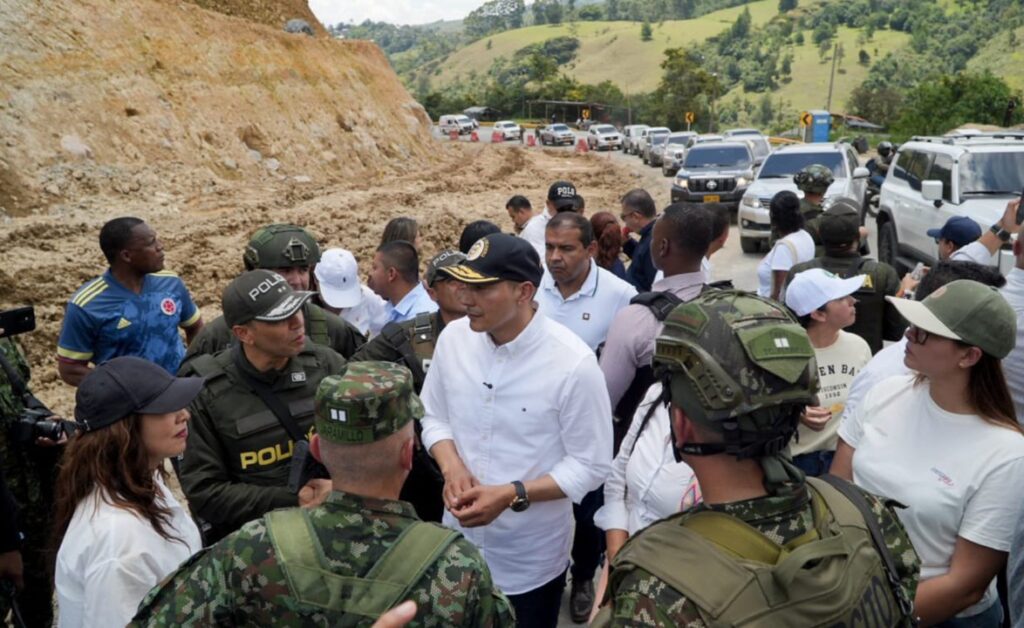
The governor of Cauca, Octavio Guzmán, confirmed the 20 dead civilians caught in the blast were 15 women and five men, all adults. A further 47 people were injured, of whom three were critical. Five children were recovering in hospital. Eleven of the affected persons came from the same village of Pedregosa, close to Cajibío, he added.
“What happened on April 25th constitutes the most brutal and ruthless attack against the civilian population in decades in the department of Cauca,” the governor later announced.
The bomb had displaced 200 cubic meters of soil, he said, creating a crater five meters deep in the Panamericana highway, the main route linking Cali to Popayan and on to Ecuador. Despite the damage, road crews were able to partially reopen the road six hours after the blast.
Saturday’s attack, one of the worst atrocities in recent years, comes against a background of rising conflict between state forces and dissident armed groups in the southwest of Colombia.
A nuestro medio de comunicación llega video #PRIMICIA del momento exacto donde explota el artefacto explosivo en el sector conocido como el TÚNEL CAJIBIO CAUCA entre popayan y piendamo @Noti90Minutos@DELAESPRIELLAE
Just in the last four days communities across three departments – Valle, Cauca and Nariño – reported a series of what appear to be coordinated attacks against civilian and military targets. These included:
24 April – A bus bomb exploded close to base of the Pichincha Battalion in the south of Cali, causing damage and three injuries.
24 April – In the nearby town of Palmira, Valle, an army base came under attack from cylinder bombs launched from a passing vehicle, no injuries were reported.
25 April – Two attackers launched grenades at a petrol station in Rozo, Valle, damaging vehicles.
25 April – A police station in the rural community of Potrerito, close to Jamundí, came under gunfire attack in the early hours of the morning.
25 April – In another morning attack, Aeronáutica Civil reported drones launching explosives against a hilltop air traffic station close to El Tambo (Cauca), damaging antennas and leaving the radar inoperative.
25 April – a chiva rural bus was hit by explosive charges while traveling on Route 25 near to Mercaderes, south of Popayan. Police reported several injured including a child but no deaths
26 April – four men were gunned down in a bar in Toro, Valle, between Cali and Pereira.
According to a tally by thinktank Indepaz, the Toro deaths were the 48th massacre recorded in 2026. In Colombia a ‘massacre’ is defined by the intentional killing of three or more people at the same time.
This weekend’s attacks were typical of a return to terrorist tactics such as car bombs, motorbike bombs, drones dropping home-made explosives and other artisanal artefacts.
Cauca governor Octavio Guzmán visiting the scent of the explosion this weekend. Photo: Social Media
Saturday’s Cajibío attack was initially reported as a boobytrap bomb, or “IED” (Improvised Explosive Device) which are caches of high explosives buried by the roadside by rebel groups, usually aimed at passing military patrols
But later reports suggested the civilian vehicles were struck by a pipeta mortar. These are fashioned from household gas bottles and clumsily launched from mortars made of industrial piping.
Notoriously inaccurate, a pipetas have claimed many civilian lives in the Colombian conflict, most notably in the Chocó town of Bojayá in 2002 when a charge launched by FARC guerrillas struck a church killing 79 civilians sheltering inside.
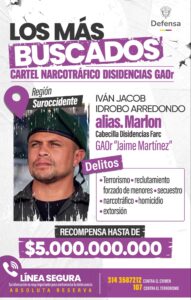
Behind Saturday’s atrocity was alias ‘Marlon’ of the Estado Mayor Central (EMC), said Colombia’s defence minister of defence Pedro Sanchez. The state offered a reward of US$140,000 for information leading to his capture.
Original dissidents
Most Wanted…
Marlon, whose real name is Iván Idrobo, was formerly in the ranks of the FARC guerrillas where he trained as a bomb maker. He is now thought to lead the EMC’s Frente Jaime Martínez which according to the Defensoria del Pueblo controls the cocaine trade, illegal gold mining and extortion rackets around the town of Suárez in the northwest of Cauca.
The EMC, lead by former FARC chief Iván Mordico, has proven to be the most intransigent of the myriad of armed groups which the current Petro government has tried to broker peace with under his controversial Paz Total policy.
Seen as the “original” dissidents that rejected the partly successful peace process under former president Manual Santos in 2016, the EMC initially agreed to negotiate when Gustavo Petro came to power in 2022 but soon engaged in bitter infighting with rival armed groups creating a rupture with Paz Total.
For his part, Petro tweeted his disgust at the Cajibío attack and the EMC “narco-terrorists” behind it.
“The groups led by Iván Mordisco in Cauca are criminals who have committed crimes against humanity and must be treated as such,” he said.
Some pundits commented that Petro’s early treatment of the EMC as a political actor had given the armed group room to expand, contributing to the current security crisis. In the heat of next month’s elections, others turned their ire on presidential candidate Iván Cepeda, seen as an architect of Petro’s struggling peace plans.
Rival right-wing candidate Paloma Valencia accused Cepeda of his role in “tying the hands of state forces, the rampant increase in illicit crops, the historic numbers of massacres, and waves of violence like today’s”.
Valencia also rounded on Petro for posting photos of his birthday celebrations even as the country was reeling from the horrific footage of the Cauca bombing. “Show some respect,” she messaged.
Crucial Santa Marta conference will include voices of communities long opposed to the exploitation of fossil fuels.
Indigenous campaigners against oil drilling in the Amazon. Photo: courtesy Amazon Watch.
Thirty years ago, Colombia’s U’wa people were ready to commit mass suicide by jumping off a 500-meter cliff. The close-knit indigenous community would rather die with dignity than succumb to oil exploration on their ancestral land.
The U’wa announced their dilemma in 1995 in an open letter that ricocheted around the world. It was no empty threat: 400 years before their ancestors had jumped from the Alto de los Infieles (Cliff of the Infidels) rather than submit to the Spanish colonial yoke.
“The U’wa were the first to call oil the ‘blood of the earth’,” explains Kevin Koenig, director of climate and energy at Amazon Watch, a U.S.-based non-profit. “The U’wa were the first to say that oil needs to stay in the ground. They warned against its extraction and its impact on the world.”
Amazon Watch has supported the U’wa to resist extractive industries over the same three decades, along with dozens of other at-risk communities in Latin America.
This week, in a ground-breaking conference in Santa Marta, some of those efforts will come full circle at the first global summit on “Transitioning away from Fossil Fuels”.
The six-day conference, starting April 24, will host 50 country delegations plus dozens of civil society organizations.
This “road map towards renewable energy” is backed by the Fossil Fuel Treaty Initiative, an alliance of nation states, technical bodies, communities and individuals working to secure a “global just transition from coal, oil and gas”.
For the organizers the timing is critical with climate upset, fuel shortages, war in the Middle East and big oil’s sticky grip on geopolitics more exposed than ever. There’s never been a better moment to move to renewable energy.
A key part of the conference will be representation from indigenous communities; the U’wa, along with many others, will have a voice at the table.
Glacier gone
For Koenig, it is also significant that the inaugural meeting is in Colombia, one of the world’s most biodiverse countries, but also an oil producer moving to curb fossil fuels and embrace renewables.
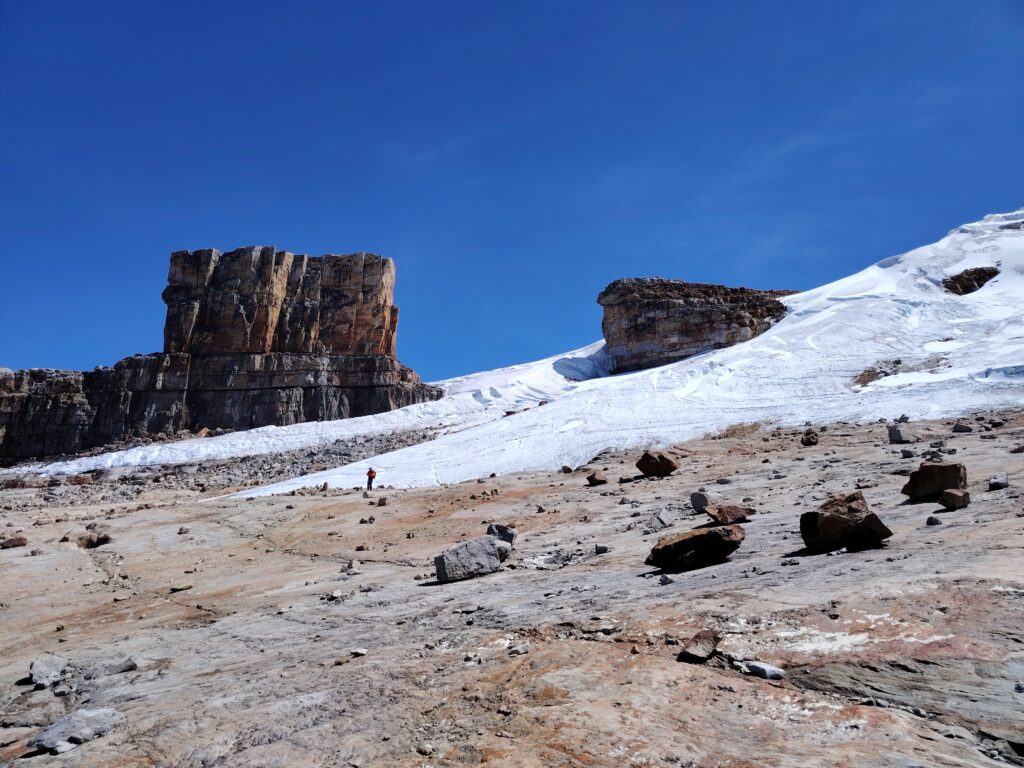
There is further symmetry in the location: the small coastal city of Santa Marta is “just over the hill” from the U’wa territory which straddles the tropical glaciers of the El Cocuy mountain range, Koenig tells The Bogotá Post.
A hiking route over the same mountains is known as Colombia’s climate change trail – see the ice before it melts.
Prophetically, just three weeks before the conference’s kick-off, the IDEAM climate agency reported that a glacier in the heart of U’wa territory had melted for good.
“Satellite monitoring confirms that Los Cerros de la Plaza glacier coverage is today at zero square kilometers,” it announced matter-of-factly.
Living these realities gives indigenous communities such as the U’wa, wedded to nature and geography, a powerful voice in the transition from fossil fuels.
This experience has often come at a high cost, says Koenig. In countries like Colombia, particularly in the Amazon, oil companies are an existential threat to both the natural environment and the communities it supports. Drilling is invariably a catalyst for violence.
“Some countries use oil extraction as a reason to open areas, saying ‘we can militarize it and it will be safer’. In fact, oil and energy infrastructures are a magnet for armed groups, for political attacks or blackmail,” he explains.
Amazon Watch has supported many indigenous communities to resist oil companies in the Amazon regions of southern Colombia, Peru and Ecuador, often through practical means such as providing solar power and communications equipment, trainings and legal resources, but also by raising their voices to the outside world.
The organization’s latest report, The Amazon Under Siege, highlights how extractive industries and the armed groups that trail in their wake are putting Amazon communities in the crossfire.
U’wa sacred territory includes El Cocuy glaciers which are melting with global warming. Photo: S. Hide.
Oil addiction
Colombia might have turned a corner with its oil moratorium in Amazon regions but neighboring countries are on a different path, one that might be summed up by U.S. president Donald Trump’s call to “drill, baby, drill”.
“Ecuador is going in the opposite direction with new oil auctions, and two new exploration blocks in remote rainforest,” says Koenig. Peru is following suit in jungle areas hitherto untouched. Perhaps not surprisingly, neither of the Andean countries is attending the Santa Marta transition conference.
According to Koenig, Peru and Ecuador are already in the throes of social violence but now risk replicating Colombia’s conflict with its rural oil pipelines that are constantly attacked or bombed, or oil lines tapped by fuel thieves, creating spills in biodiverse hotspots.
Added to that, drilling new wells makes little economic sense, he says. Current markets are signalling peak oil demand by 2030 even while wind and solar are taking a bigger share of energy output.
By doubling down on oil extraction both countries are “gambling with their future.” Aside from the moral and ethical issues of drilling in remote rainforest with indigenous peoples, getting banks to fund these ventures against the headwinds of renewables is not guaranteed.
“This is the moment where we are seeing both wars linked to fossil fuels politics and dependencies, but also for the first time renewables energies are not just theoretical, they are real, and decision-makers know they are scalable,” notes Koenig.
Inga indigenous guards in Putumayo. The community resists oil extraction on its lands. Photo: S.Hide
Fresh air
This seismic shift is reflected in the sassy subtext of the Santa Marta conference: climate deniers not invited. Meetings are reserved for a “coalition of the willing”, Colombian environment minister Irene Vélez, a key organizer of the event, told the Guardian this week..
For campaigners like Kevin Koenig this attitude is a breath of fresh air. Previous climate change conferences, run by the UN, have failed to pin global warming on big oil, he says.
“We know that fossil fuels are the number one source of carbon emissions but that’s nowhere to be found in the Paris [climate change] agreement. That’s due largely to the influence of the oil industry and lobbyists,” says Koenig.
Changing the narrative requires an alignment between traditional knowledge and science, he says. Indigenous communities, the original resisters, are now part of that with their wealth of experience.
Presidential spat intensifies after Ecuadorian leader revisits old rumors that Petro met with drug gang during state visit.
Relations between Noboa, left, and Petro, right, have hit rock bottom after a visit to Manta.
President Petro says he will sue Daniel Noboa over an interview in which the Ecuadorian president accused his Colombian counterpart of associating with feared drug baron Adolfo Macías Villamar, alias ‘Fito’, during a state visit to Ecuador.
“I have decided to file a criminal complaint against President Noboa for his slander,” wrote Petro on his X account, following statements made by Ecuador’s leader to Semana News.
In Sunday’s interview Noboa made references to Petro’s visit to Ecuador in May, 2025, as part of a state visit to attend the right-wing president’s own inauguration.
After the event Petro took a three-day visit to the coastal city of Manta to rest and write his book, the Colombian president later explained.
But this hiatus from the public eye – Petro is rarely out of the spotlight – and his choice of destination sparked rumors that the Colombian president was holding secret meetings with underworld figures. Manta is both a tourist destination with Pacific beaches and the ground zero for violent armed gangs that control Ecuador’s drug trafficking.
Rumors started with unfounded comments by Ecuadorian politicians that Petro was “holed up” in a luxury house on the coast, adding tantalizing details that officials “could not confirm or deny” that Fito or persons related to the gang leader were present.
“What we know is that Gustavo Petro was in Manta inside a house for his entire stay. We can’t confirm whether Fito was there. It’s been said that certain political figures were with him,” Ecuador’s Interior Minister John Reimberg stated to news media at the time.
“He arrived at a luxury house and stayed there for two days. He never left, not even to eat. He was locked inside. I can’t say who he met with.”
Manta on his mind
Noboa reinforced the slurs this week, stating without evidence that the house rented in Manta was “directly or indirectly linked to drug trafficking”.
The Colombian president “never has any real explanations for his actions”, pressed Noboa, suggesting the book writing was a cover for more suspicious motives. But he failed to provide any motive as to why Petro would want to meet with Fito or his associates from Los Choneros gang, Ecuador’s most violent armed group.
Fito has been likened to Mexico’s El Chapo, with a history of repeated prison breaks. The career criminal was re-arrested again in Manta in June last year – a month after Petro’s visit – hiding in a bunker, and has since been extradited to the U.S.
For his part, Petro hit back claiming the Ecuadorian president had been himself been well aware of his plans to holiday in Manta, a visit accompanied by the Ecuadorian army and a Colombian security detail. These and other witnesses could vouch for his book writing, he said.
“I don’t know if going anywhere in Ecuador raises suspicions of shady dealings. Manta is a beautiful place worth visiting.”
Petro stayed in a “wooden cabin with a sea view”, he said, and not the luxury condominium conjured up by Noboa.
Petro linked Noboa’s verbal attacks on the recent trade war between Colombia and Ecuador and Petro’s request that Noboa released former Ecuadorian vice president Jorge Glas currently jailed for corruption.
Both disputes have put relations between the two countries at rock bottom.
Behind those disagreements lie long-standing accusations by Ecuador that Colombia has exported violence and criminality over the shared border during Petro’s tenure, a claim supported by a recent report by Amazon Underworld.
Illegal drugs passing through Ecuador came mostly from Colombia, said the report, and Colombian armed groups like the Comandos de La Frontera had established a permanent presence on the Ecuadorian side of the border.
An abandoned Ecuadorian military post close to the Putumayo River. Cross-border incursions by Colombian armed groups have increased insecurity in a country once considered safe.
Political prisoner
The high tariffs imposed by Ecuador, which seem out of U.S. President Trump’s playbook, seem designed to punish Colombia for its internal security policies and Petro’s left-wing government at political poles from the Noboa administration.
The spat over Jorge Glas stems from the former vice-president’s jailing after being found guilty of corruption in public office.
Glas was VP to left-wing leader and former president Rafael Correa, and accused of corruption in contracting cases. In 2017 he was jailed for six years. After his release was again accused of fresh crimes related to corruption.
Faced with these new accusations, in 2024 the politician took refuge in the Mexican Embassy in Quito but was quickly captured by Ecuadorian state forces who violated international protocols by invading the protected site, creating a diplomatic crisis with Mexico.
For his part, Petro conferred Colombian citizenship on Glas, declared him a ‘political prisoner’, and demanded his extradition to Colombia. Meanwhile Petro has been highlighting the former VPs stark prison conditions on social media.
“Just as I demanded the freedom of political prisoners in Venezuela and Nicaragua, I believe that Jorge Glas should be released,” he wrote, angering Noboa who recalled his ambassador from Bogotá earlier this month.
The rift between the two leaders also widened after announcements of joint military operations between the U.S. and Ecuador, with tension mounting after an air bombardment of the border left an unexploded bomb on Colombian territory.
In Sunday’s message Petro alluded to coordinated plots by political opponents in Ecuador, Colombia and “the extreme right in Florida” to drag up dirt from his Mantra trip.
Events this week should clarify if Petro has grounds to sue his Ecuadorian counterpart in a court of law, or if the battle continues on social media.
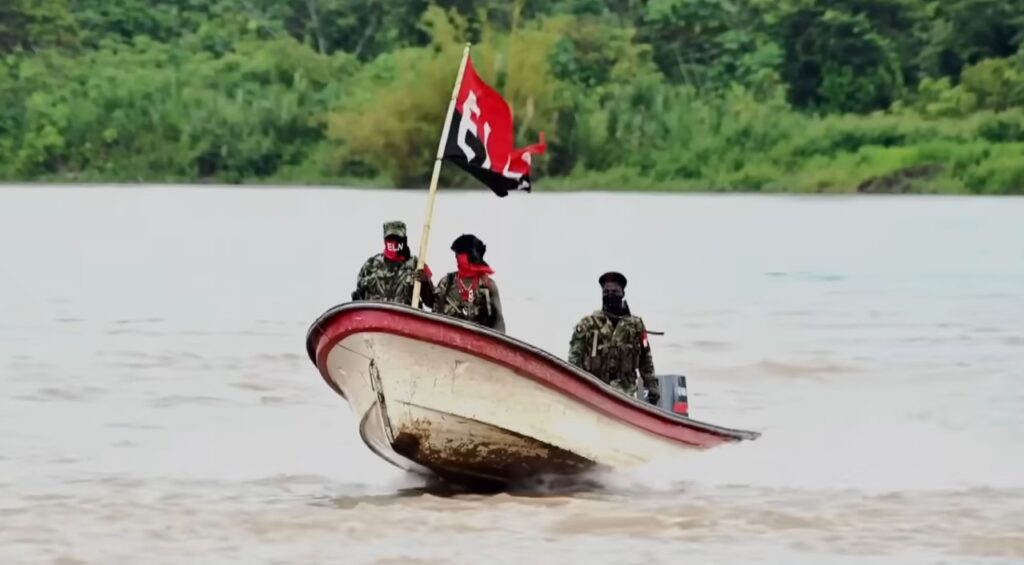
The ELN, Colombia’s oldest rebel group, has been trying to source weapons from Syria. Photo: Youtube screenshot.
A plan to swap Colombian cocaine for guns was exposed last week when a Lebanese-Syrian smuggler Antoine Kassis – a cousin of deposed Syrian dictator Bashir al-Assad – faced trial for his attempt to send Russian-made armaments to ELN guerrillas.
The failed plot, which played out in a U.S. federal courtroom last week but seemed more suited to a Hollywood movie, risked putting military-grade weapons sourced from Syrian arsenals in the hands of the Colombian rebels.
In exchange, the ELN planned to send 500 kilos of cocaine disguised in a cargo container of Colombian fruit, according to U.S. Justice Department documents.
A federal jury convicted Antoine Kassis on charges of narco-terrorism conspiracy and conspiracy to provide material support to a designated foreign terrorist organization after a five day hearing. He now faces at least 20 years in a U.S. prison.
Kassis, 59, who had links to proscribed organizations such as Hamas and Hezbollah, offered the ELN drones, grenades, assault rifles, missiles, mortars and heavy machine guns in exchange for the cocaine smuggled to a Syrian port.
He eventually hoped to sell the Colombian-supplied narcotics throughout the Middle East.
Captured in Kenya
The deal was initially brokered in 2024 before the fall of al-Assad but unraveled after a sting operation mounted by the U.S. Drug Enforcement Administration (DEA) in 2025.
As court documents revealed, Kassis traveled to Africa in February last year after reassuring the Colombian guerrillas that the cocaine swap was still on – even after the unexpected fall of his cousin’s brutal dictatorship in Syria at the end of 2024.
Kassis claimed he could bribe Syrian port staff US$10,000 per kilo of cocaine to import the illicit drug through Latakia, a well-known route for drugs in and out of the eastern Mediterranean.
Despite the fall of al-Assad, he could still access “all the toys”, he told the Colombians, referring to the military-grade weapons.
Unknown to Kassis, DEA investigators had already infiltrated the Colombian end of the deal and sent an undercover agent posing as an ELN weapons expert to the crucial meeting in Nairobi, Kenya.
Kassis was arrested with the help of Kenyan police and extradited weeks later to the U.S.
Meanwhile the suspected ELN counterparts, named by news website Infobae as Alirio Rafael Quintero and Wisam Kherfan Okde, were arrested in Colombia. They are currently detained in Bogotá’s La Picota prison pending extradition requests from the U.S.
Missed missiles
Evidence from the Kassis investigation pointed to a vast money-laundering operation based in Colombia that shifted million-dollar drug profits in cryptocurrencies across four continents. According to court documents, the plot roped in Palestine’s Hamas, Lebanon’s Hezbollah and Mexico’s Sinaloa drug cartel.
Syrian-Lebanese smuggler Antoine Kassis. Photo: Kenya Police.
The Kassis case also showed that the ELN was attempting to upgrade its weapons arsenal even as the armed group was engaged in on-off peace negotiations with Colombia’s Petro government. Talks are currently on hold.
The Marxist rebel group, properly known as the Ejército de Liberación Nacional, has been fighting the Colombian state since 1964 and is currently said to have 3,600 armed combatants, many based in neighboring Venezuela where it controls drug routes and illegal mining camps.
The latest round of peace talks, under Petro’s controversial Paz Total initiative, has seen the ELN expand in both territory and numbers within Colombia, with an estimated growth of 9 per cent in the last two years. Attempts to obtain Russian-made weapons via Syria are likely linked to that expansion.
Of note was the missiles included in the thwarted Syrian cargo. Though exact details were not given in the court documents, these could refer the portable shoulder-fired anti-aircraft weapons, highly coveted by Colombia’s armed groups for their ability to down helicopters and small attack aircraft used by state forces against insurgent groups.
In recent months Colombian armed forces have returned to aerial bombing of suspected guerrilla camps, a controversial practice that risks killing or injuring civilians and children. Bombing campaigns against dissident FARC groups in Guaviare late last year left at least 15 minors dead, according to news reports from the time.
And on February 4 this year, an air attack ordered by President Petro on an ELN camp in the Catutumbo region left seven ELN fighters dead, with no reports of child victims.
The ELN have in the past experimented with home-made anti-aircraft missiles, such as found in a hidden cache in Cauca in 2018, and some of their combatants are thought to have been trained in the use of Russian-made Igla-S missiles, of which 5,000 are used by state forces in Venezuela.
Hezbollah’s Latin American hubs
The Kassis case highlighted links between Colombian armed groups and the Middle East that include designated terror groups such as Lebanon-based Hezbollah.
According to expert testimony at a U.S. senate caucus on narcotics in October last year, groups like Hezbollah received funds via drug trafficking and money laundering in Latin America, with hubs in Brazil, Paraguay, Venezuela and Colombia.
“Hezbollah capitalized on a combination of weak local governance, corruption, and the presence of sympathetic diaspora communities to create cells and recruit financial facilitators,” former treasury official Marshall Billingslea told the caucus in October last year.
Billingslea suggested that Hezbollah could source up to a third of its income from Latin America, and until recently had close links through its Iranian backers Venezuela, now in flux with the forced removal of former president Nicolás Maduro to the U.S. in January this year.
Hard pivot to Colombia
But while its Venezuelan ties were more often reported, the Lebanese Shi’ite group had also made inroads into Colombian crime circles with a long history of deals, such as cocaine shipments sent by the Oficina de Envigado cartel, and drugs-for-weapons swaps with the former FARC guerrillas, he said.
In 2016, U.S. prosecutors brought charges against a Hezbollah laundering ring based in Medellín, according to reports in the Miami Herald at the time. Funds were connected to jailed Mexican kingpin Joaquín “El Chapo” Guzmán.
Billingslea explained that groups like Hezbollah also saw Colombia as a refuge for foreign operatives who obtained fake passports and ID cards. Recent turmoil in the Middle East could stimulate armed groups there to increase their interests in countries like Colombia, he said.
“Now, with their Lebanese infrastructure in shambles, and with robust financing from Iran again in doubt, I believe Hezbollah will make a hard pivot to Latin America and to the drug trade in particular.”
La Mesa gang rounded up in Bogotá last week. Members are accused of murders and drug trafficking. Photo: Secretary of Security
The dismantling of a major crime gang which operated in Bogotá caused controversy last week after it emerged its leader was declared a peace negotiator under President Petro’s controversial Paz Total, or Total Peace, plan.
National police rounded up 23 members of the La Mesa gang in simultaneous operations in Tolima, Cesar and Bogotá. According to police reports, the gang was involved in serious crimes across the capital since 2012, including drug trafficking and murders.
News of the arrests was tainted by the fact that under the Paz Total process – the Petro government’s wide-ranging negotiations with armed groups – gang leader Gustavo Adolfo Pérez Peña, alias El Montañero, had his arrest warrant suspended under his role as gestor de paz, or ‘peace facilitator’.
The kingpin’s release sparked a furious response from Bogotá mayor Carlos Galán, who accused Petro of undermining the city’s efforts to curb crime.
Hoy en Bogotá anunciamos que, gracias a la Dijín, a la Fiscalía y a la @PoliciaBogota, fueron capturados 23 miembros de la banda “El Mesa”, entre ellos 8 sicarios. Mientras tanto, el Gobierno Nacional nombra al cabecilla de esa banda como gestor de paz y le levantó la orden de… pic.twitter.com/qiSmSoHgh7
“While in Bogotá,…the prosecutor’s office and the police, with the support of the Bogotá mayor’s office, are working to capture and dismantle a criminal gang dedicated to serious crimes, the national government appoints the leader of that gang as a peace facilitator and lifts the arrest warrant for him,” he railed.
The gang was also suspected of being behind last year’s gruesome killings where pieces of the bodies of victims were wrapped in plastic bags and dumped on the city’s highways.
A free pass for career criminals like Pérez Peña makes fighting crime “incredibly difficult,” added Galán.
Dodging a warrant
Alias El Montañero during his capture in 2019.
Details of La Mesa’s criminal activities released by the prosecutor’s office this week showed the gang originated in Bello, Antioquia, but spread to Bogotá in 2012.
Court documents reported in local news outlet El Colombiano paint Pérez Peña as a hardened criminal; he has been imprisoned four times, including for armed robbery, homicide and illegal possession of firearms, but was freed before serving his full sentences.
His rap sheet includes attacks on armored trucks, notably a cash heist in Bogotá in 2003 where a policeman was shot dead.
Pérez Peña’s most recent jailing was in 2019 when he was sentenced to eight years for conspiracy to commit a crime and illegal possession of firearms. It was during this stint that he was freed as a peace facilitator.
And even while the La Mesa gang has been rounded up this week with members facing multiple charges and long prison sentences, its leader and founder continues at liberty.
Get out of jail free?
Inclusion of criminal gangs in the Paz Total process has proved one of the thorniest aspects of Petro’s flagship policies and a political hot potato in the run-up to next month’s presidential elections.
Since its inception in 2022, the government’s peace negotiators have tried to include some of Colombia’s most embedded crime dynasties under the acronym Estructuras Armadas Organizadas del Crimen de Alto Impacto (EAOCAI).
This Paz Urbana, or urban peace, initiative is based on the reality that in Colombia today lines are blurred between organized armed groups and engrained criminal structures. Much of its effort has focused on Antioquia’s Valle de Aburrá, around Medellín, where many crime gangs took root after the fragmentation of the 1980s cocaine cartels.
The president’s office recently declared the process a partial success, claiming that the nominated peace spokespersons – many feared capos with violent histories – were now in a dialogue process which could “prevent further violence and prevent the resurgence of these structures”.
Many critics have predicted that – similar to the Paz Total process with large guerrilla groups – criminal gangs will leverage the negotiations to their own interests to gain time and territory or a get-out-of-jail-free card.
This week Medellín’s mayor Fico Gutíerez welcomed a resolution by the attorney general’s office to overturn many of the 23 nominations of local crime bosses as peace facilitators.
“The resolution removes 16 criminals currently serving sentences for serious crimes from the program. Seven remain eligible for the benefit,” he posted on X.
He also echoed Galán’s complaint that hardened criminals were being included in the peace process. “It is unacceptable that the Petro government has asked the prosecutor’s office to lift the current arrest warrant for homicide.”
Peace as a right
Defenders of Petro’s agenda hit back reminding that Paz Urbana was part of a constitutional process protected by Colombian law.
“Peace is a right, not a political strategy,” said Isabel Zuleta, a senator and key player in the Paz Total process.
The senator, who represents the government at the negotiating table with representatives of criminal gangs, accused the media and politicians of misreporting the negotiations.
“For nearly three years, a serious path toward de-escalating urban violence in Medellín and the Aburrá Valley has been painstakingly forged. Today, that work is being exploited by right-wing sectors that prefer to sabotage urban peace rather than acknowledge progress that is not electorally advantageous to them,” she said.
Zuleta also pointed out suspension of arrest warrants for gang leaders seeking peace did not free them of responsibilities for crimes they committed, nor would it stop judicial investigations.
Meanwhile, a mix-up between Petro’s government and Attorney General’s Office emerged over Antioquia’s urban peace process: 16 of the 23 capos named as peace negotiators were already in prison, so suspending their “arrest warrants” was nonsensical as they were already detained in the high-security Itagüí Prison.
“We truly never imagined that a request would be made to suspend arrest warrants for people already serving sentences,” chief prosecutor Luz Adriana Camargo told Caracol Radio.
Senator Isabel Zuleta with crime bosses in Itagüí Prison. Photo: Paz Urbana
Prison party
For this judicial – rather than political – reason, Camargo revoked the suspension orders for the 16 capos already doing time.
“We are talking about dialogues inside a prison with convicted individuals,” she said.
The Attorney General’s office also corrected widespread fake news – amplified by right-wing presidential candidates Paloma Valencia and Abelardo de la Espriella – that the 16 jailed crime chiefs would be freed as part of the Paz Urbana negotiations.
In fact, there were no plans to release the IItagüí peace facilitators, clarified Camargo’s office.
But in a further twist this week the government froze the peace talks in the Itagüí Prison after revelations that the jailed capos mounted an unauthorized vallenato concert by popular singer Nelson Velásquez, reportedly costing 500 million pesos (US$140,000).
For many commentators, the partying in the prison brought back painful memories of drug baron Pablo Escobar’s luxury lifestyle while supposedly imprisoned by the state in the 1990s.
Meanwhile the chief prosecutor Camargo came under fire for her decision to suspend warrants for seven other gang leaders currently on the run – including that of Pérez Peña of La Mesa.
This week the exact whereabouts of Pérez Peña was unknown, as was his willingness to engage in any peace process. According to a report by TV station Teleantioquia, the La Mesa gang leader was based in Madrid, Spain, while “moving around Europe as a sophisticated tourist”.
For El Montañero, coming home to Colombia, even under the guise of a peace facilitator, could be less of a holiday.
Euthanasia planned for the numerous offspring of “cocaine hippos” originally smuggled in by Pablo Escobar.Not everyone is happy.
A hippo in Hacienda Nápoles, the ranch where Pablo Escobar first introduced them. Photo: S. Hide.
After years of debate over the fate of Colombia’s wild hippos – during which the feral beasts have multiplied in lush tropical rivers – the ministry of the environment has announced a plan to kill at least 80 of the African imports.
The non-native species was smuggled into Colombia by drug baron Pablo Escobar in 1980 as part of his collection of exotic animals – including rhinos and lions – which he kept at his ranch, Hacienda Napoles.
The infamous drug trafficker died in a rooftop battle in Medellín in1993, but a few hippos escaped his lowland ranch to find what biologists would later describe as “perfect conditions” in the nearby Magdalena River.
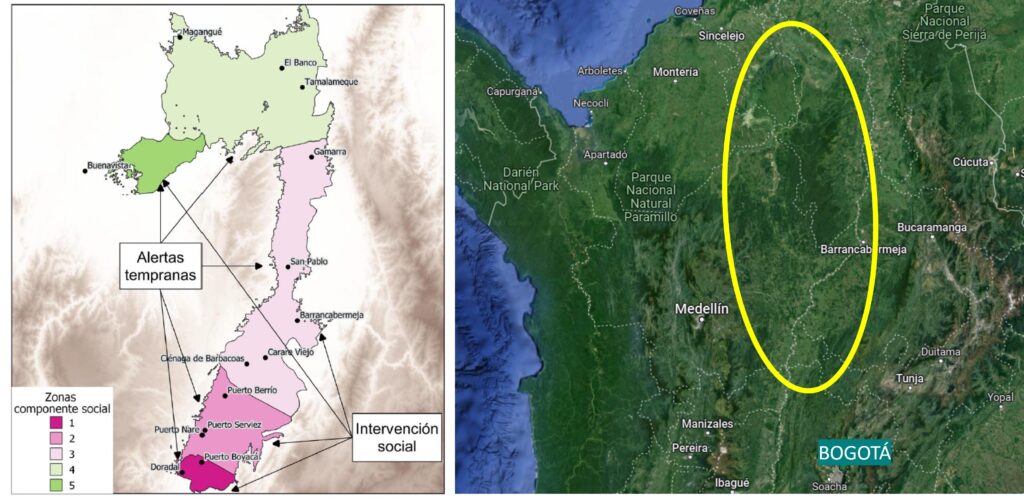
In the decades since around 200 offspring have spread over 100 kilometers (60 miles) of river and swamps bordering departments of Antioquia, Bolívar, Santander and Sucre.
But after years of procrastination over what to do with the wayward Hippopotamus amphibius – with various schemes to sterilize them or ship them to zoos and sanctuaries around the world – Colombia’s environment minister Irene Vélez said this week a cull was the only option.
“We’re talking of a process of euthanasia, which is the technical recommendation,” she told Blu Radio.
The plan was initially to reduce the population by 80 breeding individuals, then cull around 30 beasts per year which would systematically reduce the population.
The hippo range in Colombia, covering 100 kilometers of the Magdalena River Valley.
Hippo boom
The controversial decision is based on a 170-page technical report by the Humboldt Institute and Universidad Nacional in 2022.
The report concluded that the hippos were damaging the tropical ecosystem of the Magdalena river valley by spreading disease and overloading their watery habitat with nitrates: the amphibious herbivores grazed the riverbanks to each munch 50 kilos of grass a day – but then pooped the waste out into rivers and lakes.
Without an urgent cull the population “could increase to 500 hippopotamuses affecting our ecosystem by 2030,” Vélez told a press conference this week. This boom would further put at risk native populations of turtles and manatees.
Then there what the report referred to as “hippo – human interactions”, such as a car hitting a two-ton creatures on the main Bogotá – Medellín highway – which runs close to their main hangout near Puerto Triunfo – and even cases of locals trying to keep young ones as pets.
The report also pointed out that hippos were aggressive and territorial and officially the deadliest large mammal – they kill on average 500 people in Africa every year – and attacked boats and canoes on the river aswell as people, cattle and horses around the River Magdalena.
In other videos posted online people are seen chasing them down the highstreet in the town of Doradal.
Hippo takeover
To justify the cull, Vélez said reduction methods such as sterilization were too difficult – anaesthetizing wild hippos is no easy task – and none of the seven nations initially interesting in receiving live hippos for zoos and wildlife parks had followed through.
Watch out for hippos. Sign in Puerto Triunfo.
The cull would start in the second half of the 2026 around hippo hotspots close to Hacienda Nápoles in Puerto Triunfo and Isla del Silencio, a river island near to Puerto Boyacá, she said.
This island is home to a large group one of which attacked and severely injured a farmer collecting water from the riverbank in 2020, according to a news report. Colombia’s wet lowlands had perfect conditions for hippos, biologist Katerine Corrales told a Caracol news crew visiting the island this week.
“Africa has droughts and adverse weather patterns. Here we have a constant climate with abundant water and resources which generates a faster reproduction rate,” she said.
In the same report local villagers complained that the hippos had “taken over the island” and restricted commercial fishing.
Poor Pepe
Not everyone welcomed news of the cull. Hippo protection group Comisión Protectora de la Vida de los Hipopótamos – founded in the town of Puerto Triunfo close to Hacienda Nápoles and which benefits from hippo tourism – rejected the “terrible decision of the national government to authorize a hippo hunt”.
“In our municipality, we are committed to the protection and conservation of these incredible living beings. Hippos are an important part of our identity, and we must live in harmony with them,” said the group on its Facebook page this week.
It called a meeting in Bogotá to seek “non-violent” alternatives to the cull, such as a return to the plan of transferring live hippos to other countries.
Previous attempts to shoot hippos have ended in public relations disasters, such as the killing of Pepe in 2009. The large male hippo was slated for transfer to a zoo in Costa Rica after rampaging around Puerto Berrio.
But he was shot after a bungled attempt to capture him, and photos of an army platoon posing with his remains caused public revulsion, and a court ban on hunting hippos.
Pepe also highlighted the affection local communities had for “Pablo’s hippos”. For some folk the state persecution of the mammals was synonymous with the hunt for Pablo Escobar, still a popular figure among communities that benefitted from his largesse in the 1980s.
In fact, in the drug baron’s heyday the original hippos were kept at his Hacienda Nápoles in a public zoo and safari park where local families could tour for free. Today the hacienda and zoo is still there but managed by the state as part of a huge amusement park.
A captive hippo in Colombia. Escapees have multiplied in the wild. Photo: S Hide.
A grave in Colombia
This week, Minister Vélez was adamant that culling must form part of any population control.
It was global restrictions on wildlife trafficking – the CITES agreements – that had condemned the hippos in Colombia by preventing them being easily shipped abroad, she explained.
“It’s not enough for a zoo to raise its hand; the country must authorize their entry. Unfortunately, no country has given the green light. This administrative silence indicates that there is no interest in receiving them”.
It seems that putting Pablo’s hippos in overseas zoos is proving as difficult as extraditing the cartel kingpin himself. Like their progenitor, the big beasts face a violent end in Colombia rather than a cage in a foreign land.
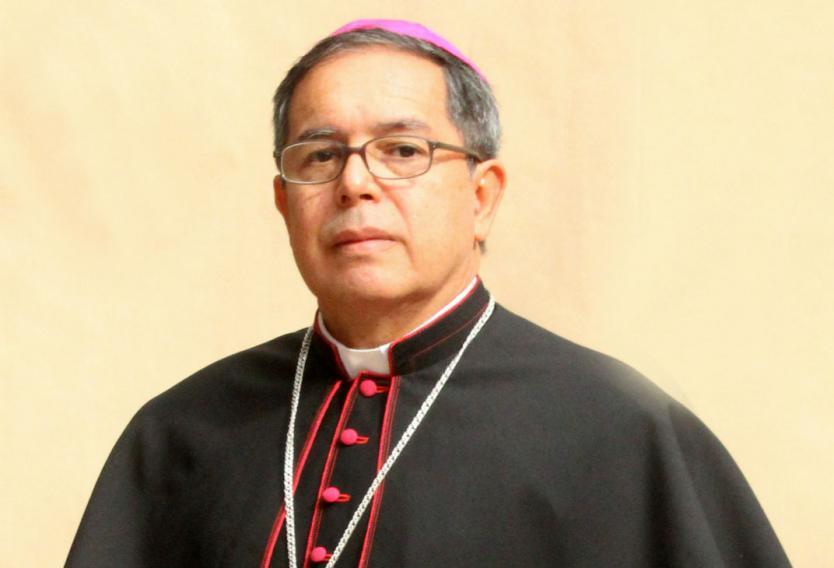
Colombia’s top Catholic official, Bogotá’s Archbishop Luis José Rueda Aparicio, marked Holy Thursday by washing the feet of transgender women and sex workers in the capital, in a gesture aimed at promoting the inclusion of marginalized communities.
Rueda carried out the ritual in the Santa Fe neighborhood, a central red-light area known as a “tolerance zone.” The ceremony was one of the Church’s Holy Week observances and drew community leaders, social organizations and local residents.
The washing of feet is a central rite of Holy Thursday (also known as Maundy Thursday), commemorating the biblical account of Jesus washing the feet of his apostles during the Last Supper. The act symbolizes humility, service and care for others, particularly the most vulnerable.
Rueda kneeled before participants to echo this tradition for the second year in a row. Last April, he performed a similar ceremony paying tribute to Sara Millerey, a trans woman murdered in Medellín earlier that year.
“May no one feel rejected, may no one feel excluded,” Rueda said during the mass he directed prior to the rite. In a statement for Noticias Uno, he added that “what societies do through discrimination is fracture”.
#NoticiasUNO| El Arzobispo Primado de Colombia, monseñor Luis José Rueda, lavó los pies a un grupo de personas de la comunidad trans y de mujeres trabajadoras sexuales en el barrio Santa Fe, zona de tolerancia de Bogotá pic.twitter.com/YpAXvuich2
Some participants described the moment as deeply meaningful.
Valentina Rojas, a transgender woman who took part, said she felt “happy” and “loved” after the ceremony.
The gesture comes amid ongoing tensions within the global Catholic Church over LGBTQ+ rights.
Pope Leo XIV has recently reiterated that Church teachings on sexuality and marriage are unlikely to shift in the near term, describing such issues as “highly polarizing.”
Although he has emphasized that all individuals are welcome in the Church, he has ruled out immediate doctrinal changes regarding same-sex relationships or transgender identity.
Residency ‘R’ visas issued before 21 October 2022 need to be transferred to 5-year electronic format by October 31, 2026, Failure to comply could risk losing residency status.
Colombia’s cancilleria (foreign affairs ministry) was reminding foreign residents this week of the 2026 deadline to transfer their old resident visas to the new 5-year electronic visa scheme.
“Anyone with these visas, granted under previous regulations, must complete the mandatory process before October 31, 2026, before the Visa Authority,” announced the government, referring to resident ‘R’ visas issued before October, 2022, when new visa regulations came into effect.
Failure to transfer your visa by October 31 could lead to sanctions or even losing your residency status.
And even though the October deadline seems far away, the Cancilleria are expecting a flood of last-minute applications. Our advice is: don’t leave it to the last minute. Government websites are clunky at the best of times and you will need at least one appointment with Migración, which will be harder to get as the deadline approaches.
To avoid last-minute panic, here’s a quick Q and A to get ahead of the game…
I have a permanent ‘R’ residents visa in my passport. Surely that’s OK?
No. Under new laws passed in 2022 (law 5477 to be precise), all R visas for long-term residents are now subject to a transfer every five years, which also coincides with the lifespan of the Cedula Extranjeria (Colombian-issued ID card). So even if the visa stamp in your passport says indefinida, you still need to do the transfer.
The traspaso applies to:
All Resident (R) visas issued before October 21, 2022.
Any new R e-visas after five years (the expiry date is written on the visa).
If you change passports for any reason (expired, lost or stolen).
If you have a passport about to expire it makes sense to renew the passport before the visa transfer.
So, do I have to start the whole visa application process again?
No. The traspaso is relatively simple and can be done mostly online, directly with the Cancilleria website. Although touted as a ‘transfer’, in most cases you will be issued with a new visa number in an electronic format that will be sent to you by email. You can then print your own e-visa and carry it with your passport and store it in your phone.
Other steps require visiting your nearest Migración office.
What are the steps?
Obtain your Migration Movement Certificate from the nearest Migration Office.
Apply online for visa traspaso. Wait for the e-visa to be issued.
Register your new e-visa and apply for a new Cedula Extranjeria ID card online.
Make an appointment with Migration Office for your biometric data.
Collect your new Cedula Extranjeria ID card.
How much does it cost?
Around US$ 213 in total at current exchange rates. This breaks down to: US$25 for the Migration Movement Certificate, US$54 for the visa study, US$54 for the visa issuance, US$80 for a new replacement ID card (Cedula de Extranjeria).
What’s the Migration Movement Certificate?
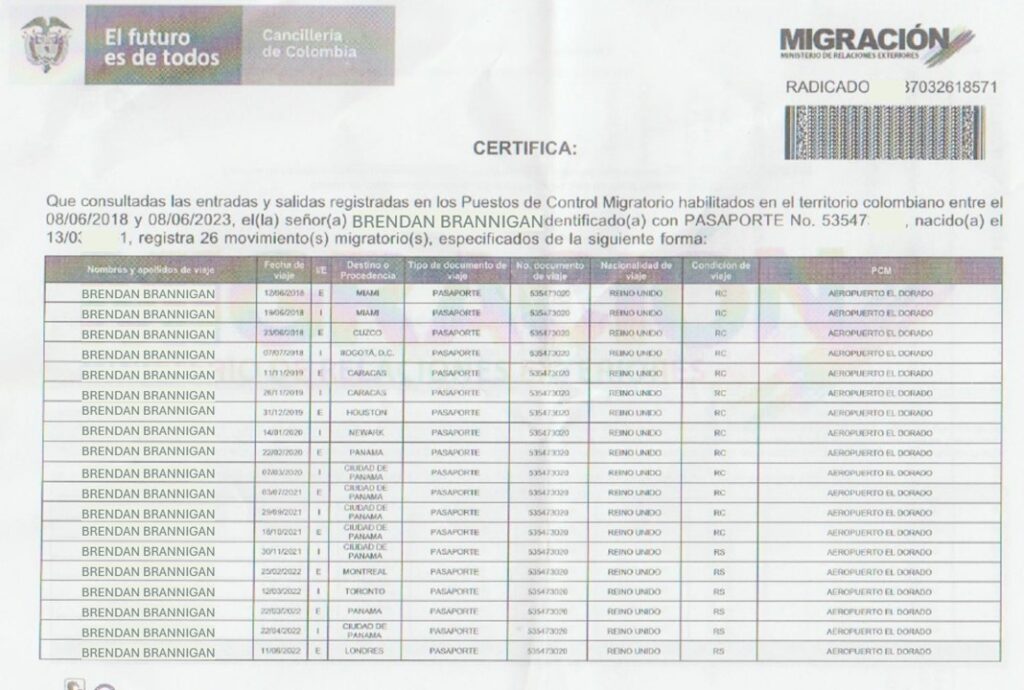
Before applying for the traspaso, you need to obtain Certificado de Movimientos Migratorios, which is a printed certificate issued by Migración showing your entrances and exits from Colombia. The purpose of the certificate is to show your presence in Colombia. If you have been absent from the country for more than two years your residency status is automatically cancelled. You can apply and pay for the certificate online at the Migración website Formulario Único de Trámites page.
Be careful to select the centro facilitador (Migration office) that is closest to you because you must collect the printed certificate in person from the office. Also select the 10-year option for the certificate’s timeframe.
Not usually. One you have applied online, Migración will send you an email within three days notifying that your certificate is ready. You can go to the office and skip the lines by showing the email to the door staff. The counter staff will then print off the certificate. There is usually no need to make an appointment.
Can I get the certificate from overseas?
At present, Migración is only giving the option to collect the certificate in person in Colombia. This is one way to ensure that the visa holder is resident in Colombia. The option to collect in an overseas – i.e. at Colombian consulates – could change in the future.
Example of the printed Certificado de Movimientos Migratorios.
OK, so what about the visa transfer?
Now you need to the visa website at www.cancilleria.gov.co, and navigate to the visa page called the SITAC. Note there are English and Spanish pages (the Spanish version sometimes works better).
Fill in your details to enter the system, then select ‘Visa traspaso’ from the dropdown menus. You will also be asked to click on the timeframe when your original ‘R’ visa was issued. You will then be told what documents to present; these can be uploaded in PDF.
The visa application page on the Cancelleria website. Choose ‘traspaso’ from the options.
What documents are required?
This varies depending on your type of Resident visa and when it was issued, but generally:
Scan of your original R visa.
Scan of your passport main page.
Scan of your current Cedula Extranjeria.
Scan of your most recent migration entry stamp to Colombia.
Scan of your Migratory Movements Certificate issued by Migración.
Letter requesting the transfer, explaining the reason for the request (i.e. ‘para cumplir con Ley 5477 de 2022’).
Passport-style digital photo meeting the specifications.
Holders of permanent resident visas do not need to provide any more information. Other types of R visas might require evidence that the conditions under which the visa was granted still applies.
How do I pay?
The fees are divided into a US$54 ‘study’ fee, which is paid on submission of the documents. When the visa transfer is approved you pay an additional ‘visa issuance fee’ of US$54. Payment is also online by Colombian PSE bank transfer scheme, or you can use Visa or Mastercard credit cards.
Is that the traspaso done?
No. Once your e-visa is sent to you be email, you need to register your visa and apply for a new Cedula Extranjeria ID card within 15 days of receiving the new e-visa. The initial application and payment is done online, using the Formulario Único de Trámites page. Tick the Cedula Extranjeria box and select your nearest Migración office from the drop-down menu.
You’ll need to provide more information, scans, and an US$80 payment.
Back to the FUT page, but this time for the Cedula and visa registration.
Surely that’s the end of it?
Nope. Now you need to make an appointment with the same Migración office to provide biometric data for your new CE. To make an appointment, first register with the website here. Slots for the following week are allocated often at 5pm on Sunday, so try at this time.
If there are no slots available, take a screenshot of the appointment page as you can later use this as evidence to prove you were trying to comply with the 15-day plan (Migración sometimes sanction visa holders for not registering on time).
If you do not get an appointment within 15 days don’t worry; with your screenshots of the full agendas, Migracion are unlikely to complain. Everyone knows the system is overloaded.
What about my Cedula de Extranjeria?
Another delay: some people wait months for the plastic card, though lately the wait has been getting shorter. You can use your old CE or your passport in the meantime.
Should I hire a commercial visa company to do the paperwork?
The Cancilleria recommends applicants to apply directly for the traspaso directly via the website. However, commercial visa companies can assist with the paperwork but will charge a fee up to several hundred dollars. Try the process yourself before seeking professional help.
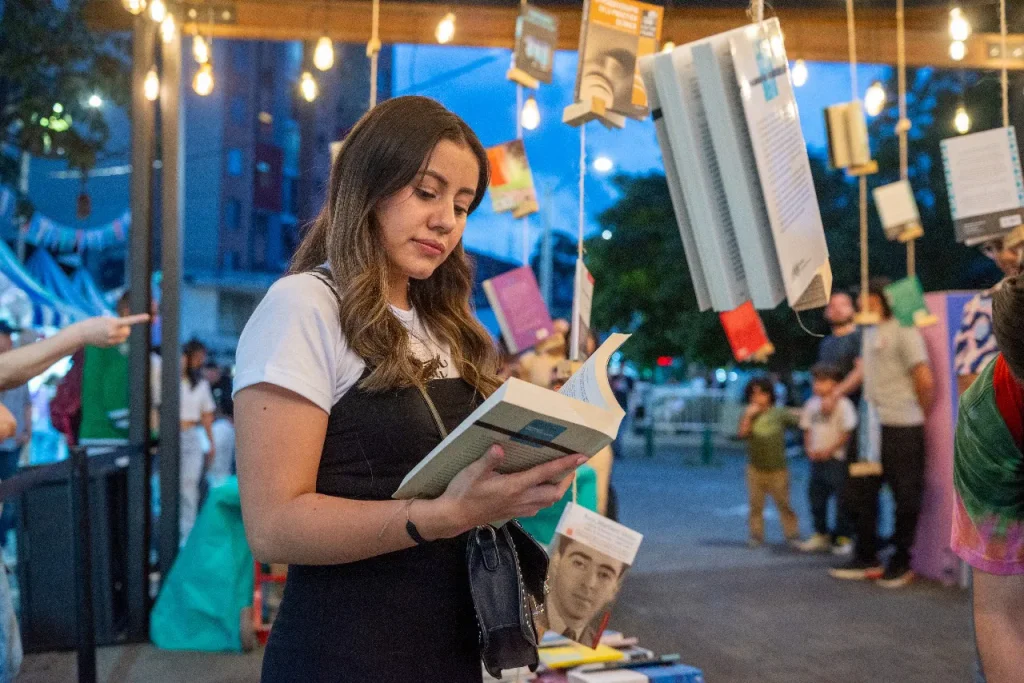
UNESCO has designated Medellín, Colombia’s second-largest city, as the World Book Capital for 2027, recognizing the Colombian city’s rapid growth in reading culture and its use of books and libraries as tools for social transformation.
The decision, announced in March, follows a recommendation by the organization’s World Book Capital Advisory Committee, made up of publishers, booksellers and authors.
Medellín will become the 27th city to hold the title since 2001, with its program set to begin on April 23, 2027, coinciding with World Book and Copyright Day.
UNESCO said Medellín has seen a 542% increase in bookstores over the past 70 years, placing it at the top of Colombia’s reading index. The city is home to more than 110 bookstores and 25 libraries, many of them built as part of urban renewal projects that transformed former prisons and police facilities into cultural spaces.
“Books are not just carriers of stories. They are a source of creativity and learning,” said UNESCO Director General Khaled El-Enany, adding that Medellín’s designation sends “a powerful message about how culture can build peace and social cohesion.”
Mayor Federico Gutiérrez described the recognition as a milestone for the city. “Medellín has shown that reading is a fundamental part of its culture,” he said. “We want every child born here to grow up with a book in their hands.”
Gutiérrez said Medellín’s bid for the World Book Capital designation was built around five strategic pillars, including early childhood reading programs to ensure access to books from birth, as well as initiatives to promote reading among students through book clubs and opportunities to meet authors and engage with their work.
Cities named World Book Capital commit to promoting reading across all age groups and organizing a year-long program of cultural activities. According to Spanish-language philologist Andrea Peláez, the initiative is designed to support cities with strong cultural momentum.
“These are cities with significant cultural mobilization,” Peláez said. “UNESCO supports them for a year to develop projects that promote reading, especially among young people and vulnerable communities, while strengthening literacy ecosystems overall.”
A key part of Medellín’s literary ecosystem is its Eventos del Libro, a series of large-scale public events including the Book and Culture Festival (Fiesta del Libro y la Cultura), which bring together writers, publishers and readers across the city.
These events promote reading through school programs, author visits and community activities, often encouraging students to engage with books ahead of meeting authors in person.
UNESCO said the designation is part of broader efforts to strengthen literacy and access to books worldwide, highlighting similar initiatives in regions such as Central America and Ethiopia.
Once associated with violence, Medellín has gained international recognition in recent decades for its cultural and urban transformation – with books and libraries playing part in that shift.
Featured image credit: Festival de Libro Medellín.
Segunda Marquetalia ordered the attack last year according to trial testimony.
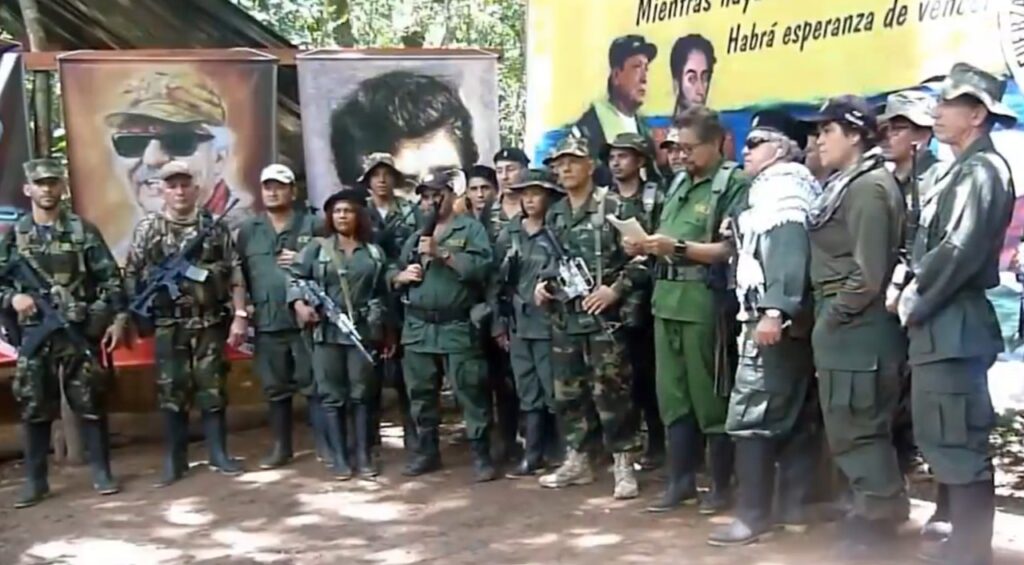
Segunda Marquetalia announce their formation in 2019, from the jungles of Guainia, Colombia. Video Capture.
Revelations that former FARC leaders ordered the 2025 killing of Miguel Uribe have heightened political tensions in the run-up to the May presidential elections.
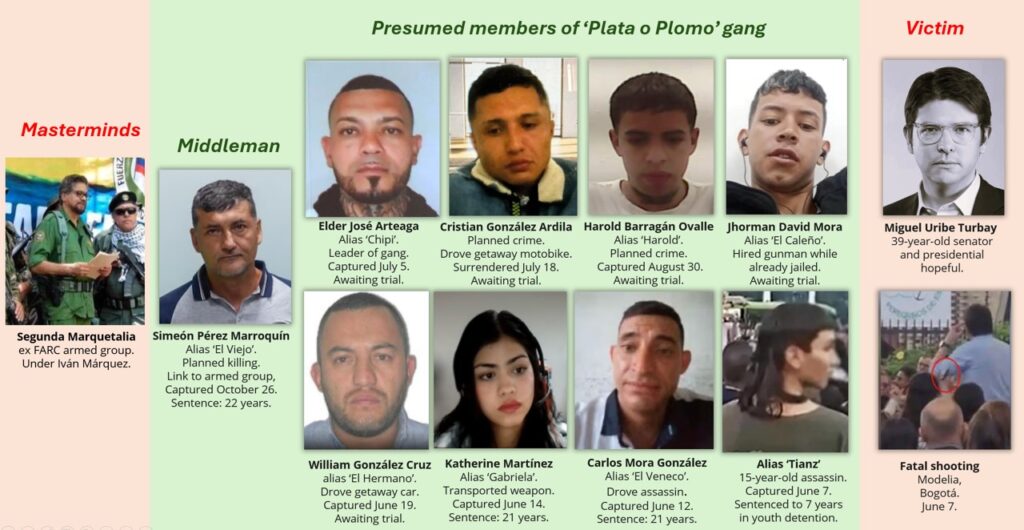
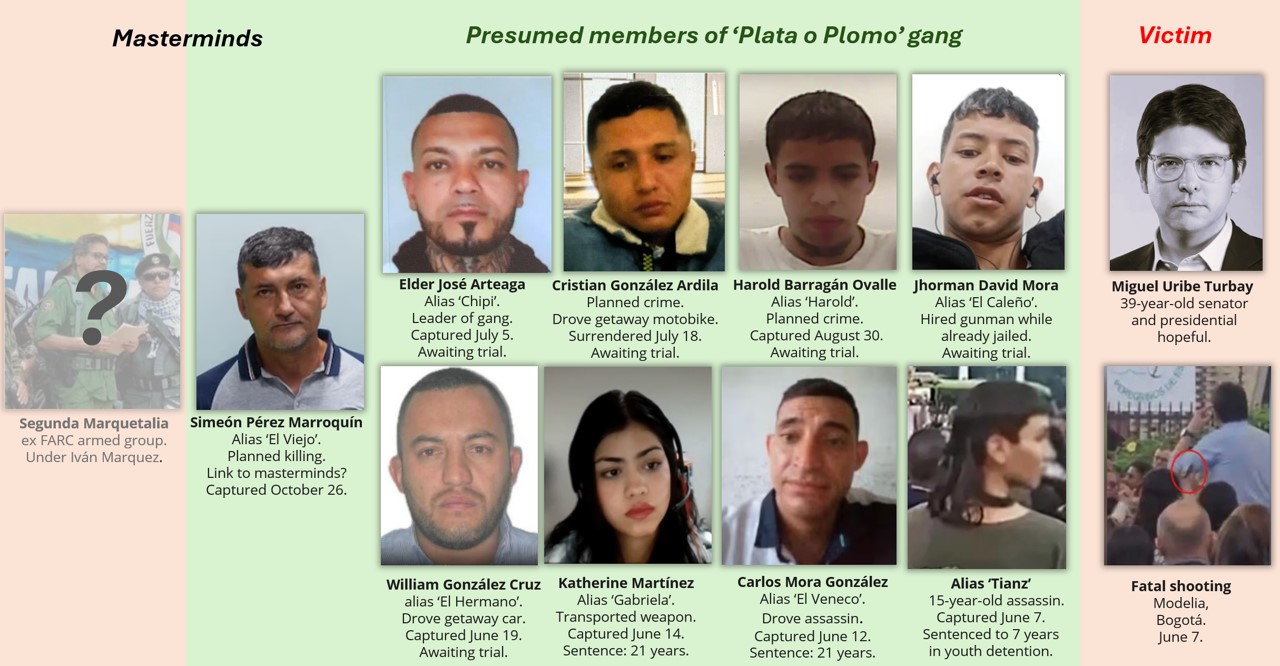
The 39-year-old Colombian senator and presidential hopeful was gunned down by a Bogotá gang hired by the Segunda Marquetalia, an armed group created by disgruntled guerrillas hiding in Venezuela, according to testimony revealed in court.
The senator was shot down by a 15-year-old assassin at an open-air political rally in the barrio of Modelia in June, 2025. Uribe died of head wounds two months later.
After months of investigations and multiple arrests, state prosecutors were last week finally able to link the local gang that carried out the hit with the armed group.
The breakthrough came during the trial of Bogotá-based gang leader Simeón Pérez Marroquín, also known as ‘El Viejo’, who admitted he had hired the local Plata o Plomo (‘Silver or Lead’) gang to carry out the killing on behalf of the Segunda Marquetalia armed group.
“The deal was that they would pay one billion pesos [US$270,000] for the senator’s death,” said Marroquín in a statement reported by magazine Semana.
Right hand man
Confirmation of involvement by an armed group founded by former FARC leaders sparked a political spat between front-runners for the upcoming presidential election.
Right-wing candidate Paloma Valencia was quick to accuse the Petro government of negotiating peace with the Segunda Marquetalia – even while the armed group was plotting the murder of Uribe.
Valencia referred to Marroquín’s statements that the hit was organized by veteran guerrilla Zarco Aldinever, the right-hand man of the group leader Iván Márquez, in early 2025.
At this time Aldinever was nominated a ‘peace manager’ by the Petro government, meaning any arrest warrants were suspended and the rebel was free to roam. This despite the collapse of peace talks with the Segunda Marquetalia at the end of 2024.
Valencia further pointed to the closeness between her main election rival Iván Cepeda and leaders of the armed group.
Old photo
Iván Cepeda with Iván Marquez.
“The killer of Miguel Uribe is photographed hugging Iván Cepeda,” she wrote on X, attaching a photo of her rival with Segunda Marquetalia founder Iván Márquez.
In fact, the photo of Cepeda dated from the 2016 FARC peace talks, explained President Petro in a strongly worded statement defending his friend and political ally.
“The photo shows Iván Cepeda’s attempt to help [the Santos government] achieve peace. At that time, the entire FARC was ready for peace,” said.
Iván Márquez was number two in the FARC at the time and widely respected for his role in the negotiations.
Petro went on to blame his predecessor, right-wing president Iván Duque, for undermining the FARC peace process that forced former guerrilla leaders like Márquez back to arms and the Segunda Marquetalia.
Following the 2016 deal, some former FARC leaders had been “entrapped by state prosecutors with fake drug charges”, he said, leading to extradition requests from the United States.
Faced with this legal pressure several top commanders, including Iván Márquez and Jesus Santrich, fled to Venezuela in 2018 before emerging on video a year later to announce their new incarnation as the Segunda Marquetalia, named after the village in the Tolima department where the original FARC first formed in 1964.
The armed group was active in drug trafficking and illegal mining along the Colombia-Venezuela border, in the departments such as Vichada and Guainía, according to a profile by InsightCrime. The leadership is suspected of hiding out in Venezuela.
Another study by Fundacion Ideas para La Paz estimated the group to have 530 armed combatants in 2025, an increase of 15% on 2024, and work mostly in the eastern plains of Colombia.
A hunt is on
In a press conference on Tuesday, Valencia accused Cepeda and other left-wing lawmakers of backing the former FARC commanders in their legal battles back in 2018, creating a chain of events leading to the creation of recycled armed group.
“Congressmen like Cepeda defended [Marquéz and Santrich] …and didn’t allow them to be extradited. If these thugs had been extradited, Miguel Uribe would be alive today,” she said.
In his own press statement Cepeda called Valencia’s comments “a dirty political game” and issued a challenge to the candidate, and her political mentor right-wing former president Álvaro Uribe, to back up the accusations in court.
“It’s infamy to accuse me or President Petro to have any type of involvement in such a deplorable deed as the assassination of senator and presidential pre-candidate Miguel Uribe,” he said.
Meanwhile this week the Colombian attorney general’s office launched a fresh hunt for the leaders of the Segunda Marquetalia, offering around million-dollar rewards for the capture of seven commanders including Iván Márquez and Zarco Aldinever.
In fact, Aldinever was reported killed by rival armed group ELN in Venezuela during a squabble over a cocaine shipment in August last year – the same month that Miguel Uribe died – according to Colombian state forces at the time.
This week Colombia’s Minister of Defense Pedro Sanchez walked back that claim saying no body had ever been found and that the initial report of Aldinever’s death – sent from the Segunda Marquetalia itself – could be disinformation.
“At this time, the position is clear: without a body there is no confirmation of death, and that is why all institutional resources remain active to locate him,” said Sanchez.
Underworld connections
Closer to home, the Segunda Marquetalia’s influence in Bogotá was under scrutiny after Simeón Marroquín’s testimony shed light on the murky connections with the city’s underworld.
Marroquín admitted that in previous decades he had acted as an urban operative for the FARC guerrillas, a hired gun ready to carry out orders in the city.
“I never wore camouflage, but while I was here in Bogotá, I was a miliciano. Guerrilla missions would come up, and I’d carry them out, but I was never in the ranks.”
His contacts with the FARC continued to the Segunda Marquetalia that tapped him for the Uribe killing.
Early in 2025, Marroquín was invited to a secret meeting in Cúcuta close to the Venezuelan border where, according to his testimony, Aldinever offered him one billion pesos for the crime (US$270,000) and another 600 million pesos (US$160,000) to “bribe the justice system” to deflect attention from the guerrilla group.
The motive for the killing was not clearly revealed by Marroquín, though a text message later found on his phone sent to his guerrilla paymasters talked of an “eye for an eye”, suggesting the former rebels were out for revenge.
The Uribe case uncovered links between the Segunda Marquetalia guerrillas and urban criminals.
Chilling revelation
Uribe was selected as an influential senator, scion of a right-wing political family, and popular candidate for this year’s presidential elections. He was also an easy target for assassins with his regular visits to communities where he had walkabouts to engage with local voters.
In the first few months of 2025, Marroquín worked his underworld connections to hire the Plata o Plomo gang which in turn lured the 15-year-old gunman who shot and wounded Miguel Uribe in a small park in the barrio of Modelia on June 7.
Marroquín’s account paints a picture of a loose network of petty criminals lured by cash rather than political interests, ignorant of the details of both their intended target and the paymasters behind the plot.
The middleman saw the hit as a “good business opportunity” but also a chance to rekindle his role as urban operative for a guerrilla organization.
Marroquín’s plan unraveled after the 15-year-old gunman and various low-level gang members were detained in the hours and days following the June attack, creating a trail leading to his own capture in October.
“What’s done is done”
One chilling revelation was the order from above for Marroquín to kill low-level gang members to cut links to the guerrilla masterminds. This included murdering alias Gabriela, who transported the weapon and was present on the day of the shooting.
Marroquín refused to kill Gabriela, telling investigators “I didn’t have the heart for that because she was very young.” But he did send her by bus to the city of Florencia where the guerrillas were lying in wait.
#ATENCIÓN | "No hay palabras que justifiquen dicho acto, pero pues ya está hecho (…)", fueron las palabras con las que Simeón Pérez Marroquín, alias ‘El Viejo’, pidió perdón a la familia del senador y precandidato presidencial Miguel Uribe Turbay, tras reconocer que fue el… pic.twitter.com/btgnOsTEF7
The 19-year-old never made it; police investigators, already on Gabriela’s trail, organized for the bus to “break down” some miles before Florencia. Her arrest there and subsequent interrogation lead to Marroquín’s capture and eventual exposing of the links to the Segunda Marquetalia.
Last week, during the court process, Simeón Marroquín attempted to apologize for his role in the killing of Miguel Uribe.
“There are no words to justify my actions, but what’s done is done,” he said on camera from his cell, addressing his victim’s family – Uribe was married with four children – and asking forgiveness. He was then sentenced to 22 years in prison.
How quickly Colombian investigators can find Zarco Aldinever or other Segunda Marquetalia commanders, dead or alive, or hiding in Venezuela, remains to be seen.
Playa Blanca, near Tierra Bomba Island. Credit: David Shankbone via Flickr
According to the United Nations (UN), the world is in an era of “global water bankruptcy.” In Latin America alone, the OECD finds that 17 million people still lack access to safe drinking water. Among those affected are the residents of Tierra Bomba, a small Caribbean island located off the coast of Colombia which faces persistent challenges in obtaining drinking water.
The island, home to an estimated 9,000 people, lacks access to clean water, with residents relying almost entirely on supplies brought in by boat from the mainland.
However, water filtration startup Vital Lyfe and Amigos Del Mar, a local NGO, recently made a breakthrough for the island’s water supply; in November last year, they successfully tested a decentralized water system, which can turn seawater into treated filtered water. So far, 40 families in the area have been helped by the project, benefitting from stable water production with minimal maintenance.
“Everyone knows that water is extremely expensive here,” Marta Maldonado, a Tierra Bomba local, told The Bogotá Post. “One gallon costs three thousand pesos. As a family, we have to buy four gallons of water every single day just to start the day. Many times, the water arrives with a little bit of salt in it, and that has even made us sick.”
For Maldonado, Vital Lyfe and Amigos Del Mar’s work has made drinking water more accessible. “Drinking the water filtered by Tierra Bomba’s technology is something special. It makes me realize that good water has finally arrived here. We have the sea right in front of us, and now, with these machines, clean water becomes possible. For us, it is something essential,” Maldonado said.
Making seawater drinkable
As an island, Tierra Bomba faces significant challenges. For instance, there is a lack of running water and sewage systems, issues with gas access, and inefficient trash collection that can make life difficult for residents.
“One of the biggest problems that we see in Tierra Bomba is clean water access. The water comes by boat, and it can be expensive, inconsistent, and sometimes of questionable quality. The water gets to the island, and people have to go and buy it in one place, making it really hard for some people to carry water to their homes,” Pedro Salazar, president and founder of Amigos Del Mar, told The Bogotá Post.
Amigos del Mar, established in 2015, decided to collaborate with Vital Lyfe to see if there was a way to create more reliable water access for the island. “Water is life. It brings health when a lot of the unsanitary water in the area carries diseases that people have been consuming. The quality of life for the people of Tierra Bomba can become much better, as we have already seen with this pilot, when they have access to good quality water for everything in their lives, from drinking to cleaning to cooking,” Salazar said.
Under the hood
The project uses a portable filtration system built by Vital Lyfe, which offers a high-efficiency purification engine that combines mechanical innovations such as low-cost reverse osmosis membranes, and smart power management to deliver clean water without the industrial footprint normally associated with purification. The device can adapt to the water that is available, using the lowest energy, and implementing the most efficient treatment pathway for that specific source.
This approach enables the system to process naturally occurring water sources, including brackish water, seawater, and freshwater, to eliminate salts and biological contaminants so the water can be made into drinkable, filtered water.
“The project was a great success, with the technology working immediately, providing filtered water for around 40 families in the area. Many more became aware of the system and expressed interest as well, providing a need for more of this kind of tech. The mission achieved field validation for us as well, proving that the technology could work in remote environments with little knowledge or maintenance needed from the local community,” Jon Criss, CEO and co-founder of Vital Lyfe told The Bogotá Post.
Criss notes that the local community assisted with the rollout, unloading and positioning equipment before installation began. The project means that rather than having to rely on a fragile supply chain which is vulnerable to changing weather conditions, community members can enjoy sustainable access to clean water that’s local and scalable.
“For us, this wasn’t just a one-off deployment. It was proof that communities like Tierra Bomba don’t have to stay dependent. There’s real potential here to expand the impact and build something long-term that strengthens resilience and lowers cost at the same time,” Criss said.
While the pilot looks promising, it also remains to be seen if the equipment can sustain prolonged use. In addition, there is more research to be done, to demonstrate that such a filtration solution could provide filtered drinking water to more populated areas.
President Gustavo Petro on Tuesday declared three days of national mourning in Colombia following a military plane crash on Monday which killed 69 soldiers.
The accident occurred at the Puerto Leguízamo airport in Putumayo, a region located in the southwest of the country, involving a C-130 Hercules aircraft normally used to transport troops and humanitarian aid to remote regions.
According to the latest official reports, at least 69 soldiers and crew members were killed in the disaster. The military transport plane, belonging to the Colombian Aerospace Force (FAC), was carrying over 120 people when it smashed onto the grounds of a nearby farm just after takeoff.
During the period of national mourning, Petro confirmed that flags will fly at half-mast and military honors will be given to the victims of the tragedy and their families.
He decretado tres días de duelo en todo el territorio nacional en memoria de los 69 uniformados pertenecientes al Ejército, Fuerza Aeroespacial y la Policía Nacional que perdieron la vida en el accidente aéreo en Puerto Leguízamo – Putumayo el pasado 23 de marzo.
Many households are grieving the loss of their children, but one family in particular mourns the loss of two: brothers Santiago and Daniel Esteban Arias. Originally from Puerto Libertador, in the Caribbean department of Córdoba.
Monday’s crash is one of the worst aviation tragedies in the country’s recent history. In 2016, a plane carrying players from Brazil’s Chapecoense soccer team crashed into the mountains outside Medellín, killing over 70 people.
Lamentamos profundamente informar que, tras culminar las labores de búsqueda y rescate, hoy confirmamos con dolor los nombres de nuestros héroes que ofrendaron su vida en el accidente aéreo en Puerto Leguízamo, #Putumayo.
— Ejército Nacional de Colombia (@COL_EJERCITO) March 24, 2026
In Puerto Leguízamo, survivors of the military plane crash were transferred to specialized medical centers across the country.
Authorities are investigating the causes of the accident but have dismissed preliminary claims of an attack by guerrilla forces active in the region.
The Mayor of Puerto Leguízamo, Luis Emilio Bustos Morales, told local media, including Blu Radio and Noticias RCN, that “they have many hypotheses.”
He noted that among them, “there is talk that they were carrying too much weight” or “that the runway was too short for them.”
During the emergency, residents used their own motorcycles to evacuate the survivors before official help arrived; some of them were also injured by ammunition exploding in the flames.
The medical center known as ‘Hospital Militar Central’, located in the capital Bogotá, confirmed that a local rescue worker is among those being treated there.
President Petro expressed his gratitude through his X account, stating that “this is how a nation is built.” He thanked the local citizens who rushed to save the survivors. He also highlighted the soldiers who ran to save others during the disaster, calling their actions a “beautiful proof of love and solidarity.”
The painful moments were detailed by soldier Mauro Peñaranda, who survived and described the scene as the aircraft went down to local media outlets: “It was leaning to one side, and there was a weird noise (…) the plane was creaking,” he told RTVC. Mauro also stated that they did not receive clear instructions from the cockpit during the situation.
“I honestly don’t even know how I got out of there… I just jumped and got out,” he said.
The governments of Ecuador, Panama, France, and the United States, among others, also offered their condolences to the Colombian military forces and the victims’ families.
Featured image: Photo of Colombian military plane crash site in Puerto Leguízamo on March 23, 2026.
What does the name Anto<3 mean, and why is it written like that? Find out all about one of Festival Estéreo Picnic 2026’s most dynamic acts.
Anto<3 are all over the place both orthographically and musically, but in a good way. This is as Gen Z as it comes, gleefully mashing up sounds and styles in an explosion of energy, chaos and unfiltered reality. They’ll definitely start Festival Estéreo Picnic 2026 on the front foot with a shot of adrenaline to the heart.
This is full-throttle music that is relentless and breathless. Explicit and provocative lyrics take you through whirlwind mini-stories told in an effects-heavy style, underpinned by complex, energetic and throbbingly insistent rhythms.
2022’s Regañada
Charismatic singer Antonia Broderick and producer Samuel Huertas take time out to talk to us about their upcoming show at Festival Estéreo Picnic 2026. It’s immediately clear where the energy comes from – Broderick’s eyes dart around while Huertas has a laid-back drawl.
Their opinions on playing the country’s biggest music fest illustrate their personalities well. Broderick leaps in to say “So fucking excited, honestly. I think it’s going to be a really great moment for everyone,” while Huertas adds “Of course, we’ve been here as audience members too, so that’s cool, because it’s from here.”
Broderick’s take on their music is simply to reel off a list of adjectives: “ Intense, punky, hardcore, free, vulnerable.” Some of that might seem contradictory, but that’s part of the point of the band. Trying to pigeonhole them is a fool’s errand, constantly getting lost as they flit seamlessly and effortlessly between genres.
Huertas tells us that fusion is key to their sound, saying that they have “Electronica with Colombian things – a lot of trap and reggaeton, I don’t know what more. Rock, also, and emo?” The former are clear in the beats while the latter two often come through in the lyrics, with candid expressions of sadness and allusions to depression alongside a celebration of vice and hedonism.
He also has time for more classic sounds, even if repurposed and refashioned for a 2026 audience. “We also have like cumbia, but mixed with new genres. Some of our songs are really traditional, which is cool.” It’s not the first thing you’ll hear, but it comes out on repeat listens.
Playing with the idea of romance, they gleefully announce their new single: the charmingly named Romantikunt. It’s a bold name, to be sure, illustrative of how few fucks they give as to what others may think. Broderick seems to relish anglo-saxon words, liberally dropping ‘fucks’ throughout her songs.
And that iconoclastic, playful band name? It comes from the delightfulness of a peck on the cheek, as Broderick explains “The name is because I love the emoticon, it’s like a heart and I think I’m really romantic. It’s basically Anto-heart, but more cool.”
It’s a name that encapsulates the band: it’s Gen Z already-ironic emoticons, tells you they don’t give a fuck about classic forms and is jarring to see, while adding that twist of sugar that sweetens the message just enough to make Anto<3 fun.
Anto<3 play the Páramo stage at 3pm on Sunday March 22 at Festival Estéreo Picnic 2026
Colombia’s premier music event kicks off today, with top tier talent throughout the bill. Who’s on and what do you need to know about Festival Estéreo Picnic 2026?
Festival Estéreo Picnic 2026 is here at last! By far the most high-profile event in the Bogotá musical calendar, the festival has gone from strength to strength since its return to the heart of the capital and this year is certainly no exception. The sun has even come out to say hello for Friday at least.
With music event tourism growing in popularity, Festival Estéreo Picnic 2026 is a reason to visit Bogotá for many, with floods of foreign tourists coming in from Latin America and beyond, eager to check out what a contemporary Latin music festival looks like and how rolos party.
Our guide will let you in on some talent you might not have heard of on the bill as well as give you an idea of what the festival itself is like. Whether that’s eating and drinking, transportation or even what to wear, we’ve got you covered.
How to get around Festival Estéreo Picnic 2026
First time at Festival Estéreo Picnic? First time at a major Latin event? Don’t worry, it’s a well-oiled machine that is easy to deal with. All basic transactions are done via a cashless wristband that you can pick up onsite. The system is easy to charge, use and even reclaim outstanding balance from.
Bands are usually timed so that you can flip back and forth between the two main stages (Festival Estereo Picnic and Mundo Distinto) and catch everyone as long as you don’t need to be right at the front for everyone. Getting around is usually pretty easy, with big wide paths and wheelchair access relatively well set up.
Estéreo Picnic is definitely the main stage, facing in reverse to the Rock al Parque setup, but Mundo Distinto pushes it close as a strong second stage. Many years it sees the best performances, with the likes of Fatboy Slim and Limp Biskit ripping it up in recent years.
However, for true music geek points you’ll want to get to Lago (behind the second stage) and Bosque (to the left of main stage) for smaller bands and a more intimate atmosphere. When well-supported locals are onstage, this is a lively place to be.
There’s even a beach! Sort of.
As well as the bands on the open air stages there are also a triptych of tents. These feature a range of cabaret artists – expect burlesque, drag and the like – and a revolving lineup of mostly local DJs. These are great places to dip into if you’re left cold by the stages, but expect a fierce heat inside.
In terms of refreshments you should have no problems. There’s a decent dedicated eating area and unless you go at the absolute peak time you should have no trouble finding seats. Prices are towards the higher end of Bogotá, but not at all crazy.
Offerings are similar to what you might expect to find in a food court at a mall: a bunch of big and big-ish chains plus a few smaller outlets. Vegans are usually catered to by either NoPollo or Stankov. There’ll be a craft beer stall somewhere plus a BBC van.
This is Bogotá, so make sure you pack waterproofs and suncream porque sí. You probably need at least one of them and possibly both. If you turn up in the late afternoon you can get away without the cream, but remember people burn fast at altitude.
Decent hiking waterproofs aren’t high fashion but they are very practical and with La Niña refusing to clear off, likely to be necessary. Even if you avoid the actual rainy spells, there’s a good chance of muddy patches that can quickly ruin nice trainers.
El mundo distinto is set to be sunny for the start of the weekend
If you find yourself with a long time between bands or needing a rest, there are chill out zones to relax with as well as a market featuring stalls usually run by independent brands. There will also be plenty of megacorps trying to flog stuff all over the park.
This year, it’s a three-day event. That seems like a good move, concentrating quality into a long weekend rather than stretching things over four days. Adult tickets start at COP$523,000 for a single day and are available online via Ticketmaster here.
Finally, toilets. Yes, it’s a festival, but no, they aren’t bad. Men and women are neatly separated, but make sure you bring a pack of tissues as paper is usually in short supply. The area is nice and large so no risk of anything horrible happening.
Who to watch at Festival Estéreo Picnic 2026?
Friday
Friday’s lineup starts strong
Get onsite early to check out Entreco opening the Lago stage at 4pm on the way in. They’re queer-punk iconoclasts from Cali with a long history. The crowd might be small, but the performance will be big, with plenty of charisma on stage. Manú is then over at the Bosque for some more introspective pop.
Djo and Katseye arrived at the airport together this week and they play joined at the hip – the latter on the second stage for sundown, with the former taking over on the main stage after an hour.
Then things get complicated. Six Sex will be on a minor stage, Bogotá rockcito mainstays Nicolás y los Fumadores are at the Lago and Addison Rae lights up the second stage. Digital Nuclear Transistor is worth catching in the tents if you’re a fan of dark techno.
And then Turnstile arrive at the main stage for what will be a crushing moshpit. They’re on at the right time in the right place: it’ll be intense, just as it was when they played here a few years back.
With probably the strongest single-day lineup, there’s only one place to be to see out the day as Tyler, the Creator takes to the stage at 23:15. Lorde is the warm-up on the second stage if you don’t want to be pushing to the front for the headliner.
Saturday
Old favourites return on Saturday
After Friday’s fun and games, you might be tempted to arrive late on the following afternoon. That would be a shame, because there’s some fine acts early doors. Machaka from Ecuador is an interesting take on Latin pop, Kabinett is wildly inventive alternative electronica and 31 minutos is a puppet show. Yes really, and it’ll be huge.
Perhaps one of the most Latin experiences you can have is on today: La Tigresa del Oriente. An octagenarian balladeer that defies all comparison and most description, look her up to get an idea of what’ll happen. Aora tent at 7pm, it’ll be something special.
After that, you have Tom Morello continuing to rage against the machine, but still having an early night and The Killers, who have been here before and always turn in a big set. Swedish House Mafia close out the second stage and that is likely to be bouncing, with Festival Estéreo Picnic always loving this type of slot.
Sunday
Sunday finishes on a high
The day kicks off with an absolute riot of local talent from early on, with Anto<3, Agraciada Pirineos en Llamas and Zarigüeya all opening stages. All four are exciting young Colombian talent that reward those getting onsite to see them.
Unlike anything else on the bill, Zarigüeya is proudly political without tubthumping and blending carranga rhythms into a smooth smorgasbord of styles.
Latin American maximalism is represented by Agraciada, who teams that visual style with soulful, delicate minimalist harmonies.
Macario Martínez is a Mexican viral sensation tipped to make it big while booking Travis to play Colombia early afternoon this close to the rainy season is frankly tempting fate. Then there’s the mystery of pop pixie Sabrina Carpenter, a ray of upbeat pop among an array of darker and more aggressive acts.
Those are Interpol, Deftones and Skrillex, giving a very turn of the century feel to the end of the festival. Interpol will sound like they always do, serviceable, but the other two are more interesting.
Deftones are back on track after some rocky years, gaining near-universal acclaim for this tour as more people re-evaluate their position as nu-metal pioneers. Skrillex, meanwhile, dug a furrow all of his own as the DJ metalheads love and metalhead DJs love. He’ll lean more into the former than latter to close out Festival Estéreo Picnic 2026.
Mixing Latin American maximalist visuals with a sensitive minimalist sound, Agraciada is set to light up Festival Estéreo Picnic 2026.
Huilense popster Agraciada in person screams Latin American maximalism with her outfit. Musically, though, she’s more introspective and sensitive with a deep groundswell of emotion eddying through her songs in the tradition of melancholic Latin crooners. She’s set to bring something different to Festival Estéreo Picnic 2026.
This clash of flamboyance and melancholy would be reminiscent of Morrissey were she not so easy to talk to and such pleasant company. Born Georgina Rojas Vargás, she explains where the dualism of visual maximalism and musical minimalism comes from.
“It depends on the day,” she says with regard to her flamboyant outfit and stuffed toy. “Sometimes you have to do something a bit special. The visual identity is very important for me, the maximalism. That has a lot to do with my day-to-day life too.”
She warms to the theme, explaining that when it comes to music she thinks less can be more. “I consider myself very sensitive, it’s part of my personality. I perceive everything as very intense and music permits me to express that.”
Her music is very traditional in terms of emotion and emphasis, with a heavy focus on loss, melancholy and sadness as well as dreams of love. While there’s a lot going on, it’s muted rather than flashy, allowing the vocals to take centre stage.
In the Latin tradition, it’s gentle and soulful with stripped back wistful harmonies. “I consider my music very melancholic,” she says, continuing “there’s the romanticism of salsa and ranchera as well as other traditional genres in Colombia and Mexico particularly. It’s a very Latin American mix.”
Pressed for a personal recommendation, she says that “Calor de corazón shows the intensity of my personality.” She recommends listening in 5.1 surround sound for the full effect of the aural soundscape to reach and envelop you.
She’s looking forward to being onstage at Festival Estéreo Picnic 2026 as she loves performing. “For me art is like a service, I’m inviting the audience to share something very personal from me.” She’s been in Bogotá more than enough time to pick up the accent, so she knows just how big a stage this is.
It’ll be a big affair as well – she’s turning up with full musical support. “There will be 15 musicians on stage with me, because they’re my friends and we want to put something a bit different on stage. That includes two pianos.”
Agraciada is a bundle of contrasts that triggers lots of emotions through her gentle, softcore delivery. It’s perfect music both for a warm Bogotá afternoon at Festival Estéreo Picnic 2026 or in a nice cosy bar elsewhere in la nevera.
Agraciada plays the Bosque stage on Sunday March 22 at 14:30 as part of Festival Estéreo Picnic 2026.
Singer-songwriter Zarigüeya is on a learning curve at Festival Estéreo Picnic 2026, but she’s sure of her principles. Find out why she’s not on the world’s biggest music streamer.
Sara at the Festival Estéreo Picnic press event
Singer Sara Puentes Umbarila is performing at Festival Estéreo Picnic 2026 with a musical style that’s markedly different to much of the bill.
Known as Zarigüeya, she combines a range of musical influences with an unapologetically political stance. This isn’t party politics though, instead being about principles and philosophy.
It’s not easy finding Zarigüeya online, and she readily explains why. “I’m really hard to find because I’m not on Spotify. I was, but then I took my music out of the platform. It was a political decision, because I found out the owner was investing in war and on top of that they don’t pay the artists well. So I prefer not to be part of that.”
It’s a principled stand of the type that used to be normal in music but is becoming less commonplace. “I know it’s important for artists to be easy to find, but I don’t care.” A sentiment that might resonate with the likes of Tom Morello on the bill.
Not being on Spotify means more promotion the old-fashioned way – making good music and playing it live. And there’s no bigger stage than Festival Estéreo Picnic 2026. “I’m here to learn, basically, she says, adding “I feel good, a little bit shy, anxious but I know it’s going to be really fun and special to have this chance to share this music in places where I usually wouldn’t go.”
Making the effort to find her music (on pretty much any other platform) is well worth it though. She has a beguilingly soft voice that underpins deep lyrics. While she’s certainly part of the well established Latin tradition of a singer with a guitar, there’s a lot more to her music, blending a rainbow range of rhythms and styles.
She returns again to the theme of learning as she explains how her songs differ. “I’m still figuring things out after three years as a songwriter, so I have my band and I also play alone.” That adds to the sense of whimsy that permeates her sound – as comfortable with full backing or going solo.
Carranga pops up often in descriptions of Zarigüeya and it is a part of the mix, but she draws from lots of sources. “I mean, I love carranga, it’s one of my favorite genres, but this is not intended to be 100% carranga.”
“This is music, you have a little bit of many different rhythms. It has a clear carranga inspiration but not in all the songs. Three or four have a strong influence, but many are just whatever comes [to me] in the moment, not on a strict schedule.”
It’s no surprise that this isn’t just a musical basis. “One of my biggest influences is Violeta Parra cause she has an amazing voice, she had a very free spirit and also was always trying to find songs in the fields, in the mountains, in the people. And also she was really political in her songs which is something I admire.”
It’s a departure from much of the bill, for sure. “[The audience] can expect to see something different from the rest of the lineup, because of the music and also the vibe of the show. I like to talk a lot and be very narrative.” Adding to that is a multimedia experience, with a friend illustrating live on stage and her own art also prominent as a backdrop.
Festival Estéreo Picnic 2026 isn’t her usual scene, so it’s a special opportunity. “I go to other places usually, other kinds of festivals. So in all senses it’s new to me. It’s challenging and confronting to be part of this. I was not looking for it but I think I will learn a lot.” As will you if you get to her set on Sunday, or further down the line.
Zarigüeya plays the Lago stage at 14:15 on Sunday afternoon at Festival Estéreo Picnic 2026.
Gang members captured for the killing of Miguel Uribe.
Nine months after the shooting of presidential candidate Miguel Uribe Turbay in a leafy Bogotá park, the gang behind the killing have been rounded up and are facing justice.
The masterminds, though, are still at large. Circumstantial evidence points to a political assassination called in by an ex-FARC faction called the Segunda Marquetalia. But other theories exist.
And as the country prepares for the next rounds of elections, the youthful Uribe – seen by many as a presidential hopeful – is conspicuous by his absence.
We look back at killing that rocked Bogotá in 2025, and who might be behind it.
How did the shooting unfold?
Uribe was gunned down in Parque El Golfito, a green space in bustling Modelia on the western edge of Bogotá, on June 7, during a walkabout in the barrio where he met local business owners and climbed on a beer crate to deliver an impromptu address to a small crowd.
The senator was shot at close range twice in the head by a 15-year-old gunman wielding a Glock pistol in the crowd, who then fled but was himself shot in the leg by Uribe’s protection squad and captured in a nearby street.
Uribe was hospitalized and underwent several emergency surgeries before dying from his wounds on August 11, more than two months later.
Who was Miguel Uribe?
The 39-year-old senator was nationally recognized and scion of a political family. His grandfather Julio César Turbay was president from 1978 to 1982, and his mother the journalist Diana Turbay kidnapped by the Medellín cartel in 1991 who died in a botched rescue attempt, a tragedy immortalized by Gabriel García Márquez in his non-fiction book News of a Kidnapping.
Even though he was raised as a legacy politician, and a key candidate for the right-wing Centro Democratico, Uribe nevertheless garnered support across the political spectrum for his hard work and attention to detail, more technocrat than populist, and potentially a unifying figure.
It was perhaps typical of Uribe that the day he was shot he in an unsung corner of the city meeting everyday folks.
Vigil for Miguel Uribe outside the Bogotá hospital where he later died. Photo: S Hide.
What was the impact of his assassination?
Many mourned the loss of the young senator, married with four children. In reality, Uribe’s death was just one of many in Colombia during 2025 with 187 social leaders and human rights defenders murdered nationwide, according to data from conflict thinktank Indepaz.
The senator’s killing had an outsized impact for several reasons. First, Bogotá, unusually for a megacity, has almost half the homicide rate than many smaller cities and some rural areas with long-running conflicts between gangs and armed groups.
Secondly, the many feared Uribe’s attack signaled a return to the 1980s when a wave of political killings – usually by extreme right-wing forces against left wing targets in cahoots with drug cartels – plagued Bogotá and many other Colombian cities.
But united condemnation of the attack quickly degenerated to finger-pointing between political factions with Uribe’s lawyer filing a complaint against President Gustavo Petro for alleged “harassment” of the senator.
Was Petro to blame?
An early theory floated by the late senator’s lawyer was that the attack was a “hate crime”, which in Colombia covers persecution for ideological views. The argument went that Petro crossed the line with his itchy Twitter finger: in their complaint the lawyer presented a 20-page document with 42 presidential tweets disparaging Uribe.
While acknowledging that Petro was in no way linked to the physical attack, he had created a “favorable environment” for anyone with a serious grudge to take out the senator, said the lawyers, though this didn’t explain why a 15-year-old – not a likely candidate for political grievances – was coerced to pull the trigger.
And by the end of June new evidence emerged from the shooter himself. The youth didn’t even know who his target was the senator, or indeed who was Miguel Uribe.
And other pieces of the puzzle fell into place, clarifying that the shooter was hired for cash by an organized criminal gang that had planned the killing in detail.
If it was so well planned, why did they get caught?
Good question. The contract killers calling themselves Plata o Plomo (‘Silver or Lead’) left a trail of evidence starting with the wounded gunman captured with minutes of the shooting.
Next to fall was Carlos Mora, alias ‘El Veneco’, who drove the young assassin, followed a few days later by 19-year-old Katherine Martínez, alias ‘Gabriela’, who delivered the pistol.
Gabriela’s arrest gave the first clues to a wider conspiracy: the webcammer was tracked down to the regional capital of Florencia, Caquetá, a jungle department of Colombia with high presence of armed groups.
CCTV footage from Modelia placed her inside the car with the gunman, and she later confessed to transporting the gun itself.With CCTV footage, and information from Gabriela and El Veneco, other key members of the gang were soon rounded up including two other getaway drivers and a middleman for hiring the 15-year-old.
Seems like a very amateur operation…
Plata o Plomo was a loose group of criminals drawn from the Bogotá underworld, and many had worked together before. The leader was Elder José Arteaga, alias Chipi, who in a rather unlikely twist also ran a hair salon in Engativá.
When not trimming beards, Chipi was immersed in crime with a history of extortion, violence and armed robbery, and was linked to the murder of a Mexican businessman in Medellín in 2024.
He was also quite ruthless: according to Gabriela, Chipi was planning to cover his tracks by killing both El Veneco and the 15-year-old hired assassin. Being captured early likely saved their lives.
Chipi himself became the subject of a national manhunt until his luck ran out on July 5. He was captured hiding in a house in Engativá by a special police unit a month after the shooting, just a few kilometers from where it took place.
Hairdresser and accused contract killer Elder José Arteaga, alias Chipi.
So, case closed?
Not so fast. Chipi was just one link in a longer chain. According to Gabriela, now a key witness, the hairdresser told her the murder contract was for 700 million pesos, around US$190,000.
This amount of cash pointed to a bigger player.
In Colombia there are plenty of candidates to choose from, and no shortage of pundits to point the finger.
Examples please?
Sure. Journalist and presidential hopeful Vicky Dávila accused Iván Mordisco, commander of the Estado Mayor Central – EMC – a dissident FARC faction fighting the state in the southwest of the country. She claimed to have insider information from military intelligence that also pointed to the likelihood of more assassinations of right-wing figures.
Her theory was backed by interior minister Armando Benedetti, who also saw reason for the EMC to stir up trouble in Bogotá as revenge for the war being waged against the group in Cauca.
However, no direct evidence was presented, and that the EMC denied any involvement, calling the allegations “a media strategy”.
Petro claimed involvement by the mysterious “Board”, a mythical super-cartel fused from drug gangs, guerrillas and paramilitaries. Petro portrayed himself as another potential victim: The Board was also plotting his own assassination, he said.
Wow. Anyone and everyone could have done it.
Exactly. Pick the political flavor of your favorite conspiracy. More fanciful pitches were that the extreme right had planned it themselves to stoke a coup against Petro – who would likely get the blame – and at the same time eliminate the popular Uribe from the candidate’s list.
Or that the extreme left wanted to take out an effective political opponent from the presidential race.
One problem for investigators was the complex networks between criminal gangs, drug cartels and guerrilla groups, partly worsened by Petro’s Total Peace plan which had split armed groups into smaller and more dangerous factions.
The Plata o Plomo gang was clearly working for financial gain. But despite capturing eight members by the end of August, the important detail of who paid them – and why – was yet to be revealed.
Maybe the gang was scared to reveal the backers?
Quite likely. In the dog-eat-dog world of Colombian crime, and where people in jail are regularly murdered, spilling the beans is not recommended. But one more key suspect was emerging: a mysterious character known as ‘El Viejo’.
His capture came at the end of October after months of police work. Clues emerged from messages from El Viejo on Gabriela’s phone. She also confessed to transporting guns and explosives for him on various occasions in Bogotá.
Soon police had a name,Simeón Pérez Marroquín, and a place, in a remote fortified farmstead on the vast plains of Meta. A helicopter team swooped in and took him back to Bogotá.
So where did El Viejo lead?
El Viejo, the ninth capture in the Uribe case, was the most significant. While Chipi coordinated the killing on the ground, it seems El Viejo was closer to the backers.
Another key detail suggests the plot was months in the making: El Viejo was stalking Uribe in March, three months before the shooting in Modelia, and making notes on the senators movements and bodyguards.
Moreover, El Viejo, while living partly in Usme in the south of Bogotá, and on the farm in Meta, also had links to an area of Caquetá known as a stronghold of Segunda Marquetalia.
Segunda Marquetalia? Sounds more like a Cuban singer…
In fact, a recycled FARC guerrilla group named after the original rebel hideout in Tolima. Its leaders were senior commanders who abandoned the peace process in 2019 after persecution by the right-wing Duque government and threats to extradite them to the U.S.
State prosecutors accused some of drug trafficking, charges the commanders claimed were invented. According to Insight Crime, the group lead by Iván Márquez – formerly number two in the FARC – reactivated rebel units in both Colombia and Venezuela, where the group had hidden camps.
But in 2021 Colombian special forces pursued the leaders in Venezuelan territory killing three of the top commander. Further fighting in 2022 wounded Márquez, in fact he was declared dead by Colombian authorities before reappearing in a video in 2024, though he is rumoured to have suffered severe injuries.
Former FARC leader Iván Márquez with fellow commanders of the Segunda Marquetalia in 2019.
A reason to get angry?
Perhaps. A plausible theory is that the Segunda Marquetalia was seeking revenge and targeted Miguel Uribe as a visible – and vulnerable – figure of the Colombian right wing.
Colombian prosecutors claim to have found a digital trail linking El Viejo with the “criminal circle” of Iván Márquez’s armed group. And his stalking of Uribe months before the shooting suggests a long-term plot.
And if such a plot existed, it coincided with the breakdown of peace talks between Petro’s government and the Segunda Marquetalia at the start of 2025, perhaps another spur to action.
But this evidence is yet to be tested in court. El Viejo is jailed while awaiting trial for aggravated homicide, even while prosecutors are offering him a legal deal for information leading to the ultimate masterminds.
So will El Viejo talk?
That’s what investigators are hoping for. Two of the gang so far sentenced, Gabriela and El Veneco, have collaborated for reduced sentences, both getting 20 years in jail.
With presidential elections in May, and candidates on the stump, Colombia needs clarity.
Colombia kicked off its electoral year with the Senate and House elections last weekend, alongside consultas for presidential runs. Who’s come out ahead?
The Colombian elections of 2026 started last week, with the Senate and Cámara finalising their seats for the next parliament. The presidential elections will take place at the end of May, with a second round in June if necessary.
The new Senate layout. Photo courtesy of the registraduría.
The presidential elections also had a hand in last week’s results, with consultas to decide on who would represent groups of candidates with similar politics. That saw Claudia López, Roy Barreras and Paloma Valencia take the honours in their respective consultas.
When all was said and done, the results showed that traditional parties and candidates had generally performed poorly, with new candidates doing well and a difference in the traditional balance of power.
So, a week on and with the dust having settled as final results come in from all over the country, who’s up and who’s down after the first Colombian elections of 2026?
Winners
It was a good day for the government, with the Pacto Histórico gaining seats and a low turnout for the leftist consulta. The Centro Democrático, too, had a good afternoon. Paloma won her consulta handily and the party overall also gained seats in borth houses.
Pacto Historico
The governing party had a spectacular Sunday, simply said. They increased their presence in both chambers and became the largest single party to boot. The Senate remains without a clear majority, but they are in a very strong position indeed, even without the former FARC combatientes’ curules.
On top of that, other results largely went their way. The leftist consulta that Cepeda was blocked from running in was a washout as the Pacto told their supporters to stay away. Prominent critics of the party from other parties such as Robledo, Miranda, Betancourt and Juvinao all crashed out as well.
While an overall majority in either house is far from within their grasp, the Senate now leans slightly more left than right, with left and centre-left senators adding up to 53. On top of that, after an often rocky government, it’s clear that they haven’t lost their base, indeed even expanding.
Paloma Valencia
A fortnight ago, Paloma Valencia’s campaign seemed to be stuttering. She was polling in single figures for first round intentions for the presidency and making few public appearances other than the mass debates for the Gran Consulta por Colombia. There was even a worry that she might suffer an upset in that consulta.
Fast forward to today and it’s a very different picture indeed. The latest polling shows her rocketing in popularity, now standing at around 20%. That’s because she picked up over three million votes in that consulta.
Then she picked the runner up in that race as her VP ticket, a smart move on her side to try and attract voters more in the centre as well as boost her in the capital. It’s not a landslide move, but it’s canny and the presidential race will likely come down to small margins.
Juan Daniel Oviedo
Technically a loser, in the sense that he was a clear second to Valencia in the Gran Consulta. However, he picked up over a million votes, paying off his mortgage and significantly outperforming expectations. He also opened the door for some new paths in his political adventure.
It had looked like his next step was to concentrate on a tilt for Bogotá mayor, having come in second last time around after another strong campaign. He then pulled a remarkable volte-face, accepting Valencia’s offer to run on her ticket.
That’s a move that puts him potentially in a different league than before, very much on the national stage now. It’s come at an enormous reputational price though, with many that voted for him feeling betrayed as he runs on a rightist ticket. He can claim that it’s centrist as much as he likes, but few see it that way.
Influencers
Electorates worldwide are losing patience with technocrats and politics as usual. That’s as true in Colombia as anywhere else, with a number of influencers running and doing fairly well. This is a trend that has been open for a while and shows no sign of slowing down.
Former adult actress Amaranta Hank won a spot for the Pacto Historico, while the White Elephant took a seat for the Partido Verde, having started out as a content creator looking to expose corruption and poor spending practices.
Safety
Despite fears of electoral violence and a turbulent run-up to election day, it was a relatively calm Sunday in the end. There was an attack on a voting centre in Meta, plus another couple of issues elsewhere, but overall it was a good sign for the upcoming presidential elections.
Losers
There were plenty of losers last week, with several high-profile candidates for the presidential race crashing out in their consultas. That saw Vicky Dávila unconvincingly claiming she wasn’t a loser and Enrique Peñalosa falling at the first hurdle again among others.
Farewell, too, for some familiar faces. Ingrid Betancourt failed to make the cut for Senate, losing her seat alongside her party. Jorge Robledo, the leftmost critic of Petro did likewise. Miguel Polo Polo unsurprisingly lost his seat as an Afro-Colombian representative, replaced by a principled lawyer, which delighted many.
In general, old parties and old faces fared poorly, with incumbency working against many. A striking exception to that was the party for ex-FARC combatants, Comunes. To their surprise, but no one else’s, they failed to meet the threshold for representation.
Roy Barreras
Standing in the leftwing consulta, Roy won in the sense that he saw off the threat from controversial former Medellín mayor Daniel Quintero. However, the Pacto campaign to not vote in consultas laid his lack of support bare.
Viejos Verdes
The Partido Verde managed to limit their losses in terms of seats, remaining at a similar level as before. However, there has been a significant change in who takes those curules. They had an open list, meaning that no-one was assured of a place.
Voters made it clear that they wanted to see new blood, with government critics Katherine Miranda and Cathy Juvinao voted out, along with Inti Asprilla and Angelica Lozano.
The old Frente Nacional
For much of the last century, the Liberales and Conservadores absolutely dominated Colombian politics. For most of this century they’ve avoided running viable presidential candidates, preferring to hold their power in the Senate, Cámara and local politics.
This time out they have taken a big hit in both houses, losing five seats between them and no longer being in the top level of voting blocs. Due to the fragmented nature of the parliament, they retain some kingmaking powers, but are a shadow of what they once were.
A big question now looms for both parties ahead of next year’s local elections. Just as the Pacto will feel they can make some big gains there, so too will the Liberales and Conservadores worry they might take more damage.
Claudia López
The former Bogotá mayor faced no real opposition in her consulta, sailing through with over 90% of the vote. However, that was 90% of not very much and she failed to get voters out to show support in the way that Valencia and Oviedo did. She faces an uphill slog from here.
Sergio Fajardo and Abelardo de la Espriella
Neither of this pair were in consultas, instead going to the second round. That’s meant they’ve been kept out of the headlines and lost momentum as well as having some unfortunate results.
The scale of the turnout for Valencia shows she’s a viable contender to Aspriella on the right and her leap in polling is matched by a significant downturn for el tigre. For Fajardo, it’s even worse: voters are largely abandoning the centre and technocratic politicians.
Trust in the system
With the governing party repeatedly questioning the openness and fairness of the elections, this was rough. There have been a number of reports coming out questioning the practices of various voting centres and plenty of allegations, particularly from the left.
On top of that, a couple of candidates were arrested on voting day with big bags of cash that were allegedly to be used in vote-buying. While corruption in electoral processes is likely nowhere near as widespread as many claim, it’s clearly still an issue, especially in rural zones.
Centrist politics
Other than Juan Daniel Oviedo, centrists had a bad day at the polls, especially the centre-right. While the Centro Democrático and Pacto Historico gained votes on the flanks of both right and left, parties close to the centre lost out.
Cambio Radical took a big hit, as did the conservatives, with Abelardo de la Espriella’s new Salvación Nacional party gaining three seats from literally nowhere. The partido de la U also lost a seat while Ahora! won another two seats. Poor turnout for the centrist consulta also means there seems to be little support on the presidential level.
What happens next?
The presidential election on May 31 is now very much the focus of attention. Iván Cepeda still leads the polls comfortably, with Paloma Valencia and Abelardo de la Aspriella splitting the rightwing vote at the moment. However, with over two months of campaigning time ahead, there is plenty of time for everything to change.
Gustavo Petro has shown little sign of intending to follow the guidelines on not campaigning, making references to Oviedo and Valencia as well as thinly-disguised references to Cepeda and so on. Expect this to continue and ever more strongly worded warnings from the registraduría to be ignored.
It’s also likely that there will be ever more rhetoric over electoral fraud, with the Pacto campaign leaning heavily into that already and working on raising awareness of the issue ahead of the voting for the first round.
There’s currently a very good chance that the presidential campaigns will get pretty ugly, with lots of negative campaigning and attack ads. There is no love lost between the candidates and plenty of bad blood on all sides. We’ll keep you up to date with things as the campaigns develop.

 Login
Login

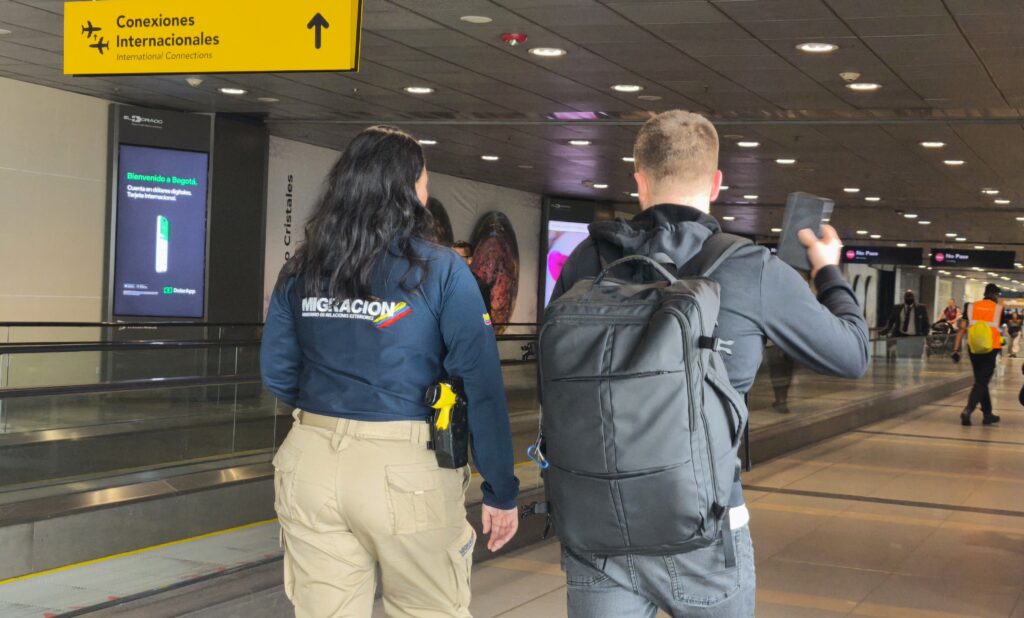

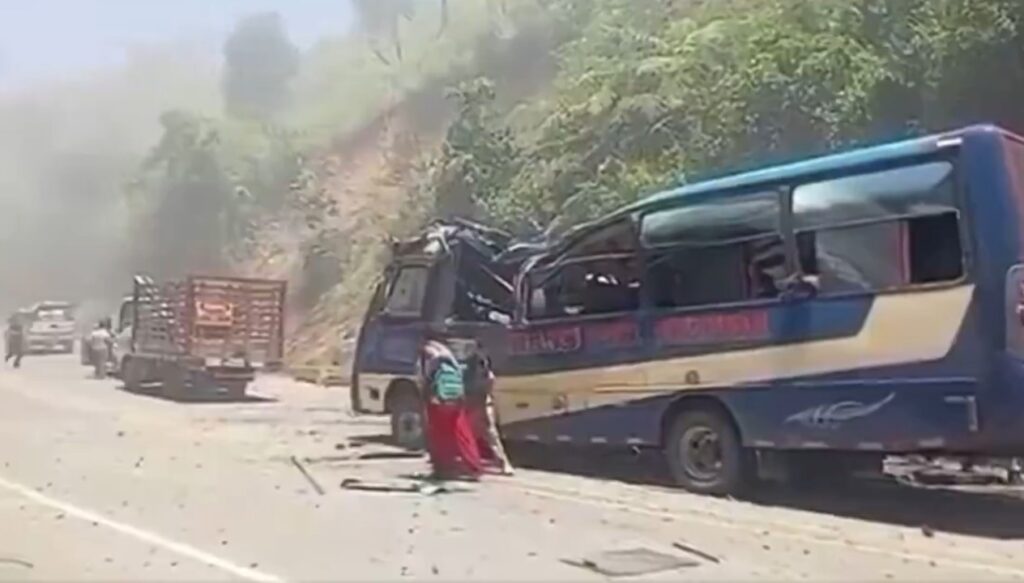
 en el sector conocido como el TÚNEL CAJIBIO CAUCA entre popayan y piendamo