
Reading view

El Niño Warming Patterns Signal Operational Risks for Colombian Power and Agriculture

Escalating drought risk is potential bad news for rural communities, power consumers.

The National Oceanic and Atmospheric Administration (NOAA) and the Climate Prediction Center (CPC) have confirmed that ENSO-neutral conditions are currently present in the equatorial Pacific Ocean. However, technical indicators suggest a rapid transition, with a 61% probability of El Niño emerging between May and July 2026. For international investors and executives operating in Colombia, this shift indicates a looming period of increased operational costs, specifically within the energy and agricultural sectors.

The El Niño Southern Oscillation (ENSO) is a recurring climate pattern involving changes in the temperature of waters in the central and eastern tropical Pacific Ocean. During El Niño, trade winds weaken, allowing warm water to move toward the west coast of South America. Conversely, La Niña is characterized by stronger trade winds and cooler ocean temperatures. These fluctuations disrupt global atmospheric circulation, altering rainfall and temperature patterns across the planet.

In Colombia, the effects of these phenomena are distinct and significant. El Niño typically results in a sharp decrease in precipitation and a rise in average temperatures. Because Colombia relies on hydroelectricity for more than 60% of its total power generation, extended dry periods lead to lower reservoir levels. This forces the grid to rely on more expensive thermal generation fueled by natural gas and coal, which historically drives up spot market electricity prices for industrial and residential consumers.

“There is a 25% probability that the index reaches or exceeds +2.0°C during the Northern Hemisphere winter,” according to the National Oceanic and Atmospheric Administration.

The current technical diagnostic from NOAA shows that while the sea surface temperature index in the Niño-3.4 region was recently -0.2°C, the easternmost indices have already moved into positive territory. Furthermore, the equatorial subsurface temperature index has increased for five consecutive months. This accumulation of ocean heat is a primary driver behind the high probability of El Niño persistence through the end of 2026. Some models, including those from the European Centre for Medium-Range Weather Forecasts (ECMWF), suggest a 25% chance of a “strong” or “very strong” event, where temperatures exceed the 2.0°C anomaly threshold.

The Ministerio de Minas y Energía and the Comisión de Regulación de Energía y Gas (CREG) are monitoring these developments closely. A strong El Niño would place additional stress on a natural gas system already facing structural supply constraints. Reduced hydroelectric output coupled with a potential deficit in gas supply could lead to significant energy price volatility. In past events, such as the 2015-2016 cycle, these conditions resulted in substantial financial pressure on the national utility system and necessitated emergency conservation measures.

Agricultural productivity is equally at risk. The Instituto de Hidrología, Meteorología y Estudios Ambientales (IDEAM) has identified the Caribbean and Andean regions—including departments such as La Guajira, Magdalena, and Antioquia—as highly vulnerable. During El Niño, these areas face increased risks of forest fires, water scarcity, and crop failure. For agribusinesses and exporters, this translates to disrupted planting cycles and higher production costs for staples like corn, potatoes, and vegetables, which can fuel domestic food inflation.

Conversely, when La Niña is in effect, Colombia faces the opposite extreme. The cooling of the Pacific leads to excessive rainfall, which can cause devastating landslides and flooding in mountainous terrain. While La Niña can replenish reservoirs, it often damages infrastructure and logistics networks, complicating the transport of goods to port. The current transition out of a La Niña phase provides a brief window of ENSO-neutral stability, which the CPC estimates has an 80% chance of lasting through June 2026.

For the international business community, the significance of these weather cycles extends to macro-economic stability. Persistent dry weather can impact GDP growth by raising the cost of basic services and reducing agricultural output. Strategic planning for 2026 and 2027 must account for these climatic variables. Meteorologists at Colorado State University note that El Niño also tends to reduce hurricane activity in the Atlantic, which may provide some relief for coastal logistics, but the primary threat remains the inland hydrological deficit.

As the Ministerio de Ambiente y Desarrollo Sostenible activates preventive mechanisms, companies are encouraged to review their energy procurement strategies and water management protocols. The next comprehensive diagnostic update from NOAA is scheduled for May 14, 2026, which will provide further clarity on the intensity of the projected warming trend. Understanding the mechanics of the ENSO cycle is no longer a matter of environmental interest but a necessity for risk mitigation in the Colombian market.
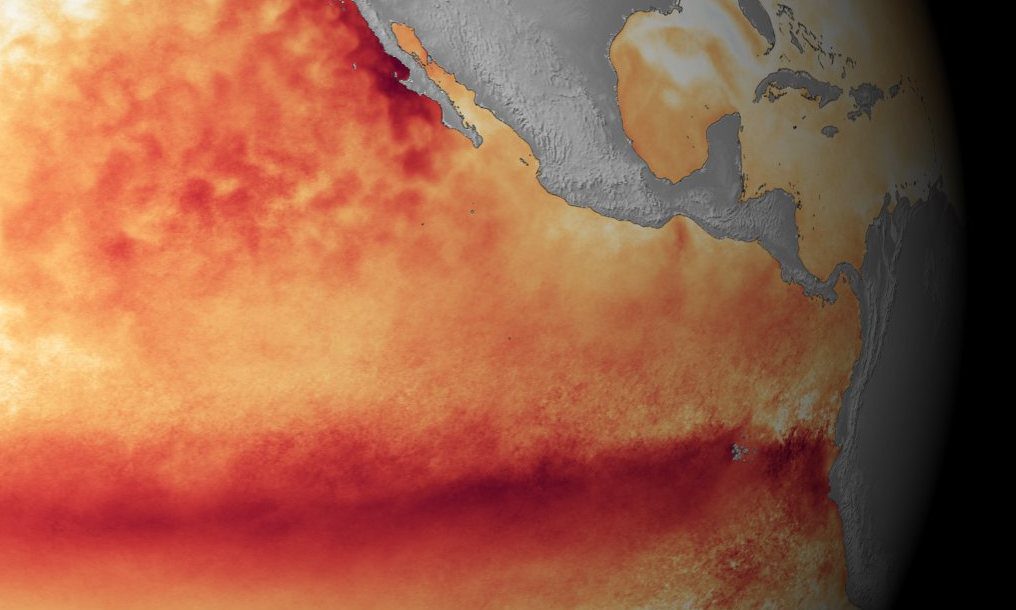
Satellite sea surface temperature departure in the Pacific Ocean for the month of October 2015, where darker orange-red colors are above normal temperatures and are indicative of El Niño. (Image credit: NOAA)

Satellite sea surface temperature departure in the Pacific Ocean for the month of October 2015, where darker orange-red colors are above normal temperatures and are indicative of El Niño. (Image credit: NOAA)

Headline photo: the Pacific Ocean from Guachalito Beach, Chocó, Colombia (photo © Loren Moss)

  •  

Ecopetrol Refinances $1.25 Billion USD in Debt and Finalizes State Subsidy Settlement

Ecopetrol S.A. (BVC: ECOPETROL; NYSE: EC) has entered into a formal payment agreement with the Government of Colombia to settle outstanding balances from the Fuel Price Stabilization Fund, known in Spanish as the Fondo de Estabilización de Precios de los Combustibles (FEPC). The agreement, reached through the Ministerio de Hacienda y Crédito Público and the Ministerio de Minas y Energía, addresses $1.6 trillion COP owed for the first quarter of 2025.

Under the terms of Resolutions 00368 and 00369 issued by the Dirección de Hidrocarburos, the total amount is divided between Ecopetrol S.A., which is owed $1.2 trillion COP, and Refinería de Cartagena S.A.S. (Reficar), which is owed $0.4 trillion COP. The repayment schedule began with a cash transfer of $2.89 billion COP on April 1, 2026. The remaining balance of approximately $1.55 trillion COP is scheduled to be paid on December 15, 2026, through the issuance of Treasury Securities, or Títulos de Tesorería (TES). The Colombian state has acknowledged the financial costs associated with the time elapsed until the final December payment.

“The Ecopetrol Group continues to work in close coordination with the Ministries of Finance and Public Credit and of Mines and Energy — the authorities responsible for fuel pricing policy — in the implementation of payment mechanisms and the reduction of FEPC balances.” — Ecopetrol S.A.

Concurrent with the subsidy settlement, Ecopetrol received authorization from the Ministerio de Hacienda y Crédito Público via Resolution 0666 to execute an external public debt management transaction totaling $1.25 billion USD. The five-year loan was secured through a consortium of international lenders including BBVA (BME: BBVA; NYSE: BBVA), Bank of America (NYSE: BAC), JP Morgan Chase (NYSE: JPM), and Bank of China (HKG: 3988). The credit facility carries a floating interest rate indexed to the Secured Overnight Financing Rate (SOFR) and will be repaid in four equal installments.

The proceeds from the $1.25 billion USD loan are designated for the repayment of existing obligations. Specifically, $1.2 billion USD will be used to settle a 2024 loan previously authorized for the acquisition of the state’s interest in Interconexión Eléctrica S.A. E.S.P. (ISA), while the remaining $50 million USD will be applied to an outstanding balance from a 2025 credit agreement. The loan agreement is governed by the laws of the State of New York and includes standard covenants regarding the borrower’s payment capacity and financial integrity.

These financial maneuvers are intended to optimize the maturity profile of the Ecopetrol Group, which remains responsible for over 60% of hydrocarbon production in Colombia. The company continues to operate integrated systems in transportation, refining, and petrochemicals, with additional international operations in the US Permian basin, the Gulf of Mexico, Brazil, and Mexico.

  •  

Border Crossing Between Colombia & Ecuador Reopens After 19 Day Blockade

While Colombia & Ecuador are at peace, the neighboring presidents have a sour relationship going back to when Colombian President Gustavo Petro initially refused to recognize Daniel Noboa’s election.

Traders and transport operators have suspended a 19-day blockade at the Rumichaca International Bridge, the primary land crossing between Colombia and Ecuador. The protest, catalyzed by a 50% tax imposed by the Ecuadorian government on Colombian goods, was lifted to accommodate travel and commerce during the Semana Santa holiday period. Despite the suspension of the strike, the regional business community reports that significant economic damage and diplomatic tensions persist.

Ecuador's President Daniel Noboa (photo: Carlos Silva/Presidencia de la República)

Ecuador’s President Daniel Noboa (photo: Carlos Silva/Presidencia de la República)

The closure of the border crossing created a substantial disruption in binational economic activity. Estimates from the Cámara de Comercio de Ipiales in Nariño, Colombia indicate that losses reached approximately $5 million USD per day due to freight remaining stationary in the border zone. The Comité Gremial de Trabajadores de la Frontera de Ipiales stated that while the reopening is a responsible gesture for the high-traffic holiday season, current tariff policies continue to threaten hundreds of direct and indirect jobs linked to foreign trade.

The Governor of Nariño, Luis Alfonso Escobar, criticized the trade barriers implemented by the administration of Ecuadorian President Daniel Noboa. Governor Escobar argued that such measures inadvertently encourage illicit activities in the region. He emphasized that instead of facilitating formal commerce, high tariffs drive trade toward illegality, undermining regional security efforts. To mitigate the conflict, the Comunidad Andina de Naciones (CAN) has initiated high-level dialogues. Diplomatic delegations led by Colombian Deputy Minister of Foreign Affairs Juana Castro and her Ecuadorian counterpart, Alejandro Dávalos, held a virtual working group to address pending issues in trade, transport, energy, and hydrocarbons.

“Decisions adopted without considering the reality of our communities have put at risk the livelihood of merchants, transporters, foreign trade workers, and thousands of people who live from binational exchange,” stated the Comité Gremial de Trabajadores de la Frontera de Ipiales.

Diplomatic friction has extended into the energy sector. President Noboa claimed that in 2017, Ecuador assisted Colombia during a potential blackout by charging 1.6 cents USD per kWh, whereas in 2024, Colombia charged an average of 28 cents USD per kWh during Ecuador’s hydroelectric crisis. In response, the Colombian Minister of Mines and Energy, Edwin Palma, clarified that prices during the 2023-2024 El Niño phenomenon reflected the actual costs of production and distribution, particularly when fossil fuel-powered thermoelectric plants using fuel oil and diesel were activated.

The ongoing trade dispute has impacted more than 5,500 companies over the past two months. Diana Marcela Morales, the Colombian Minister of Commerce, Industry, and Tourism, confirmed scheduled meetings with Ecuadorian officials to de-escalate the conflict and establish fair, transparent rules. Concurrently, the Ministerio de Comercio, Industria y Turismo has moved to protect domestic industries by implementing new tariffs on steel and ceramics from countries without existing free trade agreements. These measures aim to counter market distortions and protect a sector that employs more than 50,000 people while promoting circular economy practices and reducing CO2 emissions.

Above photo: Border between Ecuador & Colombia looking towards Ipiales, Colombia (Photo: Cancillería de Colombia)

  •  
❌