
Reading view

Indicted Ex-Foreign Minister Calls Colombian President Gustavo Petro “Mafia Boss”

Former Foreign Minister Álvaro Leyva releases another scathing attack on his former boss as he fights charges.

On April 10, former Colombian Foreign Minister Álvaro Leyva Durán released a formal statement responding to his indictment by the Fiscalía General de la Nación. Leyva faces charges related to his 2023 decision to declare a passport procurement tender void, a process that involved the private security printing firm Thomas Greg & Sons. The former official characterized the legal proceedings as a politically motivated maneuver orchestrated from the Casa de Nariño.

The indictment for prevarication centers on Leyva’s intervention in the bidding process, which the Fiscalía interprets as a deliberate breach of administrative law. In his defense, Leyva maintained that his actions were necessary to address irregularities and ensure the application of the Constitución Política de Colombia. He argued that the prosecuting body’s thesis would criminalize the conduct of any public servant who identifies unconstitutional terms in a government contract.

“If that argument is accepted, then any official who declares a bidding process void because they find the terms and conditions unconstitutional or illegal should go to jail.” — Álvaro Leyva Durán, former Minister of Foreign Affairs.

Leyva also directed accusations toward his successor at the Cancillería, Luis Gilberto Murillo. According to the statement, Murillo suspended a subsequent legal bidding process to justify a state of emergency, which Leyva claims led to an unnecessary markup of approximately $30 billion COP. Furthermore, Leyva alleged that software contracts exceeding $10 billion COP were improperly managed and that the funds remain unaccounted for under the current administration.

The former minister’s statement included severe personal and political criticisms of President Gustavo Petro. Leyva alleged a lack of moral conduct by the head of state during international state visits and questioned the president’s sobriety in public settings. The letter further asserted that US authorities are currently investigating potential links between the executive branch and narcotics trafficking organizations.

Regarding the domestic political landscape, Leyva warned of perceived risks to the Colombian electoral process. He alleged that the administration has engaged in the illegal interception of political candidates and intends to undermine the integrity of future vote counts. Leyva concluded by affirming his intention to defend his record and his legal decisions before the Corte Suprema de Justicia.

COMUNICADO pic.twitter.com/7YYhoHJD4B

— Álvaro Leyva Durán (@AlvaroLeyva) April 10, 2026

Finance Colombia translation of Leyva’s recent open letter dated April 10th

Some time ago, I denounced in a public communiqué that Gustavo Petro had woven against me an atrocious persecution, as retaliation for my denunciations of his closeness to the world of drugs—denunciations that have led to the United States having him cornered today. There I warned that, from within the government, intrigues were being made to throw me in prison and that attempts would be made against my life.

Now, months later, the Attorney General’s Office accuses me of malfeasance (prevaricato) because I declared void a passport tender that, according to that same institution, was based on a “catch-all specifications document” (pliego sastre). For the accusing entity, I should not have fulfilled the obligation of applying the Constitution that I myself helped draft and, by seeking equality, I acted with malicious intent. The world turned upside down.

Understand the gravity: if that thesis is accepted, any official who declares a tender void because they find unconstitutional or illegal specifications must go to prison. So, faced with such a thing, the trial is welcome. I will give the battle in the Supreme Court with all my strength. Because I trust its magistrates, because my life has been a permanent struggle for Colombia, and because justice, reason, and the law are with me.

The acquittal will be the logical consequence of the process in which I will prove, with official documents and among other things, the following: that I left in motion a new, clean, and legal tender, which Minister Luis Gilberto Murillo suspended. That he thus justified another manifest urgency, completely unnecessary, and added an overcharge of nearly 30 billion pesos to it. And that he contracted software for more than 10 billion additional pesos, which was pocketed. All by hand-picking. All murky. All without control. Thus, by brute force, the door was opened to the passport debacle of today. I warned Petro of what was coming down on the country. But he kept silent.

Today I feel the pride of having helped unmask the boss of the mafia that has plunged Colombia into its darkest hours. I took office as his Foreign Minister with the hope of change. But then I came to know his life of vice and decadence. I was slow to understand his vileness and, surely, also slow to denounce it. But from my father Jorge Leyva Urdaneta, exiled for opposing the dictatorship, I inherited courage and respect for institutions; from Álvaro Gómez Hurtado, I learned the necessity of a just order; and from Misael Pastrana Borrero, I learned to think about social peace. So, faithful to myself and to the spirit of my mentors, I denounced in various letters the moral, political, and personal degeneration that I came to know in Gustavo Petro. And time has proven me right.

The President is an infamous being: international human trafficking is a scourge of the poor girls of Colombia, and he, in the middle of a state visit, ends up as a customer of a brothel in Lisbon; he claims to be a champion of peace, but full of hatred he violently divides society with his stale, classist, and racist rhetoric; he claims to fight drug trafficking, but he goes out into the public square drugged, drunk on alcohol and sectarianism, to mistreat and insult those who contradict him, while in the United States his ties to narcos are being investigated. And so, from scandal to scandal, the horrible night does not cease: the homeland trampled by its own President is today the object of all the mockery abroad.

Petro knows that the upcoming electoral process resembles the one recently lived in Chile. And, to avoid the same result, he illegally intercepts candidates, seeks to destroy them, and is already trying to cast a mantle of doubt over the vote count. But Colombia deserves a new dawn. And the radical left, which—turned into the President’s hooligan squad—forgives him everything, seems condemned to the desert. We shall see whether, in the future, they also forgive him for being responsible for their possible defeat. For my part, I remain ready for all battles: always embracing justice against oppression, and with the law as my spear, shield, and banner.


  •  

Colombia’s top Catholic leader washes feet of trans women, sex workers during Holy Week rite

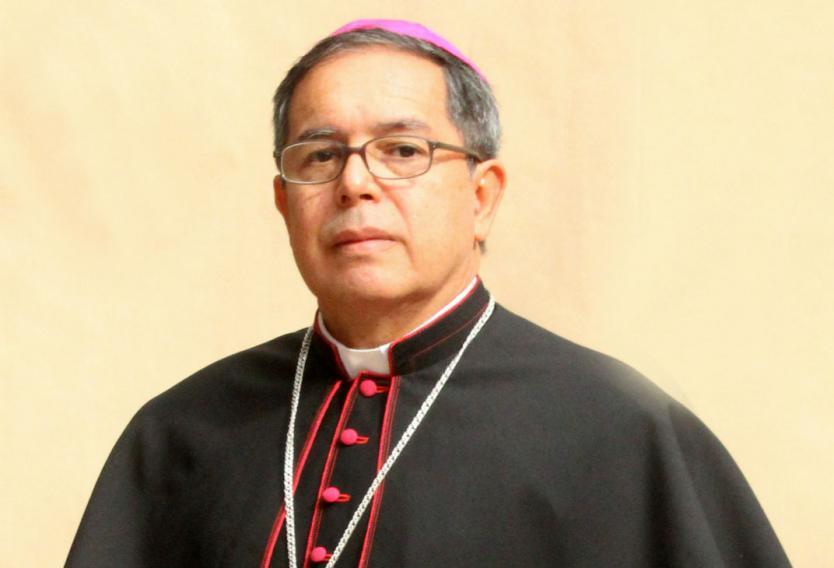
Colombia’s top Catholic official, Bogotá’s Archbishop Luis José Rueda Aparicio, marked Holy Thursday by washing the feet of transgender women and sex workers in the capital, in a gesture aimed at promoting the inclusion of marginalized communities.

Rueda carried out the ritual in the Santa Fe neighborhood, a central red-light area known as a “tolerance zone.” The ceremony was one of the Church’s Holy Week observances and drew community leaders, social organizations and local residents.

The washing of feet is a central rite of Holy Thursday (also known as Maundy Thursday), commemorating the biblical account of Jesus washing the feet of his apostles during the Last Supper. The act symbolizes humility, service and care for others, particularly the most vulnerable.

Rueda kneeled before participants to echo this tradition for the second year in a row. Last April, he performed a similar ceremony paying tribute to Sara Millerey, a trans woman murdered in Medellín earlier that year.

“May no one feel rejected, may no one feel excluded,” Rueda said during the mass he directed prior to the rite. In a statement for Noticias Uno, he added that “what societies do through discrimination is fracture”.

#NoticiasUNO| El Arzobispo Primado de Colombia, monseñor Luis José Rueda, lavó los pies a un grupo de personas de la comunidad trans y de mujeres trabajadoras sexuales en el barrio Santa Fe, zona de tolerancia de Bogotá pic.twitter.com/YpAXvuich2

— Noticias Uno (@NoticiasUno) April 2, 2026

Some participants described the moment as deeply meaningful. 

Valentina Rojas, a transgender woman who took part, said she felt “happy” and “loved” after the ceremony.

The gesture comes amid ongoing tensions within the global Catholic Church over LGBTQ+ rights. 

Pope Leo XIV has recently reiterated that Church teachings on sexuality and marriage are unlikely to shift in the near term, describing such issues as “highly polarizing.” 

Although he has emphasized that all individuals are welcome in the Church, he has ruled out immediate doctrinal changes regarding same-sex relationships or transgender identity.

Featured image: Luis José Rueda

Image credit: Wikimedia Commons

The post Colombia’s top Catholic leader washes feet of trans women, sex workers during Holy Week rite appeared first on The Bogotá Post.

  •  

Bogotá’s Museo Santa Clara opens provocative exhibition exploring queer spirituality and colonial memory

In the gilded stillness of one of Bogotá’s most striking colonial spaces, a new exhibition is quietly unsettling centuries-old certainties. Entonces llamó a un arcángel, the latest show by Colombian artist David Felipe Escobar, opens this week at the Museo Santa Clara, inviting visitors into a dialogue between baroque religious iconography and contemporary queer identities.

The exhibition, which opens on April 9 and runs until June 28, unfolds within the former church of the Real Convento de Santa Clara, a desacralised 17th-century site renowned for its lavish altar pieces and paintings of angels and archangels. Rather than treating these works as static relics, Escobar reactivates them—drawing them into conversation with bodies and identities historically excluded from the narratives they once upheld.

Taking its title from a verse by Saint John of the Cross, the exhibition imagines a meeting point between celestial beings and “queer, disobedient bodies” that exist beyond traditional gender norms. The result is not a confrontation with religious imagery, but a reframing of it—one that suggests ambiguity and fluidity were always present within baroque visual culture.

Indeed, Escobar’s premise rests on a subtle but powerful observation: that angels, often depicted as androgynous figures suspended between heaven and earth, already occupy a space of indeterminacy. By foregrounding this ambiguity, the exhibition reveals latent connections between colonial representations and contemporary non-binary identities, without imposing anachronistic readings onto the past.

The show is organised into two thematic sections. The first, centred on fluid identities in dislocated spaces, physically reshapes the museum environment. Selected paintings of archangels are removed from their traditional placements, disrupting long-standing visual hierarchies within the former temple. This curatorial gesture invites a more intimate engagement with the works, while questioning notions of permanence—both in museography and in gender constructs.

The second section, Una nueva Iglesia, shifts from disruption to speculation. Here, Escobar assembles apocryphal figures alongside materials such as chains and silks, constructing a symbolic space where alternative forms of belief can coexist. It is an imagined sacred realm—one that embraces multiplicity and offers refuge to identities historically marginalised by institutional religion.

Together, these interventions transform the Museo Santa Clara into a site of active reinterpretation. The building itself, once a place of rigid spiritual authority, becomes a stage for reconsidering how the sacred has been represented, contested and lived. In this sense, the exhibition does not position itself in opposition to religion, but rather proposes a space of encounter—where past and present converge to open new possibilities for understanding spirituality.

Born in Bogotá in 1992, Escobar’s practice spans visual art and writing, often exploring the intersections of violence, desire and the divine. A graduate of Parsons School of Design and Hunter College, he has participated in international residencies across Latin America. His literary work includes the novel Soap Bubble (2024) and the poetry collection 7 Iridescent Prayers (2026), further extending his exploration of spiritual and corporeal themes.

As Bogotá’s cultural calendar continues to foreground conversations around memory, identity and inclusion, Entonces llamó a un arcángel stands out for its quiet radicalism—suggesting that even within the most traditional of spaces, new meanings can still emerge.

The exhibition runs from April 9 to June 28, 2026, Tuesday to Sunday, 9:00 a.m. to 4:30 p.m., with a programme of guided tours, workshops and public discussions designed to deepen reflection on the relationships between body, spirituality and diversity. Admission is free.


  •  

‘Invisible narco’ who enabled Tren de Aragua’s entry into Bogotá captured in police operation

Colombian authorities have captured the alleged crime boss “Mison,” also known as the “invisible narco”, who played a key role in facilitating the arrival of the Venezuelan criminal group Tren de Aragua in the capital Bogotá

The suspect, also known as “El Viejo,” was detained in Ecuador and handed over to Colombian authorities at the Rumichaca international border crossing under an Interpol notice, in a joint operation with Ecuadorian officials.

In Colombia, he is wanted on charges including aggravated conspiracy, homicide, drug trafficking and illegal weapons possession. A judge has ordered his pre-trial detention.

Authorities say Mison was the leader of “Los Maracuchos,” a criminal network with a strong presence in three Bogotá districts – Kennedy, Santa Fe and Los Mártires. For more than a decade, he allegedly operated under the guise of a nightlife entrepreneur, owning bars, nightclubs and informal rental properties known as “pagadiarios.”

Mayor Carlos Fernando Galán described the arrest as one of the most significant blows to organized crime in the city in recent years, calling the suspect “almost a myth” within criminal circles.

“He appeared to be a businessman in Bogotá’s nightlife economy, but in reality he was a central figure in a complex criminal structure,” Galán said.

According to investigators, the establishments he controlled served as hubs for drug distribution and were linked to serious crimes, including killings and torture. Among the venues identified by authorities are sites known as “Los Potrillos” and “Hotel Negro.”

Police also allege that Mison played a decisive role in enabling the expansion of Tren de Aragua into Bogotá around 2018, exploiting vulnerable migrant populations to recruit and train individuals for criminal activities. The group, which originated in Venezuela, has expanded across Latin America and is increasingly associated with organized crime in Colombia’s urban centers.

Bogotá Police Chief General Giovanni Cristancho said the arrest followed a two-year investigation involving cross-border cooperation. “He maintained a double life as a businessman while coordinating criminal operations,” noted Cristancho. “He was a pioneer in using ‘pagadiarios’ as operational centers to consolidate territorial control.”

Authorities said Mison fled to Ecuador in 2024 following intensified police pressure in Bogotá, where he continued operating under the cover of a merchant until his location was confirmed.

Prosecutors estimate that he accumulated assets worth more than 20 billion pesos (approximately $5 million), including rural properties, vehicles and real estate held through third parties. Officials say he generated monthly criminal revenues of up to 2 billion pesos through drug trafficking, extortion and other illicit activities.

Bogotá Security Secretary César Restrepo said the suspect’s influence extended beyond narcotics, linking him to extortion networks and contract killings.

“This is not a distant trafficker. He directly fueled violence in Bogotá and is responsible for significant harm to victims across the city,” Restrepo said.

Authorities believe the arrest will disrupt criminal structures tied to drug trafficking and urban violence, although they caution that such networks often adapt quickly.

If convicted, Mison could face a prison sentence of up to 32 years.

The operation is the latest in a series of high-profile security actions in Bogotá, as authorities seek to regain control over criminal networks and restore public safety in key areas of the capital.

Mayor Galán said the result demonstrates that sustained investigations and coordinated efforts can weaken organized crime groups.

  •  
❌