
Normal view

Colombia’s Three Presidential Front-Runners Draw Divergent Maps for Foreign Capital, Security, and Rule of Law

25 May 2026 at 22:03

Colombians face three sharply different futures in May 31 vote

Colombia votes on May 31 with its presidential race concentrated around three candidates whose platforms diverge on nearly every dimension of economic and security policy relevant to foreign investors. For corporate executives, institutional investors, and multinational operations with Colombian exposure, the choice between senator Iván Cepeda, senator Paloma Valencia, and defense attorney Abelardo de la Espriella carries direct, measurable implications for the regulatory environment, foreign direct investment (FDI) conditions, energy sector licensing, and geopolitical alignment through at least 2030.

No candidate is projected to clear the 50%-plus-one threshold required to win outright on May 31, making a runoff election on June 21 the expected outcome. The question that will determine the direction of that runoff — and by extension the next administration — is which of the two opposition candidates finishes second.

Click above to play the video!

A Race Reshaped by Late Polling

The final-week polling picture shifted substantially, and the trajectory matters as much as the snapshot. The CONDOR weighted aggregate — which incorporates surveys from six polling firms and applies greater weight to more recent data — placed the race as of May 23 at: Cepeda 36.3%, De la Espriella 29.1%, Valencia 16.7%.

Invamer, one of Colombia’s most established polling firms, surveyed 3,800 respondents across 152 municipalities between May 13 and May 20, registering Cepeda at 44.6%, De la Espriella at 31.6%, and Valencia at 14.0%. The Centro Nacional de Consultoría (CNC) published a survey conducted May 22 and 23 showing Cepeda at 33.4%, De la Espriella at 30.9%, and Valencia at 12.6%.

Comparing those figures to the Fundación Génesis Crea survey from May 4 through May 11 — which placed Cepeda at 35.1%, Valencia at 25.4%, and De la Espriella at 21.6% — indicates a multi-poll trend of De la Espriella gaining approximately nine to ten percentage points in three weeks while Valencia shed a comparable share. AS/COA’s poll tracker confirms the directional consistency across firms.

Atlas Intel, which published figures more favorable to De la Espriella, is currently under investigation by Colombia’s Consejo Nacional Electoral (CNE) for potential methodology violations and could face suspension of its operations. Those figures are treated with caution in this analysis.

Runoff modeling diverges between firms. Fundación Génesis Crea showed Valencia defeating Cepeda 49.1% to 44.7% in a second-round matchup — meaning she was the stronger opposition candidate in that scenario. The Guarumo/Ecoanalítica survey found Cepeda losing all hypothetical runoff scenarios, including against De la Espriella. Two minor candidates — former senator Clara López and former Chocó governor Luis Gilberto Murillo — withdrew and endorsed Cepeda before the first round, a consolidation that appears to have had limited effect on his polling numbers.

Finance Colombia reported in May that the campaign has been marked by an unusual absence of traditional televised debates. Cepeda declined to participate in events organized by major media outlets, stating that proposed formats lacked neutrality. Former Bogotá Mayor Claudia López, herself a candidate, said publicly that Cepeda’s refusal was motivated by an unwillingness to defend his record as the architect of President Gustavo Petro‘s Paz Total security negotiation strategy.

Security Policy: The Three Approaches to Armed Groups

Public security is the top voter concern heading into the election. InSight Crime documented that the Ejército de Liberación Nacional (ELN) launched a major offensive against FARC dissident factions in Norte de Santander in early 2025, resulting in mass civilian casualties in the Catatumbo region. In Chocó and Antioquia, the ELN and the Autodefensas Gaitanistas de Colombia (AGC), commonly known as the Clan del Golfo, are competing for control of illegal gold mining corridors and drug trafficking routes. In Cauca, FARC dissident factions have established territorial control in areas where state presence has collapsed.
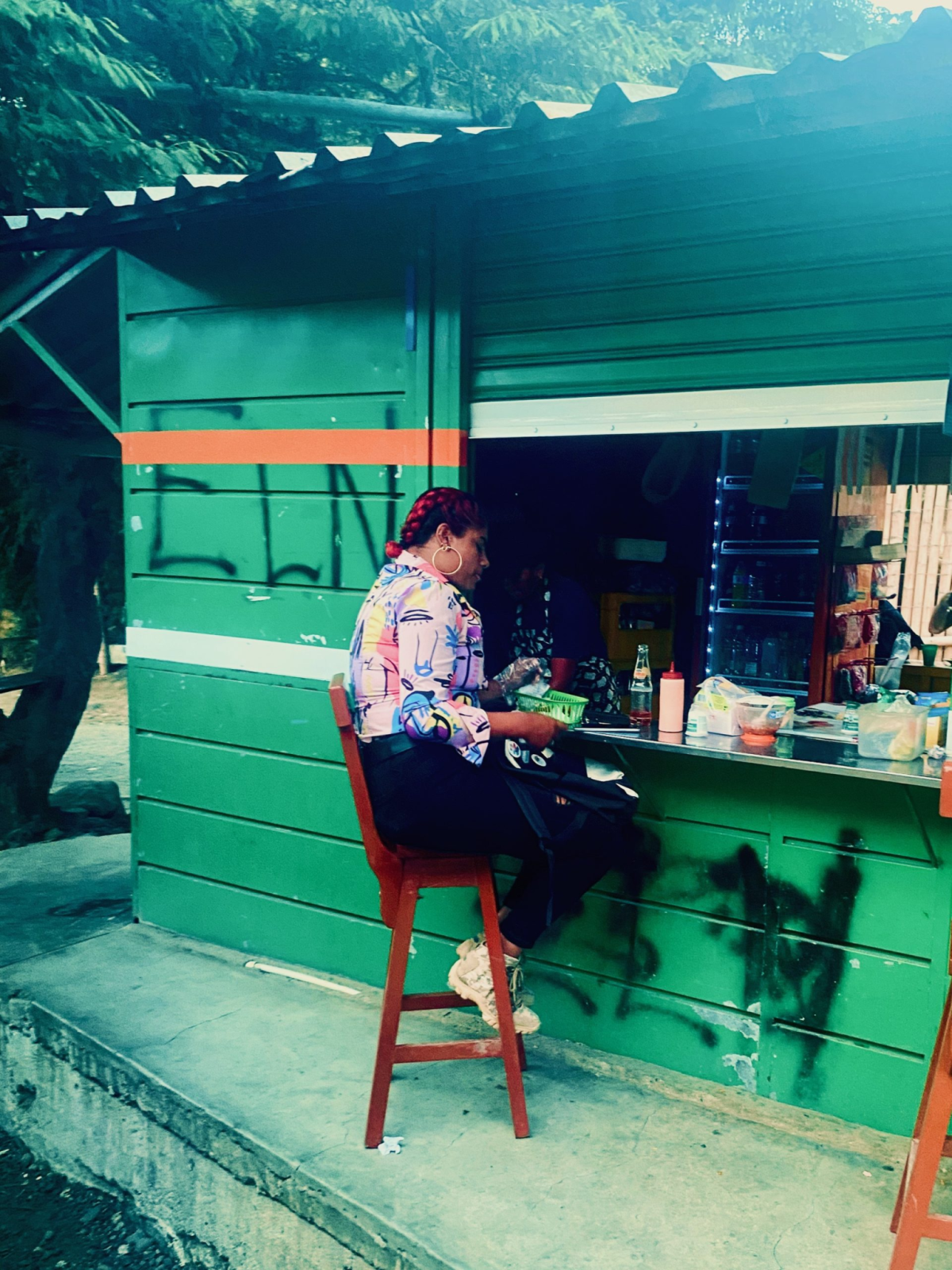
Grafiti of the ELN and ex-FARC Mafia near Corinto, Cauca (Credit: Henry Shuldiner)Cepeda’s approach to security is defined by his role as the principal legislative architect of Paz Total. As chair of the Senate‘s peace commission, he designed the framework that extended negotiating status to the ELN, FARC dissident groups, and the Clan del Golfo. His stated rationale is that targeting the financial leadership of drug networks rather than foot soldiers produces more durable results — a position that has academic backing in narcotics policy literature. In practice, Paz Total produced ceasefires that were repeatedly violated, and security indicators in conflict-affected departments deteriorated during the Petro administration. A Cepeda presidency is expected to continue the negotiated settlement model, with the military operating under political constraints.

Valencia’s security platform is based on reinstating Seguridad Democrática, the doctrine associated with former president Álvaro Uribe’s administrations from 2002 to 2010. The core elements are expanded military presence in rural conflict zones, dismantling of rural criminal networks, and resumption of extradition agreements with the United States — which Petro suspended, effectively shielding cartel leadership from US federal prosecution. The Uribe-era approach resulted in measurable reductions in homicide rates, forced displacement, and ELN and FARC territorial control, though human rights organizations documented serious abuses by security forces during that period.

De la Espriella has stated explicitly that his government would have no peace process. He advocates for a model similar to El Salvador’s under President Nayib Bukele: mass incarceration, construction of high-security prison facilities, classification of guerrilla and cartel organizations as foreign terrorist organizations, and broad military offensives. He has not detailed how such operations would be financed or how the mass detention model would interact with Colombia’s Constitutional Court, which has repeatedly constrained executive security powers.

For the armed groups operating in Norte de Santander and Cauca, the historical record indicates that Colombia’s criminal organizations respond more acutely to sustained, institutionally grounded military pressure and functioning extradition pipelines than to political rhetoric. By that measure, Valencia’s platform — which rebuilds the institutional security apparatus incrementally — represents a more structurally credible threat to the ELN and the Estado Mayor Central (EMC) FARC dissidents. For the Clan del Golfo leadership, extradition to the United States has historically been the principal deterrent, and Valencia’s program explicitly restores it.

Business Climate and Employment Conditions

The Petro administration enacted a series of minimum wage increases totaling more than 60% over four years — including a 16% increase for 2023, the largest single-year hike in Colombian history, and a 23.78% increase for 2026 — restructured labor regulations to expand premium pay requirements for night, weekend, and holiday shifts, and raised corporate tax rates to fund social spending programs. The Asociación Nacional de Empresarios de Colombia (ANDI) characterized the regulatory environment as adverse to private investment. Finance Colombia tracked a material decline in FDI in the extractive sector over the same period.

Cepeda supported those labor and fiscal reforms throughout their legislative passage. His platform extends the Petro model: increased state social spending, continued land redistribution programs, and maintenance of the current wage and labor cost structure. For companies with established Colombian operations, the regulatory environment is manageable; for companies evaluating market entry or operational expansion, the cost structure adds friction.

Valencia’s economic program emphasizes corporate stability and private sector investment as the primary mechanisms of job creation. Her vice-presidential running mate, Juan Daniel Oviedo — former director of DANE, Colombia’s national statistics agency — represents a technocratic orientation focused on reducing structural market distortions, streamlining public procurement, and scaling back state administrative overhead. Oviedo’s appointment is a direct signal to the business community that economic management would be data-driven rather than ideologically directed. Oviedo also publicly identifies as a member of the LGBTQ+ community, a departure from the traditional social conservatism of Centro Democrático.

De la Espriella’s economic orientation is pro-business with protectionist elements. His vice-presidential candidate, José Manuel Restrepo — who served as Colombia’s Finance Minister and Commerce Minister — provides institutional credibility on fiscal and trade policy. Restrepo’s presence on the ticket signals commitment to fiscal discipline and regulatory reduction in the extractive and commercial sectors. De la Espriella’s personal style, however, introduces operational uncertainty; his campaign has generated multiple high-profile controversies, including a public altercation with Caracol Noticias journalist María Lucía Fernández during a live broadcast and a formal apology following misconduct allegations by journalist Laura Rodríguez of Piso 8 FM.

Foreign Investment, Oil, and Mining

Ecopetrol holds a 31.5% stake in the Gunflint oil field in the Gulf of Mexico.

Ecopetrol holds a 31.5% stake in the Gunflint oil field in the Gulf of Mexico.

The extractive sector is the most consequential economic policy dimension for international capital. Ecopetrol (NYSE: EC; BVC: ECOPETROL) — Colombia’s state-controlled energy company and the largest corporation in the country — has operated under exploration restrictions during the Petro administration, which has opposed new fossil fuel contracts on climate grounds.

Cepeda’s position extends the Petro framework: mandatory transition away from fossil fuels, heavy restrictions or outright prohibitions on new oil and gas exploration contracts, and stringent environmental licensing requirements for open-pit mining operations. Foreign investment would be directed by policy toward green hydrogen, ecotourism, and smallholder agriculture. For the multinational oil majors with Colombian operations and for institutional investors in the mining sector, a Cepeda presidency represents a continuation of the current constraints and, in some contract scenarios, an accelerated wind-down of Colombian portfolios.

In a related development, Finance Colombia reported in May that Ecopetrol’s president, Ricardo Roa, has been formally charged in connection with alleged campaign spending violations during Petro’s 2022 presidential campaign. The case will be inherited by whoever takes office in August.

Valencia’s position is that hydrocarbon revenues are essential to Colombia’s macroeconomic stability and that the country cannot exit the sector before alternative revenue structures exist. Her platform actively encourages FDI in petroleum exploration, is open to regulated fracking, and commits to clearing the environmental licensing backlog that has stalled multiple large-scale gold and copper mining projects. For energy and mining companies currently blocked by administrative delays, this represents the most direct path to project advancement.

De la Espriella’s position goes further: essentially deregulating the environmental licensing process for major extraction projects on the grounds that Colombia’s economic sovereignty takes precedence over environmental restrictions he characterizes as externally imposed. The practical constraint is whether a De la Espriella administration would have the institutional coherence and congressional support to deliver regulatory rollback, given that his movement has no established political party structure and entered the race through an independent signature campaign.

Foreign Policy: Washington Alignment vs. Multipolar Strategy
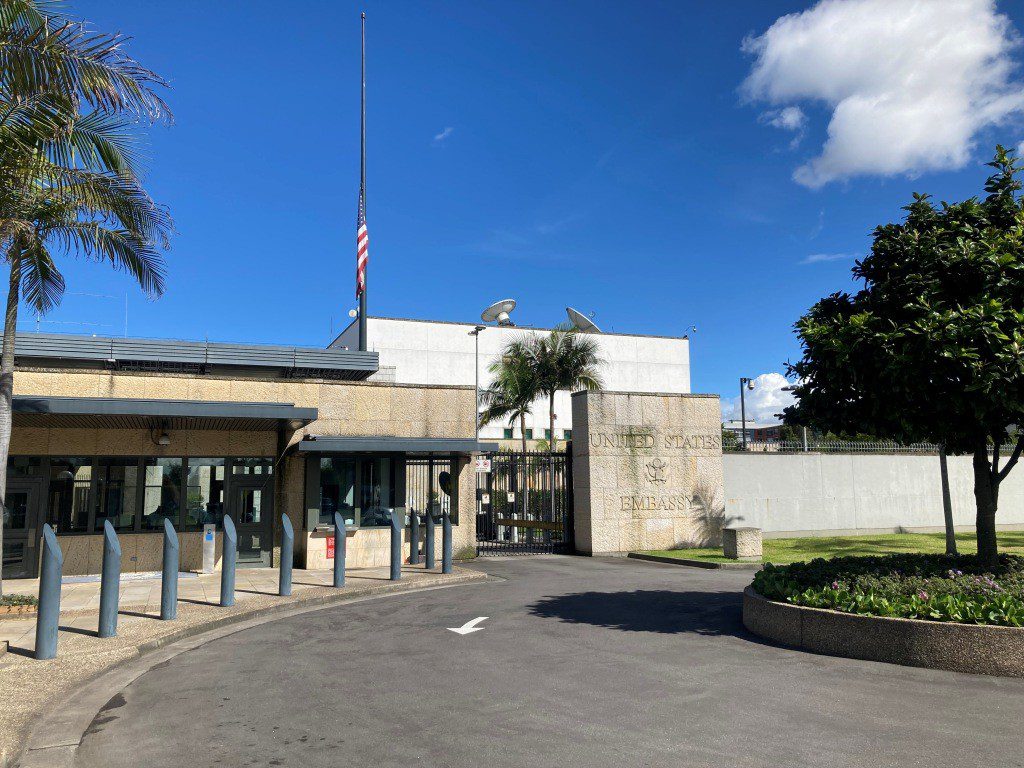
The US Embassy in Bogotá is said to be the 3rd largest US mission in the world (photo: Loren Moss)

The US Embassy in Bogotá is said to be the 3rd largest US mission in the world (photo: Loren Moss)

Colombia’s relationship with the United States deteriorated materially under Petro, who aligned Colombia with Venezuela’s Nicolás Maduro, pursued closer ties with China and Russia, and suspended extradition agreements. US counternarcotics cooperation was strained throughout the period.

Cepeda is committed to what he describes as a multipolar foreign policy — maintaining functional diplomatic channels with Washington and Brussels while deepening strategic and commercial relationships with China and Russia. His alignment with regional left-of-center governments in Mexico, Brazil, and Bolivia would position Colombia as part of a Latin American bloc that has grown increasingly skeptical of US regional leadership. For US companies operating in Colombia, this trajectory does not mean immediate operational disruption, but it reduces Colombia’s utility as a reliable counterpart on security cooperation, counter-narcotics intelligence sharing, and trade dispute resolution.

Valencia positions a return to the Western alignment as a core objective. She would prioritize restoring the US-Colombia relationship, reinforcing the bilateral Free Trade Agreement, and reestablishing intelligence-sharing mechanisms that were reduced under Petro. Her framing positions Colombia as a democratic anchor in a region experiencing authoritarian pressures.

De la Espriella takes the most explicit pro-US position in the race. La Silla Vacía reported that De la Espriella or entities linked to his campaign donated more than $90,000 USD to the US Republican Party, a fact that raises questions about the nature and expectations of those relationships. He has publicly aligned himself with the populist right in the United States, takes a hostile posture toward China, Russia, and Venezuela, and has characterized his security approach as consistent with a transactional alliance with Washington focused on counter-narcotics enforcement and cartel designation as foreign terrorist organizations.

“Ese pisco robó a 200 mil colombianos.” — Claudia López, former Mayor of Bogotá, referring to presidential candidate Abelardo de la Espriella’s legal representation of DMG pyramid scheme founder David Murcia Guzmán, during a presidential campaign event.

Corruption and Judicial Independence

All three candidates have stated commitments to fighting corruption, though their approaches and focal points differ in ways that are material to the institutional environment for business operations.

Cepeda’s legislative record includes serious, documented work investigating paramilitary infiltration of Colombia’s political institutions — the period known as parapolítica — and pursuing accountability for those cases. His blind spot, his critics argue, is corruption within the current administration. When Ecopetrol’s Ricardo Roa was formally charged in connection with Petro’s 2022 campaign, the response from the Pacto Histórico coalition was subdued. Cepeda has been Álvaro Uribe’s primary judicial antagonist in the Senate; a Cepeda administration would offer no institutional protection to Uribe and would be expected to support the full progress of judicial proceedings against him. For left-wing politicians facing legal exposure, including former Medellín mayor Daniel Quintero, a Cepeda administration would be expected to be more receptive to amnesty frameworks.

Valencia’s approach to anti-corruption is structural rather than prosecutorial: strengthening the independence of the Contraloría General de la República and the Fiscalía General de la Nación, implementing digital transparency in public procurement, and reducing informal executive influence over judicial processes. She would be expected to apply political and rhetorical pressure on behalf of Uribe — her political mentor and a close ally — though her legislative track record indicates a degree of institutional independence from Centro Democrático party orthodoxy.

De la Espriella’s anti-corruption rhetoric centers on severe criminal penalties for corrupt officials. The credibility of that position is complicated by his professional history, which is examined in detail below.

De la Espriella’s Legal Career: The Documented Record

De la Espriella’s campaign has faced sustained scrutiny over his client history as one of Colombia’s highest-profile criminal defense attorneys. The record is documented in reporting by El Colombiano, El Espectador, and the investigative outlet Corrupción al Día.
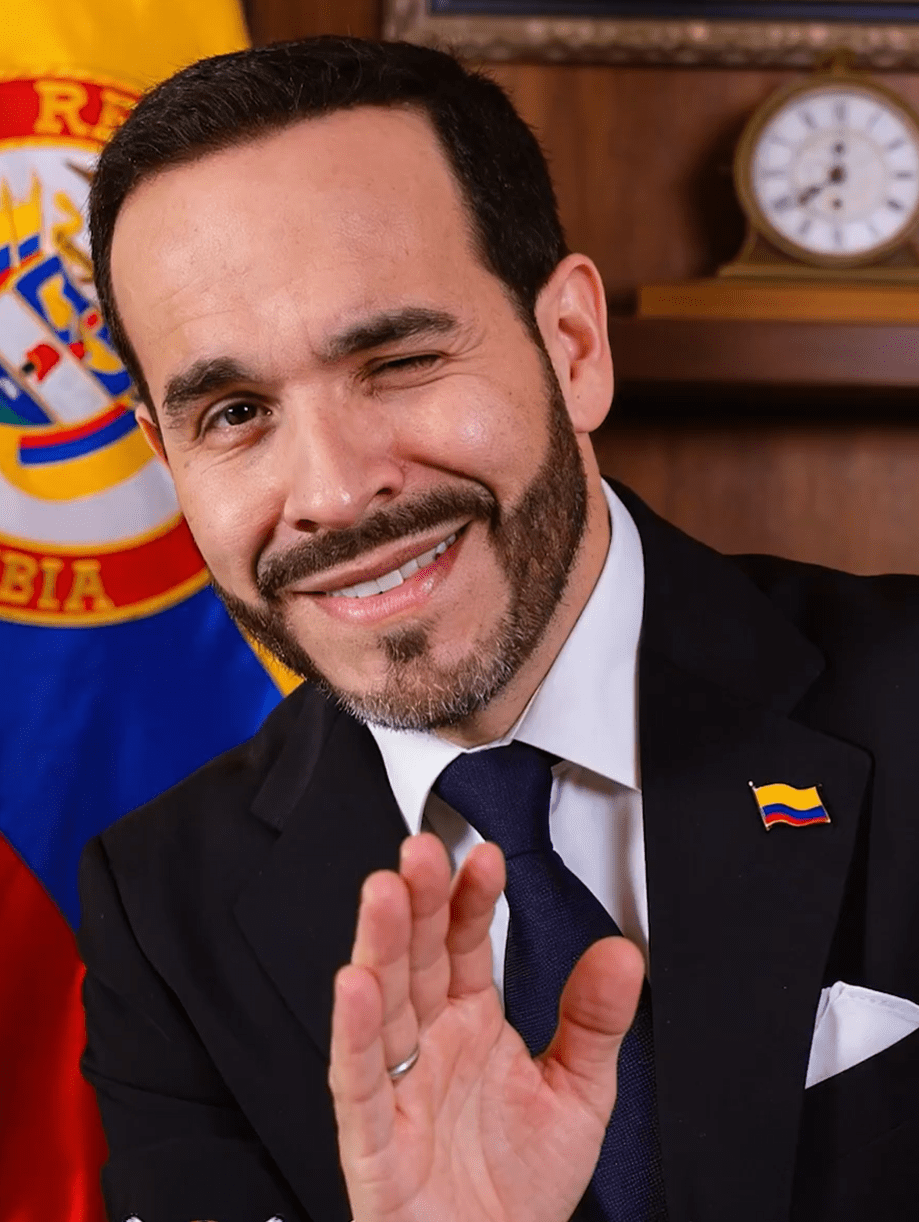
Abelardo de la Espriella (screen capture from Twitter video)

Abelardo de la Espriella (screen capture from Twitter video)

His documented client roster includes Salvatore Mancuso, the former supreme commander of the Autodefensas Unidas de Colombia (AUC) paramilitary network; multiple legislators convicted in the parapolítica scandal, which established systematic infiltration of Colombia’s congress by paramilitary organizations; David Murcia Guzmán, the operator of the DMG pyramid scheme that defrauded an estimated 200,000 Colombian investors; the Nule Primos, convicted of large-scale public contract fraud; and Álex Saab, the Colombian businessman extradited to the United States on charges of acting as the primary money launderer for the Maduro government in Venezuela. According to Corrupción al Día, De la Espriella’s legal fees from Saab reportedly reached $12 million USD and included private aircraft travel.

De la Espriella’s response to this line of criticism rests on due process principles: that every accused person is entitled to vigorous legal defense regardless of the charges, and that his ability to navigate Colombia’s criminal code at its most complex levels demonstrates the expertise required to enforce the law from the executive branch. The argument has legal validity as a principle. The specific issue for foreign compliance officers and US government counterparts is the Saab representation: the same Nicolás Maduro whose regime De la Espriella’s campaign now characterizes as an ideological enemy received legal services from De la Espriella’s firm when the representation was commercially available.

The Fiscalía investigated De la Espriella in connection with alleged paramilitary links in 2009 and again in 2012; both investigations were dismissed for insufficient evidence, and he carries no convictions or active investigations on those matters.

Cepeda’s Family History and Ideological Background
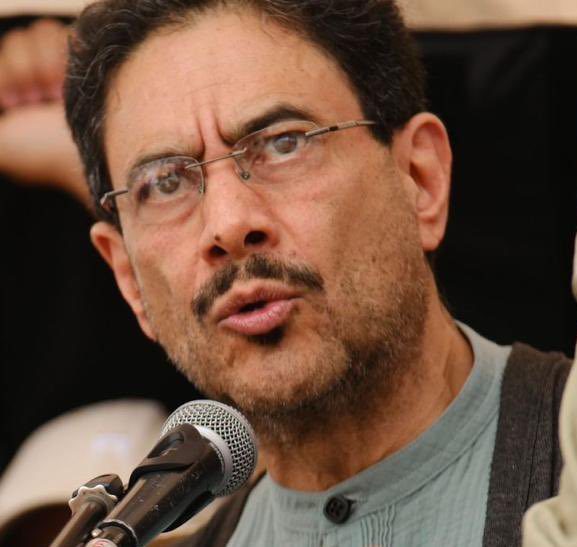
Iván Cepeda (from Twitter)

Iván Cepeda (from Twitter)

Critics of Iván Cepeda, including Enrique Gómez of the Salvación Nacional party, have argued that his family background constitutes evidence of structural alignment with guerrilla movements. The record on this point merits examination.

Cepeda is the son of Manuel Cepeda Vargas, who served as Secretary-General of the Colombian Communist Party and as a senator for the Unión Patriótica (UP), a left-wing political movement that was systematically exterminated by a combination of state actors and paramilitary organizations during the 1980s and 1990s. Manuel Cepeda Vargas was assassinated on August 9, 1994. The Inter-American Court of Human Rights subsequently found the Colombian state responsible for his murder. The FARC-EP named its Frente Urbano Manuel Cepeda Vargas — an urban front operating within the Bloque Occidental — in the elder Cepeda’s honor.

The Fundación Paz y Reconciliación (PARES) has documented that Iván Cepeda’s relationship with his father’s political positions was more complex than the family lineage alone suggests. After studying in Bulgaria in 1981, Cepeda broke from his father’s Soviet-oriented communist framework and aligned with democratic leftists including Bernardo Jaramillo Ossa, who publicly rejected the FARC’s armed strategy. Cepeda has repeatedly stated his repudiation of the FARC’s use of his father’s name. No documented evidence connects him to operational coordination with current armed groups.

What the family history does establish is the ideological framework through which Cepeda processes security policy: a belief, grounded in personal and political experience, that the Colombian state’s institutional violence has been as destructive as guerrilla violence, and that negotiated settlements are structurally preferable to military solutions. That framework generates Paz Total. It also generates a posture toward ELN and FARC dissident negotiators that prioritizes process continuity over verified compliance — a disposition that armed groups have demonstrably exploited to maintain territorial and operational positions while negotiation frameworks provided legal cover.

Paloma Valencia (image Twitter)

Paloma Valencia (image Twitter)

Valencia and the Uribe Question

The comparison to former president Iván Duque (2018–2022) comes up regularly in discussions of Valencia’s political independence. Duque, who had limited independent political standing before Uribe selected him, was perceived throughout his term as governing within constraints set by his patron — a dynamic that Colombian political cartoonists characterized as ventriloquism.

Valencia’s profile differs materially. She is the granddaughter of former Colombian president Guillermo León Valencia, carries her own political lineage, and has served in the Senate for over a decade, building positions on agrarian reform, judicial modernization, and indigenous land rights that have placed her at variance with standard Centro Democrático positions on those issues. She won the Gran Consulta por Colombia primary on March 8 with more than 45% of the vote — over 3.2 million Colombians — establishing a democratic mandate distinct from any party endorsement.

She would be expected to use institutional and rhetorical channels to support Uribe in the ongoing judicial proceedings against him, and to apply pressure on the trajectory of those cases. Whether that constitutes political interference with judicial independence or normal advocacy within democratic norms is a question on which observers disagree. What the legislative record does not support is the characterization of Valencia as incapable of independent governance.

Press Freedom and the Media Environment

Press freedom carries an indirect but measurable correlation with rule-of-law quality, which in turn affects operational risk for companies that rely on regulatory predictability and transparent legal processes.

Cepeda has maintained a posture toward critical media that mirrors President Petro’s practice of characterizing adversarial outlets as acting in the interests of economic elites. Under Petro, this produced a systematic exclusion of critical media from official information flows and persistent rhetorical delegitimization of independent journalism, though the press remained legally free to operate. A Cepeda administration would be expected to continue this pattern.

Valencia’s background in Colombia’s traditional political and intellectual establishment, combined with a decade in a party that has faced sustained critical coverage from Colombia’s major outlets, points toward a conventional institutional relationship with the press — adversarial at times, but within professional norms.

De la Espriella’s conduct during the campaign provides direct evidence of his approach. He publicly called Caracol Noticias journalist María Lucía Fernández “ignorant” in a live interview. He issued a formal apology after journalist Laura Rodríguez of Piso 8 FM made allegations of inappropriate conduct. His campaign strategy has drawn comparisons to the approach of Argentine president Javier Milei and US president Donald Trump in its use of direct digital channels to circumvent traditional media while publicly attacking outlets that publish critical coverage. The press would remain legally protected under a De la Espriella administration, but the operational environment for investigative journalism would be hostile.

The Ideological Spectrum: Market Liberalism to State Direction

The question of which candidate is most aligned with free-market principles requires a distinction that the international business press frequently elides: the difference between economic deregulation and political authoritarianism. These can, and in this election do, exist independently.

De la Espriella’s platform is often described in international coverage as the most pro-market. His deregulation proposals for the extractive sector and his corporate tax rhetoric support that reading in the economic domain. His security platform, however, involves a substantial expansion of state coercive power: mass detention operations, a mega-prison construction program, and the suspension of standard due process protections to facilitate rapid incarceration of criminal suspects. The Cato Institute‘s framework of economic freedom as inseparable from civil liberties would categorize a state powerful enough to detain people without standard procedural protections as a state that represents an institutional risk to property rights and contract enforcement as well.

Valencia’s platform, anchored by Oviedo’s technocratic program of structural market reform — reduced administrative barriers, streamlined procurement, smaller state overhead, maintained civil liberties — represents the closest approximation to coherent market liberalism available in this field. It does not carry the rhetorical force of De la Espriella’s deregulation proposals, but it has more institutional grounding.

Cepeda’s platform is the furthest from market liberalism by any standard measure: state-directed investment allocation, wealth redistribution through tax and transfer mechanisms, state expansion in healthcare and pension administration, and agrarian land redistribution. His program is continuous with the Petro administration’s economic framework.

Minor Candidates: The Rest of the Ballot

Claudia López, senator of Colombia. (Credit: Patty Suescún)

Claudia López, senator of Colombia. (Credit: Patty Suescún)

Several other candidates remain on the ballot and are drawing small but potentially consequential vote shares in a first round where the margin between second and third place could be narrow.

Claudia López, former mayor of Bogotá running under the Con Claudia Imparables coalition, positions herself as a progressive centrist with a documented anti-corruption record. Her polling has not broken 3.5% in major surveys, and her high polarization ratings from her mayoral term limit her growth ceiling. Her attacks on De la Espriella during the campaign — she publicly called him a “defender of the mafia” in reference to his client history — have been among the most pointed in the race, and factually grounded on the public record.

Sergio Fajardo, making his third consecutive presidential run under Dignidad y Compromiso, continues to represent a technocratic, education-focused centrism grounded in his work transforming Medellín in the early 2000s. He has not broken 3.5% in any major poll in this cycle.

Roy Barreras, running under La Fuerza de la Paz following his Frente por la Vida primary victory, is one of the most experienced political operatives in Colombia, having been part of multiple coalition governments across ideological lines over two decades. He polls below the threshold for meaningful first-round impact.

Miguel Uribe Londoño, running under Partido Demócrata, represents a younger-generation conservative platform emphasizing fiscal discipline and private sector growth, broadly consistent with Valencia’s program. He also polls below 3.5%.

Carlos Caicedo, running on a regionalist platform emphasizing decentralization away from Bogotá, draws support primarily from the Costa Caribe. His structural argument about Colombia’s administrative over-centralization is substantively grounded, though his national profile is insufficient to affect the first-round outcome.

Investment Implications

For international capital with Colombian exposure, the three-way race produces three materially different operational scenarios.

A Cepeda victory — which remains the single most likely first-round outcome based on available polling — would signal continuity of the Petro-era regulatory framework: sustained capital outflow pressure, high corporate tax rates, no new fossil fuel exploration contracts for Ecopetrol (NYSE: EC; BVC: ECOPETROL) or private operators, continued labor cost escalation, and a foreign policy trajectory away from Washington. Colombian equity valuations would be expected to remain under pressure. The mining licensing backlog would continue to accumulate. A Cepeda administration would not replicate Venezuela’s economic trajectory — Colombia’s independent central bank, Banco de la República, its functioning constitutional court, and its institutional depth provide meaningful buffers — but the investment headwinds would be structural rather than cyclical.

A Valencia victory would represent the sharpest regulatory reversal available in this field. Ecopetrol exploration contracts would be expected to advance. The mining licensing backlog would be addressed. US bilateral relations would be restored, reactivating security intelligence cooperation and trade facilitation mechanisms. The Colombian peso would be expected to strengthen as country risk premium declined. The path to that outcome now requires her to either close the gap significantly on De la Espriella in the first round or rely on runoff polling that showed her as the stronger second-round candidate — data that predates the most recent polling shift.

A De la Espriella victory introduces the widest distribution of possible outcomes. The upside scenario involves Restrepo managing fiscal and trade policy competently, genuine regulatory rollback in the extractive sector, aggressive extradition resumption, and security operations that reduce the physical risk premium in conflict-affected departments including Cauca, Norte de Santander, and Chocó. The downside scenario involves recurring crises generated by De la Espriella’s personal conduct, conflicts of interest arising from his former client relationships, and authoritarian security measures that attract international human rights attention and complicate bilateral relationships. Restrepo’s presence on the ticket reduces the probability of the downside scenario but does not eliminate it.

The current polling trend indicates that right-wing voters are consolidating around De la Espriella at Valencia’s expense. Whether that consolidation produces a runoff between De la Espriella and Cepeda — and whether the runoff produces a left or right-wing government — remains uncertain. What the polling data does not support is the scenario, widely assumed until recently, of a Cepeda-Valencia runoff in which Valencia was positioned as the structurally stronger opposition candidate.

Subscribe to Finance Colombia to remain updated on key developments and impartial analysis.


Colombia Enters Final Week of Contentious 2026 Presidential Campaign

25 May 2026 at 16:40

Colombia entered the final week of campaigning on Monday ahead of a presidential election that has exposed deep political divisions, sharpened ideological tensions and raised concerns over the country’s security and economic future.

The three leading candidates in the 2026 race wrapped up major public appearances over the weekend with rallies across Bogotá, where supporters waving flags, chanting slogans and wearing campaign colors filled arenas, public plazas and avenues in a final push before Sunday’s first-round vote.

The election has increasingly become a referendum on the legacy of President Gustavo Petro and the future direction of the South American nation after four years marked by failed social reforms, diplomatic friction, fiscal pressures and a deteriorating security conditions ahead of the May 31 election.

Senator Iván Cepeda, the candidate aligned with Petro’s governing Historic Pact coalition, entered the final stretch of the campaign presenting himself as the defender of progressive reforms and social justice policies aimed at reducing inequality and expanding access to education, pensions and healthcare.

Speaking before supporters in Bogotá’s historic Plaza de Bolívar, Cepeda urged Colombians to “defend hope” and reject what he described as a return to the political establishment that governed Colombia before Petro’s historic 2022 victory.

“Our project is one of dignity, peace and social transformation,” the hard-left senator told supporters. “We cannot allow fear and hatred to reverse the changes that millions of Colombians demanded.”

Cepeda has pledged to continue the government’s controversial “Total Peace” strategy, which seeks negotiated settlements with armed guerrilla groups and criminal organizations. The policy, however, has failed to curb violence and has instead allowed illegal armed factions to strengthen territorial control in rural areas.

Security has emerged as one of the defining issues of the campaign following a rise in massacres, attacks against security forces and extortion in regions including Catatumbo, Cauca and parts of the Pacific coast. Several recent bomb attacks and clashes involving dissident rebel groups have intensified public anxiety and become central talking points for opposition candidates.

Conservative lawyer and political outsider Abelardo de la Espriella has capitalized on growing frustration over insecurity, presenting himself as the candidate of “authority and order.”

During rallies attended by thousands in Bogotá, Barranquilla and Medellín, de la Espriella has promised a sweeping security crackdown against illegal armed groups, tougher prison sentences and expanded support for the military and police.

“Colombia cannot continue surrendering territory to criminals and terrorists,” he told cheering supporters. “The state must recover authority in every corner of the country.”

De la Espriella has also sought to attract business leaders and middle-class voters concerned about inflation, unemployment and slowing investment. His campaign platform includes proposals for tax reductions, deregulation and incentives aimed at restoring investor confidence after several years of economic uncertainty.

Meanwhile, senator Paloma Valencia closed her campaign with a massive event at Bogotá’s Movistar Arena, in which she framed the election as a battle to prevent Colombia from drifting toward authoritarianism and economic collapse. Throughout the campaign, she has repeatedly warned voters against what she calls “the Venezuelanization of Colombia,” a message that has resonated strongly among conservative sectors and business elites.

“We are voting for democracy, liberty and the survival of our institutions,” Valencia said during her closing rally. “Colombia cannot continue down the path of division and improvisation.”

Political analysts say the election reflects a country increasingly polarized between those who support Petro’s promise of structural change and those who believe the administration’s policies have weakened institutions, damaged investor confidence and emboldened armed groups.

Recent polling suggests Cepeda maintains a narrow lead heading into Sunday’s vote, though few observers expect any candidate to secure the more than 50 percent needed to avoid a runoff election scheduled for June 21.

The latest surveys indicate a highly competitive contest for second place between Valencia and de la Espriella, setting the stage for what could become one of the most polarized second-round races in Colombia’s modern political history.

Beyond ideology, many voters say they remain concerned about rising living costs, access to employment, corruption and public safety.

In downtown Bogotá, where campaign caravans and political posters have become a daily feature of city life, voters have expressed exhaustion after months of aggressive rhetoric and constant political confrontation.

With just days remaining before Colombians head to the polls, authorities across the country have increased security measures amid concerns over possible unrest and isolated acts of political violence.

Sunday’s election is widely viewed as one of the most consequential in decades, with the outcome expected to shape Colombia’s political and economic direction long after the campaign slogans and rallies fade from the streets of Bogotá.

“Before They Touch My Family, They’ll Have to Kill Me”: Uribe Warns Protest Outside Antioquia Estate

20 May 2026 at 13:54

Former Colombian President Álvaro Uribe Vélez confronted a group of protesters outside his residence in Rionegro, Antioquia, on Wednesday after activists began painting a mural referencing victims of Colombia’s “false positives” scandal.

Videos and images shared widely on social media showed Uribe surrounded by security personnel while holding a paint roller near the wall where the mural was being painted. Wearing a light field jacket and broad-brimmed hat, the former president appeared visibly upset as tensions rose between demonstrators, supporters and members of his security team.

The incident quickly became one of Colombia’s most discussed political flashpoints this week, exposing deep divisions surrounding the country’s internal armed conflict with ex-FARC, the transitional justice system, and the increasingly polarized 2026 presidential race. The official candidate of Uribe’s Centro Democrático party, Paloma Valencia, is considered Cepeda’s strongest rival in the event of a run-off election on June 21.

Uribe later said he had interrupted a political meeting in Medellín after receiving a call informing him that a large group had gathered near the entrance to his property while his wife was home alone.

“Cowardly Cepeda, stop sending people to my house where my lady was alone,” Uribe wrote on X Wednesday, referring his political foe and presidential frontrunner Iván Cepeda.

In a separate statement, Uribe accused the hard-leftist senator and Hernán Muriel, a congressman from the governing Historic Pact coalition, of promoting what he described as “acts of provocation and intimidation” against his family.

According to Uribe, the protesters arrived in three buses and gathered close to the entrance of the estate while artists painted the mural. He claimed one of his supporters was injured with a knife during the confrontation and said a member of his security detail was also hurt.

“I told them that I was going to erase the mural,” Uribe wrote. “Before provoking violence against my family and our home, they would have to kill me.”

Later footage showed Uribe personally covering the painted wall with a roller while supporters and security personnel stood guard nearby.

The mural referenced the latest figures released by Colombia’s Special Jurisdiction for Peace (JEP), the transitional tribunal created following the 2016 peace accord with FARC. The tribunal recently updated estimates tied to the “false positives” scandal, in which civilians were allegedly killed by members of the armed forces and falsely presented as combat casualties during more than four decades of Colombia’s internal conflict.

Muriel, who organized the demonstration, rejected accusations that the protest was intended to threaten Uribe or his family. He described the gathering “as a peaceful act” organized by victims’ organizations, social movements and human rights defenders seeking to highlight the revised JEP findings.

“We are carrying out an act of social mobilization and memory pedagogy,” Muriel said in remarks shared online. “We are here with social organizations, victims and human rights defenders following the new figure of 7,837 false positives announced by the JEP.”

According to Muriel, the mural was painted on public property near the residence and was intended to commemorate victims of the conflict.

The confrontation prompted swift reactions from political allies of the former president in Antioquia, one of Colombia’s most conservative regions and a longtime bastion of Uribe’s “democratic security” agenda.

Medellín Mayor Federico Gutiérrez criticized the protest and accused supporters of President Gustavo Petro of fostering political hostility toward opposition figures. “It’s the same method used during the last mayoral campaign in Medellín,” he wrote on social media, adding that political tensions in the country were continuing to escalate.

Antioquia Governor Andrés Julián Rendón also condemned the incident and called for respect toward Uribe and his family.

The episode underscores how historical revisionism spread on social media continues to discredit the legacy of the country’s two-term president (2002-2010), and leading opposition leaders. By Thursday morning, the images from Rionegro — showing Uribe beside the mural with a paint roller in hand — had spread across Colombian media and social networks, becoming the latest symbol of how the left justifies ideologically-fueled protests to vandalize public space and infrastructure.

Colombia’s Presidential Race Marked by Polarization, Divided Right and Absence of Debates

18 May 2026 at 22:53

As Colombia nears its presidential vote, two candidates have endorsed Iván Cepeda and eight others remain below 3.5% in polls

With less than two weeks remaining before Colombia’s presidential election, whose first round is scheduled for May 31, three candidates are concentrating most voter support and competing for access to the presidential palace, Casa de Nariño: ruling coalition senator Iván Cepeda, candidate of the left-wing Pacto Histórico party; senator Paloma Valencia, representing the right-wing Centro Democrático party; and lawyer and businessman Abelardo de la Espriella, a figure of Colombia’s far right.

Although 13 candidates will appear on the ballot, two contenders: Clara López and Luis Gilberto Murillo, withdrew their campaigns to support Cepeda, while the remaining candidates have failed to surpass 3.5% voter support in pre-elections polls, a figure close to the statistical margin of error.

If polling trends hold, no candidate is expected to secure the 50% plus one vote needed to win outright in the first round, making a runoff election on June 21, 2026, highly likely.

Cepeda has remained relatively stable in polls, with voter support ranging between 35% and 43%, effectively securing his place in a second round if trends continue.

The key question: Who will face Cepeda in a runoff?

The main electoral uncertainty centers on who will finish second and challenge the ruling coalition in a likely runoff.

Under Colombia’s electoral system, only the two candidates receiving the highest vote totals advance to the second round. The fragmentation of the political right has complicated efforts to consolidate support behind either Valencia or De la Espriella.

Polls suggest a competitive scenario. Valencia has registered between 14% and 21% voter support, while De la Espriella fluctuates between 16% and 24%, depending on the poll and methodology used.

The lack of unity between the two camps stems from both ideological differences and their political structures. Valencia is a member of the political party founded by former President Álvaro Uribe, while De la Espriella entered the race through an independent signature campaign, marking the first time Colombia’s far right has emerged as a viable contender for the presidency.

A campaign shaped by the absence of public debates

The presidential campaign has been marked by an unusual lack of debates among the leading candidates.

Cepeda has refused to participate in events organized by media outlets, arguing that proposed formats do not offer guarantees of neutrality or what he describes as “fair rules” established by news organizations.

As a result, part of the political confrontation has shifted to Congress, where both Cepeda and Valencia currently serve in the Senate.

Critics, however, have challenged Cepeda’s decision. Former Bogotá Mayor and presidential candidate Claudia López argued that his absence from debates reflects that “Cepeda does not want to take responsibility for the failures of Total Peace (Paz Total),” the negotiation policy with armed groups promoted by President Gustavo Petro, in which Cepeda played a key role as a lawmaker.

Instead of regular debates, the campaign has been dominated by disputes over media formats, digital presence, social media strategies and public controversies aimed at amplifying candidates’ visibility.

De la Espriella embraces confrontation

One of the candidates who has most effectively capitalized on the digital environment is Abelardo de la Espriella, whose political strategy has been compared to right-wing populist leadership styles such as those of Argentine President Javier Milei and US President Donald Trump.

In recent weeks, De la Espriella has faced several media controversies, including an incident involving journalist Laura Rodríguez of Piso 8 FM, for which he later apologized after accusations of inappropriate sexual conduct. He also clashed live on air with television presenter María Lucía Fernández of Caracol Noticias, whom he called “ignorant.”

Questions also emerged following reports by digital outlet La Silla Vacía regarding donations linked to the US Republican Party.

Despite the controversies, the strategy appears to be strengthening his electoral standing. An Atlas Intel poll for Semana magazine, published May 15, showed De la Espriella surpassing Valencia by a two-to-one margin for the first time, with 32.9% support compared with 16.7%.

However, the polling firm is currently under investigation by Colombia’s National Electoral Council (CNE) amid concerns over whether its methodology complies with national standards. If irregularities are confirmed, the firm could face suspension of its operations in Colombia.

Valencia seeks to broaden support toward the political center

Meanwhile, Valencia has sought to expand her electoral base by shifting strategically toward the political center.

As part of that effort, on May 17 she officially introduced her proposal “Mámá No Está Sola (Mom Is Not Alone),” aimed at female heads of household and focused on access to credit, employment and housing property. The proposal also includes a promise to deliver 1 million homes prioritized for women community leaders.

Valencia’s candidacy also marks a historic first for Colombia’s political right: it is the first time a major conservative party has nominated a woman for president.

Her vice presidential running mate, former Bogotá councilman Juan Daniel Oviedo, has openly identified as a member of the LGBTQ+ community, a move that represents a significant shift for the Centro Democrático traditionally conservative electorate.

Colombia appears headed for a runoff

With a highly fragmented field and no signs of consolidation among right-wing candidates, Colombia appears increasingly likely to hold a presidential runoff on June 21, 2026.

Barring a major shift in polling trends, the contest seems set to come down to Iván Cepeda and whichever opposition candidate manages to emerge from an increasingly competitive battle within Colombia’s political right.

Inside a pro-Abelardo de la Espriella rally in Bogotá

18 May 2026 at 18:00
Abelardo de la Espriella supporters drive down Avenida La Esmeralda in Bogota on May 17, 2026. Image credit: John Boscawen.

Hundreds of cars briefly blocked all three lanes of Avenida La Esmeralda in the center of Bogotá on Sunday afternoon as supporters of hard-right Abelardo de la Espriella gathered to show their support for his candidacy two weeks before the presidential elections kick off.

De la Espriella himself was campaigning in Valledupar, but his campaign called for Abelardistas in over 70 municipalities around the country to come out and show their support by convening a noisy caravan.

While many Colombian families relaxed in neighboring Parque Simón Bolívar, a few hundred die-hard supporters of the far-right populist showman answered the call.

The hallmark of de la Espriella’s campaign for the presidency is its promotion of sincere patriotic fervour, and this passion was very much on display.

Colombian flags and football jerseys, vallenato, vuvuzelas, balloons and the words “Firme por la Patria” (Steadfast for the Homeland) abounded.

While the lanes filled up, the self-titled Defensores de la Patria (Defenders of the Homeland) honked their horns, danced, took photos, chatted and saluted one another. Some applied camouflage paint to their faces to get in character.

Vendors were selling Colombia flags and mango biche while children danced to songs hailing El Tigre’s achievements and virtues.

Some Abelardistas donned fake military fatigues and camouflage face paint. Image credit: John Boscawen.

Speaking to The Bogotá Post, some of those present said they were attracted to de la Espriella as an aspirational figure who makes them feel proud to be Colombian. Others are attracted by his personal values. 

For Adriana, waving her flag in the middle of the road, “it is very important that he is a family man, he works hard for his family, he takes his family with him everywhere, and they are very close.”

She believes young people turn to crime because they lack the pride and self-confidence to make something of themselves, describing Abelardo as the kind of role model who could “inspire young people to make a positive contribution to society.”

Others had come along to demonstrate their implacable opposition to a government led by Iván Cepeda, the left-wing candidate currently leading in the polls.

Aron, wearing a baseball cap emblazoned with de la Espriella’s face, is saluting passersby. He explained his view that, “Petro is a socialist, but Cepeda is a communist. Petro is progressive, but Cepeda wants to completely change the country. He doesn’t believe in private property.”

His friend, Doris, added that, “Cepeda will take us down the path of Venezuela.”

Time and again participants reported that they believe Abelardo will bring freedom to Colombia. 

For some, that meant freedom of speech, which they feel has been curtailed under Petro.

For others, freedom meant freedom from crime and corruption, which Abelardo will end by “ruling with an iron fist.”

For yet others, freedom meant an end to economic regulations that they see as inhibiting economic competition.

Everyone who spoke to The Bogotá Post said Colombia needed “saving” from something – which varied from person to person – and that Abelardo was that “savior”.

One man even said, “If we don’t win, they will have stolen it from us.” Accounts affiliated to de la Espriella’s campaign have been disseminating fake polling that shows him winning 86% of the vote. 

Nevertheless, his supporters are pragmatic enough to vote tactically. Every person I spoke to admitted they would vote for right-wing Paloma Valencia in the second round, if Abelardo does not get through, in order to keep Cepeda from power. After an hour of stationary honking, the convoy, led by an enormous dumpster truck, set off on its tour of the city, and the mango biche sellers drifted back into the park.

The post Inside a pro-Abelardo de la Espriella rally in Bogotá appeared first on The Bogotá Post.

In conversation with Claudia López, ex-mayor of Bogotá and presidential candidate

15 May 2026 at 18:39
Claudia Lopez. Image credit: Billy Ramsey.

Less than three weeks before Colombians head to the polls in presidential elections, centrist candidate Claudia Lopez’s odds at victory are slim, to say the least.

Since winning the primary contest to lead the Consultation of Solutions (Consulta de las Soluciones) bloc in March, the silver-haired former mayor of Bogotá has been criss-crossing the country to win over moderate voters.

But the latest polls report the 56-year-old’s share of the vote as being in the low single digits.

Dressed in her signature gilet and sipping from a mug of coffee, the former Harvard University guest lecturer says in flawless English that she wants to do the interview in Spanish – “I need to get people to vote for me,” she jokes. 

With little to lose, López speaks candidly about her time in office, her views on other politicians, and her experience on the campaign trail.

Watch the full interview here

Reflections on her mayorship

López, who steered Bogotá through the Covid-19 pandemic and a mass wave of anti-government protests, speaks proudly of her stint as mayor from 2020 to 2024.

The presidential hopeful rattles off a list of her achievements in office: her management of the Covid-19 pandemic, lifting 600,000 women out of poverty, and rolling out Bogotá’s public bicycle network.

López also speaks candidly about the problems during her mayorship, which spanned the administrations of presidents Iván Duque and Gustavo Petro.

“Interestingly, I ended up having an easier relationship with President Duque, a right-winger, than with my left-wing president, whom I voted for,” says López. 

López, who publicly backed Petro’s candidacy, describes friction between the national government and the mayor’s office.

“President Petro is an effusive leader, but he is too effusive, very machista, and I, well, I don’t agree with that; if there’s one thing I can’t stand in my life, it’s the abuse of power.”

On the campaign trail

Today, the former senator finds herself trying to carve out a place in a noisy election cycle marked by political extremes and polarization.

Her coalition’s platform is based on three pillars: security and territorial governance; equality and social justice; and regional development without corruption.

López’s shift to the center has drawn some criticism, including from voters who note the former Green Alliance member’s u-turn on key environmental issues like fracking.

Last year, she declared: “If god gave us oil, coal, and gas, that is what we will use.”

“I maintain this stance,” insists López, adding she opposes the Petro administration’s pause on all oil and gas exploration. “Stopping gas exploration means halting Colombia’s energy transition – it’s a mistake.”

López argues the policy has damaged the economy and reduced funds for investment and development. 

Instead, she backs a gradual transition: “I estimate that the transition in Colombia from fossil fuels to cleaner energy sources will take us about 25 years, give or take.”

The candidate believes in preserving biodiversity, saying she would not authorize mineral exploration in the country’s forests or protected areas, marking a softer stance than some of her opponents.

Among her rivals, López is especially critical of right-wing criminal defense attorney Abelardo de la Espriella.

“He is the only candidate – let’s put it this way – whom I would absolutely never vote for. He is a defender of mobsters. He is a shadowy character,” says López.

De la Espriella notoriously represented figures linked to paramilitary death squads, the head of the worst pyramid scheme in Colombian history, and Alex Saab, considered the frontman for corruption schemes by former Venezuelan dictator Nicolas Maduro. 

López argues that he is an Uribista – a supporter of the politics of right-wing ex-president Álvaro Uribe – but is on a different “side of the coin” to Uribe’s chosen candidate, Paloma Valencia.

“Paloma is definitely a supporter of Uribe, but she’s never exactly been a defender of mobsters,” explains López.

The ex-mayor refused to rule out voting for Valencia or for leftist candidate Ivan Cepeda, the two frontrunners alongside de la Espriella.

But López, a lesbian woman, is staunchly critical of Valencia’s stance on LGBTQ+ rights. The candidate for Uribe’s Democratic Center (Centro Democrático) party opposes adoption by same-sex couples while her party has blocked bans on conversion therapy. 

She is particularly critical of Juan Daniel Oviedo, a gay politician, for agreeing to be Valencia’s running mate in March. 

“I regret that Juan Daniel Oviedo feels compelled to play along with that anti-rights agenda. In fact, I believe he is the only person who has been told to his face that he is not considered an equal human being, that he is not considered a citizen with the same rights, and that they do not trust him to raise a child,” says López.

Despite her objections to Valencia, López says she still will not rule out voting for her in the second round, citing the improbable possibility that Paloma faces de la Espriella in a run-off.

But the former mayor maintains she would not endorse Valencia and Oviedo in any eventuality: “I wouldn’t campaign for them, ask anyone to vote for them, or endorse them.”

Looking to the future

Finally, faced with nearly impossible odds in May’s elections, López projects a springy optimism about her political future.

“I’m very happy with the campaign I’ve run, and I’m very grateful to the Colombian people,” says the candidate, stressing that it is just her first stab at the presidency.

“Ours is a new grassroots movement; we only just collected the signatures last year, so I feel grateful, happy, and very excited, and I’m going to continue in politics and continue working to build Colombian social democracy.”

Featured image description: Claudia Lopez.

Featured image credit: Billy Ramsey.

The post In conversation with Claudia López, ex-mayor of Bogotá and presidential candidate appeared first on The Bogotá Post.

Battle of the Polls: Valencia to Face Cepeda in Second Round

14 May 2026 at 20:34

A new national survey suggests Colombia’s 2026 presidential race is shaping into a high-stakes runoff between Iván Cepeda and conservative rival Paloma Valencia, with the first round on May 31 favoring the left-wing senator, but the second round  – on June 21 – projecting a narrow victory for the Centro Democratico candidate.

The latest poll by Fundación Génesis Crea places Cepeda at the top of voter intention for the first round with 35.1%, followed by Valencia with 25.4% and lawyer Abelardo de la Espriella with 21.6%, signaling an increasingly polarized contest just weeks before Colombians head to the polls.

The survey, conducted between May 4 and May 11 across 134 municipalities and 24 departmental capitals, interviewed 4,352 citizens and presents one of the most detailed snapshots yet of the country’s electoral mood ahead of what many analysts are calling the most decisive presidential vote in years.

Despite Cepeda’s strong lead in the opening round, the numbers suggest a dramatic reversal in a hypothetical runoff. In a second-round scenario against Valencia, the senator from the Democratic Center would secure 48.3% of the vote, compared to 45.6% for Cepeda, while blank votes would account for 6.1%.

The findings indicate that while Cepeda commands a consolidated progressive base, Valencia could benefit from a broader anti-government coalition in a runoff, uniting conservative, centrist and undecided voters wary of continuity with President Gustavo Petro’s political project.

Against other rivals, Cepeda performs more strongly. He would defeat De la Espriella with 46.5% to 41.4%, and also surpass former Bogotá mayor Claudia López with 47.2% to 40.2%, though blank voting would remain unusually high at around 12% in both matchups.

The poll also reflects the deep national divide over Petro’s presidency. Some 51.2% of respondents reported an unfavorable image of the president, while 44.6% viewed him positively. By contrast, former president Álvaro Uribe Vélez registered a 50.4% favorable rating, with 48.3% holding an unfavorable view.

These figures reinforce the enduring political influence of Uribe, whose legacy continues to shape right-wing mobilization, while Petro faces growing criticism over security concerns, economic uncertainty and the faltering progress of his “Total Peace” agenda.

Beyond the top three contenders, voter preference remains fragmented. López registers 3.6%, followed by Sergio Fajardo at 2.9%, while other names such as Roy Barreras, Mauricio Liscano and Carlos Caicedo remain below 1%.

Blank voting stands at 3.2%, while 5.4% of respondents said they remain undecided — a figure that could prove decisive in an increasingly volatile campaign season.

The study reports a margin of error of ±1.485% and a 95% confidence level, with data weighted according to official demographic indicators from the Dane and the National Civil Registry. The sample covered all major regions of Colombia, including the Caribbean, Pacific, Coffee Region, Llanos and Amazon basin.

With just two weeks before the first decisive round, the poll confirms that Colombia is heading toward an electoral confrontation defined less by ideological persuasion than by rejection: a battle between those seeking continuity with Petro’s leftist administration and those determined to stop it.

For now, Cepeda leads the first charge. But if the runoff materializes as projected, Paloma Valencia may be waiting at the finish line.

Who are the Five Candidates Most Likely to Become Colombia’s Next Vice President After the Upcoming Elections?

9 May 2026 at 22:52

Despite 13 campaigns underway, only five candidates’ poll above 2.5% in voter intention

Colombia is heading toward the first round of presidential elections on May 31, 2026, with 13 candidates in the race, in a scenario marked by political fragmentation and a strong concentration of voter support among a few contenders.

The next president will take office on August 7, following the end of President Gustavo Petro’s term, marking the transition from the country’s first left-wing government in recent history.

According to pre-election polls, only five candidates exceed 2% in voter intention, leaving most with limited chances of reaching the presidential palace. Among the leading contenders are Iván Cepeda, the candidate of the ruling Pacto Histórico, who leads polls with between 35% and 43% support; right-wing candidate Abelardo de la Espriella, with between 16% and 24%; and Paloma Valencia of the Centro Democrático party, with between 14% and 21%.

A second group includes centrist candidates Claudia López, polling between 3% and 4%, and Sergio Fajardo, at around 2.5%, reflecting a fragmented vote within that political segment.

Vice presidential picks shape campaign strategies

As the campaign unfolds, candidates have selected their running partners as a key strategy to broaden their electoral appeal.

Iván Cepeda has chosen Aida Quilcué, an Indigenous Nasa leader from southwestern Colombia, reinforcing the campaign’s leftist profile and its emphasis on including historically marginalized communities in political decision-making.

Quilcué has served as a governor and Indigenous authority in her community and, like Cepeda, is a victim of Colombia’s armed conflict: her husband was killed by state agents in 2008. She has been affiliated with the Regional Indigenous Council of Cauca (CRIC) and the National Indigenous Organization of Colombia (ONIC). She presents herself publicly as an Indigenous leader, human rights defender and senator (2022–2026), without reporting formal higher education credentials.

Abelardo de la Espriella has selected former Finance, and Commerce, Industry and Tourism Minister, Juan Manuel Restrepo, as his running mate, forming a ticket focused on security and economic strengthening. “That is a capability I have because I understand productivity, competitiveness and economic development,” Restrepo told La Silla Vacía during his registration.

Restrepo is an economist with a specialization in finance from Rosario University, a master’s degree in economics from the London School of Economics, a specialization in senior management from INALDE Business School, and a doctorate in higher education leadership from the University of Bath. He has also served as rector of three major universities in Colombia.

Juan Daniel Oviedo, a former Bogotá city councilor, is running alongside Paloma Valencia of the Centro Democrático party. As economist from Universidad del Rosario, Oviedo holds a master’s degree in mathematical economics and econometrics and a Ph.D. in economics from the University of Toulouse in France.

He previously served as head of Colombia’s National Statistics Agency (DANE) during the Iván Duque administration and ran for mayor of Bogotá in 2023.

His vice presidential bid gained momentum after securing more than 1.2 million votes in the March 8 inter-party primary, finishing second. His selection aims to attract centrist and center-right voters and strengthen Valencia’s chances of advancing to a potential runoff.

However, his nomination has sparked controversy, as it marks the first time the right-wing party has chosen a candidate with liberal positions on issues such as women’s rights and LGBTQ+ rights.

Claudia López selected Leonardo Huerta, a university professor of law and philosophy, as her running mate. According to Spain’s El País, he comes from “a working middle-class family,” is the youngest of four siblings, and is married with two children.

Huerta is a lawyer from Universidad Libre and holds a degree in philosophy from the Technological University of Pereira. He has a master’s degree in administrative law and is a doctoral candidate in law. His public sector experience includes serving as education secretary in Pereira and as a deputy ombudsman for health issues during the COVID-19 pandemic in 2020.

Sergio Fajardo selected Edna Bonilla as his running mate, reinforcing a campaign centered on education and dialogue. Bonilla previously served as Bogotá’s education secretary during Claudia López’s administration (2020–2023).

She is a public accountant from the National University of Colombia, holds a tax specialization from Externado University and a doctorate in political studies. During the campaign launch, Fajardo said: “We will work together to deliver the serious and safe change Colombia needs. To move beyond polarization and build bridges instead of trenches.”

Voter participation

According to Registraduría Nacional del Estado Civil, which oversees elections, a total of 41,421,973 citizens are eligible to vote in Colombia and abroad in the first round of the presidential election. Of these, 21,298,492 are women and 20,123,481 are men.

If no candidate secures more than 50% of the vote, a runoff election will be held on June 21, 2026, between the top two candidates.

Colombia Lifts Suspension of Former Intelligence Chief and Army General in Probe Over Alleged Links to FARC Dissidents

28 April 2026 at 10:54

Despite the suspension being lifted, Wilmar Mejía has resigned from the intelligence agency and is set to lead the Financial Information and Analysis Unit (UIAF)

Colombia’s Inspector General’s Office (Procuraduría General de la Nación) has decided not to extend the three-month provisional suspension imposed on former Chief of the National Intelligence Agency (DNI), Wilmar Mejía, and Army General Juan Miguel Huertas, as part of a disciplinary investigation into alleged links with dissident factions of the former FARC guerrilla group.

Both officials had been temporarily removed from their positions after being mentioned in chats and documents found on devices belonging to alias “Calarcá,” one of the leaders of these illegal armed groups.

According to a document released by the Inspector General’s Office and published by the digital media La Silla Vacía, the “alleged conduct under investigation corresponds to events that occurred in 2024, when those involved were not yet public officials.” In that regard, the oversight body said it “will continue gathering evidence to determine whether such conduct extended into the period in which they held public office.”

“It is therefore necessary to continue the evidentiary process to establish whether the questioned conduct, in addition to being corroborated, extended into periods when those under investigation held public office,” the Inspector said in a statement.

Under Colombia’s legal framework, the Inspector General’s Office investigates public officials and individuals who manage public resources. If it is established that the alleged acts occurred prior to their appointment, the case would fall exclusively under the jurisdiction of the Attorney General’s Office (Fiscalía General de la Nación), which handles criminal investigations involving private citizens.

Ongoing investigation and background

The initial suspension was ordered on November 27, 2025, by the Inspector General’s Disciplinary Investigation Chamber and confirmed on December 23 of the same year, for a period of three months.

Later, at the end of March 2026, the National Intelligence Agency requested, by public communication, that the oversight body “clarify the scope of the measure,” which led to the recent decision not to extend the suspension, while the disciplinary investigation remains ongoing.

In parallel, the Attorney General’s Office continues investigations into the so-called “Calarcá case.” Attorney General Luz Adriana Camargo said there is “confirmed serious information from computers and cellphones about links between the group and a general and a DNI official,” according to statements reported by Caracol Noticias.

So far, no charges or convictions have been issued in connection with these cases.

Changes at the National Intelligence Agency

Amid the investigation, Wilmar Mejía confirmed his departure from the National Intelligence Agency on April 1, 2026, in an interview with Canal 1. “When the Inspector General’s Office lifted my suspension, I went to sign my reinstatement document and within 15 minutes I submitted my resignation. I am no longer the director of intelligence,” he said.

Following his resignation, President Gustavo Petro appointed him as director of the Financial Information and Analysis Unit (UIAF), the agency responsible for combating money laundering and terrorism financing in Colombia. The decision has drawn criticism, as Mejía remains linked to ongoing investigations by both the Inspector General’s Office and the Attorney General’s Office.

More information about the Colombia´s Intelligence Agency? Read “Colombia Intelligence Chief’s Resignation Exposes Instability and Possible Illegal Group Infiltration” by Finance Colombia.

Colombia Elections: Cepeda Leads, Valencia Doubles in Race Down to Three

27 April 2026 at 14:58

With just over a month to go before Colombia’s May 31 presidential election, a new Invamer poll suggests the race has narrowed to three viable contenders, as left-wing senator Iván Cepeda strengthens his lead and two right-wing rivals battle for a place in the runoff.

The survey, conducted for Noticias Caracol and Blu Radio, shows Cepeda commanding 44.3% of voting intention, a significant jump from 37.1% in February. The Pacto Histórico candidate has not only consolidated support among core voters but expanded his appeal across all regions, with particularly strong gains among younger voters aged 20 to 30.

Trailing behind, but still within striking distance of a second-round berth, are Abelardo de la Espriella with 21.5% and Paloma Valencia with 19.8%. While De la Espriella has posted modest gains since February, Valencia has emerged as the fastest-rising candidate, nearly doubling her support from 10% in the previous poll.

The data underscores a central dynamic shaping the race: a fragmented right competing for a single runoff slot, even as the left coalesces behind a dominant frontrunner. According to the data, as long as the right remains divided, any division among the pro-Uribe camps will continue to benefit Cepeda. Unless there is a clear consolidation after May 31, the numbers suggest the second round will be a contest over who faces the hard-leftist and not whether he gets to the final run-off.

The collapse of Colombia’s political center has been equally striking. Former Bogotá mayor Claudia López has seen her support plunge from 11.7% to 3.6%, while former Medellín mayor Sergio Fajardo has dropped from 6.6% to just 2.5%. Both candidates have lost more than half of their previous backing and now poll well below the 4% threshold required for state reimbursement of campaign expenses.

López’s decline appears particularly acute in urban constituencies, where she previously drew strong support, including among progressive and LGBTQ voters, pointing to a broader erosion of her core base. Fajardo, meanwhile, continues to struggle to regain traction, reflecting persistent voter dissatisfaction with centrist alternatives.

Analysts are also seeing how centrist voters are shifting toward Valencia, whose ticket includes former DANE statistics chief Juan Daniel Oviedo as the vice-presidential option. Oviedo appears to be decisive in broadening Valencia’s appeal beyond the Centro Democrático base.

Despite Cepeda’s commanding first-round lead, runoff scenarios suggest a more competitive contest – particularly if Valencia secures the second spot. In a hypothetical second round between Cepeda and De la Espriella, the left-wing candidate would win with 54.6% against 42.6%. However, against Valencia, the margin narrows significantly to 51.2% versus 46.6%.

That tightening gap reflects Valencia’s growing ability to attract support beyond her base, including voters from the political center and segments of the undecided electorate. According to the poll, she outperforms De la Espriella in capturing second-choice preferences, positioning her as the more competitive challenger in a potential runoff.

When respondents were asked who they would support if their first-choice candidate failed to advance, Cepeda led with 26.7%, followed closely by Valencia at 25.7%, with De la Espriella trailing at 19.8%. López and Fajardo lagged further behind, reinforcing their diminished relevance in the race.

Cepeda’s dominance, however, is not without warning signs. While he continues to lead comfortably, his projected runoff margins have narrowed compared to earlier surveys, particularly against Valencia. The erosion suggests that while his base remains solid, opposition voters may be coalescing more effectively than before.

For now, the trajectory is clear. Cepeda has gained ground nationally despite a worsening security situation and poll conducted before the terrorist bomb on Saturday, April 25 by FARC dissidents along the Pan-American highway in which 20 persons were killed.

With less than a month until Colombians head to the polls, the race appears increasingly defined not by a crowded field, but by a three-way struggle – one frontrunner and two challengers vying for the chance to stop him.

Colombia elections: candidates set for debate after Cepeda backtracks

20 April 2026 at 21:42

Bogotá, Colombia – Leftist presidential candidate Iván Cepeda challenged his opponents to a debate on Saturday after turning down previous proposals to face-off with his rivals.

“I challenge the far right, its two candidates – Senator Paloma Valencia and lawyer Abelardo de la Espriella – to a debate,” Cepeda told a crowd at a rally in Fusagasugá, a city near Bogotá. 

His opponents responded by accepting the proposal, while also highlighting that they had been calling for a debate for months.

The possibility of a live face-off between candidates has been a recurring theme ahead of first-round presidential elections on May 31.

Shortly after beginning his candidacy last year, Cepeda dismissed the idea of participating in a debate: “I’m not going to take part in debates—let me make this clear from the outset—to exchange insults with other candidates, or to threaten one another, or to denigrate one another.”

Iván Cepeda addressed a crowd of supporters on Saturday in Fusagasugá.

Cepeda’s rivals have repeatedly criticized him for refusing to spar with them on the public stage, something they highlighted following the leftist candidate’s U-turn on Saturday.

“Allow me to correct you: you’re not issuing a challenge; you’re accepting the challenge you were invited to take up months ago,” said criminal defense attorney de la Espriella.

Valencia, the candidate for the Centro Democrático (Democratic Center) party, also seized the opportunity to pounce on Cepeda: “A few weeks ago, it was I who challenged Iván Cepeda several times to a face-to-face debate, yet you chose to hide away in the Senate with a controlled microphone.”

She suggested that Cepeda’s U-turn owes to a worsening performance in recent polls: “Now that the polls are tightening, you’re coming out of Fusagasugá with this challenge.”

Analysts agreed with Valencia’s suggestion, saying that Cepeda’s debate proposal is an attempt to inject life into a stagnating campaign. 

“Cepeda has offered to debate because of his campaign’s inherent lack of momentum and general weakness. He is not captivating any new voters or finding a tangible way of changing the narrative in his favor,” Sergio Guzmán, Director at Colombia Risk Analysis, a political risk consultancy, told Latin America Reports

Internal party polls reportedly show sluggish growth in Cepeda’s polling numbers since he became the official candidate for the Pacto Histórico (Historic Pact) in October. 

Meanwhile, Valencia has been soaring in the polls following her victory in presidential primaries in March; Cepeda and de la Espriella did not partake.

But the debate is not without risk for Cepeda, according to Guzmán: “Cepeda runs the risk of having to go on the defensive of Petro and his administration.”

Others believe that Cepeda’s oratory style does not lend itself to the televised debate format.

“He has a much more academic tendency, which is not so typical in politics, let alone in modern politics,” noted Miguel Jaramillo Luján, a Colombian political strategist. In contrast, he noted that de la Espriella and Valencia have a more media-savvy communication style.

Nevertheless, the analyst told Latin America Reports that Cepeda’s debate style could give him the chance to woo crucial centrist voters: “I believe he can inspire confidence and credibility among his target audience and even among the centre, particularly when it comes to dispelling certain myths and lies that have been spread by the centre and the right.”

With the leading candidates agreeing to debate, the battle over the specifics – including moderators, questions, and location – begins. 

The post Colombia elections: candidates set for debate after Cepeda backtracks appeared first on The Bogotá Post.

Colombia presidential candidates appear in Governors’ Summit

15 April 2026 at 22:13
Governors’ Summit 2026. Image credit: National Federation of Departments.

On Wednesday, the Universidad de la Sabana and the National Federation of Departments (FND) hosted the Governors’ Summit, a rare event that convened almost all of the frontrunners in Colombia’s presidential race.

Paloma Valencia, Abelardo de la Espriella, Sergio Fajardo, Roy Barreras, and Claudia López fielded questions from regional authorities about how they planned to tackle problems in Colombia’s provinces.

While Iván Cepeda, the leftist favorite, was scheduled to attend, his team pulled out at the last minute, fuelling the candidate’s reputation for being media-shy.

Early on Wednesday morning, governors and their aides began filtering into the heavily policed event in Chía, a municipality north of Bogotá.

The FND selected questions from governors which were then posed to candidates by the two moderators: El Tiempo Director Andrés Mompotes and his counterpart at radio station La FM, Juan Lozano.

The main themes of the day were tackling insecurity and armed groups, investing in regional development, and mechanisms to improve provincial representation.

For some governors, the event was an opportunity to redress an acute crisis; Erasmo Zuleta, who heads the local government in Córdoba, used the forum to highlight the ongoing effects of disastrous floods which began earlier this year.

“The emergency didn’t pass, nor did the tragedy. The floodwaters receded, leaving behind widespread damage; they took lives, homes, crops, and material possessions,” Zuleta told The Bogotá Post.

“Now more than ever, we need greater solidarity to recover from the damage,” continued the Governor, in a bid for help from the national government.

Another recurring theme was prison reform, following a recent scandal over a concert that took place in the Itagüí prison in Antioquia.

Abelardo de la Espriella, the firebrand criminal defense attorney and right-wing frontrunner, used the opportunity to push his tough-on-crime proposal.

“In Colombia, there are no prisons—there are universities of crime,” said de la Espriella, who took aim at the National Penitentiary and Prison Institute (INPEC), which he described as “a den of thieves.”

Abelardo de la Espriella talks at the summit. Image credit: National Federation of Departments.

The candidate added that Colombia should look to El Salvador to develop its incarceration model, praising dictator Nayib Bukele’s draconian mass imprisonment efforts that have dramatically reduced crime and drawn condemnation from rights’ groups.

Security, more broadly, was also high on the agenda, as Colombia grapples with a surge in violence related to illegal armed groups.

“Today we are living in the grip of insecurity. They want to drag us back into the abyss we thought we had left behind,” railed Paloma Valencia, the candidate for the right-wing Centro Democrático (Democratic Center) party. 

Fears of insecurity affecting democratic processes have overshadowed the elections, with the United Nations issuing a warning earlier this year that armed groups could disrupt the vote.

The Valle del Cauca department has been one of the most heavily affected by the armed conflict, with its capital, Cali, rocked by a wave of bomb attacks by rebel groups in the past year. 

But its Governor, Dilian Francisca Toro, offered reassurances in conversation with The Bogotá Post: “We ensure that in every municipality and across all regions, law enforcement is present so that we can have free, democratic elections where there is no restriction whatsoever on the ability to vote.”

Toro also cited the elections on March 8 as an example of the success of security planning: “In Valle del Cauca we really had very peaceful elections, and now, God willing, we will have them again.”

Amid the mounting threat by armed groups, candidates De la Espriella and Valencia vow an iron fist, using military force to crush rebel forces. They model themselves after former right-wing President Álvaro Uribe (2002-2010), who teamed up with the U.S. to launch a total war on the Revolutionary Armed Forces of Colombia (FARC). 

But leftist Iván Cepeda highlights the human rights abuses perpetrated by the government during that period, in which thousands of innocent civilians lost their lives. He proposes to continue the current administration’s Paz Total – or Total Peace – policy of negotiating with armed groups.

But Cepeda missed the opportunity to make his case to the public, fuelling criticism by his opponents.

De la Espriella has repeatedly called on Cepeda to agree to a debate, but the leftist candidate has yet to accept.

With less than two months before the May 31st election, there are increasingly few opportunities for the candidates to make their case before the public.

The post Colombia presidential candidates appear in Governors’ Summit appeared first on The Bogotá Post.

Indicted Ex-Foreign Minister Calls Colombian President Gustavo Petro “Mafia Boss”

10 April 2026 at 15:01

Former Foreign Minister Álvaro Leyva releases another scathing attack on his former boss as he fights charges.

On April 10, former Colombian Foreign Minister Álvaro Leyva Durán released a formal statement responding to his indictment by the Fiscalía General de la Nación. Leyva faces charges related to his 2023 decision to declare a passport procurement tender void, a process that involved the private security printing firm Thomas Greg & Sons. The former official characterized the legal proceedings as a politically motivated maneuver orchestrated from the Casa de Nariño.

The indictment for prevarication centers on Leyva’s intervention in the bidding process, which the Fiscalía interprets as a deliberate breach of administrative law. In his defense, Leyva maintained that his actions were necessary to address irregularities and ensure the application of the Constitución Política de Colombia. He argued that the prosecuting body’s thesis would criminalize the conduct of any public servant who identifies unconstitutional terms in a government contract.

“If that argument is accepted, then any official who declares a bidding process void because they find the terms and conditions unconstitutional or illegal should go to jail.” — Álvaro Leyva Durán, former Minister of Foreign Affairs.

Leyva also directed accusations toward his successor at the Cancillería, Luis Gilberto Murillo. According to the statement, Murillo suspended a subsequent legal bidding process to justify a state of emergency, which Leyva claims led to an unnecessary markup of approximately $30 billion COP. Furthermore, Leyva alleged that software contracts exceeding $10 billion COP were improperly managed and that the funds remain unaccounted for under the current administration.

The former minister’s statement included severe personal and political criticisms of President Gustavo Petro. Leyva alleged a lack of moral conduct by the head of state during international state visits and questioned the president’s sobriety in public settings. The letter further asserted that US authorities are currently investigating potential links between the executive branch and narcotics trafficking organizations.

Regarding the domestic political landscape, Leyva warned of perceived risks to the Colombian electoral process. He alleged that the administration has engaged in the illegal interception of political candidates and intends to undermine the integrity of future vote counts. Leyva concluded by affirming his intention to defend his record and his legal decisions before the Corte Suprema de Justicia.

COMUNICADO pic.twitter.com/7YYhoHJD4B

— Álvaro Leyva Durán (@AlvaroLeyva) April 10, 2026

Finance Colombia translation of Leyva’s recent open letter dated April 10th

Some time ago, I denounced in a public communiqué that Gustavo Petro had woven against me an atrocious persecution, as retaliation for my denunciations of his closeness to the world of drugs—denunciations that have led to the United States having him cornered today. There I warned that, from within the government, intrigues were being made to throw me in prison and that attempts would be made against my life.

Now, months later, the Attorney General’s Office accuses me of malfeasance (prevaricato) because I declared void a passport tender that, according to that same institution, was based on a “catch-all specifications document” (pliego sastre). For the accusing entity, I should not have fulfilled the obligation of applying the Constitution that I myself helped draft and, by seeking equality, I acted with malicious intent. The world turned upside down.

Understand the gravity: if that thesis is accepted, any official who declares a tender void because they find unconstitutional or illegal specifications must go to prison. So, faced with such a thing, the trial is welcome. I will give the battle in the Supreme Court with all my strength. Because I trust its magistrates, because my life has been a permanent struggle for Colombia, and because justice, reason, and the law are with me.

The acquittal will be the logical consequence of the process in which I will prove, with official documents and among other things, the following: that I left in motion a new, clean, and legal tender, which Minister Luis Gilberto Murillo suspended. That he thus justified another manifest urgency, completely unnecessary, and added an overcharge of nearly 30 billion pesos to it. And that he contracted software for more than 10 billion additional pesos, which was pocketed. All by hand-picking. All murky. All without control. Thus, by brute force, the door was opened to the passport debacle of today. I warned Petro of what was coming down on the country. But he kept silent.

Today I feel the pride of having helped unmask the boss of the mafia that has plunged Colombia into its darkest hours. I took office as his Foreign Minister with the hope of change. But then I came to know his life of vice and decadence. I was slow to understand his vileness and, surely, also slow to denounce it. But from my father Jorge Leyva Urdaneta, exiled for opposing the dictatorship, I inherited courage and respect for institutions; from Álvaro Gómez Hurtado, I learned the necessity of a just order; and from Misael Pastrana Borrero, I learned to think about social peace. So, faithful to myself and to the spirit of my mentors, I denounced in various letters the moral, political, and personal degeneration that I came to know in Gustavo Petro. And time has proven me right.

The President is an infamous being: international human trafficking is a scourge of the poor girls of Colombia, and he, in the middle of a state visit, ends up as a customer of a brothel in Lisbon; he claims to be a champion of peace, but full of hatred he violently divides society with his stale, classist, and racist rhetoric; he claims to fight drug trafficking, but he goes out into the public square drugged, drunk on alcohol and sectarianism, to mistreat and insult those who contradict him, while in the United States his ties to narcos are being investigated. And so, from scandal to scandal, the horrible night does not cease: the homeland trampled by its own President is today the object of all the mockery abroad.

Petro knows that the upcoming electoral process resembles the one recently lived in Chile. And, to avoid the same result, he illegally intercepts candidates, seeks to destroy them, and is already trying to cast a mantle of doubt over the vote count. But Colombia deserves a new dawn. And the radical left, which—turned into the President’s hooligan squad—forgives him everything, seems condemned to the desert. We shall see whether, in the future, they also forgive him for being responsible for their possible defeat. For my part, I remain ready for all battles: always embracing justice against oppression, and with the law as my spear, shield, and banner.


S&P Global Ratings Downgrades Colombia to BB- Amid Fiscal Concerns

8 April 2026 at 22:44

Credit downgrade is an indictment of the Petro administration’s fiscal management, including suspension of the fiscal rule.

On April 8, 2026, S&P Global Ratings (NYSE: SPGI) lowered its long-term foreign currency sovereign credit rating on Colombia to BB- from BB and its long-term local currency rating to BB from BB+. The outlook for both ratings is stable, reflecting expectations that the Government of Colombia will gradually reduce its fiscal deficit while sustaining moderate growth in the national gross domestic product.

The rating action follows persistent fiscal imbalances and a policy environment that has become less predictable since the pandemic-related recession. The government decision to suspend the national fiscal rule in 2025 marked a significant shift in the policy framework. Pro-cyclical fiscal policies have provided marginal support for employment and consumption, but have also contributed to higher inflation expectations and a wider current account deficit. S&P expects the general government fiscal deficit to reach 5.6% of the national gross domestic product in 2026, compared to 5.3% in 2025.

“We expect Colombia to have consistently large fiscal deficits over the next few years.” — S&P Global Ratings

Institutional stability remains a key factor in the rating, though challenges persist. A fragmented legislature followed the March 2026 elections, where Pacto Histórico and Centro Democrático emerged with the largest minorities. The upcoming presidential election, scheduled for May 31, 2026, adds further uncertainty. Candidates such as Iván Cepeda of Pacto Histórico, Paloma Valencia, and Abelardo de la Espriella have proposed varying approaches to fiscal consolidation. The new administration will inherit spending pressures related to domestic security, rising healthcare costs, and pension payments linked to minimum wage increases.

The Banco de la República, the independent central bank of the country, has maintained a tight monetary policy to combat inflationary pressures. Annual inflation reached 5.3% in February 2026, prompting the bank to increase reference rates to 11.25%. S&P anticipates that inflation will not return to the target range of 3% +/- 1% until early 2029. While the independent status of the central bank provides a buffer against external shocks, high interest rates and lower-than-expected revenue collections have contributed to the widening deficit since 2024.

Economic growth is projected at 2.5% for 2026, slightly below the 2.6% recorded in 2025. Per capita growth is estimated at $9,900 USD for 2026, with real growth expected to average just above 2% through 2029. Despite being a net energy exporter, the performance of the US economy and international energy prices continue to influence national outcomes. Hydrocarbon exports declined to 35% of goods exports in 2025, down from 67% in 2013, showing some diversification even as the sector remains a primary source of volatility.

Net general government debt is forecast to approach 66% of the national gross domestic product by 2029, rising from 60.4% in 2025. S&P notes that the government interest burden will average 12.3% of general government revenue over the next three years. The shift toward issuing shorter-term debt instruments has reduced reported interest payments but increased vulnerability to interest rate fluctuations. External indicators remain a concern, with narrow net external debt expected to stabilize at 130% of current account receipts through 2029. Foreign direct investment is expected to be the primary source for funding the current account deficit, which is projected to stabilize around 2.6% of the national gross domestic product.

Vise photo credit © Loren Moss

History Channel Premieres Documentary Highlighting Medellin Social Intervention Program

6 April 2026 at 23:37

Media partnership showcases urban social investment strategies in Colombia.

The History Channel is scheduled to premiere a new documentary titled Parceros on April 29, 2026. The 43-minute production, developed in collaboration with the Alcaldía de Medellín, examines the social challenges facing youth in the city’s communes and the state-led initiatives designed to mitigate the influence of criminal structures.

The documentary focuses on the Parceros program, an initiative managed by the Secretaría de Seguridad y Convivencia of Medellín. The program provides psychosocial support, academic training, and employment pathways for children, adolescents, and young adults at risk of recruitment by organized crime. According to municipal data, approximately 350 criminal groups operate within Medellín, involving an estimated 6,000 to 12,000 individuals. The program has served over 9,000 participants between 2024 and 2025, with a target of reaching 15,000 individuals by the end of the current four-year term.

“When the public sector works hand in hand with social organizations and media with global reach, the impact is multiplied.” — Federico Gutiérrez, Mayor of Medellín.

Federico Gutiérrez, the Mayor of Medellín, stated that the partnership with international media outlets aims to increase the visibility of the city’s social transformation. He noted that the collaboration between the public sector and global organizations facilitates a broader impact for regional infrastructure and social programs. The documentary features Argentine actor and producer Michel Brown, who serves as the primary narrator and interacts with participants to document their transition from informal or illegal activities toward stable employment and entrepreneurship.

The production follows the individual trajectories of three participants: Marcela, Alejandro, and Juan Sebastian. These accounts detail the transition from situations involving homelessness, illegal activities, and exploitation toward roles in municipal security management, private business ownership, and the local tourism sector. Paulina Patiño, director of the Parceros program, indicated that the initiative focuses on building human capital and providing alternatives to the economic incentives offered by local criminal organizations.

Produced by A+E Networks (NYSE: DIS) in association with Loso Producciones and co-produced by Lulo Films, the project reflects a trend of utilizing high-production-value media to document ESG-related social investments in Latin America. Cesar Sabroso, Senior VP of Marketing at A+E Networks Latin America, emphasized the company’s objective to distribute these narratives across the region to highlight successful intervention models.

Medellín continues to be a focal point for international observers due to its ongoing social transformation and its status as a hub for the global creative economy. The documentary intends to provide a technical look at how targeted social spending and public-private partnerships can alter the demographic trajectory of urban centers in Colombia and the broader US interest area.

Headline photo of Medellín’s Comuna 13 (photo © Loren Moss)

Colombia Intelligence Chief’s Resignation Exposes Instability and Possible Illegal Group Infiltration

3 April 2026 at 18:47

Since the start of President Gustavo Petro’s administration, the intelligence agency has had four directors, highlighting instability within one of the institutions responsible for state security.

The resignation of Wilmar Mejía as chief of Colombia’s National Intelligence Agency has highlighted instability within the country’s main intelligence agency under the government of President Gustavo Petro, which has seen four leadership changes over the past three years.

Mejía confirmed his departure on April 1 in an interview with Canal 1. “When the Inspector General’s Office lifted my suspension, I went to sign my reinstatement document and within 15 minutes I submitted my resignation. I am no longer the director of intelligence,” he said.

The official had been suspended since December 23, 2025, by the Inspector General’s Office as part of a disciplinary investigation “for alleged links to and the provision of information to members of dissident factions of the former Revolutionary Armed Forces of Colombia (FARC).” The Inspector Office said at the time that the measure aimed to prevent possible interference with the process.

Investigation into alleged links to guerrilla dissidents

The case is related to the seizure of digital files belonging to Alexander Díaz Mendoza, known as “Calarcá Córdoba,” a leader of one of the dissident structures grouped under the Estado Mayor de Bloques y Frente (EMBF). Authorities say the documents point to possible contacts with the former intelligence chief.

Mejía has denied any involvement and has argued that the accusations are part of alleged “setups aimed at silencing reports of internal corruption.”

According to the Inspector Office, the investigation “includes possible acts such as the disclosure of military force communication frequency codes and support in the creation of security companies that could facilitate the legalization of weapons in the event of a breakdown in peace talks with the government.”

So far, neither the Inspector General’s Office nor the Attorney General’s Office has concluded its investigations, and no determination of responsibility has been made.

The case has raised concerns about state security and the institutional stability of the agency, considered a key body for the country’s strategic intelligence.

Local media outlets such as El Colombiano have reported that the situation has affected trust among international intelligence partners, suggesting that agencies such as the CIA (United States), MI6 (United Kingdom), and Mossad (Israel) have restricted the sharing of strategic information with Colombia.

Four directors in just over three years

Since Petro took office, the agency has had four directors, all of them close to the president through their past involvement in the M-19 guerrilla group, which signed a peace agreement in 1990.

The instability dates back to the beginning of Petro’s administration. Since August 2022, when Manuel Alberto Casanova Guzmán was appointed, the agency has undergone repeated leadership changes.

Casanova, who faced criticism over his lack of intelligence experience and background as a philosopher, was removed following allegations of involvement in a false extortion case linked to then-Foreign Minister Álvaro Leyva, as reported by Infobae.

He was succeeded by Carlos Ramón González, who later left the post amid investigations into his alleged role in the corruption scandal involving Unidad Nacional de Gestión de Riesgo y Desastres (UNGRD). He is currently in Nicaragua under political asylum, while Colombia has requested his extradition and Interpol has issued a red notice.

Finally, just before Mejía, the agency was led by Jorge Lemus, who served for nearly a year before resigning. He was subsequently appointed by Petro as director of the Unidad de Información y Análisis Financiero (UIAF), amid growing allegations of possible infiltration within the country’s security institutions.

American Airlines Flight Attendant Found Dead Following Disappearance in Medellín, Colombia

28 March 2026 at 17:55

The search for Eric Fernando Gutiérrez Molina, a 32-year-old US flight attendant reported missing since March 22, concluded Friday following the discovery of a body in rural Antioquia, about two and a half hours south of Medellín. Medellín Mayor Federico Gutiérrez confirmed that the remains were located between the municipalities of Jericó and Puente Iglesias, stating there is a very high probability they belong to the American Airlines (NASDAQ: AAL) employee.

Gutiérrez Molina, a Salvadoran-American national who lived in Texas, arrived in Medellín on a commercial flight via José María Córdova International Airport. He was last seen alive on Sunday, March 22, after visiting commercial establishments in the El Poblado neighborhood. Investigations by the Secretaría de Seguridad y Convivencia suggest the victim was targeted by criminals using scopolamine, a sedative that can be used to incapacitate victims for robbery. According to witness statements, Gutiérrez Molina and another flight attendant were approached at a nightclub by individuals who lured them to another venue in Itaguí, a southwestern suburb of Medellín. While the companion flight attendant was able to make it back to her hotel, ill and disoriented, Gutiérrez Molina remained missing for five days.

“We have very clear leads on those responsible,” stated Mayor Federico Gutiérrez. “I have requested that justice be served and that the perpetrators be sought for extradition to the United States if necessary.”

The body was spotted by residents of Puente Iglesias floating in the Río Piedra ravine. The Instituto Nacional de Medicina Legal y Ciencias Forenses is currently conducting formal identification and an autopsy in Medellín. Mayor Gutiérrez reported that he has personally informed the victim’s father, the US Ambassador to Colombia, and the Consul General at the US Embassy in Bogotá regarding the development. The mayor stated that investigators have identified alleged perpetrators and expressed his intent to seek their extradition to the US.

‼Tengo que dar una triste noticia.
Desde el pasado Domingo, estamos en la búsqueda de Eric Gutiérrez un ciudadano Estadounidense que se encuentra desaparecido.
Lamentablemente acaba de ser encontrado un cuerpo sin vida, entre el municipio de Jericó y Puente Iglesias.
Existe…

— Fico Gutiérrez (@FicoGutierrez) March 27, 2026

This problem is not new. Criminals have been using scopolamine to prey on both Colombians and foreigners for years. Just last week, the Alcaldía de Medellín (Medellín Mayor’s Office) announced the capture of two women, aged 19 and 34, accused of drugging and robbing foreigners in Parque Lleras. The Policía Nacional and the Fiscalía General de la Nación  (Colombia Attorney General’s Office) conducted raids in the Caicedo and Villa Hermosa neighborhoods to dismantle the operation. The suspects reportedly offered escort services as a facade to move victims to tourist accommodations, where they administered benzodiazepines such as clonazepam to facilitate the theft of high-value belongings and cash.

Manuel Villa Mejía, Secretary of Security and Convivencia, stated that the captured women had extensive judicial records for aggravated robbery. During the operations, authorities seized mobile devices, identification documents belonging to other women, and a firearm. Villa Mejía emphasized that the city is utilizing intelligence and focused operations to close pathways for those who instrumentalize tourism for criminal purposes. These actions are part of a broader strategy to weaken the financial operations of networks that continue to target international visitors in El Poblado.

Finance Colombia has also reported on the capture of the Queen of Scopolamine, who led a network dedicated to drugging and robbing tourists in Parque Lleras. Despite prior law enforcement successes against structures like Las Barbies and The Ghetto, predatory crime remains a concern for the international investment community and business travelers.

Also read: Don’t Be A Victim! Six Rules For Safety When Visiting Colombia

photo of Mr. Gutierrez from social media

Smartfilms 2026 Cinema Contest & Festival Launches in Medellín, Colombia

20 March 2026 at 22:20

This mobile cinema initiative in Medellín provides training for 4,000 creators to boost local digital advertising and entrepreneurship.

MEDELLÍN — The mobile film festival SMARTFILMS announced the launch of its third edition in the “City of the Eternal Primavera” on March 17, 2026. The initiative aims to democratize cinema and foster local creative talent through technology and audiovisual narratives. The program’s goal is to train 4,000 participants in the technical skills required to produce films using mobile devices.

The launch is supported by the Alcaldía de Medellín (Medellín mayor’s office), which is providing 3,300 training slots, the Área Metropolitana del Valle de Aburrá (Aburrá Valley metropolitan area) with 300 slots, and the Cámara de Comercio de Medellín para Antioquia with 250 slots. Additional strategic partners include EPM and Fenalco Antioquia, organizations that focus on regional innovation and commercial development. The official opening, led by CEO Yesenia Valencia, took place at the Poblado branch of the Chamber of Commerce,

“SMARTFILMS is not just a festival; it is a platform that demonstrates that to tell a great story, one only needs a good idea and the device everyone carries in their pocket.”

The 2026 program utilizes a four-phase methodology designed to transition creators into digital entrepreneurs. The first phase involves mass training for 4,000 individuals in mobile audiovisual production. In the second phase, 400 selected participants will attend a specialized bootcamp at the Cámara de Comercio de Medellín para Antioquia featuring industry experts. The third phase focuses on business skills for 40 finalists, covering marketing, digital advertising, budgeting, and legal contracts.

In the final stage, participants must produce advertising content for three local neighborhood businesses to assist in their digital transition. Financial incentives include prizes of $10 million COP for first place, $5 million COP for second place, and $3 million COP for third place. Additionally, finalists receive seed capital of $1.5 million COP per person for recording equipment. Registration is managed through the cineconcelular.com platform.

The festival reports a significant regional economic impact, generating 115 direct jobs and over 300 indirect jobs. The direct positions include 33 payroll staff and 82 contractors based in Medellín. Since its inception, the model has trained 8,000 people and led to the creation of 120 businesses nationwide. These creative enterprises currently report monthly revenues ranging from $2 million COP to $10 million COP.

The 2026 version of the project seeks to expand its reach across all districts of the metropolitan area to stimulate the development of cultural companies and social transformation. Documentation from the organizers highlights a 0% desertion rate among participants over the last two years.


Colombia Tightens Rules for Bringing Drones into the Country Over Security Concerns

13 March 2026 at 21:57

Drones may now be seized upon a traveler’s entry into Colombia, unless specific conditions are met.

Colombia has modified the rules for bringing drones and their spare parts into the country for security reasons. The measure was established through Resolution 000242 of 2025 issued by the Dirección de Impuestos y Aduanas Nacionales (DIAN) and has been in effect since January 11, 2026.

The regulation was adopted “with the objective of preventing the illegal entry of unmanned aircraft systems (UAS/drones) and mitigating the risks associated with their misuse.” According to the DIAN in a press release, the provisions aim to “strengthen national security against the possible use of these devices in criminal activities, such as indiscriminate attacks against security forces and the civilian population.”

Under the directive, drones may enter the country through two mechanisms. The first is by submitting an Advance Import Declaration (Declaración Anticipada de Importaciones, by its Spanish name), which must be filed five calendar days before travel through the Customs Services (Servicio de Aduanas) section of the official DIAN website at www.dian.gov.co. The second option is to complete DIAN Form 530 upon arrival in the country.

In both cases, travelers must present the original purchase invoice, declare the intended use of the drone, and pay the corresponding import taxes, regardless of the price already paid for the equipment in the country of purchase. In some cases, DIAN may also request an inspection of the device.

The regulation establishes that drones or their parts may only enter the country if they comply with this standard import procedure.

Another key aspect of the resolution is that drones may only enter Colombia through two authorized entry points: the port of Cartagena and El Dorado International Airport in Bogotá. If a drone is brought into the country through any other location, customs authorities may seize it.

DIAN also clarified that travelers should “refrain from bringing this type of merchandise under the traveler import modality.” If they attempt to do so, customs authorities will require the change of modality so that the device can be processed through ordinary import procedures, provided that the arrival occurred through the authorized entry points. Entry through other locations is not permitted and could result in the seizure of the merchandise.

Additionally, the resolution states that drones cannot enter the country through postal shipments or express courier services, meaning international deliveries of these devices may be subject to confiscation.

Retail companies may continue selling drones in the Colombian market, provided they comply with import procedures and pay the applicable taxes. However, these requirements may lead to delays and additional costs for final consumers.

According to the magazine Cambio Colombia, the measure responds to the growing use of drones in criminal activities. These “recreational or productive technologies have begun appearing in high-risk scenarios such as illegal surveillance, the transport of explosives, criminal intelligence operations, and even attacks against security forces.”

Defense Minister, Major General (ret.) Pedro Arnulfo Sánchez Suárez, confirmed that 162 drone attacks against security forces were recorded in the country during the past year. According to the minister, the resolution will make it possible to “know exactly who is purchasing drones and what their intended purpose and use are. This will allow us to protect the population and prevent a tool designed for progress and development from being used to kill Colombians.”

In general terms, Resolution 000242 establishes three main rules for bringing drones into Colombia:

  1. Mandatory advance declaration for importers, including travelers.
  2. Restriction of entry to two authorized points: the port of Cartagena and El Dorado International Airport in Bogotá.
  3. A total ban on postal or express courier shipments of drones.

Additionally, drones that weigh more than 250 grams or are used for professional activities must be registered with Aerocivil, Colombia’s civil aviation authority. Failure to register the device or operating it without authorization may result in fines.

Above photo: DJI drone courtesy DJI

Valencia picks Oviedo as VP to expand Colombia’s center-right base

12 March 2026 at 19:20

Conservative presidential candidate Paloma Valencia has chosen economist and former statistics chief Juan Daniel Oviedo as her vice-presidential running mate, a move widely interpreted as an effort by the right-wing Centro Democrático to broaden its appeal beyond its traditional conservative base ahead of Colombia’s May 31 presidential election.

The alliance seeks to balance Valencia’s hard-line security message – closely associated with former president Álvaro Uribe Vélez – with Oviedo’s more technocratic and centrist profile, which resonates with younger, urban voters.

Announcing the ticket in the bustling commercial district of San Victorino in central Bogotá, Valencia said the decision followed consultations within the party and with Uribe himself.

“We have reached the conclusion that the best teammate is Juan Daniel Oviedo,” Valencia said. “He obtained a popular backing that excites all of us. He is connecting with many Colombians who did not feel represented.”

The announcement comes just days before the deadline to register presidential tickets with Colombia’s electoral authorities and follows Valencia’s decisive victory in the conservative primary coalition known as “La Gran Consulta,” where she secured more than three million votes. Oviedo finished second with more than one million, quickly emerging as one of the race’s unexpected political figures.

Balancinga new centre

Valencia, a staunch supporter of Uribe’s political project, has repeatedly signaled she will not distance herself from the former president’s ideological influence.

“I’m not going to distance myself from Uribe; I’m going to die a Uribe supporter,” she said in a recent interview with El País, reaffirming her commitment to the security agenda associated with the former two-term president.

Yet her choice of Oviedo indicates an attempt to broaden the coalition’s reach. The economist, who gained national prominence as director of Colombia’s national statistics agency – DANE – is widely viewed as a highly-skilled data-driven analyst with appeal among educated urban voters in their thirties and forties – many of whom supported the Colombian Peace Agreement.

That demographic has traditionally gravitated toward centrist figures such as former Bogotá mayor Claudia López or the moderate political movement associated with Sergio Fajardo.

Oviedo’s presence on the ticket could help the conservative bloc penetrate that electorate while also tempering some of the party’s more polarizing rhetoric.

Beyond Differences

The partnership did not come easily. According to campaign strategists involved in negotiations, several days of discussions were required to reconcile differences between the candidates – particularly regarding Colombia’s peace process.

The Centro Democrático has long been critical of the transitional justice system created by the 2016 accord, especially the Jurisdicción Especial para la Paz (JEP), which has been investigating war crimes committed by ex-FARC and Armed Forces during two decades of the internal conflict.

Oviedo, however, has publicly supported the peace agreement and defended the need for reconciliation. Speaking after accepting the nomination, Oviedo emphasized the importance of political dialogue despite ideological differences.

“This is about listening,” he said. “In this coalition we are capable of recognizing our differences but uniting around a fundamental purpose: looking toward the future and building a country where everyone fits.”

He also highlighted his intention to include diverse sectors of Colombian society, mentioning farmers, informal workers, women and the LGBT community.

Strategic Moves in Gran San

The announcement’s location – San Victorino’s Gran San commercial center, one of Bogotá’s busiest retail hubs- was also symbolic. The district is a bustling marketplace dominated by small traders and informal workers, a constituency both candidates say they want to court.

Valencia described the alliance as a forward-looking project for a country weary of political polarization.

“We have many pains as a nation,” she said during the event. “If we only look backward we will find wounds that still need healing. But we have another option: to look forward toward the future we deserve.”

She also praised Oviedo’s credentials, describing him as a policymaker who understands the deep structural and social challenges facing Colombia. “He likes numbers, he likes studying,” she said. “Government is not about talking nonsense about problems – it’s about understanding them deeply in order to solve them,” she said to waves of applause.

The announcement quickly triggered reactions from across Colombia’s political landscape.

Former Liberal president Ernesto Samper welcomed the decision, arguing that Oviedo’s acceptance of the vice-presidential role signaled an implicit recognition by the right-wing party of the peace process. “The acceptance of Juan Daniel Oviedo demonstrates that the Centro Democrático validates the Havana peace agreement and the continuation of the JEP,” he Samper.

With the campaign entering its decisive phase, the Valencia-Oviedo ticket represents a strategic attempt to unite two currents within Colombia’s conservative electorate: an older security-focused base loyal to Uribe and a younger urban sector seeking pragmatic solutions to the internal conflict.

Whether the combination can bridge Colombia’s ideological divide – or deepen it- will likely shape the tone of the presidential race in the weeks and moths leading to the decisive vote.

❌