Reading view

Long-term foreign residents reminded to transfer ‘R’ visas in 2026

Have you done your traspaso? If not, read on….

Residency 'R' visas issued before 21 October 2022 need to be transferred to 5-year electronic format by October 31, 2026, Failure to comply could risk losing residency status.
Residency ‘R’ visas issued before 21 October 2022 need to be transferred to 5-year electronic format by October 31, 2026, Failure to comply could risk losing residency status.

Colombia’s cancilleria (foreign affairs ministry) was reminding foreign residents this week of the 2026 deadline to transfer their old resident visas to the new 5-year electronic visa scheme.

“Anyone with these visas, granted under previous regulations, must complete the mandatory process before October 31, 2026, before the Visa Authority,” announced the government, referring to resident ‘R’ visas issued before October, 2022, when new visa regulations came into effect.

Failure to transfer your visa by October 31 could lead to sanctions or even losing your residency status.

And even though the October deadline seems far away, the Cancilleria are expecting a flood of last-minute applications. Our advice is: don’t leave it to the last minute. Government websites are clunky at the best of times and you will need at least one appointment with Migración, which will be harder to get as the deadline approaches.

To avoid last-minute panic, here’s a quick Q and A to get ahead of the game…

I have a permanent ‘R’ residents visa in my passport. Surely that’s OK?

No. Under new laws passed in 2022 (law 5477 to be precise), all R visas for long-term residents are now subject to a transfer every five years, which also coincides with the lifespan of the Cedula Extranjeria (Colombian-issued ID card). So even if the visa stamp in your passport says indefinida, you still need to do the transfer.

The traspaso applies to:

  • All Resident (R) visas issued before October 21, 2022.
  • Any new R e-visas after five years (the expiry date is written on the visa).
  • If you change passports for any reason (expired, lost or stolen).

If you have a passport about to expire it makes sense to renew the passport before the visa transfer.

So, do I have to start the whole visa application process again?

No. The traspaso is relatively simple and can be done mostly online, directly with the Cancilleria website. Although touted as a ‘transfer’, in most cases you will be issued with a new visa number in an electronic format that will be sent to you by email. You can then print your own e-visa and carry it with your passport and store it in your phone.

Other steps require visiting your nearest Migración office.

What are the steps?

  1. Obtain your Migration Movement Certificate from the nearest Migration Office.
  2. Apply online for visa traspaso. Wait for the e-visa to be issued.
  3. Register your new e-visa and apply for a new Cedula Extranjeria ID card online.
  4. Make an appointment with Migration Office for your biometric data.
  5. Collect your new Cedula Extranjeria ID card.

How much does it cost?

Around US$ 213 in total at current exchange rates. This breaks down to: US$25 for the Migration Movement Certificate, US$54 for the visa study, US$54 for the visa issuance, US$80 for a new replacement ID card (Cedula de Extranjeria).

What’s the Migration Movement Certificate?

Before applying for the traspaso, you need to obtain Certificado de Movimientos Migratorios, which is a printed certificate issued by Migración showing your entrances and exits from Colombia. The purpose of the certificate is to show your presence in Colombia. If you have been absent from the country for more than two years your residency status is automatically cancelled. You can apply and pay for the certificate online at the Migración website Formulario Único de Trámites page.

Be careful to select the centro facilitador (Migration office) that is closest to you because you must collect the printed certificate in person from the office. Also select the 10-year option for the certificate’s timeframe.

Use the Formulario Único de Trámites page to order your Movements certificate.

Does that mean hours of queuing?

Not usually. One you have applied online, Migración will send you an email within three days notifying that your certificate is ready. You can go to the office and skip the lines by showing the email to the door staff. The counter staff will then print off the certificate. There is usually no need to make an appointment.

Can I get the certificate from overseas?

At present, Migración is only giving the option to collect the certificate in person in Colombia. This is one way to ensure that the visa holder is resident in Colombia. The option to collect in an overseas – i.e. at Colombian consulates – could change in the future.  
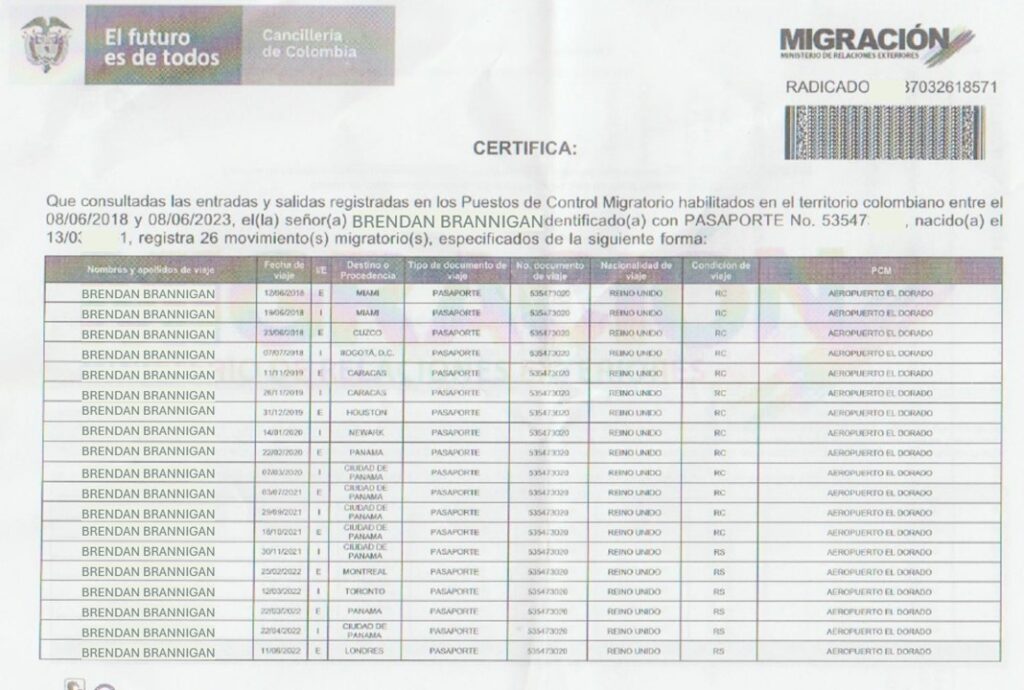
xample of the Certificado de Movimientos Migratorios.
Example of the printed Certificado de Movimientos Migratorios.

OK, so what about the visa transfer?

Now you need to the visa website at  www.cancilleria.gov.co, and navigate to the visa page called the SITAC. Note there are English and Spanish pages (the Spanish version sometimes works better).

Fill in your details to enter the system, then select ‘Visa traspaso’ from the dropdown menus. You will also be asked to click on the timeframe when your original ‘R’ visa was issued. You will then be told what documents to present; these can be uploaded in PDF.

The visa application page on the Cancelleria website.  Choose 'traspaso' from the options.
The visa application page on the Cancelleria website. Choose ‘traspaso’ from the options.

What documents are required?

This varies depending on your type of Resident visa and when it was issued, but generally:

  • Scan of your original R visa.
  • Scan of your passport main page.
  • Scan of your current Cedula Extranjeria.
  • Scan of your most recent migration entry stamp to Colombia.
  • Scan of your Migratory Movements Certificate issued by Migración.
  • Letter requesting the transfer, explaining the reason for the request (i.e. ‘para cumplir con Ley 5477 de 2022’).
  • Passport-style digital photo meeting the specifications.

Holders of permanent resident visas do not need to provide any more information. Other types of R visas might require evidence that the conditions under which the visa was granted still applies.

How do I pay?

The fees are divided into a US$54 ‘study’ fee, which is paid on submission of the documents. When the visa transfer is approved you pay an additional ‘visa issuance fee’ of US$54. Payment is also online by Colombian PSE bank transfer scheme, or you can use Visa or Mastercard credit cards. 

Is that the traspaso done?

No. Once your e-visa is sent to you be email, you need to register your visa and apply for a new Cedula Extranjeria ID card within 15 days of receiving the new e-visa. The initial application and payment is done online, using the Formulario Único de Trámites page. Tick the Cedula Extranjeria box and select your nearest Migración office from the drop-down menu.

You’ll need to provide more information, scans, and an US$80 payment.

Back to the FUT page, but this time for the Cedula.
Back to the FUT page, but this time for the Cedula and visa registration.

Surely that’s the end of it?

Nope. Now you need to make an appointment with the same Migración office to provide biometric data for your new CE. To make an appointment, first register with the website here.  Slots for the following week are allocated often at 5pm on Sunday, so try at this time.

If there are no slots available, take a screenshot of the appointment page as you can later use this as evidence to prove you were trying to comply with the 15-day plan (Migración sometimes sanction visa holders for not registering on time).

If you do not get an appointment within 15 days don’t worry; with your screenshots of the full agendas, Migracion are unlikely to complain. Everyone knows the system is overloaded.

What about my Cedula de Extranjeria?

Another delay: some people wait months for the plastic card, though lately the wait has been getting shorter. You can use your old CE or your passport in the meantime.

Should I hire a commercial visa company to do the paperwork?

The Cancilleria recommends applicants to apply directly for the traspaso directly via the website. However, commercial visa companies can assist with the paperwork but will charge a fee up to several hundred dollars. Try the process yourself before seeking professional help.

Just don’t leave it too late…

The post Long-term foreign residents reminded to transfer ‘R’ visas in 2026 appeared first on The Bogotá Post.
  •  

Medellin reassures tourists after US flight attendant death

Medellin Innovation Transformation
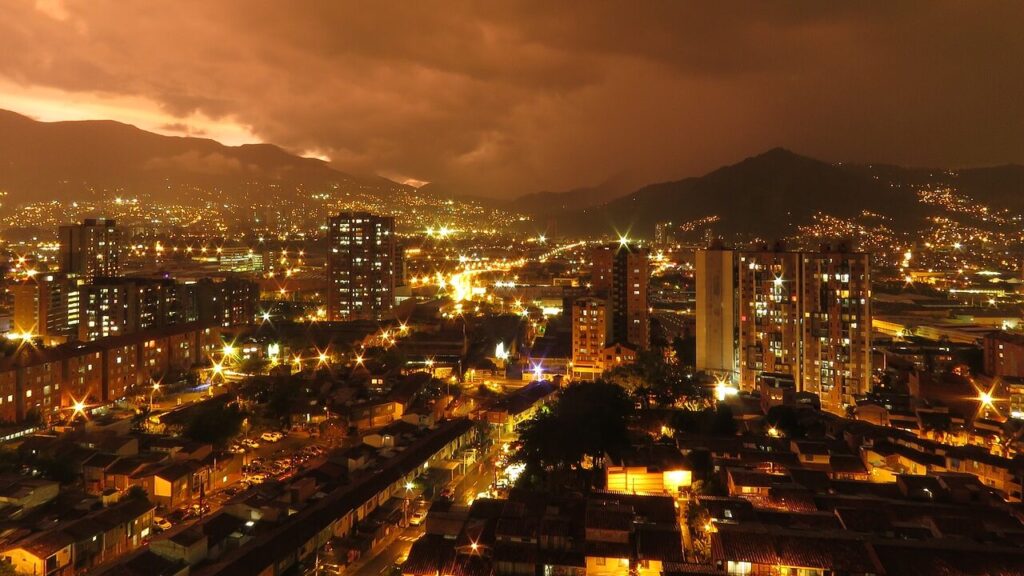
Medellín at night. Image credit: Pixabay.

On March 22, American Airlines flight attendant Eric Gutierrez went missing after a night out in Medellín.

Less than a week later, authorities found his body in a river three hours away from the city. They concluded he had not died of natural causes. 

The U.S-Salvadoran citizen’s murder is the latest in a string of tourist deaths in the Colombian city famous for its nightlife. 

But, in conversation with The Bogotá Post, Medellín’s Secretary of Security, Manuel Villa Mejía, offered reassurances that the city remains a safe destination for tourists and shared tips to stay safe.

Is Medellin a safe destination?

Gutiérrez, 32, appears to have been a victim of scopolamine robbery, in which thieves use the toxic drug to daze and incapacitate their targets. For years, this method has been well documented in Colombia, which is believed to have the highest number of cases in the world.

Medellín has a reputation as a party city and, accordingly, is often associated with stories about scams, druggings, and robberies.

But Villa Mejía insisted that the city does not tolerate criminal activities: “Our message is clear: there is no place for crime in Medellín.”

He highlighted the city’s recent security strategy to tackle crime, including increasing police presence in nightlife hotspots, dismantling gangs, and enhancing video surveillance.

The Secretary of Security noted how safety in Medellín – once the world’s murder capital – has dramatically improved in recent decades. 

“Today is an example of how security can be improved through strategy, consistent effort, and institutional coordination,” said Villa Mejía.

He noted that the city’s homicide rate has fallen for two consecutive years, now standing at 10 per 100,000 inhabitants.

Villa Mejía compared this rate to U.S. cities like Atlanta (51), Washington D.C. (51), and Chicago (73). 

“Although there is still a long way to go—since the only acceptable figure is zero—these advances reinforce our commitment to continue working every day to protect the lives, safety, and peace of mind of those who live in and visit the city,” said the Secretary of Security. 

Tips to stay safe

While Villa Mejía defended Medellín’s record on crime, he also said that tourists must take precautions to avoid ending up victims of robbery or worse.

“We invite all travelers to enjoy the city at their leisure, but also to exercise caution and act responsibly,” said Villa Mejía.

He recommended that travellers use trusted transportation, avoid displaying large amounts of money or expensive jewellery in public, and stay in safe areas where police are present. 

Villa Mejía also stressed the dangers of meeting strangers, especially online. He added that travellers who meet a stranger in person should avoid accepting drinks from them and not follow them to an unknown location. 

“The main recommendation is to stay in control of your surroundings,” concluded the Secretary of Security.

The post Medellin reassures tourists after US flight attendant death appeared first on The Bogotá Post.
  •  

What the latest innovation ranking for Medellin tell us about the future of entrepreneurship in the city 

The startup ecosystem in Medellin has long been a leading success story for both Colombia and Latin America. In recent weeks, the progress of Medellin’s evolution into a knowledge-based economy and hub for innovation has gained even more traction. 

Globally, Medellin currently ranks at #145, according to the StartupBlink Ecosystem Index, and holds 5th place regionally in South America. On a national level, the strength and diversity of Medellin’s startup ecosystem is second only to Bogota. 

Now, the launch of a new official district-level ranking designed to measure local performance in science, technology, and innovation promises to strengthen the innovation sector in Medellin even further. The “CTi Ecosystem Pulse” (Pulso Ecosistema CTI) is an initiative from the Mayor of Medellin and Ruta-N will provide local organizations with granular data on their performance set against an official innovation benchmark. 

The benchmark being rolled out with the CTi Ecosystem Pulse initiative will support organizations in Medellin’s innovation ecosystem to benchmark themselves, make more strategic decisions, and strengthen their national and international positioning.

In addition, Ruta-N also announced that Medellin has been included in the World Economic Forum’s (WEF) Network of Innovation Ecosystems, a platform that connects 17 cities across the Americas, Europe, and Asia to promote collaboration, shared learning, and the development of innovative solutions.

Here, the WEF recognized the role Ruta-N has played as orchestrator of the innovation ecosystem, connecting companies, academia, the public sector, and civil society to strengthen entrepreneurship. The organization has also been ranked 1st among the country’s public open innovation ecosystems in the 2025 Open Startups 100 ranking. 

It’s also interesting to note how quickly Medellin has been able to climb through the rankings in a short span of time. In 2025/2026, the city climbed 17 spots in global rankings and is recognized for having the highest growth among startup ecosystems in South America. 

The data, coupled with the new CTi Ecosystem Pulse initiative, suggests that Medellin is expected to continue with this impressive upward trajectory on a national, regional and global scale. 

However, this success story has been made possible by three central pillars of innovation: Academia, conferences and local investors. Let’s take a closer look at how these play out across the city.

University Support Nurtures Innovation in Medellin 

First of all, universities and academic institutions represent a core pillar of Medellin’s innovation economy.  

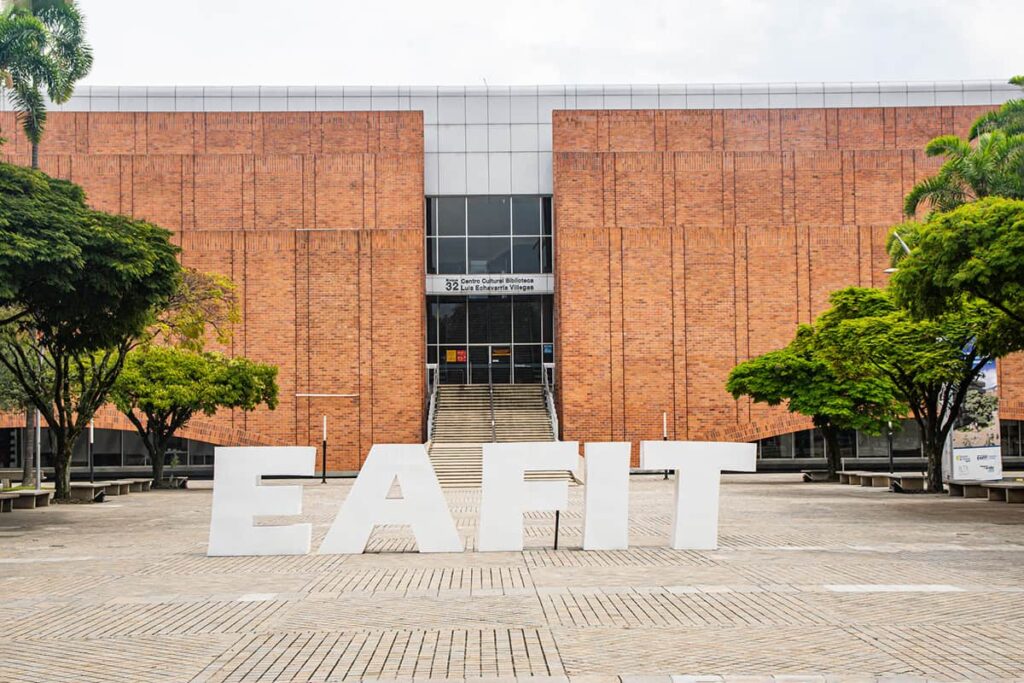
EAFIT’s Impact Entrepreneurship Center is one academic unit that has played an active role in boosting entrepreneurship in the city. In 2021, EAFIT University’s president, Claudia Restrepo found that less than 5% of the most impactful startups in Colombia had EAFIT alumni as founders. 

In response to the data, the university decided to take entrepreneurship out of its academic silo and connect it with the real-world ecosystem by creating the Impact Entrepreneurship Center, known as On.going. 

Four years after the initial survey, the center has incubated nearly 190 initiatives. In addition, 40% of these are now formalized ventures, showing why nurturing entrepreneurship in Medellin pays dividends in short time frames. 

Under the leadership of Director Tomás Ríos, On.going joined forces with EAFIT, Fundación Fraternidad Medellín and Universidad EIA to establish  U Ventures, the first VC fund in Colombia designed to invest in university talent. 

“Out of every thousand ideas, maybe four grow and scale,” Ríos explained in an interview with Ana Herazo of Contxto. “To have 40 large companies in the future, you need 10,000 ideas today.”

Medellin conferences boost international collaboration 

Events and conferences represent another central pillar within most innovation strategies, and Medellin has also spurred collaboration on an international scale through this channel. 

One example of a homegrown initiative can be found with Starter Company, today one of the largest startup events in Latin America. In 2025, Starter Company brought together 13,000 attendees from 20 countries, 340 startups, and more than 160 investment funds. 

According to CEO Juan Gabriel Arboleda, part of the reason why Starter Company has found such success is that they don’t try to mimic models from other parts of the world. Instead, they have built something from the ground up that works for entrepreneurs in the region. 

Mike Hoey

We can see numerous examples of public-private collaborations that support the rise of tech innovation in Medellin and bring international attention to the city. For example, TECH SPHERE was organized by software development enterprise Source Meridian, 360 Health Data and the Pascual Bravo University Institution. Mike Hoey founded Source Meridian and is one of the city’s leading international tech entrepreneurs.

The conference highlighted Medellin’s role as a catalyst for AI research in Latin America and brought together business execs, researchers, entrepreneurs, and professionals from across sectors and backgrounds to explore how AI can be practically applied to solve real challenges and scale impactful solutions. 

While local initiatives play an important role, we can also see the rise of international events choosing to host conferences in Medellin and South America and the region continues to be recognized for its contributions to innovation. 

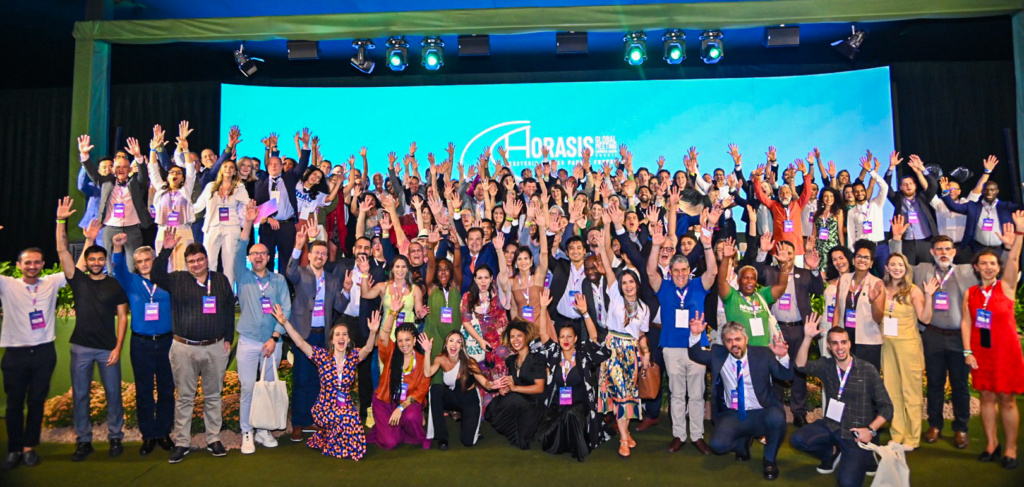
Horasis, a global think tank headquartered in Zurich led by Frank-Jürgen Richter, held the Horasis Global Summit 2025 in Brazil. The event represented the largest meeting the organization has held to date, bringing together 1000 speakers from 50 countries, a testament to the draw of the region. 

Horasis Global Meeting in Brazil

Local entrepreneurs and investors solve real-world problems 

The final pillar to this success story lies in the presence of eager local entrepreneurs and investors from Medellin. Both the innovator and the investor are integral to the ongoing success of Medellin’s innovation ecosystem. 

360 Health Data is a platform built by Colombian tech experts to overcome healthcare disparities due to language barriers.

Its platform, Coralia Health, translates medical knowledge and resources into Spanish through tech-powered automations, meaning physicians in the region now have rapid access to up-to-date, reliable, and relevant information.

Without more support and funding systems like U Ventures to sustain ideas from the earliest stages, the pipeline collapses before it can produce results.

Meanwhile, local innovators have a keen understanding of the gaps in the market and the solutions can drive the most impact. 

As Medellin continues to rise through the global innovation rankings, it’s likely to encourage more entrepreneurs to stay and encourage more investors to back high-tech ideas.

The post What the latest innovation ranking for Medellin tell us about the future of entrepreneurship in the city  appeared first on The Bogotá Post.
  •  

Medellín named World Book Capital 2027, highlighting cultural transformation

UNESCO has designated Medellín, Colombia’s second-largest city, as the World Book Capital for 2027, recognizing the Colombian city’s rapid growth in reading culture and its use of books and libraries as tools for social transformation.

The decision, announced in March, follows a recommendation by the organization’s World Book Capital Advisory Committee, made up of publishers, booksellers and authors. 

Medellín will become the 27th city to hold the title since 2001, with its program set to begin on April 23, 2027, coinciding with World Book and Copyright Day.

UNESCO said Medellín has seen a 542% increase in bookstores over the past 70 years, placing it at the top of Colombia’s reading index. The city is home to more than 110 bookstores and 25 libraries, many of them built as part of urban renewal projects that transformed former prisons and police facilities into cultural spaces.

“Books are not just carriers of stories. They are a source of creativity and learning,” said UNESCO Director General Khaled El-Enany, adding that Medellín’s designation sends “a powerful message about how culture can build peace and social cohesion.”

Mayor Federico Gutiérrez described the recognition as a milestone for the city. “Medellín has shown that reading is a fundamental part of its culture,” he said. “We want every child born here to grow up with a book in their hands.”

Gutiérrez said Medellín’s bid for the World Book Capital designation was built around five strategic pillars, including early childhood reading programs to ensure access to books from birth, as well as initiatives to promote reading among students through book clubs and opportunities to meet authors and engage with their work.

Cities named World Book Capital commit to promoting reading across all age groups and organizing a year-long program of cultural activities. According to Spanish-language philologist Andrea Peláez, the initiative is designed to support cities with strong cultural momentum.

“These are cities with significant cultural mobilization,” Peláez said. “UNESCO supports them for a year to develop projects that promote reading, especially among young people and vulnerable communities, while strengthening literacy ecosystems overall.”

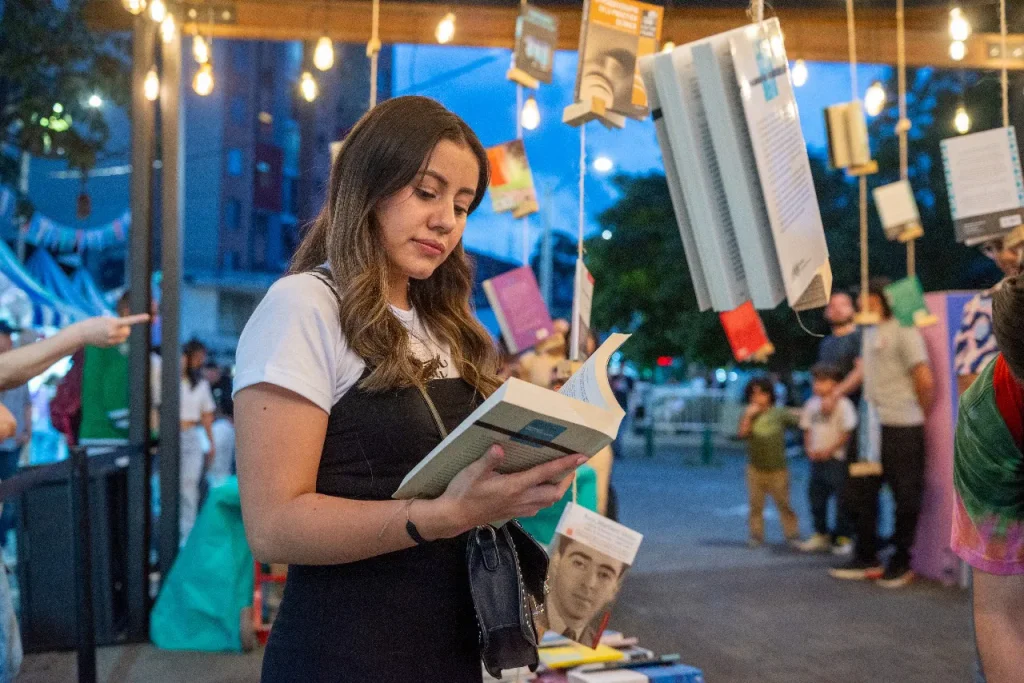
A key part of Medellín’s literary ecosystem is its Eventos del Libro, a series of large-scale public events including the Book and Culture Festival (Fiesta del Libro y la Cultura), which bring together writers, publishers and readers across the city. 

These events promote reading through school programs, author visits and community activities, often encouraging students to engage with books ahead of meeting authors in person.

UNESCO said the designation is part of broader efforts to strengthen literacy and access to books worldwide, highlighting similar initiatives in regions such as Central America and Ethiopia.

Once associated with violence, Medellín has gained international recognition in recent decades for its cultural and urban transformation – with books and libraries playing part in that shift.

Featured image credit: Festival de Libro Medellín.

The post Medellín named World Book Capital 2027, highlighting cultural transformation appeared first on The Bogotá Post.

  •  

Political tensions rise as guerrilla group revealed to be behind Miguel Uribe’s murder

Segunda Marquetalia ordered the attack last year according to trial testimony.

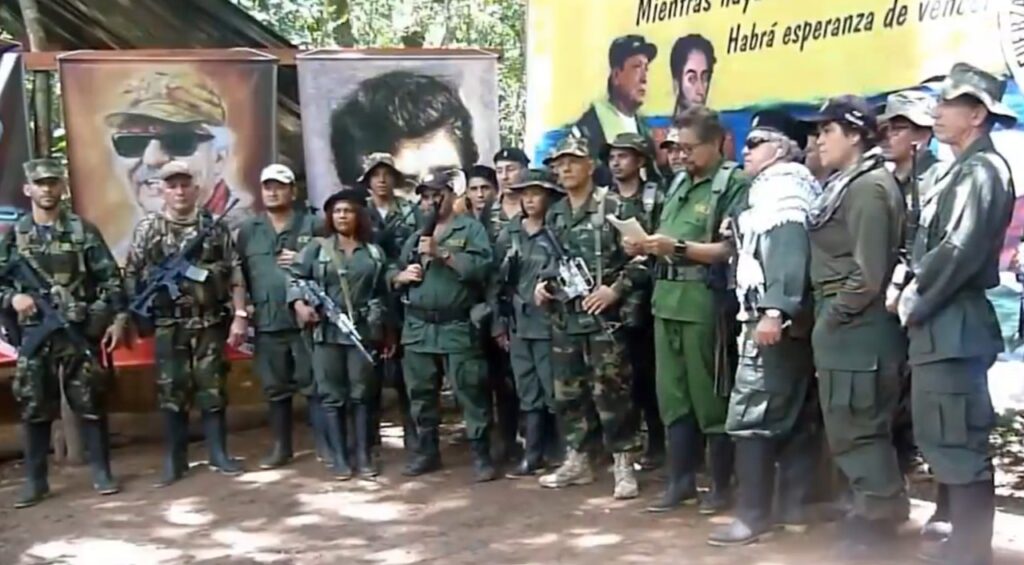
Segunda Marquetalia announce their formation in 2019, from the jungles of Guainia, Colombia. Video Capture.

Revelations that former FARC leaders ordered the 2025 killing of Miguel Uribe have heightened political tensions in the run-up to the May presidential elections.

The 39-year-old Colombian senator and presidential hopeful was gunned down by a Bogotá gang hired by the Segunda Marquetalia, an armed group created by disgruntled guerrillas hiding in Venezuela, according to testimony revealed in court.

The senator was shot down by a 15-year-old assassin at an open-air political rally in the barrio of Modelia in June, 2025. Uribe died of head wounds two months later.

After months of investigations and multiple arrests, state prosecutors were last week finally able to link the local gang that carried out the hit with the armed group.  

See also: Who ordered the murder of presidential candidate Miguel Uribe?

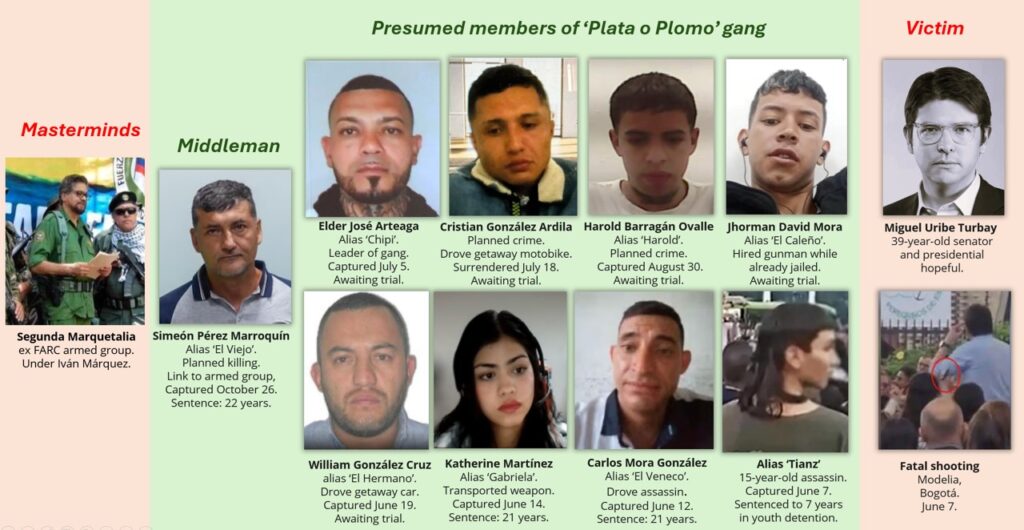
The breakthrough came during the trial of Bogotá-based gang leader Simeón Pérez Marroquín, also known as ‘El Viejo’, who admitted he had hired the local Plata o Plomo (‘Silver or Lead’) gang to carry out the killing on behalf of the Segunda Marquetalia armed group.

“The deal was that they would pay one billion pesos [US$270,000] for the senator’s death,” said Marroquín in a statement reported by magazine Semana.

Right hand man

Confirmation of involvement by an armed group founded by former FARC leaders sparked a political spat between front-runners for the upcoming presidential election.

Right-wing candidate Paloma Valencia was quick to accuse the Petro government of negotiating peace with the Segunda Marquetalia – even while the armed group was plotting the murder of Uribe.

See alsoPeace Plan has caused more conflict, says thinktank

Valencia referred to Marroquín’s statements that the hit was organized by veteran guerrilla Zarco Aldinever, the right-hand man of the group leader Iván Márquez, in early 2025.

At this time Aldinever was nominated a ‘peace manager’ by the Petro government, meaning any arrest warrants were suspended and the rebel was free to roam. This despite the collapse of peace talks with the Segunda Marquetalia at the end of 2024.

Valencia further pointed to the closeness between her main election rival Iván Cepeda and leaders of the armed group.

Old photo

Iván Cepeda with Iván Marquez
Iván Cepeda with Iván Marquez.

“The killer of Miguel Uribe is photographed hugging Iván Cepeda,” she wrote on X, attaching  a photo of her rival with Segunda Marquetalia founder Iván Márquez.  

In fact, the photo of Cepeda dated from the 2016 FARC peace talks, explained President Petro in a strongly worded statement defending his friend and political ally.

“The photo shows Iván Cepeda’s attempt to help [the Santos government] achieve peace. At that time, the entire FARC was ready for peace,” said.

Iván Márquez was number two in the FARC at the time and widely respected for his role in the negotiations.

Petro went on to blame his predecessor, right-wing president Iván Duque, for undermining the FARC peace process that forced former guerrilla leaders like Márquez back to arms and the Segunda Marquetalia.

Following the 2016 deal, some former FARC leaders had been “entrapped by state prosecutors with fake drug charges”, he said, leading to extradition requests from the United States.

Faced with this legal pressure several top commanders, including Iván Márquez and Jesus Santrich, fled to Venezuela in 2018 before emerging on video a year later to announce their new incarnation as the Segunda Marquetalia, named after the village in the Tolima department where the original FARC first formed in 1964.

The armed group was active in drug trafficking and illegal mining along the Colombia-Venezuela border, in the departments such as Vichada and Guainía, according to a profile by InsightCrime. The leadership is suspected of hiding out in Venezuela.

Another study by Fundacion Ideas para La Paz estimated the group to have 530 armed combatants in 2025, an increase of 15% on 2024, and work mostly in the eastern plains of Colombia.

A hunt is on

In a press conference on Tuesday, Valencia accused Cepeda and other left-wing lawmakers of backing the former FARC commanders in their legal battles back in 2018, creating a chain of events leading to the creation of recycled armed group.

“Congressmen like Cepeda defended [Marquéz and Santrich] …and didn’t allow them to be extradited. If these thugs had been extradited, Miguel Uribe would be alive today,” she said.

In his own press statement Cepeda called Valencia’s comments “a dirty political game” and issued a challenge to the candidate, and her political mentor right-wing former president Álvaro Uribe, to back up the accusations in court.

“It’s infamy to accuse me or President Petro to have any type of involvement in such a deplorable deed as the assassination of senator and presidential pre-candidate Miguel Uribe,” he said.

Meanwhile this week the Colombian attorney general’s office launched a fresh hunt for the leaders of the Segunda Marquetalia, offering around million-dollar rewards for the capture of seven commanders including Iván Márquez and Zarco Aldinever.  

In fact, Aldinever was reported killed by rival armed group ELN in Venezuela during a squabble over a cocaine shipment in August last year – the same month that Miguel Uribe died – according to Colombian state forces at the time.    

This week Colombia’s Minister of Defense Pedro Sanchez walked back that claim saying no body had ever been found and that the initial report of Aldinever’s death – sent from the Segunda Marquetalia itself – could be disinformation.

“At this time, the position is clear: without a body there is no confirmation of death, and that is why all institutional resources remain active to locate him,” said Sanchez.

Underworld connections

Closer to home, the Segunda Marquetalia’s influence in Bogotá was under scrutiny after Simeón Marroquín’s testimony shed light on the murky connections with the city’s underworld.

Marroquín admitted that in previous decades he had acted as an urban operative for the FARC guerrillas, a hired gun ready to carry out orders in the city.

“I never wore camouflage, but while I was here in Bogotá, I was a miliciano. Guerrilla missions would come up, and I’d carry them out, but I was never in the ranks.”

His contacts with the FARC continued to the Segunda Marquetalia that tapped him for the Uribe killing.

Early in 2025, Marroquín was invited to a secret meeting in Cúcuta close to the Venezuelan border where, according to his testimony, Aldinever offered him one billion pesos for the crime (US$270,000) and another 600 million pesos (US$160,000) to “bribe the justice system” to deflect attention from the guerrilla group.

The motive for the killing was not clearly revealed by Marroquín, though a text message later found on his phone sent to his guerrilla paymasters talked of an “eye for an eye”, suggesting the former rebels were out for revenge.

The Uribe case uncovered links between the Segunda Marquetalia guerrillas and urban criminals.

Chilling revelation

Uribe was selected as an influential senator, scion of a right-wing political family, and popular candidate for this year’s presidential elections. He was also an easy target for assassins with his regular visits to communities where he had walkabouts to engage with local voters.

In the first few months of 2025, Marroquín worked his underworld connections to hire the Plata o Plomo gang which in turn lured the 15-year-old gunman who shot and wounded Miguel Uribe in a small park in the barrio of Modelia on June 7.

See also: Arrests made – but still questions in Uribe shooting.

Marroquín’s account paints a picture of a loose network of petty criminals lured by cash rather than political interests, ignorant of the details of both their intended target and the paymasters behind the plot.

The middleman saw the hit as a “good business opportunity” but also a chance to rekindle his role as urban operative for a guerrilla organization.

Marroquín’s plan unraveled after the 15-year-old gunman and various low-level gang members were detained in the hours and days following the June attack, creating a trail leading to his own capture in October.

“What’s done is done”

One chilling revelation was the order from above for Marroquín to kill low-level gang members to cut links to the guerrilla masterminds. This included murdering alias Gabriela, who transported the weapon and was present on the day of the shooting.

Marroquín refused to kill Gabriela, telling investigators “I didn’t have the heart for that because she was very young.” But he did send her by bus to the city of Florencia where the guerrillas were lying in wait.

#ATENCIÓN | "No hay palabras que justifiquen dicho acto, pero pues ya está hecho (…)", fueron las palabras con las que Simeón Pérez Marroquín, alias ‘El Viejo’, pidió perdón a la familia del senador y precandidato presidencial Miguel Uribe Turbay, tras reconocer que fue el… pic.twitter.com/btgnOsTEF7

— ÚltimaHoraCaracol (@UltimaHoraCR) March 20, 2026

The 19-year-old never made it; police investigators, already on Gabriela’s trail, organized for the bus to “break down” some miles before Florencia. Her arrest there and subsequent interrogation lead to Marroquín’s capture and eventual exposing of the links to the Segunda Marquetalia.

Last week, during the court process, Simeón Marroquín attempted to apologize for his role in the killing of Miguel Uribe.

“There are no words to justify my actions, but what’s done is done,” he said on camera from his cell, addressing his victim’s family – Uribe was married with four children – and asking forgiveness. He was then sentenced to 22 years in prison.

How quickly Colombian investigators can find Zarco Aldinever or other Segunda Marquetalia commanders, dead or alive, or hiding in Venezuela, remains to be seen.

The post Political tensions rise as guerrilla group revealed to be behind Miguel Uribe’s murder appeared first on The Bogotá Post.
  •  

Turning seawater into drinking water: A startup aims to transform life on a Colombian island

Playa Blanca, near Tierra Bomba Island. Credit: David Shankbone via Flickr

According to the United Nations (UN), the world is in an era of “global water bankruptcy.” In Latin America alone, the OECD finds that 17 million people still lack access to safe drinking water. Among those affected are the residents of Tierra Bomba, a small Caribbean island located off the coast of Colombia which faces persistent challenges in obtaining drinking water. 

The island, home to an estimated 9,000 people, lacks access to clean water, with residents relying almost entirely on supplies brought in by boat from the mainland. 

However, water filtration startup Vital Lyfe and Amigos Del Mar, a local NGO, recently made a breakthrough for the island’s water supply; in November last year, they successfully tested a decentralized water system, which can turn seawater into treated filtered water. So far, 40 families in the area have been helped by the project, benefitting from stable water production with minimal maintenance. 

“Everyone knows that water is extremely expensive here,” Marta Maldonado, a Tierra Bomba local, told The Bogotá Post. “One gallon costs three thousand pesos. As a family, we have to buy four gallons of water every single day just to start the day. Many times, the water arrives with a little bit of salt in it, and that has even made us sick.”

For Maldonado, Vital Lyfe and Amigos Del Mar’s work has made drinking water more accessible. “Drinking the water filtered by Tierra Bomba’s technology is something special. It makes me realize that good water has finally arrived here. We have the sea right in front of us, and now, with these machines, clean water becomes possible. For us, it is something essential,” Maldonado said.

Making seawater drinkable 

As an island, Tierra Bomba faces significant challenges. For instance, there is a lack of running water and sewage systems, issues with gas access, and inefficient trash collection that can make life difficult for residents.

“One of the biggest problems that we see in Tierra Bomba is clean water access. The water comes by boat, and it can be expensive, inconsistent, and sometimes of questionable quality. The water gets to the island, and people have to go and buy it in one place, making it really hard for some people to carry water to their homes,” Pedro Salazar, president and founder of Amigos Del Mar, told The Bogotá Post

Amigos del Mar, established in 2015, decided to collaborate with Vital Lyfe to see if there was a way to create more reliable water access for the island. “Water is life. It brings health when a lot of the unsanitary water in the area carries diseases that people have been consuming. The quality of life for the people of Tierra Bomba can become much better, as we have already seen with this pilot, when they have access to good quality water for everything in their lives, from drinking to cleaning to cooking,” Salazar said.

Under the hood 

The project uses a portable filtration system built by Vital Lyfe, which offers a high-efficiency purification engine that combines mechanical innovations such as low-cost reverse osmosis membranes, and smart power management to deliver clean water without the industrial footprint normally associated with purification. The device can adapt to the water that is available, using the lowest energy, and implementing the most efficient treatment pathway for that specific source. 

This approach enables the system to process naturally occurring water sources, including brackish water, seawater, and freshwater, to eliminate salts and biological contaminants so the water can be made into drinkable, filtered water. 

“The project was a great success, with the technology working immediately, providing filtered water for around 40 families in the area. Many more became aware of the system and expressed interest as well, providing a need for more of this kind of tech. The mission achieved field validation for us as well, proving that the technology could work in remote environments with little knowledge or maintenance needed from the local community,” Jon Criss, CEO and co-founder of Vital Lyfe told The Bogotá Post

Criss notes that the local community assisted with the rollout, unloading and positioning equipment before installation began. The project means that rather than having to rely on a fragile supply chain which is vulnerable to changing weather conditions,  community members can enjoy sustainable access to clean water that’s local and scalable. 

“For us, this wasn’t just a one-off deployment. It was proof that communities like Tierra Bomba don’t have to stay dependent. There’s real potential here to expand the impact and build something long-term that strengthens resilience and lowers cost at the same time,” Criss said. 

While the pilot looks promising, it also remains to be seen if the equipment can sustain prolonged use. In addition, there is more research to be done, to demonstrate that such a filtration solution could provide filtered drinking water to more populated areas. 

The post Turning seawater into drinking water: A startup aims to transform life on a Colombian island appeared first on The Bogotá Post.

  •  

The Córdoba floods in Colombia: How You Can Help

Weeks on from the first floods in northern Colombia, thousands of people remain without many of the basics and facing further problems. Find out what you can do to help.

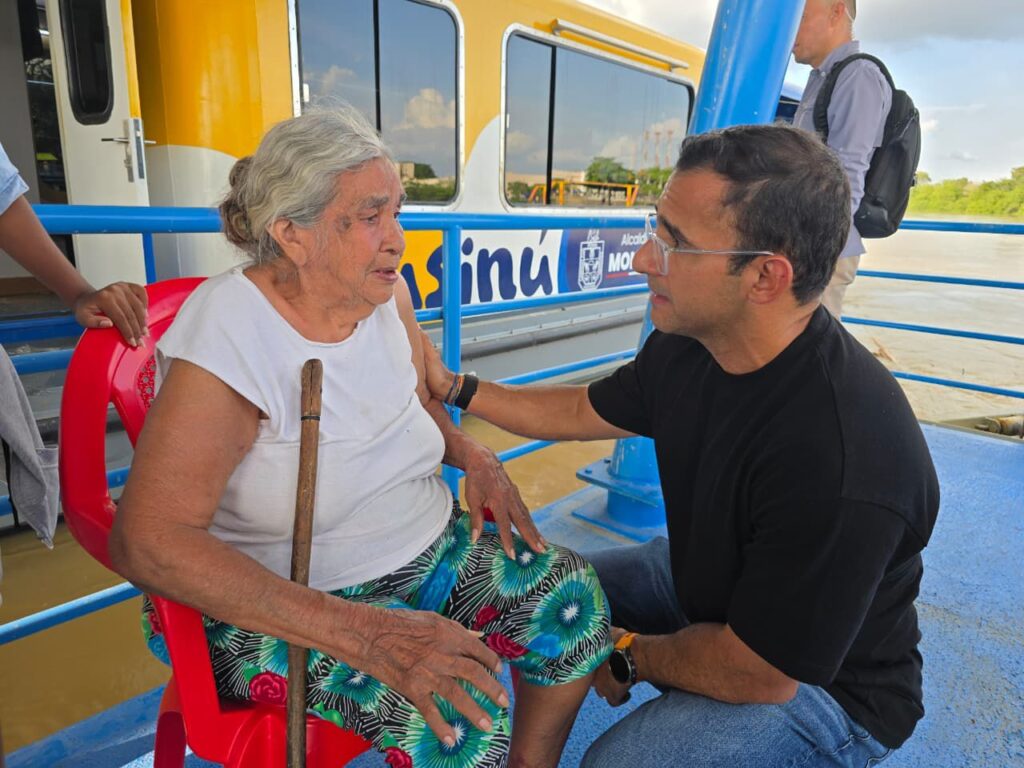
The northern Colombian city of Montería was hit by extreme weather earlier this year, as exceptionally heavy rains flooded the city completely. Thousands of people in the capital of Córdoba have lost everything in the deluge.

While the relentless cycle of news marches on to discuss the upcoming elections, the families affected cannot. Their lives remain in ruins, with further problems coming as the water recedes. Most of the department is relatively poor, with the affected communities overwhelmingly from those in need even previous to this disaster.

The rains have lessened in severity, with fewer downpours and the water is slowly draining, but it will take years to undo the damage that it has wrought. The immediate emergency may be over for the time being, but the recuperation process will take long years to complete. 

Thousands of people need help, many in extreme risk

What can you do to help those affected by the Córdoba floods?

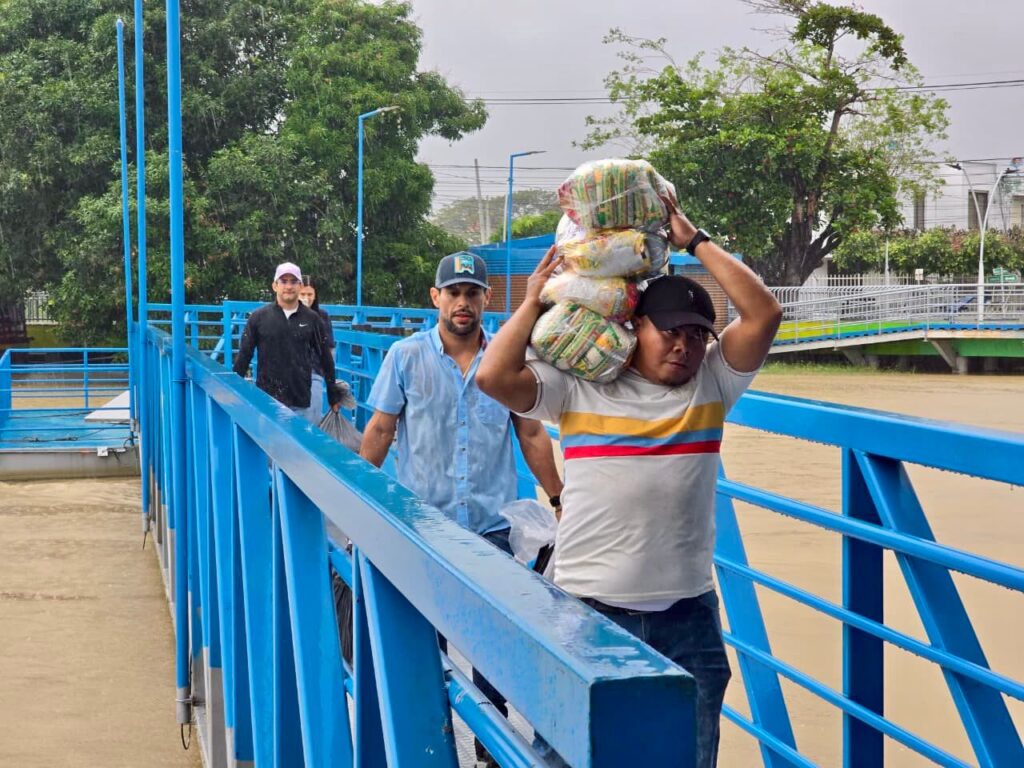
Today, the charitable organisation Colombia Unida por Córdoba is launching a donation drive to help those hit by the rains to rebuild their lives as quickly as possible after the deluge. You can donate here to make your contribution to the campaign.

The money raised will go towards rehabilitation and reconstruction of households, schools and medical centres on the one hand and humanitarian assistance such as temporary housing and medical care on the other.

In the short term, thousands of people need immediate help, whether in terms of shelter or medically. Moving into the medium term there will be a need to both rebuild and restock a range of buildings to get people back to their regular lives.

Within the range of services that are needed by the communities under threat are not only physical and monetary assistance but also psychological help for those that have lost everything. Many farmers will need specialist advisory services to reestablish their fields.

The campaign seeks to bring Colombia together in order to help out a department battered by the effects of extreme weather, something that has grown in magnitude in recent years. It is a movement run both for and by Colombians.

The aid project will require everyone to pull together

Full transparency and auditing is at the core of the project, meaning you can check where the money is really going, unlike some of the larger international organisations. Moreover, the organisers are people who know the situation from firsthand experience.

The Cruz Roja Colombiana are also taking donations of clothes and building materials at their Salitre centre (Av.68 #68b-31), and you can donate money directly on this link. The local government in Bogotá, too, is organising donation drives on this link.

What’s the situation on the ground?

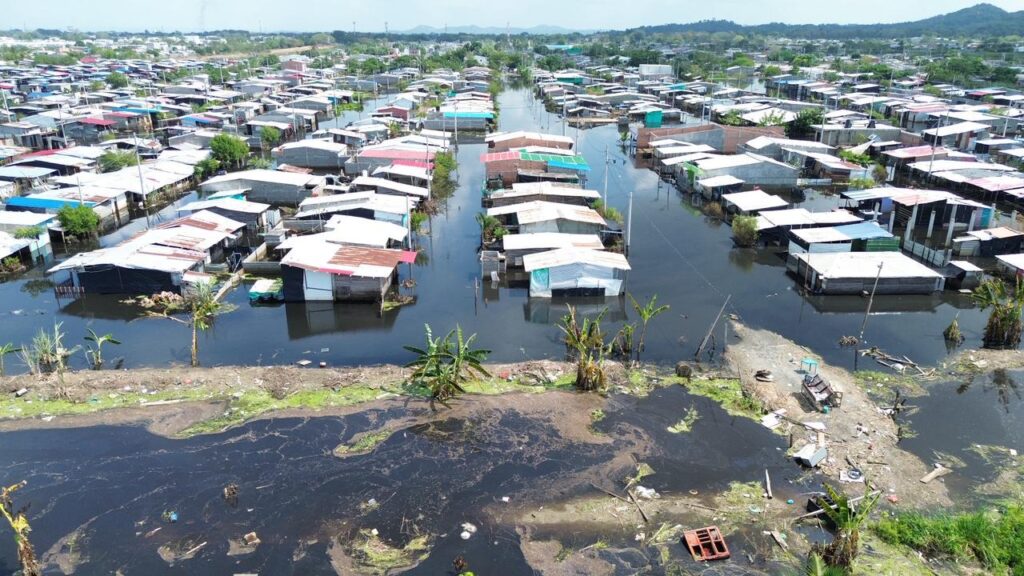
The capital of Córdoba, Montería, is the worst hit major city in the country, with thousands of people evacuated in the city and surrounds. Over 200,000 people have been directly affected by the rains. 

A flooded barrio in Montería, Colombia

Everyone has been hit hard – 365 barrios across 25 muncipios. Hundreds of farms are underwater, houses have been inundated and 15 Indigenous reservations are among the list of those now facing an uncertain and perilous future.

A lot of infrastructure is in ruins too, with over 2,000km of roads submerged and hundreds of schools and medical centres unusable for at least the medium term and no sign of what comes next. Córdoba is a relatively poor department, without the resources that Medellín or Bogotá can call upon.

Sadly, politics have come into play here too, with Petro clashing with regional governor Erasmo Zuleta over the management of the department. The pair have had a lot of differences over the years. He also said he was initially unable to land in Córdoba due to the risk of an attack.

More reasonable are Petro’s claims that the situation has been exacerbated by water management systems such as reservoirs. These have diverted normal water flows and critically diminished the region’s ability to handle pressure from unusual weather patterns. Zuleta’s response is that the national government oversees the Urrá hydro plant.

The Caribbean coast has been hard hot elsewhere, with Uraba Antioqueño, La Guajira and Sucre joining Córdoba, and the Amazon and Pacific regions have also seen unusually high rainfall for the start of the year.

Even when the rains stop, the long term effects will take years to overcome. Already, bad actors are starting to take advantage of the situation, with desperate houseowners paying through the nose for boaters to rescue their belongings before thieves arrive.

Fields that are now underwater will take an age to fully drain and even longer to recover from the damage currently being wrought upon them. Thousands upon thousands of hectares of farmland will be unusable for the near future.

The post The Córdoba floods in Colombia: How You Can Help appeared first on The Bogotá Post.
  •  

Colombian president declares three days of national mourning after military plane crash kills 69

President Gustavo Petro on Tuesday declared three days of national mourning in Colombia following a military plane crash on Monday which killed 69 soldiers. 

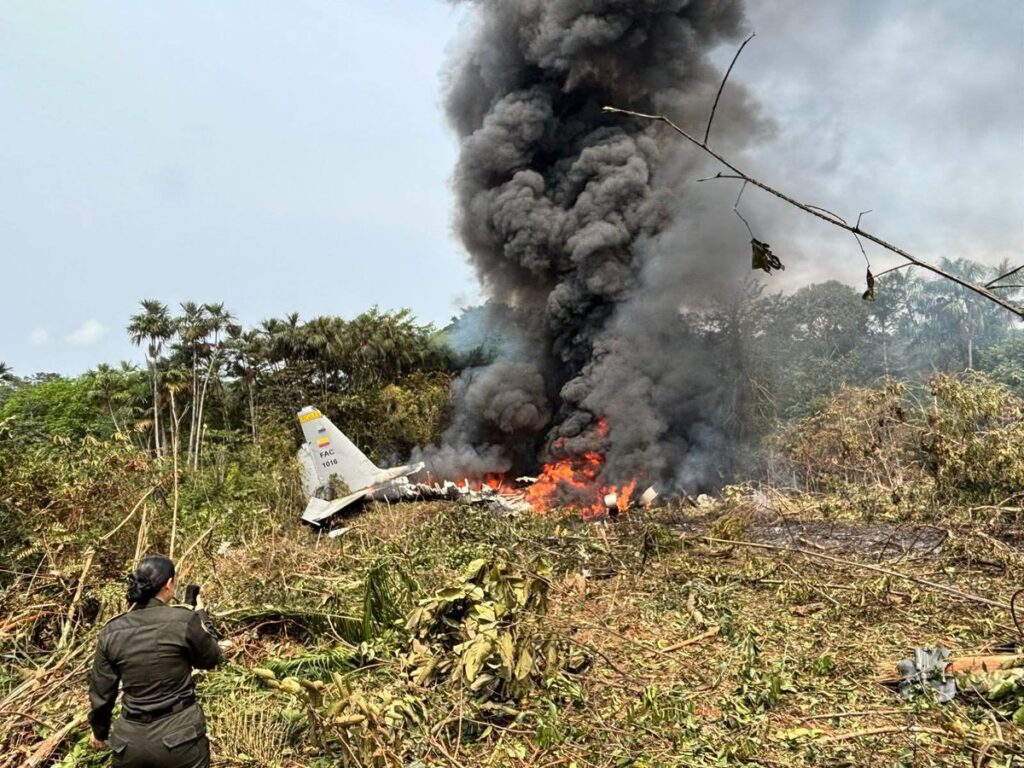
The accident occurred at the Puerto Leguízamo airport in Putumayo, a region located in the southwest of the country, involving a C-130 Hercules aircraft normally used to transport troops and humanitarian aid to remote regions.

According to the latest official reports, at least 69 soldiers and crew members were killed in the disaster. The military transport plane, belonging to the Colombian Aerospace Force (FAC), was carrying over 120 people when it smashed onto the grounds of a nearby farm just after takeoff. 

During the period of national mourning, Petro confirmed that flags will fly at half-mast and military honors will be given to the victims of the tragedy and their families.

He decretado tres días de duelo en todo el territorio nacional en memoria de los 69 uniformados pertenecientes al Ejército, Fuerza Aeroespacial y la Policía Nacional que perdieron la vida en el accidente aéreo en Puerto Leguízamo – Putumayo el pasado 23 de marzo.

Las banderas… pic.twitter.com/INUAnW4bWy

— Gustavo Petro (@petrogustavo) March 24, 2026

Many households are grieving the loss of their children, but one family in particular mourns the loss of two: brothers Santiago and Daniel Esteban Arias. Originally from Puerto Libertador, in the Caribbean department of Córdoba.

Monday’s crash is one of the worst aviation tragedies in the country’s recent history. In 2016, a plane carrying players from Brazil’s Chapecoense soccer team crashed into the mountains outside Medellín, killing over 70 people. 

Lamentamos profundamente informar que, tras culminar las labores de búsqueda y rescate, hoy confirmamos con dolor los nombres de nuestros héroes que ofrendaron su vida en el accidente aéreo en Puerto Leguízamo, #Putumayo.

Cada uno de ellos partió cumpliendo su deber, con honor,… pic.twitter.com/cr25JbYdjr

— Ejército Nacional de Colombia (@COL_EJERCITO) March 24, 2026

In Puerto Leguízamo, survivors of the military plane crash were transferred to specialized medical centers across the country.

Authorities are investigating the causes of the accident but have dismissed preliminary claims of an attack by guerrilla forces active in the region. 

The Mayor of Puerto Leguízamo, Luis Emilio Bustos Morales, told local media, including Blu Radio and Noticias RCN, that “they have many hypotheses.” 

He noted that among them, “there is talk that they were carrying too much weight” or “that the runway was too short for them.”

During the emergency, residents used their own motorcycles to evacuate the survivors before official help arrived; some of them were also injured by ammunition exploding in the flames. 

The medical center known as ‘Hospital Militar Central’, located in the capital Bogotá, confirmed that a local rescue worker is among those being treated there.

President Petro expressed his gratitude through his X account, stating that “this is how a nation is built.” He thanked the local citizens who rushed to save the survivors. He also highlighted the soldiers who ran to save others during the disaster, calling their actions a “beautiful proof of love and solidarity.”

The painful moments were detailed by soldier Mauro Peñaranda, who survived and described the scene as the aircraft went down to local media outlets: “It was leaning to one side, and there was a weird noise (…) the plane was creaking,” he told RTVC. Mauro also stated that they did not receive clear instructions from the cockpit during the situation. 

“I honestly don’t even know how I got out of there… I just jumped and got out,” he said.

The governments of Ecuador, Panama, France, and the United States, among others, also offered their condolences to the Colombian military forces and the victims’ families.

Featured image: Photo of Colombian military plane crash site in Puerto Leguízamo on March 23, 2026.

The post Colombian president declares three days of national mourning after military plane crash kills 69 appeared first on The Bogotá Post.
  •  

Festival Estéreo Picnic 2026: Anto<3 bring the energy

What does the name Anto<3 mean, and why is it written like that? Find out all about one of Festival Estéreo Picnic 2026’s most dynamic acts.

Anto<3 are all over the place both orthographically and musically, but in a good way. This is as Gen Z as it comes, gleefully mashing up sounds and styles in an explosion of energy, chaos and unfiltered reality. They’ll definitely start Festival Estéreo Picnic 2026 on the front foot with a shot of adrenaline to the heart.

This is full-throttle music that is relentless and breathless. Explicit and provocative lyrics take you through whirlwind mini-stories told in an effects-heavy style, underpinned by complex, energetic and throbbingly insistent rhythms.

2022’s Regañada

Charismatic singer Antonia Broderick and producer Samuel Huertas take time out to talk to us about their upcoming show at Festival Estéreo Picnic 2026. It’s immediately clear where the energy comes from – Broderick’s eyes dart around while Huertas has a laid-back drawl.

Their opinions on playing the country’s biggest music fest illustrate their personalities well. Broderick leaps in to say “So fucking excited, honestly. I think it’s going to be a really great moment for everyone,” while Huertas adds “Of course, we’ve been here as audience members too, so that’s cool, because it’s from here.”

Broderick’s take on their music is simply to reel off a list of adjectives: “ Intense, punky, hardcore, free, vulnerable.” Some of that might seem contradictory, but that’s part of the point of the band. Trying to pigeonhole them is a fool’s errand, constantly getting lost as they flit seamlessly and effortlessly between genres.

Huertas tells us that fusion is key to their sound, saying that they have “Electronica with Colombian things – a lot of trap and reggaeton, I don’t know what more. Rock, also, and emo?” The former are clear in the beats while the latter two often come through in the lyrics, with candid expressions of sadness and allusions to depression alongside a celebration of vice and hedonism.

He also has time for more classic sounds, even if repurposed and refashioned for a 2026 audience. “We also have like cumbia, but mixed with new genres. Some of our songs are really traditional, which is cool.” It’s not the first thing you’ll hear, but it comes out on repeat listens.

Playing with the idea of romance, they gleefully announce their new single: the charmingly named Romantikunt. It’s a bold name, to be sure, illustrative of how few fucks they give as to what others may think. Broderick seems to relish anglo-saxon words, liberally dropping ‘fucks’ throughout her songs.

And that iconoclastic, playful band name? It comes from the delightfulness of a peck on the cheek, as Broderick explains “The name is because I love the emoticon, it’s like a heart and I think I’m really romantic. It’s basically Anto-heart, but more cool.”

It’s a name that encapsulates the band: it’s Gen Z already-ironic emoticons, tells you they don’t give a fuck about classic forms and is jarring to see, while adding that twist of sugar that sweetens the message just enough to make Anto<3 fun.

Anto<3 play the Páramo stage at 3pm on Sunday March 22 at Festival Estéreo Picnic 2026

The post Festival Estéreo Picnic 2026: Anto<3 bring the energy appeared first on The Bogotá Post.
  •  

Festival Estéreo Picnic 2026: Brave New Mundo Distinto

Colombia’s premier music event kicks off today, with top tier talent throughout the bill. Who’s on and what do you need to know about Festival Estéreo Picnic 2026? 

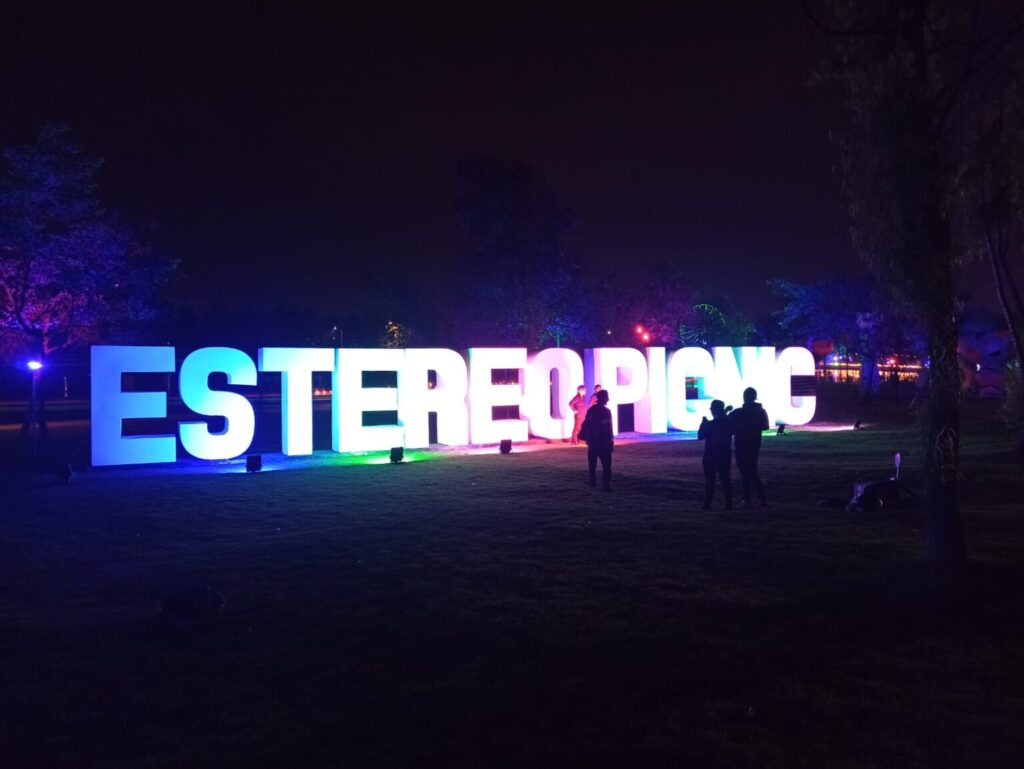
Festival Estéreo Picnic 2026 is here at last! By far the most high-profile event in the Bogotá musical calendar, the festival has gone from strength to strength since its return to the heart of the capital and this year is certainly no exception. The sun has even come out to say hello for Friday at least.

With music event tourism growing in popularity, Festival Estéreo Picnic 2026 is a reason to visit Bogotá for many, with floods of foreign tourists coming in from Latin America and beyond, eager to check out what a contemporary Latin music festival looks like and how rolos party.

Our guide will let you in on some talent you might not have heard of on the bill as well as give you an idea of what the festival itself is like. Whether that’s eating and drinking, transportation or even what to wear, we’ve got you covered.

How to get around Festival Estéreo Picnic 2026

First time at Festival Estéreo Picnic? First time at a major Latin event? Don’t worry, it’s a well-oiled machine that is easy to deal with. All basic transactions are done via a cashless wristband that you can pick up onsite. The system is easy to charge, use and even reclaim outstanding balance from.

Bands are usually timed so that you can flip back and forth between the two main stages (Festival Estereo Picnic and Mundo Distinto) and catch everyone as long as you don’t need to be right at the front for everyone. Getting around is usually pretty easy, with big wide paths and wheelchair access relatively well set up.

Estéreo Picnic is definitely the main stage, facing in reverse to the Rock al Parque setup, but Mundo Distinto pushes it close as a strong second stage. Many years it sees the best performances, with the likes of Fatboy Slim and Limp Biskit ripping it up in recent years.

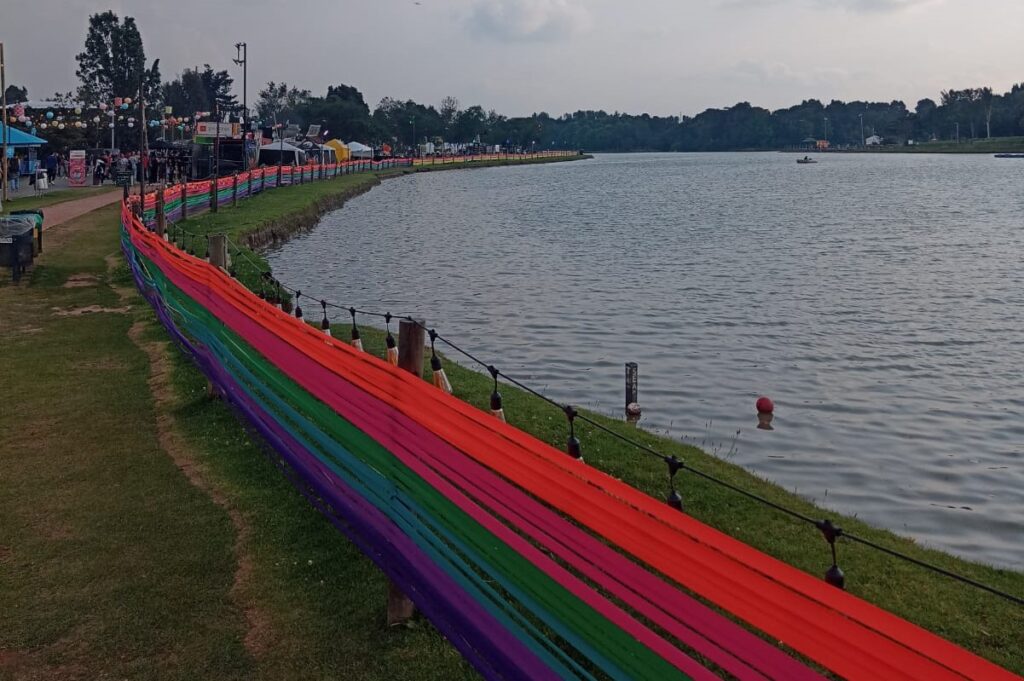
However, for true music geek points you’ll want to get to Lago (behind the second stage) and Bosque (to the left of main stage) for smaller bands and a more intimate atmosphere. When well-supported locals are onstage, this is a lively place to be.

There’s even a beach! Sort of.

As well as the bands on the open air stages there are also a triptych of tents. These feature a range of cabaret artists – expect burlesque, drag and the like – and a revolving lineup of mostly local DJs. These are great places to dip into if you’re left cold by the stages, but expect a fierce heat inside.

In terms of refreshments you should have no problems. There’s a decent dedicated eating area and unless you go at the absolute peak time you should have no trouble finding seats. Prices are towards the higher end of Bogotá, but not at all crazy.

Offerings are similar to what you might expect to find in a food court at a mall: a bunch of big and big-ish chains plus a few smaller outlets. Vegans are usually catered to by either NoPollo or Stankov. There’ll be a craft beer stall somewhere plus a BBC van.

This is Bogotá, so make sure you pack waterproofs and suncream porque sí. You probably need at least one of them and possibly both. If you turn up in the late afternoon you can get away without the cream, but remember people burn fast at altitude.

Decent hiking waterproofs aren’t high fashion but they are very practical and with La Niña refusing to clear off, likely to be necessary. Even if you avoid the actual rainy spells, there’s a good chance of muddy patches that can quickly ruin nice trainers.

El mundo distinto is set to be sunny for the start of the weekend

If you find yourself with a long time between bands or needing a rest, there are chill out zones to relax with as well as a market featuring stalls usually run by independent brands. There will also be plenty of megacorps trying to flog stuff all over the park.

This year, it’s a three-day event. That seems like a good move, concentrating quality into a long weekend rather than stretching things over four days. Adult tickets start at COP$523,000 for a single day and are available online via Ticketmaster here

Finally, toilets. Yes, it’s a festival, but no, they aren’t bad. Men and women are neatly separated, but make sure you bring a pack of tissues as paper is usually in short supply. The area is nice and large so no risk of anything horrible happening.

Who to watch at Festival Estéreo Picnic 2026?

Friday

Friday’s lineup starts strong

Get onsite early to check out Entreco opening the Lago stage at 4pm on the way in. They’re queer-punk iconoclasts from Cali with a long history. The crowd might be small, but the performance will be big, with plenty of charisma on stage. Manú is then over at the Bosque for some more introspective pop.

Djo and Katseye arrived at the airport together this week and they play joined at the hip – the latter on the second stage for sundown, with the former taking over on the main stage after an hour.

Then things get complicated. Six Sex will be on a minor stage, Bogotá rockcito mainstays Nicolás y los Fumadores are at the Lago and Addison Rae lights up the second stage. Digital Nuclear Transistor is worth catching in the tents if you’re a fan of dark techno.

And then Turnstile arrive at the main stage for what will be a crushing moshpit. They’re on at the right time in the right place: it’ll be intense, just as it was when they played here a few years back.

With probably the strongest single-day lineup, there’s only one place to be to see out the day as Tyler, the Creator takes to the stage at 23:15. Lorde is the warm-up on the second stage if you don’t want to be pushing to the front for the headliner.

Saturday

Old favourites return on Saturday

After Friday’s fun and games, you might be tempted to arrive late on the following afternoon. That would be a shame, because there’s some fine acts early doors. Machaka from Ecuador is an interesting take on Latin pop, Kabinett is wildly inventive alternative electronica and 31 minutos is a puppet show. Yes really, and it’ll be huge.

Perhaps one of the most Latin experiences you can have is on today: La Tigresa del Oriente. An octagenarian balladeer that defies all comparison and most description, look her up to get an idea of what’ll happen. Aora tent at 7pm, it’ll be something special.

After that, you have Tom Morello continuing to rage against the machine, but still having an early night and The Killers, who have been here before and always turn in a big set. Swedish House Mafia close out the second stage and that is likely to be bouncing, with Festival Estéreo Picnic always loving this type of slot.

Sunday

Sunday finishes on a high

The day kicks off with an absolute riot of local talent from early on, with Anto<3, Agraciada Pirineos en Llamas and Zarigüeya all opening stages. All four are exciting young Colombian talent that reward those getting onsite to see them.

Unlike anything else on the bill, Zarigüeya is proudly political without tubthumping and blending carranga rhythms into a smooth smorgasbord of styles.

Latin American maximalism is represented by Agraciada, who teams that visual style with soulful, delicate minimalist harmonies.

Anto<3, meanwhile, are a very different proposition entirely. That’s Gen Z Latin hyperpop that’s bouncy, energetic and sultry all at once.

Macario Martínez is a Mexican viral sensation tipped to make it big while booking Travis to play Colombia early afternoon this close to the rainy season is frankly tempting fate. Then there’s the mystery of pop pixie Sabrina Carpenter, a ray of upbeat pop among an array of darker and more aggressive acts.

Those are Interpol, Deftones and Skrillex, giving a very turn of the century feel to the end of the festival. Interpol will sound like they always do, serviceable, but the other two are more interesting. 

Deftones are back on track after some rocky years, gaining near-universal acclaim for this tour as more people re-evaluate their position as nu-metal pioneers. Skrillex, meanwhile, dug a furrow all of his own as the DJ metalheads love and metalhead DJs love. He’ll lean more into the former than latter to close out Festival Estéreo Picnic 2026.

The post Festival Estéreo Picnic 2026: Brave New Mundo Distinto appeared first on The Bogotá Post.
  •  

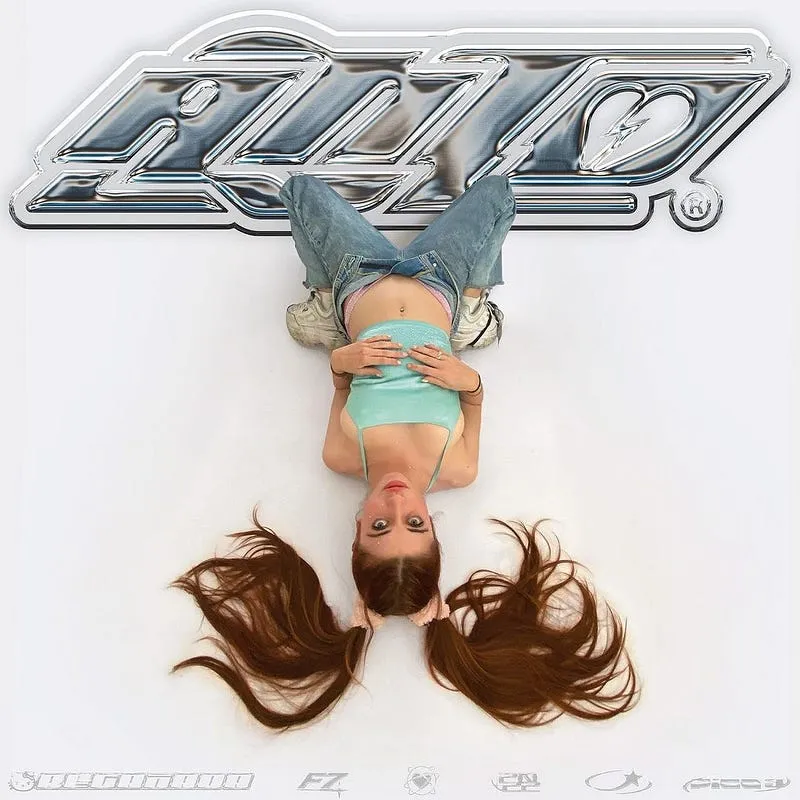
Festival Estéreo Picnic 2026: Agraciada is happy to be here

Mixing Latin American maximalist visuals with a sensitive minimalist sound, Agraciada is set to light up Festival Estéreo Picnic 2026.

Huilense popster Agraciada in person screams Latin American maximalism with her outfit. Musically, though, she’s more introspective and sensitive with a deep groundswell of emotion eddying through her songs in the tradition of melancholic Latin crooners. She’s set to bring something different to Festival Estéreo Picnic 2026.

This clash of flamboyance and melancholy would be reminiscent of Morrissey were she not so easy to talk to and such pleasant company. Born Georgina Rojas Vargás, she explains where the dualism of visual maximalism and musical minimalism comes from. 

“It depends on the day,” she says with regard to her flamboyant outfit and stuffed toy. “Sometimes you have to do something a bit special. The visual identity is very important for me, the maximalism. That has a lot to do with my day-to-day life too.”

She warms to the theme, explaining that when it comes to music she thinks less can be more. “I consider myself very sensitive, it’s part of my personality. I perceive everything as very intense and music permits me to express that.”

Her music is very traditional in terms of emotion and emphasis, with a heavy focus on loss, melancholy and sadness as well as dreams of love. While there’s a lot going on, it’s muted rather than flashy, allowing the vocals to take centre stage. 

In the Latin tradition, it’s gentle and soulful with stripped back wistful harmonies. “I consider my music very melancholic,” she says, continuing “there’s the romanticism of salsa and ranchera as well as other traditional genres in Colombia and Mexico particularly. It’s a very Latin American mix.”

Pressed for a personal recommendation, she says that “Calor de corazón shows the intensity of my personality.” She recommends listening in 5.1 surround sound for the full effect of the aural soundscape to reach and envelop you.

She’s looking forward to being onstage at Festival Estéreo Picnic 2026 as she loves performing. “For me art is like a service, I’m inviting the audience to share something very personal from me.” She’s been in Bogotá more than enough time to pick up the accent, so she knows just how big a stage this is.

It’ll be a big affair as well – she’s turning up with full musical support. “There will be 15 musicians on stage with me, because they’re my friends and we want to put something a bit different on stage. That includes two pianos.”

Agraciada is a bundle of contrasts that triggers lots of emotions through her gentle, softcore delivery. It’s perfect music both for a warm Bogotá afternoon at Festival Estéreo Picnic 2026 or in a nice cosy bar elsewhere in la nevera.

Agraciada plays the Bosque stage on Sunday March 22 at 14:30 as part of Festival Estéreo Picnic 2026.

The post Festival Estéreo Picnic 2026: Agraciada is happy to be here appeared first on The Bogotá Post.
  •  

Festival Estéreo Picnic 2026: Zarigüeya – Proudly political

Singer-songwriter Zarigüeya is on a learning curve at Festival Estéreo Picnic 2026, but she’s sure of her principles. Find out why she’s not on the world’s biggest music streamer.

Colombian singer-songwriter Zarigüeya at a promotional event for Festival Estéreo Picnic 2026. She is in a red phone box drinking through a straw.
Sara at the Festival Estéreo Picnic press event

Singer Sara Puentes Umbarila is performing at Festival Estéreo Picnic 2026 with a musical style that’s markedly different to much of the bill.

Known as Zarigüeya, she combines a range of musical influences with an unapologetically political stance. This isn’t party politics though, instead being about principles and philosophy.

It’s not easy finding Zarigüeya online, and she readily explains why. “I’m really hard to find because I’m not on Spotify. I was, but then I took my music out of the platform. It was a political decision, because I found out the owner was investing in war and on top of that they don’t pay the artists well. So I prefer not to be part of that.”

It’s a principled stand of the type that used to be normal in music but is becoming less commonplace. “I know it’s important for artists to be easy to find, but I don’t care.” A sentiment that might resonate with the likes of Tom Morello on the bill.

Not being on Spotify means more promotion the old-fashioned way – making good music and playing it live. And there’s no bigger stage than Festival Estéreo Picnic 2026. “I’m here to learn, basically, she says, adding “I feel good, a little bit shy, anxious  but I know it’s going to be really fun and special to have this chance to share this music in places where I usually wouldn’t go.”

Making the effort to find her music (on pretty much any other platform) is well worth it though. She has a beguilingly soft voice that underpins deep lyrics. While she’s certainly part of the well established Latin tradition of a singer with a guitar, there’s a lot more to her music, blending a rainbow range of rhythms and styles.

She returns again to the theme of learning as she explains how her songs differ. “I’m still figuring things out after three years as a songwriter, so I have my band and I also play alone.” That adds to the sense of whimsy that permeates her sound – as comfortable with full backing or going solo.

Carranga pops up often in descriptions of Zarigüeya and it is a part of the mix, but she draws from lots of sources. “I mean, I love carranga, it’s one of my favorite genres, but this is not intended to be 100% carranga.”

“This is music, you have a little bit of many different rhythms. It has a clear carranga inspiration but not in all the songs. Three or four have a strong influence, but many are just whatever comes [to me] in the moment, not on a strict schedule.”

It’s no surprise that this isn’t just a musical basis. “One of my biggest influences is Violeta Parra cause she has an amazing voice, she had a very free spirit and also was always trying to find songs in the fields, in the mountains, in the people. And also she was really political in her songs which is something I admire.”

It’s a departure from much of the bill, for sure. “[The audience] can expect to see something different from the rest of the lineup, because of the music and also the vibe of the show. I like to talk a lot and be very narrative.” Adding to that is a multimedia experience, with a friend illustrating live on stage and her own art also prominent as a backdrop.

Festival Estéreo Picnic 2026 isn’t her usual scene, so it’s a special opportunity. “I go to other places usually, other kinds of festivals. So in all senses it’s new to me. It’s challenging and confronting to be part of this. I was not looking for it but I think I will learn a lot.” As will you if you get to her set on Sunday, or further down the line.

Zarigüeya plays the Lago stage at 14:15 on Sunday afternoon at Festival Estéreo Picnic 2026.

The post Festival Estéreo Picnic 2026: Zarigüeya – Proudly political appeared first on The Bogotá Post.
  •  

Nearly 100 human rights defenders killed every year in Colombia: UN report

Medellín, Colombia – During each of the last nine years around 100 human rights defenders have been assassinated in Colombia, according to a United Nations (UN) report published this Thursday.

The 972 deaths recorded between 2016 and 2025 make Colombia “one of the most dangerous countries in the world” for such activists, according to the UN’s High Commissioner for Human Rights, Volker Türk. 

Following the historic peace accords between the government and the Revolutionary Armed Forces of Colombia (FARC) in 2016, the report noted a gradual increase in assassinations. 

This was linked to the state’s inability to maintain a strong presence in areas previously controlled by the guerrilla group. 

Over 70% of identified perpetrators were armed non-state actors, with the majority of cases analyzed by the report involved in drug trafficking, illegal mining, illegal logging, and human trafficking. 

The number of attacks and threats against human rights defenders investigated by the UN between 2022 and 2025 was 2,018, however this is thought to represent “only a fraction” of the true number due to underreporting and the lack of efficient government records of such cases. 

The report recognized the work of the current Historic Pact (Pacto Histórico) government of Gustavo Petro, which has publicly recognized the gravity of the situation and worked to develop a national strategy to counter it. 

This included the 2022 law that established peace as a matter of state policy, recognizing the state’s responsibility to “guarantee human security” through a “territorial and intersectional approach”. 

However, the UN says the state’s response has failed human rights defenders due to its fragmented nature that lacks coordination between national, departmental, and municipal authorities. 

“In addition to ensuring accountability for the murders that have taken place, addressing the structural causes of this human tragedy through a comprehensive approach must be a priority for all relevant authorities in Colombia, in order to protect human rights defenders and enable them to carry out their vital work safely,” Türk said. 

High levels of impunity have also persisted, with only 55 out of the 800 cases investigated between 2022 and 2025 ending in sentencing. In over half of these cases, no suspects have been identified. 

Nearly a quarter of victims identified by the UN were Indigenous (23%) highlighting a disproportionate effect on this population that represents less than 5% of Colombians. 

Other disproportionately affected groups include Afro-Colombians, LGBTQ+ individuals, rural community leaders and environmental protectors, as well as political leaders. 

The report concluded by urging the Colombian state to take action to combat this issue, recommending institutional reforms and criminal investigations into perpetrators.

Featured image credit: Leon Hernandez via Flickr.

The post Nearly 100 human rights defenders killed every year in Colombia: UN report appeared first on The Bogotá Post.
  •  

Who ordered the murder of presidential candidate Miguel Uribe?

Gang members captured for the killing of Miguel Uribe
Gang members captured for the killing of Miguel Uribe.

Nine months after the shooting of presidential candidate Miguel Uribe Turbay in a leafy Bogotá park, the gang behind the killing have been rounded up and are facing justice.

The masterminds, though, are still at large. Circumstantial evidence points to a political assassination called in by an ex-FARC faction called the Segunda Marquetalia. But other theories exist.

And as the country prepares for the next rounds of elections, the youthful Uribe – seen by many as a presidential hopeful – is conspicuous by his absence.

We look back at killing that rocked Bogotá in 2025, and who might be behind it.

How did the shooting unfold?

Uribe was gunned down in Parque El Golfito, a green space in bustling Modelia on the western edge of Bogotá, on June 7, during a walkabout in the barrio where he met local business owners and climbed on a beer crate to deliver an impromptu address to a small crowd.

See also: Miguel Uribe hospitalized after assassination attempt

The senator was shot at close range twice in the head by a 15-year-old gunman wielding a Glock pistol in the crowd, who then fled but was himself shot in the leg by Uribe’s protection squad and captured in a nearby street.

Uribe was hospitalized and underwent several emergency surgeries before dying from his wounds on August 11, more than two months later.

Who was Miguel Uribe?

The 39-year-old senator was nationally recognized and scion of a political family. His grandfather Julio César Turbay was president from 1978 to 1982, and his mother the journalist Diana Turbay kidnapped by the Medellín cartel in 1991 who died in a botched rescue attempt, a tragedy immortalized by Gabriel García Márquez in his non-fiction book News of a Kidnapping.

Even though he was raised as a legacy politician, and a key candidate for the right-wing Centro Democratico, Uribe nevertheless garnered support across the political spectrum for his hard work and attention to detail, more technocrat than populist, and potentially a unifying figure.

It was perhaps typical of Uribe that the day he was shot he in an unsung corner of the city meeting everyday folks.

Vigil for Miguel Uribe outside the Bogotá hospital where he later died. Photo: S Hide.

What was the impact of his assassination?

Many mourned the loss of the young senator, married with four children.  In reality, Uribe’s death was just one of many in Colombia during 2025 with 187 social leaders and human rights defenders murdered nationwide, according to data from conflict thinktank Indepaz.

The senator’s killing had an outsized impact for several reasons. First, Bogotá, unusually for a megacity, has almost half the homicide rate than many smaller cities and some rural areas with long-running conflicts between gangs and armed groups.

Secondly, the many feared Uribe’s attack signaled a return to the 1980s when a wave of political killings – usually by extreme right-wing forces against left wing targets in cahoots with drug cartels – plagued Bogotá and many other Colombian cities.

But united condemnation of the attack quickly degenerated to finger-pointing between political factions with Uribe’s lawyer filing a complaint against President Gustavo Petro for alleged “harassment” of the senator.

Was Petro to blame?

An early theory floated by the late senator’s lawyer was that the attack was a “hate crime”, which in Colombia covers persecution for ideological views. The argument went that Petro crossed the line with his itchy Twitter finger: in their complaint the lawyer presented a 20-page document with 42 presidential tweets disparaging Uribe. 

While acknowledging that Petro was in no way linked to the physical attack, he had created a “favorable environment” for anyone with a serious grudge to take out the senator, said the lawyers, though this didn’t explain why a 15-year-old – not a likely candidate for political grievances – was coerced to pull the trigger.

And by the end of June new evidence emerged from the shooter himself. The youth didn’t even know who his target was the senator, or indeed who was Miguel Uribe.

And other pieces of the puzzle fell into place, clarifying that the shooter was hired for cash by an organized criminal gang that had planned the killing in detail.

If it was so well planned, why did they get caught?

Good question. The contract killers calling themselves Plata o Plomo (‘Silver or Lead’) left a trail of evidence starting with the wounded gunman captured with minutes of the shooting.

Next to fall was Carlos Mora, alias ‘El Veneco’, who drove the young assassin, followed a few days later by 19-year-old Katherine Martínez, alias ‘Gabriela’, who delivered the pistol.

Gabriela’s arrest gave the first clues to a wider conspiracy: the webcammer was tracked down to the regional capital of Florencia, Caquetá, a jungle department of Colombia with high presence of armed groups.

CCTV footage from Modelia placed her inside the car with the gunman, and she later confessed to transporting the gun itself.With CCTV footage, and information from Gabriela and El Veneco, other key members of the gang were soon rounded up including two other getaway drivers and a middleman for hiring the 15-year-old.

Seems like a very amateur operation…

Plata o Plomo was a loose group of criminals drawn from the Bogotá underworld, and many had worked together before. The leader was Elder José Arteaga, alias Chipi, who in a rather unlikely twist also ran a hair salon in Engativá.

When not trimming beards, Chipi was immersed in crime with a history of extortion, violence and armed robbery, and was  linked to the murder of a Mexican businessman in Medellín in 2024.

See also: Arrests made but still questions in Uribe shooting.

He was also quite ruthless: according to Gabriela, Chipi was planning to cover his tracks by killing both El Veneco and the 15-year-old hired assassin. Being captured early likely saved their lives.

Chipi himself became the subject of a national manhunt until his luck ran out on July 5. He was captured hiding in a house in Engativá by a special police unit a month after the shooting, just a few kilometers from where it took place.

Hairdresser and accused contract killer Elder José Arteaga, alias Chipi.

So, case closed?

Not so fast. Chipi was just one link in a longer chain. According to Gabriela, now a key witness, the hairdresser  told her the murder contract was for 700 million pesos, around US$190,000.

This amount of cash pointed to a bigger player. 

In Colombia there are plenty of candidates to choose from, and no shortage of pundits to point the finger.

Examples please?

Sure. Journalist and presidential hopeful Vicky Dávila accused Iván Mordisco, commander of the Estado Mayor Central – EMC – a dissident FARC faction fighting the state in the southwest of the country. She claimed to have insider information from military intelligence that also pointed to the likelihood of more assassinations of right-wing figures.

Her theory was backed by interior minister Armando Benedetti, who also saw reason for the EMC to stir up trouble in Bogotá as revenge for the war being waged against the group in Cauca.

However, no direct evidence was presented, and that the EMC denied any involvement, calling the allegations “a media strategy”.

Petro claimed involvement by the mysterious “Board”, a mythical super-cartel fused from drug gangs, guerrillas and paramilitaries. Petro portrayed himself as another potential victim: The Board was also plotting his own assassination, he said.

Wow. Anyone and everyone could have done it.

Exactly. Pick the political flavor of your favorite conspiracy.  More fanciful pitches were that the extreme right had planned it themselves to stoke a coup against Petro – who would likely get the blame – and at the same time eliminate the popular Uribe from the candidate’s list.

Or that the extreme left wanted to take out an effective political opponent from the presidential race.

One problem for investigators was the complex networks between criminal gangs, drug cartels and guerrilla groups, partly worsened by Petro’s Total Peace plan which had split armed groups into smaller and more dangerous factions.

See also: Peace Plan has caused more conflict, says thinktank

The Plata o Plomo gang was clearly working for financial gain. But despite capturing eight members by the end of August, the important detail of who paid them – and why – was yet to be revealed.

Maybe the gang was scared to reveal the backers?

Quite likely. In the dog-eat-dog world of Colombian crime, and where people in jail are regularly murdered, spilling the beans is not recommended. But one more key suspect was emerging:  a mysterious character known as ‘El Viejo’.

His capture came at the end of October after months of police work. Clues emerged from messages from El Viejo on Gabriela’s phone. She also confessed to transporting guns and explosives for him on various occasions in Bogotá.

Soon police had a name, Simeón Pérez Marroquín, and a place, in a remote fortified farmstead on the vast plains of Meta. A helicopter team swooped in and took him back to Bogotá.

So where did El Viejo lead?

El Viejo, the ninth capture in the Uribe case, was the most significant. While Chipi coordinated the killing on the ground, it seems El Viejo was closer to the backers.

Another key detail suggests the plot was months in the making: El Viejo was stalking Uribe in March, three months before the shooting in Modelia, and making notes on the senators movements and bodyguards.

Moreover, El Viejo, while living partly in Usme in the south of Bogotá, and on the farm in Meta, also had links to an area of Caquetá known as a stronghold of Segunda Marquetalia.

Segunda Marquetalia? Sounds more like a Cuban singer…

In fact, a recycled FARC guerrilla group named after the original rebel hideout in Tolima. Its leaders were senior commanders who abandoned the peace process in 2019 after persecution by the right-wing Duque government and threats to extradite them to the U.S.

State prosecutors accused some of drug trafficking, charges the commanders claimed were invented. According to Insight Crime, the group lead by Iván Márquez – formerly number two in the FARC – reactivated rebel units in both Colombia and Venezuela, where the group had hidden camps.

But in 2021 Colombian special forces pursued the leaders in Venezuelan territory killing three of the top commander. Further fighting in 2022 wounded Márquez, in fact he was declared dead by Colombian authorities before reappearing in a video in 2024, though he is rumoured to have suffered severe injuries.

Former FARC leader Iván Márquez with fellow commanders of the Segunda Marquetalia in 2019.

A reason to get angry?

Perhaps. A plausible theory is that the Segunda Marquetalia was seeking revenge and targeted Miguel Uribe as a visible – and vulnerable – figure of the Colombian right wing.

Colombian prosecutors claim to have found a digital trail linking El Viejo with the “criminal circle” of Iván Márquez’s armed group. And his stalking of Uribe months before the shooting suggests a long-term plot.

And if such a plot existed, it coincided with the breakdown of peace talks between Petro’s government and the Segunda Marquetalia at the start of 2025, perhaps another spur to action.

But this evidence is yet to be tested in court.  El Viejo is jailed while awaiting trial for aggravated homicide, even while prosecutors are offering him a legal deal for information leading to the ultimate masterminds.

So will El Viejo talk?

That’s what investigators are hoping for. Two of the gang so far sentenced, Gabriela and El Veneco, have collaborated for reduced sentences, both getting 20 years in jail.

With presidential elections in May, and candidates on the stump, Colombia needs clarity.

The post Who ordered the murder of presidential candidate Miguel Uribe? appeared first on The Bogotá Post.

  •  

‘Gaitana IA’: The AI candidate that ran in Colombia’s elections

Gaitana IA. Image credit: @Gaitana_IA via X

On March 8, for the first time in Colombia’s history, an artificial intelligence candidate appeared on ballot papers across the country. 

Gaitana IA (AI) ran for the Indigenous seat in the Senate and the House of Representatives in the northern state of Sucre.

While Gaitana did not win a seat in either of the country’s legislative bodies, it has sparked debate about the role of AI in Colombian politics.

With the ballots counted, Gaitana won a total of under 3,000 votes – less than 2% of the total votes for the Indigenous seat – suggesting that many people remain skeptical of this new digital approach.

Many questions have emerged surrounding Gaitana, such as why the Registraduría—the Colombian entity in charge of validating and accepting candidates—permitted this unprecedented candidacy, or what the intentions were behind the AI.

“Many local media outlets talked about an AI going to Congress, but that is not the case; they are humans leading the project,” Gaitana’s co-founder, Natalia Aase, told The Bogotá Post

“It is actually a consensus tool developed by our community members, between 14 and 25 years old, from the Senú community of Reparo Torrente, in Coveñas,” she explained.

Rather than planning for the AI to assume office, Gaitana was devised as a democratic experiment underpinned by real human candidates

Aase detailed how the platform was designed to work: Colombian citizens could subscribe through a link to virtually participate and propose various debates regarding topics such as healthcare, women’s rights, and more. These interactions would also feed the AI database.

Once an initiative reached a collective consensus, the people occupying the seats in Congress would “decide the direction of the proposed laws.”

The two humans represented by Gaitana were Carlos Redondo Rincón, a Mechatronics Engineer from the Senú community, who was running for Senate, and Luz Rincón, an Embera-Katio Indigenous sociologist, who was seeking a seat in the House of Representatives.

The co-founder of Gaitana also revealed that the team conducted deep research into global democratic models, such as the one in Norway, and compared them with their own community dynamics.

As the research advanced, the team found that their community in Senú had already established a model of social interaction that worked well, prompting them to launch a digital project modeled on their own practices.  

This meant digitizing their traditional way of reaching a consensus; in the Senú community, men, women, and youth gather around tables to discuss specific topics, such as women’s health or local fishing.

“Gaitana IA is not a generative AI; it is a participatory AI. What does that mean? Well, it is not ChatGPT. Instead, it takes the information provided by the users and organizes it,” pointed out Aase. “Transparency and security are the most important things for us; that is why we use blockchain technology—a system of blocks—to power this platform.”

According to Aase, the project was born from a motivation to prevent corruption and explained that with ‘Gaitana AI’, the decisions are not made by a single person but must be approved by at least 100 people. 

“You might be able to manipulate one individual, but you cannot manipulate a hundred if you don’t even know who they are,” she concluded.

The post ‘Gaitana IA’: The AI candidate that ran in Colombia’s elections appeared first on The Bogotá Post.
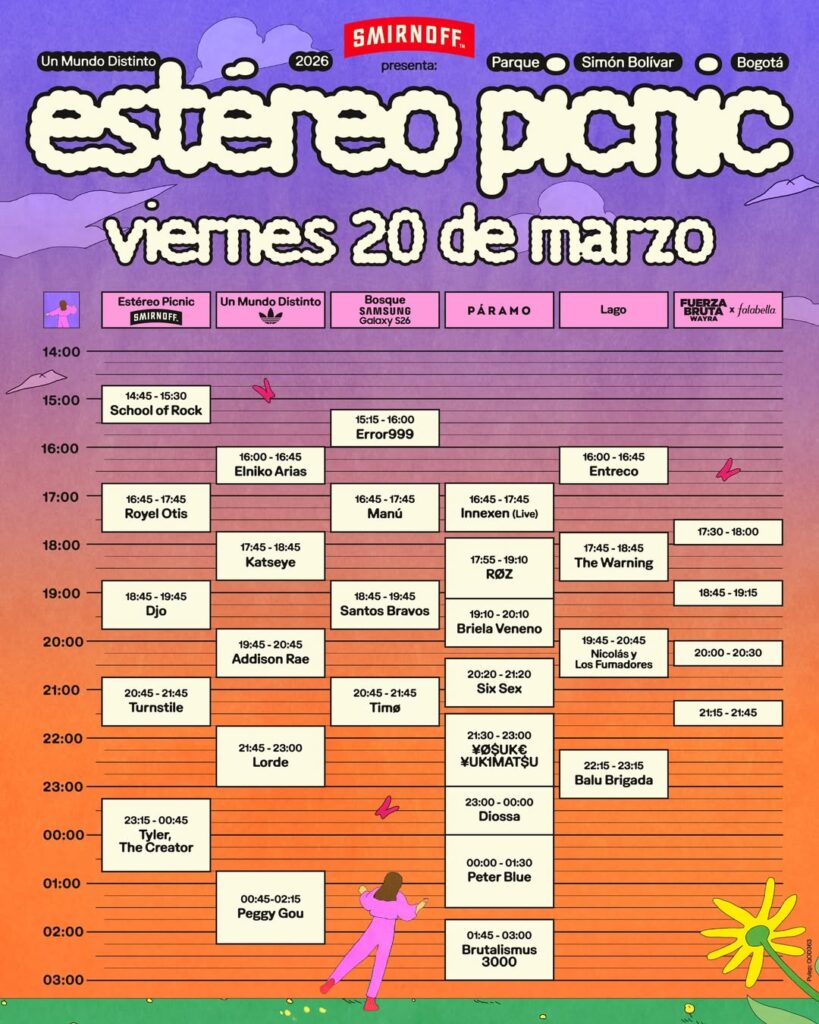
  •  

Top female journalists demand answers over Colombia ex-president’s Epstein links

Split image of former President Andres Pastrana and the initial declaration signed by 35 women. Image credit: @AndresPastrana_ via X.

Medellín, Colombia – Prominent female journalists, writers, academics and columnists in Colombia have drafted and signed a declaration titled ‘No to the pact of silence’ in response to former president Andrés Pastrana’s appearance in the Jeffrey Epstein files.

Andrés Pastrana (1998-2002) was mentioned 57 times in files linked to Epstein, who was convicted for sexual trafficking and exploitation of minors before his death in 2019. The ex-president appeared in the batch of documents released last November by the U.S. Justice Department.

The declaration called on Pastrana to issue a statement as a matter of public interest, posed 20 questions to the ex-president, and demanded urgent measures to protect women and girls in Colombia.

‘No to the pact of silence’

The Epstein files have caused scandal across the world, implicating some of the world’s richest and most powerful people, including names like Bill Clinton and Andrew Mountbatten-Windsor.

Epstein and his partner, Ghislaine Maxwell, were both convicted for their involvement in the sex trafficking network. Epstein was found dead in 2019 in his prison cell in New York and Maxwell has been in prison since 2022.

In Colombia, the release last November of 3 million additional files linked to investigations into Epstein revealed connections between Pastrana and the late billionaire.

These included: a photo of Pastrana and Maxwell wearing Colombian Air Force uniforms at a military base; compromising emails with Maxwell; testimonies in which Maxwell said the two were friends and that she flew a Black Hawk helicopter in Colombia; and an alleged flight on a private plane with Epstein and disgraced modelling agent Jean Luc Brunel, who was accused of procuring minors for the late financier.

The ‘No to the pact of silence’ declaration was conceived mostly by female journalists while they were investigating Pastrana’s involvement in the files. 

The statement was published on February 24, signed by 35 women, but has since been opened up to include other women through one-to-one invitations.

“The crimes committed by Epstein and Maxwell, and their extensive network of accomplices among the world’s social, political, financial, and intellectual elites, must be subject to exposure, investigation, thorough analysis, and, if applicable sanctions,” the declaration stated.

Colombian journalist Ana Cristina Restrepo, one of the creators and signatories of the declaration, spoke to The Bogotá Post about the reasons behind it.

“It is of public interest in several aspects. First, because he is a person who was elected by popular vote. He was a President of the Republic, and with greater responsibility comes greater scrutiny from citizens,” said Restrepo.

Currently, the declaration has 171 signatures that meet three requirements: to be a woman, to be a feminist, and to have a public voice. Signatures must also be made in individual names, not on behalf of collectives. 

While there were men that showed support and wanted to sign the statement, Restrepo explained that only women were allowed: “Many thanks, but they – men – can write their own declaration. Why didn’t they think of it before?” “It has a symbolic power that we are all women,” she added.

The statement also took aim at the wider issue of sexual violence in Colombia. It highlighted that more than 50 minors are abused per day, according to the Institute of Legal Medicine in 2025. Also, in the last five years more than 100,000 girls and adolescents were victims of sexual abuse, according to the Colombian Family Welfare Institute (ICBF).

“Women’s human rights and the primacy of girls’ rights are historic achievements: protecting them is a mandatory duty. We demand that the silence surrounding the mentions of Andrés Pastrana in the Epstein files be broken,” the declaration stated.

Restrepo said that the pact of silence their statement seeks to redress is “one arm of something bigger”: a patriarchal pact that has existed for centuries.

“It is a tacit pact among men who hold power and belong to the elites to protect one another in the different things they do – not only sexual crimes, but also, let’s say, economic matters,and issues in society. They cover for each other,” she explained.

20 questions after more than 20 years of silence

In addition to calling for an end to the pact of silence, the declaration posed 20 questions to Pastrana. These were drafted based on the Epstein files, but also with other evidence, following a methodological journalistic investigation by Restrepo, Diana Salinas and the Cuestión Pública team, Daniel Coronell and Ana Bejarano. 

“Everything is based on published and known facts, not on assumptions,” Restrepo explained.

Each question has a lengthy preamble that contains corroborated evidence including pictures, email threads, timelines, interviews, and testimonies. All questions have to do with Pastrana’s relationship with Epstein and Maxwell, their meetings, mentions in the list, contradictions in his statements and related matters.

“Asking questions is not incrimination,” she said. “We are saying: If he has nothing to hide, then answer.”

The enduring pact of silence

Since the declaration was released, many prominent figures have come to Pastrana’s defense. 

Following its publication, Pastrana’s former ministers and others who were part of his administration issued a statement of solidarity with the ex-president: “We know Andrés Pastrana and we worked with him as part of his administration… He is a good man of strong values, respectful of his family and human dignity. His character and his track record do not correspond to being involved in infamous conduct,” the statement said

The signatories have also faced verbal attacks since the declaration was published, including from public figures. One of the primary sources of the abuse has been the former president’s brother, Juan Carlos Pastrana, with Restrepo saying, “he has been one of the most violent.”

For Restrepo, this reaction highlights the very problem the declaration seeks to redress – that powerful men protect their own. 

She also noted that the so-called ‘pact of silence’ extends far beyond Colombia.

“The U.S. Department of Justice releases the Epstein files. In other words, they already knew this information and had it stored… There are files from 2003; there are files that are more than 20 years old,” said Restrepo.

“How do you manage to keep information about a network involved in trafficking and sexual exploitation of minors for more than 20 years if not through a pact of silence? So it is a pact of silence that exists not only in Colombia, but also among elites around the world,” she concluded.

Featured image description: Split image of former President Andres Pastrana and the initial declaration signed by 35 women.

Featured image credit: @AndresPastrana_ via X.

The post Top female journalists demand answers over Colombia ex-president’s Epstein links appeared first on The Bogotá Post.
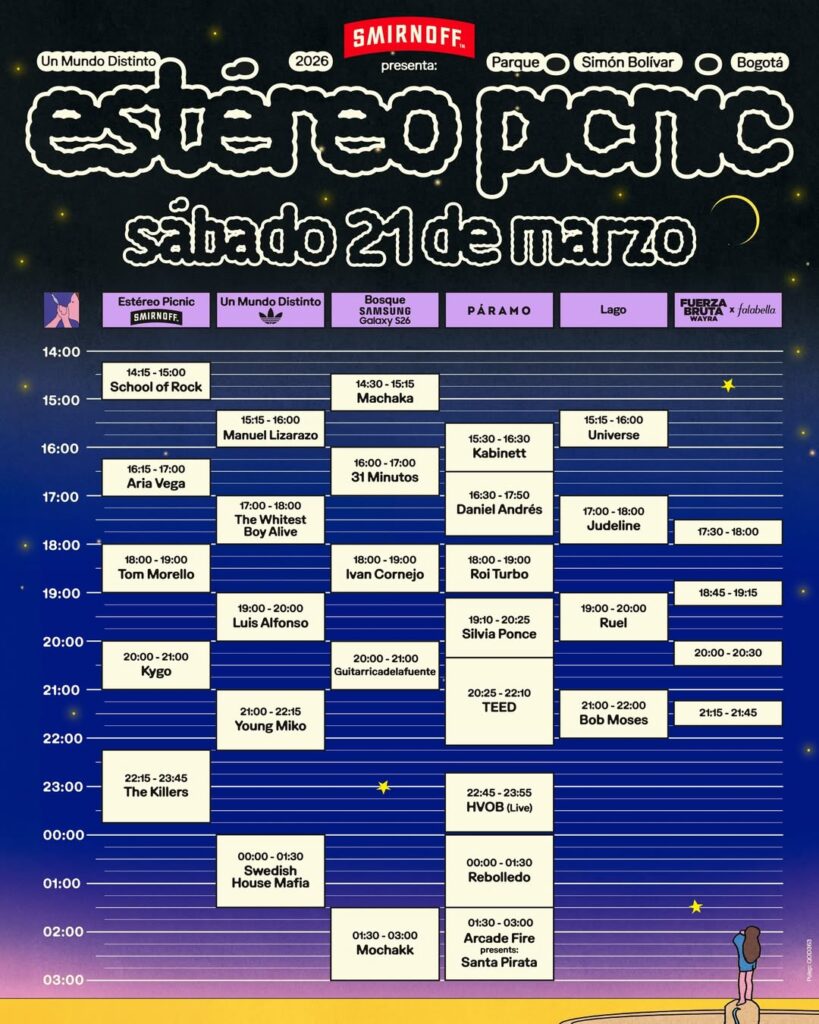
  •  

Colombian elections 2026: Winners and Losers after March Madness

Colombia kicked off its electoral year with the Senate and House elections last weekend, alongside consultas for presidential runs. Who’s come out ahead?

The Colombian elections of 2026 started last week, with the Senate and Cámara finalising their seats for the next parliament. The presidential elections will take place at the end of May, with a second round in June if necessary.

The new Senate layout. Photo courtesy of the registraduría.

The presidential elections also had a hand in last week’s results, with consultas to decide on who would represent groups of candidates with similar politics. That saw Claudia López, Roy Barreras and Paloma Valencia take the honours in their respective consultas.

When all was said and done, the results showed that traditional parties and candidates had generally performed poorly, with new candidates doing well and a difference in the traditional balance of power.

So, a week on and with the dust having settled as final results come in from all over the country, who’s up and who’s down after the first Colombian elections of 2026?  

Winners

It was a good day for the government, with the Pacto Histórico gaining seats and a low turnout for the leftist consulta. The Centro Democrático, too, had a good afternoon. Paloma won her consulta handily and the party overall also gained seats in borth houses.

Pacto Historico

The governing party had a spectacular Sunday, simply said. They increased their presence in both chambers and became the largest single party to boot. The Senate remains without a clear majority, but they are in a very strong position indeed, even without the former FARC combatientes’ curules.

On top of that, other results largely went their way. The leftist consulta that Cepeda was blocked from running in was a washout as the Pacto told their supporters to stay away. Prominent critics of the party from other parties such as Robledo, Miranda, Betancourt and Juvinao all crashed out as well.

While an overall majority in either house is far from within their grasp, the Senate now leans slightly more left than right, with left and centre-left senators adding up to 53. On top of that, after an often rocky government, it’s clear that they haven’t lost their base, indeed even expanding.

Paloma Valencia

A fortnight ago, Paloma Valencia’s campaign seemed to be stuttering. She was polling in single figures for first round intentions for the presidency and making few public appearances other than the mass debates for the Gran Consulta por Colombia. There was even a worry that she might suffer an upset in that consulta.

Fast forward to today and it’s a very different picture indeed. The latest polling shows her rocketing in popularity, now standing at around 20%. That’s because she picked up over three million votes in that consulta.

Then she picked the runner up in that race as her VP ticket, a smart move on her side to try and attract voters more in the centre as well as boost her in the capital. It’s not a landslide move, but it’s canny and the presidential race will likely come down to small margins. 

Juan Daniel Oviedo

Technically a loser, in the sense that he was a clear second to Valencia in the Gran Consulta. However, he picked up over a million votes, paying off his mortgage and significantly outperforming expectations. He also opened the door for some new paths in his political adventure. 

It had looked like his next step was to concentrate on a tilt for Bogotá mayor, having come in second last time around after another strong campaign. He then pulled a remarkable volte-face, accepting Valencia’s offer to run on her ticket.

That’s a move that puts him potentially in a different league than before, very much on the national stage now. It’s come at an enormous reputational price though, with many that voted for him feeling betrayed as he runs on a rightist ticket. He can claim that it’s centrist as much as he likes, but few see it that way.

Influencers

Electorates worldwide are losing patience with technocrats and politics as usual. That’s as true in Colombia as anywhere else, with a number of influencers running and doing fairly well. This is a trend that has been open for a while and shows no sign of slowing down.

Former adult actress Amaranta Hank won a spot for the Pacto Historico, while the White Elephant took a seat for the Partido Verde, having started out as a content creator looking to expose corruption and poor spending practices.

Safety

Despite fears of electoral violence and a turbulent run-up to election day, it was a relatively calm Sunday in the end. There was an attack on a voting centre in Meta, plus another couple of issues elsewhere, but overall it was a good sign for the upcoming presidential elections.

Losers

There were plenty of losers last week, with several high-profile candidates for the presidential race crashing out in their consultas. That saw Vicky Dávila unconvincingly claiming she wasn’t a loser and Enrique Peñalosa falling at the first hurdle again among others.

Farewell, too, for some familiar faces. Ingrid Betancourt failed to make the cut for Senate, losing her seat alongside her party. Jorge Robledo, the leftmost critic of Petro did likewise. Miguel Polo Polo unsurprisingly lost his seat as an Afro-Colombian representative, replaced by a principled lawyer, which delighted many.

In general, old parties and old faces fared poorly, with incumbency working against many. A striking exception to that was the party for ex-FARC combatants, Comunes. To their surprise, but no one else’s, they failed to meet the threshold for representation.

Roy Barreras

Standing in the leftwing consulta, Roy won in the sense that he saw off the threat from controversial former Medellín mayor Daniel Quintero. However, the Pacto campaign to not vote in consultas laid his lack of support bare.

Viejos Verdes

The Partido Verde managed to limit their losses in terms of seats, remaining at a similar level as before. However, there has been a significant change in who takes those curules. They had an open list, meaning that no-one was assured of a place.

Voters made it clear that they wanted to see new blood, with government critics Katherine Miranda and Cathy Juvinao voted out, along with Inti Asprilla and Angelica Lozano. 

The old Frente Nacional

For much of the last century, the Liberales and Conservadores absolutely dominated Colombian politics. For most of this century they’ve avoided running viable presidential candidates, preferring to hold their power in the Senate, Cámara and local politics. 

This time out they have taken a big hit in both houses, losing five seats between them and no longer being in the top level of voting blocs. Due to the fragmented nature of the parliament, they retain some kingmaking powers, but are a shadow of what they once were.

A big question now looms for both parties ahead of next year’s local elections. Just as the Pacto will feel they can make some big gains there, so too will the Liberales and Conservadores worry they might take more damage.

Claudia López

The former Bogotá mayor faced no real opposition in her consulta, sailing through with over 90% of the vote. However, that was 90% of not very much and she failed to get voters out to show support in the way that Valencia and Oviedo did. She faces an uphill slog from here.

Sergio Fajardo and Abelardo de la Espriella

Neither of this pair were in consultas, instead going to the second round. That’s meant they’ve been kept out of the headlines and lost momentum as well as having some unfortunate results.

The scale of the turnout for Valencia shows she’s a viable contender to Aspriella on the right and her leap in polling is matched by a significant downturn for el tigre. For Fajardo, it’s even worse: voters are largely abandoning the centre and technocratic politicians.

Trust in the system

 With the governing party repeatedly questioning the openness and fairness of the elections, this was rough. There have been a number of reports coming out questioning the practices of various voting centres and plenty of allegations, particularly from the left.

On top of that, a couple of candidates were arrested on voting day with big bags of cash that were allegedly to be used in vote-buying. While corruption in electoral processes is likely nowhere near as widespread as many claim, it’s clearly still an issue, especially in rural zones.

Centrist politics

Other than Juan Daniel Oviedo, centrists had a bad day at the polls, especially the centre-right. While the Centro Democrático and Pacto Historico gained votes on the flanks of both right and left, parties close to the centre lost out. 

Cambio Radical took a big hit, as did the conservatives, with Abelardo de la Espriella’s new Salvación Nacional party gaining three seats from literally nowhere. The partido de la U also lost a seat while Ahora! won another two seats. Poor turnout for the centrist consulta also means there seems to be little support on the presidential level.

What happens next?

The presidential election on May 31 is now very much the focus of attention. Iván Cepeda still leads the polls comfortably, with Paloma Valencia and Abelardo de la Aspriella splitting the rightwing vote at the moment. However, with over two months of campaigning time ahead, there is plenty of time for everything to change.

Gustavo Petro has shown little sign of intending to follow the guidelines on not campaigning, making references to Oviedo and Valencia as well as thinly-disguised references to Cepeda and so on. Expect this to continue and ever more strongly worded warnings from the registraduría to be ignored.

It’s also likely that there will be ever more rhetoric over electoral fraud, with the Pacto campaign leaning heavily into that already and working on raising awareness of the issue ahead of the voting for the first round.

There’s currently a very good chance that the presidential campaigns will get pretty ugly, with lots of negative campaigning and attack ads. There is no love lost between the candidates and plenty of bad blood on all sides. We’ll keep you up to date with things as the campaigns develop.

The post Colombian elections 2026: Winners and Losers after March Madness appeared first on The Bogotá Post.
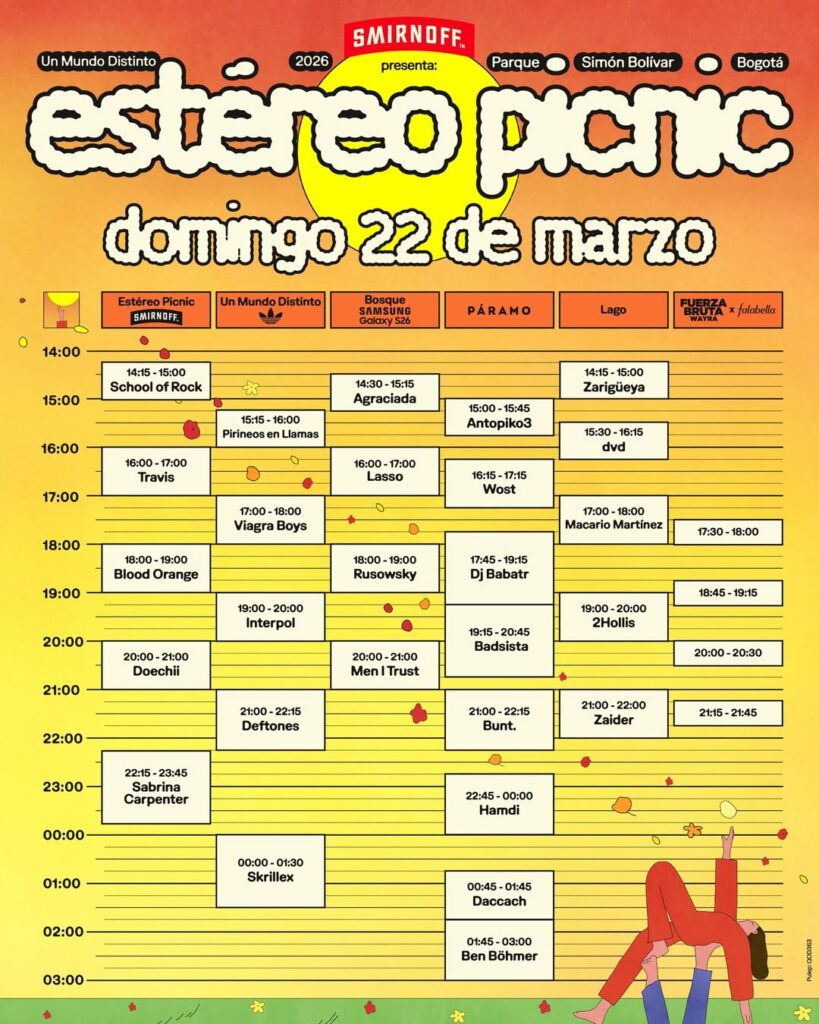
  •  

In the shadow of the Metro

We take a quick dive down Avenida Caracas where the raised railway is both a wonder and worry.

Line 1 of Bogotá's long-awaited Metro rises above Avenida Caracas. Photo: S Hide.
Line 1 of Bogotá’s long-awaited Metro rises above Avenida Caracas. Photo: S Hide.

For citizens used to the snail’s pace of work on their city’s infrastructure, the rapid rising of the Bogota’s Metro over their heads is something to behold.

With 11 kilometers of concrete viaduct completed, and many more clicks of columns in place, not to mention stations and interchanges emerging from the rubble, the megaobra is officially at 73% completion.

For rolos who have waited three generations for a train – the first Metro plan was made in 1942 – this advance is nothing short of a miracle.

Not everyone is happy. Last week small business owners along Avenida Caracas, the last south-north sector of the construction, took to the streets to protest the “destruction and insecurity” of their neighborhoods.

“The Metro advances. The community recedes,” said the banners the protesters hung across the formerly busy throughfare now converted into a construction site.

As is typical in Bogotá protests, it was public transport in the form of Transmilenio buses that were blocked forcing thousands of commuters to walk sections of their journey home.

Hanging on by a thread

Carlos Torres.

The protests ended, but the problems continued for Avenida Caracas.

This week the central section of the wide avenue was taken up by construction teams supporting the massive overhead beam launcher that dropped the pre-cast viaduct sections into place 15 meters above the street.

Meanwhile, car traffic was banned from the main artery while Transmilenio buses threaded their way past graffitied concrete columns. Pedestrians scurried out of the temporary bus stations and fast away from the apocalyptic scenes, more Blade Runner than Springtime in Paris.

Local shopkeepers told The Bogotá Post this week that business had never been bleaker.

“We’re hanging on by a thread,” said Carlos Torres of clothes store 80’s American World, on the corner of Calle 60. “We’ve had no financial help from the district, and takings are down by 80 per cent.”

He had been forced to suspend their health insurance payments for the last year and were struggling to pay the rent, he said.

Danger down below

Footfall had “fallen massively” said Angela Cruz on her way to a hair salon across the road, with people avoiding the dusty streets, partly from fear of robberies.

Avenida Caracas was “always a bid dodgy”, she said, but the attraction for thieves of the building works, with materials and machinery to pilfer, had increased insecurity.

“We’re worried when it’s finished the support columns and dark areas under the Metro will become full of attackers.”

That the Metro would shelter criminals was a recurring concern for residents. Concept drawings of the finished line depicted idyllic leafy walkways with pedestrians pushing prams.

But as every resident of the city already knows, any tunnel, underpass or covered area becomes a hotspot for crime.

And whereas the Metro planners had robust plans to control access to the overhead trains to ensure commuters travel in peace – in contrast to the Transmilenio where anyone can jump on or off – there were no clear plans to protect open spaces below.

“Walking home just got harder,” said Cruz.

Avenida Caracas degenerated before the Metro construction, but the work sites have added to the feeling of abandonment and attracted criminals, according to residents in the area. Photo: S Hide.
Avenida Caracas degenerated before the Metro construction, but the work sites have added to the feeling of abandonment and attracted criminals according to residents in the area. Photo: S Hide.

Bogotá’s ‘Berlin Wall’

Similar concerns were raised recently in a speech by President Gustavo Petro when he railed against the elevated Metro plan – now near completion – as a boondoggle for property speculators and claimed that Avenida Caracas was being “destroyed by the oligarchy”.

He further suggested that the raised railway would become a “Berlin Wall, separating the rich from poor”.

Such rhetoric was not unexpected from the mandate who long championed an underground Metro, though failed to get it moving during his own term as Bogotá’s mayor (2012 to 2015). He might yet get his way; plans for Line 2, currently on the drawing board, are for an underground Metro running east west beneath the city’s wealthier northern barrios.

See also: Going Underground, Petro threatens to derail Metro.

The final plan to build Line 1 overhead, while controversial, was taken for economic reasons and speed of construction during the second mayorship of Enrique Penalosa – the founder of Bogotá Transmilenio bus system and implacable political opponent of Petro – in 2016.

The elevated Line 1 of the Metro will be 24 kilometers – one of the longest urban light rails on the continent – and have 16 stations including 10 interchanges with the Transmilenio bendy-bus network.   

Much of the line runs through poorer barrios in the south-west of the city where, even with the work unfinished, some economic benefits were being proclaimed.  

Just get it done

Adenay Flores.

Thinktank ProBogotá, in a study with the Unversidad de los Andes, reported a rise in residential property values of 11 per cent in areas around Line 1. Such increases could generate investment in undeveloped pockets of the city.

In the long term, Avenida Caracas businesses were also predicting a boost from the Metro. Just not yet.

“Right now, times are hard,” said business owner Adenay Flores.  He had seen profits plunge in the 18 months since construction began, he said, while painting the entrance to his Moscu pawnbrokers.

But he also recognized that the Metro was vital to the mobility of the city and could transform lives of people living in less accessible areas.

“Yes, we’ve had hardships. But this is the evolution of the city, I totally support the Metro. Once finished it will bring people back to Avenida Caracas,” he said. “But they need to get it done.”

It was a sentiment echoed by many business owners we talked to in the shadow of the concrete viaduct: torn between welcoming the future mass transit system while keeping their financial heads above water.

“We’re suffering, but we still want the Metro. It will bring better times,” Carlos Torres from the clothes shop told The Bogotá Post. “Until then, we just have to hang on.”

The post In the shadow of the Metro appeared first on The Bogotá Post.
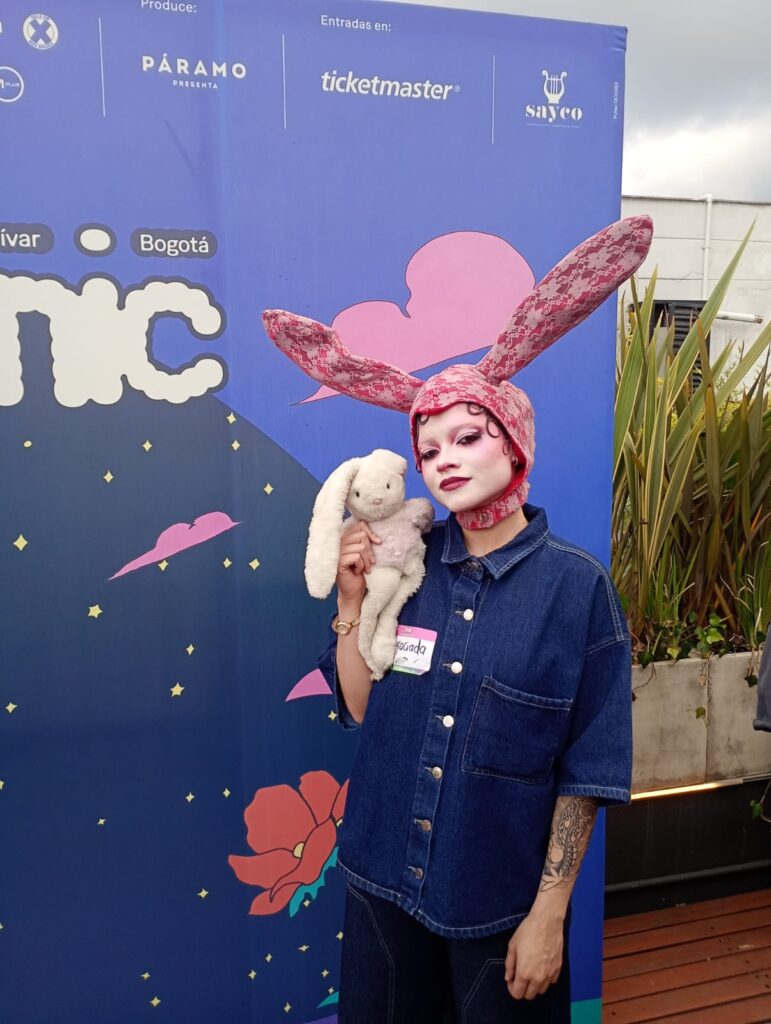
  •  

In rural Antioquia, voters turn to Uribismo amid disappointment over Petro’s Colombia

Voters in San Pedro de los Milagros. Credit: Manuela Peña Giraldo.

Colombians voted for a new Congress on March 8 in an election that stretched across thousands of rural towns and villages, where geography, infrastructure and the legacy of armed conflict continue to shape how citizens participate in democracy.

“I don’t like politics,” said Silvia Bedoya, 52, a resident of San Pedro de los Milagros in the mountains north of Medellín. “Instead of uniting people to move the country forward, it tends to divide us.”

Despite that frustration, Bedoya said voting still matters. “If you vote, at least you have the chance to raise your voice about something you don’t like,” she said. “If you don’t vote, you just have to accept what happens.”

More than 40 million Colombians were eligible to vote in the elections, with 13,493 polling stations installed nationwide, including 7,482 in rural areas, according to the National Registry Office. Security forces said they deployed 120,000 police officers across the country to guarantee the vote in the nation’s 1,104 municipalities.

The scale of the operation reflects the logistical challenges of voting in rural Colombia, where many communities remain separated by mountains, unpaved roads and long travel distances.

In San Pedro de los Milagros, a cattle-farming municipality in the Andean department of Antioquia, voters arriving at polling stations described a mixture of civic duty, skepticism toward politicians and concern over the country’s economic and social problems.

Mauricio Martínez, 47, declined to say who he supported, but emphasized the importance of participation. “Voting is the greatest right and duty we have as citizens,” he said.

Others said their choices were shaped by dissatisfaction with the government of President Gustavo Petro, Colombia’s first leftist president, whose progressive agenda – including a major land reform program – has drawn both support and criticism in rural areas.

Maicol Jovani Sepulveda, 28, said he voted for the right-wing Democratic Center (Centro Democrático) party after losing faith in promises he believed would help young people. “I believed they were going to help us study,” he said. “But I didn’t receive a scholarship and I couldn’t go to university, so I was disappointed.”

The Democratic Center won more than 40% of the vote for both the Senate and the House of Representatives in San Pedro de los Milagros, a 24% increase from 2022. Across the department of Antioquia, it was also the most voted list with over 31% of votes, followed by the ruling leftist Historic Pact (Pacto Histórico) coalition with 16%.

Some voters in the town said their support for the right reflected growing frustration with Petro’s government. Among them was María Regina Avendaño Muñoz, 63, who said she cast her vote for Centro Democrático after feeling disappointed with the administration: “I’m very sad because he promised change and convinced many young people and teachers who voted for him.”

Beyond individual concerns, analysts say structural barriers have long shaped political participation in rural Colombia.

Rural voters play an important role in Colombia’s political landscape. Although the country’s largest voting blocs are concentrated in major cities, the countryside has long been central to debates over land ownership, security and development – issues that have shaped the country’s decades-long armed conflict and remain at the center of national politics.

“When we talk about political participation, we’re really talking about processes of democratization – who gets to speak and under what conditions,” Bladimir Ramirez Valencia, a professor at the University of Antioquia’s Institute of Regional Studies who works with farmers’ organizations, told Latin America Reports.

Historically, he said, rural communities have faced both violence and logistical obstacles that limit their ability to vote. About 75% of the victims of Colombia’s armed conflict have been civilians, many of them farmers, according to historical estimates.

Distance alone can also be a barrier. “For many communities, polling stations used to be three or four hours away,” Ramírez said. “Bringing voting sites closer to those places is fundamental.”

Authorities expanded electoral infrastructure for the 2026 vote, increasing the number of polling stations by 5,5% in rural areas compared with the previous 2022 election.

In some regions of Antioquia, Ramírez said, rural residents traveled to voting sites on foot or by chiva, the brightly colored buses that connect remote villages with municipal centers.

Recent government policies may also be shaping political engagement in the countryside. Programs related to land reform, land restitution and rural development have helped strengthen the government’s legitimacy among some farming communities, Ramirez said. “When farmers feel they are being heard and see policies reaching their territories, that can influence how they participate politically.”

Still, rural voting patterns remain complex and vary widely by region. “You can find campesino families involved in social movements defending their land,” Ramírez said. “But when elections arrive, they still vote for traditional parties.”

Across Colombia’s countryside, the election reflected both deep skepticism toward politics and the determination of rural voters to take part in a democratic process that has historically been harder to reach in the country’s most remote regions.

The post In rural Antioquia, voters turn to Uribismo amid disappointment over Petro’s Colombia appeared first on The Bogotá Post.
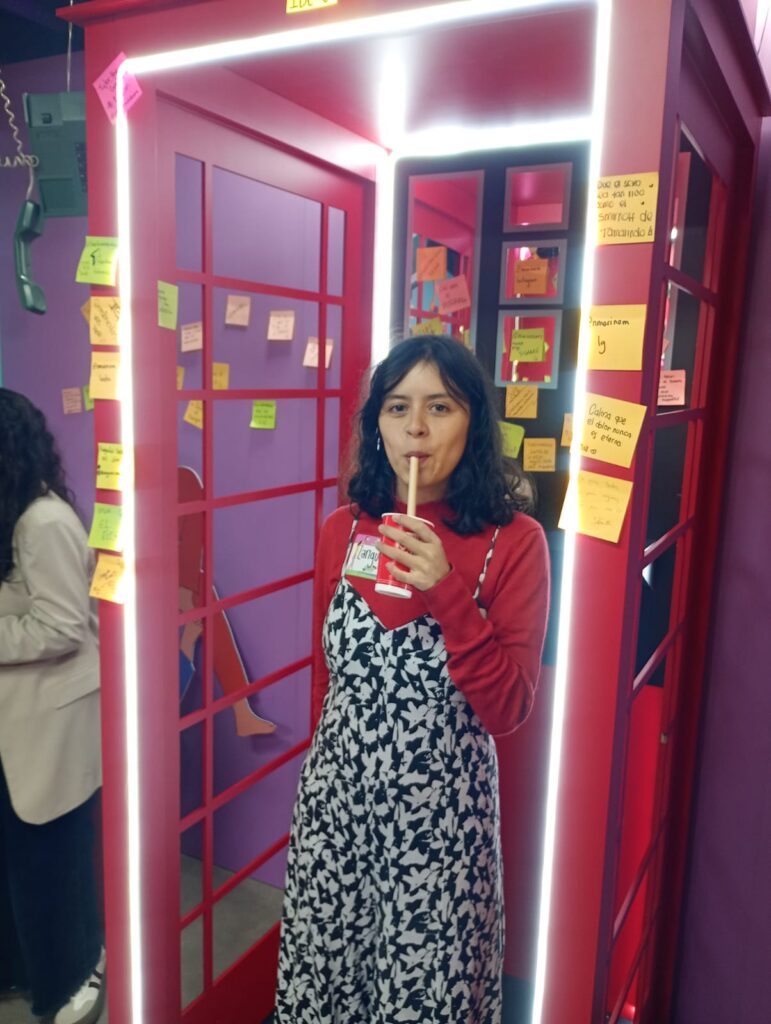
  •  

Election boost for Pacto Historico in Bogotá …

… but Centro Democratico bounces back, while small parties lose out in March 8 voting.

Voting in Bogotá on March 8. Participation was 48%, with the city making up 15% of overall votes cast. Photo: Registraduria

Last Sunday’s elections brought mixed results to Colombia’s capital with the left-wing Pacto Historico party cementing its position as most popular party in the city even while its main opponent the Centro Democratico showed relatively bigger gains.

With 18 Bogotá seats up for grabs in the Chamber of Representatives, the Pacto Historico, backed by President Gustavo Petro, took a majority of eight, an increase of one seat from the previous period.

And by garnering 900,000 votes the incumbent party upped its count by more than 100,000 compared to 2022, when it was also the most popular party in the city.

But by some comparisons the right-wing Centro Democraticos result was even more impressive, surging from two to four seats on March 8, totalling 700,000 votes, up from around 300,000 in 2022.

In Bogotá, as at national level, the losers were the smaller independent parties often citizen-led or based on niche issues. Also failing was the Nuevo Liberalismo party, founded by mayor Carlos Galán, which failed to pick up a single seat, a sign perhaps of citizen discontent with the capital’s current administration.

The demise of the small and independents reflected a national trend of voter gravitation towards the two bigger parties, Centro Democratico and Pacto Historico, whose top candidates – Paloma Valencia and Iván Cepeda – are likely contenders for the presidential slug-out in May. 

The remaining Bogotá seats went to smaller traditional parties the Green Alliance (2), and the Liberal Party (1), with one seat awarded to the upstart Salvacion Nacional formed by firebrand right-wing presidential candidate Abelardo De La Espriella.

Voting results for seat in the Cámara de Representantes on March 8 in Bogotá. Data: Registraduria
Voting results for seat in the Cámara on March 8 in Bogotá. Note this is the preliminary electronic count, changes can take place after manual scrutiny of the results this week. Data: Registraduria

Political phenomenon

The stand-out result in the Bogotá caucus was Centro Democratico’s first-time congressional candidate Daniel Briceño who captured 262,000 votes for his seat in the chamber.

Not only did Briceño get the highest congressional vote across Colombia, he also out-voted the entire list of senators – which get elected nationally – with one of the historically highest ever recorded in Colombia for a camara or senado representative.

The 34-year-old lawyer was being hailed this week as a political phenomenon. Briceño is currently serving on Bogotá city council where he campaigns against corruption, cronyism and waste through a clever combination of social media and forensic takedowns of his political targets.

The influencer made his name by digging into big data on government databases that has allowed him to uncover contracts and documents embarrassing to the administration of Gustavo Petro.

Since then, he has gained both an online following and voter base by scrutinizing and exposing mismanagement at all government levels.

ise of the influencers: Daniel Monroy, left and Laura Beltran aka Lalis , center, and Daniel Briceño, right.
Rise of the influencers: Daniel Monroy, left and Laura Beltran aka Lalis , center, and Daniel Briceño, right.

Defend every vote

Briceño’s jump to congress was mirrored on the political left in Bogotá by the rise of influencers Laura Beltran, aka Lalis, and Daniel Monroy, who both won seats for Pacto Historico.

Despite their success at the urns on March 8, both Monroy and Beltran amplified claims of fraud in the days after the election.

Beltran, posting on X, issued a media alert begging for lawyers in the city to volunteer their time as scrutineers to check the recount after detecting “the winds of fraud”.

“We are defending each vote for the Pacto Historico. In Bogotá we have the chance to recover one more seat,” she said, suggesting the party could up its count to nine.

Monroy, for his part, made a widely echoed claim that  “votes for Pacto Historico are disappearing”.

So far there is no evidence of electoral fraud, though changes in the final vote could come about from errors corrected in the final scrutiny taking place in Bogotá this week.

Meanwhile preliminary declarations by European Union electoral observers  – 145  were deployed to Colombia – stated that the voting process had been “transparent, accurate and well-organized”.

Voter turnout for Bogotá was 48 per cent, similar to the level of participation across the country, with the capital providing 15 per cent of the national vote. A higher turnout is expected for the May presidential elections.

The post Election boost for Pacto Historico in Bogotá … appeared first on The Bogotá Post.
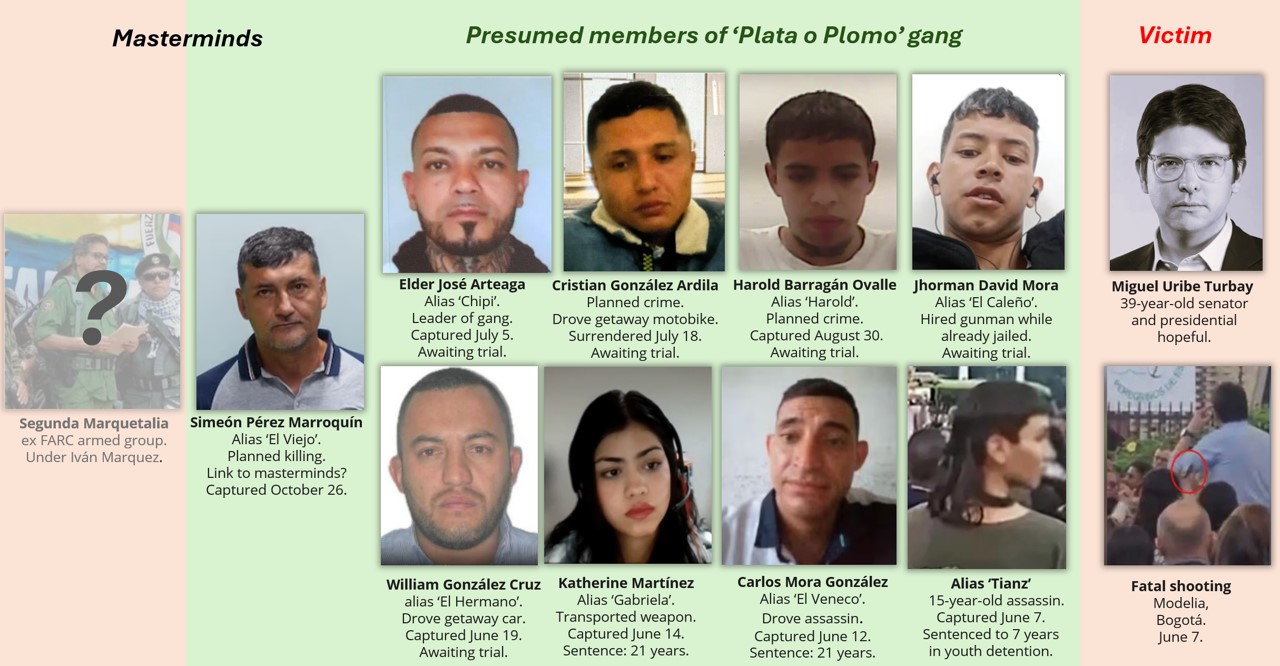
  •  
❌