Reading view

Former Colombia FM Álvaro Leyva Accuses Petro of Undermining Colombia’s Elections

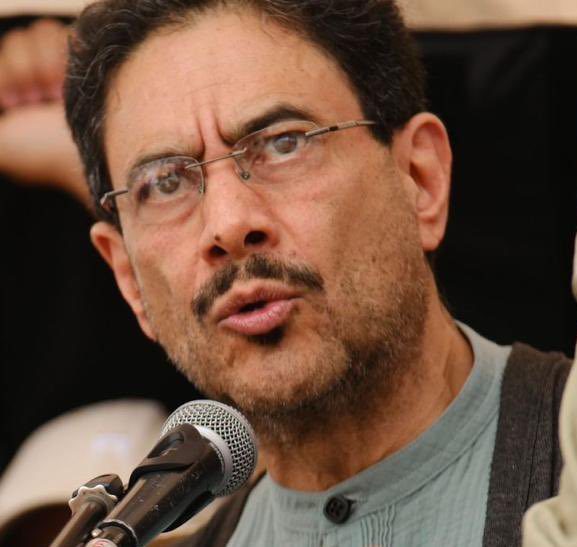
Former Colombian Foreign Minister Álvaro Leyva Durán launched a blistering attack against President Gustavo Petro just days before Colombia heads to the polls on May 31, warning of what he described as looming threats to the country’s democratic institutions and accusing the government of preparing to reject an unfavorable electoral outcome.

In a lengthy manifesto published Tuesday on the social media platform X under the title “Propuesta de Álvaro Leyva Durán al País para las Elecciones,” the veteran Conservative politician claimed Petro fears both political defeat and possible legal consequences should right-wing presidential candidate Abelardo De la Espriella emerge victorious.

“Petro knows that his future depends on his successor protecting him from justice,” Leyva wrote, adding that De la Espriella “could win the elections in the first round.”

According to Leyva, the former member of the M-19 guerrilla and senator understands that with De la Espriella in office, “he himself could end up in prison. And that is why he has sought to derail the candidate and will refuse to recognize his victory.”

The explosive accusations mark the latest escalation in the increasingly bitter campaign season ahead of what analysts are calling one of Colombia’s most polarized elections in decades. Leyva, once one of Petro’s closest political allies and his first foreign minister, has in recent months become one of the president’s fiercest critics.

In the manifesto, Leyva intertwined personal memories of Colombia’s turbulent political history with warnings about what he believes is unfolding behind the scenes of the current administration.

“At my age, I know these kinds of stories well,” he wrote, before recalling his close relationship with slain Conservative leader Álvaro Gómez Hurtado.

“My father, Jorge Leyva, gave me at birth the name of his friend Álvaro Gómez Hurtado. When I was 12 years old, Álvaro would speak to me about politics and explain the world to me with a globe.”

Leyva recounted how Gómez and his own father were exiled after the 1953 military coup, and how decades later he worked alongside Gómez politically, even helping negotiate his release after he was kidnapped by the M-19 guerrilla movement in 1988.

“In 1995, after leaving a lecture at Sergio Arboleda University, Álvaro Gómez and I shook hands for the last time,” Leyva wrote. “Because minutes later, I watched in horror as he was assassinated in his car. It was a national tragedy.”

The former minister used Gómez’s legacy as a contrast to his eventual disillusionment with Petro.

“Because of that, I believed I could work with Gustavo Petro,” he said. “When he invited me to become his minister, I accepted because I believed him to be an honorable man. But I was wrong.”

Leyva then delivered some of his harshest remarks yet against the president.

“I came to know the monster from within: his vileness and degradation,” he wrote. “At enormous personal and family cost, I dared to denounce his baseness and his disrespect for the office.”

He added: “Because character demands that one not remain silent in the face of ignominy. And because of everything I witnessed, because of the rotten environment in which he (Petro) moves, I know what the government is plotting.”

Leyva also alleged that Petro’s radicalised supporters to intimidate opponents and manipulate the electoral process. “Today, while Abelardo wages a major democratic battle, Petro incites his followers to commit all kinds of outrages,” he wrote. “There has even been talk of snipers during the campaign.”

Without providing evidence, Leyva claimed that attempts had been made to invalidate De la Espriella’s candidacy, suppress favorable polling data and mobilize state-backed political machinery to influence the vote.

“On election day, rivers of money will flow in an attempt to stop De la Espriella,” he warned.

The former foreign minister also accused Petro of laying the groundwork to dispute the legitimacy of the election itself.

“The president has also spent months constructing a narrative of electoral manipulation,” Leyva wrote. In this way, according to the author, he is “weaving an argument to reject an adverse electoral outcome” that he already senses is inevitable. “That is the false ace up Petro’s sleeve,” he continued. “And like any gambler fueled by hatred, he will use it.”

Leyva also referenced U.S. Republican lawmakers from Florida, María Elvira Salazar and Rick Scott, claiming both were aware of the risks facing Colombia’s democratic process. “Scott is an ally of Colombian democracy and correctly sensed what the national government is planning,” he wrote.

In one of the most dramatic sections of the manifesto, Leyva proposed that Petro temporarily step aside if he alleges fraud after either the first or second round of voting.

“I make a proposal: if in the first or second round Petro claims there was fraud, he should step down from office under the terms of Article 193 of the Constitution,” Leyva wrote.

He suggested that the vice president temporarily assume office while an international commission made up of U.S. lawmakers, European parliamentarians, the Vatican and the United Nations review the vote count and oversee the transition of power before August 7.

“Think about it, Gustavo. Think about it carefully,” Leyva concluded. “Because the alternative will not end well for you. Abelardo De la Espriella will be the next president. And you will have to accept that reality, whether you like it or not.”

  •  

Colombia’s House Committee Opens Investigation into Petro Over Alleged Political Interference Ahead of Presidential Election

The ongoing investigations have now been joined by a new complaint filed by presidential candidate Claudia López

Colombia’s House Investigation and Accusation Committee has opened an ex officio investigation into President Gustavo Petro over alleged improper political participation ahead of the country’s presidential election on May 31, 2026, amid growing scrutiny over the president’s neutrality during the campaign.

The decision became public Tuesday, May 26, through an official document in which the committee said the investigation stems from “recent statements and social media posts” by the head of state “related to alleged participation in politics in connection with the upcoming presidential elections.”

“This Legal Investigation and Accusation Committee is legally obligated, under the powers granted by Law 600 of 2000 (Article 27) and Law 5 of 1992, to initiate an ex officio criminal investigation for the crime of Political Intervention (Article 422 of the Criminal Code),” the document states.

The order was signed by Gloria Arizabaleta, chair of the Investigation and Accusation Committee and a House representative from the ruling Pacto Histórico party.

Although Colombia’s president is considered the natural leader of his political movement, in this case, Pacto Histórico, whose presidential candidate is Iván Cepeda, Colombian law imposes restrictions on public officials regarding electoral participation.

In Colombia, public officials are subject to the principle of political neutrality, preventing them from intervening in electoral controversies or using their positions to influence citizens’ votes in favor of a particular party or candidate, although they retain their individual right to vote.

Article 422 of Colombia’s Criminal Code (Law 599 of 2000) establishes penalties for improper political intervention, including prison sentences and disqualification from holding public office. Such conduct may also result in disciplinary sanctions under Colombia’s General Disciplinary Code.

Claudia López files separate complaint

Presidential candidate Claudia López also filed a formal complaint before the same committee, alleging lack of electoral guarantees and abuse of power by the president.

“We filed before the House Investigation Committee a 58-page complaint with evidence of President Gustavo Petro’s improper participation in politics and the lack of electoral guarantees. His attacks against my campaign, abuse of power and blatant political interference cannot be accepted,” López said in a social media post.

Inspector General requests report on complaints

Meanwhile, Colombia’s Inspector General’s Office requested a detailed report from the committee regarding existing complaints against Petro related to alleged improper political participation.

The request was signed by Inspector General Gregorio Eljach, who asked for a “detailed report listing complaints against the President of the Republic” to be delivered within three days.

However, the scope of the Inspector General’s Office remains limited because, under Colombia’s institutional system, it holds disciplinary authority over lawmakers and local officials, while constitutional authority to investigate the president rests with the House of Representatives.

“The Executive Branch is overwhelmingly powerful compared with the others, and the president, as head of the state’s public administration, has extraordinary powers and tremendous influence over society,” Eljach told El Tiempo newspaper, referring to the president’s social media activity and its possible impact on voters.

According to El País newspaper in Cali, the Investigation and Accusation Committee currently has around 12 complaints against Petro related to alleged political intervention.

The investigation opens in the final stretch of a presidential campaign in which Petro has sought to maintain political influence through support for ruling coalition candidate Iván Cepeda, who currently leads voter intention polls ahead of the first round.

  •  

Colombia’s Three Presidential Front-Runners Draw Divergent Maps for Foreign Capital, Security, and Rule of Law

Colombians face three sharply different futures in May 31 vote

Colombia votes on May 31 with its presidential race concentrated around three candidates whose platforms diverge on nearly every dimension of economic and security policy relevant to foreign investors. For corporate executives, institutional investors, and multinational operations with Colombian exposure, the choice between senator Iván Cepeda, senator Paloma Valencia, and defense attorney Abelardo de la Espriella carries direct, measurable implications for the regulatory environment, foreign direct investment (FDI) conditions, energy sector licensing, and geopolitical alignment through at least 2030.

No candidate is projected to clear the 50%-plus-one threshold required to win outright on May 31, making a runoff election on June 21 the expected outcome. The question that will determine the direction of that runoff — and by extension the next administration — is which of the two opposition candidates finishes second.

Click above to play the video!

A Race Reshaped by Late Polling

The final-week polling picture shifted substantially, and the trajectory matters as much as the snapshot. The CONDOR weighted aggregate — which incorporates surveys from six polling firms and applies greater weight to more recent data — placed the race as of May 23 at: Cepeda 36.3%, De la Espriella 29.1%, Valencia 16.7%.

Invamer, one of Colombia’s most established polling firms, surveyed 3,800 respondents across 152 municipalities between May 13 and May 20, registering Cepeda at 44.6%, De la Espriella at 31.6%, and Valencia at 14.0%. The Centro Nacional de Consultoría (CNC) published a survey conducted May 22 and 23 showing Cepeda at 33.4%, De la Espriella at 30.9%, and Valencia at 12.6%.

Comparing those figures to the Fundación Génesis Crea survey from May 4 through May 11 — which placed Cepeda at 35.1%, Valencia at 25.4%, and De la Espriella at 21.6% — indicates a multi-poll trend of De la Espriella gaining approximately nine to ten percentage points in three weeks while Valencia shed a comparable share. AS/COA’s poll tracker confirms the directional consistency across firms.

Atlas Intel, which published figures more favorable to De la Espriella, is currently under investigation by Colombia’s Consejo Nacional Electoral (CNE) for potential methodology violations and could face suspension of its operations. Those figures are treated with caution in this analysis.

Runoff modeling diverges between firms. Fundación Génesis Crea showed Valencia defeating Cepeda 49.1% to 44.7% in a second-round matchup — meaning she was the stronger opposition candidate in that scenario. The Guarumo/Ecoanalítica survey found Cepeda losing all hypothetical runoff scenarios, including against De la Espriella. Two minor candidates — former senator Clara López and former Chocó governor Luis Gilberto Murillo — withdrew and endorsed Cepeda before the first round, a consolidation that appears to have had limited effect on his polling numbers.

Finance Colombia reported in May that the campaign has been marked by an unusual absence of traditional televised debates. Cepeda declined to participate in events organized by major media outlets, stating that proposed formats lacked neutrality. Former Bogotá Mayor Claudia López, herself a candidate, said publicly that Cepeda’s refusal was motivated by an unwillingness to defend his record as the architect of President Gustavo Petro‘s Paz Total security negotiation strategy.

Security Policy: The Three Approaches to Armed Groups

Public security is the top voter concern heading into the election. InSight Crime documented that the Ejército de Liberación Nacional (ELN) launched a major offensive against FARC dissident factions in Norte de Santander in early 2025, resulting in mass civilian casualties in the Catatumbo region. In Chocó and Antioquia, the ELN and the Autodefensas Gaitanistas de Colombia (AGC), commonly known as the Clan del Golfo, are competing for control of illegal gold mining corridors and drug trafficking routes. In Cauca, FARC dissident factions have established territorial control in areas where state presence has collapsed.
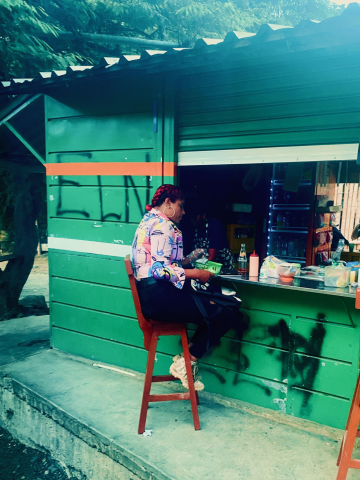
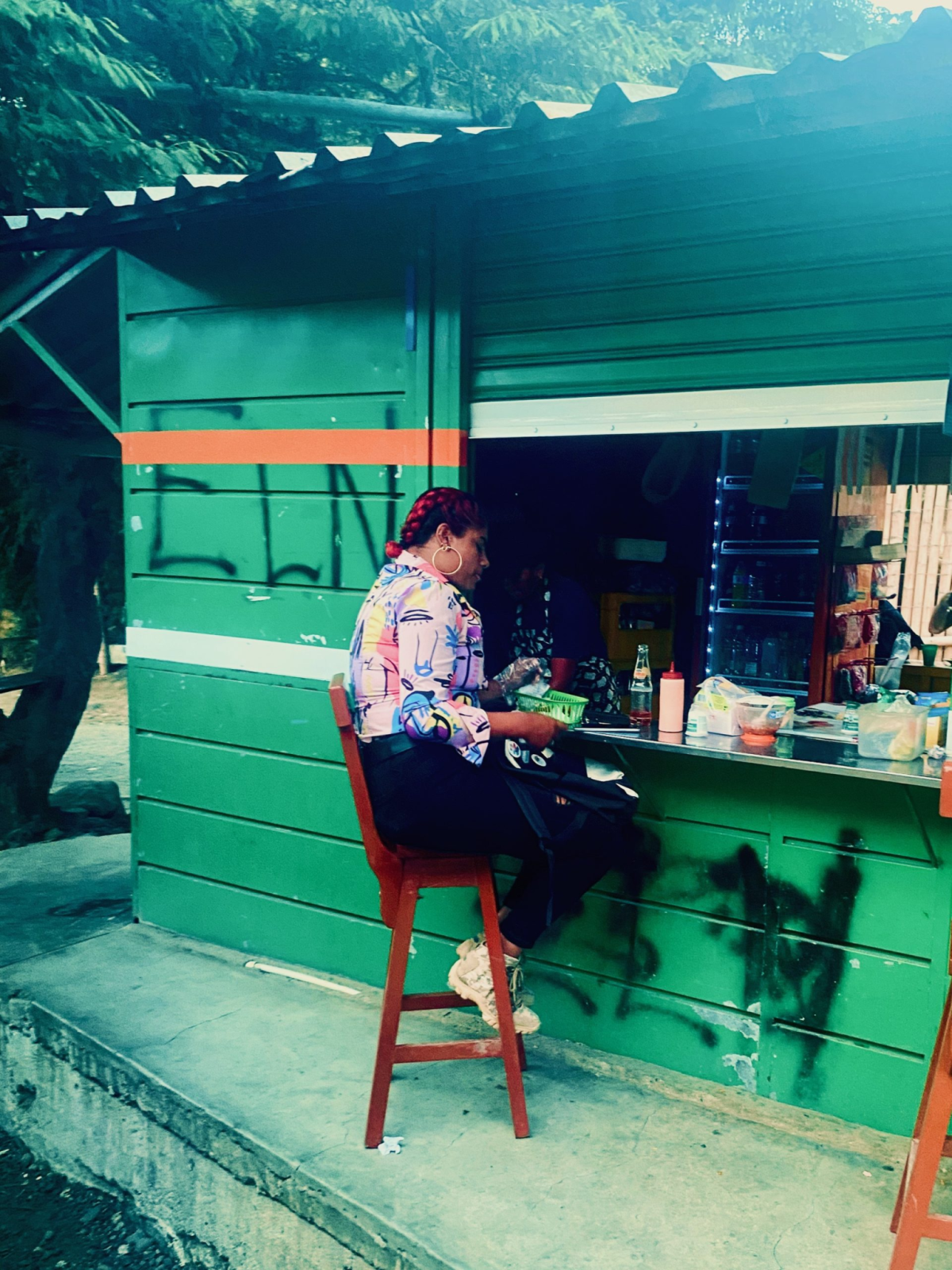
Grafiti of the ELN and ex-FARC Mafia near Corinto, Cauca (Credit: Henry Shuldiner)Cepeda’s approach to security is defined by his role as the principal legislative architect of Paz Total. As chair of the Senate‘s peace commission, he designed the framework that extended negotiating status to the ELN, FARC dissident groups, and the Clan del Golfo. His stated rationale is that targeting the financial leadership of drug networks rather than foot soldiers produces more durable results — a position that has academic backing in narcotics policy literature. In practice, Paz Total produced ceasefires that were repeatedly violated, and security indicators in conflict-affected departments deteriorated during the Petro administration. A Cepeda presidency is expected to continue the negotiated settlement model, with the military operating under political constraints.

Valencia’s security platform is based on reinstating Seguridad Democrática, the doctrine associated with former president Álvaro Uribe’s administrations from 2002 to 2010. The core elements are expanded military presence in rural conflict zones, dismantling of rural criminal networks, and resumption of extradition agreements with the United States — which Petro suspended, effectively shielding cartel leadership from US federal prosecution. The Uribe-era approach resulted in measurable reductions in homicide rates, forced displacement, and ELN and FARC territorial control, though human rights organizations documented serious abuses by security forces during that period.

De la Espriella has stated explicitly that his government would have no peace process. He advocates for a model similar to El Salvador’s under President Nayib Bukele: mass incarceration, construction of high-security prison facilities, classification of guerrilla and cartel organizations as foreign terrorist organizations, and broad military offensives. He has not detailed how such operations would be financed or how the mass detention model would interact with Colombia’s Constitutional Court, which has repeatedly constrained executive security powers.

For the armed groups operating in Norte de Santander and Cauca, the historical record indicates that Colombia’s criminal organizations respond more acutely to sustained, institutionally grounded military pressure and functioning extradition pipelines than to political rhetoric. By that measure, Valencia’s platform — which rebuilds the institutional security apparatus incrementally — represents a more structurally credible threat to the ELN and the Estado Mayor Central (EMC) FARC dissidents. For the Clan del Golfo leadership, extradition to the United States has historically been the principal deterrent, and Valencia’s program explicitly restores it.

Business Climate and Employment Conditions

The Petro administration enacted a series of minimum wage increases totaling more than 60% over four years — including a 16% increase for 2023, the largest single-year hike in Colombian history, and a 23.78% increase for 2026 — restructured labor regulations to expand premium pay requirements for night, weekend, and holiday shifts, and raised corporate tax rates to fund social spending programs. The Asociación Nacional de Empresarios de Colombia (ANDI) characterized the regulatory environment as adverse to private investment. Finance Colombia tracked a material decline in FDI in the extractive sector over the same period.

Cepeda supported those labor and fiscal reforms throughout their legislative passage. His platform extends the Petro model: increased state social spending, continued land redistribution programs, and maintenance of the current wage and labor cost structure. For companies with established Colombian operations, the regulatory environment is manageable; for companies evaluating market entry or operational expansion, the cost structure adds friction.

Valencia’s economic program emphasizes corporate stability and private sector investment as the primary mechanisms of job creation. Her vice-presidential running mate, Juan Daniel Oviedo — former director of DANE, Colombia’s national statistics agency — represents a technocratic orientation focused on reducing structural market distortions, streamlining public procurement, and scaling back state administrative overhead. Oviedo’s appointment is a direct signal to the business community that economic management would be data-driven rather than ideologically directed. Oviedo also publicly identifies as a member of the LGBTQ+ community, a departure from the traditional social conservatism of Centro Democrático.

De la Espriella’s economic orientation is pro-business with protectionist elements. His vice-presidential candidate, José Manuel Restrepo — who served as Colombia’s Finance Minister and Commerce Minister — provides institutional credibility on fiscal and trade policy. Restrepo’s presence on the ticket signals commitment to fiscal discipline and regulatory reduction in the extractive and commercial sectors. De la Espriella’s personal style, however, introduces operational uncertainty; his campaign has generated multiple high-profile controversies, including a public altercation with Caracol Noticias journalist María Lucía Fernández during a live broadcast and a formal apology following misconduct allegations by journalist Laura Rodríguez of Piso 8 FM.

Foreign Investment, Oil, and Mining

Ecopetrol holds a 31.5% stake in the Gunflint oil field in the Gulf of Mexico.

Ecopetrol holds a 31.5% stake in the Gunflint oil field in the Gulf of Mexico.

The extractive sector is the most consequential economic policy dimension for international capital. Ecopetrol (NYSE: EC; BVC: ECOPETROL) — Colombia’s state-controlled energy company and the largest corporation in the country — has operated under exploration restrictions during the Petro administration, which has opposed new fossil fuel contracts on climate grounds.

Cepeda’s position extends the Petro framework: mandatory transition away from fossil fuels, heavy restrictions or outright prohibitions on new oil and gas exploration contracts, and stringent environmental licensing requirements for open-pit mining operations. Foreign investment would be directed by policy toward green hydrogen, ecotourism, and smallholder agriculture. For the multinational oil majors with Colombian operations and for institutional investors in the mining sector, a Cepeda presidency represents a continuation of the current constraints and, in some contract scenarios, an accelerated wind-down of Colombian portfolios.

In a related development, Finance Colombia reported in May that Ecopetrol’s president, Ricardo Roa, has been formally charged in connection with alleged campaign spending violations during Petro’s 2022 presidential campaign. The case will be inherited by whoever takes office in August.

Valencia’s position is that hydrocarbon revenues are essential to Colombia’s macroeconomic stability and that the country cannot exit the sector before alternative revenue structures exist. Her platform actively encourages FDI in petroleum exploration, is open to regulated fracking, and commits to clearing the environmental licensing backlog that has stalled multiple large-scale gold and copper mining projects. For energy and mining companies currently blocked by administrative delays, this represents the most direct path to project advancement.

De la Espriella’s position goes further: essentially deregulating the environmental licensing process for major extraction projects on the grounds that Colombia’s economic sovereignty takes precedence over environmental restrictions he characterizes as externally imposed. The practical constraint is whether a De la Espriella administration would have the institutional coherence and congressional support to deliver regulatory rollback, given that his movement has no established political party structure and entered the race through an independent signature campaign.

Foreign Policy: Washington Alignment vs. Multipolar Strategy
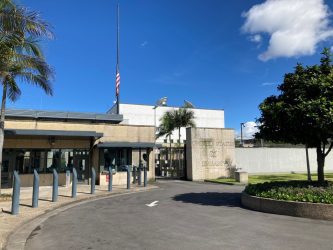
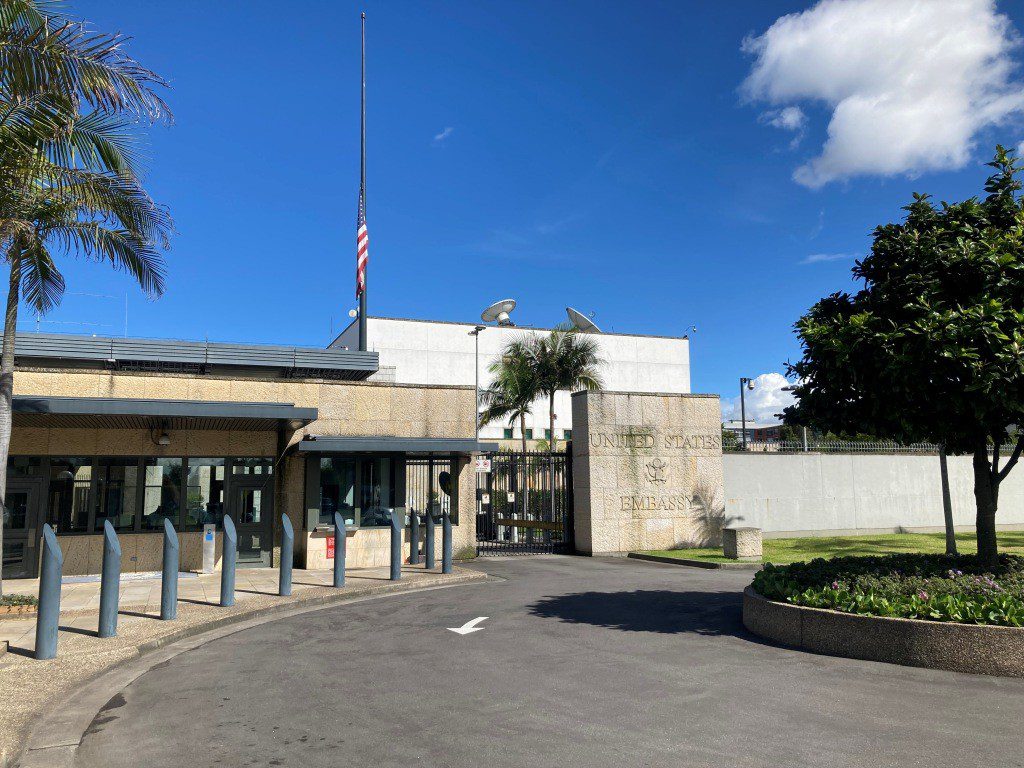
The US Embassy in Bogotá is said to be the 3rd largest US mission in the world (photo: Loren Moss)

The US Embassy in Bogotá is said to be the 3rd largest US mission in the world (photo: Loren Moss)

Colombia’s relationship with the United States deteriorated materially under Petro, who aligned Colombia with Venezuela’s Nicolás Maduro, pursued closer ties with China and Russia, and suspended extradition agreements. US counternarcotics cooperation was strained throughout the period.

Cepeda is committed to what he describes as a multipolar foreign policy — maintaining functional diplomatic channels with Washington and Brussels while deepening strategic and commercial relationships with China and Russia. His alignment with regional left-of-center governments in Mexico, Brazil, and Bolivia would position Colombia as part of a Latin American bloc that has grown increasingly skeptical of US regional leadership. For US companies operating in Colombia, this trajectory does not mean immediate operational disruption, but it reduces Colombia’s utility as a reliable counterpart on security cooperation, counter-narcotics intelligence sharing, and trade dispute resolution.

Valencia positions a return to the Western alignment as a core objective. She would prioritize restoring the US-Colombia relationship, reinforcing the bilateral Free Trade Agreement, and reestablishing intelligence-sharing mechanisms that were reduced under Petro. Her framing positions Colombia as a democratic anchor in a region experiencing authoritarian pressures.

De la Espriella takes the most explicit pro-US position in the race. La Silla Vacía reported that De la Espriella or entities linked to his campaign donated more than $90,000 USD to the US Republican Party, a fact that raises questions about the nature and expectations of those relationships. He has publicly aligned himself with the populist right in the United States, takes a hostile posture toward China, Russia, and Venezuela, and has characterized his security approach as consistent with a transactional alliance with Washington focused on counter-narcotics enforcement and cartel designation as foreign terrorist organizations.

“Ese pisco robó a 200 mil colombianos.” — Claudia López, former Mayor of Bogotá, referring to presidential candidate Abelardo de la Espriella’s legal representation of DMG pyramid scheme founder David Murcia Guzmán, during a presidential campaign event.

Corruption and Judicial Independence

All three candidates have stated commitments to fighting corruption, though their approaches and focal points differ in ways that are material to the institutional environment for business operations.

Cepeda’s legislative record includes serious, documented work investigating paramilitary infiltration of Colombia’s political institutions — the period known as parapolítica — and pursuing accountability for those cases. His blind spot, his critics argue, is corruption within the current administration. When Ecopetrol’s Ricardo Roa was formally charged in connection with Petro’s 2022 campaign, the response from the Pacto Histórico coalition was subdued. Cepeda has been Álvaro Uribe’s primary judicial antagonist in the Senate; a Cepeda administration would offer no institutional protection to Uribe and would be expected to support the full progress of judicial proceedings against him. For left-wing politicians facing legal exposure, including former Medellín mayor Daniel Quintero, a Cepeda administration would be expected to be more receptive to amnesty frameworks.

Valencia’s approach to anti-corruption is structural rather than prosecutorial: strengthening the independence of the Contraloría General de la República and the Fiscalía General de la Nación, implementing digital transparency in public procurement, and reducing informal executive influence over judicial processes. She would be expected to apply political and rhetorical pressure on behalf of Uribe — her political mentor and a close ally — though her legislative track record indicates a degree of institutional independence from Centro Democrático party orthodoxy.

De la Espriella’s anti-corruption rhetoric centers on severe criminal penalties for corrupt officials. The credibility of that position is complicated by his professional history, which is examined in detail below.

De la Espriella’s Legal Career: The Documented Record

De la Espriella’s campaign has faced sustained scrutiny over his client history as one of Colombia’s highest-profile criminal defense attorneys. The record is documented in reporting by El Colombiano, El Espectador, and the investigative outlet Corrupción al Día.
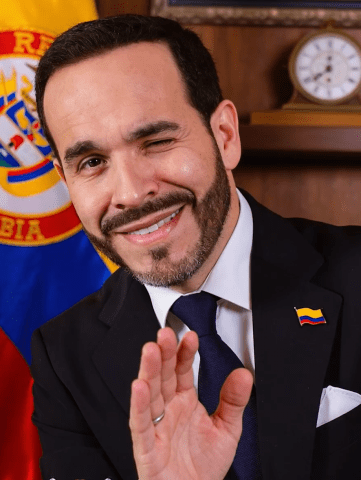
Abelardo de la Espriella (screen capture from Twitter video)

Abelardo de la Espriella (screen capture from Twitter video)

His documented client roster includes Salvatore Mancuso, the former supreme commander of the Autodefensas Unidas de Colombia (AUC) paramilitary network; multiple legislators convicted in the parapolítica scandal, which established systematic infiltration of Colombia’s congress by paramilitary organizations; David Murcia Guzmán, the operator of the DMG pyramid scheme that defrauded an estimated 200,000 Colombian investors; the Nule Primos, convicted of large-scale public contract fraud; and Álex Saab, the Colombian businessman extradited to the United States on charges of acting as the primary money launderer for the Maduro government in Venezuela. According to Corrupción al Día, De la Espriella’s legal fees from Saab reportedly reached $12 million USD and included private aircraft travel.

De la Espriella’s response to this line of criticism rests on due process principles: that every accused person is entitled to vigorous legal defense regardless of the charges, and that his ability to navigate Colombia’s criminal code at its most complex levels demonstrates the expertise required to enforce the law from the executive branch. The argument has legal validity as a principle. The specific issue for foreign compliance officers and US government counterparts is the Saab representation: the same Nicolás Maduro whose regime De la Espriella’s campaign now characterizes as an ideological enemy received legal services from De la Espriella’s firm when the representation was commercially available.

The Fiscalía investigated De la Espriella in connection with alleged paramilitary links in 2009 and again in 2012; both investigations were dismissed for insufficient evidence, and he carries no convictions or active investigations on those matters.

Cepeda’s Family History and Ideological Background
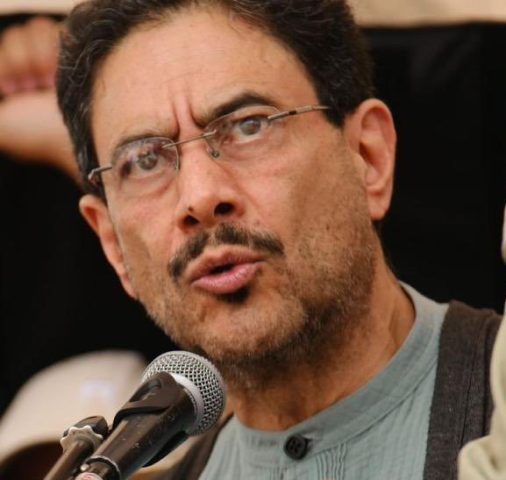
Iván Cepeda (from Twitter)

Iván Cepeda (from Twitter)

Critics of Iván Cepeda, including Enrique Gómez of the Salvación Nacional party, have argued that his family background constitutes evidence of structural alignment with guerrilla movements. The record on this point merits examination.

Cepeda is the son of Manuel Cepeda Vargas, who served as Secretary-General of the Colombian Communist Party and as a senator for the Unión Patriótica (UP), a left-wing political movement that was systematically exterminated by a combination of state actors and paramilitary organizations during the 1980s and 1990s. Manuel Cepeda Vargas was assassinated on August 9, 1994. The Inter-American Court of Human Rights subsequently found the Colombian state responsible for his murder. The FARC-EP named its Frente Urbano Manuel Cepeda Vargas — an urban front operating within the Bloque Occidental — in the elder Cepeda’s honor.

The Fundación Paz y Reconciliación (PARES) has documented that Iván Cepeda’s relationship with his father’s political positions was more complex than the family lineage alone suggests. After studying in Bulgaria in 1981, Cepeda broke from his father’s Soviet-oriented communist framework and aligned with democratic leftists including Bernardo Jaramillo Ossa, who publicly rejected the FARC’s armed strategy. Cepeda has repeatedly stated his repudiation of the FARC’s use of his father’s name. No documented evidence connects him to operational coordination with current armed groups.

What the family history does establish is the ideological framework through which Cepeda processes security policy: a belief, grounded in personal and political experience, that the Colombian state’s institutional violence has been as destructive as guerrilla violence, and that negotiated settlements are structurally preferable to military solutions. That framework generates Paz Total. It also generates a posture toward ELN and FARC dissident negotiators that prioritizes process continuity over verified compliance — a disposition that armed groups have demonstrably exploited to maintain territorial and operational positions while negotiation frameworks provided legal cover.

Paloma Valencia (image Twitter)

Paloma Valencia (image Twitter)

Valencia and the Uribe Question

The comparison to former president Iván Duque (2018–2022) comes up regularly in discussions of Valencia’s political independence. Duque, who had limited independent political standing before Uribe selected him, was perceived throughout his term as governing within constraints set by his patron — a dynamic that Colombian political cartoonists characterized as ventriloquism.

Valencia’s profile differs materially. She is the granddaughter of former Colombian president Guillermo León Valencia, carries her own political lineage, and has served in the Senate for over a decade, building positions on agrarian reform, judicial modernization, and indigenous land rights that have placed her at variance with standard Centro Democrático positions on those issues. She won the Gran Consulta por Colombia primary on March 8 with more than 45% of the vote — over 3.2 million Colombians — establishing a democratic mandate distinct from any party endorsement.

She would be expected to use institutional and rhetorical channels to support Uribe in the ongoing judicial proceedings against him, and to apply pressure on the trajectory of those cases. Whether that constitutes political interference with judicial independence or normal advocacy within democratic norms is a question on which observers disagree. What the legislative record does not support is the characterization of Valencia as incapable of independent governance.

Press Freedom and the Media Environment

Press freedom carries an indirect but measurable correlation with rule-of-law quality, which in turn affects operational risk for companies that rely on regulatory predictability and transparent legal processes.

Cepeda has maintained a posture toward critical media that mirrors President Petro’s practice of characterizing adversarial outlets as acting in the interests of economic elites. Under Petro, this produced a systematic exclusion of critical media from official information flows and persistent rhetorical delegitimization of independent journalism, though the press remained legally free to operate. A Cepeda administration would be expected to continue this pattern.

Valencia’s background in Colombia’s traditional political and intellectual establishment, combined with a decade in a party that has faced sustained critical coverage from Colombia’s major outlets, points toward a conventional institutional relationship with the press — adversarial at times, but within professional norms.

De la Espriella’s conduct during the campaign provides direct evidence of his approach. He publicly called Caracol Noticias journalist María Lucía Fernández “ignorant” in a live interview. He issued a formal apology after journalist Laura Rodríguez of Piso 8 FM made allegations of inappropriate conduct. His campaign strategy has drawn comparisons to the approach of Argentine president Javier Milei and US president Donald Trump in its use of direct digital channels to circumvent traditional media while publicly attacking outlets that publish critical coverage. The press would remain legally protected under a De la Espriella administration, but the operational environment for investigative journalism would be hostile.

The Ideological Spectrum: Market Liberalism to State Direction

The question of which candidate is most aligned with free-market principles requires a distinction that the international business press frequently elides: the difference between economic deregulation and political authoritarianism. These can, and in this election do, exist independently.

De la Espriella’s platform is often described in international coverage as the most pro-market. His deregulation proposals for the extractive sector and his corporate tax rhetoric support that reading in the economic domain. His security platform, however, involves a substantial expansion of state coercive power: mass detention operations, a mega-prison construction program, and the suspension of standard due process protections to facilitate rapid incarceration of criminal suspects. The Cato Institute‘s framework of economic freedom as inseparable from civil liberties would categorize a state powerful enough to detain people without standard procedural protections as a state that represents an institutional risk to property rights and contract enforcement as well.

Valencia’s platform, anchored by Oviedo’s technocratic program of structural market reform — reduced administrative barriers, streamlined procurement, smaller state overhead, maintained civil liberties — represents the closest approximation to coherent market liberalism available in this field. It does not carry the rhetorical force of De la Espriella’s deregulation proposals, but it has more institutional grounding.

Cepeda’s platform is the furthest from market liberalism by any standard measure: state-directed investment allocation, wealth redistribution through tax and transfer mechanisms, state expansion in healthcare and pension administration, and agrarian land redistribution. His program is continuous with the Petro administration’s economic framework.

Minor Candidates: The Rest of the Ballot
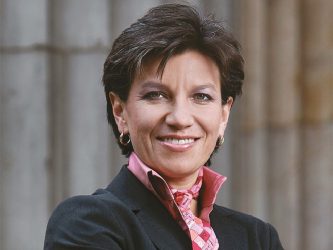
Claudia López, senator of Colombia. (Credit: Patty Suescún)

Claudia López, senator of Colombia. (Credit: Patty Suescún)

Several other candidates remain on the ballot and are drawing small but potentially consequential vote shares in a first round where the margin between second and third place could be narrow.

Claudia López, former mayor of Bogotá running under the Con Claudia Imparables coalition, positions herself as a progressive centrist with a documented anti-corruption record. Her polling has not broken 3.5% in major surveys, and her high polarization ratings from her mayoral term limit her growth ceiling. Her attacks on De la Espriella during the campaign — she publicly called him a “defender of the mafia” in reference to his client history — have been among the most pointed in the race, and factually grounded on the public record.

Sergio Fajardo, making his third consecutive presidential run under Dignidad y Compromiso, continues to represent a technocratic, education-focused centrism grounded in his work transforming Medellín in the early 2000s. He has not broken 3.5% in any major poll in this cycle.

Roy Barreras, running under La Fuerza de la Paz following his Frente por la Vida primary victory, is one of the most experienced political operatives in Colombia, having been part of multiple coalition governments across ideological lines over two decades. He polls below the threshold for meaningful first-round impact.

Miguel Uribe Londoño, running under Partido Demócrata, represents a younger-generation conservative platform emphasizing fiscal discipline and private sector growth, broadly consistent with Valencia’s program. He also polls below 3.5%.

Carlos Caicedo, running on a regionalist platform emphasizing decentralization away from Bogotá, draws support primarily from the Costa Caribe. His structural argument about Colombia’s administrative over-centralization is substantively grounded, though his national profile is insufficient to affect the first-round outcome.

Investment Implications

For international capital with Colombian exposure, the three-way race produces three materially different operational scenarios.

A Cepeda victory — which remains the single most likely first-round outcome based on available polling — would signal continuity of the Petro-era regulatory framework: sustained capital outflow pressure, high corporate tax rates, no new fossil fuel exploration contracts for Ecopetrol (NYSE: EC; BVC: ECOPETROL) or private operators, continued labor cost escalation, and a foreign policy trajectory away from Washington. Colombian equity valuations would be expected to remain under pressure. The mining licensing backlog would continue to accumulate. A Cepeda administration would not replicate Venezuela’s economic trajectory — Colombia’s independent central bank, Banco de la República, its functioning constitutional court, and its institutional depth provide meaningful buffers — but the investment headwinds would be structural rather than cyclical.

A Valencia victory would represent the sharpest regulatory reversal available in this field. Ecopetrol exploration contracts would be expected to advance. The mining licensing backlog would be addressed. US bilateral relations would be restored, reactivating security intelligence cooperation and trade facilitation mechanisms. The Colombian peso would be expected to strengthen as country risk premium declined. The path to that outcome now requires her to either close the gap significantly on De la Espriella in the first round or rely on runoff polling that showed her as the stronger second-round candidate — data that predates the most recent polling shift.

A De la Espriella victory introduces the widest distribution of possible outcomes. The upside scenario involves Restrepo managing fiscal and trade policy competently, genuine regulatory rollback in the extractive sector, aggressive extradition resumption, and security operations that reduce the physical risk premium in conflict-affected departments including Cauca, Norte de Santander, and Chocó. The downside scenario involves recurring crises generated by De la Espriella’s personal conduct, conflicts of interest arising from his former client relationships, and authoritarian security measures that attract international human rights attention and complicate bilateral relationships. Restrepo’s presence on the ticket reduces the probability of the downside scenario but does not eliminate it.

The current polling trend indicates that right-wing voters are consolidating around De la Espriella at Valencia’s expense. Whether that consolidation produces a runoff between De la Espriella and Cepeda — and whether the runoff produces a left or right-wing government — remains uncertain. What the polling data does not support is the scenario, widely assumed until recently, of a Cepeda-Valencia runoff in which Valencia was positioned as the structurally stronger opposition candidate.

Subscribe to Finance Colombia to remain updated on key developments and impartial analysis.


  •  

Petro Advances Temporary Concentration Zones for “Clan del Golfo” as Final Push for Total Peace Policy

More than 400 combatants would be concentrated in the new zones as negotiations continue in Doha, Qatar

President Gustavo Petro is moving forward with the creation of temporary concentration zones, known as Zonas de Ubicación Temporal (ZUT), for members of the Estado Mayor Conjunto del Ejército Gaitanista de Colombia (EGC), also known as the Clan del Golfo, the country’s largest drug trafficking armed group, in a renewed effort to advance his Total Peace (Paz Total) policy just days before Colombia’s presidential elections on May 31, 2026.

According to an official statement from Colombia’s presidency, the ZUTs would initially allow the concentration of more than 400 combatants while parallel negotiations continue over a possible peace agreement with the Colombian government, although no preliminary agreements have yet been reached.

The temporary concentration zones would function as designated areas where combatants suspend armed activities while participating in talks with the government and preparing for a potential reintegration into civilian life.

According to the government, the zones would remain in effect until December 31, 2026, meaning their future would ultimately depend on Colombia’s next president, who will take office on August 7, as well as on the broader future of the Total Peace policy.

Colombia’s most powerful criminal organization

The Clan del Golfo is considered by specialized organizations, including the Fundación Ideas para la Paz (FIP), to be Colombia’s most powerful criminal structure.

According to the organization, the group has nearly 10,000 armed members and operates in multiple strategic regions linked to drug trafficking, illegal mining and territorial control.

The US government has designated the group a transnational terrorist organization, while President Donald Trump previously warned of possible US military actions in Colombian territory over security and narcotics concerns, comments that sparked diplomatic tensions with Petro’s administration.

Institutional clash over arrest warrants and extradition requests

The ZUT proposal comes amid tensions between Colombia’s executive branch and the Attorney General’s Office over the legal conditions required to move the process forward.

The Office of the High Commissioner for Peace requested the suspension of arrest warrants against 29 Clan del Golfo members, including 13 individuals subject to extradition requests, among them Jobanis de Jesús Ávila Villadiego, alias “Chiquito Malo,” the group’s top leader.

Attorney General Luz Adriana Camargo rejected the request, citing legal limitations regarding individuals sought by foreign authorities.

Following the refusal, Petro publicly defended the process in a message on X. “I have been clear that, in the early stages of the process, individuals facing extradition do not participate,” the president wrote, denying any intention to suspend extradition orders unless there is “an advanced peace process, as established by law.”

Amid the controversy, the Clan del Golfo itself issued a statement accepting that individuals facing extradition requests would not initially participate in the temporary concentration zones.

“As an unequivocal demonstration of political will and coherence, the Joint High Command of the Gaitanista Army of Colombia accepts, in good faith, that access to the Temporary Concentration Zones will be limited to combatants who are not subject to extradition requests by any foreign government,” the group said.

The group added that the decision seeks to “remove any shadow of doubt” over the process and prevent extradition disputes from obstructing negotiations.

The presidency later highlighted that the EGC accepted the government’s conditions for concentrating fighters in Tierralta, Córdoba, and in the municipalities of Belén de Bajirá and Unguía, Chocó. According to the government, combatants and commanders are expected to begin entering the zones on June 25.

Criticism over timing

The initiative has sparked criticism because of its timing, arriving just days before presidential elections and during a government transition period.

Ombudswoman Iris Marín warned that the process creates uncertainty over how armed groups might interpret the political transition.

“The move toward those zones creates expectations among armed groups in the middle of an electoral context and government transition. It is impossible for disarmament to happen before August 7, 2026, so how do armed groups interpret that in an electoral context?” Marín said in a video shared on social media.

Marín clarified, however, that Colombia’s Constitution grants the president authority to pursue peace negotiations, meaning concerns center not on the legality of the initiative itself but on its political timing.

Negotiations between the Colombian government and the Clan del Golfo have been underway since 2025 in Doha, Qatar, which has quietly hosted talks between both parties. According to official sources, the ZUTs are intended as confidence-building measures and humanitarian relief for communities affected by the group’s violence.

*

Photo: Colombian government representative Álvaro Jiménez shakes hands with Clan del Golfo spokesperson Luis Armando Pérez in the presence of Qatar’s Minister of State for Foreign Affairs, Mohammed bin Abdulaziz bin Saleh Al-Khulaifi, in Doha on September 18, 2025, at the start of peace talks. Photo shared by Colombia’s Office of the High Commissioner for Peace.
  •  

Political Tensions Between Petro and Bolivia’s President Trigger Diplomatic Expulsions

Colombia and Bolivia intensified a diplomatic crisis this week after mutually expelling representatives from their respective embassies, amid growing political tensions between Colombian President Gustavo Petro and Bolivian President Rodrigo Paz Pereira.

The tensions began May 20, 2026, when Bolivia’s Foreign Ministry announced the expulsion of Colombia’s ambassador to La Paz, Elizabeth García Carrillo, after describing remarks made by Petro regarding Bolivia’s political crisis as interference in the country’s internal affairs.

“The decision responds to the need to preserve the principles of sovereignty, noninterference in internal affairs and mutual respect among states, fundamental pillars of international coexistence and diplomatic relations between sovereign nations,” Bolivia’s Foreign Ministry said in an official statement.

One day later, Colombia’s Foreign Ministry, headed by Rosa Yolanda Villavicencio, responded by expelling Bolivia’s chargé d’affaires in Bogotá, Ariel Percy Molina Pimentel, under the principle of diplomatic reciprocity.

“The Ministry of Foreign Affairs of the Republic of Colombia, considering the recent decision adopted by the Government of the Plurinational State of Bolivia regarding the permanence of Colombia’s ambassador (…) was compelled, on the basis of reciprocity, to declare the termination of the functions of Mr. Ariel Percy Molina Pimentel,” Colombia’s Foreign Ministry said, citing Article 9 of the 1961 Vienna Convention on Diplomatic Relations.

The Colombian government clarified that the measure does not imply a formal break in diplomatic relations between the two countries, adding that “Colombia remains willing to support, always at the request of the Bolivian government, initiatives in favor of peace, political dialogue, institutional channels, citizen participation and the observance of human rights and fundamental freedoms.”

Origin of the dispute

Bolivia’s decision followed a message posted by Petro on X on May 18, in which he said that “Bolivia is experiencing a popular uprising,” referring to the political and social crisis affecting the Andean country.

For the past three weeks, Bolivia has faced protests and road blockades led by supporters of former President Evo Morales, who oppose the current administration and are demanding the resignation of President Rodrigo Paz Pereira.

The protests have also unfolded as Morales faces judicial proceedings over alleged crimes related to human trafficking and child sexual abuse, while also refusing to appear before judicial authorities.

The Bolivian government interpreted Petro’s remarks as a violation of the principle of nonintervention in domestic affairs.

Bogotá, however, rejected that interpretation and said its officials had not sought to interfere in Bolivia’s internal politics.

Colombia “categorically rejects any interpretation attributing to its authorities an interest or intention to interfere in Bolivia’s internal affairs,” the Colombian Foreign Ministry said, while reiterating its commitment to sovereign equality, nonintervention, self-determination of peoples, peaceful settlement of disputes and respect for territorial integrity.

A politically sensitive moment for both governments

The diplomatic tensions come as Rodrigo Paz Pereira, who took office in November, faces social unrest, road blockades and domestic criticism over his administration.

Meanwhile, Petro is approaching the end of his term in Colombia amid a highly polarized electoral climate. The Colombian president is seeking to preserve the continuity of his political project through the election of a successor in presidential elections whose first round will take place May 31, with the next president set to take office on August 7, 2026.

Although neither government has announced additional measures, the exchange of expulsions marks the highest level of diplomatic tension between Colombia and Bolivia in recent years.

  •  

Ecopetrol Posts Q1 EBITDA Gain as Refining Margins Surge, But Governance Crisis and Tax Headwinds Weigh on Net Income

Refining margin surge cushions revenue drop amid leadership void

Ecopetrol S.A. (NYSE: EC, BVC: ECOPETROL) reported first-quarter 2026 consolidated revenues of 28.6 trillion COP, a decline of 8.7% from 31.4 trillion COP in the year-earlier period, as lower crude oil prices and reduced hydrocarbon production compressed the top line for Colombia’s state-controlled oil and gas company. Against that backdrop, a marked recovery in refining margins and disciplined cost management lifted EBITDA by 1.5% to 13.5 trillion COP, yielding a 47% EBITDA margin and partially offsetting the revenue headwind. At the Q1 2026 average exchange rate of approximately 3,700 COP per USD, the quarter’s revenues translate to roughly $7.73 billion USD and EBITDA to approximately $3.65 billion USD.

Embattled Ecopetrol CEO Ricardo Roa was appointed to the position by Colombian President Gustavo Petro after managing his political campaign. (photo: Ecopetrol)

Embattled Ecopetrol CEO Ricardo Roa was appointed to the position by Colombian President Gustavo Petro after managing his political campaign. (photo: Ecopetrol)

Net income for the quarter reached 2.9 trillion COP (approximately $784 million USD), down 7.7% year-over-year, reflecting the combined drag of lower revenues, a sharply elevated effective tax rate of 37.1%, and a one-time charge of 1.2 trillion COP for the impuesto al patrimonio — Colombia’s government-mandated wealth levy on large corporations established to fund post-disaster reconstruction measures. The company is also subject to a 10% income tax surcharge applicable for fiscal year 2026, which is embedded in the reported effective rate. The aggregate tax burden absorbed a disproportionate share of operating improvement relative to prior periods, limiting the flow-through of refining gains to the net income line.

Total hydrocarbon production averaged 725.2 thousand barrels of oil equivalent per day (kboed) in Q1 2026, below the 745 kboed recorded in the 2025 annual average cited by management during the March 2026 general shareholders’ meeting. Domestic crude output represented the largest component at approximately 520 thousand barrels per day (kbd). Ecopetrol’s Permian Basin operations in the United States contributed 91.8 kbd, underscoring the continued strategic importance of the international segment. Gas production continued a multi-year declining trend that poses a medium-term domestic supply challenge; management has sought to address this partially through regasification capacity additions at Puerto Bahía and on the Pacific coast, expected to come online in the second half of 2026 with a combined contribution of up to 430 billion BTU per day.

The refining segment delivered the quarter’s most pronounced operational outperformance. Ecopetrol’s domestic refineries, led by Refinería de Cartagena, processed 417.5 kbd of crude throughput. The integrated refining margin rose to $17.3 USD per barrel, a 60% improvement over the same quarter of 2025, driven by favorable differential pricing between domestic crude benchmarks and refined product values alongside ongoing operational efficiency improvements. The Comisión de Regulación de Energía y Gas (CREG) and the Ministerio de Minas y Energía remain central to the regulatory framework governing downstream margins over the medium term.

The balance sheet carries significant structural and contingent risk items of direct relevance to institutional credit and equity holders. Gross debt stood at 108.1 trillion COP (approximately $29.2 billion USD), representing a leverage ratio of 2.3 times trailing EBITDA — a level that leaves limited room for further deterioration before debt covenants or rating agency thresholds become binding. Ecopetrol holds a receivable of 4.2 trillion COP (approximately $1.14 billion USD) from the Fondo de Estabilización de Precios de los Combustibles (FEPC), a government fuel price stabilization mechanism that represents a claim on the Colombian treasury with timing and recovery risk. A dispute with the Dirección de Impuestos y Aduanas Nacionales (DIAN) over value-added tax assessments totals 12.26 trillion COP (approximately $3.31 billion USD) in aggregate, of which 10.22 trillion COP relates to Ecopetrol’s consolidated operations and 2.04 trillion COP to Refinería de Cartagena. Both cases are under administrative and judicial review; no provisions have been recognized in the financial statements pending resolution, but the potential liability represents a material contingency relative to the company’s quarterly net income.

On the corporate development front, Ecopetrol disclosed three significant transactions during or following the quarter. The company agreed to acquire producing assets from Gran Tierra Energy (NYSE: GTE, TSX: GTE) for $92.4 million USD, adding Colombian upstream production inventory in basins where both companies have operated. In Brazil, Ecopetrol launched a tender offer for shares of Brava Energia (BVMF: BRAV3) at 23 BRL per share, seeking to expand its footprint in that country’s oil and gas sector. And in a transaction that would reshape the mid-size independent landscape in Colombia, the company reached an agreement to acquire Parex Resources (TSX: PXT) for $250 million USD; Parex is a Colombia-focused producer with a complementary asset base across the Llanos and other producing basins. Collectively, the three transactions signal that Ecopetrol’s capital allocation strategy under the current government continues to favor upstream consolidation despite the elevated leverage profile.

The exploration portfolio generated positive news announcements. The Copoazú-1 exploratory well, drilled in Colombia’s Llanos foothills region, was confirmed as a commercial discovery, adding to the domestic reserve base. The Sirius offshore project advanced through the Consulta Previa process — a legally mandated prior consultation with indigenous and Afro-Colombian communities required before development of projects in or near their territories — reaching a milestone in community engagement that brings the project closer to formal development sanction. The Agencia Nacional de Hidrocarburos (ANH) oversees the licensing framework within which both projects operate.

“Ecopetrol is listed on the New York Stock Exchange; we are governed by the strict regulations of US federal agencies. Agencies like OFAC and the SEC could intervene in the company and could even accelerate the payment of financial obligations, which would be extremely grave for Ecopetrol.” — Martín Ravelo, President, Unión Sindical Obrera (USO)

The ISA transmission segment, managed through Ecopetrol’s majority stake in ISA — Interconexión Eléctrica S.A., contributed stable regulated cash flows during the quarter. ISA completed 46 transmission reinforcement works across its Latin American concession portfolio. The segment also completed the acquisition of 100% of IE Madeira in Brazil, consolidating its position in that country’s power grid interconnection infrastructure. ISA further submitted a competitive bid for the Río Bueno–Puerto Montt high-voltage transmission line concession in Chile, demonstrating the group’s appetite for long-duration, inflation-linked infrastructure assets across the Andes region. For institutional investors evaluating Ecopetrol as a blended hydrocarbons-and-infrastructure holding, ISA’s consistent cash generation provides partial diversification from crude price volatility, though it does not insulate the consolidated entity from headline governance risk.

The most consequential variable for the investment thesis over the near term is Ecopetrol’s prolonged governance crisis. At the company’s general shareholders’ meeting on March 27, 2026, held at the Corferias convention center in Bogotá, minority shareholders loudly heckled president Ricardo Roa — with audible shouts of “¡Fuera, fuera!” reverberating through the hall — as debate over his leadership erupted into open confrontation. The meeting approved a dividend of 121 COP per share for minority holders and a 4 trillion COP distribution to the Colombian government as majority shareholder, payable in two installments by June 30, 2026. Despite the financial business conducted, governance overshadowed the proceedings.

Roa faces two separate judicial proceedings. The Fiscalía General de la Nación formally charged him in connection with alleged influence peddling related to the purchase of an apartment in northern Bogotá — charges he has denied. Separately, the Consejo Nacional Electoral (CNE) is examining whether campaign spending limits were violated during President Gustavo Petro’s 2022 presidential campaign, which Roa managed — an investigation that Finance Colombia has covered in detail. Angela Maria Robledo, Chair of the Board of Directors, defended the board’s decision to retain Roa at the March assembly, citing the constitutional presumption of innocence. However, four of the nine board members had already formally recorded their support for his removal at that point, exposing a divided governance structure at a time when strategic and operational decisions require unified leadership.

The Unión Sindical Obrera (USO), which represents approximately one-third of Ecopetrol’s workforce, issued a production strike ultimatum timed to a March 30 board meeting. Martín Ravelo, president of the USO, framed the leadership crisis explicitly in terms of US regulatory risk: “Ecopetrol is listed on the New York Stock Exchange; we are governed by the strict regulations of US federal agencies. Agencies like OFAC and the SEC could intervene in the company and could even accelerate the payment of financial obligations, which would be extremely grave for Ecopetrol.” Ravelo further warned that the company’s outstanding international debt — which he placed at approximately $30 billion USD and which is exacerbated by elevated interest rates — left Ecopetrol exposed to potential covenant triggers or early repayment demands in a scenario where the Securities and Exchange Commission (SEC) or the Office of Foreign Assets Control were to take enforcement action.

Following sustained pressure from the USO, minority shareholders, and opposition political figures, Ecopetrol’s board approved an extended leave of absence for Roa beginning April 7, 2026. Under the arrangement, Roa used accrued vacation through May 27, followed by 30 calendar days of unpaid leave beginning May 28, extending his absence through the end of June — a period encompassing Colombia’s presidential first round on May 31 and a potential runoff on June 21. Juan Carlos Hurtado Parra, the company’s executive vice president of hydrocarbons and designated first alternate to the presidency since November 2025, was appointed acting president. Hurtado Parra holds an MBA in International Oil and Gas and brings more than 28 years of energy sector experience to the acting role, having previously served as vice president of exploration, development, and production.

The political calendar creates a structural transition risk that sits above the operational and financial results as the primary concern for long-duration investors. Colombia’s incoming government, to be inaugurated August 7, 2026, is widely expected to appoint a new Ecopetrol board and select a new company president. That transition may bring material shifts in strategic priorities — including the pace of upstream investment, the approach to the FEPC receivable recovery, the trajectory of energy transition spending, and the capital allocation balance between the hydrocarbons segment and the ISA infrastructure platform. The Ministerio de Hacienda y Crédito Público and the Ministerio de Minas y Energía will both play key roles in establishing the post-election policy framework under which Ecopetrol operates. Institutional investors holding exposure to Ecopetrol via NYSE: EC or BVC: ECOPETROL must weigh Q1’s genuine operational improvement — most visibly in refining margins and EBITDA stability — against a governance and policy transition risk profile that is unlikely to be resolved before the August handover.

Ecopetrol’s Cartagena refinery (photo courtesy Ecopetrol)

  •  

Colombia’s Presidential Race Marked by Polarization, Divided Right and Absence of Debates

As Colombia nears its presidential vote, two candidates have endorsed Iván Cepeda and eight others remain below 3.5% in polls

With less than two weeks remaining before Colombia’s presidential election, whose first round is scheduled for May 31, three candidates are concentrating most voter support and competing for access to the presidential palace, Casa de Nariño: ruling coalition senator Iván Cepeda, candidate of the left-wing Pacto Histórico party; senator Paloma Valencia, representing the right-wing Centro Democrático party; and lawyer and businessman Abelardo de la Espriella, a figure of Colombia’s far right.

Although 13 candidates will appear on the ballot, two contenders: Clara López and Luis Gilberto Murillo, withdrew their campaigns to support Cepeda, while the remaining candidates have failed to surpass 3.5% voter support in pre-elections polls, a figure close to the statistical margin of error.

If polling trends hold, no candidate is expected to secure the 50% plus one vote needed to win outright in the first round, making a runoff election on June 21, 2026, highly likely.

Cepeda has remained relatively stable in polls, with voter support ranging between 35% and 43%, effectively securing his place in a second round if trends continue.

The key question: Who will face Cepeda in a runoff?

The main electoral uncertainty centers on who will finish second and challenge the ruling coalition in a likely runoff.

Under Colombia’s electoral system, only the two candidates receiving the highest vote totals advance to the second round. The fragmentation of the political right has complicated efforts to consolidate support behind either Valencia or De la Espriella.

Polls suggest a competitive scenario. Valencia has registered between 14% and 21% voter support, while De la Espriella fluctuates between 16% and 24%, depending on the poll and methodology used.

The lack of unity between the two camps stems from both ideological differences and their political structures. Valencia is a member of the political party founded by former President Álvaro Uribe, while De la Espriella entered the race through an independent signature campaign, marking the first time Colombia’s far right has emerged as a viable contender for the presidency.

A campaign shaped by the absence of public debates

The presidential campaign has been marked by an unusual lack of debates among the leading candidates.

Cepeda has refused to participate in events organized by media outlets, arguing that proposed formats do not offer guarantees of neutrality or what he describes as “fair rules” established by news organizations.

As a result, part of the political confrontation has shifted to Congress, where both Cepeda and Valencia currently serve in the Senate.

Critics, however, have challenged Cepeda’s decision. Former Bogotá Mayor and presidential candidate Claudia López argued that his absence from debates reflects that “Cepeda does not want to take responsibility for the failures of Total Peace (Paz Total),” the negotiation policy with armed groups promoted by President Gustavo Petro, in which Cepeda played a key role as a lawmaker.

Instead of regular debates, the campaign has been dominated by disputes over media formats, digital presence, social media strategies and public controversies aimed at amplifying candidates’ visibility.

De la Espriella embraces confrontation

One of the candidates who has most effectively capitalized on the digital environment is Abelardo de la Espriella, whose political strategy has been compared to right-wing populist leadership styles such as those of Argentine President Javier Milei and US President Donald Trump.

In recent weeks, De la Espriella has faced several media controversies, including an incident involving journalist Laura Rodríguez of Piso 8 FM, for which he later apologized after accusations of inappropriate sexual conduct. He also clashed live on air with television presenter María Lucía Fernández of Caracol Noticias, whom he called “ignorant.”

Questions also emerged following reports by digital outlet La Silla Vacía regarding donations linked to the US Republican Party.

Despite the controversies, the strategy appears to be strengthening his electoral standing. An Atlas Intel poll for Semana magazine, published May 15, showed De la Espriella surpassing Valencia by a two-to-one margin for the first time, with 32.9% support compared with 16.7%.

However, the polling firm is currently under investigation by Colombia’s National Electoral Council (CNE) amid concerns over whether its methodology complies with national standards. If irregularities are confirmed, the firm could face suspension of its operations in Colombia.

Valencia seeks to broaden support toward the political center

Meanwhile, Valencia has sought to expand her electoral base by shifting strategically toward the political center.

As part of that effort, on May 17 she officially introduced her proposal “Mámá No Está Sola (Mom Is Not Alone),” aimed at female heads of household and focused on access to credit, employment and housing property. The proposal also includes a promise to deliver 1 million homes prioritized for women community leaders.

Valencia’s candidacy also marks a historic first for Colombia’s political right: it is the first time a major conservative party has nominated a woman for president.

Her vice presidential running mate, former Bogotá councilman Juan Daniel Oviedo, has openly identified as a member of the LGBTQ+ community, a move that represents a significant shift for the Centro Democrático traditionally conservative electorate.

Colombia appears headed for a runoff

With a highly fragmented field and no signs of consolidation among right-wing candidates, Colombia appears increasingly likely to hold a presidential runoff on June 21, 2026.

Barring a major shift in polling trends, the contest seems set to come down to Iván Cepeda and whichever opposition candidate manages to emerge from an increasingly competitive battle within Colombia’s political right.

  •  

Ecopetrol President Ricardo Roa Charged Over Alleged Campaign Spending Violations in Petro’s Presidential Campaign

Roa had already been administratively sanctioned by Colombia’s electoral authority over campaign spending violations, with the case now advancing in the Attorney General’s Office

Ricardo Roa Barragán, president of Colombia’s state-owned oil and energy company Ecopetrol, has been formally charged by the Attorney General’s Office (FGN) over his alleged responsibility in a case involving violations of campaign spending limits tied to President Gustavo Petro’s 2022 presidential campaign, which Roa managed.

The charging hearing took place Monday, May 11, during which Roa pleaded not guilty. The case will continue through the investigative stage, and no conviction has been issued against him.

This marks the second criminal case facing the executive. On March 11, 2026, prosecutors also charged Roa with alleged influence peddling involving a public official. Both investigations remain ongoing.

Read: The charge adds to a separate investigation over alleged violations of campaign finance limits during President Gustavo Petro’s 2022 presidential campaign.

The latest charges come weeks after Ecopetrol’s board authorized Roa to take vacation leave followed by unpaid leave through June 28, 2026, after Colombia’s presidential elections conclude.

The decision means Roa would return to the company only to participate in the transition process with the team designated by Colombia’s next president, who will take office on August 7, 2026.

Read: Ecopetrol Announces Temporary Leave for President Ricardo Roa Amid Investigations by Colombia’s Attorney General’s Office” by Finance Colombia.

Under Articles 396A and 396B of Colombia’s Criminal Law, individuals found responsible for receiving, administering or allowing prohibited campaign funds may face prison sentences ranging from four to eight years, in addition to fines and disqualification from holding public office if convicted.

Roa, however, retains the presumption of innocence while the judicial process continues.

Investigation into campaign financing

The case stems from the 2022 “Petro Presidente” campaign, which Roa Barragán managed. The matter had already resulted in administrative sanctions from Colombia’s National Electoral Council (CNE), which concluded that the campaign exceeded legal financing limits.

The Attorney General’s Office also said it identified alleged inconsistencies in the campaign’s financial reporting, claiming that first-round expenses were reported during the second round and vice versa.

As a result of that administrative investigation, the CNE referred the case to the Attorney General’s Office, which is responsible for conducting criminal investigations.

According to a statement from prosecutors, collected evidence suggests that campaign spending limits “were exceeded by $1.388 billion COP (around $370,000 USD) during the first presidential round and by $276 million COP ($73,000 USD) during the runoff.”

Prosecutors said the allegedly unreported or improperly reported expenses were linked to “hotel press conferences, breakfasts, loans, transportation, logistics, food services, financing for campaign-closing events, advertising materials and union contributions.

The investigation formally began in 2025 after the CNE determined there were possible irregularities involving campaign spending caps.

Petro defends Roa

President Gustavo Petro again defended Roa and questioned the basis of the judicial investigation.

“The Attorney General’s Office is repeating the same thing as the compromised CNE: that expenses incurred after the legal campaign period ended, such as the costs parties incur for election monitors to protect votes (…) are campaign expenses. Their so-called overspending is not overspending,” Petro wrote on X.

The president argued that several of the questioned expenditures took place after election day, when, according to his interpretation, the campaign had already formally concluded.

  •  

Andean Community Orders Colombia and Ecuador to Dismantle Tariffs and Trade Restrictions

A tariff dispute between Colombia and Ecuador escalated to 100% duties on Colombian imports after Ecuador cited a lack of cooperation on border security

The Andean Community of Nations (CAN) ordered Colombia and Ecuador to dismantle, within 10 business days, the trade restrictions and tariff measures imposed since late 2025, concluding that they violate the legal framework governing the regional bloc composed of Bolivia, Colombia, Ecuador, and Peru.

The decision was adopted through three resolutions issued May 8, 2026, by the CAN General Secretariat, led by Gonzalo Gutiérrez Reinel, following an assessment of trade disputes that emerged between the two countries amid tensions related to border security and commerce.

The organization concluded that several measures implemented by Quito and Bogotá violate the Cartagena Agreement, the founding treaty of Andean integration, which prohibits restrictions on intraregional trade among member states.

More information about the “security tariff”: Colombia and Ecuador Escalate Trade Tensions with Tariffs Raised to 100%.

Ecuador ordered to lift border restrictions and “security tariff”

The first resolution, No. 2581, ruled in favor of Colombia in a complaint related to Ecuador’s decision to limit bilateral land trade to a single border crossing. The General Secretariat classified the measure as a “restriction on Andean subregional trade” and granted Ecuador 10 business days to withdraw it.

The resolution also urged both countries to strengthen bilateral cooperation on border security matters.

“To urge the Republic of Ecuador and the Republic of Colombia to strengthen bilateral cooperation and coordination mechanisms in border control (…) through joint actions, without affecting the normal development of subregional trade,” the organization stated in Resolution 2581.

Meanwhile, Resolution 2582 ordered Ecuador to eliminate the so-called “security tariff” imposed exclusively on Colombian imports, which initially stood at 30% and later escalated to 100%.

According to CAN, the measure violates the Trade Liberalization Program established under the Cartagena Agreement and constitutes a “disguised tariff.”

The General Secretariat concluded that the so-called Customs Control Service Fee (TSCA) or “security tariff” does not qualify as a legitimate fee because it does not compensate for an individualized service to importers, but instead finances general state functions related to intelligence and strategic security.

Ecuador was given a maximum of 10 business days to dismantle the measure and formally report compliance. So far, the government of President Daniel Noboa has not issued an official response to the resolutions.

CAN also orders Colombia to dismantle countermeasures

“I have no problem removing tariffs on Ecuadorian products in the same manner and timeline in which they were imposed,” Petro wrote on X after the ruling became public.

The third resolution, No. 2583, rejected the trade countermeasures adopted by Colombia in response to Ecuador.

The government of President Gustavo Petro had issued Decree 0170, later tightened through Decree 0455, imposing reciprocal tariffs ranging from 30% to 75% on Ecuadorian products and restricting the entry of rice, potatoes, onions, and fishery products through specific border crossings.

CAN concluded that these measures are also incompatible with Andean community regulations.

Trade dispute rooted in security tensions

The commercial dispute between the two countries intensified beginning in late 2025 and reached its peak in April 2026, when both governments progressively increased tariffs and trade restrictions, citing concerns related to border security and anti-narcotics enforcement.

The tensions particularly affected border regions, where business groups and transport operators warned of disruptions to trade flows and rising logistical costs.

CAN’s resolutions now seek to restore free trade conditions within the Andean bloc and reduce diplomatic tensions between two of its largest economies.

  •  

Venezuela contradicts Colombia cooperation claims about military strikes near border

Delcy Rodríguez and Gustavo Petro pictured at a meeting in Caracas in April. Image credit: Colombia President’s Office.

The Venezuelan government on Wednesday published a declaration saying it regretted recent violence in the Catatumbo region of Colombia just days after Bogotá announced bombing in cooperation with Caracas.

The statement muddies the waters about whether or not Venezuela was involved in the military operations against the National Liberation Army (ELN) rebels near the two countries’ joint border, which allegedly killed 7 guerrilla fighters. 

“The Bolivarian Republic of Venezuela expresses its profound concern and regrets the escalation of violence in the border region of Catatumbo,” read a statement shared on X by Foreign Minister Yvan Gil.

The declaration came after Colombian President Gustavo Petro said on Monday that he had ordered the bombing in cooperation with Venezuela. 

“I gave the order to bomb the ELN camp in accordance with the agreement reached with the Bolivarian government of Venezuela,” wrote Petro on X.

Petro appeared to allude to an agreement with Caracas to cooperate on tackling cross-border crime following his visit to Venezuela in April. 

But Caracas appeared to wash its hands of the recent bombing operation; while it did not directly acknowledge the bombing or Petro’s statement, its declaration said that it “rejects any armed action that compromises the peace, stability, and security of border communities.” 

It added that the only way to preserve peace and stability in the region is through “mechanisms of understanding and mutual respect, avoiding actions that can aggravate tensions or generate greater risks for border populations, who for decades have faced the consequences of a conflict out of their control.”

Since last year, Catatumbo has been the site of what has been described as “the most serious humanitarian crisis of recent times” in Colombia. In January 2025, a family of three, including a nine-month-old baby, was killed, marking the collapse of fragile peace pacts between the ELN and the Frente 33 – a dissident faction of the demobilized FARC rebels – and triggering a humanitarian crisis on a scale not seen in the country for over a decade.

The Red Cross said that 2025 was one of the most complicated years for humanitarian conditions in Colombia: more than 235,000 people were individually displaced, over 176,000 people have been unable to move freely because of armed conflict, and there has also been a sharp increase in cases of mass displacements.

Venezuela’s statement highlights the cross-border nature of the conflict, noting that the country “has historically suffered the consequences of Colombian internal conflict.” Colombian armed groups like the ELN and dissident FARC factions have traditionally had a significant presence in Venezuela and were known to have ties to the Nicolás Maduro regime.

But both the interim government under Delcy Rodríguez and Petro have been under pressure from the White House to confront guerrilla groups.

The post Venezuela contradicts Colombia cooperation claims about military strikes near border appeared first on The Bogotá Post.

  •  

Ecuador Reduces Tariffs on Colombian Products as Trade Tensions Begin to Ease

Ecuador’s decision to lower tariffs starting June 1 could mark the beginning of a de-escalation in tensions with Colombia

The government of Ecuador, led by President Daniel Noboa, announced a reduction in the so-called “security tariff” applied to imports from Colombia, lowering it from 100% to 75% effective June 1, 2026.

The decision was announced in an official statement from Ecuador’s presidency, which said the measure “reaffirms the national government’s willingness to move toward bilateral cooperation mechanisms on security matters, promoting greater coordination between both countries and strengthening the development of the border region.”

More information about the “security tariff”: Colombia and Ecuador Escalate Trade Tensions with Tariffs Raised to 100%.

Political tensions and tariff dispute

Differences between the governments of Gustavo Petro and Noboa have escalated since 2025, driven by political, commercial and border security disagreements.

In April 2025, Petro initially said he could not recognize Noboa’s election, arguing that Ecuador’s electoral process had taken place “under a state of emergency” and with military presence during voting. However, he later reversed his position and attended Noboa’s inauguration ceremony on May 24, 2025, in Quito.

Since then, both countries have faced disputes related to border security, trade and energy transportation, leading to a gradual escalation in tariffs. Import duties increased progressively from 30% to 50% and later reached 100% on April 9, 2026.

Read: Colombia to Reinforce Border Security with Ecuador Amid Escalating Trade Tensions.

“Unfortunately, it is not possible to reach agreements with someone who does not share the same commitment to fighting narco-terrorism. Since we adopted this measure, violent deaths along the northern border have decreased by 33%. In the future, it will be possible to talk with a government that is truly committed to fighting crime and drug trafficking,” Noboa wrote on X on April 10, 2026, while defending the tougher trade measures.

Signs of de-escalation

The tariff reduction announced by Ecuador coincides with the Colombian government’s earlier decision not to raise its own tariffs to 100%, a move seen as a sign of moderation that could help ease diplomatic and commercial tensions between the two countries.

The dispute has particularly affected Colombian border regions such as Nariño and Cauca, which are already facing security challenges linked to the presence of illegal armed groups and recent violent attacks.

Read: Rising Violence in Colombia: Highway Explosion Leaves 21 Dead, Dozens Injured.

Colombia’s Minister of Commerce, Industry and Tourism, Diana Marcela Morales Rojas, said that “what we are seeing is that Ecuador’s initial strategy did not produce the expected effects on Colombia and instead generated distortions within its own trade system.”

In that regard, “Colombia has maintained and will continue to maintain a permanent willingness for technical dialogue and cooperation, with the same seriousness with which it adopts its policy decisions. Along that path, we are ready to move forward,” the minister added on X.

Meanwhile, Colombian Foreign Minister Rosa Villavicencio said during an interview broadcast by La FM that the government would seek to “resume dialogue with Ecuador in hopes of restoring relations, reducing those tariffs and returning to the trade flow we previously had.”

  •  

Former Medellín Mayor Daniel Quintero Appointed Colombia’s Health Superintendent Amid Political and Legal Scrutiny


National Health Superintendence oversees patients’ rights and regulates EPS insurers, a key pillar of the system that President Petro has sought to eliminate in his reform efforts

Former Medellín mayor and former presidential pre-candidate Daniel Quintero has been appointed as Colombia’s new National Superintendent of Health, a decision that has sparked controversy across political and social sectors due to ongoing judicial and disciplinary investigations against him.

The National Health Superintendence is responsible for safeguarding the rights of users within the health system, overseeing Health Promoting Entities (also called EPS) and Health Service Providers (IPS), and monitoring the use of public finances allocated to the sector, areas that President Gustavo Petro has sought to reform during his administration.

The appointment comes amid a complex situation in Colombia’s health system. During his administration, President Petro presented two structural reform proposals aimed at reshaping the system, including major changes to the role of EPS. Both initiatives were rejected by Congress.

Following these legislative setbacks, the government has pursued reforms through administrative measures and decrees, including the intervention of several of the country’s largest EPS, which together serve more than 23 million affiliates (More information: Colombian President Gustavo Petro Seeks To Restructure Colombian Health Care Despite Congressional Rejection by Finance Colombia).

During his swearing-in, Quintero said his administration would strengthen oversight of the system. “It is time to put an end to abuses by the EPS,” he said.

Criticism over qualifications and legal cases

The appointment has drawn criticism from organizations and political figures who question both his background as an electronic engineer and his legal situation. Transparency for Colombia said the designation “is inappropriate because it places a political figure widely questioned for using public office to favor private interests in charge of addressing the health crisis, instead of appointing individuals with the training, knowledge, and experience required to resolve it.”

The organization also called on the Attorney General’s Office to expedite ongoing investigations. “We respectfully call on the Attorney General’s Office (FGN) to ensure that cases involving Daniel Quintero move forward swiftly, respecting due process guarantees while delivering results in light of the seriousness of the allegations,” it said.

Quintero, who served as mayor of Medellín from 2020 to 2023, faces more than 40 criminal and disciplinary complaints related to alleged corruption during his administration. Among them is the “Aguas Vivas” case, involving the sale of a forest reserve land plot exceeding 140,000 square meters. In that case, prosecutors have already filed charges for alleged embezzlement, undue interest in public contracts, and misconduct in office, although no conviction has been issued.

Criticism has also emerged from within the government. Carlos Carrillo, head of Colombia’s National Unit for Disaster Risk Management, said that “Quintero is currently on trial for crimes against public administration. He has the right to defend himself, but the Pacto Histórico has no reason to bear the political cost of his legal troubles; we owe him nothing and he brings us nothing.”

Quintero will be the fifth health superintendent appointed during Petro’s administration. His tenure is expected to be temporary, as a new president will take office on August 7, 2026, and will have the authority to appoint a new head of the agency.

  •  

Colombia claims union reparations law is imminent at May Day rally in Medellín

A crowd at International Workers’ Day in Medellín, 2026. Image credit: Cristina Dorado Suaza.

Colombian Minister of Labor, Antonio Sanguino, said the government was “on the verge” of issuing a decree outlining a path to collective reparations for trade unions at a rally in Medellín on May 1.

The government had previously pledged to pay state reparations to the trade unions movement, which it has recognized as a victim of the Colombian armed conflict. 

Colombia remains one of the most dangerous countries in the world for trade unionists, accounting for 63% of all anti-union murders worldwide between 1971 and 2023, according to the Ministry of Labor of Colombia, citing data from the International Labour Organization (ILO).

The ministry had previously announced that President Gustavo Petro would sign a decree on May 1 establishing “180 remedial measures for the labor movement.”

While the measure did not materialize on International Workers’ Day, Sanguino maintained it was imminent and hailed the symbolic importance of the historic plans, telling the crowd, “so that our dead are not forgotten, so that our disappeared are present in every action of the government.” 

The measures are part of the integrated collective reparation plan (PIRC) created under the umbrella of the peace process by the Victims Unit. The PIRC was developed in collaboration with labor unions and victims—a historic milestone for the Colombian trade union movement which suffered 15,481 acts of violence between 1970 and 2021.

On May 1st, thousands of Colombian workers gathered in Parque de las Luces in Medellín for International Workers’ Day.

The march began at the Teatro Pablo Tobón Uribe at 9:00 AM while an event scheduled for 12:30 p.m. saw the president and members of his cabinet give speeches alongside social organizations and labor unions.

Speaking at the rally, Sanguino praised the city and the province’s workers: “Antioquia is a people that resists—a resilient people that has fought for its rights and for workers’ rights since the time of María Cano… Today is not Labor Day—work is an activity. It is Workers’ Day.”

Gustavo Petro speaks at International Workers’ Day in Medellín, 2026. Image credit: Cristina Dorado Suaza.

Meanwhile, the crowd chanted “Antioquia is not (ex-President Álvaro) Uribe.” Banners and signs praised Gustavo Petro and his administration. There were also slogans and imagery referencing figures such as Betsabé Espinal – the Antioquian woman who led the first women’s strike in Colombia – and Che Guevara.

“I went out to march for workers’ rights because today, as every year, each and every worker in this country is recognized,” said Gladys Maya, a teacher.

The Colombian government outlined its progress on labor rights and the measures included in the labor reform: increasing the “living” minimum wage, reducing working hours, improving pay for night shifts and Sunday work, and raising benefits for older adults.

“This is not a favor; it is justice,” said Claribed Palacios, president of the Unión de Trabajadoras Afrocolombianas del Servicio Doméstico – an Afro-Colombian domestic workers’ union  – regarding progress in labor rights for workers in the sector under the new government, such as mandatory formal employment contracts.

The rally also addressed the status of the pension reform, with Gustavo Petro urging the Constitutional Court of Colombia to fully approve it.

“Dignity is the foundation of the human person, and it is achieved when a person can feel that their rights are beginning to be realized and respected. Dignity is what we bring today,” said Petro.

The president also spoke about the upcoming elections, saying that his government will guarantee democracy through a “free and dignified vote,” but that he “hopes” the next administration will continue the change and social reforms.

“Let them not return us to horror; let them not return us to La Escombrera,” said Petro, referring to a mass grave uncovered in Medellín’s Comuna 13 district. 

The post Colombia claims union reparations law is imminent at May Day rally in Medellín appeared first on The Bogotá Post.

  •  

Colombia’s 2021 National Strike violence was coordinated with illegal armed groups

A landmark ruling by the Superior Tribunal of Bogotá has delivered one of the strongest judicial rebukes yet of the narrative surrounding Colombia’s 2021 National Strike, concluding that some of the most destructive episodes of violence during the protests were not spontaneous acts of social unrest but part of a coordinated criminal strategy involving illegal armed groups.

The decision, issued by the Criminal Chamber of the tribunal under magistrate Jaime Andrés Velasco Velasco Muñoz, found that several of those prosecuted for violent acts in the capital maintained operational ties with cells linked to the Second Manuel Marulanda Vélez, a dissident faction of the Revolutionary Armed Forces of Colombia –  FARC.

For years, much of the public debate framed the violence of the so-called Paro Nacional as the uncontrolled overflow of legitimate citizen protests sparked by social inequality, police abuse, unemployment and widespread anger over the government of then-President Iván Duque.

But after reviewing wiretaps, surveillance records, testimonies and digital communications, the court concluded that several of the attacks that paralyzed Bogotá followed a clear operational structure, with leadership roles, territorial coordination and instructions issued in advance.

According to the ruling, some defendants acted in coordination with illegal armed actors to organize attacks on police command posts, TransMilenio stations, commercial establishments and strategic road corridors across the capital.

“For the magistrates, these were not isolated or improvised actions,” the ruling stated. “There existed an organized structure with assigned functions, defined leadership and a chain of command.”

The 2021 protests initially erupted after Duque introduced a controversial tax reform proposal during the height of the COVID-19 pandemic. The measure, widely criticized for placing additional burdens on the middle and working classes during an economic crisis, quickly ignited nationwide demonstrations.

Although the government later withdrew the reform, the protests escalated into weeks of nationwide unrest, marked by deadly confrontations between demonstrators and security forces, the burning of police stations, attacks on public transport infrastructure and prolonged road blockades that crippled supply chains across Colombia.

In Bogotá alone, dozens of TransMilenio stations were vandalized or destroyed, CAI neighborhood police posts were torched, and mobility across major avenues such as Las Américas, Carrera Séptima and Autonorte was severely disrupted.

Elsewhere, especially in southwestern Colombia, blockades led to shortages of fuel, medical oxygen and basic food supplies, with business leaders warning of millions of dollars in economic losses and humanitarian consequences for vulnerable communities.

The tribunal’s ruling argues that at least part of that violence was not the natural escalation of protest, but the result of deliberate planning.

Investigators identified several WhatsApp groups allegedly used to coordinate simultaneous actions across the city. Among the names cited in the judicial file were groups linked to strategic corridors such as “Américas,” “Carrera Séptima,” “Autonorte,” “Autosur” and “Caracas.”

According to prosecutors, these digital channels were used to organize blockades, assign responsibilities and plan attacks against public infrastructure.

The court also found that some young defendants had been tasked with recruiting new members and expanding influence within university environments, both public and private, strengthening support networks and facilitating operational logistics.

One of the most significant findings involved intercepted communications that allegedly referenced support from higher-ranking commanders connected to FARC dissidents.

For the magistrates, this reinforced the conclusion that there was external coordination behind the violence, rather than a purely spontaneous citizen uprising.

The ruling now sharply challenges the long-promoted narrative of the unrest as exclusively peaceful social protest and instead reframes part of the National Strike as coordinated urban sabotage carried out under the cover of legitimate public discontent.

It also revives scrutiny of the national strike committee and senior left-wing political leaders, including current President Gustavo Petro, who strongly supported the demonstrations and positioned himself as one of the loudest critics of Duque’s handling of both the protests and the pandemic.

Critics argue that political backing from opposition leaders helped legitimize actions that moved far beyond peaceful protest, allowing criminal actors to operate behind the shield of social mobilization while deepening institutional instability.

The protests also unfolded at one of the most fragile moments of the COVID-19 emergency, when Colombia was still facing high ICU occupancy, strict mobility restrictions and biosecurity measures intended to limit mass contagion.

Large demonstrations and road blockades directly violated those restrictions, and critics maintain that the protests contributed to additional infections and unnecessary strain on an already overwhelmed public health system.

For opponents of Petro and sectors of the business community, the ruling is less a revelation than a delayed institutional acknowledgment of what many citizens experienced firsthand: burned police stations, destroyed public transport, food shortages and entire cities brought to a standstill.

After evaluating the full body of evidence, the court sentenced three of the principal defendants to 19 years in prison for terrorism and criminal conspiracy. A fourth defendant received a 10-year prison sentence.

The tribunal also imposed fines exceeding 1 billion pesos, reflecting the severe damage caused to both public and private infrastructure.

Far from closing the chapter on the National Strike, the ruling reopens one of Colombia’s deepest political wounds: whether the country witnessed a legitimate social uprising, or whether parts of it were, from the beginning, a calculated strategy of destabilization supported by organized criminal networks.

For many Colombians, the answer may shape how the country remembers 2021—and who must ultimately be held responsible.

  •  

Medellín mayor draws criticism over M-19 book launch ban 

Medellín, Colombia – Medellín Mayor Federico Gutiérrez prompted outrage last week after “censoring” a new book on M-19 guerrilla history at a public library.

Gutiérrez cancelled a talk of the book on April 21, saying that it glorifies terrorism and has no place in a public library.

The cancellation has drawn widespread criticism, with many observers citing the hypocrisy of the move one month after UNESCO designated Medellín as its 2027 World Book Capital.

Shortly before an event for the book at a public library on April 21, Gutiérrez announced on X: “This event will be cancelled. In Medellin, there will never be room for the glorification of terrorism. The M-19 was not a ‘romantic tale’: it was a terrorist armed group that left victims, pain, and death in Colombia.”

Attendants at the packed auditorium were visibly opposed to the measure, according to newspaper El País. Although staff removed microphones and speakers and the police surrounded the building, spectators remained in their seats.

Promotional e-pamphlet of book launch
Image source: Federico Gutiérrez via X.

“Our city respects the memory of the victims; no to propaganda for those that wielded weapons. This event has an obviously political character, and no public entity can host it,” the mayor continued. 

But the book’s author, sociology professor Jaime Rafael Nieto, insisted that the government should not be able to censor events like the one last week: “This is not a space for government officials, but for writers, artists and citizens,” he told Spanish newspaper El País via phone call. 

The April 19th Movement (M-19) guerrilla was founded in the early 1970s and became a violent urban actor, perpetrating kidnappings and killings in cities as well as symbolic crimes including the theft of libertador Simon Bolívar’s sword from its resting place and the Palace of Justice siege which left over 100 dead. 

Incumbent leftist Colombian President Gustavo Petro – who has routinely publicly clashed with rightist Gutiérrez – was an M-19 militant, operating under the nome de guerre “Aureliano”. 

He joined in the criticism of Gutiérrez’s move, writing on X: “The M-19 after making peace, was a legal movement with legal status. What you’re doing is censorship. Those who censor books end up burning them, and then they end up burning humans at stakes. Don’t censor; let minds and thoughts be free.”

Medellín’s history of books: a reformed city 

Colombia’s second-largest city has seen a 542% rise in bookstores over the past seven decades, and is home to over 110 bookstores and 25 libraries – many of which were transformed from former prisons and police facilities, as per UNESCO. 

“Medellín has become an international reference for urban and cultural transformation, where books and libraries play a crucial role in bringing positive social change. [Its] designation as World Book Capital 2027 is a powerful message on how culture can build peace and social cohesion,” noted Khaled El-Enany, UNESCO director-general. 

The city’s literary turn is thus inseparable from its broader reinvention. Having been named the world’s “murder capital” in 1991, when 16 people were murdered daily on average, it has spent decades recasting itself through culture and education. 

In 2004, then-mayor Sergio Fajardo – now a presidential candidate for the upcoming May 31, 2026 election – deployed a plan to combat structural violent patterns, investing in the city’s poorest neighborhoods. Libraries, metrocables and cultural centers were planted in the hillside of comunas, once the most dangerous neighborhoods in the Americas. 

Over a 15-year period, Medellin built 60 cultural facilities in areas with the highest poverty, historic violence and population densities, and by 2024, the city recorded 300 homicides per 100,000 people – the lowest since 1942. 

The result is a city that has made literary culture central to its identity. Every September, the Fiesta del Libro y la Cultura (Celebration of Books and Culture) – backed by $9 billion Colombian pesos ($2.5 million USD) from the mayor’s office – draws hundreds of national and international guests to its botanical gardens, parks and cultural centers. 

The city also hosts an annual edition of the Hay Festival, the prestigious Welsh literary gathering. 

Banned in the city of books 

Regardless of Mayor Gutiérrez’s disapproval, the event on April 21 continued, with organizers stressing they consulted with the attendees what they believed should be done. 

“There were three options: cancelling the event, going someplace different, or reaffirming our condition of citizens which occupy the city’s public space,” they said. Meanwhile, Nieto confirmed that the launch had been scheduled a month prior, and that the decision to go ahead in spite of the mayor’s outrage was an “act of civil resistance.” 

“[The book is about] interpreting how the M-19 emerged and what its characteristics were. It isn’t about justifying its actions, because then the investigation would take on a partisan bias, and that’s not the case,” the M-19: From War to Politics author added

The M-19 has become a contentious subject in Colombian politics since the election of Petro in 2022 as the country’s first leftist president, although the group demobilized in 1990. 

Petro joined the urban guerrilla at 17 years old, but not as a combatant. As per Colombian news outlet La silla vacía, he was arrested by armed forces in 1985, and spent 18 months in prison, where he directed the jail library. 

One of Petro’s greatest feats as an M-19 militant, in fact, was promoting the peace process that saw the group’s turn to peace and legality from 1989 to 1990. Most recently, the head of state celebrated his birthday on the anniversary of the armed group’s founding.

Nieto believes that studying M-19 history is imperative to understanding Petro’s government, and his book’s thesis: the M-19 was the Colombian armed actor that best knew how to combine war with politics.

“Every act of war produced political effects. And that made it a political actor,” he told El País.

Featured image: Federico Gutiérrez via X.

The post Medellín mayor draws criticism over M-19 book launch ban  appeared first on The Bogotá Post.

  •  

Medellín mayor draws criticism over M-19 book launch ban 

Medellín, Colombia – Medellín Mayor Federico Gutiérrez prompted outrage last week after “censoring” a new book on M-19 guerrilla history at a public library.

Gutiérrez cancelled a talk of the book on April 21, saying that it glorifies terrorism and has no place in a public library.

The cancellation has drawn widespread criticism, with many observers citing the hypocrisy of the move one month after UNESCO designated Medellín as its 2027 World Book Capital.

Shortly before an event for the book at a public library on April 21, Gutiérrez announced on X: “This event will be cancelled. In Medellin, there will never be room for the glorification of terrorism. The M-19 was not a ‘romantic tale’: it was a terrorist armed group that left victims, pain, and death in Colombia.”

Attendants at the packed auditorium were visibly opposed to the measure, according to newspaper El País. Although staff removed microphones and speakers and the police surrounded the building, spectators remained in their seats.

Promotional e-pamphlet of book launch
Image source: Federico Gutiérrez via X.

“Our city respects the memory of the victims; no to propaganda for those that wielded weapons. This event has an obviously political character, and no public entity can host it,” the mayor continued. 

But the book’s author, sociology professor Jaime Rafael Nieto, insisted that the government should not be able to censor events like the one last week: “This is not a space for government officials, but for writers, artists and citizens,” he told Spanish newspaper El País via phone call. 

The April 19th Movement (M-19) guerrilla was founded in the early 1970s and became a violent urban actor, perpetrating kidnappings and killings in cities as well as symbolic crimes including the theft of libertador Simon Bolívar’s sword from its resting place and the Palace of Justice siege which left over 100 dead. 

Incumbent leftist Colombian President Gustavo Petro – who has routinely publicly clashed with rightist Gutiérrez – was an M-19 militant, operating under the nome de guerre “Aureliano”. 

He joined in the criticism of Gutiérrez’s move, writing on X: “The M-19 after making peace, was a legal movement with legal status. What you’re doing is censorship. Those who censor books end up burning them, and then they end up burning humans at stakes. Don’t censor; let minds and thoughts be free.”

Medellín’s history of books: a reformed city 

Colombia’s second-largest city has seen a 542% rise in bookstores over the past seven decades, and is home to over 110 bookstores and 25 libraries – many of which were transformed from former prisons and police facilities, as per UNESCO. 

“Medellín has become an international reference for urban and cultural transformation, where books and libraries play a crucial role in bringing positive social change. [Its] designation as World Book Capital 2027 is a powerful message on how culture can build peace and social cohesion,” noted Khaled El-Enany, UNESCO director-general. 

The city’s literary turn is thus inseparable from its broader reinvention. Having been named the world’s “murder capital” in 1991, when 16 people were murdered daily on average, it has spent decades recasting itself through culture and education. 

In 2004, then-mayor Sergio Fajardo – now a presidential candidate for the upcoming May 31, 2026 election – deployed a plan to combat structural violent patterns, investing in the city’s poorest neighborhoods. Libraries, metrocables and cultural centers were planted in the hillside of comunas, once the most dangerous neighborhoods in the Americas. 

Over a 15-year period, Medellin built 60 cultural facilities in areas with the highest poverty, historic violence and population densities, and by 2024, the city recorded 300 homicides per 100,000 people – the lowest since 1942. 

The result is a city that has made literary culture central to its identity. Every September, the Fiesta del Libro y la Cultura (Celebration of Books and Culture) – backed by $9 billion Colombian pesos ($2.5 million USD) from the mayor’s office – draws hundreds of national and international guests to its botanical gardens, parks and cultural centers. 

The city also hosts an annual edition of the Hay Festival, the prestigious Welsh literary gathering. 

Banned in the city of books 

Regardless of Mayor Gutiérrez’s disapproval, the event on April 21 continued, with organizers stressing they consulted with the attendees what they believed should be done. 

“There were three options: cancelling the event, going someplace different, or reaffirming our condition of citizens which occupy the city’s public space,” they said. Meanwhile, Nieto confirmed that the launch had been scheduled a month prior, and that the decision to go ahead in spite of the mayor’s outrage was an “act of civil resistance.” 

“[The book is about] interpreting how the M-19 emerged and what its characteristics were. It isn’t about justifying its actions, because then the investigation would take on a partisan bias, and that’s not the case,” the M-19: From War to Politics author added

The M-19 has become a contentious subject in Colombian politics since the election of Petro in 2022 as the country’s first leftist president, although the group demobilized in 1990. 

Petro joined the urban guerrilla at 17 years old, but not as a combatant. As per Colombian news outlet La silla vacía, he was arrested by armed forces in 1985, and spent 18 months in prison, where he directed the jail library. 

One of Petro’s greatest feats as an M-19 militant, in fact, was promoting the peace process that saw the group’s turn to peace and legality from 1989 to 1990. Most recently, the head of state celebrated his birthday on the anniversary of the armed group’s founding.

Nieto believes that studying M-19 history is imperative to understanding Petro’s government, and his book’s thesis: the M-19 was the Colombian armed actor that best knew how to combine war with politics.

“Every act of war produced political effects. And that made it a political actor,” he told El País.

Featured image: Federico Gutiérrez via X.

The post Medellín mayor draws criticism over M-19 book launch ban  appeared first on The Bogotá Post.

  •  

Rising Violence in Colombia: Highway Explosion Leaves 21 Dead, Dozens Injured

Petro’s “Total Peace” strategy is under pressure ahead of presidential elections as violence by armed groups escalates

An explosive attack on the Pan-American Highway near the municipality of Cajibío, in Colombia’s Cauca department, left at least 21 people dead and 56 injured, Defense Minister Pedro Sánchez Suárez confirmed.

The attack occurred Saturday, April 25, on one of the main roads in the country’s southwest, an area historically affected by the presence of illegal armed groups.

The minister attributed the attack to alias “Marlon,” described as one of the most wanted leaders in the region, “for whom we are offering a reward of up to $1.4 million USD,” he said.

According to local media reports cited by El Tiempo, “the attack was initially intended to target army troops. However, a change in military plans reportedly led to the explosive being detonated while civilians were passing through the area.”

The impact of the attack was significant. Spain’s El País reported “that the explosion created a large crater, left the road covered in debris, and forced rescue operations that lasted several hours due to difficult access conditions.”

Aerial view of the crater caused by the explosion on the Pan-American Highway. Photo courtesy of Colombia’s Ministry of Defense.

Aerial view of the crater caused by the explosion on the Pan-American Highway. Photo courtesy of Colombia’s Ministry of Defense.

Cauca Governor Octavio Guzmán described the incident as one of the most serious attacks in the region in decades. “What happened on April 25 constitutes the most brutal and ruthless attack against civilians in decades,” he said.

The attack comes amid a resurgence of violence in southwestern Colombia, where illegal armed groups linked to drug trafficking, illegal mining and other illicit economies operate. Authorities continue operations in the area as investigations proceed to clarify the circumstances of the attack and determine responsibility.

According to reports by BBC Mundo, alias “Marlon” is a dissident FARC leader identified as Iván Jacobo Idrobo Arredondo, “the alleged head of the Jaime Martínez structure, part of the Estado Mayor Central (EMC),” one of the country’s most powerful illegal armed groups.

Operations and arrests

As part of response operations, the National Police reported the capture of José Alex Bitoco, alias “David” or “Mi Pez,” identified as the leader of the Dagoberto Ramos structure, another illegal armed faction, who is believed to have acted under orders from alias “Marlon”.

National Police Director Gen. William Rincón Zambrano said the detainee “will have to answer for the wave of terrorist activity” and linked him directly to the attack, stating that “he is responsible for what happened on April 25 in the El Túnel sector on the Pan-American Highway.”

The Defense Ministry reiterated that alias “Marlon” remains a priority target. “He is a high-value target, and we are searching for him with all the capabilities of the state. We have deployed a dedicated intelligence task force to locate him,” Sánchez said, confirming a reward of up to $1.4 million USD for information leading to his capture.

Context: criticism of “Paz Total” policy (Total Peace)

The attack comes amid growing security deterioration in Colombia, intensifying criticism of President Gustavo Petro’sTotal Peace” policy. The Ideas for Peace Foundation (FIP) has warned of a possible failure of the strategy, noting that “less than four months before the end of the government, the lack of progress in peace negotiations and the deterioration of security have become one of the main points of criticism of the Petro administration.”

According to the think tank, during the current administration “the number of disputed territories between illegal actors has nearly doubled, and the number of members in these structures has increased by 85%: they now total more than 27,000 members, including armed individuals and support networks.”

This figure not only represents a significant increase but also places the country at levels similar to, and even higher than, those seen before the peace process with the FARC began. Between 2011 and 2012, the estimate stood at around 26,800 members, compared with 14,600 at the end of Iván Duque’s administration in 2022.

The recent increase has also been rapid. According to the FIP, armed groups grew by 23.5% over the past year (from December 2024 to December 2025), reflecting a swift reconfiguration of these structures. At the same time, violence has intensified. Analysts such as Professor Karol Solís Menco note that over the weekend of April 25–26 alone, “26 terrorist attacks of varying magnitude” were recorded across the country.

Political analysis outlets point to a structural dynamic. According to La Silla Vacía, “Cauca is not experiencing an isolated event, but rather a phase of intensifying territorialized violence, marked by fragmentation among armed actors and a type of violence capable of producing national-level impacts.”

In this context, FARC dissident groups have once again taken center stage in the conflict. “Once again, attention is turning to FARC dissidents. Every attack, every gas cylinder bomb, every assault in Valle and Cauca ends with the same name on the table: the Jaime Martínez structure, one of the strongest groups of Iván Mordisco’s Estado Mayor Central,” El País reported.

Violence indicators also reflect sustained deterioration. “In the first four months of 2026, Colombia has already recorded 48 massacres, with 229 victims, most of them civilians, according to Indepaz. It is the highest figure in the past decade. With these numbers, which represent only a partial picture of the country’s violence, this election year is shaping up to be the most violent since the 2016 peace agreement with the now-defunct FARC guerrilla group,” the same outlet reported.

Cauca, where the attack took place, is considered one of the most sensitive regions. “Cauca is particularly complex because it combines multiple layers of conflict: the historic presence of Indigenous, peasant and Afro-descendant communities; illicit economies; Pacific corridors; disputes over drug trafficking routes; control of the Pan-American Highway; and the presence of FARC dissidents, particularly structures linked to Iván Mordisco,” El País said.

Experts agree that part of the difficulty lies in the design and implementation of the government’s strategy. “Early implementation was a valuable innovation in intent, but it failed to ensure minimum conditions of verification and institutional coherence,” said analyst Germán Valencia of the Peace and Reconciliation Foundation (Pares).

Taken together, these factors have led various sectors to conclude that the “Total Peace” policy faces serious structural limitations amid a scenario of armed fragmentation and territorial expansion by illegal groups.

  •  

Gunfire Incident on Putumayo River Revives Tensions Between Colombia & Peru

Despite the severity of the incident, Colombia and Peru have indicated a willingness to address it through diplomacy

 An incident on April 12, 2026, has reignited diplomatic and security tensions in the Amazon border region between Colombia and Peru, following an exchange of gunfire between a Colombian civilian vessel and the Marina de Guerra del Perú, a Peruvian Navy River unit, on the Putumayo River. The incident left one Colombian citizen dead and one person injured on each side.

The episode occurred near Marandúa (Amazonas, Colombia), across from the Peruvian town of El Estrecho. According to Colombia’s Defense Minister, Pedro Sánchez, the fatal victim was identified “as José Miguel Gutiérrez Baquero, owner of the cargo vessel involved in the incident, and one of his sons was injured,” while two other crew members were detained by Peruvian authorities.

Conflicting accounts of the operation

According to the Peruvian government statement, “the incident occurred during a patrol operation aimed at securing the electoral process,” previously coordinated between the two countries. Authorities said two Navy speedboats requested that the Colombian vessel stop for identification.

Peru’s Ministry of Foreign Affairs, which is leading the process, said that “the Colombian vessel refused to comply with the control order and opened fire on two Peruvian Navy units, which returned fire.” As a result, “a member of the Peruvian Navy was also injured, although he is out of danger.”

Colombian authorities, led by the Foreign Ministry, have requested a full clarification of the events and verification of the circumstances surrounding the exchange of gunfire.

Diplomatic channels activated

Following the incident, the governments of Colombia and Peru activated diplomatic and military channels. Colombia’s defense minister said that “preliminary measures were agreed, including prioritizing medical attention for the injured, facilitating the work of judicial authorities, and establishing a binational commission to investigate what happened.”

Colombia’s Foreign Ministry formally requested clarification of “the circumstances of time, mode and place” of the attack, while the Peruvian government expressed its “willingness to cooperate and maintain border coordination mechanisms.”

The detained individuals “remain in the custody of the Fiscalía Provincial Mixta de Putumayo, with access to consular assistance and due process guarantees.”

So far, no final responsibilities have been determined, and both countries agree on the need for a thorough investigation. Both governments said the issue will be addressed at the next High-Level Mechanism on Security and Judicial Cooperation meeting, scheduled for May 2026 in Bogotá.

Context of prior tensions

The incident comes amid sensitive bilateral relations. In recent months, Colombia and Peru have had disagreements over territorial issues in the Amazon, particularly regarding Santa Rosa de Loreto island.

The dispute dates back to August 5, 2025, when President Gustavo Petro said on X that the “government of Peru has taken over territory that belongs to Colombia” and alleged a “violation of the Rio de Janeiro Protocol, which defines the boundaries between the two countries.”

“The Rio de Janeiro Protocol established that the border is the deepest channel of the Amazon River and that any dispute must be resolved between the parties,” Petro said, referring to the emergence of new river islands “north of the current deepest channel,” which, according to his position, should belong to Colombia.

In response, Peru’s Foreign Ministry expressed its “strongest and most forceful protest,” stating that the island, home to about 3,000 residents, mostly Peruvians, is part of its territory and is key to regional river trade.

Tensions escalated days later when then-presidential pre-candidate Daniel Quintero traveled to the island and raised a Colombian flag during a campaign event broadcast on social media, saying: “I will not allow them to take the Amazon from us. Santa Rosa is Colombia.”

The Peruvian government described the act as an “unnecessary action” that “distracts from the cooperation efforts that Peru and Colombia must prioritize to jointly address urgent challenges.”

Headline photo: President Gustavo Petro, Vice President Francia Márquez and Defense Minister Pedro Sánchez at an event held in Leticia (Amazonas) to address tensions with Peru, Aug. 7, 2025. Photo courtesy of Colombia’s Ministry of Defense.

  •  

Colombia to Reinforce Border Security with Ecuador Amid Escalating Trade Tensions

Colombia’s Defense Ministry detailed a plan to bolster security along the Ecuador border

Colombia’s government has announced a package of measures to strengthen security in municipalities along the border with Ecuador, amid escalating tensions between the two countries over security and trade issues.

According to a statement released by the presidency, the actions include “the deployment of 200 additional National Police officers and 270 soldiers, as well as enhanced maritime and riverine capabilities for territorial control and the fight against drug trafficking.”

The plan also includes technical support for surveillance systems, the deployment of two armored platoons to ensure troop mobility, and meetings aimed at strengthening joint operations by security forces and control at border crossings.

Defense Minister Pedro Sánchez announced the measures, stating that “we will not allow criminal groups seeking to profit from illegal activities such as drug trafficking, illegal mining, extortion and smuggling to affect security indicators.”

He added that security forces have already seized 2.4 tons of drugs and remain deployed in the region “to protect our seas and critically disrupt drug trafficking.”

Context: security and trade tensions

The measures come days before Ecuador’s tariff increase takes effect, raising the so-called “security tariff” on Colombian goods from 50% to 100% starting May 1, 2026.

Ecuadorian President Daniel Noboa told Revista Semana magazine that the decision is not part of a “trade war” with Colombia but rather reflects the costs of reinforcing border security. “We have to spend twice as much, and it costs $400 million USD more per year to keep our armed forces deployed at the border,” he said.

For its part, Colombia’s government has rejected claims of insufficient action on border security. Minister of Commerce, Industry and Tourism Diana Marcela Morales Rojas said Colombia has kept diplomatic channels open.

“We have exhausted all diplomatic efforts and maintained open dialogue channels with the Government of Ecuador, seeking a solution that benefits both countries, businesses and, above all, communities on both sides of the border. However, we have not received a positive response,” she said in a statement.

At the same time, Colombia is evaluating its tariff response. Although President Gustavo Petro previously said he would not impose 100% tariffs on Ecuador, a draft update to Decree 170 of 2026 has recently emerged proposing differentiated tariffs of 35%, 50% and 75% on imports from the neighboring country. So far, the proposal has not been signed or officially published.

More information on the trade dispute between Colombia and Ecuador? Read Trade War Between Colombia And Ecuador Escalates, With 50% Tariffs Threatened by Finance Colombia.

  •  

Colombia reels from worst terrorist attack in decades as Petro celebrates birthday

Colombians are expressing outrage and grief after a bombing attributed to dissident factions of the former FARC killed 20 people and left injured 46, marking the country’s deadliest attack in over a decade.

The blast on Saturday afternoon tore through a stretch of the Pan-American Highway near Cajibío, in the southwestern department of Cauca, leaving mangled vehicles, a massive crater, and scenes of devastation that authorities described as among the most brutal assaults on civilians in recent memory.

Departmental governor Octavio Guzmán said the explosion, which injured at least 36 people, including children, was the “most ruthless attack against the civilian population in decades,” adding that several vehicles were overturned by the force of the blast.

Military officials said attackers blocked traffic with a bus and another vehicle before detonating explosives as cars and buses were stranded along the highway, a vital artery linking Colombia’s southwest with the cities of Popayán and Cali.

The attack, attributed to a FARC dissident faction led by Iván Mordisco, came amid a surge of violence across southwestern Colombia, with authorities reporting at least 26 attacks over a two-day period in Cauca and neighbouring Valle del Cauca. Incidents included explosions, arson attacks on vehicles, and assaults on security forces in cities such as Cali, Palmira, and Jamundí.

But as the country mourns, President Gustavo Petro faced mounting criticism after posting images of himself celebrating his birthday, prompting accusations of insensitivity and a lack of leadership during a national crisis.

Late on Saturday evening, Petro shared a photograph on social media showing himself alongside three friends, all wearing Hawaiian-style flower garland necklaces, accompanied by a message marking his birthday on April 19. “Surrounded by love and bonds of affection,” Petro wrote. “We are an army of Quixotes doing the impossible and achieving the impossible.”

The post, which appeared hours after reports of the deadly attack emerged, sparked immediate backlash from political leaders and the public, many of whom questioned the president’s priorities at a moment of national mourning.

Senator Juan Manuel Galán criticized the timing of the message, writing on social media: “19 people murdered in Cajibío, Cauca, the country bleeding, the Pan-American highway turned into tragedy… but the priorities of Gustavo Petro were clear: the country in mourning and he showing us how he celebrated his birthday.”

Presidential hopeful Paloma Valencia travelled to Palmira to meet with victims’ families and express solidarity. “We are with the people who are afraid, who are mourning their loved ones, who need to feel safe again. Petro should be here,” she said.

The criticism underscores deep tensions surrounding Petro’s security strategy, particularly his “Total Peace” policy aimed at negotiating with illegal armed groups. Critics argue the approach has failed to contain violence in regions such as Cauca, where armed groups linked to narcotics trafficking and illegal mining continue to operate with increasing intensity.

Saturday’s bombing, one of the most lethal attacks since the 2016 peace accord with the FARC, has renewed fears about Colombia’s security trajectory and the resilience of dissident factions that refused to demobilise.

Images from the scene showed debris scattered across the highway, shattered vehicles, and a large crater where the explosion occurred. Authorities confirmed that 15 women and five men were among the dead, while several of the injured remained in critical condition.

For residents of the region, the attack has deepened a sense of vulnerability and abandonment.

“Cauca cannot continue to face this barbarity alone,” Governor Guzmán said, calling for greater national support and a stronger security response.

As Colombia approaches a general election on May 31, the attack also reveals the extent to which  the state remains unable to protect civilians, let alone presidential candidates opposed to the failed security policies of the country’s first leftist administration. “Petro: You are simply a disgrace. Show some empathy. Show some respect,” noted Paloma Valencia from Palmira.


  •  
❌