 Login
Login
Colombia Presidential Election Heads to a Runoff
The candidate, Abelardo de la Espriella, will face a senator from the left-wing party of the departing president, Gustavo Petro, in a June runoff.

Heard about the 2026 Colombian presidential election first round this weekend? Confused about what exactly is going on? Our guide clues you in on how it all works and why the bars and borders are shut
Tomorrow sees the first round of the 2026 Colombian presidential election. It’s been a long race which has turned particularly bitter in the final week. The candidates are largely campaigning on little more than vibes and charisma, with the centre absent.
While it’s been spiky, the country remains relatively safe on election weekends. You might well see some protests or celebrations on Sunday evening, there might be people on soapboxes in the streets in some areas, but there is unlikely to be any major disturbances in large urban conurbations. The story may well be very different in isolated rural zones, as is often the case in Colombia.
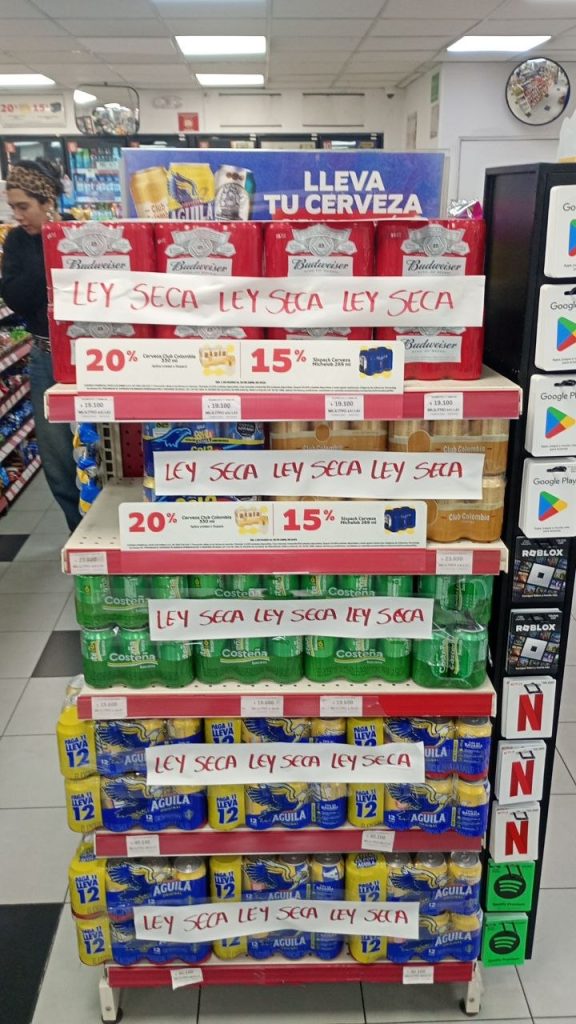
Colombia shuts down a lot over election weekend, with bars closing for ley seca and borders closing as well. There will be an increased police and military presence throughout the country, with particular focus on keeping key transport routes open.
Yesterday we looked at the candidates, how they might fare and what it would mean for the second round. Today we’re turning our attention to how things actually work in the 2026 Colombian presidential election on Sunday, including ley seca times and border closures.
Every Colombian over the age of majority (18) and with a correctly registered cédula ciudandanía can vote. In return, each voter gets a half day off work. Non-citizens are not eligible to vote in national elections, but holders of resident visas will be able to vote in next year’s local elections.
Oversight is carried out by the CNE (Consejo Nacional Electoral). In order to do this over the vast territory and number of stations, over 800,000 citizens are selected to be vote-counters. This is similar to jury duty in other countries and is compensated with a day off as well as a compulsory day of training a couple of weeks beforehand.
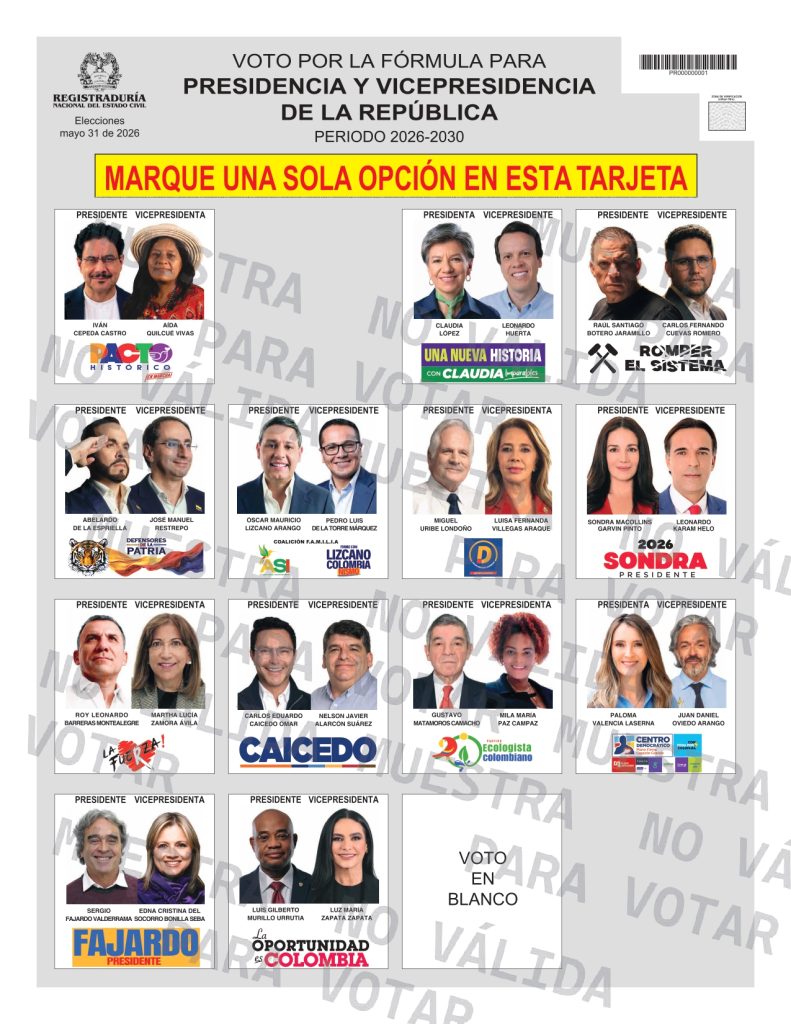
As the electorate is growing, there are now some 13,000 voting sites across the country, most with multiple voting tables. Colombians have to vote where their cédula is registered, so don’t be surprised to see some people trekking to other cities if they forgot to update their registration.
The polls are open from 8am until 4pm and counting is usually very fast with the results being clear before sundown. Land and fluvial borders will be closed for Colombian nationals tomorrow morning, although foreigners can cross. Airports will not be affected, so don’t worry if you are arriving on a flight.
Bogotá has entered ley seca earlier than usual, meaning no alcohol sales in bars, restaurants or shops from 6pm Friday night to Monday midday. That applies for everyone, so no representation or boozing for foreign residents, unless you do it at home. Ciclovía will also be cancelled for ease of access to polling stations.
The run-up to the 2026 Colombian presidential election has seen a lot of criticism of the system, almost all of it coming from the national government. President Gustavo Petro has been front and centre on this issue, repeatedly questioning the neutrality of the elections.
Petro’s concerns rest on the fact that Thomas Greg and Sons handle the software used in the election system, a firm that he’s clashed with repeatedly, especially over Colombian passport printing. He says that the systems are opaque and he has not received answers from the CNE or Registraduria over various concerns he has. However, both groups, along with Colombia’s neutral election observers MOE have been clear about the processes.
Online, there are many posts claiming that a key part of the alleged fraud will be in the reports made by the jurados. This echoes previous elections, where there was a flurry of images purporting to show electoral forms (E-14) that had been altered. With AI entering the scenario, expect more of this after the first round, especially if de la Espriella or Cepeda do badly.
Voy a escribir porqué los escrutinio son opacos y vulnerables al fraude en las elecciones.
— Gustavo Petro (@petrogustavo) March 1, 2026
No porque crea que nuestro proyecto democrático vaya a perder sino porque es mi deber como jefe del estado al menos informar sobre uno de los peores riesgos de la democracia hasta ahora…
Of course, Petro is only claiming that electoral fraud exists against him, not in the multiple occasions in which he’s won at the voting urns. This is a well established populist tactic – calling elections into doubt before they happen. It’s likely to rally his base and provide an excuse if results are bad.
There is little credibility to most of the vote rigging claims. Colombia does indeed have some serious problems around corruption and influence buying, but this tends to be concentrated in rural zones in the periphery of the country. It’s also worth noting that these seats return candidates from across the political spectrum.
A lot of electoral impropriety is very hard to prove – the machines that promise to deliver blocks of votes are well-versed in legal limits and plausible deniability. Offering someone some free gifts in return for ‘support’, for example, is widespread and while dubious hard to prove in court.
It’s particularly noticeable that alliances between political actors in order to deliver voting blocs is both very common and very hard to stop. That’s where Nicolás Petro appeared to be operating and it is not clear quite who is exactly in bed with who at this point.
It goes without saying that political attacks on the CNE are particularly unhelpful, especially in what is still a very charged political atmosphere nationwide. The assassination of presidential pre-candidate Miguel Uribe last year was a shock to a country that has a long history of political violence.
Concerns remain over both electoral safety and fraud in much of the country, with over 200 municipios at high risk of fraud and/or violence. 39 of those are classed as very high risk and only 167 at very low risk, mainly in the Andino region.
There have been rumblings from Washington about the veracity of the 2026 Colombian presidential elections as well, with Bogotá-born Senator Bernie Moreno in the country as an observer. He can’t vote, having renounced his citizenship. The difference here is that they think Petro is going to rig the elections in his favour.
Petro himself has been rebuked by the Electoral Commission and others for participating in the 2026 Colombian presidential election. He’s repeatedly made comments that are at best close to the line of violating the constitutional neutrality of his office.
Not only that, but a third of his cabinet have joined in, also being rebuked by the CNE. There’s over 140 public servants under investigation. Iván Cepeda himself has come under fire for a rally in Montería on Monday after campaigns constitutionally have to end. He claims it was a private event, just attended by hundreds of local people.
Over time, the field has been whittled down to thirteen candidates on the official voting card. In reality, though, only three are at the races: Iván Cepeda, Abelardo de la Espriella and Paloma Valencia in order of current voting intention. Together, they account for around 80-90% of polling at the moment.
The left has been concentrated behind Cepeda, while Paloma Valencia has snaffled the centre-right position. Abelardo is the anti-establishment maverick. All the centrist candidates are languishing in the doldrums, with failed Bogotá mayor Claudia López and eternal candidate Sergio Fajardo the best of the bunch but both polling in low single figures.
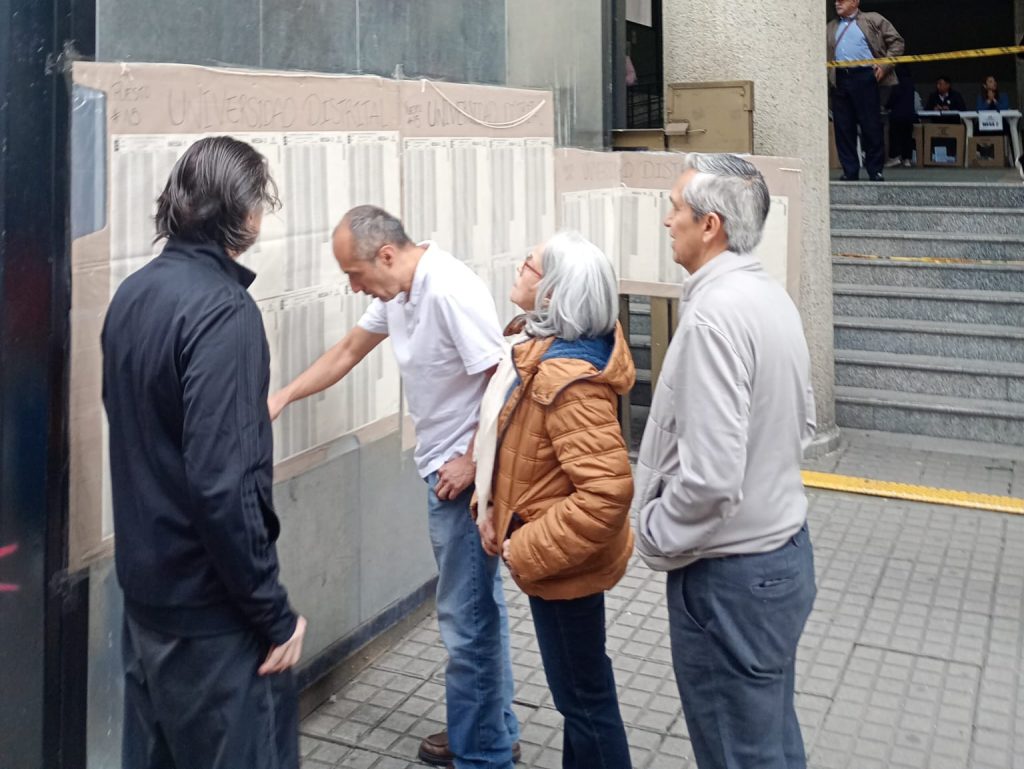
There’s also the curious option of voto en blanco. Different from a spoiled vote, which is simply disregarded, this is an active protest. If it ranks highest in any race, then a rerun of the election must take place within a month with entirely new candidates and/or party lists.
Iván Cepeda is absolutely nailed on for the second round, almost certainly in first place. Who joins him is a slightly more open question. At the moment, Abelardo has the momentum and is riding high in the polls. However, polling isn’t infallible and Paloma could sneak into second place.
At best, many voters will be voting for their least-worst option in the second round. In recent years, Colombians have often cast negative votes rather than for a candidate they really support and this year is likely to be the same. Whoever wins, it will almost certainly be a loveless victory, despite their inevitable claims of popular support.
The post 2026 Colombian presidential election: How does it work? appeared first on The Bogotá Post.
Heard about the 2026 Colombian presidential election first round this weekend? Confused about what exactly is going on? Our guide clues you in on who’s running and what’s likely to happen
The 2026 Colombian presidential election enters its first round this weekend, with the election taking place on Sunday 31st May. If no one takes an overall majority, the run-off will take place three weeks later. It feels like a lifetime since the house elections in March and candidates have been furiously jockeying for position over the last few weeks.
At the moment, continuity candidate Iván Cepeda leads polling, with the rightists split between traditionalist Paloma Valencia and outsider Abelardo de la Espriella. The centre is currently more or less absent. Read on for more information about the candidates, the political backdrop and potential outcomes.
The polls are open from 8am until 4pm on Sunday 31st June for all Colombian nationals wherever their cédula is registered. Counting is usually very fast with the results being clear before sundown. Land and fluvial borders will be closed for Colombian nationals tomorrow morning, although foreigners can cross.
Bogotá will enter ley seca earlier than usual, meaning no alcohol sales in bars, restaurants or shops from 6pm Friday night to Monday midday. That applies for everyone, so no representation or boozing for foreign residents, unless you do it at home. Ciclovía will also be cancelled for ease of access to polling stations.
Over time, the field has been whittled down to thirteen candidates on the official voting card. In reality, though, only three are at the races: Iván Cepeda, Abelardo de la Espriella and Paloma Valencia in order of current voting intention. Together, they account for around 80-90% of polling at the moment.
The left has been concentrated behind Cepeda, while Paloma Valencia has snaffled the centre-right position. Abelardo is the anti-establishment maverick. All the centrist candidates are languishing in the doldrums, with failed Bogotá mayor Claudia López and eternal candidate Sergio Fajardo the best of the bunch but both polling in low single figures.
Some interesting characters are in the also-run list. Santiago Botero has an incredibly aggressive position on crime: bullets for rapists and so on. Roy Barreras is running as a leftist alternative to Cepeda and Gustavo Matamoros represents the ecologist party of Colombia.
It won’t be third time lucky for Fajardo, who had probably the best thought-out manifesto on paper last time around. His brand of centrism is no longer en vogue and he’s announced his retirement from politics following this election.
Strangely, most of the country’s biggest parties are literally absent from the voting card. The Conservadores and Liberales dominated the last century but now don’t bother running candidates in the 2026 Colombian presidential election. Neither is there a Green candidate or a Cambio Radical candidate. Only Pacto and Centro Democrático are there.
There’s also the curious option of voto en blanco. Different from a spoiled vote, which is simply disregarded, this is an active protest. If it ranks highest in any race, then a rerun of the election must take place within a month with entirely new candidates and/or party lists.
Two candidates on the card have actually pulled out, Carlos Caicedo and Luis Gilberto Murillo. Any votes cast for them will be counted as spoiled, not for voto en blanco. Clara López pulled out earlier, which is why there is a blank space on the tarjetón.
The manifestos are terribly written, for the main part. There is a frankly shocking number of basic errors in most of them, suggesting that proofreaders weren’t asked to play a big part in production. Despite having had years to plan for this, it seems everybody chose to rush it instead.
Past the errors, there’s a generally low level of detail across all the manifestos. Vague numbers and targets are given with little to no consideration of how it will be achieved. That might lead one to suspect that there isn’t a high chance any of this will actually be stuck to, regardless of the outcome.
There has been no debate among all candidates. Even partial debates have been few and far between, with almost everyone preferring to stick to home turf where they have more control over questions and so forth. There’s been a host of negative publicity via influencer campaigns, with traditional electoral machines being somewhat sidelined.
Iván Cepeda is the continuity candidate, promising more of the same and offering very few details in his actual plan de gobierno, despite it being 433 pages long. He’s had an unusual campaign, turning up to dozens of rallies but offering few interviews. In many ways, he’s not the draw for his campaign.
Read More: Candidate guide to Iván Cepeda
Abelardo de la Espriella has run a controversial and divisive campaign portraying him as the outsider. That’s won him voters and he’s peaking at the right time. His manifesto is long on ideas and short on detail. He’s frequently made inflammatory comments, being accused of sexism, homophobia and racism and often leaning into that.
Read More: Candidate guide to Abelardo de la Espriella
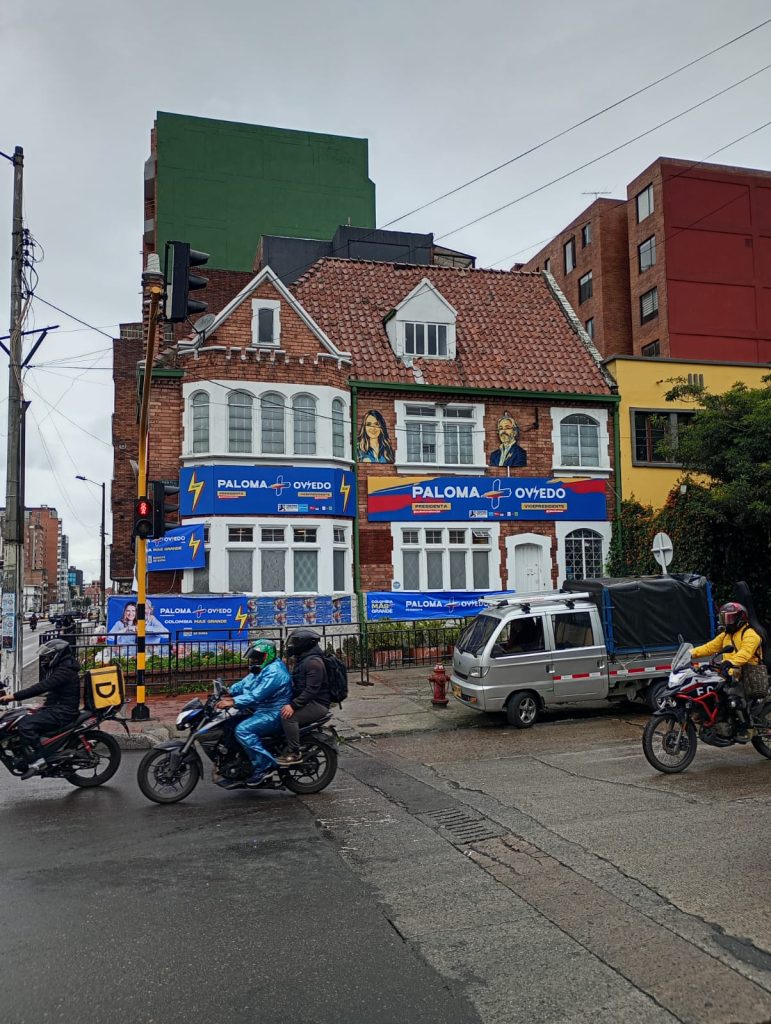
Paloma Valencia has been faltering over the past few weeks in particular. She’s done well to make traditional political alliances, but that could be an albatross for her. Having Uribe’s support might lose as many votes as it gains. Despite this, she’s still in the race and has by far the most detailed manifesto of the three main challengers.
Read More: Candidate guide to Paloma Valencia
It’s notable that a lot of the messaging is quite similar across the candidates. Cepeda is for los nadies; de la Espriella is for los que nunca. Both Valencia and Cepeda want 30,000km of new roads and are overshadowed by their political mentors. Paloma and Abelardo both want to turn the gas and oil taps back on.
They all support crop substitution for coca farmers and all claim to be anti-corruption. All of them support rural communities and home carers. With this level of agreement, a lot of the distinction that is being drawn is on personality and charisma, hence the two populists exploding in popularity.
It’s anyone’s guess at this point, despite the polymarket predictions going wildly overboard in favour of Abelardo de la Espriella. That’s mainly from a certain type of punter that understands little about Colombian politics and is simply making a political statement via putting money on the rightist.
The last election was razor thin, with Gustavo Petro squeaking past Rodolfo Hernández (remember him?) with barely more than 50% of the vote, similar to 2018 when it went the other way for the current president. That’s very likely to be repeated more or less in full: the Pacto candidate dominating the first round then a very close run between the final two and one winning by a nose.
Iván Cepeda is absolutely nailed on for the second round, almost certainly in first place. Who joins him is a slightly more open question. At the moment, Abelardo has the momentum and is riding high in the polls. However, polling isn’t infallible and Paloma could sneak into second place.
More interesting is how many votes everyone gets. Cepeda will want 40% minimum, under that he’s probably in big trouble. If he can get over 45% he’s likely to win the second round. Anything in the middle and we’re into coinflip territory again. Note where the votes come, too. If Abelardo does well in Bogotá, a leftist heartland, that’s a good sign for him.
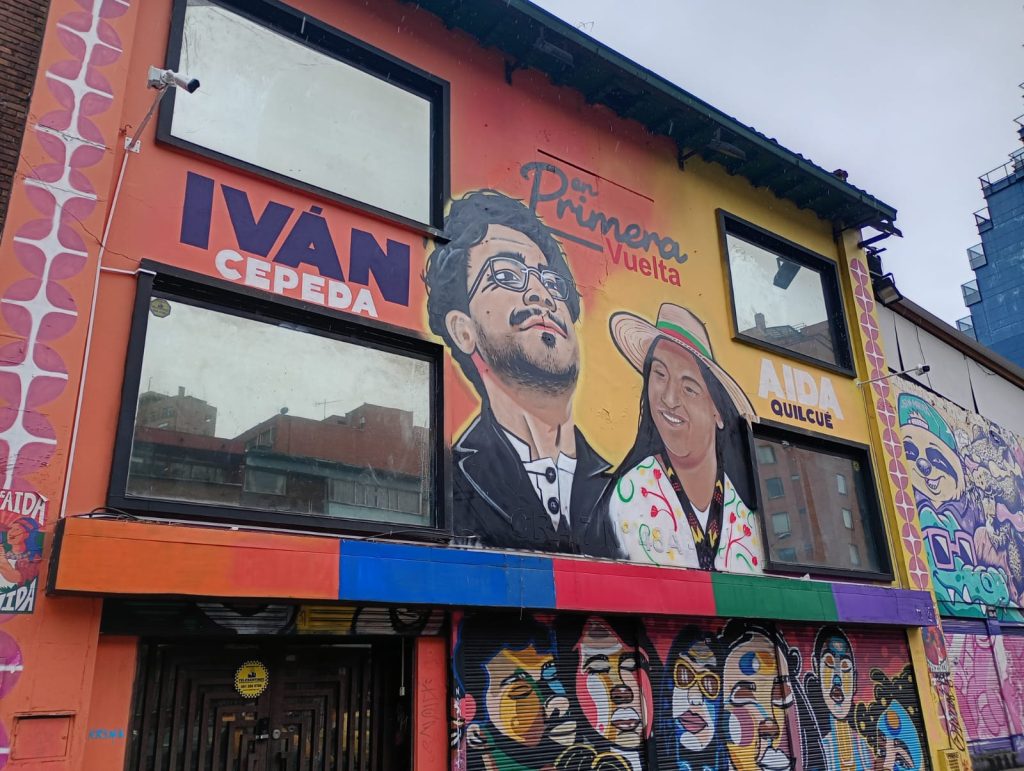
If Abelardo gets over 30%, he’s in a good position. If Paloma can get to that level, she’s going to be extremely happy. Those two candidates need to match Cepeda’s total at least in order to feel confident. If their combined vote share tops 50% then a rightist victory is likely.
The final numbers to keep an eye on are turnout and the centre vote. The latter will likely be 5-10% and could be crucial for the second round. The former should be over 50%. If it’s not, then the second round could be very unpredictable, especially if it’s two populists.
Looking ahead, it’s entirely possible that someone could win with under 50% of the vote in the second round. This has become an election that is already both polarised and unstable. It is likely to become very vicious in the next phase, too.
At best, many voters will be voting for their least-worst option in the second round. In recent years, Colombians have often cast negative votes rather than for a candidate they really support and this year is likely to be the same. Whoever wins, it will almost certainly be a loveless victory, despite their inevitable claims of popular support.
The post 2026 Colombian presidential elections: The first hurdle appeared first on The Bogotá Post.
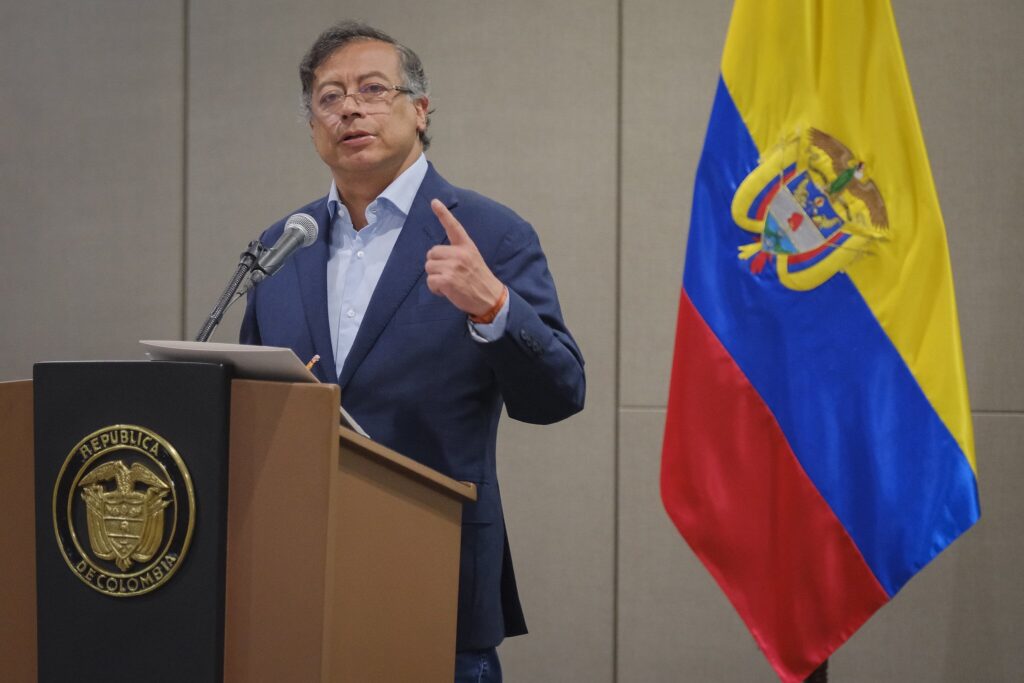
Just days away from Colombia’s first-round presidential election, incumbent President Gustavo Petro continues to sound the alarm about voter fraud.
On Tuesday, he repeated claims that the National Registrar’s Office is allowing the vote to be manipulated against his party’s candidate, Senator Iván Cepeda.
Petro renewed calls for citizens to supervise the vote count, describing it as the only way to avoid fraud: “Only the physical vigilance of millions of people can overcome the algorithm manipulations that the Registrar’s Office refused to prevent.”
But are the president’s claims of vulnerabilities in the voting system valid?
Petro’s claims stem from a long-running grudge with Thomas Greg & Sons, a multinational security and printing company tasked with issuing Colombian passports and overseeing electoral logistics.
According to Petro, the firm cannot be trusted with the sensitive task of printing, delivering, and processing vote counting forms.
While the president’s claims have widely been dismissed by electoral institutions as reckless, there is some foundation for them.
Following the 2014 legislative elections, the evangelical political party, MIRA, filed a legal petition against the Registrar’s Office, claiming a discrepancy between the ballot pre-count (filled out by citizen juries in a form known as E-14) and the digitized tally of the vote (filled out by officials in the E-24 form).
MIRA claimed to have evidence of manipulation of the software used for “voting, information, transmission, or tabulation of election results,” which was managed by a subsidiary of Thomas Greg & Sons.
After a lengthy four-year legal case, the Council of State (Consejo de Estado), the highest court overseeing the government, issued a ruling in favor of MIRA. It found evidence of destruction of electoral material and inconsistencies between the E-14 and E-24 forms.
Crucially, the Council of State said that it could not confirm that voting software had been sabotaged because it did not have access to the source code of the software during the elections.
Without the original code, it was impossible to know if the system had been tampered with.
The body issued a clear recommendation to prevent repetitions of the dispute in future elections: “Direct the Electoral Organization to acquire the necessary vote-counting software for use within the state—that is, software owned by the organization itself—which allows for full traceability of the vote-counting process from the polling stations through to the official declaration of the election results.”
In other words, it recommended that electoral authorities roll out their own software, rather than relying on third party providers.
But 12 years later, Thomas Greg & Sons remains in charge of the electoral software; according to the Registrar’s Office, purchasing proprietary software and operating the corresponding data centers is not feasible.
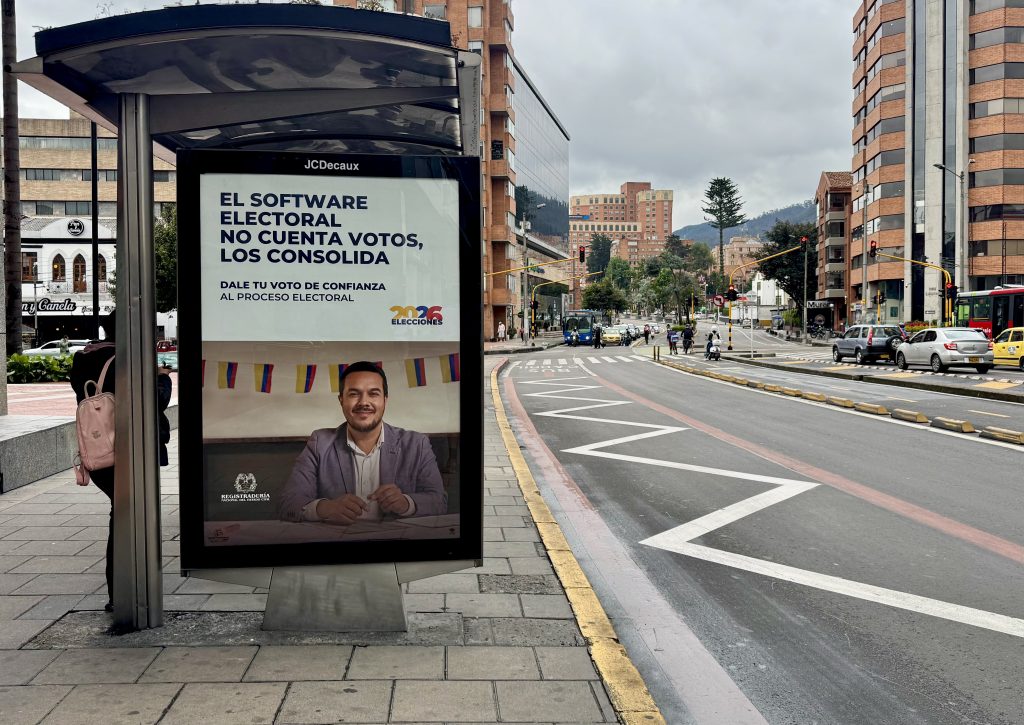
While Petro continues to lobby for a fully state-owned system, he has concentrated his efforts on mitigating the risks of a repeat of the 2014 source code issue.
The president has repeatedly demanded that the Registrar’s Office share the source code with the government and the public, which he says would allow them to prevent a repeat of the situation in 2014.
But the Registrar’s Office maintains that there is no need, suggesting that publicizing the code would leave the software more vulnerable to attacks and defending internal audit processes.
Petro rebutted, calling the claim “an immense lie”.
As well as warning about software manipulation, the president has also raised the alarm about differences between the pre-count and the official, scrutinized count. Ahead of the March elections, he warned that the pre-count may not accurately reflect the results.
Petro’s concerns stem from the 2022 legislative elections in which over half a million votes for his Historic Pact coalition were excluded in the pre-count and later revealed in the scrutiny.
Rather than software, the culprit for the discrepancy, which in total represented a 5.49% difference, was human error; the Electoral Observation Mission (MOE) had warned the ballot sheets were designed in a way that could lead to Historic Pact votes being neglected.
But the 2022 vote appears to be an outlier, with the MOE reporting just a 0.28% discrepancy between the pre-count and the scrutinized votes in March’s legislative elections.
Petro’s mistrust in the pre-count may be valid in the case of a tight race with razor-thin margins but not so much if there is a clear winner. And, in any case, the scrutiny process should clear up any doubts.
“In Colombian elections, it is judges who determine electoral disputes and not a logistical operator such as Thomas Greg & Sons,” explained Sergio Guzmán, director at Colombia Risk Analysis, a political risk think tank.
While Petro aims his crusade against Thomas Greg & Sons, a firm which he has clashed with on a range of issues, there are other, more prescient threats to electoral integrity.
“I think that concerns about voters being coerced to vote are legitimate… but I think concerns that somebody will steal the election are overblown,” said Guzmán.
International observers including the United Nations have warned that violence may undermine the elections, particularly in areas under armed group control.
Vote buying is also a well-documented phenomenon in many regions of the country.
While Petro has some basis for his allegations of voter fraud, there is no evidence of software manipulation determining presidential election results in Colombia.
In a razor-thin race, observers would be wise to wait for the scrutinized vote count to declare a winner. But for now, Petro’s warnings about election-rigging appear to be largely overblown.
The post The truth behind Petro’s claims of Colombia voting fraud appeared first on The Bogotá Post.
