
Normal view

Received — 19 May 2026 Finance Colombia

Ecopetrol Posts Q1 EBITDA Gain as Refining Margins Surge, But Governance Crisis and Tax Headwinds Weigh on Net Income

19 May 2026 at 01:22

Refining margin surge cushions revenue drop amid leadership void

Ecopetrol S.A. (NYSE: EC, BVC: ECOPETROL) reported first-quarter 2026 consolidated revenues of 28.6 trillion COP, a decline of 8.7% from 31.4 trillion COP in the year-earlier period, as lower crude oil prices and reduced hydrocarbon production compressed the top line for Colombia’s state-controlled oil and gas company. Against that backdrop, a marked recovery in refining margins and disciplined cost management lifted EBITDA by 1.5% to 13.5 trillion COP, yielding a 47% EBITDA margin and partially offsetting the revenue headwind. At the Q1 2026 average exchange rate of approximately 3,700 COP per USD, the quarter’s revenues translate to roughly $7.73 billion USD and EBITDA to approximately $3.65 billion USD.
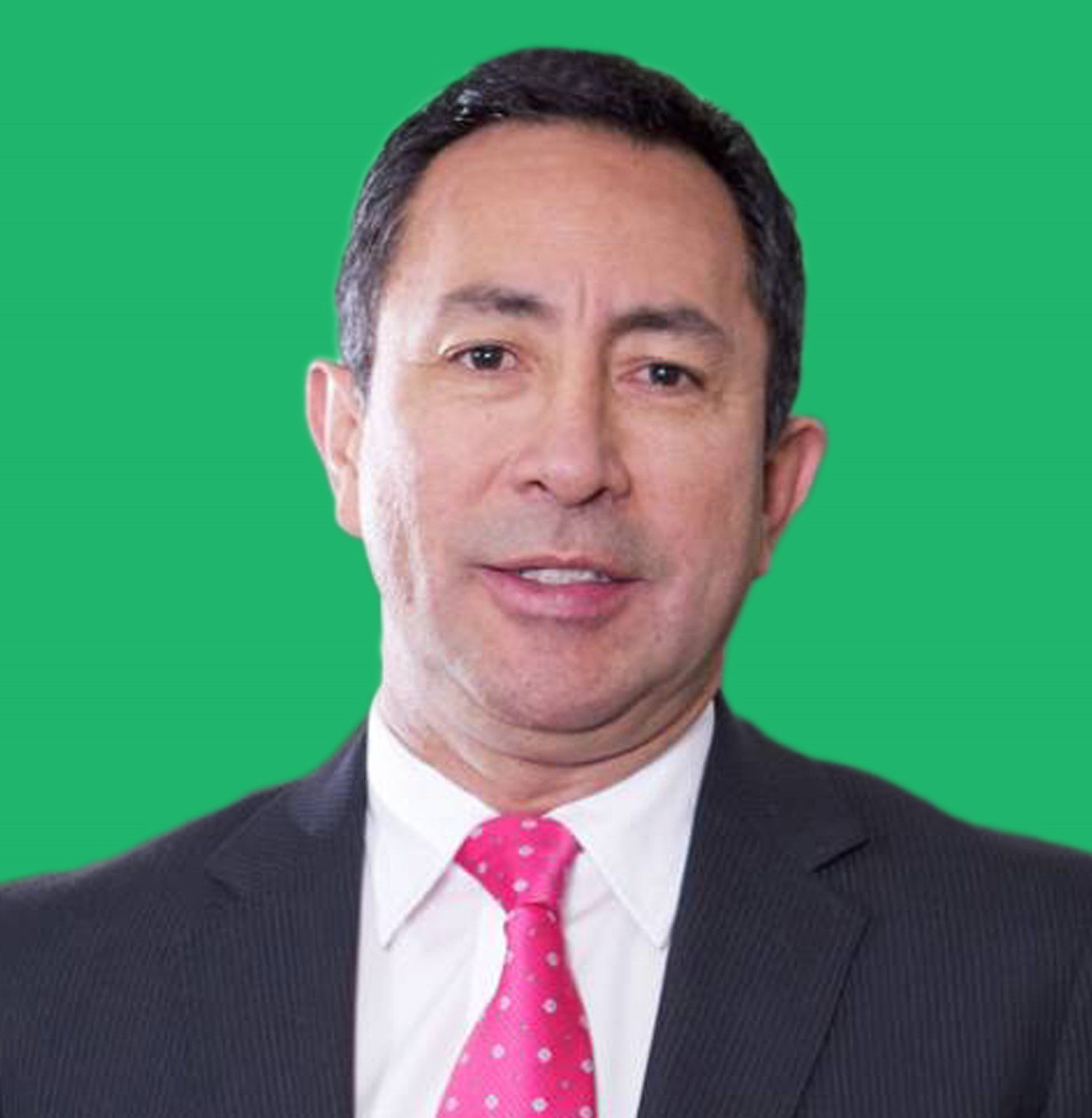
Embattled Ecopetrol CEO Ricardo Roa was appointed to the position by Colombian President Gustavo Petro after managing his political campaign. (photo: Ecopetrol)

Embattled Ecopetrol CEO Ricardo Roa was appointed to the position by Colombian President Gustavo Petro after managing his political campaign. (photo: Ecopetrol)

Net income for the quarter reached 2.9 trillion COP (approximately $784 million USD), down 7.7% year-over-year, reflecting the combined drag of lower revenues, a sharply elevated effective tax rate of 37.1%, and a one-time charge of 1.2 trillion COP for the impuesto al patrimonio — Colombia’s government-mandated wealth levy on large corporations established to fund post-disaster reconstruction measures. The company is also subject to a 10% income tax surcharge applicable for fiscal year 2026, which is embedded in the reported effective rate. The aggregate tax burden absorbed a disproportionate share of operating improvement relative to prior periods, limiting the flow-through of refining gains to the net income line.

Total hydrocarbon production averaged 725.2 thousand barrels of oil equivalent per day (kboed) in Q1 2026, below the 745 kboed recorded in the 2025 annual average cited by management during the March 2026 general shareholders’ meeting. Domestic crude output represented the largest component at approximately 520 thousand barrels per day (kbd). Ecopetrol’s Permian Basin operations in the United States contributed 91.8 kbd, underscoring the continued strategic importance of the international segment. Gas production continued a multi-year declining trend that poses a medium-term domestic supply challenge; management has sought to address this partially through regasification capacity additions at Puerto Bahía and on the Pacific coast, expected to come online in the second half of 2026 with a combined contribution of up to 430 billion BTU per day.

The refining segment delivered the quarter’s most pronounced operational outperformance. Ecopetrol’s domestic refineries, led by Refinería de Cartagena, processed 417.5 kbd of crude throughput. The integrated refining margin rose to $17.3 USD per barrel, a 60% improvement over the same quarter of 2025, driven by favorable differential pricing between domestic crude benchmarks and refined product values alongside ongoing operational efficiency improvements. The Comisión de Regulación de Energía y Gas (CREG) and the Ministerio de Minas y Energía remain central to the regulatory framework governing downstream margins over the medium term.

The balance sheet carries significant structural and contingent risk items of direct relevance to institutional credit and equity holders. Gross debt stood at 108.1 trillion COP (approximately $29.2 billion USD), representing a leverage ratio of 2.3 times trailing EBITDA — a level that leaves limited room for further deterioration before debt covenants or rating agency thresholds become binding. Ecopetrol holds a receivable of 4.2 trillion COP (approximately $1.14 billion USD) from the Fondo de Estabilización de Precios de los Combustibles (FEPC), a government fuel price stabilization mechanism that represents a claim on the Colombian treasury with timing and recovery risk. A dispute with the Dirección de Impuestos y Aduanas Nacionales (DIAN) over value-added tax assessments totals 12.26 trillion COP (approximately $3.31 billion USD) in aggregate, of which 10.22 trillion COP relates to Ecopetrol’s consolidated operations and 2.04 trillion COP to Refinería de Cartagena. Both cases are under administrative and judicial review; no provisions have been recognized in the financial statements pending resolution, but the potential liability represents a material contingency relative to the company’s quarterly net income.

On the corporate development front, Ecopetrol disclosed three significant transactions during or following the quarter. The company agreed to acquire producing assets from Gran Tierra Energy (NYSE: GTE, TSX: GTE) for $92.4 million USD, adding Colombian upstream production inventory in basins where both companies have operated. In Brazil, Ecopetrol launched a tender offer for shares of Brava Energia (BVMF: BRAV3) at 23 BRL per share, seeking to expand its footprint in that country’s oil and gas sector. And in a transaction that would reshape the mid-size independent landscape in Colombia, the company reached an agreement to acquire Parex Resources (TSX: PXT) for $250 million USD; Parex is a Colombia-focused producer with a complementary asset base across the Llanos and other producing basins. Collectively, the three transactions signal that Ecopetrol’s capital allocation strategy under the current government continues to favor upstream consolidation despite the elevated leverage profile.

The exploration portfolio generated positive news announcements. The Copoazú-1 exploratory well, drilled in Colombia’s Llanos foothills region, was confirmed as a commercial discovery, adding to the domestic reserve base. The Sirius offshore project advanced through the Consulta Previa process — a legally mandated prior consultation with indigenous and Afro-Colombian communities required before development of projects in or near their territories — reaching a milestone in community engagement that brings the project closer to formal development sanction. The Agencia Nacional de Hidrocarburos (ANH) oversees the licensing framework within which both projects operate.

“Ecopetrol is listed on the New York Stock Exchange; we are governed by the strict regulations of US federal agencies. Agencies like OFAC and the SEC could intervene in the company and could even accelerate the payment of financial obligations, which would be extremely grave for Ecopetrol.” — Martín Ravelo, President, Unión Sindical Obrera (USO)

The ISA transmission segment, managed through Ecopetrol’s majority stake in ISA — Interconexión Eléctrica S.A., contributed stable regulated cash flows during the quarter. ISA completed 46 transmission reinforcement works across its Latin American concession portfolio. The segment also completed the acquisition of 100% of IE Madeira in Brazil, consolidating its position in that country’s power grid interconnection infrastructure. ISA further submitted a competitive bid for the Río Bueno–Puerto Montt high-voltage transmission line concession in Chile, demonstrating the group’s appetite for long-duration, inflation-linked infrastructure assets across the Andes region. For institutional investors evaluating Ecopetrol as a blended hydrocarbons-and-infrastructure holding, ISA’s consistent cash generation provides partial diversification from crude price volatility, though it does not insulate the consolidated entity from headline governance risk.

The most consequential variable for the investment thesis over the near term is Ecopetrol’s prolonged governance crisis. At the company’s general shareholders’ meeting on March 27, 2026, held at the Corferias convention center in Bogotá, minority shareholders loudly heckled president Ricardo Roa — with audible shouts of “¡Fuera, fuera!” reverberating through the hall — as debate over his leadership erupted into open confrontation. The meeting approved a dividend of 121 COP per share for minority holders and a 4 trillion COP distribution to the Colombian government as majority shareholder, payable in two installments by June 30, 2026. Despite the financial business conducted, governance overshadowed the proceedings.

Roa faces two separate judicial proceedings. The Fiscalía General de la Nación formally charged him in connection with alleged influence peddling related to the purchase of an apartment in northern Bogotá — charges he has denied. Separately, the Consejo Nacional Electoral (CNE) is examining whether campaign spending limits were violated during President Gustavo Petro’s 2022 presidential campaign, which Roa managed — an investigation that Finance Colombia has covered in detail. Angela Maria Robledo, Chair of the Board of Directors, defended the board’s decision to retain Roa at the March assembly, citing the constitutional presumption of innocence. However, four of the nine board members had already formally recorded their support for his removal at that point, exposing a divided governance structure at a time when strategic and operational decisions require unified leadership.

The Unión Sindical Obrera (USO), which represents approximately one-third of Ecopetrol’s workforce, issued a production strike ultimatum timed to a March 30 board meeting. Martín Ravelo, president of the USO, framed the leadership crisis explicitly in terms of US regulatory risk: “Ecopetrol is listed on the New York Stock Exchange; we are governed by the strict regulations of US federal agencies. Agencies like OFAC and the SEC could intervene in the company and could even accelerate the payment of financial obligations, which would be extremely grave for Ecopetrol.” Ravelo further warned that the company’s outstanding international debt — which he placed at approximately $30 billion USD and which is exacerbated by elevated interest rates — left Ecopetrol exposed to potential covenant triggers or early repayment demands in a scenario where the Securities and Exchange Commission (SEC) or the Office of Foreign Assets Control were to take enforcement action.

Following sustained pressure from the USO, minority shareholders, and opposition political figures, Ecopetrol’s board approved an extended leave of absence for Roa beginning April 7, 2026. Under the arrangement, Roa used accrued vacation through May 27, followed by 30 calendar days of unpaid leave beginning May 28, extending his absence through the end of June — a period encompassing Colombia’s presidential first round on May 31 and a potential runoff on June 21. Juan Carlos Hurtado Parra, the company’s executive vice president of hydrocarbons and designated first alternate to the presidency since November 2025, was appointed acting president. Hurtado Parra holds an MBA in International Oil and Gas and brings more than 28 years of energy sector experience to the acting role, having previously served as vice president of exploration, development, and production.

The political calendar creates a structural transition risk that sits above the operational and financial results as the primary concern for long-duration investors. Colombia’s incoming government, to be inaugurated August 7, 2026, is widely expected to appoint a new Ecopetrol board and select a new company president. That transition may bring material shifts in strategic priorities — including the pace of upstream investment, the approach to the FEPC receivable recovery, the trajectory of energy transition spending, and the capital allocation balance between the hydrocarbons segment and the ISA infrastructure platform. The Ministerio de Hacienda y Crédito Público and the Ministerio de Minas y Energía will both play key roles in establishing the post-election policy framework under which Ecopetrol operates. Institutional investors holding exposure to Ecopetrol via NYSE: EC or BVC: ECOPETROL must weigh Q1’s genuine operational improvement — most visibly in refining margins and EBITDA stability — against a governance and policy transition risk profile that is unlikely to be resolved before the August handover.

Ecopetrol’s Cartagena refinery (photo courtesy Ecopetrol)

Tecnoglass Posts Record Q1 Revenue as Aluminum Tariffs and Colombian Wage Costs Compress Margins

19 May 2026 at 00:40

Tariff headwinds compress Tecnoglass margins despite record Q1 sales

Tecnoglass, Inc. (NYSE: TGLS) reported first-quarter 2026 revenue of $249.0 million USD, a 12.0% year-over-year increase and a first-quarter record for the Barranquilla, Colombia-based window and architectural glass manufacturer. Despite the top-line growth, net income fell to $31.9 million USD, or $0.71 per diluted share, from $42.2 million USD, or $0.90 per diluted share, in the same period of 2025, as elevated US aluminum costs linked to import tariffs, mandatory minimum wage increases in Colombia, and a strengthening Colombian peso combined to compress gross margins by 540 basis points to 38.5%.

Multi-family and commercial revenues rose 20.4% year-over-year, driven by continued activity across key markets including geographies beyond Florida, which has historically dominated the company’s US revenue mix. Single-family residential revenues were relatively flat on a year-over-year basis, with management attributing the result to the timing of order conversion into revenue rather than underlying demand, noting that order growth in the segment remained positive into April 2026. On a geographic basis, the US accounted for $237.1 million USD, or approximately 95% of total revenues, up 11.6%. Colombia generated $7.5 million USD, up 17.2%, and other international markets contributed $4.4 million USD, up 27.3%.

Gross profit declined to $95.8 million USD from $97.5 million USD in Q1 2025 despite the higher revenue base. The company cited an unfavorable revenue mix driven by a greater proportion of installation-related revenue, higher raw material costs — with US aluminum tariffs representing an incremental headwind of approximately $6.4 million USD in the quarter — higher salary expenses resulting from annual minimum wage adjustments in Colombia, and the effect of a stronger Colombian peso on costs incurred locally. Pricing actions and operating leverage on higher volume partly offset these pressures.

“We see a clear path to fully offsetting the impact of tariffs in 2027, when full-year pricing across both businesses and incremental automation savings are expected to be realized.” — Santiago Giraldo, Chief Financial Officer, Tecnoglass

Selling, general, and administrative expenses rose to $50.9 million USD, or 20.4% of revenues, from $42.5 million USD, or 19.1%, in Q1 2025. The increase reflected higher personnel costs from annual salary adjustments, peso appreciation, and higher transportation and commission costs tied to revenue growth. The period also included a one-time charge of $2.9 million USD related to Colombia’s *impuesto al patrimonio*, a government-imposed wealth tax levied on large corporations to fund measures addressing recent climate-related events in the country.

Adjusted EBITDA — which excludes non-cash foreign exchange gains and losses, the bad-debt provision, non-recurring charges, and equity-method adjustments related to the company’s joint venture in Vidrio Andino with Saint-Gobain (EPA: SGO) — came in at $61.5 million USD, or 24.7% of total revenues, compared to $70.2 million USD, or 31.6%, in Q1 2025. Adjusted net income was $34.6 million USD, or $0.78 per diluted share, versus $43.1 million USD, or $0.92, in the prior-year quarter.

Cash provided by operating activities was $6.7 million USD, a significant decline from $46.9 million USD in Q1 2025, driven in part by a deliberate build-up of US-sourced aluminum inventories — up $34.3 million USD in the quarter — as part of the company’s tariff mitigation strategy. Capital expenditures of $17.3 million USD reflected scheduled payments tied to previously announced capacity and automation projects. During the quarter, Tecnoglass returned $16.5 million USD to shareholders through share repurchases and paid $6.7 million USD in cash dividends. As of May 7, 2026, approximately $92.5 million USD remained available under the current share repurchase program. The company ended the quarter with total liquidity of approximately $425.0 million USD, comprising $91.1 million USD in cash and cash equivalents and more than $330.0 million USD in revolving credit facility availability, against total debt of $200.3 million USD.

The company’s order backlog reached a record $1.36 billion USD at quarter-end, up 19.1% year-over-year, extending multi-family and commercial pipeline visibility into 2027. Tecnoglass cited continued expansion of its dealer network and showroom footprint as supporting geographic diversification and market share gains, with vinyl product lines identified as an incremental growth driver broadening the company’s addressable market.

José Manuel Daes, chief executive officer, commented on the results: “First quarter results were in line with our expectations, with resilient performance across our key metrics reflecting the continued strength of our vertically integrated business model despite a dynamic cost environment. Demand for our product offerings remains strong, as demonstrated by another quarter of record backlog and healthy order activity, with momentum continuing into the second quarter. Our previously announced pricing actions are now in place, and the broad-based nature of industry cost pressures supports our confidence in executing these increases while preserving our competitive positioning.”

Christian Daes, chief operating officer, addressed the tariff response and the company’s assessment of a potential US manufacturing presence. “Our pricing initiatives and cost mitigation efforts are well underway, including logistics improvements, further automation across our operations, and ongoing supply chain optimization,” he said. “We are also advancing our assessment of a proposed US manufacturing initiative, with a well-located site identified and significant state and local incentives secured that strengthen the project’s potential economics if we decide to move forward based on market demand.”

Santiago Giraldo, chief financial officer, reaffirmed full-year 2026 guidance and outlined the company’s tariff offset timeline. “Based on our strong execution to start the year, we are reiterating our full year revenue outlook in the range of $1.06 billion to $1.13 billion USD and Adjusted EBITDA outlook in the range of $225 million to $245 million USD,” Giraldo said. “This reflects the impact of the recently implemented 10% tariff on finished aluminum window imports as previously disclosed, which is expected to be partly offset in 2026 through pricing actions effective on orders from early May forward, with additional efficiency initiatives from logistics optimization and automation underway and expected to begin contributing benefits by year end. We see a clear path to fully offsetting the impact of tariffs in 2027, when full-year pricing across both businesses and incremental automation savings are expected to be realized.”

On the corporate structure front, Tecnoglass’ board of directors has approved a plan to redomicile the company from the Cayman Islands to the United States, subject to shareholder approval. If approved, the redomiciliation is expected to be completed during Q2 2026. The company stated that the move is intended to simplify its organizational and regulatory structure, improve the tax efficiency of dividend distributions, and expand its potential investor base to include funds and accounts limited to US-domiciled securities. Tecnoglass will retain its Miami, Florida headquarters following the change.

Separately, the company is conducting a feasibility study for a potential new US manufacturing facility. A site meeting project specifications has been identified and substantial state and local tax credits have been secured. The proposed facility is described as highly automated and intended to support future growth while also improving lead times, reducing transportation costs for certain markets, enhancing supply chain efficiency, and enabling the company to compete for Buy America-eligible projects and rapid-turnaround contracts. Tecnoglass expects to complete the purchase of land for the potential facility during Q2 2026, at an estimated cost of $20 million to $25 million USD to be financed through available credit facilities. The company noted that the land purchase does not constitute a commitment to proceed with construction, which would occur in phases contingent on demand, market conditions, and return profiles. The company’s 5.8-million-square-foot vertically integrated manufacturing complex in Barranquilla, Colombia, would continue to serve as its primary production base.

Above photo: Tecnoglass facilities in Barranquilla

Colombia’s Foreign Ministry Presents Coffee and Cacao Export Strategy to Bogotá Diplomatic Corps

19 May 2026 at 00:32

Colombia’s coffee-cacao export push generates 100+ tons in foreign sales

Colombia’s Ministerio de Relaciones Exteriores convened ambassadors, international organizations, agricultural producers, and strategic partners in Bogotá on May 15, 2026, to present the Ruta del Café y Cacao, a government-led strategy that uses the diplomatic network to connect Colombian specialty coffee and cacao producers directly with international buyers, importers, and distributors. The session was organized in coordination with the Departamento Nacional de Planeación (DNP), Colombia Compra Eficiente, and the Servicio Nacional de Aprendizaje (SENA), with additional participation from the Agencia de Desarrollo Rural and the Unidad de Implementación del Acuerdo de Paz.

Between 2025 and 2026, the Ruta del Café y Cacao has participated in international trade fairs and multilateral venues in Asia, the Americas, and Europe, generating more than 1,200 commercial contacts and exports exceeding 100 tons. The strategy is coordinated through Colombia Nos Une, a directorate within the Ministerio de Relaciones Exteriores that oversees relations with Colombian communities and commercial networks abroad.

“This strategy is not limited to the promotion of a product. It is a tool of economic diplomacy, productive inclusion, rural development, and peacebuilding.” — Rosa Yolanda Villavicencio Mapy, Minister of Foreign Relations of Colombia

Foreign Minister Rosa Yolanda Villavicencio Mapy used the event to outline the government’s rationale for embedding agricultural trade promotion into foreign policy. “From the Ministry of Foreign Relations, we want economic diplomacy to translate into concrete results for the territories,” she said. “Foreign policy must have the capacity to open opportunities, connect markets, and contribute to the productive development of our communities.” She added that the strategy extends beyond product promotion: “It is a tool of economic diplomacy, productive inclusion, rural development, and peacebuilding.”

Natalia Irene Molina Posso, director general of the Departamento Nacional de Planeación, presented the Café Social program as a related mechanism designed to strengthen small agricultural producers. The initiative links public procurement policy with territorial development and small-scale coffee farming, creating demand channels within Colombia’s public sector for domestically produced specialty coffee.

Gloria Cuartas Montoya, director of the Unidad de Implementación del Acuerdo de Paz, addressed the relationship between coffee and cacao production and post-conflict territorial transformation. “You have all the entities that have been working on the implementation of the Peace Agreement and in the new processes being carried out, so that territorial peace finds in these two [commodity] lines paths of enormous value and projection,” she said. Cuartas also referenced recent engagement in Barcelona, where business operators and organizations expressed interest in awareness-building activities around Colombian coffee and cacao, citing the social and community dimensions behind those products.

A central element of the event was the participation of producers and associations from multiple regions of Colombia, convened by the Ministerio de Relaciones Exteriores through the Colombia Nos Une directorate. The participants included cooperatives and producer groups led by women, former combatants who signed the 2016 Peace Agreement, ethnic communities, and victims of the armed conflict. These groups presented their productive and commercial operations directly to diplomatic delegations attending the event.

The session also included a guided coffee tasting led by SENA’s Escuela Nacional del Café, during which attendees sampled specialty coffee varieties and received information on production processes and the characteristics that differentiate Colombian coffees participating in the Ruta del Café y Cacao. The tasting segment was designed to give diplomatic representatives direct exposure to the product profiles of the producers involved in the strategy.

Photo courtesy of Ministry of Foreign Relations of Colombia

Grupo Energía Bogotá and Canada’s La Caisse to Create Brazil’s 5th Largest Power Transmission Platform

19 May 2026 at 00:18

GEB-La Caisse JV to rank among Brazil’s top five power transmitters

Grupo Energía Bogotá (BVC: GEB) and La Caisse, the investment arm of Caisse de dépôt et placement du Québec, have signed a final agreement to merge their respective Brazilian power transmission assets into a single 50/50 jointly controlled platform operating under the name Verene Energia S.A. The transaction was announced May 15, 2026, from Montréal and Bogotá.

The combined entity will consolidate 26 electric transmission concession agreements, more than 9,000 km of transmission lines, and a workforce of over 400 employees across 17 Brazilian states. At that scale, Verene will rank among the five largest power transmission operators in Brazil, a market that has drawn sustained interest from international infrastructure investors as the country advances grid modernization programs.

Verene, which had previously operated as La Caisse’s dedicated transmission platform in Brazil, will continue as the reference vehicle for the combined portfolio. The partners have indicated that the platform will be positioned to pursue acquisitions and network expansions in Brazil’s transmission concession market, with grid modernization and decarbonization cited as the broader policy context driving new investment opportunities.

“By bringing together highly complementary assets under one banner, the partnership establishes Verene as a scaled, business-driven platform with strong financial backing.” — Emmanuel Jaclot, Executive Vice-President and Head of Infrastructure and Sustainability, La Caisse

Grupo Energía Bogotá, headquartered in Bogotá and listed on the Bolsa de Valores de Colombia (BVC: GEB), has operated in Latin America’s energy sector for more than 130 years. The company holds assets in electricity generation, transmission, distribution, and gas transportation and distribution across Colombia, Peru, Brazil, and Guatemala. Its entry into the joint venture contributes its existing Brazilian transmission concessions to the merged platform alongside La Caisse’s Verene assets.

La Caisse manages net assets of 517 billion CAD as of December 31, 2025, on behalf of 48 depositors representing more than six million Quebecers. The fund is active across major financial markets, private equity, infrastructure, real estate, and private credit, and has built a significant infrastructure portfolio in Latin America through investments including the Verene platform.

Juan Ricardo Ortega, president of Grupo Energía Bogotá, described the rationale for the transaction in terms of combining complementary strengths. “By combining our operational expertise and regional market knowledge with the financial strength and global perspective of our partner, we are creating a platform positioned to accelerate growth, expand transmission energy infrastructure, and support Brazil’s energy transition,” he said. “We believe this alliance will generate sustainable value for our stakeholders and contribute to Brazil’s economic and energy development.”

Emmanuel Jaclot, executive vice-president and head of infrastructure and sustainability at La Caisse, framed the deal as a consolidation play. “By bringing together highly complementary assets under one banner, the partnership establishes Verene as a scaled, business-driven platform with strong financial backing,” Jaclot said. “GEB brings more than 130 years of operating heritage and ranks among Latin America’s leading energy infrastructure groups, with deep expertise across the region’s transmission sector. Together, we share a vision to strengthen Verene’s footprint in Brazil through value-creating acquisitions and continued support for the country’s energy transition.”

Financial close is expected by the fourth quarter of 2026, subject to customary closing conditions, regulatory consents, and approvals. BTG Pactual (BVMF: BPAC11) acted as financial advisor to La Caisse, with Pinheiro Neto Advogados serving as legal counsel. Citibank (NYSE: C) advised Grupo Energía Bogotá on the financial side, while Mayer Brown provided legal advice to GEB.

Manufacturing growth points to structural shift in Colombia’s economy

19 May 2026 at 00:01

Colombia’s gross domestic product expanded 2.2% in the first quarter of 2026 compared to the same period of 2025, surpassing prevailing market estimates, according to data released May 16 by the Departamento Administrativo Nacional de Estadística (DANE) and presented by the Ministerio de Comercio, Industria y Turismo. The results reflected positive performance across production, industry, and domestic commerce.

The manufacturing sector was among the quarter’s strongest contributors, posting year-over-year growth of 2.9% and adding 0.3 percentage points to the annual variation in GDP. The sector’s performance placed it among the primary drivers of national economic output for the period.

Within manufacturing, two subsectors recorded particularly pronounced gains. Motor vehicle production expanded 27.8% year-over-year, while metallurgy grew 6.6%. Both categories function as inputs to broader industrial supply chains, and their recovery carries implications for upstream and downstream productive linkages, including employment in skilled manufacturing roles.

“What is notable about the first-quarter results is not solely the magnitude of the growth, but its composition. The performance of sectors such as motor vehicles, metallurgy, and machinery is particularly significant because it demonstrates a recovery of industrial capacities with greater effects on productive linkages, skilled employment, and economic sophistication.” — Diana Marcela Morales Rojas, Minister of Commerce, Industry, and Tourism of Colombia

Separate monthly data from statistical agency DANE’s índice de producción industrial (IPI) showed that real industrial output grew 3.9% in March 2026 compared to March 2025. The expansion was distributed across multiple subsectors, including motor vehicles, metallurgy, machinery and equipment, chemicals, pharmaceuticals, rubber, plastics, and non-metallic minerals, indicating that the manufacturing recovery was not concentrated in a single production category.

Wholesale and retail trade expanded 6.0% in the first quarter, reflecting increased domestic market activity and business commerce. The trade sector’s performance complemented the manufacturing gains and contributed to the overall breadth of the quarter’s expansion.

Not all sectors contributed positively. Construction contracted 5.4% compared to the first quarter of 2025, the weakest result among major economic categories for the period. Public administration, defense, social security, education, and health services grew 5.7%, and reporting by Colombian media citing DANE data indicated that public spending accounted for approximately 46% of total first-quarter growth — a concentration that introduces a structural caveat to the headline figure, as private-sector momentum remains uneven across the economy.

Diana Marcela Morales Rojas, minister of the Ministerio de Comercio, Industria y Turismo, addressed the composition of the results in a statement issued alongside the data release. “What is notable about the first-quarter results is not solely the magnitude of the growth, but its composition,” she said. “The recovery of manufacturing, metallurgical, and industrial production activities demonstrates a greater role for sectors associated with transformation, productive capacity, and value-added generation within the national economic dynamic. The performance of sectors such as motor vehicles, metallurgy, and machinery is particularly significant because it demonstrates a recovery of industrial capacities with greater effects on productive linkages, skilled employment, and economic sophistication. These are meaningful indicators of strengthening of the manufacturing structure and national production.”

The first-quarter data were released as Colombia continues to manage elevated monetary policy rates and fiscal pressures that have weighed on investment activity in recent quarters. The Ministerio de Comercio, Industria y Turismo indicated that the quarter’s results reflect progress on an agenda oriented toward strengthening industry, domestic production, and commercial activity, though the degree to which private-sector industrial recovery can sustain these gains independently of public spending remains a key variable for subsequent quarters.

Headline photo credit: Tecnoglass

❌