Reading view

Francis Alÿs at MAMU: A Global Portrait of Childhood Through Play

At a time when children are increasingly indoors – absorbed by screens, separated from the street and distanced from the spontaneous rituals of neighborhood play – a new exhibition by the Banco de la República has launched at the Museo de Arte Miguel Urrutia (MAMU), and one that asks a deceptively simple question: what happened to playing outside with friends?

Having opened on April 23 at El Parqueadero and second floor of MAMU, Francis Alÿs, juegxs de niñxs 1999–2025 brings together 27 video works from the Belgian-born, Mexico-based artist’s celebrated long-running series documenting children’s games across the world.

Curated by Cuauhtémoc Medina and Virginia Roy, the exhibition proposes something more than nostalgia. It invites viewers to see play as a form of social architecture – a place where children create rules, resolve disputes and build entire worlds from whatever their environment offers.

Games, the curators suggest, are “social laboratories in miniature.”

For more than two decades, Francis Alÿs has traveled across cities, villages and conflict zones filming children at play. What began in 1999 evolved into an audiovisual archive spanning more than 50 short films across five continents, 27 of which are included in the Bogotá exhibition.

Children jump across hopscotch grids in Afghanistan, toss bones in India, spin tops in Mexico and invent rhythmic contests in narrow urban streets. One of the featured Colombian works, Trompos de semilla, Arara, Colombia, 2025, was filmed in the Amazon with support from Banco de la República’s Cultural Center in Leticia, capturing children in the Arara community playing with spinning tops made from seeds.

The games are simple, but the implications are not.

On the screen there are adults directing the action, no digital interfaces, no organized sports structures. Instead, children improvise with what is at hand – sticks, stones, crates, seeds, chalk, bottle caps – creating systems of cooperation and competition, rules and rebellion.

That act of invention lies at the center of Alÿs’s fascination.

Francis Alÿs, Children’s Game #29: La roue [The Wheel], Lubumbashi, Democratic Republic of the Congo, 2021. Courtesy Photo: © Francis Alÿs

Born in Belgium in 1959, Alÿs grew up with the image of Children’s Games (1560), the iconic painting by Pieter Bruegel the Elder depicting hundreds of children absorbed in play across a town square. According to the exhibition guide, the work became a lifelong reference point—an early visual map of how play reveals the structure of society itself.

Alÿs studied architecture at the Istituto Universitario di Architettura di Venezia before moving to Mexico in 1986 as part of an aid project to help install aqueducts in Oaxaca. He later settled in Mexico City’s historic center, where he developed the poetic and political language that would define his career.

His practice – spanning video, painting, installation and performance – often addresses borders, migration, urban fragility and the absurd mechanics of social order. Power dynamics, the commercialization of public space and the erosion of civic community remain central artistic preoccupations.

In Juegxs de niñxs those themes emerge quietly but powerfully.

Alÿs is not merely documenting childhood. He is observing how public life functions – and how children, often without adult mediation, rehearse the structures of society through play.

The exhibition reveals how games create temporary communities. They teach negotiation, competition, fairness and exclusion. They reflect both freedom and hierarchy. In some videos, the children play in ordinary neighborhoods filled with laughter and routine. In others, games unfold beside military checkpoints or in areas shaped by poverty, displacement and war.

Play persists, but never outside history.

The multi-screen installation at MAMU emphasizes these contrasts, showing both the universality of childhood and the inequalities that define it. Similar games appear across radically different geographies, suggesting what the curators describe as a kind of underground cosmopolitan culture of childhood – one that challenges the rigid identities of the adult world.

At the same time, the exhibition reflects on disappearance.

Traditional street games, some with roots stretching back to ancient Mesopotamia, are becoming less visible. Urban traffic has overtaken streets once used as playgrounds. Safety concerns have limited unsupervised outdoor play. Screens and digital entertainment increasingly dominate leisure time. Public space itself has become more regulated, commercialized and less available for improvisation.

Alÿs’s work does not romanticize the past, but it does capture transient moments of celebration.

What looks ordinary today – a spinning top, a hopscotch square, a game played with stones – may one day become a contemporary hieroglyph, evidence of how communities once formed themselves in public space.

As curator Cuauhtémoc Medina notes, games are not eternal. Their disappearance may signal something larger about the transformation of humanity itself.

If all the world’s a street, Alÿs has chosen not to place these collaborative works on the market, underscoring their documentary and communal nature. For the multi-medium storyteller, games, like art, are not commodities, but shared records of our collective experience.

This Bogotá presentation marks the exhibition’s fifth international stop following showings in Mexico City, Antwerp, Guadalajara and Santiago de Chile. In 2024, Alÿs also presented the project at the Barbican Art Gallery under the title Ricochets, marking the first time his work was shown in the United Kingdom.

At MAMU, the museum becomes more than a gallery – it becomes a space to reconsider childhood, the city and the fragile public spaces where both are formed.

Museo de Arte Miguel Urrutia. Calle 11 No.4-21.

Admission is Free.
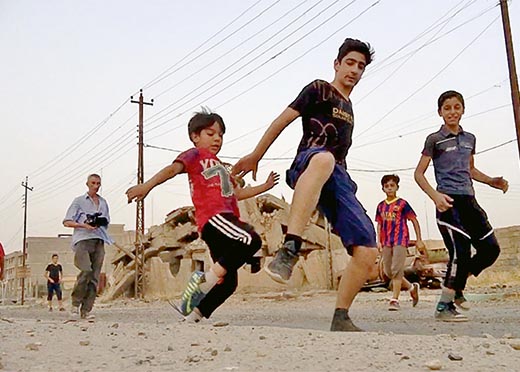
Haram football in Mosul, Iraq, 2017. Photograph: Francis Alÿs
  •  

U.S. Issues Strong “Do Not Travel” Advisory for Southwestern Colombia

The United States has updated a “do not travel” warning for large parts of southwestern Colombia after a wave of terrorist attacks have left over 20 people dead, underscoring growing international concern over the country’s deteriorating security situation and prompting regional authorities to demand stronger support from the leftist government of President Gustavo Petro.

The U.S. Department of State maintained most of Colombia at Level 3 – “Reconsider Travel” – citing crime, terrorism, civil unrest, kidnapping and natural disasters, but reinforced its Level 4 advisory for several conflict-hit regions, including the departments of Arauca, Cauca, Valle del Cauca and Norte de Santander.

Under the latest guidance, Americans are advised not to travel to Cauca, excluding the departmental capital Popayán, and Valle del Cauca, excluding Cali, due to crime and terrorism.

Norte de Santander and Arauca remain under the same highest warning level, while travel within 10 kilometers of the Colombia-Venezuela border is also strongly discouraged because of kidnapping risks, armed conflict and the possibility of detention.

“Do not travel to these areas for any reason,” the State Department said in its advisory, adding that violent crime, armed robbery and murder remain common, while terrorist groups continue to operate in remote and rural zones.

The warning was reinforced by a U.S. Embassy security alert issued in Bogotá on April 27, following 26 separate attacks across southwestern Colombia during the weekend of April 25. The attacks targeted transportation corridors, military installations and police stations, with authorities confirming at least 20 deaths and dozens of injuries.

Police and military facilities are frequent targets of armed groups, and the State Department warned that attacks in Colombia have included car bombs, grenades, truck bombs, explosive devices placed on roads and buildings, and even drones carrying explosives.

Illegal armed groups, including dissident factions of the former Revolutionary Armed Forces of Colombia (FARC), narcotrafficking organizations and other insurgent groups, have expanded their territorial presence in recent years, particularly in remote areas where coca cultivation, illegal mining and strategic trafficking corridors overlap.

The deadliest recent attack occurred near the El Túnel sector in Cajibío, Cauca, along the Pan-American Highway, where an explosive device detonated against civilian vehicles, killing 20 civilians and injuring over 50 more. Authorities attributed the bombing to FARC dissidents under command of alias “Iván Mordisco”.

The attack shocked the country and intensified criticism of President Gustavo Petro’s “Total Peace” policy, which seeks negotiated settlements with illegal armed groups but has faced mounting scrutiny as violence worsens in several regions.

In response, the Cauca governor’s office declared three days of official mourning. Authorities described the bombing as an “atrocious and unjustifiable” act and ordered flags to be flown at half-mast across public institutions and schools as a tribute to the victims.
The government also called for national unity and a stronger institutional response to confront armed violence in one of Colombia’s most volatile departments.

In neighboring Valle del Cauca, Governor Dilian Francisca Toro said she respected the U.S. warning but urged foreign governments and the media not to define the entire region by recent attacks.
“We ask that our region not be stigmatized,” Toro said, insisting that Valle del Cauca remains open to visitors and that violence does not represent the department’s cultural, economic and social identity.
At the same time, she sharply criticized the national government’s security response after attacks in Cali and Palmira, calling for “real, sustained and effective support” through more troops, stronger intelligence operations and direct action against criminal structures operating in the region.

Following an explosion near the Agustín Codazzi Engineers Battalion in Palmira, Toro announced an investment of nearly 70 billion pesos ($17 million) to strengthen police communications infrastructure, expand surveillance camera networks and improve secure transport corridors across municipalities.

In Cali, Mayor Alejandro Eder said an attempted attack against the Pichincha Battalion involved explosive gas cylinders, one of which failed to detonate while another exploded inside a minibus.

Authorities activated a citywide security operation and Eder offered a reward of up to 50 million pesos for information leading to the capture of those responsible. “We cannot allow terrorism to regain ground in our city,” Eder said.

  •  

Petro to meet Venezuela’s Delcy Rodríguez in Caracas, focus on border security

Colombian President Gustavo Petro will meet Venezuela’s interim leader Delcy Rodríguez in Caracas on Friday to address security challenges along the shared border, marking their first official encounter since Nicolás Maduro was captured by U.S special forces on January 3, 2026.

The meeting, to be held at the Miraflores presidential palace, is expected to center on coordination between the two countries to tackle armed groups, drug trafficking and other cross-border threats that have long destabilized frontier regions.

Colombia’s presidency said the talks aim to “strengthen bilateral cooperation, territorial control and coordination on security matters,” following the cancellation of a previous meeting scheduled for March 13 at the border due to security concerns cited by Caracas.

Friday’s talks come after Rodríguez assumed power earlier this year following the capture of former Venezuelan dictator Nicolás Maduro during Operation Absolute Resolve.

Petro is expected to travel to Caracas after holding meetings earlier in Bogotá. The leaders will first hold a private discussion to outline joint actions addressing border instability, followed by a broader metting between their respective delegations aimed at formalizing institutional commitments.

Officials from both countries are also expected to sign the final act of the III Commission on Neighborhood and Integration, with foreign ministers participating, before delivering statements to the media.

The Colombia–Venezuela border stretches more than 2,200 kilometers (1,367 miles) from the Caribbean coast to the Amazon basin and has long been a hotspot for illegal activity, including the presence of the National Liberation Army (ELN) guerrilla, as well as drug trafficking and smuggling networks.

Petro said earlier this week that the talks would place particular emphasis on the Catatumbo region, one of the most volatile areas along the frontier, where violence linked to armed groups and illicit economies has intensified.

“If we go, Catatumbo is a key issue to discuss with President Delcy,” Petro said during a cabinet meeting on April 21, adding that his delegation would include military and police officials to coordinate security strategies.

He said the goal is to develop a joint security plan, improve coordination between the two countries’ armed forces and police, and deepen intelligence-sharing, warning that a lack of cooperation could lead to operations that harm civilian populations.

The meeting also comes against the backdrop of a rebound in bilateral trade between the two countries following years of strained relations.

Trade flows have increased significantly in recent years, rising from around US$200 million three years ago to more than $1 billion, representing an increase of roughly 600%, according to official figures.

Colombia recorded a trade surplus of US$1 billion with Venezuela in 2025, underscoring the economic incentives for both governments to maintain stable ties despite ongoing political uncertainties.

Petro first announced the trip last week during an interview in Spain, referencing the earlier failed meeting and signaling his willingness to travel to Caracas to advance talks.

The visit marks a key test of Colombia’s role in engaging with Venezuela’s transitional leadership, as both countries seek to stabilize their shared border while cautiously rebuilding diplomatic and economic relations in the post-Maduro era.

  •  

Bogotá Mayor Galán calls for 8,000 more police after deadly film set attack

Bogotá’s mayor has called for a major expansion of the city’s police force following a deadly knife attack on a television production set and a separate killing at a public transport station, as authorities warn of shifting patterns of urban crime in Colombia’s capital.

Carlos Fernando Galán said the city requires at least 8,000 additional police officers to effectively confront rising insecurity, after convening an extraordinary security council on Monday with senior officials from law enforcement, the military and prosecutors.

The move follows a shocking outbreak of violence on April 18 during the filming of the television series Sin senos sí hay paraíso in the central Santa Fe locality — an incident that left three people dead and several others injured.

“This is an extremely serious and senseless act of violence that hurts all of Bogotá,” Galán said, expressing solidarity with the victims’ families and the country’s audiovisual sector. “To respond effectively, we must strengthen the police, improve investigations, expand technological capabilities and increase personnel.”

The attack unfolded at approximately 3:30 p.m. in the Los Laches neighborhood, near the eastern edge of Parque Nacional, where a production crew had been filming in a public street close to the Instituto Roosevelt.

According to preliminary findings, a man not affiliated with the production approached the set and, without any prior interaction, attacked a crew member with a sharp weapon.

The sudden assault triggered panic and a rapid escalation of violence. Witnesses said several people at the scene intervened in an attempt to stop the attacker, leading to a chaotic street fight in which multiple individuals were stabbed.

In the ensuing struggle, the assailant managed to inflict severe injuries on several people before being subdued. Three individuals — including the attacker and two members of the production team — were transported to Hospital La Samaritana, where they later died from their wounds.

A fourth person injured in the confrontation was taken to Hospital Universitario San Ignacio. Authorities have not released further details regarding that individual’s condition.

The victims from the audiovisual team were identified as Henry Alberto Benavides Cárdenas, 45, and Nicolás Francisco Perdomo Corrales, 18.

Officials have stressed that the attack does not appear to be linked to robbery or organized crime. Instead, investigators are examining the background of the alleged assailant, who had previously been reported for threats and is believed to have a history of mental health issues — factors now under review by judicial and medical authorities.

The case has rattled Colombia’s cultural sector, which have grown steadily in recent years as Bogotá has positioned itself as a regional hub for film and television production. For many in the sector, the attack represents a deeply unsettling breach of safety for the industry.

Monday’s security meeting also addressed a separate killing that occurred in the city’s public transport system. A 19-year-old man, identified as Freddy Santiago Guzmán, died after being attacked during a robbery at the Minuto de Dios TransMilenio station.

Galán said the two incidents, while distinct, highlight the need for a more robust and coordinated security strategy across the capital. He called on the national government to provide greater support in terms of funding, personnel and institutional backing.

“We will not step back in the fight against crime,” he said. “But Bogotá cannot face this challenge alone.”

Security Secretary César Restrepo warned of what he described as a structural weakness in controlling the circulation of weapons, particularly knives and other bladed instruments.

“More than 10,000 bladed weapons have been seized so far this year,” Restrepo said, adding that the continued flow of such weapons into the city remains a critical concern for authorities.

Officials also pointed to evolving criminal dynamics that are complicating law enforcement efforts. Galán described the emergence of more fluid and decentralized forms of criminal activity, in which individuals come together temporarily to commit specific acts before dispersing.

“We are seeing a kind of ‘freelance’ crime,” he said. “This creates new challenges for intelligence work and policing.”

The extraordinary security council brought together representatives from the police, the army’s 13th Brigade of the Colombian Army and the Fiscalía General de la Nación, as authorities seek to strengthen coordination in response to recent violence.

Police commander Giovanni Cristancho Zambrano said officers had recovered eight stolen vehicles in the past week and urged citizens to report suspicious behaviour, particularly involving occupants of private vehicles, to support preventive action.

The rash of incidents during one weekend in the capital have sharpened concerns over public safety, especially in central districts where commercial, residential and cultural life converge in densely populated areas.

For the city’s growing audiovisual sector, the killings have raised urgent questions about security protocols for productions operating in open urban environments. Messages of mourning circulated widely among industry professionals, reflecting both grief and frustration over the circumstances surrounding the attack.

While city authorities have pledged to reinforce measures across key areas, Galán’s call for thousands more officers reveals the scale of Bogotá’s security needs as it grapples with entrenched crime from micro-trafficking groups and rapidly evolving new forms of urban violence.

Investigations into both incidents remain ongoing, with authorities working to establish the full sequence of events and any underlying factors that may have contributed to the attacks.

  •  

Lufthansa and Qatar Airways Narrowly Avert Air Collision Over Bogotá

A Qatar Airways cargo jet and a Lufthansa passenger plane came within an estimated 200 meters of each other on final approach to Bogotá on Sunday evening, in a near miss that could have resulted in a major airline catastrophe.

The incident unfolded near El Dorado International Airport as both aircraft were being guided toward runway 32L during a late-evening arrival window. According to preliminary information, Qatar Airways cargo flight QTR 8174, operated by a Boeing 777 from São Paulo, was descending to approximately 9,600 feet when it converged with Lufthansa flight DLH 542.

The Lufthansa flight from Frankfurt Airport, operated by a Boeing 787 -900 ‘Dreamliner’ carrying some 270 passengers, had departed at 3:08 p.m. local time and was scheduled to land in Bogotá at 11:51 p.m. local time. As it approached the Colombian capital, the aircraft turning at roughly 9,700 feet, placing it on a dangerously converging path with the Qatar Airways freighter.

The two wide-body aircraft, each spanning more than 60 metres in length, were both landing from the East, and were above the residential neighbourhood of Modelia, according to late-night eyewitness reports.

Under standard air traffic control procedures, aircraft must maintain a minimum vertical separation of 1,000 feet, 0r 300 metres. The apparent compression of that buffer to an estimated 600 feet suggests a significant breakdown in sequencing or communication during the critical end-phase of a flight.

Disaster was averted when the Lufthansa aircraft abruptly climbed to over 12,000 feet, executing what appears to have been an emergency “Go-Around” avoidance manoeuvre. Such actions are typically triggered by onboard collision avoidance systems, which issue automated instructions to pilots when another aircraft is detected at dangerously close range. The manoeuvre forced the passenger flight to abort its initial landing approach before safely completing a second descent into Bogotá. No injuries were reported.

However, the near miss has renewed scrutiny over air traffic control operations in the Colombian capital, following another serious safety incident just two months earlier.

On February 20, a LATAM Airlines flight operated by an Airbus A320 carrying 157 passengers was forced to abort take-off after a military helicopter appeared unexpectedly near the runway at El Dorado International Airport.

According to Colombia’s civil aviation authority, Aerocivil, the aircraft—bound for San Andrés—had been cleared for departure after routine taxi procedures. At 17:04 local time, the plane was authorized for pushback from position C5, and by 17:13 it had been instructed to taxi toward runway 14R.

At 17:36, after receiving clearance for take-off, the crew initiated the departure roll. Moments later, pilots detected a rotary-wing aircraft flying on a parallel trajectory and approaching the runway environment. The unexpected presence of the helicopter forced the crew to execute an aborted take-off, a high-risk manoeuvre at speed, in order to avoid a potential collision.

Aerocivil attributed the incident to interference in the communication frequency of the airport’s north control tower, raising concerns about coordination between different air traffic control sectors. The episode, involving a commercial jet accelerating for departure and an unauthorized or mis-coordinated helicopter movement, has been classified as a serious operational safety event.

Together, the two incidents have cast a spotlight on the operational pressures facing El Dorado International Airport (SKBO), which handles hundreds of daily movements and serves as one of the busiest aviation hubs in Latin America. Bogotá’s high-altitude location—more than 2,600 metres above sea level—combined with surrounding mountainous terrain, requires tightly managed flight paths and precise coordination between controllers and pilots.

Sunday’s late evening incident involving two long-range aircraft is expected to undergo a detailed investigation, including analysis of radar data, cockpit voice recordings and air traffic communications.

On Monday, Colombia’s Aerocivil, affirmed that the event did not constitute a critical safety risk. In an official statement, the authority said runway 32 Right had been temporarily unavailable due to a third aircraft blocking the strip, prompting controllers to redirect incoming traffic—including the Qatar Airways and Lufthansa flights—to runway 32 Left.

Aerocivil said the change in instructions led to a reduction in speed that decreased horizontal separation between the two aircraft during the approach phase. However, it stressed that “controlled and safe vertical separation was maintained at all times.”

According to Aerocivil , the Lufthansa crew’s decision to abort the landing was carried out “independently” and in line with standard global aviation protocols. “This is a normal and standardised procedure in aviation, designed precisely to guarantee safety when visual or distance parameters so require,” the statement said.

The technical analysis, Aerocivil added, confirms that the situation was “an operational event managed under control” and “at no time represented a critical situation or a real risk to air safety for passengers or crew.”

The authority also urged the public and political actors not to “exaggerate or politicise” what it described as a strictly technical matter, warning that reliance on unofficial sources could generate unfounded alarm and affect confidence in Colombia’s aviation sector.

  •  

ARTBO Weekend turns 10: Bogotá’s Art Circuits Come of Age

ARTBO Weekend returns to Bogotá this week with a milestone worth noting – and a programme that suggests the event is no longer content with staying within its traditional comfort zones.

Celebrating its tenth edition from April 16 to 19, the city-wide initiative organized by the Bogotá Chamber of Commerce (CCB) arrives bigger, more dispersed and arguably more ambitious than ever. With over 160 free activities, 86 participating spaces and 280 artists from 27 countries, the numbers alone tell a story of steady expansion. But the real shift this year is geographic.

For the first time, ARTBO Weekend – Fin de Semana – pushes decisively into new territory. The addition of Kennedy, Nogal and Chicó as official circuits marks a deliberate move away from the event’s familiar enclaves. It is, in many ways, a statement about where Bogotá’s art scene is headed – or where it wants to go.

Kennedy stands out. Historically on the fringes of the city’s cultural programming, the district’s inclusion is more than symbolic. The reopening of the Chamber of Commerce’s exhibition space in the area signals a longer-term investment in decentralising Bogotá’s art ecosystem. It also raises a question that has hovered over ARTBO Weekend in recent years: who, exactly, is the event for?

For organisers, the answer has consistently been “everyone.” And, on paper, that commitment holds. Entry remains free across all venues, and the programme spans everything from gallery exhibitions and museum shows to performances, workshops, talks and editorial launches. The addition of complimentary transport routes – the Bus ARTBO – helps bridge the distances between circuits, turning what could be a logistical challenge into something closer to an urban stroll.

Still, navigating ARTBO Weekend requires a degree of planning. Bogotá is not compact, and its art circuits are spread across distinct neighbourhoods, each with its own pace and character. San Felipe, long considered the epicentre of the contemporary gallery scene, remains a reliable starting point, particularly for first-time visitors. Chapinero offers a more eclectic mix, where independent spaces sit alongside institutional venues, while the Centro Histórico provides a slower, more contemplative route through museums and heritage sites.

This year, however, the draw may well lie in the unfamiliar. Kennedy’s circuit promises a different rhythm – less polished, perhaps, but more reflective of the city’s broader social fabric. Chicó and Nogal, by contrast, introduce a more polished, design-forward dimension to the programme, expanding the conversation beyond traditional gallery spaces.

What distinguishes ARTBO Weekend from its larger counterpart, ARTBO, is precisely this sense of movement. There are no booths, no central venue, no singular point of focus. Instead, the city itself becomes the exhibition space, and the act of moving between circuits becomes part of the experience.

That experience is not purely visual. The “Conversaciones” series, curated by Raphael Fonseca of the Denver Art Museum, brings together artists, curators and academics for a series of panel discussions that aim to unpack the themes shaping contemporary art today. With free entry and simultaneous translation, the talks offer a point of entry for audiences looking to engage more deeply with the works on display.

Equally, the Encuentro Editorial continues to carve out a niche within the programme. Focused on independent publishing and the book as an artistic medium, it provides a quieter counterpoint to the busier exhibition circuits. For many, it is here – among the artist books and experimental print projects – that the creative pulse is most tangible.

After a decade, ARTBO Weekend has settled into a rhythm that feels both established and open-ended. It has succeeded in building audiences, supporting local galleries and positioning Bogotá within a wider Latin American art conversation. At the same time, it continues to grapple with the challenges of scale, access and representation that come with growth.

For visitors, the best approach may be to resist the urge to see everything. Pick two or three circuits per day. Use the Bus ARTBO, but don’t be afraid to walk, and take an umbrella for the inclement April weather. Allow time for the unexpected – a performance that spills into the street, a conversation that runs longer than planned, a small space that wasn’t on the map.

Because if ARTBO Weekend has proven anything over the past ten years, it is that Bogotá’s art scene is not confined to a single district, or a single idea of what art should be. It is scattered, evolving and, at its best, deeply connected to the city.

  •  

Colombia to cull wild hippos as population threatens Magdalena River ecosystems

Colombia will cull dozens of invasive hippopotamuses descended from animals illegally imported by Pablo Escobar, as authorities warn the rapidly growing population is endangering ecosystems and local communities.

Environment Minister Irene Vélez Torres said the government has authorized the euthanasia of up to 80 animals as part of a broader strategy to control the herd, which now numbers around 200 across the Magdalena River basin.

“We must act to reduce the hippopotamus population,” Vélez said, describing the cull as a “technical recommendation” following years of failed attempts to contain the species through sterilization and relocation.

The hippos — descendants of four animals brought to Colombia in the 1980s for Escobar’s private zoo at Hacienda Nápoles — have flourished in the country’s tropical lowlands, where a lack of natural predators and abundant water sources have enabled unchecked reproduction.

Scientists warn that without intervention, the population could surge to between 500 and 1,000 animals within the next decade, placing increasing strain on fragile river ecosystems.

The large herbivores consume vast quantities of vegetation and deposit significant organic waste into waterways, altering water chemistry and threatening native species, including manatees and turtles. Officials also cite rising risks to rural communities, with reports of hippos damaging farmland and attacking livestock and people.

The government’s plan, backed by a 2022 technical report from the Humboldt Institute and the National University, includes euthanasia, confinement and possible relocation. The program carries a budget of 7.2 billion pesos and is set to begin in the second half of 2026, targeting key hotspots near Puerto Triunfo and along the Magdalena River.

Previous efforts to manage the population — including sterilization campaigns in 2022 and 2023 and talks with countries such as India and Mexico to relocate animals — yielded limited results. Authorities say international transfers are unlikely, citing logistical challenges and genetic concerns linked to inbreeding.

Animal welfare advocates have condemned the cull. Senator Andrea Padilla, an outspoken animal rights campaigner, described the plan as “cruel” and accused the government of opting for the “easy way out.”

“Killings and massacres will never be acceptable,” Padilla wrote on social media, arguing the animals are victims of decades of state neglect.

But officials insist the risks posed by the species — considered among the world’s most dangerous large mammals — leave little alternative. In Africa, hippos are responsible for hundreds of human deaths each year, and Colombian authorities report increasing “hippo-human interactions,” including road accidents and attacks along riverbanks.

Escobar, who built his sprawling Napoles estate was killed in 1993, but the legacy of his private zoo has endured in unexpected ways. After his death, some animals were relocated, while others — including the hippos — escaped into the swamps.

Decades later, what began as a curiosity has become one of Colombia’s most unusual environmental dilemmas, forcing authorities to weigh animal welfare against the protection of native ecosystems.

  •  

Bogotá’s Museo Santa Clara opens provocative exhibition exploring queer spirituality and colonial memory

In the gilded stillness of one of Bogotá’s most striking colonial spaces, a new exhibition is quietly unsettling centuries-old certainties. Entonces llamó a un arcángel, the latest show by Colombian artist David Felipe Escobar, opens this week at the Museo Santa Clara, inviting visitors into a dialogue between baroque religious iconography and contemporary queer identities.

The exhibition, which opens on April 9 and runs until June 28, unfolds within the former church of the Real Convento de Santa Clara, a desacralised 17th-century site renowned for its lavish altar pieces and paintings of angels and archangels. Rather than treating these works as static relics, Escobar reactivates them—drawing them into conversation with bodies and identities historically excluded from the narratives they once upheld.

Taking its title from a verse by Saint John of the Cross, the exhibition imagines a meeting point between celestial beings and “queer, disobedient bodies” that exist beyond traditional gender norms. The result is not a confrontation with religious imagery, but a reframing of it—one that suggests ambiguity and fluidity were always present within baroque visual culture.

Indeed, Escobar’s premise rests on a subtle but powerful observation: that angels, often depicted as androgynous figures suspended between heaven and earth, already occupy a space of indeterminacy. By foregrounding this ambiguity, the exhibition reveals latent connections between colonial representations and contemporary non-binary identities, without imposing anachronistic readings onto the past.

The show is organised into two thematic sections. The first, centred on fluid identities in dislocated spaces, physically reshapes the museum environment. Selected paintings of archangels are removed from their traditional placements, disrupting long-standing visual hierarchies within the former temple. This curatorial gesture invites a more intimate engagement with the works, while questioning notions of permanence—both in museography and in gender constructs.

The second section, Una nueva Iglesia, shifts from disruption to speculation. Here, Escobar assembles apocryphal figures alongside materials such as chains and silks, constructing a symbolic space where alternative forms of belief can coexist. It is an imagined sacred realm—one that embraces multiplicity and offers refuge to identities historically marginalised by institutional religion.

Together, these interventions transform the Museo Santa Clara into a site of active reinterpretation. The building itself, once a place of rigid spiritual authority, becomes a stage for reconsidering how the sacred has been represented, contested and lived. In this sense, the exhibition does not position itself in opposition to religion, but rather proposes a space of encounter—where past and present converge to open new possibilities for understanding spirituality.

Born in Bogotá in 1992, Escobar’s practice spans visual art and writing, often exploring the intersections of violence, desire and the divine. A graduate of Parsons School of Design and Hunter College, he has participated in international residencies across Latin America. His literary work includes the novel Soap Bubble (2024) and the poetry collection 7 Iridescent Prayers (2026), further extending his exploration of spiritual and corporeal themes.

As Bogotá’s cultural calendar continues to foreground conversations around memory, identity and inclusion, Entonces llamó a un arcángel stands out for its quiet radicalism—suggesting that even within the most traditional of spaces, new meanings can still emerge.

The exhibition runs from April 9 to June 28, 2026, Tuesday to Sunday, 9:00 a.m. to 4:30 p.m., with a programme of guided tours, workshops and public discussions designed to deepen reflection on the relationships between body, spirituality and diversity. Admission is free.


  •  

Influencer “Stink Bomb” on Avianca Flight Triggers Safety Alert Over Atlantic

The stunt began, as so many do in the age of viral fame, driven by the need to provoke a reaction.

At 35,000 feet above the Atlantic, inside the sealed cabin of an Avianca B-787 ‘Dreamliner’ en route from Bogotá to Madrid, passengers aboard flight AV46 were unwitting participants in a reckless influencer incident involving a “stink bomb”. At the center of it: Yeferson Cossio, a content creator whose appetite for shock value appears to have outpaced even the most basic understanding of context.

The incident occurred on March 11, 2026, during the long-haul crossing between Colombia and Spain – a route that typically lasts close to 10 hours and operates far from diversion airports for much of its duration. According to Avianca, Cossio activated “an odor-generating chemical device” mid-flight, releasing a strong, foul smell inside the cabin. Several passengers reportedly complained of discomfort, while others grew concerned about the nature of the substance.

What may have been conceived as a prank for social media rapidly escalated into a situation requiring intervention from the cabin crew, who followed established safety protocols for unknown substances in flight. In aviation, any unexplained odor – particularly one described as chemical – can trigger alarm, given the potential risks ranging from toxic exposure to onboard system malfunctions.

There is a particular kind of arrogance required to mistake a transatlantic flight for a social media stage.

Aircraft cabins are not neutral spaces. They are tightly controlled environments governed by strict international safety regulations, with air continuously recirculated through pressurization systems. Introducing any foreign substance – no matter how trivial its intent – can compromise not only passenger comfort but also operational safety.

Avianca’s response was swift and unequivocal. In an official statement, the airline confirmed it had terminated Cossio’s contract of carriage upon arrival and canceled his return ticket, citing “disruptive behavior” that affected “security, order, discipline, and sanitation” on board. The company also announced it would pursue legal action.

The airline went further, emphasizing the context: the aircraft was flying over the Atlantic Ocean at the time of the incident, limiting options for emergency diversion. Under such conditions, even a perceived threat can escalate quickly, placing additional pressure on crew and passengers alike.

Cossio, who commands more than 12 million followers on Instagram and upwards of 19 million on TikTok, has since denied the allegations. He claims the incident has been misrepresented and insists he will release video footage to clarify what happened, dismissing the reports as “gossip” and false accusations.

But denial does little to erase the broader implications.

The influencer has built his online persona around shock-driven content – often involving elaborate setups designed to provoke strong reactions. In previous videos, similar “odor-based” gags have been used on friends and acquaintances. Transplanting that formula into a commercial aircraft, however, represents a significant escalation.

In the algorithmic economy of social media, outrage is currency. Platforms reward engagement – clicks, shares, comments – often amplifying the most extreme content. For influencers, this creates constant pressure to push boundaries further, to transform everyday situations into spectacles.

But what happens when that spectacle unfolds in a high-risk, regulated environment?

The incident has reignited debate in Colombia over the limits of digital content and the responsibilities of public figures. Avianca used the moment to call on lawmakers to advance a Proyecto de Ley 153 de 2025, aimed at strengthening sanctions against conflictive passengers and enhancing protections for airline crews.

The aviation industry, both in Colombia and globally, has reported a rise in unruly passenger behavior in recent years. From altercations to non-compliance with safety instructions, the incident comes amid a wider shift in airline policy toward stricter enforcement of passenger conduct. Carriers are increasingly drawing hard lines around behavior once dismissed as merely inconsiderate. United Airlines, for instance, recently updated its contract of carriage to require passengers to use headphones when listening to personal devices, explicitly reserving the right to remove those who refuse and even ban repeat offenders.

The message is clear: in the confined, high-stakes environment of a commercial aircraft, disruption – no matter how trivial it may seem on the ground – is no longer tolerated. And for the passengers aboard AV46, the experience was not content. It was a disruption – uninvited, unsettling, and entirely avoidable.

  •  

Colombia probes aging Hercules crash as Petro calls aircraft “scrap”

Colombian authorities are investigating whether mechanical failure, human error or excess weight caused the crash of a military C-130 aircraft that has now left at least 69 dead, as a political dispute intensifies over the condition of the country’s aging air fleet.

The aircraft, a Lockheed C-130 Hercules operated by the Colombian Aerospace Force (FAC), went down shortly after take-off on Monday near Puerto Leguízamo, in a remote jungle region bordering Peru and Ecuador.

The plane, identified as FAC 1016, was carrying 128 personnel when it crashed minutes after departure en route to Puerto Asís, roughly 200 kilometres away. Officials have confirmed dozens of survivors, though many remain hospitalised with injuries ranging from minor trauma to severe burns.

Emergency crews faced major challenges reaching the crash site due to the dense Amazonian terrain, while the impact and subsequent fire — compounded by detonations from ammunition on board — left many bodies severely damaged, complicating identification efforts.

Aging aircraft under scrutiny

The C-130H aircraft had been in service since 1983 and was donated to Colombia by the United States in 2020 as part of long-standing bilateral defence cooperation. It underwent a major maintenance overhaul in 2023, including structural inspections and system upgrades, before being returned to operation.

Despite its age, military officials insist the aircraft remained within operational limits. General Carlos Fernando Silva publicly contradicted President Gustavo Petro’s description of the aircraft as “scrap”, presenting detailed figures on its operational life during a televised cabinet meeting alongside Defence Minister Pedro Sánchez and senior military officials.

General Silva said the aircraft had flown 345 hours between 2021 and 2024, and 537 hours in 2025, broadly in line with standard annual usage of around 500 hours. Based on remaining flight capacity — estimated at up to 20,000 hours — he said the aircraft could theoretically continue operating for decades if strict maintenance protocols were followed.

Concerns have emerged from U.S. defence officials regarding maintenance standards and the availability of spare parts for aircraft supplied to Colombia, according to reports by El Tiempo. Sources cited by the newspaper said such aircraft can operate safely for around 10,000 hours, provided rigorous inspection and servicing regimes are maintained.

United States Southern Command has offered to support Colombia’s investigation with a technical team, underscoring the importance of determining whether maintenance, logistics or operational factors contributed to the crash.

Authorities reiterated there is no indication the crash was caused by hostile action, despite the aircraft going down in a region where dissident factions of the former FARC operate and where coca cultivation is widespread.

Investigators are focusing on three main hypotheses: mechanical failure, pilot error, or overloading at take-off. Officials said flight data, maintenance records and communications with air traffic control will be central to establishing the sequence of events.

The disaster has triggered a heated political exchange between President Gustavo Petro and his predecessor Iván Duque, exposing sharp divisions over defence policy and military procurement.

Petro described the aircraft as “scrap”, criticizing past administrations for accepting donated military equipment and arguing that such decisions have weakened Colombia’s operational capacity. “A country cannot defend itself with obsolete machines,” he said, pledging that his government would prioritize acquiring new equipment and strengthening domestic defence production.

He also questioned the long-term cost of maintaining aging platforms, suggesting that donated equipment can ultimately impose higher financial and operational burdens.

Duque strongly rejected the accusation, defending his administration’s handling of the armed forces and pointing to maintenance protocols carried out before the aircraft was delivered. He noted that C-130 aircraft continue to operate in dozens of countries worldwide and urged a technical investigation into factors such as aircraft weight, runway conditions and operational procedures.

Duque also accused Petro of callous social media statements in the hours after the tragedy, calling for restraint while investigations remain ongoing.

The crash adds to six previous military aviation accidents since 2022 and raises deep concerns about the readiness and sustainability of Colombia’s air fleet, much of which relies on aging platforms acquired through international cooperation.

Analysts say the incident could intensify scrutiny over budget-cuts in defence spending, maintenance capacity and the balance between acquiring new equipment and extending the life of existing assets.

As recovery operations continue in Putumayo’s dense jungle, authorities face the dual challenge of identifying victims and providing answers to families, while determining whether the disaster reflects isolated failure or deeper systemic issues within Colombia’s military aviation infrastructure.

  •  

Colombia mourns 66 dead after military Hercules crash in Putumayo

At least 66 people were killed after a Colombian military transport aircraft crashed shortly after take-off in the country’s southwest on Monday, authorities said, in one of the deadliest air disasters involving the armed forces in recent years.

The aircraft, a C-130 Hercules, went down at around 9:50 a.m. local time near the municipality of Puerto Leguízamo, in a remote jungle region close to the borders with Peru and Ecuador.

According to Colombia’s Defence Ministry, 128 people were on board the aircraft, including 11 crew members from the Colombian Aerospace Force, 115 members of the army and two police officers.

By late Monday, officials confirmed 66 fatalities: six from the air force, 58 from the army and two from the police. Rescue teams managed to evacuate 57 survivors, many of whom sustained injuries. Eight were transferred to hospitals in Florencia, while 49 were flown to Bogotá, where 19 are being treated at the Military Hospital and others for less serious injuries at a military medical facility.

Authorities said one soldier survived unharmed, while four others remained missing as search operations continued in dense jungle terrain.

The aircraft, identified as FAC 1016, had taken off from Puerto Leguízamo en route to Puerto Asís, roughly 200 kilometres away, when it lost altitude and crashed within minutes of departure.

Military officials said the plane went down about two kilometres from the airport in a rural area. Witnesses reported a fireball upon impact, followed by secondary explosions.

Defence Minister Pedro Sánchez said the situation was worsened by the detonation of ammunition being transported by troops on board.

“As a consequence of the fire, part of the ammunition carried by the personnel exploded,” Sánchez said, complicating rescue and recovery efforts.

Emergency crews faced significant challenges accessing the crash site due to the remote Amazonian terrain, while the condition of many bodies has made identification difficult.

No signs of attack

Military authorities said there is no evidence so far that the crash was caused by an attack.

“At this time, there is no information or indication that this was the result of an attack by any illegal armed group,” said General Hugo López, who added that a full investigation is underway.

The region where the aircraft crashed is known for the presence of dissident factions of the former FARC guerrilla group, which operate in areas with extensive coca cultivation used for cocaine production. However, officials stressed that current evidence points away from sabotage.

Questions over aircraft condition

The crash has triggered a political debate over the condition of Colombia’s military fleet, just weeks ahead of the country’s presidential elections.

The aircraft involved was a C-130H Hercules, an older variant of the widely used military transport plane originally introduced in the 1960s by Lockheed Martin.

According to available data, the aircraft had been in service since the early 1980s and was transferred to Colombia by the United States in 2020.

President Gustavo Petro suggested the plane represented outdated equipment acquired by a previous administration.

“In 2020, scrap was purchased,” Petro said on social media, referring to the government of former president Iván Duque. He added that his administration had sought to modernize military equipment but faced bureaucratic obstacles.

Opposition figures, however, argued that budget cuts under Petro’s government have affected maintenance and operational readiness within the armed forces.

In a message posted online, Petro expressed condolences to the families of the victims and praised residents of Putumayo who rushed to assist survivors.

“This is how a nation is built,” he wrote, thanking locals who reached the crash site on foot and by motorcycle to provide water and aid.

Authorities said the investigation will examine technical, mechanical and operational factors, including maintenance records and flight data, as Colombia seeks answers to a tragedy that has shaken the country’s military and reignited debate over defence policy.

  •  

Valencia picks Oviedo as VP to expand Colombia’s center-right base

Conservative presidential candidate Paloma Valencia has chosen economist and former statistics chief Juan Daniel Oviedo as her vice-presidential running mate, a move widely interpreted as an effort by the right-wing Centro Democrático to broaden its appeal beyond its traditional conservative base ahead of Colombia’s May 31 presidential election.

The alliance seeks to balance Valencia’s hard-line security message – closely associated with former president Álvaro Uribe Vélez – with Oviedo’s more technocratic and centrist profile, which resonates with younger, urban voters.

Announcing the ticket in the bustling commercial district of San Victorino in central Bogotá, Valencia said the decision followed consultations within the party and with Uribe himself.

“We have reached the conclusion that the best teammate is Juan Daniel Oviedo,” Valencia said. “He obtained a popular backing that excites all of us. He is connecting with many Colombians who did not feel represented.”

The announcement comes just days before the deadline to register presidential tickets with Colombia’s electoral authorities and follows Valencia’s decisive victory in the conservative primary coalition known as “La Gran Consulta,” where she secured more than three million votes. Oviedo finished second with more than one million, quickly emerging as one of the race’s unexpected political figures.

Balancinga new centre

Valencia, a staunch supporter of Uribe’s political project, has repeatedly signaled she will not distance herself from the former president’s ideological influence.

“I’m not going to distance myself from Uribe; I’m going to die a Uribe supporter,” she said in a recent interview with El País, reaffirming her commitment to the security agenda associated with the former two-term president.

Yet her choice of Oviedo indicates an attempt to broaden the coalition’s reach. The economist, who gained national prominence as director of Colombia’s national statistics agency – DANE – is widely viewed as a highly-skilled data-driven analyst with appeal among educated urban voters in their thirties and forties – many of whom supported the Colombian Peace Agreement.

That demographic has traditionally gravitated toward centrist figures such as former Bogotá mayor Claudia López or the moderate political movement associated with Sergio Fajardo.

Oviedo’s presence on the ticket could help the conservative bloc penetrate that electorate while also tempering some of the party’s more polarizing rhetoric.

Beyond Differences

The partnership did not come easily. According to campaign strategists involved in negotiations, several days of discussions were required to reconcile differences between the candidates – particularly regarding Colombia’s peace process.

The Centro Democrático has long been critical of the transitional justice system created by the 2016 accord, especially the Jurisdicción Especial para la Paz (JEP), which has been investigating war crimes committed by ex-FARC and Armed Forces during two decades of the internal conflict.

Oviedo, however, has publicly supported the peace agreement and defended the need for reconciliation. Speaking after accepting the nomination, Oviedo emphasized the importance of political dialogue despite ideological differences.

“This is about listening,” he said. “In this coalition we are capable of recognizing our differences but uniting around a fundamental purpose: looking toward the future and building a country where everyone fits.”

He also highlighted his intention to include diverse sectors of Colombian society, mentioning farmers, informal workers, women and the LGBT community.

Strategic Moves in Gran San

The announcement’s location – San Victorino’s Gran San commercial center, one of Bogotá’s busiest retail hubs- was also symbolic. The district is a bustling marketplace dominated by small traders and informal workers, a constituency both candidates say they want to court.

Valencia described the alliance as a forward-looking project for a country weary of political polarization.

“We have many pains as a nation,” she said during the event. “If we only look backward we will find wounds that still need healing. But we have another option: to look forward toward the future we deserve.”

She also praised Oviedo’s credentials, describing him as a policymaker who understands the deep structural and social challenges facing Colombia. “He likes numbers, he likes studying,” she said. “Government is not about talking nonsense about problems – it’s about understanding them deeply in order to solve them,” she said to waves of applause.

The announcement quickly triggered reactions from across Colombia’s political landscape.

Former Liberal president Ernesto Samper welcomed the decision, arguing that Oviedo’s acceptance of the vice-presidential role signaled an implicit recognition by the right-wing party of the peace process. “The acceptance of Juan Daniel Oviedo demonstrates that the Centro Democrático validates the Havana peace agreement and the continuation of the JEP,” he Samper.

With the campaign entering its decisive phase, the Valencia-Oviedo ticket represents a strategic attempt to unite two currents within Colombia’s conservative electorate: an older security-focused base loyal to Uribe and a younger urban sector seeking pragmatic solutions to the internal conflict.

Whether the combination can bridge Colombia’s ideological divide – or deepen it- will likely shape the tone of the presidential race in the weeks and moths leading to the decisive vote.

  •  

Indigenous communities caught in armed clashes in Colombia’s Sierra Nevada

Colombia’s high-altitude Sierra Nevada de Santa Marta has become the latest flashpoint in the country’s worsening rural security crisis, after armed clashes between illegal groups left Indigenous communities trapped in the crossfire and triggered a humanitarian evacuation mission.

Authorities confirmed that at least nine wounded civilians, including two minors, were evacuated following heavy fighting between the Clan del Golfo (Gulf Clan) and paramilitary group Autodefensas Conquistadoras de la Sierra Nevada, which are battling for territorial control in the mountainous region.

The fighting first broke out in the foothills near Aracataca, department of Magdalena, and birthplace of Literature Nobel Laurate Gabriel García Márquez. According to local news sources, several indigenous Arhuaco communities reported being trapped by gunfire, and in some cases, used as human shields during the armed confrontations.

Colombia’s human rights ombudsman, the Defensoría del Pueblo, deployed a humanitarian mission to monitor the deteriorating situation and coordinate assistance with Indigenous authorities, regional officials and the armed forces.

The operation succeeded in evacuating nine injured people who had been confined in areas affected by the fighting. Among the wounded are two children, highlighting the vulnerability of civilian populations in the isolated highlands.

The mission was carried out in the Indigenous community of Gunmaku, where Arhuaco traditional authorities accompanied humanitarian teams in assessing the impact of the violence and assisting those affected.

Officials said both armed groups agreed to temporarily respect a humanitarian corridor, allowing rescue teams to reach the injured and transport them to safety.

Despite the evacuation, the Defensoría warned that the situation remains critical.

Preliminary humanitarian reports indicate the disappearance of two women, the killing of a man, and the injury of a child, while many residents remain confined in their communities due to the ongoing clashes.

“We are deeply concerned about the population in Serankua and nearby rural settlements,” stated the ombudsman’s office, referring to communities located high in the Sierra Nevada where access is extremely difficult.

The entity added that the confrontation had been anticipated in earlier early-warning alerts, but the national government failed to fully prevent the escalation.

Rescue operations have been complicated by the region’s extreme geography.

Much of the affected territory lies more than 2,800 metres above sea level, accessible only by footpaths and rugged mountain trails. Helicopter evacuations carried out by the Colombian Army involved considerable risk due to the altitude and lack of landing zones.

Magdalena governor Margarita Guerra Zúñiga confirmed that the military conducted what she described as a “humanitarian extraction” operation, transporting injured civilians to Santa Marta for treatment.

Several evacuees are receiving medical attention and are in stable condition, except for one child who required emergency surgery.

Indigenous leaders are now warning of forced displacement, similar to the humanitarian crisis last year in the mountainous Catatumbo region, Norte de Santander, close to the Venezuelan border.

Protection agencies, such as the Childrens Welfare Agency (ICBF) are calling on armed groups to respect international humanitarian law, particularly the principles of distinction and precaution, which prohibit attacks against civilians or the use of non-combatants as human shields.

Human rights monitors also called for stronger state presence in the Sierra Nevada, warning that ancestral communities remain highly vulnerable to violence and coercion from criminals.

Security analysts claim the clashes are part of a broader territorial struggle for control of drug trafficking routes that extend from La Guajira to the Uraba Gulf, as well as expanding extortion networks along Colombia’s Caribbean coast.

The Clan del Golfo, Colombia’s largest drugs cartel, has expanded operations across the Caribbean in recent years. The group is now competing for more territorial control with the Autodefensas Conquistadoras de la Sierra Nevada,  also known as “Los Pachenca”.

The Sierra Nevada — a vast mountainous ecosystem rising from the Caribbean coast to snow-capped peaks — is the spiritual and ancestral home for the Arhuaco, Kogui, Wiwa and Kankuamo peoples.

Community leaders warn that the expansion of armed groups threatens not only civilian lives but also the ecological and cultural balance of the mountain range, which Indigenous “elders” – mamos – regard as the “Heart of the World”.

Humanitarian agencies have urged Colombia’s government to convene the Intersectoral Commission for Rapid Response to Early Warnings (CIPRAT) and strengthen coordination between the Interior Ministry, regional authorities and the Victims’ Unit.

While more army units are being deployed to the area, Indigenous leaders warn that unless the government of President Petro establishes a permanent security and humanitarian presence, the remote communities inside the world’s highest coastal mountain range will find themselves trapped in a conflict that engulfs not only their ancient territories, but also, one of the country’s most recognized tourism destinations.

  •  

Paloma Valencia surge reshapes Colombia race as election season begins

Colombia’s presidential race entered a decisive new phase this week after Sunday’s inter-party primaries propelled conservative senator Paloma Valencia into the national spotlight and triggered a scramble among political factions to forge alliances ahead of the May 31 election.

Valencia’s commanding performance in the right-wing “La Gran Consulta” primary – where she secured roughly six million votes – has reshaped the political landscape, opening a contest within the conservative bloc while forcing candidates across the spectrum to recalibrate their strategies.

The vote effectively marks the start of Colombia’s election season, in which presidential hopefuls must broaden their appeal beyond ideological bases while navigating a fragmented political field.

For the right, the central challenge is whether it can attract moderate and centrist voters without alienating the hardline supporters who form the backbone of a political base – and party – associated with former president Álvaro Uribe.

Valencia, a senior figure in Uribe’s Democratic Center, emerged from the primaries as one of the leading conservative contenders after her vote total surpassed the turnout achieved by President Gustavo Petro and Vice President Francia Márquez in their coalition primaries ahead of the 2022 election.

For Uribe’s movement, which appeared weakened after the presidency of Iván Duque and several electoral setbacks, the result represents an unexpected demonstration of political resilience.

Yet the surge of security-focused Senator has also intensified competition from the far right.

Barranquilla-based lawyer Abelardo de la Espriella, who had previously dominated opposition to Petro, now faces a rival capable of consolidating support among traditional party structures while courting voters beyond the hard-right.

De la Espriella announced Tuesday that Ivan Duque’s former finance minister José Manuel Restrepo will join his presidential ticket as vice-presidential candidate, a move widely interpreted as an attempt to add economic credibility to a campaign largely driven by security rhetoric.

Political observers on the night of the consulations emphasized that Uribe will play a decisive role in shaping the outcome of any hard-right and center-right alliance.

The former president remains the most influential figure within Colombia’s right-wing political establishment and will act as “kingmaker” when negotiations begin over a possible understanding between Valencia and De la Espriella aimed at consolidating the anti-Petro vote.

Whether such an agreement materializes remains uncertain, as both candidates seek to position themselves as the principal challenger to the left in the first round scheduled for May 31.

Sunday’s primaries also produced a surprise showing from economist Juan Daniel Oviedo, the former head of Colombia’s national statistics agency (DANE), who secured more than one million votes and finished second in La Gran Consulta.

Oviedo has cultivated support among urban and younger voters, particularly in Bogotá, where his technocratic style and socially liberal positions have resonated with diverse constituencies, including large segments of the LGBTQ community.

Yet his unexpectedly strong performance now places him at a political crossroads.

Oviedo is expected to meet Valencia on Thursday to discuss a possible alliance that could include joining her ticket as a vice-presidential candidate.

Such a partnership could help Valencia reach voters beyond the traditional conservative base. But it also carries risks for Oviedo, whose supporters may question a close association with the Uribe-aligned political establishment that has dominated Colombia’s right for more than two decades.

The two politicians differ sharply on several issues, including the 2016 peace agreement with FARC  and role of the Special Jurisdiction for Peace (JEP), the transitional justice tribunal created to prosecute war crimes committed during Colombia’s internal conflict.

While Oviedo has defended Juan Manuel Santos’ peace agreement and role of the tribunal, Valencia has long criticized JEP and promoted reforms aimed at limiting its legal authority.

Despite the shifting dynamics on the right, the left retains an important institutional foothold following Sunday’s legislative elections.

Petro’s governing coalition, the Historic Pact, emerged as the largest force in the Senate with 25 of the chamber’s 102 seats, according to official results, though it fell short of an outright majority and will need alliances with other parties in the fragmented legislature.

Within the progressive camp, however, the primaries exposed clear divisions.

Former Senate president and former Ambassador to London Roy Barreras secured just over 200,000 votes in the left-wing primary and publicly blamed Petro for the weak turnout, accusing the president of discouraging supporters from voting on Sunday to cement the official candidacy of hard-left candidate Iván Cepeda.

The primaries also underscored the continued weakness of Colombia’s political center.

Former Bogotá mayor Claudia López won her coalition’s primary but attracted fewer than half a million votes, a disappointing result that leaves her entering the first round of the presidential race with reduced political momentum.

With nearly three months remaining before the first round of voting, the campaign that begins this week bears little resemblance to the one that existed before Sunday’s primaries.

The conservative opposition remains divided but newly energized, the left retains institutional strength despite internal tensions, and the political center faces an uphill battle to remain relevant.

In a race now expected to be decided in two rounds, Colombia’s presidential contest is once again wide open as candidates maneuver to build alliances and capture the pivotal voters who will ultimately decide the country’s political direction.

  •  

Petro opens consultation on ‘Black Line’ after Colombia court ends protection decree

President Gustavo Petro has announced the start of a consultation process with ethnic communities to draft a new decree protecting the sacred “Black Line” of the Sierra Nevada de Santa Marta after Colombia’s highest administrative court annulled the previous legal framework governing the ancestral territory.

The announcement came late on March 4 during an interethnic assembly in the Caribbean city of Santa Marta attended by Indigenous authorities, Afro-Colombian representatives and members of Petro’s government.

The process follows a February 12 ruling by the Council of State of Colombia that struck down Decree 1500 of 2018, a measure issued under former president Juan Manuel Santos that formally recognized the “Black Line” as the spiritual and cultural boundary of the ancestral territory of the Sierra Nevada’s Indigenous peoples.

The ruling removed the legal recognition of 348 sacred sites across the mountain range, an area spanning the Caribbean departments of La Guajira, Magdalena Department and Cesar Department.

The court concluded the decree had not complied fully with the constitutional requirement of prior consultation with all ethnic communities potentially affected by the territorial delimitation.

Sacred geography

For the Indigenous peoples who inhabit the Sierra Nevada – Arhuaco, Kogi, Wiwa and Kankuamo p – the “Black Line” is far more than a geographic boundary.

It represents a cosmological network of sacred sites connecting coastal lagoons, rivers, glaciers and mountain peaks across what Indigenous leaders describe as the “Heart of the World.”

Through these sites, spiritual elders – known as mamos – maintain rituals they say preserve the balance between humans, nature and the spiritual realm.

“The Sierra is not only a mountain; it is a living being that breathes through its lagoons, its glaciers, its stones and its lines of energy,” Indigenous leaders said following the ruling, warning that removing the decree threatens decades of cooperation between the state and Indigenous authorities.

The now-annulled decree had been the product of years of negotiations between Indigenous authorities and the Colombian government following orders from the Constitutional Court of Colombia to formally recognize ancestral territories and sacred geography.

The mapping of the 348 sites was supported by technical studies conducted by the national mapping agency, the Instituto Geográfico Agustín Codazzi.

For Indigenous leaders, the decree served as the main legal instrument protecting the sacred network from outside interventions, including mining projects, infrastructure development, tourism ventures and energy exploration.

With its annulment, communities fear they are left without an effective legal mechanism to defend the territory and its ecosystems.

The Sierra Nevada is widely regarded by scientists as one of the most biodiverse mountain systems on Earth, rising from sea level to snow-covered peaks in less than 50 kilometres.

Speaking before Indigenous delegates in Santa Marta, Petro said the consultation process would now place communities at the centre of the decision-making process.

“Here a process begins in which you have the word, not the government,” Petro told the assembly. “Now corresponds a process of consultation. The consultation belongs to you. I hope it ends well and quickly so we can issue the decree again.”

The president urged participants to move forward without unnecessary delays while ensuring the key issues are discussed.

“Sometimes our own dialectic of discussion leads us to prolong processes or find contradictions where none exist,” he said.

Petro framed the protection of the Sierra Nevada not only as a territorial matter but also as a message to a world facing increasing geopolitical conflict.

“The Heart of the World must be at peace, because if the Heart of the World is not at peace, humanity will not be at peace,” Petro said. “Today humanity is not at peace – missiles fall everywhere.”

The government says the consultation will include not only the four Indigenous nations of the Sierra but also neighbouring groups such as the Ette Ennaka people and coastal communities including Afro-descendant groups and residents of Taganga.

According to Vice-Minister for Social Dialogue and Human Rights Gabriel Rondón, the current stage is an “intercultural dialogue” designed to define a roadmap toward a new decree that avoids the legal flaws identified by the Council of State.

“The purpose is to start from the beginning, clarify doubts and create a broad path that allows us to agree on a new administrative act without the failures of the previous one,” Rondón said.

PNN Tayrona reopens

Separately, the government confirmed that the nearby Tayrona National Natural Park will reopen to visitors on March 5 after a three-month closure over security concerns with illegal armed groups operating in the Sierra Nevada.

The Ministry of Commerce, Industry and Tourism (MinCIT), said it has mobilised institutional support and technical funding to ensure the park resumes operations with security and sustainability guarantees.

Tourism authorities also announced plans for light infrastructure investments of about COP$2.7 billion to improve visitor facilities and promote Colombia’s network of national parks as leading ecotourism destinations.

  •  

Ex-FARC admit to recruiting 18,677 children during Colombia conflict

Colombia’s transitional justice system has reached a morally charged milestone. The seven former commanders of the Revolutionary Armed Forces of Colombia (FARC-EP) guerrilla have formally accepted responsibility for the recruitment of 18,677 minors during the country’s decades-long internal conflict, acknowledging not only the scale of the practice but also the sexual and reproductive abuses that accompanied it.

The admission, submitted to the Special Jurisdiction for Peace (JEP), marks a shift in tone from earlier, more defensive statements. It comes as the country approaches the tenth anniversary of the 2016 peace agreement, signed between President Juan Manuel Santos and Rodrigo Londoño, and at a moment that has opened a more complex struggle over truth and accountability.

The signatories of the letter are Rodrigo Londoño Echeverry, known by his wartime alias “Timochenko”, along with Pastor Alape Lascarro, Julián Gallo Cubillos, Milton de Jesús Toncel Redondo, Pablo Catatumbo Torres, Rodrigo Granda Escobar and Jaime Alberto Parra Rodríguez.

In a video delivered to the tribunal’s Chamber for Acknowledgment of Truth, the seven former members of the guerrilla’s last Secretariat “ask forgiveness from the victims and society for the recruitment and use of girls and boys,” as well as for “cruel treatment, homicides, sexual, reproductive and prejudice-based violence” inflicted within their ranks.

The language is unusually direct. The tribunal, in turn, has accepted these declarations as “a starting point for designing direct restorative encounters with victims,” emphasizing that the process remains ongoing and conditional. This is not, it insists, “a conclusion but the beginning of a more demanding phase” of recognition.

The figures involved are stark. The JEP has identified 18,677 victims of child recruitment between 1996 and 2016, number that exposes what it calls a “violence that was invisible, even to the state itself.” Prior to the tribunal’s investigation, official records had produced only 387 cases and 45 sentences, five of them acquittals – a gap that hints at the scale of impunity.

The crimes extend far beyond recruitment. The tribunal has organized its findings into five “macro-criminal patterns”: the enlistment of minors, including those under 15; mistreatment, torture and killings within the ranks; sexual violence; reproductive violence, including forced contraception and abortions; and persecution based on sexual orientation or gender identity.

Particularly striking is the acknowledgment of reproductive control. The former commanders concede that the imposition of contraceptive methods and the forced termination of pregnancies constituted forms of violence that “violated the dignity and integrity” of those affected – most of them girls and adolescents. Such practices, long alleged by victims, had previously been downplayed or denied.

The JEP’s statement underscores the scale and diversity of those harmed. More than 11,000 victims are formally accredited in Case 07, including some 2,000 individuals and over 9,000 members of Indigenous and Afro-Colombian communities. For these groups, the consequences were not merely individual but collective. The recruitment of children, the tribunal notes, “aggravated the risk of physical and cultural extinction” for several communities.

The social geography of the crime is also revealing. Recruitment thrived in peripheral regions where state presence was weak and armed actors exercised de facto authority over vulnerable populations. Children were drawn in through coercion, deception or, in some cases, the promise of protection in violent environments. Once inside, many encountered a regime of discipline and control that blurred the line between indoctrination and abuse.

The tribunal is explicit about the enduring damage. Victims, it says, continue to live with “profound emotional, psychological and physical harm,” often compounded by stigma and exclusion. Many are still reconstructing “their life projects and identities,” a process that has stretched into adulthood.

Crucially, the JEP frames the former commanders’ admission not as an act of closure but as an invitation—to victims and to society. In its words, “this is not a point of arrival, but the beginning of an encounter” between those responsible and those who suffered. Whether that encounter leads to reconciliation or renewed grievance remains uncertain.

Under Colombia’s transitional justice model, such acknowledgments carry legal consequences. Full and truthful admissions can lead to alternative sentences for reparations and restorative measures rather than prison. The tribunal is now assessing whether the former commanders’ statements meet that threshold. Victims, for their part, are being asked to “read, listen and weigh” the declarations and decide what they mean for their own processes.

Early reactions have been met with skepticism and resignation. Some victims’ representatives have described the statements as a “first step toward dialogue,” while noting that they fall short of a complete account.

The broader political context complicates matters. Colombia’s security situation has deteriorated in large swathes of the country, with dissident factions and other armed groups recruiting minors even as the state grapples with the legacy of past conflicts. The JEP itself alludes to this continuity, calling on “society as a whole, including new structures of violence,” to ensure non-repetition.

That appeal highlights the paradox at the heart of Colombia’s peace process. The country has made significant strides in uncovering the truth about past atrocities, yet struggles to prevent their recurrence. Transitional justice, in this sense, is both retrospective and urgently contemporary.

The former FARC leaders, for their part, have pledged to remain on the “dialogical and restorative path” and to participate in encounters with victims. They speak of the “deep and lasting damage” caused by their actions and express willingness to contribute to guarantees of non-repetition. Whether these commitments translate into tangible repair will depend on what follows.

For now, the significance of the moment lies less in what has been resolved than in what has been acknowledged. The recruitment of children – once a peripheral issue in public debates – has been placed at the center of Colombia’s reckoning with its violent past.

As the JEP puts it, recognizing these crimes “enables a broader reflection” on how to ensure that childhood is never again sacrificed to war. It is a sober ambition. Colombia has, at last, begun to confront one of the conflict’s darkest truths. Whether it can fully reckon with it remains an open question.

  •  

Colombia set for inter-party primaries, presidential race gripped by apathy

Colombians head to the polls on March 8 for what is, formally, a legislative election. In practice, it is something more consequential: a stress test of the country’s political coalitions ahead of the May 31 presidential race already defined by fragmentation – and by mounting security concerns for right-wing candidates.

The vote for Congress matters. But the country will be watching the consultas presidenciales—three parallel primaries that function as a de facto first round. In them, Colombians vote less for programs than for trajectories: continuity, rupture, or something in between.

On the right, Paloma Valencia is poised to dominate La Gran Consulta, a coalition spanning moderate conservatives, independent liberals, and slate of well-known political leaders. Polling places her far ahead of her rivals, with margins large enough not merely to win, but to define the bloc itself. In a pre-Petro era, such a coalition might have fractured under its contradictions, but today, it coheres around one single objective: opposition to the government of Gustavo Petro and the restoration of order- political, fiscal, and territorial.

Valencia’s strength is not only electoral; it is structural. She inherits the Centro Democrático machinery and the disciplined base loyal to former two-term president Álvaro Uribe, whose legacy continues to shape Colombia’s right. But her challenge begins the moment she wins. The right is not unified—it is merely aligned. To convert alignment into victory, she will need to reach out to Abelardo de la Espriella, a pro-Bukele, pro-Milei, lawyer whose mass appeal is rooted in a more visceral, anti-left electorate. If Valencia succeeds in clinching La Gran Consulta, the right could reach May 31 not only united, but energized. If she fails, she risks replaying a familiar Colombian pattern: ideological proximity undone by personal rivalries.

With “El Tigre” de la Espriella lurking in the shadows, the right looks ascendant. Uribe Vélez now faces the daunting challenge of fusing his CD base with Espriella’s fervent Defensores de la Patria.

A Spectral Center

Claudia López is expected to win her consultation comfortably, aided as much by the absence of strong rivals as by the presence of loyal supporters. Her likely vote total- perhaps around one million—will be spun as a comeback. In reality, it reflects the residual strength of her partisan mayoralty and Bogotá-based electorate.

The absence of Sergio Fajardo from the Consulta de las Soluciones underscores the fragmentation of Colombia’s center. A strong showing by López will force a choice: seek alliances quickly or face marginalization after March 8. Even a López–Fajardo ticket would face sharp criticism from within their respective bases, and risk a repeat of the 2022 election season in which Sergio Fajardo’s campaign imploded under the weight of Petrismo or Uribismo.

On the left, the situation is more fluid – and more revealing.

The exclusion of Iván Cepeda has transformed the Frente por la Vida into a contest between two practitioners of political adaptation: Roy Barreras and Daniel Quintero. Neither represents the ideological hardline of Petrismo. Both instead offer variations of what might be called continuity without commitment – a “Petrismo 2.0” calibrated for chaise-lounge socialists.

Barreras relies on organization, his tenure as a loyal Petro “insider”, and the quiet efficiencies of Colombia’s territorial elites. Quintero counters with a direct, anti-Uribe narrative amplified through social media. Each seeks not to replace Petro, but to reinterpret him. Yet the Barreras-versus-Quintero contest feels less like a continuation of an embattled political project than an attempt for both candidates to repackage their political futures.

The most important actor on the left may be Petro himself – precisely because of his absence. By declining to endorse the consultation, he has deprived it of coherence. The result is a referendum on his government without his direct participation, and turnout that may struggle to reach even one million voters. In political terms, that is not a mobilization. It is a warning.

What emerges from these three contests is not a country coalescing, but one sorting itself into sharper, more disciplined minorities. The right is concentrated and motivated. The left is divided and improvisational. The center is present, but peripheral.

Then there is the largest bloc of all: those who will not participate. Polling suggests that a majority of Colombians will abstain from the primaries altogether. This is not apathy in the conventional sense. It reflects something more structural –  a growing distance between citizens and political mechanisms that no longer seem to mediate power so much as ratify it.

In that respect, March 8 clarifies less about who will win than about how Colombia now conducts politics. Elections no longer aggregate a national will; they stage competitions between organized intensities. Victory belongs not to the broadest coalition, but to the most cohesive one.

By Sunday night, the candidates will claim momentum. Some will have earned it. Others will have inherited it. But all will confront the same reality: the path to the presidency no longer runs through the mythical Colombian center. It runs through blocs – disciplined, polarized, and increasingly unwilling to transcend partisan loyalties for the greater good.

  •  

Marina Sánchez paints Bogotá’s Cerros in luminous colour at Museo del Chicó

In Bogotá, the mountains are never out of sight. They rise abruptly along the city’s eastern edge, forming a green wall that shapes the capital’s light, weather and sense of place. For Colombian artist Marina Sánchez, the ridges that surround the Colombian capital’s cardinal points are also more intimate: a constant presence, a point of orientation and, increasingly, a subject of quiet urgency.

Her latest exhibition, Panorámicas de la Sabana, runs from 5 to 29 March inside the colonial  Museo del Chicó, where 26 acrylic-on-canvas works reinterpret the high-altitude plateau of the Sabana through a distinctly chromatic lens. Installed in the museum’s Salón Colonial, the show brings together landscape, memory and abstraction in a series that feels both personal and outward-looking.

Sánchez has long been recognized for her expressive use of colour but this body of work marks a measured shift. While her earlier practice leaned towards abstraction, here the forms are more legible—ridgelines, shifting skies, traces of vegetation – yet never fixed. Instead, they dissolve through layered pigments and gestural brushwork that privilege sensation over strict representation.

What distinguishes Sánchez’s approach becomes clear in the work itself. The Cerros are not rendered as stable topography but as shifting, atmospheric forms. Bands of diffusec green rise and fold into one another, interrupted by flashes of cobalt, ochre and lilac, while a dense, unsettled sky presses down with quiet intensity. The composition resists stillness. It moves – closer to inclement weather than landscape.

Rather than mapping terrain, Sánchez constructs it through colour. The mountains appear to breathe, their contours dissolving at the edges as if seen through mist or memory. There is no single vantage point; the eye travels across the canvas, tracing lines that feel at once familiar and unstable.

“I want to show the relevance of these giants that often go unnoticed,” Sánchez says. For Bogotá’s residents, the hills are omnipresent yet rarely examined beyond their silhouette. In her telling, they become active participants in the city’s identity – “guardians” that accompany an urban landscape marked by rapid, and at times impersonal, expansion.

The project began during the pandemic, when isolation altered both her routine and perspective. Working from home, Sánchez found herself drawn to the view outside her window: the slow fade of light across the mountains, the subtle shifts in colour at dusk.

“Being away from people – family, friends – I was left with the sky and the light of sunsets,” she says. “I wanted to replicate something I hadn’t fully appreciated and, in doing so, feel part of nature.”

Her visual language, however, is not shaped by Bogotá alone. Sánchez has exhibited in New York City and Milan – cities where she has also lived, and whose pace and structure have informed her approach to rhythm and composition. If Bogotá provides the grounding geography, New York and Milan introduce a contrasting sensibility: verticality, movement and a heightened awareness of structure.

Artist Marina Sánchez describes her work as “chromatic poetry”, a phrase that aligns with her broader intention: to create space for reflection. Photo: Courtesy artist/Marina Sánchez

These contrasting narratives – from urban to rural, isolation and engagement, are visible throughout Panorámicas de la Sabana. Linear gestures – suggestive of passing headlights or urban flow – cut across certain canvases, briefly suspending the stillness of the mountains. It is a restrained intervention but an effective one, hinting at the tension between expansion and preservation.

Colour, in Sánchez’s palette, is not decorative but foundational. Greens shift from luminous to dense; blues dissolve into shadow; entire forms recede into haze. The landscape is reassembled through pigment, hovering between recognition and abstraction.

She describes her work as “chromatic poetry”, a phrase that aligns with her broader intention: to create space for reflection. “I want to offer a moment of calm beyond the difficulties that surround us,” she says, “despite the inevitable conflicts, wars and inequalities.”

In Bogotá, that impulse carries particular weight. The Eastern Hills and peaks to the West are not only a visual constant but a fragile ecological system—central to water sources and biodiversity, yet increasingly under pressure from urban growth. Sánchez’s paintings do not argue this point directly; instead, they suggest it, allowing atmosphere and colour to carry meaning.

For the artist, colour remains essential. “It would be difficult for me to imagine the world in black and white,” she says. “Colour is vitality. It gives strength and solidity. It is pure magic.”

That conviction runs through the exhibition. The hills emerge not as backdrop but as presence—shifting, watchful and quietly insistent. In Sánchez’s hands, they ask to be seen again, and more carefully this time.

Panorámicas de la Sabana runs from 5 to 29 March at the Museo del Chicó (Carrera 9 No. 93-38, Bogotá). Admission is free.

  •  

UN report warns Colombia faces worsening human rights crisis

Colombia is at risk of sliding back into one of the darkest chapters of its recent history, according to a stark new report by the United Nations, which warns that escalating violence, territorial control by illegal armed groups and political instability are eroding hard-won human rights gains.

The annual assessment by the Office of the High Commissioner for Human Rights paints a troubling picture of 2025: a country where armed actors have deepened their grip over rural regions, civilians are increasingly trapped in conflict zones, and the implementation of the 2016 peace accord is under growing strain.

At the heart of the report lies a central warning — Colombia faces the “possibility of reverting” to pre-peace agreement levels of violence, particularly in territories where the state remains weak or absent.

Armed groups expand control

Across large swathes of the country — from the Catatumbo in Norte de Santander to the Pacific coast — non-state armed groups and criminal organizations have consolidated control over vulnerable populations, imposing what the report describes as “illegal armed governance”.

The criminal groups mentioned- Clan del Golfo, ELN, FARC dissidents – are responsible for a wide range of abuses: forced displacement, confinement, selective killings, sexual violence and the recruitment of children. Entire communities, especially Indigenous and Afro-Colombian populations, are subjected to coercion and forced participation in illicit economies. “Afro-descendant communities, particularly in regions such as Chocó, continue to face severe human rights violations due to the presence and social control exercised by non-state armed groups,” claims the report.

Even in areas where a single armed group dominates and overt violence is less visible, the UN notes that civilians live under strict systems of control, with basic freedoms curtailed and fear pervasive.

The UN documented 53 verified massacres in 2025, leaving 174 victims, the vast majority attributed to armed groups fighting over control of illegal economies such as drug trafficking.

The report also highlights a disturbing increase in indiscriminate attacks, including the use of explosives and drones in populated areas. Cities such as Cali were directly affected, with civilian casualties mounting as conflict spills into urban spaces.

In one incident in the southern department of Huila, a motorcycle bomb targeting a police station killed civilians and injured dozens, underscoring the growing risks faced by ordinary Colombians.

Child Recruitment

One of the report’s most alarming findings is the worsening situation for children.

The UN verified 150 cases of child recruitment in 2025, though it warns this represents only a fraction of the true scale due to underreporting and fear of retaliation. Armed groups are increasingly using social media platforms to lure minors, glamorising violence and illegal economies.

In some cases, children recruited into armed groups were later killed during military operations, raising further concerns about protection mechanisms.

Schools have also become battlegrounds. Armed groups have occupied educational spaces, disrupted classes and used them as recruitment grounds, particularly among Indigenous communities at risk of cultural and physical extinction.

Gender-based violence

The report details systematic patterns of sexual violence, exploitation and coercion, particularly against women and girls in conflict zones.

Armed groups have imposed control over reproductive rights, restricted access to healthcare and, in some cases, forced pregnancies. Girls are often recruited through manipulation and emotional coercion, only to face abuse, forced labour and sexual violence once under the control of armed actors.

Indigenous, Afro-descendant and migrant women are disproportionately affected, facing layered vulnerabilities exacerbated by institutional absence.

Pre-Election violence

As Colombia moves through a politically sensitive period, the report identifies a sharp rise in preelectoral violence.

The killing of the right-wing presidential candidate Miguel Uribe Turbay in August 2025 marked a dramatic escalation, while the UN recorded 18 assassinations and 126 attacks or threats against political leaders and candidates.

Nearly 650 municipalities were classified as high-risk zones by Colombia’s Ombudsman, raising concerns about the integrity of democratic participation.

The report also points to a surge in digital harassment. “Violence has also extended into the digital space, with an increase in hate speech and discriminatory discourse on social media platforms.”

Humanitarian conditions have deteriorated significantly. According to UN data, mass forced displacement rose by 85% compared with 2024, driven largely by clashes between armed groups. In Catatumbo alone, nearly 90,000 people were displaced, alongside a wave of killings, kidnappings and child recruitment.

Confinement — where communities are effectively trapped by armed actors — has also increased, restricting access to food, healthcare and livelihoods, particularly in departments such as Chocó and Cauca.

Despite these challenges, the report acknowledges partial progress in implementing the 2016 Final Accord with the ex-Revolutionary Armed Forces of Colombia (FARC) guerrilla.

While land reform initiatives have advanced, delays in formal land titling and uneven territorial implementation continue to limit impact of the 2016 agreement. The killing of 45 former FARC combatants in 2025 — a 36% increase from the previous year — highlights ongoing security gaps in reintegration efforts. “The United Nations Verification Mission documented the continued killing of former FARC, underscoring persistent security risks despite a peace agreement.”

A recurring theme throughout the United Nations report is the insufficient presence of the state in conflict-affected regions. It warns that weak institutional reach continues to limit protection for civilians and the effective implementation of security and development policies. The report also notes that “coca cultivation rose by 3% to 262,000 hectares in 2024,” although growth has slowed for a third consecutive year, cautioning that underfunded substitution programmes risk undermining efforts to transition to legal economies.

In many cases, responses by security forces have been too slow or insufficient to prevent abuses or protect communities.

A critical moment for Colombia

The UN concludes that Colombia stands at a pivotal juncture.

Without stronger coordination, sustained investment and a renewed focus on protecting civilians, the country risks undermining nearly a decade of peacebuilding.

“The persistence of violence and the strengthening of armed groups continue to gravely affect the civilian population,” the United Nations warns — a stark signal that security conditions are deteriorating across Colombia. As the country enters a polarised election season, the report suggests the stakes are no longer confined to preserving the 2016 peace accord, but to preventing a broader erosion of state authority and civilian protections in territories most at risk.

  •  

Candice Fast on the Hidden Beliefs That Shape Workplace Performance

As Latin American companies confront slowing growth, talent churn and the demands of hybrid work, leadership effectiveness is being redefined. Strategy and charisma are no longer enough. Increasingly, performance hinges on something less visible: the assumptions leaders and employees hold about one another.

New doctoral research by Dr. Candice Fast suggests those hidden beliefs – often unconscious – can measurably shape engagement, productivity and service outcomes. Her study, Exploring Implicit Belief Alignment in Leaders and Followers, argues that leadership success depends not only on decision-making and execution, but on the mental models quietly governing workplace interactions.

The findings are particularly relevant for Colombia’s corporate sector, where hierarchical traditions often coexist with modern performance management systems.

After surveying 203 participants across North America, Dr.Fast applied validated psychological instruments and statistical modelling to examine how implicit beliefs influence workplace structures. The results indicate that misaligned assumptions between leaders and employees can account for up to 5% of passive behaviour within organizations. In financial terms, this margin is significant.

Why the 5% effect matters

In large corporations, even a 5% increase in engagement can translate into millions of dollars in productivity gains, improved customer satisfaction and lower operational friction. Applied studies cited alongside the research show that teams fostering collaborative belief structures recorded 5% to 10% higher engagement levels and measurable reductions in turnover costs.

For Latin American enterprises – where employee disengagement and retention are endemic challenges – such increments can determine whether performance targets are met or missed.

One of Dr.Fast’s more striking findings is that positive perceptions alone do not guarantee proactive performance. Companies must move beyond the catch phrasing of “positive thinking.” Leaders who unconsciously associate teams with traits such as conformity or passivity may inadvertently reinforce those behaviours, regardless of stated values.

In other words, culture is not shaped solely by policies or incentive systems, but by cognitive framing.

This has implications for multinational corporations operating across the region. Cultural and national variables were shown to influence how expectations are formed and interpreted within teams. In cross-border environments – from Bogotá to São Paulo to Mexico City – misalignment can quietly erode efficiency and collaboration.

As Latin American firms expand internationally and global groups deepen their regional footprint, leadership models that account for cognitive alignment may become a differentiating factor.

Unlike much academic work, Fast’s framework is designed for operational use. It emphasises structured self-assessment to surface subconscious assumptions, the use of 360-degree feedback to identify perception gaps, and the comparison of belief patterns with engagement data. It also encourages organisations to reframe limiting narratives through facilitated dialogue and to embed cognitive flexibility into leadership development programmes.

These tools align with a broader professionalisation of management practices across Latin America, where firms are increasingly adopting analytics-driven approaches to human capital strategy.

Fast’s corporate experience includes more than a decade at The Walt Disney Company, a global operator known for embedding service standards and behavioural alignment into its operational model. The relevance of belief alignment is evident in complex organizations where consistency, collaboration and innovation must scale across thousands of employees.

As an industry insider, Ursafe has publicly endorsed the groundbreaking research, describing it as a practical roadmap for measurable performance improvement. But the broader significance lies more in timing than endorsement. “The clarity it brings to the dynamics between leaders and employees makes it a benchmark for modern organizational development.”

Latin American businesses are navigating inflationary pressures, digital transformation and generational shifts in workplace expectations. In this environment, marginal gains in engagement and trust can compound quickly.

The study’s conclusion is clear: leadership success is not determined solely by strategic vision or authority, but by the invisible assumptions shaping daily interactions between managers and teams.

For companies willing to measure and recalibrate those assumptions, belief alignment may prove to be more than a theoretical construct. It may become a competitive lever – one capable of turning subtle cognitive shifts into tangible financial results.

In a hemisphere where growth increasingly depends on talent retention, innovation and cross-cultural agility, Dr.Candice Fast’s vision of leadership is grounded less on what organizations do — and more on how they think. “Beliefs, though invisible, are among the most powerful tools leaders possess,”  highlighted the data researcher.

  •  
❌