Apple has released iOS 26.3.1 for iPhone and iPadOS 26.3.1 for iPad. The new software updates include support for the new Apple Studio Display and Studio Display XDR. There are also unspecified bug fixes included in the small software updates. Separately, Apple has also released macOS Tahoe 26.3.1 update with support for the same displays, ... Read More
Apple has released macOS Tahoe 26.3.1 with support for the newly updated Apple Studio Display and Studio Display XDR. The update also apparently includes bug fixes, though none are specified in release notes. No security patches are included in this update. Unless you plan on getting one of the new Apple Studio Displays for your ... Read More
Apple has introduced the much-anticipated MacBook Neo, a colorful light and affordable 13″ Mac laptop, that starts at $599 retail, or just $499 for students. The MacBook Neo runs on the A18 Pro chip, which is the same chip the iPhone 16 Pro runs on, which is apparently faster than the M1 chip. Base models ... Read More
JEP magistrates addressing an audience in Villavicencio as part of the Case 07 on child recruitment. Photo: JEP
Former Revolutionary Armed Forces of Colombia (FARC) commanders have for the first time in Colombian history freely admitted the armed group’s role in recruiting more than 18,677 children during five decades of their armed conflict with the state.
In a five-page document signed by Rodrigo Londoño, alias ‘Timochenko’, and five other demobilized senior leaders, the former fighters recognized their role in forcing minors into a life under arms.
Colombia’s peace court, known as the Special Jurisdiction for Peace (JEP), had previously determined that the six defendants, all former members of the FARC secretariat, carried responsibility for the crimes of recruitment of minors under 15 years of age, mistreatment torture and murder of children, sexual and reproductive violence, and prejudice against minors with diverse sexual orientations or gender identities.
In the letter to the court the six defendants admitted the acts and asked for forgiveness.
“There are no words to repair these deeds,” said Londoño in a televised address widely circulated this week. “Today with honesty and clarity we recognize our role.”
“We ask forgiveness from direct and indirect victims, and from society in general.”
Londoño, who was the FARC’s last field commander up until the peace signing, said he recognized that the rebel’s actions had “stolen childhoods” as young combatants faced constant fear and death.
Historical whitewashing
Londoño also acknowledged that “the homicides, forced abortions, acts of gender-based violence, and reproductive violence caused serious physical and psychological damage that still persists”.
The statement was a milestone in Case 07 of Colombia’s JEP, the special court charged with untangling crimes committed by all sides during the state conflict with the FARC.
Case 07 was opened in 2019 and has since officially recognized 18,677 victims, of which 54 per cent are children themselves recruited, and 46 per cent families who lost children to the conflict.
Other actors in Colombia’s armed conflict have used minors as well. According to Crisis Group, “right-wing paramilitary groups” counted some 2,800 children within their ranks when they demobilized in the mid-2000s.
Historically the FARC whitewashed their role in the recruitment of minors, and during the 2016 peace process vigorously denied accusations of abducting children or threatening families to hand over their children.
According to the FARC’s own narrative, many young recruits joining the Marxist guerrilla group were “volunteers escaping poverty”. The leadership traditionally downplayed reports of sexual abuse, forced abortions and the murders and disappearances of children as political propaganda.
As recently as 2015, FARC commanders were claiming that the armed group “under no circumstance recruited children, or anyone else, forcefully,” according to a Human Rights Watch report critical of the guerrilla’s position.
Indigenous community members joining the consultations over Case 07. Photo: JEP
Never coming home
HRW’s own investigations had identified victims as young as 12 who were tied up by the guerrillas and threatened to be killed if they tried to resist. In other cases, kids were tricked with offers of presents or cash before being forced to fight under arms.
The report also cited cases of older commanders abusing girls as young as 12 in some incidents forcing them to use contraception or to have abortions.
According to JEP data presented under Case 07, child victims were present in the FARC ranks across 16 departments of Colombia, almost the whole territory controlled by the guerrilla group at its peak. Recruitment peaked between 1999 and 2013 but continued to 2016, the year of the peace accord between the rebels and the state.
Accredited to the case were 2,000 individual victims recruited as children but now adults, the JEP announced this week.
Also part of the group were families of 485 children recruited into the ranks who “never returned home”. The JEP had joined with the UPBD (Unidad de Búsqueda de Personas dadas por Desaparecidas) missing persons unit to try and locate the remains of those missing persons.
Details from Case 07 also highlighted the large numbers of minors taken from indigenous and Afro-Colombian communities, with 9,000 registered victims from six ethnic groups.
Restorative Justice
According to JEP proceedures, FARC leaders’ statements this week were an important step forward in the restorative justice process. The special peace court works with a system of dialogues between accused perpetrators and victims.
Information released by the court this week defined Case 07 as still in the dialogue phase with both private and public audiences were expected in the future where victims would given the opportunity to recount their experiences.
Data from an infographic presented by the JEP this week (translation by The Bogotá Post).
In line with previous cases, the former FARC leaders, could chose to respond to the crimes in front of the victims. Any punishment could come in the form of an eight-year sentence of restricted liberties for the former FARC leaders, though not jail time.
As part of the sentence the JEP might recommend restorative programs – a form of social work – in agreements made with the victims.
For its part, the former FARC secretariat announced its full support for this process. In a taped statement former commander Julián Galló also accepted his role in the crimes.
“Our compromise is to work in the future so that hopefully these cases don’t keep on occurring,” he said.
Circular problem
Repetition was already happening, according to a report published last month by Crisis Group called Kids on the Front Lines: Stopping Child Recruitment in Colombia. According to the Brussels-based think tank, the practice had “boomed in the last decade” even since the FARC demobilized under the peace process in 2016.
A new generation of armed groups still relied on minors to maintain territorial control, said the report, with 620 cases reported in 2024: “Children carry out high-risk tasks, suffer abuse, and are punished with death if caught escaping.”
Ruthless gangs were using social media posts to reel vulnerable youngsters into the conflict with false promises of wealth, status and protection, said Crisis Group. Families faced reprisals if they spoke out, the report added.
And with increased competition between fractionated armed groups, minors were being pushed to the front lines: “Kids now fight in high-risk combat roles.”
Colombia’s circular problem of child recruitment was highlighted this week by JEP magistrate Lily Rueda, presiding over Case 07, in conversation with El Espectador. The message from the peace courts was “more relevant then ever” after data from UNICEF showed that the recruitment of children in Colombia had increased by 300% in the last five years.
“This is an opportunity to reiterate our commitment to investigating and prosecuting these acts of violence against children, which constitute war crimes and are not subject to amnesty, not even in the context of peace agreements,” she said
“Victims who survived recruitment in the past should not be victimized again by the recruitment of their own sons and daughters in the present day.”
Colombia’s transitional justice system has reached a morally charged milestone. The seven former commanders of the Revolutionary Armed Forces of Colombia (FARC-EP) guerrilla have formally accepted responsibility for the recruitment of 18,677 minors during the country’s decades-long internal conflict, acknowledging not only the scale of the practice but also the sexual and reproductive abuses that accompanied it.
The admission, submitted to the Special Jurisdiction for Peace (JEP), marks a shift in tone from earlier, more defensive statements. It comes as the country approaches the tenth anniversary of the 2016 peace agreement, signed between President Juan Manuel Santos and Rodrigo Londoño, and at a moment that has opened a more complex struggle over truth and accountability.
The signatories of the letter are Rodrigo Londoño Echeverry, known by his wartime alias “Timochenko”, along with Pastor Alape Lascarro, Julián Gallo Cubillos, Milton de Jesús Toncel Redondo, Pablo Catatumbo Torres, Rodrigo Granda Escobar and Jaime Alberto Parra Rodríguez.
In a video delivered to the tribunal’s Chamber for Acknowledgment of Truth, the seven former members of the guerrilla’s last Secretariat “ask forgiveness from the victims and society for the recruitment and use of girls and boys,” as well as for “cruel treatment, homicides, sexual, reproductive and prejudice-based violence” inflicted within their ranks.
The language is unusually direct. The tribunal, in turn, has accepted these declarations as “a starting point for designing direct restorative encounters with victims,” emphasizing that the process remains ongoing and conditional. This is not, it insists, “a conclusion but the beginning of a more demanding phase” of recognition.
The figures involved are stark. The JEP has identified 18,677 victims of child recruitment between 1996 and 2016, number that exposes what it calls a “violence that was invisible, even to the state itself.” Prior to the tribunal’s investigation, official records had produced only 387 cases and 45 sentences, five of them acquittals – a gap that hints at the scale of impunity.
The crimes extend far beyond recruitment. The tribunal has organized its findings into five “macro-criminal patterns”: the enlistment of minors, including those under 15; mistreatment, torture and killings within the ranks; sexual violence; reproductive violence, including forced contraception and abortions; and persecution based on sexual orientation or gender identity.
Particularly striking is the acknowledgment of reproductive control. The former commanders concede that the imposition of contraceptive methods and the forced termination of pregnancies constituted forms of violence that “violated the dignity and integrity” of those affected – most of them girls and adolescents. Such practices, long alleged by victims, had previously been downplayed or denied.
The JEP’s statement underscores the scale and diversity of those harmed. More than 11,000 victims are formally accredited in Case 07, including some 2,000 individuals and over 9,000 members of Indigenous and Afro-Colombian communities. For these groups, the consequences were not merely individual but collective. The recruitment of children, the tribunal notes, “aggravated the risk of physical and cultural extinction” for several communities.
The social geography of the crime is also revealing. Recruitment thrived in peripheral regions where state presence was weak and armed actors exercised de facto authority over vulnerable populations. Children were drawn in through coercion, deception or, in some cases, the promise of protection in violent environments. Once inside, many encountered a regime of discipline and control that blurred the line between indoctrination and abuse.
The tribunal is explicit about the enduring damage. Victims, it says, continue to live with “profound emotional, psychological and physical harm,” often compounded by stigma and exclusion. Many are still reconstructing “their life projects and identities,” a process that has stretched into adulthood.
Crucially, the JEP frames the former commanders’ admission not as an act of closure but as an invitation—to victims and to society. In its words, “this is not a point of arrival, but the beginning of an encounter” between those responsible and those who suffered. Whether that encounter leads to reconciliation or renewed grievance remains uncertain.
Under Colombia’s transitional justice model, such acknowledgments carry legal consequences. Full and truthful admissions can lead to alternative sentences for reparations and restorative measures rather than prison. The tribunal is now assessing whether the former commanders’ statements meet that threshold. Victims, for their part, are being asked to “read, listen and weigh” the declarations and decide what they mean for their own processes.
Early reactions have been met with skepticism and resignation. Some victims’ representatives have described the statements as a “first step toward dialogue,” while noting that they fall short of a complete account.
The broader political context complicates matters. Colombia’s security situation has deteriorated in large swathes of the country, with dissident factions and other armed groups recruiting minors even as the state grapples with the legacy of past conflicts. The JEP itself alludes to this continuity, calling on “society as a whole, including new structures of violence,” to ensure non-repetition.
That appeal highlights the paradox at the heart of Colombia’s peace process. The country has made significant strides in uncovering the truth about past atrocities, yet struggles to prevent their recurrence. Transitional justice, in this sense, is both retrospective and urgently contemporary.
The former FARC leaders, for their part, have pledged to remain on the “dialogical and restorative path” and to participate in encounters with victims. They speak of the “deep and lasting damage” caused by their actions and express willingness to contribute to guarantees of non-repetition. Whether these commitments translate into tangible repair will depend on what follows.
For now, the significance of the moment lies less in what has been resolved than in what has been acknowledged. The recruitment of children – once a peripheral issue in public debates – has been placed at the center of Colombia’s reckoning with its violent past.
As the JEP puts it, recognizing these crimes “enables a broader reflection” on how to ensure that childhood is never again sacrificed to war. It is a sober ambition. Colombia has, at last, begun to confront one of the conflict’s darkest truths. Whether it can fully reckon with it remains an open question.
Apple has released spec-bumps to the MacBook Air and MacBook Pro lineup, bringing all of the laptops into the M5 chip world, with faster memory and storage. Additionally, the company has released two new 27″ Apple Studio Display models. The updated Macs include nice new internal specs and options but are not redesigned, so the ... Read More
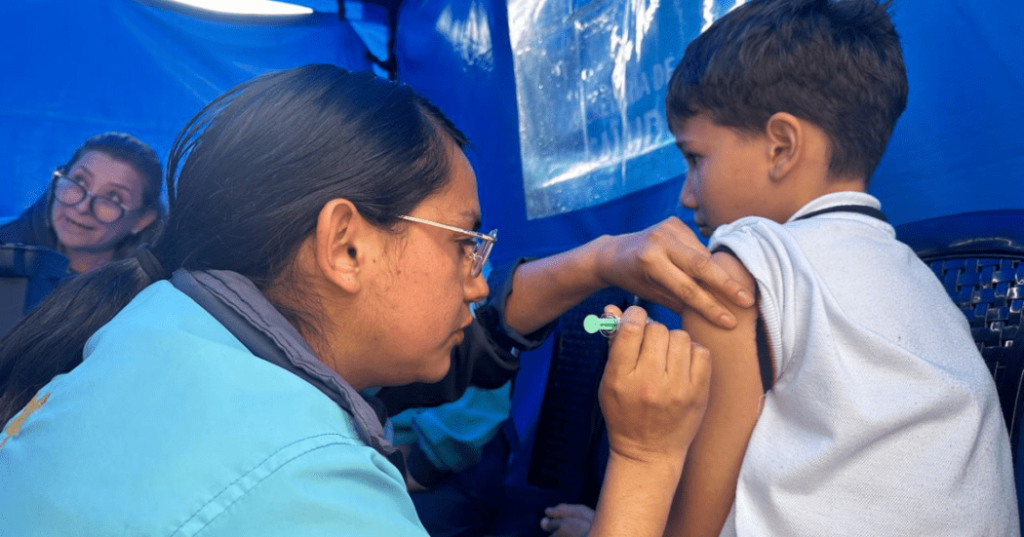
Vaccinator at work in Bogotá last week. Photo: courtesy Secretaria de Salud Bogotá.
Health authorities have activated over 200 free vaccination points across the city this week after two measles cases were reported.
The highly contagious virus, which is airborne and can cause serious health problems for young children, was detected in travelers from Mexico who had arrived in Bogotá and then fallen ill. Another imported case was found outside the capital.
In response the city’s District Health Secretariat said it had activated protocols to isolate the cases and had laboratories on hand to help with tracking any potential spread in the city.
Bogotá’s health secretary Gerson Bermont emphasized the need for a swift response: “Bogotá has all the infrastructure and human resources to provide technical support for diagnostic processes, he said. “The key is to act promptly to reduce local transmission.”
Measles was one of the most contagious viruses in existence and could be transmitted even by breathing, he warned. The best protection was with the MMR (measles, mumps, and rubella) vaccine, with two doses 97% effective at preventing the disease. The three people reported this week were unvaccinated.
In June last year U.S. embassies around the world took the unusual step of issuing a warning that measles was an “ongoing global risk” and advised citizens going abroad to get jabbed.
“Travelers can catch measles in many travel settings including travel hubs like airports and train stations, on public transportation like airplanes and trains, at tourist attractions, and at large, crowded events,” said the notice.
“Infected travelers can bring the disease back to their home communities where it can spread rapidly among people who are not immune.”
Good coverage
Recent data from the U.S. Centre for Disease Control (CDC) showed outbreaks in every region of the world with high caseloads in Mexico, Yemen, Indonesia, Pakistan, India, Angola and Laos.
The World Health Organization (WHO) declared Colombia free of measles in 2014, after intensive campaigns across the country by vaccination teams brought MMR to remote corners of the country.
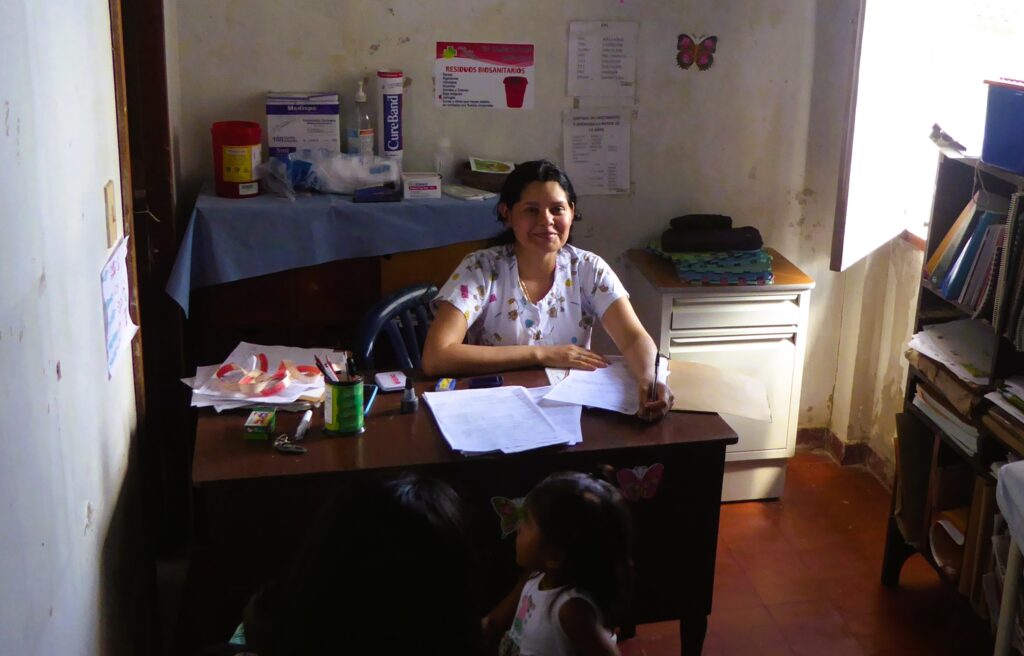
Vaccinator in El Encanto, Amazon region of Colombia. Immunization coverage for measles is 93% according to WHO statistics, thanks to teams deployed to remote areas. Photo: S Hide.
Measles vaccine coverage in the country was 93 per cent for the first dose, according to data on the WHO immunization dashboard, a reasonable result for a country with access challenges for health teams
Bogotá last saw cases in 2019, when 11 persons were affected by the disease, according to data from the city’s Observatorio de Salud.
To avoid local spread from the imported cases this week, more than 200 vaccination points were activated across the city, with details in this link of locations and opening times. Most of the sites are in existing health facilities though all are welcome and the measles vaccine is free.
The city health authorities were offering free immunization with the triple MMR vaccines (measles, mumps and rubella) known in Colombia as SRP (sarampión, rubéola y paperas) or a double vaccine of SR (just measles and rubella). Any unvaccinated or partially vaccinate person between six months old and 60 years old was encouraged to get jabbed.
The risk to Colombia “could not be underestimated” Bermont told Blu Radio this week.
“It’s bad news what’s happening in the Americas,” he said. “Last year there were 15,000 measles cases across the region. Just in Mexico there were 32 deaths”.
Bermont said mass immunization was the best method to avoid an outbreak, but region had become vulnerable from anti-vax messaging by pressure groups that gained influence during the Covid-19 pandemia.
“We have to also recognize that today there are also health authorities in the world that throw doubt on the effectiveness of the vaccine.”
Colombians head to the polls on March 8 for what is, formally, a legislative election. In practice, it is something more consequential: a stress test of the country’s political coalitions ahead of the May 31 presidential race already defined by fragmentation – and by mounting security concerns for right-wing candidates.
The vote for Congress matters. But the country will be watching the consultas presidenciales—three parallel primaries that function as a de facto first round. In them, Colombians vote less for programs than for trajectories: continuity, rupture, or something in between.
On the right, Paloma Valencia is poised to dominate La Gran Consulta, a coalition spanning moderate conservatives, independent liberals, and slate of well-known political leaders. Polling places her far ahead of her rivals, with margins large enough not merely to win, but to define the bloc itself. In a pre-Petro era, such a coalition might have fractured under its contradictions, but today, it coheres around one single objective: opposition to the government of Gustavo Petro and the restoration of order- political, fiscal, and territorial.
Valencia’s strength is not only electoral; it is structural. She inherits the Centro Democrático machinery and the disciplined base loyal to former two-term president Álvaro Uribe, whose legacy continues to shape Colombia’s right. But her challenge begins the moment she wins. The right is not unified—it is merely aligned. To convert alignment into victory, she will need to reach out to Abelardo de la Espriella, a pro-Bukele, pro-Milei, lawyer whose mass appeal is rooted in a more visceral, anti-left electorate. If Valencia succeeds in clinching La Gran Consulta, the right could reach May 31 not only united, but energized. If she fails, she risks replaying a familiar Colombian pattern: ideological proximity undone by personal rivalries.
With “El Tigre” de la Espriella lurking in the shadows, the right looks ascendant. Uribe Vélez now faces the daunting challenge of fusing his CD base with Espriella’s fervent Defensores de la Patria.
A Spectral Center
Claudia López is expected to win her consultation comfortably, aided as much by the absence of strong rivals as by the presence of loyal supporters. Her likely vote total- perhaps around one million—will be spun as a comeback. In reality, it reflects the residual strength of her partisan mayoralty and Bogotá-based electorate.
The absence of Sergio Fajardo from the Consulta de las Soluciones underscores the fragmentation of Colombia’s center. A strong showing by López will force a choice: seek alliances quickly or face marginalization after March 8. Even a López–Fajardo ticket would face sharp criticism from within their respective bases, and risk a repeat of the 2022 election season in which Sergio Fajardo’s campaign imploded under the weight of Petrismo or Uribismo.
On the left, the situation is more fluid – and more revealing.
The exclusion of Iván Cepeda has transformed the Frente por la Vida into a contest between two practitioners of political adaptation: Roy Barreras and Daniel Quintero. Neither represents the ideological hardline of Petrismo. Both instead offer variations of what might be called continuity without commitment – a “Petrismo 2.0” calibrated for chaise-lounge socialists.
Barreras relies on organization, his tenure as a loyal Petro “insider”, and the quiet efficiencies of Colombia’s territorial elites. Quintero counters with a direct, anti-Uribe narrative amplified through social media. Each seeks not to replace Petro, but to reinterpret him. Yet the Barreras-versus-Quintero contest feels less like a continuation of an embattled political project than an attempt for both candidates to repackage their political futures.
The most important actor on the left may be Petro himself – precisely because of his absence. By declining to endorse the consultation, he has deprived it of coherence. The result is a referendum on his government without his direct participation, and turnout that may struggle to reach even one million voters. In political terms, that is not a mobilization. It is a warning.
What emerges from these three contests is not a country coalescing, but one sorting itself into sharper, more disciplined minorities. The right is concentrated and motivated. The left is divided and improvisational. The center is present, but peripheral.
Then there is the largest bloc of all: those who will not participate. Polling suggests that a majority of Colombians will abstain from the primaries altogether. This is not apathy in the conventional sense. It reflects something more structural – a growing distance between citizens and political mechanisms that no longer seem to mediate power so much as ratify it.
In that respect, March 8 clarifies less about who will win than about how Colombia now conducts politics. Elections no longer aggregate a national will; they stage competitions between organized intensities. Victory belongs not to the broadest coalition, but to the most cohesive one.
By Sunday night, the candidates will claim momentum. Some will have earned it. Others will have inherited it. But all will confront the same reality: the path to the presidency no longer runs through the mythical Colombian center. It runs through blocs – disciplined, polarized, and increasingly unwilling to transcend partisan loyalties for the greater good.
Applications for the prestigious scholarship programme opened this week and will close on May 12.
The Fulbright Commission launched its 2023 scholarship scheme earlier this week, offering 51 Colombians the chance to study postgraduate degrees at some of the best universities in the United States. Applications opened on February 21 and will close on May 12.
The Fulbright Commission is one of the biggest scholarship programmes in the world, offering funding to students from 157 countries.
The Colombian branch of the initiative is jointly financed by the US State Department, the Colombian government, and a number of NGOs and political bodies from both countries. Last year it celebrated its 65th anniversary and since its launch, more than 5,200 students have received financial aid from the commission.
The scheme aims to support students from groups underrepresented in academia, in particular first-generation scholars, women, indigenous peoples, people of Afro-Caribbean descent, and disabled people. There are also specific opportunities for those seeking to study a STEM subject at Master’s or PhD level.
The nature of the scholarships depends on individuals’ programmes of choice, but in general, they cover all academic expenses, living costs, plane tickets, a basic insurance policy and visa costs.
On completion of their degrees, Colombian Fulbright scholars are required to return to the country for at least two years during which time they should share the knowledge they have acquired during their time in the United States.
The Executive Director of the commission, Diana Basto Castro said that the organisation is looking for people from across the country who will act as “agents of change” and who have a desire “to transform their lives and the lives of those in their communities”.
Six forms of postgraduate scholarship are available:
Minciencias scholarship: Up to 40 places available for people interested in research. 80% of recipients will be undertaking STEM degrees and at least 12 will belong to ethnic groups.
Scholarship for communities of Afro-descent: Three places are available for people from communities of raizales, palenqueras or of afro-descent. There is no restriction on degree subjects.
Scholarship for agricultural and rural development: Three places are available for master’s students carrying out a research project focusing on cocoa production in Colombia. The scheme is part of the ‘acuerdo de cacao para la paz’ and aims to promote sustainable production and agricultural climate resilience.
Indigenous communities scholarship: One place for a student from an indigenous community to study a master’s or PhD in any area of study.
Saldarriaga Concha scholarship: One spot for a student with a disability to carry out a master’s programme.
J. William Fulbright scholarship for the mitigation of climate change: Three opportunities for students undertaking degrees focusing on adaptation to and mitigation of climate change.
Candidates are required to have completed an undergraduate degree before 31st December 2022 and have a qualification in English.
There are also funding opportunities for English-teaching programmes and non-degree academic-professional development activities.
Apple has released the third beta versions of iOS 26.4, iPadOS2 26.4, and macOS Tahoe 26.4, for users enrolled in the beta testing programs for Apple system software. The last beta was released a week ago, and the prior a week before that, suggesting an accelerated pace for releasing the final versions of these system ... Read More
Apple has released an all new iPhone 17e as an update to the lower cost iPhone, as well as the M4 iPad Air series as an update to the iPad Air lineup. Both of these new products are basically spec-bump’d versions of prior hardware and are not major new redesigns, but if you’re in the ... Read More
In Bogotá, the mountains are never out of sight. They rise abruptly along the city’s eastern edge, forming a green wall that shapes the capital’s light, weather and sense of place. For Colombian artist Marina Sánchez, the ridges that surround the Colombian capital’s cardinal points are also more intimate: a constant presence, a point of orientation and, increasingly, a subject of quiet urgency.
Her latest exhibition, Panorámicas de la Sabana, runs from 5 to 29 March inside the colonial Museo del Chicó, where 26 acrylic-on-canvas works reinterpret the high-altitude plateau of the Sabana through a distinctly chromatic lens. Installed in the museum’s Salón Colonial, the show brings together landscape, memory and abstraction in a series that feels both personal and outward-looking.
Sánchez has long been recognized for her expressive use of colour but this body of work marks a measured shift. While her earlier practice leaned towards abstraction, here the forms are more legible—ridgelines, shifting skies, traces of vegetation – yet never fixed. Instead, they dissolve through layered pigments and gestural brushwork that privilege sensation over strict representation.
What distinguishes Sánchez’s approach becomes clear in the work itself. The Cerros are not rendered as stable topography but as shifting, atmospheric forms. Bands of diffusec green rise and fold into one another, interrupted by flashes of cobalt, ochre and lilac, while a dense, unsettled sky presses down with quiet intensity. The composition resists stillness. It moves – closer to inclement weather than landscape.
Rather than mapping terrain, Sánchez constructs it through colour. The mountains appear to breathe, their contours dissolving at the edges as if seen through mist or memory. There is no single vantage point; the eye travels across the canvas, tracing lines that feel at once familiar and unstable.
“I want to show the relevance of these giants that often go unnoticed,” Sánchez says. For Bogotá’s residents, the hills are omnipresent yet rarely examined beyond their silhouette. In her telling, they become active participants in the city’s identity – “guardians” that accompany an urban landscape marked by rapid, and at times impersonal, expansion.
The project began during the pandemic, when isolation altered both her routine and perspective. Working from home, Sánchez found herself drawn to the view outside her window: the slow fade of light across the mountains, the subtle shifts in colour at dusk.
“Being away from people – family, friends – I was left with the sky and the light of sunsets,” she says. “I wanted to replicate something I hadn’t fully appreciated and, in doing so, feel part of nature.”
Her visual language, however, is not shaped by Bogotá alone. Sánchez has exhibited in New York City and Milan – cities where she has also lived, and whose pace and structure have informed her approach to rhythm and composition. If Bogotá provides the grounding geography, New York and Milan introduce a contrasting sensibility: verticality, movement and a heightened awareness of structure.
Artist Marina Sánchez describes her work as “chromatic poetry”, a phrase that aligns with her broader intention: to create space for reflection. Photo: Courtesy artist/Marina Sánchez
These contrasting narratives – from urban to rural, isolation and engagement, are visible throughout Panorámicas de la Sabana. Linear gestures – suggestive of passing headlights or urban flow – cut across certain canvases, briefly suspending the stillness of the mountains. It is a restrained intervention but an effective one, hinting at the tension between expansion and preservation.
Colour, in Sánchez’s palette, is not decorative but foundational. Greens shift from luminous to dense; blues dissolve into shadow; entire forms recede into haze. The landscape is reassembled through pigment, hovering between recognition and abstraction.
She describes her work as “chromatic poetry”, a phrase that aligns with her broader intention: to create space for reflection. “I want to offer a moment of calm beyond the difficulties that surround us,” she says, “despite the inevitable conflicts, wars and inequalities.”
In Bogotá, that impulse carries particular weight. The Eastern Hills and peaks to the West are not only a visual constant but a fragile ecological system—central to water sources and biodiversity, yet increasingly under pressure from urban growth. Sánchez’s paintings do not argue this point directly; instead, they suggest it, allowing atmosphere and colour to carry meaning.
For the artist, colour remains essential. “It would be difficult for me to imagine the world in black and white,” she says. “Colour is vitality. It gives strength and solidity. It is pure magic.”
That conviction runs through the exhibition. The hills emerge not as backdrop but as presence—shifting, watchful and quietly insistent. In Sánchez’s hands, they ask to be seen again, and more carefully this time.
Panorámicas de la Sabana runs from 5 to 29 March at the Museo del Chicó (Carrera 9 No. 93-38, Bogotá). Admission is free.
Colombia’s security forces alerted late Sunday Medellín Mayor Federico Gutiérrez and Antioquia Governor Andrés Julián Rendón to cancel a planned visit to the Hidroituango hydroelectric complex for Monday, March 2, after intelligence warnings of a possible drone attack and credible terrorist threat.
The visit, which included a press conference expected to draw around 100 journalists, was intended to showcase progress at the country’s largest hydroelectric project, now reported to be 95% complete. Instead, regional officials said army security recommendations prompted an abrupt suspension after the detection of unauthorized drone activity over the area.
“The recommendation of the National Army is that the trip be postponed given the detected presence of large, unauthorized drone overflights,” the Antioquia governor’s office said in a statement, adding that the devices were believed to be operated by the 36th Front of dissident Revolutionary Armed Forces of Colombia (FARC) guerrilla.
Officials said the threat was not speculative. Security teams warned that an attack could materialise during the public event, raising concerns not only for the two high-profile politicians but also for members of the press corps and technical staff.
Rendón told Caracol Radio that the drones had been observed manoeuvring persistently over the precise location where the press conference was scheduled to take place. The activity coincided with a recent military operation in the nearby municipality of San Andrés de Cuerquia, where troops seized a drone, explosives, detonators, radios and military-style clothing from the same dissident group.
“All of this is highly coincidental,” Rendón said, adding that authorities were analyzing whether the overflights formed part of reconnaissance ahead of a planned attack.
Gutiérrez said armed groups were seeking to destabilize the country and disrupt key infrastructure. “These terrorist groups want to shut down the country, to generate damage,” he said, pointing to ongoing threats against Empresas Públicas de Medellín (EPM), the state-owned utility responsible for the project.
The cancelled visit had both symbolic and operational significance. In addition to reviewing construction progress and the installation of four turbines, officials were expected to outline new revenue flows generated by the project for Medellín and the wider Antioquia department.
Hidroituango has long been a flagship infrastructure initiative, though it has also faced years of engineering setbacks, financial strain and political scrutiny.
The press event has been rescheduled to take place in Medellín’s La Alpujarra administrative complex under heightened security.
The incident underscores growing concern over the rapid adoption of drones by illegal armed groups. Once limited to reconnaissance, commercially available drones modified to carry explosives are now being used in targeted attacks across conflict-prone regions of the country, including the southwest departments of Nariño, Cauca and Valle del Cauca.
According to military data, more than 400 drone-related attacks have been recorded in Colombia over the past two years, reflecting a sharp escalation in both frequency and sophistication. Analysts say such devices offer armed groups a low-cost, high-impact means of striking military, civilian and infrastructure targets while reducing direct exposure.
Recent attacks in Antioquia highlight the trend. In rural Segovia, a drone-delivered explosive killed three members of a family and displaced more than 100 households amid clashes between FARC dissidents and the Gulf Clan criminal group last week. In Ituango, the nearrest municiplity to the power-generating damn, another drone attack targeted a fuel station using improvised explosives.
On Saturday, in southern Bolívar, a military helicopter was struck in a drone attack attributed to the National Liberation Army (ELN) guerrilla, leaving 14 soldiers injured. Colombian military officials say some armed groups may have received external training in the use of drones for covert operations.
Colombia’s armed forces are moving to adapt to the emerging threat, announcing last October the creation of a specialized “Drone Battalion” aimed at strengthening aerial surveillance and counter-drone capabilities. However, security experts warn that defending against small, low-flying devices — some costing as little as US$600 — remains a significant challenge, particularly in mountainous terrain like that surrounding Hidroituango.
The alleged plot has also raised concerns about a possible shift in targeting strategy by armed groups, from rural security forces to high-profile political figures and critical infrastructure ahead of the May 31 presidential elections.
While no attack ultimately took place, authorities say the decision to cancel the visit reflects the seriousness of the threat.
For now, officials are treating the incident as a direct warning of how Colombia’s long-running conflict is evolving – increasingly shaped by technology, and capable of reaching beyond traditional conflict zones into strategic economic and political targets.
Colombia will head to the polls this year to elect the country’s next president and members of Congress. A report released this week by the Ombudsman’s Office found that the government is failing to implement over half of the watchdog’s recommendations to ensure safe and fair elections.
On Monday, the office released a follow-up report to its October 2025 Electoral Early Warning (ATE 013-25), saying that around 42% of recommendations for safeguarding elections were being implemented.
Last June, the country made international headlines when pre-presidential candidate Miguel Uribe Turbay was shot in the head while holding a rally in Bogotá’s Modelia neighborhood. He would succumb to his injuries two months later.
Since then, Ombudsman Iris Marín Ortiz’s office has registered 457 cases of death threats against social leaders, human rights defenders, and political actors in the pre-election period, which officially began in January 2025 when President Gustavo Petro convened his cabinet to decide which members would step down to run for elected office in 2026.
The report noted that candidates face ongoing risks, from constraints on campaigning in armed group–controlled areas to stigmatization, threats, and even homicide.
“The risk is not that the elections will be canceled,” said Marín, but rather that un-safeguarded elections could ignore the “forced silence of communities in the face of the governance of armed groups in some regions of the country.”
The Ombudsman’s report categorized municipalities into five risk levels from lowest to highest intensity of identified violence, in order to guide authorities on security, protection, and the safeguarding of political rights.
Two hundred fifty-seven were classified at Ordinary Action Level, 216 at Permanent Monitoring Level, 425 at Priority Action Level, 162 at Urgent Action Level, and 62 at Immediate Action Level — the most critical stage. In the follow-up Report, although the number of municipalities at Permanent Monitoring Level decreased (195), there was an increase in municipalities that required Priority Action (433), Urgent Action (168), and Immediate Action (69).
Political violence has continued in the period since Uribe Turbay’s death. Earlier in February, Senator Jairo Castellanos’s armored vehicle was attacked at an ELN rebel checkpoint in the northeastern Arauca department, killing two of his bodyguards. A few days later, Indigenous Senator Aida Quilcué was temporarily kidnapped in an area of western Cauca where FARC dissidents are active.
Upon reviewing the Government’s response, the highest rate of implementation for the 11 recommendations is 65% and the lowest is 0%. Strengthening and support for political organizations was the least advanced recommendation, followed by inter-institutional coordination and joint action for rapid response.
According to the Report’s conclusions, insufficient implementation of ATE 013-25 led to weak institutional coordination, allowed illegal armed groups to maintain control, jeopardized victims’ political participation in Special Transitional Peace Electoral Districts (CITREP), and perpetuated impunity through ineffective justice mechanisms.
The Ombudsman issued six new recommendations and reinforced the previous ones, urging the Ministry of the Interior to lead the Intersectoral Commission for Rapid Response to Early Warnings (CIPRAT), align action plans, ensure measurable budgets, and eliminate overlapping measures that cause operational gaps.
On March 8, Colombians will head to the polls for legislative elections where they’ll vote for representatives to the national congress, senate as well as primary elections where political parties will choose presidential candidates to represent them in the first round of presidential voting on May 31.
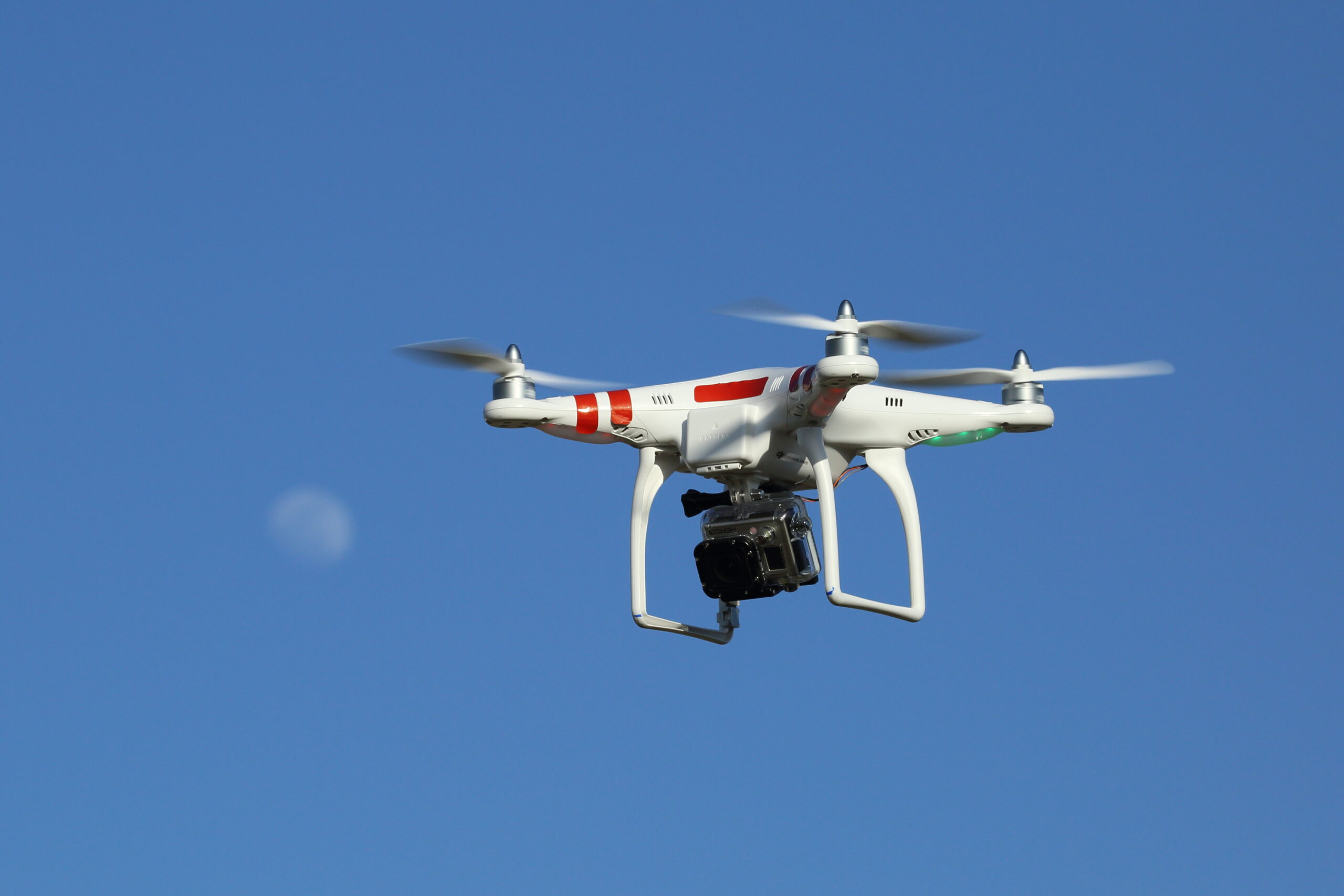
Drone with GoPro digital camera mounted. Credit: Don McCullough, Wikimedia Commons
Medellín, Colombia – On Thursday morning, a drone dropped a mortar shell on a home in Segovia, a town in the northeast of the Antioquia department, killing three occupants of the house and leaving one critically injured.
The police identified the victims as María Cecilia Silva Silva and her two adult children, Yalusan Cano Silva and Alsonso de Jesús Silva. Silva’s other son was also wounded in the attack.
Segovia is a key center for illegal gold mining and is being contested by multiple armed groups, including the Gaitanist Army of Colombia (EGC), also known as the Clan del Golfo, and dissident groups of the now-defunct FARC rebels.
Authorities are still working to establish if the attack was directed at the family or if it was an error by the drone operators, an increasingly common occurrence as drones become the latest technology used in Colombia’s internal armed conflict.
According to the Secretary of Security of Antioquia, General Luis Eduardo Martínez Gúzman, the victims were “a family who have nothing to do with the conflict, who were simply attacked by a drone.”
Martínez highlighted the danger of these devices, suggesting that the explosive device was detached from the drone, which means the mortar could “fall anywhere.”
The Director of the National Police in Colombia, General William Oswaldo Rincón Zambrano, released a statement of condemnation: “[we] categorically reject this criminal act which plunges a Colombian family into mourning and demonstrates the contempt of illegal armed groups for human life and dignity.”
He also reported that state security forces have headed to the area where the attack took place in order to verify what happened and assist in locating and capturing those responsible. He also expressed solidarity with the victims and their families.
The Governor of Antioquia, Andrés Julián Rendón took to social media to blame the security policies of the national government for the attack: “Who in their right mind could consider that this government has achieved transformations for Colombia?”
Rendón criticized President Gustavo Petro for negotiating with the armed groups involved in the conflict in Segovia, part of the leftist leader’s “total peace” policy.
“This is the so-called ‘total peace’: concessions for criminals and burials for civilians. Antioquia demands an unwavering military offensive, full backing for the security forces, and zero leniency towards the criminals,” said Rendón.
Drone attacks, both against armed groups as well as against security forces and the civilian population, have become widespread in Colombia. Between April 2024 and February 2026, the government recorded 418 attacks using drones.
Tackling the mounting security crisis is a key issue in upcoming elections, which the United Nations warns may be undermined by the armed conflict.
Featured image description: Drone with GoPro digital camera mounted
Featured image credit: Don McCullough, Wikimedia Commons
Colombia is at risk of sliding back into one of the darkest chapters of its recent history, according to a stark new report by the United Nations, which warns that escalating violence, territorial control by illegal armed groups and political instability are eroding hard-won human rights gains.
The annual assessment by the Office of the High Commissioner for Human Rights paints a troubling picture of 2025: a country where armed actors have deepened their grip over rural regions, civilians are increasingly trapped in conflict zones, and the implementation of the 2016 peace accord is under growing strain.
At the heart of the report lies a central warning — Colombia faces the “possibility of reverting” to pre-peace agreement levels of violence, particularly in territories where the state remains weak or absent.
Armed groups expand control
Across large swathes of the country — from the Catatumbo in Norte de Santander to the Pacific coast — non-state armed groups and criminal organizations have consolidated control over vulnerable populations, imposing what the report describes as “illegal armed governance”.
The criminal groups mentioned- Clan del Golfo, ELN, FARC dissidents – are responsible for a wide range of abuses: forced displacement, confinement, selective killings, sexual violence and the recruitment of children. Entire communities, especially Indigenous and Afro-Colombian populations, are subjected to coercion and forced participation in illicit economies. “Afro-descendant communities, particularly in regions such as Chocó, continue to face severe human rights violations due to the presence and social control exercised by non-state armed groups,” claims the report.
Even in areas where a single armed group dominates and overt violence is less visible, the UN notes that civilians live under strict systems of control, with basic freedoms curtailed and fear pervasive.
The UN documented 53 verified massacres in 2025, leaving 174 victims, the vast majority attributed to armed groups fighting over control of illegal economies such as drug trafficking.
The report also highlights a disturbing increase in indiscriminate attacks, including the use of explosives and drones in populated areas. Cities such as Cali were directly affected, with civilian casualties mounting as conflict spills into urban spaces.
In one incident in the southern department of Huila, a motorcycle bomb targeting a police station killed civilians and injured dozens, underscoring the growing risks faced by ordinary Colombians.
Child Recruitment
One of the report’s most alarming findings is the worsening situation for children.
The UN verified 150 cases of child recruitment in 2025, though it warns this represents only a fraction of the true scale due to underreporting and fear of retaliation. Armed groups are increasingly using social media platforms to lure minors, glamorising violence and illegal economies.
In some cases, children recruited into armed groups were later killed during military operations, raising further concerns about protection mechanisms.
Schools have also become battlegrounds. Armed groups have occupied educational spaces, disrupted classes and used them as recruitment grounds, particularly among Indigenous communities at risk of cultural and physical extinction.
Gender-based violence
The report details systematic patterns of sexual violence, exploitation and coercion, particularly against women and girls in conflict zones.
Armed groups have imposed control over reproductive rights, restricted access to healthcare and, in some cases, forced pregnancies. Girls are often recruited through manipulation and emotional coercion, only to face abuse, forced labour and sexual violence once under the control of armed actors.
Indigenous, Afro-descendant and migrant women are disproportionately affected, facing layered vulnerabilities exacerbated by institutional absence.
Pre-Election violence
As Colombia moves through a politically sensitive period, the report identifies a sharp rise in preelectoral violence.
The killing of the right-wing presidential candidate Miguel Uribe Turbay in August 2025 marked a dramatic escalation, while the UN recorded 18 assassinations and 126 attacks or threats against political leaders and candidates.
Nearly 650 municipalities were classified as high-risk zones by Colombia’s Ombudsman, raising concerns about the integrity of democratic participation.
The report also points to a surge in digital harassment. “Violence has also extended into the digital space, with an increase in hate speech and discriminatory discourse on social media platforms.”
Humanitarian conditions have deteriorated significantly. According to UN data, mass forced displacement rose by 85% compared with 2024, driven largely by clashes between armed groups. In Catatumbo alone, nearly 90,000 people were displaced, alongside a wave of killings, kidnappings and child recruitment.
Confinement — where communities are effectively trapped by armed actors — has also increased, restricting access to food, healthcare and livelihoods, particularly in departments such as Chocó and Cauca.
Despite these challenges, the report acknowledges partial progress in implementing the 2016 Final Accord with the ex-Revolutionary Armed Forces of Colombia (FARC) guerrilla.
While land reform initiatives have advanced, delays in formal land titling and uneven territorial implementation continue to limit impact of the 2016 agreement. The killing of 45 former FARC combatants in 2025 — a 36% increase from the previous year — highlights ongoing security gaps in reintegration efforts. “The United Nations Verification Mission documented the continued killing of former FARC, underscoring persistent security risks despite a peace agreement.”
A recurring theme throughout the United Nations report is the insufficient presence of the state in conflict-affected regions. It warns that weak institutional reach continues to limit protection for civilians and the effective implementation of security and development policies. The report also notes that “coca cultivation rose by 3% to 262,000 hectares in 2024,” although growth has slowed for a third consecutive year, cautioning that underfunded substitution programmes risk undermining efforts to transition to legal economies.
In many cases, responses by security forces have been too slow or insufficient to prevent abuses or protect communities.
A critical moment for Colombia
The UN concludes that Colombia stands at a pivotal juncture.
Without stronger coordination, sustained investment and a renewed focus on protecting civilians, the country risks undermining nearly a decade of peacebuilding.
“The persistence of violence and the strengthening of armed groups continue to gravely affect the civilian population,” the United Nations warns — a stark signal that security conditions are deteriorating across Colombia. As the country enters a polarised election season, the report suggests the stakes are no longer confined to preserving the 2016 peace accord, but to preventing a broader erosion of state authority and civilian protections in territories most at risk.
Bogotá and the department of Cundinamarca are preparing to receive up to half a million visitors during Semana Santa 2026, as the Mayoralty unveiled an ambitious tourism campaign aimed at positioning the Colombian capital as a leading Easter destination in Latin America.
Branded “Paso a Paso, Caminando hacia la Pascua con María” (Step by Step, Walking Towards Easter with Mary), the initiative brings together the Alcaldía, departmental administration, tourism authorities and Archdiocese of Bogotá in a coordinated push to blend faith, heritage and culture into a single visitor experience.
The programme was formally launched inside the historic Catedral Primada de Bogotá with a concert of sacred music performed by the Heralds of the Gospel – Knights of the Virgin, a Catholic association known for its Latin Marian chants and global presence in more than 70 countries.
City officials say the strategy is designed not only to attract pilgrims but also to broaden Bogotá’s appeal as a cultural capital during one of the most important periods in the Christian calendar.
Ángela Garzón, Bogotá’s head of tourism, said the city expects around 500,000 visitors over the Easter season, drawn to a destination that embraces religious tolerance and offers a programme including gastronomy, concerts and free cultural events.
“Guatemala joins Bogotá and Cundinamarca in this second edition with its centuries-old tradition of floral carpets,” Garzón said, referring to one of the launch’s most striking features: a vibrant, handcrafted sawdust and flower carpet laid at the cathedral’s entrance by Guatemalan artisans.
Regional pilgrimage circuit
At the heart of the campaign are newly promoted routes designed to guide visitors through Bogotá’s historic churches and neighbourhoods.
Two principal walking circuits will anchor the experience. The first winds through La Candelaria and the colonial centre, linking some of the city’s most emblematic churches, including San Francisco, Las Nieves and San Ignacio, before culminating at the cathedral.
The second explores Chapinero, where 20th-century urban expansion meets ecclesiastical architecture, with stops at Lourdes Basilica and other parish churches that reflect Bogotá’s more modern religious identity.
The city’s tourism promotion institute, IDT, will also promote themed circuits, including a historic centre route focused on Marian devotion—particularly the Virgin of Sorrows—and pilgrimages to iconic sanctuaries such as Monserrate, which draws thousands of pilgrims each year.
Further south, visitors are encouraged to explore the Basilica of the Divine Child in Bogotá’s 20 de Julio district, reflecting the diversity of popular religious practices across the city.
The presence of Guatemalan artisans at the launch underscored the campaign’s international dimension. Their intricate carpet – crafted using Colombian flowers – symbolizes shared religious traditions and cultural exchange across Latin America.
Guatemala’s Ambassador to Colombia, Óscar Villagrán, described the installation as an expression of “community construction” and noted that the tradition was recognised by the United Nations in 2022 as part of humanity’s intangible cultural heritage.
The campaign also places strong emphasis on the figure of the Virgin Mary, particularly the Virgin of Sorrows, whose symbolism of suffering, resilience and hope resonates deeply with Catholics across the hemisphere.
Brother Gabriel Escobar of the Heralds of the Gospel framed Semana Santa as a moment of unity. “It is a time for reflection and sharing… a message of fraternity, charity and hope with faith,” he said during the launch event.
Beyond religion: gastronomy and nature trails
While religious observance remains central to the agenda, the IDT is keen to present Bogotá as a multi-layered destination, with a programme that includes Easter-themed food circuits, sacred music concerts and art exhibitions.
Outdoor activities also feature prominently, with hiking and cycling routes linking religious landmarks, alongside ecotourism excursions to the high-altitude wetlands of Chingaza and Sumapaz.
Authorities are also highlighting the city’s religious diversity, from well-known Catholic sites to other places of worship, such as the Bogotá Temple of The Church of Jesus Christ of Latter-day Saints and local mosques.
This broader framing aligns with Bogotá’s evolving image as a destination where spirituality intersects with architecture, history and intercultural dialogue.
The joint Bogotá–Cundinamarca strategy is also an economic play, aimed at boosting local businesses during a peak tourism window while reinforcing regional identity.
Constanza Solórzano, head of Cundinamarca’s tourism institute, said the initiative strengthens ties between the city and its surrounding region through shared traditions and gastronomic alternatives.
By packaging Semana Santa as both a devotional journey and a cultural experience, Bogotá has positioned itself as a well-connected regional hub, inviting visitors to experience not only a place of celebration, but also a landscape of memory, faith and encounter—where centuries-old rituals unfold against the backdrop of a modern, diverse capital.
As Garzón put it, Bogotá during Semana Santa offers “a meaningful experience for residents and visitors alike”—one that moves, step by step, between the sacred and everyday rituals.
As Latin American companies confront slowing growth, talent churn and the demands of hybrid work, leadership effectiveness is being redefined. Strategy and charisma are no longer enough. Increasingly, performance hinges on something less visible: the assumptions leaders and employees hold about one another.
New doctoral research by Dr. Candice Fast suggests those hidden beliefs – often unconscious – can measurably shape engagement, productivity and service outcomes. Her study, Exploring Implicit Belief Alignment in Leaders and Followers, argues that leadership success depends not only on decision-making and execution, but on the mental models quietly governing workplace interactions.
The findings are particularly relevant for Colombia’s corporate sector, where hierarchical traditions often coexist with modern performance management systems.
After surveying 203 participants across North America, Dr.Fast applied validated psychological instruments and statistical modelling to examine how implicit beliefs influence workplace structures. The results indicate that misaligned assumptions between leaders and employees can account for up to 5% of passive behaviour within organizations. In financial terms, this margin is significant.
Why the 5% effect matters
In large corporations, even a 5% increase in engagement can translate into millions of dollars in productivity gains, improved customer satisfaction and lower operational friction. Applied studies cited alongside the research show that teams fostering collaborative belief structures recorded 5% to 10% higher engagement levels and measurable reductions in turnover costs.
For Latin American enterprises – where employee disengagement and retention are endemic challenges – such increments can determine whether performance targets are met or missed.
One of Dr.Fast’s more striking findings is that positive perceptions alone do not guarantee proactive performance. Companies must move beyond the catch phrasing of “positive thinking.” Leaders who unconsciously associate teams with traits such as conformity or passivity may inadvertently reinforce those behaviours, regardless of stated values.
In other words, culture is not shaped solely by policies or incentive systems, but by cognitive framing.
This has implications for multinational corporations operating across the region. Cultural and national variables were shown to influence how expectations are formed and interpreted within teams. In cross-border environments – from Bogotá to São Paulo to Mexico City – misalignment can quietly erode efficiency and collaboration.
As Latin American firms expand internationally and global groups deepen their regional footprint, leadership models that account for cognitive alignment may become a differentiating factor.
Unlike much academic work, Fast’s framework is designed for operational use. It emphasises structured self-assessment to surface subconscious assumptions, the use of 360-degree feedback to identify perception gaps, and the comparison of belief patterns with engagement data. It also encourages organisations to reframe limiting narratives through facilitated dialogue and to embed cognitive flexibility into leadership development programmes.
These tools align with a broader professionalisation of management practices across Latin America, where firms are increasingly adopting analytics-driven approaches to human capital strategy.
Fast’s corporate experience includes more than a decade at The Walt Disney Company, a global operator known for embedding service standards and behavioural alignment into its operational model. The relevance of belief alignment is evident in complex organizations where consistency, collaboration and innovation must scale across thousands of employees.
As an industry insider, Ursafe has publicly endorsed the groundbreaking research, describing it as a practical roadmap for measurable performance improvement. But the broader significance lies more in timing than endorsement. “The clarity it brings to the dynamics between leaders and employees makes it a benchmark for modern organizational development.”
Latin American businesses are navigating inflationary pressures, digital transformation and generational shifts in workplace expectations. In this environment, marginal gains in engagement and trust can compound quickly.
The study’s conclusion is clear: leadership success is not determined solely by strategic vision or authority, but by the invisible assumptions shaping daily interactions between managers and teams.
For companies willing to measure and recalibrate those assumptions, belief alignment may prove to be more than a theoretical construct. It may become a competitive lever – one capable of turning subtle cognitive shifts into tangible financial results.
In a hemisphere where growth increasingly depends on talent retention, innovation and cross-cultural agility, Dr.Candice Fast’s vision of leadership is grounded less on what organizations do — and more on how they think. “Beliefs, though invisible, are among the most powerful tools leaders possess,” highlighted the data researcher.
An express kidnapping highlights the risks of taking a taxi in Colombia’s capital. What happened, and how to avoid it happening to you.
A few rogue taxis among Bogotá’s 55,000 are implicated in express kidnappings. Photo: S. Hide.
Bogotá breathed a collective sigh of relief on Tuesday morning when news broke of the safe arrival home of Diana Ospina, a rola missing for almost 40 hours after being kidnapped by a taxi she had hailed in the street after a night out in Chapinero.
Ospina was the latest victim of El Paseo Millonario, the ‘millionaire ride’, where passengers riding in yellow public taxis are physically attacked and forced to hand over cash and valuables.
The technique varies, but victims are usually targeted late at night in busy streets in party zones outside restaurants or discotheques, then driven to a quiet spot where two accomplices of the driver climb in the back seat and threaten the passenger with knives, guns or syringes.
The following ordeal can last minutes or hours or even days. Victims are intimidated with beatings or stab wounds, and hooded or blindfolded. Some are killed, as in the case of a university professor found dead on the outskirts of the city in January this year.
Foreigners are also targeted: in 2013, a DEA officer Terry Watson was stabbed to death in a Bogotá taxi after two assailants jumped in the back seat. Authorities later said the army veteran resisted the attack. Seven taxi drivers were later captured and extradited to the U.S. to face charges for his murder.
According to police data, during 2025 in Bogotá there were registered 37 cases of kidnapping for ransom or extortion, though these crimes are highly under-reported. This is because the same gangs threaten the victims to keep quiet, and in the case of taxi gangs, know where their targets live.
Publicity blitz
Police poster for Diana Ospina, later found safe.
In the case of Ospina, her kidnap started early Sunday morning when she hailed a yellow taxi that took her to within one block of her home in Engativá, where two men from a following taxi climbed in the back, threatened her and took her blindfolded for a three-hour driver around the city while using her phone and bank cards.
The ordeal did not end there. Ospina was then passed on to another kidnap group operating in the south of the city and held in a house there while more extortion demands were made. Late on Monday night, after being captive for nearly 40 hours, Ospina was dropped off in the hills above Bogotá where she eventually walked to a police station for assistance.
According to information on FM radio, from contacts close to the family, the kidnap gang released her after the “feeling pressure from the media blitz” with social media platforms widely publicising her disappearance. Other news reports stated they released her only after draining 50 million pesos (US$15,000) from her bank accounts.
This week the authorities were still hunting the perpetrators, expecting arrests imminently.
Your world in your phone
The Ospina case highlights how smartphones have upped the risks for kidnap victims in Colombia.
Whereas in the past a paseo millonario was usually a short-term event – passengers held for an hour while the gang used their bankcards at an ATM – criminals nowadays are eyeing much bigger profits from emptying bank accounts held on smartphones.
The insistence by banks and other financial platforms to use biometric approvals such as face recognition or fingerprint scanning has created the need for gangs to keep their targets captive for many days, in some cases drugging them into compliance or subduing them through threats of violence.
The rise of the digital nomads in Colombia often with juicy crypto accounts accessed through their phones has also created opportunities for tech savvy criminals. After such attacks, platforms are reluctant to reimburse funds arguing that they were transferred with the biometric approval of the victim.
One thing is clear: apart from increased financial losses, the longer victims are held captive the worse their outcome, both in terms of physical and psychological damage, the risk of sexual violence, or death from an overdose of the powerful drugs such as burundanga administered by the gangs.
The Canaries
Bogotá has more than 55,000 public taxis circulating on any given day sometimes referred to as ‘Los Canarios’ (the canaries) after their yellow cars and a popular telenovela depicting taxi drivers. It is worth noting that taxi drivers are themselves frequently the victims of robbery, extortions and murder.
Yellow taxi companies in Bogotá are registered and controlled by the Secretería de Movilidad with each driver given a Tarjeta de Control, the plasticized card hanging down the seat back that – in theory – displays the name, details and photo of the driver as well as the fare scale, and is revalidated every month.
In Bogotá, passengers can independently check the status of registered drivers by entering the numberplate into the menu at SIMUR at www.simur.gov.co/conductores-de-taxi.
But in a random test by The Bogotá Post, out of 10 taxis entered by number plate, only six had a registered driver. Four were reported “without an active registration”.
That lack of control is further weakened by the fact that registered taxistas often allow other drivers to take the wheel, said transport companies this week.
“We work on good faith, but we can’t guarantee that drivers don’t hand over their cars to other persons to commit crimes,” Maria Botero, manager of Radiotaxis told Noticias Caracol.
In the case of Ospina, the taxis that abducted her were quickly identified along with their owners, but not the actual attackers. One car was not currently registered on SIMUR.
Bogotá’s SIMUR taxi checker. In a random test by The Bogotá Post, only six out of 10 taxis were found to have a current registered driver. To do your own test, access the site here.
No dar papaya
How to avoid becoming a victim? A good tip is to use a ride platforms like Didi, Cabify, Uber or Indrive. Some like Didi are also linked to the yellow public taxis, but safer because the ride is traced. At times hailing a street taxi is the only option because app cars are far off, and you weigh the risks of standing on the street, or (as in the case of Diana Ospina) the app ride is suddenly cancelled.
Attacks are usually at night, on weekends, on persons leaving bars or restaurants. But passengers can be targeted in daytime, particularly in financial districts or leaving a bank. If you are riding the yellow taxis, here are some ways to no dar papaya, as they say in Bogotá (‘don’t be a sucker’).
Before going out:
Carry a clean phone with no banking apps and limited personal data. Many people in Bogotá are now leaving their financial transactions on a second phone or tablet stored safely at home.
Carry a wad of cash. Perhaps counterintuitively, in the digital world cash makes you less of a target. And it is easy to hand over.
If you do carry a bank card, take just one linked to a low-balance account.
Getting the taxi:
Travel in a group. Criminals generally target solo passengers.
Check the taxi numberplate in SIMUR, see above. This takes seconds and confirms if there is a registered driver. If not, walk away.
Take a photo of the taxi numberplate, send to friends or family. Ensure the driver sees you doing this.
Before entering a taxi, look carefully to ensure there is no-one hidden inside.
Check the Tarjeta de Control photo with the actual driver. Do this before setting off.
Check doors can be locked and unlocked from the passenger seat.
During the trip:
Lock doors on both sides.
Share your real-time location with a family member or friend.
Signs of danger:
The driver changes the route without explanation.
The taxi turns onto dark or deserted streets.
The driver suddenly stops to pick up other persons.
Motorcycles or other cars or taxis closely follow the vehicle.
During an attack:
Prioritize your physical safety.
Give up any valuables without resistance.
If you suspect someone you know has been abducted by a taxi gang, call the GAULA special police unit (Grupos de Acción Unificada por la Libertad Personal) that deals with extortion and kidnapping, on Line 165.
“Safe taxi” zones
Moment of terror; two attackers approach the taxi of Diana Ospina.
Even with these precautions, street taxis are still a risk, and a growing one according to Bogotá security authorities who during 2025 arrested at least 20 persons from several different Paseo Millonario gangs such as La 57 and La Zona T.
A recent advance by the city has been the recognition of the crime as “kidnap with extortion”, with up to 40 years in jail for perpetrators.
Another nitiative announced by the Secretaría de Seguridad this week was taxi seguro zones where uniformed teams patrol outside nightspots and assist revellers to take only registered taxis.
But while mediatic, such initiatives are likely to have only limited impact. Taxi gangs are generally compact, with three people, and mobile so they can cruise new zones. And new gangs seem to pop up as quickly as old ones are taken down.
So while the city can celebrate the safe return of Diana Ospina, and hopefully soon see her attackers rounded up, there will be plenty more candidates for the Millionaire Ride.
Thousands of miles from Bogotá, in the frozen trench lines of eastern Ukraine, Colombian accents have become a familiar sound of war.
Between 1,000 and 2,000 Colombian nationals are currently serving in the ranks of the Armed Forces of Ukraine, according to recent investigations, while as many as 7,000 have passed through the country’s defence forces since Russia’s full-scale invasion in 2022. Their presence has turned Colombia into the single largest source of foreign fighters in Ukraine’s war effort – and estimated 25% – and an unexpected human bridge between two distant conflicts.
What might once have been dismissed as a story of mercenaries and combat-tested veterans has evolved into something far more complex: a shadowy window into the globalization of military labor.
Many of those arriving in Ukraine have witnessed close-hand Colombia’s internal conflict, which for more than six decades has forged one of Latin America’s most experienced armed orces. Trained in counterinsurgency, reconnaissance and irregular warfare, Colombian fighters bring a skillset that has proven adaptable to the grinding, attritional combat of the Donbas.
Ukrainian commanders have taken notice. In some units, Colombians have made up a majority of infantry personnel, valued for their endurance and battlefield discipline. Their roles range from trench warfare to fortification building and increasingly to drone operations, a defining feature of the war.
Yet their journey to the frontlines is rarely driven by ideology.
A steady stream of Colombian soldiers leaves active service each year, often in their late 30s or early 40s. While formal reintegration programmes exist, many veterans struggle to transition into civilian life. Salaries drop sharply after retirement, and the domestic private security sector is saturated. For some, Ukraine offers an economic lifeline.
Combat pay of between US$3,000 and US$5,000 a month – several times the average Colombian wage – is supplemented by signing bonuses and compensation packages for families in the event of death. The contrast is stark enough to turn war into a viable, if perilous, form of employment.
“Colombians understand the risks … yet they still come,” one Ukrainian officer involved in recruitment told local media.
The legal and political framing of these fighters remains contested. In December 2025, the Colombian Congress ratified the United Nations convention against mercenaries, a move backed by the leftist government of President Gustavo Petro.
Under the Convention’s definition, however, most Colombians serving in Ukraine are not considered mercenaries. They are formally integrated into Ukraine’s military structures, receive equal pay to local troops and operate under state command rather than private contracts.
Even so, President Petro has cast the phenomenon as a form of exploitation, warning of the risks faced by citizens drawn into distant war, including the conflict in south Sudan.
Those causes are visible not only in Colombia’s labor market but also in Ukraine’s evolving military structure. As the war has dragged on, Kyiv has reorganized its foreign units, integrating international volunteers into larger brigades to improve coordination and access to heavy weaponry. The shift has further embedded foreign fighters – Colombians among them – into the core of Ukraine’s defensive operations.
The human cost of this integration has been steep. Estimates from the Atlantic Council claim that between 300 and 550 Colombians have been killed in Ukraine since 2022, making them the foreign nationality with the highest number of combat deaths. In Kyiv, Colombian flags now appear among the growing patchwork of memorials to fallen soldiers – a quiet testament to the war’s global reach.
Despite the losses, recruitment has continued. Military analysts say the phenomenon reflects deeper structural failures. Colombia’s decades-long conflict produced a large pool of highly trained personnel, but the transition to civilian life has lagged behind. Skills honed in war have limited application in the formal economy, leaving many veterans in a precarious position.
This dynamic has fed what some researchers describe as a transnational market for military labor, operating in the grey zones of international law. Fighters move between conflicts not necessarily out of allegiance, but out of necessity – carrying their expertise with them.
The implications extend beyond Ukraine. Security analysts warn that the eventual return of battle-hardened veterans, particularly those trained in emerging technologies such as drone warfare, could pose risks if criminal organizations seek to absorb their skills.
For now, however, the flow continues in one direction.
On a recent winter evening in Kyiv, a Colombian veteran reflected on the reality behind the headlines. “Tell Colombians not to come,” he said quietly. “More die than return.”
It is a warning that captures the paradox at the heart of this story: a war that is both distant and deeply connected, drawing in those for whom the frontlines are not just a cause, but a last resort.
In that sense, the presence of Colombians in Ukraine is not an anomaly. It is a signal – of how modern conflicts intersect, and of how the consequences of one war can echo, years later, in another.

 Login
Login