Reading view

Analysis: In Sunday’s Election, Many Colombians Rejected The Political Status Quo. A Stark Right-Left Choice Remains

Colombia’s Runoff Could Reshape Investment, Energy, and Labor Policy

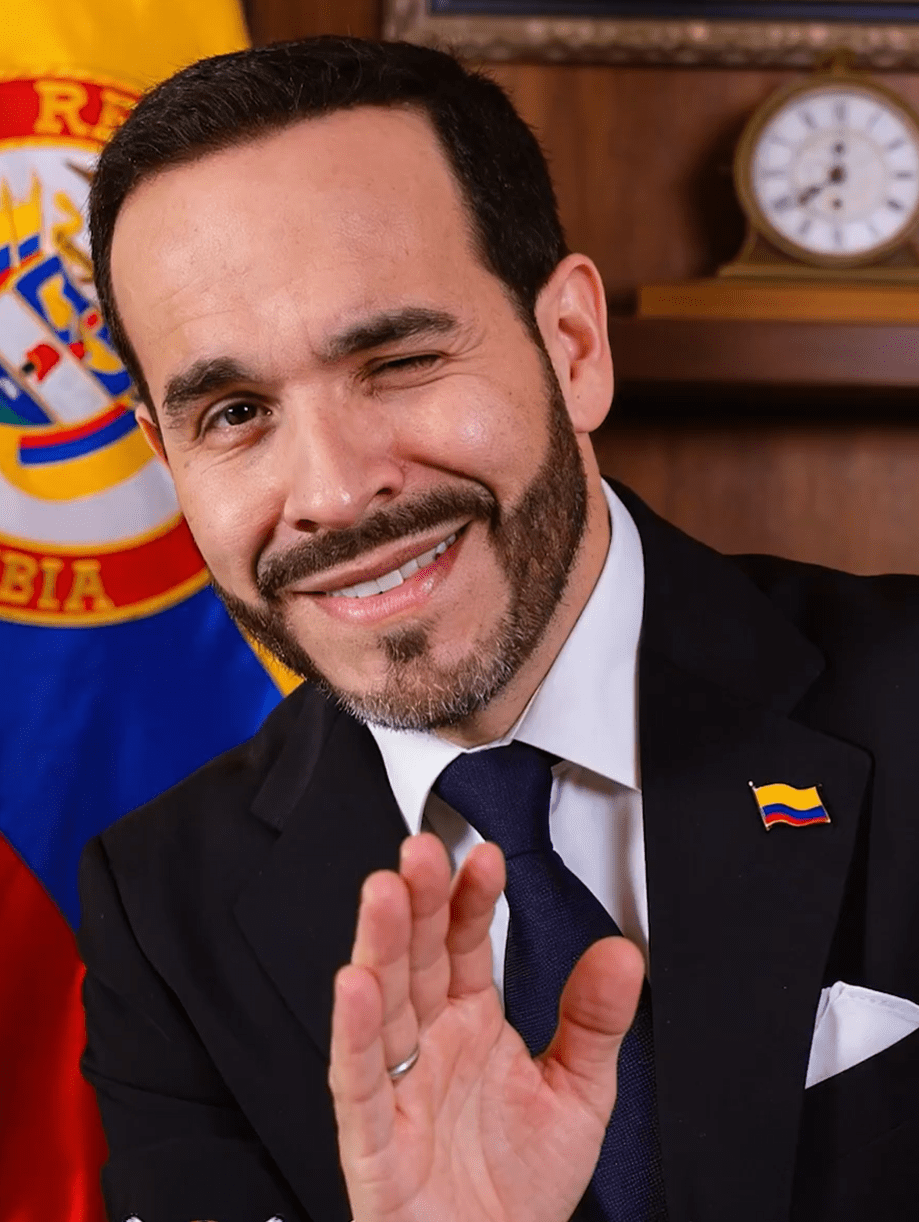
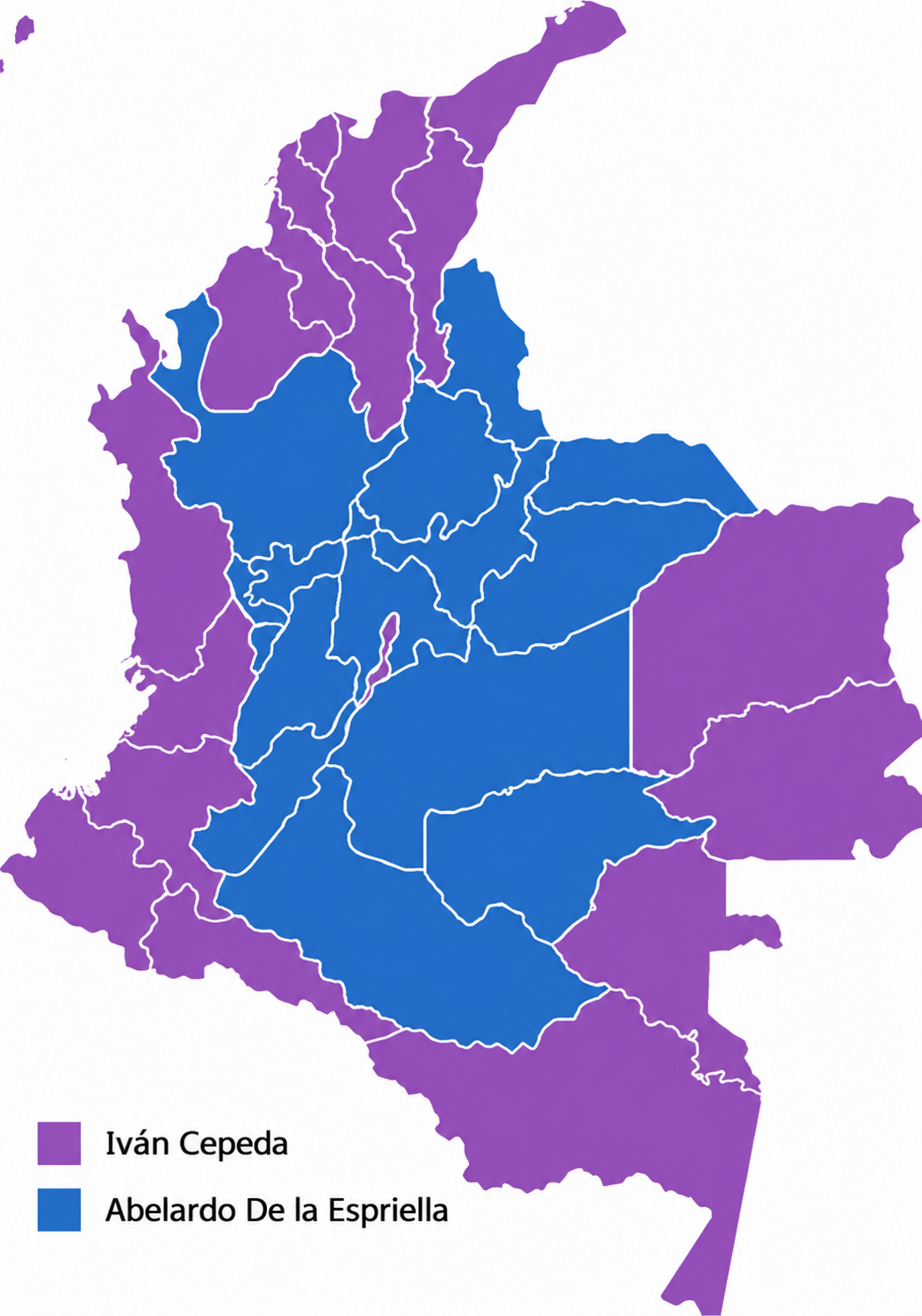
Colombia’s first-round presidential election, held Sunday, May 31, 2026, produced a result that crystallizes the country’s political exhaustion with both the governing left and the traditional right. Criminal defense attorney and political outsider Abelardo de la Espriella placed first with more than 10.3 million votes. Leftist Senator Iván Cepeda, a close ally of outgoing President Gustavo Petro and the lead architect of the administration’s Paz Total peace policy, finished second with just under 9.7 million votes. The two will face each other in a runoff election on June 21.

Senator Paloma Valencia, the candidate backed by former President Álvaro Uribe and the standard-bearer of his Uribismo movement, placed a distant third, receiving less than 7% of the vote — fewer than 1.7 million ballots. Former Medellín mayor and Antioquia governor Sergio Fajardo received just over one million votes, while former Bogotá mayor Claudia López finished below 1%, with approximately 225,000 votes. The remaining minor candidates combined for just over 1% of the total.

Under Colombia’s electoral system, the top two finishers advance to a runoff if no candidate surpasses 50% in the first round. The June 21 vote will determine who assumes the presidency on August 7.

Click above to watch the video!

The Candidates: Background and Context

Abelardo de la Espriella, 47, has never held elected office. He built a national profile over more than two decades as a high-profile defense attorney, founding De La Espriella Lawyers in 2002, with offices in Colombia and the United States. His client roster has included controversial figures: he represented Alex Saab, a Colombian-born businessman who became a close associate of Venezuelan President Nicolás Maduro and was implicated in a scheme to launder proceeds from Venezuela’s food-assistance program, the Comité Local de Abastecimiento y Producción (CLAP). Saab was extradited to the United States, convicted, and later granted clemency before being re-arrested in Venezuela in early 2026. De la Espriella also represented members of the Nule family in connection with the Carrusel de Contratos — a major contracting scandal tied to infrastructure works at Bogotá’s El Dorado airport corridor. He has additionally been reported to have represented individuals linked to organized crime.

De la Espriella has drawn comparisons to figures such as US President Donald Trump and El Salvador’s Nayib Bukele. His campaign has centered on hard-line security policy, including proposals for large-scale incarceration, expanded military operations against armed groups, and the rejection of negotiations with guerrilla organizations. He is reported to hold Italian and US citizenship in addition to his Colombian nationality, and is said to own property in Florida.

In a notable departure from his defense work, de la Espriella took the side of a victim in a high-profile acid-attack case, acting as a private prosecutor to secure a stronger sentence for the perpetrator — an episode that raised his public profile beyond the defense bar.

Iván Cepeda, 63, enters the runoff as the consolidated candidate of the Colombian left and Petro’s Pacto Histórico coalition. He is the primary legislative architect of Paz Total, the Petro administration’s policy of negotiating simultaneously with multiple armed actors, including the ELN and FARC dissident factions. Cepeda’s family background includes deep ties to the Colombian left: his father was secretary general of the Communist Party, and was assassinated. Cepeda himself studied in communist Bulgaria during the soviet era. The two finalists have an established legal and political history: Uribe attempted to bring criminal charges against Cepeda while both served in the Senate, but the Supreme Court determined that Uribe had fabricated the accusations and attempted to bribe witnesses — a case that resulted in Uribe’s criminal conviction.

“If nothing changes, Abelardo wins.” — Loren Moss, Finance Colombia

The Electoral Map

The geographic distribution of the vote reflects deep regional divisions. Cepeda carried Bogotá, which has trended left for years, particularly in lower-income districts on the city’s south and west sides. Antioquia — historically the heartland of Uribismo and home to Medellín, the country’s second-largest city — voted more than two to one for de la Espriella, a result that signals the weakening grip of Uribe’s movement even in its traditional stronghold.

The heart of coffee-growing country — the departments of Caldas, Risaralda, and Quindío also went to de la Espriella. Caquetá, a sparsely populated department in southern Colombia that has suffered sustained guerrilla violence from both the ELN and FARC dissident groups, voted for de la Espriella as well, a result we may interpret as a direct rejection of Petro and Cepeda’s Paz Total.

Cepeda carried Colombia’s Pacific coast, including the chronically neglected department of Chocó, as well as the sparsely populated Amazonas and Putumayo departments bordering Peru and Brazil, and the northern Caribbean coast. The Caribbean coast result is notable, as the region has historically suffered from underdevelopment, infrastructure deficits, and significant income inequality. Norte de Santander with its Catatumbo region on the Venezuelan border and experiencing severe armed-group activity — voted for de la Espriella, a result consistent with public exhaustion over security policy.

The Political Context: From Uribe to Petro and Beyond

Colombia’s current political trajectory is rooted in decisions made across the past two decades. President Uribe served two terms in the early 2000s and, together with then-Defense Minister Juan Manuel Santos, mounted a sustained military campaign against the FARC that significantly weakened the insurgency. Santos later broke from Uribe after assuming the presidency, governing independently and ultimately negotiating a peace agreement with the FARC — a deal that Uribe actively opposed. A plebiscite on the accord failed, but Santos used legislative maneuvering to implement it anyway.
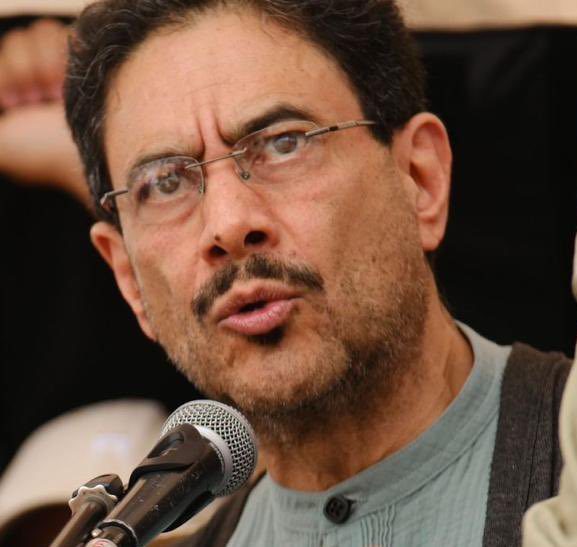
Colombia 2026 1st round top two (Graphic: Sofi Imfeld for Finance Colombia)

Colombia 2026 1st round top two (Graphic: Sofi Imfeld for Finance Colombia)

Uribe’s next handpicked candidate, Iván Duque, won the 2018 election but finished his term with approximately 30% approval. Members of his own party publicly distanced themselves from him — Senator María Fernanda Cabal, a staunch Uribista, called Duque a “mamerto” (leftist idiot) while he was still in office. Under his administration, indicators on crime and guerrilla activity worsened, and armed groups including the ELN rebuilt operational capacity that had been degraded under Uribe and Santos.

Petro’s administration has not met initial fears of a Venezuelan-style democratic breakdown: Congress has largely blocked the most radical components of his agenda, including attempts to nationalize the private pension system and convert the healthcare system to a single-payer model. However, crime has increased, armed groups have expanded their operational footprints, and the security situation in several regions has worsened. Paz Total is widely seen as having produced few tangible results.

Uribe himself was convicted of witness tampering and attempted bribery in the case he had brought against Cepeda. Though released from house arrest after conviction, the judges who authorized his release are now reportedly under investigation for judicial corruption. Valencia’s poor performance in the first round — despite being Uribe’s chosen standard-bearer — suggests that Uribismo as a political force is waning, with its core constituency aging and new generations of voters disengaged from the Uribe legacy.

What to Expect Before June 21

Both campaigns will intensify mobilization efforts over the coming three weeks. Cepeda’s movement — Colombia Humana and the broader Pacto Histórico coalition — has historically relied on organized mobilizations, including indigenous community-led mingas, labor unions, and allied social movements. Cepeda’s running mate Senator Aida Quilcué is an indigenous activist, a choice expected to energize those constituencies. FECODE, the Federación Colombiana de Trabajadores de la Educación (Colombia’s main teachers’ federation), is expected to align officially with Cepeda, though individual teachers may not follow union leadership in their voting choices.

On the right, Paloma Valencia issued a public endorsement of de la Espriella immediately following the first-round results. Business community organizations, including ANDI (the Asociación Nacional de Empresarios de Colombia) and Fenalco (the Federación Nacional de Comerciantes), do not formally endorse candidates, but their members are widely understood to favor a government that supports private enterprise and market-oriented policy. De la Espriella holds no congressional constituency, meaning whichever candidate wins will face the same dynamic Petro encountered: a fragmented Congress that is likely to act as a check on executive authority.

The question of centrist voter alignment remains open. Fajardo and López are not expected to formally endorse either finalist, and the direction of their combined approximately 1.2 million votes is uncertain.

Winners and Losers by Sector

For international investors and executives operating in Colombia, the policy differences between the two candidates are substantive across several key sectors.

Petroleum and Natural Gas: De la Espriella has stated unequivocally that he will restart petroleum exploration and licensing, which the Petro administration blocked. Ecopetrol S.A. (NYSE: EC; BVC: ECOPETROL), Colombia’s state-controlled oil company, which also holds producing assets in the US Permian Basin and Gulf of Mexico, has operated under a government that halted new drilling permits. The consequences have included a decline in future production capacity at a time when global oil prices have risen due to Middle East tensions. Colombia has been forced to import natural gas at elevated prices to meet existing domestic demand — including from transportation fleets that were converted to natural gas under government incentive programs. Cepeda would be expected to continue or deepen current restrictions on fossil fuel expansion.

Healthcare: The Petro-Cepeda platform favors a government single-payer model. The administration has already taken over several Entidades Promotoras de Salud (EPS) — Colombia’s managed-care intermediaries — placing the healthcare system in legal and financial uncertainty. Private clinics, hospitals, and physicians who wish to operate outside a government-controlled framework would benefit from a de la Espriella administration. Cepeda’s healthcare agenda would accelerate the shift toward government-managed care.

BPO, Tech, and Call Centers: The BPO sector — which provides large volumes of formal employment, particularly in Medellín, Bogotá, Cali, and Barranquilla — was significantly affected by Petro-era minimum wage increases of 16% and 23% in successive years. These increases created contract renegotiation pressures with international clients, some of whom have shifted or considered shifting operations to competing jurisdictions including Honduras, Jamaica, the Dominican Republic, Mexico, and Guatemala. At the CX Summit, the industry’s main annual event held in Cartagena, the son of Álvaro Uribe appeared as an invited keynote speaker — a gesture that could be interpreted within the industry as an implicit signal of political alignment. A de la Espriella government, with its orientation toward labor market deregulation and reduced regulatory burden, would be viewed more favorably by this sector. Current Colombian labor law prohibits part-time employment contracts and places significant restrictions on dual employment, making workforce flexibility difficult for businesses that operate outside traditional 40-hour weekly structures.

Mining: The Petro administration has been less aggressive toward mining than toward petroleum, but sector participants expect a more permissive regulatory environment under de la Espriella, and continued constraints under Cepeda.

Security and Tourism: Both candidates have stated support for tourism promotion, but the sector’s trajectory is more directly linked to security conditions. Under current policies, several regions that were accessible to domestic and international travelers several years ago have experienced increased armed-group activity, effectively closing them to tourism. A de la Espriella administration is expected to pursue a more aggressive military posture toward the ELN and FARC dissident factions; a Cepeda government would likely continue dialogue-first approaches. The outcome will directly affect which parts of Colombia’s territory remain accessible to investment and tourism.

Foreign Relations: A de la Espriella government is expected to restore a broadly cooperative relationship with the United States, which deteriorated under Petro following several high-profile diplomatic incidents. De la Espriella has expressed admiration for US President Donald Trump, and reports indicate he holds US citizenship and owns property in Florida. Relations with Ecuador, which have been strained by mutual tariff escalations between Petro and Ecuadorian President Daniel Noboa, would be expected to normalize. Relations with Venezuela under Cepeda would likely continue along the current allied trajectory, while a de la Espriella government would be expected to take a more critical posture toward Caracas. China and Russia would find a more receptive diplomatic environment under Cepeda, and a cooler one under de la Espriella.

The Poor and Informal Workers: Cepeda’s campaign argues that minimum wage increases and expanded state services benefit lower-income Colombians. Critics counter that elevated formal labor costs have pushed more employment into the informal sector — which currently accounts for approximately half the Colombian workforce — depriving those workers of pension contributions, health benefits, and job security. De la Espriella’s platform, which emphasizes business formation, security, and labor market deregulation, would be presented as generating more formal-sector job creation. The actual distributional effects of either approach remain contested.

The Outlook

Assuming current polling trends hold and Uribista voters consolidate behind de la Espriella as expected following Valencia’s endorsement, de la Espriella enters the runoff as the frontrunner. Cepeda’s path to victory depends on driving high turnout among his base, securing support from centrist voters who did not vote for either finalist in the first round, and potentially benefiting from any missteps by de la Espriella in the final three weeks of campaigning.

The first-round results produced no major electoral violence. The ELN announced a temporary halt to armed actions during the voting period. Authorities detained some individuals reportedly attempting to purchase votes in rural areas, but no large-scale incidents were recorded.

The incoming president will face a Congress with no natural majority aligned to the executive, a healthcare system in partial administrative disarray, a petroleum sector whose future production trajectory is in question, and regions where state presence remains contested by armed groups. The June 21 runoff will determine which vision — market-oriented restructuring or continuation of the Petro project — Colombia pursues for the next four years.

  •  

“Andrew Tate Wannabe” Casey Brown Kicked Out of Colombia Over Sex Tourism Allegations

Colombia’s 2026 vice-tourism inadmissions outpace all of 2025

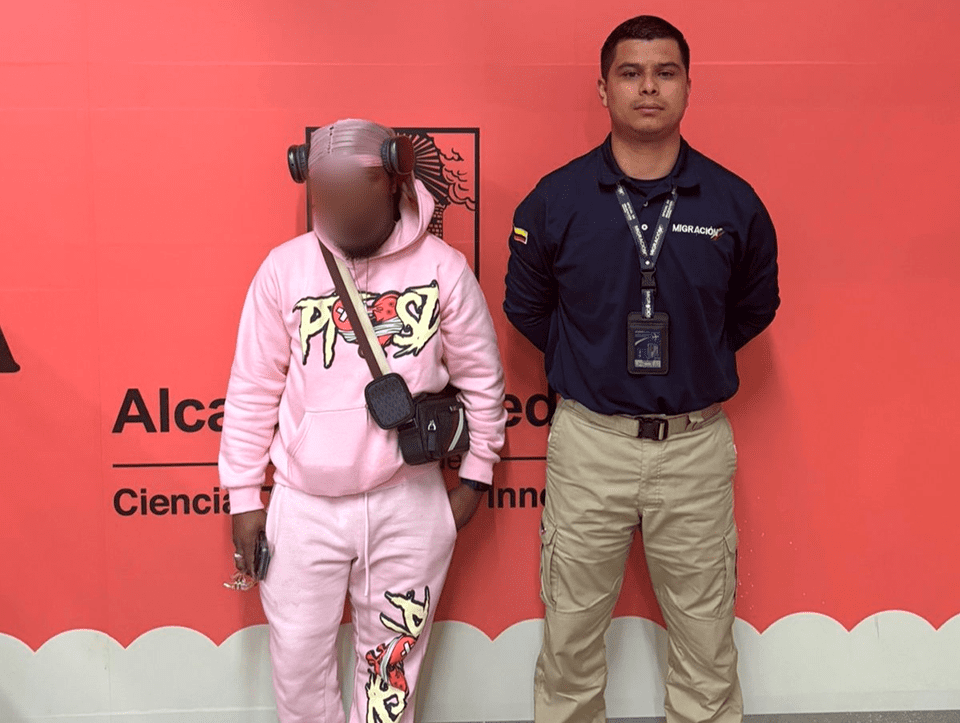
Migración Colombia denied entry to an American known on social media as Casey Red Beard at Aeropuerto Internacional El Dorado in Bogotá on Saturday, May 23, returning him on an immediate flight to Miami after officials confirmed prior alerts linking him to the alleged promotion of sex tourism and private gatherings in Medellín. The traveler has been barred from entering Colombia for 10 years.

The decision drew on existing anotaciones registered by the agency’s Regional Antioquia-Chocó office, derived from public denouncements made in earlier years. According to Migración Colombia, the man had used social media to promote private gatherings in apartments in Medellín aimed at foreign visitors, marketed under the name Programa de Inmersión en Medellín. The agency described packages priced in US dollars that included private dinners, exclusive parties, excursions, and food and transport for women attending the events.

A message attributed by Migración Colombia to the organizers of the parties read: “Mis clientes son millonarios y me pagan muy bien para lanzar fiestas donde solo haya chicas educadas (…) ellos no quieren conocer las chicas que están en el Lleras a las 2 a.m.” (“My clients are millionaires and they pay me very well to throw parties where there are only educated girls (…) they don’t want to meet the girls who are at Lleras at 2 a.m.”)

“In several posts, he brags that his “white advantage” helps him attract Latin American women and urges men to get their passports.” – Jessica Van Meir in The Baffler #77, January 2025

Statements from Bogotá and Medellín

The Director General of Migración Colombia, Gloria Esperanza Arriero, said the agency “no solo tiene rigor en el control migratorio, sino también capacidad en las verificaciones y en la toma de decisiones para combatir la trata de personas y la explotación sexual de niños, niñas y adolescentes con todos los elementos posibles” (“not only enforces migration controls rigorously, but also has the verification and decision-making capacity to combat human trafficking and the sexual exploitation of children and adolescents with every available element”). Arriero added that the agency would continue strengthening control mechanisms to prevent the entry of persons it determines pose risks to communities.

The Mayor of Medellín, Federico Gutiérrez, addressed the case on his X account: “Otro más. Go Home‼ Un estadounidense conocido en redes sociales como Casey Red Beard llegó a Bogotá en un vuelo desde Miami y fue devuelto a su país por Migración Colombia, luego de confirmarse que estaba en la lista Alertas Medellín, por promoción explícita de turismo con fines de explotación sexual, organizando fiestas en apartamentos de la ciudad.” (“Another one. Go Home‼ An American known on social media as Casey Red Beard arrived in Bogotá on a flight from Miami and was returned to his country by Migración Colombia, after it was confirmed he was on the Alertas Medellín list for the explicit promotion of tourism for the purposes of sexual exploitation, organizing parties in apartments in the city.”)
“Let it be clear: there is no place here for foreigners who come to promote disorder and skirt the law.”— Federico Gutiérrez, Mayor of Medellín

The Alertas Medellín list cited by Gutiérrez is a municipal mechanism maintained by the Alcaldía de Medellín that flags foreign nationals associated with criminal activity, security risks, or conduct authorities consider incompatible with public coexistence. The list is shared with Migración Colombia for use at points of entry.

Identifying the Subject

Authorities publicly identified the man only by his social-media handle, Casey Red Beard, and the affiliated X account @RedBeardRants1. The individual operating under the handle is Casey Brown, an American previously identified by name in a January 2025 essay in The Baffler by journalist Jessica Van Meir, who described him as “a self-proclaimed red-pilled dating coach” who advertised “gringo parties” in Medellín “for American tourists to meet Colombian women.” Van Meir cited a 2023 report in the Colombian feminist outlet Manifiesta alleging that Red Beard and an accomplice had engaged in sex trafficking. A LinkedIn profile consistent with the same identification also presents him under the name Casey Brown. Migración Colombia has not commented on legal-name identification.

Self-Styled ‘Red-Pilled’ Dating Coach

The public profile cultivated by the subject sits squarely within the so-called “red pill” or “manosphere” online community — a network of self-styled male-dating influencers whose best-known international figure is the British-American social-media personality Andrew Tate, currently under indictment in Romania on charges including human trafficking and rape. On his YouTube channel, which operates under the handle @redbeardrants, and in his publicly indexed marketing materials, Red Beard describes his stated mission as one to “destroy loneliness in men” and promotes a method built around mass online-dating outreach, paid virtual assistants, and copy-paste messaging “funnels.” His published guidance to clients includes an explicit recommendation to “leave the west (USA, Canada, UK, etc.). Go to a more favorable dating market like Eastern Europe, South America, Asia, etc. where the women are more feminine, beautiful, cooperative, and easier to obtain.” His listed past collaborations include Myron Gaines and the Fresh and Fit Podcast, a manosphere-adjacent program in the same broader subculture.

Investigators reviewing his social-media output cited the same framing in their internal alerts. Beyond the “chicas educadas” message attributed to the organizers by Migración Colombia, the agency noted that Red Beard’s published content has historically marketed Medellín itself as the destination commodity, with the city’s Parque Lleras nightlife district and surrounding El Poblado sector positioned as the operational base for his promoted experiences.

Mayor’s Office Has Made Vice and Sex Tourism a Signature Enforcement Priority

Federico Gutiérrez has positioned the protection of women and children from sexual exploitation as a defining priority of his second, non-consecutive mayoral term, treating the suppression of vice tourism as both a public-safety obligation and a city-brand imperative. The May 23 Casey Red Beard inadmission fits a sustained two-year enforcement push that began in his first weeks back in office in early 2024. Within weeks of taking office, the administration imposed a curfew restricting unaccompanied minors from designated zones — including La 33, La Candelaria, and the Corredor de la 70 — to combat commercial sexual exploitation of children. In April 2024 the mayor used emergency powers to outlaw prostitution in the El Poblado sector, including the Parque Lleras zone, and authorities sealed a guesthouse called Gotham marketed through Airbnb on grounds related to alleged organized criminal activity, with extinción de dominio (asset forfeiture) proceedings sought against the property.

The enforcement push has been backed by explicit US support. In April 2024 the US Ambassador to Colombia, Francisco Palmieri, met with Gutiérrez in Bogotá and pledged the “total cooperation of the US government and its resources” to support Colombian law enforcement against sexual exploitation and human trafficking, including the extradition of US citizens to Colombia where applicable. A bilateral operational pattern was already visible in March 2024, when two US citizens were arrested for the sexual exploitation of minors in Colombia following coordinated raids. Subsequent arrests in August 2024 involved direct coordination with the US Department of Homeland Security’s Homeland Security Investigations (HSI) on a transnational case involving a Mexican operator and routes through El Poblado, Belén, Cancún, and Mérida.

Municipal prevention has run alongside enforcement and has been framed around the protection of minors and women in conditions of economic vulnerability. The Secretary of Security and Coexistence of Medellín, Manuel Villa Mejía, has overseen periodic mega-operativos involving more than 300 agents drawn from the Policía Nacional, the army, Migración Colombia, and municipal agencies, targeting establishments and accommodations linked to alleged exploitation. In October 2025 the Alcaldía launched training for owners and administrators of tourist accommodations in coordination with Fundación Renacer, a Colombian non-governmental organization specializing in the prevention of commercial sexual exploitation of children. City-government figures from October 2024 reported a 160% increase in arrests for sexual violence against minors and 22,000 calls to the city’s 123 emergency line for child and adolescent protection requests during that year, even as overall foreign tourist arrivals rose 26% — a data pairing the Alcaldía has used to argue that brand recovery and enforcement are complementary rather than competing objectives.

The broader foreigner-safety beat in Medellín has continued to draw international attention. In March 2026, the death of an American Airlines (NASDAQ: AAL) flight attendant in Antioquia following her disappearance focused renewed attention on escopolamina-related crime targeting foreigners and locals in the city.

Otro más. Go Home‼

Un estadounidense conocido en redes sociales como Casey Red Beard llegó a Bogotá en un vuelo desde Miami y fue devuelto a su país por Migración Colombia, luego de confirmarse que estaba en la lista Alertas Medellín, por promoción explícita de turismo con… https://t.co/EWBfr9qwdK

— Fico Gutiérrez (@FicoGutierrez) May 23, 2026

Enforcement Numbers for 2026

In what has elapsed of 2026, Migración Colombia has inadmitted approximately 90 foreign nationals nationwide for risks associated with sexual exploitation and conduct linked to trata de personas (human trafficking), a figure already approaching the 110 cases recorded for all of 2025. In Medellín alone, more than 60 inadmission procedures have been carried out so far this year, compared to 80 for all of 2025. The agency’s Regional Antioquia-Chocó office accounts for 63 of the 2026 cases.

Broader expulsion and deportation activity is running at a pace comparable to the previous year. Through May 23, the agency reported 310 expulsions or deportations of foreign citizens in 2026, comprising 157 deportations and 153 expulsions, compared to 1,652 cases recorded during all of 2025. Deportations were concentrated in the agency’s Nariño, Oriente, Atlántico, Eje Cafetero, Antioquia, and Andina regional offices, while expulsions were most frequent in Oriente, Andina, Antioquia, Nariño, and at the El Dorado station.

According to Arriero, expulsion and deportation decisions are taken in accordance with the Constitución Política de Colombia and applicable law, with due-process considerations, and respond to immigration violations, threats to public order or national security, judicial orders, and requirements from international organizations including the International Criminal Police Organization (INTERPOL). Migración Colombia retains discretionary authority under Decreto 2136 de 2021 to deny entry to or order the return of foreign citizens it determines pose risks to national security or public order.

Pattern of Recent Cases

The Casey Red Beard inadmission follows several high-profile expulsions earlier in 2026. In April, Migración Colombia expelled Steve Newland, a US citizen and social media operator known as “Chill Capo,” accused of promoting party experiences with alleged ties to sexual exploitation and of publishing content advising visitors on how to evade migration controls. The same month, the agency expelled Samuel McVey, a former teacher from New Rochelle, New York, following incidents at schools in the eastern Antioquia municipality of Rionegro and in the Las Palmas sector of Medellín. Migración Colombia also detected and again removed Russian citizen George Laevsky after he attempted to re-enter the country following an April expulsion linked to repeated disturbances at an apartment in the El Poblado sector.

Colombian authorities have framed the escalating enforcement as targeting precisely the use of social media and digital platforms to market tourism packages that allegedly conceal sexual exploitation, with women in conditions of economic vulnerability described as the principal victims. The agency has previously stated that prevention of Explotación Sexual Comercial de Niños, Niñas y Adolescentes (ESCNNA) is a particular priority, citing cooperation with international intelligence agencies and the Angel Watch program, which has resulted in more than 470 entry denials since 2016 for reasons associated with sexual offenses.

  •  

Colombia’s Three Presidential Front-Runners Draw Divergent Maps for Foreign Capital, Security, and Rule of Law

Colombians face three sharply different futures in May 31 vote

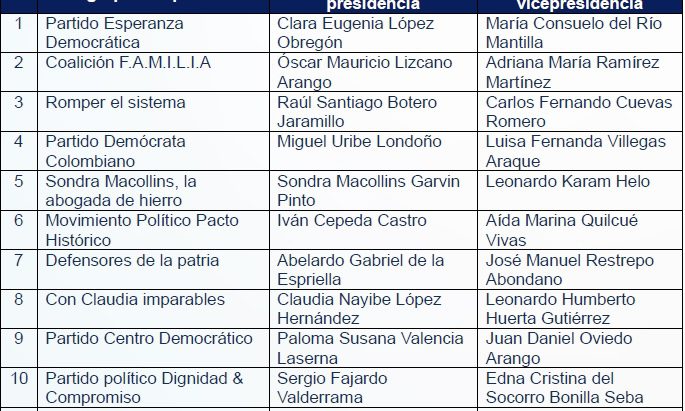
Colombia votes on May 31 with its presidential race concentrated around three candidates whose platforms diverge on nearly every dimension of economic and security policy relevant to foreign investors. For corporate executives, institutional investors, and multinational operations with Colombian exposure, the choice between senator Iván Cepeda, senator Paloma Valencia, and defense attorney Abelardo de la Espriella carries direct, measurable implications for the regulatory environment, foreign direct investment (FDI) conditions, energy sector licensing, and geopolitical alignment through at least 2030.

No candidate is projected to clear the 50%-plus-one threshold required to win outright on May 31, making a runoff election on June 21 the expected outcome. The question that will determine the direction of that runoff — and by extension the next administration — is which of the two opposition candidates finishes second.

Click above to play the video!

A Race Reshaped by Late Polling

The final-week polling picture shifted substantially, and the trajectory matters as much as the snapshot. The CONDOR weighted aggregate — which incorporates surveys from six polling firms and applies greater weight to more recent data — placed the race as of May 23 at: Cepeda 36.3%, De la Espriella 29.1%, Valencia 16.7%.

Invamer, one of Colombia’s most established polling firms, surveyed 3,800 respondents across 152 municipalities between May 13 and May 20, registering Cepeda at 44.6%, De la Espriella at 31.6%, and Valencia at 14.0%. The Centro Nacional de Consultoría (CNC) published a survey conducted May 22 and 23 showing Cepeda at 33.4%, De la Espriella at 30.9%, and Valencia at 12.6%.

Comparing those figures to the Fundación Génesis Crea survey from May 4 through May 11 — which placed Cepeda at 35.1%, Valencia at 25.4%, and De la Espriella at 21.6% — indicates a multi-poll trend of De la Espriella gaining approximately nine to ten percentage points in three weeks while Valencia shed a comparable share. AS/COA’s poll tracker confirms the directional consistency across firms.

Atlas Intel, which published figures more favorable to De la Espriella, is currently under investigation by Colombia’s Consejo Nacional Electoral (CNE) for potential methodology violations and could face suspension of its operations. Those figures are treated with caution in this analysis.

Runoff modeling diverges between firms. Fundación Génesis Crea showed Valencia defeating Cepeda 49.1% to 44.7% in a second-round matchup — meaning she was the stronger opposition candidate in that scenario. The Guarumo/Ecoanalítica survey found Cepeda losing all hypothetical runoff scenarios, including against De la Espriella. Two minor candidates — former senator Clara López and former Chocó governor Luis Gilberto Murillo — withdrew and endorsed Cepeda before the first round, a consolidation that appears to have had limited effect on his polling numbers.

Finance Colombia reported in May that the campaign has been marked by an unusual absence of traditional televised debates. Cepeda declined to participate in events organized by major media outlets, stating that proposed formats lacked neutrality. Former Bogotá Mayor Claudia López, herself a candidate, said publicly that Cepeda’s refusal was motivated by an unwillingness to defend his record as the architect of President Gustavo Petro‘s Paz Total security negotiation strategy.

Security Policy: The Three Approaches to Armed Groups

Public security is the top voter concern heading into the election. InSight Crime documented that the Ejército de Liberación Nacional (ELN) launched a major offensive against FARC dissident factions in Norte de Santander in early 2025, resulting in mass civilian casualties in the Catatumbo region. In Chocó and Antioquia, the ELN and the Autodefensas Gaitanistas de Colombia (AGC), commonly known as the Clan del Golfo, are competing for control of illegal gold mining corridors and drug trafficking routes. In Cauca, FARC dissident factions have established territorial control in areas where state presence has collapsed.

Grafiti of the ELN and ex-FARC Mafia near Corinto, Cauca (Credit: Henry Shuldiner)Cepeda’s approach to security is defined by his role as the principal legislative architect of Paz Total. As chair of the Senate‘s peace commission, he designed the framework that extended negotiating status to the ELN, FARC dissident groups, and the Clan del Golfo. His stated rationale is that targeting the financial leadership of drug networks rather than foot soldiers produces more durable results — a position that has academic backing in narcotics policy literature. In practice, Paz Total produced ceasefires that were repeatedly violated, and security indicators in conflict-affected departments deteriorated during the Petro administration. A Cepeda presidency is expected to continue the negotiated settlement model, with the military operating under political constraints.

Valencia’s security platform is based on reinstating Seguridad Democrática, the doctrine associated with former president Álvaro Uribe’s administrations from 2002 to 2010. The core elements are expanded military presence in rural conflict zones, dismantling of rural criminal networks, and resumption of extradition agreements with the United States — which Petro suspended, effectively shielding cartel leadership from US federal prosecution. The Uribe-era approach resulted in measurable reductions in homicide rates, forced displacement, and ELN and FARC territorial control, though human rights organizations documented serious abuses by security forces during that period.

De la Espriella has stated explicitly that his government would have no peace process. He advocates for a model similar to El Salvador’s under President Nayib Bukele: mass incarceration, construction of high-security prison facilities, classification of guerrilla and cartel organizations as foreign terrorist organizations, and broad military offensives. He has not detailed how such operations would be financed or how the mass detention model would interact with Colombia’s Constitutional Court, which has repeatedly constrained executive security powers.

For the armed groups operating in Norte de Santander and Cauca, the historical record indicates that Colombia’s criminal organizations respond more acutely to sustained, institutionally grounded military pressure and functioning extradition pipelines than to political rhetoric. By that measure, Valencia’s platform — which rebuilds the institutional security apparatus incrementally — represents a more structurally credible threat to the ELN and the Estado Mayor Central (EMC) FARC dissidents. For the Clan del Golfo leadership, extradition to the United States has historically been the principal deterrent, and Valencia’s program explicitly restores it.

Business Climate and Employment Conditions

The Petro administration enacted a series of minimum wage increases totaling more than 60% over four years — including a 16% increase for 2023, the largest single-year hike in Colombian history, and a 23.78% increase for 2026 — restructured labor regulations to expand premium pay requirements for night, weekend, and holiday shifts, and raised corporate tax rates to fund social spending programs. The Asociación Nacional de Empresarios de Colombia (ANDI) characterized the regulatory environment as adverse to private investment. Finance Colombia tracked a material decline in FDI in the extractive sector over the same period.

Cepeda supported those labor and fiscal reforms throughout their legislative passage. His platform extends the Petro model: increased state social spending, continued land redistribution programs, and maintenance of the current wage and labor cost structure. For companies with established Colombian operations, the regulatory environment is manageable; for companies evaluating market entry or operational expansion, the cost structure adds friction.

Valencia’s economic program emphasizes corporate stability and private sector investment as the primary mechanisms of job creation. Her vice-presidential running mate, Juan Daniel Oviedo — former director of DANE, Colombia’s national statistics agency — represents a technocratic orientation focused on reducing structural market distortions, streamlining public procurement, and scaling back state administrative overhead. Oviedo’s appointment is a direct signal to the business community that economic management would be data-driven rather than ideologically directed. Oviedo also publicly identifies as a member of the LGBTQ+ community, a departure from the traditional social conservatism of Centro Democrático.

De la Espriella’s economic orientation is pro-business with protectionist elements. His vice-presidential candidate, José Manuel Restrepo — who served as Colombia’s Finance Minister and Commerce Minister — provides institutional credibility on fiscal and trade policy. Restrepo’s presence on the ticket signals commitment to fiscal discipline and regulatory reduction in the extractive and commercial sectors. De la Espriella’s personal style, however, introduces operational uncertainty; his campaign has generated multiple high-profile controversies, including a public altercation with Caracol Noticias journalist María Lucía Fernández during a live broadcast and a formal apology following misconduct allegations by journalist Laura Rodríguez of Piso 8 FM.

Foreign Investment, Oil, and Mining

Ecopetrol holds a 31.5% stake in the Gunflint oil field in the Gulf of Mexico.

Ecopetrol holds a 31.5% stake in the Gunflint oil field in the Gulf of Mexico.

The extractive sector is the most consequential economic policy dimension for international capital. Ecopetrol (NYSE: EC; BVC: ECOPETROL) — Colombia’s state-controlled energy company and the largest corporation in the country — has operated under exploration restrictions during the Petro administration, which has opposed new fossil fuel contracts on climate grounds.

Cepeda’s position extends the Petro framework: mandatory transition away from fossil fuels, heavy restrictions or outright prohibitions on new oil and gas exploration contracts, and stringent environmental licensing requirements for open-pit mining operations. Foreign investment would be directed by policy toward green hydrogen, ecotourism, and smallholder agriculture. For the multinational oil majors with Colombian operations and for institutional investors in the mining sector, a Cepeda presidency represents a continuation of the current constraints and, in some contract scenarios, an accelerated wind-down of Colombian portfolios.

In a related development, Finance Colombia reported in May that Ecopetrol’s president, Ricardo Roa, has been formally charged in connection with alleged campaign spending violations during Petro’s 2022 presidential campaign. The case will be inherited by whoever takes office in August.

Valencia’s position is that hydrocarbon revenues are essential to Colombia’s macroeconomic stability and that the country cannot exit the sector before alternative revenue structures exist. Her platform actively encourages FDI in petroleum exploration, is open to regulated fracking, and commits to clearing the environmental licensing backlog that has stalled multiple large-scale gold and copper mining projects. For energy and mining companies currently blocked by administrative delays, this represents the most direct path to project advancement.

De la Espriella’s position goes further: essentially deregulating the environmental licensing process for major extraction projects on the grounds that Colombia’s economic sovereignty takes precedence over environmental restrictions he characterizes as externally imposed. The practical constraint is whether a De la Espriella administration would have the institutional coherence and congressional support to deliver regulatory rollback, given that his movement has no established political party structure and entered the race through an independent signature campaign.

Foreign Policy: Washington Alignment vs. Multipolar Strategy

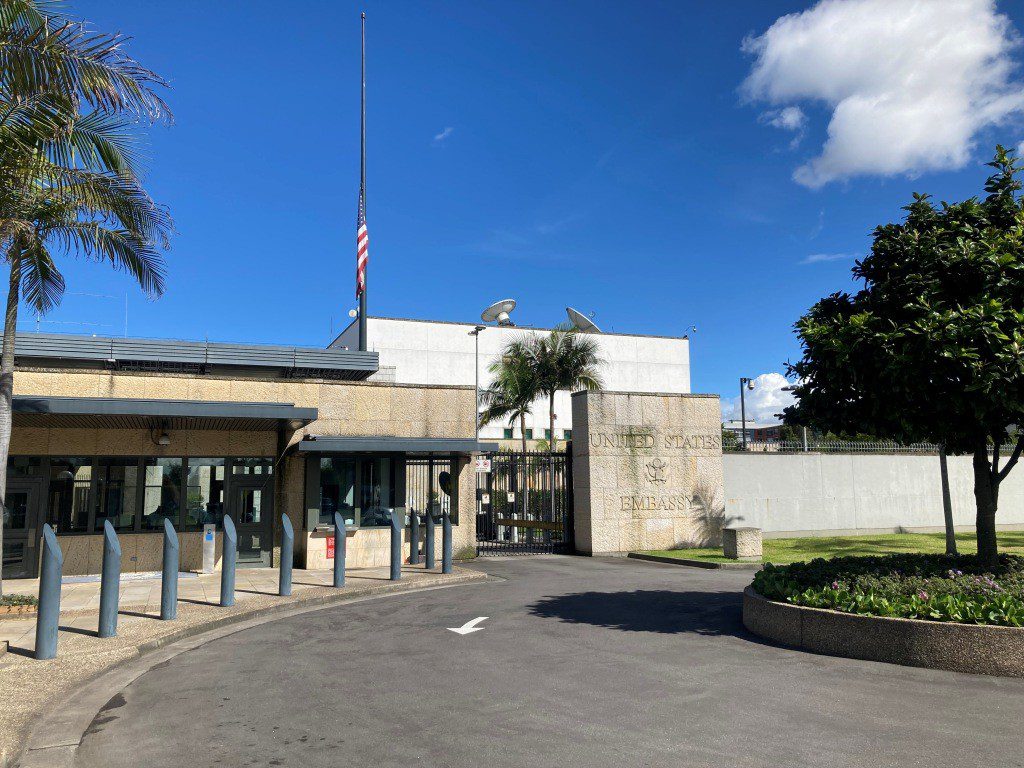
The US Embassy in Bogotá is said to be the 3rd largest US mission in the world (photo: Loren Moss)

The US Embassy in Bogotá is said to be the 3rd largest US mission in the world (photo: Loren Moss)

Colombia’s relationship with the United States deteriorated materially under Petro, who aligned Colombia with Venezuela’s Nicolás Maduro, pursued closer ties with China and Russia, and suspended extradition agreements. US counternarcotics cooperation was strained throughout the period.

Cepeda is committed to what he describes as a multipolar foreign policy — maintaining functional diplomatic channels with Washington and Brussels while deepening strategic and commercial relationships with China and Russia. His alignment with regional left-of-center governments in Mexico, Brazil, and Bolivia would position Colombia as part of a Latin American bloc that has grown increasingly skeptical of US regional leadership. For US companies operating in Colombia, this trajectory does not mean immediate operational disruption, but it reduces Colombia’s utility as a reliable counterpart on security cooperation, counter-narcotics intelligence sharing, and trade dispute resolution.

Valencia positions a return to the Western alignment as a core objective. She would prioritize restoring the US-Colombia relationship, reinforcing the bilateral Free Trade Agreement, and reestablishing intelligence-sharing mechanisms that were reduced under Petro. Her framing positions Colombia as a democratic anchor in a region experiencing authoritarian pressures.

De la Espriella takes the most explicit pro-US position in the race. La Silla Vacía reported that De la Espriella or entities linked to his campaign donated more than $90,000 USD to the US Republican Party, a fact that raises questions about the nature and expectations of those relationships. He has publicly aligned himself with the populist right in the United States, takes a hostile posture toward China, Russia, and Venezuela, and has characterized his security approach as consistent with a transactional alliance with Washington focused on counter-narcotics enforcement and cartel designation as foreign terrorist organizations.

“Ese pisco robó a 200 mil colombianos.” — Claudia López, former Mayor of Bogotá, referring to presidential candidate Abelardo de la Espriella’s legal representation of DMG pyramid scheme founder David Murcia Guzmán, during a presidential campaign event.

Corruption and Judicial Independence

All three candidates have stated commitments to fighting corruption, though their approaches and focal points differ in ways that are material to the institutional environment for business operations.

Cepeda’s legislative record includes serious, documented work investigating paramilitary infiltration of Colombia’s political institutions — the period known as parapolítica — and pursuing accountability for those cases. His blind spot, his critics argue, is corruption within the current administration. When Ecopetrol’s Ricardo Roa was formally charged in connection with Petro’s 2022 campaign, the response from the Pacto Histórico coalition was subdued. Cepeda has been Álvaro Uribe’s primary judicial antagonist in the Senate; a Cepeda administration would offer no institutional protection to Uribe and would be expected to support the full progress of judicial proceedings against him. For left-wing politicians facing legal exposure, including former Medellín mayor Daniel Quintero, a Cepeda administration would be expected to be more receptive to amnesty frameworks.

Valencia’s approach to anti-corruption is structural rather than prosecutorial: strengthening the independence of the Contraloría General de la República and the Fiscalía General de la Nación, implementing digital transparency in public procurement, and reducing informal executive influence over judicial processes. She would be expected to apply political and rhetorical pressure on behalf of Uribe — her political mentor and a close ally — though her legislative track record indicates a degree of institutional independence from Centro Democrático party orthodoxy.

De la Espriella’s anti-corruption rhetoric centers on severe criminal penalties for corrupt officials. The credibility of that position is complicated by his professional history, which is examined in detail below.

De la Espriella’s Legal Career: The Documented Record

De la Espriella’s campaign has faced sustained scrutiny over his client history as one of Colombia’s highest-profile criminal defense attorneys. The record is documented in reporting by El Colombiano, El Espectador, and the investigative outlet Corrupción al Día.

Abelardo de la Espriella (screen capture from Twitter video)

Abelardo de la Espriella (screen capture from Twitter video)

His documented client roster includes Salvatore Mancuso, the former supreme commander of the Autodefensas Unidas de Colombia (AUC) paramilitary network; multiple legislators convicted in the parapolítica scandal, which established systematic infiltration of Colombia’s congress by paramilitary organizations; David Murcia Guzmán, the operator of the DMG pyramid scheme that defrauded an estimated 200,000 Colombian investors; the Nule Primos, convicted of large-scale public contract fraud; and Álex Saab, the Colombian businessman extradited to the United States on charges of acting as the primary money launderer for the Maduro government in Venezuela. According to Corrupción al Día, De la Espriella’s legal fees from Saab reportedly reached $12 million USD and included private aircraft travel.

De la Espriella’s response to this line of criticism rests on due process principles: that every accused person is entitled to vigorous legal defense regardless of the charges, and that his ability to navigate Colombia’s criminal code at its most complex levels demonstrates the expertise required to enforce the law from the executive branch. The argument has legal validity as a principle. The specific issue for foreign compliance officers and US government counterparts is the Saab representation: the same Nicolás Maduro whose regime De la Espriella’s campaign now characterizes as an ideological enemy received legal services from De la Espriella’s firm when the representation was commercially available.

The Fiscalía investigated De la Espriella in connection with alleged paramilitary links in 2009 and again in 2012; both investigations were dismissed for insufficient evidence, and he carries no convictions or active investigations on those matters.

Cepeda’s Family History and Ideological Background

Iván Cepeda (from Twitter)

Iván Cepeda (from Twitter)

Critics of Iván Cepeda, including Enrique Gómez of the Salvación Nacional party, have argued that his family background constitutes evidence of structural alignment with guerrilla movements. The record on this point merits examination.

Cepeda is the son of Manuel Cepeda Vargas, who served as Secretary-General of the Colombian Communist Party and as a senator for the Unión Patriótica (UP), a left-wing political movement that was systematically exterminated by a combination of state actors and paramilitary organizations during the 1980s and 1990s. Manuel Cepeda Vargas was assassinated on August 9, 1994. The Inter-American Court of Human Rights subsequently found the Colombian state responsible for his murder. The FARC-EP named its Frente Urbano Manuel Cepeda Vargas — an urban front operating within the Bloque Occidental — in the elder Cepeda’s honor.

The Fundación Paz y Reconciliación (PARES) has documented that Iván Cepeda’s relationship with his father’s political positions was more complex than the family lineage alone suggests. After studying in Bulgaria in 1981, Cepeda broke from his father’s Soviet-oriented communist framework and aligned with democratic leftists including Bernardo Jaramillo Ossa, who publicly rejected the FARC’s armed strategy. Cepeda has repeatedly stated his repudiation of the FARC’s use of his father’s name. No documented evidence connects him to operational coordination with current armed groups.

What the family history does establish is the ideological framework through which Cepeda processes security policy: a belief, grounded in personal and political experience, that the Colombian state’s institutional violence has been as destructive as guerrilla violence, and that negotiated settlements are structurally preferable to military solutions. That framework generates Paz Total. It also generates a posture toward ELN and FARC dissident negotiators that prioritizes process continuity over verified compliance — a disposition that armed groups have demonstrably exploited to maintain territorial and operational positions while negotiation frameworks provided legal cover.

Paloma Valencia (image Twitter)

Paloma Valencia (image Twitter)

Valencia and the Uribe Question

The comparison to former president Iván Duque (2018–2022) comes up regularly in discussions of Valencia’s political independence. Duque, who had limited independent political standing before Uribe selected him, was perceived throughout his term as governing within constraints set by his patron — a dynamic that Colombian political cartoonists characterized as ventriloquism.

Valencia’s profile differs materially. She is the granddaughter of former Colombian president Guillermo León Valencia, carries her own political lineage, and has served in the Senate for over a decade, building positions on agrarian reform, judicial modernization, and indigenous land rights that have placed her at variance with standard Centro Democrático positions on those issues. She won the Gran Consulta por Colombia primary on March 8 with more than 45% of the vote — over 3.2 million Colombians — establishing a democratic mandate distinct from any party endorsement.

She would be expected to use institutional and rhetorical channels to support Uribe in the ongoing judicial proceedings against him, and to apply pressure on the trajectory of those cases. Whether that constitutes political interference with judicial independence or normal advocacy within democratic norms is a question on which observers disagree. What the legislative record does not support is the characterization of Valencia as incapable of independent governance.

Press Freedom and the Media Environment

Press freedom carries an indirect but measurable correlation with rule-of-law quality, which in turn affects operational risk for companies that rely on regulatory predictability and transparent legal processes.

Cepeda has maintained a posture toward critical media that mirrors President Petro’s practice of characterizing adversarial outlets as acting in the interests of economic elites. Under Petro, this produced a systematic exclusion of critical media from official information flows and persistent rhetorical delegitimization of independent journalism, though the press remained legally free to operate. A Cepeda administration would be expected to continue this pattern.

Valencia’s background in Colombia’s traditional political and intellectual establishment, combined with a decade in a party that has faced sustained critical coverage from Colombia’s major outlets, points toward a conventional institutional relationship with the press — adversarial at times, but within professional norms.

De la Espriella’s conduct during the campaign provides direct evidence of his approach. He publicly called Caracol Noticias journalist María Lucía Fernández “ignorant” in a live interview. He issued a formal apology after journalist Laura Rodríguez of Piso 8 FM made allegations of inappropriate conduct. His campaign strategy has drawn comparisons to the approach of Argentine president Javier Milei and US president Donald Trump in its use of direct digital channels to circumvent traditional media while publicly attacking outlets that publish critical coverage. The press would remain legally protected under a De la Espriella administration, but the operational environment for investigative journalism would be hostile.

The Ideological Spectrum: Market Liberalism to State Direction

The question of which candidate is most aligned with free-market principles requires a distinction that the international business press frequently elides: the difference between economic deregulation and political authoritarianism. These can, and in this election do, exist independently.

De la Espriella’s platform is often described in international coverage as the most pro-market. His deregulation proposals for the extractive sector and his corporate tax rhetoric support that reading in the economic domain. His security platform, however, involves a substantial expansion of state coercive power: mass detention operations, a mega-prison construction program, and the suspension of standard due process protections to facilitate rapid incarceration of criminal suspects. The Cato Institute‘s framework of economic freedom as inseparable from civil liberties would categorize a state powerful enough to detain people without standard procedural protections as a state that represents an institutional risk to property rights and contract enforcement as well.

Valencia’s platform, anchored by Oviedo’s technocratic program of structural market reform — reduced administrative barriers, streamlined procurement, smaller state overhead, maintained civil liberties — represents the closest approximation to coherent market liberalism available in this field. It does not carry the rhetorical force of De la Espriella’s deregulation proposals, but it has more institutional grounding.

Cepeda’s platform is the furthest from market liberalism by any standard measure: state-directed investment allocation, wealth redistribution through tax and transfer mechanisms, state expansion in healthcare and pension administration, and agrarian land redistribution. His program is continuous with the Petro administration’s economic framework.

Minor Candidates: The Rest of the Ballot

Claudia López, senator of Colombia. (Credit: Patty Suescún)

Claudia López, senator of Colombia. (Credit: Patty Suescún)

Several other candidates remain on the ballot and are drawing small but potentially consequential vote shares in a first round where the margin between second and third place could be narrow.

Claudia López, former mayor of Bogotá running under the Con Claudia Imparables coalition, positions herself as a progressive centrist with a documented anti-corruption record. Her polling has not broken 3.5% in major surveys, and her high polarization ratings from her mayoral term limit her growth ceiling. Her attacks on De la Espriella during the campaign — she publicly called him a “defender of the mafia” in reference to his client history — have been among the most pointed in the race, and factually grounded on the public record.

Sergio Fajardo, making his third consecutive presidential run under Dignidad y Compromiso, continues to represent a technocratic, education-focused centrism grounded in his work transforming Medellín in the early 2000s. He has not broken 3.5% in any major poll in this cycle.

Roy Barreras, running under La Fuerza de la Paz following his Frente por la Vida primary victory, is one of the most experienced political operatives in Colombia, having been part of multiple coalition governments across ideological lines over two decades. He polls below the threshold for meaningful first-round impact.

Miguel Uribe Londoño, running under Partido Demócrata, represents a younger-generation conservative platform emphasizing fiscal discipline and private sector growth, broadly consistent with Valencia’s program. He also polls below 3.5%.

Carlos Caicedo, running on a regionalist platform emphasizing decentralization away from Bogotá, draws support primarily from the Costa Caribe. His structural argument about Colombia’s administrative over-centralization is substantively grounded, though his national profile is insufficient to affect the first-round outcome.

Investment Implications

For international capital with Colombian exposure, the three-way race produces three materially different operational scenarios.

A Cepeda victory — which remains the single most likely first-round outcome based on available polling — would signal continuity of the Petro-era regulatory framework: sustained capital outflow pressure, high corporate tax rates, no new fossil fuel exploration contracts for Ecopetrol (NYSE: EC; BVC: ECOPETROL) or private operators, continued labor cost escalation, and a foreign policy trajectory away from Washington. Colombian equity valuations would be expected to remain under pressure. The mining licensing backlog would continue to accumulate. A Cepeda administration would not replicate Venezuela’s economic trajectory — Colombia’s independent central bank, Banco de la República, its functioning constitutional court, and its institutional depth provide meaningful buffers — but the investment headwinds would be structural rather than cyclical.

A Valencia victory would represent the sharpest regulatory reversal available in this field. Ecopetrol exploration contracts would be expected to advance. The mining licensing backlog would be addressed. US bilateral relations would be restored, reactivating security intelligence cooperation and trade facilitation mechanisms. The Colombian peso would be expected to strengthen as country risk premium declined. The path to that outcome now requires her to either close the gap significantly on De la Espriella in the first round or rely on runoff polling that showed her as the stronger second-round candidate — data that predates the most recent polling shift.

A De la Espriella victory introduces the widest distribution of possible outcomes. The upside scenario involves Restrepo managing fiscal and trade policy competently, genuine regulatory rollback in the extractive sector, aggressive extradition resumption, and security operations that reduce the physical risk premium in conflict-affected departments including Cauca, Norte de Santander, and Chocó. The downside scenario involves recurring crises generated by De la Espriella’s personal conduct, conflicts of interest arising from his former client relationships, and authoritarian security measures that attract international human rights attention and complicate bilateral relationships. Restrepo’s presence on the ticket reduces the probability of the downside scenario but does not eliminate it.

The current polling trend indicates that right-wing voters are consolidating around De la Espriella at Valencia’s expense. Whether that consolidation produces a runoff between De la Espriella and Cepeda — and whether the runoff produces a left or right-wing government — remains uncertain. What the polling data does not support is the scenario, widely assumed until recently, of a Cepeda-Valencia runoff in which Valencia was positioned as the structurally stronger opposition candidate.

Subscribe to Finance Colombia to remain updated on key developments and impartial analysis.


  •  

Federal Jury Convicts Tennessee Man of Sex Trafficking and Exploiting Medellín Minor; Court Imposes 30-Year Sentence

Tenth US conviction under joint US-Colombia child exploitation offensive

A federal jury in the Southern District of Florida convicted Ramon Arellano Sandoval, 65, of Antioch, Tennessee, on charges of attempted sex trafficking of a minor and attempted production of child sexual abuse material involving a 14-year-old victim residing in Medellín, Colombia. A US federal district judge subsequently sentenced Arellano Sandoval to 30 years in federal prison, according to Alcaldía de Medellín Mayor Federico “Fico” Gutiérrez, who confirmed the sentence on May 21, 2026.

The case, prosecuted by the US Attorney’s Office for the Southern District of Florida under case number 24-cr-20519, represents the tenth conviction obtained under a joint US-Colombia enforcement initiative targeting foreign nationals who travel to Medellín to sexually exploit minors. Three other US citizens previously sentenced in connection with the program include Stefan Correa and Manuel Poceiro, who each received life sentences, and Mohamed Anaswed, who received 21 years in federal prison.

According to court records and evidence presented at the February 24 trial, Arellano Sandoval exchanged thousands of text and video messages with the victim, who was 14 years old at the time, and who lived in a rural area near Medellín. Prosecutors presented evidence that the defendant knew the victim’s age, repeatedly solicited sexually explicit videos from her, directed her to produce illicit material in exchange for electronic payments, and traveled to Colombia to engage in commercial sex with her.

“The evidence showed that this defendant pressured a child to create sexually explicit videos and even traveled overseas to abuse her. That conduct is predatory, criminal, and intolerable.” — Jason A. Reding Quiñones, US Attorney, Southern District of Florida

The jury found Arellano Sandoval guilty of attempted sex trafficking of a minor, which carries a maximum sentence of life in federal prison, and attempted production of visual depictions of the sexual exploitation of a minor, which carries a maximum sentence of 30 years.

“The jury’s verdict delivered justice for a 14-year-old victim who was targeted and exploited by a 65-year-old man who knew exactly what he was doing,” said US Attorney Jason A. Reding Quiñones for the Southern District of Florida. “The evidence showed that this defendant pressured a child to create sexually explicit videos and even traveled overseas to abuse her.”

The investigation was conducted by Homeland Security Investigations (HSI) Miami under Special Agent in Charge José R. Figueroa, with operational support from HSI Colombia. Assistant US Attorneys Tim Farina and Camille Smith handled the prosecution. On the Colombian side, the arrest and evidence collection involved the Alcaldía de Medellín, the Policía Nacional through its Dirección de Protección y Servicios Especiales (DIPRO), the Fiscalía General de la Nación, and Migración Colombia.

“La justicia no tiene fronteras cuando se trata de proteger a nuestros niños, niñas y adolescentes,” Gutiérrez wrote on his X account, referring to cross-border judicial cooperation in cases involving the exploitation of minors. The mayor indicated the administration would continue pursuing similar prosecutions, stating that any foreign national traveling to Medellín to exploit minors would be pursued until obtaining a conviction, including in their country of origin.

‼La justicia no tiene fronteras cuando se trata de proteger a nuestros niños, niñas y adolescentes.🚨Otro condenado más.

Ramón Arellano Sandoval, de 65 años de Estados Unidos, fue sentenciado a 30 años en prisión federal de ese país, por los delitos de intento de explotación… pic.twitter.com/mepkNuOURX

— Fico Gutiérrez (@FicoGutierrez) May 21, 2026

The Arellano Sandoval case follows a similar prosecution earlier in 2026 against Michael Jaime Inofuentes, also a US citizen, who was sentenced by the US District Court for the Eastern District of Virginia to 18 years in federal prison. Court evidence in that case established that Inofuentes sexually abused a 15-year-old in Medellín and paid for encounters in hotels, resulting in a pregnancy in early 2024. The investigation, triggered by a complaint from the victim’s mother to Colombian authorities, led to Inofuentes’s arrest in Miami. Prosecutors introduced WhatsApp conversations, financial transfers, and the defendant’s own admissions, which included statements that he had fathered other children in Colombia under similar circumstances. Related court documents and additional case information are available through the US District Court for the Southern District of Florida at www.flsd.uscourts.gov and through the PACER system at pacer.flsd.uscourts.gov under case number 24-cr-20519.

Headline image: Wilkie D. Ferguson Jr. United States Courthouse
  •  

“Before They Touch My Family, They’ll Have to Kill Me”: Uribe Warns Protest Outside Antioquia Estate

Former Colombian President Álvaro Uribe Vélez confronted a group of protesters outside his residence in Rionegro, Antioquia, on Wednesday after activists began painting a mural referencing victims of Colombia’s “false positives” scandal.

Videos and images shared widely on social media showed Uribe surrounded by security personnel while holding a paint roller near the wall where the mural was being painted. Wearing a light field jacket and broad-brimmed hat, the former president appeared visibly upset as tensions rose between demonstrators, supporters and members of his security team.

The incident quickly became one of Colombia’s most discussed political flashpoints this week, exposing deep divisions surrounding the country’s internal armed conflict with ex-FARC, the transitional justice system, and the increasingly polarized 2026 presidential race. The official candidate of Uribe’s Centro Democrático party, Paloma Valencia, is considered Cepeda’s strongest rival in the event of a run-off election on June 21.

Uribe later said he had interrupted a political meeting in Medellín after receiving a call informing him that a large group had gathered near the entrance to his property while his wife was home alone.

“Cowardly Cepeda, stop sending people to my house where my lady was alone,” Uribe wrote on X Wednesday, referring his political foe and presidential frontrunner Iván Cepeda.

In a separate statement, Uribe accused the hard-leftist senator and Hernán Muriel, a congressman from the governing Historic Pact coalition, of promoting what he described as “acts of provocation and intimidation” against his family.

According to Uribe, the protesters arrived in three buses and gathered close to the entrance of the estate while artists painted the mural. He claimed one of his supporters was injured with a knife during the confrontation and said a member of his security detail was also hurt.

“I told them that I was going to erase the mural,” Uribe wrote. “Before provoking violence against my family and our home, they would have to kill me.”

Later footage showed Uribe personally covering the painted wall with a roller while supporters and security personnel stood guard nearby.

The mural referenced the latest figures released by Colombia’s Special Jurisdiction for Peace (JEP), the transitional tribunal created following the 2016 peace accord with FARC. The tribunal recently updated estimates tied to the “false positives” scandal, in which civilians were allegedly killed by members of the armed forces and falsely presented as combat casualties during more than four decades of Colombia’s internal conflict.

Muriel, who organized the demonstration, rejected accusations that the protest was intended to threaten Uribe or his family. He described the gathering “as a peaceful act” organized by victims’ organizations, social movements and human rights defenders seeking to highlight the revised JEP findings.

“We are carrying out an act of social mobilization and memory pedagogy,” Muriel said in remarks shared online. “We are here with social organizations, victims and human rights defenders following the new figure of 7,837 false positives announced by the JEP.”

According to Muriel, the mural was painted on public property near the residence and was intended to commemorate victims of the conflict.

The confrontation prompted swift reactions from political allies of the former president in Antioquia, one of Colombia’s most conservative regions and a longtime bastion of Uribe’s “democratic security” agenda.

Medellín Mayor Federico Gutiérrez criticized the protest and accused supporters of President Gustavo Petro of fostering political hostility toward opposition figures. “It’s the same method used during the last mayoral campaign in Medellín,” he wrote on social media, adding that political tensions in the country were continuing to escalate.

Antioquia Governor Andrés Julián Rendón also condemned the incident and called for respect toward Uribe and his family.

The episode underscores how historical revisionism spread on social media continues to discredit the legacy of the country’s two-term president (2002-2010), and leading opposition leaders. By Thursday morning, the images from Rionegro — showing Uribe beside the mural with a paint roller in hand — had spread across Colombian media and social networks, becoming the latest symbol of how the left justifies ideologically-fueled protests to vandalize public space and infrastructure.

  •  

Colombia’s Mining Sector Meets This Week To Discuss Structural, Political Headwinds

Sector adapts to investment decline through secondary asset markets.

The mining industry in Colombia is undergoing a structural transformation as companies prioritize operational efficiency to navigate a challenging economic environment. Recent industry data shows the mining Producto Interno Bruto (GDP) contracted by approximately 8%, while foreign direct investment has experienced a notable downturn. This trend has prompted firms to seek innovative financial strategies to maintain sustainability and competitiveness.

A primary strategy gaining traction is the rotation of underutilized industrial assets. By leveraging industrial auctions, companies are liquidating idle machinery—such as excavators, drilling rigs, and heavy-duty power equipment—to recover capital without the necessity of maintaining internal commercial structures. Superbid, a multinational industrial auction platform, has emerged as a key facilitator for these transactions within the region.

“Asset rotation is becoming a strategic decision to free up capital and improve operations.” — Maria Paula Villa Velez, Superbid

This operational shift toward asset-light business models will be a central topic at MINEXPO Colombia 2026, which is scheduled to take place on April 15 and 16 at Plaza Mayor Medellín. The event serves as a platform for mining producers, suppliers, and investors to discuss strategies for financial optimization and industrial reindustrialization.

The secondary market for industrial equipment has expanded significantly as mining companies divest assets no longer essential to their core operations. This machinery is being repurposed in the infrastructure, construction, and energy sectors, thereby extending the lifecycle of the assets and contributing to circular economy objectives. Market participants have observed increased competition for this equipment, with buyers consistently acquiring assets at market-determined values.

Looking toward the remainder of 2026, industry analysts expect the integration of these efficient asset management models to accelerate, particularly in regions such as Antioquia, where the nexus of mining and infrastructure projects remains a critical economic driver.

“Today the mining sector is understanding that efficiency is not only in producing, but in better managing its resources,” stated Maria Paula Villa Velez, sub-manager at Superbid Medellin. “Asset rotation is becoming a strategic decision to free up capital and improve operations.”

  •  

Ugly Americans? Colombia Expels Americans, Others Deemed Undesirable For Behavior & Vice Accusations

Enhanced enforcement seeks to promote family-friendly tourism & unwelcome sex & vice-oriented tourism.

Migración Colombia, Colombia’s immigration agency, has executed the expulsion of two US citizens from Medellín following separate investigations into activities deemed a risk to public security and peaceful coexistence. The administrative measures targeted Steve Newland, a digital content creator known as “Chill Capo,” and Samuel McVey, a former teacher from New York. Both individuals were transported to the Aeropuerto Internacional José María Córdova in Rionegro and placed on a flight to Miami, Florida.

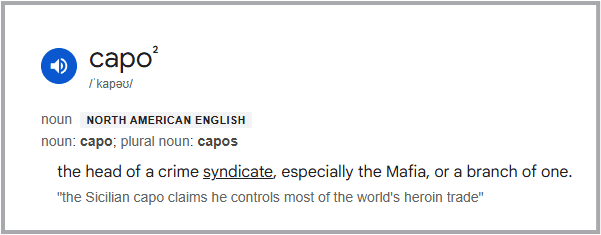
Definition of "Capo" according to Google.

Definition of “Capo” according to Google.

The actions come amid a broader strategy by the Colombian government to address concerns regarding sex tourism and the presence of foreign nationals with outstanding legal issues in their home countries. According to Paola Salazar, the Regional Director of Migración Colombia, the agency has adopted a stricter posture to ensure that Colombia is not utilized as a refuge for individuals linked to fraudulent or illicit activities.

The Case of Steve “Chill Capo”Newland

Steve Newland, a 42-year-old US citizen born in Willingboro, New Jersey, had been residing in Medellín since 2022. Operating under the digital brand “Chill Capo,” Newland promoted luxury lifestyle experiences and nightlife events. However, an investigation by Migración Colombia determined that Newland used his digital platforms to promote encounters with alleged purposes of sexual exploitation.

“Lo están esperando y lo capturan, (they are waiting for them and they will capture them)” stated Federico Gutiérrez, the Mayor of Medellín, referring to the coordination with US authorities regarding the return of the individuals.

The agency reported that Newland’s content included advice on how to evade immigration controls at the airport, such as using false medical certificates or simulating injuries to bypass rigorous inspections. His publications also mentioned accommodations linked to historical criminal figures, specifically the penthouses de Pablo Escobar, and provided instructions on how to avoid being targeted with escopolamina during social outings. Following the investigation, authorities confirmed Newland was in an irregular migration status. He has been banned from reentering Colombia for a minimum of five years.

Newland has publicly denied the allegations via his social media channels. He asserted that his primary objective was to educate visitors on safety and help them avoid dangerous situations. Newland claimed that his events were legal, safe, and conducted in collaboration with established Colombian businesses in the Parque Lleras district. He further contended that his visa had been renewed multiple times since 2022, suggesting that any illegal activity would have prevented such renewals. Newland challenged authorities to present specific evidence or identify victims related to the claims of exploitation.

🔴 #Noticia | Influenciador estadounidense que promovía turismo con fines de explotación sexual en Medellín, fue deportado por Migración Colombia.
El extranjero no podrá ingresar al país en los próximos cinco años, luego de este tiempo tendrá que solicitar una visa. pic.twitter.com/9QhZKJ7C8X

— Migración Colombia (@MigracionCol) April 11, 2026

Samuel McVey: School Incidents and US Warrants

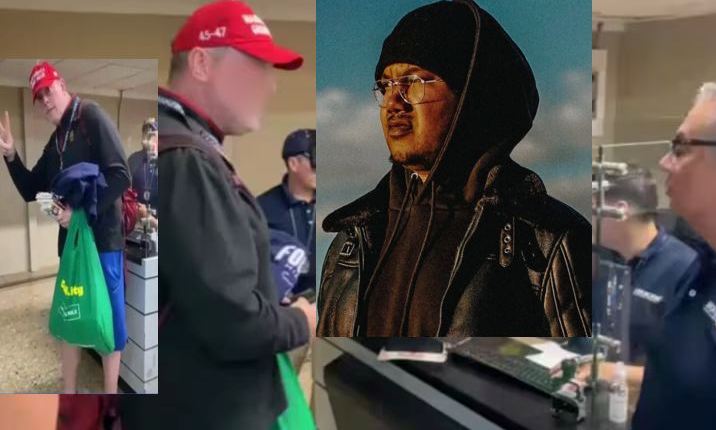
Samuel McVey crazy man

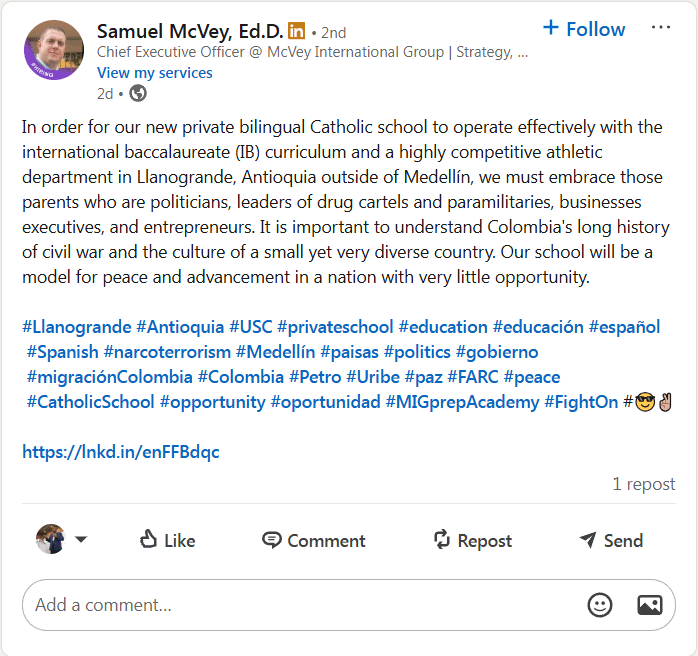
On LinkedIn, McVey claims to have a new private school in Llanogrande, Antioquia, that embraces “leaders of drug cartels and paramilitaries” among others.

In a separate incident, 46-year-old Samuel McVey, who was fired as a primary school teacher but styles himself as “Chief Executive Officer @ McVey International Group” on LinkedIn, was expelled following a series of disturbances at educational institutions in the Valle de Aburrá (Metro Medellín) and the city’s eastern Antioquia bedroom community of Rionegro. On April 8, 2026, McVey reportedly entered at least three schools in the wealthy Las Palmas sector of Medellín, where he allegedly initiated confrontations and made threats against staff and students. He subsequently traveled to Rionegro, where he attempted to gain entry to the Colegio Monteluna in Llanogrande by posing as an English language instructor.

When denied access, McVey reportedly directed threats toward students, prompting school officials to contact the Policía Nacional. He was apprehended by units from the Estación Llanogrande near a local strip mall. Manuel Villa Mejía, the Secretary of Security and Coexistence of Medellín, described McVey as a risk to the community and confirmed that the individual was in a state of high agitation upon his detention.Samuel McVey (photo from LinkedIn)

Investigation into McVey’s background revealed that he is a fugitive from New Rochelle, New York. In the United States, McVey faces charges of aggravated harassment in the second degree, a misdemeanor. The charges stem from an investigation by the New Rochelle Police Department involving threats made against Dr. Corey W. Reynolds, the Superintendent of the City School District of New Rochelle. McVey, a former Spanish teacher at Isaac E. Young Middle School, was terminated in early 2026. New Rochelle authorities had issued two bench warrants for his arrest after he failed to appear for court proceedings on March 26 and April 1, 2026.

Despite the outstanding warrants, the New Rochelle Police Department noted that they do not typically extradite individuals for misdemeanor offenses. Consequently, Colombian authorities processed his departure as an immediate expulsion based on his conduct within Colombia. McVey has been prohibited from entering Colombia for ten years.

Regional Enforcement Trends and Peak Travel Season Operations

The expulsions of Newland and McVey come after a larger enforcement effort during the 2026 Semana Santa (Easter Week) season. Migración Colombia reported that enhanced controls at airports and land borders resulted in the detection of numerous foreign nationals with irregular status or criminal backgrounds.

Specific cases identified by the agency during this period include:

  • In Leticia, Amazonas, a Peruvian citizen was detained at a hotel; the individual was the subject of an Interpol Red Notice for alleged crimes against public health.
  • In Ibagué, a Venezuelan citizen wanted by Peruvian authorities under an Interpol Red Notice for aggravated theft was arrested in a joint operation with the Policía Nacional.
  • In Facatativá, another Venezuelan national was apprehended for an Interpol Red Notice involving charges of human trafficking for sexual exploitation and membership in criminal organizations.
  • In Bogotá, two Dominican citizens were expelled after attempting to fraudulently obtain Colombian passports to travel to Europe.
  • At the Aeropuerto Internacional José María Córdova, a man and a woman from the Dominican Republic were intercepted while attempting to travel to Peru and Argentina using fraudulent Colombian documentation.

    Inadmitted (photo courtesy Migración Colombia)

    Inadmitted (photo courtesy Migración Colombia)

Statistical Overview of Inadmissibility in 2026

In the first quarter of 2026, Migración Colombia has denied entry to over 600 foreign nationals. The primary reasons for inadmissibility include state sovereignty and security risks (153 cases), lack of required visas (133 cases), and insufficient documentation (104 cases). Additionally, 89 individuals were rejected for providing false information during immigration interviews, while 34 had documented criminal records.

The agency also noted a specific focus on preventing the Explotación Sexual Comercial de Niños, Niñas y Adolescentes (ESCNNA). Through cooperation with international intelligence agencies and the Angel Watch platform, 471 individuals have been denied entry since 2016 for reasons associated with sexual offenses. At the Rionegro terminal alone, 31 inadmissibility cases have been recorded so far in 2026 related to potential sex tourism risks.

The Director General of Migración Colombia, Gloria Esperanza Arriero, emphasized that while the country remains open to international travel and investment, visitors are required to comply with the Constitución Política de Colombia and national laws. Under Decreto 2136 de 2021, the immigration authority maintains the power to deny entry or order the immediate return of any foreign citizen who poses a risk to national security or public order.

The main nationalities of those denied entry in early 2026 include citizens from the United States (76), the Dominican Republic (64), Ecuador (55), and Venezuela (52).

Montage of deportees Samuel McVey and Steven “Chill Capo” Newland

Video footage courtesy Migración Colombia

  •  

Experience the Pinnacle of Jazz as US Faculty Masters Perform in Medellín April 24th

Jazz summit fosters US-Colombia cultural and professional ties.

The city of Medellín is preparing for a sophisticated display of cultural diplomacy as the Centro Colombo Americano Medellín and Teatro El Tesoro present Noche de Jazz en El Tesoro. Scheduled for Friday, April 24, at 7:00 p.m., this event serves as a high-profile prelude to International Jazz Day. For the international investment community and expatriate executives, the concert represents more than just a musical performance; it is a testament to the enduring soft-power bridges between the US and Colombia, fostering an environment of innovation and collaborative spirit in the heart of Antioquia.

The performance features the US Jazz Faculty Collective, a premier ensemble directed by Dr. Ryan Middagh. This group highlights the academic and professional excellence of five distinguished jazz educators from the United States. The lineup includes Dennis Wilson, a former Count Basie trombonist and associate professor at the University of Michigan; Dr. Ryan Middagh, the Director of Jazz Studies at the Blair School of Music at Vanderbilt University; Christopher Kozak, an associate professor and jazz director at the University of Alabama; Dr. Marc Widenhofer, a Nashville-based percussionist and faculty member at Vanderbilt University; and Dr. Bruce Dudley, a celebrated pianist and professor at Belmont University.

The Centro Colombo Americano Medellín is the driving force behind this cultural exchange. As a non-profit binational center, the Colombo performs vital work in the region by providing high-quality English language instruction and promoting democratic values through the arts. Their initiatives are critical for the local workforce, equipping Colombian professionals with the linguistic and cultural competencies required to engage with global markets and attract foreign direct investment to the Valle de Aburrá (the greater Medellín metro area).

For those attending, Teatro El Tesoro offers a world-class venue located within the prestigious El Tesoro Parque Comercial shopping center. Tickets are available through Tuboleta. Pricing remains accessible for such a high-caliber performance, with general public tickets starting from $64,000 pesos.

  •  

Aris Mining Posts 36% Year-Over-Year Gold Production Increase at Colombia Operations in Q1 2026

Higher grades at Segovia drive output and revenue gains

Vancouver-based Aris Mining Corporation (TSX: ARIS; NYSE: ARIS) reported preliminary first-quarter 2026 gold production of 74,300 ounces from its two underground mines in Colombia, representing a 6% increase over the fourth quarter of 2025 and a 36% increase compared to the same period a year earlier.

The company said it sold 74,800 ounces of gold during the quarter at an average realized price exceeding $4,860 USD per ounce, generating gold revenue of more than $360 million USD. That figure marks a 20% increase from Q4 2025 revenue of $301 million USD and more than double the $154 million USD reported in Q1 2025. The company reported a cash balance exceeding $470 million USD as of March 31, 2026, an increase of approximately $80 million USD from the end of the previous quarter.

“We expect Q1 2026 gold revenue to exceed $360 million, a significant increase from $154 million in Q1 2025 and $301 million in Q4 2025, driven by higher gold prices and increased ounces sold.” — Neil Woodyer, Chair and CEO, Aris Mining Corporation

The production gains were concentrated at Aris Mining’s Segovia operation in the department of Antioquia, which produced 66,600 ounces during the quarter, up from 63,100 ounces in Q4 2025 and 47,500 ounces in Q1 2025. The year-over-year increase of 40% at Segovia was driven primarily by a notable improvement in ore grade. The average gold grade processed rose to 12.41 grams per ton from 9.37 grams per ton a year earlier, a 32% increase, while the volume of ore processed increased 5% to 175,000 tons. Recovery rates held at 95.3%, compared to 96.1% in both the prior quarter and Q1 2025.

The higher grades offset a decline in throughput compared to Q4 2025, when the mine processed 201,000 tons at an average grade of 10.10 grams per ton. Aris Mining completed installation of a second mill at Segovia in June 2025, increasing processing capacity by 50% to 3,000 tons per day, and the company has indicated that the ramp-up at the operation is continuing.

At the Marmato mine in the department of Caldas, production totaled 7,800 ounces in Q1 2026, an increase from 6,700 ounces in Q4 2025 and 7,200 ounces in Q1 2025. Marmato processed 77,000 tons of ore at an average grade of 3.53 grams per ton during the quarter, compared to 75,000 tons at 3.12 grams per ton in Q4 2025. Recovery rates at Marmato declined slightly to 89.6% from 90.8% in the prior quarter.

Consolidated Production Summary

Gold production and sales Q1 2026 Q4 2025 Q1 2025
Segovia (koz) 66.6 63.1 47.5
Marmato (koz) 7.8 6.7 7.2
Total production (koz) 74.3 69.9 54.8
Total sales (koz) 74.8 71.7 54.3

Growth Outlook

Neil Woodyer, the company’s chair and CEO, said production growth in 2026 is expected to be weighted toward the second half of the year. The company is building a new bulk mine and carbon-in-pulp (CIP) processing plant at Marmato, with first gold expected in Q4 2026. At steady state, the expanded Marmato operation is expected to produce approximately 200,000 ounces per year.

Together, the Segovia and Marmato expansions are expected to increase Aris Mining’s annual gold production to approximately 500,000 ounces. The two mines produced a combined 257,000 ounces in 2025.

Beyond its operating mines, Aris Mining is advancing the Soto Norte gold project in the department of Santander, Colombia, where environmental studies are being finalized for submission in Q2 2026 to initiate the licensing process. The company also holds the Toroparu gold project in Guyana, where a prefeasibility study is underway and a construction decision is expected in early 2027. These projects form part of Aris Mining’s longer-term objective of reaching approximately 1 million ounces of annual gold production, though that target includes estimates from a preliminary economic assessment for Toroparu that the company has cautioned are based on inferred mineral resources and are speculative in nature.

The company expects to report full Q1 2026 financial and operating results on or about May 6, 2026. The quarterly results contained in the April 7 announcement are preliminary and may differ from final figures.

Aris Mining is listed on the Toronto Stock Exchange and the New York Stock Exchange under the ticker symbol ARIS. Company filings are available through SEDAR+ and the US Securities and Exchange Commission.

  •  

American Airlines Flight Attendant Found Dead Following Disappearance in Medellín, Colombia

The search for Eric Fernando Gutiérrez Molina, a 32-year-old US flight attendant reported missing since March 22, concluded Friday following the discovery of a body in rural Antioquia, about two and a half hours south of Medellín. Medellín Mayor Federico Gutiérrez confirmed that the remains were located between the municipalities of Jericó and Puente Iglesias, stating there is a very high probability they belong to the American Airlines (NASDAQ: AAL) employee.

Gutiérrez Molina, a Salvadoran-American national who lived in Texas, arrived in Medellín on a commercial flight via José María Córdova International Airport. He was last seen alive on Sunday, March 22, after visiting commercial establishments in the El Poblado neighborhood. Investigations by the Secretaría de Seguridad y Convivencia suggest the victim was targeted by criminals using scopolamine, a sedative that can be used to incapacitate victims for robbery. According to witness statements, Gutiérrez Molina and another flight attendant were approached at a nightclub by individuals who lured them to another venue in Itaguí, a southwestern suburb of Medellín. While the companion flight attendant was able to make it back to her hotel, ill and disoriented, Gutiérrez Molina remained missing for five days.

“We have very clear leads on those responsible,” stated Mayor Federico Gutiérrez. “I have requested that justice be served and that the perpetrators be sought for extradition to the United States if necessary.”

The body was spotted by residents of Puente Iglesias floating in the Río Piedra ravine. The Instituto Nacional de Medicina Legal y Ciencias Forenses is currently conducting formal identification and an autopsy in Medellín. Mayor Gutiérrez reported that he has personally informed the victim’s father, the US Ambassador to Colombia, and the Consul General at the US Embassy in Bogotá regarding the development. The mayor stated that investigators have identified alleged perpetrators and expressed his intent to seek their extradition to the US.

‼Tengo que dar una triste noticia.
Desde el pasado Domingo, estamos en la búsqueda de Eric Gutiérrez un ciudadano Estadounidense que se encuentra desaparecido.
Lamentablemente acaba de ser encontrado un cuerpo sin vida, entre el municipio de Jericó y Puente Iglesias.
Existe…

— Fico Gutiérrez (@FicoGutierrez) March 27, 2026

This problem is not new. Criminals have been using scopolamine to prey on both Colombians and foreigners for years. Just last week, the Alcaldía de Medellín (Medellín Mayor’s Office) announced the capture of two women, aged 19 and 34, accused of drugging and robbing foreigners in Parque Lleras. The Policía Nacional and the Fiscalía General de la Nación  (Colombia Attorney General’s Office) conducted raids in the Caicedo and Villa Hermosa neighborhoods to dismantle the operation. The suspects reportedly offered escort services as a facade to move victims to tourist accommodations, where they administered benzodiazepines such as clonazepam to facilitate the theft of high-value belongings and cash.

Manuel Villa Mejía, Secretary of Security and Convivencia, stated that the captured women had extensive judicial records for aggravated robbery. During the operations, authorities seized mobile devices, identification documents belonging to other women, and a firearm. Villa Mejía emphasized that the city is utilizing intelligence and focused operations to close pathways for those who instrumentalize tourism for criminal purposes. These actions are part of a broader strategy to weaken the financial operations of networks that continue to target international visitors in El Poblado.

Finance Colombia has also reported on the capture of the Queen of Scopolamine, who led a network dedicated to drugging and robbing tourists in Parque Lleras. Despite prior law enforcement successes against structures like Las Barbies and The Ghetto, predatory crime remains a concern for the international investment community and business travelers.

Also read: Don’t Be A Victim! Six Rules For Safety When Visiting Colombia

photo of Mr. Gutierrez from social media

  •  

Wingo Launches New Routes Between Medellín, Colombia & Jamaica, Guatemala

Wingo expansion strengthens Medellín as a regional aviation hub

Wingo, a subsidiary of Copa Holdings (NYSE: CPA), has announced the launch of two new direct international routes from Medellín to Guatemala City, Guatemala, and Montego Bay, Jamaica. With this expansion, the carrier becomes the only airline to operate these specific nonstop segments from José María Córdova International Airport in Rionegro, which serves the Antioquia region.

The new service increases Wingo’s international portfolio to 10 destinations from the city, complementing its existing network of five domestic routes. According to data provided by the airline, Medellín has become a primary operational base in Colombia. In 2025, approximately 35% of the carrier’s total passenger traffic, representing 1.2 million travelers, originated from or arrived in the city.

“Medellín is a strategic city for Wingo, and these two new routes reflect our confidence in the potential of the city and the response of travelers.” — Jorge Jiménez, Commercial and Planning Vice President of Wingo.

The Alcaldía de Medellín, through the Secretaría de Turismo y Entretenimiento and the Bureau de Medellín y Antioquia, coordinated with airport concessionaire Airplan to facilitate the new frequencies. The Medellín to Guatemala City route is scheduled to begin operations on June 25, 2026, with three weekly frequencies on Tuesdays, Thursdays, and Saturdays. The airline expects to offer 30,000 seats annually on this route, with one-way fares starting at $108 USD, including taxes and fees.

The connection to Montego Bay is slated for a June 23, 2026, start date, also operating three times per week on Tuesdays, Thursdays, and Saturdays. Introductory fares for the Jamaican destination are positioned at $159 USD per trayect. This move follows a 2025 pilot program where Jamaica was marketed as a high-interest destination for Colombian travelers.

Jorge Jiménez, Commercial and Planning Vice President at Wingo, stated that these routes reflect confidence in the potential of the city and the response of travelers to direct, low-cost international options. Ana María López Acosta, Secretary of Tourism and Entertainment, noted that the collaboration between the public and private sectors continues to project the city as an attractive destination for tourism and investment.

The expansion comes as the Aeropuerto Internacional José María Córdova continues to increase its capacity as a logistical platform for the country. Javier Benítez, Manager of the airport, indicated that the arrival of these routes reaffirms the facility’s potential to facilitate international business and connection for the region.

  •  

Grupo EPM Achieves $40.6 Trillion COP Revenue Amidst Regulatory and Climate Headwinds

Grupo EPM, the multi-utility conglomerate owned by the municipality of Medellin, reported consolidated revenue of $40.6 trillion COP (approx. $11 billion USD) for the full year 2025. Despite a year characterized by climate variability and increased regulatory pressure, the group saw net income rise to $5.3 trillion COP, a 9% increase compared to 2024 results. Earnings before interest, taxes, depreciation, and amortization (EBITDA) reached $11 trillion COP ($2.98 billion USD).

The Medellín utility unit, EPM, contributed $20 trillion COP in revenue and $4.9 trillion COP in net income. Management attributed the stability of these figures to a diversified portfolio. Power generation remains the primary driver of profitability, accounting for 49% of net income, followed by energy distribution at 27%. The water, sewage, and waste management sectors contributed 15%, while transmission and natural gas accounted for 3% and 1% respectively.

In 2025, Grupo EPM obtained results that confirm its ability to advance in complex scenarios, reflecting work to achieve lasting efficiencies.” — John Maya Salazar, General Manager of EPM

Financial leverage remained within contractual covenants. The debt-to-EBITDA ratio for the group closed at 2.9x, comfortably below the 3.5x threshold required by many credit agreements. For the individual EPM entity, the ratio stood at 3.5x. This solvency allows the organization to continue its capital expenditure program, which saw $5 trillion COP ($1.36 billion USD) invested in infrastructure and social programs throughout the year.

John Maya Salazar, General Manager of EPM (photo courtesy EPM)

John Maya Salazar, General Manager of EPM (photo courtesy EPM)

A significant portion of the capital budget was directed toward the Hidroituango hydroelectric project. Approximately $1 trillion COP was allocated to Stage 2 of the project, specifically turbine units 5 through 8. Beyond energy, the company continued funding the Unidos por el Agua and Unidos por el Gas initiatives, which target utility access for vulnerable populations in the department of Antioquia and other regions.

Dividend and Fiscal Transfers

During the 2025 fiscal period, EPM executed transfers totaling $2.6 trillion COP to the Distrito de Medellín. These funds, representing 55% of the utility’s 2024 net income, serve as a primary funding source for the municipal development plan. Additionally, the group generated $21.8 trillion COP in total added value across its areas of operation, including $3.7 trillion COP in taxes, fees, and contributions to the state.

The company is currently undergoing a structural reorganization intended to modernize its operating model. According to management, this transition is designed to improve strategic efficiency as the group faces future macroeconomic shifts. The group’s economic footprint in 2025 included $6.7 trillion COP paid to suppliers and the financial system, along with $3 trillion COP dedicated to direct and indirect employment costs. Total reinvestment into the group’s various subsidiaries reached $5.6 trillion COP to ensure infrastructure modernization.

Financial data and sustainability reports are routinely filed with the Superintendencia Financiera de Colombia. Interested parties can find further information on the company’s investor relations portal or through the Alcaldía de Medellín official website.

Above video: An aerial view of EPM’s Hidroituango hydroelectric dam(video © Loren Moss)

  •  

Editorial: Gustavo Petro’s “Total Peace” Has Led to Total Chaos in Colombia

Colombia’s President Gustavo Petro ran for president on a campaign promising Paz Total—Total Peace. He promised to give the FARC dissidents, the vicious ELN guerillas, and mafias like the Clan del Golfo a good talking to, and with that, they will just lay down their weapons and become model citizens. Petro promised that through dialogue with bloodthirsty kidnappers and extortionists, they would be willing to stop being bloodthirsty kidnappers and extortionists; as if they are just misunderstood little muffins who only need a hug.

Nubia Carolina Córdoba, governor of Chocó, Colombia (photo from her Twitter account)

Nubia Carolina Córdoba, governor of Chocó, Colombia (photo from her Twitter account)

According to figures compiled by the Universidad Externado and reported by The City Paper Bogotá, Colombia has recorded 40,663 homicides during the first three years of the Petro presidency. Over 400 human rights defenders have been slaughtered between 2022 and 2025 according to the United Nations Office of the High Commissioner on Human Rights. Human Rights Watch reports that the ELN and FARC dissidents have expanded their territories by up to 55%. They are taking back over Colombia.

Under Gustavo Petro’s watch, Colombia has returned to the Institute for Economics and Peace’s Global Terrorism Index top ten list of countries impacted by terrorism, along with Total Peace destinations like Democratic Republic of Congo, Somalia, and Syria. Just this past week, a Clan del Golfo poster was put up within walking distance from the Aeropuerto Internacional José María Córdova just outside of Medellín. This Total Peace nonsense is a failure.

Right now, in the neglected Pacific department of Chocó, the ELN has kidnapped whole communities. Petro ran a campaign promising that he was going to embrace these historically neglected communities—places like Chocó, Nariño, La Guajira, and Norte de Santander—but insecurity is increasing. Chocó’s governor, Nubia Carolina Córdoba, says 6,047 people are trapped inside of their homes because the ELN has announced an illegal armed curfew in the municipality of Bajo Baudó. Most of these people are already poor, and now they have been kidnapped en masse by this guerilla group that operates with impunity because Gustavo Petro coddles them with “dialogue.”

According to Governor Córdoba, they attacked the police station in the village of Santa Rita using grenades attached to drones. It has gotten so bad that Colombia has restricted the entry of drones into the country. These people are calling out for help, but the president insists on talking as the ELN grows and continues to menace the police forces, the Colombian military, and, most importantly, the innocent public.

There is currently public disorder where belligerents have completely blocked the roads in the north of Antioquia, in the region called Bajo Cauca, and also in the neighboring department of Córdoba. The city of Caucasia is under curfew. Antioquia’s Governor, Andrés Rendón, has urgently called on the national government to stop the talk and take action. Groups are attacking ambulances and burning people’s motorcycles as they try to get by the roadblocks, regardless of the emergency.

Governor Rendón stated: “There can be no dialogue amidst blockades and human rights violations. It’s been seven days now with the Bajo Cauca region paralyzed and the country held hostage by chaos.” He called on the Fiscalía General de la Nación to bring those responsible to justice and challenged the Minister of Defense, Pedro Sánchez, to order the immediate reopening of the roads. “We’re not talking about small-scale miners here; behind this are criminal structures, as everyone knows, that finance themselves through illegal mining and move billions of pesos,” Rendón added, demanding full authority against the criminals who use communities as a shield.

El gobernador de Antioquia, @AndresJRendonC, se pronunció sobre la situación de orden público en el Bajo Cauca, en medio de los bloqueos que ya completan varios días y afectan la movilidad y la seguridad en la región. @GobAntioquia pic.twitter.com/4SPQgTa68r

— MiOriente (@MiOriente) March 22, 2026

The current situation with these organized criminal groups—whether regular mafias like the Clan del Golfo or murderous Marxist guerillas like the ELN and the FARC dissidents—is reminiscent of a classroom where a substitute teacher has lost all control. Petro promised Total Peace, but the result has been Total Chaos. Investors do not want to deal with this mess. While the Petro government claims they want tourism to be a major economic driver, road blocks make many areas look like scenes out of Mad Max: Road Warrior. Whole zones of the Pacific coast are unsafe even for residents, met with pure impotence from the regime.

Ten years ago, it was safe to drive from Medellín to the beachside town of Coveñas in Sucre, but that is no longer the case. While it remains safe to visit Colombia for business or tourism in major hubs like Bogotá, Medellín, Santa Marta, or the San Andrés islands, the long-term outlook is concerning. My hope is that Colombians choose a future leader serious about law and order as a prerequisite for human rights. It is not only the government that we need to protect human rights from; those who kill, steal, kidnap, and forcibly recruit children are violating those rights as well.

Colombian anti-explosives experts inspect propaganda by the Clan del Golfo mafia group just minutes away from Medellin's international airport in March, 2026 (image from Facebook).

Colombian anti-explosives experts inspect propaganda by the Clan del Golfo mafia group just minutes away from Medellin’s international airport in March, 2026 (image from Facebook).


  •  

Smartfilms 2026 Cinema Contest & Festival Launches in Medellín, Colombia

This mobile cinema initiative in Medellín provides training for 4,000 creators to boost local digital advertising and entrepreneurship.

MEDELLÍN — The mobile film festival SMARTFILMS announced the launch of its third edition in the “City of the Eternal Primavera” on March 17, 2026. The initiative aims to democratize cinema and foster local creative talent through technology and audiovisual narratives. The program’s goal is to train 4,000 participants in the technical skills required to produce films using mobile devices.

The launch is supported by the Alcaldía de Medellín (Medellín mayor’s office), which is providing 3,300 training slots, the Área Metropolitana del Valle de Aburrá (Aburrá Valley metropolitan area) with 300 slots, and the Cámara de Comercio de Medellín para Antioquia with 250 slots. Additional strategic partners include EPM and Fenalco Antioquia, organizations that focus on regional innovation and commercial development. The official opening, led by CEO Yesenia Valencia, took place at the Poblado branch of the Chamber of Commerce,

“SMARTFILMS is not just a festival; it is a platform that demonstrates that to tell a great story, one only needs a good idea and the device everyone carries in their pocket.”

The 2026 program utilizes a four-phase methodology designed to transition creators into digital entrepreneurs. The first phase involves mass training for 4,000 individuals in mobile audiovisual production. In the second phase, 400 selected participants will attend a specialized bootcamp at the Cámara de Comercio de Medellín para Antioquia featuring industry experts. The third phase focuses on business skills for 40 finalists, covering marketing, digital advertising, budgeting, and legal contracts.

In the final stage, participants must produce advertising content for three local neighborhood businesses to assist in their digital transition. Financial incentives include prizes of $10 million COP for first place, $5 million COP for second place, and $3 million COP for third place. Additionally, finalists receive seed capital of $1.5 million COP per person for recording equipment. Registration is managed through the cineconcelular.com platform.

The festival reports a significant regional economic impact, generating 115 direct jobs and over 300 indirect jobs. The direct positions include 33 payroll staff and 82 contractors based in Medellín. Since its inception, the model has trained 8,000 people and led to the creation of 120 businesses nationwide. These creative enterprises currently report monthly revenues ranging from $2 million COP to $10 million COP.

The 2026 version of the project seeks to expand its reach across all districts of the metropolitan area to stimulate the development of cultural companies and social transformation. Documentation from the organizers highlights a 0% desertion rate among participants over the last two years.


  •  

Colombia Confirms 14 Candidates for 2026 Presidential Election

Though surprises are possible, polling says the front runners are Iván Cepeda, Abelardo de la Espriella, and Paloma Valencia.

The Registraduría Nacional del Estado Civil of Colombia (RNEC), the entity responsible for organizing elections in the country, reported that a total of 14 candidates have officially registered to run in the country’s presidential elections, scheduled for May 31, 2026. In this vote, citizens will elect the President and Vice President of the Republic for the 2026–2030 term.

According to the electoral authority, the candidates represent a wide range of political perspectives, from left to right, including independent candidacies running through political movements. Here the list and brief profile of the candidates:

  1. Clara Eugenia López Obregón, currently a senator for the Esperanza Democrática She has served as Minister of Labor (2016–2017), acting mayor of Bogotá (2011–2012), and Bogotá’s secretary of government (2008–2010). She has been affiliated with left-wing parties and was Gustavo Petro’s vice presidential running mate in the 2010 election.
  2. Óscar Mauricio Lizcano, from the FAMILIA coalition. He served as Minister of Information Technologies (2023–2025), was a senator (2010–2018), and a member of the House of Representatives (2006–2010).
  3. Raúl Santiago Botero, candidate of the “Romper el Sistema” movement (Break the Establishment). An agronomist engineer and businessman from Medellín, he presents himself as an independent candidate with no prior political experience.
  4. Miguel Uribe Londoño, father of the slain presidential candidate Miguel Uribe Turbay. He is running under the Colombian Democratic Party and previously served as president of the Centro Democrático party founded by Álvaro Uribe Vélez.
  5. Sondra Macollins Garvin, from the movement “La Abogada de Hierro” (The Iron Lawyer) A criminal lawyer and psychologist, she presents herself as an independent candidate without political affiliations. She ran for the House of Representatives in 2022 and is known for her work in narcotrafficking and corruption cases.
  6. Iván Cepeda Castro, a senator since 2014 and the official candidate of the Pacto Histórico, the same party as President Gustavo Petro. Polls project he will receive the highest vote share in the first election round. He is aligned with left-wing political ideas.
  7. Abelardo de la Espriella, a lawyer with far-right positions, running for the first time under the Defensores de la Patria movement. Recent polls place him as a likely second or third contender in voter preference.
  8. Claudia López Hernández, former mayor of Bogotá (2020–2023) and former senator (2014–2018), running under the centrist movement “Imparables con Claudia.” She is known for her anti-corruption agenda and secured her candidacy with more than 570,000 votes (about 9%) in recent interparty primaries.
  9. Paloma Valencia Laserna, current senator and candidate of the Centro Democrático party led by Álvaro Uribe Vélez. She won the right-wing interparty primary on March 8 with more than 3 million votes. Polls place her among the top three contenders, and if she reaches a runoff, she would become the first woman in Colombia’s history to do so.
  • Sergio Fajardo Valderrama, an academic and mathematician running for the Dignidad y Compromiso He served as mayor of Medellín and governor of Antioquia and is running for president for the third time.
  • Roy Barreras, from the political party La Fuerza (The Force). He won the left-wing coalition primary on March 8 with the lowest vote total (257,000 votes, about 3.6%). Although currently aligned with left-wing movements and part of the Petro administration, he has previously been affiliated with right- and center-leaning parties.
  • Gustavo Matamoros Camacho, of the Colombian Ecologist Party. He served in the Colombian Army for 43 years. With no prior political experience, his campaign focuses on public security.
  • Luis Gilberto Murillo, who served as Minister of Foreign Affairs (2024–2025) and Colombia’s ambassador to the United States (2022–2024). A human rights advocate and Afro-Colombian leader from Chocó, he presents himself as an independent, moderate, centrist candidate.
  • Carlos Eduardo Caicedo, running under the independent movement “Con Caicedo.” He was mayor of Santa Marta (2012–2015) and governor of Magdalena (2020–2023), where he built a strong base as a left-wing political leader.

The RNEC also reported that “the draw to determine the position of presidential candidates on the ballot will take place on March 25 at the Ágora Bogotá Convention Center.”

This process marks the formal start of the final phase of the presidential campaign, during which candidates will seek to consolidate support ahead of the first round on May 31. If no candidate secures an absolute majority, a runoff between the two leading candidates will be held on June 21.

List of registered candidates for Colombia’s presidency. Photo courtesy of the Registraduría Nacional del Estado Civil.

List of registered candidates for Colombia’s presidency. Photo courtesy of the Registraduría Nacional del Estado Civil.

Headline photo: Polling station in Colombia during last Congress elections in March 8, 2026. Photo courtesy of the Registraduría Nacional del Estado Civil.

  •  

In rural Antioquia, voters turn to Uribismo amid disappointment over Petro’s Colombia

Voters in San Pedro de los Milagros. Credit: Manuela Peña Giraldo.

Colombians voted for a new Congress on March 8 in an election that stretched across thousands of rural towns and villages, where geography, infrastructure and the legacy of armed conflict continue to shape how citizens participate in democracy.

“I don’t like politics,” said Silvia Bedoya, 52, a resident of San Pedro de los Milagros in the mountains north of Medellín. “Instead of uniting people to move the country forward, it tends to divide us.”

Despite that frustration, Bedoya said voting still matters. “If you vote, at least you have the chance to raise your voice about something you don’t like,” she said. “If you don’t vote, you just have to accept what happens.”

More than 40 million Colombians were eligible to vote in the elections, with 13,493 polling stations installed nationwide, including 7,482 in rural areas, according to the National Registry Office. Security forces said they deployed 120,000 police officers across the country to guarantee the vote in the nation’s 1,104 municipalities.

The scale of the operation reflects the logistical challenges of voting in rural Colombia, where many communities remain separated by mountains, unpaved roads and long travel distances.

In San Pedro de los Milagros, a cattle-farming municipality in the Andean department of Antioquia, voters arriving at polling stations described a mixture of civic duty, skepticism toward politicians and concern over the country’s economic and social problems.

Mauricio Martínez, 47, declined to say who he supported, but emphasized the importance of participation. “Voting is the greatest right and duty we have as citizens,” he said.

Others said their choices were shaped by dissatisfaction with the government of President Gustavo Petro, Colombia’s first leftist president, whose progressive agenda – including a major land reform program – has drawn both support and criticism in rural areas.

Maicol Jovani Sepulveda, 28, said he voted for the right-wing Democratic Center (Centro Democrático) party after losing faith in promises he believed would help young people. “I believed they were going to help us study,” he said. “But I didn’t receive a scholarship and I couldn’t go to university, so I was disappointed.”

The Democratic Center won more than 40% of the vote for both the Senate and the House of Representatives in San Pedro de los Milagros, a 24% increase from 2022. Across the department of Antioquia, it was also the most voted list with over 31% of votes, followed by the ruling leftist Historic Pact (Pacto Histórico) coalition with 16%.

Some voters in the town said their support for the right reflected growing frustration with Petro’s government. Among them was María Regina Avendaño Muñoz, 63, who said she cast her vote for Centro Democrático after feeling disappointed with the administration: “I’m very sad because he promised change and convinced many young people and teachers who voted for him.”

Beyond individual concerns, analysts say structural barriers have long shaped political participation in rural Colombia.

Rural voters play an important role in Colombia’s political landscape. Although the country’s largest voting blocs are concentrated in major cities, the countryside has long been central to debates over land ownership, security and development – issues that have shaped the country’s decades-long armed conflict and remain at the center of national politics.

“When we talk about political participation, we’re really talking about processes of democratization – who gets to speak and under what conditions,” Bladimir Ramirez Valencia, a professor at the University of Antioquia’s Institute of Regional Studies who works with farmers’ organizations, told Latin America Reports.

Historically, he said, rural communities have faced both violence and logistical obstacles that limit their ability to vote. About 75% of the victims of Colombia’s armed conflict have been civilians, many of them farmers, according to historical estimates.

Distance alone can also be a barrier. “For many communities, polling stations used to be three or four hours away,” Ramírez said. “Bringing voting sites closer to those places is fundamental.”

Authorities expanded electoral infrastructure for the 2026 vote, increasing the number of polling stations by 5,5% in rural areas compared with the previous 2022 election.

In some regions of Antioquia, Ramírez said, rural residents traveled to voting sites on foot or by chiva, the brightly colored buses that connect remote villages with municipal centers.

Recent government policies may also be shaping political engagement in the countryside. Programs related to land reform, land restitution and rural development have helped strengthen the government’s legitimacy among some farming communities, Ramirez said. “When farmers feel they are being heard and see policies reaching their territories, that can influence how they participate politically.”

Still, rural voting patterns remain complex and vary widely by region. “You can find campesino families involved in social movements defending their land,” Ramírez said. “But when elections arrive, they still vote for traditional parties.”

Across Colombia’s countryside, the election reflected both deep skepticism toward politics and the determination of rural voters to take part in a democratic process that has historically been harder to reach in the country’s most remote regions.

The post In rural Antioquia, voters turn to Uribismo amid disappointment over Petro’s Colombia appeared first on The Bogotá Post.

  •  

Ookla: Claro Fastest Mobile Carrier in Colombia, But Movistar Fastest Fixed ISP

The survey also found that the Medellín suburb of Envigado is the city with the fastest internet connectivity.

According to the latest connectivity report for the second half of 2025 released by Ookla, the Colombian telecommunications market has seen specific performance leaders in both mobile and fixed broadband sectors. The data, which tracks network performance across the country, identifies Claro (NYSE: AMX, BMV: AMX) and Movistar (NYSE: TEF, BMEX: TEF) as the primary benchmarks for speed and user experience during this period.

In the mobile sector, Claro was identified as the provider with the highest network performance. The operator recorded a median download speed of 44.26 Mbps and a median upload speed of 14.03 Mbps. These figures contributed to the company securing the highest rankings for mobile connectivity metrics in the Colombian market for the latter part of the year.

The report also evaluated the fixed internet market, where Movistar maintained a significant lead in throughput. The Telefónica-owned provider registered a median download speed of 308.37 Mbps and a median upload speed of 291.3 Mbps. This performance distinguishes Movistar as the fastest Internet Service Provider (ISP) in the country for fixed line connections.

Colombian carriers continue to deploy fiber optic fixed internet, and 5G wireless throughout the country.

In terms of specific user applications, Claro led the gaming category. The provider recorded the highest metrics for mobile gaming and also achieved the top score for gaming experience among fixed internet providers. This metric typically accounts for latency, jitter, and packet loss, which are critical for real-time interactive applications.

Geographic analysis of the data revealed that Envigado, a municipality located just sout of Medellín in the Antioquia Department, outperformed other major urban centers. Among the most populous cities in Colombia, Envigado recorded the fastest median download speeds for both mobile and fixed connections, reaching 54.76 Mbps and 269.9 Mbps, respectively.

The findings from Ookla provide an objective overview of the infrastructure performance as the Colombian government and private entities continue to expand 5G and fiber optic deployment. While Claro leads in mobile and gaming, Movistar maintains the highest speed profile for fixed residential and business internet.

  •  

Suspected drone attack disrupts high-level visit to Colombia’s Hidroituango

Colombia’s security forces alerted late Sunday Medellín Mayor Federico Gutiérrez and Antioquia Governor Andrés Julián Rendón to cancel a planned visit to the Hidroituango hydroelectric complex for Monday, March 2, after intelligence warnings of a possible drone attack and credible terrorist threat.

The visit, which included a press conference expected to draw around 100 journalists, was intended to showcase progress at the country’s largest hydroelectric project, now reported to be 95% complete. Instead, regional officials said army security recommendations prompted an abrupt suspension after the detection of unauthorized drone activity over the area.

“The recommendation of the National Army is that the trip be postponed given the detected presence of large, unauthorized drone overflights,” the Antioquia governor’s office said in a statement, adding that the devices were believed to be operated by the 36th Front of dissident Revolutionary Armed Forces of Colombia (FARC) guerrilla.

Officials said the threat was not speculative. Security teams warned that an attack could materialise during the public event, raising concerns not only for the two high-profile politicians but also for members of the press corps and technical staff.

Rendón told Caracol Radio that the drones had been observed manoeuvring persistently over the precise location where the press conference was scheduled to take place. The activity coincided with a recent military operation in the nearby municipality of San Andrés de Cuerquia, where troops seized a drone, explosives, detonators, radios and military-style clothing from the same dissident group.

“All of this is highly coincidental,” Rendón said, adding that authorities were analyzing whether the overflights formed part of reconnaissance ahead of a planned attack.

Gutiérrez said armed groups were seeking to destabilize the country and disrupt key infrastructure. “These terrorist groups want to shut down the country, to generate damage,” he said, pointing to ongoing threats against Empresas Públicas de Medellín (EPM), the state-owned utility responsible for the project.

The cancelled visit had both symbolic and operational significance. In addition to reviewing construction progress and the installation of four turbines, officials were expected to outline new revenue flows generated by the project for Medellín and the wider Antioquia department.

Hidroituango has long been a flagship infrastructure initiative, though it has also faced years of engineering setbacks, financial strain and political scrutiny.

The press event has been rescheduled to take place in Medellín’s La Alpujarra administrative complex under heightened security.

The incident underscores growing concern over the rapid adoption of drones by illegal armed groups. Once limited to reconnaissance, commercially available drones modified to carry explosives are now being used in targeted attacks across conflict-prone regions of the country, including the southwest departments of Nariño, Cauca and Valle del Cauca.

According to military data, more than 400 drone-related attacks have been recorded in Colombia over the past two years, reflecting a sharp escalation in both frequency and sophistication. Analysts say such devices offer armed groups a low-cost, high-impact means of striking military, civilian and infrastructure targets while reducing direct exposure.

Recent attacks in Antioquia highlight the trend. In rural Segovia, a drone-delivered explosive killed three members of a family and displaced more than 100 households amid clashes between FARC dissidents and the Gulf Clan criminal group last week. In Ituango, the nearrest municiplity to the power-generating damn, another drone attack targeted a fuel station using improvised explosives.

On Saturday, in southern Bolívar, a military helicopter was struck in a drone attack attributed to the National Liberation Army (ELN) guerrilla, leaving 14 soldiers injured. Colombian military officials say some armed groups may have received external training in the use of drones for covert operations.

Colombia’s armed forces are moving to adapt to the emerging threat, announcing last October the creation of a specialized “Drone Battalion” aimed at strengthening aerial surveillance and counter-drone capabilities. However, security experts warn that defending against small, low-flying devices — some costing as little as US$600 — remains a significant challenge, particularly in mountainous terrain like that surrounding Hidroituango.

The alleged plot has also raised concerns about a possible shift in targeting strategy by armed groups, from rural security forces to high-profile political figures and critical infrastructure ahead of the May 31 presidential elections.

While no attack ultimately took place, authorities say the decision to cancel the visit reflects the seriousness of the threat.

For now, officials are treating the incident as a direct warning of how Colombia’s long-running conflict is evolving – increasingly shaped by technology, and capable of reaching beyond traditional conflict zones into strategic economic and political targets.

  •  

Drone attack on home in Colombia kills three, injures one

Drone with GoPro digital camera mounted. Credit: Don McCullough, Wikimedia Commons

Medellín, Colombia – On Thursday morning, a drone dropped a mortar shell on a home in Segovia, a town in the northeast of the Antioquia department, killing three occupants of the house and leaving one critically injured.

The police identified the victims as María Cecilia Silva Silva and her two adult children, Yalusan Cano Silva and Alsonso de Jesús Silva. Silva’s other son was also wounded in the attack.

Segovia is a key center for illegal gold mining and is being contested by multiple armed groups, including the Gaitanist Army of Colombia (EGC), also known as the Clan del Golfo, and dissident groups of the now-defunct FARC rebels.

Authorities are still working to establish if the attack was directed at the family or if it was an error by the drone operators, an increasingly common occurrence as drones become the latest technology used in Colombia’s internal armed conflict. 

According to the Secretary of Security of Antioquia, General Luis Eduardo Martínez Gúzman, the victims were “a family who have nothing to do with the conflict, who were simply attacked by a drone.” 

Martínez highlighted the danger of these devices, suggesting that the explosive device was detached from the drone, which means the mortar could “fall anywhere.”

The Director of the National Police in Colombia, General William Oswaldo Rincón Zambrano, released a statement of condemnation: “[we] categorically reject this criminal act which plunges a Colombian family into mourning and demonstrates the contempt of illegal armed groups for human life and dignity.” 

He also reported that state security forces have headed to the area where the attack took place in order to verify what happened and assist in locating and capturing those responsible. He also expressed solidarity with the victims and their families.

The Governor of Antioquia, Andrés Julián Rendón took to social media to blame the security policies of the national government for the attack: “Who in their right mind could consider that this government has achieved transformations for Colombia?”

Rendón criticized President Gustavo Petro for negotiating with the armed groups involved in the conflict in Segovia, part of the leftist leader’s “total peace” policy. 

“This is the so-called ‘total peace’: concessions for criminals and burials for civilians. Antioquia demands an unwavering military offensive, full backing for the security forces, and zero leniency towards the criminals,” said Rendón. 

Drone attacks, both against armed groups as well as against security forces and the civilian population, have become widespread in Colombia. Between April 2024 and February 2026, the government recorded 418 attacks using drones. 

Tackling the mounting security crisis is a key issue in upcoming elections, which the United Nations warns may be undermined by the armed conflict.


Featured image description: Drone with GoPro digital camera mounted

Featured image credit: Don McCullough, Wikimedia Commons

The post Drone attack on home in Colombia kills three, injures one appeared first on The Bogotá Post.

  •  

As Fighting Engulfs Briceño, Colombia, Schools Forced to Close

The school year had barely begun when gunfire forced children in rural northern Colombia to cower under their desks in fear and silence.

On the same day students were returning to classrooms after the Christmas and New Year holidays, fighting between illegal armed groups erupted near Briceño, in the northeast of Antioquia. By nightfall, schools were shut, a rural health post had closed, and families were sheltering under their beds as rifle fire echoed through nearby hills.

Local authorities say at least 28 rural school sites have been forced to close, cutting off education for some 375 children who now remain at home under a temporary non-attendance model. In several villages, students had already arrived at their classrooms when the clashes began, leaving teachers scrambling to keep children indoors and away from windows as shots rang out nearby.

“For these children, school should be a place of safety,” said Mayor Noé de Jesús Espinosa. “Instead, it has become another place of fear.”

Fighting between Clan del Golfo (Gulf Clan) and the 36th Front of FARC dissidents has now drawn-in the state’s security forces. The violence has also shut down the health center in the village of El Roblal, leaving residents without medical care at a time when movement between villages has become too dangerous.

Across at least ten rural communities, daily life has ground to a halt. Public transport and cargo services have been suspended, cutting off supplies of food and medicine. Roughly 500 people are now confined to their homes, many lying on the floor or hiding beneath their beds to protect themselves from bullets and explosive shockwaves.

“In some houses, entire families are sleeping under their beds,” Espinosa said. “They don’t know when the shooting will start again.”

Fear has already driven at least 23 families to flee their homes. Carrying only what they could gather in minutes, they arrived in Briceño’s town center seeking refuge with relatives and friends. Municipal officials are now coordinating emergency aid, while warning that more displacement is likely if the fighting continues.

The violence is rooted in a territorial dispute over the Cauca River canyon, a strategic corridor connecting Antioquia’s Bajo Cauca region with the west of the department. Military intelligence and local sources say the escalation follows an order by alias “Gonzalito,” identified as a senior commander of the Clan del Golfo, to eliminate alias “Primo Gay,” leader of the dissident 36th Front, and seize control of the area.

For residents, however, the strategic calculations of armed groups mean little. What they feel is the constant fear — the uncertainty of whether children can return to school, whether the sick can reach a clinic, and whether families will be forced to flee again.

Army units from the Fourth Brigade are advancing cautiously toward villages such as El Roblal, slowed by the presence of improvised explosive devices and suspected minefields planted along rural paths. The risk has made it difficult for troops — and humanitarian assistance — to reach many isolated communities.

Antioquia Governor Andrés Julián Rendón has urged the national government to maintain a permanent military presence in the area, warning against further troop withdrawals.

“Peasant communities in Antioquia’s most remote regions deserve to live without fear,” Rendón said, recalling that promises made last year to keep troops in Briceño were later reversed.

The trauma is not new. In October, more than 2,000 people — roughly a quarter of Briceño’s population — were forced to flee 18 rural villages after threats from armed groups. Many slept for days in the town’s main square and urban school, unsure if they would ever return home.

As indiscriminate violence once again targets the country’s most vulnerable and forces families to lock themselves inside their homes, residents fear the humanitarian crisis will deepen across Antioquia, just months before Colombians are due to cast their votes in the May 31 presidential election.

  •  
❌