
Reading view

Analysis: In Sunday’s Election, Many Colombians Rejected The Political Status Quo. A Stark Right-Left Choice Remains

Colombia’s Runoff Could Reshape Investment, Energy, and Labor Policy

Colombia’s first-round presidential election, held Sunday, May 31, 2026, produced a result that crystallizes the country’s political exhaustion with both the governing left and the traditional right. Criminal defense attorney and political outsider Abelardo de la Espriella placed first with more than 10.3 million votes. Leftist Senator Iván Cepeda, a close ally of outgoing President Gustavo Petro and the lead architect of the administration’s Paz Total peace policy, finished second with just under 9.7 million votes. The two will face each other in a runoff election on June 21.

Senator Paloma Valencia, the candidate backed by former President Álvaro Uribe and the standard-bearer of his Uribismo movement, placed a distant third, receiving less than 7% of the vote — fewer than 1.7 million ballots. Former Medellín mayor and Antioquia governor Sergio Fajardo received just over one million votes, while former Bogotá mayor Claudia López finished below 1%, with approximately 225,000 votes. The remaining minor candidates combined for just over 1% of the total.

Under Colombia’s electoral system, the top two finishers advance to a runoff if no candidate surpasses 50% in the first round. The June 21 vote will determine who assumes the presidency on August 7.

Click above to watch the video!

The Candidates: Background and Context

Abelardo de la Espriella, 47, has never held elected office. He built a national profile over more than two decades as a high-profile defense attorney, founding De La Espriella Lawyers in 2002, with offices in Colombia and the United States. His client roster has included controversial figures: he represented Alex Saab, a Colombian-born businessman who became a close associate of Venezuelan President Nicolás Maduro and was implicated in a scheme to launder proceeds from Venezuela’s food-assistance program, the Comité Local de Abastecimiento y Producción (CLAP). Saab was extradited to the United States, convicted, and later granted clemency before being re-arrested in Venezuela in early 2026. De la Espriella also represented members of the Nule family in connection with the Carrusel de Contratos — a major contracting scandal tied to infrastructure works at Bogotá’s El Dorado airport corridor. He has additionally been reported to have represented individuals linked to organized crime.

De la Espriella has drawn comparisons to figures such as US President Donald Trump and El Salvador’s Nayib Bukele. His campaign has centered on hard-line security policy, including proposals for large-scale incarceration, expanded military operations against armed groups, and the rejection of negotiations with guerrilla organizations. He is reported to hold Italian and US citizenship in addition to his Colombian nationality, and is said to own property in Florida.

In a notable departure from his defense work, de la Espriella took the side of a victim in a high-profile acid-attack case, acting as a private prosecutor to secure a stronger sentence for the perpetrator — an episode that raised his public profile beyond the defense bar.

Iván Cepeda, 63, enters the runoff as the consolidated candidate of the Colombian left and Petro’s Pacto Histórico coalition. He is the primary legislative architect of Paz Total, the Petro administration’s policy of negotiating simultaneously with multiple armed actors, including the ELN and FARC dissident factions. Cepeda’s family background includes deep ties to the Colombian left: his father was secretary general of the Communist Party, and was assassinated. Cepeda himself studied in communist Bulgaria during the soviet era. The two finalists have an established legal and political history: Uribe attempted to bring criminal charges against Cepeda while both served in the Senate, but the Supreme Court determined that Uribe had fabricated the accusations and attempted to bribe witnesses — a case that resulted in Uribe’s criminal conviction.

“If nothing changes, Abelardo wins.” — Loren Moss, Finance Colombia

The Electoral Map

The geographic distribution of the vote reflects deep regional divisions. Cepeda carried Bogotá, which has trended left for years, particularly in lower-income districts on the city’s south and west sides. Antioquia — historically the heartland of Uribismo and home to Medellín, the country’s second-largest city — voted more than two to one for de la Espriella, a result that signals the weakening grip of Uribe’s movement even in its traditional stronghold.

The heart of coffee-growing country — the departments of Caldas, Risaralda, and Quindío also went to de la Espriella. Caquetá, a sparsely populated department in southern Colombia that has suffered sustained guerrilla violence from both the ELN and FARC dissident groups, voted for de la Espriella as well, a result we may interpret as a direct rejection of Petro and Cepeda’s Paz Total.

Cepeda carried Colombia’s Pacific coast, including the chronically neglected department of Chocó, as well as the sparsely populated Amazonas and Putumayo departments bordering Peru and Brazil, and the northern Caribbean coast. The Caribbean coast result is notable, as the region has historically suffered from underdevelopment, infrastructure deficits, and significant income inequality. Norte de Santander with its Catatumbo region on the Venezuelan border and experiencing severe armed-group activity — voted for de la Espriella, a result consistent with public exhaustion over security policy.

The Political Context: From Uribe to Petro and Beyond

Colombia’s current political trajectory is rooted in decisions made across the past two decades. President Uribe served two terms in the early 2000s and, together with then-Defense Minister Juan Manuel Santos, mounted a sustained military campaign against the FARC that significantly weakened the insurgency. Santos later broke from Uribe after assuming the presidency, governing independently and ultimately negotiating a peace agreement with the FARC — a deal that Uribe actively opposed. A plebiscite on the accord failed, but Santos used legislative maneuvering to implement it anyway.
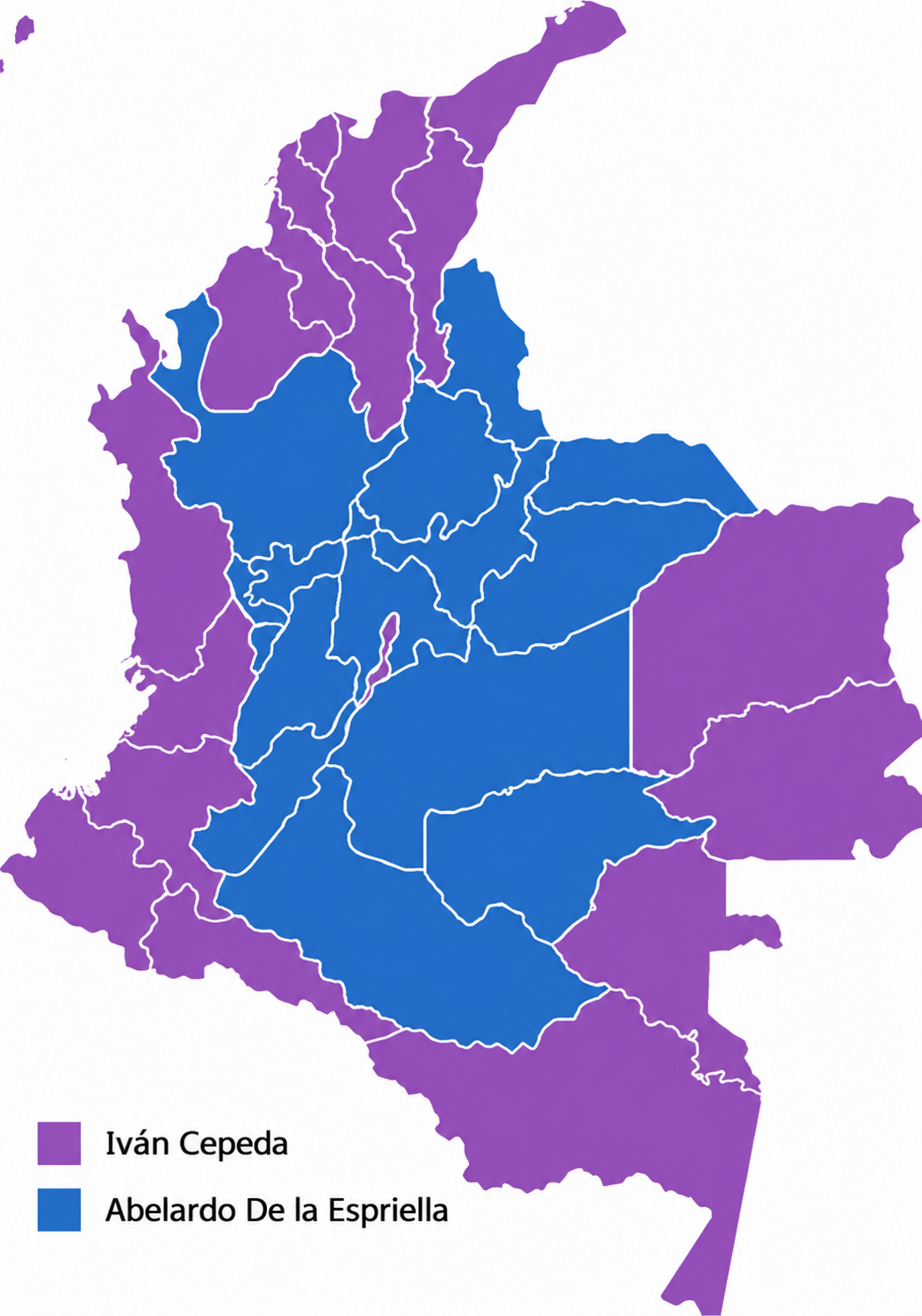
Colombia 2026 1st round top two (Graphic: Sofi Imfeld for Finance Colombia)

Colombia 2026 1st round top two (Graphic: Sofi Imfeld for Finance Colombia)

Uribe’s next handpicked candidate, Iván Duque, won the 2018 election but finished his term with approximately 30% approval. Members of his own party publicly distanced themselves from him — Senator María Fernanda Cabal, a staunch Uribista, called Duque a “mamerto” (leftist idiot) while he was still in office. Under his administration, indicators on crime and guerrilla activity worsened, and armed groups including the ELN rebuilt operational capacity that had been degraded under Uribe and Santos.

Petro’s administration has not met initial fears of a Venezuelan-style democratic breakdown: Congress has largely blocked the most radical components of his agenda, including attempts to nationalize the private pension system and convert the healthcare system to a single-payer model. However, crime has increased, armed groups have expanded their operational footprints, and the security situation in several regions has worsened. Paz Total is widely seen as having produced few tangible results.

Uribe himself was convicted of witness tampering and attempted bribery in the case he had brought against Cepeda. Though released from house arrest after conviction, the judges who authorized his release are now reportedly under investigation for judicial corruption. Valencia’s poor performance in the first round — despite being Uribe’s chosen standard-bearer — suggests that Uribismo as a political force is waning, with its core constituency aging and new generations of voters disengaged from the Uribe legacy.

What to Expect Before June 21

Both campaigns will intensify mobilization efforts over the coming three weeks. Cepeda’s movement — Colombia Humana and the broader Pacto Histórico coalition — has historically relied on organized mobilizations, including indigenous community-led mingas, labor unions, and allied social movements. Cepeda’s running mate Senator Aida Quilcué is an indigenous activist, a choice expected to energize those constituencies. FECODE, the Federación Colombiana de Trabajadores de la Educación (Colombia’s main teachers’ federation), is expected to align officially with Cepeda, though individual teachers may not follow union leadership in their voting choices.

On the right, Paloma Valencia issued a public endorsement of de la Espriella immediately following the first-round results. Business community organizations, including ANDI (the Asociación Nacional de Empresarios de Colombia) and Fenalco (the Federación Nacional de Comerciantes), do not formally endorse candidates, but their members are widely understood to favor a government that supports private enterprise and market-oriented policy. De la Espriella holds no congressional constituency, meaning whichever candidate wins will face the same dynamic Petro encountered: a fragmented Congress that is likely to act as a check on executive authority.

The question of centrist voter alignment remains open. Fajardo and López are not expected to formally endorse either finalist, and the direction of their combined approximately 1.2 million votes is uncertain.

Winners and Losers by Sector

For international investors and executives operating in Colombia, the policy differences between the two candidates are substantive across several key sectors.

Petroleum and Natural Gas: De la Espriella has stated unequivocally that he will restart petroleum exploration and licensing, which the Petro administration blocked. Ecopetrol S.A. (NYSE: EC; BVC: ECOPETROL), Colombia’s state-controlled oil company, which also holds producing assets in the US Permian Basin and Gulf of Mexico, has operated under a government that halted new drilling permits. The consequences have included a decline in future production capacity at a time when global oil prices have risen due to Middle East tensions. Colombia has been forced to import natural gas at elevated prices to meet existing domestic demand — including from transportation fleets that were converted to natural gas under government incentive programs. Cepeda would be expected to continue or deepen current restrictions on fossil fuel expansion.

Healthcare: The Petro-Cepeda platform favors a government single-payer model. The administration has already taken over several Entidades Promotoras de Salud (EPS) — Colombia’s managed-care intermediaries — placing the healthcare system in legal and financial uncertainty. Private clinics, hospitals, and physicians who wish to operate outside a government-controlled framework would benefit from a de la Espriella administration. Cepeda’s healthcare agenda would accelerate the shift toward government-managed care.

BPO, Tech, and Call Centers: The BPO sector — which provides large volumes of formal employment, particularly in Medellín, Bogotá, Cali, and Barranquilla — was significantly affected by Petro-era minimum wage increases of 16% and 23% in successive years. These increases created contract renegotiation pressures with international clients, some of whom have shifted or considered shifting operations to competing jurisdictions including Honduras, Jamaica, the Dominican Republic, Mexico, and Guatemala. At the CX Summit, the industry’s main annual event held in Cartagena, the son of Álvaro Uribe appeared as an invited keynote speaker — a gesture that could be interpreted within the industry as an implicit signal of political alignment. A de la Espriella government, with its orientation toward labor market deregulation and reduced regulatory burden, would be viewed more favorably by this sector. Current Colombian labor law prohibits part-time employment contracts and places significant restrictions on dual employment, making workforce flexibility difficult for businesses that operate outside traditional 40-hour weekly structures.

Mining: The Petro administration has been less aggressive toward mining than toward petroleum, but sector participants expect a more permissive regulatory environment under de la Espriella, and continued constraints under Cepeda.

Security and Tourism: Both candidates have stated support for tourism promotion, but the sector’s trajectory is more directly linked to security conditions. Under current policies, several regions that were accessible to domestic and international travelers several years ago have experienced increased armed-group activity, effectively closing them to tourism. A de la Espriella administration is expected to pursue a more aggressive military posture toward the ELN and FARC dissident factions; a Cepeda government would likely continue dialogue-first approaches. The outcome will directly affect which parts of Colombia’s territory remain accessible to investment and tourism.

Foreign Relations: A de la Espriella government is expected to restore a broadly cooperative relationship with the United States, which deteriorated under Petro following several high-profile diplomatic incidents. De la Espriella has expressed admiration for US President Donald Trump, and reports indicate he holds US citizenship and owns property in Florida. Relations with Ecuador, which have been strained by mutual tariff escalations between Petro and Ecuadorian President Daniel Noboa, would be expected to normalize. Relations with Venezuela under Cepeda would likely continue along the current allied trajectory, while a de la Espriella government would be expected to take a more critical posture toward Caracas. China and Russia would find a more receptive diplomatic environment under Cepeda, and a cooler one under de la Espriella.

The Poor and Informal Workers: Cepeda’s campaign argues that minimum wage increases and expanded state services benefit lower-income Colombians. Critics counter that elevated formal labor costs have pushed more employment into the informal sector — which currently accounts for approximately half the Colombian workforce — depriving those workers of pension contributions, health benefits, and job security. De la Espriella’s platform, which emphasizes business formation, security, and labor market deregulation, would be presented as generating more formal-sector job creation. The actual distributional effects of either approach remain contested.

The Outlook

Assuming current polling trends hold and Uribista voters consolidate behind de la Espriella as expected following Valencia’s endorsement, de la Espriella enters the runoff as the frontrunner. Cepeda’s path to victory depends on driving high turnout among his base, securing support from centrist voters who did not vote for either finalist in the first round, and potentially benefiting from any missteps by de la Espriella in the final three weeks of campaigning.

The first-round results produced no major electoral violence. The ELN announced a temporary halt to armed actions during the voting period. Authorities detained some individuals reportedly attempting to purchase votes in rural areas, but no large-scale incidents were recorded.

The incoming president will face a Congress with no natural majority aligned to the executive, a healthcare system in partial administrative disarray, a petroleum sector whose future production trajectory is in question, and regions where state presence remains contested by armed groups. The June 21 runoff will determine which vision — market-oriented restructuring or continuation of the Petro project — Colombia pursues for the next four years.
  •  

Frontera Energy Pivots to Pure-Play Colombian Infrastructure as Shareholders Approve $750 Million USD Parex Sale

Infrastructure pivot frees up $1.3 billion USD for shareholders

Frontera Energy Corporation (TSX: FEC) (OTCQX: FECCF) reported first-quarter 2026 net income from continuing operations of $13.1 million USD and adjusted EBITDA of $28.5 million USD, as the Calgary-based company moves to close the sale of its Colombian exploration and production portfolio to Parex Resources Inc. (TSX: PXT) and reposition itself as a standalone Colombian infrastructure company anchored by its pipeline and port assets.

Total revenues from continuing operations were $26.8 million USD in the first quarter, compared with $26.9 million USD in the fourth quarter of 2025 and $25.1 million USD in the first quarter of 2025. Net loss for the period, including discontinued operations, was $15.4 million USD, reflecting a $28.5 million USD net loss from the Colombian E&P assets now classified as held for sale.

“In total, this strategy will have unlocked approximately $1.3 billion of capital for investors.” — Gabriel de Alba, Chairman of the Board, Frontera Energy Corporation

The Parex transaction

On April 30, 2026, Frontera shareholders approved a plan of arrangement under which Parex Resources, through a wholly-owned subsidiary, will acquire all of Frontera’s Colombian upstream business — including its oil and gas exploration and production assets, a reverse-osmosis water-treatment facility, and a palm-oil plantation. The transaction carries an enterprise value of $750 million USD. The cash purchase price consists of $500 million USD payable at closing, subject to customary adjustments, plus an additional $25 million USD contingent payment tied to specified development milestones to be achieved within 12 months of closing.

At the same shareholder meeting, investors approved a reduction of Frontera’s capital account of up to $647 million CAD (approximately $470 million USD) to fund a return of capital to shareholders from the net proceeds of the transaction. The Supreme Court of British Columbia issued its final order approving the arrangement on May 4, 2026. Closing remains subject to the satisfaction of remaining conditions and is expected in May 2026.

Chairman Gabriel de Alba said the company would retain roughly $50 million USD of cash to support growth opportunities at the remaining infrastructure business, including an LNG regasification project being developed in partnership with Ecopetrol (NYSE: EC) (BVC: ECOPETROL). “In total, this strategy will have unlocked approximately $1.3 billion of capital for investors,” de Alba said.

ODL pipeline drives cash flow

Frontera holds a 35 percent equity interest in the Oleoducto de los Llanos (ODL) crude oil pipeline, which connects the Rubiales, Quifa, Caño Sur, Llanos-34, and other production blocks to the Monterrey and Cusiana stations in the department of Casanare. ODL’s share of income contributed $14.2 million USD to Frontera in the first quarter, compared with $15.1 million USD a year earlier, with the year-over-year decline reflecting higher depreciation, amortization, and operating costs.

ODL transported 233,875 barrels per day in the first quarter of 2026 at an average tariff of $4.70 USD per barrel, compared with 236,387 barrels per day at $4.73 USD per barrel in the first quarter of 2025. The pipeline declared $185 million USD in total dividends, of which $64.7 million USD is net to Frontera. The company expects to receive those distributions during 2026 in installments of approximately 40 percent in the second quarter, 35 percent in the third quarter, and 25 percent in the fourth quarter.

Long-term debt at Frontera totaled $167.8 million USD at the end of the first quarter and is expected to decline to approximately $131 million USD by year-end 2026, primarily through scheduled amortizations and cash-sweep mechanisms tied to ODL cash flows. From May 2025 through December 2026, long-term debt is expected to fall by more than $100 million USD.

Puerto Bahía expands cargo mix

Puerto Bahía, the multipurpose maritime terminal located in Cartagena adjacent to the Bocachica access channel and near the Reficar refinery, generated $12.7 million USD in revenue in the first quarter of 2026, compared with $10.0 million USD in the same period a year earlier. The 150-hectare facility comprises a hydrocarbons terminal with nominal capacity of 2,672,000 barrels and a general cargo terminal. Frontera holds a 99.97 percent equity interest in the port.

General cargo growth offset weaker liquids volumes. The general cargo terminal handled 38,067 roll-on/roll-off (RORO) units in the first quarter, more than double the 18,223 units handled a year earlier, alongside 3,851 twenty-foot equivalent units (TEUs) of containerized cargo, up from 1,256 TEUs in the first quarter of 2025. Break-bulk volumes declined to 25,216 tons/m³ from 41,198 tons/m³. RORO dwell times shortened from 40 days to 31 days year over year.

The liquids terminal handled 36,937 barrels per day in the first quarter of 2026, down from 51,579 barrels per day a year earlier. Ecopetrol volumes accounted for 26,273 barrels per day, Frontera-related volumes for 7,389 barrels per day, and other third-party volumes for 3,275 barrels per day. The company attributed the decline mainly to lower third-party throughput and the absence of certain trading flows.

Operating costs at the port rose to $7.6 million USD in the first quarter from $5.0 million USD a year earlier, driven by increased infrastructure maintenance in the liquids terminal and higher cargo volumes in the general cargo facility.

LPG and LNG projects advance

Puerto Bahía’s liquefied petroleum gas (LPG) project began initial operations in March 2026, providing capacity to handle up to 10,000 tons per month. The terminal is targeted to become fully operational during the first quarter of 2028. Capital expenditures during the first quarter totaled $1.0 million USD, including $0.4 million USD for major tank maintenance and $0.3 million USD for the LPG project.

The company is also advancing an LNG regasification project at Puerto Bahía in partnership with Ecopetrol, intended to support Colombia’s domestic gas supply as domestic production declines. Frontera is also pursuing expansion of containerized cargo operations.

Discontinued operations

Following the execution of the arrangement agreement, the Colombian E&P assets are now classified as discontinued operations under IFRS 5. Colombian production averaged 36,700 barrels of oil equivalent per day in the first quarter of 2026, comprising 25,394 barrels per day of heavy crude, 8,653 barrels per day of light and medium crude combined, 5,706 thousand cubic feet per day of conventional natural gas, and 1,652 barrels of oil equivalent per day of natural gas liquids. That compares with 39,010 barrels of oil equivalent per day a year earlier.

The operating netback from the discontinued Colombian operations was $41.79 USD per barrel of oil equivalent in the first quarter of 2026, compared with $34.22 USD per barrel of oil equivalent in the first quarter of 2025, supported by a higher Brent reference price of $78.38 USD per barrel against $74.98 USD per barrel a year earlier.

Frontera retains exploration and development interests in Guyana through subsidiaries that include CGX Energy Inc. (TSXV: OYL), which is not part of the Parex transaction. The company’s go-forward portfolio will be anchored by the ODL pipeline stake and Puerto Bahía, with the infrastructure business generating approximately $77 million USD of distributable cash flow in 2025, according to the management information circular dated March 30, 2026.

Above photo courtesy Frontera Energy Corporation.

  •  

Ecopetrol Posts Q1 EBITDA Gain as Refining Margins Surge, But Governance Crisis and Tax Headwinds Weigh on Net Income

Refining margin surge cushions revenue drop amid leadership void

Ecopetrol S.A. (NYSE: EC, BVC: ECOPETROL) reported first-quarter 2026 consolidated revenues of 28.6 trillion COP, a decline of 8.7% from 31.4 trillion COP in the year-earlier period, as lower crude oil prices and reduced hydrocarbon production compressed the top line for Colombia’s state-controlled oil and gas company. Against that backdrop, a marked recovery in refining margins and disciplined cost management lifted EBITDA by 1.5% to 13.5 trillion COP, yielding a 47% EBITDA margin and partially offsetting the revenue headwind. At the Q1 2026 average exchange rate of approximately 3,700 COP per USD, the quarter’s revenues translate to roughly $7.73 billion USD and EBITDA to approximately $3.65 billion USD.

Embattled Ecopetrol CEO Ricardo Roa was appointed to the position by Colombian President Gustavo Petro after managing his political campaign. (photo: Ecopetrol)

Embattled Ecopetrol CEO Ricardo Roa was appointed to the position by Colombian President Gustavo Petro after managing his political campaign. (photo: Ecopetrol)

Net income for the quarter reached 2.9 trillion COP (approximately $784 million USD), down 7.7% year-over-year, reflecting the combined drag of lower revenues, a sharply elevated effective tax rate of 37.1%, and a one-time charge of 1.2 trillion COP for the impuesto al patrimonio — Colombia’s government-mandated wealth levy on large corporations established to fund post-disaster reconstruction measures. The company is also subject to a 10% income tax surcharge applicable for fiscal year 2026, which is embedded in the reported effective rate. The aggregate tax burden absorbed a disproportionate share of operating improvement relative to prior periods, limiting the flow-through of refining gains to the net income line.

Total hydrocarbon production averaged 725.2 thousand barrels of oil equivalent per day (kboed) in Q1 2026, below the 745 kboed recorded in the 2025 annual average cited by management during the March 2026 general shareholders’ meeting. Domestic crude output represented the largest component at approximately 520 thousand barrels per day (kbd). Ecopetrol’s Permian Basin operations in the United States contributed 91.8 kbd, underscoring the continued strategic importance of the international segment. Gas production continued a multi-year declining trend that poses a medium-term domestic supply challenge; management has sought to address this partially through regasification capacity additions at Puerto Bahía and on the Pacific coast, expected to come online in the second half of 2026 with a combined contribution of up to 430 billion BTU per day.

The refining segment delivered the quarter’s most pronounced operational outperformance. Ecopetrol’s domestic refineries, led by Refinería de Cartagena, processed 417.5 kbd of crude throughput. The integrated refining margin rose to $17.3 USD per barrel, a 60% improvement over the same quarter of 2025, driven by favorable differential pricing between domestic crude benchmarks and refined product values alongside ongoing operational efficiency improvements. The Comisión de Regulación de Energía y Gas (CREG) and the Ministerio de Minas y Energía remain central to the regulatory framework governing downstream margins over the medium term.

The balance sheet carries significant structural and contingent risk items of direct relevance to institutional credit and equity holders. Gross debt stood at 108.1 trillion COP (approximately $29.2 billion USD), representing a leverage ratio of 2.3 times trailing EBITDA — a level that leaves limited room for further deterioration before debt covenants or rating agency thresholds become binding. Ecopetrol holds a receivable of 4.2 trillion COP (approximately $1.14 billion USD) from the Fondo de Estabilización de Precios de los Combustibles (FEPC), a government fuel price stabilization mechanism that represents a claim on the Colombian treasury with timing and recovery risk. A dispute with the Dirección de Impuestos y Aduanas Nacionales (DIAN) over value-added tax assessments totals 12.26 trillion COP (approximately $3.31 billion USD) in aggregate, of which 10.22 trillion COP relates to Ecopetrol’s consolidated operations and 2.04 trillion COP to Refinería de Cartagena. Both cases are under administrative and judicial review; no provisions have been recognized in the financial statements pending resolution, but the potential liability represents a material contingency relative to the company’s quarterly net income.

On the corporate development front, Ecopetrol disclosed three significant transactions during or following the quarter. The company agreed to acquire producing assets from Gran Tierra Energy (NYSE: GTE, TSX: GTE) for $92.4 million USD, adding Colombian upstream production inventory in basins where both companies have operated. In Brazil, Ecopetrol launched a tender offer for shares of Brava Energia (BVMF: BRAV3) at 23 BRL per share, seeking to expand its footprint in that country’s oil and gas sector. And in a transaction that would reshape the mid-size independent landscape in Colombia, the company reached an agreement to acquire Parex Resources (TSX: PXT) for $250 million USD; Parex is a Colombia-focused producer with a complementary asset base across the Llanos and other producing basins. Collectively, the three transactions signal that Ecopetrol’s capital allocation strategy under the current government continues to favor upstream consolidation despite the elevated leverage profile.

The exploration portfolio generated positive news announcements. The Copoazú-1 exploratory well, drilled in Colombia’s Llanos foothills region, was confirmed as a commercial discovery, adding to the domestic reserve base. The Sirius offshore project advanced through the Consulta Previa process — a legally mandated prior consultation with indigenous and Afro-Colombian communities required before development of projects in or near their territories — reaching a milestone in community engagement that brings the project closer to formal development sanction. The Agencia Nacional de Hidrocarburos (ANH) oversees the licensing framework within which both projects operate.

“Ecopetrol is listed on the New York Stock Exchange; we are governed by the strict regulations of US federal agencies. Agencies like OFAC and the SEC could intervene in the company and could even accelerate the payment of financial obligations, which would be extremely grave for Ecopetrol.” — Martín Ravelo, President, Unión Sindical Obrera (USO)

The ISA transmission segment, managed through Ecopetrol’s majority stake in ISA — Interconexión Eléctrica S.A., contributed stable regulated cash flows during the quarter. ISA completed 46 transmission reinforcement works across its Latin American concession portfolio. The segment also completed the acquisition of 100% of IE Madeira in Brazil, consolidating its position in that country’s power grid interconnection infrastructure. ISA further submitted a competitive bid for the Río Bueno–Puerto Montt high-voltage transmission line concession in Chile, demonstrating the group’s appetite for long-duration, inflation-linked infrastructure assets across the Andes region. For institutional investors evaluating Ecopetrol as a blended hydrocarbons-and-infrastructure holding, ISA’s consistent cash generation provides partial diversification from crude price volatility, though it does not insulate the consolidated entity from headline governance risk.

The most consequential variable for the investment thesis over the near term is Ecopetrol’s prolonged governance crisis. At the company’s general shareholders’ meeting on March 27, 2026, held at the Corferias convention center in Bogotá, minority shareholders loudly heckled president Ricardo Roa — with audible shouts of “¡Fuera, fuera!” reverberating through the hall — as debate over his leadership erupted into open confrontation. The meeting approved a dividend of 121 COP per share for minority holders and a 4 trillion COP distribution to the Colombian government as majority shareholder, payable in two installments by June 30, 2026. Despite the financial business conducted, governance overshadowed the proceedings.

Roa faces two separate judicial proceedings. The Fiscalía General de la Nación formally charged him in connection with alleged influence peddling related to the purchase of an apartment in northern Bogotá — charges he has denied. Separately, the Consejo Nacional Electoral (CNE) is examining whether campaign spending limits were violated during President Gustavo Petro’s 2022 presidential campaign, which Roa managed — an investigation that Finance Colombia has covered in detail. Angela Maria Robledo, Chair of the Board of Directors, defended the board’s decision to retain Roa at the March assembly, citing the constitutional presumption of innocence. However, four of the nine board members had already formally recorded their support for his removal at that point, exposing a divided governance structure at a time when strategic and operational decisions require unified leadership.

The Unión Sindical Obrera (USO), which represents approximately one-third of Ecopetrol’s workforce, issued a production strike ultimatum timed to a March 30 board meeting. Martín Ravelo, president of the USO, framed the leadership crisis explicitly in terms of US regulatory risk: “Ecopetrol is listed on the New York Stock Exchange; we are governed by the strict regulations of US federal agencies. Agencies like OFAC and the SEC could intervene in the company and could even accelerate the payment of financial obligations, which would be extremely grave for Ecopetrol.” Ravelo further warned that the company’s outstanding international debt — which he placed at approximately $30 billion USD and which is exacerbated by elevated interest rates — left Ecopetrol exposed to potential covenant triggers or early repayment demands in a scenario where the Securities and Exchange Commission (SEC) or the Office of Foreign Assets Control were to take enforcement action.

Following sustained pressure from the USO, minority shareholders, and opposition political figures, Ecopetrol’s board approved an extended leave of absence for Roa beginning April 7, 2026. Under the arrangement, Roa used accrued vacation through May 27, followed by 30 calendar days of unpaid leave beginning May 28, extending his absence through the end of June — a period encompassing Colombia’s presidential first round on May 31 and a potential runoff on June 21. Juan Carlos Hurtado Parra, the company’s executive vice president of hydrocarbons and designated first alternate to the presidency since November 2025, was appointed acting president. Hurtado Parra holds an MBA in International Oil and Gas and brings more than 28 years of energy sector experience to the acting role, having previously served as vice president of exploration, development, and production.

The political calendar creates a structural transition risk that sits above the operational and financial results as the primary concern for long-duration investors. Colombia’s incoming government, to be inaugurated August 7, 2026, is widely expected to appoint a new Ecopetrol board and select a new company president. That transition may bring material shifts in strategic priorities — including the pace of upstream investment, the approach to the FEPC receivable recovery, the trajectory of energy transition spending, and the capital allocation balance between the hydrocarbons segment and the ISA infrastructure platform. The Ministerio de Hacienda y Crédito Público and the Ministerio de Minas y Energía will both play key roles in establishing the post-election policy framework under which Ecopetrol operates. Institutional investors holding exposure to Ecopetrol via NYSE: EC or BVC: ECOPETROL must weigh Q1’s genuine operational improvement — most visibly in refining margins and EBITDA stability — against a governance and policy transition risk profile that is unlikely to be resolved before the August handover.

Ecopetrol’s Cartagena refinery (photo courtesy Ecopetrol)

  •  

From Cartagena to Chelsea: Ruby Rumié Brings ¿How Are the Children? to New York

At Nohra Haime Gallery, in Manhattan’s white-walled Chelsea district, Cartagena-based artist Ruby Rumié is asking a deceptively simple question: How are the children?

It is not a casual greeting, nor the sentimental title of a new exhibition. Instead, it draws from the Maasai expression “Kasserian Ingera,” a phrase that measures the wellbeing of an entire community through the condition of its youngest members. If the children are well, the society is functioning; if they are not, everything else is called into question.

For Rumié, whose socially engaged practice has long examined dignity, memory and the politics of the body through installation and portrait photography, the question becomes the conceptual spine of her latest New York presentation. The exhibition, titled ¿How Are the Children?, marks a significant moment for the Cartagena-based artist, bringing her work once again into an international conversation that moves between Latin America, the Caribbean and the wider Global South.

Rather than beginning with a grand theoretical premise, the project emerged from something quieter: an old newspaper clipping documenting the disappearance of several children on a distant island. Nearly lost among family albums and forgotten papers, the fragment offered no resolution, only a trace. For Rumié, that absence became more powerful than explanation.

The result is an exhibition that does not attempt to solve a mystery but instead inhabits a state of unresolved concern. It asks viewers to remain with discomfort rather than consume a narrative neatly packaged for closure. In a cultural moment increasingly shaped by speed, certainty and spectacle, this refusal feels deliberate.

Within the work’s imagined structure, eleven children leave behind the violences of contemporary life: the pressure to perform, the normalization of fear, and the relentless demand to adapt to adult systems of productivity and control. Their destination is a volcano, a symbol that carries both danger and possibility.

Rumié anchors that image in a distinctly Colombian geography: the Totumo Mud Volcano, located between Cartagena and Barranquilla on Colombia’s Caribbean coast. Known locally as both a tourist curiosity and a place of ancestral ritual, the volcano is less about eruption than immersion. Visitors descend into a dense crater of warm mineral mud, confronting the instinctive fear of sinking—only to discover that the body floats.

This paradox sits at the heart of the exhibition and of Rumié’s photographic narratives.

Using portrait photography staged on the sandy slopes surrounding Totumo, she transforms her young subjects into something resembling living ceramics. Their bodies, coated in volcanic mud, appear sculptural and elemental – figures suspended between portrait and artifact, between childhood and myth. The mud gives them a tactile permanence, as though they have emerged from the earth itself rather than simply stood before the camera.

Here, mud is not scenic backdrop but primary material and metaphor. It is organic and mineral, medicinal and unsettling. It obscures the body while revealing something more essential beneath the surface. Covered in mud, distinctions of age, class, gender and origin begin to dissolve. The body ceases to be an object for display and returns to its simplest state: matter.

There is a quiet political force in that gesture. In a world saturated by images and increasingly hostile standards of beauty, the act of covering oneself in mud becomes a rejection of polished performance. It resists visibility as spectacle and proposes instead a form of symbolic density—one in which the body is not consumed but encountered.

The children in Rumié’s exhibition do not perform innocence. They do not dramatize suffering for the viewer’s emotional satisfaction. Instead, they surround the volcano with calm insistence, each holding a red ribbon that descends from its summit into their hands. The ribbon suggests connection rather than rescue, lineage rather than alarm. The volcano ceases to be a site of threat and becomes something closer to a shared origin: a matrix, a beginning.

That restraint is perhaps the work’s greatest strength. Rumié avoids the familiar traps of political art that over-explains its intentions or aestheticizes trauma into digestible symbolism. Instead, she builds an atmosphere of attention. The exhibition trusts silence. It asks not for interpretation alone, but for ethical presence.

This has been a defining feature of Rumié’s extensive projects. Her work often moves between installation, photography and social intervention, examining how communities remember violence and how institutions choose to see – or not – the vulnerable. Her native Cartagena, with its layered histories of colonialism, tourism and exclusion, remains both context and counterpoint.

Showing this work in New York adds another dimension. Chelsea galleries are not typically spaces associated with collective care or recetive to questions of social reparations. Yet that friction is productive. To pose “How are the children?” in the commercial heart of the international art market is to redirect attention from value to responsibility.

It is also a reminder that contemporary Latin American art is often at its most compelling when it resists exotic labels and insists on moral complexity instead. Rumié does not offer folklore, nor easy allegory. She offers a question as elusive as the landscape itself, echoing the vast and shifting terrains once depicted by the Prussian explorer Alexander von Humboldt during his travels across the continent.

And perhaps that is Rumié’s point. The exhibition offers no definitive answers, nor any final declaration of hope or despair. Instead, it leaves visitors carrying the weight of the original inquiry – returned intact, urgent and impossible to ignore, just like a volcano.

¿How Are the Children? opens on 7 May at Nohra Haime Gallery

Nohra Haime Gallery: 500A West 21st Street, New York.

  •  

European Union Joins ANDICOM 2026 As Guest Of Honor

EU-Colombia alliance prioritizes digital investment and AI growth.

Colombia’s Centro de Innovación, Productividad y Desarrollo Tecnológico (CINTEL) has announced that the European Union will serve as the guest of honor for the ANDICOM 2026 technology congress. This 41st edition of the regional digital conference is scheduled to take place from September 2 to September 4, 2026, in Cartagena, with preliminary activities beginning on September 1 at the Hotel Faranda Collection.

The European Union currently stands as the largest foreign technology investor in Colombia. According to figures provided by CINTEL, the 27-member economic bloc accounts for 22% of the direct investment in the nation’s tech sector and has been responsible for the generation of approximately 120,000 jobs.

“ANDICOM is a strategic opportunity to strengthen cooperation, drive European investments in the region, and advance a joint agenda that promotes digital transformation.” — François Roudié, European Union Ambassador to Colombia.

“The participation of the European Union in ANDICOM 2026 reflects a shared vision regarding the importance of digital transformation as a driver of economic and social development,” said Manuel Martínez, Executive Director of CINTEL. “This alliance allows us to connect Colombia and Latin America with one of the most advanced ecosystems in the world in terms of innovation, investment, and technological development.”

The 2026 event will center on the theme “Unleashing the Power of AI.” The academic agenda is designed to explore the impact of artificial intelligence on business productivity, national competitiveness, and the digital transformation of public institutions. The primary sessions will be held at the Complejo Las Américas.

François Roudié, the European Union Ambassador to Colombia, noted that the partnership highlights the bilateral commitment to a digital economy that is secure and human-centric. The ambassador emphasized that the conference serves as a strategic platform to strengthen European investments in the region and advance a joint agenda for sustainable growth.

Founded in 1991, CINTEL was recently re-certified as a Centro de Innovación y Productividad by the Ministerio de Ciencia, Tecnología e Innovación (MinCiencias) through a resolution issued in February 2026. The center remains a key component of the Colombian Sistema Nacional de Ciencias, Tecnología e Innovación, focusing on the application of information and communication technologies to improve regional productivity.

Above photo: CINTEL’s Manuel Martinez (left)0 with the EU’s François Roudié.


  •  

BPrO Hosts CX Summit 2026 in Cartagena to Address AI in Customer Experience & BPO Services

Digital services now comprise 3.5% of Colombia’s GDP.

The Asociación Colombiana de BPO (BPrO) has scheduled the 2026 CX Summit to take place in Cartagena, Colombia. The event, marking the 25th anniversary of the gremio, will gather more than 1,300 business executives and international specialists to analyze the evolution of the customer experience industry. The summit occurs as Colombia solidifies its position as a regional hub for knowledge-based services, a sector that currently represents approximately 3.5% of the national gross domestic product.

Scheduled for May 6 and 7, 2026, at the Hotel Hilton Cartagena, the conference will operate under the theme The Age of Intelligent CX. Discussions will focus on the integration of artificial intelligence, data analytics, and human empathy within digital economies. According to Ana Karina Quessep, executive president of BPrO, the integration of technology and human talent has become a critical factor for corporate and national competitiveness in demanding global markets.

“The organizations that manage to integrate intelligence, technology, and human talent are those making the difference in increasingly demanding markets.” — Ana Karina Quessep, Executive President of BPrO.

The speaker lineup includes Brad Cleveland, a strategist in customer experience; Tricia Wang, an ethnographer focusing on the intersection of data and human behavior; and Lisa X. Walden, an author specializing in workplace culture. Other confirmed participants include Efrén Martínez and Nicolás Uribe, who will address organizational well-being and digital transformation in Latin America.

On May 5, prior to the main summit, BPrO will host the GBS Experience. This session is designed to examine Colombia’s role as a strategic platform for Global Business Services and shared service centers. In collaboration with Chazey Partners, ProColombia, and Invest in Bogota, BPrO is developing a comprehensive study of the 2026 industry figures. This research aims to serve as the official reference for the Centros de Servicios Compartidos (CSC) and GBS sectors in the country, providing updated data on their economic impact and operational reach.

The event will include networking sessions and a commercial exhibition featuring representatives from the technology, financial, telecommunications, and retail sectors. Registration and the full agenda are available through the official event website. BPrO currently represents over 100 member companies specializing in customer relationship management and the broader service value chain in the US and Latin America.

  •  

Ecopetrol Refinances $1.25 Billion USD in Debt and Finalizes State Subsidy Settlement

Ecopetrol S.A. (BVC: ECOPETROL; NYSE: EC) has entered into a formal payment agreement with the Government of Colombia to settle outstanding balances from the Fuel Price Stabilization Fund, known in Spanish as the Fondo de Estabilización de Precios de los Combustibles (FEPC). The agreement, reached through the Ministerio de Hacienda y Crédito Público and the Ministerio de Minas y Energía, addresses $1.6 trillion COP owed for the first quarter of 2025.

Under the terms of Resolutions 00368 and 00369 issued by the Dirección de Hidrocarburos, the total amount is divided between Ecopetrol S.A., which is owed $1.2 trillion COP, and Refinería de Cartagena S.A.S. (Reficar), which is owed $0.4 trillion COP. The repayment schedule began with a cash transfer of $2.89 billion COP on April 1, 2026. The remaining balance of approximately $1.55 trillion COP is scheduled to be paid on December 15, 2026, through the issuance of Treasury Securities, or Títulos de Tesorería (TES). The Colombian state has acknowledged the financial costs associated with the time elapsed until the final December payment.

“The Ecopetrol Group continues to work in close coordination with the Ministries of Finance and Public Credit and of Mines and Energy — the authorities responsible for fuel pricing policy — in the implementation of payment mechanisms and the reduction of FEPC balances.” — Ecopetrol S.A.

Concurrent with the subsidy settlement, Ecopetrol received authorization from the Ministerio de Hacienda y Crédito Público via Resolution 0666 to execute an external public debt management transaction totaling $1.25 billion USD. The five-year loan was secured through a consortium of international lenders including BBVA (BME: BBVA; NYSE: BBVA), Bank of America (NYSE: BAC), JP Morgan Chase (NYSE: JPM), and Bank of China (HKG: 3988). The credit facility carries a floating interest rate indexed to the Secured Overnight Financing Rate (SOFR) and will be repaid in four equal installments.

The proceeds from the $1.25 billion USD loan are designated for the repayment of existing obligations. Specifically, $1.2 billion USD will be used to settle a 2024 loan previously authorized for the acquisition of the state’s interest in Interconexión Eléctrica S.A. E.S.P. (ISA), while the remaining $50 million USD will be applied to an outstanding balance from a 2025 credit agreement. The loan agreement is governed by the laws of the State of New York and includes standard covenants regarding the borrower’s payment capacity and financial integrity.

These financial maneuvers are intended to optimize the maturity profile of the Ecopetrol Group, which remains responsible for over 60% of hydrocarbon production in Colombia. The company continues to operate integrated systems in transportation, refining, and petrochemicals, with additional international operations in the US Permian basin, the Gulf of Mexico, Brazil, and Mexico.

  •  

Four Seasons Expands Colombian Operations with Cartagena Hotel Opening

New luxury hospitality project strengthens Cartagena’s investment profile.

Four Seasons Hotel and Residences Cartagena officially opened on April 2, 2026, marking the third property for the hospitality brand in Colombia. The project is a joint venture with San Francisco Investments, a subsidiary of the Valorem holding company. Located in the Getsemaní neighborhood, the hotel is situated near the UNESCO World Heritage Site Walled City and the Cartagena Convention Center.

The development involved the multi-year restoration of several historic buildings, including the 1920s-era former Club Cartagena. The architectural and interior design was led by the late François Catroux, with additional technical expertise provided by WATG and Wimberly Interiors. The food and beverage concepts were developed by SBM Interior Design and AvroKO. Landscape architecture for the rooftop and grounds was managed by Enea Garden Design, led by Carolina Jaimes.

“Welcoming a third Four Seasons to Colombia, joining our Bogotá and Casa Medina Bogotá properties, marks an important milestone in the continued expansion of our global portfolio,” said Rainer Stampfer, Four Seasons President of Global Operations, Hotels and Resorts.

The hotel features 131 guest rooms, 27 of which are colonial-style suites located within the heritage wing. These units include preserved architectural elements and custom furnishings designed by Poli Mallarino. The property also contains Private Residences designed by Rodriguez Valencia Arquitectos. The primary presidential suite, known as the Catroux Suite, features a private elevator and a terrace with a Moorish-inspired fountain by María Cecilia Franco Berón.

There are eight dining and drinking venues on the property. The Grand Grill and Bar Lelarge were conceptualized by Major Food Group, focusing on steakhouse traditions and seasonal cocktails. Additional venues include Café Rialto, Pizzeria Della Chiesa, El Aljibe, El Patio del Limonar, and the rooftop sunset lounge, El Palmar. Lighting for these venues was designed by Lang Lighting Design.

Wellness facilities include the Umari Spa, which offers six treatment rooms and uses botanical ingredients derived from the umari plant. For business events and social functions, the hotel provides several spaces, including the Ballroom de la Veracruz, which can host 300 guests and features a centuries-old fresco. The Ballroom Centenario provides views of the Walled City for smaller gatherings of up to 100 people.

Four Seasons Hotels and Resorts is a global hospitality company partially owned by Kingdom Holding Company (TADAWUL: 4280). The company currently operates 136 hotels and 61 residential properties across 47 countries, with more than 60 projects currently in its development pipeline. In Cartagena, the hotel operations are led by General Manager Annie Monnier.

Now Open: Four Seasons Hotel and Residences Cartagena (PRNewsfoto/Four Seasons Hotels and Resorts)

Now Open: Four Seasons Hotel and Residences Cartagena (PRNewsfoto/Four Seasons Hotels and Resorts)

  •  

Arajet Seeks To Gain International Air Travel Market Share with Promotional Fare Campaign To & From Colombia

Arajet seeks to become the dominant low-cost carrier connecting North & South America through its Caribbean hubs in the Dominican Republic.

Dominican airline Arajet has launched a “Hot Sale Colombia” promotion, offering discounted base fares for international travel originating from major Colombian hubs. The campaign targets passengers departing from El Dorado International Airport in Bogotá, José María Córdova International Airport in Medellín, and Rafael Núñez International Airport in Cartagena.

The promotional window is scheduled to run from March 16 through March 22, 2026. During this period, the airline is offering base fares starting at $1 USD. These rates apply to international routes within the carrier’s network and are available across all four of the airline’s service tiers: Basic, Classic, Comfort, and Extra.

Agressive fares through Q3 2026

According to the carrier, the travel window for tickets purchased under this promotion extends from April 15, 2026, to September 30, 2026. The availability of these fares is subject to seat capacity on specific flights. The initiative follows the carrier’s broader strategy to increase its market share in the Colombian aviation sector, which is regulated by the Unidad Administrativa Especial de Aeronáutica Civil (Aerocivil) under the Ministerio de Transporte.

Arajet commenced operations in September 2022 and currently maintains its primary hubs at Las Américas International Airport in Santo Domingo and Punta Cana International Airport. The airline utilizes an all-Boeing fleet, consisting of 14 Boeing 737 MAX aircraft (NYSE: BA). The carrier’s network connects the Dominican Republic with various destinations across North America, Central America, South America, and the Caribbean. In 2023, the airline was recognized as the “Best New Airline in the World” at the CAPA Aviation Trust Summit. The airline’s operations are overseen by the Instituto Dominicano de Aviación Civil (IDAC) in its home jurisdiction. Detailed pricing and baggage policies for the current promotion are available through the company’s digital booking platform.

  •  

Colombia Tightens Rules for Bringing Drones into the Country Over Security Concerns

Drones may now be seized upon a traveler’s entry into Colombia, unless specific conditions are met.

Colombia has modified the rules for bringing drones and their spare parts into the country for security reasons. The measure was established through Resolution 000242 of 2025 issued by the Dirección de Impuestos y Aduanas Nacionales (DIAN) and has been in effect since January 11, 2026.

The regulation was adopted “with the objective of preventing the illegal entry of unmanned aircraft systems (UAS/drones) and mitigating the risks associated with their misuse.” According to the DIAN in a press release, the provisions aim to “strengthen national security against the possible use of these devices in criminal activities, such as indiscriminate attacks against security forces and the civilian population.”

Under the directive, drones may enter the country through two mechanisms. The first is by submitting an Advance Import Declaration (Declaración Anticipada de Importaciones, by its Spanish name), which must be filed five calendar days before travel through the Customs Services (Servicio de Aduanas) section of the official DIAN website at www.dian.gov.co. The second option is to complete DIAN Form 530 upon arrival in the country.

In both cases, travelers must present the original purchase invoice, declare the intended use of the drone, and pay the corresponding import taxes, regardless of the price already paid for the equipment in the country of purchase. In some cases, DIAN may also request an inspection of the device.

The regulation establishes that drones or their parts may only enter the country if they comply with this standard import procedure.

Another key aspect of the resolution is that drones may only enter Colombia through two authorized entry points: the port of Cartagena and El Dorado International Airport in Bogotá. If a drone is brought into the country through any other location, customs authorities may seize it.

DIAN also clarified that travelers should “refrain from bringing this type of merchandise under the traveler import modality.” If they attempt to do so, customs authorities will require the change of modality so that the device can be processed through ordinary import procedures, provided that the arrival occurred through the authorized entry points. Entry through other locations is not permitted and could result in the seizure of the merchandise.

Additionally, the resolution states that drones cannot enter the country through postal shipments or express courier services, meaning international deliveries of these devices may be subject to confiscation.

Retail companies may continue selling drones in the Colombian market, provided they comply with import procedures and pay the applicable taxes. However, these requirements may lead to delays and additional costs for final consumers.

According to the magazine Cambio Colombia, the measure responds to the growing use of drones in criminal activities. These “recreational or productive technologies have begun appearing in high-risk scenarios such as illegal surveillance, the transport of explosives, criminal intelligence operations, and even attacks against security forces.”

Defense Minister, Major General (ret.) Pedro Arnulfo Sánchez Suárez, confirmed that 162 drone attacks against security forces were recorded in the country during the past year. According to the minister, the resolution will make it possible to “know exactly who is purchasing drones and what their intended purpose and use are. This will allow us to protect the population and prevent a tool designed for progress and development from being used to kill Colombians.”

In general terms, Resolution 000242 establishes three main rules for bringing drones into Colombia:

  1. Mandatory advance declaration for importers, including travelers.
  2. Restriction of entry to two authorized points: the port of Cartagena and El Dorado International Airport in Bogotá.
  3. A total ban on postal or express courier shipments of drones.

Additionally, drones that weigh more than 250 grams or are used for professional activities must be registered with Aerocivil, Colombia’s civil aviation authority. Failure to register the device or operating it without authorization may result in fines.

Above photo: DJI drone courtesy DJI

  •  

Tropical storms batter Colombia’s Caribbean coast, flooding tens of thousands of homes

Powerful storm surges and weeks of unusually intense rainfall have triggered widespread flooding across Colombia’s Caribbean coast, affecting more than 50,000 families, damaging homes and infrastructure, and placing hundreds of thousands of livestock at risk, authorities said.

The floods have hit the Magdalena River basin and large swathes of northern Colombia, forcing beach closures in major tourist hubs and leaving vast rural areas under water, particularly in the department of Córdoba, one of the country’s most productive cattle-raising regions.

In Cartagena, Colombia’s flagship Caribbean destination, six-foot waves driven by strong winds washed ashore this week, prompting authorities to close beaches and confine tourists to hotels as storm conditions intensified. Local officials warned that continued rough seas could further disrupt port operations and tourism activity.

Córdoba has borne the brunt of the emergency. According to local authorities, up to 70% of the department remains flooded after rivers burst their banks following sustained heavy rainfall. The National Federation of Cattle Ranchers (Fedegán) said losses to agriculture and livestock production were already “in the millions of dollars.”

Leonardo Fabio de las Salas, Fedegán’s coordinator in Córdoba, said 20 municipalities were flooded, with 4,778 rural properties submerged and more than 263,000 animals at risk. “Córdoba is the most severely affected department so far,” he said.

The floods have killed at least five people in Córdoba and left 24 of its 30 municipalities in a state of emergency, according to Colombia’s disaster management agency.

Carlos Carrillo, director of the National Unit for Disaster Risk Management (UNGRD), confirmed that the entity will oversee the delivery of emergency aid kits to affected families. The agency said more than 7,500 humanitarian kits — including food, hygiene products, cooking supplies and blankets — have already been distributed in municipalities such as Ciénaga de Oro, Montelíbano, Moñitos and Puerto Libertador.

Additional deliveries are being extended to Canalete, Cereté, San Pelayo and San Bernardo del Viento, while a new phase of assistance has been scheduled for towns including Lorica, Sahagún, Valencia and Puerto Escondido, some 6,000 families are expected to receive aid this week.

Córdoba Governor Erasmo Zuleta described the situation as one of the worst climate emergencies the department has faced in recent years. “The balance for Córdoba is very sad, very hard,” Zuleta said in a radio interview. “We have 23 of our 30 municipalities affected, 12 of them in critical condition. Around 20,000 families are currently displaced or severely impacted by the rains.”

The extreme weather has not been confined to Córdoba. In Santa Marta, a diesel tanker ran aground on Los Cocos beach on Tuesday morning near the city’s historic center after losing maneuverability amid strong currents and gale-force winds. The vessel remained stranded overnight, with authorities saying hazardous sea conditions continued to hamper efforts to remove it.

The incident also highlighted the scale of debris and waste washed ashore by the storm surge along Colombia’s Caribbean coastline. Local authorities in Santa Marta, echoing measures taken earlier in Cartagena, ordered the temporary closure of beaches as a cold front from the northern hemisphere intensified rainfall, winds and rough seas across the region.

Residents filmed the cargo vessel as it became lodged in the sand just meters from the shore, near the city’s marina. Officials have not yet said how long it will take to refloat the ship, citing ongoing maritime risks.

The first months of 2026 have been marked by persistent and unusually heavy rainfall across Colombia, from the Caribbean coast to central and western regions. Authorities say swollen rivers, landslides and flash floods have destroyed homes, killed people and animals, and caused widespread material losses.

Meteorological officials have warned that further rainfall is expected in the coming days, raising concerns that flooding could worsen in already saturated areas as emergency services struggle to reach remote communities.

  •  

Why a Strong Peso Is Making a Colombia Vacation More Expensive

For much of the past decade, Colombia built a reputation as one of travel’s great value destinations: culturally rich, visually stunning, and refreshingly affordable. A strong U.S. dollar, competitive hotel rates, and inexpensive food and transport helped turn cities like Medellín and Cartagena into global favorites, while smaller destinations thrived on a steady flow of backpackers and eco-tourists.

This equation is now changing. And faster than the industry expected.

The Colombian peso has strengthened sharply, trading this week near 3,630 to the U.S. dollar, its highest level since mid-2021. For foreign visitors, the effect is immediate and tangible: fewer pesos per dollar at the ATM, and higher costs across nearly every aspect of a trip – from meals and hotel stays to transportation and tours.

The shift is perhaps most visible at the table. Consider a classic Caribbean staple: deep-fried mojarra, served whole with coconut rice and patacones. At La Estrella, a popular local eatery in Cartagena, the dish costs about COP$40,000 per person. Order the same fish at a beachside stall and the price climbs to COP$60,000. In a high-end Old City restaurant, plated with foraged greens and linen service, it can reach COP$120,000 per person.

At today’s exchange rate, that translates to roughly $11, $16, and $33 — still accessible by international standards, but a noticeable jump from the Colombia many travelers remember.

Currency is only part of the story

While peso strength explains much of the increase, Colombia’s tourism sector is also grappling with sharply higher operating costs following a 23% increase in the national minimum wage, enacted by presidential decree under President Gustavo Petro.

From the government’s perspective, the measure was framed as a necessary response to inflation and cost-of-living pressures. For hotels, tour operators, and travel agencies, however, the speed and scale of the increase have posed significant challenges.

The Colombian Hotel and Tourism Association (Cotelco) has warned that the decision places particular strain on an industry where labor accounts for a large share of costs. According to Cotelco, roughly 70% of hotel workers are part of operational teams — including housekeeping, front desk staff, maintenance, kitchens, and security — leaving businesses highly exposed to wage adjustments.

Cotelco has also pointed to recent changes in labor rules, such as higher pay for Sunday and holiday shifts and the earlier start of night-shift premiums, which further increase payroll expenses. Looking ahead, the sector faces additional pressure in July 2026, when Colombia’s legally mandated reduction of the workweek to 42 hours takes effect, a complex adjustment for hotels that operate around the clock.

Rising costs beyond wages

Labor is not the only expense rising. Hotels and tourism businesses are also absorbing higher energy and gas tariffs, including a 20% energy surcharge introduced in 2025, which disproportionately affects establishments that operate continuously and rely heavily on air conditioning, refrigeration, and water systems.

Transportation costs are climbing as well. Higher toll fees and fuel prices have pushed up the cost of airport transfers, private drivers, and overland travel between destinations, quietly adding to tourists’ final bills. These increases are particularly noticeable for travelers moving between regions — for example, from Cartagena to Santa Marta, or through the Coffee Axis by road.

Price increases are not felt evenly across the country.

In large cities such as Bogotá and Medellín, intense competition has helped cushion the blow. These markets offer a wide range of accommodation, from budget hostels and short-term rentals to international five-star hotels, giving travelers flexibility and keeping price growth relatively contained.

In contrast, smaller resort and nature destinations face sharper pressure. In places like Palomino, wedged between the Caribbean Sea and the Sierra Nevada de Santa Marta, or Salento in the Coffee Axis, accommodation options are limited. Boutique eco-lodges and family-run hotels dominate, and supply cannot easily expand.

In these destinations, rising labor and operating costs are passed on more quickly to guests, making price hikes more visible — and sometimes harder to justify.

According to Anato, Colombia’s association of travel agencies, the wage increase has also disrupted long-term planning. Many tourism businesses had projected annual cost increases of 8% to 12%, not nearly double that figure.

For inbound tourism, which operates on long booking cycles, the timing is especially problematic. Rates, packages, and contracts with international wholesalers for 2026 were often negotiated under different macroeconomic assumptions, limiting companies’ ability to adjust prices after the fact.

Anato has also warned of a double squeeze: rising costs at home combined with a stronger peso, which reduces the real value of revenues earned in foreign currency.

Pay more – Higher expectations

Most travelers are not inherently opposed to paying more for Colombia. What they increasingly expect, however, is visible improvement in exchange.

Higher prices bring sharper scrutiny of cleanliness, waste management, and environmental standards, particularly in coastal areas where beach pollution and informal tourism practices remain persistent concerns. As Colombia positions itself as a higher-value destination, arbitrary pricing, lack of regulation could erode sustainable tourism.

Internal security is another critical factor. As costs rise, long-standing security concerns, especially in rural areas and off-the-beaten path travel corridors, weigh heavily in  destination choice. Travelers paying mid-range or premium prices expect predictability and safety to match the cost.

Looking ahead, a further strengthening of the peso toward 3,500 per dollar would intensify pressure on Colombia’s tourism sector as competition and air connectivity across the region grows fiercer.

Colombia now finds itself competing directly with the all-inclusive efficiency of Mexico’s Riviera Maya and the Dominican Republic, the well-established eco-tourism model of Costa Rica, and the increasingly curated cultural and nature offerings of Guatemala. These destinations have spent years refining price with product, investing in infrastructure, security, and environmental enforcement.

Colombia’s transition from affordable standout to mid-range contender is still underway. Currency strength and wage growth can signal economic maturity, but without tangible improvements in security, the country risks losing travelers to emerging destinations across the Middle East and South East Asia. The message is clear: Colombia remains compelling – but no longer discounted. Whether higher prices translate into a better consumer experience will determine how well the country holds its place in an increasingly crowded travel market.

  •  

Stain on Hay: Should María Corina Machado Refuse the Literary Festival?

For a literary festival, silence can be more revealing than speech. The decision by three writers to withdraw from the 2026 Hay Festival in Cartagena over the presence of María Corina Machado, this year’s Nobel Peace Prize laureate and the most prominent figure in Venezuela’s democratic opposition, has exposed a paradox at the heart of contemporary literary culture: a professed devotion to free expression that falters when confronted with an inconvenient voice.

Hay Festival Cartagena, now in its 21st edition, is scheduled to take place from 29 January to 1 February 2026, with parallel events in Barranquilla, Medellín and a special edition in Jericó, Antioquia. Founded three decades ago in Wales and once described by Bill Clinton as “the Woodstock of the mind,” Hay has built its global reputation on the premise that literature flourishes in the presence of disagreement. Its stages have hosted figures as diverse – and divisive – as Salman Rushdie, Jonathan Safran Foer and David Goodhart, writers whose ideas have unsettled orthodoxies across continents.

Yet in Cartagena, dialogue has been recast as contamination.

The Colombian novelist Laura Restrepo, the Barranquilla-born writer Giuseppe Caputo and the Dominican activist Mikaelah Drullard announced they would not attend in protest at Machado’s invitation. Restrepo, winner of the 2004 Alfaguara Prize, had been scheduled to participate in several events, including a conversation with Indian novelist Pankaj Mishra and a session devoted to her most recent book, I Am the Dagger and I Am the Wound. In a public letter addressed to festival director Cristina de la Fuente, Restrepo described Machado’s presence as “a line” crossed.

“I must cancel my attendance at Hay Festival Cartagena 2026,” Restrepo wrote. “The reason is the participation of María Corina Machado, an active supporter of United States military intervention in Latin America.” Granting her a platform, Restrepo argued, amounted to facilitating positions hostile to regional autonomy.

Caputo echoed his reasoning on social media, announcing that “in the current context of escalating imperial violence, it is better to withdraw from a festival taking place opposite the bombarded waters of the Caribbean Sea.” Drullard, five days earlier, said she could not attend an event that “supports pro-genocide and interventionist positions through the mobilisation of those who promote them,” citing Machado’s proximity to the administration of US President Donald Trump.

What remains striking, however, is not merely the severity of these accusations but their selectivity. None of the boycott statements devotes comparable moral energy to denouncing the documented human rights abuses of Nicolás Maduro’s regime: arbitrary detentions, enforced disappearances, torture of political prisoners, or the systematic dismantling of democratic institutions. One is left to ask whether the authors’ moral outrage extends to the lived realities of Venezuelans themselves, or whether it finds expression only when filtered through the optics of geopolitics.

The irony is sharpened by the fact that the same US administration helped secure Machado’s escape from Venezuela on December 8, enabling her to arrive in Oslo hours after her daughter Ana Corina Sosa received the Nobel Peace Prize on her behalf. “When the history of our time is written, it won’t be the names of the authoritarian rulers that stand out – but the names of those who dared resist,” noted the Nobel Foundation. 

The arguments from Machado’s detractors  warrant scrutiny – and above all, debate. What they do not justify is refusal from Latin America’s self-entitled literati. A boycott replaces argument with absence, moral reasoning with pantomime. It is a gesture that confers ethical purity upon the boycotter while foreclosing the very exchange that literature has traditionally claimed to defend. This is the “line” that cannot be crossed.

The Hay Festival’s response has been characteristically diplomatic In a statement following the cancellations, organisers reaffirmed their commitment to pluralism: “We reaffirm our conviction that open, plural and constructive dialogue remains an essential tool for addressing complex realities and for defending the free exchange of ideas and freedom of expression.” They stressed that Hay “does not align itself with or endorse the opinions, positions or statements of those who participate in its activities,” while respecting the decisions of those who chose not to attend.

That insistence on neutrality, however, also reveals a deeper unease. If a literary festival must repeatedly assert its impartiality, it may be because neutrality itself has become suspect. Increasingly, festivals are asked to function as courts of moral arbitration, conferring legitimacy on some voices while quietly disqualifying others. The result is not a more just cultural sphere, but a narrower one—policed less by argument than by consensus.

The controversy has unfolded at a particularly volatile moment for Venezuela’s eight-million diaspora. Machado’s invitation coincides with a renewed escalation in US pressure in the Caribbean Sea. On Tuesday, President Trump ordered a “total and complete blockade” of all sanctioned oil tankers entering or leaving the country, targeting Caracas’s principal source of revenue. His administration also designated Maduro’s government a Foreign Terrorist Organization, accusing it of using “stolen US assets” to finance terrorism, drug trafficking and organised crime.

“Venezuela is completely surrounded by the largest armada ever assembled in the history of South America,” Trump wrote on Truth Social. “It will only get bigger, and the shock to them will be like nothing they have ever seen before – until such time as they return to the United States all of the oil, land and other assets they previously stole from us.”

Against this backdrop, Machado’s high-profile presence at Hay has acquired a symbolic weight that far exceeds literary stages. Yet it is precisely at such moments that intellectual forums are tested. Fiction, after all, teaches empathy, complexity and the capacity to hold contradiction without retreat. To boycott rather than engage is to abandon that lesson – and, with it, democratical ideals.

The reputational cost to Hay Festival Cartagena may prove lasting – not because Machado was invited, but because the limits of reason and tolerance have been publicly exposed. A gathering that once prided itself on hosting difficult conversations now finds itself unsettled by the very principle on which it was founded.

And there is a final inflection. If Hay’s commitment to dialogue is grounded in a leftist agenda – if certain voices render discussion impossible – then Machado herself should reasonably question the value of her remote participation at the festival on January 30, for a scheduled conversation with Venezuelan journalist and former minister Moisés Naím.

In Cartagena, it is not Machado’s words that should concern audiences, but the intellectual impoverishment by those who chose not to speak to her at all.

  •  
❌