Reading view

Ugly Americans? Colombia Expels Americans, Others Deemed Undesirable For Behavior & Vice Accusations

Enhanced enforcement seeks to promote family-friendly tourism & unwelcome sex & vice-oriented tourism.

Migración Colombia, Colombia’s immigration agency, has executed the expulsion of two US citizens from Medellín following separate investigations into activities deemed a risk to public security and peaceful coexistence. The administrative measures targeted Steve Newland, a digital content creator known as “Chill Capo,” and Samuel McVey, a former teacher from New York. Both individuals were transported to the Aeropuerto Internacional José María Córdova in Rionegro and placed on a flight to Miami, Florida.
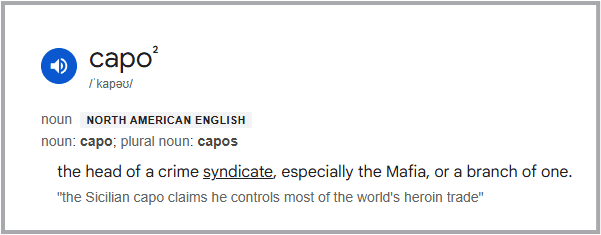
Definition of "Capo" according to Google.

Definition of “Capo” according to Google.

The actions come amid a broader strategy by the Colombian government to address concerns regarding sex tourism and the presence of foreign nationals with outstanding legal issues in their home countries. According to Paola Salazar, the Regional Director of Migración Colombia, the agency has adopted a stricter posture to ensure that Colombia is not utilized as a refuge for individuals linked to fraudulent or illicit activities.

The Case of Steve “Chill Capo”Newland

Steve Newland, a 42-year-old US citizen born in Willingboro, New Jersey, had been residing in Medellín since 2022. Operating under the digital brand “Chill Capo,” Newland promoted luxury lifestyle experiences and nightlife events. However, an investigation by Migración Colombia determined that Newland used his digital platforms to promote encounters with alleged purposes of sexual exploitation.

“Lo están esperando y lo capturan, (they are waiting for them and they will capture them)” stated Federico Gutiérrez, the Mayor of Medellín, referring to the coordination with US authorities regarding the return of the individuals.

The agency reported that Newland’s content included advice on how to evade immigration controls at the airport, such as using false medical certificates or simulating injuries to bypass rigorous inspections. His publications also mentioned accommodations linked to historical criminal figures, specifically the penthouses de Pablo Escobar, and provided instructions on how to avoid being targeted with escopolamina during social outings. Following the investigation, authorities confirmed Newland was in an irregular migration status. He has been banned from reentering Colombia for a minimum of five years.

Newland has publicly denied the allegations via his social media channels. He asserted that his primary objective was to educate visitors on safety and help them avoid dangerous situations. Newland claimed that his events were legal, safe, and conducted in collaboration with established Colombian businesses in the Parque Lleras district. He further contended that his visa had been renewed multiple times since 2022, suggesting that any illegal activity would have prevented such renewals. Newland challenged authorities to present specific evidence or identify victims related to the claims of exploitation.

🔴 #Noticia | Influenciador estadounidense que promovía turismo con fines de explotación sexual en Medellín, fue deportado por Migración Colombia.
El extranjero no podrá ingresar al país en los próximos cinco años, luego de este tiempo tendrá que solicitar una visa. pic.twitter.com/9QhZKJ7C8X

— Migración Colombia (@MigracionCol) April 11, 2026

Samuel McVey: School Incidents and US Warrants

Samuel McVey crazy man

On LinkedIn, McVey claims to have a new private school in Llanogrande, Antioquia, that embraces “leaders of drug cartels and paramilitaries” among others.

In a separate incident, 46-year-old Samuel McVey, who was fired as a primary school teacher but styles himself as “Chief Executive Officer @ McVey International Group” on LinkedIn, was expelled following a series of disturbances at educational institutions in the Valle de Aburrá (Metro Medellín) and the city’s eastern Antioquia bedroom community of Rionegro. On April 8, 2026, McVey reportedly entered at least three schools in the wealthy Las Palmas sector of Medellín, where he allegedly initiated confrontations and made threats against staff and students. He subsequently traveled to Rionegro, where he attempted to gain entry to the Colegio Monteluna in Llanogrande by posing as an English language instructor.

When denied access, McVey reportedly directed threats toward students, prompting school officials to contact the Policía Nacional. He was apprehended by units from the Estación Llanogrande near a local strip mall. Manuel Villa Mejía, the Secretary of Security and Coexistence of Medellín, described McVey as a risk to the community and confirmed that the individual was in a state of high agitation upon his detention.Samuel McVey (photo from LinkedIn)

Investigation into McVey’s background revealed that he is a fugitive from New Rochelle, New York. In the United States, McVey faces charges of aggravated harassment in the second degree, a misdemeanor. The charges stem from an investigation by the New Rochelle Police Department involving threats made against Dr. Corey W. Reynolds, the Superintendent of the City School District of New Rochelle. McVey, a former Spanish teacher at Isaac E. Young Middle School, was terminated in early 2026. New Rochelle authorities had issued two bench warrants for his arrest after he failed to appear for court proceedings on March 26 and April 1, 2026.

Despite the outstanding warrants, the New Rochelle Police Department noted that they do not typically extradite individuals for misdemeanor offenses. Consequently, Colombian authorities processed his departure as an immediate expulsion based on his conduct within Colombia. McVey has been prohibited from entering Colombia for ten years.

Regional Enforcement Trends and Peak Travel Season Operations

The expulsions of Newland and McVey come after a larger enforcement effort during the 2026 Semana Santa (Easter Week) season. Migración Colombia reported that enhanced controls at airports and land borders resulted in the detection of numerous foreign nationals with irregular status or criminal backgrounds.

Specific cases identified by the agency during this period include:

  • In Leticia, Amazonas, a Peruvian citizen was detained at a hotel; the individual was the subject of an Interpol Red Notice for alleged crimes against public health.
  • In Ibagué, a Venezuelan citizen wanted by Peruvian authorities under an Interpol Red Notice for aggravated theft was arrested in a joint operation with the Policía Nacional.
  • In Facatativá, another Venezuelan national was apprehended for an Interpol Red Notice involving charges of human trafficking for sexual exploitation and membership in criminal organizations.
  • In Bogotá, two Dominican citizens were expelled after attempting to fraudulently obtain Colombian passports to travel to Europe.
  • At the Aeropuerto Internacional José María Córdova, a man and a woman from the Dominican Republic were intercepted while attempting to travel to Peru and Argentina using fraudulent Colombian documentation.
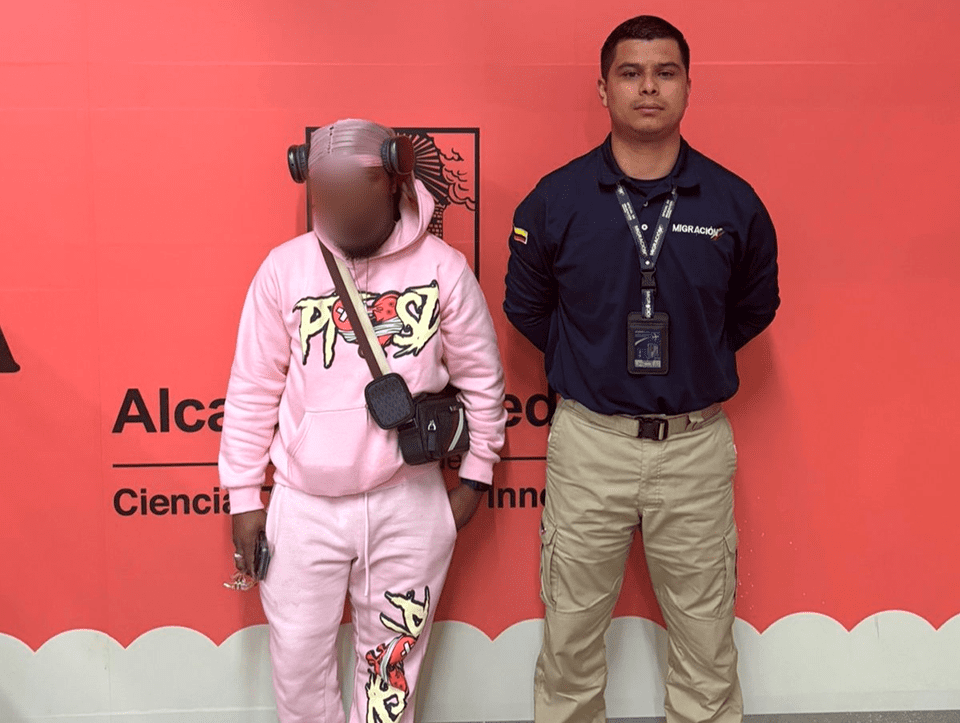
    Inadmitted (photo courtesy Migración Colombia)

    Inadmitted (photo courtesy Migración Colombia)

Statistical Overview of Inadmissibility in 2026

In the first quarter of 2026, Migración Colombia has denied entry to over 600 foreign nationals. The primary reasons for inadmissibility include state sovereignty and security risks (153 cases), lack of required visas (133 cases), and insufficient documentation (104 cases). Additionally, 89 individuals were rejected for providing false information during immigration interviews, while 34 had documented criminal records.

The agency also noted a specific focus on preventing the Explotación Sexual Comercial de Niños, Niñas y Adolescentes (ESCNNA). Through cooperation with international intelligence agencies and the Angel Watch platform, 471 individuals have been denied entry since 2016 for reasons associated with sexual offenses. At the Rionegro terminal alone, 31 inadmissibility cases have been recorded so far in 2026 related to potential sex tourism risks.

The Director General of Migración Colombia, Gloria Esperanza Arriero, emphasized that while the country remains open to international travel and investment, visitors are required to comply with the Constitución Política de Colombia and national laws. Under Decreto 2136 de 2021, the immigration authority maintains the power to deny entry or order the immediate return of any foreign citizen who poses a risk to national security or public order.

The main nationalities of those denied entry in early 2026 include citizens from the United States (76), the Dominican Republic (64), Ecuador (55), and Venezuela (52).

Montage of deportees Samuel McVey and Steven “Chill Capo” Newland

Video footage courtesy Migración Colombia

  •  

Indicted Ex-Foreign Minister Calls Colombian President Gustavo Petro “Mafia Boss”

Former Foreign Minister Álvaro Leyva releases another scathing attack on his former boss as he fights charges.

On April 10, former Colombian Foreign Minister Álvaro Leyva Durán released a formal statement responding to his indictment by the Fiscalía General de la Nación. Leyva faces charges related to his 2023 decision to declare a passport procurement tender void, a process that involved the private security printing firm Thomas Greg & Sons. The former official characterized the legal proceedings as a politically motivated maneuver orchestrated from the Casa de Nariño.

The indictment for prevarication centers on Leyva’s intervention in the bidding process, which the Fiscalía interprets as a deliberate breach of administrative law. In his defense, Leyva maintained that his actions were necessary to address irregularities and ensure the application of the Constitución Política de Colombia. He argued that the prosecuting body’s thesis would criminalize the conduct of any public servant who identifies unconstitutional terms in a government contract.

“If that argument is accepted, then any official who declares a bidding process void because they find the terms and conditions unconstitutional or illegal should go to jail.” — Álvaro Leyva Durán, former Minister of Foreign Affairs.

Leyva also directed accusations toward his successor at the Cancillería, Luis Gilberto Murillo. According to the statement, Murillo suspended a subsequent legal bidding process to justify a state of emergency, which Leyva claims led to an unnecessary markup of approximately $30 billion COP. Furthermore, Leyva alleged that software contracts exceeding $10 billion COP were improperly managed and that the funds remain unaccounted for under the current administration.

The former minister’s statement included severe personal and political criticisms of President Gustavo Petro. Leyva alleged a lack of moral conduct by the head of state during international state visits and questioned the president’s sobriety in public settings. The letter further asserted that US authorities are currently investigating potential links between the executive branch and narcotics trafficking organizations.

Regarding the domestic political landscape, Leyva warned of perceived risks to the Colombian electoral process. He alleged that the administration has engaged in the illegal interception of political candidates and intends to undermine the integrity of future vote counts. Leyva concluded by affirming his intention to defend his record and his legal decisions before the Corte Suprema de Justicia.

COMUNICADO pic.twitter.com/7YYhoHJD4B

— Álvaro Leyva Durán (@AlvaroLeyva) April 10, 2026

Finance Colombia translation of Leyva’s recent open letter dated April 10th

Some time ago, I denounced in a public communiqué that Gustavo Petro had woven against me an atrocious persecution, as retaliation for my denunciations of his closeness to the world of drugs—denunciations that have led to the United States having him cornered today. There I warned that, from within the government, intrigues were being made to throw me in prison and that attempts would be made against my life.

Now, months later, the Attorney General’s Office accuses me of malfeasance (prevaricato) because I declared void a passport tender that, according to that same institution, was based on a “catch-all specifications document” (pliego sastre). For the accusing entity, I should not have fulfilled the obligation of applying the Constitution that I myself helped draft and, by seeking equality, I acted with malicious intent. The world turned upside down.

Understand the gravity: if that thesis is accepted, any official who declares a tender void because they find unconstitutional or illegal specifications must go to prison. So, faced with such a thing, the trial is welcome. I will give the battle in the Supreme Court with all my strength. Because I trust its magistrates, because my life has been a permanent struggle for Colombia, and because justice, reason, and the law are with me.

The acquittal will be the logical consequence of the process in which I will prove, with official documents and among other things, the following: that I left in motion a new, clean, and legal tender, which Minister Luis Gilberto Murillo suspended. That he thus justified another manifest urgency, completely unnecessary, and added an overcharge of nearly 30 billion pesos to it. And that he contracted software for more than 10 billion additional pesos, which was pocketed. All by hand-picking. All murky. All without control. Thus, by brute force, the door was opened to the passport debacle of today. I warned Petro of what was coming down on the country. But he kept silent.

Today I feel the pride of having helped unmask the boss of the mafia that has plunged Colombia into its darkest hours. I took office as his Foreign Minister with the hope of change. But then I came to know his life of vice and decadence. I was slow to understand his vileness and, surely, also slow to denounce it. But from my father Jorge Leyva Urdaneta, exiled for opposing the dictatorship, I inherited courage and respect for institutions; from Álvaro Gómez Hurtado, I learned the necessity of a just order; and from Misael Pastrana Borrero, I learned to think about social peace. So, faithful to myself and to the spirit of my mentors, I denounced in various letters the moral, political, and personal degeneration that I came to know in Gustavo Petro. And time has proven me right.

The President is an infamous being: international human trafficking is a scourge of the poor girls of Colombia, and he, in the middle of a state visit, ends up as a customer of a brothel in Lisbon; he claims to be a champion of peace, but full of hatred he violently divides society with his stale, classist, and racist rhetoric; he claims to fight drug trafficking, but he goes out into the public square drugged, drunk on alcohol and sectarianism, to mistreat and insult those who contradict him, while in the United States his ties to narcos are being investigated. And so, from scandal to scandal, the horrible night does not cease: the homeland trampled by its own President is today the object of all the mockery abroad.

Petro knows that the upcoming electoral process resembles the one recently lived in Chile. And, to avoid the same result, he illegally intercepts candidates, seeks to destroy them, and is already trying to cast a mantle of doubt over the vote count. But Colombia deserves a new dawn. And the radical left, which—turned into the President’s hooligan squad—forgives him everything, seems condemned to the desert. We shall see whether, in the future, they also forgive him for being responsible for their possible defeat. For my part, I remain ready for all battles: always embracing justice against oppression, and with the law as my spear, shield, and banner.


  •  

Tecnoglass Cuts 2026 EBITDA Guidance as US Aluminum Tariffs Hit Colombian Window Exports

New 10% tariff on finished aluminum windows forces EBITDA revision of ~$50M

Barranquilla-based window and architectural glass manufacturer Tecnoglass, Inc. (NYSE: TGLS) has revised its full-year 2026 financial guidance following the April 2 announcement of updated US trade policy that introduced a 10% tariff on finished aluminum window products imported into the United States.

The company stated that its first quarter 2026 performance was in line with internal expectations, supported by continued order activity and a record project backlog. Those results, the company indicated, support the continuation of its previously stated expectation of strong double-digit full-year revenue growth. However, the tariff development — which was not incorporated into the original 2026 guidance issued February 26, 2026 — required a revision to Adjusted EBITDA projections.

“We are executing at a high level to start 2026, with first quarter performance in line with our expectations and continued strength across our residential and commercial platforms. Our record backlog and strong order activity provide excellent visibility, and we continue to gain market share supported by our differentiated vertically integrated model and industry-leading cost structure. The developments in U.S. trade policy applicable to aluminum-containing imports do not reflect any change in our competitive positioning or underlying demand environment. We have proactively restructured our supply chain over the past several years to significantly reduce raw material tariff exposure, and our platform remains advantaged within our industry,” said CEO José Manuel Daes.

Tecnoglass is now guiding for full-year 2026 Adjusted EBITDA in the range of $225 million USD to $245 million USD. The updated range reflects an estimated net incremental impact of approximately $50 million USD compared to the midpoint of the company’s previously stated guidance, attributable to the newly applied 10% tariff on certain finished aluminum window imports into the US market.

The April 2 White House announcement updated Section 232 metals tariffs on steel, aluminum, and copper imports, and expanded the applicability of those tariffs to finished goods and certain derivative products containing those metals. The action affects Tecnoglass and other aluminum window exporters that ship products into the United States.

In response, Tecnoglass says it has implemented pricing adjustments effective on orders placed beginning in early May, the benefit of which is expected to materialize in the second half of 2026. The company is also advancing operational efficiency measures including logistics improvements, increased automation, and workforce adjustments. The revised guidance also accounts for the potential effect of sustained elevated aluminum prices in the second half of the year.

“The developments in US trade policy applicable to aluminum-containing imports do not reflect any change in our competitive positioning or underlying demand environment. We have proactively restructured our supply chain over the past several years to significantly reduce raw material tariff exposure.” – CEO José Manuel Daes

Santiago Giraldo, Chief Financial Officer of Tecnoglass, added, “The change to our full year 2026 Adjusted EBITDA expectations is entirely a result of the revised U.S. tariff framework, which was not contemplated in our original guidance. We have already announced pricing actions that will start with orders in early May, and we are advancing additional efficiency initiatives, including automation and logistics optimization, to further mitigate the anticipated net impact of tariffs disclosed today. These actions, combined with our strong margin profile and disciplined cost management, position us to partially offset the tariff impact as we move through the year and fully neutralize it in 2027. Our updated outlook reflects this discrete policy-driven headwind and does not change our confidence in the trajectory of the business. We remain well positioned to drive growth, expand margins over time, and continue delivering industry-leading financial performance.”

A more comprehensive update, including first quarter results and a full restatement of 2026 guidance, is expected in early May.

Tecnoglass operates a 5.8 million square foot vertically integrated manufacturing complex in Barranquilla, Colombia, and counts the United States as its dominant market, representing approximately 95% of total revenues. The company describes itself as the second-largest glass fabricator serving the US market and the largest architectural glass transformation company in Latin America. Its products have been specified for notable projects including One Thousand Museum and Paramount in Miami, Salesforce Tower in San Francisco, and Aeropuerto Internacional El Dorado in Bogotá.


  •  

Experience the Pinnacle of Jazz as US Faculty Masters Perform in Medellín April 24th

Jazz summit fosters US-Colombia cultural and professional ties.

The city of Medellín is preparing for a sophisticated display of cultural diplomacy as the Centro Colombo Americano Medellín and Teatro El Tesoro present Noche de Jazz en El Tesoro. Scheduled for Friday, April 24, at 7:00 p.m., this event serves as a high-profile prelude to International Jazz Day. For the international investment community and expatriate executives, the concert represents more than just a musical performance; it is a testament to the enduring soft-power bridges between the US and Colombia, fostering an environment of innovation and collaborative spirit in the heart of Antioquia.

The performance features the US Jazz Faculty Collective, a premier ensemble directed by Dr. Ryan Middagh. This group highlights the academic and professional excellence of five distinguished jazz educators from the United States. The lineup includes Dennis Wilson, a former Count Basie trombonist and associate professor at the University of Michigan; Dr. Ryan Middagh, the Director of Jazz Studies at the Blair School of Music at Vanderbilt University; Christopher Kozak, an associate professor and jazz director at the University of Alabama; Dr. Marc Widenhofer, a Nashville-based percussionist and faculty member at Vanderbilt University; and Dr. Bruce Dudley, a celebrated pianist and professor at Belmont University.

The Centro Colombo Americano Medellín is the driving force behind this cultural exchange. As a non-profit binational center, the Colombo performs vital work in the region by providing high-quality English language instruction and promoting democratic values through the arts. Their initiatives are critical for the local workforce, equipping Colombian professionals with the linguistic and cultural competencies required to engage with global markets and attract foreign direct investment to the Valle de Aburrá (the greater Medellín metro area).

For those attending, Teatro El Tesoro offers a world-class venue located within the prestigious El Tesoro Parque Comercial shopping center. Tickets are available through Tuboleta. Pricing remains accessible for such a high-caliber performance, with general public tickets starting from $64,000 pesos.

  •  

El Niño Warming Patterns Signal Operational Risks for Colombian Power and Agriculture

Escalating drought risk is potential bad news for rural communities, power consumers.

The National Oceanic and Atmospheric Administration (NOAA) and the Climate Prediction Center (CPC) have confirmed that ENSO-neutral conditions are currently present in the equatorial Pacific Ocean. However, technical indicators suggest a rapid transition, with a 61% probability of El Niño emerging between May and July 2026. For international investors and executives operating in Colombia, this shift indicates a looming period of increased operational costs, specifically within the energy and agricultural sectors.

The El Niño Southern Oscillation (ENSO) is a recurring climate pattern involving changes in the temperature of waters in the central and eastern tropical Pacific Ocean. During El Niño, trade winds weaken, allowing warm water to move toward the west coast of South America. Conversely, La Niña is characterized by stronger trade winds and cooler ocean temperatures. These fluctuations disrupt global atmospheric circulation, altering rainfall and temperature patterns across the planet.

In Colombia, the effects of these phenomena are distinct and significant. El Niño typically results in a sharp decrease in precipitation and a rise in average temperatures. Because Colombia relies on hydroelectricity for more than 60% of its total power generation, extended dry periods lead to lower reservoir levels. This forces the grid to rely on more expensive thermal generation fueled by natural gas and coal, which historically drives up spot market electricity prices for industrial and residential consumers.

“There is a 25% probability that the index reaches or exceeds +2.0°C during the Northern Hemisphere winter,” according to the National Oceanic and Atmospheric Administration.

The current technical diagnostic from NOAA shows that while the sea surface temperature index in the Niño-3.4 region was recently -0.2°C, the easternmost indices have already moved into positive territory. Furthermore, the equatorial subsurface temperature index has increased for five consecutive months. This accumulation of ocean heat is a primary driver behind the high probability of El Niño persistence through the end of 2026. Some models, including those from the European Centre for Medium-Range Weather Forecasts (ECMWF), suggest a 25% chance of a “strong” or “very strong” event, where temperatures exceed the 2.0°C anomaly threshold.

The Ministerio de Minas y Energía and the Comisión de Regulación de Energía y Gas (CREG) are monitoring these developments closely. A strong El Niño would place additional stress on a natural gas system already facing structural supply constraints. Reduced hydroelectric output coupled with a potential deficit in gas supply could lead to significant energy price volatility. In past events, such as the 2015-2016 cycle, these conditions resulted in substantial financial pressure on the national utility system and necessitated emergency conservation measures.

Agricultural productivity is equally at risk. The Instituto de Hidrología, Meteorología y Estudios Ambientales (IDEAM) has identified the Caribbean and Andean regions—including departments such as La Guajira, Magdalena, and Antioquia—as highly vulnerable. During El Niño, these areas face increased risks of forest fires, water scarcity, and crop failure. For agribusinesses and exporters, this translates to disrupted planting cycles and higher production costs for staples like corn, potatoes, and vegetables, which can fuel domestic food inflation.

Conversely, when La Niña is in effect, Colombia faces the opposite extreme. The cooling of the Pacific leads to excessive rainfall, which can cause devastating landslides and flooding in mountainous terrain. While La Niña can replenish reservoirs, it often damages infrastructure and logistics networks, complicating the transport of goods to port. The current transition out of a La Niña phase provides a brief window of ENSO-neutral stability, which the CPC estimates has an 80% chance of lasting through June 2026.

For the international business community, the significance of these weather cycles extends to macro-economic stability. Persistent dry weather can impact GDP growth by raising the cost of basic services and reducing agricultural output. Strategic planning for 2026 and 2027 must account for these climatic variables. Meteorologists at Colorado State University note that El Niño also tends to reduce hurricane activity in the Atlantic, which may provide some relief for coastal logistics, but the primary threat remains the inland hydrological deficit.

As the Ministerio de Ambiente y Desarrollo Sostenible activates preventive mechanisms, companies are encouraged to review their energy procurement strategies and water management protocols. The next comprehensive diagnostic update from NOAA is scheduled for May 14, 2026, which will provide further clarity on the intensity of the projected warming trend. Understanding the mechanics of the ENSO cycle is no longer a matter of environmental interest but a necessity for risk mitigation in the Colombian market.

Satellite sea surface temperature departure in the Pacific Ocean for the month of October 2015, where darker orange-red colors are above normal temperatures and are indicative of El Niño. (Image credit: NOAA)

Satellite sea surface temperature departure in the Pacific Ocean for the month of October 2015, where darker orange-red colors are above normal temperatures and are indicative of El Niño. (Image credit: NOAA)

Headline photo: the Pacific Ocean from Guachalito Beach, Chocó, Colombia (photo © Loren Moss)

  •  

Ecopetrol Announces Temporary Leave for President Ricardo Roa Amid Investigations by Colombia’s Attorney General’s Office

Ecopetrol’s board has approved a temporary leave for Ricardo Roa, keeping him out of office until Colombia’s presidential elections wrap up at the end of June 2026

Ecopetrol’s board of directors has approved an unpaid leave of absence for its president, Ricardo Roa Barragán, amid ongoing judicial investigations and growing pressure from unions, minority shareholders and political sectors.

In an official statement, the company said Roa “requested to use his accrued vacation days from April 7 to May 27, 2026,” and that the board also approved an unpaid leave requested by himself, “beginning on May 28 and lasting 30 calendar days.” This means he will be away from his duties for a continuous period extending through the end of June, after Colombia’s presidential elections scheduled for May 31 and June 21, if a runoff is required.

The decision comes in a context marked by two investigations led by the Attorney General’s Office. The first relates to an alleged case of influence peddling involving the purchase of an apartment in northern Bogotá, for which Roa has already been formally charged, although he has pleaded not guilty. The second concerns a possible breach of campaign finance limits during President Gustavo Petro’s 2022 presidential campaign, which Roa managed.

Both cases remain under review by judicial authorities, who will assess the evidence and issue a ruling (Colombia’s Top Prosecutor Charges Ecopetrol President in Alleged Influence-Peddling Case).

Roa’s temporary departure also follows pressure from some of the company’s main labor unions (Strike Threat Looms as Colombia Oil and Gas Union Calls for Ecopetrol President’s Removal), as well as minority shareholders (Ecopetrol Shareholders Loudly Heckle CEO Ricardo Roa at Annual Meeting as Leadership Dispute & Corruption Scandal Roils The Petroleum Company), and opposition political groups.

If this timeline holds, his potential return will coincide with the post-election period, ahead of the transition process with the new government set to take office on August 7, which is expected to appoint a new board and select a new president for the state-controlled oil and gas company.

Acting president appointed

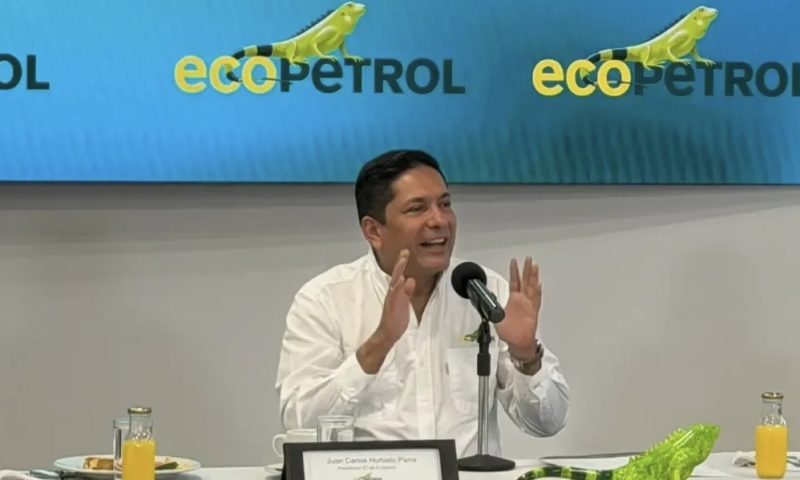
Photo 2: Juan Carlos Hurtado Parra, Acting President of Ecopetrol. Photo courtesy of Ecopetrol.

Juan Carlos Hurtado Parra, Acting President of Ecopetrol. Photo by of Ecopetrol.

During Roa’s absence, the board appointed Juan Carlos Hurtado Parra as acting president of Ecopetrol. According to the statement, Hurtado currently serves as executive vice president of hydrocarbons and has been the first alternate to the presidency since November 16, 2025.

He has “more than 28 years of experience in the energy sector, including roles as vice president of exploration, development, and production at Ecopetrol and has held executive positions focused on resource management and coordination. He is an electrical engineer, holds a specialization in Project Evaluation and Development, and has a Master of Business Administration (MBA) in International Oil and Gas.”

  •  

Aris Mining Posts 36% Year-Over-Year Gold Production Increase at Colombia Operations in Q1 2026

Higher grades at Segovia drive output and revenue gains

Vancouver-based Aris Mining Corporation (TSX: ARIS; NYSE: ARIS) reported preliminary first-quarter 2026 gold production of 74,300 ounces from its two underground mines in Colombia, representing a 6% increase over the fourth quarter of 2025 and a 36% increase compared to the same period a year earlier.

The company said it sold 74,800 ounces of gold during the quarter at an average realized price exceeding $4,860 USD per ounce, generating gold revenue of more than $360 million USD. That figure marks a 20% increase from Q4 2025 revenue of $301 million USD and more than double the $154 million USD reported in Q1 2025. The company reported a cash balance exceeding $470 million USD as of March 31, 2026, an increase of approximately $80 million USD from the end of the previous quarter.

“We expect Q1 2026 gold revenue to exceed $360 million, a significant increase from $154 million in Q1 2025 and $301 million in Q4 2025, driven by higher gold prices and increased ounces sold.” — Neil Woodyer, Chair and CEO, Aris Mining Corporation

The production gains were concentrated at Aris Mining’s Segovia operation in the department of Antioquia, which produced 66,600 ounces during the quarter, up from 63,100 ounces in Q4 2025 and 47,500 ounces in Q1 2025. The year-over-year increase of 40% at Segovia was driven primarily by a notable improvement in ore grade. The average gold grade processed rose to 12.41 grams per ton from 9.37 grams per ton a year earlier, a 32% increase, while the volume of ore processed increased 5% to 175,000 tons. Recovery rates held at 95.3%, compared to 96.1% in both the prior quarter and Q1 2025.

The higher grades offset a decline in throughput compared to Q4 2025, when the mine processed 201,000 tons at an average grade of 10.10 grams per ton. Aris Mining completed installation of a second mill at Segovia in June 2025, increasing processing capacity by 50% to 3,000 tons per day, and the company has indicated that the ramp-up at the operation is continuing.

At the Marmato mine in the department of Caldas, production totaled 7,800 ounces in Q1 2026, an increase from 6,700 ounces in Q4 2025 and 7,200 ounces in Q1 2025. Marmato processed 77,000 tons of ore at an average grade of 3.53 grams per ton during the quarter, compared to 75,000 tons at 3.12 grams per ton in Q4 2025. Recovery rates at Marmato declined slightly to 89.6% from 90.8% in the prior quarter.

Consolidated Production Summary

Gold production and sales Q1 2026 Q4 2025 Q1 2025
Segovia (koz) 66.6 63.1 47.5
Marmato (koz) 7.8 6.7 7.2
Total production (koz) 74.3 69.9 54.8
Total sales (koz) 74.8 71.7 54.3

Growth Outlook

Neil Woodyer, the company’s chair and CEO, said production growth in 2026 is expected to be weighted toward the second half of the year. The company is building a new bulk mine and carbon-in-pulp (CIP) processing plant at Marmato, with first gold expected in Q4 2026. At steady state, the expanded Marmato operation is expected to produce approximately 200,000 ounces per year.

Together, the Segovia and Marmato expansions are expected to increase Aris Mining’s annual gold production to approximately 500,000 ounces. The two mines produced a combined 257,000 ounces in 2025.

Beyond its operating mines, Aris Mining is advancing the Soto Norte gold project in the department of Santander, Colombia, where environmental studies are being finalized for submission in Q2 2026 to initiate the licensing process. The company also holds the Toroparu gold project in Guyana, where a prefeasibility study is underway and a construction decision is expected in early 2027. These projects form part of Aris Mining’s longer-term objective of reaching approximately 1 million ounces of annual gold production, though that target includes estimates from a preliminary economic assessment for Toroparu that the company has cautioned are based on inferred mineral resources and are speculative in nature.

The company expects to report full Q1 2026 financial and operating results on or about May 6, 2026. The quarterly results contained in the April 7 announcement are preliminary and may differ from final figures.

Aris Mining is listed on the Toronto Stock Exchange and the New York Stock Exchange under the ticker symbol ARIS. Company filings are available through SEDAR+ and the US Securities and Exchange Commission.

  •  

Bancolombia NowCast Index Signals Colombia Economic Slowdown in First Quarter

Activity cools to 2.1% annual expansion.

Economic activity in Colombia expanded at an estimated annual rate of 2.1% during the first quarter of 2026. According to the latest NowCast report issued by the Grupo Cibest, unit of Bancolombia (NYSE: CIB, BVC: BCOLOMBIA), this outcome reflects a loss of momentum compared to the rolling quarter ended in February. That previous period recorded a growth of 2.2%, which was revised downward by 10 basis points from an initial estimate of 2.3%.

The 2.1% growth rate for the quarter indicates a slowdown relative to both the market consensus average of 2.7% and the internal growth forecast of 3.3% held by the bank. On a month-over-month basis, the seasonally adjusted series of the NowCast index posted a 1.3% contraction in March 2026. When compared to March 2025, economic activity grew by 2% year over year, representing a 50-basis-point decline from the 2.5% reading recorded the previous month.

“Overall, these results suggest that the economy is beginning to lose steam, amid multiple sources of uncertainty.” — NowCast Bancolombia Report

Analysis at the sector level reveals a broadly weaker growth profile, with deceleration appearing across most productive areas. Slower momentum was identified in trade, manufacturing, recreation, real estate, and financial services. Manufacturing expansion cooled to 1.0% in March 2026, while financial services recorded marginal growth of 0.6%. The real estate sector maintained a steady growth rate of 1.9%.

Construction and communications were the only sectors to record negative growth during the period. The construction sector saw a significant downturn, contracting by 2.3% in March 2026 after having posted 1.4% growth in February. The information and communications sector contracted by 0.4%, marking its fourth consecutive month in contractionary territory. Conversely, acceleration was noted in public administration, which grew by 5.1%, agriculture at 3.7%, and mining at 0.8%.

The NowCast family of indicators is prepared by Grupo Cibest through the processing and aggregation of transaction data from the bank’s various payment channels. Using advanced quantitative tools, the index provides high-frequency estimates of Colombian productive activity to complement official data from the Departamento Administrativo Nacional de Estadística. The report was authored by Arturo Yesid González Peña, Head of Quantitative and Analytics, and Sebastián Ospina Cuartas, Data Controller.

The report also incorporates data from the Bloomberg platform and FocusEconomics Consensus Forecasts to provide broader economic context. While the national economy remains in expansionary territory, the analysts suggest that the current results indicate the market is losing steam due to various sources of domestic uncertainty.

  •  

S&P Global Ratings Downgrades Colombia to BB- Amid Fiscal Concerns

Credit downgrade is an indictment of the Petro administration’s fiscal management, including suspension of the fiscal rule.

On April 8, 2026, S&P Global Ratings (NYSE: SPGI) lowered its long-term foreign currency sovereign credit rating on Colombia to BB- from BB and its long-term local currency rating to BB from BB+. The outlook for both ratings is stable, reflecting expectations that the Government of Colombia will gradually reduce its fiscal deficit while sustaining moderate growth in the national gross domestic product.

The rating action follows persistent fiscal imbalances and a policy environment that has become less predictable since the pandemic-related recession. The government decision to suspend the national fiscal rule in 2025 marked a significant shift in the policy framework. Pro-cyclical fiscal policies have provided marginal support for employment and consumption, but have also contributed to higher inflation expectations and a wider current account deficit. S&P expects the general government fiscal deficit to reach 5.6% of the national gross domestic product in 2026, compared to 5.3% in 2025.

“We expect Colombia to have consistently large fiscal deficits over the next few years.” — S&P Global Ratings

Institutional stability remains a key factor in the rating, though challenges persist. A fragmented legislature followed the March 2026 elections, where Pacto Histórico and Centro Democrático emerged with the largest minorities. The upcoming presidential election, scheduled for May 31, 2026, adds further uncertainty. Candidates such as Iván Cepeda of Pacto Histórico, Paloma Valencia, and Abelardo de la Espriella have proposed varying approaches to fiscal consolidation. The new administration will inherit spending pressures related to domestic security, rising healthcare costs, and pension payments linked to minimum wage increases.

The Banco de la República, the independent central bank of the country, has maintained a tight monetary policy to combat inflationary pressures. Annual inflation reached 5.3% in February 2026, prompting the bank to increase reference rates to 11.25%. S&P anticipates that inflation will not return to the target range of 3% +/- 1% until early 2029. While the independent status of the central bank provides a buffer against external shocks, high interest rates and lower-than-expected revenue collections have contributed to the widening deficit since 2024.

Economic growth is projected at 2.5% for 2026, slightly below the 2.6% recorded in 2025. Per capita growth is estimated at $9,900 USD for 2026, with real growth expected to average just above 2% through 2029. Despite being a net energy exporter, the performance of the US economy and international energy prices continue to influence national outcomes. Hydrocarbon exports declined to 35% of goods exports in 2025, down from 67% in 2013, showing some diversification even as the sector remains a primary source of volatility.

Net general government debt is forecast to approach 66% of the national gross domestic product by 2029, rising from 60.4% in 2025. S&P notes that the government interest burden will average 12.3% of general government revenue over the next three years. The shift toward issuing shorter-term debt instruments has reduced reported interest payments but increased vulnerability to interest rate fluctuations. External indicators remain a concern, with narrow net external debt expected to stabilize at 130% of current account receipts through 2029. Foreign direct investment is expected to be the primary source for funding the current account deficit, which is projected to stabilize around 2.6% of the national gross domestic product.

Vise photo credit © Loren Moss

  •  

Petro severs ties with Central Bank after Colombia rate rise

President Gustavo Petro has triggered a rare institutional confrontation with the Central Bank  after he ordered to “break relations” following an modest interest rate increase, raising concerns over economic policy independence just two months before the May 31 presidential election.

The board of Banco de la República voted on March 31 to raise its benchmark rate by 100 basis points to 11.25 per cent, defying government pressure for looser policy. Finance minister Germán Ávila denounced the move as “disproportionate” and withdrew from the board, accusing policymakers of privileging financial sector interests over economic growth.

The decision marks an unprecedented rupture in Colombia’s macroeconomic governance framework. By stepping away from the board, Ávila has effectively deprived it of the quorum required to meet under existing statutes, raising the prospect of a policy deadlock just as inflation remains above target.

At stake is more than a disagreement over rates. The confrontation exposes deeper tensions between a government focused on growth and redistribution and a technocratic central bank committed to price stability. It also risks undermining one of Colombia’s most respected institutions at a time of heightened global uncertainty.

Governor Leonardo Villar defended the rate hike, insisting the bank’s constitutional mandate to control inflation could not be subordinated to political considerations. He said the board remained focused on steering inflation back to its 3 per cent target, noting that price pressures — currently running at 5.29 per cent annually — remain elevated despite signs of moderation.

“The decisions are based on technical criteria,” Villar said, rejecting accusations of bias towards the financial sector. He also warned that the government’s withdrawal runs counter to institutional norms.

Markets are now watching whether the government intends to sustain its boycott. Under Colombian law, the presence of a Finance Minister is required for board meetings, meaning continued absence could paralyse rate-setting decisions in the coming months. Three key meetings — in April, June and July — are scheduled before the end of Petro’s term, with the latter two falling after a decisive first-round of the presidential elections.

Business leaders have reacted with alarm. Camilo Sánchez, head of utilities association Andesco, described the breakdown in coordination as “dire”, warning that permanent dialogue between fiscal and monetary authorities is essential for economic stability.

Analysts say the government may be using institutional leverage to halt further rate increases, given that a majority of board members had signalled a tightening bias to anchor inflation expectations. A prolonged standoff could, however, carry significant costs.

Colombia has long been viewed by investors as a regional outlier for its strong central bank independence. Any perception that political pressure is eroding that autonomy could weigh on the peso, increase borrowing costs and deter foreign investment.

The dispute comes against a complex macroeconomic backdrop. Inflation has been fuelled in part by a sharp increase in the minimum wage and higher public spending, while external risks — including rising energy prices linked to the war in the Middle East and closure of the Strait of Hormuz by Iran.

For Petro, the rate hike reinforces a long-standing critique that tight monetary policy is stifling growth and employment. Writing on social media, the president accused the central bank of pursuing a “suicidal” policy that harms the wider economy.

Yet economists warn that weakening institutional credibility could ultimately prove more damaging than high interest rates. “The risk is not just policy error,” one Bogotá-based analyst said. “It is the erosion of the rules of the game.”

The coming weeks will test whether the standoff is a negotiating tactic or the start of a more fundamental shift in Colombia’s economic governance. Either way, the episode has already injected a new layer of uncertainty into one of Latin America’s most closely watched economies.

  •  

Bancolombia Forecasts April Trading Range Following 2.1% Appreciation of the COP

Stronger peso and oil prices shift Colombian investment landscape.

The Colombian peso (COP) experienced a 2.1% appreciation during March 2026, driven by a recovery in global oil prices and key domestic developments. According to the latest analysis from Bancolombia (BVC: BCOLOMBIA / NYSE: CIB), the performance of the currency coincided with the results of national legislative elections and recent monetary policy adjustments by the Banco de la República.

Global energy markets recorded a significant increase in crude prices throughout the month. Brent crude rose 63% to end March at $118 USD per barrel, while West Texas Intermediate (WTI) increased 51% to close at $101 USD per barrel. These price movements have been largely attributed to geopolitical tensions in the Middle East, which continue to influence international commodity flows and investor sentiment.

On the domestic front, the Gran Coalición por Colombia primary election recorded a turnout of more than 5 million voters. Market analysts indicated that the high participation rate was viewed as a positive indicator of institutional stability. Simultaneously, the Board of Directors of the Banco de la República increased the national policy interest rate by 100 basis points, bringing the benchmark rate to 11.25%. This decision aligns with regional efforts to manage inflationary pressures through tighter monetary control.

International market conditions also reflect a shift in expectations regarding the Federal Reserve. Due to ongoing conflict in the Middle East and persistent economic indicators, markets currently anticipate that the US central bank will maintain existing interest rates without cuts for the remainder of the year.

Looking forward to April, the research team at Bancolombia—led by Chief Economist Laura Clavijo, Macroeconomic Manager Jose Luis Mojica, and International and FX Analyst Maria Paula Gonzalez—projects that the exchange rate will trade within a range of $3,625 COP to $3,725 COP. This forecast accounts for continued volatility and heightened uncertainty in both global and domestic financial markets.

Bancolombia (photo © Loren Moss)

  •  

History Channel Premieres Documentary Highlighting Medellin Social Intervention Program

Media partnership showcases urban social investment strategies in Colombia.

The History Channel is scheduled to premiere a new documentary titled Parceros on April 29, 2026. The 43-minute production, developed in collaboration with the Alcaldía de Medellín, examines the social challenges facing youth in the city’s communes and the state-led initiatives designed to mitigate the influence of criminal structures.

The documentary focuses on the Parceros program, an initiative managed by the Secretaría de Seguridad y Convivencia of Medellín. The program provides psychosocial support, academic training, and employment pathways for children, adolescents, and young adults at risk of recruitment by organized crime. According to municipal data, approximately 350 criminal groups operate within Medellín, involving an estimated 6,000 to 12,000 individuals. The program has served over 9,000 participants between 2024 and 2025, with a target of reaching 15,000 individuals by the end of the current four-year term.

“When the public sector works hand in hand with social organizations and media with global reach, the impact is multiplied.” — Federico Gutiérrez, Mayor of Medellín.

Federico Gutiérrez, the Mayor of Medellín, stated that the partnership with international media outlets aims to increase the visibility of the city’s social transformation. He noted that the collaboration between the public sector and global organizations facilitates a broader impact for regional infrastructure and social programs. The documentary features Argentine actor and producer Michel Brown, who serves as the primary narrator and interacts with participants to document their transition from informal or illegal activities toward stable employment and entrepreneurship.

The production follows the individual trajectories of three participants: Marcela, Alejandro, and Juan Sebastian. These accounts detail the transition from situations involving homelessness, illegal activities, and exploitation toward roles in municipal security management, private business ownership, and the local tourism sector. Paulina Patiño, director of the Parceros program, indicated that the initiative focuses on building human capital and providing alternatives to the economic incentives offered by local criminal organizations.

Produced by A+E Networks (NYSE: DIS) in association with Loso Producciones and co-produced by Lulo Films, the project reflects a trend of utilizing high-production-value media to document ESG-related social investments in Latin America. Cesar Sabroso, Senior VP of Marketing at A+E Networks Latin America, emphasized the company’s objective to distribute these narratives across the region to highlight successful intervention models.

Medellín continues to be a focal point for international observers due to its ongoing social transformation and its status as a hub for the global creative economy. The documentary intends to provide a technical look at how targeted social spending and public-private partnerships can alter the demographic trajectory of urban centers in Colombia and the broader US interest area.

Headline photo of Medellín’s Comuna 13 (photo © Loren Moss)

  •  

FDN Secures Financing for El Campano Solar Project in Cordoba

Boosting Colombia’s renewable energy capacity and grid reliability.

The Financiera de Desarrollo Nacional (FDN), a member of the Grupo Bicentenario, has announced its participation in the financial closing of the El Campano Solar Park. Located in Chinu, Cordoba, the renewable energy project is designed to strengthen national energy security and support the transition toward cleaner power sources.

The initiative involves the development, construction, and operation of a photovoltaic solar plant with an installed capacity of 128.8 MWdc (99.9 MWac). The facility is scheduled to begin commercial operations by the third quarter of 2027.

The financial structure includes a commitment from the FDN of up to $157.5 billion COP, consisting of senior debt and a bank guarantee. This contribution represents approximately 50% of the total project debt. The total investment for the project is estimated at $453.9 billion COP, utilizing a framework that combines private equity and long-term debt.

“The financial closing of the El Campano Solar Park represents a firm step in the consolidation of a cleaner, more resilient, and sustainable energy matrix for Colombia.” — Rafael Herz, acting president of the FDN

“The financial closing of the El Campano Solar Park represents a firm step in the consolidation of a cleaner, more resilient, and sustainable energy matrix for Colombia,” stated Rafael Herz, acting president of the FDN. “At FDN, we remain committed to mobilizing investment toward strategic projects that not only strengthen the country’s infrastructure but also generate positive environmental and social impacts in the regions.”

Revenue for the El Campano Solar Park is supported by a 15-year energy purchase agreement (PPA) with ISAGEN, a company maintaining a AAA credit rating. The contract operates under a “pay-as-generated” modality. Furthermore, the project is set to receive income via the Cargo por Confiabilidad (Reliability Charge) over a 20-year period, a mechanism intended to ensure long-term financial stability and debt service capacity.

The project is being developed by Atlas Renewable Energy in partnership with ISAGEN (BVC: ISAGEN). This collaboration is part of a broader joint strategy aiming to develop up to 1,000 MW of solar projects in Colombia by 2030.

In addition to its contribution to the Sistema Interconectado Nacional (National Interconnected System), the project is expected to reduce carbon dioxide emissions by approximately 4 million tons over its operational lifespan. This alignment follows national objectives regarding sustainability and climate change mitigation.

According to the FDN, the project integrates environmental, social, and governance (ESG) criteria into the financing decision-making process, focusing on the decarbonization of the economy and regional development.

  •  

Petro faces fresh political crisis after leaked audios link officials to alleged smuggler

Fresh audio revelations broadcast by Noticias Caracol have triggered a political storm in Colombia, implicating senior government-linked figures in alleged secret contacts with one of the country’s most notorious smugglers, Diego Marín Buitrago.

The recordings, aired late on April 5, appear to document meetings between intermediaries connected to President Gustavo Petro and the legal representative of Marín, widely known by the alias “Papá Pitufo.” The revelations come with just over four months remaining in Petro’s presidential term, intensifying scrutiny over his administration.

According to the report, the audios – lasting more than 90 minutes – capture conversations from early 2025 involving at least four individuals allegedly acting as emissaries of the government. Among them is Jorge Lemus, the former head of the National Intelligence Directorate (DNI), as well as other figures with links to the administration.

In the recordings, Lemus is heard holding closed-door meetings with Marín’s lawyer, Luis Felipe Ramírez, in which possible judicial benefits and guarantees are discussed in exchange for cooperation. Such proposals, if confirmed, would fall outside the remit of intelligence officials and raise questions about potential overreach and irregular negotiations.

The audios also suggest that these contacts occurred before any formal intervention by judicial authorities, with intermediaries allegedly presenting themselves as acting on behalf of the executive branch. Additional names mentioned include Catalan political figures Xavier Vendrell and Ramón Devesa, as well as former financial intelligence adviser Isaac Beltrán.

The revelations have revived a long-running controversy over alleged links between Marín and Petro’s 2022 presidential campaign. Previous reports indicated that the smuggler may have contributed 500 million pesos (approximately $130,000) to the campaign—funds Petro has said were returned upon discovery of their origin. However, opposition figures argue that no conclusive proof of that վերադարձ has ever been presented.

Opposition leaders, including senator and presidential hopeful Paloma Valencia, seized on the latest disclosures to demand an independent investigation. “This is an extremely serious institutional matter,” Valencia said in a video response, questioning the absence of evidence regarding the alleged վերադարձ of the funds and warning of a pattern of clandestine contacts.

Critics argue that the recordings point to “under-the-table” dealings with criminal actors, potentially undermining the government’s legitimacy at a critical political juncture.

President Petro responded by acknowledging that intelligence contacts with Marín’s circle had taken place but insisted they were authorized and aimed solely at securing the smuggler’s cooperation with Colombian justice.

“The purpose was to bring Marín to Colombia,” Petro said, framing the outreach as part of a broader strategy to dismantle criminal networks. However, the president went further, alleging that some intelligence agents may have exploited the situation by attempting to solicit money during the interactions.

According to Petro, these alleged irregularities led to dismissals within state agencies, suggesting internal misconduct rather than a coordinated government effort to negotiate with the smuggler.

The president also criticized the Fiscalía General de la Nación, accusing prosecutors of limiting the scope of investigations and pursuing what he described as a politically motivated campaign against his administration.

Marín, long considered one of Colombia’s most significant contraband operators, has been linked for decades to networks involved in smuggling and bribery. His arrest in Europe in 2024 triggered an ongoing extradition process, though legal challenges in countries including Spain and Portugal have complicated proceedings.

Prosecutors in Colombia have charged him with criminal conspiracy and bribery, alleging he led a sophisticated structure that penetrated state institutions.

The latest revelations add to mounting political pressure on Petro, whose administration has already faced a series of scandals and internal fractures. With the presidential term nearing its end, the emergence of recorded evidence – rather than testimony or second-hand accounts—marks a potentially decisive moment in a controversy that has shadowed his government for years.

Whether the audios lead to formal investigations or judicial consequences remains unclear. But politically, the damage appears immediate, reopening questions about the boundaries between state actors and criminal networks—and the extent to which those lines may have been blurred behind closed doors.

  •  

Ecopetrol Refinances $1.25 Billion USD in Debt and Finalizes State Subsidy Settlement

Ecopetrol S.A. (BVC: ECOPETROL; NYSE: EC) has entered into a formal payment agreement with the Government of Colombia to settle outstanding balances from the Fuel Price Stabilization Fund, known in Spanish as the Fondo de Estabilización de Precios de los Combustibles (FEPC). The agreement, reached through the Ministerio de Hacienda y Crédito Público and the Ministerio de Minas y Energía, addresses $1.6 trillion COP owed for the first quarter of 2025.

Under the terms of Resolutions 00368 and 00369 issued by the Dirección de Hidrocarburos, the total amount is divided between Ecopetrol S.A., which is owed $1.2 trillion COP, and Refinería de Cartagena S.A.S. (Reficar), which is owed $0.4 trillion COP. The repayment schedule began with a cash transfer of $2.89 billion COP on April 1, 2026. The remaining balance of approximately $1.55 trillion COP is scheduled to be paid on December 15, 2026, through the issuance of Treasury Securities, or Títulos de Tesorería (TES). The Colombian state has acknowledged the financial costs associated with the time elapsed until the final December payment.

“The Ecopetrol Group continues to work in close coordination with the Ministries of Finance and Public Credit and of Mines and Energy — the authorities responsible for fuel pricing policy — in the implementation of payment mechanisms and the reduction of FEPC balances.” — Ecopetrol S.A.

Concurrent with the subsidy settlement, Ecopetrol received authorization from the Ministerio de Hacienda y Crédito Público via Resolution 0666 to execute an external public debt management transaction totaling $1.25 billion USD. The five-year loan was secured through a consortium of international lenders including BBVA (BME: BBVA; NYSE: BBVA), Bank of America (NYSE: BAC), JP Morgan Chase (NYSE: JPM), and Bank of China (HKG: 3988). The credit facility carries a floating interest rate indexed to the Secured Overnight Financing Rate (SOFR) and will be repaid in four equal installments.

The proceeds from the $1.25 billion USD loan are designated for the repayment of existing obligations. Specifically, $1.2 billion USD will be used to settle a 2024 loan previously authorized for the acquisition of the state’s interest in Interconexión Eléctrica S.A. E.S.P. (ISA), while the remaining $50 million USD will be applied to an outstanding balance from a 2025 credit agreement. The loan agreement is governed by the laws of the State of New York and includes standard covenants regarding the borrower’s payment capacity and financial integrity.

These financial maneuvers are intended to optimize the maturity profile of the Ecopetrol Group, which remains responsible for over 60% of hydrocarbon production in Colombia. The company continues to operate integrated systems in transportation, refining, and petrochemicals, with additional international operations in the US Permian basin, the Gulf of Mexico, Brazil, and Mexico.

  •  

Four Seasons Expands Colombian Operations with Cartagena Hotel Opening

New luxury hospitality project strengthens Cartagena’s investment profile.

Four Seasons Hotel and Residences Cartagena officially opened on April 2, 2026, marking the third property for the hospitality brand in Colombia. The project is a joint venture with San Francisco Investments, a subsidiary of the Valorem holding company. Located in the Getsemaní neighborhood, the hotel is situated near the UNESCO World Heritage Site Walled City and the Cartagena Convention Center.

The development involved the multi-year restoration of several historic buildings, including the 1920s-era former Club Cartagena. The architectural and interior design was led by the late François Catroux, with additional technical expertise provided by WATG and Wimberly Interiors. The food and beverage concepts were developed by SBM Interior Design and AvroKO. Landscape architecture for the rooftop and grounds was managed by Enea Garden Design, led by Carolina Jaimes.

“Welcoming a third Four Seasons to Colombia, joining our Bogotá and Casa Medina Bogotá properties, marks an important milestone in the continued expansion of our global portfolio,” said Rainer Stampfer, Four Seasons President of Global Operations, Hotels and Resorts.

The hotel features 131 guest rooms, 27 of which are colonial-style suites located within the heritage wing. These units include preserved architectural elements and custom furnishings designed by Poli Mallarino. The property also contains Private Residences designed by Rodriguez Valencia Arquitectos. The primary presidential suite, known as the Catroux Suite, features a private elevator and a terrace with a Moorish-inspired fountain by María Cecilia Franco Berón.

There are eight dining and drinking venues on the property. The Grand Grill and Bar Lelarge were conceptualized by Major Food Group, focusing on steakhouse traditions and seasonal cocktails. Additional venues include Café Rialto, Pizzeria Della Chiesa, El Aljibe, El Patio del Limonar, and the rooftop sunset lounge, El Palmar. Lighting for these venues was designed by Lang Lighting Design.

Wellness facilities include the Umari Spa, which offers six treatment rooms and uses botanical ingredients derived from the umari plant. For business events and social functions, the hotel provides several spaces, including the Ballroom de la Veracruz, which can host 300 guests and features a centuries-old fresco. The Ballroom Centenario provides views of the Walled City for smaller gatherings of up to 100 people.

Four Seasons Hotels and Resorts is a global hospitality company partially owned by Kingdom Holding Company (TADAWUL: 4280). The company currently operates 136 hotels and 61 residential properties across 47 countries, with more than 60 projects currently in its development pipeline. In Cartagena, the hotel operations are led by General Manager Annie Monnier.

Now Open: Four Seasons Hotel and Residences Cartagena (PRNewsfoto/Four Seasons Hotels and Resorts)

Now Open: Four Seasons Hotel and Residences Cartagena (PRNewsfoto/Four Seasons Hotels and Resorts)

  •  

Scatec Commences Construction of 130 MW Barzalosa Solar Project in Colombia

Renewable expansion strengthens Colombia energy matrix for investors.

The Norwegian renewable energy company Scatec ASA (OSE: SCATC) has reached financial close and initiated construction on the Barzalosa solar power plant in Colombia. The project, located in the municipio of Nariño within the department of Cundinamarca, has a planned capacity of 130 MWp. Total capital expenditure for the facility is estimated at $121 million USD.

The financing structure for the project is based on a 70% leverage model, utilizing a combination of equity and non-recourse debt. Scatec holds a 65% equity stake in the venture, while Norfund, the Norwegian investment fund for developing countries, provides the remaining 35%. The senior debt was provided by Bancolombia S.A. (NYSE: CIB; BVC: BCOLOMBIA) and the Financiera de Desarrollo Nacional (FDN).

The Financiera de Desarrollo Nacional committed a total of 200,358 million COP to the project. This includes a senior debt facility of up to 164,458 million COP with a term of 18 years, representing approximately 50% of the total project debt. Additionally, the FDN provided a bank guarantee of up to 35,900 million COP to substitute reserve accounts for debt service and operation and maintenance costs. The FDN also acted as a co-structurer for the financial framework of the operation.

“The financing of the Barzalosa project reflects the capacity of the FDN to structure long-term financial solutions that make strategic energy transition projects in Colombia viable,” said Enrique Cadena, Vice President of Structured Finance at the FDN.

The law firm Holland & Knight served as legal counsel to the lenders, Bancolombia and FDN, in the COP 330 billion financing transaction. The legal team was led by partner María Juliana Saa, with support from partner Inés Elvira Vesga and associates Juan Sebastián Parra and Juan Felipe Alonso. Other legal and financial advisors involved in the transaction included Cuatrecasas, which advised the borrower; Brigard Urrutia, which advised FDN regarding the credit facility; and Astris Finance, which provided financial structuring advice.

Revenue for the plant will be supported by a 15-year Power Purchase Agreement (PPA) with BTG Pactual Comercializadora de Energía (BVMF: BPAC11). The agreement covers 85% of the estimated energy production and is denominated in Colombian pesos, with adjustments based on the Producer Price Index. The remaining 15% of production will be sold on the Colombian spot market. The project is also eligible for the Cargo por Confiabilidad (reliability charge) and may access resources from the Inter-American Development Bank and the Climate Investment Funds.

Construction includes the installation of the solar array and the development of a six-kilometer transmission line to connect the plant to the national grid. Scatec is acting as the lead developer and the designated Engineering, Procurement, and Construction (EPC) provider, covering approximately 70% of the capital expenditure. The company will also manage operations, maintenance, and asset management. The Barzalosa plant is expected to reach its commercial operation date in the first half of 2027.

  •  
❌