Normal view

Long-awaited legislation set to clarify Colombia’s e-moto laws

3 June 2026 at 00:37
E-motos like this are currently banned from Bogotá's cycle paths. New rules could make enforcement easier. Photo: S.Hide.
E-motos are currently banned from Bogotá’s cycle paths but use them anyway. New rules could make enforcement easier. Photo: S.Hide.

New rules on electric motorbikes could shift the battle of the bike lanes in Bogotá, where transit authorities are already struggling to contain the tide of battery-powered vehicles.

A law governing the burgeoning use of “VELMPUs” (Vehículos Eléctricos Livianos de Movilidad Personal Urbana), as they are officially known, is being tabled by the Ministry of Transport.

This covers the dizzying array of e-bikes, electric scooters, electric motorbikes and even motorized unicycles being deployed by commuters around the city.

The bill, which has just ended its consultation period and is expected to be signed into law in July, will impose stricter safety rules and also require registration of vehicles, though they will remain exempt from number plates, insurance or the need for licensed riders.

See also: The Battle of the Bike Lanes

Last week transport minister María Fernanda Rojas described the bill as an “historic step in personal electric mobility in Colombia”.

“We will have clear rules in terms of speed, rules such as wearing of helmets, also the infrastructure for these types of vehicles,” she said.

Legislation will also better define categories of vehicles, their power and top speed. Crucially, it also gives city transit authorities the discretion to ban specific categories of VELMPUs from cycle paths. This should end years of confusing messaging on where you can and can’t ride them.

Tiny pedals

This would be a welcome development for Bogotá where the city’s 677 kilometers (420 miles) of dedicated bike lanes – the most extensive of any city in Latin America – are reserved for pedal cycles, electric scooters and e-bikes but prohibited for electric motorbikes.

This might come as surprise to the city’s cyclists: on any given day thousands of e-motos are zipping down the ciclorutas.

In a 10-minute survey by The Bogotá Post of one of the capital’s busiest cycle routes – following the Avenida NQS – we counted 66 pedal bikes, 12 electric scooters and 38 electric motorbikes.

That means a third of the users were technically breaking the law, despite the on-site presence of Guias de Movilidad – council mobility guides – directing traffic around the bike lane.

“We’re not here to fine people, just to advise them,” a mobility guide Eduardo Díaz told The Bogotá Post. “People need first to be informed. Punishments will come later.”

One problem was that the businesses selling electric motorbikes were misinforming buyers, he said. The tiny pedals mounted on the rear were more for decoration and did not qualify them as a proper pedaled vehicle. “They’re fooling their customers that they are bike-lane legal,” he added.

That message has been amplified by posters around the city last week saying: “Don’t let them trick you! Ciclomotores can’t use the bike lanes!”

"Don't let them fool you": Bogotá's mobility secretariat has been trying to ban e-motos from bike lanes but with little impact. Photo: S. Hide.
“Don’t let them fool you”: Bogotá’s mobility secretariat has been trying to ban e-motos from bike lanes but with little impact. Photo: S. Hide.

No need for speed

The new legislation regulates several older laws on electric mobility – from 2017, 2022 and most recently Law 2486 of 2025 – which have struggled to keep pace with innovations in electric vehicle design and their capabilities.

A key improvement will be how to categorize light electric vehicles, according to Bogotá mobility expert Carlos Prado. “Before we had a terrible situation, with different interpretations of the law,” Prado told The Bogotá Post.

E-motos regularly invade pedestrian walkways. Photo: S. Hide.

Electric motorbikes and scooters will now be defined as: “Vehicles assisted or pushed by an electric motor, of reduced weight, for individual use in urban settings, whose power does not exceed 1000 watts.”

E-bikes, or battery-assisted pedal bikes, will be limited to a maximum power of 250 watts.

The new national legislation also caps any VELMPU using a cycle lane at 25 kilometers per hour (15mph), equivalent to a fast pedal bike rider.

But Pardo is concerned that many vehicles are able to go much faster: “In an ideal world, all those devices would have a manufacturing speed limit of 25 kph.”

The legislation also requires any device sold to have a speedometer and factory-installed speed limiter within the motor.

But Pardo points out these limiters are not tamper-proof – videos are already circulating online showing users how to override these restrictions.

International attention was drawn to the dangers of high-speed crashes on cycle lanes last week after an illegal e-scooter hit a cycle on the Queensboro Bridge in New York; the Blade model scooter is advertised as reaching 80 kilometers per hour (50 mph).

Rules for VELMPUs, or light electric vehicles, being proposed by the Ministry of Transport, and slated to become law in July.

Legal status

In Colombia, another initiative will oblige the owners of all electric vehicles to register them with the Registro Unico Nacional de Transporte, (RUNT), Colombia’s transport data base.

To be street legal, all VELMPUs will require a visible identification plaque showing the brand, model, year, unique registration, and maximum velocity.

This will allow transit officers and police to quickly revise and check VELMPUs, at check points for example, but also allow owners of new vehicles to be fully aware of their legal status on dedicated bike lanes, for example.

Any final say on Bogotá’s bike lanes could still be up for debate and decided by the Secretaria de Movilidad.

Right now, with its publicity blitz, the Secretaria de Movilidad seems set on protecting its pedal-bike population and the infrastructure that has won Colombia’s capital the title of second-best city to cycle in Latin America (after Niteroi, in Brazil).


Bogotá transit guides can advise users to respect cycle path rules, but have no power to enforce. Photo: S. Hide.

Looking the other way

But then there is the problem of how to eject e-motos from the bike lanes. Currently Bogotá only has 16 bicycle-mounted transit agents dedicated to 677 kilometers of ciclorutas.

Forcing electric motorbikes onto public roads will also cause a backlash. Just in Bogotá, in 2025, some 255 motorbike riders died in crashes with 10,000 injured. Protecting cycle paths could come at a high human cost.

And on open roads, electric motorbikes will be competing with urban traffic without number plates or insurance, with no mechanical checks, and ridden by untrained and unlicensed drivers.

Perhaps surprisingly, one of the harshest criticisms of this plan comes from the motorcycle industry itself.

“We are deeply concerned about the growth of informality and illegality in the sale of electric motorcycles. They are sold as if they were simple electric bicycles, but in practice they function as motorized vehicles,” said Iván García, director of the chamber of motorcycles at ANDI, the Colombian Business Association, writing in De Moto magazine.

“The most serious issue is that they are not registered, they lack mandatory insurance, and they don’t meet any minimum safety requirements. Today, nobody knows how many there are, where they are, or where they are being driven, and this represents a growing risk to road safety and to consumers.”

In the same article, journalist and motorbike fan, Lina Posada, criticized the state for allowing electric motorbikes “to grow out of control”.

“Those who defend the right to mobility might argue that any means of transportation is valid,” she said. “But when these vehicles end up in the hands of people without training, expertise, or knowledge of the rules, the debate ceases to be about mobility and becomes about the right to life.”

The Ministry of Transport has gone some way to meet that challenge: it proposes that in future all lightweight electric vehicles will require headlamps, stop lights, turning lights, horns, and front and rear brakes. Riders will require helmets and reflective clothing after dark.

But for Posado these regulations still fall short: “We are already seeing the consequences in regions where traffic authorities are nonexistent or prefer to look the other way”.

This reflects a dilemma facing many cities across the globe: how to ride the revolutionary wave in electrical personal transport which transforms how people move across congested cities while reducing pollution. But also staying safe.

The post Long-awaited legislation set to clarify Colombia’s e-moto laws appeared first on The Bogotá Post.

Voting Begins in Colombia’s Closely Watched Presidential Race

31 May 2026 at 14:47

Much of Colombia woke up to temperate weather and clear skies over the capital, Bogotá. As lines began to form outside polling stations when they opened at 8:00 a.m. on Sunday, voters cast their ballots in one of the country’s most closely watched presidential elections in decades, a contest that could redefine the political direction of the South American nation at a time of mounting security concerns and economic uncertainty.

In Bogotá, outside Corferias, the country’s largest exhibition and convention center and one of Colombia’s busiest voting locations, queues of unregistered voters formed well before polling stations officially opened.

According to the National Registry Office, more than 41 million Colombians are eligible to vote in the election, including approximately 1.4 million citizens residing abroad. Polling stations are under tight security nationwide and will remain open until 4:00 p.m. local time.

The 2026 election has been overshadowed by a resurgence of political violence, recalling memories of some of the country’s darkest electoral periods. Authorities have heightened security measures following a tense campaign season marked by threats against candidates, concerns over public safety, and growing polarization between the political left and right.

President Gustavo Petro, who is constitutionally barred from seeking re-election, has thrown his support behind left-wing senator Iván Cepeda, 63, who is widely regarded as the architect of the government’s failed “Total Peace” strategy aimed at negotiating disarmament agreements with FARC dissidents and other illegal armed groups.

Iván Cepeda of the Historic Pact coalition voted at a district school in the locality of Kennedy, Bogotá. Photo: Cepeda Presidente.

President Petro cast his vote at 9:10 am from the Plazoleta Mosquera inside the National Capitol.

Opinion polls have placed Cepeda in first place with support ranging between 33% and 40%, making him the clear favorite to advance to a second-round runoff scheduled for June 21 should no candidate secure an outright majority of 50% plus one vote on Sunday.

Cepeda, of the ruling Historic Pact coalition, is facing two formidable opponents to his Marxist agenda: right-wing senator Paloma Valencia, 48, of the Centro Democrático party, and criminal defense lawyer Abelardo de la Espriella, 47, considered the “outsider” in the race, whose rapid rise has become one of the defining stories of the campaign.

Valencia and De la Espriella both embrace the “democratic security” doctrine associated with former president Álvaro Uribe Vélez, whose two administrations between 2002 and 2010 were defined by an aggressive military campaign against the FARC and ELN guerrillas.

De la Espriella, known among supporters as “The Tiger,” has portrayed himself as a political outsider capable of restoring economic growth and defeating criminal organizations. His campaign has gained momentum through a pro-Bukele message, fueled by a strong social media presence and rhetoric that resonates with middle-class Colombians on the Caribbean coast who are frustrated by extortion, insecurity, and the traditional political establishment.

Abelardo De La Espriella has hosted large rallies along the Colombian coast. Photo: X

The political capital of  Sergio Fajardo and Claudia López appears to be spent, as the race has increasingly evolved into a contest between three candidates. The self-professed centrists and former mayors – one from Medellín (Fajardo) and other from Bogotá (López) — have consistently polled in the single digits, but on Sunday, their political relevance could evaporate a quickly with the final tally.

Sunday’s vote is unlikely to produce an outright winner, making a runoff between Cepeda and one of his conservative challengers the most probable outcome.

The key uncertainty is whether Valencia’s established party machinery and her effort to capture the undecided centre by naming Juan Daniel Oviedo as her running mate will push her beyond the six million votes she received in the March primaries.

Candidate Paloma Valencia voted Sunday in Bogotá accompanied by her daughter Amapola. Prensa Paloma.
Candidate Paloma Valencia votes Sunday in Bogotá accompanied by her daughter Amapola. Prensa Paloma.

Should Valencia outperform polling forecasts, De la Espriella will be forced on Monday to convince his supporters to back Uribe’s official candidate.

For many Colombians, this election represents more than a contest between three frontrunners. It has become a referendum on President Petro’s stalled reform agenda, the country’s deteriorating security situation, and the future direction of a democracy facing some of its most significant challenges at a time when the “pink tide” of left-wing governments across Latin America has largely receded. Or in the words of former FARC hostage and ex-presidential candidate Ingrid Betancourt: “May ethics, hope, truth, and commitment to Colombia prevail today over the machismo, fear, violence, and misogyny of the extremes. I trust that we will have the first woman President.”


“Andrew Tate Wannabe” Casey Brown Kicked Out of Colombia Over Sex Tourism Allegations

26 May 2026 at 13:13

Colombia’s 2026 vice-tourism inadmissions outpace all of 2025

Migración Colombia denied entry to an American known on social media as Casey Red Beard at Aeropuerto Internacional El Dorado in Bogotá on Saturday, May 23, returning him on an immediate flight to Miami after officials confirmed prior alerts linking him to the alleged promotion of sex tourism and private gatherings in Medellín. The traveler has been barred from entering Colombia for 10 years.

The decision drew on existing anotaciones registered by the agency’s Regional Antioquia-Chocó office, derived from public denouncements made in earlier years. According to Migración Colombia, the man had used social media to promote private gatherings in apartments in Medellín aimed at foreign visitors, marketed under the name Programa de Inmersión en Medellín. The agency described packages priced in US dollars that included private dinners, exclusive parties, excursions, and food and transport for women attending the events.

A message attributed by Migración Colombia to the organizers of the parties read: “Mis clientes son millonarios y me pagan muy bien para lanzar fiestas donde solo haya chicas educadas (…) ellos no quieren conocer las chicas que están en el Lleras a las 2 a.m.” (“My clients are millionaires and they pay me very well to throw parties where there are only educated girls (…) they don’t want to meet the girls who are at Lleras at 2 a.m.”)

“In several posts, he brags that his “white advantage” helps him attract Latin American women and urges men to get their passports.” – Jessica Van Meir in The Baffler #77, January 2025

Statements from Bogotá and Medellín

The Director General of Migración Colombia, Gloria Esperanza Arriero, said the agency “no solo tiene rigor en el control migratorio, sino también capacidad en las verificaciones y en la toma de decisiones para combatir la trata de personas y la explotación sexual de niños, niñas y adolescentes con todos los elementos posibles” (“not only enforces migration controls rigorously, but also has the verification and decision-making capacity to combat human trafficking and the sexual exploitation of children and adolescents with every available element”). Arriero added that the agency would continue strengthening control mechanisms to prevent the entry of persons it determines pose risks to communities.

The Mayor of Medellín, Federico Gutiérrez, addressed the case on his X account: “Otro más. Go Home‼ Un estadounidense conocido en redes sociales como Casey Red Beard llegó a Bogotá en un vuelo desde Miami y fue devuelto a su país por Migración Colombia, luego de confirmarse que estaba en la lista Alertas Medellín, por promoción explícita de turismo con fines de explotación sexual, organizando fiestas en apartamentos de la ciudad.” (“Another one. Go Home‼ An American known on social media as Casey Red Beard arrived in Bogotá on a flight from Miami and was returned to his country by Migración Colombia, after it was confirmed he was on the Alertas Medellín list for the explicit promotion of tourism for the purposes of sexual exploitation, organizing parties in apartments in the city.”)

“Let it be clear: there is no place here for foreigners who come to promote disorder and skirt the law.”— Federico Gutiérrez, Mayor of Medellín

The Alertas Medellín list cited by Gutiérrez is a municipal mechanism maintained by the Alcaldía de Medellín that flags foreign nationals associated with criminal activity, security risks, or conduct authorities consider incompatible with public coexistence. The list is shared with Migración Colombia for use at points of entry.

Identifying the Subject

Authorities publicly identified the man only by his social-media handle, Casey Red Beard, and the affiliated X account @RedBeardRants1. The individual operating under the handle is Casey Brown, an American previously identified by name in a January 2025 essay in The Baffler by journalist Jessica Van Meir, who described him as “a self-proclaimed red-pilled dating coach” who advertised “gringo parties” in Medellín “for American tourists to meet Colombian women.” Van Meir cited a 2023 report in the Colombian feminist outlet Manifiesta alleging that Red Beard and an accomplice had engaged in sex trafficking. A LinkedIn profile consistent with the same identification also presents him under the name Casey Brown. Migración Colombia has not commented on legal-name identification.

Self-Styled ‘Red-Pilled’ Dating Coach

The public profile cultivated by the subject sits squarely within the so-called “red pill” or “manosphere” online community — a network of self-styled male-dating influencers whose best-known international figure is the British-American social-media personality Andrew Tate, currently under indictment in Romania on charges including human trafficking and rape. On his YouTube channel, which operates under the handle @redbeardrants, and in his publicly indexed marketing materials, Red Beard describes his stated mission as one to “destroy loneliness in men” and promotes a method built around mass online-dating outreach, paid virtual assistants, and copy-paste messaging “funnels.” His published guidance to clients includes an explicit recommendation to “leave the west (USA, Canada, UK, etc.). Go to a more favorable dating market like Eastern Europe, South America, Asia, etc. where the women are more feminine, beautiful, cooperative, and easier to obtain.” His listed past collaborations include Myron Gaines and the Fresh and Fit Podcast, a manosphere-adjacent program in the same broader subculture.

Investigators reviewing his social-media output cited the same framing in their internal alerts. Beyond the “chicas educadas” message attributed to the organizers by Migración Colombia, the agency noted that Red Beard’s published content has historically marketed Medellín itself as the destination commodity, with the city’s Parque Lleras nightlife district and surrounding El Poblado sector positioned as the operational base for his promoted experiences.

Mayor’s Office Has Made Vice and Sex Tourism a Signature Enforcement Priority

Federico Gutiérrez has positioned the protection of women and children from sexual exploitation as a defining priority of his second, non-consecutive mayoral term, treating the suppression of vice tourism as both a public-safety obligation and a city-brand imperative. The May 23 Casey Red Beard inadmission fits a sustained two-year enforcement push that began in his first weeks back in office in early 2024. Within weeks of taking office, the administration imposed a curfew restricting unaccompanied minors from designated zones — including La 33, La Candelaria, and the Corredor de la 70 — to combat commercial sexual exploitation of children. In April 2024 the mayor used emergency powers to outlaw prostitution in the El Poblado sector, including the Parque Lleras zone, and authorities sealed a guesthouse called Gotham marketed through Airbnb on grounds related to alleged organized criminal activity, with extinción de dominio (asset forfeiture) proceedings sought against the property.

The enforcement push has been backed by explicit US support. In April 2024 the US Ambassador to Colombia, Francisco Palmieri, met with Gutiérrez in Bogotá and pledged the “total cooperation of the US government and its resources” to support Colombian law enforcement against sexual exploitation and human trafficking, including the extradition of US citizens to Colombia where applicable. A bilateral operational pattern was already visible in March 2024, when two US citizens were arrested for the sexual exploitation of minors in Colombia following coordinated raids. Subsequent arrests in August 2024 involved direct coordination with the US Department of Homeland Security’s Homeland Security Investigations (HSI) on a transnational case involving a Mexican operator and routes through El Poblado, Belén, Cancún, and Mérida.

Municipal prevention has run alongside enforcement and has been framed around the protection of minors and women in conditions of economic vulnerability. The Secretary of Security and Coexistence of Medellín, Manuel Villa Mejía, has overseen periodic mega-operativos involving more than 300 agents drawn from the Policía Nacional, the army, Migración Colombia, and municipal agencies, targeting establishments and accommodations linked to alleged exploitation. In October 2025 the Alcaldía launched training for owners and administrators of tourist accommodations in coordination with Fundación Renacer, a Colombian non-governmental organization specializing in the prevention of commercial sexual exploitation of children. City-government figures from October 2024 reported a 160% increase in arrests for sexual violence against minors and 22,000 calls to the city’s 123 emergency line for child and adolescent protection requests during that year, even as overall foreign tourist arrivals rose 26% — a data pairing the Alcaldía has used to argue that brand recovery and enforcement are complementary rather than competing objectives.

The broader foreigner-safety beat in Medellín has continued to draw international attention. In March 2026, the death of an American Airlines (NASDAQ: AAL) flight attendant in Antioquia following her disappearance focused renewed attention on escopolamina-related crime targeting foreigners and locals in the city.

Otro más. Go Home‼

Un estadounidense conocido en redes sociales como Casey Red Beard llegó a Bogotá en un vuelo desde Miami y fue devuelto a su país por Migración Colombia, luego de confirmarse que estaba en la lista Alertas Medellín, por promoción explícita de turismo con… https://t.co/EWBfr9qwdK

— Fico Gutiérrez (@FicoGutierrez) May 23, 2026

Enforcement Numbers for 2026

In what has elapsed of 2026, Migración Colombia has inadmitted approximately 90 foreign nationals nationwide for risks associated with sexual exploitation and conduct linked to trata de personas (human trafficking), a figure already approaching the 110 cases recorded for all of 2025. In Medellín alone, more than 60 inadmission procedures have been carried out so far this year, compared to 80 for all of 2025. The agency’s Regional Antioquia-Chocó office accounts for 63 of the 2026 cases.

Broader expulsion and deportation activity is running at a pace comparable to the previous year. Through May 23, the agency reported 310 expulsions or deportations of foreign citizens in 2026, comprising 157 deportations and 153 expulsions, compared to 1,652 cases recorded during all of 2025. Deportations were concentrated in the agency’s Nariño, Oriente, Atlántico, Eje Cafetero, Antioquia, and Andina regional offices, while expulsions were most frequent in Oriente, Andina, Antioquia, Nariño, and at the El Dorado station.

According to Arriero, expulsion and deportation decisions are taken in accordance with the Constitución Política de Colombia and applicable law, with due-process considerations, and respond to immigration violations, threats to public order or national security, judicial orders, and requirements from international organizations including the International Criminal Police Organization (INTERPOL). Migración Colombia retains discretionary authority under Decreto 2136 de 2021 to deny entry to or order the return of foreign citizens it determines pose risks to national security or public order.

Pattern of Recent Cases

The Casey Red Beard inadmission follows several high-profile expulsions earlier in 2026. In April, Migración Colombia expelled Steve Newland, a US citizen and social media operator known as “Chill Capo,” accused of promoting party experiences with alleged ties to sexual exploitation and of publishing content advising visitors on how to evade migration controls. The same month, the agency expelled Samuel McVey, a former teacher from New Rochelle, New York, following incidents at schools in the eastern Antioquia municipality of Rionegro and in the Las Palmas sector of Medellín. Migración Colombia also detected and again removed Russian citizen George Laevsky after he attempted to re-enter the country following an April expulsion linked to repeated disturbances at an apartment in the El Poblado sector.

Colombian authorities have framed the escalating enforcement as targeting precisely the use of social media and digital platforms to market tourism packages that allegedly conceal sexual exploitation, with women in conditions of economic vulnerability described as the principal victims. The agency has previously stated that prevention of Explotación Sexual Comercial de Niños, Niñas y Adolescentes (ESCNNA) is a particular priority, citing cooperation with international intelligence agencies and the Angel Watch program, which has resulted in more than 470 entry denials since 2016 for reasons associated with sexual offenses.

Colombia’s Three Presidential Front-Runners Draw Divergent Maps for Foreign Capital, Security, and Rule of Law

25 May 2026 at 22:03

Colombians face three sharply different futures in May 31 vote

Colombia votes on May 31 with its presidential race concentrated around three candidates whose platforms diverge on nearly every dimension of economic and security policy relevant to foreign investors. For corporate executives, institutional investors, and multinational operations with Colombian exposure, the choice between senator Iván Cepeda, senator Paloma Valencia, and defense attorney Abelardo de la Espriella carries direct, measurable implications for the regulatory environment, foreign direct investment (FDI) conditions, energy sector licensing, and geopolitical alignment through at least 2030.

No candidate is projected to clear the 50%-plus-one threshold required to win outright on May 31, making a runoff election on June 21 the expected outcome. The question that will determine the direction of that runoff — and by extension the next administration — is which of the two opposition candidates finishes second.

Click above to play the video!

A Race Reshaped by Late Polling

The final-week polling picture shifted substantially, and the trajectory matters as much as the snapshot. The CONDOR weighted aggregate — which incorporates surveys from six polling firms and applies greater weight to more recent data — placed the race as of May 23 at: Cepeda 36.3%, De la Espriella 29.1%, Valencia 16.7%.

Invamer, one of Colombia’s most established polling firms, surveyed 3,800 respondents across 152 municipalities between May 13 and May 20, registering Cepeda at 44.6%, De la Espriella at 31.6%, and Valencia at 14.0%. The Centro Nacional de Consultoría (CNC) published a survey conducted May 22 and 23 showing Cepeda at 33.4%, De la Espriella at 30.9%, and Valencia at 12.6%.

Comparing those figures to the Fundación Génesis Crea survey from May 4 through May 11 — which placed Cepeda at 35.1%, Valencia at 25.4%, and De la Espriella at 21.6% — indicates a multi-poll trend of De la Espriella gaining approximately nine to ten percentage points in three weeks while Valencia shed a comparable share. AS/COA’s poll tracker confirms the directional consistency across firms.

Atlas Intel, which published figures more favorable to De la Espriella, is currently under investigation by Colombia’s Consejo Nacional Electoral (CNE) for potential methodology violations and could face suspension of its operations. Those figures are treated with caution in this analysis.

Runoff modeling diverges between firms. Fundación Génesis Crea showed Valencia defeating Cepeda 49.1% to 44.7% in a second-round matchup — meaning she was the stronger opposition candidate in that scenario. The Guarumo/Ecoanalítica survey found Cepeda losing all hypothetical runoff scenarios, including against De la Espriella. Two minor candidates — former senator Clara López and former Chocó governor Luis Gilberto Murillo — withdrew and endorsed Cepeda before the first round, a consolidation that appears to have had limited effect on his polling numbers.

Finance Colombia reported in May that the campaign has been marked by an unusual absence of traditional televised debates. Cepeda declined to participate in events organized by major media outlets, stating that proposed formats lacked neutrality. Former Bogotá Mayor Claudia López, herself a candidate, said publicly that Cepeda’s refusal was motivated by an unwillingness to defend his record as the architect of President Gustavo Petro‘s Paz Total security negotiation strategy.

Security Policy: The Three Approaches to Armed Groups

Public security is the top voter concern heading into the election. InSight Crime documented that the Ejército de Liberación Nacional (ELN) launched a major offensive against FARC dissident factions in Norte de Santander in early 2025, resulting in mass civilian casualties in the Catatumbo region. In Chocó and Antioquia, the ELN and the Autodefensas Gaitanistas de Colombia (AGC), commonly known as the Clan del Golfo, are competing for control of illegal gold mining corridors and drug trafficking routes. In Cauca, FARC dissident factions have established territorial control in areas where state presence has collapsed.

Grafiti of the ELN and ex-FARC Mafia near Corinto, Cauca (Credit: Henry Shuldiner)Cepeda’s approach to security is defined by his role as the principal legislative architect of Paz Total. As chair of the Senate‘s peace commission, he designed the framework that extended negotiating status to the ELN, FARC dissident groups, and the Clan del Golfo. His stated rationale is that targeting the financial leadership of drug networks rather than foot soldiers produces more durable results — a position that has academic backing in narcotics policy literature. In practice, Paz Total produced ceasefires that were repeatedly violated, and security indicators in conflict-affected departments deteriorated during the Petro administration. A Cepeda presidency is expected to continue the negotiated settlement model, with the military operating under political constraints.

Valencia’s security platform is based on reinstating Seguridad Democrática, the doctrine associated with former president Álvaro Uribe’s administrations from 2002 to 2010. The core elements are expanded military presence in rural conflict zones, dismantling of rural criminal networks, and resumption of extradition agreements with the United States — which Petro suspended, effectively shielding cartel leadership from US federal prosecution. The Uribe-era approach resulted in measurable reductions in homicide rates, forced displacement, and ELN and FARC territorial control, though human rights organizations documented serious abuses by security forces during that period.

De la Espriella has stated explicitly that his government would have no peace process. He advocates for a model similar to El Salvador’s under President Nayib Bukele: mass incarceration, construction of high-security prison facilities, classification of guerrilla and cartel organizations as foreign terrorist organizations, and broad military offensives. He has not detailed how such operations would be financed or how the mass detention model would interact with Colombia’s Constitutional Court, which has repeatedly constrained executive security powers.

For the armed groups operating in Norte de Santander and Cauca, the historical record indicates that Colombia’s criminal organizations respond more acutely to sustained, institutionally grounded military pressure and functioning extradition pipelines than to political rhetoric. By that measure, Valencia’s platform — which rebuilds the institutional security apparatus incrementally — represents a more structurally credible threat to the ELN and the Estado Mayor Central (EMC) FARC dissidents. For the Clan del Golfo leadership, extradition to the United States has historically been the principal deterrent, and Valencia’s program explicitly restores it.

Business Climate and Employment Conditions

The Petro administration enacted a series of minimum wage increases totaling more than 60% over four years — including a 16% increase for 2023, the largest single-year hike in Colombian history, and a 23.78% increase for 2026 — restructured labor regulations to expand premium pay requirements for night, weekend, and holiday shifts, and raised corporate tax rates to fund social spending programs. The Asociación Nacional de Empresarios de Colombia (ANDI) characterized the regulatory environment as adverse to private investment. Finance Colombia tracked a material decline in FDI in the extractive sector over the same period.

Cepeda supported those labor and fiscal reforms throughout their legislative passage. His platform extends the Petro model: increased state social spending, continued land redistribution programs, and maintenance of the current wage and labor cost structure. For companies with established Colombian operations, the regulatory environment is manageable; for companies evaluating market entry or operational expansion, the cost structure adds friction.

Valencia’s economic program emphasizes corporate stability and private sector investment as the primary mechanisms of job creation. Her vice-presidential running mate, Juan Daniel Oviedo — former director of DANE, Colombia’s national statistics agency — represents a technocratic orientation focused on reducing structural market distortions, streamlining public procurement, and scaling back state administrative overhead. Oviedo’s appointment is a direct signal to the business community that economic management would be data-driven rather than ideologically directed. Oviedo also publicly identifies as a member of the LGBTQ+ community, a departure from the traditional social conservatism of Centro Democrático.

De la Espriella’s economic orientation is pro-business with protectionist elements. His vice-presidential candidate, José Manuel Restrepo — who served as Colombia’s Finance Minister and Commerce Minister — provides institutional credibility on fiscal and trade policy. Restrepo’s presence on the ticket signals commitment to fiscal discipline and regulatory reduction in the extractive and commercial sectors. De la Espriella’s personal style, however, introduces operational uncertainty; his campaign has generated multiple high-profile controversies, including a public altercation with Caracol Noticias journalist María Lucía Fernández during a live broadcast and a formal apology following misconduct allegations by journalist Laura Rodríguez of Piso 8 FM.

Foreign Investment, Oil, and Mining

Ecopetrol holds a 31.5% stake in the Gunflint oil field in the Gulf of Mexico.

Ecopetrol holds a 31.5% stake in the Gunflint oil field in the Gulf of Mexico.

The extractive sector is the most consequential economic policy dimension for international capital. Ecopetrol (NYSE: EC; BVC: ECOPETROL) — Colombia’s state-controlled energy company and the largest corporation in the country — has operated under exploration restrictions during the Petro administration, which has opposed new fossil fuel contracts on climate grounds.

Cepeda’s position extends the Petro framework: mandatory transition away from fossil fuels, heavy restrictions or outright prohibitions on new oil and gas exploration contracts, and stringent environmental licensing requirements for open-pit mining operations. Foreign investment would be directed by policy toward green hydrogen, ecotourism, and smallholder agriculture. For the multinational oil majors with Colombian operations and for institutional investors in the mining sector, a Cepeda presidency represents a continuation of the current constraints and, in some contract scenarios, an accelerated wind-down of Colombian portfolios.

In a related development, Finance Colombia reported in May that Ecopetrol’s president, Ricardo Roa, has been formally charged in connection with alleged campaign spending violations during Petro’s 2022 presidential campaign. The case will be inherited by whoever takes office in August.

Valencia’s position is that hydrocarbon revenues are essential to Colombia’s macroeconomic stability and that the country cannot exit the sector before alternative revenue structures exist. Her platform actively encourages FDI in petroleum exploration, is open to regulated fracking, and commits to clearing the environmental licensing backlog that has stalled multiple large-scale gold and copper mining projects. For energy and mining companies currently blocked by administrative delays, this represents the most direct path to project advancement.

De la Espriella’s position goes further: essentially deregulating the environmental licensing process for major extraction projects on the grounds that Colombia’s economic sovereignty takes precedence over environmental restrictions he characterizes as externally imposed. The practical constraint is whether a De la Espriella administration would have the institutional coherence and congressional support to deliver regulatory rollback, given that his movement has no established political party structure and entered the race through an independent signature campaign.

Foreign Policy: Washington Alignment vs. Multipolar Strategy

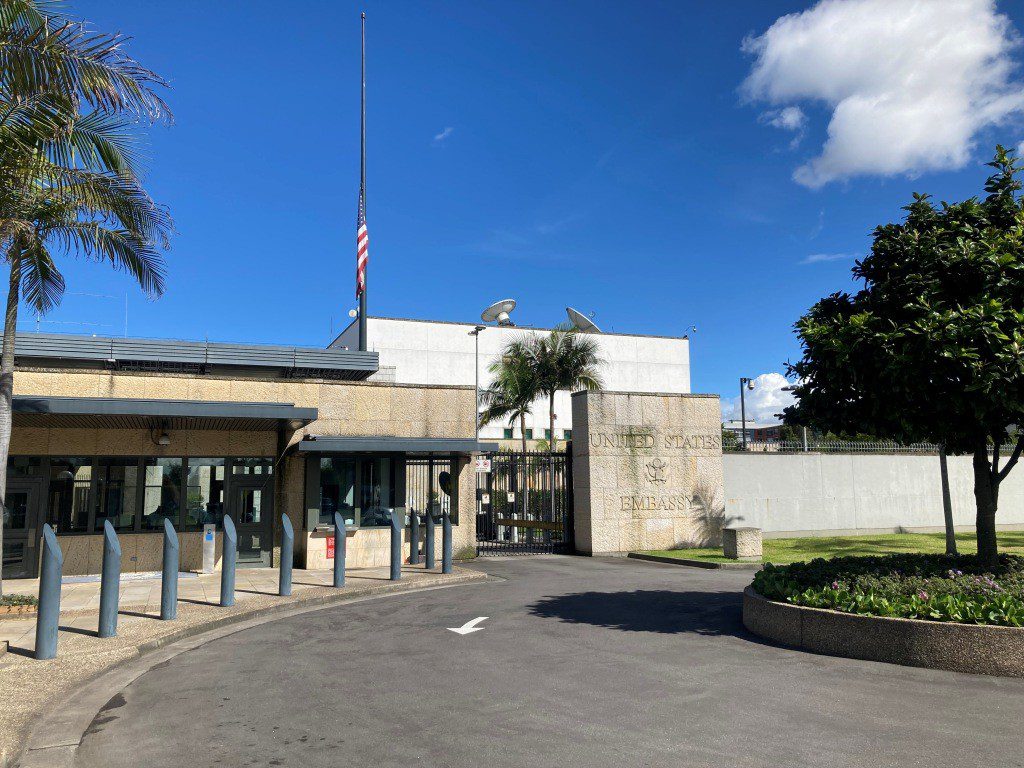
The US Embassy in Bogotá is said to be the 3rd largest US mission in the world (photo: Loren Moss)

The US Embassy in Bogotá is said to be the 3rd largest US mission in the world (photo: Loren Moss)

Colombia’s relationship with the United States deteriorated materially under Petro, who aligned Colombia with Venezuela’s Nicolás Maduro, pursued closer ties with China and Russia, and suspended extradition agreements. US counternarcotics cooperation was strained throughout the period.

Cepeda is committed to what he describes as a multipolar foreign policy — maintaining functional diplomatic channels with Washington and Brussels while deepening strategic and commercial relationships with China and Russia. His alignment with regional left-of-center governments in Mexico, Brazil, and Bolivia would position Colombia as part of a Latin American bloc that has grown increasingly skeptical of US regional leadership. For US companies operating in Colombia, this trajectory does not mean immediate operational disruption, but it reduces Colombia’s utility as a reliable counterpart on security cooperation, counter-narcotics intelligence sharing, and trade dispute resolution.

Valencia positions a return to the Western alignment as a core objective. She would prioritize restoring the US-Colombia relationship, reinforcing the bilateral Free Trade Agreement, and reestablishing intelligence-sharing mechanisms that were reduced under Petro. Her framing positions Colombia as a democratic anchor in a region experiencing authoritarian pressures.

De la Espriella takes the most explicit pro-US position in the race. La Silla Vacía reported that De la Espriella or entities linked to his campaign donated more than $90,000 USD to the US Republican Party, a fact that raises questions about the nature and expectations of those relationships. He has publicly aligned himself with the populist right in the United States, takes a hostile posture toward China, Russia, and Venezuela, and has characterized his security approach as consistent with a transactional alliance with Washington focused on counter-narcotics enforcement and cartel designation as foreign terrorist organizations.

“Ese pisco robó a 200 mil colombianos.” — Claudia López, former Mayor of Bogotá, referring to presidential candidate Abelardo de la Espriella’s legal representation of DMG pyramid scheme founder David Murcia Guzmán, during a presidential campaign event.

Corruption and Judicial Independence

All three candidates have stated commitments to fighting corruption, though their approaches and focal points differ in ways that are material to the institutional environment for business operations.

Cepeda’s legislative record includes serious, documented work investigating paramilitary infiltration of Colombia’s political institutions — the period known as parapolítica — and pursuing accountability for those cases. His blind spot, his critics argue, is corruption within the current administration. When Ecopetrol’s Ricardo Roa was formally charged in connection with Petro’s 2022 campaign, the response from the Pacto Histórico coalition was subdued. Cepeda has been Álvaro Uribe’s primary judicial antagonist in the Senate; a Cepeda administration would offer no institutional protection to Uribe and would be expected to support the full progress of judicial proceedings against him. For left-wing politicians facing legal exposure, including former Medellín mayor Daniel Quintero, a Cepeda administration would be expected to be more receptive to amnesty frameworks.

Valencia’s approach to anti-corruption is structural rather than prosecutorial: strengthening the independence of the Contraloría General de la República and the Fiscalía General de la Nación, implementing digital transparency in public procurement, and reducing informal executive influence over judicial processes. She would be expected to apply political and rhetorical pressure on behalf of Uribe — her political mentor and a close ally — though her legislative track record indicates a degree of institutional independence from Centro Democrático party orthodoxy.

De la Espriella’s anti-corruption rhetoric centers on severe criminal penalties for corrupt officials. The credibility of that position is complicated by his professional history, which is examined in detail below.

De la Espriella’s Legal Career: The Documented Record

De la Espriella’s campaign has faced sustained scrutiny over his client history as one of Colombia’s highest-profile criminal defense attorneys. The record is documented in reporting by El Colombiano, El Espectador, and the investigative outlet Corrupción al Día.

Abelardo de la Espriella (screen capture from Twitter video)

Abelardo de la Espriella (screen capture from Twitter video)

His documented client roster includes Salvatore Mancuso, the former supreme commander of the Autodefensas Unidas de Colombia (AUC) paramilitary network; multiple legislators convicted in the parapolítica scandal, which established systematic infiltration of Colombia’s congress by paramilitary organizations; David Murcia Guzmán, the operator of the DMG pyramid scheme that defrauded an estimated 200,000 Colombian investors; the Nule Primos, convicted of large-scale public contract fraud; and Álex Saab, the Colombian businessman extradited to the United States on charges of acting as the primary money launderer for the Maduro government in Venezuela. According to Corrupción al Día, De la Espriella’s legal fees from Saab reportedly reached $12 million USD and included private aircraft travel.

De la Espriella’s response to this line of criticism rests on due process principles: that every accused person is entitled to vigorous legal defense regardless of the charges, and that his ability to navigate Colombia’s criminal code at its most complex levels demonstrates the expertise required to enforce the law from the executive branch. The argument has legal validity as a principle. The specific issue for foreign compliance officers and US government counterparts is the Saab representation: the same Nicolás Maduro whose regime De la Espriella’s campaign now characterizes as an ideological enemy received legal services from De la Espriella’s firm when the representation was commercially available.

The Fiscalía investigated De la Espriella in connection with alleged paramilitary links in 2009 and again in 2012; both investigations were dismissed for insufficient evidence, and he carries no convictions or active investigations on those matters.

Cepeda’s Family History and Ideological Background

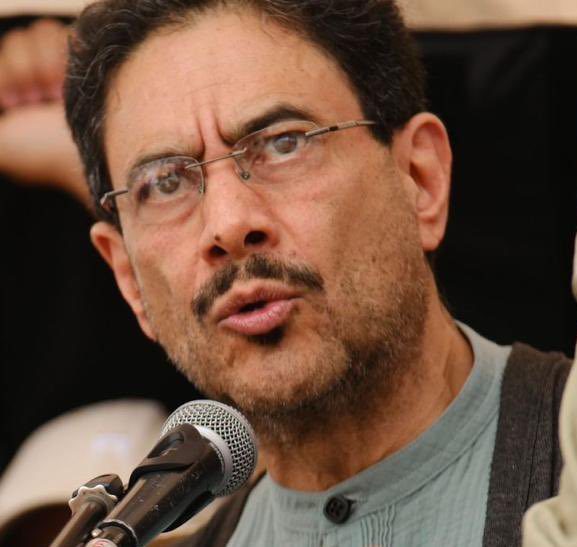
Iván Cepeda (from Twitter)

Iván Cepeda (from Twitter)

Critics of Iván Cepeda, including Enrique Gómez of the Salvación Nacional party, have argued that his family background constitutes evidence of structural alignment with guerrilla movements. The record on this point merits examination.

Cepeda is the son of Manuel Cepeda Vargas, who served as Secretary-General of the Colombian Communist Party and as a senator for the Unión Patriótica (UP), a left-wing political movement that was systematically exterminated by a combination of state actors and paramilitary organizations during the 1980s and 1990s. Manuel Cepeda Vargas was assassinated on August 9, 1994. The Inter-American Court of Human Rights subsequently found the Colombian state responsible for his murder. The FARC-EP named its Frente Urbano Manuel Cepeda Vargas — an urban front operating within the Bloque Occidental — in the elder Cepeda’s honor.

The Fundación Paz y Reconciliación (PARES) has documented that Iván Cepeda’s relationship with his father’s political positions was more complex than the family lineage alone suggests. After studying in Bulgaria in 1981, Cepeda broke from his father’s Soviet-oriented communist framework and aligned with democratic leftists including Bernardo Jaramillo Ossa, who publicly rejected the FARC’s armed strategy. Cepeda has repeatedly stated his repudiation of the FARC’s use of his father’s name. No documented evidence connects him to operational coordination with current armed groups.

What the family history does establish is the ideological framework through which Cepeda processes security policy: a belief, grounded in personal and political experience, that the Colombian state’s institutional violence has been as destructive as guerrilla violence, and that negotiated settlements are structurally preferable to military solutions. That framework generates Paz Total. It also generates a posture toward ELN and FARC dissident negotiators that prioritizes process continuity over verified compliance — a disposition that armed groups have demonstrably exploited to maintain territorial and operational positions while negotiation frameworks provided legal cover.

Paloma Valencia (image Twitter)

Paloma Valencia (image Twitter)

Valencia and the Uribe Question

The comparison to former president Iván Duque (2018–2022) comes up regularly in discussions of Valencia’s political independence. Duque, who had limited independent political standing before Uribe selected him, was perceived throughout his term as governing within constraints set by his patron — a dynamic that Colombian political cartoonists characterized as ventriloquism.

Valencia’s profile differs materially. She is the granddaughter of former Colombian president Guillermo León Valencia, carries her own political lineage, and has served in the Senate for over a decade, building positions on agrarian reform, judicial modernization, and indigenous land rights that have placed her at variance with standard Centro Democrático positions on those issues. She won the Gran Consulta por Colombia primary on March 8 with more than 45% of the vote — over 3.2 million Colombians — establishing a democratic mandate distinct from any party endorsement.

She would be expected to use institutional and rhetorical channels to support Uribe in the ongoing judicial proceedings against him, and to apply pressure on the trajectory of those cases. Whether that constitutes political interference with judicial independence or normal advocacy within democratic norms is a question on which observers disagree. What the legislative record does not support is the characterization of Valencia as incapable of independent governance.

Press Freedom and the Media Environment

Press freedom carries an indirect but measurable correlation with rule-of-law quality, which in turn affects operational risk for companies that rely on regulatory predictability and transparent legal processes.

Cepeda has maintained a posture toward critical media that mirrors President Petro’s practice of characterizing adversarial outlets as acting in the interests of economic elites. Under Petro, this produced a systematic exclusion of critical media from official information flows and persistent rhetorical delegitimization of independent journalism, though the press remained legally free to operate. A Cepeda administration would be expected to continue this pattern.

Valencia’s background in Colombia’s traditional political and intellectual establishment, combined with a decade in a party that has faced sustained critical coverage from Colombia’s major outlets, points toward a conventional institutional relationship with the press — adversarial at times, but within professional norms.

De la Espriella’s conduct during the campaign provides direct evidence of his approach. He publicly called Caracol Noticias journalist María Lucía Fernández “ignorant” in a live interview. He issued a formal apology after journalist Laura Rodríguez of Piso 8 FM made allegations of inappropriate conduct. His campaign strategy has drawn comparisons to the approach of Argentine president Javier Milei and US president Donald Trump in its use of direct digital channels to circumvent traditional media while publicly attacking outlets that publish critical coverage. The press would remain legally protected under a De la Espriella administration, but the operational environment for investigative journalism would be hostile.

The Ideological Spectrum: Market Liberalism to State Direction

The question of which candidate is most aligned with free-market principles requires a distinction that the international business press frequently elides: the difference between economic deregulation and political authoritarianism. These can, and in this election do, exist independently.

De la Espriella’s platform is often described in international coverage as the most pro-market. His deregulation proposals for the extractive sector and his corporate tax rhetoric support that reading in the economic domain. His security platform, however, involves a substantial expansion of state coercive power: mass detention operations, a mega-prison construction program, and the suspension of standard due process protections to facilitate rapid incarceration of criminal suspects. The Cato Institute‘s framework of economic freedom as inseparable from civil liberties would categorize a state powerful enough to detain people without standard procedural protections as a state that represents an institutional risk to property rights and contract enforcement as well.

Valencia’s platform, anchored by Oviedo’s technocratic program of structural market reform — reduced administrative barriers, streamlined procurement, smaller state overhead, maintained civil liberties — represents the closest approximation to coherent market liberalism available in this field. It does not carry the rhetorical force of De la Espriella’s deregulation proposals, but it has more institutional grounding.

Cepeda’s platform is the furthest from market liberalism by any standard measure: state-directed investment allocation, wealth redistribution through tax and transfer mechanisms, state expansion in healthcare and pension administration, and agrarian land redistribution. His program is continuous with the Petro administration’s economic framework.

Minor Candidates: The Rest of the Ballot

Claudia López, senator of Colombia. (Credit: Patty Suescún)

Claudia López, senator of Colombia. (Credit: Patty Suescún)

Several other candidates remain on the ballot and are drawing small but potentially consequential vote shares in a first round where the margin between second and third place could be narrow.

Claudia López, former mayor of Bogotá running under the Con Claudia Imparables coalition, positions herself as a progressive centrist with a documented anti-corruption record. Her polling has not broken 3.5% in major surveys, and her high polarization ratings from her mayoral term limit her growth ceiling. Her attacks on De la Espriella during the campaign — she publicly called him a “defender of the mafia” in reference to his client history — have been among the most pointed in the race, and factually grounded on the public record.

Sergio Fajardo, making his third consecutive presidential run under Dignidad y Compromiso, continues to represent a technocratic, education-focused centrism grounded in his work transforming Medellín in the early 2000s. He has not broken 3.5% in any major poll in this cycle.

Roy Barreras, running under La Fuerza de la Paz following his Frente por la Vida primary victory, is one of the most experienced political operatives in Colombia, having been part of multiple coalition governments across ideological lines over two decades. He polls below the threshold for meaningful first-round impact.

Miguel Uribe Londoño, running under Partido Demócrata, represents a younger-generation conservative platform emphasizing fiscal discipline and private sector growth, broadly consistent with Valencia’s program. He also polls below 3.5%.

Carlos Caicedo, running on a regionalist platform emphasizing decentralization away from Bogotá, draws support primarily from the Costa Caribe. His structural argument about Colombia’s administrative over-centralization is substantively grounded, though his national profile is insufficient to affect the first-round outcome.

Investment Implications

For international capital with Colombian exposure, the three-way race produces three materially different operational scenarios.

A Cepeda victory — which remains the single most likely first-round outcome based on available polling — would signal continuity of the Petro-era regulatory framework: sustained capital outflow pressure, high corporate tax rates, no new fossil fuel exploration contracts for Ecopetrol (NYSE: EC; BVC: ECOPETROL) or private operators, continued labor cost escalation, and a foreign policy trajectory away from Washington. Colombian equity valuations would be expected to remain under pressure. The mining licensing backlog would continue to accumulate. A Cepeda administration would not replicate Venezuela’s economic trajectory — Colombia’s independent central bank, Banco de la República, its functioning constitutional court, and its institutional depth provide meaningful buffers — but the investment headwinds would be structural rather than cyclical.

A Valencia victory would represent the sharpest regulatory reversal available in this field. Ecopetrol exploration contracts would be expected to advance. The mining licensing backlog would be addressed. US bilateral relations would be restored, reactivating security intelligence cooperation and trade facilitation mechanisms. The Colombian peso would be expected to strengthen as country risk premium declined. The path to that outcome now requires her to either close the gap significantly on De la Espriella in the first round or rely on runoff polling that showed her as the stronger second-round candidate — data that predates the most recent polling shift.

A De la Espriella victory introduces the widest distribution of possible outcomes. The upside scenario involves Restrepo managing fiscal and trade policy competently, genuine regulatory rollback in the extractive sector, aggressive extradition resumption, and security operations that reduce the physical risk premium in conflict-affected departments including Cauca, Norte de Santander, and Chocó. The downside scenario involves recurring crises generated by De la Espriella’s personal conduct, conflicts of interest arising from his former client relationships, and authoritarian security measures that attract international human rights attention and complicate bilateral relationships. Restrepo’s presence on the ticket reduces the probability of the downside scenario but does not eliminate it.

The current polling trend indicates that right-wing voters are consolidating around De la Espriella at Valencia’s expense. Whether that consolidation produces a runoff between De la Espriella and Cepeda — and whether the runoff produces a left or right-wing government — remains uncertain. What the polling data does not support is the scenario, widely assumed until recently, of a Cepeda-Valencia runoff in which Valencia was positioned as the structurally stronger opposition candidate.

Subscribe to Finance Colombia to remain updated on key developments and impartial analysis.


Holland & Knight Taps Energy Lawyer José Vicente Zapata to Lead Bogotá Office

25 May 2026 at 20:46

Energy and M&A specialist takes helm of 70-lawyer Bogotá practice

Holland & Knight has named José Vicente Zapata executive partner of its Bogotá office, the firm announced on May 4, 2026. Zapata will oversee day-to-day management of the office while continuing to lead his energy practice, which focuses on corporate, contractual, and commercial matters, with an emphasis on spin-offs and mergers and acquisitions. He succeeds Enrique Gómez Pinzón, who has served as executive partner since the office opened in 2012 and will now take the title of executive partner emeritus while continuing his corporate, M&A, finance, and international arbitration practice.

Zapata has been with Holland & Knight for nearly 12 years and co-chairs the firm’s Venezuela Focus Team, a group of partners who advise clients with interests in that country. His regulatory work covers environmental, energy, and natural resources matters, as well as corporate compliance, including the design of ethics programs and compliance with Colombia’s Sistema de Autocontrol y Gestión del Riesgo Integral de Lavado de Activos y Financiación del Terrorismo (SAGRILAFT) anti-money-laundering and counter-terrorism financing regime. He also handles liability cases involving contractual and non-contractual damages.

“I look forward to continuing to strengthen our team’s offerings in advising Colombian companies and guiding international clients to navigate entry into the Colombian market.” — José Vicente Zapata, Executive Partner, Holland & Knight Bogotá

Zapata earned his LL.M. in Sustainable Development and International Business Law from McGill University in Montreal and his J.D. from the Pontificia Universidad Javeriana in Bogotá. He has been ranked in Energy & Natural Resources: Environment by Chambers Global and Chambers Latin America since 2014, was named to The Legal 500 Latin America Hall of Fame in Environment in 2025 and 2026, and is regularly listed in The Best Lawyers in Colombia.

“I look forward to continuing to strengthen our team’s offerings in advising Colombian companies and guiding international clients to navigate entry into the Colombian market,” Zapata said in a written statement.

Bob Grammig, Holland & Knight’s chair and chief executive officer, said Zapata’s appointment was intended to focus the office on growth in Colombia and across Latin America. Gómez Pinzón said he would continue to support the office in his emeritus role.

The Bogotá office now houses nearly 70 lawyers. Its practice covers cross-border deals and international trade; mergers, acquisitions, and joint ventures; oil, gas, and mining projects; environmental assessments, liability, and compliance; taxation; labor law; intellectual property, trademark, and patent registration; antitrust and consumer law; capital markets, venture capital, and private equity; international licensing and franchising; project finance and foreign investment; corporate reorganizations and financial restructurings; litigation and international arbitration; and private wealth services.

Holland & Knight’s Latin America Practice Group includes more than 200 attorneys working on cross-border M&A, joint ventures, private equity and financing transactions, and disputes involving Latin America. The firm overall counts approximately 2,200 lawyers and other professionals across 35 offices. Founded in 1889, it provides representation in litigation, corporate and finance, real estate, healthcare, and government matters.

The leadership transition comes as international firms continue to deepen their footprint in Bogotá to serve foreign investors entering Colombian energy, infrastructure, and natural resources markets, and to advise Colombian corporates pursuing transactions abroad.

Colombia’s Financial Superintendency Pushes Shadow Pricing Framework to Reshape How Banks Evaluate Projects

25 May 2026 at 20:31

Proposal would reset how banks weigh social and climate costs

The Superintendencia Financiera de Colombia (SFC) has presented a proposal to create a national system of socio-environmental prices that supervised financial institutions would apply when evaluating and analyzing private and public development projects in Colombia. The regulator argues that the country’s financial system faces the challenge of financing projects that generate long-term social returns, not only private profitability.

The proposal was unveiled in Bogotá on May 14, 2026, during the forum Precios socioambientales: una herramienta para la inversión sostenible en Colombia, hosted at the regulator’s headquarters. Participants included Superintendent of Finance César Ferrari; Daniel Schydlowsky, professor at the Hebrew University of Jerusalem; Raúl Castro, professor at the Universidad de los Andes; Andrés Vera, technical vice president of Asobancaria; Ricardo Lara Manzano, director of infrastructure and energy for the Andean region at IDB Invest; and Andrés Trejos, economic studies coordinator at the SFC.

Ferrari noted that the methodology, also known as “shadow pricing,” gained prominence during the second half of the twentieth century before falling out of favor, and is now resurfacing globally as social and environmental dynamics increasingly affect business and the financial system. “The concept of ‘shadow prices’ is regaining importance because we are seeing the effects of climate change on the economy and on competition in business across all sectors,” Ferrari said.

“The concept of ‘shadow prices’ is regaining importance because we are seeing the effects of climate change on the economy and on competition in business across all sectors.” — César Ferrari, Colombian Superintendent of Finance

Schydlowsky explained that shadow prices measure the value of goods and services when market failures distort interest rates, exchange rates, or fiscal balances. The approach is designed to correct for the gap between observed market prices and the true economic and social cost of resources.

What the SFC is proposing

Trejos argued that social project evaluation provides a technical basis for discussing the relevance of investment initiatives in the context of public policy and the financial system, and helps select projects that raise social welfare with economic efficiency and environmental sustainability. “It is possible to prioritize projects beyond private profitability, incorporating general social welfare and, in particular, environmental sustainability,” he said.

The SFC’s proposal to build a socio-environmental pricing system for Colombia includes estimates of the social valuation of six productive factors and fundamental variables: labor, public revenue, investment, foreign exchange, carbon, and the social discount rate.

Under the proposed framework, projects would receive more favorable evaluation if they are labor-intensive — especially when they absorb idle or underemployed workers — if they generate or save foreign exchange through expanded exports or efficient import substitution, if they strengthen public revenue and the state’s capacity to provide public goods and regulation, or if they reduce carbon footprint or deliver net benefits in climate mitigation and adaptation.

The proposal does not yet carry the force of regulation. The SFC presented the framework as a methodology for supervised entities — including banks, insurers, and pension fund managers — to incorporate into their internal project evaluation processes alongside conventional financial analysis.

Headline photo: The installation of more than 886 solar systems benefiting 4,000 users. Photo credit: One Inversión Social.

Colombia Enters Final Week of Contentious 2026 Presidential Campaign

25 May 2026 at 16:40

Colombia entered the final week of campaigning on Monday ahead of a presidential election that has exposed deep political divisions, sharpened ideological tensions and raised concerns over the country’s security and economic future.

The three leading candidates in the 2026 race wrapped up major public appearances over the weekend with rallies across Bogotá, where supporters waving flags, chanting slogans and wearing campaign colors filled arenas, public plazas and avenues in a final push before Sunday’s first-round vote.

The election has increasingly become a referendum on the legacy of President Gustavo Petro and the future direction of the South American nation after four years marked by failed social reforms, diplomatic friction, fiscal pressures and a deteriorating security conditions ahead of the May 31 election.

Senator Iván Cepeda, the candidate aligned with Petro’s governing Historic Pact coalition, entered the final stretch of the campaign presenting himself as the defender of progressive reforms and social justice policies aimed at reducing inequality and expanding access to education, pensions and healthcare.

Speaking before supporters in Bogotá’s historic Plaza de Bolívar, Cepeda urged Colombians to “defend hope” and reject what he described as a return to the political establishment that governed Colombia before Petro’s historic 2022 victory.

“Our project is one of dignity, peace and social transformation,” the hard-left senator told supporters. “We cannot allow fear and hatred to reverse the changes that millions of Colombians demanded.”

Cepeda has pledged to continue the government’s controversial “Total Peace” strategy, which seeks negotiated settlements with armed guerrilla groups and criminal organizations. The policy, however, has failed to curb violence and has instead allowed illegal armed factions to strengthen territorial control in rural areas.

Security has emerged as one of the defining issues of the campaign following a rise in massacres, attacks against security forces and extortion in regions including Catatumbo, Cauca and parts of the Pacific coast. Several recent bomb attacks and clashes involving dissident rebel groups have intensified public anxiety and become central talking points for opposition candidates.

Conservative lawyer and political outsider Abelardo de la Espriella has capitalized on growing frustration over insecurity, presenting himself as the candidate of “authority and order.”

During rallies attended by thousands in Bogotá, Barranquilla and Medellín, de la Espriella has promised a sweeping security crackdown against illegal armed groups, tougher prison sentences and expanded support for the military and police.

“Colombia cannot continue surrendering territory to criminals and terrorists,” he told cheering supporters. “The state must recover authority in every corner of the country.”

De la Espriella has also sought to attract business leaders and middle-class voters concerned about inflation, unemployment and slowing investment. His campaign platform includes proposals for tax reductions, deregulation and incentives aimed at restoring investor confidence after several years of economic uncertainty.

Meanwhile, senator Paloma Valencia closed her campaign with a massive event at Bogotá’s Movistar Arena, in which she framed the election as a battle to prevent Colombia from drifting toward authoritarianism and economic collapse. Throughout the campaign, she has repeatedly warned voters against what she calls “the Venezuelanization of Colombia,” a message that has resonated strongly among conservative sectors and business elites.

“We are voting for democracy, liberty and the survival of our institutions,” Valencia said during her closing rally. “Colombia cannot continue down the path of division and improvisation.”

Political analysts say the election reflects a country increasingly polarized between those who support Petro’s promise of structural change and those who believe the administration’s policies have weakened institutions, damaged investor confidence and emboldened armed groups.

Recent polling suggests Cepeda maintains a narrow lead heading into Sunday’s vote, though few observers expect any candidate to secure the more than 50 percent needed to avoid a runoff election scheduled for June 21.

The latest surveys indicate a highly competitive contest for second place between Valencia and de la Espriella, setting the stage for what could become one of the most polarized second-round races in Colombia’s modern political history.

Beyond ideology, many voters say they remain concerned about rising living costs, access to employment, corruption and public safety.

In downtown Bogotá, where campaign caravans and political posters have become a daily feature of city life, voters have expressed exhaustion after months of aggressive rhetoric and constant political confrontation.

With just days remaining before Colombians head to the polls, authorities across the country have increased security measures amid concerns over possible unrest and isolated acts of political violence.

Sunday’s election is widely viewed as one of the most consequential in decades, with the outcome expected to shape Colombia’s political and economic direction long after the campaign slogans and rallies fade from the streets of Bogotá.

Ecopetrol Posts Q1 EBITDA Gain as Refining Margins Surge, But Governance Crisis and Tax Headwinds Weigh on Net Income

19 May 2026 at 01:22

Refining margin surge cushions revenue drop amid leadership void

Ecopetrol S.A. (NYSE: EC, BVC: ECOPETROL) reported first-quarter 2026 consolidated revenues of 28.6 trillion COP, a decline of 8.7% from 31.4 trillion COP in the year-earlier period, as lower crude oil prices and reduced hydrocarbon production compressed the top line for Colombia’s state-controlled oil and gas company. Against that backdrop, a marked recovery in refining margins and disciplined cost management lifted EBITDA by 1.5% to 13.5 trillion COP, yielding a 47% EBITDA margin and partially offsetting the revenue headwind. At the Q1 2026 average exchange rate of approximately 3,700 COP per USD, the quarter’s revenues translate to roughly $7.73 billion USD and EBITDA to approximately $3.65 billion USD.

Embattled Ecopetrol CEO Ricardo Roa was appointed to the position by Colombian President Gustavo Petro after managing his political campaign. (photo: Ecopetrol)

Embattled Ecopetrol CEO Ricardo Roa was appointed to the position by Colombian President Gustavo Petro after managing his political campaign. (photo: Ecopetrol)

Net income for the quarter reached 2.9 trillion COP (approximately $784 million USD), down 7.7% year-over-year, reflecting the combined drag of lower revenues, a sharply elevated effective tax rate of 37.1%, and a one-time charge of 1.2 trillion COP for the impuesto al patrimonio — Colombia’s government-mandated wealth levy on large corporations established to fund post-disaster reconstruction measures. The company is also subject to a 10% income tax surcharge applicable for fiscal year 2026, which is embedded in the reported effective rate. The aggregate tax burden absorbed a disproportionate share of operating improvement relative to prior periods, limiting the flow-through of refining gains to the net income line.

Total hydrocarbon production averaged 725.2 thousand barrels of oil equivalent per day (kboed) in Q1 2026, below the 745 kboed recorded in the 2025 annual average cited by management during the March 2026 general shareholders’ meeting. Domestic crude output represented the largest component at approximately 520 thousand barrels per day (kbd). Ecopetrol’s Permian Basin operations in the United States contributed 91.8 kbd, underscoring the continued strategic importance of the international segment. Gas production continued a multi-year declining trend that poses a medium-term domestic supply challenge; management has sought to address this partially through regasification capacity additions at Puerto Bahía and on the Pacific coast, expected to come online in the second half of 2026 with a combined contribution of up to 430 billion BTU per day.

The refining segment delivered the quarter’s most pronounced operational outperformance. Ecopetrol’s domestic refineries, led by Refinería de Cartagena, processed 417.5 kbd of crude throughput. The integrated refining margin rose to $17.3 USD per barrel, a 60% improvement over the same quarter of 2025, driven by favorable differential pricing between domestic crude benchmarks and refined product values alongside ongoing operational efficiency improvements. The Comisión de Regulación de Energía y Gas (CREG) and the Ministerio de Minas y Energía remain central to the regulatory framework governing downstream margins over the medium term.

The balance sheet carries significant structural and contingent risk items of direct relevance to institutional credit and equity holders. Gross debt stood at 108.1 trillion COP (approximately $29.2 billion USD), representing a leverage ratio of 2.3 times trailing EBITDA — a level that leaves limited room for further deterioration before debt covenants or rating agency thresholds become binding. Ecopetrol holds a receivable of 4.2 trillion COP (approximately $1.14 billion USD) from the Fondo de Estabilización de Precios de los Combustibles (FEPC), a government fuel price stabilization mechanism that represents a claim on the Colombian treasury with timing and recovery risk. A dispute with the Dirección de Impuestos y Aduanas Nacionales (DIAN) over value-added tax assessments totals 12.26 trillion COP (approximately $3.31 billion USD) in aggregate, of which 10.22 trillion COP relates to Ecopetrol’s consolidated operations and 2.04 trillion COP to Refinería de Cartagena. Both cases are under administrative and judicial review; no provisions have been recognized in the financial statements pending resolution, but the potential liability represents a material contingency relative to the company’s quarterly net income.

On the corporate development front, Ecopetrol disclosed three significant transactions during or following the quarter. The company agreed to acquire producing assets from Gran Tierra Energy (NYSE: GTE, TSX: GTE) for $92.4 million USD, adding Colombian upstream production inventory in basins where both companies have operated. In Brazil, Ecopetrol launched a tender offer for shares of Brava Energia (BVMF: BRAV3) at 23 BRL per share, seeking to expand its footprint in that country’s oil and gas sector. And in a transaction that would reshape the mid-size independent landscape in Colombia, the company reached an agreement to acquire Parex Resources (TSX: PXT) for $250 million USD; Parex is a Colombia-focused producer with a complementary asset base across the Llanos and other producing basins. Collectively, the three transactions signal that Ecopetrol’s capital allocation strategy under the current government continues to favor upstream consolidation despite the elevated leverage profile.

The exploration portfolio generated positive news announcements. The Copoazú-1 exploratory well, drilled in Colombia’s Llanos foothills region, was confirmed as a commercial discovery, adding to the domestic reserve base. The Sirius offshore project advanced through the Consulta Previa process — a legally mandated prior consultation with indigenous and Afro-Colombian communities required before development of projects in or near their territories — reaching a milestone in community engagement that brings the project closer to formal development sanction. The Agencia Nacional de Hidrocarburos (ANH) oversees the licensing framework within which both projects operate.

“Ecopetrol is listed on the New York Stock Exchange; we are governed by the strict regulations of US federal agencies. Agencies like OFAC and the SEC could intervene in the company and could even accelerate the payment of financial obligations, which would be extremely grave for Ecopetrol.” — Martín Ravelo, President, Unión Sindical Obrera (USO)

The ISA transmission segment, managed through Ecopetrol’s majority stake in ISA — Interconexión Eléctrica S.A., contributed stable regulated cash flows during the quarter. ISA completed 46 transmission reinforcement works across its Latin American concession portfolio. The segment also completed the acquisition of 100% of IE Madeira in Brazil, consolidating its position in that country’s power grid interconnection infrastructure. ISA further submitted a competitive bid for the Río Bueno–Puerto Montt high-voltage transmission line concession in Chile, demonstrating the group’s appetite for long-duration, inflation-linked infrastructure assets across the Andes region. For institutional investors evaluating Ecopetrol as a blended hydrocarbons-and-infrastructure holding, ISA’s consistent cash generation provides partial diversification from crude price volatility, though it does not insulate the consolidated entity from headline governance risk.

The most consequential variable for the investment thesis over the near term is Ecopetrol’s prolonged governance crisis. At the company’s general shareholders’ meeting on March 27, 2026, held at the Corferias convention center in Bogotá, minority shareholders loudly heckled president Ricardo Roa — with audible shouts of “¡Fuera, fuera!” reverberating through the hall — as debate over his leadership erupted into open confrontation. The meeting approved a dividend of 121 COP per share for minority holders and a 4 trillion COP distribution to the Colombian government as majority shareholder, payable in two installments by June 30, 2026. Despite the financial business conducted, governance overshadowed the proceedings.

Roa faces two separate judicial proceedings. The Fiscalía General de la Nación formally charged him in connection with alleged influence peddling related to the purchase of an apartment in northern Bogotá — charges he has denied. Separately, the Consejo Nacional Electoral (CNE) is examining whether campaign spending limits were violated during President Gustavo Petro’s 2022 presidential campaign, which Roa managed — an investigation that Finance Colombia has covered in detail. Angela Maria Robledo, Chair of the Board of Directors, defended the board’s decision to retain Roa at the March assembly, citing the constitutional presumption of innocence. However, four of the nine board members had already formally recorded their support for his removal at that point, exposing a divided governance structure at a time when strategic and operational decisions require unified leadership.

The Unión Sindical Obrera (USO), which represents approximately one-third of Ecopetrol’s workforce, issued a production strike ultimatum timed to a March 30 board meeting. Martín Ravelo, president of the USO, framed the leadership crisis explicitly in terms of US regulatory risk: “Ecopetrol is listed on the New York Stock Exchange; we are governed by the strict regulations of US federal agencies. Agencies like OFAC and the SEC could intervene in the company and could even accelerate the payment of financial obligations, which would be extremely grave for Ecopetrol.” Ravelo further warned that the company’s outstanding international debt — which he placed at approximately $30 billion USD and which is exacerbated by elevated interest rates — left Ecopetrol exposed to potential covenant triggers or early repayment demands in a scenario where the Securities and Exchange Commission (SEC) or the Office of Foreign Assets Control were to take enforcement action.

Following sustained pressure from the USO, minority shareholders, and opposition political figures, Ecopetrol’s board approved an extended leave of absence for Roa beginning April 7, 2026. Under the arrangement, Roa used accrued vacation through May 27, followed by 30 calendar days of unpaid leave beginning May 28, extending his absence through the end of June — a period encompassing Colombia’s presidential first round on May 31 and a potential runoff on June 21. Juan Carlos Hurtado Parra, the company’s executive vice president of hydrocarbons and designated first alternate to the presidency since November 2025, was appointed acting president. Hurtado Parra holds an MBA in International Oil and Gas and brings more than 28 years of energy sector experience to the acting role, having previously served as vice president of exploration, development, and production.

The political calendar creates a structural transition risk that sits above the operational and financial results as the primary concern for long-duration investors. Colombia’s incoming government, to be inaugurated August 7, 2026, is widely expected to appoint a new Ecopetrol board and select a new company president. That transition may bring material shifts in strategic priorities — including the pace of upstream investment, the approach to the FEPC receivable recovery, the trajectory of energy transition spending, and the capital allocation balance between the hydrocarbons segment and the ISA infrastructure platform. The Ministerio de Hacienda y Crédito Público and the Ministerio de Minas y Energía will both play key roles in establishing the post-election policy framework under which Ecopetrol operates. Institutional investors holding exposure to Ecopetrol via NYSE: EC or BVC: ECOPETROL must weigh Q1’s genuine operational improvement — most visibly in refining margins and EBITDA stability — against a governance and policy transition risk profile that is unlikely to be resolved before the August handover.

Ecopetrol’s Cartagena refinery (photo courtesy Ecopetrol)

Colombia’s Foreign Ministry Presents Coffee and Cacao Export Strategy to Bogotá Diplomatic Corps

19 May 2026 at 00:32

Colombia’s coffee-cacao export push generates 100+ tons in foreign sales

Colombia’s Ministerio de Relaciones Exteriores convened ambassadors, international organizations, agricultural producers, and strategic partners in Bogotá on May 15, 2026, to present the Ruta del Café y Cacao, a government-led strategy that uses the diplomatic network to connect Colombian specialty coffee and cacao producers directly with international buyers, importers, and distributors. The session was organized in coordination with the Departamento Nacional de Planeación (DNP), Colombia Compra Eficiente, and the Servicio Nacional de Aprendizaje (SENA), with additional participation from the Agencia de Desarrollo Rural and the Unidad de Implementación del Acuerdo de Paz.

Between 2025 and 2026, the Ruta del Café y Cacao has participated in international trade fairs and multilateral venues in Asia, the Americas, and Europe, generating more than 1,200 commercial contacts and exports exceeding 100 tons. The strategy is coordinated through Colombia Nos Une, a directorate within the Ministerio de Relaciones Exteriores that oversees relations with Colombian communities and commercial networks abroad.

“This strategy is not limited to the promotion of a product. It is a tool of economic diplomacy, productive inclusion, rural development, and peacebuilding.” — Rosa Yolanda Villavicencio Mapy, Minister of Foreign Relations of Colombia

Foreign Minister Rosa Yolanda Villavicencio Mapy used the event to outline the government’s rationale for embedding agricultural trade promotion into foreign policy. “From the Ministry of Foreign Relations, we want economic diplomacy to translate into concrete results for the territories,” she said. “Foreign policy must have the capacity to open opportunities, connect markets, and contribute to the productive development of our communities.” She added that the strategy extends beyond product promotion: “It is a tool of economic diplomacy, productive inclusion, rural development, and peacebuilding.”

Natalia Irene Molina Posso, director general of the Departamento Nacional de Planeación, presented the Café Social program as a related mechanism designed to strengthen small agricultural producers. The initiative links public procurement policy with territorial development and small-scale coffee farming, creating demand channels within Colombia’s public sector for domestically produced specialty coffee.

Gloria Cuartas Montoya, director of the Unidad de Implementación del Acuerdo de Paz, addressed the relationship between coffee and cacao production and post-conflict territorial transformation. “You have all the entities that have been working on the implementation of the Peace Agreement and in the new processes being carried out, so that territorial peace finds in these two [commodity] lines paths of enormous value and projection,” she said. Cuartas also referenced recent engagement in Barcelona, where business operators and organizations expressed interest in awareness-building activities around Colombian coffee and cacao, citing the social and community dimensions behind those products.

A central element of the event was the participation of producers and associations from multiple regions of Colombia, convened by the Ministerio de Relaciones Exteriores through the Colombia Nos Une directorate. The participants included cooperatives and producer groups led by women, former combatants who signed the 2016 Peace Agreement, ethnic communities, and victims of the armed conflict. These groups presented their productive and commercial operations directly to diplomatic delegations attending the event.

The session also included a guided coffee tasting led by SENA’s Escuela Nacional del Café, during which attendees sampled specialty coffee varieties and received information on production processes and the characteristics that differentiate Colombian coffees participating in the Ruta del Café y Cacao. The tasting segment was designed to give diplomatic representatives direct exposure to the product profiles of the producers involved in the strategy.

Photo courtesy of Ministry of Foreign Relations of Colombia

Grupo Energía Bogotá and Canada’s La Caisse to Create Brazil’s 5th Largest Power Transmission Platform

19 May 2026 at 00:18

GEB-La Caisse JV to rank among Brazil’s top five power transmitters

Grupo Energía Bogotá (BVC: GEB) and La Caisse, the investment arm of Caisse de dépôt et placement du Québec, have signed a final agreement to merge their respective Brazilian power transmission assets into a single 50/50 jointly controlled platform operating under the name Verene Energia S.A. The transaction was announced May 15, 2026, from Montréal and Bogotá.

The combined entity will consolidate 26 electric transmission concession agreements, more than 9,000 km of transmission lines, and a workforce of over 400 employees across 17 Brazilian states. At that scale, Verene will rank among the five largest power transmission operators in Brazil, a market that has drawn sustained interest from international infrastructure investors as the country advances grid modernization programs.

Verene, which had previously operated as La Caisse’s dedicated transmission platform in Brazil, will continue as the reference vehicle for the combined portfolio. The partners have indicated that the platform will be positioned to pursue acquisitions and network expansions in Brazil’s transmission concession market, with grid modernization and decarbonization cited as the broader policy context driving new investment opportunities.

“By bringing together highly complementary assets under one banner, the partnership establishes Verene as a scaled, business-driven platform with strong financial backing.” — Emmanuel Jaclot, Executive Vice-President and Head of Infrastructure and Sustainability, La Caisse

Grupo Energía Bogotá, headquartered in Bogotá and listed on the Bolsa de Valores de Colombia (BVC: GEB), has operated in Latin America’s energy sector for more than 130 years. The company holds assets in electricity generation, transmission, distribution, and gas transportation and distribution across Colombia, Peru, Brazil, and Guatemala. Its entry into the joint venture contributes its existing Brazilian transmission concessions to the merged platform alongside La Caisse’s Verene assets.

La Caisse manages net assets of 517 billion CAD as of December 31, 2025, on behalf of 48 depositors representing more than six million Quebecers. The fund is active across major financial markets, private equity, infrastructure, real estate, and private credit, and has built a significant infrastructure portfolio in Latin America through investments including the Verene platform.

Juan Ricardo Ortega, president of Grupo Energía Bogotá, described the rationale for the transaction in terms of combining complementary strengths. “By combining our operational expertise and regional market knowledge with the financial strength and global perspective of our partner, we are creating a platform positioned to accelerate growth, expand transmission energy infrastructure, and support Brazil’s energy transition,” he said. “We believe this alliance will generate sustainable value for our stakeholders and contribute to Brazil’s economic and energy development.”

Emmanuel Jaclot, executive vice-president and head of infrastructure and sustainability at La Caisse, framed the deal as a consolidation play. “By bringing together highly complementary assets under one banner, the partnership establishes Verene as a scaled, business-driven platform with strong financial backing,” Jaclot said. “GEB brings more than 130 years of operating heritage and ranks among Latin America’s leading energy infrastructure groups, with deep expertise across the region’s transmission sector. Together, we share a vision to strengthen Verene’s footprint in Brazil through value-creating acquisitions and continued support for the country’s energy transition.”

Financial close is expected by the fourth quarter of 2026, subject to customary closing conditions, regulatory consents, and approvals. BTG Pactual (BVMF: BPAC11) acted as financial advisor to La Caisse, with Pinheiro Neto Advogados serving as legal counsel. Citibank (NYSE: C) advised Grupo Energía Bogotá on the financial side, while Mayer Brown provided legal advice to GEB.

Manufacturing growth points to structural shift in Colombia’s economy

19 May 2026 at 00:01

Colombia’s gross domestic product expanded 2.2% in the first quarter of 2026 compared to the same period of 2025, surpassing prevailing market estimates, according to data released May 16 by the Departamento Administrativo Nacional de Estadística (DANE) and presented by the Ministerio de Comercio, Industria y Turismo. The results reflected positive performance across production, industry, and domestic commerce.

The manufacturing sector was among the quarter’s strongest contributors, posting year-over-year growth of 2.9% and adding 0.3 percentage points to the annual variation in GDP. The sector’s performance placed it among the primary drivers of national economic output for the period.

Within manufacturing, two subsectors recorded particularly pronounced gains. Motor vehicle production expanded 27.8% year-over-year, while metallurgy grew 6.6%. Both categories function as inputs to broader industrial supply chains, and their recovery carries implications for upstream and downstream productive linkages, including employment in skilled manufacturing roles.

“What is notable about the first-quarter results is not solely the magnitude of the growth, but its composition. The performance of sectors such as motor vehicles, metallurgy, and machinery is particularly significant because it demonstrates a recovery of industrial capacities with greater effects on productive linkages, skilled employment, and economic sophistication.” — Diana Marcela Morales Rojas, Minister of Commerce, Industry, and Tourism of Colombia

Separate monthly data from statistical agency DANE’s índice de producción industrial (IPI) showed that real industrial output grew 3.9% in March 2026 compared to March 2025. The expansion was distributed across multiple subsectors, including motor vehicles, metallurgy, machinery and equipment, chemicals, pharmaceuticals, rubber, plastics, and non-metallic minerals, indicating that the manufacturing recovery was not concentrated in a single production category.

Wholesale and retail trade expanded 6.0% in the first quarter, reflecting increased domestic market activity and business commerce. The trade sector’s performance complemented the manufacturing gains and contributed to the overall breadth of the quarter’s expansion.

Not all sectors contributed positively. Construction contracted 5.4% compared to the first quarter of 2025, the weakest result among major economic categories for the period. Public administration, defense, social security, education, and health services grew 5.7%, and reporting by Colombian media citing DANE data indicated that public spending accounted for approximately 46% of total first-quarter growth — a concentration that introduces a structural caveat to the headline figure, as private-sector momentum remains uneven across the economy.

Diana Marcela Morales Rojas, minister of the Ministerio de Comercio, Industria y Turismo, addressed the composition of the results in a statement issued alongside the data release. “What is notable about the first-quarter results is not solely the magnitude of the growth, but its composition,” she said. “The recovery of manufacturing, metallurgical, and industrial production activities demonstrates a greater role for sectors associated with transformation, productive capacity, and value-added generation within the national economic dynamic. The performance of sectors such as motor vehicles, metallurgy, and machinery is particularly significant because it demonstrates a recovery of industrial capacities with greater effects on productive linkages, skilled employment, and economic sophistication. These are meaningful indicators of strengthening of the manufacturing structure and national production.”

The first-quarter data were released as Colombia continues to manage elevated monetary policy rates and fiscal pressures that have weighed on investment activity in recent quarters. The Ministerio de Comercio, Industria y Turismo indicated that the quarter’s results reflect progress on an agenda oriented toward strengthening industry, domestic production, and commercial activity, though the degree to which private-sector industrial recovery can sustain these gains independently of public spending remains a key variable for subsequent quarters.

Headline photo credit: Tecnoglass

Bogotá Fashion Week Strengthens International Push for Colombia’s Designers

12 May 2026 at 22:04

Under a mirage of glowing escalators inside Bogotá’s Ágora Convention Center, the catwalks of Bogotá Fashion Week opened Tuesday with more than fabrics and silhouettes on display. Behind the runway lights lies a larger ambition: to turn Colombia’s capital into a regional fashion export hub and bring designers from Bogotá’s workshops and popular commercial districts onto the global stage.

Now in its ninth edition, Bogotá Fashion Week (BFW), led by the Cámara de Comercio de Bogotá, has become the city’s main commercial and promotional platform for fashion, bringing together 145 brands, 28 runway shows, more than 80 international buyers and 755 business meetings aimed at strengthening Colombia’s presence in international markets.

For Ovidio Claros Polanco, president of the chamber, the event is no longer simply about showcasing collections, but about transforming fashion into a driver of economic growth and international competitiveness.

“In Bogotá, the fashion sector represents 33% of the city’s economic activity and brings together approximately 35,000 active companies, the majority of them microenterprises,” Claros said. He added that between 220,000 and 250,000 people are directly linked to the industry, with its impact extending into tourism, hotels, gastronomy and transportation.

The strategy, he said, is to move beyond the traditional notion of fashion as an exclusive industry and instead position it as an economic ecosystem capable of generating employment and export opportunities across all levels of the city.

That vision is particularly visible through [PUENTE] Internacional, a program created by the chamber to connect entrepreneurs from Bogotá’s traditional commercial districts such as San Victorino and Restrepo with major global fashion circuits including New York, Madrid, Dubai and Paris.

This year, eight Bogotá-based brands — Alanna, A Modo Mio, C’emadier, Más Cincuenta y Siete by Love Me Jeans, Lorant & Co, Lyenzo, Liza Herrera and Kernel Leather — were selected to present their autumn-winter collections during Fashion Designers of Latin America (FDLA) at New York Fashion Week in February.

The initiative marked one of the strongest international pushes yet for Bogotá’s so-called “popular fashion” sector, traditionally associated with local manufacturing districts rather than luxury runways.

“We are committed to the internationalization of Bogotá’s popular fashion because it is a powerful vehicle for economic growth and job creation,” Claros said. “We want the best of Bogotá’s design talent to arrive in the global capitals of fashion stepping forward with strength.”

The selection process involved curators and industry figures including Albania Rosario, founder of FDLA, José Forteza, former senior editor of Vogue México, Colombian designer Jorge Duque and stylist Estefanía Turbay.

For Albania Rosario, the initiative reflects the growing relevance of Latin American fashion beyond its domestic markets.

“Each of these brands represents not only the excellence of Bogotá’s design, but also the resilient and visionary spirit of our creative community,” Rosario said. “It is a reminder of the transformative power of Latin American fashion on the global stage.”

The international agenda continues well beyond Bogotá Fashion Week. Following the local runway events this week, [PUENTE] designers are scheduled to participate in Pasarela Madrid later in May, followed by Dubai Fashion Week in September, New York Fashion Week’s spring-summer season, and Paris Fashion Week later that month.

Inside Ágora, the business focus is equally visible. Alongside runway presentations from designers such as Kika Vargas, Francesca Miranda and Alejandro Crocker, the event hosts wholesale meetings between Colombian brands and international buyers seeking new suppliers and partnerships.

A multi-brand retail space open to the public and a series of 24 industry talks with more than 60 speakers also seek to bridge the gap between creative design and commercial scalability.

For organizers, integrating districts like San Victorino and Restrepo into this model is essential. Rather than separating emerging luxury labels from mass-market producers, the chamber is pushing for a unified ecosystem where independent designers, small workshops and large buyers operate within the same commercial conversation.

“There is a need to remove the idea that fashion belongs to only a few people,” Claros said. “This belongs to everyone. Countries change through actions like these.”

As Bogotá Fashion Week expands its global ambitions, the challenge will be whether Colombian brands can translate visibility into long-term exports and sustained international demand.

For now, however, the city is betting that fashion — from the ateliers of Chapinero to the workshops of San Victorino — can become one of Bogotá’s strongest international calling cards.

Colombia tributes political legacy of ex-VP Germán Vargas Lleras

11 May 2026 at 20:36

The departure of former Vice President Germán Vargas Lleras’s coffin from Bogotá’s Palacio de San Carlos on Monday morning blended state mourning with unmistakable political symbolism, as Colombia’s political elite gathered to bid farewell to one of the country’s most influential figures.

His daughter, Clemencia Vargas Umaña, attended the ceremony accompanied by her father’s two French bulldogs – Toño and Henry –  adding a deeply personal note to the solemn proceedings before the main funeral mass at 11:00 a.m. inside Bogotá’s Primatial Cathedral of Bogotá. The service marked the conclusion of three days in which the Foreign Ministry headquarters became the center of national political attention.

Vice President Francia Márquez represented the national government in the absence of President Gustavo Petro and delivered one of the most emotional moments of the day when she embraced Clemencia Vargas before the ceremony. Earlier, Márquez had publicly offered condolences to the family, praising Vargas Lleras’ democratic legacy and saying his “democratic work will be remembered.”

Colombia’s VP Francia Márquez and former presidential candidate Juan Carlos Pinzón attended the funeral ceremony. Photo: Richard Emblin

The wake drew figures from across Colombia’s political spectrum, reflecting Vargas Lleras’ decades-long influence. Former presidents Juan Manuel Santos, with whom Vargas Lleras served as vice president, Ernesto Samper, and Iván Duque were present, along with senator Paloma Valencia and former president Álvaro Uribe Vélez, whose attendance underscored the respect afforded to Vargas Lleras despite years of sharp public disputes between the two men.

Vargas Lleras died Friday in Bogotá after a prolonged battle with cancer. He was 64. His death ends a political career spanning more than three decades as senator, minister, vice president, and two-time presidential candidate.

The only daughter of Germán Vargas Lleras, Clemencia Vargas, receives the flag from VP Francia Márquez. Photo: Richard Emblin

Born in Bogotá on February 19, 1962, Vargas Lleras came from one of Colombia’s most prominent political dynasties. His grandfather, former President Carlos Lleras Restrepo, was a leading figure of the Liberal Party.

He built his own career as a city councilman, congressman, minister, and ultimately leader of the Cambio Radical party. His first presidential run came in 2010, where he finished third with nearly 1.5 million votes. Though unsuccessful, the campaign positioned him as a national force.

President Santos later appointed him to his cabinet, and in 2014 selected him as his running mate for reelection. The pair won in the runoff, and Vargas Lleras assumed office as vice president on August 7 that year.

He ran again for president in 2018 under the “Mejor Vargas Lleras” coalition, focusing on infrastructure, housing and administrative reform. He finished fourth in the first round and did not advance to the runoff.

Throughout his career, Vargas Lleras survived two assassination attempts and weathered political scandals, including accusations linked to parapolitics investigations, though he was never formally charged.

In later years, his health increasingly limited his public life. He was diagnosed with a benign meningioma in 2016 after a fainting episode, and in recent years battled cancer while largely stepping back from frontline politics.

Even as his public appearances became rare, his influence endured. Monday’s funeral made clear that, in death as in life, Germán Vargas Lleras remained a central figure in Colombia’s political history.

The flag-draped coffin of former Vice President Germán Vargas Lleras leaves Bogotá’s Primatial Cathedral of Bogotá on May 11. Photo: Richard Emblin

Qatar Airways Set to Operate to Caracas and Bogotá flights

Qatar Airways has affirmed its expansion in the Americas with the launch of new flight operations to Caracas, Venezuela, and Bogotá, Colombia, commencing from 22 July 2026. The service represents a significant milestone for the airline, as Qatar Airways becomes the first Gulf carrier to serve Venezuela, and the first airline to operate flights from the Middle East to Caracas and Bogotá. This expansion underscores the airline’s commitment, announced last year, to strengthening global connectivity for the region.

Qatar Airways flights to Caracas (CCS) and Bogotá (BOG)

Qatar Airways will operate two weekly flights to Caracas and Bogotá, further enhancing connectivity to, and from, the Americas. The flight schedule has been designed to provide smooth onward connections through Hamad International Airport to key markets including Australia, China, Japan, Lebanon, South Korea, and the United Arab Emirates. This offers passengers greater flexibility and seamless transfer options across Qatar Airways’ global network.

Departing every Wednesday and Sunday:

  • Doha (DOH) to Bogotá (BOG) – Flight QR783: Departure 07:30; Arrival 16:05
  • Bogotá (BOG) to Caracas (CCS) – Flight QR783: Departure 17:35; Arrival 20:40
  • Caracas (CCS) to Doha (DOH) – Flight QR783 Departure 22:40; Arrival 19:55 +1

The addition of Caracas and Bogotá marks both the 15th and 16th destinations in the Americas served by Qatar Airways. The airline began serving South America in 2010 with its inaugural flight to Brazil’s São Paulo.


Explosive Drone Deactivated Near Bogotá’s El Dorado International Airport

Colombian authorities have seized and safely deactivated a commercial drone carrying improvised explosive materials just 5.4 kilometers from Bogotá’s El Dorado International Airport and the nearby Military Air Transport Command (CATAM), raising fresh security concerns in the capital three weeks before the country’s May 31 presidential election.

The discovery marks a significant escalation from recent unauthorized drone sightings that twice forced temporary flight suspensions at El Dorado, Colombia’s busiest airport, and highlights growing fears that tactics once largely confined to conflict zones in the southwest and Catatumbo region are now reaching the capital.

According to preliminary police and military reports, the device was located in the locality of Kennedy, near the Río Bogotá, after a security alert issued by prosecutors in Popayán, Cauca, prompted specialized units of the Colombian Air Force (FAC) and National Police to track suspicious coordinates in southern Bogotá.

Authorities found what appeared to be a makeshift encampment before locating the commercial drone, its battery and an explosive charge separated from the fuselage.

Anti-explosives officers later confirmed the device had been modified with a non-conventional fiber-optic guidance system, a method increasingly used by illegal armed groups to evade electronic signal jammers designed to disable unmanned aircraft.

Investigators said the drone carried approximately 258 grams of C4 explosive material inside a PVC tube fitted with an improvised detonator.

The device was safely neutralized by National Police explosives experts and transferred to the Attorney General’s Office – Fiscalía General – for forensic analysis and the opening of a criminal investigation.

Authorities have not publicly identified those responsible or confirmed the intended target, but officials noted the location placed the drone within minutes of both El Dorado International Airport and CATAM, one of Colombia’s most strategic military aviation facilities.

Security analysts say the use of fiber-optic spools as a guidance mechanism resembles tactics recently documented in Catatumbo and southwestern Colombia, particularly among the National Liberation Army (ELN) guerrilla and FARC dissident factions under the command of alias “Iván Mordisco.”

A similar drone equipped with the same system was discovered in Popayán on April 25 during a wave of attacks blamed on FARC dissidents in Cauca, while another was found the same day in Villavicencio, the departmental capital of Meta.

The appearance of such devices in Bogotá has raised alarm among security officials, particularly given the proximity to civilian and military aviation infrastructure.

Pilots and aviation experts warn that even small commercial drones can cause catastrophic damage if they collide with an aircraft during takeoff or landing. A drone carrying explosives near an airport runway significantly increases the potential for a large-scale tragedy.

The discovery also comes at a politically sensitive moment, with Colombia entering the final weeks before its presidential election on May 31, as security and public order remain dominant campaign issues amid rising violence in the departments of Antioquia, Chocó, and Norte de Santander.

The leftist government of President Gustavo Petro has faced intense criticism over deteriorating security conditions, particularly following road bombing attributed to illegal armed groups in Cauca, Valle del Cauca, Nariño and Catatumbo, where the use of drones for surveillance and attacks has become increasingly common.

Last month, drone sightings near El Dorado airport twice forced authorities to suspend all air operations, disrupting domestic and international flights and exposing vulnerabilities near the country’s principal air gateway.

On April 30, Aerocivil halted airport operations after the Colombian Aerospace Force confirmed the presence of a drone in the Engativá district near the airport perimeter. Two aircraft were forced to carry out missed approaches, including an international LATAM Airlines Boeing 787 arriving from Santiago, Chile, while another domestic flight was diverted to Armenia, Quindío.

Just two days earlier, on April 28, another drone was detected near El Dorado, triggering a 45-minute suspension of takeoffs and landings while military personnel deployed anti-drone systems and visual searches.

Defense Minister Pedro Sánchez later confirmed that operations had been temporarily canceled because of the possible drone sighting, although no confirmed target was found.

Aerocivil has repeatedly warned that unauthorized drone activity near airports represents a grave threat to aviation safety and can result in criminal prosecution.

Thursday’s discovery, however, suggests the threat may extend far beyond operational disruption.

For Bogotá, the concern is no longer simply rogue recreational drones interfering with airport traffic, but the possibility that explosive-equipped devices linked to Colombia’s armed conflict are now within reach of the nation’s capital – and its most critical infrastructure.

Drone sighting forces second suspension of flights at Bogotá’s El Dorado Airport in one week

30 April 2026 at 13:38

Colombia’s busiest airport, Bogotá’s El Dorado International Airport, was forced to suspend operations early on Thursday after authorities detected a drone near the runway approach path, marking the second disruption in the same week and raising renewed concerns over aviation security at one of Latin America’s busiest air hubs.

The latest incident occurred at 5:20 a.m. local time when Colombia’s Aerospace Force confirmed the presence of an unauthorized drone in the Engativá district, near the airport’s operational perimeter, according to the Civil Aviation Authority (Aerocivil).

Authorities immediately activated emergency safety protocols, temporarily halting landings and departures while security teams assessed the airspace.

“A drone was detected near El Dorado airport in the Engativá sector. Two aircraft were forced to carry out missed approaches, a standard maneuver that guarantees operational safety,” Aerocivil said in a statement.

One of the affected aircraft was an international LATAM Airlines Boeing 787 Dreamliner arriving from Santiago, Chile, according to local media and flight tracking platform Flightradar24. The aircraft, which had departed Santiago late on Wednesday night and was scheduled to land in Bogotá around 4:30 a.m., was forced to circle above the capital before being cleared to land.

A second domestic Avianca flight also experienced disruption and was diverted to El Edén Airport in Armenia, Quindío, after it was unable to complete its descent into Bogotá.

Aerocivil said normal operations resumed at 5:44 a.m., after authorities secured the area and determined conditions were safe for aircraft movements.

“The improper use of drones near airports represents a serious risk to aviation safety,” the agency said, urging travelers to remain in contact with their airlines regarding possible schedule changes.
The incident follows a similar disruption on Tuesday night, when airport operations were suspended for approximately 45 minutes after another drone was detected flying above El Dorado’s international platform.

That alert was issued at approximately 6:36 p.m., prompting an immediate suspension of takeoffs and landings while anti-drone systems and visual inspections were deployed by aviation authorities and military personnel from CATAM, Bogotá’s military air transport command.
The airport concessionaire Opain and Aerocivil said the inspection protocols were necessary to ensure “an obstacle-free area” before flights could resume.

Defense Minister Pedro Sánchez later confirmed on social media platform X that operations had been halted due to a possible drone sighting and said military anti-drone mechanisms were activated, although no confirmed target was ultimately found.

“The situation was addressed immediately by the aeronautical authorities and the security devices in place, allowing normal operations to continue,” Sánchez said.

The repeated incidents have intensified scrutiny over security vulnerabilities surrounding El Dorado, which handles more than 35 million passengers annually and serves as Colombia’s principal international gateway.

Unauthorized drone activity near airports is prohibited under Colombian aviation regulations because of the risk of collision with commercial aircraft, particularly during takeoff and landing phases when planes are most vulnerable. Pilots and aviation experts warn that even small consumer drones can cause catastrophic damage if they strike engines, cockpits or critical control surfaces.

The back-to-back disruptions have also raised concerns over whether current detection and enforcement systems are sufficient to prevent repeat incursions near strategic infrastructure.
El Dorado has increasingly faced operational pressures in recent months, including weather-related disruptions, runway congestion and recent investigations into near-miss incident on April 19 involving two international flagship carriers.

Thursday’s early-morning shutdown caused delays for both arriving and departing passengers, with travelers reporting uncertainty inside terminals and pilots informing passengers that security protocols, rather than airline operational issues, were behind the disruptions.
Authorities have not yet identified the drone operator involved in either of this week’s incidents, and investigations remain ongoing.

Under Colombian law, unauthorized drone operations near airports can result in significant financial penalties and potential criminal investigations if public safety is endangered.
For now, aviation officials say stricter vigilance is essential.

Bogotá Mayor Galán calls for 8,000 more police after deadly film set attack

21 April 2026 at 11:32

Bogotá’s mayor has called for a major expansion of the city’s police force following a deadly knife attack on a television production set and a separate killing at a public transport station, as authorities warn of shifting patterns of urban crime in Colombia’s capital.

Carlos Fernando Galán said the city requires at least 8,000 additional police officers to effectively confront rising insecurity, after convening an extraordinary security council on Monday with senior officials from law enforcement, the military and prosecutors.

The move follows a shocking outbreak of violence on April 18 during the filming of the television series Sin senos sí hay paraíso in the central Santa Fe locality — an incident that left three people dead and several others injured.

“This is an extremely serious and senseless act of violence that hurts all of Bogotá,” Galán said, expressing solidarity with the victims’ families and the country’s audiovisual sector. “To respond effectively, we must strengthen the police, improve investigations, expand technological capabilities and increase personnel.”

The attack unfolded at approximately 3:30 p.m. in the Los Laches neighborhood, near the eastern edge of Parque Nacional, where a production crew had been filming in a public street close to the Instituto Roosevelt.

According to preliminary findings, a man not affiliated with the production approached the set and, without any prior interaction, attacked a crew member with a sharp weapon.

The sudden assault triggered panic and a rapid escalation of violence. Witnesses said several people at the scene intervened in an attempt to stop the attacker, leading to a chaotic street fight in which multiple individuals were stabbed.

In the ensuing struggle, the assailant managed to inflict severe injuries on several people before being subdued. Three individuals — including the attacker and two members of the production team — were transported to Hospital La Samaritana, where they later died from their wounds.

A fourth person injured in the confrontation was taken to Hospital Universitario San Ignacio. Authorities have not released further details regarding that individual’s condition.

The victims from the audiovisual team were identified as Henry Alberto Benavides Cárdenas, 45, and Nicolás Francisco Perdomo Corrales, 18.

Officials have stressed that the attack does not appear to be linked to robbery or organized crime. Instead, investigators are examining the background of the alleged assailant, who had previously been reported for threats and is believed to have a history of mental health issues — factors now under review by judicial and medical authorities.

The case has rattled Colombia’s cultural sector, which have grown steadily in recent years as Bogotá has positioned itself as a regional hub for film and television production. For many in the sector, the attack represents a deeply unsettling breach of safety for the industry.

Monday’s security meeting also addressed a separate killing that occurred in the city’s public transport system. A 19-year-old man, identified as Freddy Santiago Guzmán, died after being attacked during a robbery at the Minuto de Dios TransMilenio station.

Galán said the two incidents, while distinct, highlight the need for a more robust and coordinated security strategy across the capital. He called on the national government to provide greater support in terms of funding, personnel and institutional backing.

“We will not step back in the fight against crime,” he said. “But Bogotá cannot face this challenge alone.”

Security Secretary César Restrepo warned of what he described as a structural weakness in controlling the circulation of weapons, particularly knives and other bladed instruments.

“More than 10,000 bladed weapons have been seized so far this year,” Restrepo said, adding that the continued flow of such weapons into the city remains a critical concern for authorities.

Officials also pointed to evolving criminal dynamics that are complicating law enforcement efforts. Galán described the emergence of more fluid and decentralized forms of criminal activity, in which individuals come together temporarily to commit specific acts before dispersing.

“We are seeing a kind of ‘freelance’ crime,” he said. “This creates new challenges for intelligence work and policing.”

The extraordinary security council brought together representatives from the police, the army’s 13th Brigade of the Colombian Army and the Fiscalía General de la Nación, as authorities seek to strengthen coordination in response to recent violence.

Police commander Giovanni Cristancho Zambrano said officers had recovered eight stolen vehicles in the past week and urged citizens to report suspicious behaviour, particularly involving occupants of private vehicles, to support preventive action.

The rash of incidents during one weekend in the capital have sharpened concerns over public safety, especially in central districts where commercial, residential and cultural life converge in densely populated areas.

For the city’s growing audiovisual sector, the killings have raised urgent questions about security protocols for productions operating in open urban environments. Messages of mourning circulated widely among industry professionals, reflecting both grief and frustration over the circumstances surrounding the attack.

While city authorities have pledged to reinforce measures across key areas, Galán’s call for thousands more officers reveals the scale of Bogotá’s security needs as it grapples with entrenched crime from micro-trafficking groups and rapidly evolving new forms of urban violence.

Investigations into both incidents remain ongoing, with authorities working to establish the full sequence of events and any underlying factors that may have contributed to the attacks.

Lufthansa and Qatar Airways Narrowly Avert Air Collision Over Bogotá

20 April 2026 at 06:41

A Qatar Airways cargo jet and a Lufthansa passenger plane came within an estimated 200 meters of each other on final approach to Bogotá on Sunday evening, in a near miss that could have resulted in a major airline catastrophe.

The incident unfolded near El Dorado International Airport as both aircraft were being guided toward runway 32L during a late-evening arrival window. According to preliminary information, Qatar Airways cargo flight QTR 8174, operated by a Boeing 777 from São Paulo, was descending to approximately 9,600 feet when it converged with Lufthansa flight DLH 542.

The Lufthansa flight from Frankfurt Airport, operated by a Boeing 787 -900 ‘Dreamliner’ carrying some 270 passengers, had departed at 3:08 p.m. local time and was scheduled to land in Bogotá at 11:51 p.m. local time. As it approached the Colombian capital, the aircraft turning at roughly 9,700 feet, placing it on a dangerously converging path with the Qatar Airways freighter.

The two wide-body aircraft, each spanning more than 60 metres in length, were both landing from the East, and were above the residential neighbourhood of Modelia, according to late-night eyewitness reports.

Under standard air traffic control procedures, aircraft must maintain a minimum vertical separation of 1,000 feet, 0r 300 metres. The apparent compression of that buffer to an estimated 600 feet suggests a significant breakdown in sequencing or communication during the critical end-phase of a flight.

Disaster was averted when the Lufthansa aircraft abruptly climbed to over 12,000 feet, executing what appears to have been an emergency “Go-Around” avoidance manoeuvre. Such actions are typically triggered by onboard collision avoidance systems, which issue automated instructions to pilots when another aircraft is detected at dangerously close range. The manoeuvre forced the passenger flight to abort its initial landing approach before safely completing a second descent into Bogotá. No injuries were reported.

However, the near miss has renewed scrutiny over air traffic control operations in the Colombian capital, following another serious safety incident just two months earlier.

On February 20, a LATAM Airlines flight operated by an Airbus A320 carrying 157 passengers was forced to abort take-off after a military helicopter appeared unexpectedly near the runway at El Dorado International Airport.

According to Colombia’s civil aviation authority, Aerocivil, the aircraft—bound for San Andrés—had been cleared for departure after routine taxi procedures. At 17:04 local time, the plane was authorized for pushback from position C5, and by 17:13 it had been instructed to taxi toward runway 14R.

At 17:36, after receiving clearance for take-off, the crew initiated the departure roll. Moments later, pilots detected a rotary-wing aircraft flying on a parallel trajectory and approaching the runway environment. The unexpected presence of the helicopter forced the crew to execute an aborted take-off, a high-risk manoeuvre at speed, in order to avoid a potential collision.

Aerocivil attributed the incident to interference in the communication frequency of the airport’s north control tower, raising concerns about coordination between different air traffic control sectors. The episode, involving a commercial jet accelerating for departure and an unauthorized or mis-coordinated helicopter movement, has been classified as a serious operational safety event.

Together, the two incidents have cast a spotlight on the operational pressures facing El Dorado International Airport (SKBO), which handles hundreds of daily movements and serves as one of the busiest aviation hubs in Latin America. Bogotá’s high-altitude location—more than 2,600 metres above sea level—combined with surrounding mountainous terrain, requires tightly managed flight paths and precise coordination between controllers and pilots.

Sunday’s late evening incident involving two long-range aircraft is expected to undergo a detailed investigation, including analysis of radar data, cockpit voice recordings and air traffic communications.

On Monday, Colombia’s Aerocivil, affirmed that the event did not constitute a critical safety risk. In an official statement, the authority said runway 32 Right had been temporarily unavailable due to a third aircraft blocking the strip, prompting controllers to redirect incoming traffic—including the Qatar Airways and Lufthansa flights—to runway 32 Left.

Aerocivil said the change in instructions led to a reduction in speed that decreased horizontal separation between the two aircraft during the approach phase. However, it stressed that “controlled and safe vertical separation was maintained at all times.”

According to Aerocivil , the Lufthansa crew’s decision to abort the landing was carried out “independently” and in line with standard global aviation protocols. “This is a normal and standardised procedure in aviation, designed precisely to guarantee safety when visual or distance parameters so require,” the statement said.

The technical analysis, Aerocivil added, confirms that the situation was “an operational event managed under control” and “at no time represented a critical situation or a real risk to air safety for passengers or crew.”

The authority also urged the public and political actors not to “exaggerate or politicise” what it described as a strictly technical matter, warning that reliance on unofficial sources could generate unfounded alarm and affect confidence in Colombia’s aviation sector.

ARTBO Weekend turns 10: Bogotá’s Art Circuits Come of Age

16 April 2026 at 14:19

ARTBO Weekend returns to Bogotá this week with a milestone worth noting – and a programme that suggests the event is no longer content with staying within its traditional comfort zones.

Celebrating its tenth edition from April 16 to 19, the city-wide initiative organized by the Bogotá Chamber of Commerce (CCB) arrives bigger, more dispersed and arguably more ambitious than ever. With over 160 free activities, 86 participating spaces and 280 artists from 27 countries, the numbers alone tell a story of steady expansion. But the real shift this year is geographic.

For the first time, ARTBO Weekend – Fin de Semana – pushes decisively into new territory. The addition of Kennedy, Nogal and Chicó as official circuits marks a deliberate move away from the event’s familiar enclaves. It is, in many ways, a statement about where Bogotá’s art scene is headed – or where it wants to go.

Kennedy stands out. Historically on the fringes of the city’s cultural programming, the district’s inclusion is more than symbolic. The reopening of the Chamber of Commerce’s exhibition space in the area signals a longer-term investment in decentralising Bogotá’s art ecosystem. It also raises a question that has hovered over ARTBO Weekend in recent years: who, exactly, is the event for?

For organisers, the answer has consistently been “everyone.” And, on paper, that commitment holds. Entry remains free across all venues, and the programme spans everything from gallery exhibitions and museum shows to performances, workshops, talks and editorial launches. The addition of complimentary transport routes – the Bus ARTBO – helps bridge the distances between circuits, turning what could be a logistical challenge into something closer to an urban stroll.

Still, navigating ARTBO Weekend requires a degree of planning. Bogotá is not compact, and its art circuits are spread across distinct neighbourhoods, each with its own pace and character. San Felipe, long considered the epicentre of the contemporary gallery scene, remains a reliable starting point, particularly for first-time visitors. Chapinero offers a more eclectic mix, where independent spaces sit alongside institutional venues, while the Centro Histórico provides a slower, more contemplative route through museums and heritage sites.

This year, however, the draw may well lie in the unfamiliar. Kennedy’s circuit promises a different rhythm – less polished, perhaps, but more reflective of the city’s broader social fabric. Chicó and Nogal, by contrast, introduce a more polished, design-forward dimension to the programme, expanding the conversation beyond traditional gallery spaces.

What distinguishes ARTBO Weekend from its larger counterpart, ARTBO, is precisely this sense of movement. There are no booths, no central venue, no singular point of focus. Instead, the city itself becomes the exhibition space, and the act of moving between circuits becomes part of the experience.

That experience is not purely visual. The “Conversaciones” series, curated by Raphael Fonseca of the Denver Art Museum, brings together artists, curators and academics for a series of panel discussions that aim to unpack the themes shaping contemporary art today. With free entry and simultaneous translation, the talks offer a point of entry for audiences looking to engage more deeply with the works on display.

Equally, the Encuentro Editorial continues to carve out a niche within the programme. Focused on independent publishing and the book as an artistic medium, it provides a quieter counterpoint to the busier exhibition circuits. For many, it is here – among the artist books and experimental print projects – that the creative pulse is most tangible.

After a decade, ARTBO Weekend has settled into a rhythm that feels both established and open-ended. It has succeeded in building audiences, supporting local galleries and positioning Bogotá within a wider Latin American art conversation. At the same time, it continues to grapple with the challenges of scale, access and representation that come with growth.

For visitors, the best approach may be to resist the urge to see everything. Pick two or three circuits per day. Use the Bus ARTBO, but don’t be afraid to walk, and take an umbrella for the inclement April weather. Allow time for the unexpected – a performance that spills into the street, a conversation that runs longer than planned, a small space that wasn’t on the map.

Because if ARTBO Weekend has proven anything over the past ten years, it is that Bogotá’s art scene is not confined to a single district, or a single idea of what art should be. It is scattered, evolving and, at its best, deeply connected to the city.

BPrO Hosts CX Summit 2026 in Cartagena to Address AI in Customer Experience & BPO Services

14 April 2026 at 13:13

Digital services now comprise 3.5% of Colombia’s GDP.

The Asociación Colombiana de BPO (BPrO) has scheduled the 2026 CX Summit to take place in Cartagena, Colombia. The event, marking the 25th anniversary of the gremio, will gather more than 1,300 business executives and international specialists to analyze the evolution of the customer experience industry. The summit occurs as Colombia solidifies its position as a regional hub for knowledge-based services, a sector that currently represents approximately 3.5% of the national gross domestic product.

Scheduled for May 6 and 7, 2026, at the Hotel Hilton Cartagena, the conference will operate under the theme The Age of Intelligent CX. Discussions will focus on the integration of artificial intelligence, data analytics, and human empathy within digital economies. According to Ana Karina Quessep, executive president of BPrO, the integration of technology and human talent has become a critical factor for corporate and national competitiveness in demanding global markets.

“The organizations that manage to integrate intelligence, technology, and human talent are those making the difference in increasingly demanding markets.” — Ana Karina Quessep, Executive President of BPrO.

The speaker lineup includes Brad Cleveland, a strategist in customer experience; Tricia Wang, an ethnographer focusing on the intersection of data and human behavior; and Lisa X. Walden, an author specializing in workplace culture. Other confirmed participants include Efrén Martínez and Nicolás Uribe, who will address organizational well-being and digital transformation in Latin America.

On May 5, prior to the main summit, BPrO will host the GBS Experience. This session is designed to examine Colombia’s role as a strategic platform for Global Business Services and shared service centers. In collaboration with Chazey Partners, ProColombia, and Invest in Bogota, BPrO is developing a comprehensive study of the 2026 industry figures. This research aims to serve as the official reference for the Centros de Servicios Compartidos (CSC) and GBS sectors in the country, providing updated data on their economic impact and operational reach.

The event will include networking sessions and a commercial exhibition featuring representatives from the technology, financial, telecommunications, and retail sectors. Registration and the full agenda are available through the official event website. BPrO currently represents over 100 member companies specializing in customer relationship management and the broader service value chain in the US and Latin America.

❌