
Reading view

Colombia Launches English-Language Portal to Attract Foreign Portfolio Investors

New microsite gives foreign investors English-language access to Colombian capital markets

A new English-language microsite aimed at foreign portfolio investors in Colombia’s capital markets went live June 3, the product of a public-private working group that has been operating since late 2023. The platform, called “Foreign Portfolio Investor,” is accessible through the website of the Financial Superintendency of Colombia (Superintendencia Financiera de Colombia, SFC) at superfinanciera.gov.co.

The microsite offers information in English on the structure of the Colombian capital market, its participants, operating procedures covering enrollment, ongoing participation and divestment, issuers and issuances, links to statistical data, applicable regulations, and frequently asked questions. The initiative operates under the broader program titled Mercado de Capitales en Colombia, Colombia Destino de Inversión (Capital Markets in Colombia, Colombia Investment Destination).

The web page can be reached at: https://www.superfinanciera.gov.co/publicaciones/10115712/foreign-portfolio-investor/ 

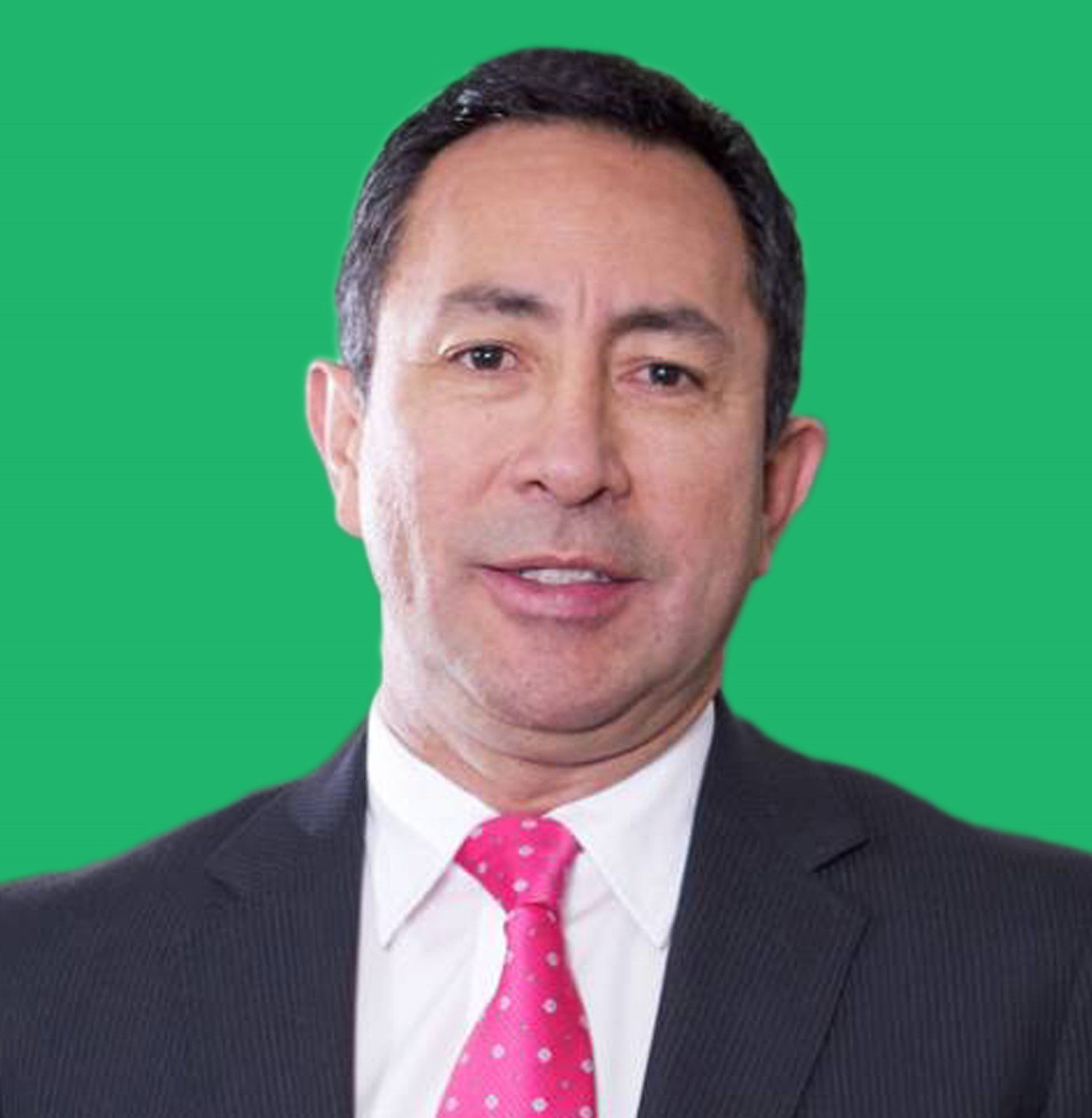
“Historically, foreign investors have faced the challenge of understanding the functioning of the Colombian securities market,” said SFC Financial Superintendent César Ferrari (above photo). “The new microsite is a first step in addressing this challenge by offering, in clear English, information necessary to make foreign portfolio investments in Colombia.”

The working groups behind the project brought together several government bodies, including the Banco de la República, the Financial Regulatory Unit (Unidad de Regulación Financiera, URF) of the Ministry of Finance, and the National Tax and Customs Directorate (Dirección de Impuestos y Aduanas Nacionales, DIAN). From the private sector, the Securities Market Self-Regulator (Autorregulador del Mercado de Valores, AMV) and the Colombian Stock Exchange (Bolsa de Valores de Colombia, BVC: BVC) contributed to the platform’s development.

Carlos Emilio Betancourt Galeano, Director General of the DIAN, said the microsite addresses a core barrier to attracting foreign capital. “Providing clear and easily accessible information reduces barriers, improves understanding of the regulatory environment and strengthens the confidence of international investors,” he said.

URF Director Larisa Caruso said the platform addresses language as a structural obstacle to market participation. “This microsite represents an important milestone to strengthen the internationalization of the Colombian capital market and will allow foreign investors to better understand the regulation and the particularities of the local market, promoting greater transparency, trust and access to information, while contributing to reducing entry barriers associated with language,” she said.

AMV President Hernán Alzate described the launch as part of a longer-term positioning effort. “It represents a decisive step to position Colombia as an attractive and reliable destination for international investment,” he said. “Facilitating access to clear and timely information is critical to strengthening foreign investor confidence in an increasingly interconnected world.”

Andrés Restrepo Montoya, CEO of the BVC, framed the microsite as part of the exchange’s ongoing efforts to draw international capital. “To attract investment we must also facilitate access to clear and reliable information,” he said. “This is an important step to bring foreign investors closer to the Colombian capital market.”

The initiative comes as Colombia’s capital markets face scrutiny from international investors and ratings agencies over the country’s fiscal trajectory. The working group structure that produced the microsite has been active since late 2023, with the SFC serving as lead coordinator across multiple public and private stakeholders.
  •  

Colombia’s Debt-to-GDP Ratio Settles Into a New 60% Baseline After 20 Years of Macroeconomic Swings

Twenty-Year Debt Arc Resets Colombia’s Sovereign Risk Outlook

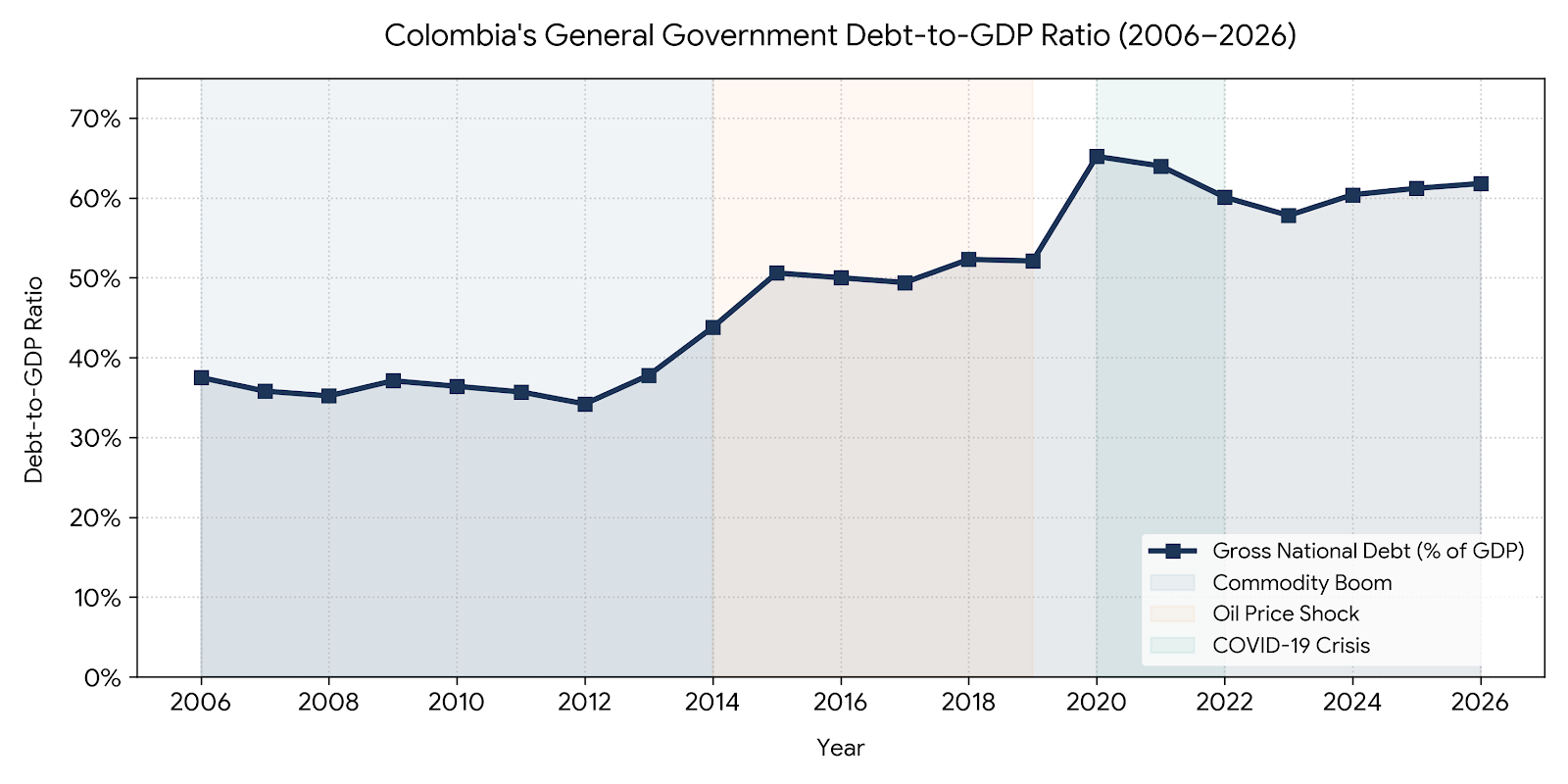
Two decades of fiscal data show that Colombia’s gross general government debt has moved through four distinct macroeconomic phases, ending the current cycle at a level that is materially higher than its pre-pandemic baseline. Persistent annual fiscal deficits, currency volatility, an emergency spending shock and weaker-than-projected tax revenues have combined to push the ratio of public debt to gross domestic product from the mid-30s percent range in the mid-2000s to a band of roughly 60 to 62 percent at the start of 2026, according to figures published by the Ministerio de Hacienda y Crédito Público and the Banco de la República.

The shift carries direct implications for sovereign bondholders, multinationals operating in Colombia and any investor pricing country risk in the Andean region. All three major rating agencies — S&P Global Ratings, Moody’s Ratings and Fitch Ratings — now place Colombia in speculative-grade, or junk, territory, with consecutive downgrades through 2025 and into early 2026.

“The activation of the escape clause confirms that the deterioration observed in 2024 will not be corrected in 2025.” — Renzo Merino, sovereign analyst, Moody’s Ratings

The commodity cushion: 2006 to 2014

During the global commodity supercycle, Colombia benefited from sustained gross domestic product growth and steady government revenue. Hydrocarbon and mining receipts — channeled through Ecopetrol (NYSE: EC; BVC: ECOPETROL) and the broader extractive sector — supplied a substantial share of national tax intake. The debt-to-GDP ratio remained relatively stable during this period, generally hovering between 34 and 38 percent. Even with chronic primary deficits, nominal growth in the denominator absorbed new borrowing, masking the underlying structural imbalance that the Comité Autónomo de la Regla Fiscal (CARF) would later flag as the persistent driver of fiscal stress.

The currency and revenue shock: 2014 to 2019

The mechanics of the ratio changed sharply when Brent crude prices collapsed in late 2014. Reduced hydrocarbon royalties widened the fiscal gap just as the Colombian peso depreciated against the US dollar. Because a significant share of Colombia’s sovereign liabilities is denominated in foreign currency, the peso’s slide automatically inflated the local-currency value of outstanding external debt when measured against domestic GDP. The combined effect — wider deficits funded by new borrowing, plus a valuation effect on existing dollar-denominated obligations — pushed the ratio steadily higher through the late 2010s.

The structural revenue weakness that surfaced during this period has remained a recurring theme in subsequent fiscal assessments from Fedesarrollo and the Pontificia Universidad Javeriana Observatorio Fiscal, both of which have noted that successive tax reforms failed to fully close the gap between commitments and ordinary income.

The pandemic ceiling: 2020

The combination of emergency social spending under the Ingreso Solidario program, expanded health outlays and a sharp contraction in nominal GDP drove the ratio to a historic peak above 65 percent in 2020. The Ministerio de Hacienda reports the all-time high at 65.3 percent of GDP that year. The government activated the escape clause of the regla fiscal — Colombia’s fiscal rule, codified in Law 1473 of 2011 and modified by Law 2155 of 2021 — to accommodate the spending response, suspending the rule for 2020 and 2021.

That episode also triggered the first sovereign downgrade cycle: S&P Global Ratings cut Colombia’s long-term foreign currency rating to BB+ from BBB- in May 2021 after the administration of then-president Iván Duque withdrew a tax reform bill following street protests, costing the country its investment-grade status with that agency.

The new baseline: 2023 to 2026

Strong post-pandemic nominal growth briefly pulled the debt ratio down toward 57 percent in 2023. The decline did not hold. Structural spending pressures, elevated international interest rates and tax collections below budgeted projections pushed the ratio back up, establishing a new operating band around 60 to 62 percent of GDP. The Ministerio de Hacienda reported government debt to GDP at 61.3 percent for 2024.

The administration of President Gustavo Petro and Finance Minister Germán Ávila Plazas activated the regla fiscal escape clause for a second time in June 2025, with the Consejo Superior de Política Fiscal (Confis) approving a three-year suspension covering 2025 through 2027. The decision came despite an unfavorable technical opinion from the Comité Autónomo de la Regla Fiscal, which concluded that legal conditions for activating the clause were not met outside of a national emergency. The clause had previously been invoked only during the COVID-19 pandemic.

According to the Marco Fiscal de Mediano Plazo (MFMP) presented by the Ministerio de Hacienda, net public debt to GDP is projected to rise from 53 percent in 2023 to 61.3 percent in 2025 and approximately 63 percent in 2026. The fiscal deficit for 2025 was initially projected at 7.1 percent of GDP and later revised to roughly 6.2 percent of GDP, with the administration targeting a deficit below 6 percent of GDP for 2026.

Debt service consumes a larger share of the budget

The cost of servicing this debt has reshaped the structure of the national budget. The 2026 draft budget presented by Minister Ávila totals $557 trillion COP, equivalent to roughly $134.7 billion USD, and represents 28.9 percent of GDP. Of that, debt servicing costs are projected at $102.5 trillion COP, or 5.3 percent of GDP, down from 6.2 percent of GDP in 2025.

The figures published by the Ministerio de Hacienda for domestic debt service in 2026 are higher when measured against tax intake alone: of an estimated $130 trillion COP in domestic debt service, $79 trillion COP corresponds to principal that can be rolled over through new issuances, while $51 trillion COP represents interest payments funded directly from the budget. Against projected tax revenue of approximately $300 trillion COP, that implies roughly one in every three pesos collected by the central government is allocated to interest on existing debt.

Rating agencies reprice the sovereign

The rating cycle has accelerated alongside the fiscal trajectory. Moody’s Ratings downgraded Colombia to Baa3 and subsequently into junk territory in 2025, citing the suspension of the fiscal rule. S&P Global Ratings issued a further downgrade in April 2026, its second cut in less than a year, on the same persistent deficit and debt concerns. Fitch Ratings also moved Colombia deeper into speculative grade in December 2025.

The Banco de la República reported external debt — combining public and private liabilities — at $238.7 billion USD at the close of November 2025, equivalent to 54.8 percent of GDP, an increase of $15.8 billion USD from January of the same year. The Colombian economy is currently valued at approximately $435 billion USD.

What investors are watching next

The Comité Autónomo de la Regla Fiscal has stated in its most recent reports to Congress that the 2025 primary balance target was missed by a wide margin even after the escape clause was activated, and that incoming projections for 2026 raise the bar for any return to the original fiscal rule by 2028. Business groups including Fenalco and the Consejo Gremial Nacional have publicly opposed the suspension and signaled potential legal challenges.

The 2026 financing plan disclosed by the Ministerio de Hacienda includes approximately $4.6 billion USD in global bond issuances, primarily to refinance a one-year Swiss-franc Total Return Swap operation valued at roughly $9.3 billion USD. The ministry has stated that the issuance does not constitute net new external debt. Updated debt and deficit targets are scheduled for release in the next iteration of the Plan Financiero.

For executives operating in Colombia or evaluating new investment, the baseline shift from a mid-30s to a low-60s debt-to-GDP environment alters several variables simultaneously: peso volatility tied to refinancing cycles, the trajectory of corporate tax policy as Congress weighs successive reform proposals, and the path of domestic interest rates set by the Banco de la República as it manages inflation alongside elevated sovereign funding costs. Detailed historical and forward-looking debt data is published by the Investor Relations Colombia office of the Ministerio de Hacienda.

Colombia's General Government Debt-to-GDP Ratio (2006-2026) (image: Google)

Colombia’s General Government Debt-to-GDP Ratio (2006-2026) (image: Google)

  •  

Holland & Knight Taps Energy Lawyer José Vicente Zapata to Lead Bogotá Office

Energy and M&A specialist takes helm of 70-lawyer Bogotá practice

Holland & Knight has named José Vicente Zapata executive partner of its Bogotá office, the firm announced on May 4, 2026. Zapata will oversee day-to-day management of the office while continuing to lead his energy practice, which focuses on corporate, contractual, and commercial matters, with an emphasis on spin-offs and mergers and acquisitions. He succeeds Enrique Gómez Pinzón, who has served as executive partner since the office opened in 2012 and will now take the title of executive partner emeritus while continuing his corporate, M&A, finance, and international arbitration practice.

Zapata has been with Holland & Knight for nearly 12 years and co-chairs the firm’s Venezuela Focus Team, a group of partners who advise clients with interests in that country. His regulatory work covers environmental, energy, and natural resources matters, as well as corporate compliance, including the design of ethics programs and compliance with Colombia’s Sistema de Autocontrol y Gestión del Riesgo Integral de Lavado de Activos y Financiación del Terrorismo (SAGRILAFT) anti-money-laundering and counter-terrorism financing regime. He also handles liability cases involving contractual and non-contractual damages.

“I look forward to continuing to strengthen our team’s offerings in advising Colombian companies and guiding international clients to navigate entry into the Colombian market.” — José Vicente Zapata, Executive Partner, Holland & Knight Bogotá

Zapata earned his LL.M. in Sustainable Development and International Business Law from McGill University in Montreal and his J.D. from the Pontificia Universidad Javeriana in Bogotá. He has been ranked in Energy & Natural Resources: Environment by Chambers Global and Chambers Latin America since 2014, was named to The Legal 500 Latin America Hall of Fame in Environment in 2025 and 2026, and is regularly listed in The Best Lawyers in Colombia.

“I look forward to continuing to strengthen our team’s offerings in advising Colombian companies and guiding international clients to navigate entry into the Colombian market,” Zapata said in a written statement.

Bob Grammig, Holland & Knight’s chair and chief executive officer, said Zapata’s appointment was intended to focus the office on growth in Colombia and across Latin America. Gómez Pinzón said he would continue to support the office in his emeritus role.

The Bogotá office now houses nearly 70 lawyers. Its practice covers cross-border deals and international trade; mergers, acquisitions, and joint ventures; oil, gas, and mining projects; environmental assessments, liability, and compliance; taxation; labor law; intellectual property, trademark, and patent registration; antitrust and consumer law; capital markets, venture capital, and private equity; international licensing and franchising; project finance and foreign investment; corporate reorganizations and financial restructurings; litigation and international arbitration; and private wealth services.

Holland & Knight’s Latin America Practice Group includes more than 200 attorneys working on cross-border M&A, joint ventures, private equity and financing transactions, and disputes involving Latin America. The firm overall counts approximately 2,200 lawyers and other professionals across 35 offices. Founded in 1889, it provides representation in litigation, corporate and finance, real estate, healthcare, and government matters.

The leadership transition comes as international firms continue to deepen their footprint in Bogotá to serve foreign investors entering Colombian energy, infrastructure, and natural resources markets, and to advise Colombian corporates pursuing transactions abroad.

  •  

Colombia’s Financial Superintendency Pushes Shadow Pricing Framework to Reshape How Banks Evaluate Projects

Proposal would reset how banks weigh social and climate costs

The Superintendencia Financiera de Colombia (SFC) has presented a proposal to create a national system of socio-environmental prices that supervised financial institutions would apply when evaluating and analyzing private and public development projects in Colombia. The regulator argues that the country’s financial system faces the challenge of financing projects that generate long-term social returns, not only private profitability.

The proposal was unveiled in Bogotá on May 14, 2026, during the forum Precios socioambientales: una herramienta para la inversión sostenible en Colombia, hosted at the regulator’s headquarters. Participants included Superintendent of Finance César Ferrari; Daniel Schydlowsky, professor at the Hebrew University of Jerusalem; Raúl Castro, professor at the Universidad de los Andes; Andrés Vera, technical vice president of Asobancaria; Ricardo Lara Manzano, director of infrastructure and energy for the Andean region at IDB Invest; and Andrés Trejos, economic studies coordinator at the SFC.

Ferrari noted that the methodology, also known as “shadow pricing,” gained prominence during the second half of the twentieth century before falling out of favor, and is now resurfacing globally as social and environmental dynamics increasingly affect business and the financial system. “The concept of ‘shadow prices’ is regaining importance because we are seeing the effects of climate change on the economy and on competition in business across all sectors,” Ferrari said.

“The concept of ‘shadow prices’ is regaining importance because we are seeing the effects of climate change on the economy and on competition in business across all sectors.” — César Ferrari, Colombian Superintendent of Finance

Schydlowsky explained that shadow prices measure the value of goods and services when market failures distort interest rates, exchange rates, or fiscal balances. The approach is designed to correct for the gap between observed market prices and the true economic and social cost of resources.

What the SFC is proposing

Trejos argued that social project evaluation provides a technical basis for discussing the relevance of investment initiatives in the context of public policy and the financial system, and helps select projects that raise social welfare with economic efficiency and environmental sustainability. “It is possible to prioritize projects beyond private profitability, incorporating general social welfare and, in particular, environmental sustainability,” he said.

The SFC’s proposal to build a socio-environmental pricing system for Colombia includes estimates of the social valuation of six productive factors and fundamental variables: labor, public revenue, investment, foreign exchange, carbon, and the social discount rate.

Under the proposed framework, projects would receive more favorable evaluation if they are labor-intensive — especially when they absorb idle or underemployed workers — if they generate or save foreign exchange through expanded exports or efficient import substitution, if they strengthen public revenue and the state’s capacity to provide public goods and regulation, or if they reduce carbon footprint or deliver net benefits in climate mitigation and adaptation.

The proposal does not yet carry the force of regulation. The SFC presented the framework as a methodology for supervised entities — including banks, insurers, and pension fund managers — to incorporate into their internal project evaluation processes alongside conventional financial analysis.

Headline photo: The installation of more than 886 solar systems benefiting 4,000 users. Photo credit: One Inversión Social.

  •  

Ecopetrol Posts Q1 EBITDA Gain as Refining Margins Surge, But Governance Crisis and Tax Headwinds Weigh on Net Income

Refining margin surge cushions revenue drop amid leadership void

Ecopetrol S.A. (NYSE: EC, BVC: ECOPETROL) reported first-quarter 2026 consolidated revenues of 28.6 trillion COP, a decline of 8.7% from 31.4 trillion COP in the year-earlier period, as lower crude oil prices and reduced hydrocarbon production compressed the top line for Colombia’s state-controlled oil and gas company. Against that backdrop, a marked recovery in refining margins and disciplined cost management lifted EBITDA by 1.5% to 13.5 trillion COP, yielding a 47% EBITDA margin and partially offsetting the revenue headwind. At the Q1 2026 average exchange rate of approximately 3,700 COP per USD, the quarter’s revenues translate to roughly $7.73 billion USD and EBITDA to approximately $3.65 billion USD.

Embattled Ecopetrol CEO Ricardo Roa was appointed to the position by Colombian President Gustavo Petro after managing his political campaign. (photo: Ecopetrol)

Embattled Ecopetrol CEO Ricardo Roa was appointed to the position by Colombian President Gustavo Petro after managing his political campaign. (photo: Ecopetrol)

Net income for the quarter reached 2.9 trillion COP (approximately $784 million USD), down 7.7% year-over-year, reflecting the combined drag of lower revenues, a sharply elevated effective tax rate of 37.1%, and a one-time charge of 1.2 trillion COP for the impuesto al patrimonio — Colombia’s government-mandated wealth levy on large corporations established to fund post-disaster reconstruction measures. The company is also subject to a 10% income tax surcharge applicable for fiscal year 2026, which is embedded in the reported effective rate. The aggregate tax burden absorbed a disproportionate share of operating improvement relative to prior periods, limiting the flow-through of refining gains to the net income line.

Total hydrocarbon production averaged 725.2 thousand barrels of oil equivalent per day (kboed) in Q1 2026, below the 745 kboed recorded in the 2025 annual average cited by management during the March 2026 general shareholders’ meeting. Domestic crude output represented the largest component at approximately 520 thousand barrels per day (kbd). Ecopetrol’s Permian Basin operations in the United States contributed 91.8 kbd, underscoring the continued strategic importance of the international segment. Gas production continued a multi-year declining trend that poses a medium-term domestic supply challenge; management has sought to address this partially through regasification capacity additions at Puerto Bahía and on the Pacific coast, expected to come online in the second half of 2026 with a combined contribution of up to 430 billion BTU per day.

The refining segment delivered the quarter’s most pronounced operational outperformance. Ecopetrol’s domestic refineries, led by Refinería de Cartagena, processed 417.5 kbd of crude throughput. The integrated refining margin rose to $17.3 USD per barrel, a 60% improvement over the same quarter of 2025, driven by favorable differential pricing between domestic crude benchmarks and refined product values alongside ongoing operational efficiency improvements. The Comisión de Regulación de Energía y Gas (CREG) and the Ministerio de Minas y Energía remain central to the regulatory framework governing downstream margins over the medium term.

The balance sheet carries significant structural and contingent risk items of direct relevance to institutional credit and equity holders. Gross debt stood at 108.1 trillion COP (approximately $29.2 billion USD), representing a leverage ratio of 2.3 times trailing EBITDA — a level that leaves limited room for further deterioration before debt covenants or rating agency thresholds become binding. Ecopetrol holds a receivable of 4.2 trillion COP (approximately $1.14 billion USD) from the Fondo de Estabilización de Precios de los Combustibles (FEPC), a government fuel price stabilization mechanism that represents a claim on the Colombian treasury with timing and recovery risk. A dispute with the Dirección de Impuestos y Aduanas Nacionales (DIAN) over value-added tax assessments totals 12.26 trillion COP (approximately $3.31 billion USD) in aggregate, of which 10.22 trillion COP relates to Ecopetrol’s consolidated operations and 2.04 trillion COP to Refinería de Cartagena. Both cases are under administrative and judicial review; no provisions have been recognized in the financial statements pending resolution, but the potential liability represents a material contingency relative to the company’s quarterly net income.

On the corporate development front, Ecopetrol disclosed three significant transactions during or following the quarter. The company agreed to acquire producing assets from Gran Tierra Energy (NYSE: GTE, TSX: GTE) for $92.4 million USD, adding Colombian upstream production inventory in basins where both companies have operated. In Brazil, Ecopetrol launched a tender offer for shares of Brava Energia (BVMF: BRAV3) at 23 BRL per share, seeking to expand its footprint in that country’s oil and gas sector. And in a transaction that would reshape the mid-size independent landscape in Colombia, the company reached an agreement to acquire Parex Resources (TSX: PXT) for $250 million USD; Parex is a Colombia-focused producer with a complementary asset base across the Llanos and other producing basins. Collectively, the three transactions signal that Ecopetrol’s capital allocation strategy under the current government continues to favor upstream consolidation despite the elevated leverage profile.

The exploration portfolio generated positive news announcements. The Copoazú-1 exploratory well, drilled in Colombia’s Llanos foothills region, was confirmed as a commercial discovery, adding to the domestic reserve base. The Sirius offshore project advanced through the Consulta Previa process — a legally mandated prior consultation with indigenous and Afro-Colombian communities required before development of projects in or near their territories — reaching a milestone in community engagement that brings the project closer to formal development sanction. The Agencia Nacional de Hidrocarburos (ANH) oversees the licensing framework within which both projects operate.

“Ecopetrol is listed on the New York Stock Exchange; we are governed by the strict regulations of US federal agencies. Agencies like OFAC and the SEC could intervene in the company and could even accelerate the payment of financial obligations, which would be extremely grave for Ecopetrol.” — Martín Ravelo, President, Unión Sindical Obrera (USO)

The ISA transmission segment, managed through Ecopetrol’s majority stake in ISA — Interconexión Eléctrica S.A., contributed stable regulated cash flows during the quarter. ISA completed 46 transmission reinforcement works across its Latin American concession portfolio. The segment also completed the acquisition of 100% of IE Madeira in Brazil, consolidating its position in that country’s power grid interconnection infrastructure. ISA further submitted a competitive bid for the Río Bueno–Puerto Montt high-voltage transmission line concession in Chile, demonstrating the group’s appetite for long-duration, inflation-linked infrastructure assets across the Andes region. For institutional investors evaluating Ecopetrol as a blended hydrocarbons-and-infrastructure holding, ISA’s consistent cash generation provides partial diversification from crude price volatility, though it does not insulate the consolidated entity from headline governance risk.

The most consequential variable for the investment thesis over the near term is Ecopetrol’s prolonged governance crisis. At the company’s general shareholders’ meeting on March 27, 2026, held at the Corferias convention center in Bogotá, minority shareholders loudly heckled president Ricardo Roa — with audible shouts of “¡Fuera, fuera!” reverberating through the hall — as debate over his leadership erupted into open confrontation. The meeting approved a dividend of 121 COP per share for minority holders and a 4 trillion COP distribution to the Colombian government as majority shareholder, payable in two installments by June 30, 2026. Despite the financial business conducted, governance overshadowed the proceedings.

Roa faces two separate judicial proceedings. The Fiscalía General de la Nación formally charged him in connection with alleged influence peddling related to the purchase of an apartment in northern Bogotá — charges he has denied. Separately, the Consejo Nacional Electoral (CNE) is examining whether campaign spending limits were violated during President Gustavo Petro’s 2022 presidential campaign, which Roa managed — an investigation that Finance Colombia has covered in detail. Angela Maria Robledo, Chair of the Board of Directors, defended the board’s decision to retain Roa at the March assembly, citing the constitutional presumption of innocence. However, four of the nine board members had already formally recorded their support for his removal at that point, exposing a divided governance structure at a time when strategic and operational decisions require unified leadership.

The Unión Sindical Obrera (USO), which represents approximately one-third of Ecopetrol’s workforce, issued a production strike ultimatum timed to a March 30 board meeting. Martín Ravelo, president of the USO, framed the leadership crisis explicitly in terms of US regulatory risk: “Ecopetrol is listed on the New York Stock Exchange; we are governed by the strict regulations of US federal agencies. Agencies like OFAC and the SEC could intervene in the company and could even accelerate the payment of financial obligations, which would be extremely grave for Ecopetrol.” Ravelo further warned that the company’s outstanding international debt — which he placed at approximately $30 billion USD and which is exacerbated by elevated interest rates — left Ecopetrol exposed to potential covenant triggers or early repayment demands in a scenario where the Securities and Exchange Commission (SEC) or the Office of Foreign Assets Control were to take enforcement action.

Following sustained pressure from the USO, minority shareholders, and opposition political figures, Ecopetrol’s board approved an extended leave of absence for Roa beginning April 7, 2026. Under the arrangement, Roa used accrued vacation through May 27, followed by 30 calendar days of unpaid leave beginning May 28, extending his absence through the end of June — a period encompassing Colombia’s presidential first round on May 31 and a potential runoff on June 21. Juan Carlos Hurtado Parra, the company’s executive vice president of hydrocarbons and designated first alternate to the presidency since November 2025, was appointed acting president. Hurtado Parra holds an MBA in International Oil and Gas and brings more than 28 years of energy sector experience to the acting role, having previously served as vice president of exploration, development, and production.

The political calendar creates a structural transition risk that sits above the operational and financial results as the primary concern for long-duration investors. Colombia’s incoming government, to be inaugurated August 7, 2026, is widely expected to appoint a new Ecopetrol board and select a new company president. That transition may bring material shifts in strategic priorities — including the pace of upstream investment, the approach to the FEPC receivable recovery, the trajectory of energy transition spending, and the capital allocation balance between the hydrocarbons segment and the ISA infrastructure platform. The Ministerio de Hacienda y Crédito Público and the Ministerio de Minas y Energía will both play key roles in establishing the post-election policy framework under which Ecopetrol operates. Institutional investors holding exposure to Ecopetrol via NYSE: EC or BVC: ECOPETROL must weigh Q1’s genuine operational improvement — most visibly in refining margins and EBITDA stability — against a governance and policy transition risk profile that is unlikely to be resolved before the August handover.

Ecopetrol’s Cartagena refinery (photo courtesy Ecopetrol)

  •  

Tecnoglass Posts Record Q1 Revenue as Aluminum Tariffs and Colombian Wage Costs Compress Margins

Tariff headwinds compress Tecnoglass margins despite record Q1 sales

Tecnoglass, Inc. (NYSE: TGLS) reported first-quarter 2026 revenue of $249.0 million USD, a 12.0% year-over-year increase and a first-quarter record for the Barranquilla, Colombia-based window and architectural glass manufacturer. Despite the top-line growth, net income fell to $31.9 million USD, or $0.71 per diluted share, from $42.2 million USD, or $0.90 per diluted share, in the same period of 2025, as elevated US aluminum costs linked to import tariffs, mandatory minimum wage increases in Colombia, and a strengthening Colombian peso combined to compress gross margins by 540 basis points to 38.5%.

Multi-family and commercial revenues rose 20.4% year-over-year, driven by continued activity across key markets including geographies beyond Florida, which has historically dominated the company’s US revenue mix. Single-family residential revenues were relatively flat on a year-over-year basis, with management attributing the result to the timing of order conversion into revenue rather than underlying demand, noting that order growth in the segment remained positive into April 2026. On a geographic basis, the US accounted for $237.1 million USD, or approximately 95% of total revenues, up 11.6%. Colombia generated $7.5 million USD, up 17.2%, and other international markets contributed $4.4 million USD, up 27.3%.

Gross profit declined to $95.8 million USD from $97.5 million USD in Q1 2025 despite the higher revenue base. The company cited an unfavorable revenue mix driven by a greater proportion of installation-related revenue, higher raw material costs — with US aluminum tariffs representing an incremental headwind of approximately $6.4 million USD in the quarter — higher salary expenses resulting from annual minimum wage adjustments in Colombia, and the effect of a stronger Colombian peso on costs incurred locally. Pricing actions and operating leverage on higher volume partly offset these pressures.

“We see a clear path to fully offsetting the impact of tariffs in 2027, when full-year pricing across both businesses and incremental automation savings are expected to be realized.” — Santiago Giraldo, Chief Financial Officer, Tecnoglass

Selling, general, and administrative expenses rose to $50.9 million USD, or 20.4% of revenues, from $42.5 million USD, or 19.1%, in Q1 2025. The increase reflected higher personnel costs from annual salary adjustments, peso appreciation, and higher transportation and commission costs tied to revenue growth. The period also included a one-time charge of $2.9 million USD related to Colombia’s *impuesto al patrimonio*, a government-imposed wealth tax levied on large corporations to fund measures addressing recent climate-related events in the country.

Adjusted EBITDA — which excludes non-cash foreign exchange gains and losses, the bad-debt provision, non-recurring charges, and equity-method adjustments related to the company’s joint venture in Vidrio Andino with Saint-Gobain (EPA: SGO) — came in at $61.5 million USD, or 24.7% of total revenues, compared to $70.2 million USD, or 31.6%, in Q1 2025. Adjusted net income was $34.6 million USD, or $0.78 per diluted share, versus $43.1 million USD, or $0.92, in the prior-year quarter.

Cash provided by operating activities was $6.7 million USD, a significant decline from $46.9 million USD in Q1 2025, driven in part by a deliberate build-up of US-sourced aluminum inventories — up $34.3 million USD in the quarter — as part of the company’s tariff mitigation strategy. Capital expenditures of $17.3 million USD reflected scheduled payments tied to previously announced capacity and automation projects. During the quarter, Tecnoglass returned $16.5 million USD to shareholders through share repurchases and paid $6.7 million USD in cash dividends. As of May 7, 2026, approximately $92.5 million USD remained available under the current share repurchase program. The company ended the quarter with total liquidity of approximately $425.0 million USD, comprising $91.1 million USD in cash and cash equivalents and more than $330.0 million USD in revolving credit facility availability, against total debt of $200.3 million USD.

The company’s order backlog reached a record $1.36 billion USD at quarter-end, up 19.1% year-over-year, extending multi-family and commercial pipeline visibility into 2027. Tecnoglass cited continued expansion of its dealer network and showroom footprint as supporting geographic diversification and market share gains, with vinyl product lines identified as an incremental growth driver broadening the company’s addressable market.

José Manuel Daes, chief executive officer, commented on the results: “First quarter results were in line with our expectations, with resilient performance across our key metrics reflecting the continued strength of our vertically integrated business model despite a dynamic cost environment. Demand for our product offerings remains strong, as demonstrated by another quarter of record backlog and healthy order activity, with momentum continuing into the second quarter. Our previously announced pricing actions are now in place, and the broad-based nature of industry cost pressures supports our confidence in executing these increases while preserving our competitive positioning.”

Christian Daes, chief operating officer, addressed the tariff response and the company’s assessment of a potential US manufacturing presence. “Our pricing initiatives and cost mitigation efforts are well underway, including logistics improvements, further automation across our operations, and ongoing supply chain optimization,” he said. “We are also advancing our assessment of a proposed US manufacturing initiative, with a well-located site identified and significant state and local incentives secured that strengthen the project’s potential economics if we decide to move forward based on market demand.”

Santiago Giraldo, chief financial officer, reaffirmed full-year 2026 guidance and outlined the company’s tariff offset timeline. “Based on our strong execution to start the year, we are reiterating our full year revenue outlook in the range of $1.06 billion to $1.13 billion USD and Adjusted EBITDA outlook in the range of $225 million to $245 million USD,” Giraldo said. “This reflects the impact of the recently implemented 10% tariff on finished aluminum window imports as previously disclosed, which is expected to be partly offset in 2026 through pricing actions effective on orders from early May forward, with additional efficiency initiatives from logistics optimization and automation underway and expected to begin contributing benefits by year end. We see a clear path to fully offsetting the impact of tariffs in 2027, when full-year pricing across both businesses and incremental automation savings are expected to be realized.”

On the corporate structure front, Tecnoglass’ board of directors has approved a plan to redomicile the company from the Cayman Islands to the United States, subject to shareholder approval. If approved, the redomiciliation is expected to be completed during Q2 2026. The company stated that the move is intended to simplify its organizational and regulatory structure, improve the tax efficiency of dividend distributions, and expand its potential investor base to include funds and accounts limited to US-domiciled securities. Tecnoglass will retain its Miami, Florida headquarters following the change.

Separately, the company is conducting a feasibility study for a potential new US manufacturing facility. A site meeting project specifications has been identified and substantial state and local tax credits have been secured. The proposed facility is described as highly automated and intended to support future growth while also improving lead times, reducing transportation costs for certain markets, enhancing supply chain efficiency, and enabling the company to compete for Buy America-eligible projects and rapid-turnaround contracts. Tecnoglass expects to complete the purchase of land for the potential facility during Q2 2026, at an estimated cost of $20 million to $25 million USD to be financed through available credit facilities. The company noted that the land purchase does not constitute a commitment to proceed with construction, which would occur in phases contingent on demand, market conditions, and return profiles. The company’s 5.8-million-square-foot vertically integrated manufacturing complex in Barranquilla, Colombia, would continue to serve as its primary production base.

Above photo: Tecnoglass facilities in Barranquilla

  •  

Colombia’s Central Bank Prepares to Raise Policy Rate to an Expected 12.00%

Central bank hike aims to stabilize inflation amid global volatility.

The upcoming monetary policy meeting of the Banco de la República, scheduled for April 30, takes place as the balance of financial risks has shifted significantly compared to the first quarter of 2026. Analysts from Bancolombia (NYSE: CIB) expect the Junta Directiva to increase the benchmark interest rate by 75 basis points, bringing the policy rate to 12.00%.

The convergence of elevated inflation, recent reversal episodes, and misaligned market expectations has reinforced the perceived need for a restrictive monetary stance. This strategy aims to contain domestic demand while preserving the institutional credibility of the central bank. Unlike previous sessions, the current decision-making process is influenced by a shifting global environment where markets have moved toward a higher-for-longer interest rate scenario amid increased uncertainty.

Recent discussions regarding the participation of the Ministro de Hacienda in the Junta Directiva sessions have introduced an additional element of analysis. However, current assessments suggest this does not alter the fundamental policy diagnosis, and no disruptions to the decision-making process are anticipated. Monetary policy is expected to maintain consistency, with the strategic focus shifting from reaching a contractive level to determining the necessary duration of that posture.

Analysts project Banco de la República will raise rates to 12.00% to combat inflation despite slowing domestic economic growth.

The international economic context provides a mixed backdrop for the Colombian decision. Private sector activity in the US appeared to accelerate in April, following a 1.7% monthly increase in retail sales during March. In contrast, the Eurozone reported a contraction in economic activity during April. Energy markets have also seen volatility, with US crude inventories rising in the second week of April while gasoline stocks saw a significant decline. Furthermore, crude prices surged following reports of new security incidents in the Strait of Hormuz.

Domestically, the Departamento Administrativo Nacional de Estadística reported that the Índice de Seguimiento a la Economía grew by 1.6% in February. While imports maintained growth during the same month, the urban unemployment rate across the 13 primary metropolitan areas continued a downward trend through March 2026. In the fixed income market, the central government reported debt levels at 64.2% of GDP for the first quarter, with internal debt accounting for 71.2% of that total.

Market movements reflected these broader trends as the US Treasury curve saw valuation increases driven by investor caution. In the region, Colombia, Brazil, and Uruguay emerged as the primary beneficiaries of the J.P. Morgan (NYSE: JPM) GBI index rebalancing in March. Locally, fixed-rate Títulos de Tesorería experienced devaluations across the entire curve last week. According to the April Encuesta de Opinión Financiera, these devaluations are expected to persist in the coming months. In currency markets, the COP appreciated last week against a backdrop of global and local factors, while the Euro lost ground against the USD.

Headline photo: Bogotá headquarters of Banco de la República (Banrepublica). Photo credit Juan Enrique Rodríguez, courtesy Banrepublica

  •  

Bancolombia NowCast Index Signals Colombia Economic Slowdown in First Quarter

Activity cools to 2.1% annual expansion.

Economic activity in Colombia expanded at an estimated annual rate of 2.1% during the first quarter of 2026. According to the latest NowCast report issued by the Grupo Cibest, unit of Bancolombia (NYSE: CIB, BVC: BCOLOMBIA), this outcome reflects a loss of momentum compared to the rolling quarter ended in February. That previous period recorded a growth of 2.2%, which was revised downward by 10 basis points from an initial estimate of 2.3%.

The 2.1% growth rate for the quarter indicates a slowdown relative to both the market consensus average of 2.7% and the internal growth forecast of 3.3% held by the bank. On a month-over-month basis, the seasonally adjusted series of the NowCast index posted a 1.3% contraction in March 2026. When compared to March 2025, economic activity grew by 2% year over year, representing a 50-basis-point decline from the 2.5% reading recorded the previous month.

“Overall, these results suggest that the economy is beginning to lose steam, amid multiple sources of uncertainty.” — NowCast Bancolombia Report

Analysis at the sector level reveals a broadly weaker growth profile, with deceleration appearing across most productive areas. Slower momentum was identified in trade, manufacturing, recreation, real estate, and financial services. Manufacturing expansion cooled to 1.0% in March 2026, while financial services recorded marginal growth of 0.6%. The real estate sector maintained a steady growth rate of 1.9%.

Construction and communications were the only sectors to record negative growth during the period. The construction sector saw a significant downturn, contracting by 2.3% in March 2026 after having posted 1.4% growth in February. The information and communications sector contracted by 0.4%, marking its fourth consecutive month in contractionary territory. Conversely, acceleration was noted in public administration, which grew by 5.1%, agriculture at 3.7%, and mining at 0.8%.

The NowCast family of indicators is prepared by Grupo Cibest through the processing and aggregation of transaction data from the bank’s various payment channels. Using advanced quantitative tools, the index provides high-frequency estimates of Colombian productive activity to complement official data from the Departamento Administrativo Nacional de Estadística. The report was authored by Arturo Yesid González Peña, Head of Quantitative and Analytics, and Sebastián Ospina Cuartas, Data Controller.

The report also incorporates data from the Bloomberg platform and FocusEconomics Consensus Forecasts to provide broader economic context. While the national economy remains in expansionary territory, the analysts suggest that the current results indicate the market is losing steam due to various sources of domestic uncertainty.

  •  

S&P Global Ratings Downgrades Colombia to BB- Amid Fiscal Concerns

Credit downgrade is an indictment of the Petro administration’s fiscal management, including suspension of the fiscal rule.

On April 8, 2026, S&P Global Ratings (NYSE: SPGI) lowered its long-term foreign currency sovereign credit rating on Colombia to BB- from BB and its long-term local currency rating to BB from BB+. The outlook for both ratings is stable, reflecting expectations that the Government of Colombia will gradually reduce its fiscal deficit while sustaining moderate growth in the national gross domestic product.

The rating action follows persistent fiscal imbalances and a policy environment that has become less predictable since the pandemic-related recession. The government decision to suspend the national fiscal rule in 2025 marked a significant shift in the policy framework. Pro-cyclical fiscal policies have provided marginal support for employment and consumption, but have also contributed to higher inflation expectations and a wider current account deficit. S&P expects the general government fiscal deficit to reach 5.6% of the national gross domestic product in 2026, compared to 5.3% in 2025.

“We expect Colombia to have consistently large fiscal deficits over the next few years.” — S&P Global Ratings

Institutional stability remains a key factor in the rating, though challenges persist. A fragmented legislature followed the March 2026 elections, where Pacto Histórico and Centro Democrático emerged with the largest minorities. The upcoming presidential election, scheduled for May 31, 2026, adds further uncertainty. Candidates such as Iván Cepeda of Pacto Histórico, Paloma Valencia, and Abelardo de la Espriella have proposed varying approaches to fiscal consolidation. The new administration will inherit spending pressures related to domestic security, rising healthcare costs, and pension payments linked to minimum wage increases.

The Banco de la República, the independent central bank of the country, has maintained a tight monetary policy to combat inflationary pressures. Annual inflation reached 5.3% in February 2026, prompting the bank to increase reference rates to 11.25%. S&P anticipates that inflation will not return to the target range of 3% +/- 1% until early 2029. While the independent status of the central bank provides a buffer against external shocks, high interest rates and lower-than-expected revenue collections have contributed to the widening deficit since 2024.

Economic growth is projected at 2.5% for 2026, slightly below the 2.6% recorded in 2025. Per capita growth is estimated at $9,900 USD for 2026, with real growth expected to average just above 2% through 2029. Despite being a net energy exporter, the performance of the US economy and international energy prices continue to influence national outcomes. Hydrocarbon exports declined to 35% of goods exports in 2025, down from 67% in 2013, showing some diversification even as the sector remains a primary source of volatility.

Net general government debt is forecast to approach 66% of the national gross domestic product by 2029, rising from 60.4% in 2025. S&P notes that the government interest burden will average 12.3% of general government revenue over the next three years. The shift toward issuing shorter-term debt instruments has reduced reported interest payments but increased vulnerability to interest rate fluctuations. External indicators remain a concern, with narrow net external debt expected to stabilize at 130% of current account receipts through 2029. Foreign direct investment is expected to be the primary source for funding the current account deficit, which is projected to stabilize around 2.6% of the national gross domestic product.

Vise photo credit © Loren Moss

  •  

Petro severs ties with Central Bank after Colombia rate rise

President Gustavo Petro has triggered a rare institutional confrontation with the Central Bank  after he ordered to “break relations” following an modest interest rate increase, raising concerns over economic policy independence just two months before the May 31 presidential election.

The board of Banco de la República voted on March 31 to raise its benchmark rate by 100 basis points to 11.25 per cent, defying government pressure for looser policy. Finance minister Germán Ávila denounced the move as “disproportionate” and withdrew from the board, accusing policymakers of privileging financial sector interests over economic growth.

The decision marks an unprecedented rupture in Colombia’s macroeconomic governance framework. By stepping away from the board, Ávila has effectively deprived it of the quorum required to meet under existing statutes, raising the prospect of a policy deadlock just as inflation remains above target.

At stake is more than a disagreement over rates. The confrontation exposes deeper tensions between a government focused on growth and redistribution and a technocratic central bank committed to price stability. It also risks undermining one of Colombia’s most respected institutions at a time of heightened global uncertainty.

Governor Leonardo Villar defended the rate hike, insisting the bank’s constitutional mandate to control inflation could not be subordinated to political considerations. He said the board remained focused on steering inflation back to its 3 per cent target, noting that price pressures — currently running at 5.29 per cent annually — remain elevated despite signs of moderation.

“The decisions are based on technical criteria,” Villar said, rejecting accusations of bias towards the financial sector. He also warned that the government’s withdrawal runs counter to institutional norms.

Markets are now watching whether the government intends to sustain its boycott. Under Colombian law, the presence of a Finance Minister is required for board meetings, meaning continued absence could paralyse rate-setting decisions in the coming months. Three key meetings — in April, June and July — are scheduled before the end of Petro’s term, with the latter two falling after a decisive first-round of the presidential elections.

Business leaders have reacted with alarm. Camilo Sánchez, head of utilities association Andesco, described the breakdown in coordination as “dire”, warning that permanent dialogue between fiscal and monetary authorities is essential for economic stability.

Analysts say the government may be using institutional leverage to halt further rate increases, given that a majority of board members had signalled a tightening bias to anchor inflation expectations. A prolonged standoff could, however, carry significant costs.

Colombia has long been viewed by investors as a regional outlier for its strong central bank independence. Any perception that political pressure is eroding that autonomy could weigh on the peso, increase borrowing costs and deter foreign investment.

The dispute comes against a complex macroeconomic backdrop. Inflation has been fuelled in part by a sharp increase in the minimum wage and higher public spending, while external risks — including rising energy prices linked to the war in the Middle East and closure of the Strait of Hormuz by Iran.

For Petro, the rate hike reinforces a long-standing critique that tight monetary policy is stifling growth and employment. Writing on social media, the president accused the central bank of pursuing a “suicidal” policy that harms the wider economy.

Yet economists warn that weakening institutional credibility could ultimately prove more damaging than high interest rates. “The risk is not just policy error,” one Bogotá-based analyst said. “It is the erosion of the rules of the game.”

The coming weeks will test whether the standoff is a negotiating tactic or the start of a more fundamental shift in Colombia’s economic governance. Either way, the episode has already injected a new layer of uncertainty into one of Latin America’s most closely watched economies.

  •  

History Channel Premieres Documentary Highlighting Medellin Social Intervention Program

Media partnership showcases urban social investment strategies in Colombia.

The History Channel is scheduled to premiere a new documentary titled Parceros on April 29, 2026. The 43-minute production, developed in collaboration with the Alcaldía de Medellín, examines the social challenges facing youth in the city’s communes and the state-led initiatives designed to mitigate the influence of criminal structures.

The documentary focuses on the Parceros program, an initiative managed by the Secretaría de Seguridad y Convivencia of Medellín. The program provides psychosocial support, academic training, and employment pathways for children, adolescents, and young adults at risk of recruitment by organized crime. According to municipal data, approximately 350 criminal groups operate within Medellín, involving an estimated 6,000 to 12,000 individuals. The program has served over 9,000 participants between 2024 and 2025, with a target of reaching 15,000 individuals by the end of the current four-year term.

“When the public sector works hand in hand with social organizations and media with global reach, the impact is multiplied.” — Federico Gutiérrez, Mayor of Medellín.

Federico Gutiérrez, the Mayor of Medellín, stated that the partnership with international media outlets aims to increase the visibility of the city’s social transformation. He noted that the collaboration between the public sector and global organizations facilitates a broader impact for regional infrastructure and social programs. The documentary features Argentine actor and producer Michel Brown, who serves as the primary narrator and interacts with participants to document their transition from informal or illegal activities toward stable employment and entrepreneurship.

The production follows the individual trajectories of three participants: Marcela, Alejandro, and Juan Sebastian. These accounts detail the transition from situations involving homelessness, illegal activities, and exploitation toward roles in municipal security management, private business ownership, and the local tourism sector. Paulina Patiño, director of the Parceros program, indicated that the initiative focuses on building human capital and providing alternatives to the economic incentives offered by local criminal organizations.

Produced by A+E Networks (NYSE: DIS) in association with Loso Producciones and co-produced by Lulo Films, the project reflects a trend of utilizing high-production-value media to document ESG-related social investments in Latin America. Cesar Sabroso, Senior VP of Marketing at A+E Networks Latin America, emphasized the company’s objective to distribute these narratives across the region to highlight successful intervention models.

Medellín continues to be a focal point for international observers due to its ongoing social transformation and its status as a hub for the global creative economy. The documentary intends to provide a technical look at how targeted social spending and public-private partnerships can alter the demographic trajectory of urban centers in Colombia and the broader US interest area.

Headline photo of Medellín’s Comuna 13 (photo © Loren Moss)

  •  

FDN Secures Financing for El Campano Solar Project in Cordoba

Boosting Colombia’s renewable energy capacity and grid reliability.

The Financiera de Desarrollo Nacional (FDN), a member of the Grupo Bicentenario, has announced its participation in the financial closing of the El Campano Solar Park. Located in Chinu, Cordoba, the renewable energy project is designed to strengthen national energy security and support the transition toward cleaner power sources.

The initiative involves the development, construction, and operation of a photovoltaic solar plant with an installed capacity of 128.8 MWdc (99.9 MWac). The facility is scheduled to begin commercial operations by the third quarter of 2027.

The financial structure includes a commitment from the FDN of up to $157.5 billion COP, consisting of senior debt and a bank guarantee. This contribution represents approximately 50% of the total project debt. The total investment for the project is estimated at $453.9 billion COP, utilizing a framework that combines private equity and long-term debt.

“The financial closing of the El Campano Solar Park represents a firm step in the consolidation of a cleaner, more resilient, and sustainable energy matrix for Colombia.” — Rafael Herz, acting president of the FDN

“The financial closing of the El Campano Solar Park represents a firm step in the consolidation of a cleaner, more resilient, and sustainable energy matrix for Colombia,” stated Rafael Herz, acting president of the FDN. “At FDN, we remain committed to mobilizing investment toward strategic projects that not only strengthen the country’s infrastructure but also generate positive environmental and social impacts in the regions.”

Revenue for the El Campano Solar Park is supported by a 15-year energy purchase agreement (PPA) with ISAGEN, a company maintaining a AAA credit rating. The contract operates under a “pay-as-generated” modality. Furthermore, the project is set to receive income via the Cargo por Confiabilidad (Reliability Charge) over a 20-year period, a mechanism intended to ensure long-term financial stability and debt service capacity.

The project is being developed by Atlas Renewable Energy in partnership with ISAGEN (BVC: ISAGEN). This collaboration is part of a broader joint strategy aiming to develop up to 1,000 MW of solar projects in Colombia by 2030.

In addition to its contribution to the Sistema Interconectado Nacional (National Interconnected System), the project is expected to reduce carbon dioxide emissions by approximately 4 million tons over its operational lifespan. This alignment follows national objectives regarding sustainability and climate change mitigation.

According to the FDN, the project integrates environmental, social, and governance (ESG) criteria into the financing decision-making process, focusing on the decarbonization of the economy and regional development.

  •  

Scatec Commences Construction of 130 MW Barzalosa Solar Project in Colombia

Renewable expansion strengthens Colombia energy matrix for investors.

The Norwegian renewable energy company Scatec ASA (OSE: SCATC) has reached financial close and initiated construction on the Barzalosa solar power plant in Colombia. The project, located in the municipio of Nariño within the department of Cundinamarca, has a planned capacity of 130 MWp. Total capital expenditure for the facility is estimated at $121 million USD.

The financing structure for the project is based on a 70% leverage model, utilizing a combination of equity and non-recourse debt. Scatec holds a 65% equity stake in the venture, while Norfund, the Norwegian investment fund for developing countries, provides the remaining 35%. The senior debt was provided by Bancolombia S.A. (NYSE: CIB; BVC: BCOLOMBIA) and the Financiera de Desarrollo Nacional (FDN).

The Financiera de Desarrollo Nacional committed a total of 200,358 million COP to the project. This includes a senior debt facility of up to 164,458 million COP with a term of 18 years, representing approximately 50% of the total project debt. Additionally, the FDN provided a bank guarantee of up to 35,900 million COP to substitute reserve accounts for debt service and operation and maintenance costs. The FDN also acted as a co-structurer for the financial framework of the operation.

“The financing of the Barzalosa project reflects the capacity of the FDN to structure long-term financial solutions that make strategic energy transition projects in Colombia viable,” said Enrique Cadena, Vice President of Structured Finance at the FDN.

The law firm Holland & Knight served as legal counsel to the lenders, Bancolombia and FDN, in the COP 330 billion financing transaction. The legal team was led by partner María Juliana Saa, with support from partner Inés Elvira Vesga and associates Juan Sebastián Parra and Juan Felipe Alonso. Other legal and financial advisors involved in the transaction included Cuatrecasas, which advised the borrower; Brigard Urrutia, which advised FDN regarding the credit facility; and Astris Finance, which provided financial structuring advice.

Revenue for the plant will be supported by a 15-year Power Purchase Agreement (PPA) with BTG Pactual Comercializadora de Energía (BVMF: BPAC11). The agreement covers 85% of the estimated energy production and is denominated in Colombian pesos, with adjustments based on the Producer Price Index. The remaining 15% of production will be sold on the Colombian spot market. The project is also eligible for the Cargo por Confiabilidad (reliability charge) and may access resources from the Inter-American Development Bank and the Climate Investment Funds.

Construction includes the installation of the solar array and the development of a six-kilometer transmission line to connect the plant to the national grid. Scatec is acting as the lead developer and the designated Engineering, Procurement, and Construction (EPC) provider, covering approximately 70% of the capital expenditure. The company will also manage operations, maintenance, and asset management. The Barzalosa plant is expected to reach its commercial operation date in the first half of 2027.

  •  

Leaked Internal Documents Point to Possible $42 Million USD Corrupt Deal Inside Ecopetrol

Ricardo Roa was appointed CEO of Ecopetrol after serving as Colombian President Gustavo Petro’s campaign manager. The Presidential campaign is also under investigation for campaign finance violations.

The controversy surrounding the filing of charges against Ricardo Roa Barragán, president of Colombia´s oil and energy company, Ecopetrol, has taken a new turn following the leak of an internal report suggesting that more than $42 million USD may have been transferred to a private company based in the British Virgin Islands.

According to disclosed information, “the media outlet 6AM W obtained documents showing the link between the USD 42 million payment made by Ecopetrol and a company connected to Serafino Iácono,” as stated by the outlet itself.

It is important to recall that on March 11, Colombia’s Attorney General’s Office (Fiscalía General de la Nación – FGN) formally charged Ricardo Roa Barragán with the alleged crime of influence peddling by a public official. According to the accusation, the executive allegedly intervened to favor a third party (Serafino Iácono) in the assignment of a gasification project in exchange for personal benefits. The FGN stated that Roa “ordered that a specific person be assigned to a gasification project in exchange for a reduction in the price of an apartment” located in northern Bogotá. During the hearing, the executive did not accept the charges.

Regarding the leaked documents, 6AM W reports that the published material “is a memorandum produced following a communication between the lawyers of Miller & Chevallier, hired by Ecopetrol, and Charles Cain, head of the Anti-Corruption Unit for Foreign Operators at the US Securities Exchange Commission (SEC).” This suggests that the document is an internal Ecopetrol report produced in 2024.

Additionally, the report includes references to an “audit commissioned by Ecopetrol to Control Risks, which identifies Iácono as a possible beneficiary of the alleged irregular payment of $42 million USD made through a purchase option” of power generation plants linked to the company Genser, associated with the businessman.

The leaked documents can be accessed through the Caracol Radio website via “Las contradicciones de Ecopetrol y Serafino Iácono en el caso del apartamento de Roa y Termomorichal.”

For his part, Serafino Iácono issued a statement, published by La República via the social network X, in which he affirms that since April 7, 2017, he has had no relationship with the company and that the transaction in question took place in 2023, after his departure.

At this stage, although the information has been reported by the media, judicial decisions remain under the authority of Colombia’s Attorney General’s Office, which is leading the proceedings against Ricardo Roa. Iacono said that he would be filing suit against Control Risks, and hired well-known Colombian lawyer Jaime Lombana Villalba to begin the process.

For further context, readers are encouraged to consult the article “Colombia’s Top Prosecutor Charges Ecopetrol President in Alleged Influence-peddling Case,” published by Finance Colombia.

Beyond the communications previously issued and reported by Finance Colombia in the aforementioned article, no new official statements have been released by Ecopetrol’s board of directors since March 12, prior to the information leak. Finance Colombia has reached out to Iacono for comment and will report any additional information.

  •  

Candice Fast on the Hidden Beliefs That Shape Workplace Performance

As Latin American companies confront slowing growth, talent churn and the demands of hybrid work, leadership effectiveness is being redefined. Strategy and charisma are no longer enough. Increasingly, performance hinges on something less visible: the assumptions leaders and employees hold about one another.

New doctoral research by Dr. Candice Fast suggests those hidden beliefs – often unconscious – can measurably shape engagement, productivity and service outcomes. Her study, Exploring Implicit Belief Alignment in Leaders and Followers, argues that leadership success depends not only on decision-making and execution, but on the mental models quietly governing workplace interactions.

The findings are particularly relevant for Colombia’s corporate sector, where hierarchical traditions often coexist with modern performance management systems.

After surveying 203 participants across North America, Dr.Fast applied validated psychological instruments and statistical modelling to examine how implicit beliefs influence workplace structures. The results indicate that misaligned assumptions between leaders and employees can account for up to 5% of passive behaviour within organizations. In financial terms, this margin is significant.

Why the 5% effect matters

In large corporations, even a 5% increase in engagement can translate into millions of dollars in productivity gains, improved customer satisfaction and lower operational friction. Applied studies cited alongside the research show that teams fostering collaborative belief structures recorded 5% to 10% higher engagement levels and measurable reductions in turnover costs.

For Latin American enterprises – where employee disengagement and retention are endemic challenges – such increments can determine whether performance targets are met or missed.

One of Dr.Fast’s more striking findings is that positive perceptions alone do not guarantee proactive performance. Companies must move beyond the catch phrasing of “positive thinking.” Leaders who unconsciously associate teams with traits such as conformity or passivity may inadvertently reinforce those behaviours, regardless of stated values.

In other words, culture is not shaped solely by policies or incentive systems, but by cognitive framing.

This has implications for multinational corporations operating across the region. Cultural and national variables were shown to influence how expectations are formed and interpreted within teams. In cross-border environments – from Bogotá to São Paulo to Mexico City – misalignment can quietly erode efficiency and collaboration.

As Latin American firms expand internationally and global groups deepen their regional footprint, leadership models that account for cognitive alignment may become a differentiating factor.

Unlike much academic work, Fast’s framework is designed for operational use. It emphasises structured self-assessment to surface subconscious assumptions, the use of 360-degree feedback to identify perception gaps, and the comparison of belief patterns with engagement data. It also encourages organisations to reframe limiting narratives through facilitated dialogue and to embed cognitive flexibility into leadership development programmes.

These tools align with a broader professionalisation of management practices across Latin America, where firms are increasingly adopting analytics-driven approaches to human capital strategy.

Fast’s corporate experience includes more than a decade at The Walt Disney Company, a global operator known for embedding service standards and behavioural alignment into its operational model. The relevance of belief alignment is evident in complex organizations where consistency, collaboration and innovation must scale across thousands of employees.

As an industry insider, Ursafe has publicly endorsed the groundbreaking research, describing it as a practical roadmap for measurable performance improvement. But the broader significance lies more in timing than endorsement. “The clarity it brings to the dynamics between leaders and employees makes it a benchmark for modern organizational development.”

Latin American businesses are navigating inflationary pressures, digital transformation and generational shifts in workplace expectations. In this environment, marginal gains in engagement and trust can compound quickly.

The study’s conclusion is clear: leadership success is not determined solely by strategic vision or authority, but by the invisible assumptions shaping daily interactions between managers and teams.

For companies willing to measure and recalibrate those assumptions, belief alignment may prove to be more than a theoretical construct. It may become a competitive lever – one capable of turning subtle cognitive shifts into tangible financial results.

In a hemisphere where growth increasingly depends on talent retention, innovation and cross-cultural agility, Dr.Candice Fast’s vision of leadership is grounded less on what organizations do — and more on how they think. “Beliefs, though invisible, are among the most powerful tools leaders possess,”  highlighted the data researcher.

  •  

Colombia’s Petro Defies Court Suspension of Minimum Wage Hike

Colombian President Gustavo Petro on Sunday mounted a forceful defence of his government’s 23.7% minimum wage increase for 2026, pledging to issue a temporary decree to keep the so-called “vital wage” in place after the Council of State provisionally suspended the original measure.

Speaking in a televised address on Feb. 15, Petro said that while he disagreed with the high court’s decision, he would respect the judicial process and comply by issuing a transitory administrative decree, pending a final ruling.

“The vital wage will remain in place until the new decree is issued,” Petro said, rejecting claims that the increase had triggered inflation or job losses and insisting that workers’ purchasing power must not be subordinated to shifting economic variables.

The Council of State questioned the technical justification and procedural basis of the December decree that lifted the monthly minimum wage to 1.75 million pesos ($470) – close to 2 million pesos including transport subsidies – forcing the government to revisit the measure barely six weeks after it took effect on Jan. 1.

Rather than retreating, Petro escalated the confrontation, calling for nationwide demonstrations on Feb. 19 to defend what he described as a historic social gain for Colombian workers.

“We’ll see each other in all public squares across Colombia,” the president wrote on social media, framing the dispute as a struggle over dignity and constitutional labour rights rather than a technical wage-setting debate.

Petro anchored his argument in Constitutional Court ruling C-815 of 1999, which he said obliges governments to consider not only inflation and productivity but — “with prevailing character” – the constitutional mandate to guarantee a minimum, vital and mobile wage.

Even higher wage not ruled out

In a move that further unsettled markets and business groups, the government signalled that the revised decree could maintain – or even exceed – the original 23.7% increase.

Labour Minister Antonio Sanguino said on Monday that “nothing is ruled out” as the government reconvenes the Permanent Commission on Wage and Labour Policy, bringing unions and employers back to the negotiating table.

The president himself suggested that a true “vital wage” should be closer to 2.15 million pesos, well above the current level.

Sanguino said the commission would review updated economic indicators from the national statistics agency DANE and the finance ministry, including inflation data for early 2026 and labour market trends from 2025.

Inflation and employment debate intensifies

Petro dismissed warnings that the wage hike could fuel inflation or unemployment, arguing that recent data contradict those claims. In a post on “X”, he said that even with Central Bank’s inflation forecasts near 6.4%, wage growth would remain strong and support domestic production and productivity. “It would be a national stupidity to lower the vital wage,”added  Petro, affirming also that the country’s first leftist administration would still listen to business leaders.

Economists and employers, however, remain sceptical. Financial analysts claim the suspension highlights institutional concerns over policy predictability, and fear the standoff could undermine investor confidence at a time when Colombia is grappling with deep fiscal debt and high labour informality.

The wage dispute has sharpened tensions between Colombia’s Executive, judiciary and private sector, just three months before first-round presidential elections in May 31.

The outcome of the Council of State’s final ruling – and whether the Executive succeeds in forging a late compromise with employers — will shape not only labour costs in 2026 but also a broader debate over economic governance and the autonomy of the Banco de la República.

For now, the minimum wage remains in legal limbo — enforced by decree, contested in court, and to be defended by his political base this week on the street.

  •  

Colombia, Ecuador locked in trade dispute as pipeline tariff jumps 900%

Ecuador has sharply increased tariffs on Colombian crude oil transported through its pipeline system, deepening a trade and energy dispute between the two Andean neighbours that has already disrupted electricity exports and bilateral commerce.

Ecuador said on Tuesday it had raised the tariff paid by Colombia for each barrel of oil transported through the state-owned Trans-Ecuadorian Oil Pipeline System (SOTE) by 900%, lifting the fee from $3 to $30 per barrel. The move came in response to Colombia’s decision to suspend electricity exports to Ecuador from Feb. 1, 2026.

Bogotá has yet to issue an official response to the tariff increase.

The dispute has widened beyond trade into energy cooperation and crude transportation, straining relations between the two countries amid longstanding tensions over border security and cooperation against drug trafficking.

Without explicitly referring to the trade conflict, Colombia’s Ministry of Mines and Energy last week issued a resolution suspending international electricity transactions (TIE) with Ecuador, describing the measure as a preventive step aimed at protecting Colombia’s energy sovereignty and security amid climate-related pressures on domestic supply.

Colombia is a key electricity supplier to Ecuador, particularly during periods of drought. Ecuador has faced prolonged power cuts in recent years, including in 2024 and 2025, in a country where roughly 70% of electricity generation depends on hydropower.

Colombia’s leftist President Gustavo Petro said his country had previously acted in solidarity during Ecuador’s worst drought in decades. “I hope Ecuador appreciated that when it needed us, we responded with energy,” Petro said last week.

Ecuador’s Environment and Energy Minister Inés Manzano said the crude transport tariff increase applied to Colombia’s state oil company Ecopetrol and private firms exporting oil through the SOTE. “We made a change in the tariff value,” Manzano said. “Instead of three dollars, it is now 30 dollars per barrel.”

According to Ecuadorian news outlets, the SOTE transported nearly 10,300 barrels per day of Colombian crude in November, shipped by Ecopetrol and private companies.

Manzano has also said Ecuador will impose new fees on Colombian crude transported through the Oleoducto de Crudos Pesados (OCP) pipeline, citing reciprocity following Colombia’s suspension of electricity exports.

The trade conflict began last week when Ecuadorian President Daniel Noboa, a close political ally of U.S. President Donald Trump, announced a 30% tariff on imports from Colombia, effective from February. Speaking from the World Economic Forum in Davos, Noboa said the measure was justified by what he described as insufficient cooperation from Bogotá in combating drug trafficking and organised crime along the shared border.

“We have made real efforts of cooperation with Colombia,” Noboa said in a post on social media, adding that Ecuador faces a trade deficit of more than $1 billion with its neighbour. “But while we insist on dialogue, our military continues confronting criminal groups tied to narcotrafficking on the border without cooperation.”

Colombia’s foreign ministry rejected the move as unilateral and contrary to Andean Community (CAN) trade rules, sending a formal protest note to Quito. Bogotá has proposed a high-level ministerial meeting involving foreign affairs, defence, trade and energy officials to de-escalate the dispute, though no date has been confirmed.

Colombia’s Ministry of Commerce, Industry and Tourism (MinCIT) responded by announcing a 30% tariff on 23 Ecuadorian products, which have not yet been specified, with the option to extend the measure to additional goods. Trade Minister Diana Marcela Morales Rojas said the tariff was proportional, temporary and intended to restore balance to bilateral trade.

“This levy does not constitute a sanction or a confrontational measure,” the ministry said in a statement. “It is a corrective action aimed at protecting the national productive apparatus.”

Business groups say Colombia exports mainly electricity, medicines, vehicles, cosmetics and plastics to Ecuador, while importing vegetable oils and fats, canned tuna, minerals and metals. Ecuador’s exporters federation, Fedexpor, said non-oil exports to Colombia rose 4% between January and November last year, with more than 1,130 products entering the Colombian market.

Colombia and Ecuador share a 600-kilometre border stretching from the Pacific coast to the Amazon rainforest, a region where Colombian guerrilla groups and binational criminal organisations operate, including networks involved in drug trafficking, arms smuggling and illegal mining.

Although Quito and Bogotá have both signalled willingness to engage in dialogue, the rapid escalation of tariffs and energy measures has raised concerns among exporters, energy producers and regional analysts about the risk of prolonged disruption to trade and cooperation between two of the Andean region’s closest economic partners.

  •  

Federal Jury Awards Drummond $256 Million in Colombia Defamation Case

A federal jury in the United States has awarded coal producer Drummond Company Inc. $256 million after finding that a prominent human-rights attorney and his associates orchestrated a campaign of false accusations linking the company to paramilitary violence in Colombia.

The verdict, delivered on January 15 in the U.S. District Court for the Northern District of Alabama, marks one of the largest legal victories Drummond has secured in its long-running effort to counter claims alleging ties to illegal armed groups during Colombia’s internal conflict.

Jurors ruled unanimously that Washington-based attorney Terrence P. Collingsworth and his organization, International Rights Advocates (IRAdvocates), knowingly made false and defamatory statements accusing Drummond of financing paramilitary organizations operating in Colombia. The panel also found that Collingsworth and IRAdvocates violated the Racketeer Influenced and Corrupt Organizations Act (RICO), determining they engaged in a coordinated scheme involving extortion, bribery of witnesses, witness tampering, wire fraud, money laundering, obstruction of justice and conspiracy.

According to court filings and testimony presented at trial, the defendants allegedly used fabricated narratives and paid testimony to pressure Drummond through lawsuits and media campaigns in the United States, Colombia and Europe. Jurors concluded there was “clear and convincing evidence” that Collingsworth either knew his claims were false or acted with reckless disregard for the truth.

Drummond had brought two lawsuits against Collingsworth and his network: one alleging defamation and another invoking the federal RICO statute. The jury awarded $52 million in damages for defamation and $68 million under the RICO claims. Under U.S. law, RICO damages are automatically tripled, bringing the total award to $256 million.

The case centered heavily on payments made to Colombian witnesses who had testified in earlier lawsuits accusing Drummond of supporting right-wing paramilitary groups. Evidence showed that more than $400,000 had been paid to individuals including Jaime Blanco Maya and Jairo de Jesús Charris, also known as “El Viejo Miguel,” without disclosure to courts.

The jury further found that other alleged co-conspirators were involved in the broader scheme, including Colombian attorney Iván Alfredo Otero Mendoza and Dutch businessman Albert van Bilderbeek, both of whom were also held liable under RICO.

Drummond’s lead trial counsel, Trey Wells of Starnes Davis Florie LLP, said the verdict vindicated the company after decades of reputational damage. “This verdict is further proof that Drummond has never had any ties whatsoever to illegal armed groups,” Wells said in a statement. “For years the company endured malicious accusations and false narratives that have now been categorically rejected by an American jury.”

Drummond has operated in Colombia since the late 1980s and is one of the largest exporters of Colombian coal. The company has faced multiple lawsuits over the past two decades in U.S. courts alleging it supported paramilitary groups blamed for killings near its mining operations — claims Drummond has consistently denied. The Company said the ruling exposesd a coordinated effort to damage Drummond’s reputation and extract financial settlements through legal pressure based on false testimony. “The case documents demonstrate a deliberate strategy to harm Drummond commercially and reputationally through fabricated allegations,” the company noted.

Drummond reiterated its commitment to ethical operations in Colombia, stressing that it has complied with national laws since beginning activities in the country and maintains strict corporate governance standards.

The verdict is expected to have far-reaching implications for ongoing and future transnational litigation involving corporate accountability claims, particularly cases reliant on testimony sourced in conflict zones.

  •  

Why a Strong Peso Is Making a Colombia Vacation More Expensive

For much of the past decade, Colombia built a reputation as one of travel’s great value destinations: culturally rich, visually stunning, and refreshingly affordable. A strong U.S. dollar, competitive hotel rates, and inexpensive food and transport helped turn cities like Medellín and Cartagena into global favorites, while smaller destinations thrived on a steady flow of backpackers and eco-tourists.

This equation is now changing. And faster than the industry expected.

The Colombian peso has strengthened sharply, trading this week near 3,630 to the U.S. dollar, its highest level since mid-2021. For foreign visitors, the effect is immediate and tangible: fewer pesos per dollar at the ATM, and higher costs across nearly every aspect of a trip – from meals and hotel stays to transportation and tours.

The shift is perhaps most visible at the table. Consider a classic Caribbean staple: deep-fried mojarra, served whole with coconut rice and patacones. At La Estrella, a popular local eatery in Cartagena, the dish costs about COP$40,000 per person. Order the same fish at a beachside stall and the price climbs to COP$60,000. In a high-end Old City restaurant, plated with foraged greens and linen service, it can reach COP$120,000 per person.

At today’s exchange rate, that translates to roughly $11, $16, and $33 — still accessible by international standards, but a noticeable jump from the Colombia many travelers remember.

Currency is only part of the story

While peso strength explains much of the increase, Colombia’s tourism sector is also grappling with sharply higher operating costs following a 23% increase in the national minimum wage, enacted by presidential decree under President Gustavo Petro.

From the government’s perspective, the measure was framed as a necessary response to inflation and cost-of-living pressures. For hotels, tour operators, and travel agencies, however, the speed and scale of the increase have posed significant challenges.

The Colombian Hotel and Tourism Association (Cotelco) has warned that the decision places particular strain on an industry where labor accounts for a large share of costs. According to Cotelco, roughly 70% of hotel workers are part of operational teams — including housekeeping, front desk staff, maintenance, kitchens, and security — leaving businesses highly exposed to wage adjustments.

Cotelco has also pointed to recent changes in labor rules, such as higher pay for Sunday and holiday shifts and the earlier start of night-shift premiums, which further increase payroll expenses. Looking ahead, the sector faces additional pressure in July 2026, when Colombia’s legally mandated reduction of the workweek to 42 hours takes effect, a complex adjustment for hotels that operate around the clock.

Rising costs beyond wages

Labor is not the only expense rising. Hotels and tourism businesses are also absorbing higher energy and gas tariffs, including a 20% energy surcharge introduced in 2025, which disproportionately affects establishments that operate continuously and rely heavily on air conditioning, refrigeration, and water systems.

Transportation costs are climbing as well. Higher toll fees and fuel prices have pushed up the cost of airport transfers, private drivers, and overland travel between destinations, quietly adding to tourists’ final bills. These increases are particularly noticeable for travelers moving between regions — for example, from Cartagena to Santa Marta, or through the Coffee Axis by road.

Price increases are not felt evenly across the country.

In large cities such as Bogotá and Medellín, intense competition has helped cushion the blow. These markets offer a wide range of accommodation, from budget hostels and short-term rentals to international five-star hotels, giving travelers flexibility and keeping price growth relatively contained.

In contrast, smaller resort and nature destinations face sharper pressure. In places like Palomino, wedged between the Caribbean Sea and the Sierra Nevada de Santa Marta, or Salento in the Coffee Axis, accommodation options are limited. Boutique eco-lodges and family-run hotels dominate, and supply cannot easily expand.

In these destinations, rising labor and operating costs are passed on more quickly to guests, making price hikes more visible — and sometimes harder to justify.

According to Anato, Colombia’s association of travel agencies, the wage increase has also disrupted long-term planning. Many tourism businesses had projected annual cost increases of 8% to 12%, not nearly double that figure.

For inbound tourism, which operates on long booking cycles, the timing is especially problematic. Rates, packages, and contracts with international wholesalers for 2026 were often negotiated under different macroeconomic assumptions, limiting companies’ ability to adjust prices after the fact.

Anato has also warned of a double squeeze: rising costs at home combined with a stronger peso, which reduces the real value of revenues earned in foreign currency.

Pay more – Higher expectations

Most travelers are not inherently opposed to paying more for Colombia. What they increasingly expect, however, is visible improvement in exchange.

Higher prices bring sharper scrutiny of cleanliness, waste management, and environmental standards, particularly in coastal areas where beach pollution and informal tourism practices remain persistent concerns. As Colombia positions itself as a higher-value destination, arbitrary pricing, lack of regulation could erode sustainable tourism.

Internal security is another critical factor. As costs rise, long-standing security concerns, especially in rural areas and off-the-beaten path travel corridors, weigh heavily in  destination choice. Travelers paying mid-range or premium prices expect predictability and safety to match the cost.

Looking ahead, a further strengthening of the peso toward 3,500 per dollar would intensify pressure on Colombia’s tourism sector as competition and air connectivity across the region grows fiercer.

Colombia now finds itself competing directly with the all-inclusive efficiency of Mexico’s Riviera Maya and the Dominican Republic, the well-established eco-tourism model of Costa Rica, and the increasingly curated cultural and nature offerings of Guatemala. These destinations have spent years refining price with product, investing in infrastructure, security, and environmental enforcement.

Colombia’s transition from affordable standout to mid-range contender is still underway. Currency strength and wage growth can signal economic maturity, but without tangible improvements in security, the country risks losing travelers to emerging destinations across the Middle East and South East Asia. The message is clear: Colombia remains compelling – but no longer discounted. Whether higher prices translate into a better consumer experience will determine how well the country holds its place in an increasingly crowded travel market.

  •  

Colombia’s 23.7% Minimum Wage Hike, Stirs Inflation and Informality Fears

Colombian President Gustavo Petro on Monday decreed a 23.7% increase in the country’s minimum wage for 2026, the largest real rise in at least two decades, bypassing negotiations with unions and business groups and sparking warnings from economists, bankers and employers over inflation, job losses and rising informality.

The decree lifts the monthly minimum wage to 1.75 million pesos (U.S$470), or close to 2 million pesos including transport subsidies, and will apply to roughly 2.5 million workers when it takes effect next year. Petro said the measure aims to reduce inequality and move Colombia toward a “living minimum wage” that allows workers to “live better.”

But business associations, financial analysts and opposition lawmakers said the scale of the increase — far above inflation and productivity trends — risks destabilising the labour market and the broader economy.

According to calculations based on official data, with inflation expected to close 2025 at around 5.3% and labour productivity growth estimated at 0.9%, a technically grounded adjustment would have been close to 6.2%. The gap between that benchmark and the decreed hike exceeds 17 percentage points, the largest deviation on record.

Informality and job losses

Colombia’s minimum wage plays an outsized role in the economy, serving not only as the legal wage floor but also as a reference for pensions, social security contributions and public-sector pay.

Banking association Asobancaria warned that increases far above productivity can generate unintended effects. Citing data from the national statistics agency DANE, the group noted that 49% of employed Colombians — about 11.4 million people — earn less than the minimum wage, mostly in the informal economy, while only 10% earn exactly the minimum wage. Former director of DANE and economist Juan Daniel Oviedo believes that an increase that only benefits one-out-of-ten workers will stump job creation. “A minimum wage of 2 million pesos will make us move like turtles when it comes to creating formal jobs  — something we need to structurally address poverty in Colombia.”

Retail association FENALCO described the decision as “populist” and said the talks had been a “charade.” Its president, Jaime Alberto Cabal, said the process ignored technical, economic and productivity variables and would hit small businesses hardest.

Lawmakers also raised concerns about the impact on independent workers and contractors in the agricultural sectors, especially hired-help on coffee planations. Carlos Fernando Motoa, a senator from the opposition Cambio Radical party, said the decision would push vulnerable workers out of the formal system.

“The unintended effects of this improvised handling of the minimum wage will end up hitting independent workers’ pockets,” Motoa said. “Many will be forced to choose between eating or paying for health and pension contributions.”

Economists warned that micro, small and medium-sized enterprises — which account for the majority of employment — may respond by cutting staff, reducing hours or shifting workers into informal arrangements to cope with higher payroll and social security costs.

Inflation and rates at risk

Analysts also cautioned that the wage hike could reignite inflation, complicating the central bank’s easing cycle. Central bank economists have forecast 2026 inflation at 3.6%, down from 5.1% expected in 2025, but several analysts said those projections may now need revising.

In an interview with Reuters, David Cubides, chief economist at Banco de Occidente, called the increase “absolutely unsustainable,” warning it would affect government payrolls, pension liabilities and the informal labour market.

“Inflation forecasts will have to be revised,” Cubides said, adding that interest rates could rise again in the medium term as a result.

The impact is amplified by Colombia’s ongoing reduction in the legal workweek. From July 2026, the standard workweek will fall to 42 hours, meaning the hourly minimum wage will rise by roughly 28.5%, further increasing labour costs.

The decree comes six months before the presidential election on May 31, 2026, and is viewed by critics of Colombia’s first leftist administration as an electoral gamble aimed at shoring up support for the ruling coalition’s candidate, Senator Iván Cepeda.

Opposition senator Esteban Quintero, from the Democratic Center party, warned that Colombia risked repeating the mistakes of other Latin American countries that pursued aggressive wage policies.

“Careful, Colombia. We cannot repeat the history of our neighbours,” Quintero said. “Populism is celebrated at first — and later the costs become unbearable.”

Former finance minister and presidential hopeful Mauricio Cárdenas said the decision would inevitably lead to layoffs, particularly in small businesses already operating on thin margins, and described the policy as “economic populism” whose costs would materialise after the election cycle.

“The employer ends up saying, ‘I can’t sustain this payroll,’” Cárdenas said. “People are laid off, and many end up working for less than the minimum wage. In the end, nothing is achieved.”

Liberal Party senator Mauricio Gómez Amín said the increase risked becoming a political banner rather than a technical policy tool.

“Without technical backing, a 23% increase translates into inflation, bankruptcies and fewer job opportunities,” Gómez Amín said. “Economic populism always sends the bill later.”

While supporters argue the measure will boost purchasing power at the start of 2026, analysts cautioned that the short-term gains could be offset by higher prices, job losses and a further expansion of Colombia’s informal economy — already one of the largest in Latin America.

  •  
❌