Reading view

Colombia’s Presidential Race Marked by Polarization, Divided Right and Absence of Debates

As Colombia nears its presidential vote, two candidates have endorsed Iván Cepeda and eight others remain below 3.5% in polls

With less than two weeks remaining before Colombia’s presidential election, whose first round is scheduled for May 31, three candidates are concentrating most voter support and competing for access to the presidential palace, Casa de Nariño: ruling coalition senator Iván Cepeda, candidate of the left-wing Pacto Histórico party; senator Paloma Valencia, representing the right-wing Centro Democrático party; and lawyer and businessman Abelardo de la Espriella, a figure of Colombia’s far right.

Although 13 candidates will appear on the ballot, two contenders: Clara López and Luis Gilberto Murillo, withdrew their campaigns to support Cepeda, while the remaining candidates have failed to surpass 3.5% voter support in pre-elections polls, a figure close to the statistical margin of error.

If polling trends hold, no candidate is expected to secure the 50% plus one vote needed to win outright in the first round, making a runoff election on June 21, 2026, highly likely.

Cepeda has remained relatively stable in polls, with voter support ranging between 35% and 43%, effectively securing his place in a second round if trends continue.

The key question: Who will face Cepeda in a runoff?

The main electoral uncertainty centers on who will finish second and challenge the ruling coalition in a likely runoff.

Under Colombia’s electoral system, only the two candidates receiving the highest vote totals advance to the second round. The fragmentation of the political right has complicated efforts to consolidate support behind either Valencia or De la Espriella.

Polls suggest a competitive scenario. Valencia has registered between 14% and 21% voter support, while De la Espriella fluctuates between 16% and 24%, depending on the poll and methodology used.

The lack of unity between the two camps stems from both ideological differences and their political structures. Valencia is a member of the political party founded by former President Álvaro Uribe, while De la Espriella entered the race through an independent signature campaign, marking the first time Colombia’s far right has emerged as a viable contender for the presidency.

A campaign shaped by the absence of public debates

The presidential campaign has been marked by an unusual lack of debates among the leading candidates.

Cepeda has refused to participate in events organized by media outlets, arguing that proposed formats do not offer guarantees of neutrality or what he describes as “fair rules” established by news organizations.

As a result, part of the political confrontation has shifted to Congress, where both Cepeda and Valencia currently serve in the Senate.

Critics, however, have challenged Cepeda’s decision. Former Bogotá Mayor and presidential candidate Claudia López argued that his absence from debates reflects that “Cepeda does not want to take responsibility for the failures of Total Peace (Paz Total),” the negotiation policy with armed groups promoted by President Gustavo Petro, in which Cepeda played a key role as a lawmaker.

Instead of regular debates, the campaign has been dominated by disputes over media formats, digital presence, social media strategies and public controversies aimed at amplifying candidates’ visibility.

De la Espriella embraces confrontation

One of the candidates who has most effectively capitalized on the digital environment is Abelardo de la Espriella, whose political strategy has been compared to right-wing populist leadership styles such as those of Argentine President Javier Milei and US President Donald Trump.

In recent weeks, De la Espriella has faced several media controversies, including an incident involving journalist Laura Rodríguez of Piso 8 FM, for which he later apologized after accusations of inappropriate sexual conduct. He also clashed live on air with television presenter María Lucía Fernández of Caracol Noticias, whom he called “ignorant.”

Questions also emerged following reports by digital outlet La Silla Vacía regarding donations linked to the US Republican Party.

Despite the controversies, the strategy appears to be strengthening his electoral standing. An Atlas Intel poll for Semana magazine, published May 15, showed De la Espriella surpassing Valencia by a two-to-one margin for the first time, with 32.9% support compared with 16.7%.

However, the polling firm is currently under investigation by Colombia’s National Electoral Council (CNE) amid concerns over whether its methodology complies with national standards. If irregularities are confirmed, the firm could face suspension of its operations in Colombia.

Valencia seeks to broaden support toward the political center

Meanwhile, Valencia has sought to expand her electoral base by shifting strategically toward the political center.

As part of that effort, on May 17 she officially introduced her proposal “Mámá No Está Sola (Mom Is Not Alone),” aimed at female heads of household and focused on access to credit, employment and housing property. The proposal also includes a promise to deliver 1 million homes prioritized for women community leaders.

Valencia’s candidacy also marks a historic first for Colombia’s political right: it is the first time a major conservative party has nominated a woman for president.

Her vice presidential running mate, former Bogotá councilman Juan Daniel Oviedo, has openly identified as a member of the LGBTQ+ community, a move that represents a significant shift for the Centro Democrático traditionally conservative electorate.

Colombia appears headed for a runoff

With a highly fragmented field and no signs of consolidation among right-wing candidates, Colombia appears increasingly likely to hold a presidential runoff on June 21, 2026.

Barring a major shift in polling trends, the contest seems set to come down to Iván Cepeda and whichever opposition candidate manages to emerge from an increasingly competitive battle within Colombia’s political right.

  •  

Inside a pro-Abelardo de la Espriella rally in Bogotá

Abelardo de la Espriella supporters drive down Avenida La Esmeralda in Bogota on May 17, 2026. Image credit: John Boscawen.

Hundreds of cars briefly blocked all three lanes of Avenida La Esmeralda in the center of Bogotá on Sunday afternoon as supporters of hard-right Abelardo de la Espriella gathered to show their support for his candidacy two weeks before the presidential elections kick off.

De la Espriella himself was campaigning in Valledupar, but his campaign called for Abelardistas in over 70 municipalities around the country to come out and show their support by convening a noisy caravan.

While many Colombian families relaxed in neighboring Parque Simón Bolívar, a few hundred die-hard supporters of the far-right populist showman answered the call.

The hallmark of de la Espriella’s campaign for the presidency is its promotion of sincere patriotic fervour, and this passion was very much on display.

Colombian flags and football jerseys, vallenato, vuvuzelas, balloons and the words “Firme por la Patria” (Steadfast for the Homeland) abounded.

While the lanes filled up, the self-titled Defensores de la Patria (Defenders of the Homeland) honked their horns, danced, took photos, chatted and saluted one another. Some applied camouflage paint to their faces to get in character.

Vendors were selling Colombia flags and mango biche while children danced to songs hailing El Tigre’s achievements and virtues.

Some Abelardistas donned fake military fatigues and camouflage face paint. Image credit: John Boscawen.

Speaking to The Bogotá Post, some of those present said they were attracted to de la Espriella as an aspirational figure who makes them feel proud to be Colombian. Others are attracted by his personal values. 

For Adriana, waving her flag in the middle of the road, “it is very important that he is a family man, he works hard for his family, he takes his family with him everywhere, and they are very close.”

She believes young people turn to crime because they lack the pride and self-confidence to make something of themselves, describing Abelardo as the kind of role model who could “inspire young people to make a positive contribution to society.”

Others had come along to demonstrate their implacable opposition to a government led by Iván Cepeda, the left-wing candidate currently leading in the polls.

Aron, wearing a baseball cap emblazoned with de la Espriella’s face, is saluting passersby. He explained his view that, “Petro is a socialist, but Cepeda is a communist. Petro is progressive, but Cepeda wants to completely change the country. He doesn’t believe in private property.”

His friend, Doris, added that, “Cepeda will take us down the path of Venezuela.”

Time and again participants reported that they believe Abelardo will bring freedom to Colombia. 

For some, that meant freedom of speech, which they feel has been curtailed under Petro.

For others, freedom meant freedom from crime and corruption, which Abelardo will end by “ruling with an iron fist.”

For yet others, freedom meant an end to economic regulations that they see as inhibiting economic competition.

Everyone who spoke to The Bogotá Post said Colombia needed “saving” from something – which varied from person to person – and that Abelardo was that “savior”.

One man even said, “If we don’t win, they will have stolen it from us.” Accounts affiliated to de la Espriella’s campaign have been disseminating fake polling that shows him winning 86% of the vote. 

Nevertheless, his supporters are pragmatic enough to vote tactically. Every person I spoke to admitted they would vote for right-wing Paloma Valencia in the second round, if Abelardo does not get through, in order to keep Cepeda from power. After an hour of stationary honking, the convoy, led by an enormous dumpster truck, set off on its tour of the city, and the mango biche sellers drifted back into the park.

The post Inside a pro-Abelardo de la Espriella rally in Bogotá appeared first on The Bogotá Post.

  •  

In conversation with Claudia López, ex-mayor of Bogotá and presidential candidate

Claudia Lopez. Image credit: Billy Ramsey.

Less than three weeks before Colombians head to the polls in presidential elections, centrist candidate Claudia Lopez’s odds at victory are slim, to say the least.

Since winning the primary contest to lead the Consultation of Solutions (Consulta de las Soluciones) bloc in March, the silver-haired former mayor of Bogotá has been criss-crossing the country to win over moderate voters.

But the latest polls report the 56-year-old’s share of the vote as being in the low single digits.

Dressed in her signature gilet and sipping from a mug of coffee, the former Harvard University guest lecturer says in flawless English that she wants to do the interview in Spanish – “I need to get people to vote for me,” she jokes. 

With little to lose, López speaks candidly about her time in office, her views on other politicians, and her experience on the campaign trail.

Watch the full interview here

Reflections on her mayorship

López, who steered Bogotá through the Covid-19 pandemic and a mass wave of anti-government protests, speaks proudly of her stint as mayor from 2020 to 2024.

The presidential hopeful rattles off a list of her achievements in office: her management of the Covid-19 pandemic, lifting 600,000 women out of poverty, and rolling out Bogotá’s public bicycle network.

López also speaks candidly about the problems during her mayorship, which spanned the administrations of presidents Iván Duque and Gustavo Petro.

“Interestingly, I ended up having an easier relationship with President Duque, a right-winger, than with my left-wing president, whom I voted for,” says López. 

López, who publicly backed Petro’s candidacy, describes friction between the national government and the mayor’s office.

“President Petro is an effusive leader, but he is too effusive, very machista, and I, well, I don’t agree with that; if there’s one thing I can’t stand in my life, it’s the abuse of power.”

On the campaign trail

Today, the former senator finds herself trying to carve out a place in a noisy election cycle marked by political extremes and polarization.

Her coalition’s platform is based on three pillars: security and territorial governance; equality and social justice; and regional development without corruption.

López’s shift to the center has drawn some criticism, including from voters who note the former Green Alliance member’s u-turn on key environmental issues like fracking.

Last year, she declared: “If god gave us oil, coal, and gas, that is what we will use.”

“I maintain this stance,” insists López, adding she opposes the Petro administration’s pause on all oil and gas exploration. “Stopping gas exploration means halting Colombia’s energy transition – it’s a mistake.”

López argues the policy has damaged the economy and reduced funds for investment and development. 

Instead, she backs a gradual transition: “I estimate that the transition in Colombia from fossil fuels to cleaner energy sources will take us about 25 years, give or take.”

The candidate believes in preserving biodiversity, saying she would not authorize mineral exploration in the country’s forests or protected areas, marking a softer stance than some of her opponents.

Among her rivals, López is especially critical of right-wing criminal defense attorney Abelardo de la Espriella.

“He is the only candidate – let’s put it this way – whom I would absolutely never vote for. He is a defender of mobsters. He is a shadowy character,” says López.

De la Espriella notoriously represented figures linked to paramilitary death squads, the head of the worst pyramid scheme in Colombian history, and Alex Saab, considered the frontman for corruption schemes by former Venezuelan dictator Nicolas Maduro. 

López argues that he is an Uribista – a supporter of the politics of right-wing ex-president Álvaro Uribe – but is on a different “side of the coin” to Uribe’s chosen candidate, Paloma Valencia.

“Paloma is definitely a supporter of Uribe, but she’s never exactly been a defender of mobsters,” explains López.

The ex-mayor refused to rule out voting for Valencia or for leftist candidate Ivan Cepeda, the two frontrunners alongside de la Espriella.

But López, a lesbian woman, is staunchly critical of Valencia’s stance on LGBTQ+ rights. The candidate for Uribe’s Democratic Center (Centro Democrático) party opposes adoption by same-sex couples while her party has blocked bans on conversion therapy. 

She is particularly critical of Juan Daniel Oviedo, a gay politician, for agreeing to be Valencia’s running mate in March. 

“I regret that Juan Daniel Oviedo feels compelled to play along with that anti-rights agenda. In fact, I believe he is the only person who has been told to his face that he is not considered an equal human being, that he is not considered a citizen with the same rights, and that they do not trust him to raise a child,” says López.

Despite her objections to Valencia, López says she still will not rule out voting for her in the second round, citing the improbable possibility that Paloma faces de la Espriella in a run-off.

But the former mayor maintains she would not endorse Valencia and Oviedo in any eventuality: “I wouldn’t campaign for them, ask anyone to vote for them, or endorse them.”

Looking to the future

Finally, faced with nearly impossible odds in May’s elections, López projects a springy optimism about her political future.

“I’m very happy with the campaign I’ve run, and I’m very grateful to the Colombian people,” says the candidate, stressing that it is just her first stab at the presidency.

“Ours is a new grassroots movement; we only just collected the signatures last year, so I feel grateful, happy, and very excited, and I’m going to continue in politics and continue working to build Colombian social democracy.”

Featured image description: Claudia Lopez.

Featured image credit: Billy Ramsey.

The post In conversation with Claudia López, ex-mayor of Bogotá and presidential candidate appeared first on The Bogotá Post.

  •  

Battle of the Polls: Valencia to Face Cepeda in Second Round

A new national survey suggests Colombia’s 2026 presidential race is shaping into a high-stakes runoff between Iván Cepeda and conservative rival Paloma Valencia, with the first round on May 31 favoring the left-wing senator, but the second round  – on June 21 – projecting a narrow victory for the Centro Democratico candidate.

The latest poll by Fundación Génesis Crea places Cepeda at the top of voter intention for the first round with 35.1%, followed by Valencia with 25.4% and lawyer Abelardo de la Espriella with 21.6%, signaling an increasingly polarized contest just weeks before Colombians head to the polls.

The survey, conducted between May 4 and May 11 across 134 municipalities and 24 departmental capitals, interviewed 4,352 citizens and presents one of the most detailed snapshots yet of the country’s electoral mood ahead of what many analysts are calling the most decisive presidential vote in years.

Despite Cepeda’s strong lead in the opening round, the numbers suggest a dramatic reversal in a hypothetical runoff. In a second-round scenario against Valencia, the senator from the Democratic Center would secure 48.3% of the vote, compared to 45.6% for Cepeda, while blank votes would account for 6.1%.

The findings indicate that while Cepeda commands a consolidated progressive base, Valencia could benefit from a broader anti-government coalition in a runoff, uniting conservative, centrist and undecided voters wary of continuity with President Gustavo Petro’s political project.

Against other rivals, Cepeda performs more strongly. He would defeat De la Espriella with 46.5% to 41.4%, and also surpass former Bogotá mayor Claudia López with 47.2% to 40.2%, though blank voting would remain unusually high at around 12% in both matchups.

The poll also reflects the deep national divide over Petro’s presidency. Some 51.2% of respondents reported an unfavorable image of the president, while 44.6% viewed him positively. By contrast, former president Álvaro Uribe Vélez registered a 50.4% favorable rating, with 48.3% holding an unfavorable view.

These figures reinforce the enduring political influence of Uribe, whose legacy continues to shape right-wing mobilization, while Petro faces growing criticism over security concerns, economic uncertainty and the faltering progress of his “Total Peace” agenda.

Beyond the top three contenders, voter preference remains fragmented. López registers 3.6%, followed by Sergio Fajardo at 2.9%, while other names such as Roy Barreras, Mauricio Liscano and Carlos Caicedo remain below 1%.

Blank voting stands at 3.2%, while 5.4% of respondents said they remain undecided — a figure that could prove decisive in an increasingly volatile campaign season.

The study reports a margin of error of ±1.485% and a 95% confidence level, with data weighted according to official demographic indicators from the Dane and the National Civil Registry. The sample covered all major regions of Colombia, including the Caribbean, Pacific, Coffee Region, Llanos and Amazon basin.

With just two weeks before the first decisive round, the poll confirms that Colombia is heading toward an electoral confrontation defined less by ideological persuasion than by rejection: a battle between those seeking continuity with Petro’s leftist administration and those determined to stop it.

For now, Cepeda leads the first charge. But if the runoff materializes as projected, Paloma Valencia may be waiting at the finish line.

  •  

Who are the Five Candidates Most Likely to Become Colombia’s Next Vice President After the Upcoming Elections?

Despite 13 campaigns underway, only five candidates’ poll above 2.5% in voter intention

Colombia is heading toward the first round of presidential elections on May 31, 2026, with 13 candidates in the race, in a scenario marked by political fragmentation and a strong concentration of voter support among a few contenders.

The next president will take office on August 7, following the end of President Gustavo Petro’s term, marking the transition from the country’s first left-wing government in recent history.

According to pre-election polls, only five candidates exceed 2% in voter intention, leaving most with limited chances of reaching the presidential palace. Among the leading contenders are Iván Cepeda, the candidate of the ruling Pacto Histórico, who leads polls with between 35% and 43% support; right-wing candidate Abelardo de la Espriella, with between 16% and 24%; and Paloma Valencia of the Centro Democrático party, with between 14% and 21%.

A second group includes centrist candidates Claudia López, polling between 3% and 4%, and Sergio Fajardo, at around 2.5%, reflecting a fragmented vote within that political segment.

Vice presidential picks shape campaign strategies

As the campaign unfolds, candidates have selected their running partners as a key strategy to broaden their electoral appeal.

Iván Cepeda has chosen Aida Quilcué, an Indigenous Nasa leader from southwestern Colombia, reinforcing the campaign’s leftist profile and its emphasis on including historically marginalized communities in political decision-making.

Quilcué has served as a governor and Indigenous authority in her community and, like Cepeda, is a victim of Colombia’s armed conflict: her husband was killed by state agents in 2008. She has been affiliated with the Regional Indigenous Council of Cauca (CRIC) and the National Indigenous Organization of Colombia (ONIC). She presents herself publicly as an Indigenous leader, human rights defender and senator (2022–2026), without reporting formal higher education credentials.

Abelardo de la Espriella has selected former Finance, and Commerce, Industry and Tourism Minister, Juan Manuel Restrepo, as his running mate, forming a ticket focused on security and economic strengthening. “That is a capability I have because I understand productivity, competitiveness and economic development,” Restrepo told La Silla Vacía during his registration.

Restrepo is an economist with a specialization in finance from Rosario University, a master’s degree in economics from the London School of Economics, a specialization in senior management from INALDE Business School, and a doctorate in higher education leadership from the University of Bath. He has also served as rector of three major universities in Colombia.

Juan Daniel Oviedo, a former Bogotá city councilor, is running alongside Paloma Valencia of the Centro Democrático party. As economist from Universidad del Rosario, Oviedo holds a master’s degree in mathematical economics and econometrics and a Ph.D. in economics from the University of Toulouse in France.

He previously served as head of Colombia’s National Statistics Agency (DANE) during the Iván Duque administration and ran for mayor of Bogotá in 2023.

His vice presidential bid gained momentum after securing more than 1.2 million votes in the March 8 inter-party primary, finishing second. His selection aims to attract centrist and center-right voters and strengthen Valencia’s chances of advancing to a potential runoff.

However, his nomination has sparked controversy, as it marks the first time the right-wing party has chosen a candidate with liberal positions on issues such as women’s rights and LGBTQ+ rights.

Claudia López selected Leonardo Huerta, a university professor of law and philosophy, as her running mate. According to Spain’s El País, he comes from “a working middle-class family,” is the youngest of four siblings, and is married with two children.

Huerta is a lawyer from Universidad Libre and holds a degree in philosophy from the Technological University of Pereira. He has a master’s degree in administrative law and is a doctoral candidate in law. His public sector experience includes serving as education secretary in Pereira and as a deputy ombudsman for health issues during the COVID-19 pandemic in 2020.

Sergio Fajardo selected Edna Bonilla as his running mate, reinforcing a campaign centered on education and dialogue. Bonilla previously served as Bogotá’s education secretary during Claudia López’s administration (2020–2023).

She is a public accountant from the National University of Colombia, holds a tax specialization from Externado University and a doctorate in political studies. During the campaign launch, Fajardo said: “We will work together to deliver the serious and safe change Colombia needs. To move beyond polarization and build bridges instead of trenches.”

Voter participation

According to Registraduría Nacional del Estado Civil, which oversees elections, a total of 41,421,973 citizens are eligible to vote in Colombia and abroad in the first round of the presidential election. Of these, 21,298,492 are women and 20,123,481 are men.

If no candidate secures more than 50% of the vote, a runoff election will be held on June 21, 2026, between the top two candidates.

  •  

Rising Violence in Colombia: Highway Explosion Leaves 21 Dead, Dozens Injured

Petro’s “Total Peace” strategy is under pressure ahead of presidential elections as violence by armed groups escalates

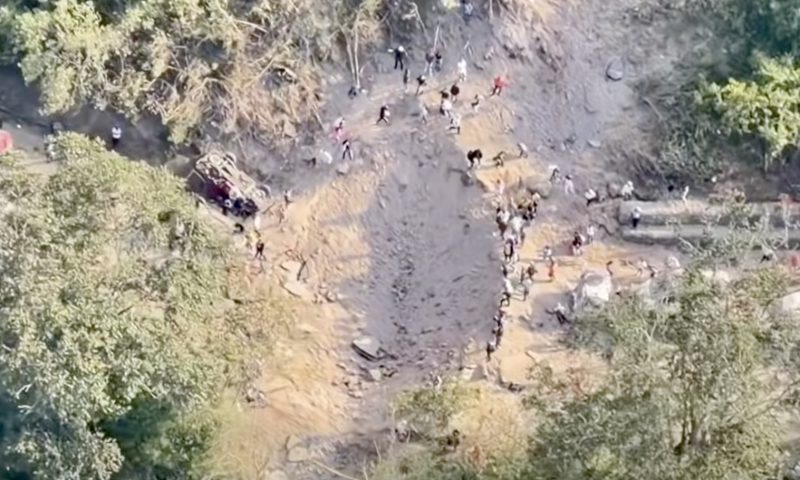
An explosive attack on the Pan-American Highway near the municipality of Cajibío, in Colombia’s Cauca department, left at least 21 people dead and 56 injured, Defense Minister Pedro Sánchez Suárez confirmed.

The attack occurred Saturday, April 25, on one of the main roads in the country’s southwest, an area historically affected by the presence of illegal armed groups.

The minister attributed the attack to alias “Marlon,” described as one of the most wanted leaders in the region, “for whom we are offering a reward of up to $1.4 million USD,” he said.

According to local media reports cited by El Tiempo, “the attack was initially intended to target army troops. However, a change in military plans reportedly led to the explosive being detonated while civilians were passing through the area.”

The impact of the attack was significant. Spain’s El País reported “that the explosion created a large crater, left the road covered in debris, and forced rescue operations that lasted several hours due to difficult access conditions.”

Aerial view of the crater caused by the explosion on the Pan-American Highway. Photo courtesy of Colombia’s Ministry of Defense.

Aerial view of the crater caused by the explosion on the Pan-American Highway. Photo courtesy of Colombia’s Ministry of Defense.

Cauca Governor Octavio Guzmán described the incident as one of the most serious attacks in the region in decades. “What happened on April 25 constitutes the most brutal and ruthless attack against civilians in decades,” he said.

The attack comes amid a resurgence of violence in southwestern Colombia, where illegal armed groups linked to drug trafficking, illegal mining and other illicit economies operate. Authorities continue operations in the area as investigations proceed to clarify the circumstances of the attack and determine responsibility.

According to reports by BBC Mundo, alias “Marlon” is a dissident FARC leader identified as Iván Jacobo Idrobo Arredondo, “the alleged head of the Jaime Martínez structure, part of the Estado Mayor Central (EMC),” one of the country’s most powerful illegal armed groups.

Operations and arrests

As part of response operations, the National Police reported the capture of José Alex Bitoco, alias “David” or “Mi Pez,” identified as the leader of the Dagoberto Ramos structure, another illegal armed faction, who is believed to have acted under orders from alias “Marlon”.

National Police Director Gen. William Rincón Zambrano said the detainee “will have to answer for the wave of terrorist activity” and linked him directly to the attack, stating that “he is responsible for what happened on April 25 in the El Túnel sector on the Pan-American Highway.”

The Defense Ministry reiterated that alias “Marlon” remains a priority target. “He is a high-value target, and we are searching for him with all the capabilities of the state. We have deployed a dedicated intelligence task force to locate him,” Sánchez said, confirming a reward of up to $1.4 million USD for information leading to his capture.

Context: criticism of “Paz Total” policy (Total Peace)

The attack comes amid growing security deterioration in Colombia, intensifying criticism of President Gustavo Petro’sTotal Peace” policy. The Ideas for Peace Foundation (FIP) has warned of a possible failure of the strategy, noting that “less than four months before the end of the government, the lack of progress in peace negotiations and the deterioration of security have become one of the main points of criticism of the Petro administration.”

According to the think tank, during the current administration “the number of disputed territories between illegal actors has nearly doubled, and the number of members in these structures has increased by 85%: they now total more than 27,000 members, including armed individuals and support networks.”

This figure not only represents a significant increase but also places the country at levels similar to, and even higher than, those seen before the peace process with the FARC began. Between 2011 and 2012, the estimate stood at around 26,800 members, compared with 14,600 at the end of Iván Duque’s administration in 2022.

The recent increase has also been rapid. According to the FIP, armed groups grew by 23.5% over the past year (from December 2024 to December 2025), reflecting a swift reconfiguration of these structures. At the same time, violence has intensified. Analysts such as Professor Karol Solís Menco note that over the weekend of April 25–26 alone, “26 terrorist attacks of varying magnitude” were recorded across the country.

Political analysis outlets point to a structural dynamic. According to La Silla Vacía, “Cauca is not experiencing an isolated event, but rather a phase of intensifying territorialized violence, marked by fragmentation among armed actors and a type of violence capable of producing national-level impacts.”

In this context, FARC dissident groups have once again taken center stage in the conflict. “Once again, attention is turning to FARC dissidents. Every attack, every gas cylinder bomb, every assault in Valle and Cauca ends with the same name on the table: the Jaime Martínez structure, one of the strongest groups of Iván Mordisco’s Estado Mayor Central,” El País reported.

Violence indicators also reflect sustained deterioration. “In the first four months of 2026, Colombia has already recorded 48 massacres, with 229 victims, most of them civilians, according to Indepaz. It is the highest figure in the past decade. With these numbers, which represent only a partial picture of the country’s violence, this election year is shaping up to be the most violent since the 2016 peace agreement with the now-defunct FARC guerrilla group,” the same outlet reported.

Cauca, where the attack took place, is considered one of the most sensitive regions. “Cauca is particularly complex because it combines multiple layers of conflict: the historic presence of Indigenous, peasant and Afro-descendant communities; illicit economies; Pacific corridors; disputes over drug trafficking routes; control of the Pan-American Highway; and the presence of FARC dissidents, particularly structures linked to Iván Mordisco,” El País said.

Experts agree that part of the difficulty lies in the design and implementation of the government’s strategy. “Early implementation was a valuable innovation in intent, but it failed to ensure minimum conditions of verification and institutional coherence,” said analyst Germán Valencia of the Peace and Reconciliation Foundation (Pares).

Taken together, these factors have led various sectors to conclude that the “Total Peace” policy faces serious structural limitations amid a scenario of armed fragmentation and territorial expansion by illegal groups.

  •  

Colombia elections: candidates set for debate after Cepeda backtracks

Bogotá, Colombia – Leftist presidential candidate Iván Cepeda challenged his opponents to a debate on Saturday after turning down previous proposals to face-off with his rivals.

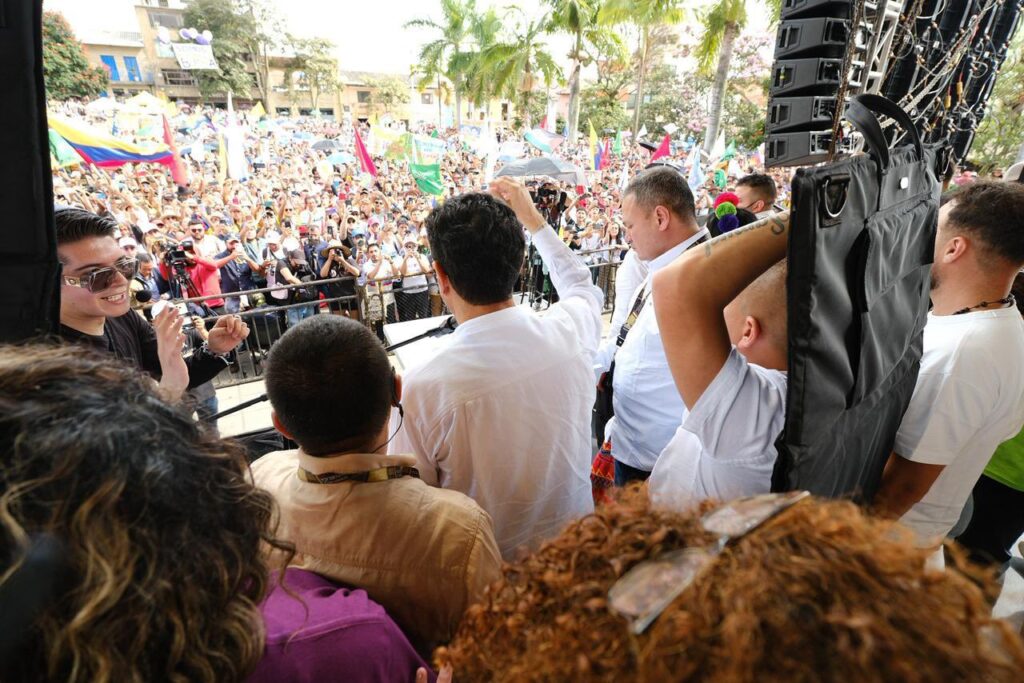
“I challenge the far right, its two candidates – Senator Paloma Valencia and lawyer Abelardo de la Espriella – to a debate,” Cepeda told a crowd at a rally in Fusagasugá, a city near Bogotá. 

His opponents responded by accepting the proposal, while also highlighting that they had been calling for a debate for months.

The possibility of a live face-off between candidates has been a recurring theme ahead of first-round presidential elections on May 31.

Shortly after beginning his candidacy last year, Cepeda dismissed the idea of participating in a debate: “I’m not going to take part in debates—let me make this clear from the outset—to exchange insults with other candidates, or to threaten one another, or to denigrate one another.”

Iván Cepeda addressed a crowd of supporters on Saturday in Fusagasugá.

Cepeda’s rivals have repeatedly criticized him for refusing to spar with them on the public stage, something they highlighted following the leftist candidate’s U-turn on Saturday.

“Allow me to correct you: you’re not issuing a challenge; you’re accepting the challenge you were invited to take up months ago,” said criminal defense attorney de la Espriella.

Valencia, the candidate for the Centro Democrático (Democratic Center) party, also seized the opportunity to pounce on Cepeda: “A few weeks ago, it was I who challenged Iván Cepeda several times to a face-to-face debate, yet you chose to hide away in the Senate with a controlled microphone.”

She suggested that Cepeda’s U-turn owes to a worsening performance in recent polls: “Now that the polls are tightening, you’re coming out of Fusagasugá with this challenge.”

Analysts agreed with Valencia’s suggestion, saying that Cepeda’s debate proposal is an attempt to inject life into a stagnating campaign. 

“Cepeda has offered to debate because of his campaign’s inherent lack of momentum and general weakness. He is not captivating any new voters or finding a tangible way of changing the narrative in his favor,” Sergio Guzmán, Director at Colombia Risk Analysis, a political risk consultancy, told Latin America Reports

Internal party polls reportedly show sluggish growth in Cepeda’s polling numbers since he became the official candidate for the Pacto Histórico (Historic Pact) in October. 

Meanwhile, Valencia has been soaring in the polls following her victory in presidential primaries in March; Cepeda and de la Espriella did not partake.

But the debate is not without risk for Cepeda, according to Guzmán: “Cepeda runs the risk of having to go on the defensive of Petro and his administration.”

Others believe that Cepeda’s oratory style does not lend itself to the televised debate format.

“He has a much more academic tendency, which is not so typical in politics, let alone in modern politics,” noted Miguel Jaramillo Luján, a Colombian political strategist. In contrast, he noted that de la Espriella and Valencia have a more media-savvy communication style.

Nevertheless, the analyst told Latin America Reports that Cepeda’s debate style could give him the chance to woo crucial centrist voters: “I believe he can inspire confidence and credibility among his target audience and even among the centre, particularly when it comes to dispelling certain myths and lies that have been spread by the centre and the right.”

With the leading candidates agreeing to debate, the battle over the specifics – including moderators, questions, and location – begins. 

The post Colombia elections: candidates set for debate after Cepeda backtracks appeared first on The Bogotá Post.

  •  

Colombia presidential candidates appear in Governors’ Summit

Governors’ Summit 2026. Image credit: National Federation of Departments.

On Wednesday, the Universidad de la Sabana and the National Federation of Departments (FND) hosted the Governors’ Summit, a rare event that convened almost all of the frontrunners in Colombia’s presidential race.

Paloma Valencia, Abelardo de la Espriella, Sergio Fajardo, Roy Barreras, and Claudia López fielded questions from regional authorities about how they planned to tackle problems in Colombia’s provinces.

While Iván Cepeda, the leftist favorite, was scheduled to attend, his team pulled out at the last minute, fuelling the candidate’s reputation for being media-shy.

Early on Wednesday morning, governors and their aides began filtering into the heavily policed event in Chía, a municipality north of Bogotá.

The FND selected questions from governors which were then posed to candidates by the two moderators: El Tiempo Director Andrés Mompotes and his counterpart at radio station La FM, Juan Lozano.

The main themes of the day were tackling insecurity and armed groups, investing in regional development, and mechanisms to improve provincial representation.

For some governors, the event was an opportunity to redress an acute crisis; Erasmo Zuleta, who heads the local government in Córdoba, used the forum to highlight the ongoing effects of disastrous floods which began earlier this year.

“The emergency didn’t pass, nor did the tragedy. The floodwaters receded, leaving behind widespread damage; they took lives, homes, crops, and material possessions,” Zuleta told The Bogotá Post.

“Now more than ever, we need greater solidarity to recover from the damage,” continued the Governor, in a bid for help from the national government.

Another recurring theme was prison reform, following a recent scandal over a concert that took place in the Itagüí prison in Antioquia.

Abelardo de la Espriella, the firebrand criminal defense attorney and right-wing frontrunner, used the opportunity to push his tough-on-crime proposal.

“In Colombia, there are no prisons—there are universities of crime,” said de la Espriella, who took aim at the National Penitentiary and Prison Institute (INPEC), which he described as “a den of thieves.”

Abelardo de la Espriella talks at the summit. Image credit: National Federation of Departments.

The candidate added that Colombia should look to El Salvador to develop its incarceration model, praising dictator Nayib Bukele’s draconian mass imprisonment efforts that have dramatically reduced crime and drawn condemnation from rights’ groups.

Security, more broadly, was also high on the agenda, as Colombia grapples with a surge in violence related to illegal armed groups.

“Today we are living in the grip of insecurity. They want to drag us back into the abyss we thought we had left behind,” railed Paloma Valencia, the candidate for the right-wing Centro Democrático (Democratic Center) party. 

Fears of insecurity affecting democratic processes have overshadowed the elections, with the United Nations issuing a warning earlier this year that armed groups could disrupt the vote.

The Valle del Cauca department has been one of the most heavily affected by the armed conflict, with its capital, Cali, rocked by a wave of bomb attacks by rebel groups in the past year. 

But its Governor, Dilian Francisca Toro, offered reassurances in conversation with The Bogotá Post: “We ensure that in every municipality and across all regions, law enforcement is present so that we can have free, democratic elections where there is no restriction whatsoever on the ability to vote.”

Toro also cited the elections on March 8 as an example of the success of security planning: “In Valle del Cauca we really had very peaceful elections, and now, God willing, we will have them again.”

Amid the mounting threat by armed groups, candidates De la Espriella and Valencia vow an iron fist, using military force to crush rebel forces. They model themselves after former right-wing President Álvaro Uribe (2002-2010), who teamed up with the U.S. to launch a total war on the Revolutionary Armed Forces of Colombia (FARC). 

But leftist Iván Cepeda highlights the human rights abuses perpetrated by the government during that period, in which thousands of innocent civilians lost their lives. He proposes to continue the current administration’s Paz Total – or Total Peace – policy of negotiating with armed groups.

But Cepeda missed the opportunity to make his case to the public, fuelling criticism by his opponents.

De la Espriella has repeatedly called on Cepeda to agree to a debate, but the leftist candidate has yet to accept.

With less than two months before the May 31st election, there are increasingly few opportunities for the candidates to make their case before the public.

The post Colombia presidential candidates appear in Governors’ Summit appeared first on The Bogotá Post.

  •  

Bancolombia Forecasts April Trading Range Following 2.1% Appreciation of the COP

Stronger peso and oil prices shift Colombian investment landscape.

The Colombian peso (COP) experienced a 2.1% appreciation during March 2026, driven by a recovery in global oil prices and key domestic developments. According to the latest analysis from Bancolombia (BVC: BCOLOMBIA / NYSE: CIB), the performance of the currency coincided with the results of national legislative elections and recent monetary policy adjustments by the Banco de la República.

Global energy markets recorded a significant increase in crude prices throughout the month. Brent crude rose 63% to end March at $118 USD per barrel, while West Texas Intermediate (WTI) increased 51% to close at $101 USD per barrel. These price movements have been largely attributed to geopolitical tensions in the Middle East, which continue to influence international commodity flows and investor sentiment.

On the domestic front, the Gran Coalición por Colombia primary election recorded a turnout of more than 5 million voters. Market analysts indicated that the high participation rate was viewed as a positive indicator of institutional stability. Simultaneously, the Board of Directors of the Banco de la República increased the national policy interest rate by 100 basis points, bringing the benchmark rate to 11.25%. This decision aligns with regional efforts to manage inflationary pressures through tighter monetary control.

International market conditions also reflect a shift in expectations regarding the Federal Reserve. Due to ongoing conflict in the Middle East and persistent economic indicators, markets currently anticipate that the US central bank will maintain existing interest rates without cuts for the remainder of the year.

Looking forward to April, the research team at Bancolombia—led by Chief Economist Laura Clavijo, Macroeconomic Manager Jose Luis Mojica, and International and FX Analyst Maria Paula Gonzalez—projects that the exchange rate will trade within a range of $3,625 COP to $3,725 COP. This forecast accounts for continued volatility and heightened uncertainty in both global and domestic financial markets.

Bancolombia (photo © Loren Moss)

  •  

U.S. Assures Colombian President Petro He Does Not Face Charges Right Now

The Justice Department is examining Gustavo Petro for possible ties to drug traffickers. U.S. officials have told him that for now he does not face criminal charges arising from the probes.
  •  

U.S. prosecutors probe Colombia’s Petro over alleged narco links, NYT reports

U.S. federal prosecutors have opened preliminary criminal investigations into Colombian President Gustavo Petro over alleged links to drug traffickers and possible illicit financing of his 2022 campaign, according to a report by The New York Times.

The previously undisclosed probes are being conducted by federal prosecutors in Manhattan and Brooklyn and involve specialists in international narcotics trafficking, as well as agents from the Drug Enforcement Administration and Homeland Security Investigations, the newspaper said, citing people familiar with the matter.

Investigators are examining, among other issues, whether Petro held meetings with individuals connected to drug trafficking networks and whether his presidential campaign solicited or received donations from such actors. The two investigations are being carried out independently and remain in their early stages, with no certainty that they will lead to formal criminal charges.

There is no indication that the White House played any role in launching the investigations, according to the report. However, the inquiries emerge in a broader context of heightened tensions and fluctuating diplomacy between Bogotá and Washington.

Relations between Petro and U.S. President Donald Trump have been volatile, marked by sharp public exchanges, threats of tariffs that were never implemented, and the temporary revocation of Petro’s U.S. visa. Trump has repeatedly accused Petro of failing to curb narcotics production and has described him in highly critical terms, while Petro has denounced what he characterises as political pressure and interference.

The U.S. Treasury Department last year imposed sanctions on Petro, members of his family and senior officials, including Interior Minister Armando Benedetti, alleging links to narcotics activity. The measures, which included asset freezes and travel restrictions, were justified by Washington on the grounds that cocaine production in Colombia had reached record levels and that the government had offered concessions to armed groups involved in trafficking.

Petro has rejected those claims, insisting that his administration has strengthened seizures of cocaine and slowed the rate of expansion of coca cultivation. He has also denied any knowledge of illicit funds entering his campaign, dismissing the allegations as politically motivated attacks.

Colombia’s Attorney General  is examining charges that Petro’s son – Nicolás Petro – received money from individuals linked to illicit activities during the 2022 campaign. While his son acknowledged receiving funds that were not reported, no criminal charges have been filed against the president himself, and Petro has maintained he was unaware of the campaign “donations”.

According to the NYT, the U.S. investigations are taking place amid a broader strategy in which Washington has increasingly used legal and judicial tools to advance foreign policy objectives. Analysts say such actions could serve as leverage in bilateral relations or influence political dynamics in allied countries.

The timing of the probes is particularly sensitive, as Colombia prepares for presidential elections on May 31, with a potential runoff in June. Petro, the country’s first leftist president, is constitutionally barred from seeking re-election but has actively backed his political successor with hardleftist Iván Cepeda.

The allegations could reverberate through the electoral campaign, where relations with the United States remain a central issue. Candidates on the right have emphasised the importance of maintaining close ties with Washington, while figures on the left have framed U.S. actions as a challenge to Colombia’s sovereignty.

Despite months of tensions, diplomatic relations between the two countries have shown signs of stabilisation in recent weeks. Petro and Trump held a bilateral meeting at the White House earlier this year, which both sides described as constructive, and officials have since sought to rebuild communication channels.

Even so, uncertainty persists over the trajectory of the relationship, particularly as Washington continues to prioritise counternarcotics cooperation with Colombia, historically one of its closest partners in the region.

Petro has consistently denied any links to drug trafficking and has pointed to his government’s security strategy, which includes negotiations with armed groups and efforts to reduce violence, as evidence of a broader approach to the drug trade.

The start of U.S. investigations add a new layer of complexity to an already fraught political and diplomatic landscape, with potential implications not only for Petro’s post-presidential future but for Colombia’s ties with its most important security ally.

  •  

‘Gaitana IA’: The AI candidate that ran in Colombia’s elections

Gaitana IA. Image credit: @Gaitana_IA via X

On March 8, for the first time in Colombia’s history, an artificial intelligence candidate appeared on ballot papers across the country. 

Gaitana IA (AI) ran for the Indigenous seat in the Senate and the House of Representatives in the northern state of Sucre.

While Gaitana did not win a seat in either of the country’s legislative bodies, it has sparked debate about the role of AI in Colombian politics.

With the ballots counted, Gaitana won a total of under 3,000 votes – less than 2% of the total votes for the Indigenous seat – suggesting that many people remain skeptical of this new digital approach.

Many questions have emerged surrounding Gaitana, such as why the Registraduría—the Colombian entity in charge of validating and accepting candidates—permitted this unprecedented candidacy, or what the intentions were behind the AI.

“Many local media outlets talked about an AI going to Congress, but that is not the case; they are humans leading the project,” Gaitana’s co-founder, Natalia Aase, told The Bogotá Post

“It is actually a consensus tool developed by our community members, between 14 and 25 years old, from the Senú community of Reparo Torrente, in Coveñas,” she explained.

Rather than planning for the AI to assume office, Gaitana was devised as a democratic experiment underpinned by real human candidates

Aase detailed how the platform was designed to work: Colombian citizens could subscribe through a link to virtually participate and propose various debates regarding topics such as healthcare, women’s rights, and more. These interactions would also feed the AI database.

Once an initiative reached a collective consensus, the people occupying the seats in Congress would “decide the direction of the proposed laws.”

The two humans represented by Gaitana were Carlos Redondo Rincón, a Mechatronics Engineer from the Senú community, who was running for Senate, and Luz Rincón, an Embera-Katio Indigenous sociologist, who was seeking a seat in the House of Representatives.

The co-founder of Gaitana also revealed that the team conducted deep research into global democratic models, such as the one in Norway, and compared them with their own community dynamics.

As the research advanced, the team found that their community in Senú had already established a model of social interaction that worked well, prompting them to launch a digital project modeled on their own practices.  

This meant digitizing their traditional way of reaching a consensus; in the Senú community, men, women, and youth gather around tables to discuss specific topics, such as women’s health or local fishing.

“Gaitana IA is not a generative AI; it is a participatory AI. What does that mean? Well, it is not ChatGPT. Instead, it takes the information provided by the users and organizes it,” pointed out Aase. “Transparency and security are the most important things for us; that is why we use blockchain technology—a system of blocks—to power this platform.”

According to Aase, the project was born from a motivation to prevent corruption and explained that with ‘Gaitana AI’, the decisions are not made by a single person but must be approved by at least 100 people. 

“You might be able to manipulate one individual, but you cannot manipulate a hundred if you don’t even know who they are,” she concluded.

The post ‘Gaitana IA’: The AI candidate that ran in Colombia’s elections appeared first on The Bogotá Post.

  •  

In rural Antioquia, voters turn to Uribismo amid disappointment over Petro’s Colombia

Voters in San Pedro de los Milagros. Credit: Manuela Peña Giraldo.

Colombians voted for a new Congress on March 8 in an election that stretched across thousands of rural towns and villages, where geography, infrastructure and the legacy of armed conflict continue to shape how citizens participate in democracy.

“I don’t like politics,” said Silvia Bedoya, 52, a resident of San Pedro de los Milagros in the mountains north of Medellín. “Instead of uniting people to move the country forward, it tends to divide us.”

Despite that frustration, Bedoya said voting still matters. “If you vote, at least you have the chance to raise your voice about something you don’t like,” she said. “If you don’t vote, you just have to accept what happens.”

More than 40 million Colombians were eligible to vote in the elections, with 13,493 polling stations installed nationwide, including 7,482 in rural areas, according to the National Registry Office. Security forces said they deployed 120,000 police officers across the country to guarantee the vote in the nation’s 1,104 municipalities.

The scale of the operation reflects the logistical challenges of voting in rural Colombia, where many communities remain separated by mountains, unpaved roads and long travel distances.

In San Pedro de los Milagros, a cattle-farming municipality in the Andean department of Antioquia, voters arriving at polling stations described a mixture of civic duty, skepticism toward politicians and concern over the country’s economic and social problems.

Mauricio Martínez, 47, declined to say who he supported, but emphasized the importance of participation. “Voting is the greatest right and duty we have as citizens,” he said.

Others said their choices were shaped by dissatisfaction with the government of President Gustavo Petro, Colombia’s first leftist president, whose progressive agenda – including a major land reform program – has drawn both support and criticism in rural areas.

Maicol Jovani Sepulveda, 28, said he voted for the right-wing Democratic Center (Centro Democrático) party after losing faith in promises he believed would help young people. “I believed they were going to help us study,” he said. “But I didn’t receive a scholarship and I couldn’t go to university, so I was disappointed.”

The Democratic Center won more than 40% of the vote for both the Senate and the House of Representatives in San Pedro de los Milagros, a 24% increase from 2022. Across the department of Antioquia, it was also the most voted list with over 31% of votes, followed by the ruling leftist Historic Pact (Pacto Histórico) coalition with 16%.

Some voters in the town said their support for the right reflected growing frustration with Petro’s government. Among them was María Regina Avendaño Muñoz, 63, who said she cast her vote for Centro Democrático after feeling disappointed with the administration: “I’m very sad because he promised change and convinced many young people and teachers who voted for him.”

Beyond individual concerns, analysts say structural barriers have long shaped political participation in rural Colombia.

Rural voters play an important role in Colombia’s political landscape. Although the country’s largest voting blocs are concentrated in major cities, the countryside has long been central to debates over land ownership, security and development – issues that have shaped the country’s decades-long armed conflict and remain at the center of national politics.

“When we talk about political participation, we’re really talking about processes of democratization – who gets to speak and under what conditions,” Bladimir Ramirez Valencia, a professor at the University of Antioquia’s Institute of Regional Studies who works with farmers’ organizations, told Latin America Reports.

Historically, he said, rural communities have faced both violence and logistical obstacles that limit their ability to vote. About 75% of the victims of Colombia’s armed conflict have been civilians, many of them farmers, according to historical estimates.

Distance alone can also be a barrier. “For many communities, polling stations used to be three or four hours away,” Ramírez said. “Bringing voting sites closer to those places is fundamental.”

Authorities expanded electoral infrastructure for the 2026 vote, increasing the number of polling stations by 5,5% in rural areas compared with the previous 2022 election.

In some regions of Antioquia, Ramírez said, rural residents traveled to voting sites on foot or by chiva, the brightly colored buses that connect remote villages with municipal centers.

Recent government policies may also be shaping political engagement in the countryside. Programs related to land reform, land restitution and rural development have helped strengthen the government’s legitimacy among some farming communities, Ramirez said. “When farmers feel they are being heard and see policies reaching their territories, that can influence how they participate politically.”

Still, rural voting patterns remain complex and vary widely by region. “You can find campesino families involved in social movements defending their land,” Ramírez said. “But when elections arrive, they still vote for traditional parties.”

Across Colombia’s countryside, the election reflected both deep skepticism toward politics and the determination of rural voters to take part in a democratic process that has historically been harder to reach in the country’s most remote regions.

The post In rural Antioquia, voters turn to Uribismo amid disappointment over Petro’s Colombia appeared first on The Bogotá Post.

  •  

Election boost for Pacto Historico in Bogotá …

… but Centro Democratico bounces back, while small parties lose out in March 8 voting.

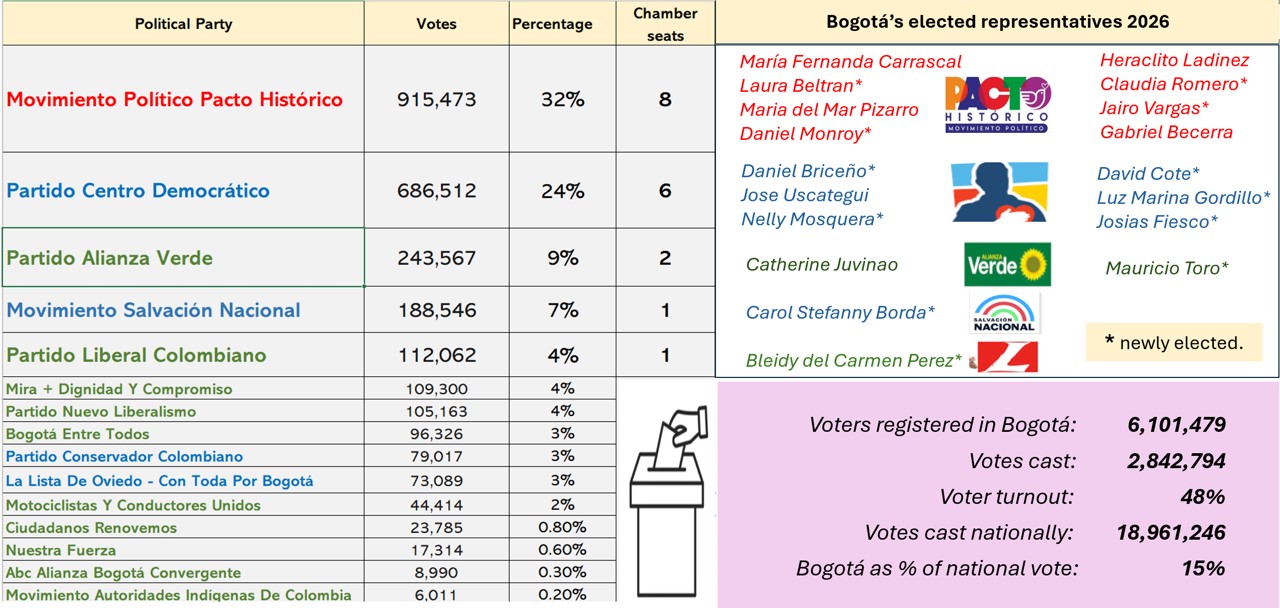
Voting in Bogotá on March 8. Participation was 48%, with the city making up 15% of overall votes cast. Photo: Registraduria

Last Sunday’s elections brought mixed results to Colombia’s capital with the left-wing Pacto Historico party cementing its position as most popular party in the city even while its main opponent the Centro Democratico showed relatively bigger gains.

With 18 Bogotá seats up for grabs in the Chamber of Representatives, the Pacto Historico, backed by President Gustavo Petro, took a majority of eight, an increase of one seat from the previous period.

And by garnering 900,000 votes the incumbent party upped its count by more than 100,000 compared to 2022, when it was also the most popular party in the city.

But by some comparisons the right-wing Centro Democraticos result was even more impressive, surging from two to four seats on March 8, totalling 700,000 votes, up from around 300,000 in 2022.

In Bogotá, as at national level, the losers were the smaller independent parties often citizen-led or based on niche issues. Also failing was the Nuevo Liberalismo party, founded by mayor Carlos Galán, which failed to pick up a single seat, a sign perhaps of citizen discontent with the capital’s current administration.

The demise of the small and independents reflected a national trend of voter gravitation towards the two bigger parties, Centro Democratico and Pacto Historico, whose top candidates – Paloma Valencia and Iván Cepeda – are likely contenders for the presidential slug-out in May. 

The remaining Bogotá seats went to smaller traditional parties the Green Alliance (2), and the Liberal Party (1), with one seat awarded to the upstart Salvacion Nacional formed by firebrand right-wing presidential candidate Abelardo De La Espriella.

Voting results for seat in the Cámara de Representantes on March 8 in Bogotá. Data: Registraduria
Voting results for seat in the Cámara on March 8 in Bogotá. Note this is the preliminary electronic count, changes can take place after manual scrutiny of the results this week. Data: Registraduria

Political phenomenon

The stand-out result in the Bogotá caucus was Centro Democratico’s first-time congressional candidate Daniel Briceño who captured 262,000 votes for his seat in the chamber.

Not only did Briceño get the highest congressional vote across Colombia, he also out-voted the entire list of senators – which get elected nationally – with one of the historically highest ever recorded in Colombia for a camara or senado representative.

The 34-year-old lawyer was being hailed this week as a political phenomenon. Briceño is currently serving on Bogotá city council where he campaigns against corruption, cronyism and waste through a clever combination of social media and forensic takedowns of his political targets.

The influencer made his name by digging into big data on government databases that has allowed him to uncover contracts and documents embarrassing to the administration of Gustavo Petro.

Since then, he has gained both an online following and voter base by scrutinizing and exposing mismanagement at all government levels.

ise of the influencers: Daniel Monroy, left and Laura Beltran aka Lalis , center, and Daniel Briceño, right.
Rise of the influencers: Daniel Monroy, left and Laura Beltran aka Lalis , center, and Daniel Briceño, right.

Defend every vote

Briceño’s jump to congress was mirrored on the political left in Bogotá by the rise of influencers Laura Beltran, aka Lalis, and Daniel Monroy, who both won seats for Pacto Historico.

Despite their success at the urns on March 8, both Monroy and Beltran amplified claims of fraud in the days after the election.

Beltran, posting on X, issued a media alert begging for lawyers in the city to volunteer their time as scrutineers to check the recount after detecting “the winds of fraud”.

“We are defending each vote for the Pacto Historico. In Bogotá we have the chance to recover one more seat,” she said, suggesting the party could up its count to nine.

Monroy, for his part, made a widely echoed claim that  “votes for Pacto Historico are disappearing”.

So far there is no evidence of electoral fraud, though changes in the final vote could come about from errors corrected in the final scrutiny taking place in Bogotá this week.

Meanwhile preliminary declarations by European Union electoral observers  – 145  were deployed to Colombia – stated that the voting process had been “transparent, accurate and well-organized”.

Voter turnout for Bogotá was 48 per cent, similar to the level of participation across the country, with the capital providing 15 per cent of the national vote. A higher turnout is expected for the May presidential elections.

The post Election boost for Pacto Historico in Bogotá … appeared first on The Bogotá Post.

  •  

Paloma Valencia surge reshapes Colombia race as election season begins

Colombia’s presidential race entered a decisive new phase this week after Sunday’s inter-party primaries propelled conservative senator Paloma Valencia into the national spotlight and triggered a scramble among political factions to forge alliances ahead of the May 31 election.

Valencia’s commanding performance in the right-wing “La Gran Consulta” primary – where she secured roughly six million votes – has reshaped the political landscape, opening a contest within the conservative bloc while forcing candidates across the spectrum to recalibrate their strategies.

The vote effectively marks the start of Colombia’s election season, in which presidential hopefuls must broaden their appeal beyond ideological bases while navigating a fragmented political field.

For the right, the central challenge is whether it can attract moderate and centrist voters without alienating the hardline supporters who form the backbone of a political base – and party – associated with former president Álvaro Uribe.

Valencia, a senior figure in Uribe’s Democratic Center, emerged from the primaries as one of the leading conservative contenders after her vote total surpassed the turnout achieved by President Gustavo Petro and Vice President Francia Márquez in their coalition primaries ahead of the 2022 election.

For Uribe’s movement, which appeared weakened after the presidency of Iván Duque and several electoral setbacks, the result represents an unexpected demonstration of political resilience.

Yet the surge of security-focused Senator has also intensified competition from the far right.

Barranquilla-based lawyer Abelardo de la Espriella, who had previously dominated opposition to Petro, now faces a rival capable of consolidating support among traditional party structures while courting voters beyond the hard-right.

De la Espriella announced Tuesday that Ivan Duque’s former finance minister José Manuel Restrepo will join his presidential ticket as vice-presidential candidate, a move widely interpreted as an attempt to add economic credibility to a campaign largely driven by security rhetoric.

Political observers on the night of the consulations emphasized that Uribe will play a decisive role in shaping the outcome of any hard-right and center-right alliance.

The former president remains the most influential figure within Colombia’s right-wing political establishment and will act as “kingmaker” when negotiations begin over a possible understanding between Valencia and De la Espriella aimed at consolidating the anti-Petro vote.

Whether such an agreement materializes remains uncertain, as both candidates seek to position themselves as the principal challenger to the left in the first round scheduled for May 31.

Sunday’s primaries also produced a surprise showing from economist Juan Daniel Oviedo, the former head of Colombia’s national statistics agency (DANE), who secured more than one million votes and finished second in La Gran Consulta.

Oviedo has cultivated support among urban and younger voters, particularly in Bogotá, where his technocratic style and socially liberal positions have resonated with diverse constituencies, including large segments of the LGBTQ community.

Yet his unexpectedly strong performance now places him at a political crossroads.

Oviedo is expected to meet Valencia on Thursday to discuss a possible alliance that could include joining her ticket as a vice-presidential candidate.

Such a partnership could help Valencia reach voters beyond the traditional conservative base. But it also carries risks for Oviedo, whose supporters may question a close association with the Uribe-aligned political establishment that has dominated Colombia’s right for more than two decades.

The two politicians differ sharply on several issues, including the 2016 peace agreement with FARC  and role of the Special Jurisdiction for Peace (JEP), the transitional justice tribunal created to prosecute war crimes committed during Colombia’s internal conflict.

While Oviedo has defended Juan Manuel Santos’ peace agreement and role of the tribunal, Valencia has long criticized JEP and promoted reforms aimed at limiting its legal authority.

Despite the shifting dynamics on the right, the left retains an important institutional foothold following Sunday’s legislative elections.

Petro’s governing coalition, the Historic Pact, emerged as the largest force in the Senate with 25 of the chamber’s 102 seats, according to official results, though it fell short of an outright majority and will need alliances with other parties in the fragmented legislature.

Within the progressive camp, however, the primaries exposed clear divisions.

Former Senate president and former Ambassador to London Roy Barreras secured just over 200,000 votes in the left-wing primary and publicly blamed Petro for the weak turnout, accusing the president of discouraging supporters from voting on Sunday to cement the official candidacy of hard-left candidate Iván Cepeda.

The primaries also underscored the continued weakness of Colombia’s political center.

Former Bogotá mayor Claudia López won her coalition’s primary but attracted fewer than half a million votes, a disappointing result that leaves her entering the first round of the presidential race with reduced political momentum.

With nearly three months remaining before the first round of voting, the campaign that begins this week bears little resemblance to the one that existed before Sunday’s primaries.

The conservative opposition remains divided but newly energized, the left retains institutional strength despite internal tensions, and the political center faces an uphill battle to remain relevant.

In a race now expected to be decided in two rounds, Colombia’s presidential contest is once again wide open as candidates maneuver to build alliances and capture the pivotal voters who will ultimately decide the country’s political direction.

  •  

Historic Pact and Democratic Center parties lead Colombia’s legislative elections

Image credit: Registraduría Nacional del Estado Civil via X.

Amelia Makstutis, Lily O’Sullivan and Jonathan Hernández Nassif contributed to reporting.

Colombians went to the polls on Sunday to choose new representatives to Congress and the Senate, as well as presidential candidates for three main political blocs. Both the ruling leftist party and opposition right-wing party had good showings, setting up a potentially polarizing next legislative term. 

Despite warnings of possible political violence by the country’s illegal armed groups, elections took place “without any major security incidents” according to the United Nations mission in Colombia. Overall voter turnout was around 48%, about on par with previous legislative election years. 

With over 3,000 candidates competing for 102 Senate and 182 House seats, leftist President Gustavo Petro’s Historic Pact (Pacto Historico) party and the opposition Democratic Center (Centro Democratic) — founded by former right-wing President Álvaro Uribe — had the strongest showing Sunday. 

By 10:00 PM, with nearly 100% of preliminary votes tallied, Historic Pact secured 22.8% of Senate votes while the Democratic Center tallied 15.6%, according to the National Civil Registry. The Liberal Party (Partido Liberal), Green Alliance (Alianza Verde), and the Conservative Party (Partido Conservador de Colombia) trailed with 11.7%, 9.8% and 9.6% respectively. 

Official tallies for the lower house are still unclear, but analysts expect a divided Congress. 

The results could keep Colombia’s legislature polarized as no party was able to secure an absolute majority. Throughout his presidency, Petro has faced barriers in Congress to passing his progressive legislation and he even called for a constituent assembly to circumvent the body. 

His party’s presidential candidate, Senator Ivan Cepeda, who aims to carry the torch for Petro’s reforms, celebrated the party’s win in the senate race saying, “Today our second half begins, with a strong and committed caucus we will begin a new stage of transformations.” 

Political risk consultant Sergio Guzman told Reuters, “The left showed that it is here to stay, the ​right that it is divided, but it is not weak. We are going to have a fragmented Congress for the next legislature.”

Jeni Suarez, 41, who voted for the Historic Pact for the Senate and Congress, told The Bogotá Post in Medellin that the most important problem at the moment is the “political war from side to side.” 

Voter registration table in Medellin, Colombia. Image credit: Jonathan Hernández Nassif.

Presidential primaries 

In addition to the House and Senate, Colombia also held three primary elections — known as inter-party consultations – to choose candidates for the three main political blocs: left, centrist, and right-wing. 

Two candidates currently leading in the polls — far-right lawyer Abelardo de la Espriella and left-wing Senator Ivan Cepeda — were not included in the primaries and the eventual nominees from the three consultations – “The Consultation for Solutions: Health, Security, and Education” (center); “Front for Life” (left), and “The Great Consultation for Colombia” (right) – will go on to compete against them in the first round of presidential elections on May 31. 

Sunday night’s big winner was Paloma Valencia, a protégé of former President Uribe’s Democratic Center party with a political pedigree that includes a former president grandfather and an aunt who was Colombia’s first female cabinet-level minister. 

Addressing her base at her victory party, Valencia lambasted President Petro, calling his administration “a time bomb that’s ticking down the seconds until it explodes.” 

In an interview ahead of the primaries, Valencia told Latin America Reports, “I am Uribista, and I will die Uribista,” and said she plans to follow in her mentor’s footsteps. 

Former Bogotá Mayor Claudia Lopez handily won her Consultation for Solutions primary, and former Medellín Mayor Daniel Quintero conceded to longtime politician and former Senator Roy Barreras in the Front for Life consultation. 

“I want to congratulate Roy on his victory. I will support him as required by law,” said Quintero on X. “I hope he leads us toward a process of unity.”

Paloma Valencia celebrates presidential primary win on March 8. Image credit Paloma Valencia via X.

Election security 

In the days leading up to elections, the UN High Commissioner for Human Rights warned that non-State armed groups were using violence to control civilian populations in Colombia and could undermine election security. 

Last year, the UN recorded 18 homicides and 126 cases of attacks and threats against political leaders, including the high-profile assassination of right-wing pre-presidential candidate Miguel Uribe Turbay, who was shot in the head at rally in Bogotá’s Modelia neighborhood in June and succumbed to his injuries in August. 

On Sunday, Minister of Defense Pedro Sánchez said over 240,000 security forces had been deployed to safeguard elections, which a delegate for the National Civil Registry called a “peaceful day at the polls, except for some isolated cases in the regions.”

Voting was temporarily suspended in the rural municipality of La Macarena, Meta following an alleged drone strike by a guerilla group near a polling station, according to the National Civil Registry. The agency also denounced “100 million cyberattacks” against its website.

Other election interference, including vote-buying was also reported. Colombia’s National Police said they captured 88 people related to elections and seized over $990,000 (COP 3,761,000,000) in cash meant to influence voting. 

In the hours leading up to the election, Víctor Hugo Moreno Bandeira, the Democratic Center congressional candidate in the southern Amazonas department, was arrested with $5,200 (COP $20 million) in cash allegedly meant for vote buying. His party later suspended his candidacy. 

And Fredy Camilo Gómez Castro, a senatorial candidate for The U Party (Partido de la U), was arrested and accused of being the right-hand to Colombia’s contraband king, Diego Marín, alias “Papá Pitufo.”

On Colombia’s eastern border with Venezuela, Defense Minister Sánchez denounced mass illegal border crossings, with an estimated 2,400 people crossing the Tachira river “presumably headed to vote.”

Álvaro Uribe campaigning ahead of March 8 senate elections. Image credit Álvaro Uribe via X.

While his party had success, Álvaro Uribe fell flat 

For the first time in his storied political career, the History Channel’s “Greatest Colombian in History”, Álvaro Uribe, failed to win a seat in the Senate. 

Projections indicate that Uribe’s Democratic Center party will secure 17 seats in the Senate, and he was placed 25th on the list of his party’s candidates, effectively excluding him from a seat. 

Uribe, who won over much of Colombia’s electorate for beating back leftist guerrillas during his presidential terms between 2002 and 2010, has come under fire in recent years for his ties to drug traffickers and paramilitary death squads. 

Last August, the controversial president was convicted of procedural fraud and bribing a witness and was sentenced to 12 years house arrest before Bogotá’s Superior Court overturned the conviction two months later.

Amelia Makstutis, Lily O’Sullivan and Jonathan Hernández Nassif contributed to reporting.

The post Historic Pact and Democratic Center parties lead Colombia’s legislative elections appeared first on The Bogotá Post.

  •  

Elecciones en Colombia: la violencia marca los días previos a la jornada

Los políticos colombianos se han convertido cada vez más en blanco de la violencia. Un incremento de los secuestros, las amenazas de muerte y los asesinatos ha sacudido al país en vísperas de las elecciones.
  •  
❌