Reading view

Mr Petro goes to Washington

Colombian president Gustavo Petro is in the US capital for a crunch summit on bilateral relations. What’s behind it and what could happen?

After months of extremely strained relations with the US, Colombian president Gustavo Petro is now in Washington to meet his counterpart Donald Trump. The actual head-to-head is scheduled for tomorrow, Tuesday February 3rd. The Colombian team also includes key advisors such as the Canciller, Interior Minister, the USA business envoy and the Defense Minister.

While both sides have cooled their rhetoric, there’s plenty of unpredictability in both camps and past relations have been rocky to say the least. Petro and other members of his delegation had to be issued temporary visas just for the diplomatic visit, as Trump had previously cancelled his visa in September. 

That also applied to highly controversial Interior Minister Armando Benedetti, as well as members of Petro’s family. Before leaving, the president tweeted a particularly unusual post on X specifying that he’d visited his mother before leaving in a mildly ominous tone. He then expounded on love and sex in a non-sequiter.

Empiezo mi jornada de comunicación intensa con el gobierno de los EEUU, con mi entrevista con el representante de negocios de los EEUU en Colombia McNamara.

Antes de esta reunión he visitado a mi mamá para despedirme.

Les dejo la foto de mi mamá antes de casarse y de su amor… pic.twitter.com/7GmkV0hVwd

— Gustavo Petro (@petrogustavo) February 1, 2026
A highly unusual tweet by Colombian president Gustavo Petro

Petro is also somewhat predictably calling for protesters to fill the Bolívar square (as long it’s not raining) to defend the minimum wage increase, democracy and peace in Colombia. The first two have nothing to do with the Washington summit, while the latter isn’t seriously under threat from the US at this point.

Why is the Colombian president visiting Washington this week?

This was Trump’s offer after the war of words following Nicolás Maduro’s capture in early January. He initially suggested a phone call, after which a follow-up invitation to meet face to face in the White House was offered. 
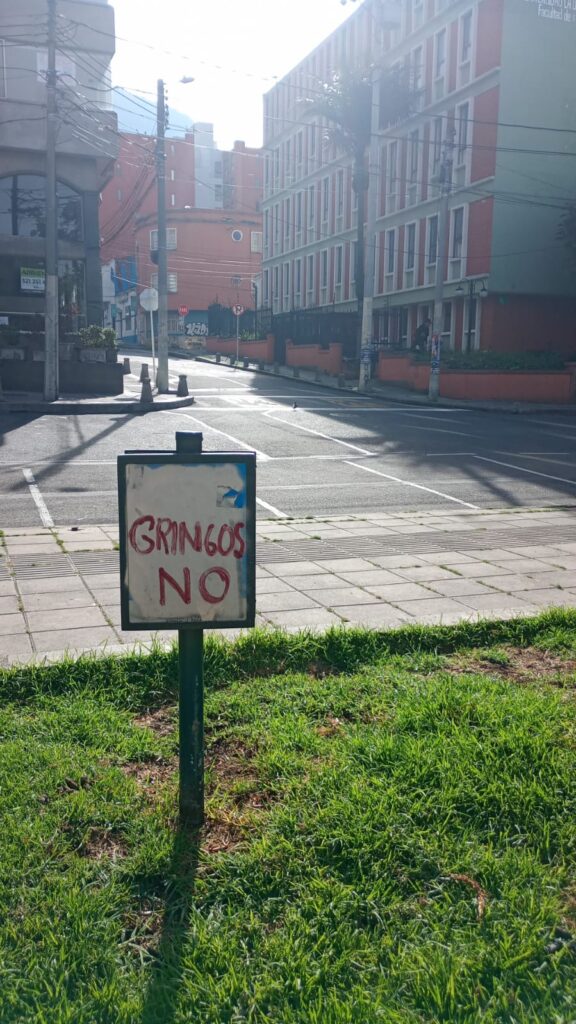
While Trump and Petro are on better terms, not everyone is happy with the USA

After that initial call, the pair appeared to have ended up on relatively good terms, and for now there appears to be a wary calm between the Palacio Nariño and the White House. It’s too early to talk of a bromance, but there was certainly a rapid de-escalation.

The US president pointedly praised Petro’s tone in his tweet after they spoke over the phone, indicating that the Colombian president had been rather less bullish one on one compared to his public speeches and tweets. That hasn’t changed much in recent weeks.

Petro appears to have struck a far more conciliatory note when actually talking to the US president on Wednesday. For his part, Donald Trump also turned down the heat, saying it was a great honour to speak with the Colombian president and reaffirming his respect for the Colombian people.

The Colombian president went on to say that he had cleared the air and underlined that he is not connected to the illegal drug trade. He pointed out that he has stepped up seizures of drugs and has in fact been threatened various times over his life by drug cartels.

He’s gone further over the past week or so, claiming that estimates of Colombian coca crop capability in production are wildly inaccurate, especially when they come from foreign observers. He hasn’t helped matters by refusing to publish his own figures, but a recent high-profile seizure off the coast of Portugal won’t have hurt.

Petro was highly critical of Trump’s actions in the Caribbean from the outset. He warned Trump “not to wake the jaguar”, denounced his strikes on boats in international waters and convened an emergency meeting of the UN security council to investigate the Maduro affair.

Bad blood between the pair goes back a long way, with Trump’s grandstanding over deportations of Colombian nationals being met with strong pushback from Petro. Although the Colombian president eventually backed down from initial threats to not let the planes in, he met the deportees upon landing and symbolically undid their handcuffs.

Petro’s fierce criticism of the military build up in the Caribbean and Trump’s position on migration in terms of ICE and so forth had led to him and his estranged wife Veronica Alcócer being stuck on the Clinton List along with advisor and Interior Minister, Armando Benedetti.

The truth is that antagonistic public rhetoric plays well for both Petro and Trump, regardless of how much damage it may do to the reputation of either country. They both get to play the big man and impress their base, which both need right now in the face of domestic woes.

It’s entirely possible that both sides will have a relatively amiable meeting in which progress is made, before going back to lightly criticising one another in order to please their local audiences. Trump seems not to mind people doing that, even going so far as to encourage NYC mayor Zohran Mamdani to call him a fascist in a recent meeting. 

What can Petro’s team come back with?

There are a number of points to cover and a range of different outcomes on each. Military and security cooperation and guarantees are perhaps most important, with drug exportation, migration, ICE, visas and tariffs also on the table.

Much will depend on whether the meeting is televised or behind closed doors. Petro will by far prefer the latter and likely want to avoid as much as possible the media bearpit that Trump often sets up for visiting politicians.
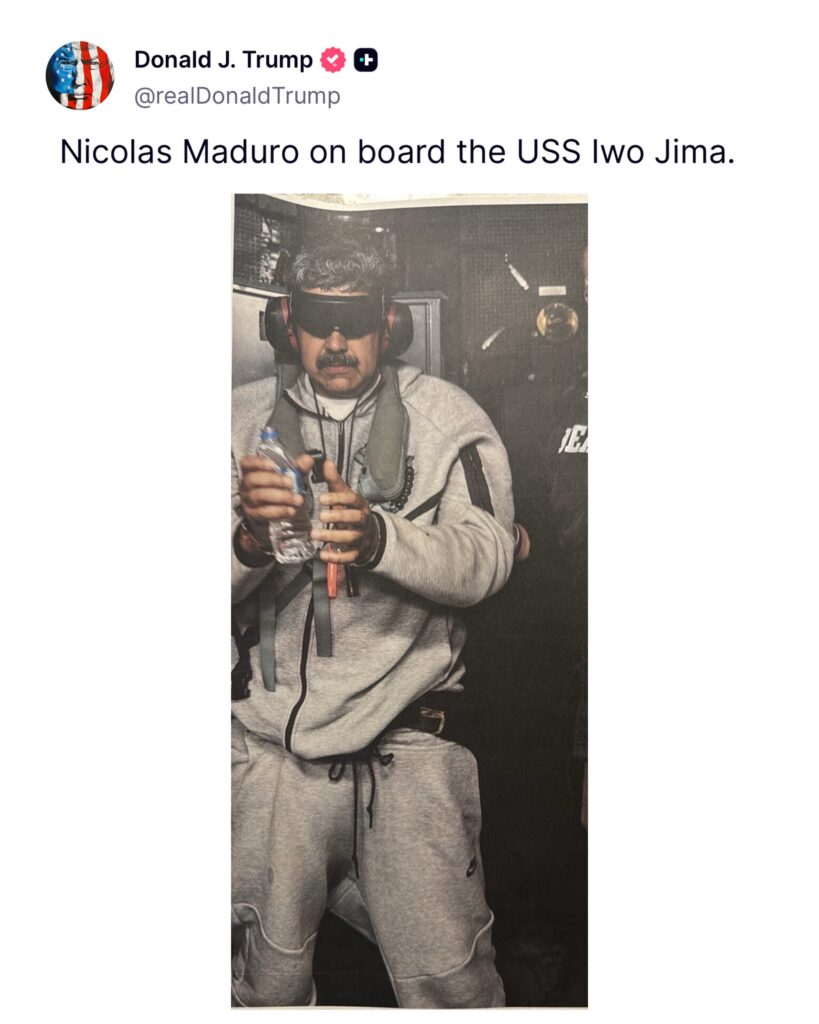
Colombia is looking to avoid anything remotely similar to the Maduro operation

Colombia will be looking for guarantees and assurances that US military action won’t happen on local soil. There’s no suggestion that Trump is looking to do that in the short term anyway, but it’s not hard to believe that could change, for example making a strike on cartel leaders within Colombian borders.

The USA might refuse to give an official guarantee but indicate that the option is currently off the table, which would still calm tensions significantly. Petro has made it clear he considers US military action a real danger. There’s also the possibility that the countries could agree to work together and cooperate. Again, this is likely to be far more palatable to the Colombian public.

Information sharing and support in terms of hardware and technology would be of great use to the Colombian military, after all, and both countries share a common interest in cracking down on the cartels, at least on paper.

Trump might demand a greater show of good faith from Petro in terms of action taken to combat the cartels, which is tricky. The Colombian state has been relatively efficient over the last three years at capturing drug smugglers and received little credit for it from Washington.

Colombian governments of all hues have struggled to deal with the problems of armed non-state actors, whether paramilitaries, cartels, guerillas or any mix of the above. Trump has little patience for this sort of thing and is results-oriented. That could be an excuse for unilateral action or could lead to an offer of help. Colombia will want the second of those options.

No economic instrument is more beloved by Donald Trump than tariffs, his self-declared ‘favourite word in the language’. Colombia is currently still at the global standard of 10% and won’t want that to change. That means it could be a powerful negotiating tool and Trump has threatened an increase in tariff rates at various points, as he does with many countries.

Colombia has turned more and more towards China in recent years, with Beijing helping guide construction of the Metro project in Bogotá. Trump may be looking to try and keep Colombia closer to the US economically, as fewer and fewer Latin countries treat their northern neighbour as the most important part of their trade network.

Visas, too, have been contentious. Waiting times at the US embassy were getting better but often involve months of waiting time. That hasn’t been helped by the recent freeze on residency visas for a swathe of countries including Colombia.

Speeding up processing times in Bogotá for basic American tourist and business visas would be relatively low-hanging fruit in negotiations. If both sides could agree, that would make a lot of people’s lives a lot easier and be popular in Colombia. 

In the best case scenario, Colombians can hope for no additional tariffs, military guarantees and cooperation and an easing on visas. In the worst case, Trump will impose drastic new economic measures, cancel a load of visas and keep a strong military presence in the Caribbean with eyes towards Colombia.

The end result will probably be somewhere in the middle of all that. Given the relatively calm immediate build-up to the trip, it’s most likely that an accord can be reached that both sides can present as positive if not perfect. It doesn’t suit either side to have a massive bust-up at this point, but we are talking about two politicians with a reputation for fits of pique.

More cynically-minded people may wonder if a more personal deal may be struck as well – Petro off the Clinton list and his US visa reinstated. He’s talked before about wanting to tour the world as a public speaker on social and environmental issues and this would make that easier.

Whatever does happen in the meeting, it will be pivotal for relations between the US and Colombia. With the country being one of the last in Latin America to have the USA as their biggest trade partner, that affects many ordinary people.

For the business community, the impact of potential tariffs or restrictions could be huge. For NGOs and rights workers, re-establishing foreign aid would be very useful. For ordinary folk, further controls or freezes on visas would be a real pain. For everyone, a sense that military action was definitely off the table would bring much-needed peace of mind.

The post Mr Petro goes to Washington appeared first on The Bogotá Post.
  •  

Colombia’s President, an Outspoken Trump Critic, Heads to the White House

Gustavo Petro of Colombia and President Trump have had a tense relationship that escalated into threats by Mr. Trump, before easing. Anything could happen at their Feb. 3 meeting.
  •  

2026 in Colombia: Uncertainty Reigns

What’s coming for Colombia in 2026? A new president, a return to the world cup and all the usual sports, music and culture are ahead. There’s also plenty of uncertainty for now.

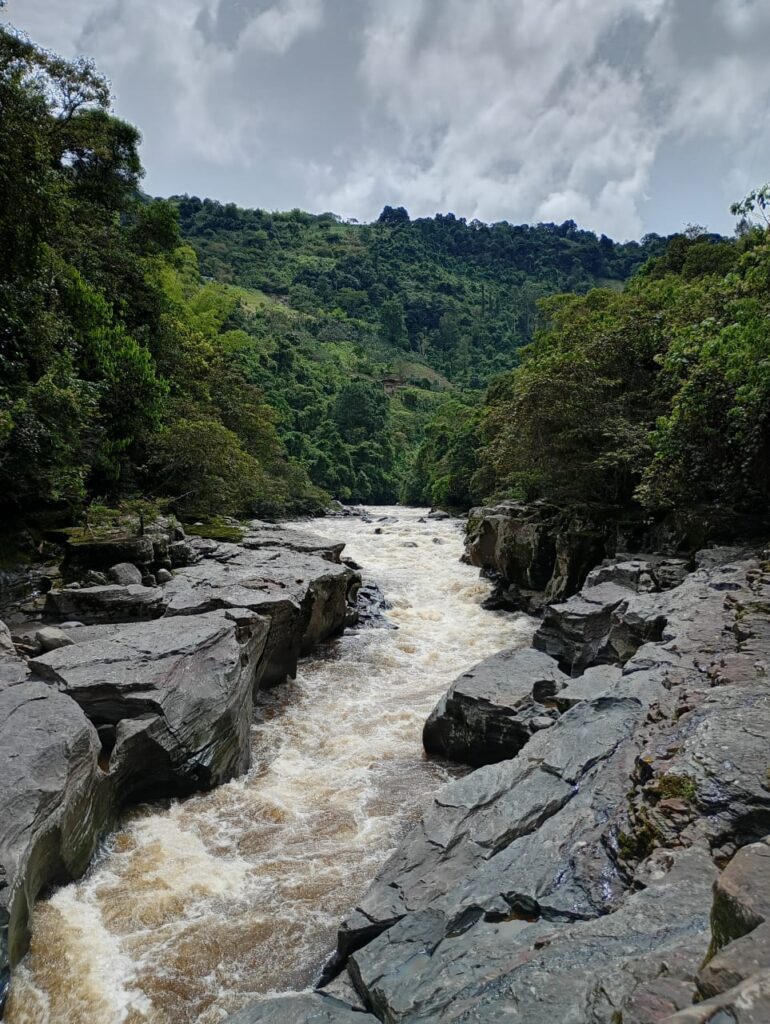
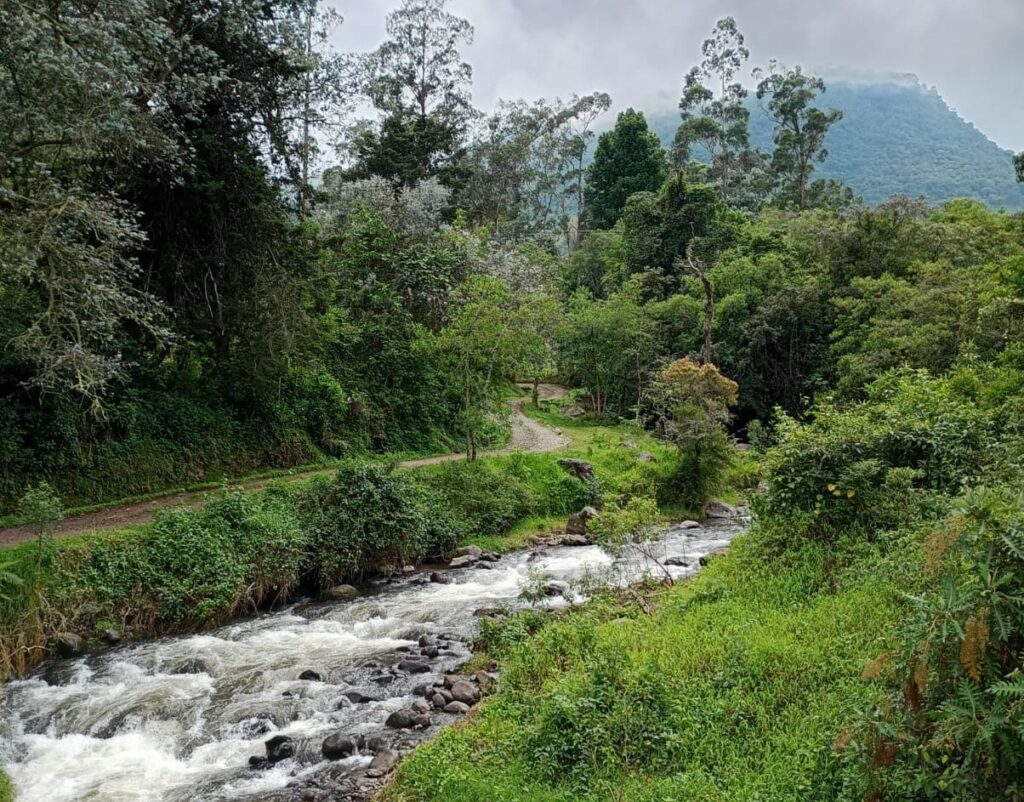
A river flowing under a high mountain in Cauca, Colombia in 2026
Just like the high mountains, Colombia’s future is clouded in fog

It had seemed that the only big political news of the year would be the election cycle and incoming president. However, all that changed on the first weekend of the year as the US military captured Nicolás Maduro in Venezuela and brought him to face charges in New York.

Then at the end of January, the Corte Constitucional blocked president Petro’s economic emergency declaration, plunging the country into another round of uncertainty. While the court deliberates, the country’s businesses will have to wait to see what’s ahead. Meanwhile, minimum salary workers can celebrate their first COP$2,000,000 paychecks.

#LaCorteInforma | La Corte suspende provisionalmente el Decreto 1390 de 2025 “Por el cual se declara el Estado de Emergencia Económica y Social en todo el territorio nacional”, mientras se profiere una decisión de fondo.

Comunicado: pic.twitter.com/Ow6rC40Ixb

— Corte Constitucional (@CConstitucional) January 29, 2026
An unprecedented move from the court

February won’t let up as Petro’s off to Washington at the start of the month to meet Donald Trump in what could be a tense meeting. While both sides have cooled their rhetoric, there’s plenty of unpredictability in both camps. This is perhaps best illustrated by Petro having to be granted a 5-day visa just to visit, Trump having cancelled his last one.

It’s anyone’s guess how that might end, with Petro currently blocking the release of coca growing figures and denying the reliability of foreign sources. In the best case scenario, Colombians can hope for no additional tariffs, military guarantees and cooperation and an easing on visas.

This is a year with big events set to dominate after a relatively quiet 2025 still managed to contain plenty of shocks and surprises. As ever, Colombia seems set to live in interesting times. We’ll be here throughout the year to keep you up to speed on what’s going on and why, from entertainment to hard news.

Another big election

Expect Colombians to grumble as they are called up for compulsory vote counting duty. There will be two sets of elections this year, with voting for the Senate and House of Representatives taking place first on the 8th of March. There will also be voting for candidates in blocks on that day.

The estrecho de Magdalena in Huila, Colombia in 2026
The election is tighter than the estrecho de Magdalena

After that, it’s the presidential race on the 31st of May with a likely run off between the top two candidates around three weeks later. The last four elections have all featured second rounds and no candidate looks capable of registering more than half the initial vote.

As with many presidential systems, there’s an enormous gap between winners being declared and them arriving in office. Pleasingly, this takes place on national days: the Senators and Representatives won’t arrive until Colombian Independence (20th July) and the president takes over on the anniversary of the Batalla de Boyacá (7th August).

The presidential runners and riders are in a very crowded field right now, but that will thin out until the 13th March, the final deadline for candidacies. The 8th March vote for various lists of candidates is especially important for this. The race remains wide open at the moment, with no clear leader and a very good opportunity for someone to come out of nowhere. 

Interestingly, there’s a good chance that Colombia will elect its first ever female and/or LGBTQI president, with Vicky Dávila, Paloma Valencia, Daniel Oviedo and Claudia López all potentially already in the mix or capable of putting together a big surge.

On the loosely defined left, Iván Cepeda is the official candidate for Pacto, having won out in the internal poll. Luis Murillo is also in the hunt, with Roy Barreras and the formerly-discredited Medellín mayor Daniel Quintero as outsiders. Cepeda will absolutely dominate the leftist vote and is very likely to make the second round as a result.

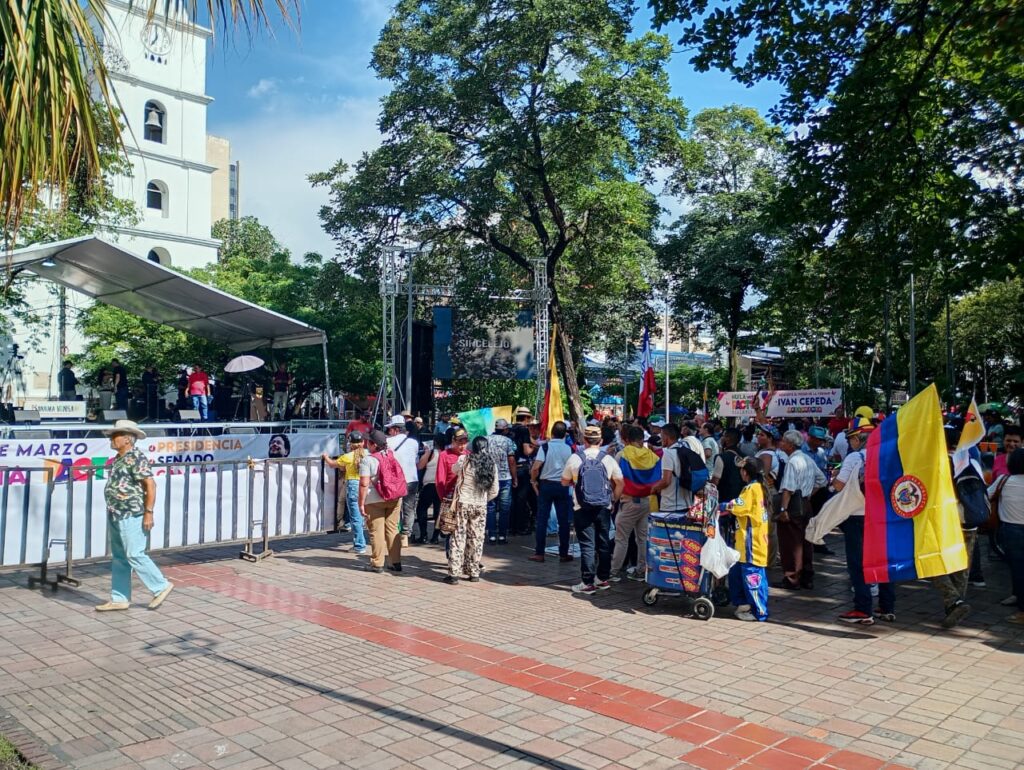
A rally by Iván Cepeda in Neiva, Huila in Colombia in 2026
A rally by presidential candidate Iván Cepeda in Neiva, Huila

A host of candidates on the nominal right are standing, with former journalist Dávila and Centro Democrático heavyweight Valencia in the ‘Gran Consulta’ block which defines itself as centrist but would be considered by many to be at least right-leaning. 

The wildcards here are Abelardo de la Espriella, a tough on crime former lawyer who led the field in gathering public nominations at over 5 million and serial candidate and former Medellín mayor Sergio Fajardo who narrowly failed to make the second round last time around.

Harder to pin down are candidates such as Claudia López and Juan Daniel Oviedo. They could surprise some people with a strong spring surge, especially if they can channel a dislike of established parties. However, López has baggage from her time as Bogotá mayor and Oviedo is in the ‘Gran Consulta’, meaning he’ll struggle to stay in the race.

Tying up loose ends

Elsewhere in the political landscape are other issues that could do with being resolved before the change in head of state. Paz Total is nowhere near happening, with a number of talks deadlocked or non-existent, the economic emergency is currently frozen and Venezuelan relations remain unclear.

Sunset over Paipa, Boyacá, Colombia
The sun is setting on Petro’s presidency

If the economic emergency goes ahead, there will be increased IVA (VAT or Sales Tax) on a range of things including online gambling, liquor and wine. There will also be a dramatic change in importation limits, with a limit of USD$50 for tax-exempt gifts.  

The ELN have asked to get back to the table, perhaps sensing that a possible right-wing government might not be quite so favourably disposed to their antics. Petro himself seems to have lost patience though, dismissing the request out of hand due to their recent attacks on Colombian army members.

Inflation will probably remain high and base interest rates are now in double digits as a result. However, the economy is chugging along decently and consumer spending remains strong. The minimum wage increase will likely help that continue and with a weakening dollar, prices may start to stabilise.

Whatever happens in Venezuela will have a big impact in Colombia. If the country opens up again, it’s entirely possible that some of the three million or so Venezuelans in the country may return. That will ease pressure in the labour market, increase trade flows and please a certain type of politician.

If Delcy Rodríguez stays in office with US support, things may be a lot more complicated. There’s not much love for the Venezuelan regime in Colombian political circles, meaning trade may not take off and there is likely to be limited cooperation on regional matters.

Ecuadorian relations also are heading in a downward spiral, with Noboa and Petro currently engaged in a tit-for-tat trade war and imposing hefty tariffs on each other. That’s choking trade across the border and affecting cooperation on cross-border security issues.

If there is a change in government, there might be more serious attempts to investigate a range of overhanging scandals such as the peculiar case of Laura Sarabia, currently ambassador to the UK and Juliana Guerrero’s and others’ mysterious qualifications.

With six months more in office, Petro has plenty of time to address these scandals or start new ones. Expect his twitter account to get even more heated between March and June as he gets involved in the election. He’s also likely to continue the ministerial merry-go-round which is past 60 changes already.

His approval ratings upon leaving office are likely to be higher than either of his two immediate predecessors. After a sharp post-election fall, he’s stayed consistently relatively popular by Colombian presidential standards and showing an uptick in recent months. For all the mutterings of doom when he came in, he’ll leave office in a relatively good position.

Big issues in Bogotá

Mayor Gálan is halfway through his tenure and has little to show for it so far. He’s managed to keep things ticking over but has not made big changes, nor has much of a legacy as things stand. The Metro was his inheritance and will be inaugurated under the next mayor, so he could do with something big this year. Trouble is, there’s nothing on his books for now.

A long-term boon but short-term disruption

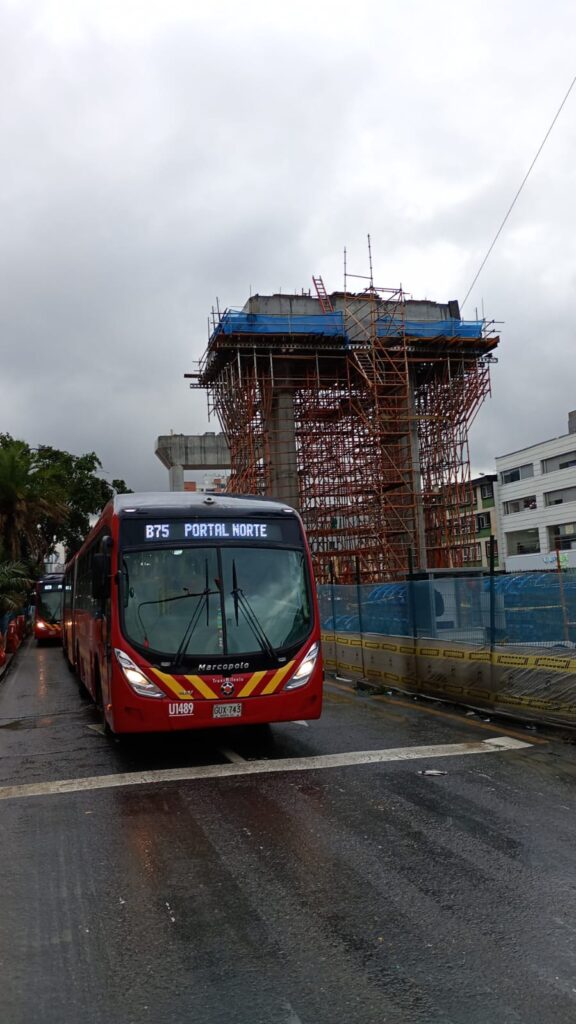
Transport is perhaps the biggest issue, with the Metro still firmly on track. Gálan deserves credit for this, as the project has not been without problems and has endured meddling from the Palacio Nariño. Regiotram to the westerly satellite towns is also still on the way.

On the other hand, there will be even more disruption in the short term thanks to the Metro works, and road quality is awful. Road traffic incidents are stubbornly high, with nearly 500 deaths predicted over 2026.

Prices have been hiked to COP$3,550 on the Transmilenio and SITP for 2026, despite Gálan’s earlier pledge not to do so. The mayor says it’s unavoidable due to the minimum wage rise. Petro has responded by refusing to fund a new fleet of electric buses.

Water rationing was an issue this time last year, but it seems unlikely to return for the short term, thanks to the unseasonal levels of rain we’ve had over the holiday period. An El Niño event is predicted for the year but there’s little sign of it so far. 

Crime is nominally coming down, but few believe the official figures. Perceptions of crime remain high and most Bogotanos feel unsafe in the city. It’s not hard to see why – it feels like there are more and more chirretes around and fewer police.

One thing that is always in view is rubbish, with big piles over much of the city. Some of this is from an increase in fly-tipping, some from a faulty collection system struggling to keep up and others from a simple breakdown in civic values. 

A succession of Bogotá mayors have avoided the issue after Petro got into hot water in his time in office, but things are coming to a head now. It’s becoming a public health problem with rats frequently seen even in midday as well as a simple blight on the city. 

Entertainment

Peso Pluma has pulled out of Festival Estéreo Picnic 2026, but la Tigresa del Oriente has joined, which is probably a win. The best event in Bogotá, and by extension Colombia, remains a top-drawer festival with genuine international heavyweights which is well worth getting tickets for if you’re in town.

With a lineup boasting Tyler, The Creator, The Killers and Deftones, the festival is a viable cultural tourism draw if you’re visiting. Prices are competitive with North American and European fests and experiencing a Latin American festival environment is something most music fans should relish.

FEP2026 is the bigger event, but little sister Cordillera offers a more Latin experience

Balancing FEP2026 is Festival Cordillera 2026 in September, which offers a different attraction: the chance to see what (loosely defined) contemporary Latin music sounds like. The event focuses almost exclusively on Latin talent from across the musical spectrum, giving you the opportunity to explore a soundscape you may not know too much about.

Sadly, those two mega-festivals are helping sound the death knell for Rock al Parque. It hasn’t really recovered post-COVID and has been poorly managed by the alcaldía. Hopefully it can find its feet again, and the offshoots (salsa al parque, rap al parque etc) are all still strong and accessible.

Flying under the radar last year was Colombia’s first ever board games convention, Ludotopia. Given the enormous success of the event, it’s likely to run again. In other boardgaming news, Wingspan will launch an Americas expansion featuring a bevy of local aves, illustrated by Colombian lead designers Ana Maria Martínez and Natalia Rojas.

Filbo from 21 April- 5 May is the nation’s keystone for literary events, accessible and open to all with a strong focus on education as usual. The country of invitation this year is India, a welcome departure from the usual Latin or European focus and sure to open up exciting new possibilities.

Ludotopia event in Bogotá, Colombia 2025. Picture shows a giant meeple and Devir branding in the background
Ludotopia was a smash hit in 2025

Geekfest SOFA will be in October, which has turned into an absolute juggernaut of an event. Crowds will be intense in the daytime weekends, so try and make it there on weekdays or in the evenings if you’re going. Comic Con is much quieter but lacks the joyfulness of SOFA, being much more commercial in nature.

Colombian sporting specials in 2026

Colombia have a reasonably straightforward World Cup group and will be aiming high. Head coach Nestor Lorenzo has turned dressing room morale around 180° and taken los cafeteros to a runner’s up spot in the last Copa América.

With Colombia currently ranked 13th by FIFA, they are expected to do well and will be seen as a team to beat. Matching the 2014 run to the quarter-finals will be no easy task, but achievable. Surpassing it would be a real upset but it’s a funny old game and anything could happen. The squad is well built for tournament football, with key players such as James capable of burning bright for a few weeks.

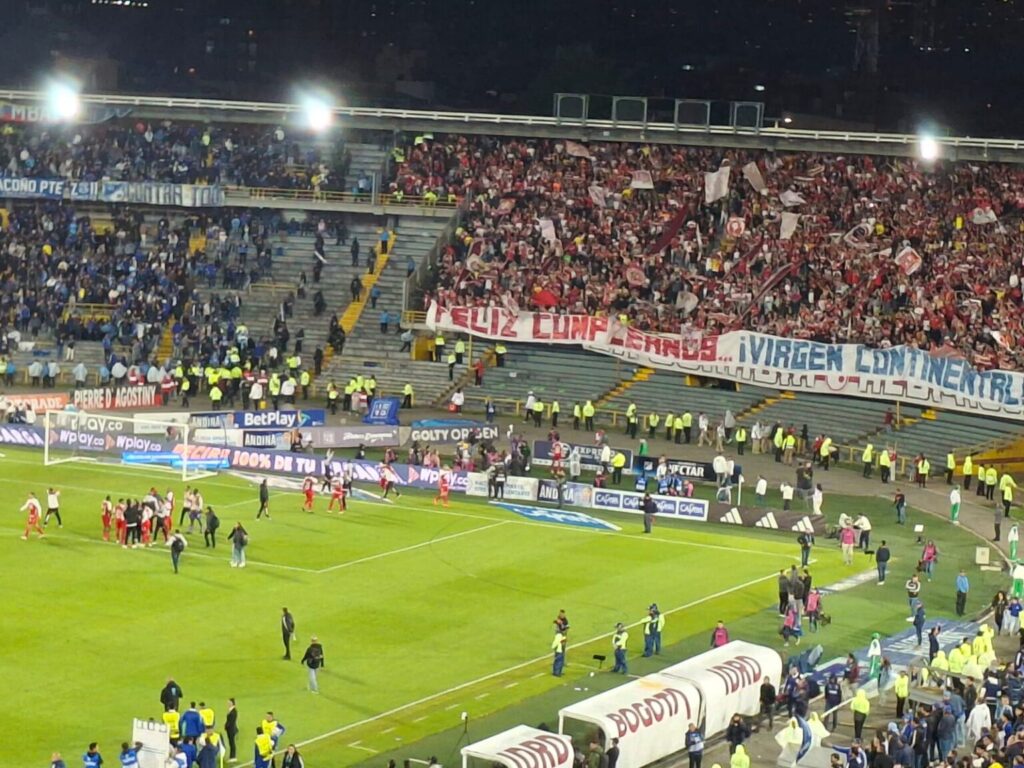
A hotly contested capitalino derby on the way to Santa Fe’s championship

There’s also plenty to keep an eye on in domestic football, with Falcao returning to Millonarios. That didn’t go fantastically well in the 2024 apertura, as city rivals Santa Fe knocked them out and went to lift the trophy. El Tigre didn’t take that well at all, throwing his toys out of the pram in a charged presser after the match. Santa Fe went on to win the Supercup at the start of this year.

After working wonders with Wrexham, Hollywood superstar Ryan Reynolds will be hoping to do similar for Inter de Bogotá. Previously known as La Equidad, the team changed name after being acquired by Reynolds’ investment vehicle. The actor has already donned the jersey and may appear at games in 2026.

In non-traditional sport, Cricket Colombia are celebrating their recent designation as an official sport in the country. They’re getting things kicked off with the Barranquilla Cricket tournament from February 20-22 seeing regional teams from Santa Marta, Bogotá, Cali and Medellín fighting it out to decide national supremacy. Cartagena, Santa Marta and Barranquilla are also hosting a women’s competition as the sport grows in the country.

Egg-chasers are spoilt for choice with Gaelic football in the capital as well as Aussie Rules, American football and rugby across the country. With the Superbowl coming up, if you are inspired, get in touch with the American football leagues across the country.

The Colombian women’s sevens are currently competing in the SVNS championship in Dubai and making a good account of themselves. The Toucans are punching above their weight with limited resources available to them.

AFL in Colombia continues to build momentum, and Gaelic football is becoming a bigger deal as well, with the Bogotá Beithigh practising on a more consistent basis in partnership with Colombia rugby to help build their profile.

What’s most likely to happen in Colombia in 2026?

Well, frankly put, the most likely thing is a big surprise in Colombia in 2026. Unexpected events seem to happen with regularity, so there’s every chance something comes out of leftfield. Plenty of things popped up in 2025 that we hadn’t seen coming this time last year.

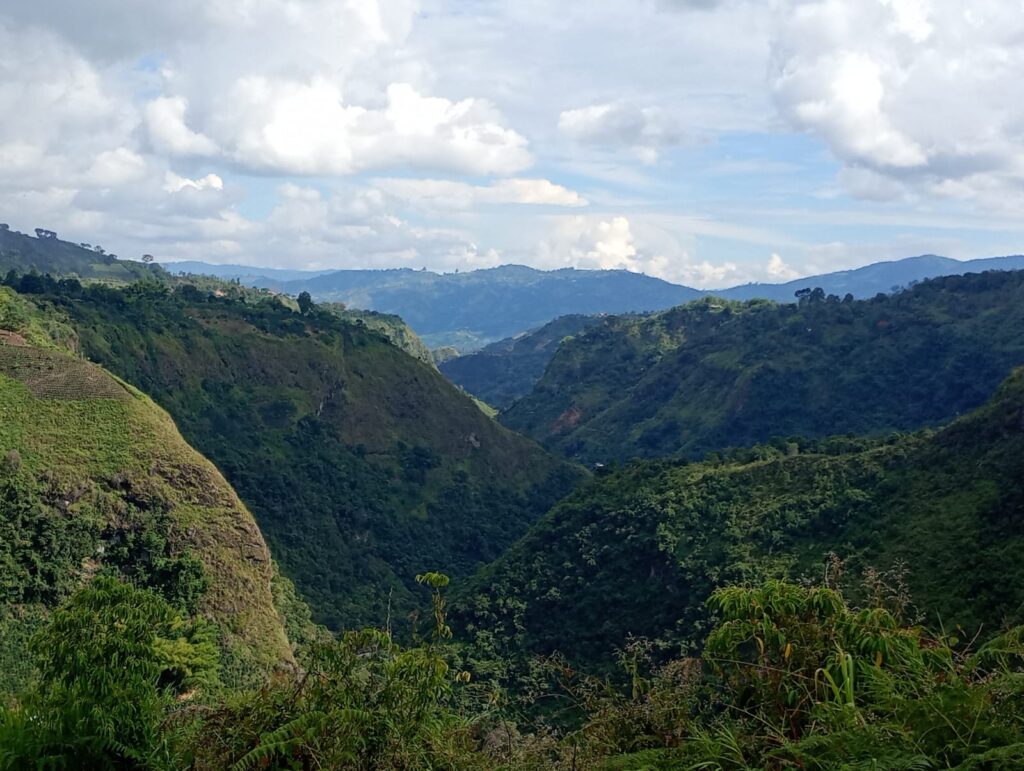
Macizo colombiano in Huila, Colombia in 2026
The news rolls like the mountains of the macizo colombiano

Having said that, there are some good bets to lay: the economy should continue strengthening and the dollar exchange should ease back in the direction of COP$3,000 (which remains a long way off). There definitely will be a new president, even if it’s a continuity candidate and we will see changes in the Senate.

The big cultural events of 2026 in Colombia look like they’ll all be roaring successes as usual, as the country shows no sign of slowing down.

It’s unlikely that any of the peace processes will come to a conclusion and depressingly likely that they will face more turmoil if certain candidates take over in the Palacio de Nariño. While we can all hope that things will improve in the capital, there’s currently no sign that will happen. On the other hand, steady progress will continue on existing projects.

En fin, it’s likely to be six months of the usual turmoil and drama, culminating in two huge events: May-June’s presidential elections and the fortunes of the footballers in North America at the World Cup in July. Then we’ll face the remainder of the year watching what the president does in his or her first months. Whatever happens, there’ll be plenty going on in Colombia in 2026.

The post 2026 in Colombia: Uncertainty Reigns appeared first on The Bogotá Post.
  •  

Emergency over: Constitutional Court freezes Petro’s decree

Petro’s emergency order has been put on hold while the constitutional court examines its legality further. What does this mean for your pocket and the country’s future?

More money in your pocket?

For the first time in Colombian history, the constitutional court on Thursday overruled a presidential order and temporarily negated Gustavo Petro’s declaration of an economic emergency. He had done that in order to get his budget through, essentially bypassing the need to get it through parliament. That’s now been put on hold.

The decree hasn’t actually been struck down, just paused while the court makes a decision on the constitutionality of the order. This means weeks of uncertainty while they deliberate. The decision was taken 6-2 with two abstentions, meaning that there’s a clear majority in favour of negation at this point.

#LaCorteInforma | La Corte suspende provisionalmente el Decreto 1390 de 2025 “Por el cual se declara el Estado de Emergencia Económica y Social en todo el territorio nacional”, mientras se profiere una decisión de fondo.

Comunicado: pic.twitter.com/Ow6rC40Ixb

— Corte Constitucional (@CConstitucional) January 29, 2026
The court was clear

Petro’s declaration of economic, social and ecological emergency was known officially as Decreto 1390 of 22 December 2025. No measures deriving from the decree can be implemented yet, although it will stay formally on the books for now, until the final decision is taken on whether it can stand.

Predictably, he’s reacted furiously to the news, saying that the public should decide. He claims it’s a political decision aimed at protecting the establishment and countering his progressive aims. Furthermore, he says that the court has not properly studied the executive’s arguments.

Cuando desde hace décadas la Corte Constitucional prohibió suspender provisionalmente un decreto de emergencia, la actual Corte Constitucional, sin estudiar nuestras razones, decidió hacerlo.

Se trata literalmente de prejuzgar, pero además se hace por dos razones: por que es un…

— Gustavo Petro (@petrogustavo) January 30, 2026
The president took to Twitter as usual

Even more provocatively, he’s presenting this as a rupture of constitutional order. This should not be taken lightly: he’s essentially arguing for fewer checks and balances on the presidential office. This is a common theme in caudillo politics and one that many in Latin America will recognise.

The large increase in the minimum salary is being dragged into the argument in what appears to be an attempt to win support for the president’s emergency measures. The latter is a dry matter that few take interest in and the former is something that everyone can see and many support.

While there is little to no chance of the minimum salary increase being revoked, it does stir emotions more effectively than a constitutional affair that many take no interest in. He’s also making the argument that this is class war and the working people should not have to bear the cost of the deficit.

His controversial sidekick Armando Benedetti, currently Interior Minister after a string of previous positions has also come out swinging, saying that the court does not have the right to overrule the head of state and that they are protecting the megarich.

No hay derecho. Al suspender provisionalmente la Emergencia Económica se está protegiendo a los megarricos. pic.twitter.com/0UlK6Elzti

— Armando Benedetti (@AABenedetti) January 29, 2026
Benedetti adds fuel to the fire

While the ruling by the Corte Constitucional is unprecedented, it was not a big shock. Petro was quite clearly playing politics with the decree and is now dealing with the consequences. It was seen in December as an unusual and authoritarian move which had a good chance of being denied. A freeze was always likely, with full rejection absolutely possible.

The court justified its decision by arguing that the financial problems the country has are not exceptional circumstances that demand emergency measures, such as COVID-19 or a natural disaster. Rather, they are structural problems that require a regular solution.

More tellingly, the tribunal noted that the motivation behind the decree was not clearly defined and likely political. It went on to point out formal irregularities and problems with the legal design of the decree.   

There had been significant pushback from elected officials to the plan, with 17 departmental governors refusing to implement decree 1474, a follow-on from the economic emergency decree, claiming it was potentially unconstitutional and that this would put them at financial risk if it failed.

This opens serious questions as to the limits on the president’s power, the position of the constitutional court and the viability of future tax reforms. It also sets the clock ticking for a decision, as the Senate and House elections are coming up fast, on March 8th. If this matter is not resolved by the time presidential elections are happening, things will get complicated.

So what does it mean for my pocket?

In the short term, all the planned tax hikes are frozen. That means there likely won’t be price drops, just that some things that were set to rise significantly won’t do so. In fact, as inflation remains high, expect plenty of sticker shock anyway. 

Some booze, yesterday

Full-rate IVA (VAT or sales tax) was due to go onto liquor and wine, so it’s good news for rum drinkers, winos and aguardiente fans. Gamblers, too, have a reprieve as there will also be no IVA increase for online betting. Finally, smokers won’t see extra taxes on tobacco consumption.

The planned USD$50 limitation on tax-exempt gifts won’t go into effect, making buying from overseas relatively cost-effective for a while longer.

The wealth tax will stay where it is for now, with the bar remaining at COP$3.6bn and progressive rates not coming into play. However, those in debt with local tax revenue authority DIAN will not see a reduction in either interest payments or penalties for late payment.

Elsewhere in the economy, the bankers have avoided a 15% extra supertax and there will be no new charges levied on natural resource extraction. The latter were in any case only designed to be temporary.

It’s technically possible, but very unlikely, that monies already gathered will be returned. The corte constitucional has traditionally avoided retroactive economic decisions, preferring to rule in favour of protecting the state’s finances. That means some COP$800bn that has been collected will stay in limbo for now but almost certainly be unfrozen whatever happens.

What happens next?

Immediately, political and economic uncertainty, as this is only a temporary suspension to revise the legal position. That means weeks more of companies not knowing where they stand for the medium term and politicians taking the opportunity to grandstand and indulge themselves.

There are two paths from here: either the court decides that the economic emergency declaration was valid, in which case we simply revert to the original measures set out in the decree, or it is struck down and everything is up in the air.

Petro is correct when he points out that this will mean he has to borrow more to finance the running of the state, which will increase the national debt. The deficit also still stands and continues to grow, meaning in turn so does the debt. This is long-term unsustainable.

Somewhere down the line, a Colombian president will have to do something to address the deficit the country has been running for years since the collapse of the natural resource boom. However, Duque’s attempt to reform the tax system was met with massive protests and Petro has fared no better while also increasing spending. 

There are no signs that any of the candidates in this year’s election are likely to fare any better. Expect to see plenty of grandiose plans and vague suggestions but little fine detail in any manifestos. Quite simply, running on a platform of promising to increase taxation is a death knoll for any candidate.

All of the measures that could be taken are politically poisonous. Cutting spending is hard to do once people have become accustomed to it, stealth taxes abound and business rates are already high. A more progressive income taxation system would need to involve widening the tax base, which will mean more voters paying tax for the first time.

For many regular folk, just keeping their head above water is already hard enough without extra costs suddenly appearing. They won’t vote for more taxes, or even any taxes, as many are simply not taxed directly. At the same time, without significant natural resources popping up, the only way out of the middle-income trap is tax reform.

There’s also the question of the role played by the constitutional court. While nominally independent, it is supported or decried by all sides of the political spectrum depending on who it’s perceived to favour at any one point. There are already calls to ignore it in the name of the ‘people’s will’, conveniently undefined. Expect those to grow in number.

Where will Colombia go in the short term? Probably nowhere, as kicking the can down the road is still possible for a few years more. It’s likely that state spending will slow down, minor budgetary changes will get through and the country will muddle along. 

Having already lost investment grade status after Duque’s botched reform, the country hasn’t much to lose for now. There are also promising economic signs, meaning that strong GDP growth could alleviate the situation considerably. However, the national debt will be hanging like the sword of Damocles over future presidents.

The post Emergency over: Constitutional Court freezes Petro’s decree appeared first on The Bogotá Post.

  •  

Colombia rules out external factors in SATENA crash as probe opens

Colombian authorities said on Thursday they have found no evidence so far of “external factors” contributing to the crash on Wednesday of a SATENA Beechcraft 1900 aircraft on the Cúcuta–Ocaña route , which killed all 15 people on board.

The conclusions were presented during a press conference held at Ocaña airport in the northeastern department of Norte de Santander. The briefing was led by Major General Óscar Zuluaga Castaño, president of Colombia’s state-owned airline SATENA, and Jorge Campillo, president of aviation company SEARCA, which operated the aircraft under a charter arrangement. Local officials, including Ocaña’s acting mayor and government secretary Hugo Guerrero, also attended.

The aircraft crashed on Jan. 28 while operating Flight NSE 8849, which departed from Camilo Daza Airport in Cúcuta at 11:42 a.m. local time and was scheduled to land in Ocaña at around 12:05 p.m. Contact with air traffic control was lost at 11:54 a.m. while the plane was flying over the Catatumbo region, a mountainous area long affected by armed conflict and the presence of illegal armed groups.

Authorities confirmed that all 13 passengers and two crew members died in the crash. Among those on board were Congressman Diógenes Quintero and Carlos Salcedo, a candidate for Colombia’s House of Representatives.

Officials said that, at this stage of the investigation, there is no indication that the aircraft was affected by “external factors”. The term refers to events such as the aircraft being struck by a drone or the involvement of a terrorist-related incident, including a bombing.

According to flight-tracking data from FlightRadar24, the Beechcraft 1900 had reached a cruising altitude of approximately 12,000 meters before beginning its approach to Ocaña near the town of Ábrego. The aircraft then descended to about 7,900 meters moments before disappearing from radar. The plane has only been in the air 12 minutes for a 20-minute flight. Authorities said there is still no information regarding the recovery of the aircraft’s flight data recorder or cockpit voice recorder.

SATENA and SEARCA said the aircraft, registration HK-4709, met all airworthiness and maintenance requirements and was operating under approved technical and regulatory standards at the time of the accident. Weather conditions along the route and at the destination airport were described as favorable for flight operations. According to the air traffic controlers at Ocaña, the final words from the cockpit were: “We are ready to descend”.

The pilot in command, Manuel Vanegas, had accumulated more than 10,000 flight hours, while the co-pilot, José Joaquín de la Vega, had logged over 7,000 hours, officials said. Both crew members were operating within the duty-time limits established by Colombia’s aviation regulations, with no indications of fatigue or excessive workload.

The Cúcuta–Ocaña–Medellín route began operations in March 2025 under which SEARCA is responsible for the aircraft, maintenance, crews and insurance. SATENA said SEARCA has provided services to the airline for more than 25 years, with a track record supported by compliance with technical, operational and regulatory standards.

Over the past seven years, SEARCA has transported more than 269,000 passengers across nearly 17,800 flights, accounting for more than 12,400 flight hours, according to SATENA. During 2025 alone, SEARCA conducted more than 7,000 flights on 25 routes, representing 16.5% of SATENA’s total operations.

Officials said all aircraft operated by SATENA and SEARCA are equipped with mandatory terrain awareness and warning systems, as well as additional technology designed to allow safe operations in areas with complex topography, such as the Catatumbo mountain range.

The region where the aircraft went down has seen repeated clashes between the ELN guerrilla and dissident factions of FARC, as well as violence linked to drug trafficking routes and other illicit economies. Authorities said the rugged terrain complicated access for emergency and recovery teams during the initial search and rescue operation.

SATENA said the determination of the cause of the crash will rest exclusively with Colombia’s aviation accident investigation authorities, working alongside the Colombian Aerospace Force and judicial entities. SEARCA said it is fully cooperating with the investigation and will provide all documentation and information requested.

Despite the accident, SATENA confirmed it will not suspend operations on the route, citing its mandate to maintain connectivity to remote regions of the country. The airline said it will continue operating with heightened oversight and coordination with aviation authorities.

SATENA and SEARCA reiterated their condolences to the families of the victims and said providing institutional support and accompaniment to relatives remains a priority as the investigation continues.

  •  

Un avión con políticos colombianos se estrella en una zona disputada por un grupo rebelde

En el avión viajaban 15 personas, incluyendo dos políticos locales, Diógenes Quintero y Carlos Salcedo, que estaban postulados como candidatos al Congreso en las próximas elecciones nacionales.
  •  

Commercial plane crash in Colombia kills 15 people, including lawmaker 

A Satena aircraft. Credit: Wikimedia Commons

Bogotá, Colombia – 15 people were killed in a place crash in eastern Colombia on Wednesday morning, including a lower house lawmaker and a political candidate.

The aircraft, operated by government airline Satena, was flying from Cúcuta to Ocaña, two cities in the North Santander department in eastern Colombia, when it disappeared from radar roughly eleven minutes before landing.

After an initial search and rescue effort, authorities were alerted to the wreckage site by local farmers.

“The national government, through the Ministry of Transport and Civil Aviation Authority, confirm with deep pain the deaths of the people who were on board the HK-4709 plane from Cúcuta to Ocaña,” read a government statement on Wednesday afternoon.

The confirmation came some five hours after the plane left radar coverage; it was due to land at 12:05PM but last made contact with air traffic control at 11:54AM.

On board the plane was Diogenes Quintero, who holds a “peace seat” in the Congress, reserved for victims of the armed conflict. Also on the flight was ​​Carlos Salcedo Salazar, a candidate for the same seat in upcoming elections.

The cause of the plane’s disappearance is unclear, but local authorities have pointed to adverse weather conditions. However, investigations remain ongoing.

The route from Cúcuta to Ocaña was inaugurated last year and welcomed as a symbolic step forward in conflict-struck Catatumbo, long disconnected by air from major cities.

The post Commercial plane crash in Colombia kills 15 people, including lawmaker  appeared first on The Bogotá Post.

  •  

Colombia’s Petro claims U.S. “kidnapped” Maduro during Caracas strike

Colombian President Gustavo Petro said on Tuesday that Nicolás Maduro should be returned to Venezuela to face trial in his home country, calling the U.S. military operation that captured the ousted leader in Caracas earlier this month a “kidnapping” that violated Venezuelan sovereignty.

“They have to return him and have him tried by a Venezuelan court, not a U.S. one,” Petro said during a public event in Bogotá, days before a scheduled meeting with U.S. President Donald Trump at the White House on Feb. 3.

Maduro and his wife, Cilia Flores, were captured by U.S. forces on Jan. 3 during a military incursion in Caracas and flown to New York, where they face federal charges including drug trafficking, weapons possession and conspiracy. Both pleaded not guilty at an initial court appearance on Jan. 5 and are being held under maximum-security conditions at the Metropolitan Detention Center in Brooklyn. A follow-up hearing is scheduled for March 17.

Petro said the operation lacked a legal basis and risked causing long-lasting damage across Latin America. “No one in their right mind would bomb the homeland of Bolívar,” he said, referring to Venezuelan independence hero Simón Bolívar. “No young man or woman in Latin America will forget that missiles fell on the land of Bolívar.”

The Colombian president framed his remarks as part of a broader critique of U.S. foreign policy and international institutions, reviving rhetoric he has used previously against Trump. He argued that the case should be handled within Venezuela’s judicial system, citing what he described as civilizational differences between Latin America and the Anglo-European world.

“The Latin American civilization is different,” Petro said. “That is why he must be judged there, not in the United States.”

Petro’s comments came during an event announcing the reactivation of Bogotá’s historic San Juan de Dios Hospital, where he appeared alongside Mayor Carlos Fernando Galán. Later in the day, Petro again urged Trump to grant Maduro his freedom or return him to Venezuela, while criticising the United Nations for failing to stop the war in Gaza.

“The way to overcome that failure is not with missiles over the poor,” Petro said. “It is not bombing Caracas.”

The remarks come at a sensitive diplomatic moment, as Petro prepares to travel to Washington after the U.S. government granted him a temporary, five-day visa allowing him to attend the Feb. 3 meeting with Trump. The visa will be valid from Feb. 1 to Feb. 5 and is limited exclusively to the official visit, according to Colombia’s presidency.

Petro’s U.S. visa was withdrawn in September following an unscheduled pro-Palestinian speech he gave in New York during the United Nations General Assembly. On Tuesday, he questioned the decision to reinstate it.

“They took away my visa, now they say they put it back,” Petro said. “Why did they take it away from me? I don’t know if it was for a while or permanently. We’ll know on Feb. 3.”

He described the upcoming meeting with Trump as “determinant,” not only for him personally but “for the life of humanity,” language that underscored both the political symbolism and unpredictability surrounding the encounter.

Colombia’s presidential palace confirmed that the bilateral meeting will take place at 11 a.m. on Feb. 3 inside the White House and said the agenda has been set by the U.S. administration. Officials said the talks aim to stabilise bilateral relations, which have been strained in recent months by disagreements over foreign policy and regional security.

Foreign Minister Rosa Villavicencio will also travel to Washington under the same short-term visa arrangement, ensuring her participation in the official programme, the presidency said.

U.S. authorities have accused Maduro and Flores of overseeing armed groups involved in kidnappings and killings and of receiving hundreds of thousands of dollars in bribes linked to narcotics trafficking. The Justice Department has declassified indictments related to weapons possession and conspiracy involving machine guns and destructive devices.

Although U.S. authorities had previously offered rewards of up to $50 million for information leading to Maduro’s capture, Washington said no reward would be paid because the arrest was carried out directly by U.S. forces under Trump’s renewed extraction orders.

Petro did not address the specific charges against Maduro, focusing instead on what he said were the broader legal and moral implications of the operation, as Colombia seeks to balance its relationship with Washington while maintaining its longstanding opposition to foreign military interventions in the region.

On Wednesday, U.S. Secretary of State Marco Rubio is due to meet with Venezuelan opposition leader María Corina Machado at the State Department. The meeting follows U.S. intelligence assessments raising doubts over whether Venezuela’s interim Chavista-run government would cooperate with the Trump administration by severing ties with close international allies such as Iran, China and Russia. Reuters has reported that CIA Director John Ratcliffe travelled to Caracas on Jan. 15 for talks related to Venezuela’s political future. “I want to be clear with you what I’ve shared publicly. We made multiple attempts to get Maduro to leave voluntarily and to avoid all of this because we understood that he was an impediment to progress. You couldn’t make a deal with this guy,” remarked U.S Secretary of State Marco Rubio.

  •  

Colombia, Ecuador locked in trade dispute as pipeline tariff jumps 900%

Ecuador has sharply increased tariffs on Colombian crude oil transported through its pipeline system, deepening a trade and energy dispute between the two Andean neighbours that has already disrupted electricity exports and bilateral commerce.

Ecuador said on Tuesday it had raised the tariff paid by Colombia for each barrel of oil transported through the state-owned Trans-Ecuadorian Oil Pipeline System (SOTE) by 900%, lifting the fee from $3 to $30 per barrel. The move came in response to Colombia’s decision to suspend electricity exports to Ecuador from Feb. 1, 2026.

Bogotá has yet to issue an official response to the tariff increase.

The dispute has widened beyond trade into energy cooperation and crude transportation, straining relations between the two countries amid longstanding tensions over border security and cooperation against drug trafficking.

Without explicitly referring to the trade conflict, Colombia’s Ministry of Mines and Energy last week issued a resolution suspending international electricity transactions (TIE) with Ecuador, describing the measure as a preventive step aimed at protecting Colombia’s energy sovereignty and security amid climate-related pressures on domestic supply.

Colombia is a key electricity supplier to Ecuador, particularly during periods of drought. Ecuador has faced prolonged power cuts in recent years, including in 2024 and 2025, in a country where roughly 70% of electricity generation depends on hydropower.

Colombia’s leftist President Gustavo Petro said his country had previously acted in solidarity during Ecuador’s worst drought in decades. “I hope Ecuador appreciated that when it needed us, we responded with energy,” Petro said last week.

Ecuador’s Environment and Energy Minister Inés Manzano said the crude transport tariff increase applied to Colombia’s state oil company Ecopetrol and private firms exporting oil through the SOTE. “We made a change in the tariff value,” Manzano said. “Instead of three dollars, it is now 30 dollars per barrel.”

According to Ecuadorian news outlets, the SOTE transported nearly 10,300 barrels per day of Colombian crude in November, shipped by Ecopetrol and private companies.

Manzano has also said Ecuador will impose new fees on Colombian crude transported through the Oleoducto de Crudos Pesados (OCP) pipeline, citing reciprocity following Colombia’s suspension of electricity exports.

The trade conflict began last week when Ecuadorian President Daniel Noboa, a close political ally of U.S. President Donald Trump, announced a 30% tariff on imports from Colombia, effective from February. Speaking from the World Economic Forum in Davos, Noboa said the measure was justified by what he described as insufficient cooperation from Bogotá in combating drug trafficking and organised crime along the shared border.

“We have made real efforts of cooperation with Colombia,” Noboa said in a post on social media, adding that Ecuador faces a trade deficit of more than $1 billion with its neighbour. “But while we insist on dialogue, our military continues confronting criminal groups tied to narcotrafficking on the border without cooperation.”

Colombia’s foreign ministry rejected the move as unilateral and contrary to Andean Community (CAN) trade rules, sending a formal protest note to Quito. Bogotá has proposed a high-level ministerial meeting involving foreign affairs, defence, trade and energy officials to de-escalate the dispute, though no date has been confirmed.

Colombia’s Ministry of Commerce, Industry and Tourism (MinCIT) responded by announcing a 30% tariff on 23 Ecuadorian products, which have not yet been specified, with the option to extend the measure to additional goods. Trade Minister Diana Marcela Morales Rojas said the tariff was proportional, temporary and intended to restore balance to bilateral trade.

“This levy does not constitute a sanction or a confrontational measure,” the ministry said in a statement. “It is a corrective action aimed at protecting the national productive apparatus.”

Business groups say Colombia exports mainly electricity, medicines, vehicles, cosmetics and plastics to Ecuador, while importing vegetable oils and fats, canned tuna, minerals and metals. Ecuador’s exporters federation, Fedexpor, said non-oil exports to Colombia rose 4% between January and November last year, with more than 1,130 products entering the Colombian market.

Colombia and Ecuador share a 600-kilometre border stretching from the Pacific coast to the Amazon rainforest, a region where Colombian guerrilla groups and binational criminal organisations operate, including networks involved in drug trafficking, arms smuggling and illegal mining.

Although Quito and Bogotá have both signalled willingness to engage in dialogue, the rapid escalation of tariffs and energy measures has raised concerns among exporters, energy producers and regional analysts about the risk of prolonged disruption to trade and cooperation between two of the Andean region’s closest economic partners.

  •  

As Fighting Engulfs Briceño, Colombia, Schools Forced to Close

The school year had barely begun when gunfire forced children in rural northern Colombia to cower under their desks in fear and silence.

On the same day students were returning to classrooms after the Christmas and New Year holidays, fighting between illegal armed groups erupted near Briceño, in the northeast of Antioquia. By nightfall, schools were shut, a rural health post had closed, and families were sheltering under their beds as rifle fire echoed through nearby hills.

Local authorities say at least 28 rural school sites have been forced to close, cutting off education for some 375 children who now remain at home under a temporary non-attendance model. In several villages, students had already arrived at their classrooms when the clashes began, leaving teachers scrambling to keep children indoors and away from windows as shots rang out nearby.

“For these children, school should be a place of safety,” said Mayor Noé de Jesús Espinosa. “Instead, it has become another place of fear.”

Fighting between Clan del Golfo (Gulf Clan) and the 36th Front of FARC dissidents has now drawn-in the state’s security forces. The violence has also shut down the health center in the village of El Roblal, leaving residents without medical care at a time when movement between villages has become too dangerous.

Across at least ten rural communities, daily life has ground to a halt. Public transport and cargo services have been suspended, cutting off supplies of food and medicine. Roughly 500 people are now confined to their homes, many lying on the floor or hiding beneath their beds to protect themselves from bullets and explosive shockwaves.

“In some houses, entire families are sleeping under their beds,” Espinosa said. “They don’t know when the shooting will start again.”

Fear has already driven at least 23 families to flee their homes. Carrying only what they could gather in minutes, they arrived in Briceño’s town center seeking refuge with relatives and friends. Municipal officials are now coordinating emergency aid, while warning that more displacement is likely if the fighting continues.

The violence is rooted in a territorial dispute over the Cauca River canyon, a strategic corridor connecting Antioquia’s Bajo Cauca region with the west of the department. Military intelligence and local sources say the escalation follows an order by alias “Gonzalito,” identified as a senior commander of the Clan del Golfo, to eliminate alias “Primo Gay,” leader of the dissident 36th Front, and seize control of the area.

For residents, however, the strategic calculations of armed groups mean little. What they feel is the constant fear — the uncertainty of whether children can return to school, whether the sick can reach a clinic, and whether families will be forced to flee again.

Army units from the Fourth Brigade are advancing cautiously toward villages such as El Roblal, slowed by the presence of improvised explosive devices and suspected minefields planted along rural paths. The risk has made it difficult for troops — and humanitarian assistance — to reach many isolated communities.

Antioquia Governor Andrés Julián Rendón has urged the national government to maintain a permanent military presence in the area, warning against further troop withdrawals.

“Peasant communities in Antioquia’s most remote regions deserve to live without fear,” Rendón said, recalling that promises made last year to keep troops in Briceño were later reversed.

The trauma is not new. In October, more than 2,000 people — roughly a quarter of Briceño’s population — were forced to flee 18 rural villages after threats from armed groups. Many slept for days in the town’s main square and urban school, unsure if they would ever return home.

As indiscriminate violence once again targets the country’s most vulnerable and forces families to lock themselves inside their homes, residents fear the humanitarian crisis will deepen across Antioquia, just months before Colombians are due to cast their votes in the May 31 presidential election.

  •  

Colombia, Ecuador in trade and energy spat after Noboa announces 30% “security” tariff

Colombia and Ecuador have started exchanging trade retaliations after Ecuadorian President Daniel Noboa announced a 30% “security” tariff on imports from Colombia, escalating tensions between Andean neighbours over border security cooperation.

Noboa said the measure would take effect on Feb. 1 and would remain in place until Colombia shows “real commitment” to jointly tackle drug trafficking and illegal mining along the shared frontier. He made the announcement from Davos, where he is attending the World Economic Forum.

“We have made real efforts of cooperation with Colombia… but while we have insisted on dialogue, our military continues facing criminal groups tied to drug trafficking on the border without any cooperation,” Noboa said in a post on X, citing an annual trade deficit of more than $1 billion.

Colombia’s foreign ministry rejected the tariff in a formal protest note, calling it a unilateral decision that violates Andean Community (CAN) rules, and proposed a ministerial meeting involving foreign affairs, defence, trade and energy officials on Jan. 25 in Ipiales, Colombia’s southern border city.

The government of President Gustavo Petro also announced a 30% tariff on 20 products imported from Ecuador in response, though it has not specified the items. Diana Marcela Morales, Colombia’s Minister of Commerce, Industry and Tourism (MinCIT) said Ecuador’s exports covered by the retaliatory measure total some $250 million, and described the policy as “temporary” and “revisable.”

Fedexpor, Ecuador’s exporters federation, said non-oil exports to Colombia rose 4% between January and November 2025, and that the Colombian market receives more than 1,130 Ecuadorian export products. The top exports include wood boards, vegetable oils and fats, canned tuna, minerals and metals, and processed food products.

The dispute has also spread into the energy sector. Colombia’s Ministry of Mines and Energy said on Thursday it had suspended international electricity transactions with Ecuador, citing climate-related pressure on domestic supply and the need to prioritise national demand amid concerns over a possible new El Niño weather cycle.

Ecuador has struggled with severe droughts in recent years, triggering long power cuts in 2024 and 2025 in a country where roughly 70% of electricity generation depends on hydropower, while Colombia has supplied electricity during periods of shortage.

President Petro noted that Colombia acted in solidarity during Ecuador’s worst drought in 60 years. “I hope Ecuador has appreciated that when we were needed, we responded with energy,” Petro said on Wednesday.

Following Colombia’s electricity suspension, Ecuador announced new tariffs on transporting Colombian crude through its heavy crude pipeline system. Environment and Energy Minister Inés Manzano said the oil transport fee through the OCP pipeline would reflect “reciprocity,” without giving details.

Colombia and Ecuador share a 600-kilometre border stretching from the Pacific coast to the Amazon, where Colombian armed groups and criminal networks operate, including organisations involved in drug trafficking, arms smuggling and illegal mining. Relations between Petro and Noboa, who sit on opposite ends of the political spectrum, have frequently been strained.

  •  

Federal Jury Awards Drummond $256 Million in Colombia Defamation Case

A federal jury in the United States has awarded coal producer Drummond Company Inc. $256 million after finding that a prominent human-rights attorney and his associates orchestrated a campaign of false accusations linking the company to paramilitary violence in Colombia.

The verdict, delivered on January 15 in the U.S. District Court for the Northern District of Alabama, marks one of the largest legal victories Drummond has secured in its long-running effort to counter claims alleging ties to illegal armed groups during Colombia’s internal conflict.

Jurors ruled unanimously that Washington-based attorney Terrence P. Collingsworth and his organization, International Rights Advocates (IRAdvocates), knowingly made false and defamatory statements accusing Drummond of financing paramilitary organizations operating in Colombia. The panel also found that Collingsworth and IRAdvocates violated the Racketeer Influenced and Corrupt Organizations Act (RICO), determining they engaged in a coordinated scheme involving extortion, bribery of witnesses, witness tampering, wire fraud, money laundering, obstruction of justice and conspiracy.

According to court filings and testimony presented at trial, the defendants allegedly used fabricated narratives and paid testimony to pressure Drummond through lawsuits and media campaigns in the United States, Colombia and Europe. Jurors concluded there was “clear and convincing evidence” that Collingsworth either knew his claims were false or acted with reckless disregard for the truth.

Drummond had brought two lawsuits against Collingsworth and his network: one alleging defamation and another invoking the federal RICO statute. The jury awarded $52 million in damages for defamation and $68 million under the RICO claims. Under U.S. law, RICO damages are automatically tripled, bringing the total award to $256 million.

The case centered heavily on payments made to Colombian witnesses who had testified in earlier lawsuits accusing Drummond of supporting right-wing paramilitary groups. Evidence showed that more than $400,000 had been paid to individuals including Jaime Blanco Maya and Jairo de Jesús Charris, also known as “El Viejo Miguel,” without disclosure to courts.

The jury further found that other alleged co-conspirators were involved in the broader scheme, including Colombian attorney Iván Alfredo Otero Mendoza and Dutch businessman Albert van Bilderbeek, both of whom were also held liable under RICO.

Drummond’s lead trial counsel, Trey Wells of Starnes Davis Florie LLP, said the verdict vindicated the company after decades of reputational damage. “This verdict is further proof that Drummond has never had any ties whatsoever to illegal armed groups,” Wells said in a statement. “For years the company endured malicious accusations and false narratives that have now been categorically rejected by an American jury.”

Drummond has operated in Colombia since the late 1980s and is one of the largest exporters of Colombian coal. The company has faced multiple lawsuits over the past two decades in U.S. courts alleging it supported paramilitary groups blamed for killings near its mining operations — claims Drummond has consistently denied. The Company said the ruling exposesd a coordinated effort to damage Drummond’s reputation and extract financial settlements through legal pressure based on false testimony. “The case documents demonstrate a deliberate strategy to harm Drummond commercially and reputationally through fabricated allegations,” the company noted.

Drummond reiterated its commitment to ethical operations in Colombia, stressing that it has complied with national laws since beginning activities in the country and maintains strict corporate governance standards.

The verdict is expected to have far-reaching implications for ongoing and future transnational litigation involving corporate accountability claims, particularly cases reliant on testimony sourced in conflict zones.

  •  

RCN Poll Reveals Cepeda’s 30% Ceiling, Right’s Path to Consolidation

Colombia’s presidential race has entered poll season with a revealing snapshot from Noticias RCN and Spanish firm GAD3 that points to an election defined less by early frontrunners than by who can consolidate votes after March’s inter-party consultations.

At first glance, Historic Pact senator Iván Cepeda appears comfortably ahead. The RCN poll places him at 30% voting intention — well above far-right independent Abelardo de la Espriella (22%) and miles ahead of the scattered field trailing behind in single digits.

But a deeper reading of the numbers suggests Cepeda’s lead may already be capped.

The 30% figure aligns almost perfectly with President Gustavo Petro’s loyal electoral base, which has consistently hovered between 28% and 32% since his rise to national prominence. In other words, Cepeda appears to have consolidated petrismo rather than expanded beyond it. The poll reinforces this ceiling: 5% of respondents favor a blank vote, 11% say they would vote for none of the candidates, and 14% remain undecided — a combined 30% still outside the Petro orbit and unlikely to gravitate toward Cepeda.

Further down the list, potential left-leaning or independent figures barely register: Sergio Fajardo, Aníbal Gaviria, Juan Daniel Oviedo, Roy Barreras and Camilo Romero each sit around 1%. Even Claudia López and Germán Vargas Lleras score negligible fractions. The fragmentation benefits Cepeda for now, but it also masks the absence of new voters entering his camp.

By contrast, the Right’s apparent weakness hides a powerful consolidation opportunity.

The Gran Consulta por Colombia, on March 8, shows Paloma Valencia leading the consultation vote with 23%. Yet the poll also reveals that the rest of the consultation slate collectively commands nearly 20%: Juan Manuel Galán (8%), Vicky Dávila (8%), Juan Carlos Pinzón (6%), Juan Daniel Oviedo (4%), Aníbal Gaviria (3%), Enrique Peñalosa (2%), David Luna (1%) and Mauricio Cárdenas (1%).

This bloc is electorally decisive because it represents Colombia’s ideological center — liberal technocrats, urban moderates and business-friendly reformists who reject Petro’s economic direction but resist extreme rhetoric. Valencia’s political résumé, Senate visibility and party machinery position her as the most viable leader to absorb that vote once the consultation narrows the field.

If she consolidates those nearly 20 points, her support would leap toward — or beyond — 40%, instantly surpassing Cepeda’s apparent plateau.

De la Espriella’s 22% underscores the volatility on the Right but also its fragility. His voters overlap heavily with Valencia’s base and are expected to migrate toward a unified conservative candidacy. Even Uribe has hinted that such unity is inevitable in a runoff; the RCN poll suggests it could happen much earlier under electoral pressure.

Yet the poll’s most intriguing subplot lies within the Left’s own consultation, where Roy Barreras emerges as a latent threat to Cepeda despite low headline numbers.

In the Frente Amplio consultation, Cepeda commands 34%, but the striking figure is the 44% who say they would vote for none. Barreras registers 4%, and Camilo Romero 3%, revealing a progressive electorate deeply unconvinced by the current slate.

Barreras’ political positioning explains why that matters. Though aligned with Petro’s government, his ideological lineage is closer to former President Juan Manuel Santos — pragmatic, transactional and coalition-oriented. Unlike Cepeda, Barreras is seen as someone capable of negotiating with centrists and conservatives alike. He represents continuity without ideological rigidity.

If Barreras manages to capture even part of that dissatisfied 44%, Cepeda’s narrow base could erode quickly. The RCN poll already shows Cepeda strong only where the Left is unified and stagnant where broader voters are involved.

Second-round simulations deepen the warning. Cepeda defeats De la Espriella 40% to 32%, but those numbers again reflect Petro’s core plus soft undecideds. Against Paloma Valencia he drops to 43% versus her 20% — a gap that would narrow dramatically once Valencia inherits the consultation bloc. More telling still, Cepeda’s numbers barely move across matchups, reinforcing the perception of a fixed ceiling.

Colombia’s presidential arithmetic is therefore shifting beneath the surface.

Cepeda leads because the field is divided. Valencia stands to surge because her side is about to unify. Barreras lurks as the only left-leaning figure capable of fracturing Cepeda’s ideological monopoly and attracting voters beyond Petro’s loyalists.

While headlines focus on Cepeda versus De la Espriella, the RCN poll suggests the real race may ultimately emerge after March 8 — between Paloma Valencia consolidating a broad anti-Petro coalition and Roy Barreras positioning himself as the Left’s only candidate with cross-spectrum appeal.

In Colombia’s elections, momentum follows math. And the math is just beginning to move.

  •  

Tras la llamada con Trump, Petro aumenta la presión sobre los rebeldes acusados de narcotráfico

Los expertos afirman que la determinación del presidente de Colombia de desmantelar al ELN es un reflejo tanto de las exigencias de Trump como de la frustración interna por su anterior gestión de los grupos armados.
  •  

After Trump Call, Colombia’s Petro Turns Up Heat on Far-Left Armed Group

President Gustavo Petro of Colombia is taking a harder line against the National Liberation Army, or ELN, a leftist group experts call a powerful drug trafficker in Colombia and Venezuela.
  •  

Vocal on Gaza, Petro’s Silence on Iran Is Hypocrisy Incarnate

Colombian President Gustavo Petro has made Gaza the moral centerpiece of his foreign policy. Since the October 7, 2023, Hamas terror attacks, he has devoted extraordinary political capital to denouncing Israel, questioning its right to self-defense, and framing the Gaza war as a singular global emergency.

He summoned “Free Palestine” marches, spent public funds hosting solidarity concerts in Bogotá’s Plaza de Bolívar, donned a keffiyeh near Times Square alongside Roger Waters, branded Israeli Prime Minister Benjamin Netanyahu a “war criminal,” labeled Gaza a “genocide,” and even urged U.S. military personnel to disobey orders from President Donald Trump over Middle East policy.

The performance was theatrical, relentless – and costly. Petro’s visa to the United States was revoked. Months later, he was placed on the U.S. Treasury’s OFAC sanctions list alongside his close political ally and interior minister Armando Benedetti, as well as his wife – or estranged wife – Verónica Alcocer, whose marital status, according to Petro himself, remains mysteriously unresolved.

Yet for all this moral fervor, Petro has remained conspicuously silent on one of the gravest human rights catastrophes unfolding today: Iran’s brutal suppression of nationwide protests.

His silence is deafening.

Since protests erupted across Iran in late December 2025, the regime has responded not with reform but with terror. Demonstrators demanding economic relief, dignity, and political change have been met with live ammunition. Militiamen aligned with the Revolutionary Guards have swept through cities on motorbikes, firing automatic weapons into crowds. Snipers reportedly aim at faces and genitals. Morgues are overflowing. Bodies are stacked in blood-soaked streets.  More than 12,000 are believed dead. Thousands more have been dragged from hospital beds into prisons, many never to be seen again.

This is not metaphorical violence. These are not contested narratives. These are crimes against humanity carried out by a theocracy against its own citizens.

And yet – nothing from Petro.

The Iranian regime insists the unrest is a foreign-engineered plot: psychological warfare orchestrated by hostile powers to destabilize the Islamic Republic. The opposition, by contrast, sees a nationwide rupture—an uprising rooted in decades of repression, economic collapse, and the severing of legitimacy between rulers and ruled.

Narrative control matters. In modern conflict, perception is a battlefield. As scholars Ihsan Yilmaz and Shahram Akbarzadeh have noted, authoritarian regimes increasingly rely on Strategic Digital Information Operations—psychological warfare designed not merely to suppress dissent, but to reshape reality itself. The objective is cognitive: to induce fear, discredit opponents, and convince societies that resistance is futile.

Petro’s brand of performative moralism has not been cost-free. His compulsive need to condemn Israel – and, by extension, the United States – was read in Washington not as symbolism but as direct provocation. It coincided with a marked deterioration in U.S.–Colombia relations, freezing high-level dialogue, undermining security cooperation, and contributing to the unprecedented decision to revoke his U.S. visa. For a country whose military, intelligence, and counter-narcotics apparatus remains deeply intertwined with American support, the damage was neither abstract nor symbolic – it was strategic.

The rupture with Israel was even more explicit. By publicly referring to Prime Minister Benjamin Netanyahu as a “Nazi,” Petro crossed a diplomatic red line that few world leaders have dared approach. The comparison – historically illiterate, morally inflammatory, and deeply offensive- effectively severed Colombia–Israel relations. Defense cooperation was halted, diplomatic channels collapsed, and decades of bilateral engagement in security, technology, and trade were sacrificed to rhetorical escalation. Whatever one’s view of Israel’s conduct in Gaza, equating the Jewish state with the architects of the Holocaust is not principled criticism; it is diplomatic arson.

In both cases, Petro appeared less concerned with consequences than with signaling ideological virtue to a global activist audience. The result has been the erosion of Colombia’s standing with two key partners—one its most important ally, the other a longstanding strategic collaborator—while yielding no tangible benefit to the civilians whose suffering he claims to champion.

What makes Petro’s silence on Iran so damning is not merely its contrast with his Gaza activism; it is the exposure of a deeper incoherence. For years, leftist politicians, celebrities, and fringe groups have flooded streets in capitals around the world denouncing Israel’s war as “genocide.” Now, when protesters are machine-gunned in Iran, hospitals are raided, and young people are summarily executed, this outrage dissipates.

As Allister Heath wrote recently in The Telegraph, this is “pure, unadulterated evil… a stain on humanity.” And yet where are the chants? Where is the flotilla? Where are the luvvies? One might also ask: where is the Colombian president who claims human rights as his moral compass?

The answer is uncomfortable. Gaza became a performative ritual of sit-ins and campus “occupations.” The tragedy of Iran exposes the hollowness of that performance.

When Iran’s protests began in Tehran’s Grand Bazaar, authorities initially assumed they were manageable. Bazaar merchants—traditionally conservative and closely linked to the state—were seen as transactional actors seeking economic relief, not regime change. Even Supreme Leader Ali Khamenei acknowledged their grievances, a rare concession.

But the regime miscalculated. Protests spread to more than 25 provinces. Ethnic minorities—Kurds, Baluch, Arabs, and Azeris—joined despite deep skepticism about the opposition and fears of what might follow. The unrest evolved from economic protest into an existential challenge to the state, triggering a massacre reportedly claiming more than 6,000 lives.

Meanwhile, fears of chaos loom. Exiled figures such as Reza Pahlavi position themselves as transitional leaders, even as their proposed roadmaps concentrate power in ways eerily reminiscent of the current theocracy. The Syrian precedent—where Western intervention elevated jihadist actors rather than democratic forces—haunts the region.

None of this excuses silence.

President Petro has every right to condemn injustice – especially on his own soil, where human rights abuses by FARC dissidents and the ELN guerrilla continue to inflict immense suffering on Colombia’s most vulnerable. Yet here, too, the silence has been deafening: soldiers kidnapped, children cowering under desks amid gunfire in Cauca, an ongoing humanitarian catastrophe in Catatumbo that has displaced more than 60,000 people and quietly slipped from the government’s agenda.

For Petro, moral leadership is selective. If civilian lives matter, they matter everywhere. If state violence is intolerable, it is intolerable whether committed by an ally, an adversary, or a regime ideologically convenient to ignore.

Silence in the face of mass murder is not neutrality. It is complicity by omission.

Petro’s foreign policy has become a study in selective empathy – loud where ideology demands it, louder still on social media, but mute where principle requires courage. That is not moral clarity. It is hypocrisy incarnate.

  •  
❌