En Colombia, la rápida proliferación de drones armados cada vez más sofisticados entre los grupos insurgentes se ha convertido en un inmenso reto para el gobierno.
Security officials say easy access by guerrilla groups to commercial drones, cheaply modified into deadly weapons, has put the nation’s army on its heels.
Tayrona National Park. Image credit: National Natural Parks of Colombia.
The Colombian national parks agency announced the temporary closure of the Tayrona National Park on Tuesday, February 17, citing threats against park staff by armed groups.
Tayrona, located on the country’s northern Caribbean coast, is one of the country’s most visited national parks, attracting as many as 750,000 visitors from around the world each year.
Its closure comes amid a war between two criminal organizations fighting to control territory and strategic drug trafficking routes in the region.
“The National Government announced the temporary closure of Tayrona National Natural Park as a preventive measure to protect the lives and safety of visitors, communities, and officials, and to ensure their security,” read a government statement on Tuesday.
The dispute began with an operation on February 11 to dismantle “unauthorized constructions in the protected area” in the park. The director of the national parks agency explained that these included houses, bathrooms, and hiking trails built without state permission.
The demolition prompted threats online against park personnel, according to the government. The situation escalated on Monday, February 16, when locals blocked park employees from entering Tayrona. They also reportedly took over government functions, charging tourists for access and allowing people to enter without formal registration.
“This created a situation that prevents a minimum level of security from being ensured within the protected area,” said authorities.
While the government did not specify who it believes to be behind the actions, the closure comes amid a mounting turf war in the area between two criminal organizations: the Conquering Self-Defense Forces of the Sierra Nevada (ACSN) and the Gaitanist Army of Colombia (EGC), or Clan del Golfo, designated a terrorist organization by the United States last December.
“This latest escalation in Tayrona is yet another chapter in this very unfortunate territorial contest that’s been underway now for several years,” said Elizabeth Dickinson, deputy director for Latin America at the International Crisis Group.
For decades, the ACSN – under different names – has controlled the Sierra Nevada, Tayrona and the city of Santa Marta through a web of powerful family clans. But in recent years, the EGC has been pushing east along the coast from its stronghold in the Gulf of Urabá, trying to displace the ACSN.
The EGC’s long-term goal is to reach the border with Venezuela and surround the key coca-producing region of Catatumbo, says Dickinson.
“[The Sierra Nevada] is sort of a route on the route to their goal. And… the effect on the civilian population from both sides has been pretty devastating,” said the analyst, who noted a rise in forced confinement, recruitment, and targeted killings.
While tourists tend to be insulated from criminal violence in the area, with armed groups preferring to profit from drugs and prostitution, Tayrona’s closure may signal a shift.
But local tourism operators tell a different story; they say the closure has nothing to do with the security situation. Instead, members of the community say the problem is that the government, which collects revenue from ticket sales, is not re-investing it in the park.
“The communities are tired, and the Indigenous people are tired because they don’t receive the money either; it’s taken to Bogotá,” said Luis Eduardo Muñoz, a local leader.
He explained that members of the community took action to renovate vital tourism infrastructure in the park because the national government failed to invest in it. When the state demolished it, they protested.
“Why do they have to resort to extreme measures and try to close the park if it is necessary for people’s livelihoods?” said Muñoz, who called for dialogue between the government and local leaders.
Although the cause of the closure remains disputed, security analysts nevertheless say it underscores increasing insecurity in the Sierra Nevada region around Tayrona.
It also marks another setback for President Gustavo Petro’s peace process, with the government actively engaged in negotiations with both the ACSN and the EGC.
Petro said the ACSN had signed a deal after Tayrona’s closure to guarantee civilian safety and suspend attacks on state security forces.
But the prospect of a peace deal remains uncertain as the group faces a mounting threat from the EGC.
“I think the fundamental question remains the tactical situation on the ground because, of course, they can’t negotiate if they’re under immediate threat from another force,” said Dickinson.
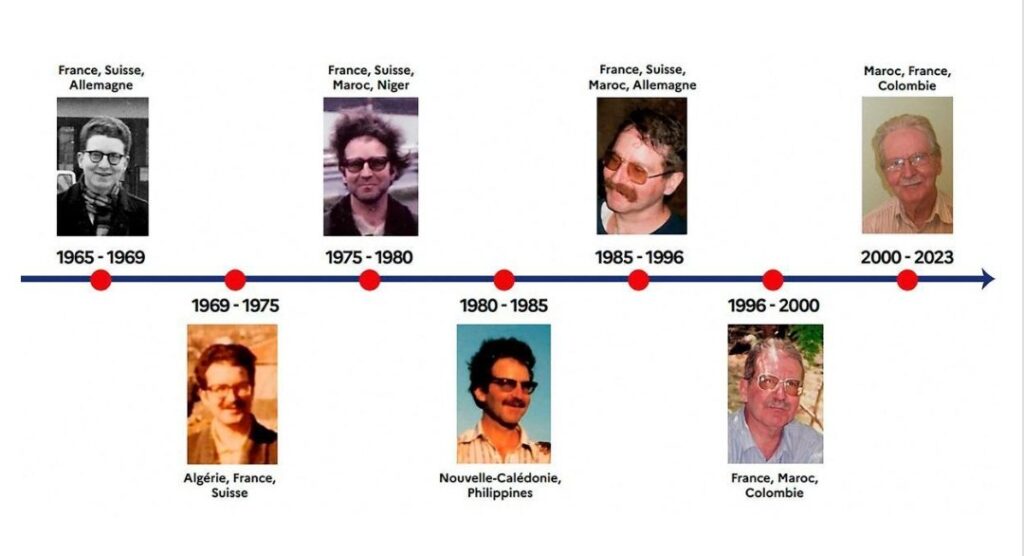
Timeline of Jacques Leveugle’s location. Credit: Grenoble Prosecutor’s Office.
Bogotá, Colombia – On February 10, the Grenoble Prosecutor’s Office launched a worldwide call for victims or witnesses of Jacques Leveugle, a teacher arrested in 2024 in France and accused of sexually assaulting at least 89 minors around the world since 1967.
During a press conference, French prosecutor Étienne Manteaux said that the sexual predator was reported in 2023 by one of his nephews, who discovered a USB drive containing written memoirs, pictures, and other documents related to the abuse of teenagers.
The French Embassy in Colombia called for witnesses to come forward to identify potential abuse victims in the country, as Leveugle worked as a teacher in Bogotá on two occasions between 1996 and 2023.
The suspect was living in Morocco when the investigation began, but had spent his life moving between Switzerland, Germany, Portugal, Algeria, Nigeria, the Philippines, New Caledonia, Colombia, and France. In all of these countries, he allegedly targeted minors while working in educational or social roles.
Authorities revealed that in his “autobiography,” the alleged abuser gave horrendous details about 89 teenagers, between 13 and 17 years old, being manipulated and abused from 1967 to 2022.
“We need Jacques Leveugle’s name to be known because the objective is to reach the victims and encourage them to come forward,” Manteaux confirmed.
He said that 40 of the 89 victims had been identified and that authorities were working to find the rest.
“Sometimes names are not even mentioned; we are facing a wall in certain situations… This call for witnesses is to allow victims we haven’t been able to identify to come forward,” the prosecutor explained. “Perhaps not all victims are recorded in these documents.”
Manteaux also said that the man, who has been under arrest since 2024 and never officially graduated as an educator, also confessed in his writings to killing two women: his mother and one of his aunts.
The uphill battle to find victims in Colombia
Investigations revealed that Jacques Leveugle spent several years living in and visiting Colombia between 1996 and 2000, and again from 2000 to 2023.
In an interview with Caracol Radio, the prosecutor confirmed that the sexual predator worked as a French teacher in a shelter for children and teenagers in the capital city, Bogotá.
“It’s hard to reach victims outside France; that’s why we have made a special invitation to Colombian victims. We need them and their experiences to understand what this man really did,” he said during the call, adding that they decided to take a “traditional” approach due to the difficulty of reaching witnesses.
Authorities are also trying to determine if Leveugle had collaborators and what his “modus operandi” was to ensure that none of the teenagers ever complained or reported the abuse to the police.
Latin America Reports contacted the Grenoble Prosecutor’s Office, and they confirmed that the investigation remains active and ongoing in Colombia. They also committed to briefing the media on any significant breakthroughs as they continue to work toward identifying more victims internationally.
The French Embassy in Bogotá has shared the channels established to find Colombian victims:
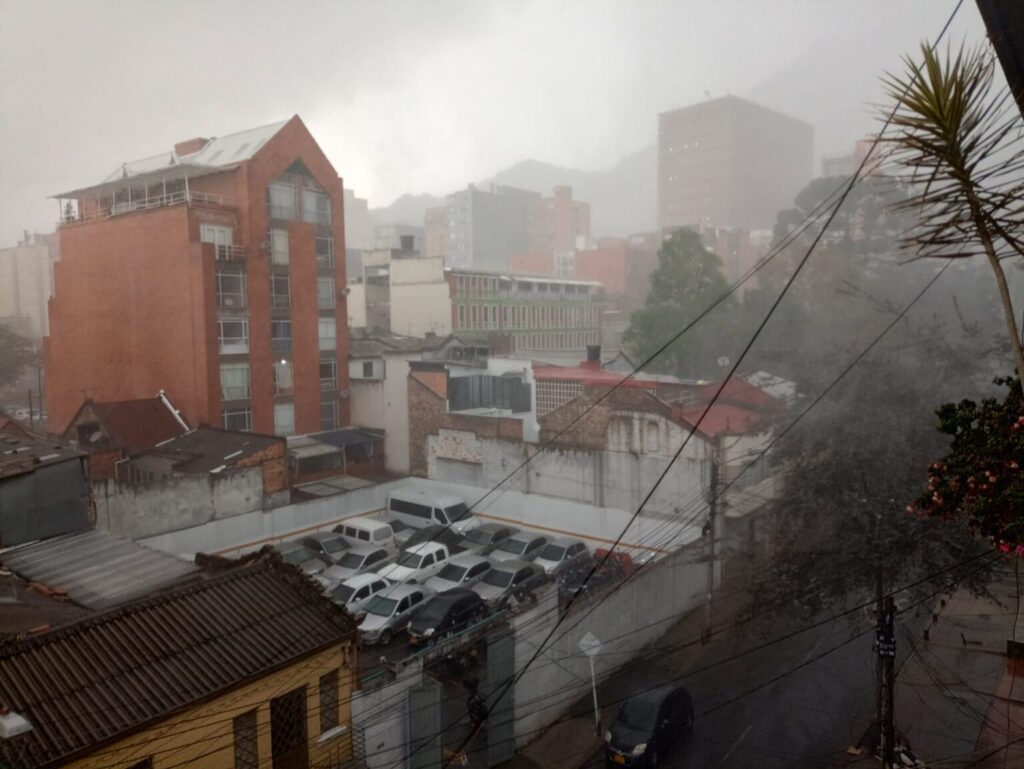
2026 has started off unusually wet, with downpours in Bogotá and floods elsewhere in Colombia. What’s going on and how can you help?
While this is meant to be the dry season for most of Colombia, it’s instead been raining heavily. Vast swathes of the Caribbean region have flooded, and in Bogotá, it’s led to collapses in the traffic systems. That’s led to an emergency declaration by the president and frantic relief efforts (links at article end).
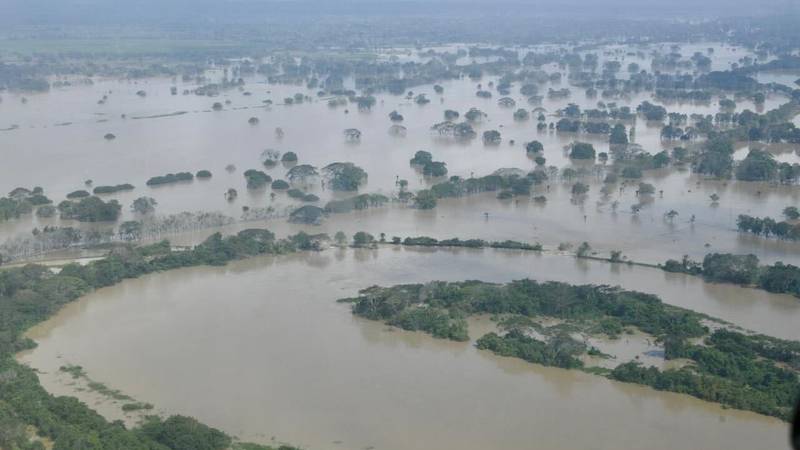
Heavy floods have left much of Córdoba underwater. Photo courtesy of UNGRD
Colombian president Gustavo Petro has declared a state of emergency yet again to address the situation in the northern department of Córdoba and elsewhere. While the emergency measures were declared for Córdoba, this was later extended to 22 departments, underlining the severity of the situation.
Within the capital, flash floods have swamped roads and forced traffic to grind to a halt as well as collapsing roofs and flooding buildings. Luckily, Bogotá has so far escaped the levels of damage seen elsewhere in the nation.
Barrios such as Nicolás de Federman have been hit by hailstorms heavy enough to resemble a blizzard, leaving them carpeted in white as though snowed in while the autopista norte has been forced to close as it resembles a swamp.
One silver lining to the rainclouds is that the reservoirs will be nice and full, alleviating fears that Bogotá will be forced to return to water rationing, as happened in 2024. That will be little comfort to many who have lost everything in the floods.
Why is it raining so much?
Heavy rain has persisted through year start
Colombia’s weather monitors, IDEAM, have explained that there are four main factors: the Madden and Julian wave; high Amazonian humidity; a lack of winds to move that humidity and la Niña-esque conditions.
All put together, these four factors combine to make a perfect storm and unseasonably high January rainfall levels. That’s continued into February and with March and April around the corner there is little relief in sight.
That’s led to half the country being put on alert for potential floods and high precipitation, which leads to all sorts of other trouble such as landslides. Colombia’s disaster relief agency UNGRD is underprepared currently, having endured corruption scandals recently.
This is meant to be the dry season, too. Bogotá in particular is meant to receive heavy rain October-December and April, not January and February. In fact, these months are normally characterised by blazing sunshine, clear skies and hot temperatures.
Adding to the confusion is the fact that we’re supposed to be heading into an El Niño cycle, meaning dry weather and lower rainfall than expected. Instead, we’ve had the precise opposite so far. While Colombia is the world’s rainiest country, it’s not meant to fall in January and February, at least not in the north.
Floods in the Caribbean
The rains have been annoying and disruptive in Bogotá, but other parts of the country have faced genuine devastation. First among those is the department of Córdoba, which has suffered widespread floods. However, over half the country has been affected.
The capital of Córdoba, Montería, is the worst hit major city in the country, with thousands of people evacuated in the city and surrounds. Over a quarter of a million people have been directly affected by the rains nationally.
Sadly, politics have come into play here too, with Petro clashing with regional governor Erasmo Zuleta over the management of the department. The pair have had a lot of differences over the years. He also said he was initially unable to land in Córdoba due to the risk of an attack.
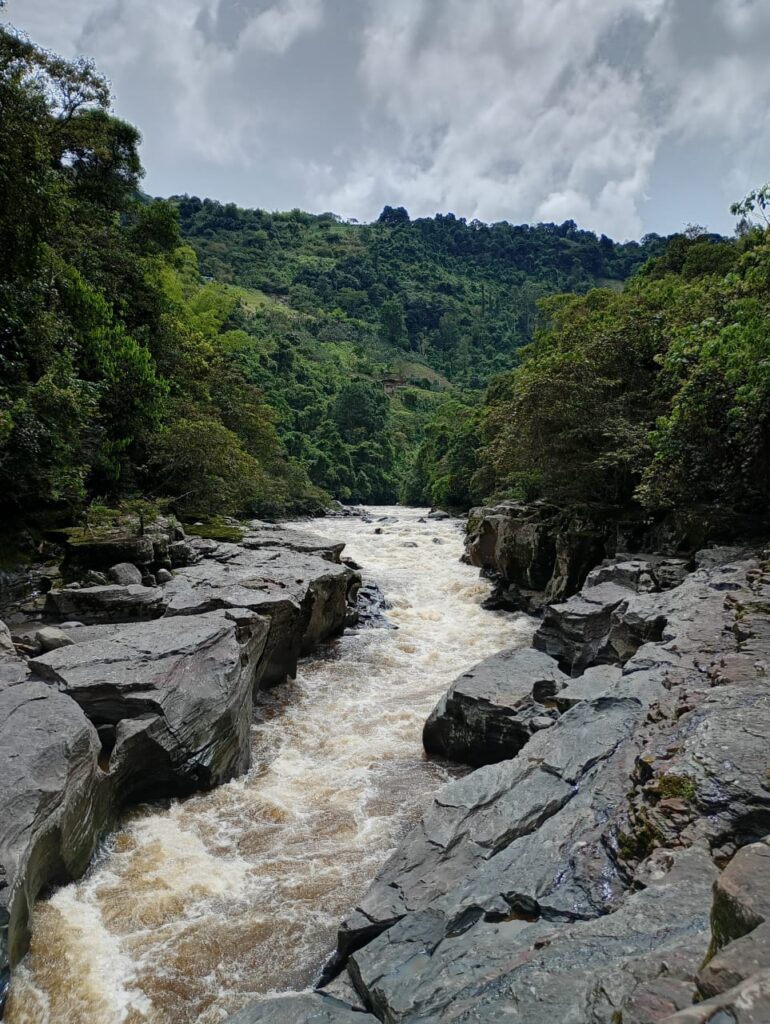
Rivers across Colombia are full and at risk of flooding
More reasonable are Petro’s claims that the situation has been exacerbated by water management systems such as reservoirs. These have diverted normal water flows and critically diminished the region’s ability to handle pressure from unusual weather patterns. Zuleta’s response is that the national government oversees the Urrá hydro plant.
The worst affected regions are on the Caribbean coast, with Uraba Antioqueño, La Guajira and Sucre joining Córdoba, but the Amazon and Pacific regions have also seen unusually high rainfall for the start of the year.
There has been flooding in Medellín, as well as the risk of landslides in hillside comunas, while coastal cities such as Cartagena have had heavy downpours and storms, affecting much-needed tourism income in high season as beaches close.
Even when the rains stop, the long term effects will take years to overcome. Already, bad actors are starting to take advantage of the situation, with desperate houseowners paying through the nose for boaters to rescue their belongings before thieves arrive.
Fields that are now underwater will take an age to fully drain and even longer to recover from the damage currently being wrought upon them. Thousands upon thousands of hectares of farmland will be unusable for the near future.
With what looks like a fraught year ahead for Colombia, this is an unwanted extra pressure to deal with and exposes the fragility of infrastructure in the face of increased climate change pressure. Whoever wins the next election, investment will be needed to avoid similar problems going forward.
The Cruz Roja Colombiana are taking donations of clothes and building materials at their Salitre centre (Av.68 #68b-31), and you can donate money directly on this link. The local government in Bogotá is also organising donation drives on this link.
International airlines are rapidly re-establishing services to Venezuela, signalling a cautious but commercially significant reopening of the country’s aviation market. On Thursday, February 12, Colombia’s Avianca resumed a daily direct flights between Bogotá and Caracas.
The move restores one of the most important air corridors in northern South America and comes amid a flurry of announcements from carriers across Europe, the Americas and the Middle East seeking to regain access to a market that has been largely closed since 2019.
The flagship carrier claims that this key route was restored after a “comprehensive evaluation of operational conditions and aviation safety,” carried out in coordination with Colombian and Venezuelan authorities.
Avianca’s daily round trip flight will operate with an A320 aircraft, departing Bogotá (AV142) at 07:40 a.m. and returning from Caracas (AV143) at 12:10 p.m.
The resumption reflects the strong commercial ties between Colombia and Venezuela, as well as growing confidence among airlines that operational, regulatory and security conditions now allow for a gradual return.
For Avianca, which has operated in Venezuela for more than 60 years, the route carries both symbolic and strategic weight. The carrier said the service would strengthen regional connectivity and support trade, tourism and business travel between the two countries, which share deep economic and social ties disrupted during years of political confrontation and border closures.
Avianca’s return is part of a broader recalibration by the global aviation industry following Venezuela’s political transition and the end of Nicolás Maduro’s rule. Airlines had largely withdrawn from the country after the suspension of international flights, currency controls, safety concerns and U.S. sanctions made operations increasingly unviable.
Now, with demand for travel surging among Venezuela’s large diaspora and regional business community, carriers are moving quickly to reclaim market share — albeit cautiously, with a close eye on regulatory approvals and security assessments.
In January, American Airlines said it was ready to resume daily service to Venezuela, positioning itself as the first U.S. carrier to formally announce plans to return after nearly seven years. The airline said flights would remain subject to U.S. government approval and security evaluations, and has not yet announced a launch date.
“We have a more than 30-year history connecting Venezuelans to the U.S., and we are ready to renew that relationship,” said Nat Pieper, American’s chief commercial officer, underscoring the airline’s focus on family reunification, business travel and trade.
Before suspending operations in 2019, American was the largest U.S. airline serving Venezuela, having entered the market in 1987. The carrier said it remains in close contact with federal authorities and is working with regulators, unions and internal teams to ensure a compliant return.
While direct U.S.–Venezuela flights remain pending, regional alternatives are already expanding. Panama-based Copa Airlines has enabled ticket sales since late January allowing passengers to travel between Caracas and Miami via Panama under a single reservation, restoring a key transit option for Venezuelan travellers.
European and Latin American airlines have moved faster, with firm restart dates announced over the next six weeks. Spain’s Air Europa will resume Madrid–Caracas flights on February 17, followed by Laser Airlines the next day. LATAM Airlines plans to restart flights from Bogotá on February 23, while Colombian low-cost carrier Wingo will relaunch Medellín–Caracas services on March 1.
Further afield, Turkish Airlines will begin flights between Istanbul and Caracas on March 3, marking the return of a long-haul intercontinental connection. Spain’s low-cost Plus Ultra will also start services that same day, while Brazil’s GOL plans to resume flights from São Paulo on March 8.
TAP Portugal is scheduled to restore Lisbon–Caracas flights by the end of March.
The pace of announcements reflects both pent-up demand and a race among carriers to secure early-mover advantage in a market that, while still fragile, offers long-term potential. Venezuela’s population of more than 28 million, combined with millions of citizens living abroad, represents a sizeable base for leisure, family and humanitarian travel.
Yet challenges remain. Airlines face currency risks, infrastructure constraints and the possibility of renewed political or regulatory instability. Industry executives say most carriers are returning with limited capacity and flexible schedules, allowing them to scale operations up or down as conditions evolve.
For now, the reopening of Venezuela’s airspace is being driven less by optimism than by calculated risk-taking. Airlines are betting that gradual political normalization and the easing of restrictions will allow them to rebuild routes profitably — without repeating the costly exits of the past decade.
Avianca’s daily Bogotá–Caracas service may therefore serve as an early test case. If demand proves resilient and operations remain stable, more capacity is likely to follow. If not, airlines may once again find themselves navigating turbulence in one of Latin America’s most complex markets.
Still, after years of near-total isolation, Venezuela’s reappearance on international departure boards marks a turning point — one that global airlines are keen not to miss
Colombia is off to the polls in a little under a month, but what’s at stake and what could happen? And why can’t you have a drink while watching results roll in?
Sunday March 8th will be the first of three elections in Colombia. Photo: Element5 Digital on Unsplash
Every Colombian over the age of majority (18) and with a correctly registeredcédula ciudandanía can vote. In return, each voter gets a half day off work. Non-citizens are not eligible to vote in national elections, but holders of resident visas will be able to vote in next year’s local elections.
The polls are open from 8am until 4pm and counting is usually very fast with the first results coming in just an hour or so later. Due to the PR system (see below), final results come through in the week.
Land and fluvial borders will be closed for Colombian nationals on the day of the election, although foreigners can cross. From the Saturday afternoon before voting until the Monday morning, ley seca will apply, meaning no alcohol sales in bars, restaurants or shops. That applies for everyone, so no representation or boozing.
Oversight is carried out by the CNE (Consejo Nacional Electoral). In order to do this over the vast territory and number of stations, over 800,000 citizens are selected to be vote-counters. This is similar to jury duty in other countries and is compensated with a day off as well as a compulsory day of training a couple of weeks beforehand.
As the electorate is growing, there are now some 13,000 voting sites across the country, most with multiple voting tables. Colombians have to vote where their cédula is registered, so don’t be surprised to see some people trekking to other cities if they forgot to update their registration.
Some parties run a closed list system, meaning you simply vote for them, whereas others have open lists, meaning you vote for the party and can also vote for your preferred candidate within the party. For closed lists, the party will decide who enters congress, with an open list it will be done in order of preference.
A smidgen under 50% turnout is common for house elections, with higher figures expected for the presidential elections later this year. The Colombian parliament is a bicameral system with the Senate acting as the upper and more powerful house and the Cámara the lower house.
Most parties do not really have well-defined manifestos as such, although better-funded candidates will give a range of positions on matters. In general, there will simply be slogans and general aims that give voters an idea of where their candidates stand.
Who’s up for election?
With a PR system in place there are a plethora of parties to peruse. The country was dominated for decades by the Conservadores and Liberales and both remain strong across the country. In recent years they’ve been joined by the Centro Democrático as the third force. Expect all three to do well.
Mid-level parties include the likes of the right-wing Cambio Radical, particularly strong on the Caribbean, centrist (and not ecologically centred) Alianza Verde and ex-president Santos’ centrist partido de la U. The last election saw the leftist Colombia Humana rocket up to join these blocs.
Then there are the smaller parties, often operating essentially as almost one-man-bands. These usually have an enormous amount of support in a particular area or for a certain candidate but fail to translate this to a wider audience. It’s common to see them banding together, as with the governing coalition Pacto Histórico.
Finally, there are guaranteed seats in both the Senate and Cámara for certain groups and people. This year sees the Comunes party no longer receiving an automatic five seats in both houses that they had in the last two votes as part of the peace process.
If you are a fan of PR, this system allows a diverse number of voices to be heard and limits the power of government, especially when there is opposition to their plans. For those more cynically-minded, it is a way to make sure that little gets done and few significant bills are passed.
There’s also the curious option of voto en blanco. Different from a spoiled vote, which is simply disregarded, this is an active protest. If it ranks highest in any race, then a rerun of the election must take place within a month with entirely new candidates and/or party lists.
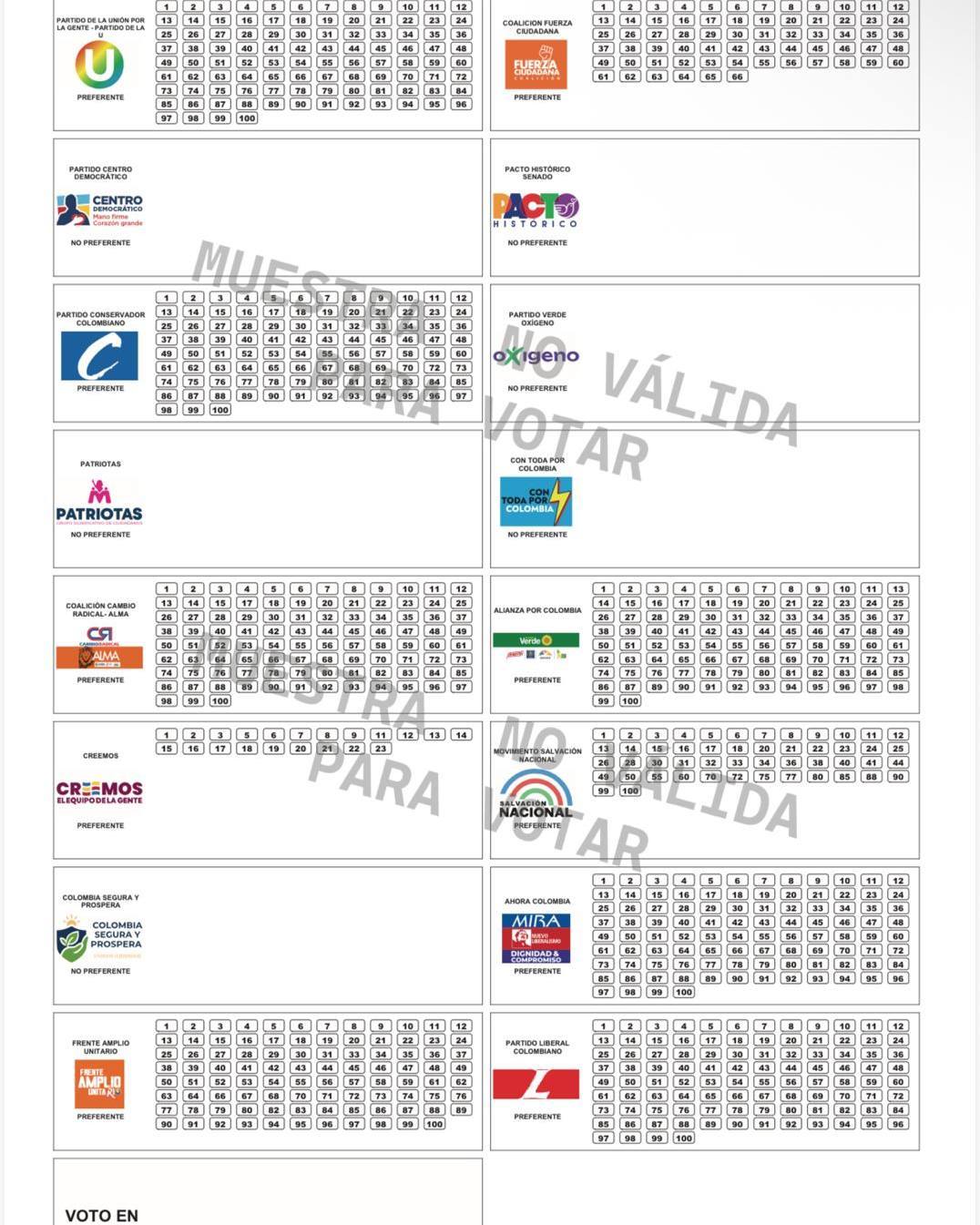
Colombian Senate Elections 2026
The Senate now has 103 seats (known as curules) and is the upper house in the bicameral system. Of those, a straight 100 are chosen by the electorate as a whole, while Indigenous communities select a further two and the runner-up in the presidential election will receive the final seat.
The tarjetón for voting in the Senate. Photo courtesy of the Registraduría via Facebook
The Senate currently boasts a whopping 17 parties, but only six of those have double figure representation with the Conservadores’ 15 being the biggest single group. 26 parties are running 1,000 candidates between them this time. Voting is done on a national basis and tallied up across the territory, meaning this takes a little while to work out.
While there is a diverse group of parties, they hang together in loose blocs roughly delineated as government, opposition and neutral. With the government only controlling 34 curules and the opposition 24, the neutrals are incredibly important for horse-trading.
This will be a huge litmus test for the ruling leftist bloc. They will lose their guaranteed Comunes seats, so any further losses will be highly problematic. On the other hand, gaining curules would be a huge shot in the arm in terms of public support, hence why they are campaigning in places like Huila, outside of their traditional strongholds.
The most likely outcome is that there will be little change in the makeup of the Senate, with neither the government nor opposition likely to take outright control or make large gains. Whichever of those two groups increases their representation will quickly turn it into a sign that they are on the right track and use that as support for their presidential campaign.
Cámara de Representantes election Colombia 2026
The lower chamber, too, is also up for election. It is significantly larger, with 188 seats and 23 parties. The government is also in a minority here and relies on support from independents to get things done. There are over 2,000 candidates representing nearly 500 parties, or listas of similar candidates.
The key difference in voting here is that it is largely territorial, with 161 seats divided between the departments and Bogotá, DC. The latter returns the most seats, with 18, closely followed by Antioquia with one fewer. Colombians living abroad and voting in embassies get one between them
However, these are not equal, as departments receive at least two seats, meaning Vaupés gets one representative for every 20,000 or so people, while the national average is more like 300,000. Changes in population have led to odd situations like Caldas returning more representantes (5) than Cauca (four) despite only having ⅔ of its population.
Then there are the special seats. Again, the Comunes party will lose their five extra seats in this term and it is also the last election to feature the 16 seats reserved for conflict victims. Colombians of Afro descent get two seats, while Indigenous Colombians and raizales from San Andres and Providencia have one apiece and the VP runner-up rounds it out.
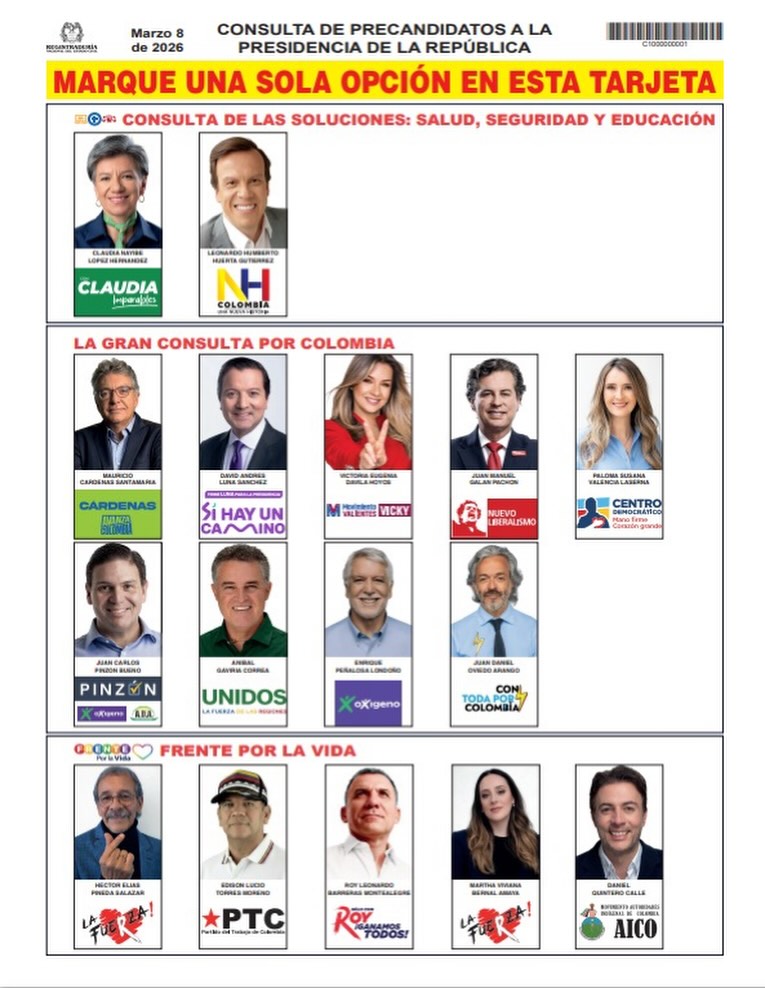
Consultas for the presidential election
Just in case you thought there was enough on the plate, there are further considerations at stake. To avoid spreading the vote, various presidential candidates with similar positions group together for a preliminary vote. The losers in each consulta will drop out on March 9th. This year there are three on the voting card.
The tarjetón for voting in the Senate. Photo courtesy of the Registraduría via Facebook
The biggest of these with 9 names is the Gran Consulta Por Colombia, which stretches the credibility of political similarity. It’s nominally centrist but features prominent rightists Vicky Dávila and Paloma Valencia alongside traditional centre voices such as Enrique Peñalosa and Juan David Oviedo. The latter is also the Centro Democrático candidate.
The leftist consulta is under intense scrutiny as candidate Iván Cepeda, currently leading the polls, was blocked from taking part. That led to further withdrawals and angry denunciations from Cépeda and sitting president Gustavo Petro. Roy Barreras is now the favourite to win this five person race.
Then there’s a centrist competition between former Bogotá mayor Claudia López and little-known candidate Leonardo Huerta. López is the clear favourite here after perennial runner Sergio Fajardo chose to go directly to the first round of presidential voting.
At the moment, the presidential campaign is very unclear. Iván Cepeda leads polling and is extremely unlikely not to make the second round. Who joins him is hard to see at this point, so the consultas will trim that field significantly.
While the Senate and Cámara will be decided by mid-March, this is only the first lap of the field for the presidential candidates. Some will fall out, others will consolidate their position and things will start changing throughout the spring until the May 31st first round.
Unseasonal heavy rains and severe flooding across northern Colombia have created a full-blown humanitarian crisis, displacing hundreds of thousands, destroying homes and farmland, and pushing local infrastructure and health systems to breaking point.
The disaster has hit hardest in the department of Córdoba, where officials say 156,000 people have been affected and 80% of the territory remains underwater following rainfall that broke historical records for February, traditionally one of the region’s driest months.
“In one day we received the amount of rain expected for an entire month,” Ghisliane Echeverry, director of the Institute of Hydrology, Meteorology and Environmental Studies (Ideam), told ministers during a government emergency council meeting.
The flooding has spread across multiple departments, including Sucre, Magdalena, La Guajira, Chocó and Antioquia, but Córdoba — a key agricultural and cattle-raising hub — has borne the brunt of the devastation.
“This is much more serious than even the most pessimistic scenarios we expected,” Carlos Carrillo, director of the National Unit for Disaster Risk Management (UNGRD), said. “We are facing a severe climate crisis that has overwhelmed traditional coping mechanisms.”
Displacement and extensive damage
Preliminary government assessments report at least 14 confirmed deaths linked to flooding and landslides, while thousands of families have been forced into temporary shelters as floodwaters inundate entire neighborhoods.
In Córdoba’s rural areas, officials estimate that around 157,000 hectares of agricultural land are submerged, affecting crops such as plantain, yucca and watermelon as well as commercial monocultures like African palm. Livestock losses are mounting, with local authorities reporting that more than 5,500 animals have been affected.
“We have 1,700 homes already destroyed and 4,000 more uninhabitable,” Carrillo said, though he cautioned that final figures are expected to change once waters recede and damage is fully assessed.
The United Nations Office for the Coordination of Humanitarian Affairs (OCHA) said more than 27,000 families have been impacted by flooding across the Caribbean departments, with thousands more indirectly affected as access roads and bridges have been reduced to rubble.
Public health officials warn that overcrowded shelters are becoming hotspots for disease, exacerbated by lack of access to clean water, sanitation and essential medical care.
“We are seeing extreme levels of waterborne and respiratory illnesses among displaced families,” said a health official in Montería, the capital of Córdoba. “The combination of stagnant water, cramped conditions and limited resources is a ticking time bomb.”
Essential supplies including food, mattresses and personal hygiene products are in critically short supply in many shelters, officials said.
Cold front and climate pressures
Meteorologists have attributed the extreme rainfall to an atypical cold front entering from the Caribbean, which has pushed precipitation far above normal levels. Rainfall in some areas has been measured at more than 64% above average for January and February.
“The water levels we are witnessing have never been recorded in February,” Carrillo said. Ideam has maintained high-level yellow and red alerts for at least 16 departments as flooding and landslide risks persist.
Typically dry early months of the year have instead seen consistent rains, and meteorologists warn that March and April could bring the usual seasonal rains, compounding the already dire situation.
Local officials across affected regions reported severe disruptions to vital road networks, bridges and public services, isolating some communities entirely. In the Urabá Antioqueño in western Antioquia, authorities said more than 9,000 families were left displaced in 13 municipalities that declared calamity.
Despite the scale of the disaster, the national government has not formally declared an economic emergency, a move that would unlock additional disaster funds and expedite aid. President Gustavo Petro, who convened a council of ministers in Montería, has signaled that such a declaration is under consideration.
“The magnitude of these floods demands a national response,” one government official said. “We are mobilizing resources but the scale of the crisis is beyond anything we normally plan for.”
The response has also brought renewed scrutiny to long-standing water management challenges in the region. Carrillo and other government officials have criticized decades-old hydraulic works, including reservoirs and levees, for altering natural water flows and potentially exacerbating flooding.
President Petro echoed these concerns on social media, singling out infrastructure such as the Urrá hydroelectric reservoir — built in the 1990s — as part of the region’s broader hydrological challenges.
“These reservoirs were not designed to manage excess water but to drain lands and disrupt natural flow patterns,” Petro wrote, arguing that such interventions may have contributed to current conditions.
Communities struggle amid uncertainty
In two coastal departments – La Guajira and Magdalena – continuous rainfall has caused streams to overflow and paralyzed mobility, while in the colonial port city of Santa Marta, strong winds and currents drove a cargo vessel ashore, highlighting the intensity of the storms.
For residents in isolated rural towns, the toll is deeply personal. Entire families have lost homes and livelihoods, and many are now waiting for relief that has been slow to reach remote areas.
“We’ve never seen water this high,” said a farmer in northern Córdoba. “We are afraid of what comes next — we don’t know how we will recover.”
With rains expected to continue over the coming weeks, authorities and humanitarian organizations warn that the full scale of the disaster may not be known for months, and that recovery will require sustained national and international support.
Nearly a week after Donald Trump hosted Colombia’s president, Gustavo Petro, at the White House, calm has returned to a bilateral relationship that only recently appeared headed for rupture. The insults have stopped. The social media theatrics have faded. Diplomacy, not spectacle, is back in charge.
This alone tells us that both governments have agreed to “disagree” and agree again.
The meeting itself produced no headline agreements. Instead, it marked something more consequential and less dramatic – a quiet end to illusions. In Washington, Petro’s flagship policy of “Total Peace” is now widely regarded as exhausted, if not outright discredited. What replaces it is a far more traditional, conditional partnership: security cooperation first, democracy under scrutiny, and patience in short supply.
The timing matters. Within days of the White House meeting, the U.S. State Department announced that John McNamara, Washington’s chargé d’affaires in Bogotá, will leave his post on February 13. McNamara arrived a year ago at a moment of open hostility between Trump and Petro, when the relationship was being tested not only by policy disagreements but by personal antagonism. His task was not to advance grand initiatives, but to prevent a collapse. That he succeeded says much about the value of professional diplomacy in an era of impulsive politics.
His departure now marks the end of a holding pattern. What comes next will be harder, more explicit, and less forgiving.
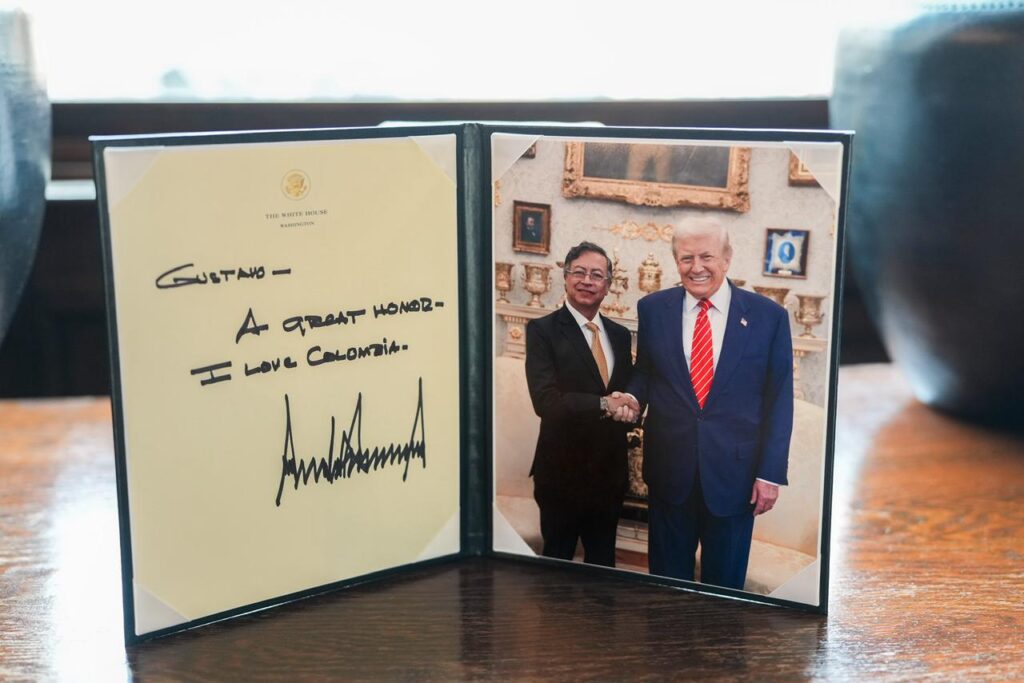
The Trump – Petro encounter was cordial, almost surprisingly so. Trump praised Petro as “terrific.” Petro shared a handwritten note from Trump declaring his affection for Colombia. The optics were deliberate. But the substance lay elsewhere.
According to officials and lawmakers briefed on the talks, Washington’s message was blunt: negotiations without consequences have failed. Petro’s Paz Total—a strategy built on ceasefires, open-ended negotiations, and the assumption that armed groups could be coaxed into disarmament—has not reduced violence. In many regions, it has coincided with territorial expansion by FARC dissidents, rising extortion, and a deepening humanitarian crisis. From Washington’s perspective, it has blurred the line between peace realpolitik and paralysis.
U.S. cooperation with Colombia is now explicitly conditioned on key demands. First, decisive military action against armed groups, especially the ELN along the Venezuelan border, where insurgents have long enjoyed sanctuary. Second, ironclad guarantees that Colombia’s upcoming electoral processes will be free, fair, and transparent ahead of a high-stakes 2026 presidential race.
This is not ideological hostility. It is strategic calculation – from Bogotá to Caracas, and ultimately, the Oval Office.
Colombia remains indispensable to U.S. interests: a capstone of regional security, a key counter-narcotics partner, and a democratic anchor in a hemisphere unsettled by authoritarian drift and Venezuelan instability. But indispensability does not mean indulgence. Washington’s conclusion is that leverage must now be used, not deferred.
The shift was visible almost immediately. Colombian forces bombed ELN encampments in the Catatumbo region near the Venezuelan border, killing several fighters and seizing weapons. The strikes signaled a return to military pressure after months of restraint under Paz Total.
Yet they also exposed the moral and political cost of the new course. According to Colombia’s forensic authorities and reporting by El Colombiano, one of those killed in Catatumbo was a child. Seven bodies were recovered after the operation, including that of a minor. The incident echoed last November’s bombing in Guaviare that killed seven minors, among them an 11-year-old girl.
Shift in tone and strategy
Petro, in the aftermath of the Trump encounter, has responded with a stark argument: armed groups recruit children precisely to deter military action. Halting airstrikes, he said, would reward a “cowardly and criminal” strategy and accelerate forced recruitment. It is a grim logic, but not an implausible one—and it illustrates the impossible trade-offs now confronting the Colombian state.
Peace negotiations have not been spared. The Clan del Golfo, one of the country’s most powerful criminal organizations, suspended talks with the government after reports that Colombia and the United States discussed targeting “high-value” leaders. From Washington’s perspective, this reaction only reinforces its skepticism: armed groups talk peace when it buys time, not when it requires surrender.
None of this suggests enthusiasm in Washington for a militarized Colombia. It suggests resignation. The United States has seen this cycle before – in Colombia and throughout the hemisphere. Negotiations without enforcement are a contradiction. Ceasefires without verification entrench armed actors. Elections held amid coercion corrode democratic legitimacy from within.
Which brings us to the second pillar of the new relationship: electoral transparency.
U.S. officials have made clear that Colombia’s democratic processes will now be watched closely – not as a moral abstraction, but as a strategic necessity. A Colombia that cannot guarantee free elections is not a reliable ally, no matter how aligned its security policies may be.
This is the bargain now on offer. Not a reset. No rupture. Conditional coexistence.
John McNamara’s departure symbolizes the transition. His tenure was about keeping the peace between governments. The next phase will be about enforcing terms.
For Petro, the challenge is severe. He must deliver security results demanded by Washington without losing legitimacy at home, where skepticism of militarization runs deep. He must demonstrate democratic integrity while navigating a polarized political landscape. And he must do so knowing that Total Peace, once his signature promise, no longer commands confidence abroad.
The calm in U.S.–Colombia relations is real- but it is not comfort. It is the quiet before accountability.
With Superbowl weekend about to kick off, we take a look at the best places to watch the big game as well as where to get involved with local American Football clubs.
Football that you play with your feet and a ball reigns supreme in Colombia, but there’s also plenty of support for the types of football that you play with your hands and an egg. We’ve covered Aussie Rules football and Rugby Union before, but with the Superb Owl between Seattle Seahawks and New England Patriots coming up on Sunday, it’s time to look at the USA’s favourite sport in Colombia’s capital.
Bulldogs DC are one of the Colombian flag football teams in the capital
There’s a Colombian element this time around too, with star cornerback Christian Gonzalez lining up in the Patriots’ backfield. Born in Texas to a Caleño family, he went 15th in the 2023 draft and anchors pass coverage for New England.
He retains a great love for Colombia, saying that he’ll have mixed feelings if his country of birth and country of descent meet in this year’s World Cup in North America.
The game kicks off at 18:30 Colombian time, pretty much perfect for Sunday evening viewing. The pregame show by Green Day will be popular in Colombia, but it’s halftime that will draw all eyes to the screen.
Puerto Rican megastar Bad Bunny is scheduled to play and he hasn’t held back in commenting on ICE actions across mainland USA. He said “ICE out” while accepting an award at the Grammys, adding “We’re not savage, we’re not animals, we’re not aliens. We are humans and we are Americans.” That has made him the highest profile US Latino speaking out on the issue.
Watching is easy, but playing is certainly possible, with a wealth of clubs throughout la nevera and elsewhere in Colombia. We spoke to local organiser Javier Zuleta about how local American Football works and how to get involved, whether that’s full kit or flag.
Where to watch
This is by no means an exhaustive list – the match will be widely shown around Bogotá. However, it’s a Sunday night, and that means there will be a limited number of places open anyway, so it pays to check ahead. If you’re looking for a proper atmosphere, these places will sort you out on Sunday evening.
All these venues are running DAZN and Gamepass, so you won’t have to deal with dodgy streams or any sort of hiccups. All should feature a mixed crowd of Americans watching their home sport and Colombian fans of the NFL, making for a different atmosphere than you might previously have experienced.
International Centre
Superbowl party at the Meeting House
Meeting House
Closest to the centre, by the centro comercial San Martín at Calle 32 #6b-43 (3rd floor), the Meeting House offers a huge screen, plenty of tables and a long bar. They expect to busy, so reserve here to assure yourself of a place at the party.
They have a large terrace/patio for smoking, as well as activities such as Beer Pong if you’re not glued to the halftime show or Bad Bunny’s been cancelled. Expect a lively party atmosphere.
There’s a range of offers on cocktails and the full kitchen menu, with picadas probably as a special offer as well for the extra-hungry. Both bottled and draft beer is available as well as a range of spirits. They have pitchers up to a whopping 5 litres to make sure you’ve no chance of going thirsty.
Teusaquillo
Shots Lab
Shots Lab has plenty of screens for the Superbowl in Bogotá
Open from 3pm, the Shots Lab at Calle 45 #20-20 has a plethora of screens across three areas for your viewing pleasure. The early start means you can make sure you get a good seat and the number of screens means you’re assured of a good view wherever you are.
The owner is a Saints fan, so it’s pretty neutral. There’s two indoor spaces as well as an open-air patio which is cooler if it’s crowded and a dartboard if the game turns into a blowout. Rock music provides a solid backdrop.
They are running all their usual menu, as well as offers on cubetazos up until kick off o clock. Águila, Póker and Andina are at six for COP$25,000 while Club Colombia is at COP$30,000. They have an extensive menu and a good range of both beers and spirits.
Zona T
Irish Pubs
The Usaquén, Quinta Camacho and Zona T are your best bets here. They will have the games on at all locations with a dependable selection of beers and food. Best one for atmosphere is probably the Zona T where there are offers on nachos and wings with beer on a 100 inch screen.
Gigante is the craft beer option that stands out
Gigante
If you’re looking for craft beer while watching the match, this is your best bet. Owner Will Catlett serves up his own Gigante brews made locally. A California native, he’ll be backing fellow NFC West team the Seahawks.
Unsurprisingly, the screen is, well, gigante and there’s plenty of space inside to make sure you can see it. It’s conveniently located right in the heart of the Zona T at Carrera 14A #83-44.
Litre-and-a-half beer pitchers at COP$50,000 are a great deal, with 2×1 cocktails on a slew of options if you don’t want to chug the beers. Also at COP$50,000 are beer plus food (hamburger or choripan) combos to help make sure your stomach’s lined.
Wherever you end up, watching the Superbowl in Bogotá is great if you know what you’re doing. And why not consider popping along to check out some of the local teams’ training sessions – they’re friendly, welcoming and always looking for new members.
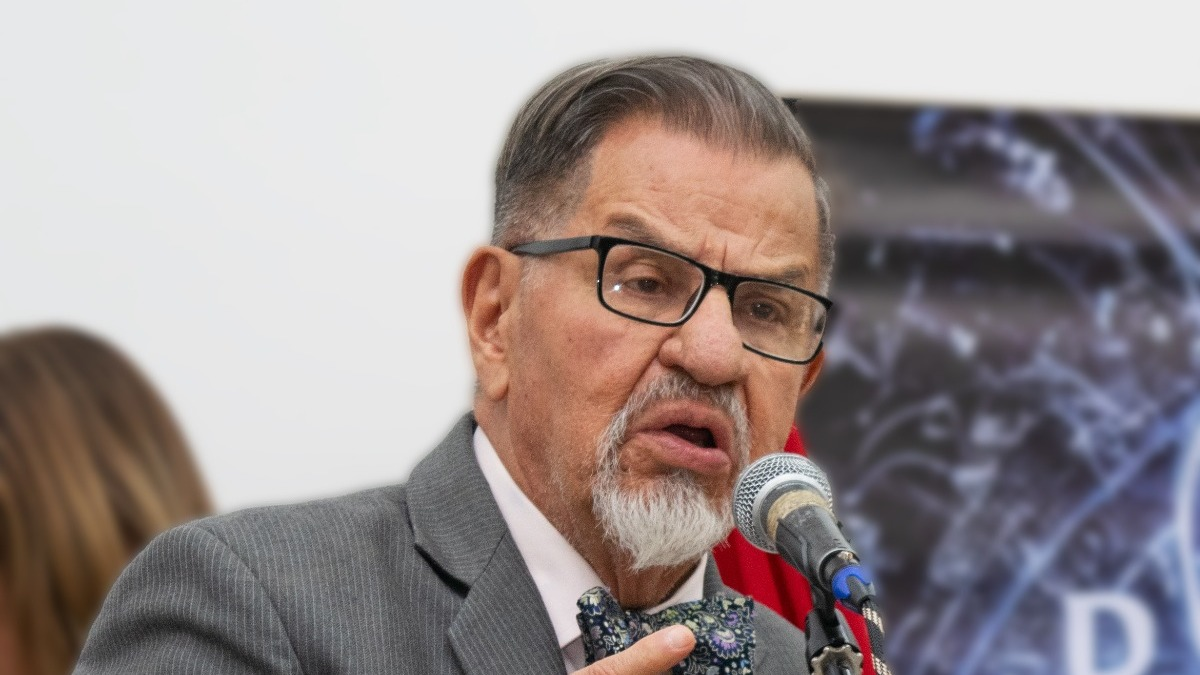
Minister of Labor Antonio Sanguino being interviewed at the January 28 march in support of the minimum wage hike. Image credit: Cristina Dorado Suaza
Bogotá, Colombia — In the past week, Colombians have taken to the streets on two occasions to defend the government’s minimum wage increase as it faces legal attacks by business sectors.
On January 28 and February 3, Colombians marched in major cities in support of the landmark 23% wage increase established at the end of last year.
But the future of Decree 1469, which established what the government has called a “living wage”, remains uncertain.
“This is a major step forward by the government of Gustavo Petro. It is not just an increase; it is the dignification of workers’ wages in Colombia. That is why, as union members and as teachers, we support this mission, which directly impacts people’s everyday lives,” Oscar Patiño, an attendee of the January 28 march, told The Bogotá Post.
For Patiño, a teacher and union leader, the protest represented a demand that the Council of State act as a guarantor of workers’ rights through its role in defining public policy.
He was part of a wave of sit-in protests in cities across the country called by labor unions, with the backing of the government, to defend the minimum wage hike. The 23% raise brings the monthly base salary to COP$1,750,905 (USD$477) and the transportation allowance to COP $249,095 (USD$68).
In Bogotá, the demonstration was joined by Labor Minister Antonio Sanguino and lawmakers from the pro-government bloc, including Senator Wilson Arias.
“This increase no longer leaves workers’ wages below key economic indicators. It is for the improvement of their quality of life,” said another attendee, who did not want to be named.
As well as raising the base salary, December’s decree incorporated the concept of a “living wage” as an additional criterion for setting the increase. This concept is not new: it is enshrined in Article 53 of Colombia’s Political Constitution and in International Labour Organization (ILO) Convention No. 131 of 1970.
“In that ruling, the Constitutional Court reminds the government that when setting wages, remuneration must be minimum, I quote, ‘living, and adjustable,’” said Mery Laura Perdomo, a lawyer specializing in labor, social security, and constitutional law.
The “living wage” responds to the real cost of living, unlike the minimum wage, which barely covers basic needs. “This helps generate conditions for a dignified life in a Social State governed by the rule of law … The major shift is from a minimum wage to a living wage,” said Labor Minister Antonio Sanguino.
The government passed the decree raising wages unilaterally after failing to reach consensus with government representatives, business associations and labor unions. It determined the base salary raise based on economic criteria such as inflation (CPI), GDP, the contribution of wages to national income, inflation targets, and productivity.
But the decree generated dissatisfaction among business associations and parts of the public, prompting them to pursue legal action.
Perdomo notes that there are two types of challenges to the wage increase: tutela actions—arguing violations of fundamental rights, specifically due process or harm to certain companies—and a lawsuit seeking the annulment of the decree.
“I believe there are no sufficient legal grounds for a potential declaration of unconstitutionality,” Perdomo said, noting that the decree grounds its constitutionality in ILO conventions, the constitution, and technical and economic studies and criteria. “There are constitutional, legal, jurisprudential, and technical-economic grounds to say that this minimum wage decree could not be declared unconstitutional.”
So far, tutela actions have not succeeded, according to Perdomo. As for the annulment lawsuit—filed by the National Federation of Merchants (Fenalco)—it is currently under review and awaiting evaluation by the assigned judge, according to the Colombian economic magazine Portafolio. The claim argues that constitutional and legal criteria were disregarded.
Portafolio also reports that the risks of the legal debate lie in the possibility that, while a final decision is pending, the Council of State could not only annul the decree but also order a provisional suspension of the wage increase.
But Perdomo warned this would be an unpopular move ahead of next month’s legislative elections: “Politically, this is risky in an electoral context, since a large portion of the population—especially low-income earners—is satisfied with the minimum wage increase. Overturning it could sour the political climate on the eve of elections and have a real impact on voting intentions.”
Meanwhile, Petro’s ruling Pacto Historico coalition, which has formed into a party ahead of the elections, has made a point of championing the minimum wage increase.
On Tuesday, it called for rallies across the country to support the living wage, justice, and labor dignity.
“The living wage is not a favor; it is a right. A dignified life begins with fair work, and this mobilization reminds us that labor dignity is the foundation of social justice,” declared Health Minister Guillermo Alfonso Jaramillo from Bogotá’s Plaza de Bolívar.
Colombian President Gustavo Petro appeared on Tuesday to melt into the gilded woodwork of the Oval Office, wearing a gold tie and an uncharacteristically sober dark suit. Seated beside U.S. President Donald Trump, the two-hour meeting appeared—at least on the surface—to be a cordial encounter between political adversaries entrenched on opposite sides of the ideological divide.
After months of public insults, veiled threats and mutual distrust, both leaders emerged from their first face-to-face meeting keen to project warmth. “We got along very well,” Trump told reporters afterward. “I thought he was terrific.” Petro, speaking later at the Colombian embassy in Washington, described the encounter as “optimistic” and “constructive,” particularly on counter-narcotics cooperation.
Yet behind the gold accents, handshakes and flattering soundbites, the meeting revealed less of a breakthrough than a carefully choreographed de-escalation – one that stabilizes a fraught bilateral relationship without resolving its deepest contradictions.
The meeting defied expectations precisely because expectations were so low. Trump and Petro had spent months trading insults from afar. Trump had previously labeled the Colombian leader a “sick man” and an “illegal drug leader,” offering no evidence. Petro, a former left-wing guerrilla turned president, accused Trump’s administration of committing war crimes through strikes on suspected drug-smuggling vessels and denounced the U.S. operation that removed Venezuelan leader Nicolás Maduro as a “kidnapping.”
Analysts in Bogotá and Washington alike feared the encounter could spiral into confrontation—or worse, an unfiltered monologue. Instead, the Oval Office doors closed to the press, and when they reopened, both leaders spoke in unusually measured tones.
“There was more fear of what could go wrong than hope for what could go right,” wrote El País. “None of it happened.”
Trump hailed the talks as “terrific,” while Petro posted a photograph on X showing the two men smiling, accompanied by a handwritten note from Trump reading: “Gustavo – A great honor – I love Colombia.” For Petro, the optics alone mattered: after months of diplomatic frost, he had secured not only an invitation but public validation from the most unpredictable ally Colombia has.
Gilded optics for now
Despite the upbeat rhetoric, neither side announced concrete agreements. Trump said the two leaders were “working on” counter-narcotics efforts. Petro said he had urged Trump to cooperate in locating and capturing major drug traffickers living outside Colombia, including in the United Arab Emirates, Europe and the United States.
On Venezuela, Petro floated the idea of trilateral cooperation on oil and gas exports involving Caracas, Bogotá and Washington – an ambitious proposal that runs headlong into U.S. sanctions policy. He also claimed Trump agreed to mediate Colombia’s escalating trade dispute with Ecuador, whose president, Daniel Noboa, is a close Trump ally.
What emerged was less a roadmap than a reset: an agreement to keep talking.
That alone represents progress. Colombia’s security situation has deteriorated sharply, with armed groups such as the ELN expanding their reach. U.S. intelligence, technology and funding remain central to Bogotá’s counterinsurgency and counter-narcotics strategies—just as they were during the years that led the FARC to the negotiating table.
Petro’s political calculus
Domestically, the meeting strengthened Petro at a sensitive moment. As El País noted, Colombia is already edging toward a heated electoral cycle, and the prospect of a public clash with Trump had unnerved even some of Petro’s allies.
Instead, the Colombian president managed to appear pragmatic without abandoning his ideological posture. “He did not change his way of thinking on many issues, and neither did I,” Petro said. His quip about a “pact for life” to “make the America(s) great again” signaled both irony and accommodation – a rhetorical olive branch wrapped in Trump’s own slogan.
The presence of senior officials on both sides underscored the meeting’s importance. Petro was joined by Foreign Minister Rosa Yolanda Villavicencio, Defense Minister Pedro Sánchez and Ambassador Daniel García-Peña. Trump was flanked by Vice President J.D. Vance, Secretary of State Marco Rubio and Republican Senator Bernie Moreno.
The Clinton List
One issue loomed quietly in the background: Petro’s status on the so-called Clinton List. According to Colombian media reports citing sources close to the White House, Washington may reassess Petro’s inclusion only after Colombia’s 2026 presidential elections, with a decision expected no earlier than June.
If confirmed, the message is clear: Trump’s administration is willing to thaw relations—but not without leverage.
Trump also said he was working on lifting U.S. sanctions imposed on Petro last year over alleged links to the drug trade, accusations the Colombian president has repeatedly dismissed as “slander.” No timeline was offered.
Alliance restored
For the United States, Colombia remains indispensable: a key intelligence partner, a bulwark against narcotics flows, and a strategic player in a volatile region where Venezuela’s political and economic future remains uncertain. For Colombia, the relationship is existential – economically, militarily and diplomatically. Nearly 30% of Colombian exports go to the U.S., while remittances from more than three million Colombians living there exceed $13 billion annually.
What Tuesday’s meeting achieved was not reconciliation, but recalibration.
The gold tie, the flattering notes, the carefully chosen words – all that glittered. But neither Trump nor Petro abandoned their instincts, their ideologies or their mutual suspicion. The real test will come not in photographs or handwritten dedications, but in whether cooperation materializes once the optics fade.
Powerful storm surges and weeks of unusually intense rainfall have triggered widespread flooding across Colombia’s Caribbean coast, affecting more than 50,000 families, damaging homes and infrastructure, and placing hundreds of thousands of livestock at risk, authorities said.
The floods have hit the Magdalena River basin and large swathes of northern Colombia, forcing beach closures in major tourist hubs and leaving vast rural areas under water, particularly in the department of Córdoba, one of the country’s most productive cattle-raising regions.
In Cartagena, Colombia’s flagship Caribbean destination, six-foot waves driven by strong winds washed ashore this week, prompting authorities to close beaches and confine tourists to hotels as storm conditions intensified. Local officials warned that continued rough seas could further disrupt port operations and tourism activity.
Córdoba has borne the brunt of the emergency. According to local authorities, up to 70% of the department remains flooded after rivers burst their banks following sustained heavy rainfall. The National Federation of Cattle Ranchers (Fedegán) said losses to agriculture and livestock production were already “in the millions of dollars.”
Leonardo Fabio de las Salas, Fedegán’s coordinator in Córdoba, said 20 municipalities were flooded, with 4,778 rural properties submerged and more than 263,000 animals at risk. “Córdoba is the most severely affected department so far,” he said.
The floods have killed at least five people in Córdoba and left 24 of its 30 municipalities in a state of emergency, according to Colombia’s disaster management agency.
Carlos Carrillo, director of the National Unit for Disaster Risk Management (UNGRD), confirmed that the entity will oversee the delivery of emergency aid kits to affected families. The agency said more than 7,500 humanitarian kits — including food, hygiene products, cooking supplies and blankets — have already been distributed in municipalities such as Ciénaga de Oro, Montelíbano, Moñitos and Puerto Libertador.
Additional deliveries are being extended to Canalete, Cereté, San Pelayo and San Bernardo del Viento, while a new phase of assistance has been scheduled for towns including Lorica, Sahagún, Valencia and Puerto Escondido, some 6,000 families are expected to receive aid this week.
Córdoba Governor Erasmo Zuleta described the situation as one of the worst climate emergencies the department has faced in recent years. “The balance for Córdoba is very sad, very hard,” Zuleta said in a radio interview. “We have 23 of our 30 municipalities affected, 12 of them in critical condition. Around 20,000 families are currently displaced or severely impacted by the rains.”
The extreme weather has not been confined to Córdoba. In Santa Marta, a diesel tanker ran aground on Los Cocos beach on Tuesday morning near the city’s historic center after losing maneuverability amid strong currents and gale-force winds. The vessel remained stranded overnight, with authorities saying hazardous sea conditions continued to hamper efforts to remove it.
The incident also highlighted the scale of debris and waste washed ashore by the storm surge along Colombia’s Caribbean coastline. Local authorities in Santa Marta, echoing measures taken earlier in Cartagena, ordered the temporary closure of beaches as a cold front from the northern hemisphere intensified rainfall, winds and rough seas across the region.
Residents filmed the cargo vessel as it became lodged in the sand just meters from the shore, near the city’s marina. Officials have not yet said how long it will take to refloat the ship, citing ongoing maritime risks.
The first months of 2026 have been marked by persistent and unusually heavy rainfall across Colombia, from the Caribbean coast to central and western regions. Authorities say swollen rivers, landslides and flash floods have destroyed homes, killed people and animals, and caused widespread material losses.
Meteorological officials have warned that further rainfall is expected in the coming days, raising concerns that flooding could worsen in already saturated areas as emergency services struggle to reach remote communities.
A picture frame with a kind message and smiles all round: was the Colombia-USA meeting at the White House an unalloyed success?
Colombian president Gustavo Petro’s trip to Washington to meet his counterpart Donald Trump seems to have gone very well. The build-up had been pretty good, with Trump praising Petro and both sides avoiding inflammatory rhetoric.
Petro’s commemorative photobook. Image: Gustavo Petro via Facebook
So well did it go, in fact, that Petro ended up with a signed photobook memory of the encounter on first name terms. Trump’s handwritten note said it was a great honour to have met Petro, adding “I love Colombia”. For his part, Petro said his team was looking for solutions and invited Trump to visit Cartagena.
Trump was effusive in his praise for the Colombian president, noting that they had “not exactly been the best friends” but that he never felt offended by Petro’s rhetoric. That’s par for the course with the US leader, as he seems to often make up with people after fierce words. He ended by saying he thought Petro was terrific and they got along great.
From being sworn enemies all through last year and with sharp words exchanged just a month ago peace has broken out with surprising speed between Donald and Gustavo. In a way, it’s more of a frenemy relationship than a bromance, with both realising that it suits them better to work together for the time being.
They’re also quite similar politicians, if polar opposites politically, which means they probably understand each other better than the rest of us do. Long-winded speeches to large rallies of supporters, unpredictable behaviour, constant use of socials – they basically work in the same way towards different ends.
Fears of Petro having to walk into the famed Oval Office bearpit were laid aside the night before when it was confirmed as a behind-closed-doors meeting. That was relatively unsurprising, given the Colombia president’s reluctance to speak English.
Also in the room were the presidents’ teams, including JD Vance and Marco Rubio on the US side. However, Petro made it clear that the reunion was between himself and Trump.
The crux of the meeting was over cocaine exports, which Petro said was mainly organised from abroad, naming Dubai, Madrid and Miami as their ‘capitals’. He said sharing information and working together was key and that he had passed names to the American administration.
An insider speaking to Colombian news source El Tiempo said that they thought Trump had bought the idea that the war on drugs had to be fought against cartel leaders and not campesinos. They said that Trump had said they would go after the bosses.
Venezuela was a topic of conversation too, with both countries looking towards reestablishing relations following the fall of Maduro. For Colombia, that involves controlling the flow of drugs across the long border in the east as well as working on oil and gas exports.
Quito and Bogotá have been engaged in a tit-for-tat tariff war in recent weeks, which is of course Trump’s speciality. He’s agreed to step in and mediate, which is good news for Colombia as he is a key ally of Ecuadorian president Noboa.
This is not full co-operation though, as some important things have yet to be resolved. Petro remains on the Clinton List and he noted that neither himself and Trump were given to changing their ways of thinking about things. Trump mentioned sanctions, but was not clear what that referred to.
Expect to see these at rallies soon. Image courtesy of Gustavo Petro via Facebook
Cordial tones and friendly words might not be concrete action, but it’s a significant difference from where we were just a month ago. The USA might not be everyone in Colombia’s favourite country, but it remains a key international relationship with strong links between the nations on many levels.
At the end of the meeting, Petro came out with MAGA hats, not his usual choice of attire. He then later took to socials to show off his customisation – an ‘S’ scrawled after ‘America’. That’s a thankfully restrained and playful take that shouldn’t raise any heckles, but serves to underline the point that for all the warm words, they have sharp differences of opinion.
Making the Americas great again would be in everyone’s best interest and thankfully it seems like they may be able to put egos and differences aside in order to pursue that. If the bonhomie of this week can be converted into meaningful results, it could make a lot of people’s lives better. That’s something to hope for.
En lugar de exacerbar aún más las tensiones, la primera reunión en persona entre los dos líderes terminó con fotos sonrientes y palabras elogiosas, aunque sin acuerdos concretos.
Rather than further inflame tensions, the first in-person meeting between the two leaders yielded smiling photos and complimentary words, if no concrete agreements.

 Login
Login