 Login
Login
Trump Stands to Gain a Key Ally in Colombia’s Upcoming Election
Abelardo De La Espriella, a hard-line candidate on the right facing a left-wing rival in a presidential runoff, has pledged to crush drug traffickers.

The results are starting to come in from around the country for the 2026 Colombian presidential election first round. Abelardo de la Espriella has outperformed expectations to win the first round with over ten million votes, facing Iván Cepeda in three weeks’ time
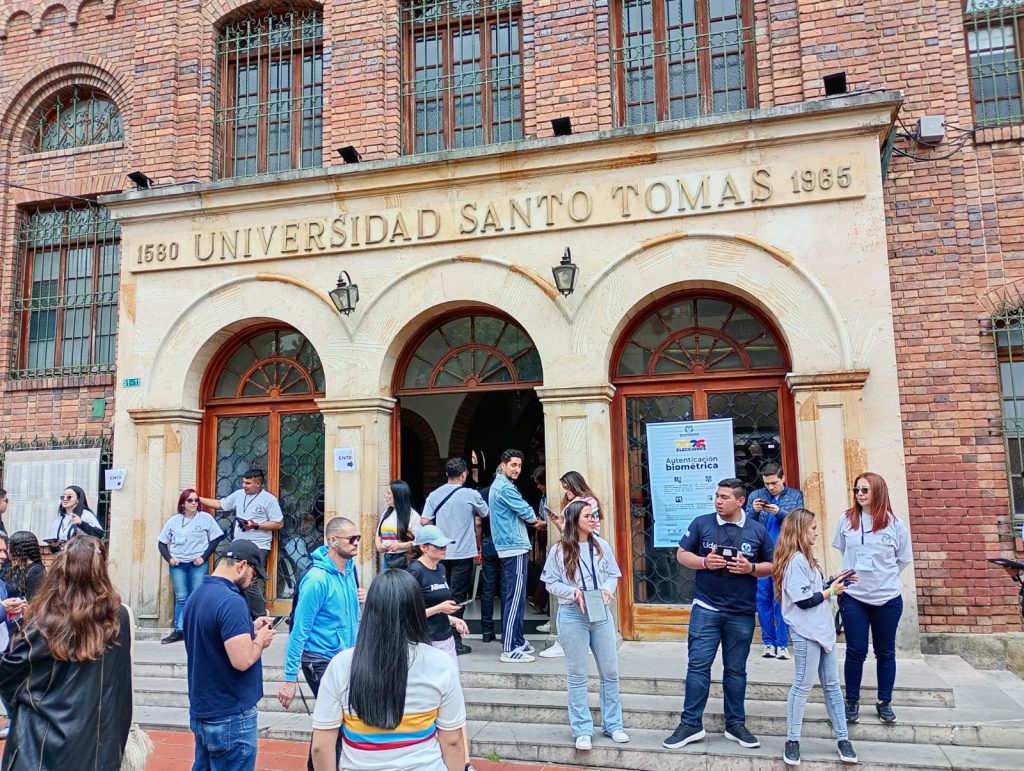
The ballot boxes closed at 4pm for the 2026 Colombian presidential election first round and now the tallying up of votes is underway. So far, with 99% of the votes in (19:30), Abelardo de la Espriella is outperforming expectations and has won the first round. He was expected to win between 25-30% of the vote, but now stands at 43.74%, significantly exceeding those predictions.
Read more: Abelardo de la Espriella Candidate Guide
In second place by a whisker is Iván Cepeda of the ruling Pacto Democrático. He was widely expected to come first with 40-45% of the vote and that’s where he appears to be (40.91%). The good news is that he’s matched expectations and that he’s against the candidate he most wanted to face in the second round. The bad news is that he looks set to finish second, is right at the bottom end of his target vote share and Abelardo’s performance has put the tiger among the pigeons.
Read more: Iván Cepeda Candidate Guide
The big losers of the day seem set to be the centrists and Paloma Valencia. The former are below even the extremely modest predictions they had been given, while the latter is performing beyond her worst nightmares. She had been expected to get at least into double figures, but is languishing at under 7%.
Read more: Paloma Valencia Candidate Guide
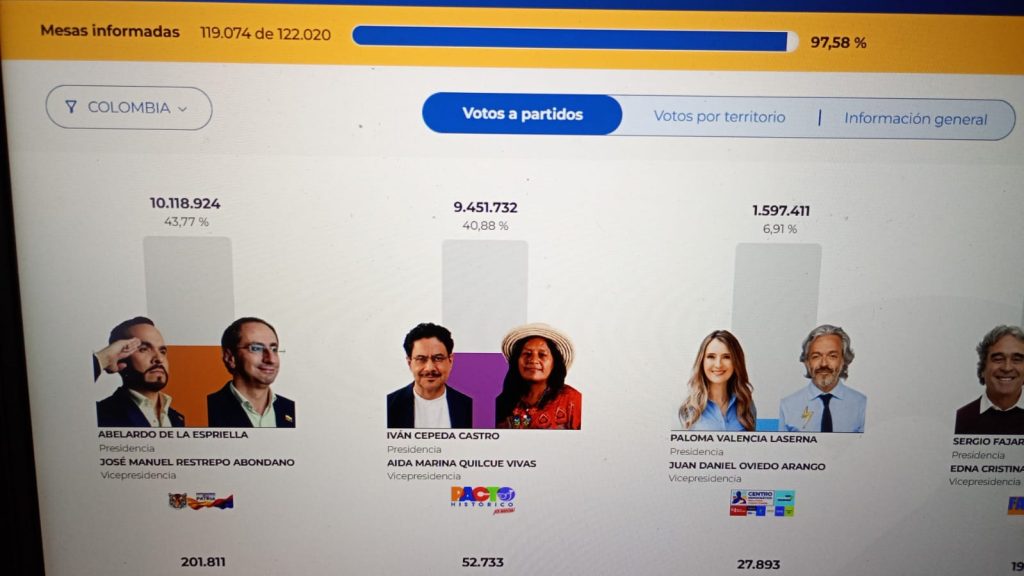
This is only the preconteo, so the votes will be formalised and fully scrutinised later. However, there is rarely a big change between the two numbers. There will still be heavy scrutiny on the data, especially with the focus on impropriety and accusations of vote-rigging (see below).
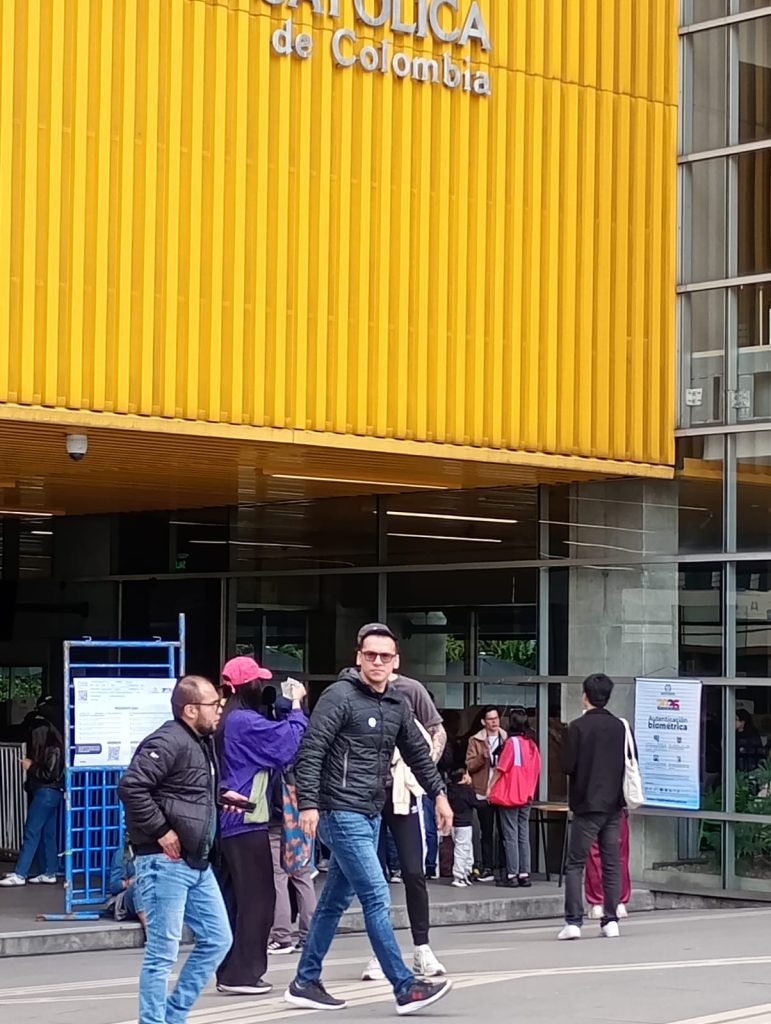
Only Abelardo de la Espriella managed to cross the symbolic ten million vote barrier, with Cepeda over 300,000 off the mark. With around 11 million votes needed for victory in the second round, things look promising for the self-styled outsider candidate.
Abelardo de la Espriella had been gaining momentum steadily in the last few weeks, but this is still a turn-up for the books and an extraordinary result for him. There is some speculation that a share of his vote comes from Pacto supporters that would prefer a run-off with him against Cepeda, but this seems unfounded.
There have been reports of private transport being laid on for rural voters to get to stations, paid for by both Cepeda and de la Espriella supporters in different regions. Supporters of both those candidates have also been accused of campaigning on the day and so forth in various reports from around the nation.
The collapse in the Centro Democrático vote isn’t hard to understand: Paloma Valencia had run a poor campaign and failed to get traction in the final weeks. What is surprising is the sheer scale of it: she’s ten to 20 points behind where she had expected to be. Questions will be asked in the Centro Democrático head offices now.
Elsewhere in the election, the dominance of de la Espriella and Cepeda left little room for anyone else. Sergio Fajardo ended his political career with over a million votes and nearly 5% of the vote, not too far off Valencia in the end. Failed Bogotá mayor Claudia López only got a quarter of the way to the 932,000 votes needed to recover her deposit. Hilariously, that’s about half the votes she gained in March’s primaries.
López did manage to squeak ahead of the reprehensible Santiago Botero, arrested in Cartagena on the morning of the election on domestic abuse charges. No surprise from a candidate who had been promising bullets for delinquents. Spare a thought, though, for Gustavo Matamoros in last place with a shade over 5,000 votes.
Turnout was higher than normal at 57.86%, with voto en blanco outranking all but four candidates and winning over 400,000 votes. As predicted, the Pacto won both coasts, the outer Amazon/llanos and Bogotá, while the right won all the central areas outside the capital. Dig deeper and the picture changes a bit: only de la Espriella won for the right, and Pacto’s vote share while winning was lower than expected in many departments (and Bogotá).
This means we are looking at a second round run-off on June 21st between Iván Cepeda and Abelardo de la Espriella, the two most polarising candidates on the tarjetón today. Whichever one triumphs, Colombia will have a lot of unhappy voters. It’s easy to assume that Paloma voters will flock to de la Espriella, but that’s far from guaranteed, given the divisive nature of the candidate.
We are likely to be in coin flip territory at this point – de la Espriella won around 600,000 more votes today, which is a selnder advantage. The million voters for Fajardo should mainly go his way, but again that’s far from guaranteed. He is no longer in pole position, but also not out of the race. Both candidates have a lot of work to do now.
With a relatively high turnout this weekend, it’s unlikely that there is a well of voters that will come out only for the second round, something that Cepeda will be hoping for. However, there are millions of non-voters who could make the difference if either candidate wins them over.
There are likely to be increased attacks on the electoral system from both the president and Pacto Histórico supporters. Petro has spent months questioning its validity and claiming that the system is opaque and unclear. Today has already seen a flurry of similar comments flooding social media with claims of impropriety in various places.
Cédulas gemeleadas en anillos de corrupción en la registraduría. La señora tiene el derecho de elegir y se lo han conculcado.
— Gustavo Petro (@petrogustavo) May 31, 2026
Espero de la registraduria
Investigación a profundidad pic.twitter.com/8vmZDTYnVO
Oversight is carried out by the CNE (Consejo Nacional Electoral). In order to do this over the vast territory and number of stations, over 800,000 citizens are selected to be vote-counters. This is similar to jury duty in other countries and is compensated with a day off as well as a compulsory day of training a couple of weeks beforehand. As the electorate is growing, there are now some 13,000 voting sites across the country, most with multiple voting tables – 122,000 in total for today’s elections.
Petro’s concerns rest on the fact that Thomas Greg and Sons handle the software used in the election system, a firm that he’s clashed with repeatedly, especially over Colombian passport printing. He says that the systems are opaque and he has not received answers from the CNE or Registraduria over various concerns he has. However, both groups, along with Colombia’s neutral election observers MOE have been clear about the processes.
Online, there are many posts claiming that a key part of the alleged fraud will be in the reports made by the jurados. This echoes previous elections, where there was a flurry of images purporting to show electoral forms (E-14) that had been altered by the vote-counters. With AI entering the scenario, expect more of this after the first round, especially if de la Espriella or Cepeda do badly.
US senator Bernie Moreno, Bogotá-born, is in Colombia to observe the voting process, along with a significant number of international observers. Their reports will come through in the coming week, but this is only part of the story. Much of the voting irregularities here are hard to prove and difficult for outsiders to properly scrutinise.
Petro will also be under a keen eye from the electoral authorities and watchdogs over his involvement in campagining. The president is supposed to keep neutral throughout the election of his successor, but Petro has at best ridden that line very closely. He’s been accused on multiple occasions of crossing it, too, as have his ministers and Cepeda himself.
Whatever happens in the coming three weeks, the Bogotá Post team will keep you up to date with unbiased local reporting, free from vested interests or paymasters. Stay tuned to find out what twists and turns are coming in the 2026 Colombian presidential election race, as well as detailed profiles on the two candidates left in the race.
The post 2026 Colombian Presidential elections round one results: de la Espriella and Cepeda are through appeared first on The Bogotá Post.
Right-wing presidential candidate Abelardo “El Tigre” de la Espriella emerged as the frontrunner in Colombia’s presidential election on Sunday, setting up a high-stakes runoff against left-wing senator Iván Cepeda in a contest that could reshape the political future of one of Latin America’s largest economies.
With more than 97% of ballots counted, National Registry Bulletin No. 15 showed De la Espriella leading with 43.77% of the vote, or approximately 10.1 million ballots, compared with Cepeda’s 40.88%, or slightly above 9.4 million votes. The margin of roughly 667,000 votes exceeded many pre-election forecasts and positioned the Barranquilla-based criminal defense lawyer as the favorite heading into the decisive June 21 runoff.
Election authorities reported that voting unfolded peacefully across the country, with preliminary results available just 90 minutes after polling stations closed at 4:00 p.m. More than 41 million Colombians had been eligible to participate in the election, including 1.4 million citizens residing abroad.
The result represents a significant rebuke to President Gustavo Petro’s political project and highlights growing voter concerns over security, economic performance and public confidence in state institutions.
Petro, who is constitutionally barred from seeking re-election, has thrown his support behind Cepeda, a leading figure within the governing coalition and one of the principal defenders of the government’s controversial “Total Peace” strategy. The policy sought negotiated settlements with FARC dissidents, criminal organizations and other armed groups operating throughout the country, but critics argue it failed to reduce violence in many regions.
While Cepeda entered election day as the favorite in most opinion polls, De la Espriella successfully capitalized on public frustration over extortion, insecurity, illegal armed groups and what many voters perceive as a deterioration of public order under Petro’s administration.
Known to supporters as “El Tigre,” De la Espriella built his campaign around a tough-on-crime platform inspired in part by the security policies of El Salvador’s President Nayib Bukele. He has promised to strengthen the military, restore state authority in conflict-affected regions and confront criminal organizations with what he describes as an uncompromising approach.
His message appears to have resonated particularly among middle-class voters, business sectors and residents of regions heavily impacted by drug trafficking and armed violence.
The election also exposed the weakness of Colombia’s political center, which for years attempted to position itself as an alternative to the country’s increasingly polarized political landscape.
Conservative candidate Paloma Valencia secured more than 1.5 million votes (or 6.9%) but remained well behind the two frontrunners. Although her campaign attracted traditional conservatives and followers of former president Álvaro Uribe Vélez, she struggled to expand beyond the party’s core support base.
Centrist Sergio Fajardo, the former mayor of Medellín and former governor of Antioquia, won just 4.6% of the vote, just shy of one million ballots. Once regarded as a politician capable of bridging Colombia’s ideological divides, Fajardo failed in his third attempt to reach the presidency as voters increasingly gravitated toward candidates offering sharply contrasting visions for the country’s future.
Former Bogotá mayor Claudia López suffered one of the day’s most dramatic defeats, capturing less than 1% of the national vote. The result marked a stunning collapse for a politician who only a few years ago was considered among Colombia’s most vocal leaders.
Analysts say the runoff campaign is now likely to become a referendum on Petro’s presidency and the future direction of the country.
For Cepeda’s supporters, the June 21 vote offers an opportunity to preserve and deepen many of the social and political reforms promoted by the current administration. For De la Espriella’s backers, it represents a chance to reverse those policies and return to a security-centered model associated with the administrations of former president Álvaro Uribe.
The key question over the coming weeks will be whether De la Espriella can consolidate support among conservative and independent voters while Cepeda seeks to unite the left and attract Colombians wary of a return to hardline security policies.
After a largely peaceful election day, Colombia now faces three weeks of intense campaigning before voters make what many observers consider one of the most consequential political decisions since the country’s historic shift to the left in 2022.
Much of Colombia woke up to temperate weather and clear skies over the capital, Bogotá. As lines began to form outside polling stations when they opened at 8:00 a.m. on Sunday, voters cast their ballots in one of the country’s most closely watched presidential elections in decades, a contest that could redefine the political direction of the South American nation at a time of mounting security concerns and economic uncertainty.
In Bogotá, outside Corferias, the country’s largest exhibition and convention center and one of Colombia’s busiest voting locations, queues of unregistered voters formed well before polling stations officially opened.
According to the National Registry Office, more than 41 million Colombians are eligible to vote in the election, including approximately 1.4 million citizens residing abroad. Polling stations are under tight security nationwide and will remain open until 4:00 p.m. local time.
The 2026 election has been overshadowed by a resurgence of political violence, recalling memories of some of the country’s darkest electoral periods. Authorities have heightened security measures following a tense campaign season marked by threats against candidates, concerns over public safety, and growing polarization between the political left and right.
President Gustavo Petro, who is constitutionally barred from seeking re-election, has thrown his support behind left-wing senator Iván Cepeda, 63, who is widely regarded as the architect of the government’s failed “Total Peace” strategy aimed at negotiating disarmament agreements with FARC dissidents and other illegal armed groups.
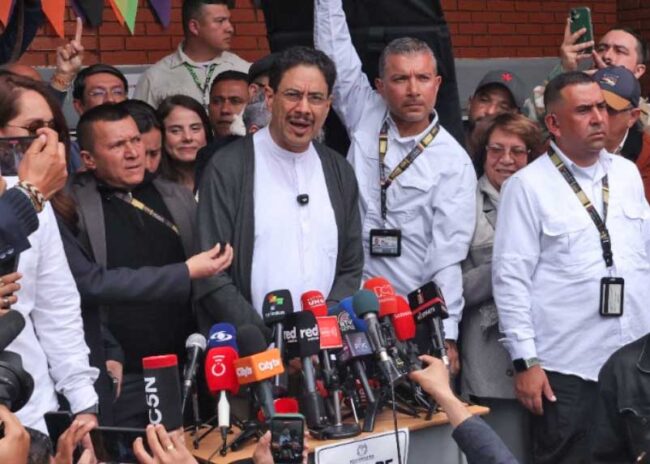
President Petro cast his vote at 9:10 am from the Plazoleta Mosquera inside the National Capitol.
Opinion polls have placed Cepeda in first place with support ranging between 33% and 40%, making him the clear favorite to advance to a second-round runoff scheduled for June 21 should no candidate secure an outright majority of 50% plus one vote on Sunday.
Cepeda, of the ruling Historic Pact coalition, is facing two formidable opponents to his Marxist agenda: right-wing senator Paloma Valencia, 48, of the Centro Democrático party, and criminal defense lawyer Abelardo de la Espriella, 47, considered the “outsider” in the race, whose rapid rise has become one of the defining stories of the campaign.
Valencia and De la Espriella both embrace the “democratic security” doctrine associated with former president Álvaro Uribe Vélez, whose two administrations between 2002 and 2010 were defined by an aggressive military campaign against the FARC and ELN guerrillas.
De la Espriella, known among supporters as “The Tiger,” has portrayed himself as a political outsider capable of restoring economic growth and defeating criminal organizations. His campaign has gained momentum through a pro-Bukele message, fueled by a strong social media presence and rhetoric that resonates with middle-class Colombians on the Caribbean coast who are frustrated by extortion, insecurity, and the traditional political establishment.

The political capital of Sergio Fajardo and Claudia López appears to be spent, as the race has increasingly evolved into a contest between three candidates. The self-professed centrists and former mayors – one from Medellín (Fajardo) and other from Bogotá (López) — have consistently polled in the single digits, but on Sunday, their political relevance could evaporate a quickly with the final tally.
Sunday’s vote is unlikely to produce an outright winner, making a runoff between Cepeda and one of his conservative challengers the most probable outcome.
The key uncertainty is whether Valencia’s established party machinery and her effort to capture the undecided centre by naming Juan Daniel Oviedo as her running mate will push her beyond the six million votes she received in the March primaries.

Should Valencia outperform polling forecasts, De la Espriella will be forced on Monday to convince his supporters to back Uribe’s official candidate.
For many Colombians, this election represents more than a contest between three frontrunners. It has become a referendum on President Petro’s stalled reform agenda, the country’s deteriorating security situation, and the future direction of a democracy facing some of its most significant challenges at a time when the “pink tide” of left-wing governments across Latin America has largely receded. Or in the words of former FARC hostage and ex-presidential candidate Ingrid Betancourt: “May ethics, hope, truth, and commitment to Colombia prevail today over the machismo, fear, violence, and misogyny of the extremes. I trust that we will have the first woman President.”

Heard about the 2026 Colombian presidential election first round this weekend? Confused about what exactly is going on? Our guide clues you in on how it all works and why the bars and borders are shut
Tomorrow sees the first round of the 2026 Colombian presidential election. It’s been a long race which has turned particularly bitter in the final week. The candidates are largely campaigning on little more than vibes and charisma, with the centre absent.
While it’s been spiky, the country remains relatively safe on election weekends. You might well see some protests or celebrations on Sunday evening, there might be people on soapboxes in the streets in some areas, but there is unlikely to be any major disturbances in large urban conurbations. The story may well be very different in isolated rural zones, as is often the case in Colombia.
Colombia shuts down a lot over election weekend, with bars closing for ley seca and borders closing as well. There will be an increased police and military presence throughout the country, with particular focus on keeping key transport routes open.
Yesterday we looked at the candidates, how they might fare and what it would mean for the second round. Today we’re turning our attention to how things actually work in the 2026 Colombian presidential election on Sunday, including ley seca times and border closures.
Every Colombian over the age of majority (18) and with a correctly registered cédula ciudandanía can vote. In return, each voter gets a half day off work. Non-citizens are not eligible to vote in national elections, but holders of resident visas will be able to vote in next year’s local elections.
Oversight is carried out by the CNE (Consejo Nacional Electoral). In order to do this over the vast territory and number of stations, over 800,000 citizens are selected to be vote-counters. This is similar to jury duty in other countries and is compensated with a day off as well as a compulsory day of training a couple of weeks beforehand.
As the electorate is growing, there are now some 13,000 voting sites across the country, most with multiple voting tables. Colombians have to vote where their cédula is registered, so don’t be surprised to see some people trekking to other cities if they forgot to update their registration.
The polls are open from 8am until 4pm and counting is usually very fast with the results being clear before sundown. Land and fluvial borders will be closed for Colombian nationals tomorrow morning, although foreigners can cross. Airports will not be affected, so don’t worry if you are arriving on a flight.
Bogotá has entered ley seca earlier than usual, meaning no alcohol sales in bars, restaurants or shops from 6pm Friday night to Monday midday. That applies for everyone, so no representation or boozing for foreign residents, unless you do it at home. Ciclovía will also be cancelled for ease of access to polling stations.
The run-up to the 2026 Colombian presidential election has seen a lot of criticism of the system, almost all of it coming from the national government. President Gustavo Petro has been front and centre on this issue, repeatedly questioning the neutrality of the elections.
Petro’s concerns rest on the fact that Thomas Greg and Sons handle the software used in the election system, a firm that he’s clashed with repeatedly, especially over Colombian passport printing. He says that the systems are opaque and he has not received answers from the CNE or Registraduria over various concerns he has. However, both groups, along with Colombia’s neutral election observers MOE have been clear about the processes.
Online, there are many posts claiming that a key part of the alleged fraud will be in the reports made by the jurados. This echoes previous elections, where there was a flurry of images purporting to show electoral forms (E-14) that had been altered. With AI entering the scenario, expect more of this after the first round, especially if de la Espriella or Cepeda do badly.
Voy a escribir porqué los escrutinio son opacos y vulnerables al fraude en las elecciones.
— Gustavo Petro (@petrogustavo) March 1, 2026
No porque crea que nuestro proyecto democrático vaya a perder sino porque es mi deber como jefe del estado al menos informar sobre uno de los peores riesgos de la democracia hasta ahora…
Of course, Petro is only claiming that electoral fraud exists against him, not in the multiple occasions in which he’s won at the voting urns. This is a well established populist tactic – calling elections into doubt before they happen. It’s likely to rally his base and provide an excuse if results are bad.
There is little credibility to most of the vote rigging claims. Colombia does indeed have some serious problems around corruption and influence buying, but this tends to be concentrated in rural zones in the periphery of the country. It’s also worth noting that these seats return candidates from across the political spectrum.
A lot of electoral impropriety is very hard to prove – the machines that promise to deliver blocks of votes are well-versed in legal limits and plausible deniability. Offering someone some free gifts in return for ‘support’, for example, is widespread and while dubious hard to prove in court.

It’s particularly noticeable that alliances between political actors in order to deliver voting blocs is both very common and very hard to stop. That’s where Nicolás Petro appeared to be operating and it is not clear quite who is exactly in bed with who at this point.
It goes without saying that political attacks on the CNE are particularly unhelpful, especially in what is still a very charged political atmosphere nationwide. The assassination of presidential pre-candidate Miguel Uribe last year was a shock to a country that has a long history of political violence.
Concerns remain over both electoral safety and fraud in much of the country, with over 200 municipios at high risk of fraud and/or violence. 39 of those are classed as very high risk and only 167 at very low risk, mainly in the Andino region.
There have been rumblings from Washington about the veracity of the 2026 Colombian presidential elections as well, with Bogotá-born Senator Bernie Moreno in the country as an observer. He can’t vote, having renounced his citizenship. The difference here is that they think Petro is going to rig the elections in his favour.
Petro himself has been rebuked by the Electoral Commission and others for participating in the 2026 Colombian presidential election. He’s repeatedly made comments that are at best close to the line of violating the constitutional neutrality of his office.
Not only that, but a third of his cabinet have joined in, also being rebuked by the CNE. There’s over 140 public servants under investigation. Iván Cepeda himself has come under fire for a rally in Montería on Monday after campaigns constitutionally have to end. He claims it was a private event, just attended by hundreds of local people.
Over time, the field has been whittled down to thirteen candidates on the official voting card. In reality, though, only three are at the races: Iván Cepeda, Abelardo de la Espriella and Paloma Valencia in order of current voting intention. Together, they account for around 80-90% of polling at the moment.
The left has been concentrated behind Cepeda, while Paloma Valencia has snaffled the centre-right position. Abelardo is the anti-establishment maverick. All the centrist candidates are languishing in the doldrums, with failed Bogotá mayor Claudia López and eternal candidate Sergio Fajardo the best of the bunch but both polling in low single figures.
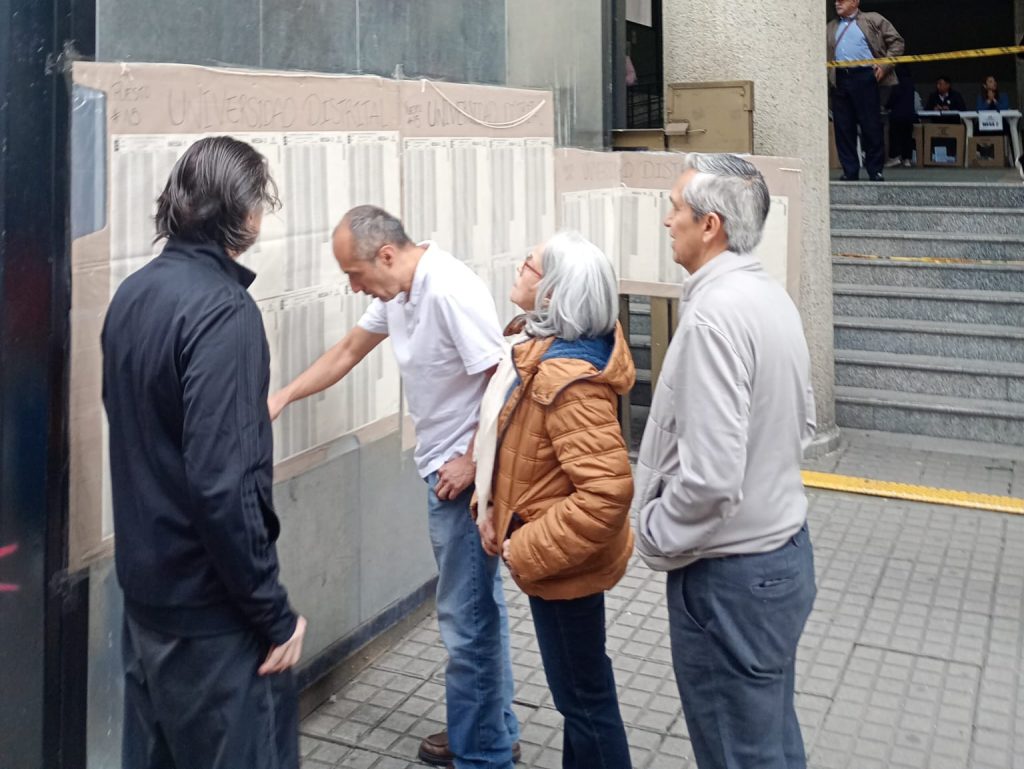
There’s also the curious option of voto en blanco. Different from a spoiled vote, which is simply disregarded, this is an active protest. If it ranks highest in any race, then a rerun of the election must take place within a month with entirely new candidates and/or party lists.
Iván Cepeda is absolutely nailed on for the second round, almost certainly in first place. Who joins him is a slightly more open question. At the moment, Abelardo has the momentum and is riding high in the polls. However, polling isn’t infallible and Paloma could sneak into second place.
At best, many voters will be voting for their least-worst option in the second round. In recent years, Colombians have often cast negative votes rather than for a candidate they really support and this year is likely to be the same. Whoever wins, it will almost certainly be a loveless victory, despite their inevitable claims of popular support.
The post 2026 Colombian presidential election: How does it work? appeared first on The Bogotá Post.
Heard about the 2026 Colombian presidential election first round this weekend? Confused about what exactly is going on? Our guide clues you in on who’s running and what’s likely to happen
The 2026 Colombian presidential election enters its first round this weekend, with the election taking place on Sunday 31st May. If no one takes an overall majority, the run-off will take place three weeks later. It feels like a lifetime since the house elections in March and candidates have been furiously jockeying for position over the last few weeks.
At the moment, continuity candidate Iván Cepeda leads polling, with the rightists split between traditionalist Paloma Valencia and outsider Abelardo de la Espriella. The centre is currently more or less absent. Read on for more information about the candidates, the political backdrop and potential outcomes.
The polls are open from 8am until 4pm on Sunday 31st June for all Colombian nationals wherever their cédula is registered. Counting is usually very fast with the results being clear before sundown. Land and fluvial borders will be closed for Colombian nationals tomorrow morning, although foreigners can cross.
Bogotá will enter ley seca earlier than usual, meaning no alcohol sales in bars, restaurants or shops from 6pm Friday night to Monday midday. That applies for everyone, so no representation or boozing for foreign residents, unless you do it at home. Ciclovía will also be cancelled for ease of access to polling stations.
Over time, the field has been whittled down to thirteen candidates on the official voting card. In reality, though, only three are at the races: Iván Cepeda, Abelardo de la Espriella and Paloma Valencia in order of current voting intention. Together, they account for around 80-90% of polling at the moment.
The left has been concentrated behind Cepeda, while Paloma Valencia has snaffled the centre-right position. Abelardo is the anti-establishment maverick. All the centrist candidates are languishing in the doldrums, with failed Bogotá mayor Claudia López and eternal candidate Sergio Fajardo the best of the bunch but both polling in low single figures.
Some interesting characters are in the also-run list. Santiago Botero has an incredibly aggressive position on crime: bullets for rapists and so on. Roy Barreras is running as a leftist alternative to Cepeda and Gustavo Matamoros represents the ecologist party of Colombia.
It won’t be third time lucky for Fajardo, who had probably the best thought-out manifesto on paper last time around. His brand of centrism is no longer en vogue and he’s announced his retirement from politics following this election.
Strangely, most of the country’s biggest parties are literally absent from the voting card. The Conservadores and Liberales dominated the last century but now don’t bother running candidates in the 2026 Colombian presidential election. Neither is there a Green candidate or a Cambio Radical candidate. Only Pacto and Centro Democrático are there.
There’s also the curious option of voto en blanco. Different from a spoiled vote, which is simply disregarded, this is an active protest. If it ranks highest in any race, then a rerun of the election must take place within a month with entirely new candidates and/or party lists.
Two candidates on the card have actually pulled out, Carlos Caicedo and Luis Gilberto Murillo. Any votes cast for them will be counted as spoiled, not for voto en blanco. Clara López pulled out earlier, which is why there is a blank space on the tarjetón.
The manifestos are terribly written, for the main part. There is a frankly shocking number of basic errors in most of them, suggesting that proofreaders weren’t asked to play a big part in production. Despite having had years to plan for this, it seems everybody chose to rush it instead.
Past the errors, there’s a generally low level of detail across all the manifestos. Vague numbers and targets are given with little to no consideration of how it will be achieved. That might lead one to suspect that there isn’t a high chance any of this will actually be stuck to, regardless of the outcome.
There has been no debate among all candidates. Even partial debates have been few and far between, with almost everyone preferring to stick to home turf where they have more control over questions and so forth. There’s been a host of negative publicity via influencer campaigns, with traditional electoral machines being somewhat sidelined.
Iván Cepeda is the continuity candidate, promising more of the same and offering very few details in his actual plan de gobierno, despite it being 433 pages long. He’s had an unusual campaign, turning up to dozens of rallies but offering few interviews. In many ways, he’s not the draw for his campaign.
Read More: Candidate guide to Iván Cepeda
Abelardo de la Espriella has run a controversial and divisive campaign portraying him as the outsider. That’s won him voters and he’s peaking at the right time. His manifesto is long on ideas and short on detail. He’s frequently made inflammatory comments, being accused of sexism, homophobia and racism and often leaning into that.
Read More: Candidate guide to Abelardo de la Espriella
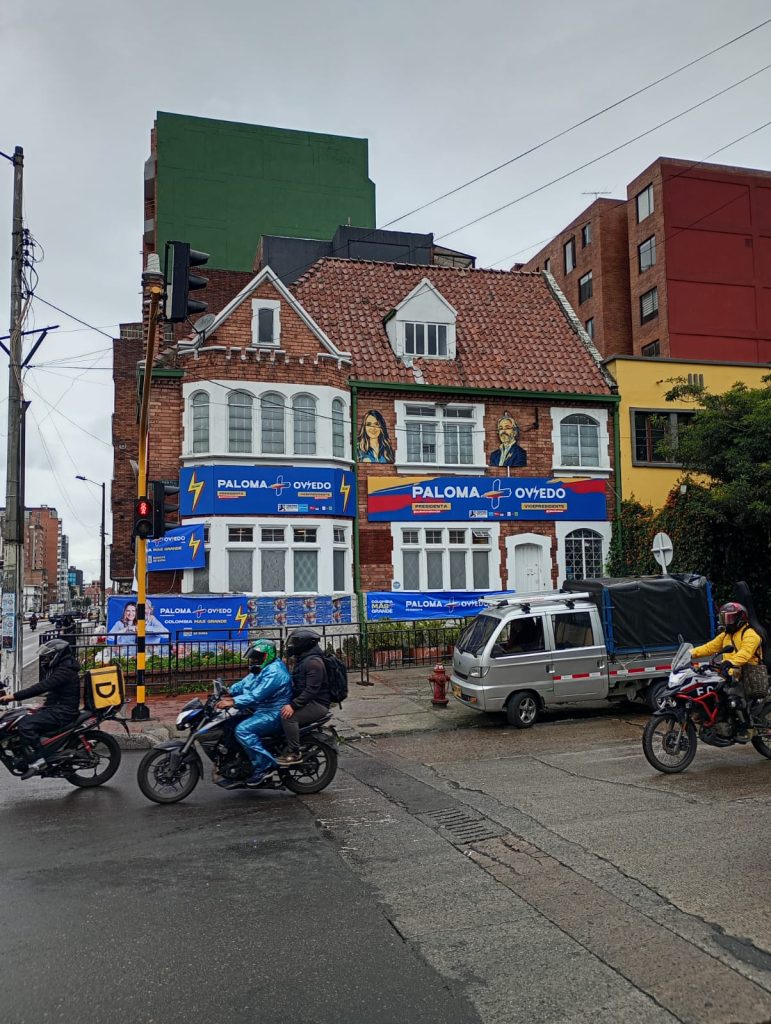
Paloma Valencia has been faltering over the past few weeks in particular. She’s done well to make traditional political alliances, but that could be an albatross for her. Having Uribe’s support might lose as many votes as it gains. Despite this, she’s still in the race and has by far the most detailed manifesto of the three main challengers.
Read More: Candidate guide to Paloma Valencia
It’s notable that a lot of the messaging is quite similar across the candidates. Cepeda is for los nadies; de la Espriella is for los que nunca. Both Valencia and Cepeda want 30,000km of new roads and are overshadowed by their political mentors. Paloma and Abelardo both want to turn the gas and oil taps back on.
They all support crop substitution for coca farmers and all claim to be anti-corruption. All of them support rural communities and home carers. With this level of agreement, a lot of the distinction that is being drawn is on personality and charisma, hence the two populists exploding in popularity.
It’s anyone’s guess at this point, despite the polymarket predictions going wildly overboard in favour of Abelardo de la Espriella. That’s mainly from a certain type of punter that understands little about Colombian politics and is simply making a political statement via putting money on the rightist.
The last election was razor thin, with Gustavo Petro squeaking past Rodolfo Hernández (remember him?) with barely more than 50% of the vote, similar to 2018 when it went the other way for the current president. That’s very likely to be repeated more or less in full: the Pacto candidate dominating the first round then a very close run between the final two and one winning by a nose.
Iván Cepeda is absolutely nailed on for the second round, almost certainly in first place. Who joins him is a slightly more open question. At the moment, Abelardo has the momentum and is riding high in the polls. However, polling isn’t infallible and Paloma could sneak into second place.
More interesting is how many votes everyone gets. Cepeda will want 40% minimum, under that he’s probably in big trouble. If he can get over 45% he’s likely to win the second round. Anything in the middle and we’re into coinflip territory again. Note where the votes come, too. If Abelardo does well in Bogotá, a leftist heartland, that’s a good sign for him.
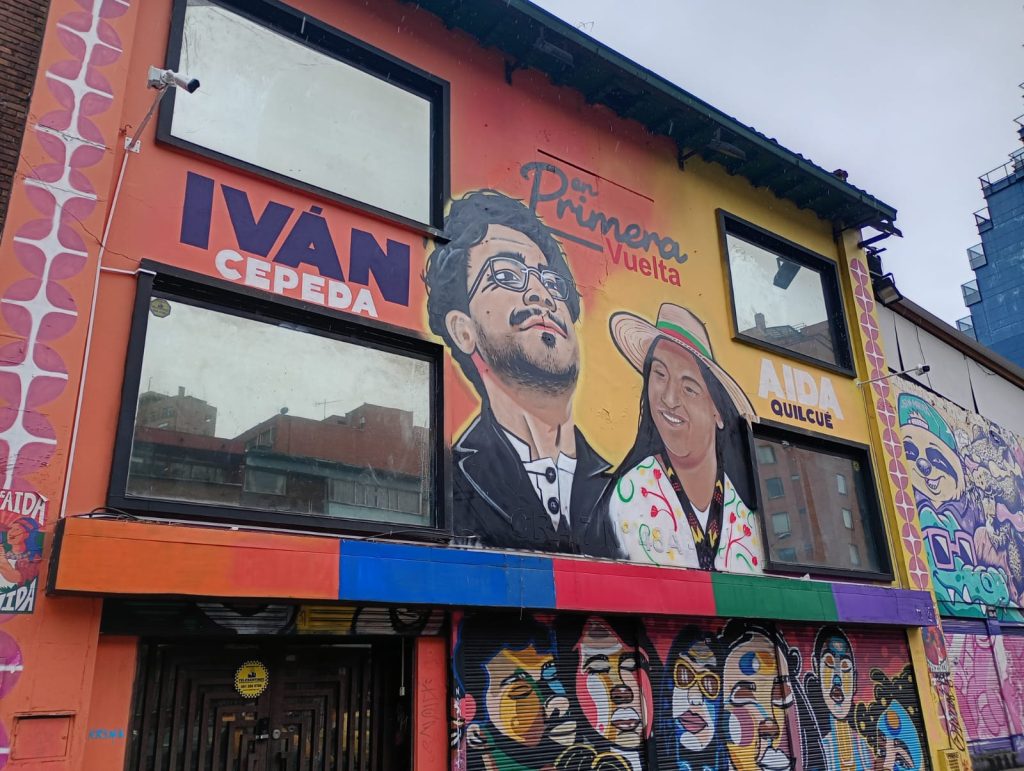
If Abelardo gets over 30%, he’s in a good position. If Paloma can get to that level, she’s going to be extremely happy. Those two candidates need to match Cepeda’s total at least in order to feel confident. If their combined vote share tops 50% then a rightist victory is likely.
The final numbers to keep an eye on are turnout and the centre vote. The latter will likely be 5-10% and could be crucial for the second round. The former should be over 50%. If it’s not, then the second round could be very unpredictable, especially if it’s two populists.
Looking ahead, it’s entirely possible that someone could win with under 50% of the vote in the second round. This has become an election that is already both polarised and unstable. It is likely to become very vicious in the next phase, too.
At best, many voters will be voting for their least-worst option in the second round. In recent years, Colombians have often cast negative votes rather than for a candidate they really support and this year is likely to be the same. Whoever wins, it will almost certainly be a loveless victory, despite their inevitable claims of popular support.
The post 2026 Colombian presidential elections: The first hurdle appeared first on The Bogotá Post.
Colombia is preparing for one of the largest international election observation missions in its history as the country heads toward Sunday’s presidential election amid heightened security measures, dry laws and nationwide institutional alerts aimed at safeguarding the democratic process.
Polling stations across Colombia will open on Sunday, May 31, from 8:00 a.m. until 4:00 p.m. as voters head to the ballot box to elect a new president for the 2026–2030 term. If no candidate secures an outright majority, a runoff election will be held on June 21.
More than 1,200 international observers from 22 countries are expected to monitor the elections under a mission coordinated by Colombia’s National Electoral Council (CNE), in what officials describe as one of the most extensive observation deployments ever organized in the country.
The official installation of the International Observation Mission took place Friday morning at Bogotá’s Grand Hyatt Hotel, where electoral authorities, diplomats and representatives of multilateral organizations gathered ahead of the vote.
According to the CNE, a total of 1,207 accredited observers will participate in territorial inspections, technical briefings and electoral monitoring operations across various regions of Colombia.
Authorities say the mission seeks to strengthen public confidence, transparency and legitimacy in a country where concerns over disinformation campaigns, fake news and political polarization have increasingly shaped the electoral climate.
Official figures show Colombia will install 118,346 voting tables distributed across 13,489 polling stations nationwide.
Among the international observers already arriving in Colombia is U.S. Republican Senator from Ohio, Bernie Moreno, who landed in Cartagena to participate in election monitoring activities.
Moreno, who was born in Colombia before emigrating to the United States, is part of the delegation accredited by the National Electoral Council to observe the presidential elections and verify the conditions under which the democratic process unfolds.
In Bogotá, authorities have implemented extraordinary measures aimed at maintaining public order during election weekend.
Mayor Carlos Fernando Galán’s administration announced that the capital’s “Ley Seca,” or dry law, will begin at 6:00 p.m. on Friday, May 29, and remain in effect until midday on Monday, June 1.
The restrictions prohibit the sale and consumption of alcoholic beverages in public spaces and establishments open to the public throughout Bogotá.
The measure begins 24 hours earlier than the nationwide presidential decree regulating election weekend restrictions and has sparked criticism from nightlife businesses, bars and restaurant owners who warn the extended dry law could significantly impact weekend revenues.
Business owners have also pointed to the timing of the UEFA Champions League final scheduled for Saturday evening between Paris Saint-Germain and Arsenal F.C. at Budapest’s Puskás Aréna, an event expected to draw large crowds to bars and public viewing venues across the Colombian capital.
“The decree seeks to guarantee coexistence and the proper development of the electoral process,” Bogotá authorities said in the official order announcing the restrictions.
At the same time, Bogotá’s Health Secretariat declared a yellow hospital alert across the entire capital beginning Friday evening and lasting through Monday evening.
The alert places the city’s public and private hospital network under a state of heightened operational readiness in anticipation of any emergencies or disturbances related to the elections.
“We call on all hospital directors and healthcare providers to strictly comply with the directives established under this alert,” José Vicente Guzmán, Bogotá’s deputy director for Emergency and Disaster Risk Management, said in a statement.
“It is essential to streamline patient admissions in emergency rooms, optimize ambulance response times and maintain direct and real-time communication channels with the city’s Emergency and Urgency Coordination Center,” he added.
Under the emergency protocols, hospitals have been ordered to activate disaster risk contingency plans, guarantee staffing availability, ensure sufficient medical supplies and maintain full operational readiness of ambulance services and patient transfer systems.
Authorities warned the alert level could be raised to orange or red depending on events during the weekend.
Residents requiring emergency medical attention have been advised to contact Bogotá’s 137 emergency hotline, which will remain operational around the clock throughout the election period.
Elsewhere in Colombia, local governments are also implementing measures to facilitate voting and public mobility.
In Medellín and the surrounding Aburrá Valley metropolitan region, authorities announced free rides on the city’s metro and cable car systems on election day until 6:00 p.m., while bus services will continue operating normally.
The presidential election arrives at a politically charged moment for Colombia after months of polarized campaigning, growing security concerns in several regions and intense national debate over the future direction of the country following the first leftist administration of President Gustavo Petro.
International observers, electoral authorities and security forces are expected to remain deployed throughout the weekend as Colombia prepares for one of the most consequential elections in recent years.
The board of directors of Ecopetrol, Colombia’s largest oil and energy company, announced the postponement of unpaid leave previously granted to its president, Ricardo Roa Barragán, due to a 30-day medical leave taken by the executive. The decision was disclosed by the state-controlled company in an official statement issued May 27, 2026.
According to the company, the unpaid leave, initially scheduled to begin May 26 for a 30-day period, will take effect once both Roa’s medical leave and his remaining vacation period have concluded, meaning it is now expected to begin June 27.
If the schedule remains unchanged, Roa Barragán would return to Ecopetrol in late July, just one week before Colombia’s next president is sworn in on August 7, 2026, and gains the authority to appoint new leadership at the state-owned oil company.
Read Ecopetrol Announces Temporary Leave for President Ricardo Roa Amid Investigations by Colombia’s Attorney General’s Office by Finance Colombia.
The rescheduling extends Roa Barragán’s temporary absence during a sensitive period for Colombia’s largest state-controlled company, amid a government transition and growing scrutiny over its corporate stability.
The vacations and unpaid leave had previously been approved by Ecopetrol’s board as an institutional response to tensions surrounding Roa Barragán’s continued tenure. While labor unions, minority shareholders and various public voices had called for his removal, President Gustavo Petro publicly maintained his support.
The board also decided to keep Juan Carlos Hurtado as acting president of Ecopetrol. Hurtado has served as executive vice president of hydrocarbons since November 2025.
So far in 2026, Colombia’s Attorney General’s Office has formally charged Roa Barragán in two separate cases: one involving alleged influence peddling by a public official, linked to purported benefits obtained in the purchase of an apartment in Bogotá, and another involving alleged violations of campaign spending limits in the 2022 “Petro Presidente” presidential campaign, for which he served as campaign manager.
So far, no judicial conviction has been issued in either case, and the executive retains the presumption of innocence.
Under the revised schedule, Roa Barragán is expected to remain away from Ecopetrol’s presidency during part of the electoral period and presidential transition, ahead of the eventual handover to the administration elected in Colombia’s May 31 elections.
Two decades of fiscal data show that Colombia’s gross general government debt has moved through four distinct macroeconomic phases, ending the current cycle at a level that is materially higher than its pre-pandemic baseline. Persistent annual fiscal deficits, currency volatility, an emergency spending shock and weaker-than-projected tax revenues have combined to push the ratio of public debt to gross domestic product from the mid-30s percent range in the mid-2000s to a band of roughly 60 to 62 percent at the start of 2026, according to figures published by the Ministerio de Hacienda y Crédito Público and the Banco de la República.
The shift carries direct implications for sovereign bondholders, multinationals operating in Colombia and any investor pricing country risk in the Andean region. All three major rating agencies — S&P Global Ratings, Moody’s Ratings and Fitch Ratings — now place Colombia in speculative-grade, or junk, territory, with consecutive downgrades through 2025 and into early 2026.
“The activation of the escape clause confirms that the deterioration observed in 2024 will not be corrected in 2025.” — Renzo Merino, sovereign analyst, Moody’s Ratings
During the global commodity supercycle, Colombia benefited from sustained gross domestic product growth and steady government revenue. Hydrocarbon and mining receipts — channeled through Ecopetrol (NYSE: EC; BVC: ECOPETROL) and the broader extractive sector — supplied a substantial share of national tax intake. The debt-to-GDP ratio remained relatively stable during this period, generally hovering between 34 and 38 percent. Even with chronic primary deficits, nominal growth in the denominator absorbed new borrowing, masking the underlying structural imbalance that the Comité Autónomo de la Regla Fiscal (CARF) would later flag as the persistent driver of fiscal stress.
The mechanics of the ratio changed sharply when Brent crude prices collapsed in late 2014. Reduced hydrocarbon royalties widened the fiscal gap just as the Colombian peso depreciated against the US dollar. Because a significant share of Colombia’s sovereign liabilities is denominated in foreign currency, the peso’s slide automatically inflated the local-currency value of outstanding external debt when measured against domestic GDP. The combined effect — wider deficits funded by new borrowing, plus a valuation effect on existing dollar-denominated obligations — pushed the ratio steadily higher through the late 2010s.
The structural revenue weakness that surfaced during this period has remained a recurring theme in subsequent fiscal assessments from Fedesarrollo and the Pontificia Universidad Javeriana Observatorio Fiscal, both of which have noted that successive tax reforms failed to fully close the gap between commitments and ordinary income.
The combination of emergency social spending under the Ingreso Solidario program, expanded health outlays and a sharp contraction in nominal GDP drove the ratio to a historic peak above 65 percent in 2020. The Ministerio de Hacienda reports the all-time high at 65.3 percent of GDP that year. The government activated the escape clause of the regla fiscal — Colombia’s fiscal rule, codified in Law 1473 of 2011 and modified by Law 2155 of 2021 — to accommodate the spending response, suspending the rule for 2020 and 2021.
That episode also triggered the first sovereign downgrade cycle: S&P Global Ratings cut Colombia’s long-term foreign currency rating to BB+ from BBB- in May 2021 after the administration of then-president Iván Duque withdrew a tax reform bill following street protests, costing the country its investment-grade status with that agency.
Strong post-pandemic nominal growth briefly pulled the debt ratio down toward 57 percent in 2023. The decline did not hold. Structural spending pressures, elevated international interest rates and tax collections below budgeted projections pushed the ratio back up, establishing a new operating band around 60 to 62 percent of GDP. The Ministerio de Hacienda reported government debt to GDP at 61.3 percent for 2024.
The administration of President Gustavo Petro and Finance Minister Germán Ávila Plazas activated the regla fiscal escape clause for a second time in June 2025, with the Consejo Superior de Política Fiscal (Confis) approving a three-year suspension covering 2025 through 2027. The decision came despite an unfavorable technical opinion from the Comité Autónomo de la Regla Fiscal, which concluded that legal conditions for activating the clause were not met outside of a national emergency. The clause had previously been invoked only during the COVID-19 pandemic.
According to the Marco Fiscal de Mediano Plazo (MFMP) presented by the Ministerio de Hacienda, net public debt to GDP is projected to rise from 53 percent in 2023 to 61.3 percent in 2025 and approximately 63 percent in 2026. The fiscal deficit for 2025 was initially projected at 7.1 percent of GDP and later revised to roughly 6.2 percent of GDP, with the administration targeting a deficit below 6 percent of GDP for 2026.
The cost of servicing this debt has reshaped the structure of the national budget. The 2026 draft budget presented by Minister Ávila totals $557 trillion COP, equivalent to roughly $134.7 billion USD, and represents 28.9 percent of GDP. Of that, debt servicing costs are projected at $102.5 trillion COP, or 5.3 percent of GDP, down from 6.2 percent of GDP in 2025.
The figures published by the Ministerio de Hacienda for domestic debt service in 2026 are higher when measured against tax intake alone: of an estimated $130 trillion COP in domestic debt service, $79 trillion COP corresponds to principal that can be rolled over through new issuances, while $51 trillion COP represents interest payments funded directly from the budget. Against projected tax revenue of approximately $300 trillion COP, that implies roughly one in every three pesos collected by the central government is allocated to interest on existing debt.
The rating cycle has accelerated alongside the fiscal trajectory. Moody’s Ratings downgraded Colombia to Baa3 and subsequently into junk territory in 2025, citing the suspension of the fiscal rule. S&P Global Ratings issued a further downgrade in April 2026, its second cut in less than a year, on the same persistent deficit and debt concerns. Fitch Ratings also moved Colombia deeper into speculative grade in December 2025.
The Banco de la República reported external debt — combining public and private liabilities — at $238.7 billion USD at the close of November 2025, equivalent to 54.8 percent of GDP, an increase of $15.8 billion USD from January of the same year. The Colombian economy is currently valued at approximately $435 billion USD.
The Comité Autónomo de la Regla Fiscal has stated in its most recent reports to Congress that the 2025 primary balance target was missed by a wide margin even after the escape clause was activated, and that incoming projections for 2026 raise the bar for any return to the original fiscal rule by 2028. Business groups including Fenalco and the Consejo Gremial Nacional have publicly opposed the suspension and signaled potential legal challenges.
The 2026 financing plan disclosed by the Ministerio de Hacienda includes approximately $4.6 billion USD in global bond issuances, primarily to refinance a one-year Swiss-franc Total Return Swap operation valued at roughly $9.3 billion USD. The ministry has stated that the issuance does not constitute net new external debt. Updated debt and deficit targets are scheduled for release in the next iteration of the Plan Financiero.
For executives operating in Colombia or evaluating new investment, the baseline shift from a mid-30s to a low-60s debt-to-GDP environment alters several variables simultaneously: peso volatility tied to refinancing cycles, the trajectory of corporate tax policy as Congress weighs successive reform proposals, and the path of domestic interest rates set by the Banco de la República as it manages inflation alongside elevated sovereign funding costs. Detailed historical and forward-looking debt data is published by the Investor Relations Colombia office of the Ministerio de Hacienda.
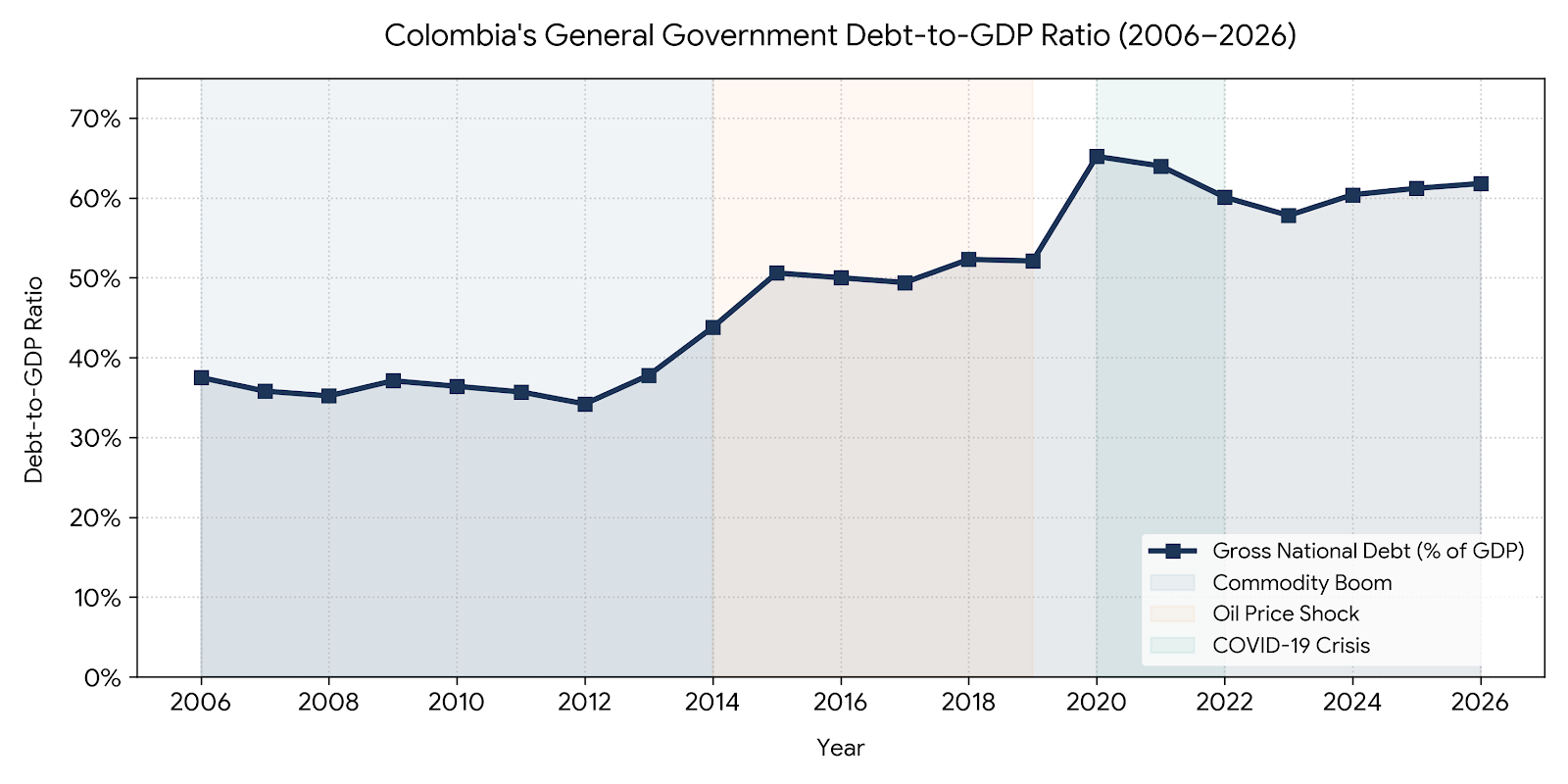
Colombia’s General Government Debt-to-GDP Ratio (2006-2026) (image: Google)
Colombia’s Armed Forces and regional authorities are struggling to verify the full scale of a bloody confrontation between rival FARC dissident factions in the remote southeastern department of Guaviare after clashes reportedly left more than 50 combatants dead.
The fighting, described by officials as one of the deadliest episodes this year involving former Revolutionary Armed Forces of Colombia (FARC) splinter groups, erupted in rural areas near the departmental capital San José del Guaviare between forces loyal to two dissident commanders known by their war aliases “Calarcá” and “Iván Mordisco.”
According to a communiqué released by the faction aligned with Calarcá, the confrontation began when approximately 250 fighters allegedly under the command of Néstor Gregorio Vera Fernández, alias Iván Mordisco, launched a surprise assault on a dissident encampment in the hamlet of La Siberia.
The clashes were reported in the rural sectors of Barranco Colorado, Charras and Trocha Ganadera, cattle farming regions with limited state presence.
The Calarcá faction claimed that a combat column belonging to the Isaías Carvajal Front had been resting overnight when it was attacked before dawn.
“In an act of legitimate self-defense, our units broke the siege, inflicting the first enemy casualties,” the group said in the statement, which was circulated through clandestine channels on Thursday.
“After three hours of combat, the enemy withdrew leaving fifty dead on the battlefield and carrying away a large number of wounded,” the communiqué added.
Colombia’s Army confirmed that troops from Brigade 22 remain deployed in the rural outskirts of San José del Guaviare, the epicenter of the fighting, but authorities acknowledged that they have been unable to fully enter the conflict zone due to difficult terrain and the continued presence of heavily armed illegal groups.
Defense Minister Pedro Sánchez confirmed the clashes took place in the Barranco Colorado sector, more than 100 kilometers east of San José del Guaviare, but refrained from confirming casualty figures. Minister Sánchez did, however, claim that the official statement amounted to a “confession and public admission” of an “atrocious crime”. Sánchez also warned that the reported deaths of underage combatants would constitute a grave violation of international humanitarian law and Colombian criminal legislation, further intensifying scrutiny over forced recruitment of children by FARC dissidents.
Officials said access to the region is severely restricted, with many areas reachable only through jungle tracks and river routes. Colombia’s forensic authorities, including Medicina Legal, have yet to recover or identify bodies from the battlefield.
Regional authorities convened an extraordinary security council meeting on Wednesday amid fears that the violence could intensify ahead of Colombia’s presidential election scheduled for May 31.
San José del Guaviare Mayor Willy Rodríguez told Caracol Radio that preliminary reports suggested “dozens” may have died, though he cautioned that authorities had not yet independently verified the numbers.
“We are receiving alarming information from residents in the rural areas, but the Armed Forces still have not been able to fully enter and confirm the situation,” Rodríguez said.
Governor Yeison Rojas joined police and military commanders in emergency deliberations as intelligence agencies attempted to establish the true scale of the confrontation.
The dissident faction loyal to Calarcá accused Iván Mordisco of provoking the conflict and described the elusive guerrilla commander as “a mentally disturbed individual with ideological shortcomings and psychopathic tendencies.”
The statement also claimed the group seized a significant cache of weapons during the battle, including four machine guns, 49 assault rifles, two Dragunov sniper rifles and more than 10,000 rounds of ammunition.
The faction further stated that two of its own fighters were killed and three wounded, while also claiming to have captured “a female prisoner of war.”
“We inform the Colombian people that this tragic event, occurring four days before an electoral contest, was not initiated by us,” the communiqué concluded. “It was an act of legitimate self-defense.”
The confrontation underscores the growing fragmentation and territorial disputes among Colombia’s remaining armed groups following the 2016 peace accord between the Colombian government and the FARC guerrillas.
Iván Mordisco, once considered one of the most powerful dissident commanders operating outside the peace agreement, has become a central figure in the collapse of President Gustavo Petro’s “Total Peace” negotiations with illegal armed groups.
Security analysts warn that Guaviare, a historic stronghold for the former FARC insurgency and a major coca-producing region, has increasingly become the scene of violent turf wars involving rival dissident fronts competing for narcotics routes, extortion rackets and territorial control.
The latest bloodshed also raises concerns over the deteriorating security situation in Colombia’s southeastern departments just days before Colombians vote in a presidential election, May 31.
San José del Guaviare, long considered a strategic stronghold in Colombia’s anti-narcotics campaign, hosts one of the country’s largest counterinsurgency and anti-drug military bases, including a fleet of Black Hawk helicopter gunships used in jungle operations against armed groups and cocaine trafficking networks. The region has also historically maintained the presence of U.S. military personnel and advisers supporting intelligence, surveillance and counternarcotics missions in southeastern Colombia.
As of Thursday, Colombia’s Attorney General’s Office, National Forensic Institute – Medicina Legal – and Armed Forces had yet to issue a definitive death toll.
Confused about the upcoming Colombian presidential election? We’re here to help you with a set of cheat sheets on the top candidates so you can follow the local news. Today we’re looking at poll leader Iván Cepeda of the Pacto Histórico.
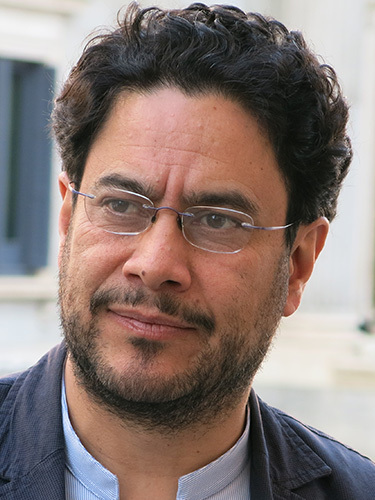
Iván Cepeda Castro is a leftist politician who has served in the Colombian senate for the last 12 years. Before that, he was a Congressman for a term. Born in Bogotá to activist politician parents, the family was forced into exile in Soviet Czechia and Cuba in his youth. At 63 years of age, he’s notably older than his main rivals.
His father was assassinated for political reasons in 1994, something that has unsurprisingly contributed enormously to his sociopolitical views. He was a young communist, but long since moved away from that, preferring to concentrate on social analysis, activism and campaigning against rightist corruption.
He represents the Pacto Histórico ruling coalition, meaning that he benefits from the popularity of the current president Gustavo Petro. That’s no surprise, as they’ve been firm friends and comrades for years, with the president supporting his bid.
In comparison to his mentor, Cepeda is far more serious. Petro often plays the cuddly socialist grandpa, going off on tangents about free love and so forth. Cepeda is much more of a hardline Maoist academic who is well up for a long march through the institutions. He lacks the charisma of Petro, coming across more professorial and dry.
Very. He’s absolutely nailed on for the second round, with the only real question being how high his vote share is. There is some speculation that he may come second, but more likely he will be comfortably in front of the two rightest candidates.
The trickier part is the second round, when the right will be consolidated behind one person rather than split in two. He’s still often favourite against both Abelardo de la Espriella and Paloma Valencia, but likely prefers the former.
While he’s been out in front all through the campaigning process, he’s not really gone anywhere, simply sitting on 38-43% in every poll. While that’s admirable consistency, it also calls into question his ability to draw in the undecided voters.
He’s a marmite candidate, with very few informed voters neutral on him. Either you think he’s the saviour of the republic who can make Colombia more equal or you think he’s a dangerous revolutionary who will ruin the country. A lot of votes are for him under any circumstance and as many are against him under any circumstance.
Firmly leftist, unsurprisingly. He’s also leaning heavily into being the continuity candidate for the Petro government. That makes sense, with approval levels riding high after the giant minimum wage increase this year. While that might yet be a problem down the line, it’s electoral dynamite.
However, his campaigning has been rather lacklustre. He’s not a natural orator in the way that Petro is, and he lacks charisma, coming across as a dry theoretical academic. Perhaps aware of this, his team have arranged rallies where he can preach to the converted and otherwise keeping him out of the spotlight.
In reality, much of his campaigning is being done by others. Petro is the key figure here, with the president right up against the line of not technically campaigning. However, the head of state is taking a lot of actions that are clearly designed to help Cepeda, as well as constantly using his pulpit to call for the continuation of his ideas.
Complementing this is an incredibly powerful influencer/social push. Much of this is fairly organic, with Pacto supporters used to activism and intuitively good at promoting their candidate. It fits in well with his man of the people image. The biggest meme is ‘Solo pacto en esta mondá’. Notably, Cepeda himself isn’t the draw, with variations on the phrase namechecking Petro.
Combined with his very loose manifesto (see below), his campaign messaging is basically that only the Pacto will stand up for the people, especially those that have been treated poorly by the state. There’s little in the way of concrete offers, just a call for loyalty.
You can read it for yourself online, but have a big pot of tea ready: it outdoes Marx and Engels at a whopping 433(!) pages long. A lot of that is AI images, while the actual propuestas are hidden away between rambling discourse, tangential essays, theoretical musings and diary entries. Notably, it is mostly in the past and present tenses.
A recurring theme is the involvement of civil society via what he calls the poder constituyente, especially youth and women’s groups. He claims he will call all political and social actors to the table in a mesa de diálogo nacional aimed at forming concrete proposals.
This will be implemented by a new Alianza Público-Popular which will allow civil groups to directly manage state funds. Both ethnic minority and campesino territories will be recognised and organised. There will be a Banco del Pueblo to improve access to financial instruments for poorer people as well as the unbanked.
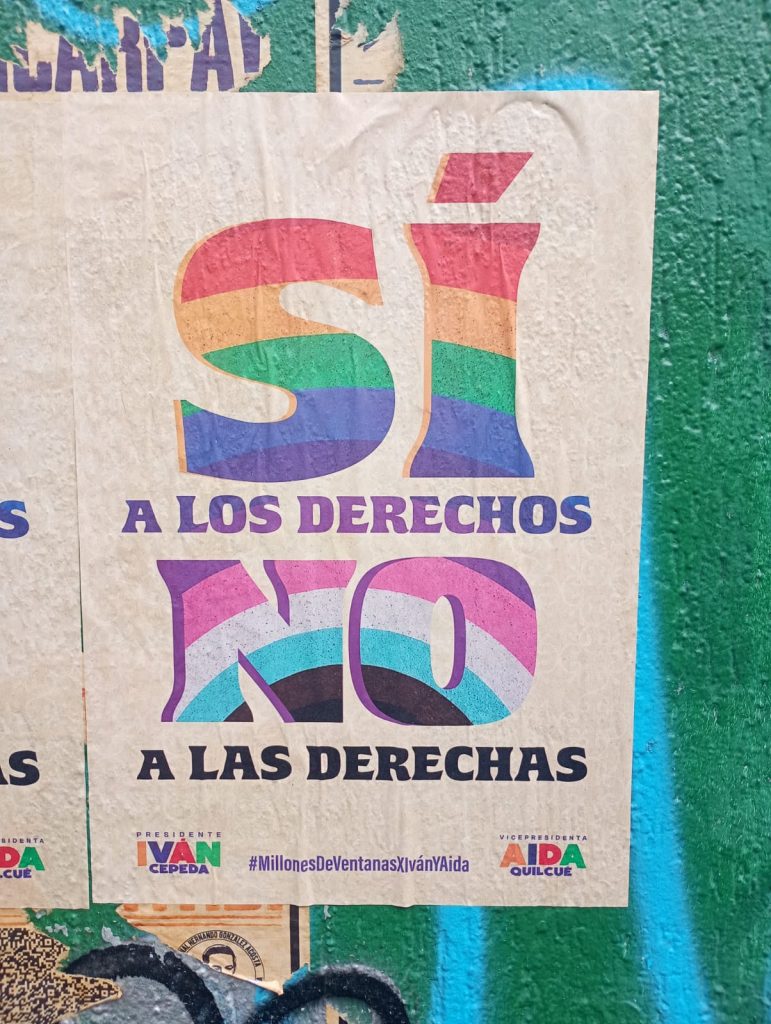
Security is not a priority, but the key aim is to dismantle armed groups that are ‘successors of paramilitaries’. Iván Cepeda will continue the extant peace talks set up by Petro, but with a red line over assassinations of social leaders. Coca farmers will be encouraged to turn away from illegality via crop substitution.
Corruption will be dealt with by the Secretary for Transparency of the Presidency being given full independence and the Fiscalía receiving an Institute for Macrocorruption, as well as beefing up existing systems. Civil society will be encouraged to involve themselves in these processes.
A new Ley de Austeridad Republicana will be brought in to limit state spending via civil servants in an attempt to cut costs. He will reduce the salaries of the president’s office immediately and encourage his ministers to do the same. There will be greater scrutiny of public spending across all levels of the state. Again, no details.
More interesting is the promise to give victims of corruption resources, partially funded by seizure of illegal gains. All of this will be aimed at the parts of the country with the highest rates of corruption and impunity.
Victims of the conflict, meanwhile, will benefit from a new acuerdo nacional which will aim to deliver further reparations. He will also make sure that the 2016 peace agreement is carried out as originally planned, focusing on the Planes de Desarollo con Enfoque Territorial (PDET) for the areas most affected.
International relations will not revolve around the interests of Washington or Miami (?), but rather the national interest. The plan is for autonomy and integration, again involving civil society to work with foreign-based counterparts.
For rural areas, there will be 30,000km of minor roads built to improve connections to far-flung places, known as the vías para la paz. There will also be more rights to participate in politics, defend territory, improve connectivity and services, more land restitution and so on, none of which is clearly defined or detailed in numbers.
Rubbish is on the agenda, unlike any other candidate. He promises to strengthen and enforce recycling schemes and the basura cero initiative. Revitalisation and regrowth of urban areas is also under plan. On transport, he says he will rejuvenate trains as well as sort out the roads.
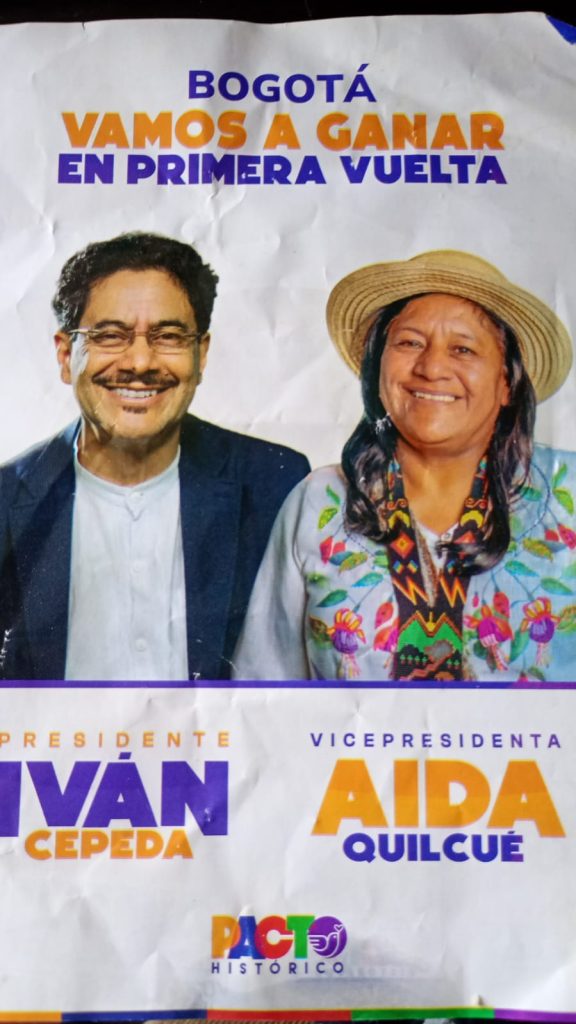
Aida Marina Quilcué Vivas is an Indigenous activist and current senator of the Republic. While she won’t bring any votes with her, this is a huge signal from the Pacto that they are serious about Indigenous representation.
Her selection shows Pacto confidence that they don’t need to reach out and form alliances with other groups. The advantage is that Quilcué and Cepeda will agree on virtually everything, in sharp contrast to Petro and Francia Márquez.
Quilcué has been an active part of the campaign, rallying supporters across the country, especially in rural and Indigneous areas. She’s chastised Abelardo for using the jaguar as a symbol. She’s also clashed with Paloma Valencia over indigenous rights in Cauca.
No, he’s not. He was a young communist, but distanced himself from the party (against the wishes of his family) three and a half decades ago. He’s not a guerilla either and never has been, despite his closeness to M-19. He’s a leftist for sure, but that is not synonymous with communism either in act or desire.
The reason this gets so much traction is that he has certainly been close to guerilla groups, either working with them or in peace talks. He doesn’t help this by his actions, often going out of his way to avoid criticising groups that have a nominally leftist agenda, while specifying that he wants to go after ex-paras.
Iván Cepeda has been a fierce critic of Álvaro Uribe dating all the way back to when Uribe was in the Casa de Nariño. In many ways, the ex-president has defined Cepeda’s political career as much as Petro, though as sworn enemy rather than comrade.
Cepeda accused the ex-president of links to paramilitarism, relating to the falsos positivos case and others. After repeated attacks in the Senate, Uribe filed a defamation writ against Cepeda, which was eventually annulled. In turn, Uribe found himself under investigation for allegedly attempting to influence witnesses in that case.
Vindication came last year with a Bogotá court ruling in favour of Cepeda after over a decade of deliberation. However, it was only a partial victory, with the ex-president only being declared guilty of fraude procesal y soborno en actuación judicial.
This means there is absolutely no love lost between the two, with Uribe’s preferred candidate Paloma Valencia and Iván Cepeda frequently clashing in the Senate and in the media. Abelardo de la Espriella also is close to Uribe, having represented him legally.
Yes. He has a habit of ignoring things that aren’t connected to paramilitarism or the peace process, ending up as one of the most absent senators in the last couple of years. He also has habitually evaded making clear statements on his health following his diagnosis of bowel cancer. He claims it is in remission, but rumours swirl that it is not.
Then there’s the Operation Fénix affair. He was allegedly namechecked in emails found in a raid on a FARC base. It’s never been fully proved or denied, but has always hung over him. Added to the controversy over recent audioclips by guerrillas referring to him as a comrade, it fuels the fire for those who see him as too close to armed groups.
Yes, he can and is probably the favourite at the moment. It would be absolutely shocking were he not to get to the second round and he matches up well with both of the two people he’s likely to face there.
Of the two rightists, he probably wants to see Abelardo against him. While he carries a threat as a markedly anti-establishment candidate in contrast to Cepeda’s life in politics, he will also turn off some of the anti-left candidates, especially those who want someone serious.
Voto en blanco could then become the decider. If we end up with a situation where a high number of voters decide they want neither option, Cepeda is likely in luck. It’s entirely possible that he could win without crossing 50% of the vote.
The popularity of Petro works in his favour, as does the minimum wage issue. Many will want further increases and see him as the best way to get that done. This may not be a vote for him so much as for the Pacto, but they all count.
However, there are no guarantees. He will get very few voters coming across from eliminated candidates. The key battle here will be turnout, which usually increases by 5-10 percentage points for the runoff.
The post Candidate guides for the 2026 Colombian elections: Iván Cepeda appeared first on The Bogotá Post.
Migración Colombia denied entry to an American known on social media as Casey Red Beard at Aeropuerto Internacional El Dorado in Bogotá on Saturday, May 23, returning him on an immediate flight to Miami after officials confirmed prior alerts linking him to the alleged promotion of sex tourism and private gatherings in Medellín. The traveler has been barred from entering Colombia for 10 years.
The decision drew on existing anotaciones registered by the agency’s Regional Antioquia-Chocó office, derived from public denouncements made in earlier years. According to Migración Colombia, the man had used social media to promote private gatherings in apartments in Medellín aimed at foreign visitors, marketed under the name Programa de Inmersión en Medellín. The agency described packages priced in US dollars that included private dinners, exclusive parties, excursions, and food and transport for women attending the events.
A message attributed by Migración Colombia to the organizers of the parties read: “Mis clientes son millonarios y me pagan muy bien para lanzar fiestas donde solo haya chicas educadas (…) ellos no quieren conocer las chicas que están en el Lleras a las 2 a.m.” (“My clients are millionaires and they pay me very well to throw parties where there are only educated girls (…) they don’t want to meet the girls who are at Lleras at 2 a.m.”)
“In several posts, he brags that his “white advantage” helps him attract Latin American women and urges men to get their passports.” – Jessica Van Meir in The Baffler #77, January 2025
The Director General of Migración Colombia, Gloria Esperanza Arriero, said the agency “no solo tiene rigor en el control migratorio, sino también capacidad en las verificaciones y en la toma de decisiones para combatir la trata de personas y la explotación sexual de niños, niñas y adolescentes con todos los elementos posibles” (“not only enforces migration controls rigorously, but also has the verification and decision-making capacity to combat human trafficking and the sexual exploitation of children and adolescents with every available element”). Arriero added that the agency would continue strengthening control mechanisms to prevent the entry of persons it determines pose risks to communities.
The Mayor of Medellín, Federico Gutiérrez, addressed the case on his X account: “Otro más. Go Home Un estadounidense conocido en redes sociales como Casey Red Beard llegó a Bogotá en un vuelo desde Miami y fue devuelto a su país por Migración Colombia, luego de confirmarse que estaba en la lista Alertas Medellín, por promoción explícita de turismo con fines de explotación sexual, organizando fiestas en apartamentos de la ciudad.” (“Another one. Go Home An American known on social media as Casey Red Beard arrived in Bogotá on a flight from Miami and was returned to his country by Migración Colombia, after it was confirmed he was on the Alertas Medellín list for the explicit promotion of tourism for the purposes of sexual exploitation, organizing parties in apartments in the city.”)
“Let it be clear: there is no place here for foreigners who come to promote disorder and skirt the law.”— Federico Gutiérrez, Mayor of Medellín
The Alertas Medellín list cited by Gutiérrez is a municipal mechanism maintained by the Alcaldía de Medellín that flags foreign nationals associated with criminal activity, security risks, or conduct authorities consider incompatible with public coexistence. The list is shared with Migración Colombia for use at points of entry.
Authorities publicly identified the man only by his social-media handle, Casey Red Beard, and the affiliated X account @RedBeardRants1. The individual operating under the handle is Casey Brown, an American previously identified by name in a January 2025 essay in The Baffler by journalist Jessica Van Meir, who described him as “a self-proclaimed red-pilled dating coach” who advertised “gringo parties” in Medellín “for American tourists to meet Colombian women.” Van Meir cited a 2023 report in the Colombian feminist outlet Manifiesta alleging that Red Beard and an accomplice had engaged in sex trafficking. A LinkedIn profile consistent with the same identification also presents him under the name Casey Brown. Migración Colombia has not commented on legal-name identification.
The public profile cultivated by the subject sits squarely within the so-called “red pill” or “manosphere” online community — a network of self-styled male-dating influencers whose best-known international figure is the British-American social-media personality Andrew Tate, currently under indictment in Romania on charges including human trafficking and rape. On his YouTube channel, which operates under the handle @redbeardrants, and in his publicly indexed marketing materials, Red Beard describes his stated mission as one to “destroy loneliness in men” and promotes a method built around mass online-dating outreach, paid virtual assistants, and copy-paste messaging “funnels.” His published guidance to clients includes an explicit recommendation to “leave the west (USA, Canada, UK, etc.). Go to a more favorable dating market like Eastern Europe, South America, Asia, etc. where the women are more feminine, beautiful, cooperative, and easier to obtain.” His listed past collaborations include Myron Gaines and the Fresh and Fit Podcast, a manosphere-adjacent program in the same broader subculture.
Investigators reviewing his social-media output cited the same framing in their internal alerts. Beyond the “chicas educadas” message attributed to the organizers by Migración Colombia, the agency noted that Red Beard’s published content has historically marketed Medellín itself as the destination commodity, with the city’s Parque Lleras nightlife district and surrounding El Poblado sector positioned as the operational base for his promoted experiences.
Federico Gutiérrez has positioned the protection of women and children from sexual exploitation as a defining priority of his second, non-consecutive mayoral term, treating the suppression of vice tourism as both a public-safety obligation and a city-brand imperative. The May 23 Casey Red Beard inadmission fits a sustained two-year enforcement push that began in his first weeks back in office in early 2024. Within weeks of taking office, the administration imposed a curfew restricting unaccompanied minors from designated zones — including La 33, La Candelaria, and the Corredor de la 70 — to combat commercial sexual exploitation of children. In April 2024 the mayor used emergency powers to outlaw prostitution in the El Poblado sector, including the Parque Lleras zone, and authorities sealed a guesthouse called Gotham marketed through Airbnb on grounds related to alleged organized criminal activity, with extinción de dominio (asset forfeiture) proceedings sought against the property.
The enforcement push has been backed by explicit US support. In April 2024 the US Ambassador to Colombia, Francisco Palmieri, met with Gutiérrez in Bogotá and pledged the “total cooperation of the US government and its resources” to support Colombian law enforcement against sexual exploitation and human trafficking, including the extradition of US citizens to Colombia where applicable. A bilateral operational pattern was already visible in March 2024, when two US citizens were arrested for the sexual exploitation of minors in Colombia following coordinated raids. Subsequent arrests in August 2024 involved direct coordination with the US Department of Homeland Security’s Homeland Security Investigations (HSI) on a transnational case involving a Mexican operator and routes through El Poblado, Belén, Cancún, and Mérida.
Municipal prevention has run alongside enforcement and has been framed around the protection of minors and women in conditions of economic vulnerability. The Secretary of Security and Coexistence of Medellín, Manuel Villa Mejía, has overseen periodic mega-operativos involving more than 300 agents drawn from the Policía Nacional, the army, Migración Colombia, and municipal agencies, targeting establishments and accommodations linked to alleged exploitation. In October 2025 the Alcaldía launched training for owners and administrators of tourist accommodations in coordination with Fundación Renacer, a Colombian non-governmental organization specializing in the prevention of commercial sexual exploitation of children. City-government figures from October 2024 reported a 160% increase in arrests for sexual violence against minors and 22,000 calls to the city’s 123 emergency line for child and adolescent protection requests during that year, even as overall foreign tourist arrivals rose 26% — a data pairing the Alcaldía has used to argue that brand recovery and enforcement are complementary rather than competing objectives.
The broader foreigner-safety beat in Medellín has continued to draw international attention. In March 2026, the death of an American Airlines (NASDAQ: AAL) flight attendant in Antioquia following her disappearance focused renewed attention on escopolamina-related crime targeting foreigners and locals in the city.
Otro más. Go Home
Un estadounidense conocido en redes sociales como Casey Red Beard llegó a Bogotá en un vuelo desde Miami y fue devuelto a su país por Migración Colombia, luego de confirmarse que estaba en la lista Alertas Medellín, por promoción explícita de turismo con… https://t.co/EWBfr9qwdK
— Fico Gutiérrez (@FicoGutierrez) May 23, 2026
In what has elapsed of 2026, Migración Colombia has inadmitted approximately 90 foreign nationals nationwide for risks associated with sexual exploitation and conduct linked to trata de personas (human trafficking), a figure already approaching the 110 cases recorded for all of 2025. In Medellín alone, more than 60 inadmission procedures have been carried out so far this year, compared to 80 for all of 2025. The agency’s Regional Antioquia-Chocó office accounts for 63 of the 2026 cases.
Broader expulsion and deportation activity is running at a pace comparable to the previous year. Through May 23, the agency reported 310 expulsions or deportations of foreign citizens in 2026, comprising 157 deportations and 153 expulsions, compared to 1,652 cases recorded during all of 2025. Deportations were concentrated in the agency’s Nariño, Oriente, Atlántico, Eje Cafetero, Antioquia, and Andina regional offices, while expulsions were most frequent in Oriente, Andina, Antioquia, Nariño, and at the El Dorado station.
According to Arriero, expulsion and deportation decisions are taken in accordance with the Constitución Política de Colombia and applicable law, with due-process considerations, and respond to immigration violations, threats to public order or national security, judicial orders, and requirements from international organizations including the International Criminal Police Organization (INTERPOL). Migración Colombia retains discretionary authority under Decreto 2136 de 2021 to deny entry to or order the return of foreign citizens it determines pose risks to national security or public order.
The Casey Red Beard inadmission follows several high-profile expulsions earlier in 2026. In April, Migración Colombia expelled Steve Newland, a US citizen and social media operator known as “Chill Capo,” accused of promoting party experiences with alleged ties to sexual exploitation and of publishing content advising visitors on how to evade migration controls. The same month, the agency expelled Samuel McVey, a former teacher from New Rochelle, New York, following incidents at schools in the eastern Antioquia municipality of Rionegro and in the Las Palmas sector of Medellín. Migración Colombia also detected and again removed Russian citizen George Laevsky after he attempted to re-enter the country following an April expulsion linked to repeated disturbances at an apartment in the El Poblado sector.
Colombian authorities have framed the escalating enforcement as targeting precisely the use of social media and digital platforms to market tourism packages that allegedly conceal sexual exploitation, with women in conditions of economic vulnerability described as the principal victims. The agency has previously stated that prevention of Explotación Sexual Comercial de Niños, Niñas y Adolescentes (ESCNNA) is a particular priority, citing cooperation with international intelligence agencies and the Angel Watch program, which has resulted in more than 470 entry denials since 2016 for reasons associated with sexual offenses.
